Free Printable Iambic Pentameter Worksheets for Year 12
Enhance Year 12 students' understanding of iambic pentameter with Wayground's comprehensive collection of free worksheets, printables, and practice problems that include detailed answer keys to master this essential poetic meter.
Explore printable Iambic Pentameter worksheets for Year 12
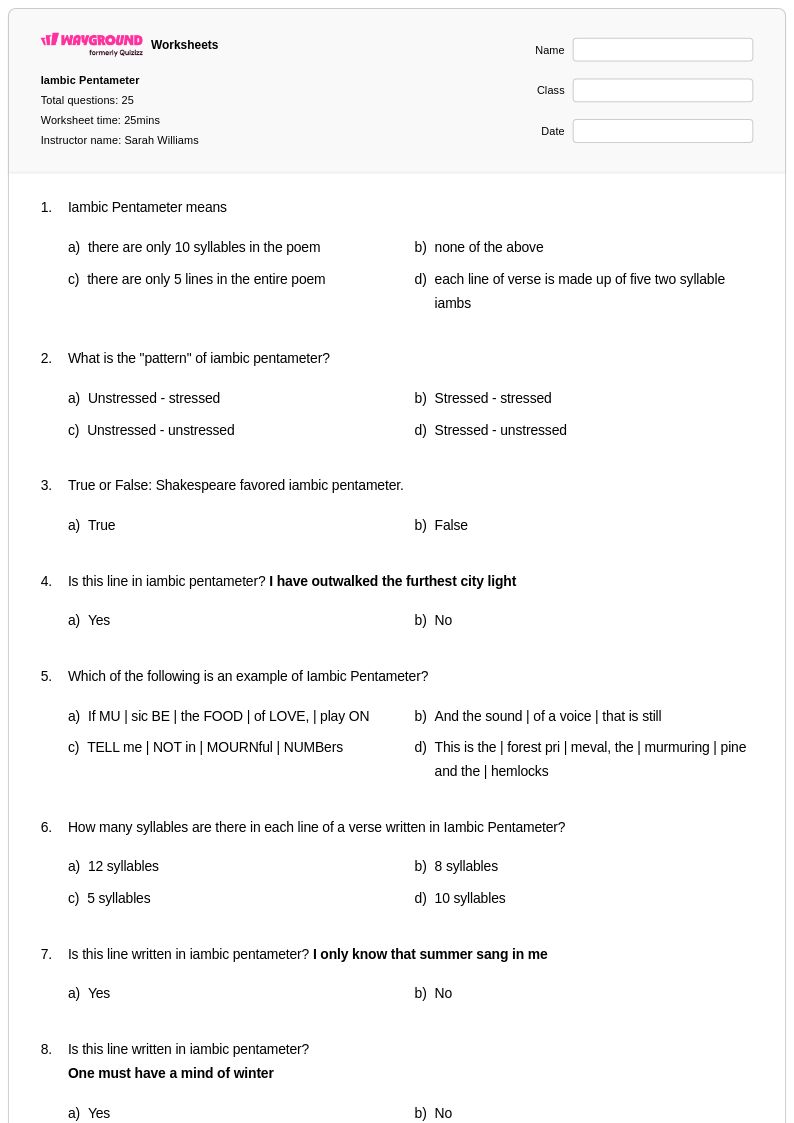
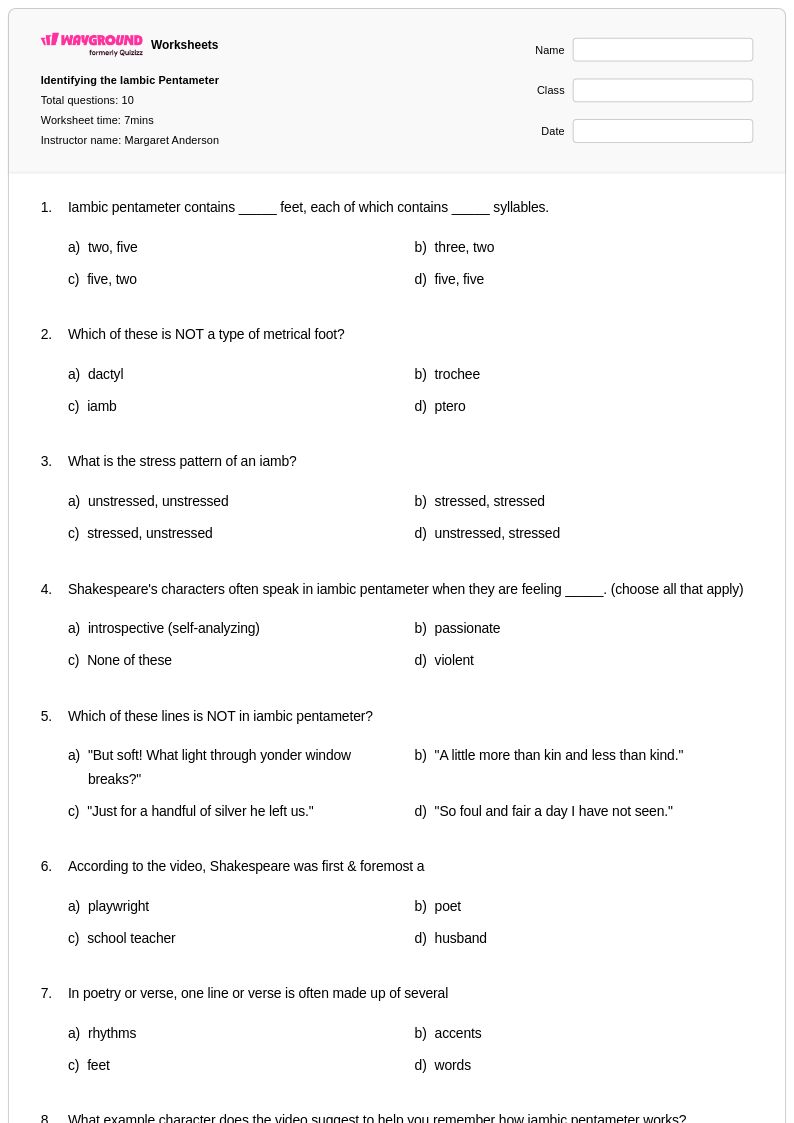
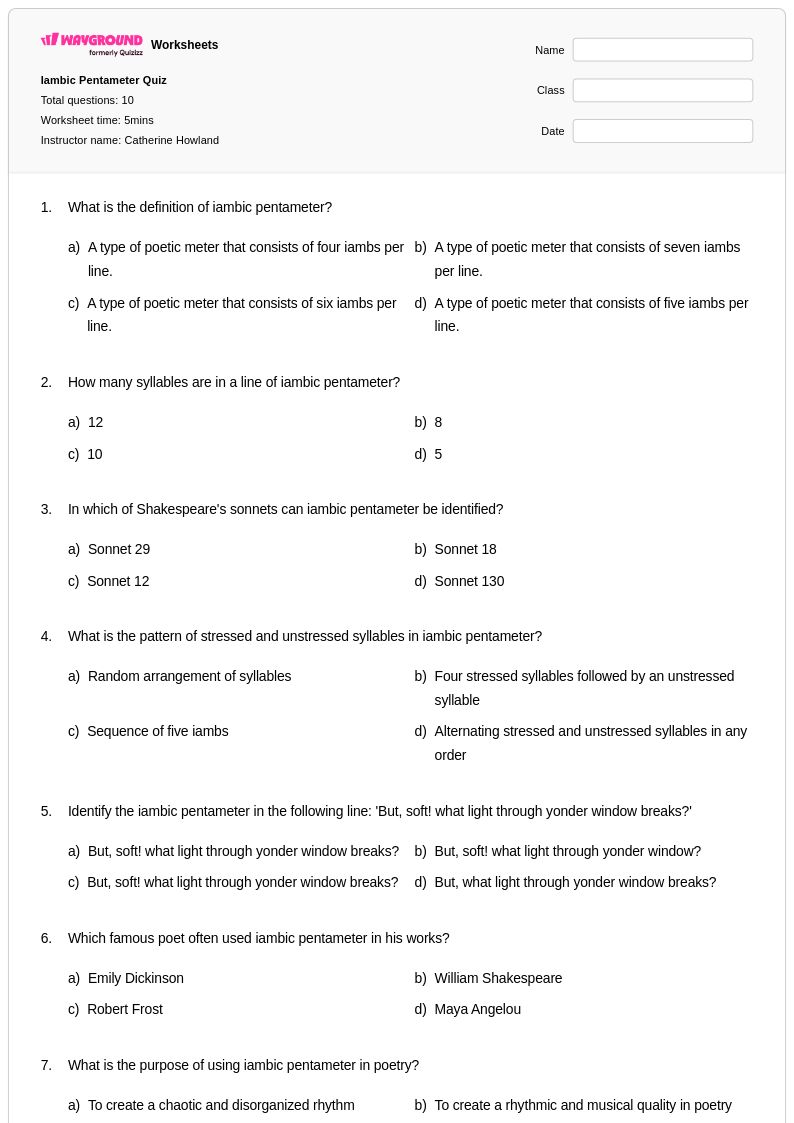
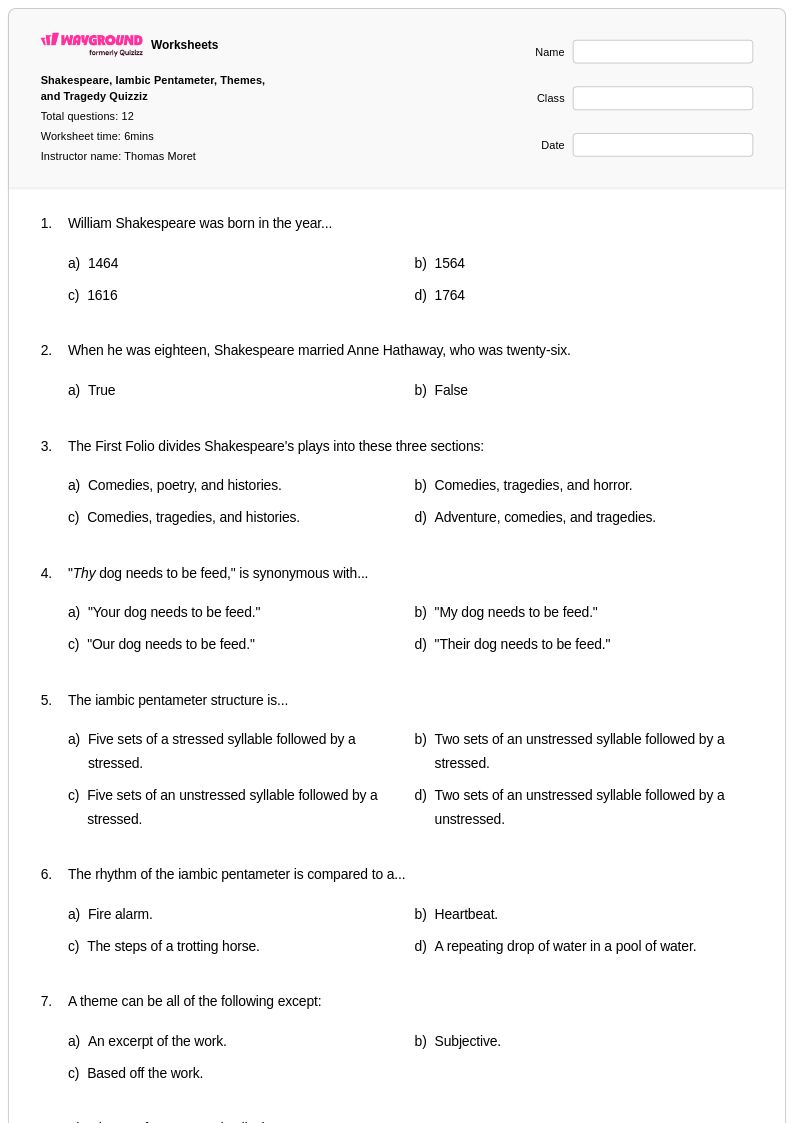
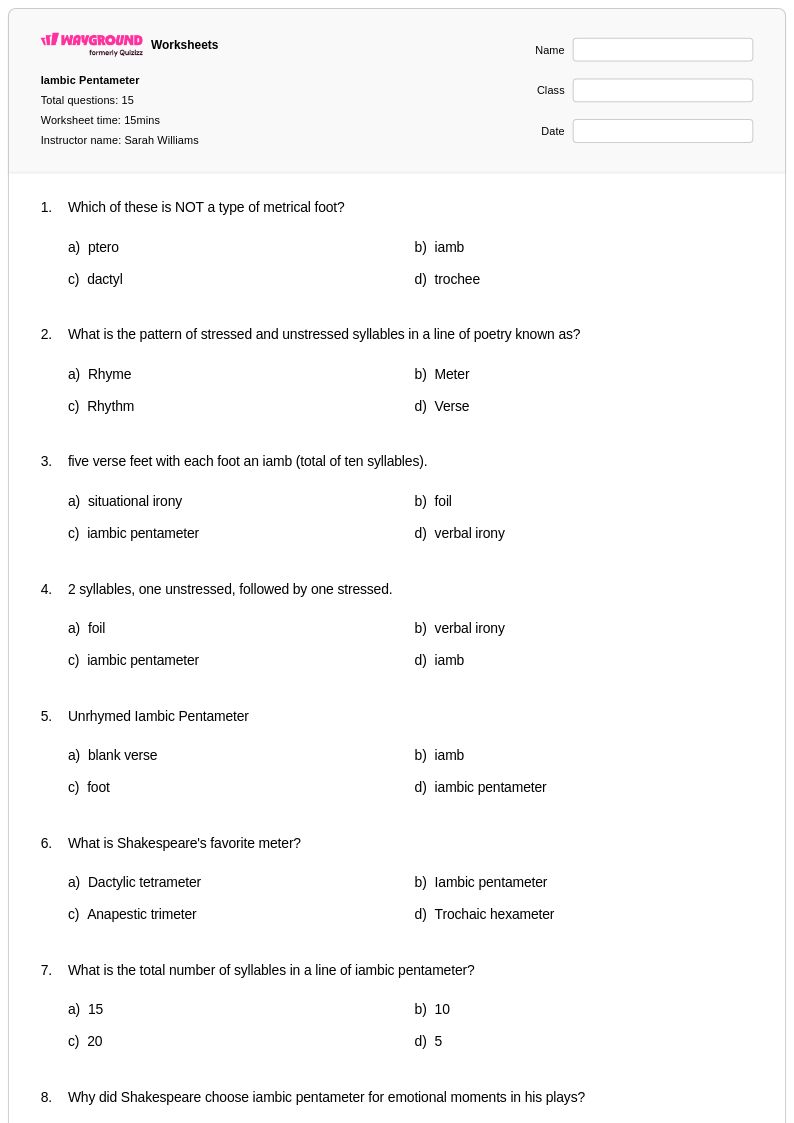
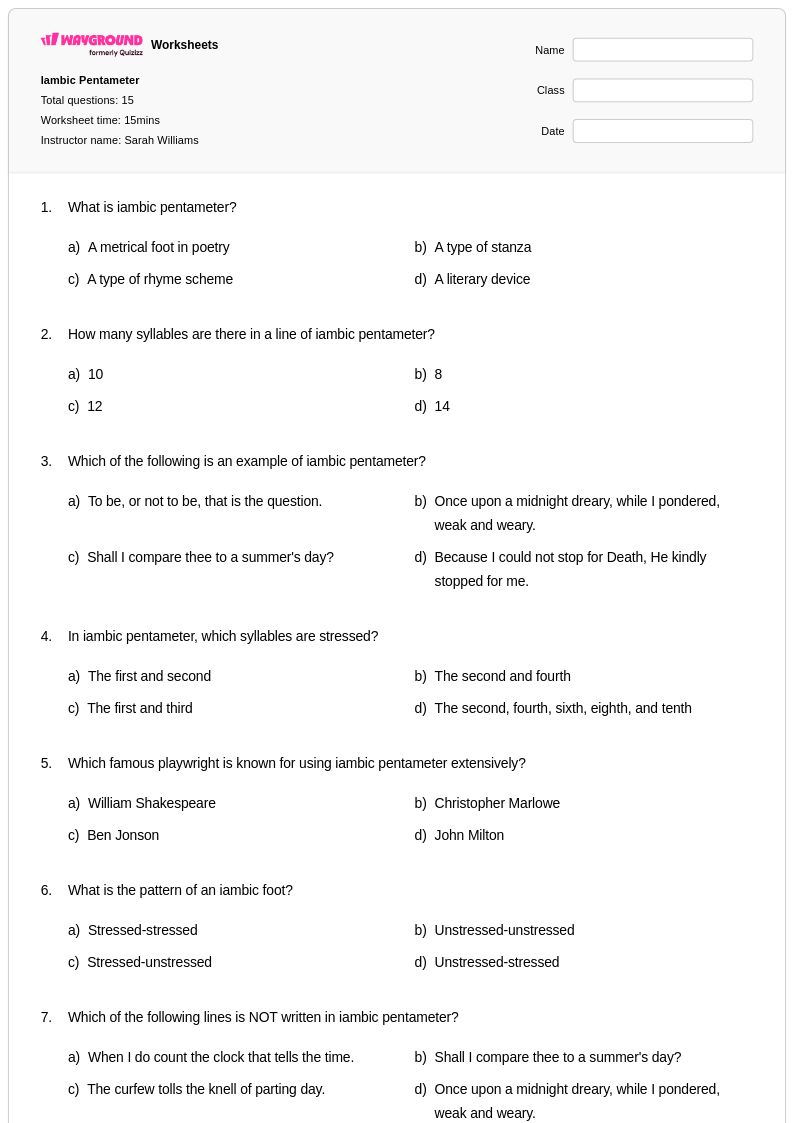
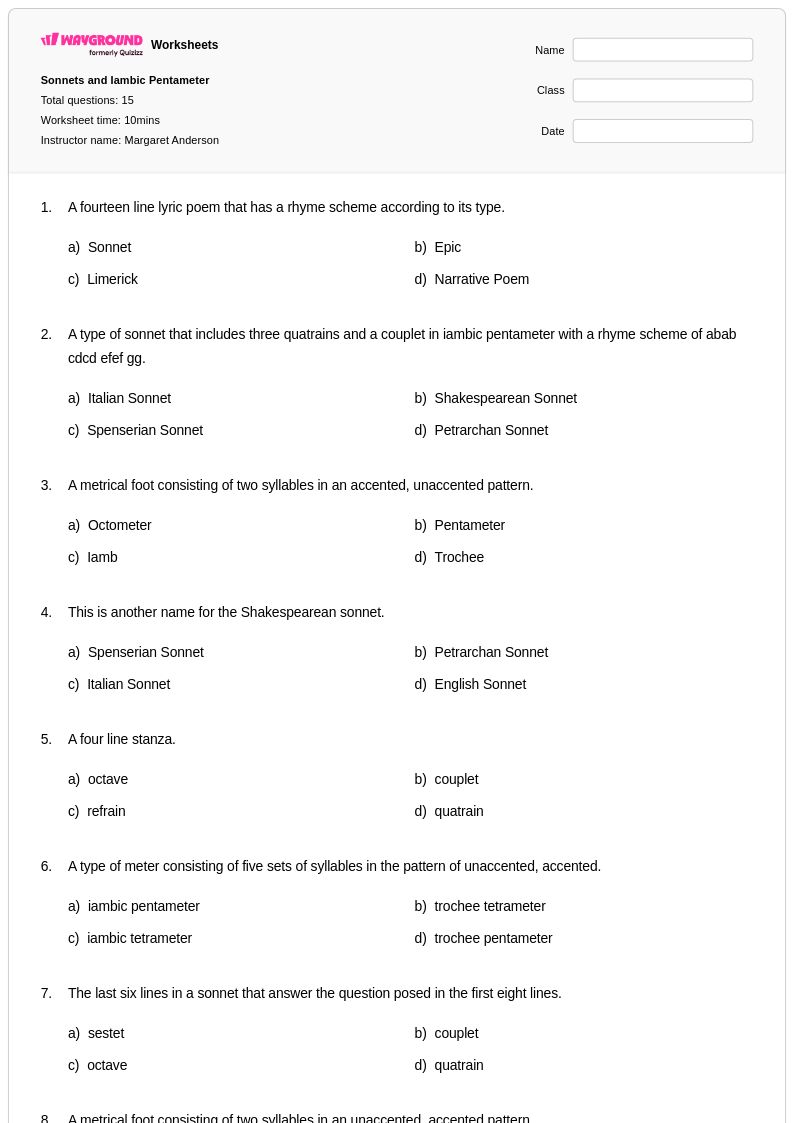
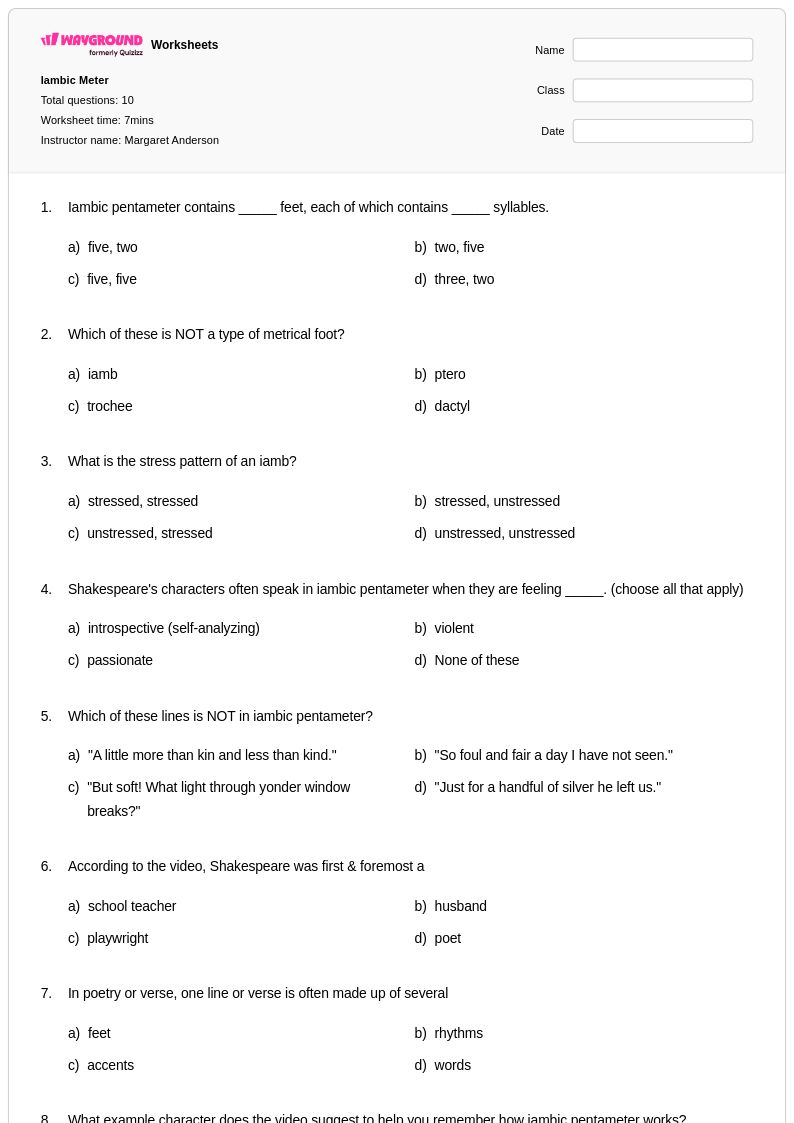
Iambic pentameter worksheets for Year 12 students available through Wayground (formerly Quizizz) provide comprehensive practice in analyzing and composing one of poetry's most fundamental metrical patterns. These expertly crafted resources guide advanced high school students through the intricacies of Shakespeare's preferred meter, helping them identify the five-foot pattern of unstressed and stressed syllables that defines this classical verse form. Students develop critical analytical skills by scanning famous passages from sonnets, plays, and epic poetry, while answer keys enable independent verification of their metrical analysis. The collection includes free printables that progress from basic identification exercises to complex composition challenges, with practice problems covering variations like feminine endings, substitutions, and caesuras that sophisticated poets employ to create rhythmic interest within the pentameter framework.
Wayground's extensive library draws from millions of teacher-created resources, offering educators powerful search and filtering capabilities to locate iambic pentameter materials perfectly suited to their Year 12 curriculum needs. The platform's standards alignment ensures these worksheets support literature and composition objectives while providing differentiation tools that accommodate varying skill levels within advanced English classrooms. Teachers can customize existing materials or create original assessments, with flexible formatting options including downloadable pdf versions for traditional paper-based instruction and digital formats for online learning environments. This versatility proves invaluable for lesson planning, targeted remediation for students struggling with prosody concepts, enrichment activities for aspiring poets, and systematic skill practice that builds toward confident analysis of complex poetic texts across literary periods and traditions.
FAQs
How do I teach iambic pentameter to students who have never studied poetic meter?
Start by teaching the concept of stressed and unstressed syllables using everyday words before introducing meter. Clap out the 'da-DUM' pattern with simple two-syllable words like 'a-LONE' or 'be-CAUSE', then show how five of these iambs string together in a single line of verse. Once students can hear the rhythm in isolated words, move to short excerpts from Shakespeare's sonnets so they can apply scansion to authentic literary text. Marking syllables directly on printed lines is one of the most effective ways to make the abstract pattern concrete and visible.
What exercises help students practice identifying iambic pentameter?
Scansion exercises, where students mark each syllable as stressed or unstressed and count the feet in a line, are the most direct practice method. Having students work with excerpts from Shakespeare's sonnets or Milton's epic poetry grounds the skill in real literary examples rather than contrived sentences. Reading lines aloud while tapping or clapping the rhythm reinforces the auditory dimension of meter recognition, which purely visual exercises can miss. Worksheets that ask students to identify lines that deviate from strict iambic pentameter, such as feminine endings or pyrrhic substitutions, extend practice for students who have mastered the baseline pattern.
What mistakes do students commonly make when scanning iambic pentameter?
The most common error is forcing a strict 'da-DUM' pattern onto every syllable, ignoring natural speech stress, which produces incorrect scansion and misreads the poet's intended rhythm. Students also frequently miscount feet, either grouping syllables incorrectly or losing track midway through a line, so teaching them to mark divisions between feet with a vertical slash helps prevent this. Another frequent misconception is assuming that any line in a poem labeled as iambic pentameter must have exactly ten syllables, when in practice feminine endings and other variations are common. Reminding students that meter describes a dominant pattern, not a rigid rule, helps them approach variation with more analytical confidence.
How can I differentiate iambic pentameter instruction for students at different skill levels?
For students who are still developing syllable awareness, begin with two-syllable word sorting before asking them to scan full lines of verse. Intermediate students benefit from guided scansion of short, regular Shakespearean sonnet lines where the iambic pattern is clean and consistent. Advanced learners can be challenged with passages from Milton or later poets where metrical substitutions are frequent, requiring them to identify and explain deviations rather than simply confirm the pattern. On Wayground, teachers can apply accommodations such as reduced answer choices or read-aloud support for individual students, allowing the same worksheet activity to serve a range of proficiency levels simultaneously.
How do I use Wayground's iambic pentameter worksheets in my classroom?
Wayground's iambic pentameter worksheets are available as printable PDFs for traditional classroom use and in digital formats for technology-integrated or remote learning environments, so they fit naturally into most lesson structures. Teachers can distribute printed copies for in-class scansion practice or assign the digital version for homework, and they can also host worksheets as a live quiz on Wayground to review meter recognition as a whole-class activity. Each worksheet includes a complete answer key, which makes them equally useful for independent student practice, peer review exercises, or teacher-led instruction.
Why is iambic pentameter important for students to learn in an English or literature class?
Iambic pentameter is the dominant metrical form in English literary tradition, used by Shakespeare, Milton, Marlowe, Keats, and countless others, so understanding it is foundational to analyzing a significant portion of the literary canon. Students who can identify and scan iambic pentameter are better equipped to notice when a poet deviates from the pattern and to ask why, which sharpens close-reading and interpretive skills. Beyond Shakespeare's sonnets and plays, the meter appears in blank verse, heroic couplets, and dramatic monologues, making it a transferable analytical tool across multiple genres and periods.