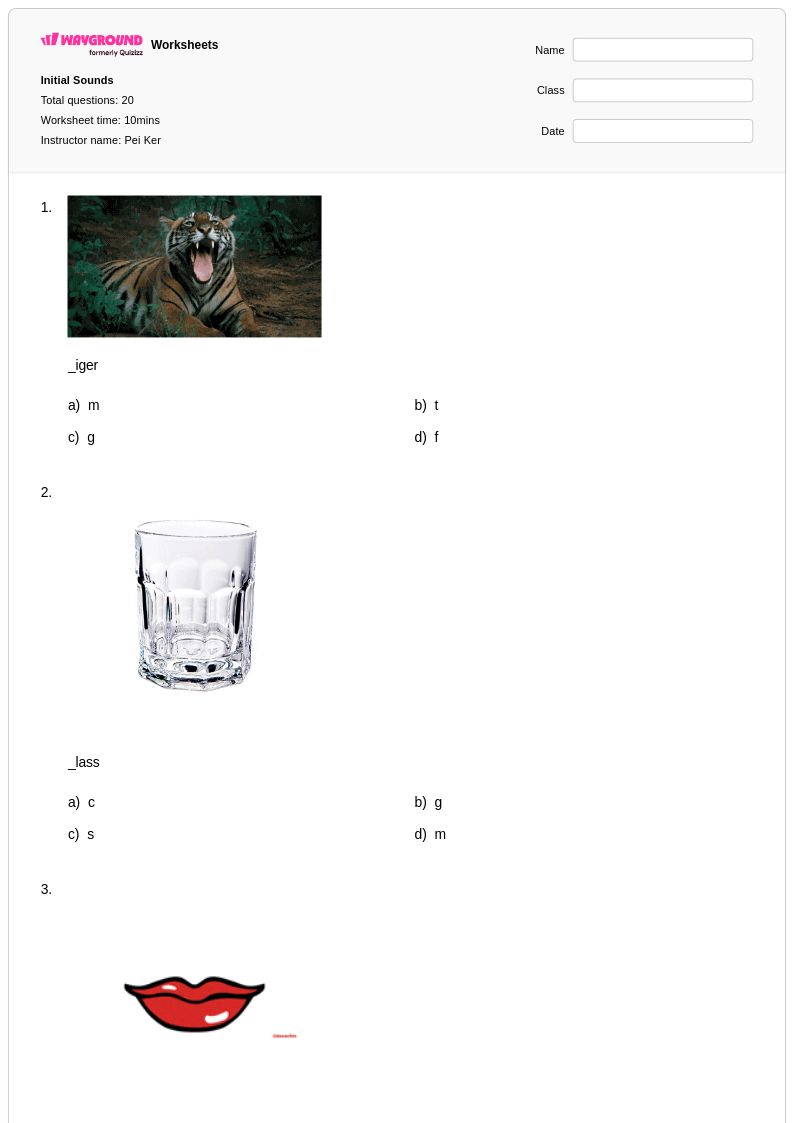
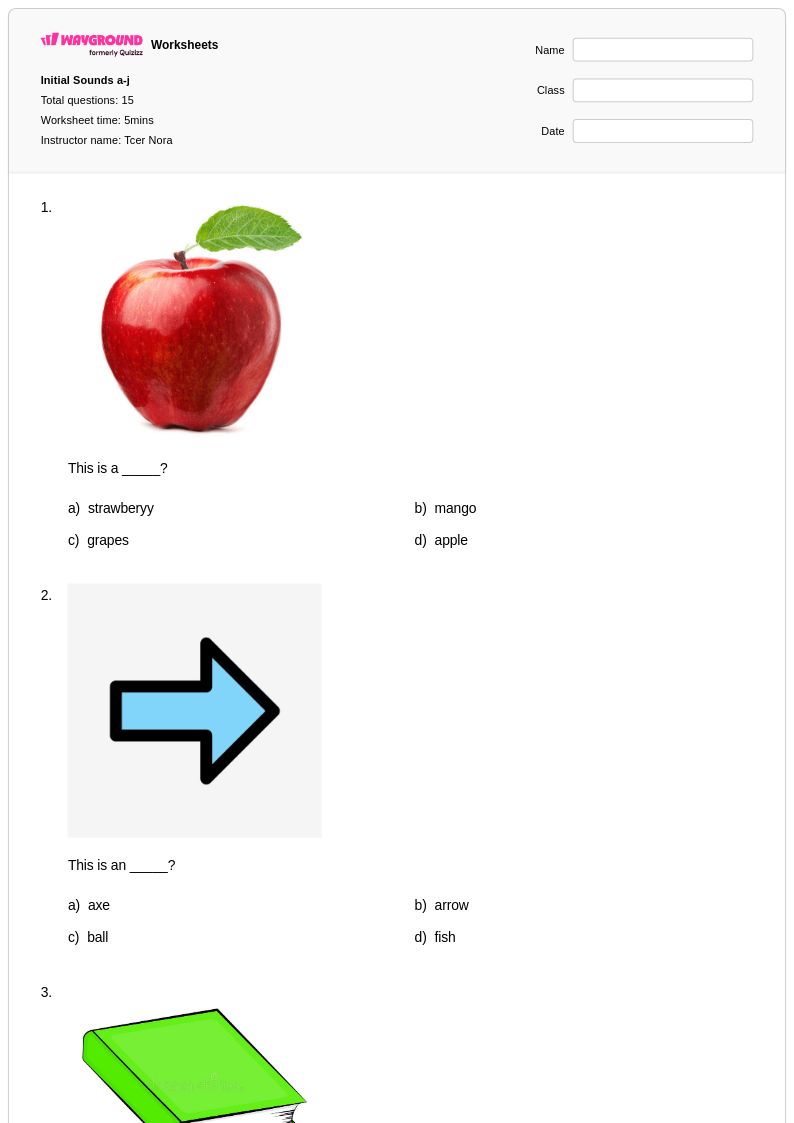
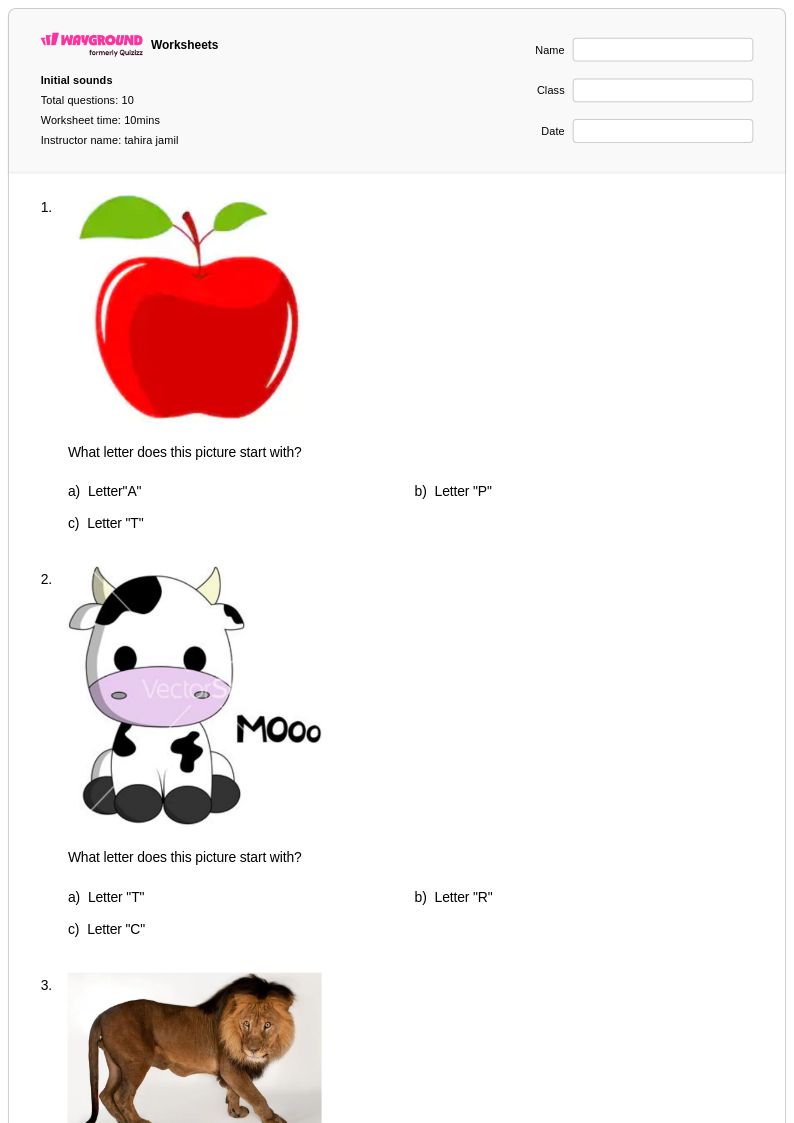
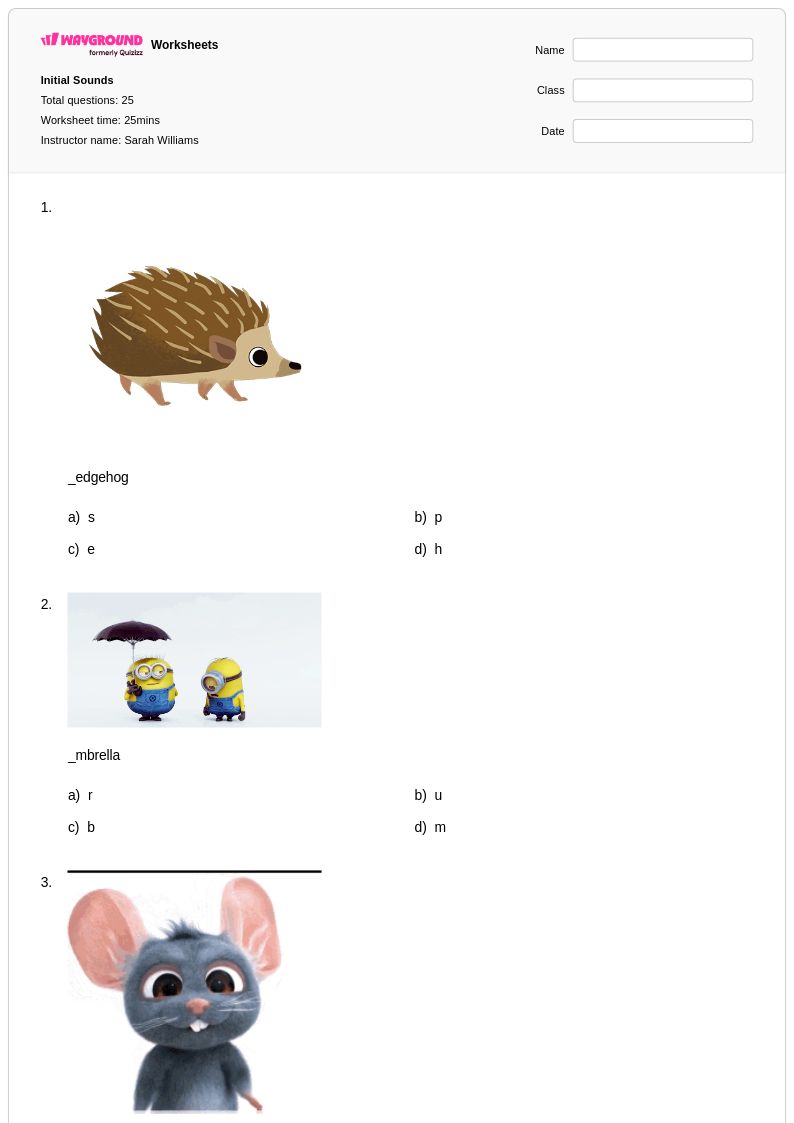
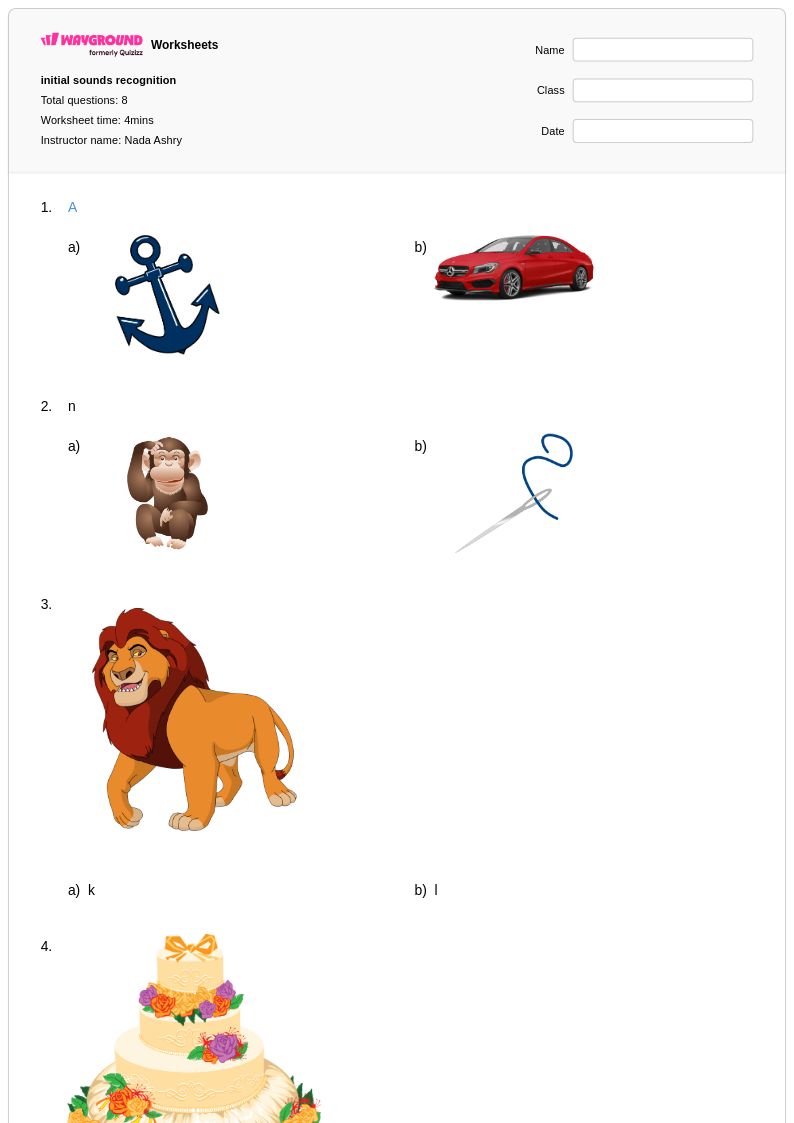
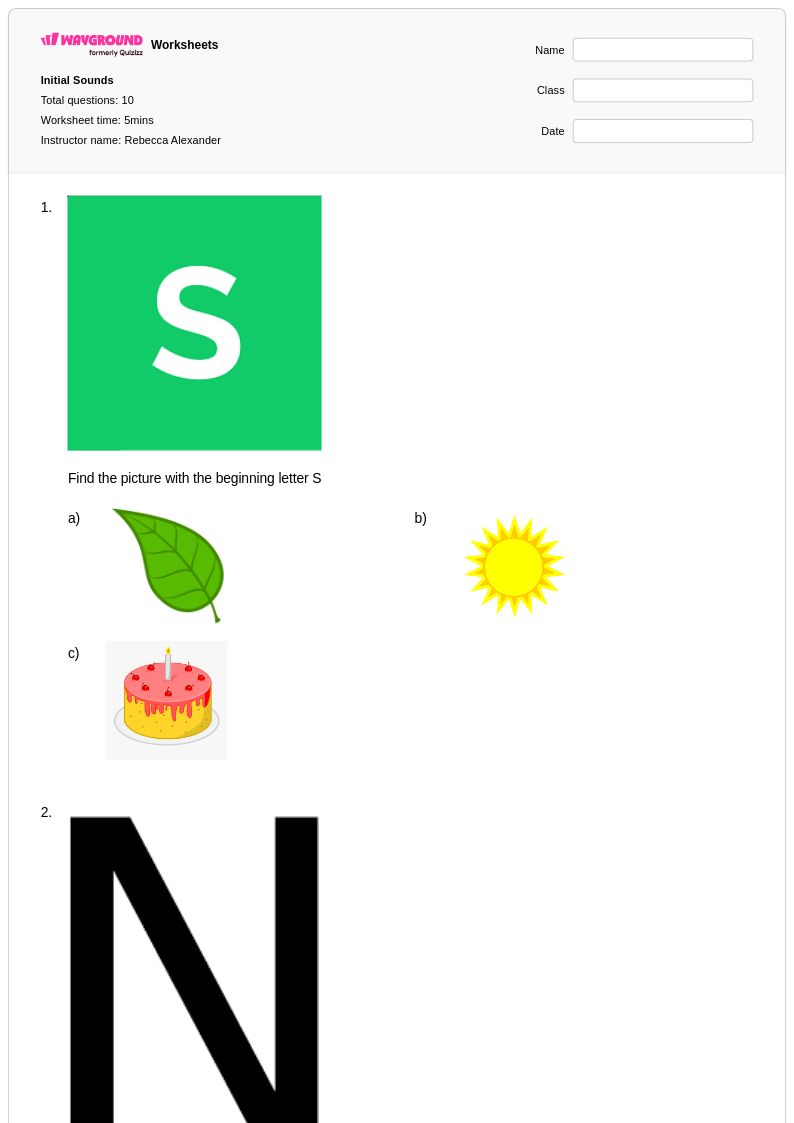
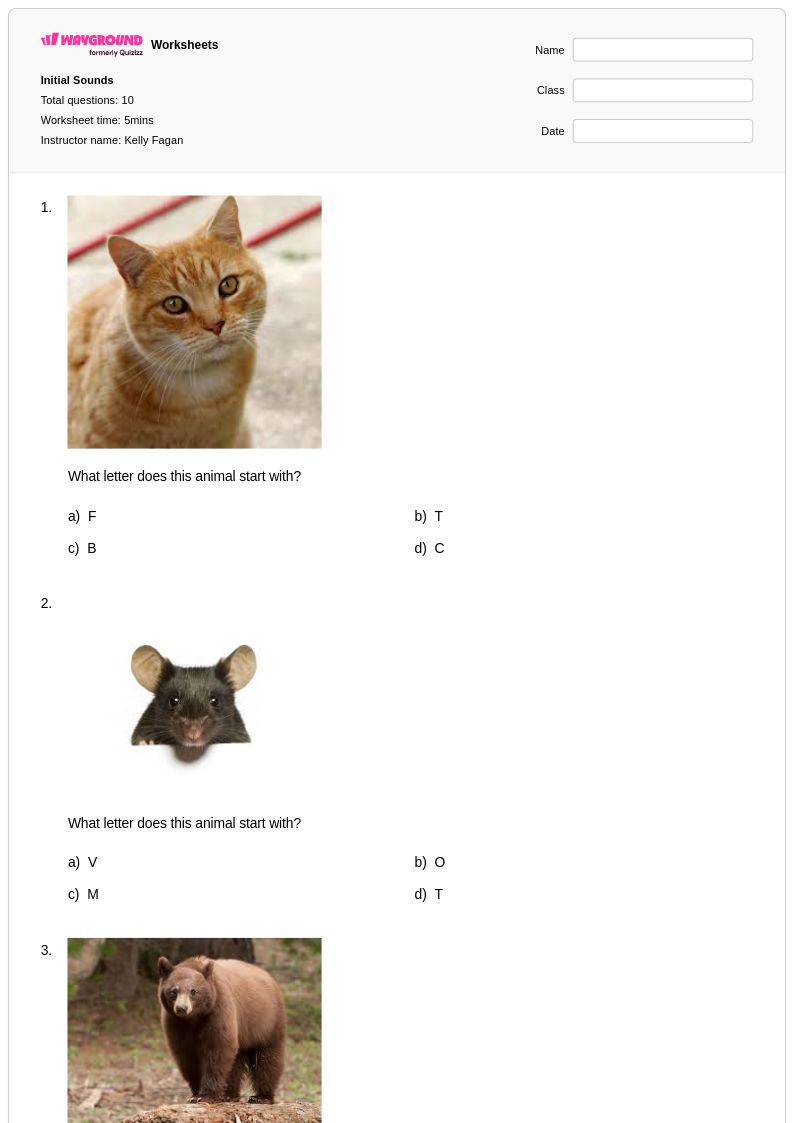
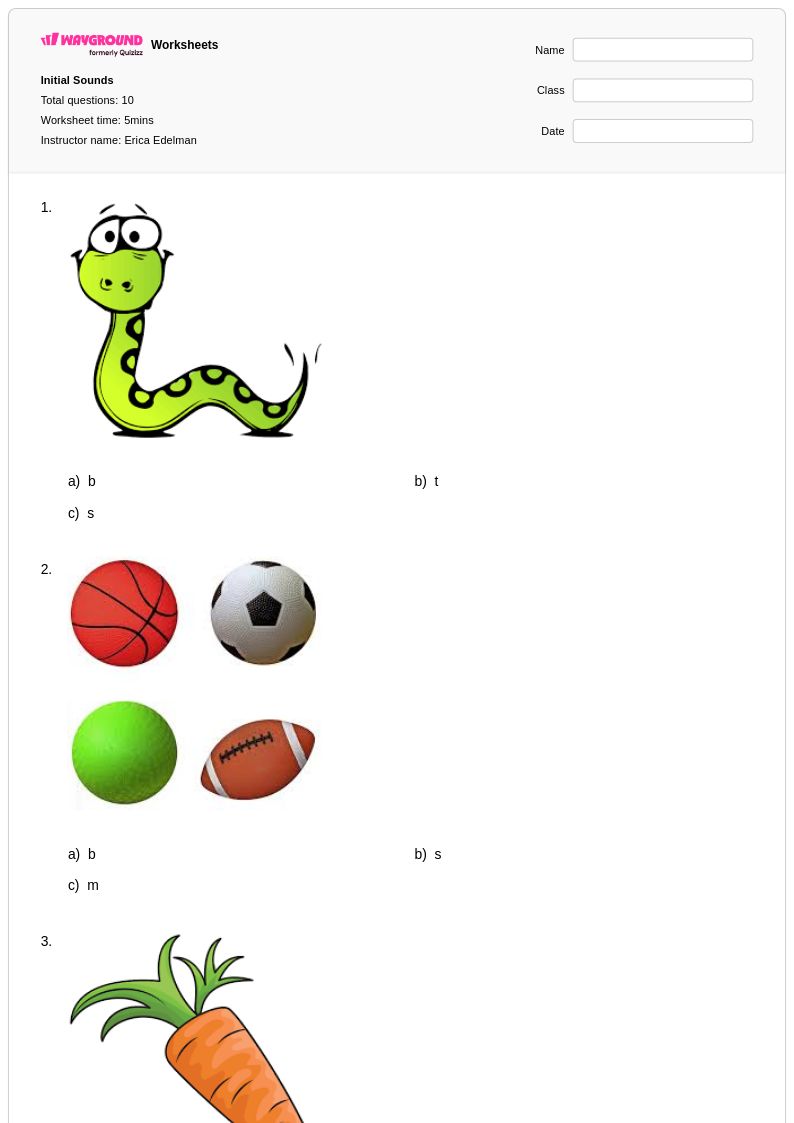
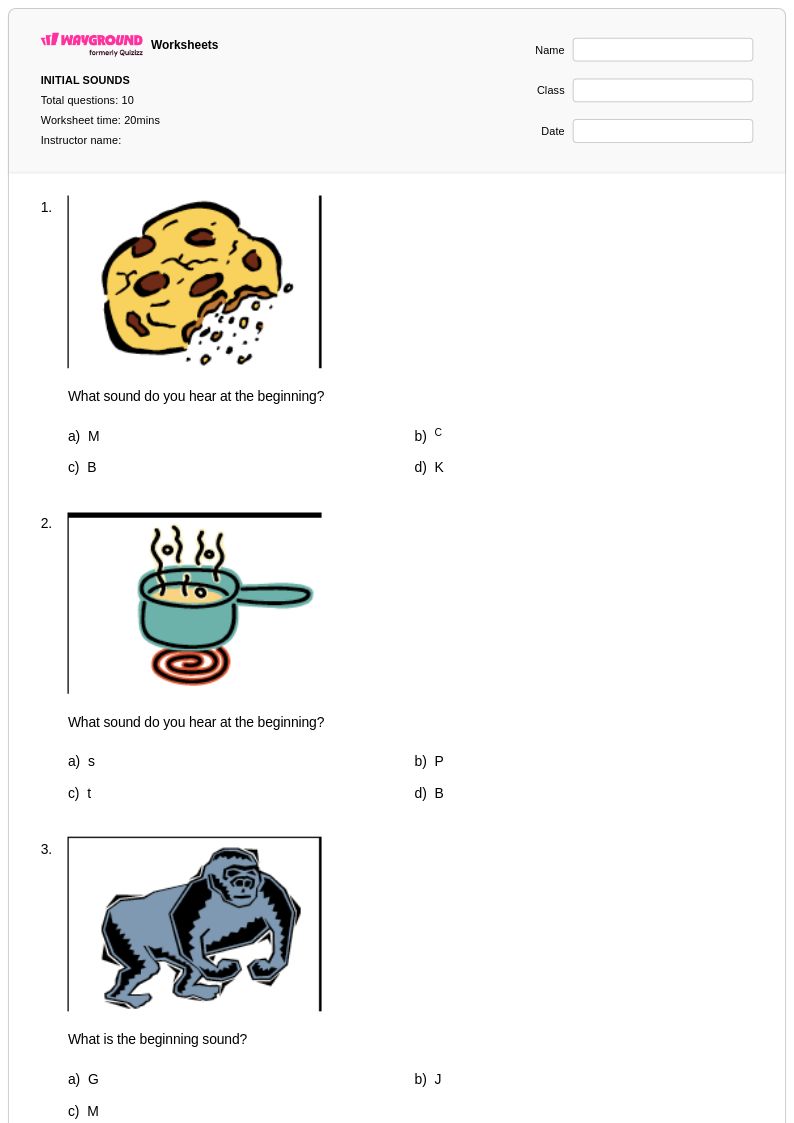
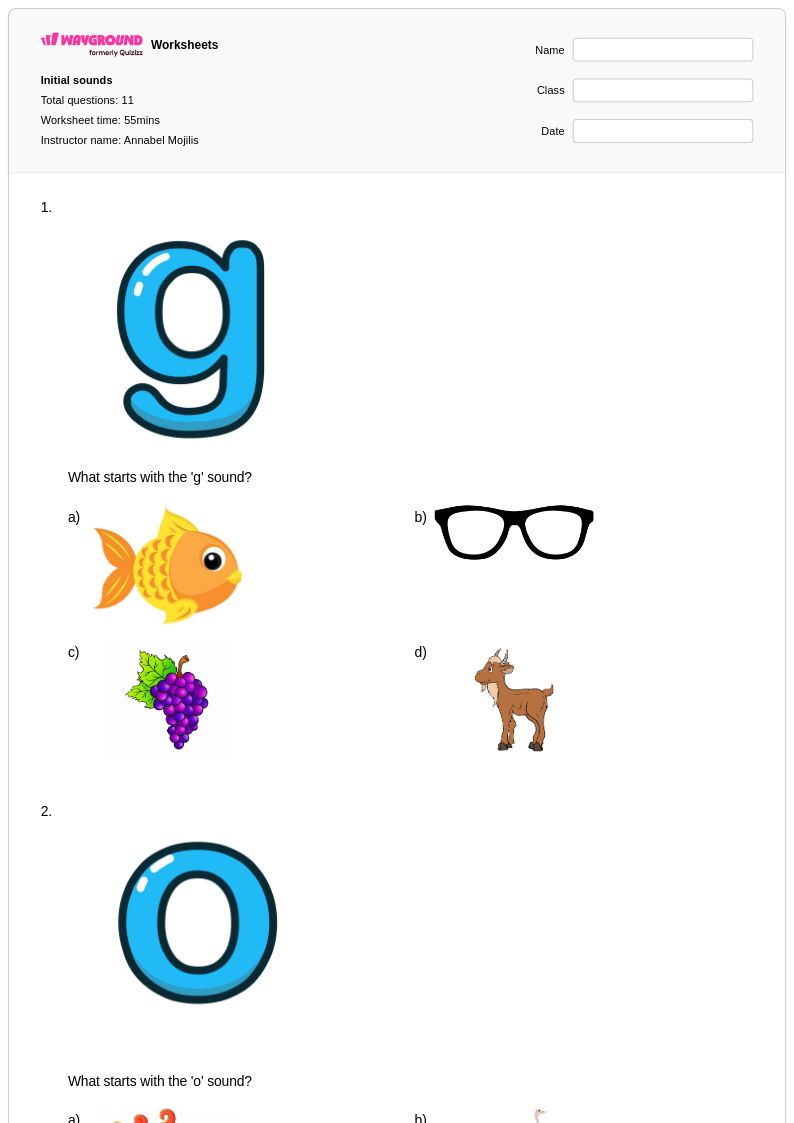
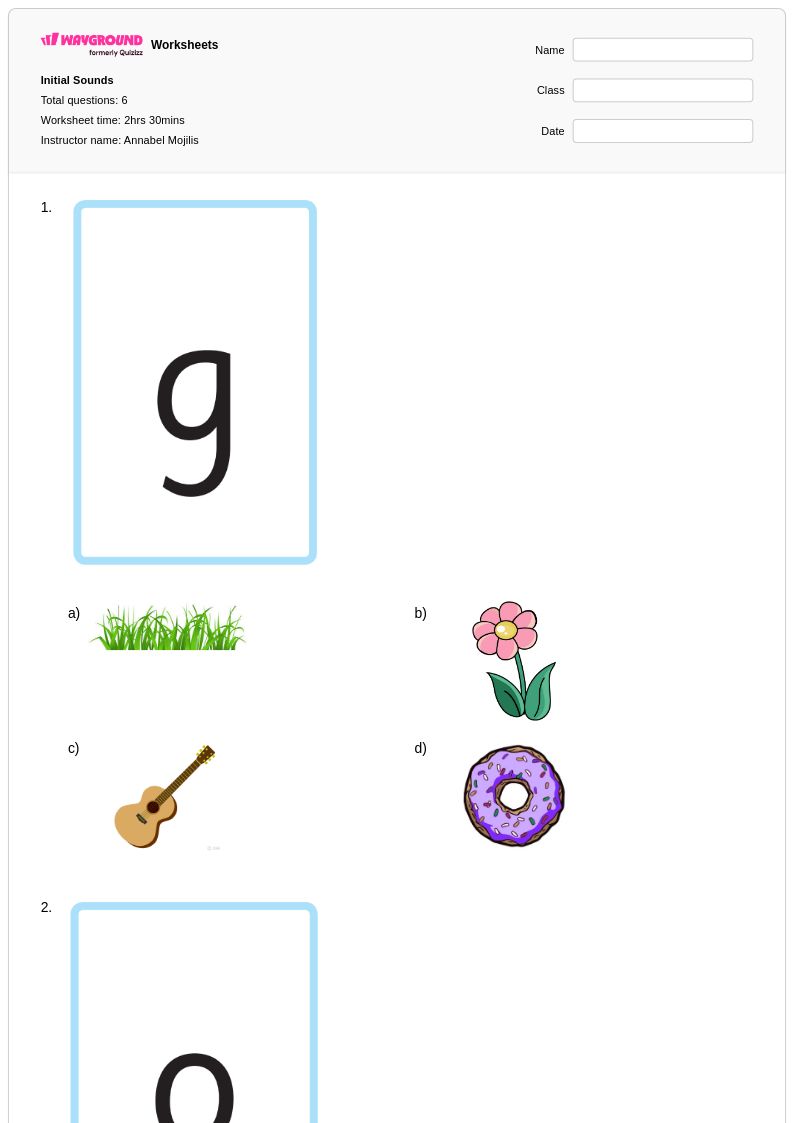
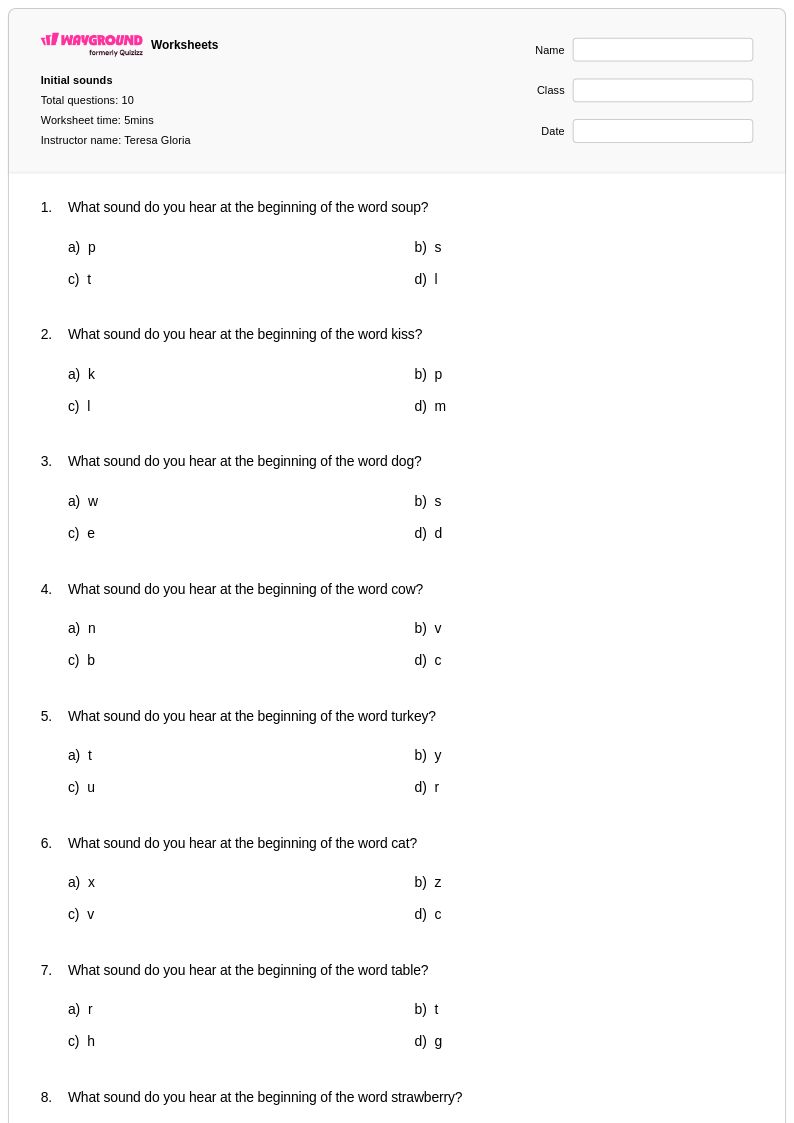
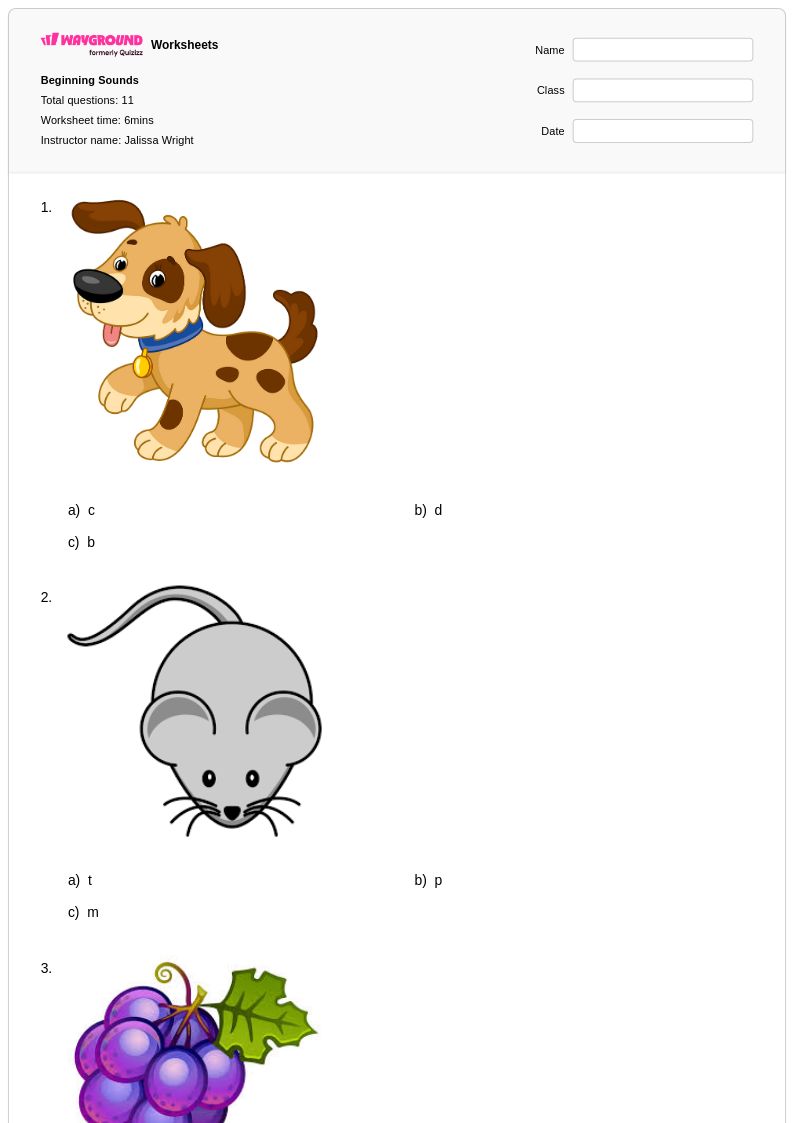
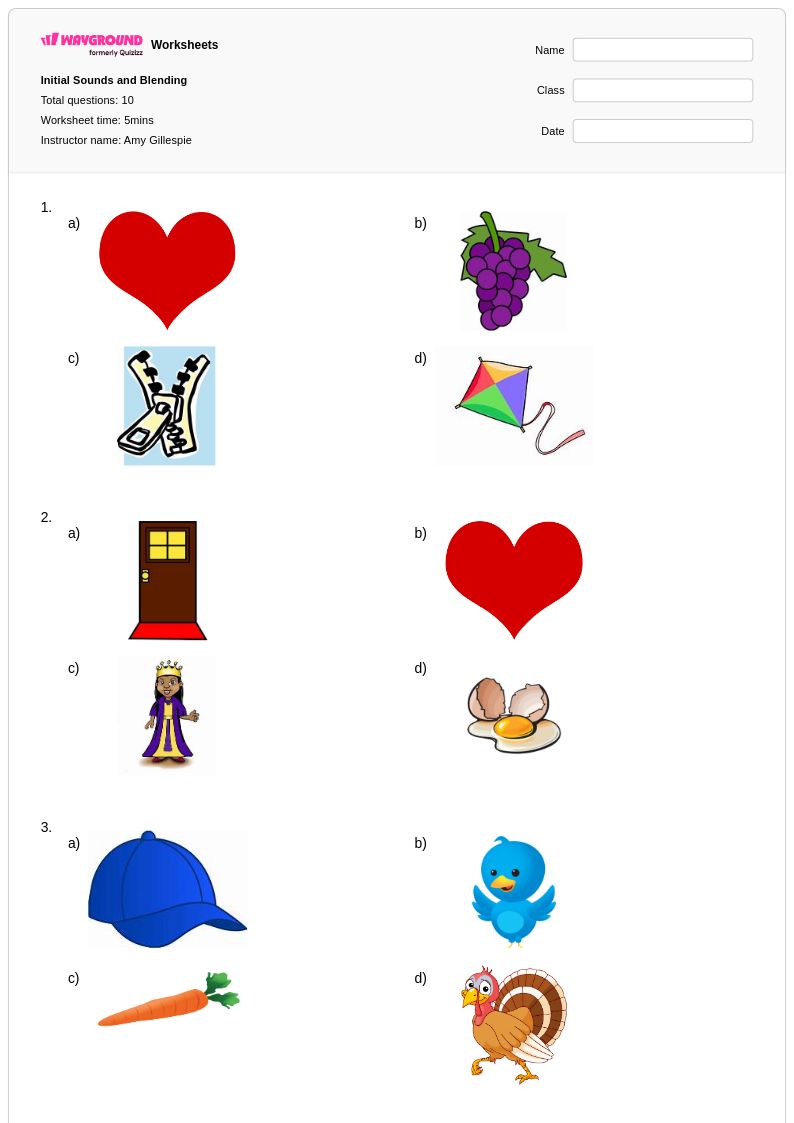
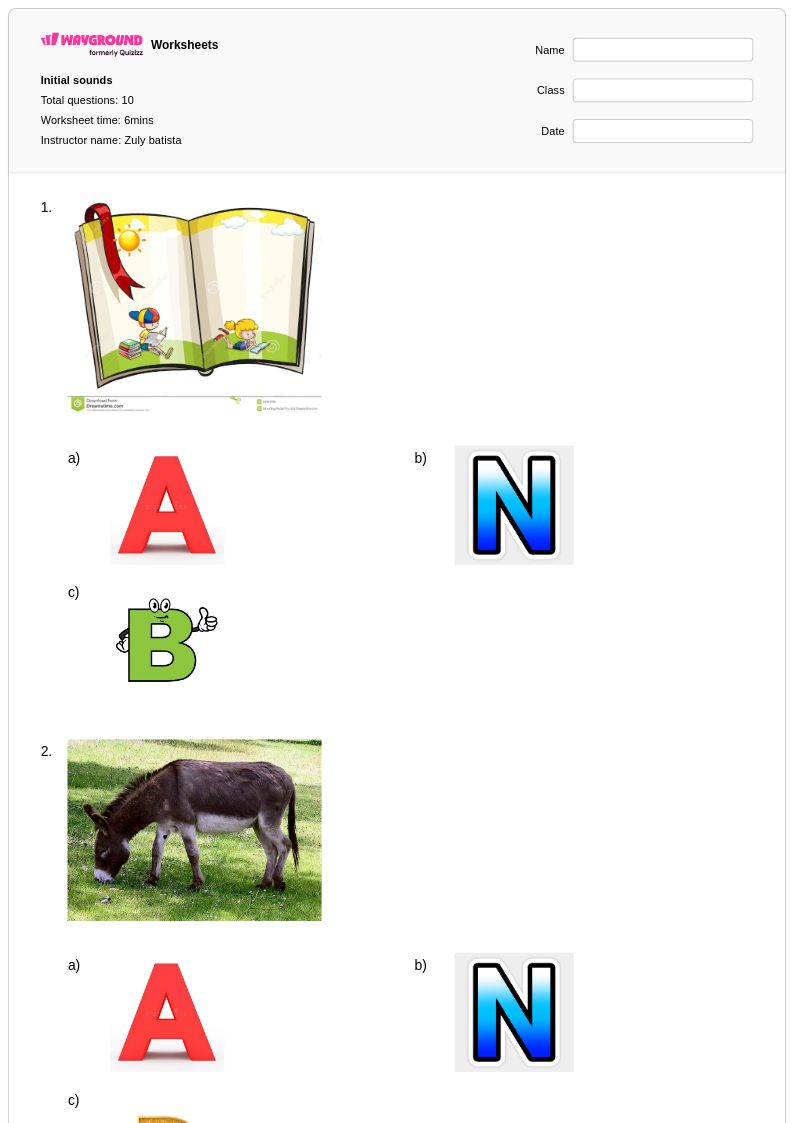
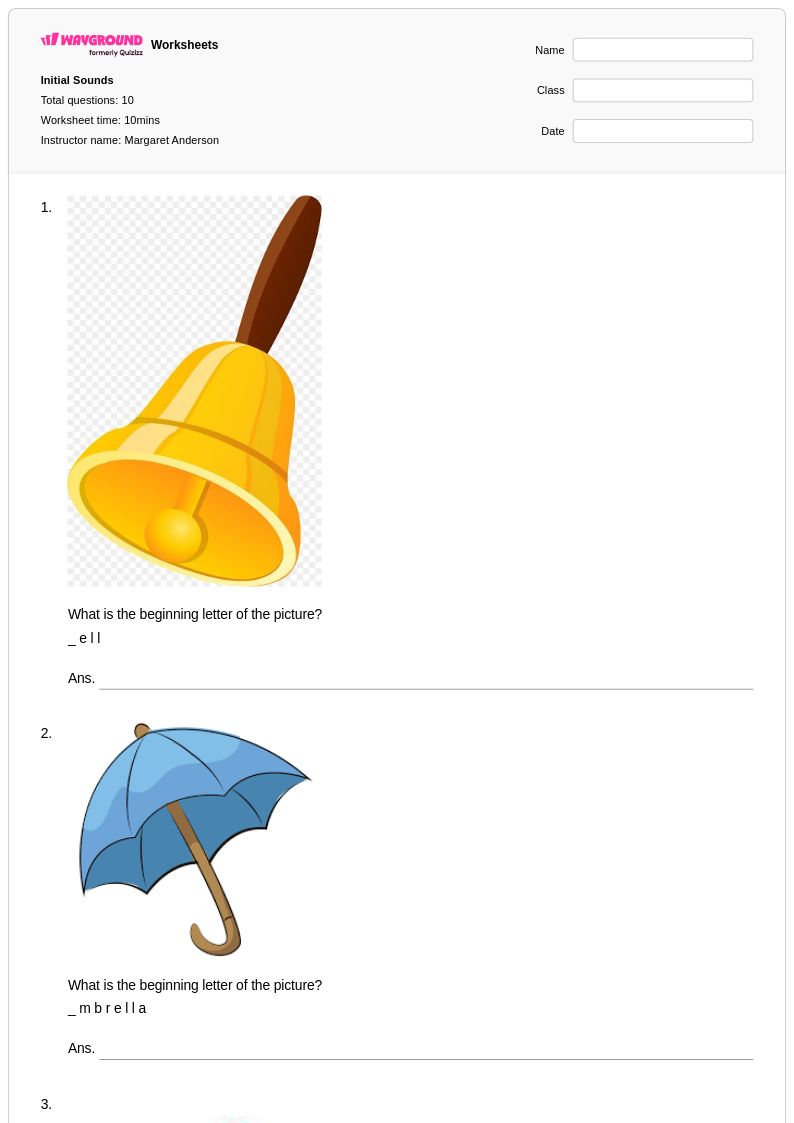
Discover free initial sounds worksheets and printables that help students master letter-sound relationships through engaging practice problems, complete with answer keys for effective phonics learning.
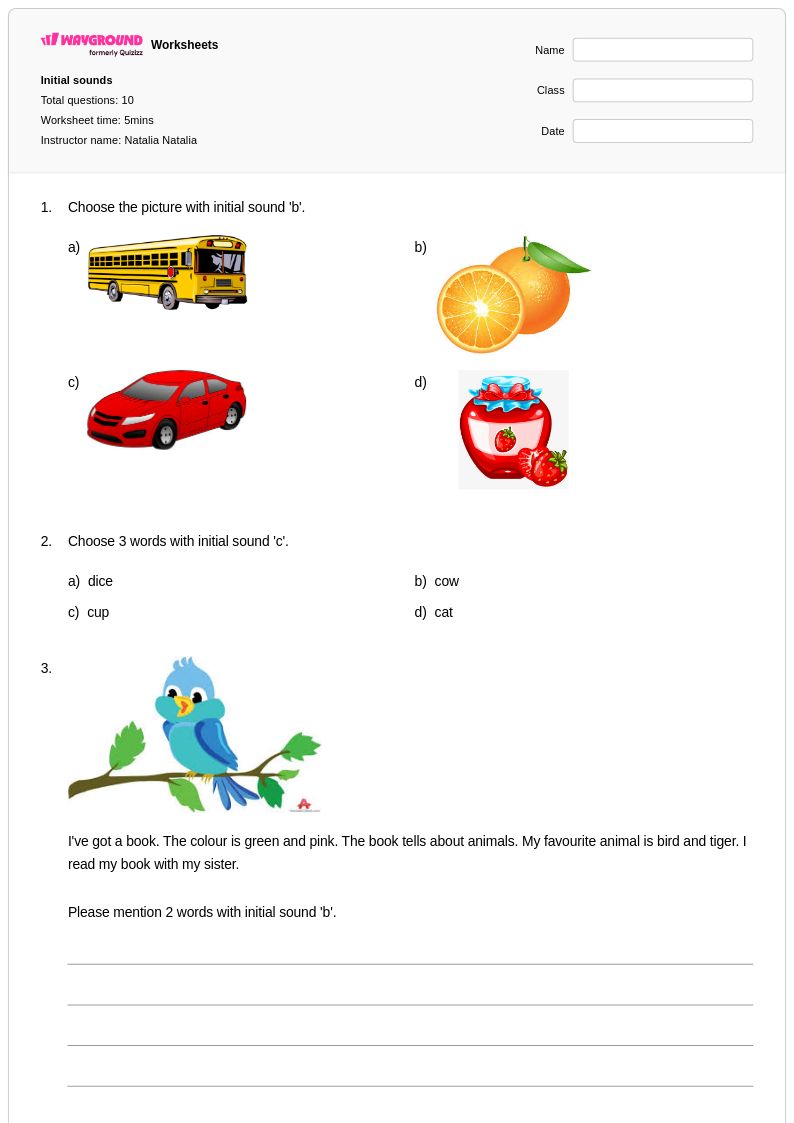
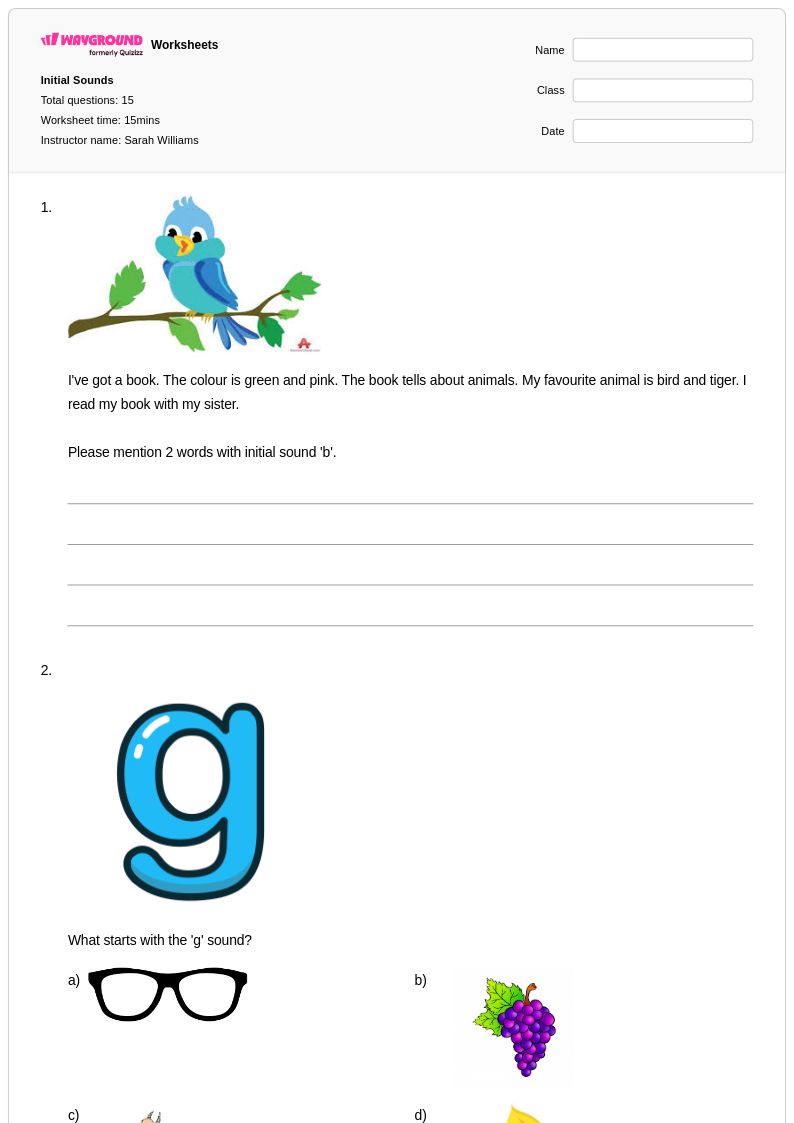
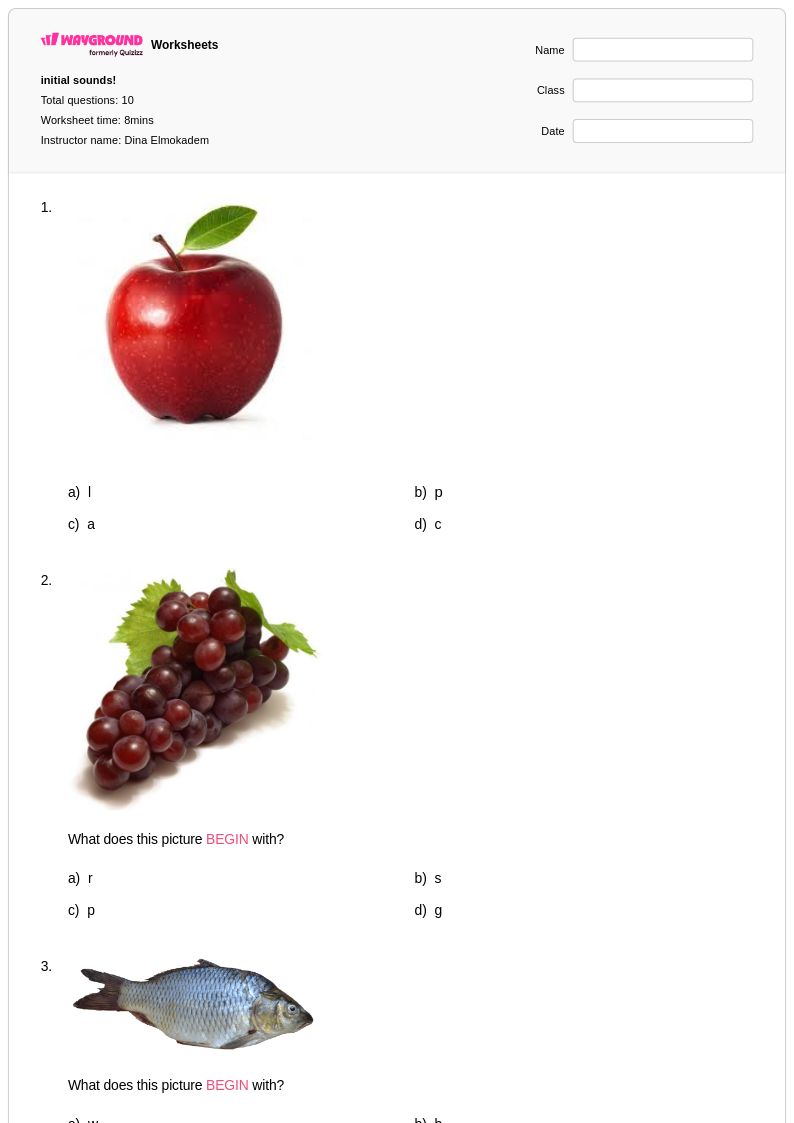
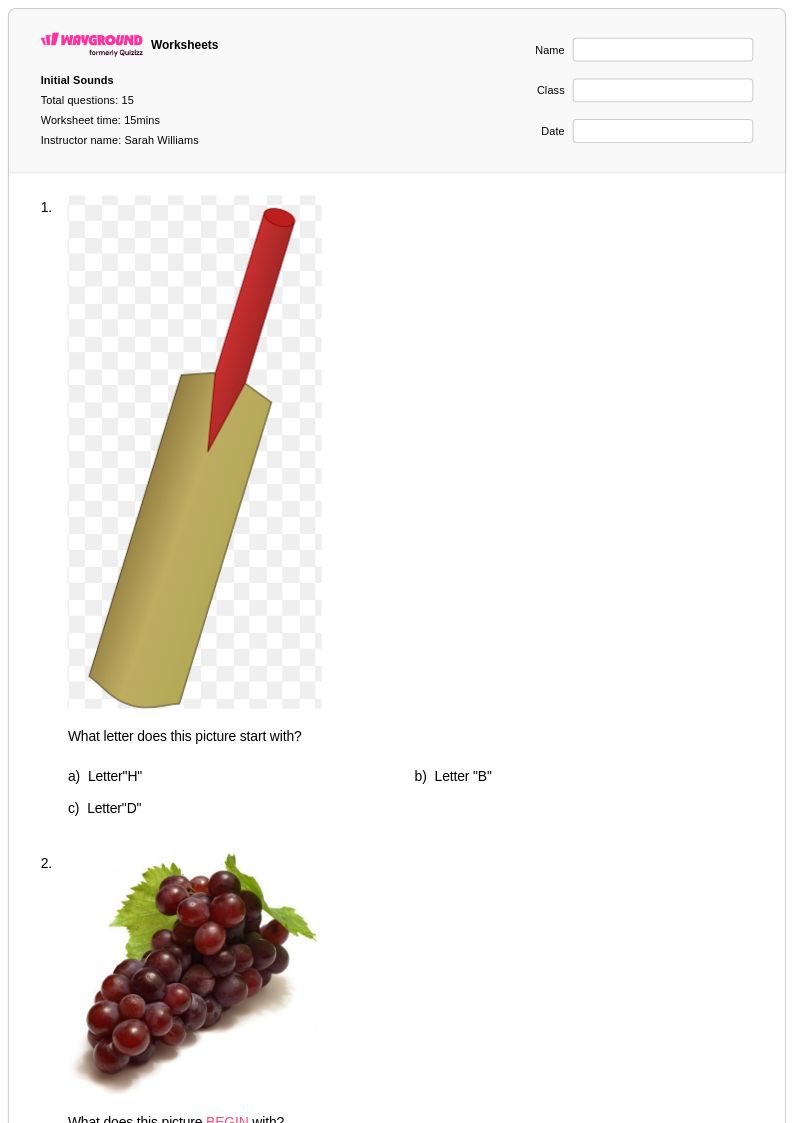
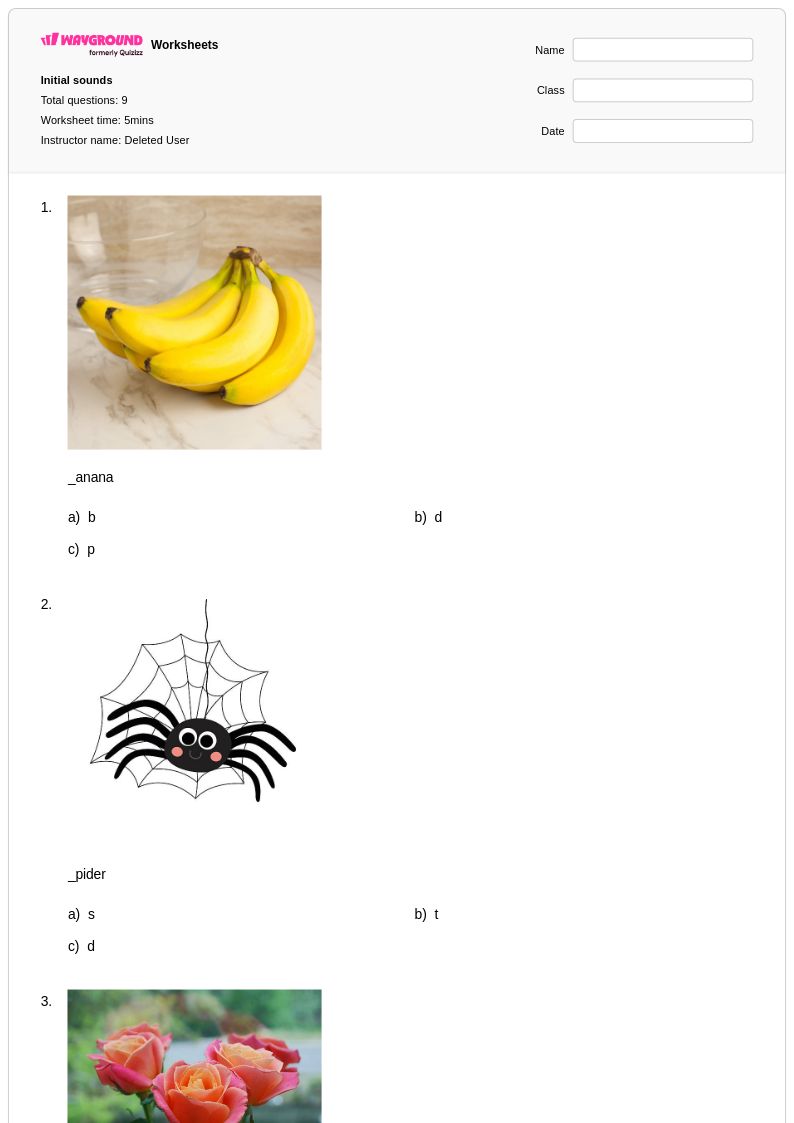
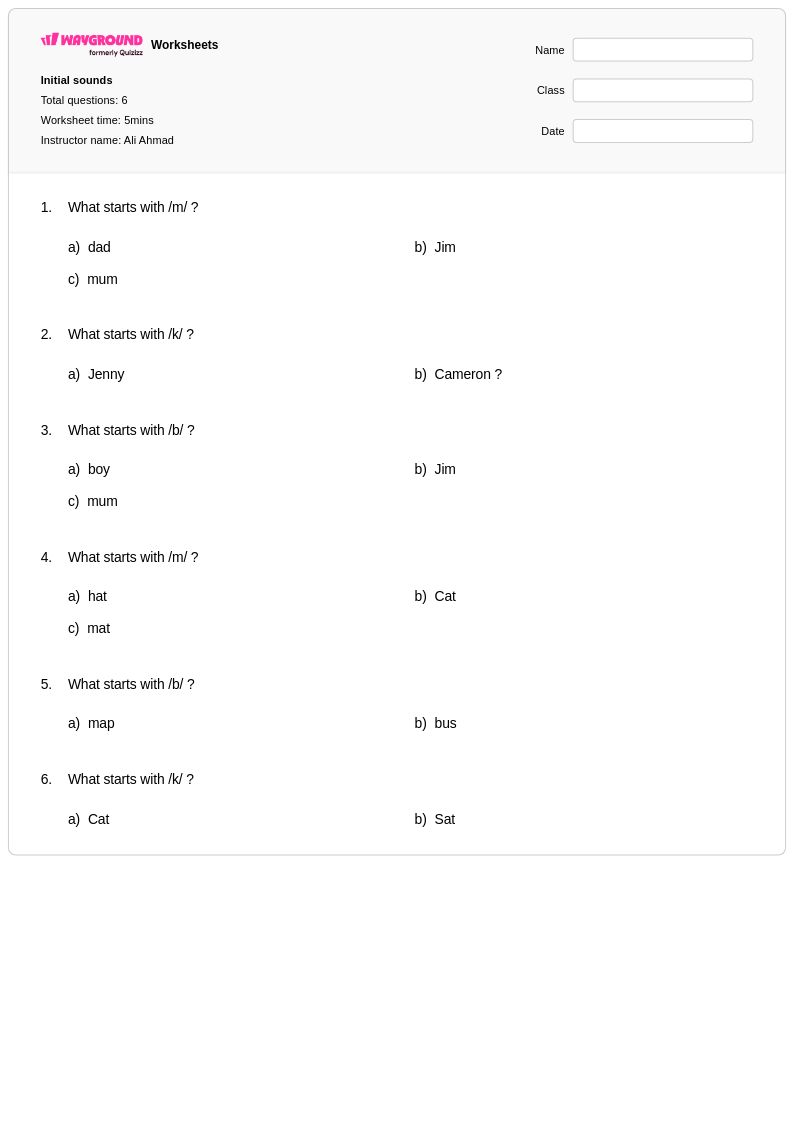
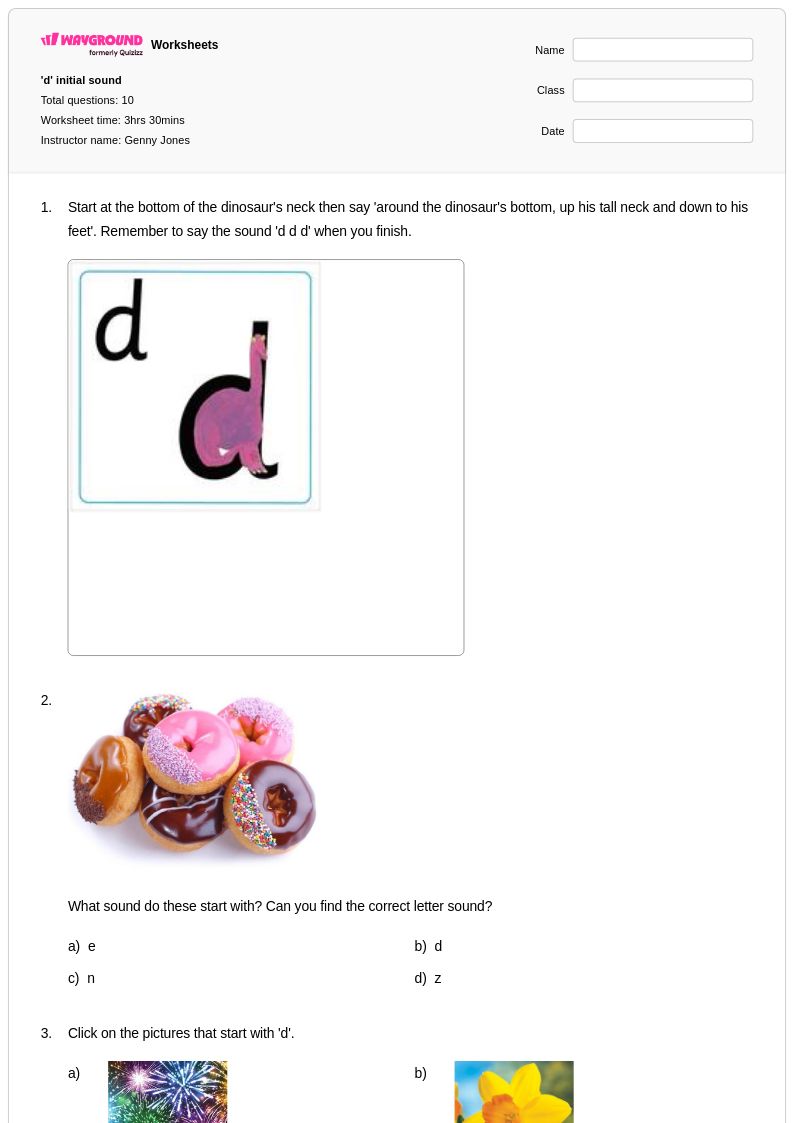
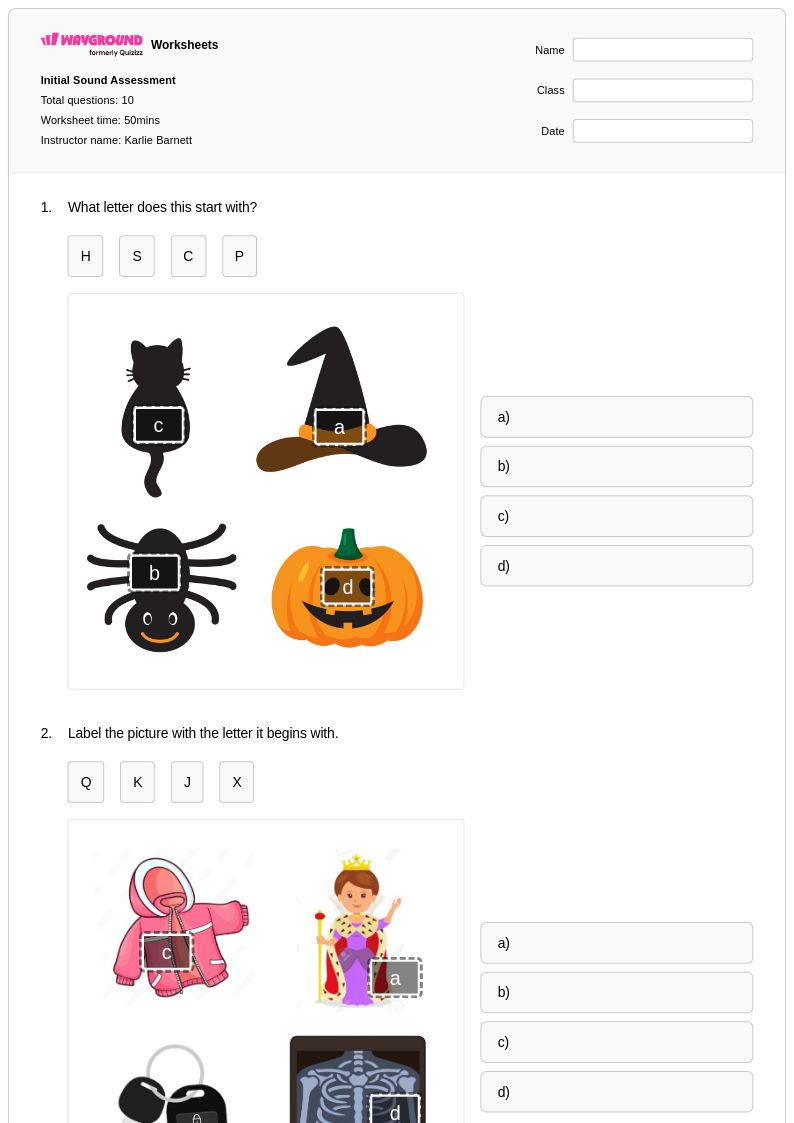
Initial sounds worksheets available through Wayground (formerly Quizizz) provide essential phonemic awareness practice that forms the foundation of reading development. These comprehensive printables focus specifically on helping students identify and isolate the beginning sounds in words, a critical pre-reading skill that supports phonological processing and letter-sound correspondence. The worksheet collection includes varied practice problems that engage learners through picture identification activities, sound matching exercises, and beginning sound sorting tasks. Each worksheet comes with a complete answer key and is available as a free pdf download, making it simple for educators to implement immediate assessment and provide targeted feedback on student progress in phonemic awareness development.
Wayground (formerly Quizizz) empowers teachers with millions of teacher-created initial sounds resources that streamline lesson planning and differentiated instruction. The platform's robust search and filtering capabilities allow educators to quickly locate worksheets that align with specific phonics standards and match individual student needs. Teachers can easily customize these printable and digital materials to accommodate various learning levels, making them ideal for remediation with struggling readers or enrichment activities for advanced learners. The flexibility of both pdf printables and interactive digital formats ensures that initial sounds practice can be seamlessly integrated into whole group instruction, small group interventions, or independent practice sessions, supporting comprehensive phonemic awareness skill development across diverse learning environments.
FAQs
How do I teach initial sounds to early readers?
Teaching initial sounds works best when instruction is explicit, multisensory, and tied to familiar words. Start by modeling how to stretch a word slowly and isolate the very first sound, then have students repeat the process with picture cards or objects. Pair auditory practice with visual letter-sound correspondence so students begin connecting what they hear to what they see on the page. Consistent, brief daily practice sessions are more effective than infrequent longer ones for building phonemic awareness at this stage.
What exercises help students practice identifying beginning sounds in words?
Effective practice activities for initial sounds include picture-to-sound matching, beginning sound sorting by letter, and odd-one-out tasks where students identify which word in a set starts differently. Worksheets that use familiar images reduce the cognitive load of decoding so students can focus entirely on the phoneme. Repeated exposure across multiple exercise types helps students generalize the skill rather than memorizing isolated examples.
What mistakes do students commonly make when learning initial sounds?
A common error is confusing the initial sound with the letter name rather than the letter sound, for example saying 'double-you' instead of /w/ for the word 'water.' Students also frequently blend the first consonant cluster together rather than isolating the true onset, particularly with blends like 'bl' or 'str.' Another typical mistake is anchoring to the whole word's meaning rather than its sound, which is why picture-based tasks must use unambiguous images with single dominant labels.
How do I use Wayground's initial sounds worksheets in my classroom?
Wayground's initial sounds worksheets are available as printable PDFs for traditional classroom use and in digital formats for technology-integrated instruction, including the option to host them as a quiz directly on Wayground. Printable versions work well for small group intervention tables or take-home practice, while the digital format supports independent station work and provides immediate feedback. Each worksheet includes a complete answer key, so teachers can assess student responses quickly and provide targeted feedback on phonemic awareness development. For students who need support, Wayground also offers built-in accommodations such as Read Aloud, extended time, and reduced answer choices, which can be assigned individually without other students being notified.
How can I differentiate initial sounds practice for students at different skill levels?
For students who are still developing phonemic awareness, choose worksheets that use highly familiar picture prompts and focus on a single high-contrast sound pair, such as /m/ versus /s/. More advanced learners can be challenged with beginning sound sorting across a broader range of phonemes or tasks that require producing rather than just recognizing the initial sound. On Wayground, teachers can also assign accommodations such as Read Aloud or reduced answer choices to individual students, allowing the same digital worksheet to serve multiple skill levels without creating separate assignments.
At what age or grade level should students be able to identify initial sounds?
Most children develop the ability to isolate and identify initial sounds in spoken words between ages 4 and 6, typically in pre-kindergarten through kindergarten. This skill is a foundational milestone in phonological awareness that precedes blending, segmenting, and eventually decoding printed words. Students who have not yet secured initial sound identification by the end of kindergarten often benefit from targeted small-group intervention before moving into more advanced phonics instruction.