

10 Q
8th - 10th

10 Q
9th - Uni

14 Q
9th - 12th

10 Q
9th - 12th

10 Q
9th - 12th

11 Q
9th - 10th

17 Q
9th - 12th

12 Q
9th - 12th
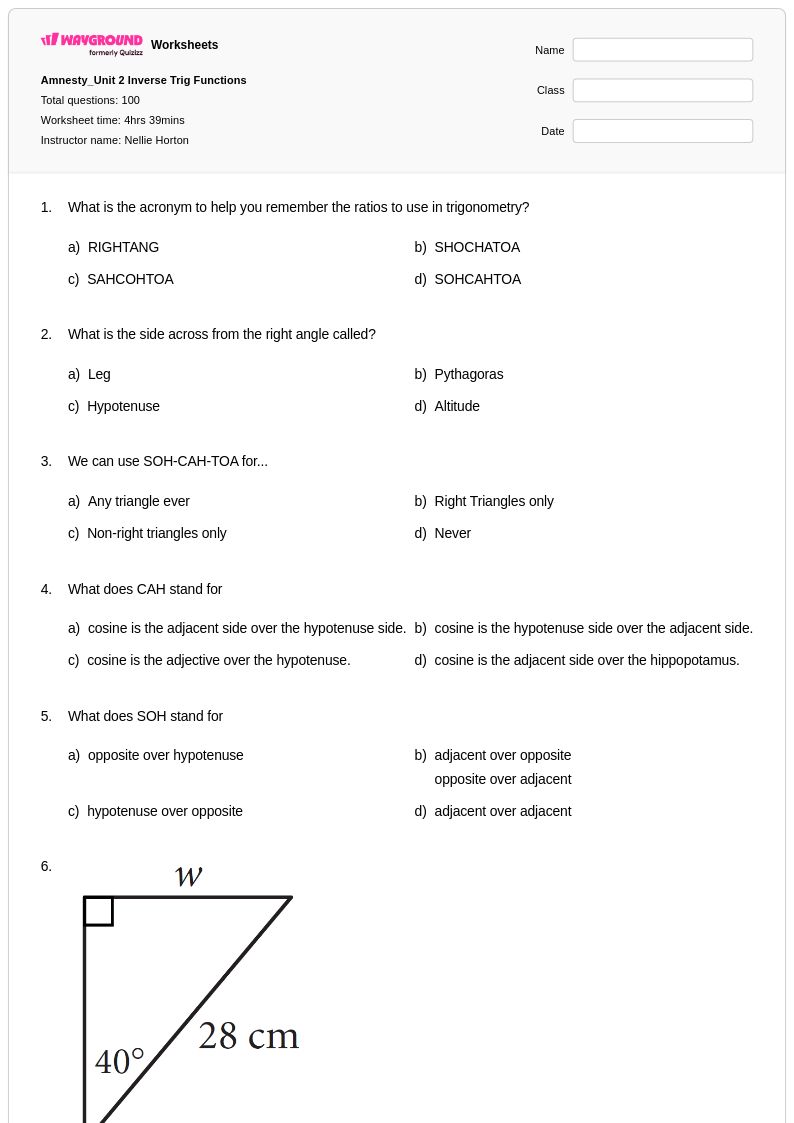
100 Q
9th - 12th

21 Q
9th - 12th

24 Q
9th - 12th
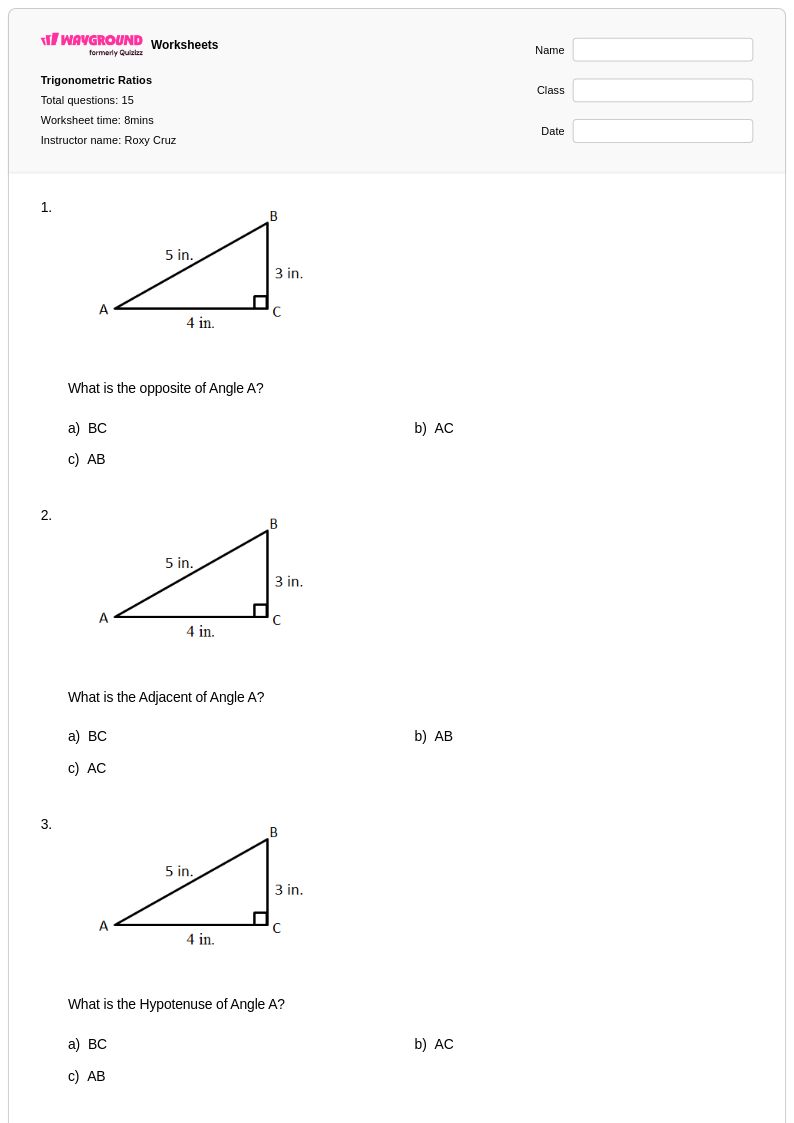
15 Q
9th
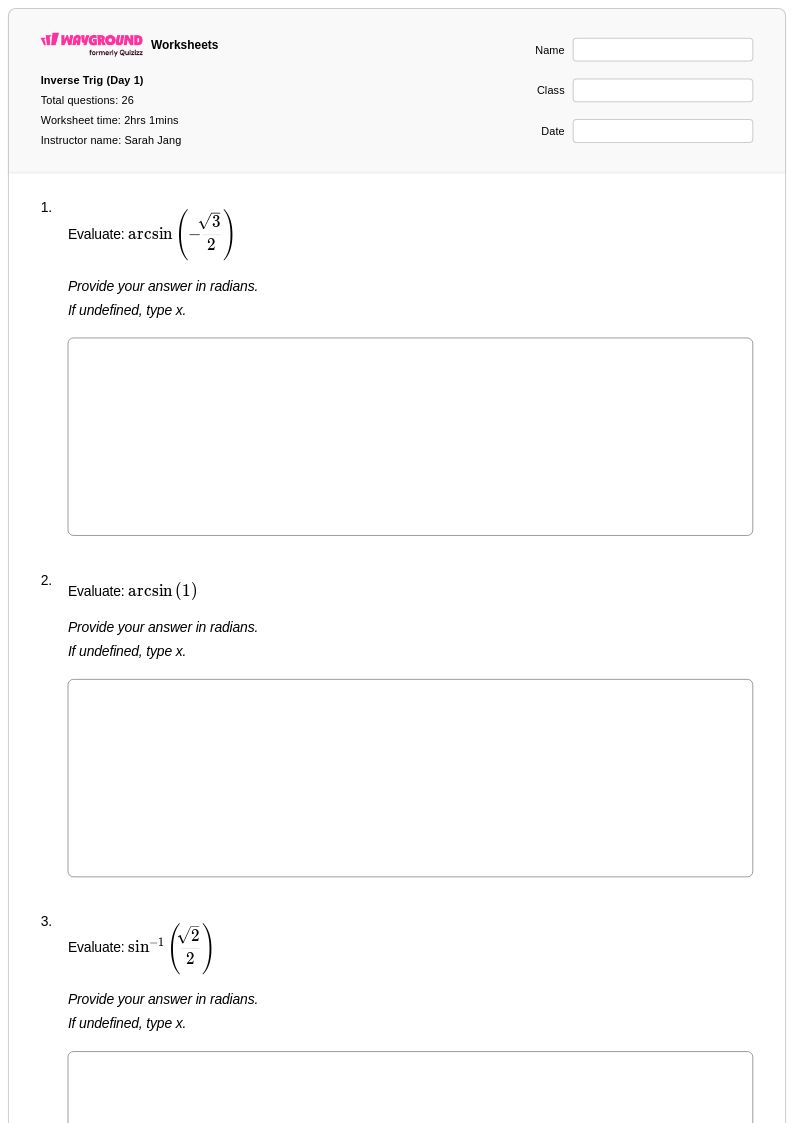
26 Q
9th - 12th
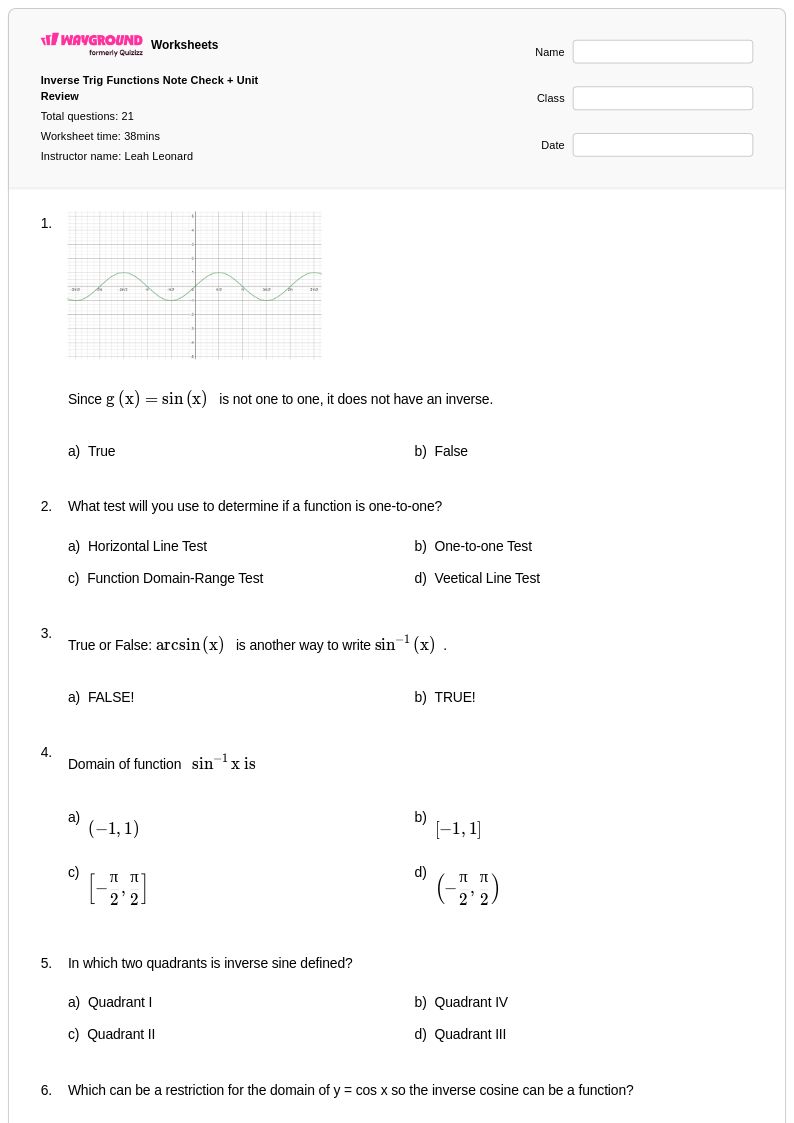
21 Q
9th
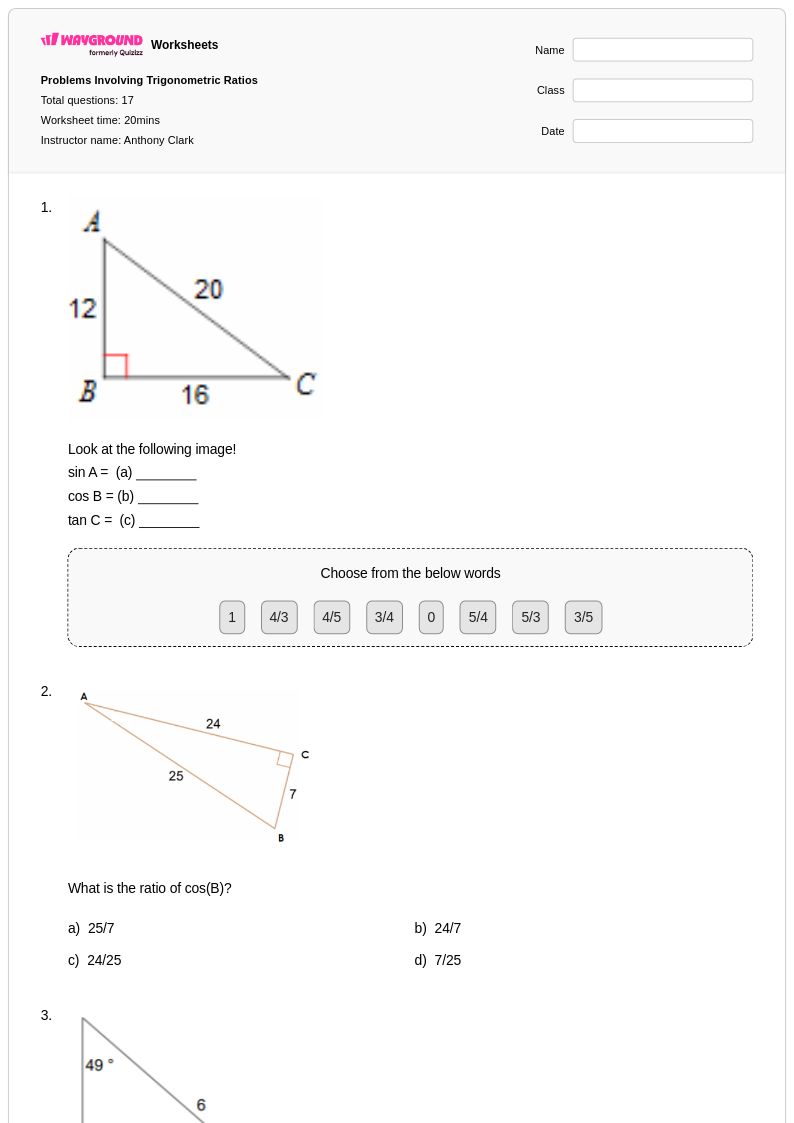
20 Q
9th - Uni

20 Q
9th - Uni

20 Q
9th - 12th

37 Q
9th - 12th
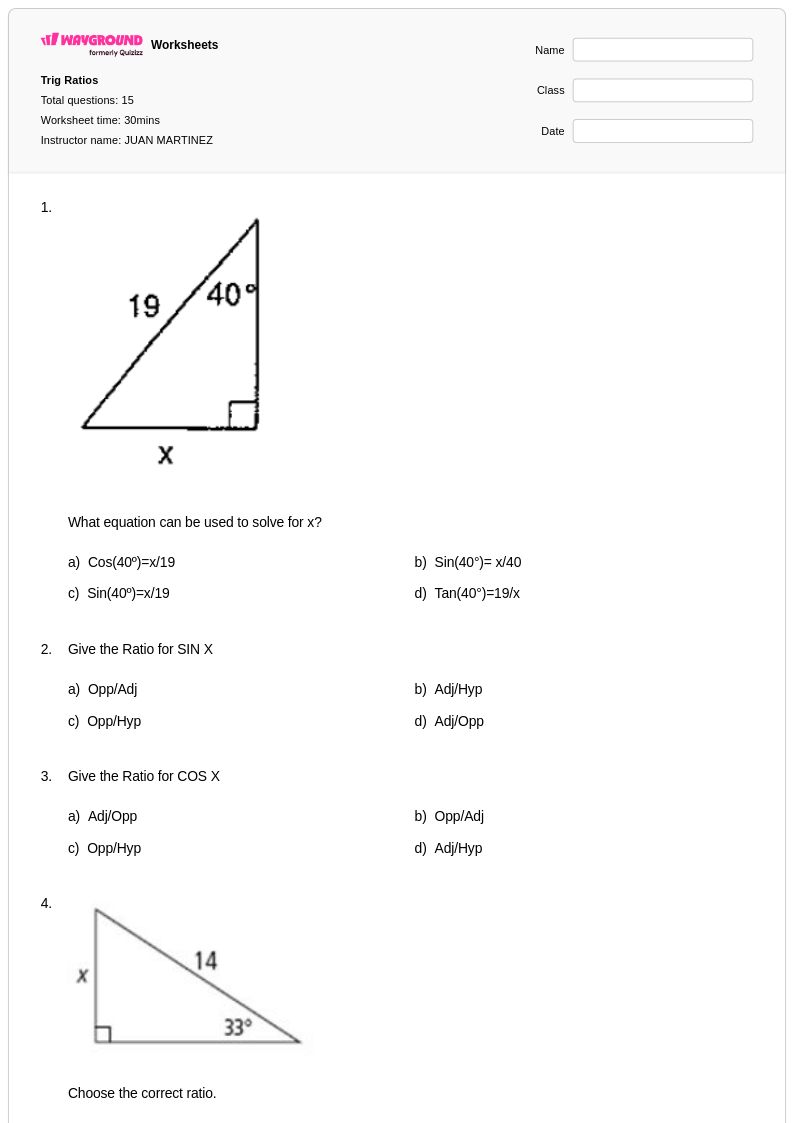
15 Q
9th - 12th
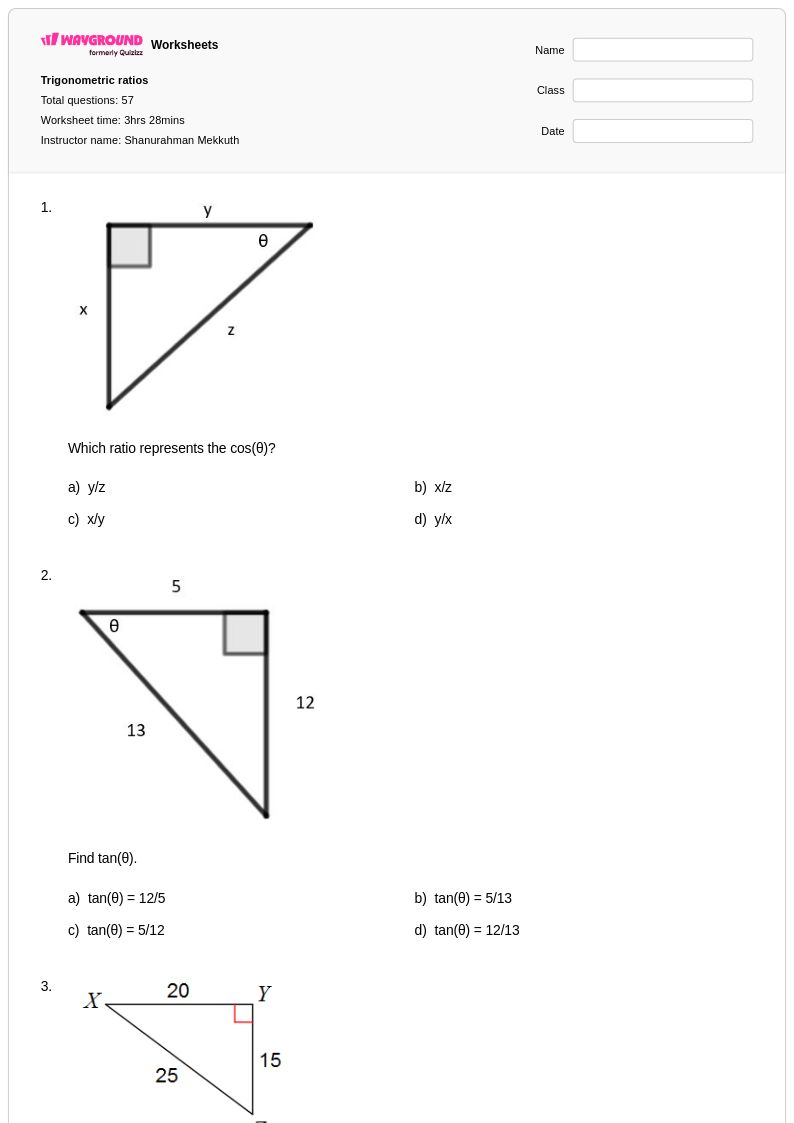
57 Q
9th
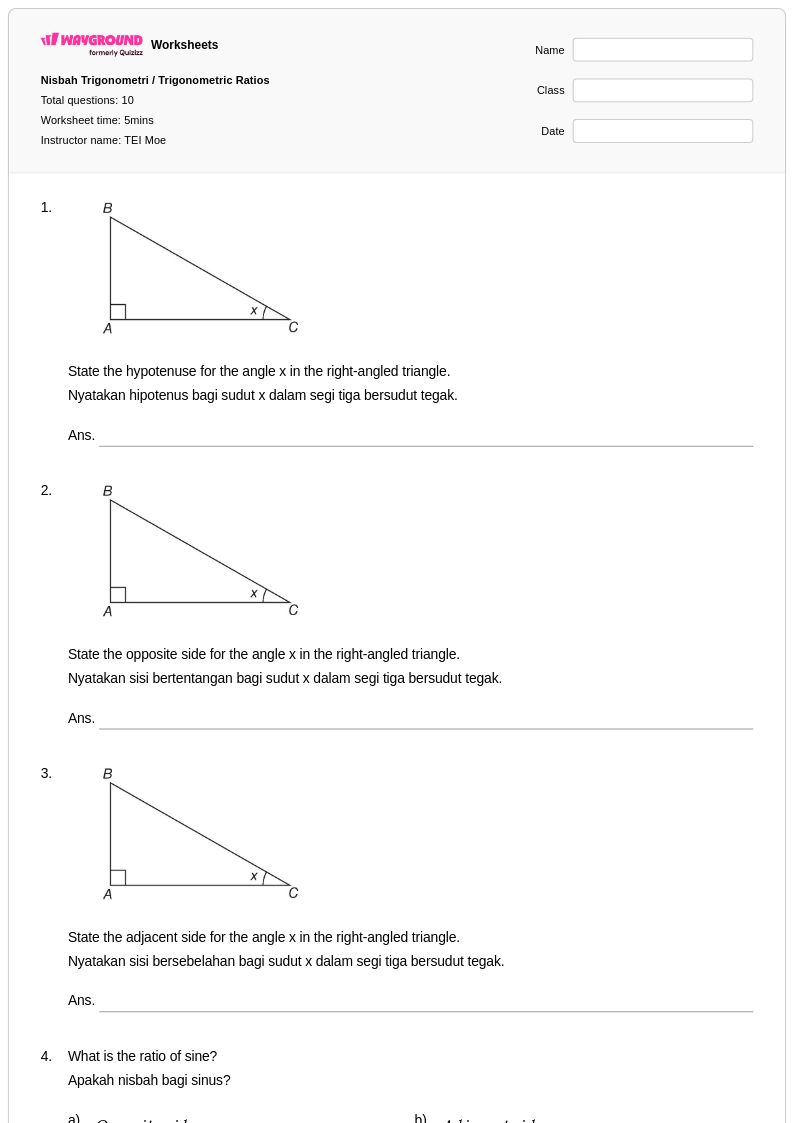
10 Q
9th
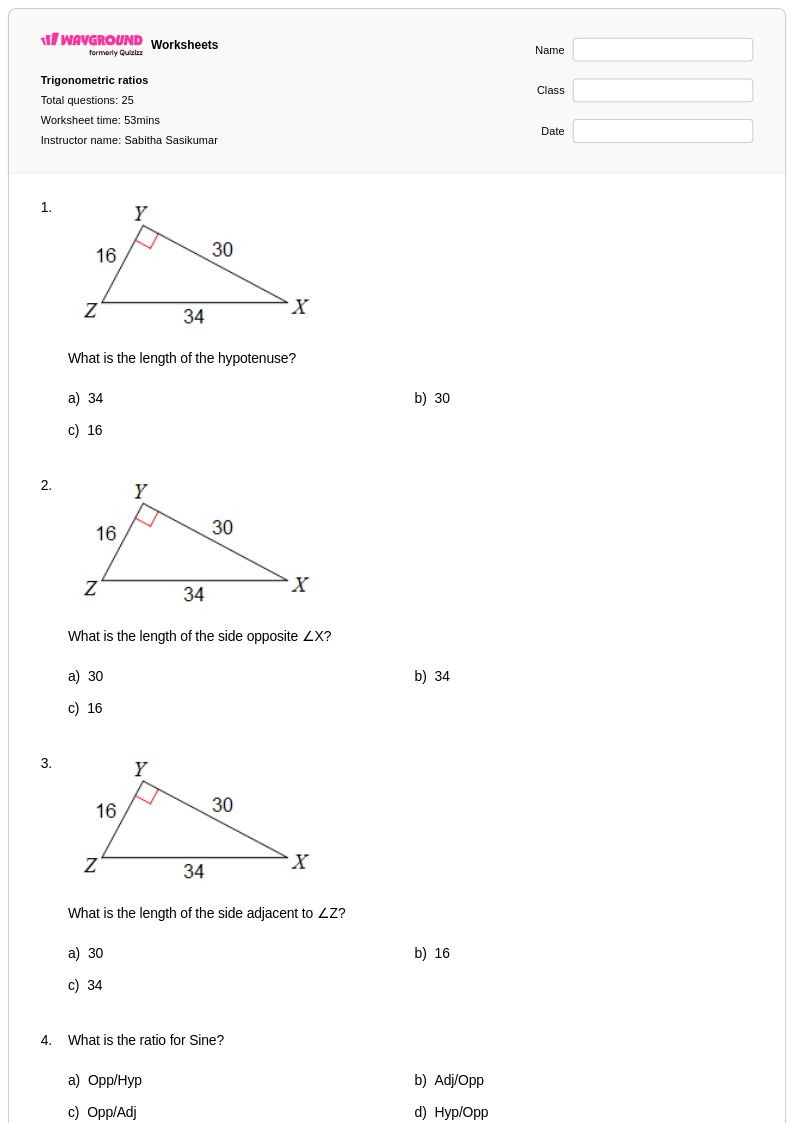
25 Q
9th
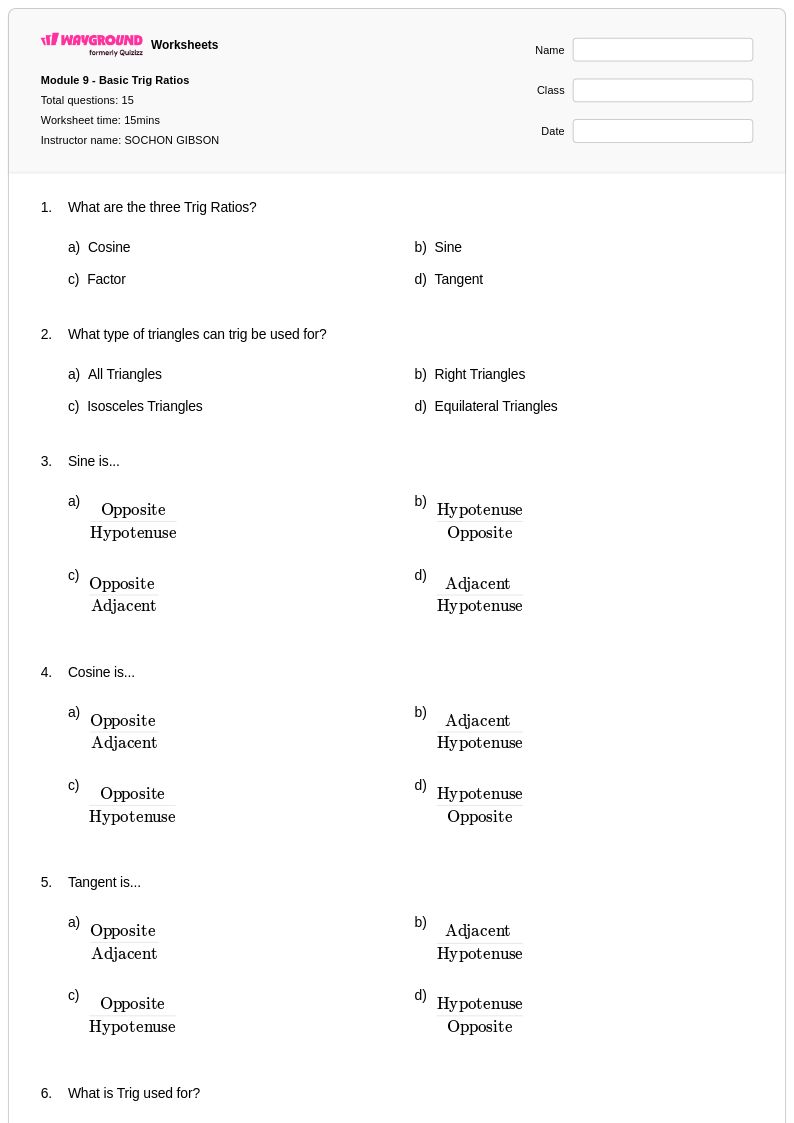
15 Q
9th - 12th
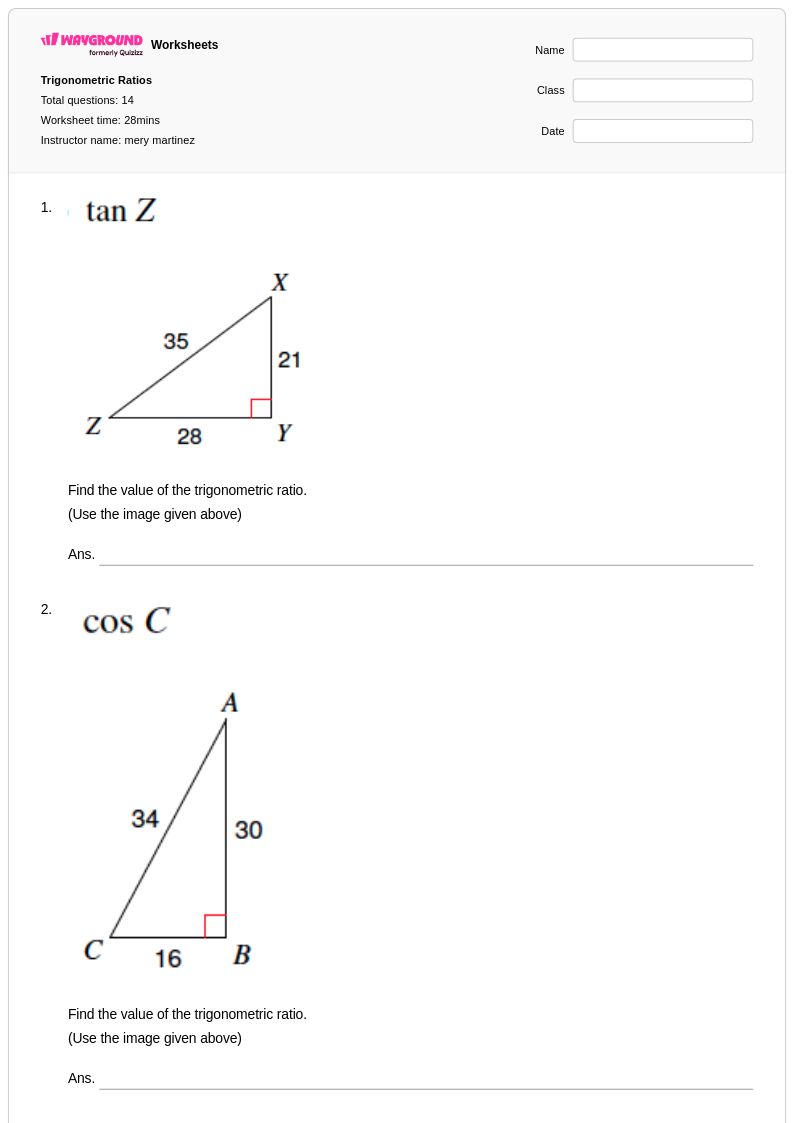
14 Q
9th
Explore Other Subject Worksheets for year 9
Explore printable Inverse Trigonometric Ratios worksheets for Year 9
Inverse trigonometric ratios worksheets for Year 9 students available through Wayground (formerly Quizizz) provide comprehensive practice with finding angles when trigonometric ratios are known. These carefully designed worksheets strengthen students' understanding of arcsine, arccosine, and arctangent functions, helping them master the relationship between trigonometric ratios and their corresponding angles. Students work through practice problems that require them to apply inverse trigonometric functions to solve for unknown angles in right triangles, building essential skills for advanced trigonometry and calculus. Each worksheet includes detailed answer key support, and these free printables offer structured opportunities for students to develop fluency with calculator use and proper notation when working with inverse trigonometric functions.
Wayground (formerly Quizizz) empowers teachers with millions of teacher-created inverse trigonometric ratio resources that include robust search and filtering capabilities to locate materials perfectly aligned with Year 9 mathematics standards. The platform's differentiation tools allow educators to customize worksheets based on individual student needs, whether providing additional scaffolding for struggling learners or enrichment challenges for advanced students. Teachers can access these resources in both printable pdf format for traditional classroom use and digital formats for online learning environments, making lesson planning more efficient and flexible. These comprehensive worksheet collections support targeted skill practice, enable focused remediation of specific concept gaps, and provide multiple pathways for students to master the critical thinking skills required when working with inverse trigonometric relationships.
FAQs
What grade do students learn inverse trigonometric ratios?
How should I introduce inverse trig ratios to 9th graders?
What exercises help 9th graders practice inverse trig?
What is a common mistake 9th graders make with inverse trig?
How can I use this Grade 9 inverse trig worksheet?
How does this topic align with Common Core Geometry standards?