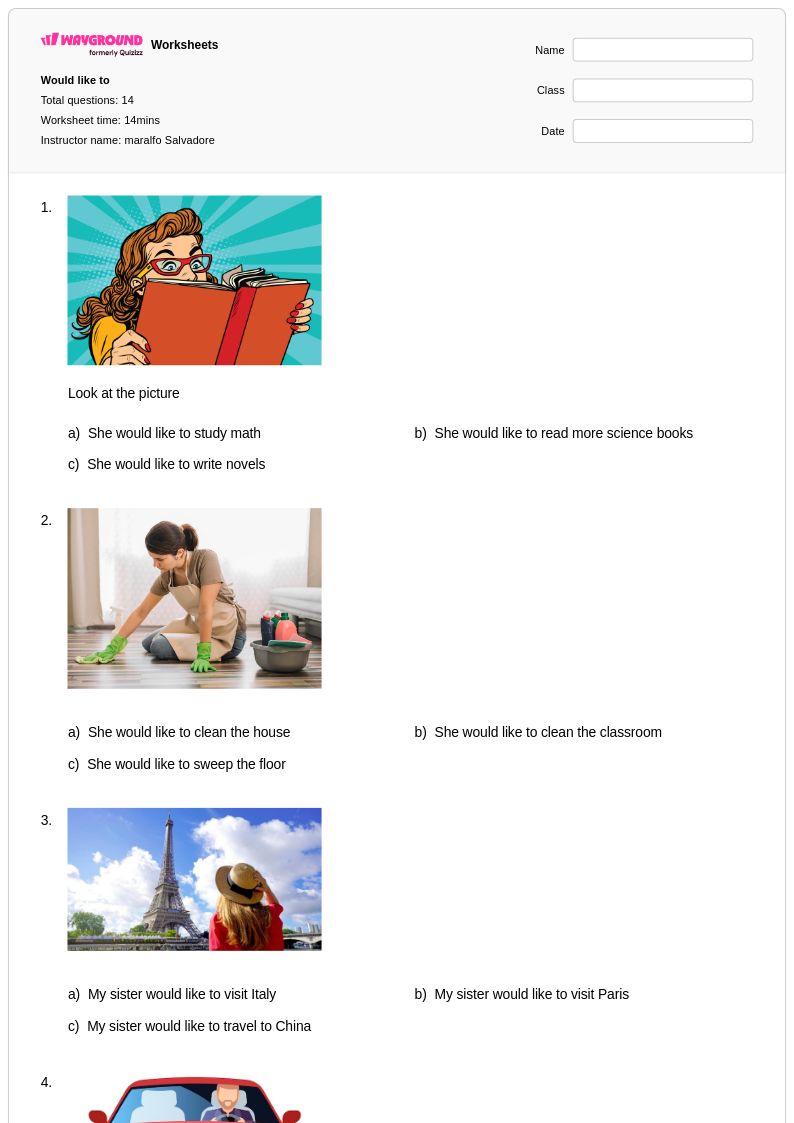
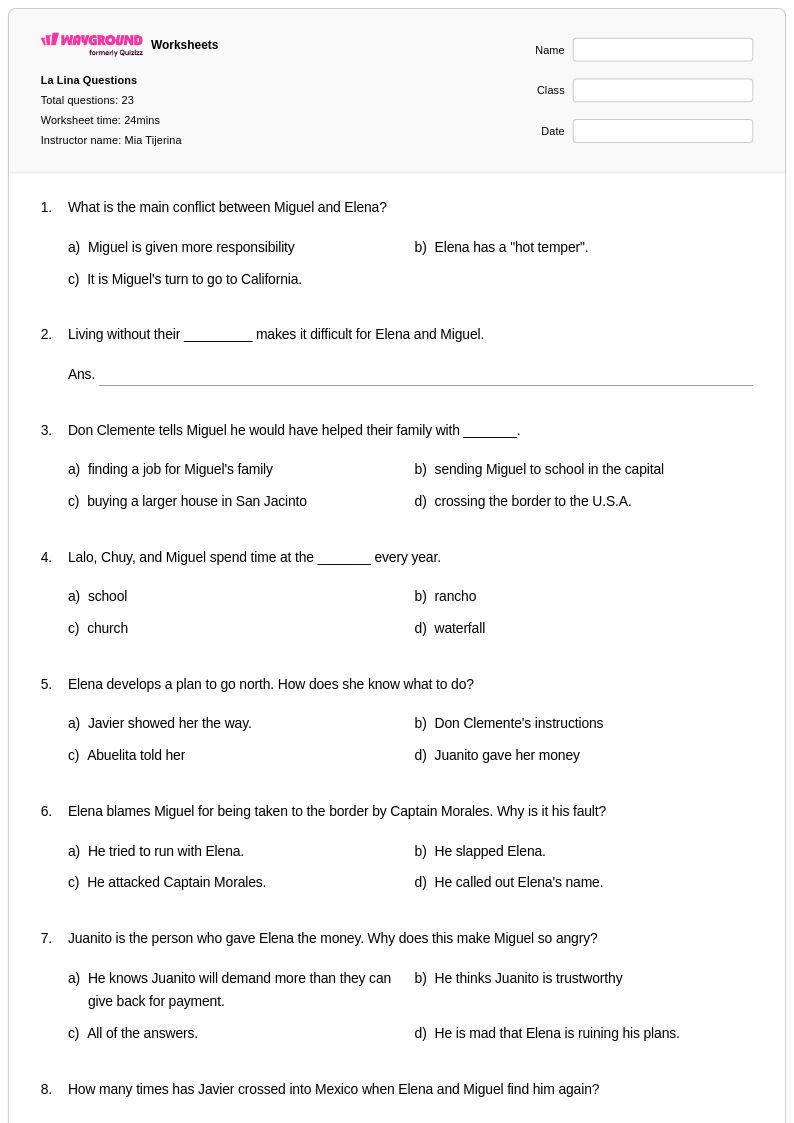
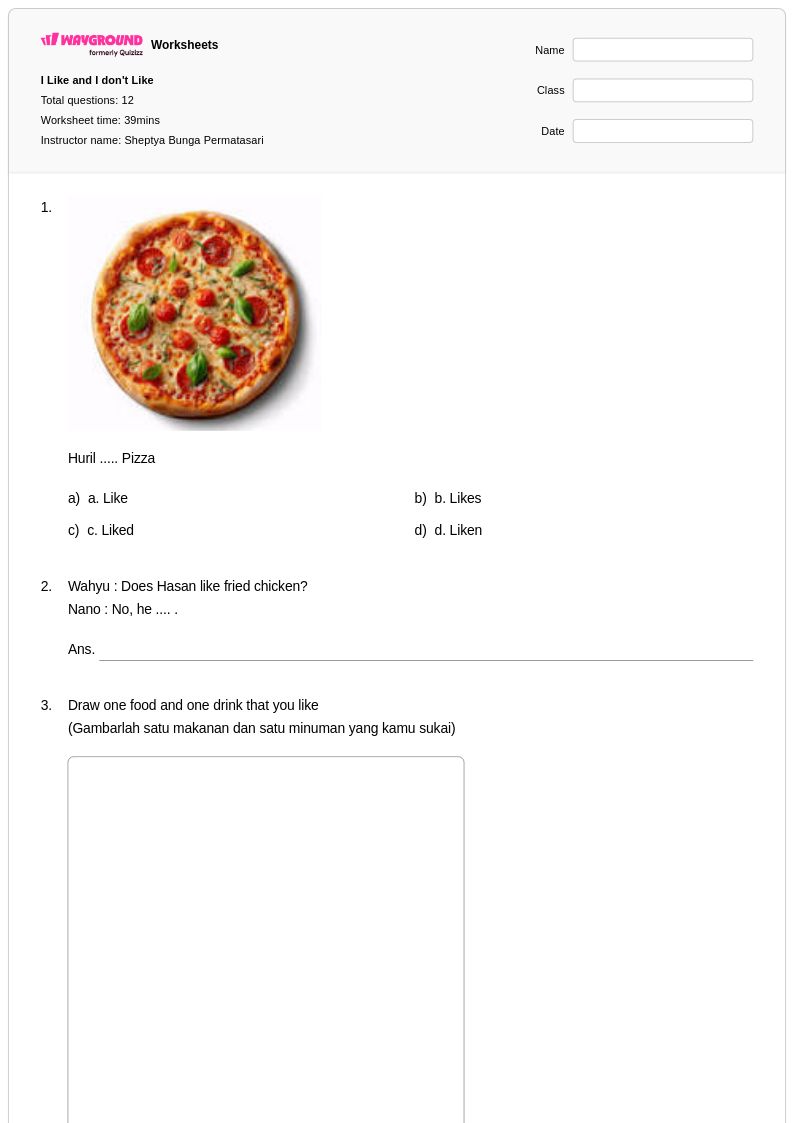
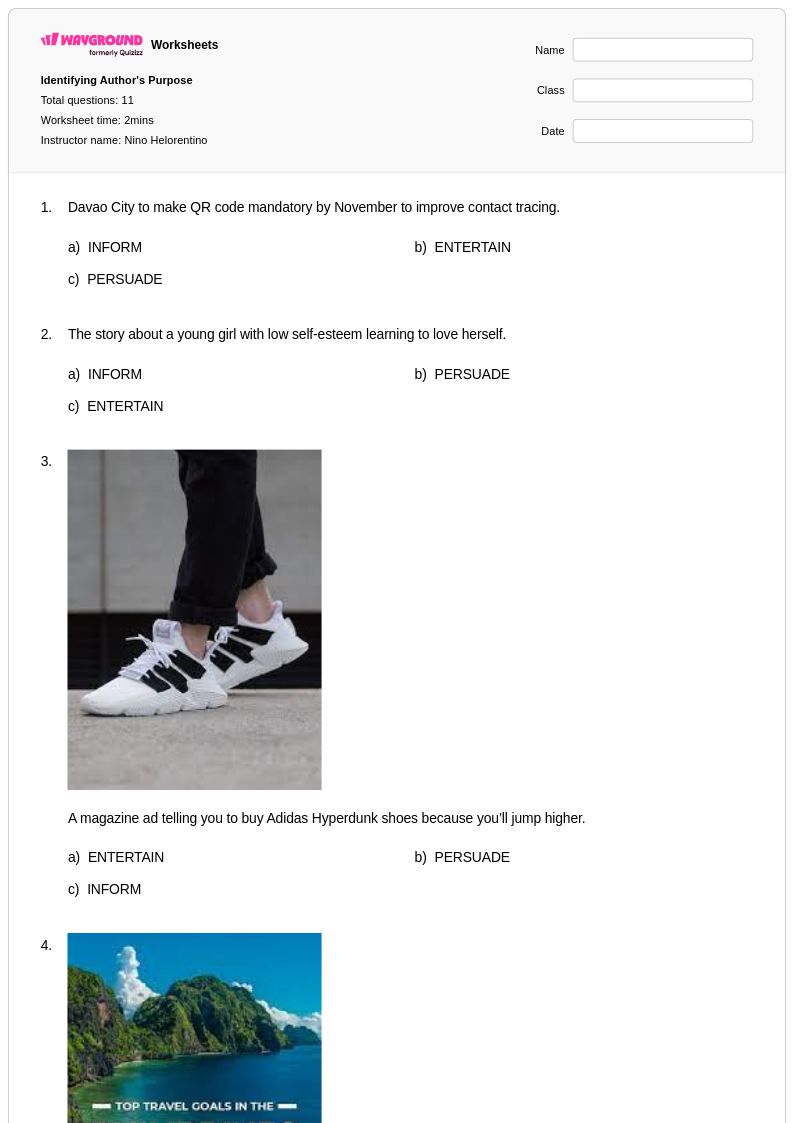
Enhance your students' fine motor skills and letter formation with Wayground's comprehensive collection of free line tracing worksheets, featuring printable PDFs with guided practice problems and answer keys for effective handwriting development.
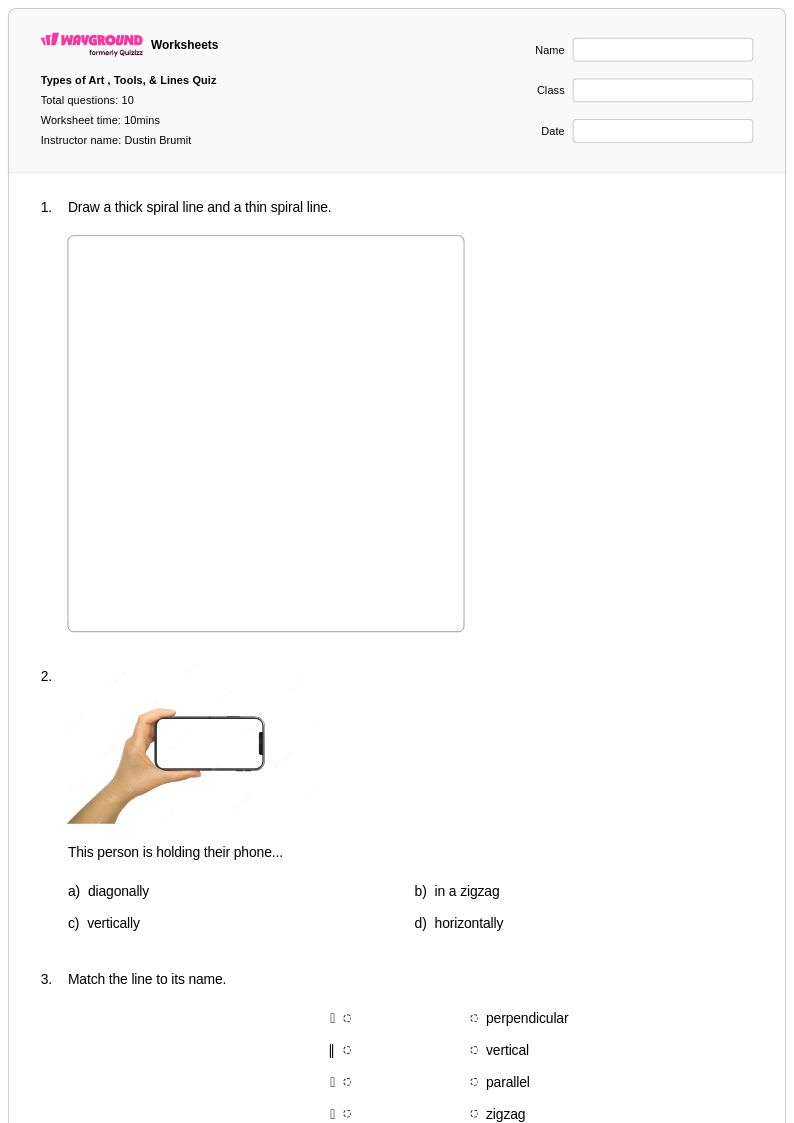
Line tracing worksheets available through Wayground (formerly Quizizz) provide essential foundational practice for developing fine motor control and pre-writing skills. These comprehensive resources focus on guiding students through systematic tracing exercises that strengthen hand-eye coordination, pencil grip, and directional movement patterns crucial for handwriting development. The worksheets feature a variety of line types including straight lines, curves, zigzags, and complex patterns that progressively build motor skills and visual tracking abilities. Each printable resource includes clear practice problems with dotted guidelines and starting points, while accompanying answer keys help educators assess proper technique and completion. These free pdf worksheets serve as invaluable tools for building the muscle memory and spatial awareness necessary for successful letter formation and overall handwriting fluency.
Wayground (formerly Quizizz) supports educators with millions of teacher-created line tracing resources that streamline instruction planning and skill development. The platform's robust search and filtering capabilities allow teachers to quickly locate worksheets tailored to specific skill levels and learning objectives, while standards alignment ensures content meets educational requirements. Advanced differentiation tools enable customization of difficulty levels, line complexity, and practice duration to accommodate diverse learners within the same classroom. Available in both printable pdf format and digital versions, these worksheets facilitate flexible implementation whether for individual remediation, whole-group instruction, or enrichment activities. Teachers can efficiently organize progressive skill-building sequences, monitor student progress through systematic practice, and provide targeted support for students who need additional fine motor development before advancing to letter writing.
FAQs
How do I teach line tracing to beginners?
Start with large, simple straight lines before progressing to curves, zigzags, and diagonal strokes. Model the correct pencil grip and directional movement explicitly, using verbal cues like 'start at the dot and pull down' to reinforce spatial awareness. Consistent short sessions build the muscle memory students need before moving on to letter formation.
What types of lines should students practice before learning to write letters?
Students should practice horizontal lines, vertical lines, diagonal strokes, curves, and zigzags in roughly that order of complexity. Each line type develops a specific motor pattern that maps directly onto letter components — for example, curves underpin letters like 'c', 'o', and 'a', while vertical strokes support 'l', 'i', and 't'. Building these patterns systematically reduces errors when students transition to actual letter writing.
What exercises help students practice fine motor control for handwriting?
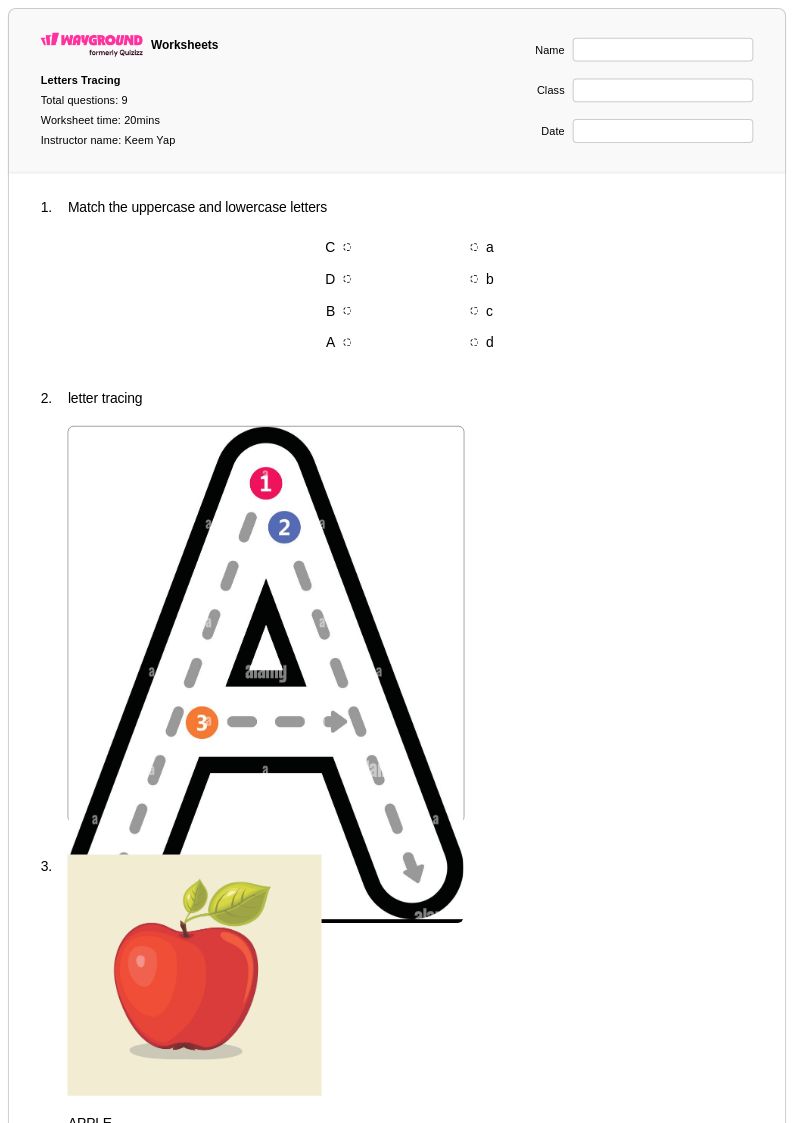
Guided tracing exercises using dotted guidelines with clear starting points are among the most effective practices for developing fine motor control, because they give students a defined path to follow while still requiring deliberate hand movement. Progressing from wider dotted guides to narrower ones gradually increases the precision required. Repeated tracing of varied line types — straight, curved, and zigzag — builds the hand-eye coordination and directional consistency that handwriting demands.
What mistakes do students commonly make during line tracing activities?
The most common errors include starting from the wrong end of the line, inconsistent pencil pressure that results in faint or broken strokes, and drifting off the dotted path due to weak hand-eye coordination. Some students also rush through exercises without maintaining the intended direction of movement. Reviewing completed worksheets against an answer key helps teachers identify whether errors are grip-related, directional, or attentional.
How can I differentiate line tracing practice for students at different skill levels?
Offer simpler straight-line worksheets to students who are still developing basic pencil control, while providing curves and complex patterns to those who are ready for more challenge. On Wayground, teachers can apply individual accommodations such as Read Aloud for students who need instructions read to them, or adjusted font sizes and themes through reading mode for accessibility. These settings can be applied per student without other students being notified, allowing seamless differentiation within the same classroom session.
How do I use Wayground's line tracing worksheets in my classroom?
Wayground's line tracing worksheets are available as printable PDFs for traditional pencil-and-paper practice and in digital formats for technology-integrated classrooms. Teachers can assign them as independent seat work, small-group stations, or homework, and can also host them as a quiz directly on Wayground to track completion. Each worksheet includes dotted guidelines, starting points, and an answer key so teachers can assess technique without additional preparation.