Free Printable Map Components Worksheets for Year 1
Year 1 map components worksheets and printables help young students learn to identify and understand basic map elements through engaging practice problems with answer keys available as free PDF downloads.
Explore printable Map Components worksheets for Year 1
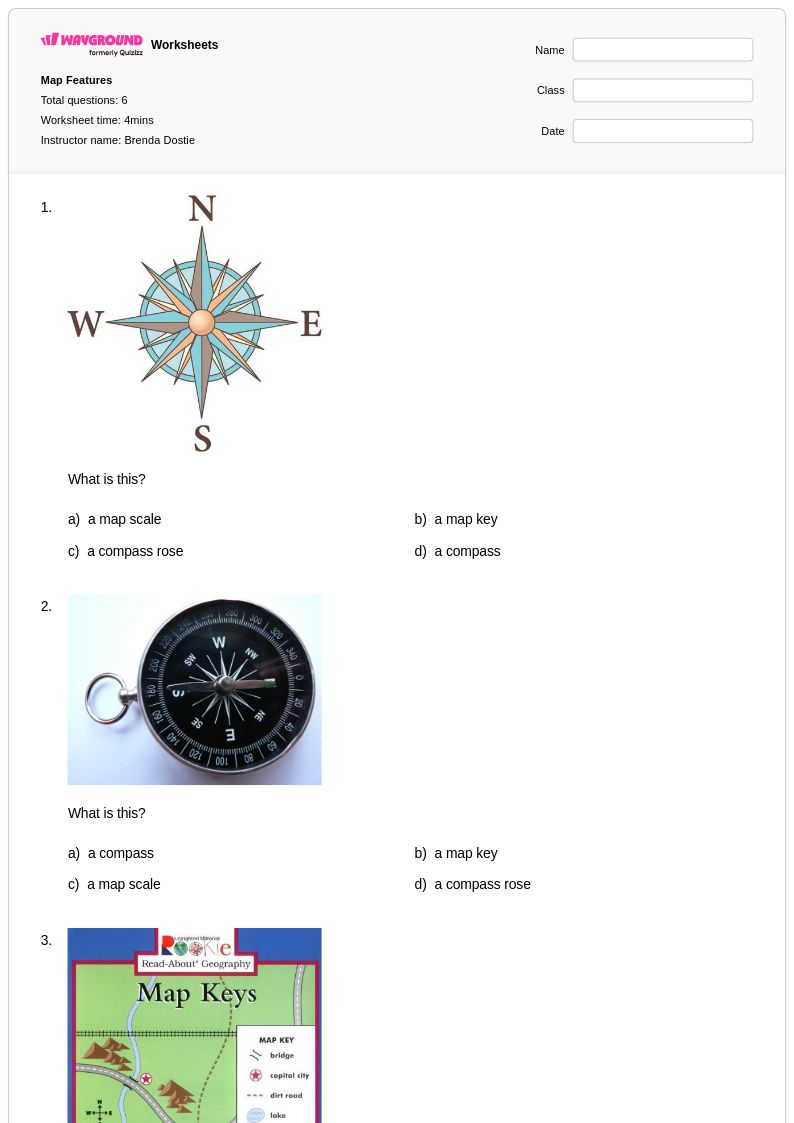
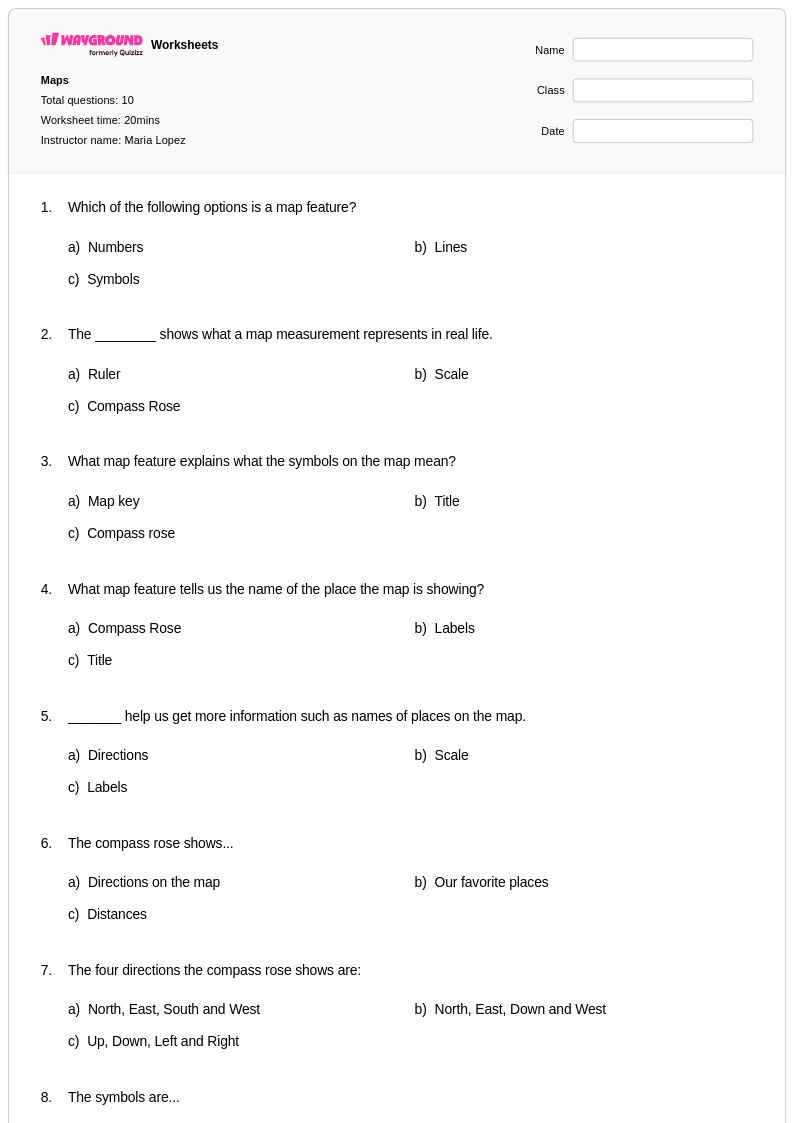
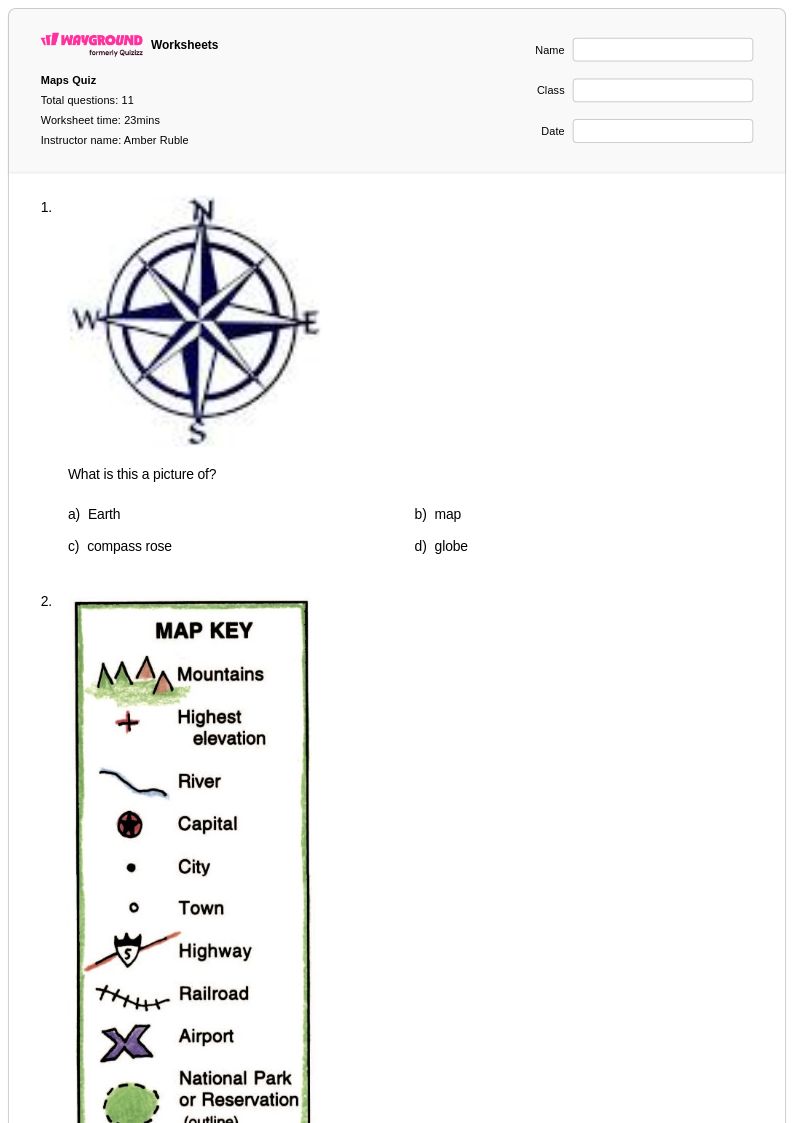
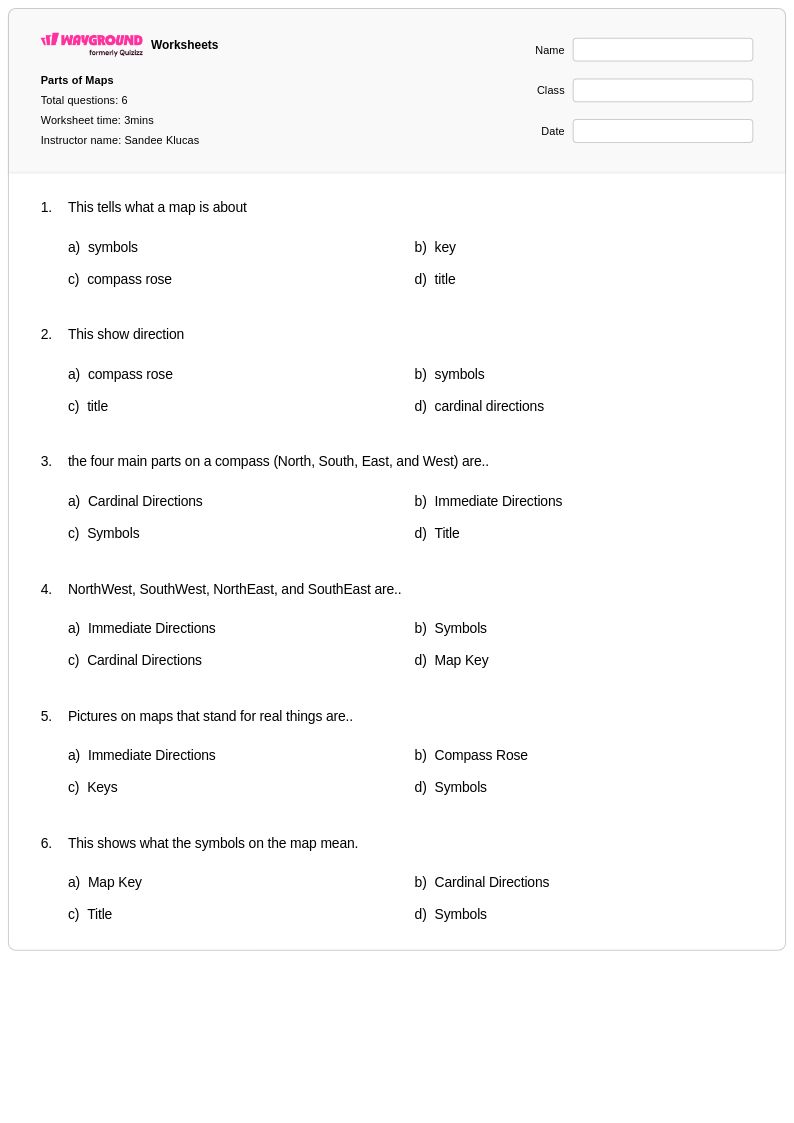
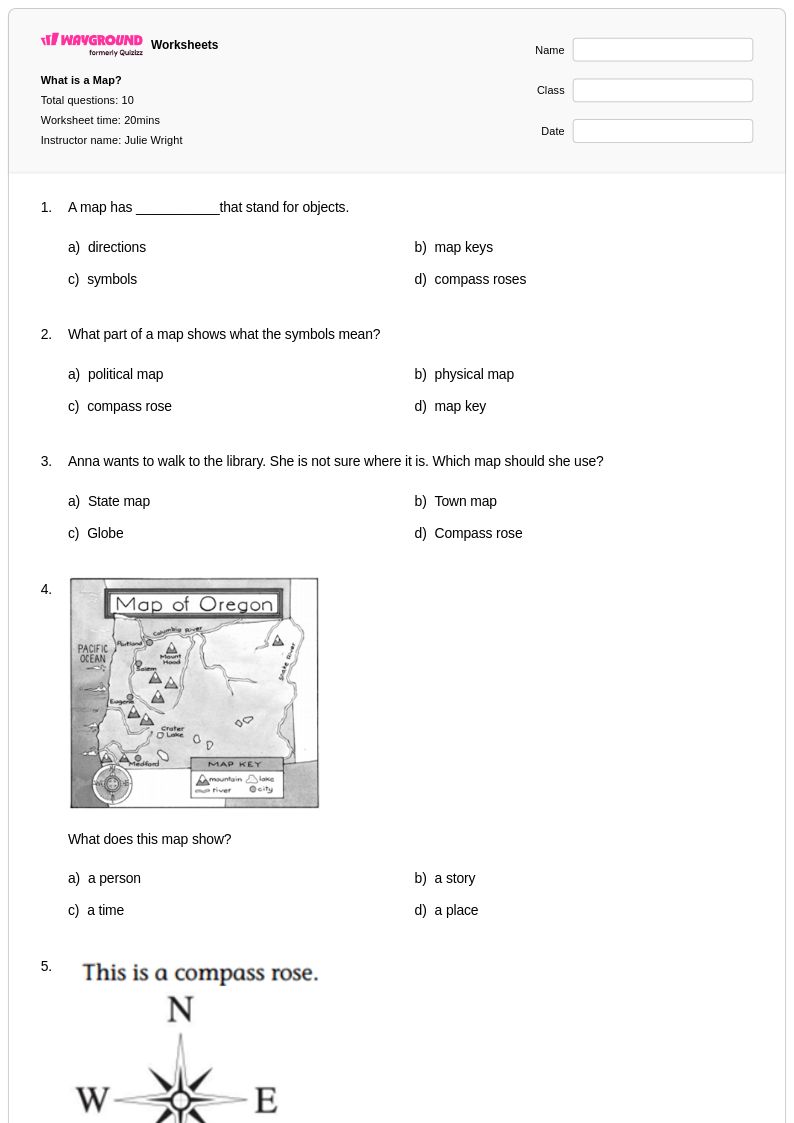
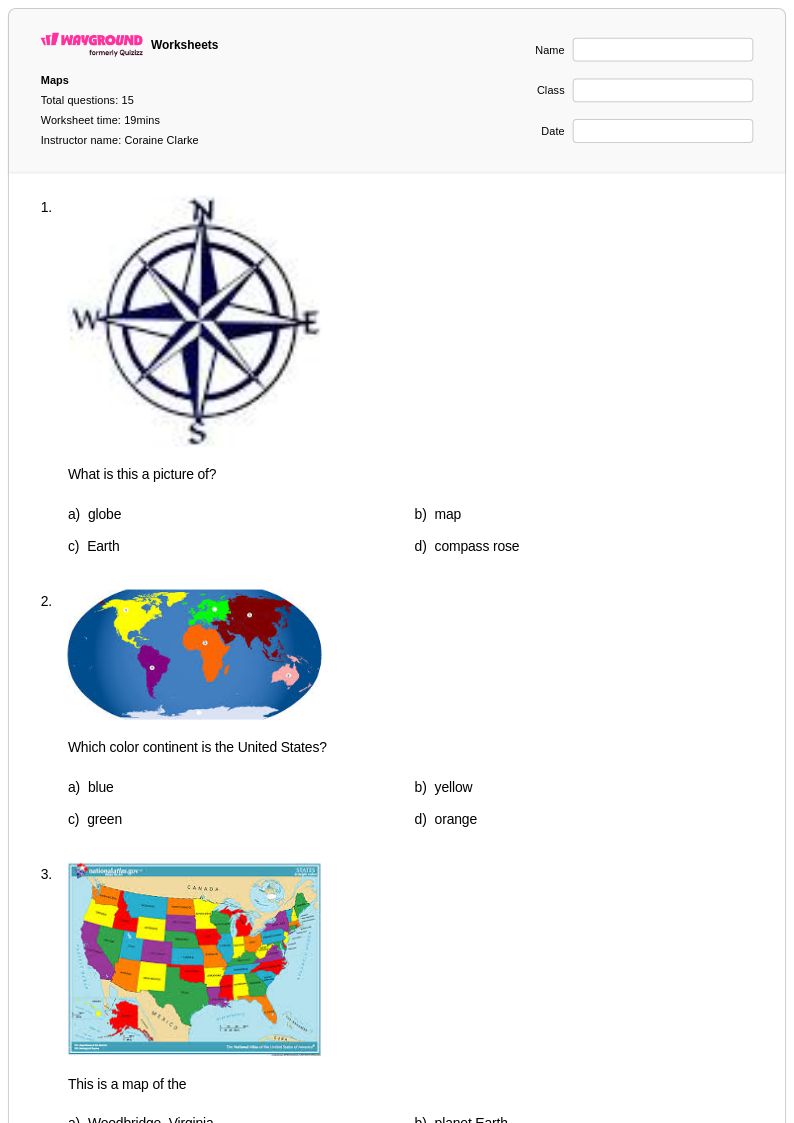
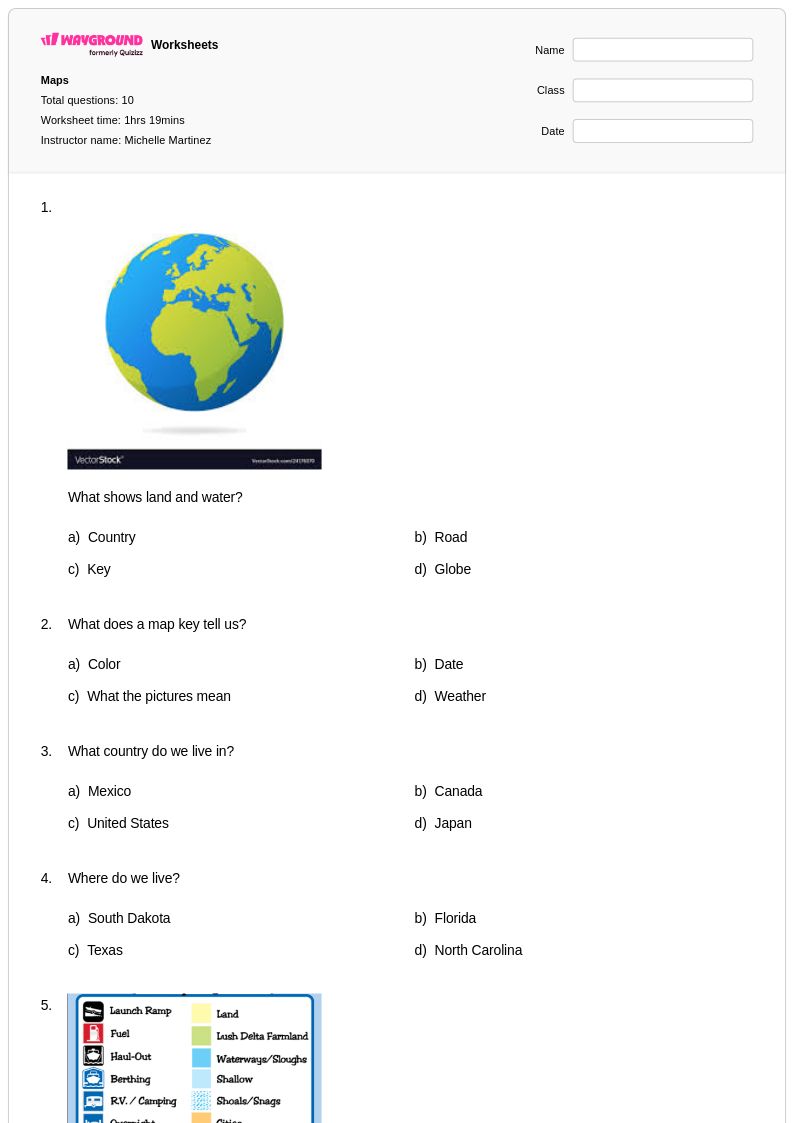
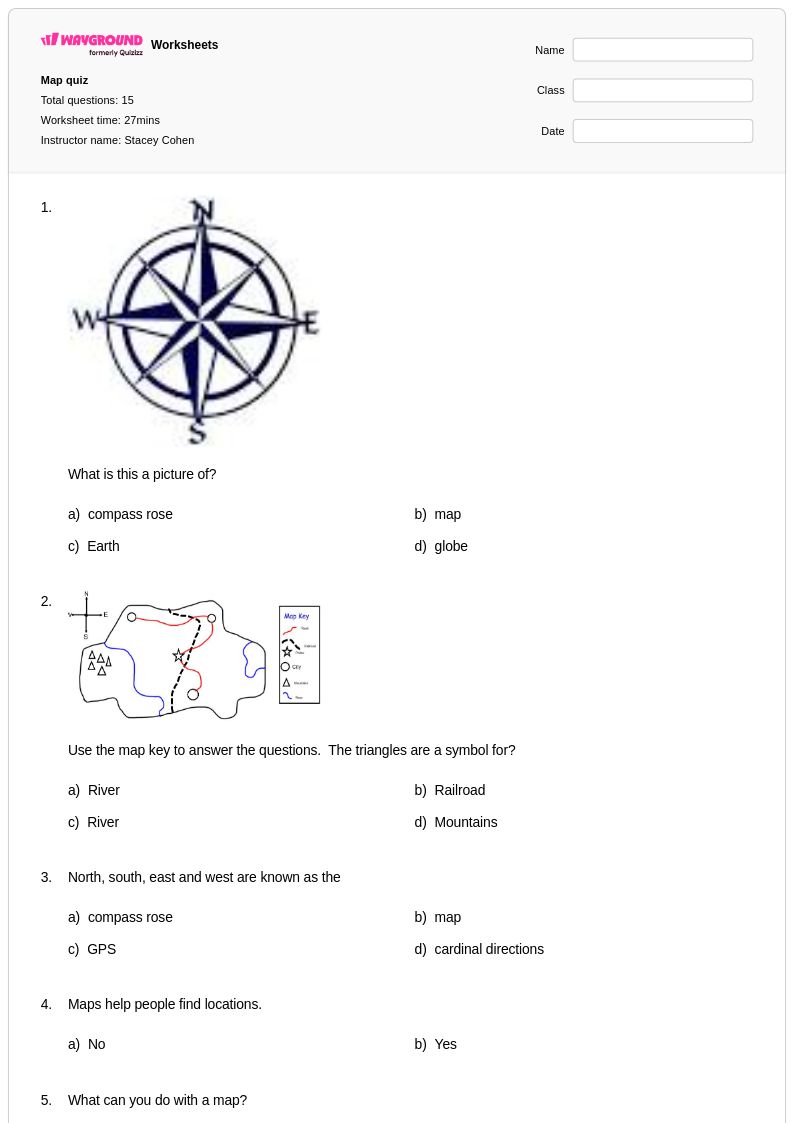
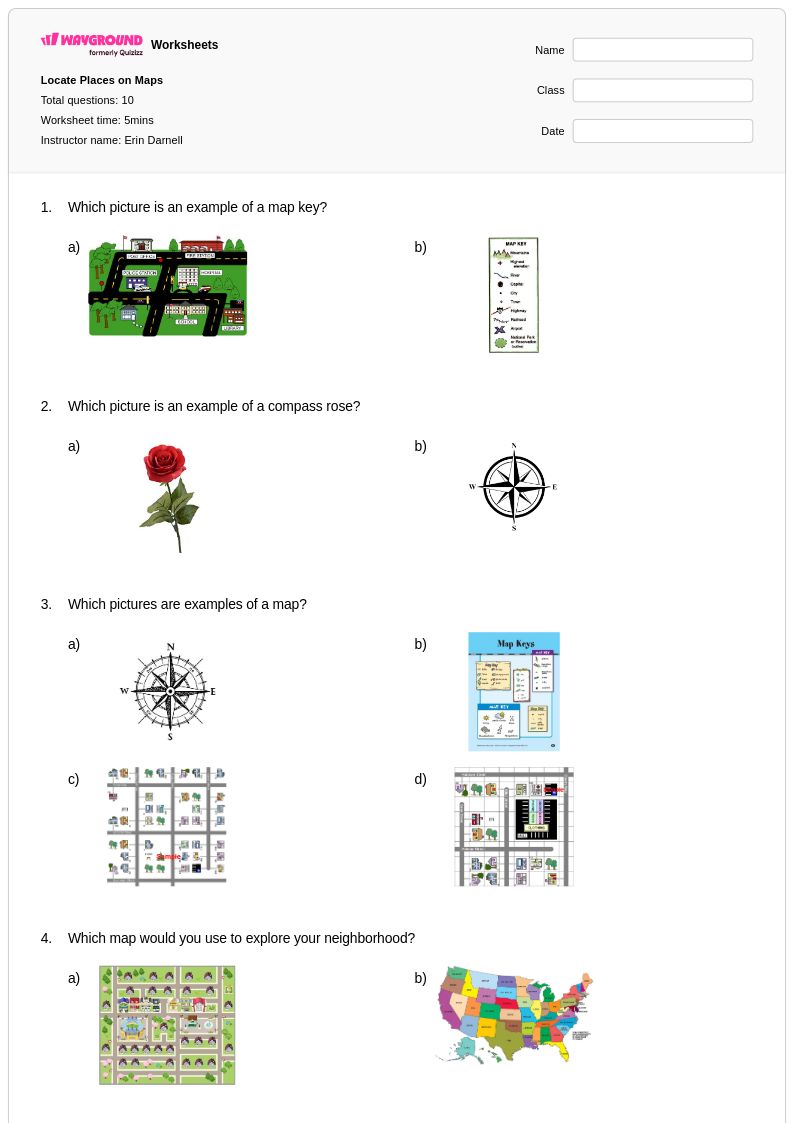
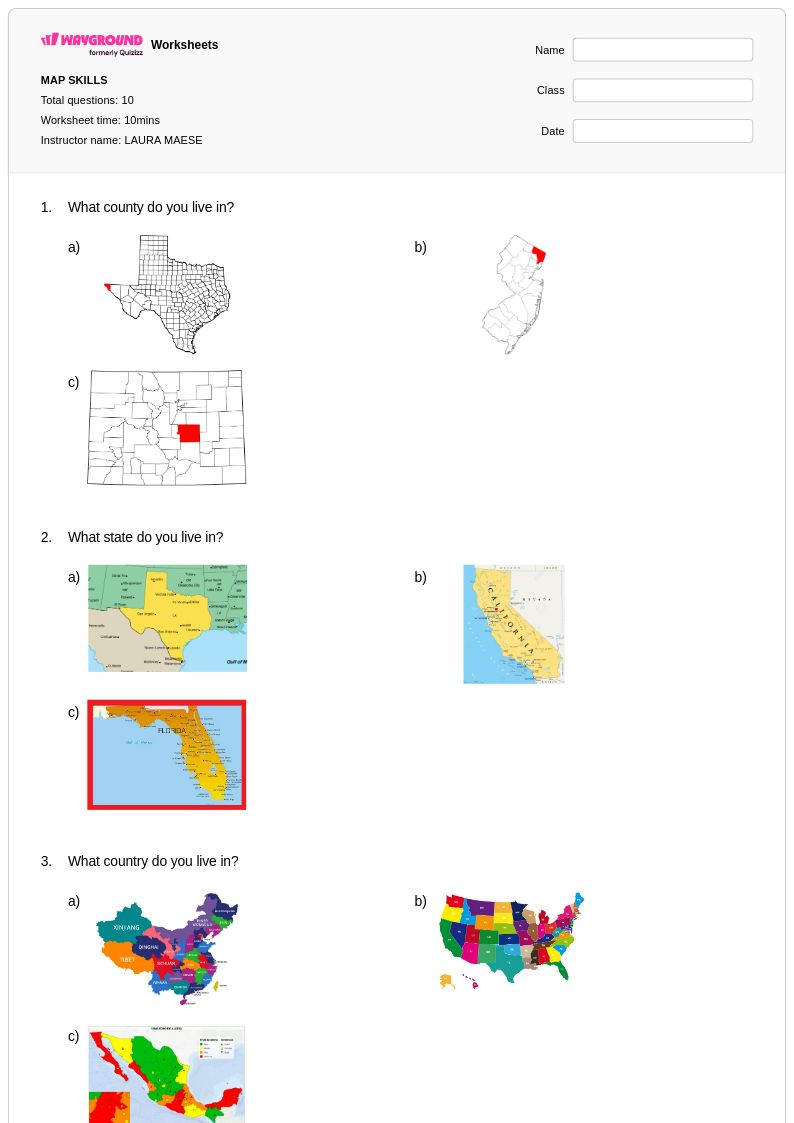
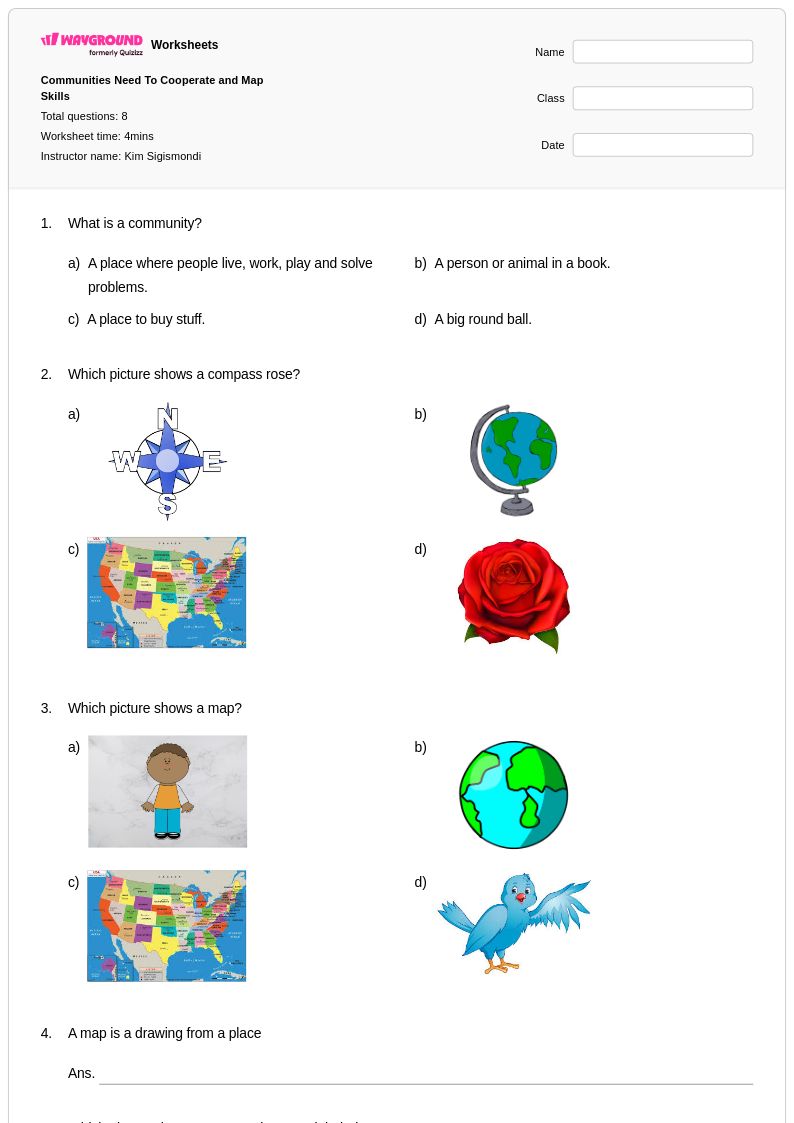
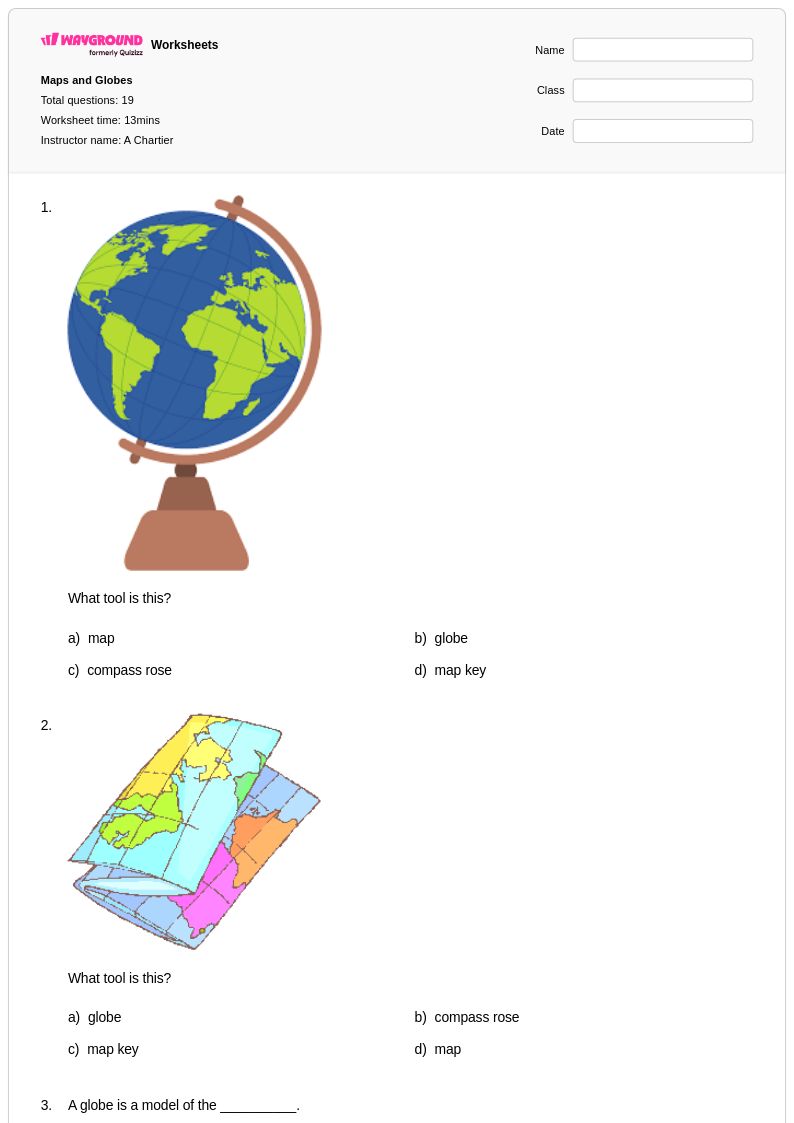
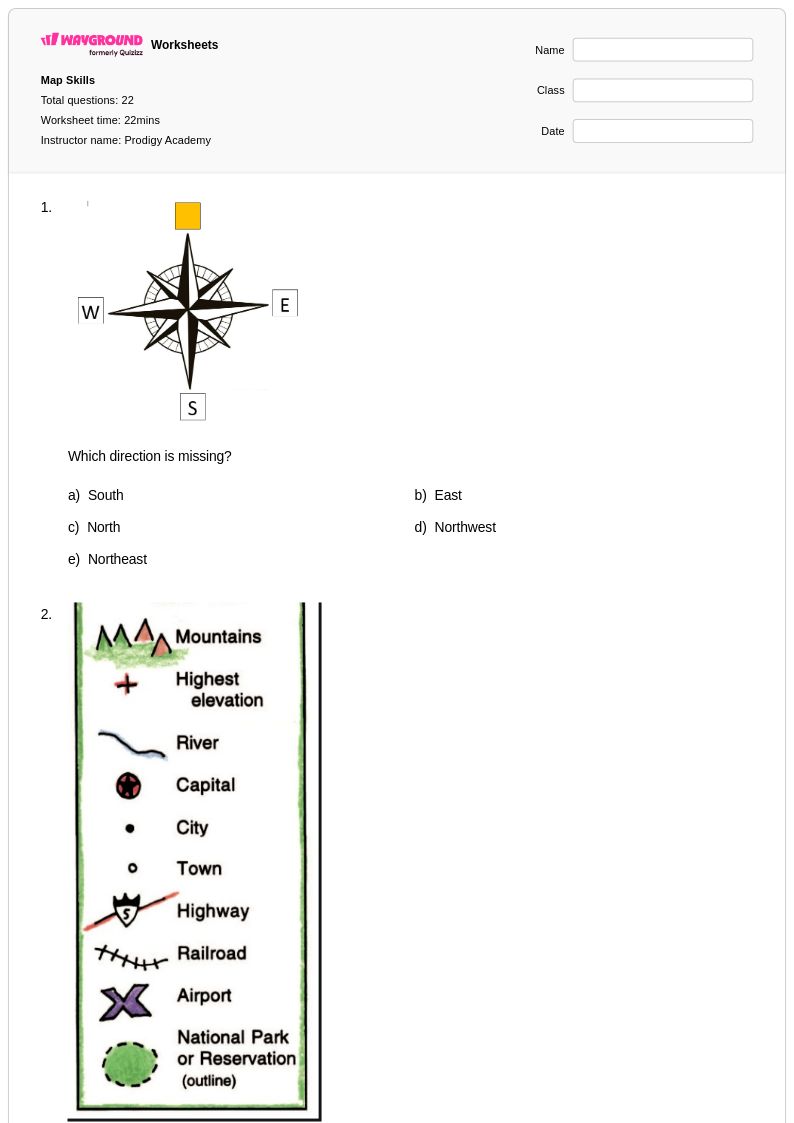
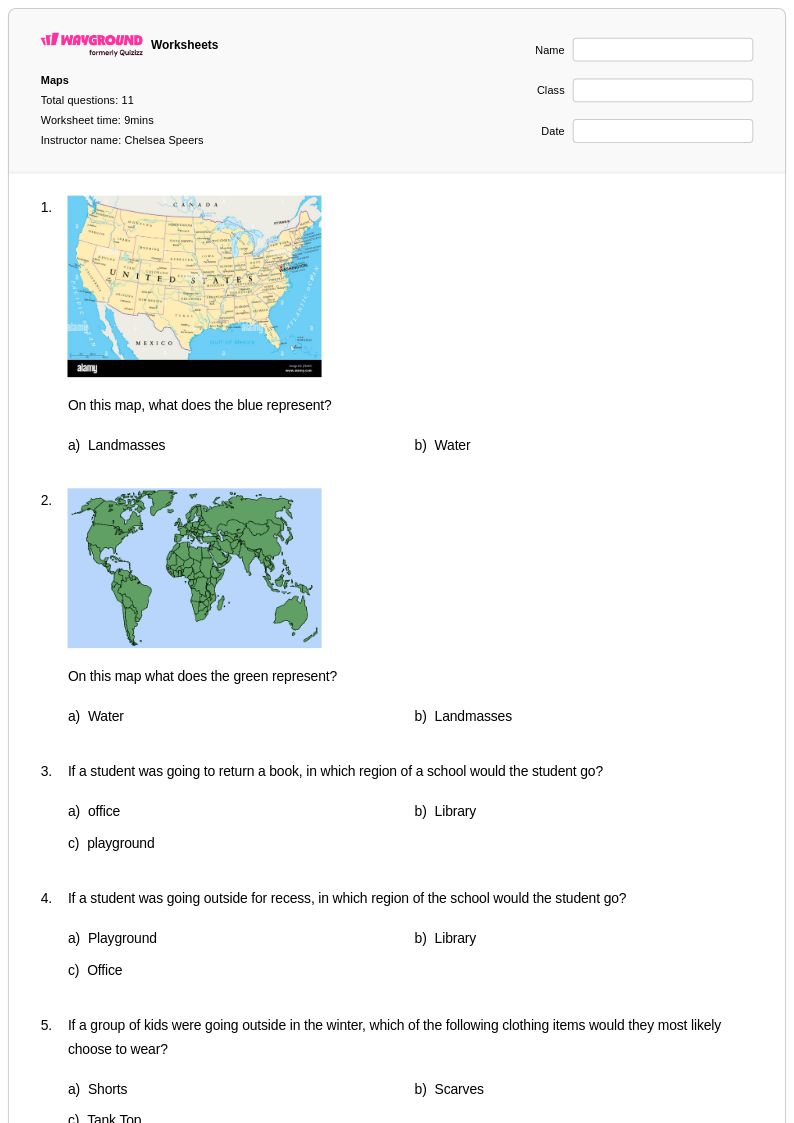
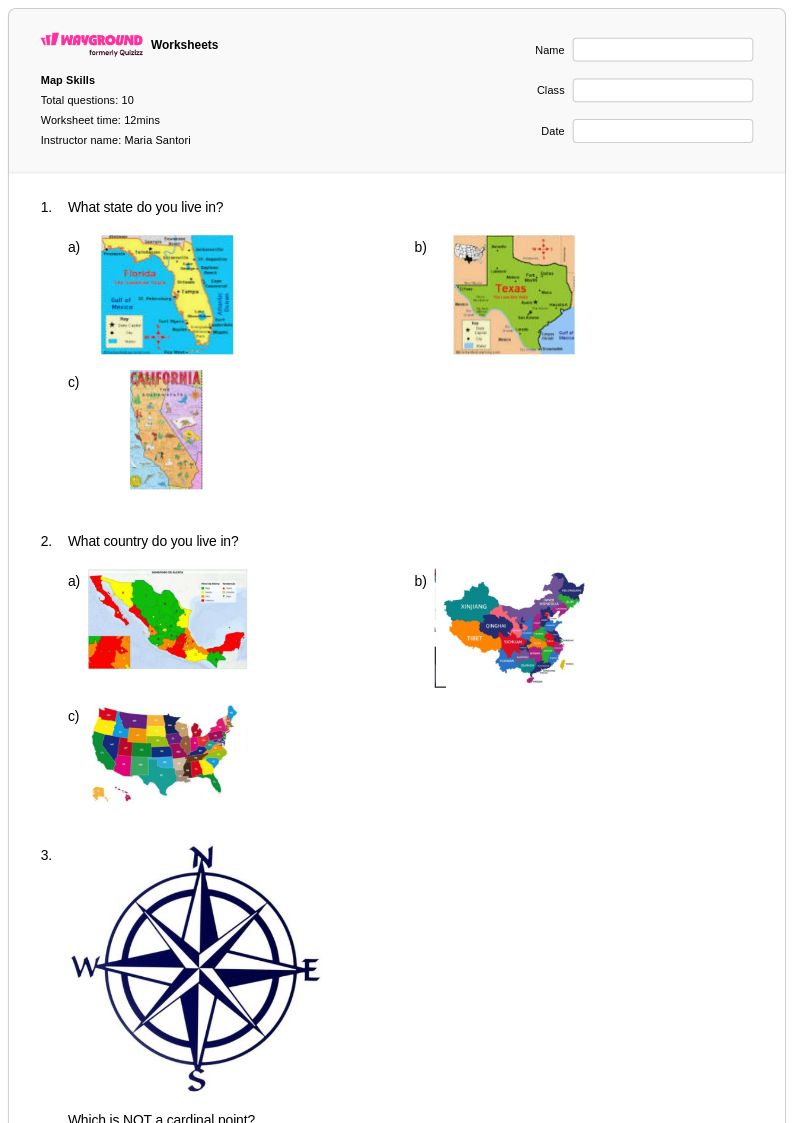
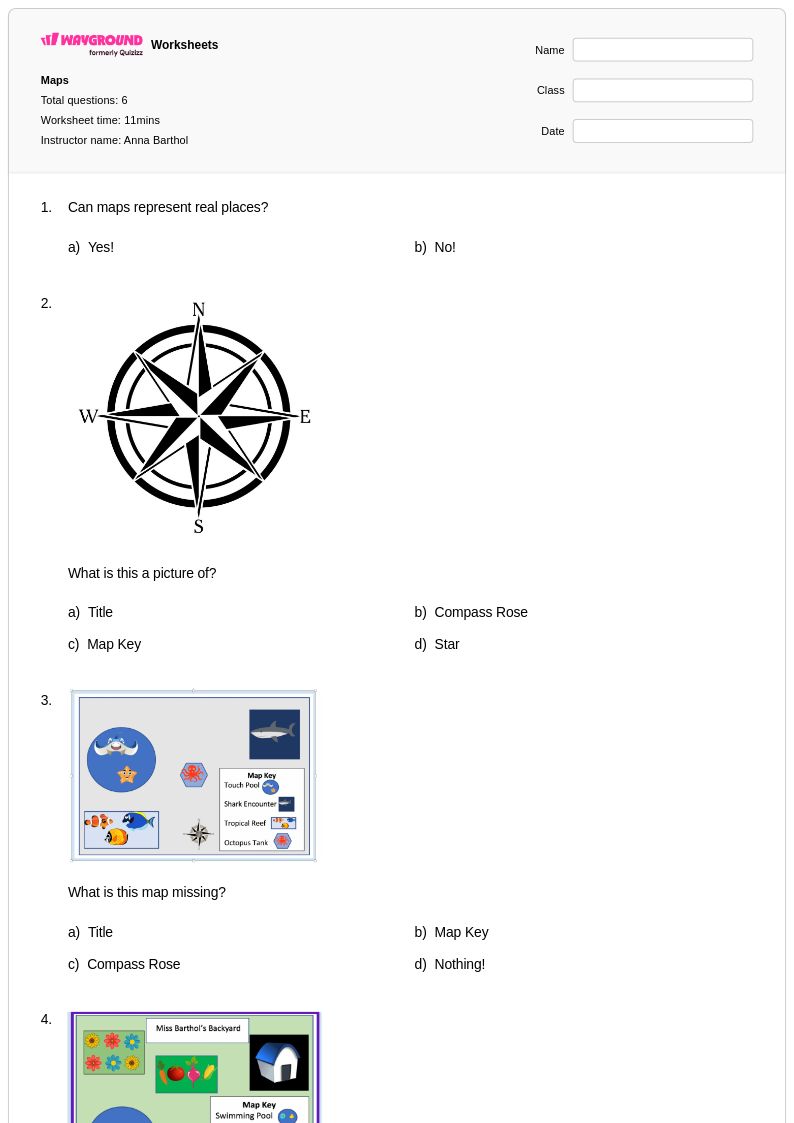
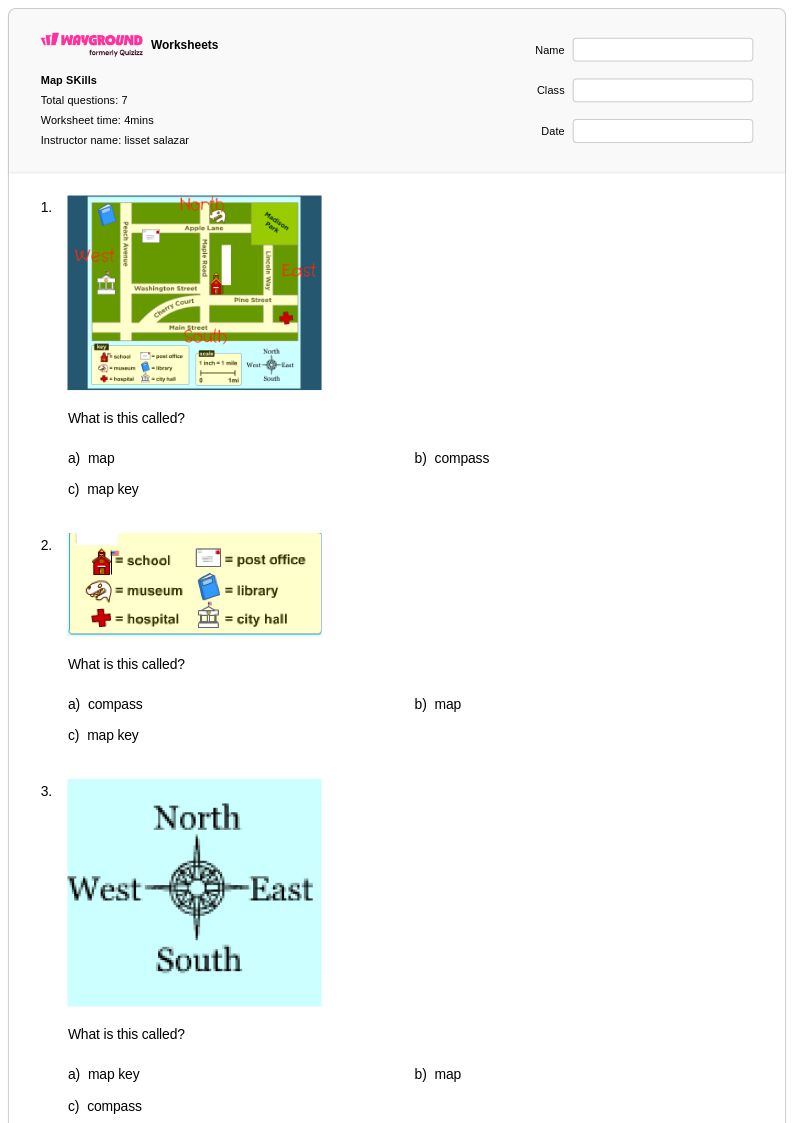
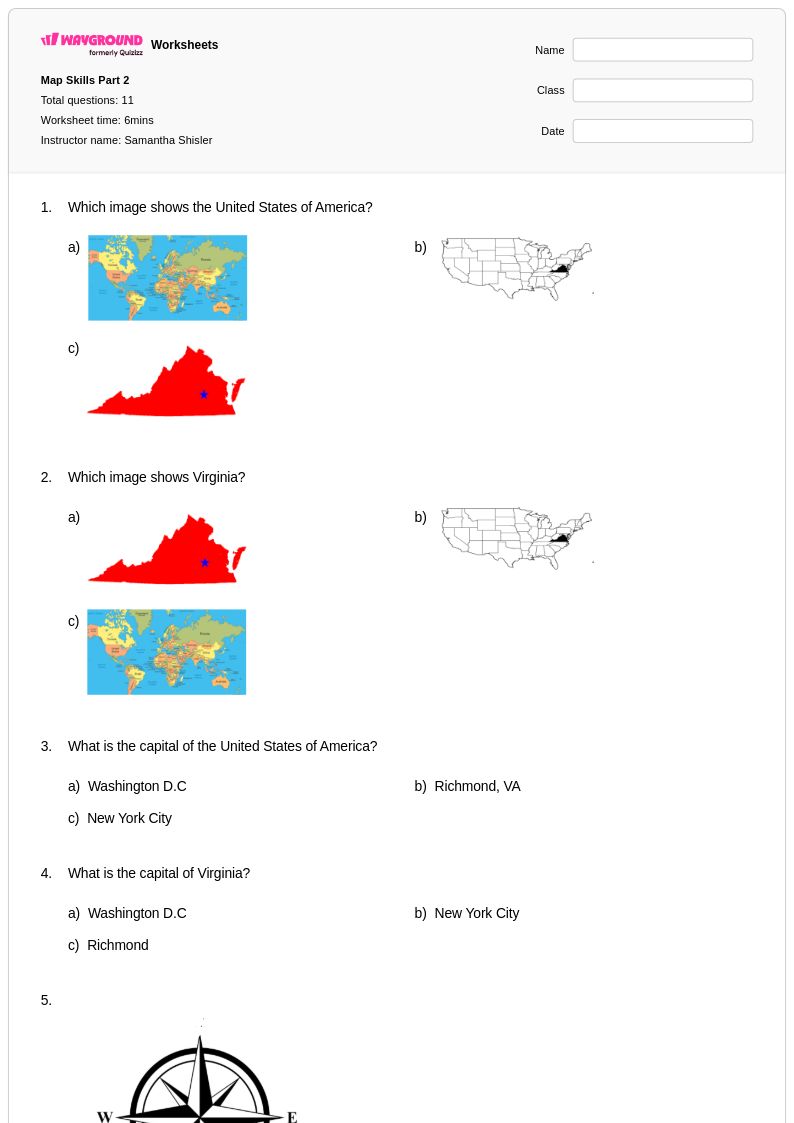
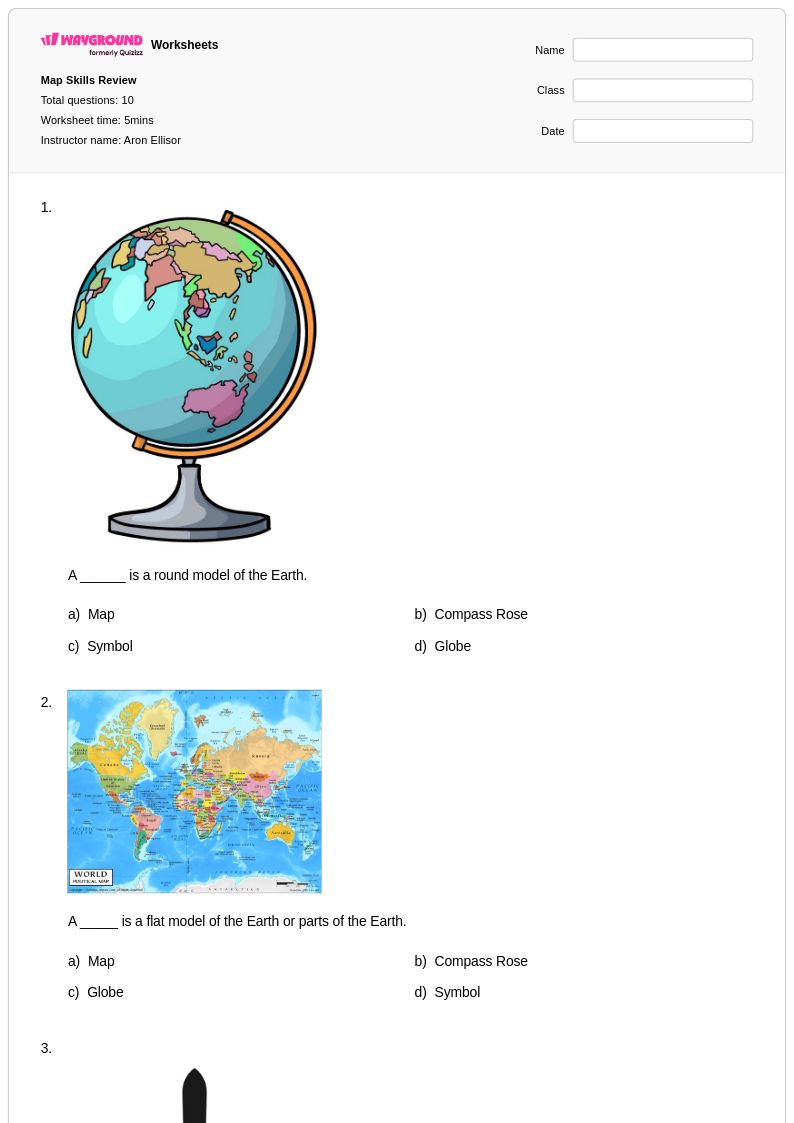
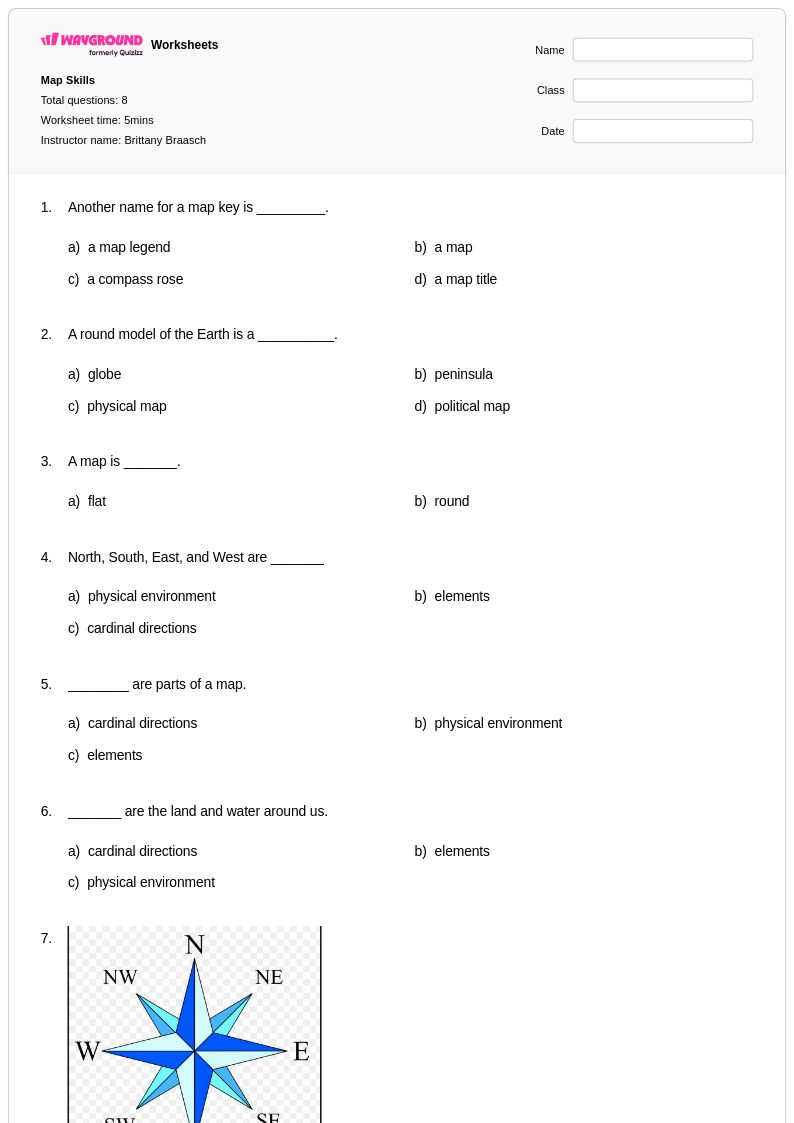
Map components worksheets for Year 1 students available through Wayground (formerly Quizizz) introduce young learners to the fundamental elements that make maps useful and understandable. These carefully designed printables focus on essential map features such as titles, legends, compass roses, and symbols that help children navigate and interpret basic geographical representations. The worksheets strengthen foundational spatial thinking skills while building vocabulary related to direction, location, and map reading through age-appropriate practice problems. Each resource includes comprehensive answer keys to support both independent learning and guided instruction, with free pdf formats that make classroom implementation seamless and accessible for all students beginning their geography education journey.
Wayground (formerly Quizizz) empowers educators with millions of teacher-created map components resources specifically tailored for Year 1 social studies instruction. The platform's robust search and filtering capabilities allow teachers to quickly locate worksheets that align with specific curriculum standards while offering differentiation tools to meet diverse learning needs within the classroom. These flexible collections are available in both printable and digital pdf formats, enabling seamless integration into various teaching environments and learning modalities. Teachers can customize existing materials or combine multiple resources to create comprehensive lesson plans that support skill practice, provide targeted remediation for struggling learners, and offer enrichment opportunities for advanced students exploring geographical concepts.
FAQs
How do I teach map components to students?
Start by introducing each map component individually before asking students to interpret a complete map. Teach the compass rose first as an orientation tool, then move to the legend, scale, title, and grid systems in sequence. Once students can identify each element in isolation, present maps that require them to use multiple components together to answer spatial questions. Anchoring each component to a real-world purpose, such as explaining why a scale matters for estimating actual distances, helps students see map reading as a practical skill rather than a memorization exercise.
What exercises help students practice reading map components?
Effective practice exercises include labeling blank map diagrams, matching map symbols to their legend definitions, using a map scale to calculate distances between two points, and answering directional questions using a compass rose. Grid coordinate exercises, where students locate specific points using letter-number intersections, reinforce spatial reasoning alongside component recognition. Worksheets that combine multiple components in a single task, rather than drilling each in isolation, best reflect the way students will encounter maps in real academic and everyday contexts.
What mistakes do students commonly make when reading map components?
One of the most frequent errors is ignoring the map scale entirely and assuming all maps are drawn to the same proportional size, which leads to inaccurate distance estimates. Students also commonly misread compass roses by treating them as decorative rather than functional, defaulting to assuming north is always at the top of the page. With legends, students often overlook symbols that represent boundaries or terrain features, focusing only on labeled cities or roads. Addressing these specific misconceptions early, through targeted practice problems, prevents them from becoming entrenched habits.
How do I use Wayground's map components worksheets in my classroom?
Wayground's map components worksheets are available as printable PDFs for traditional classroom use and in digital formats for technology-integrated or hybrid learning environments, giving teachers flexibility in how they deploy the material. Teachers can also host worksheets directly as a quiz on Wayground, enabling real-time student responses and streamlined grading. Each worksheet includes a complete answer key, which supports both teacher-led correction and independent student review. For students who need additional support, Wayground offers built-in accommodations such as read aloud, extended time, and reduced answer choices, which can be configured individually without disrupting the rest of the class.
How do I differentiate map components instruction for students at different skill levels?
For students who are just beginning, focus practice on single-component tasks, such as identifying north on a compass rose or matching three to four legend symbols before introducing full map interpretation. More advanced students benefit from multi-step tasks that require using the scale, legend, and grid simultaneously to answer a question. On Wayground, teachers can apply accommodations such as reduced answer choices for students who need scaffolding or read aloud for students with reading challenges, while other students receive default settings without any disruption to the classroom environment.
At what grade level are map components typically taught?
Map components are introduced as early as second and third grade, where students learn basic compass directions and simple legends, and are revisited with increasing complexity through middle school geography courses. By fifth and sixth grade, students are typically expected to use all major map components, including scale, coordinate grids, and multi-symbol legends, to interpret and analyze geographic information. Because the skill builds across grade levels, worksheets that range in complexity allow teachers to find appropriately matched practice regardless of where their students are in the progression.