Free Printable Marshall Plan Worksheets for Year 11
Year 11 Marshall Plan worksheets and printables help students explore post-WWII European reconstruction through engaging practice problems, free PDF resources, and comprehensive answer keys available on Wayground.
Explore printable Marshall Plan worksheets for Year 11
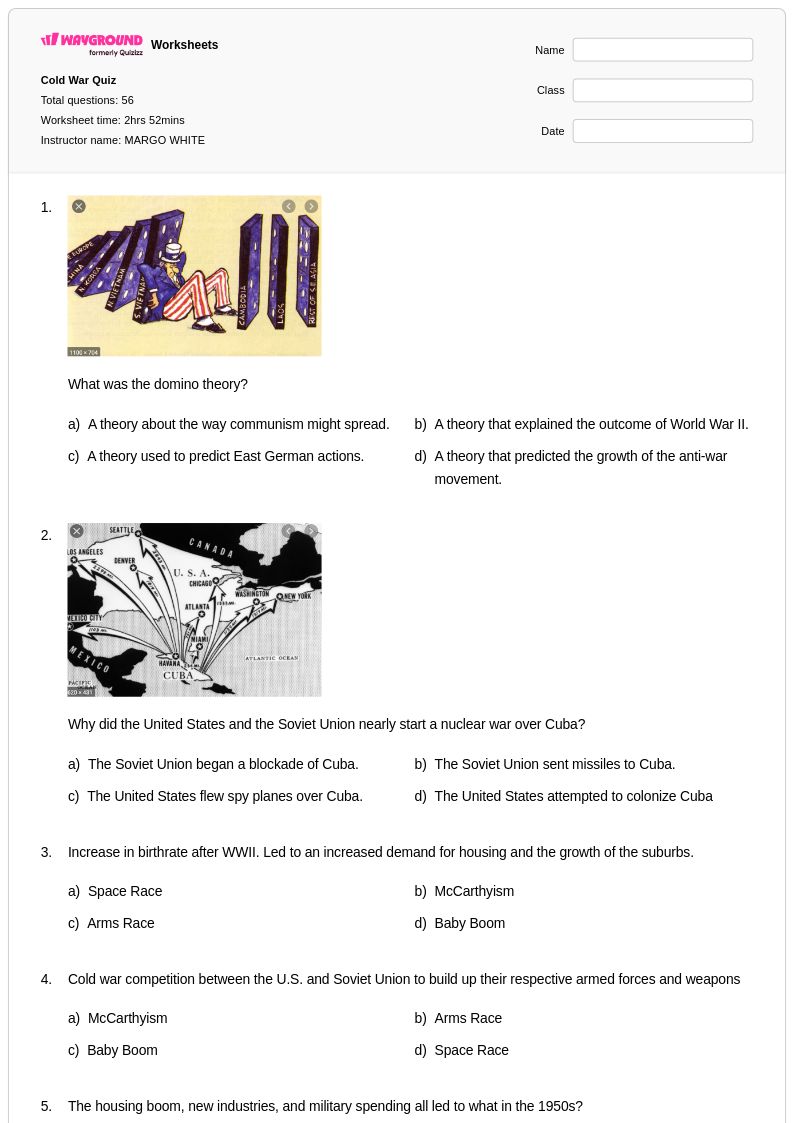
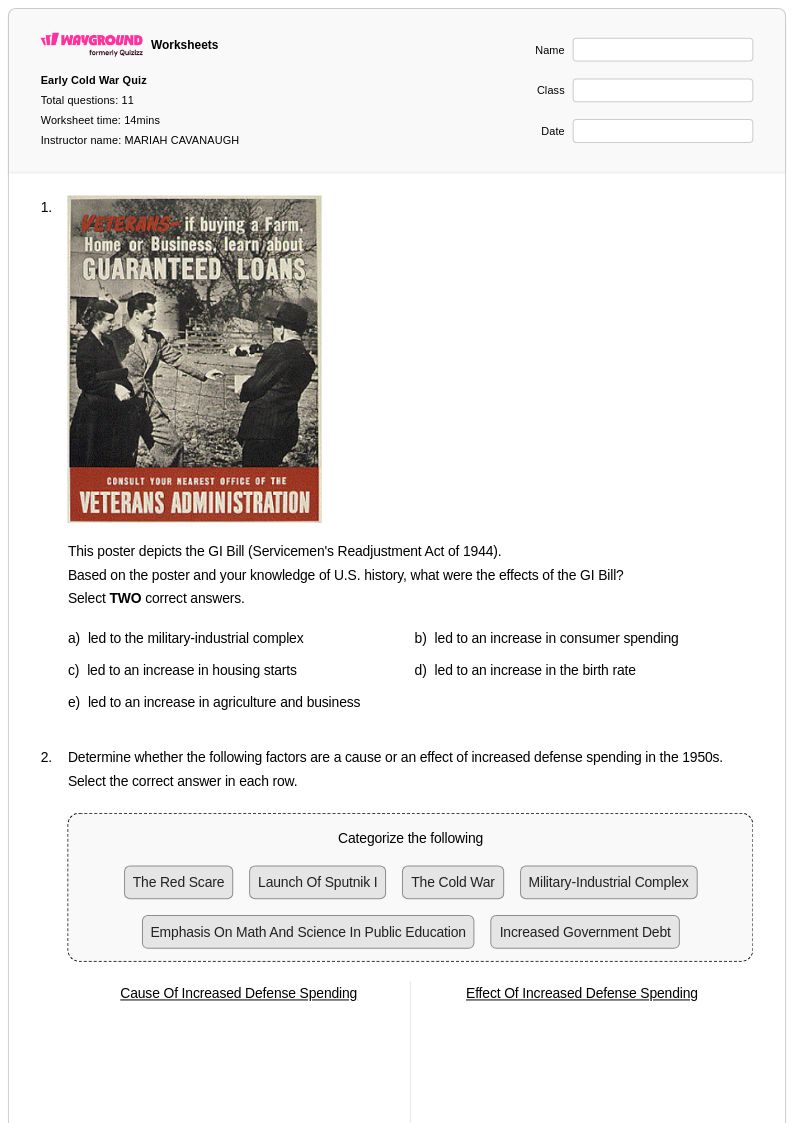
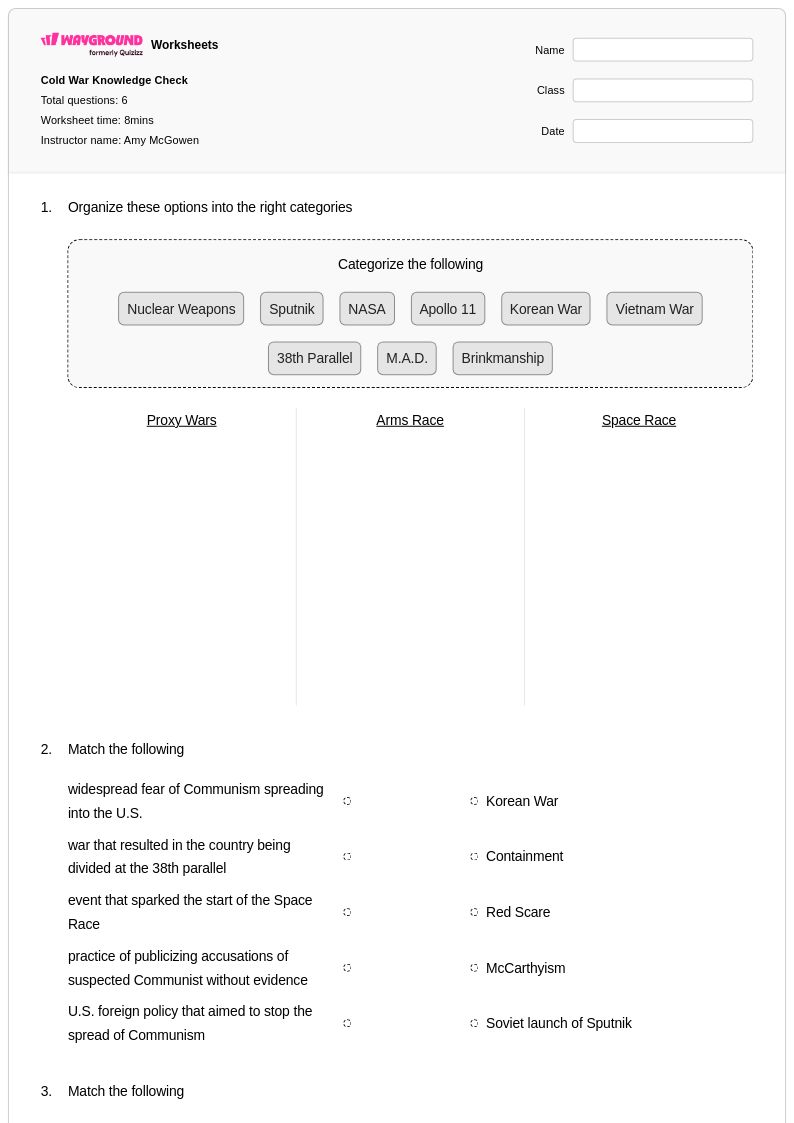
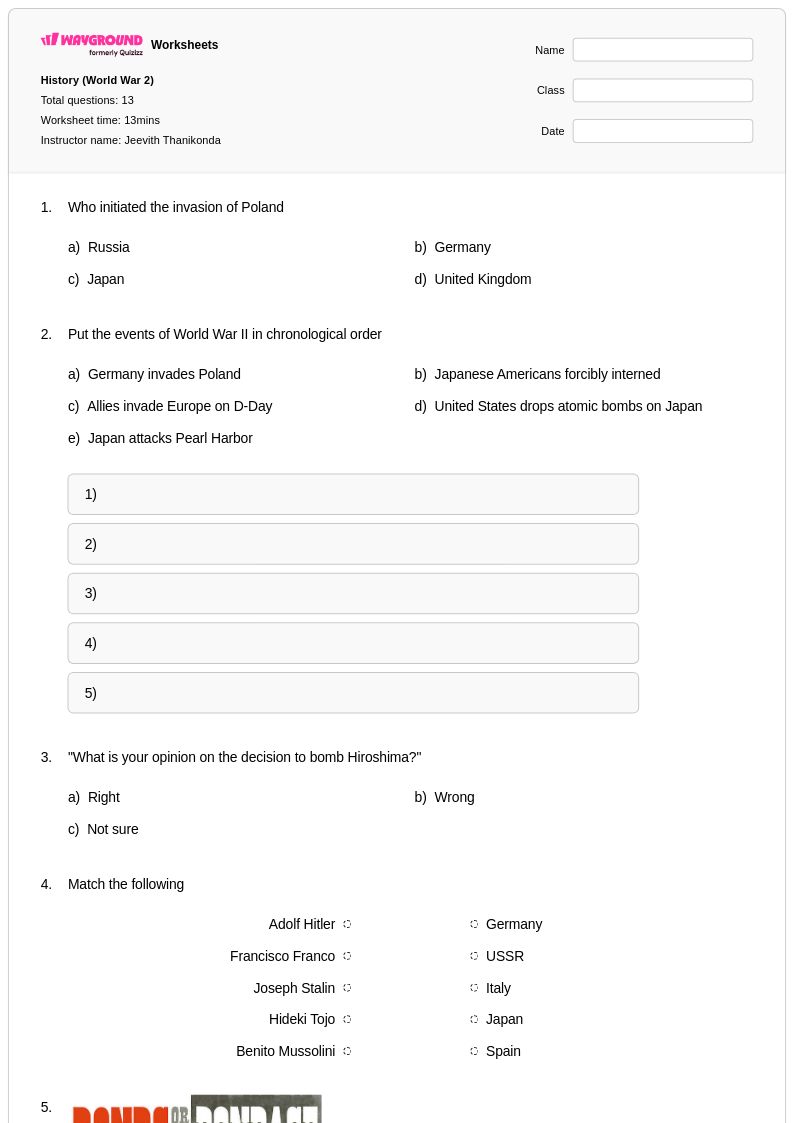
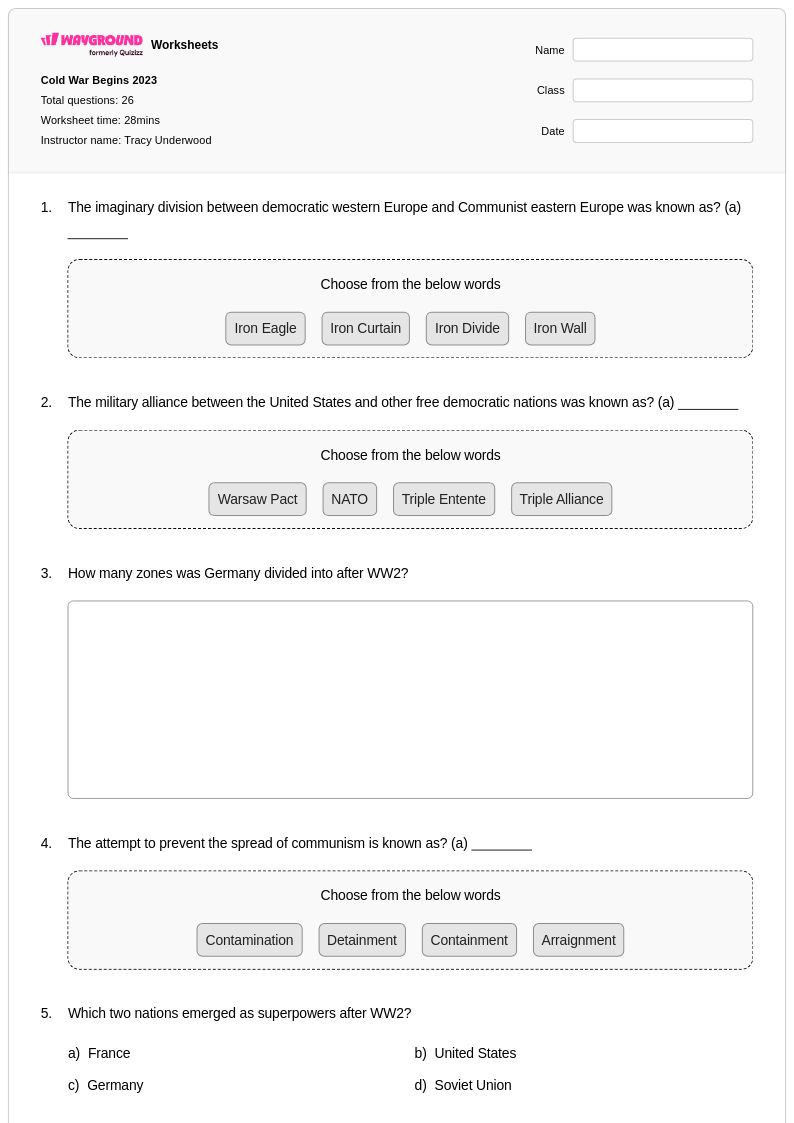
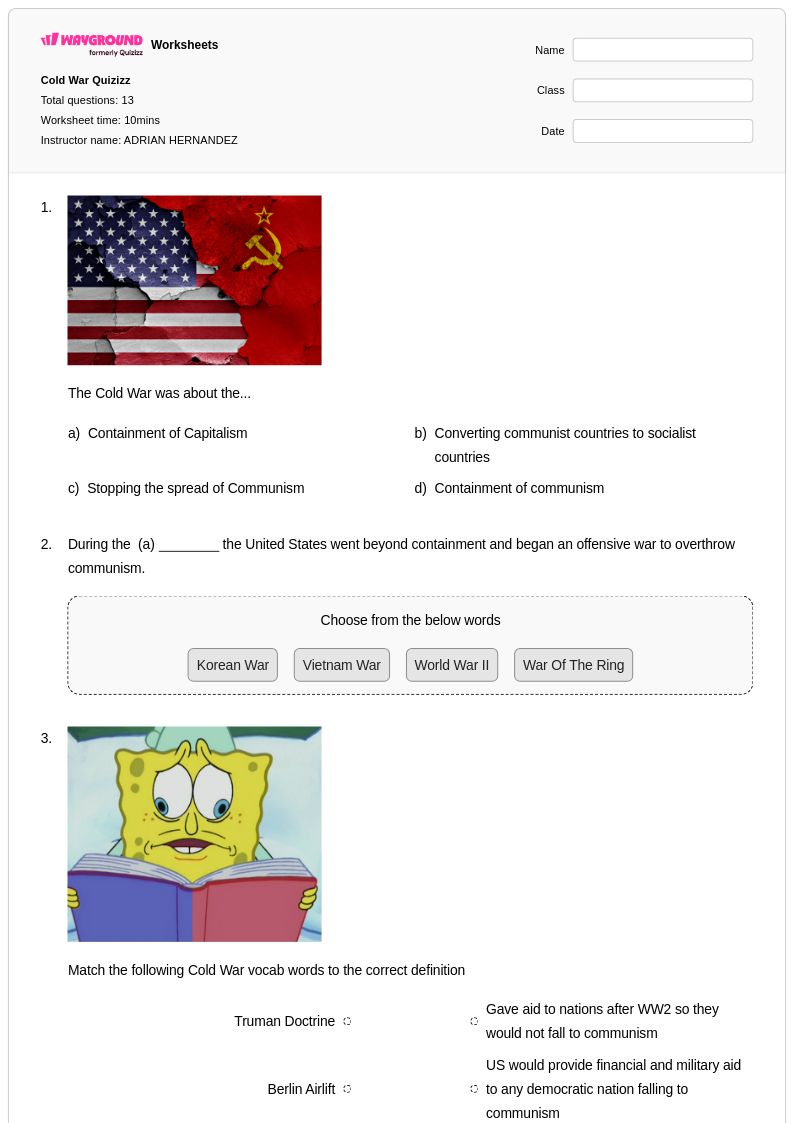
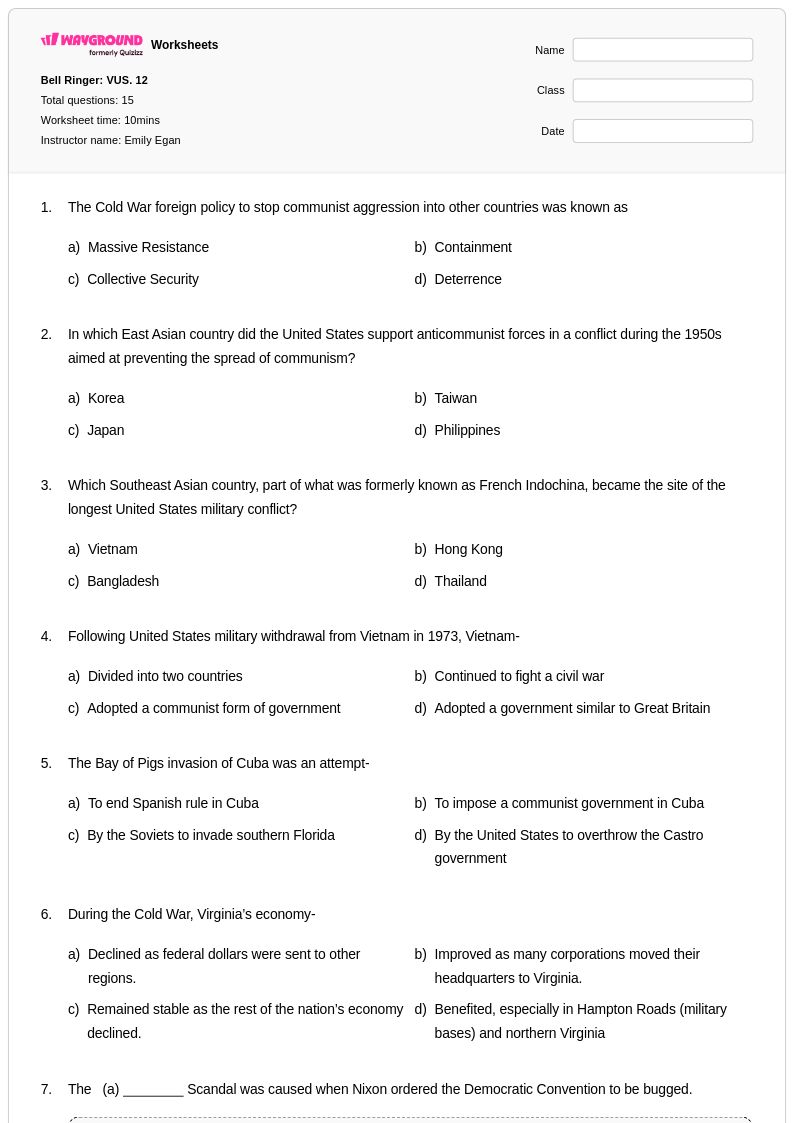
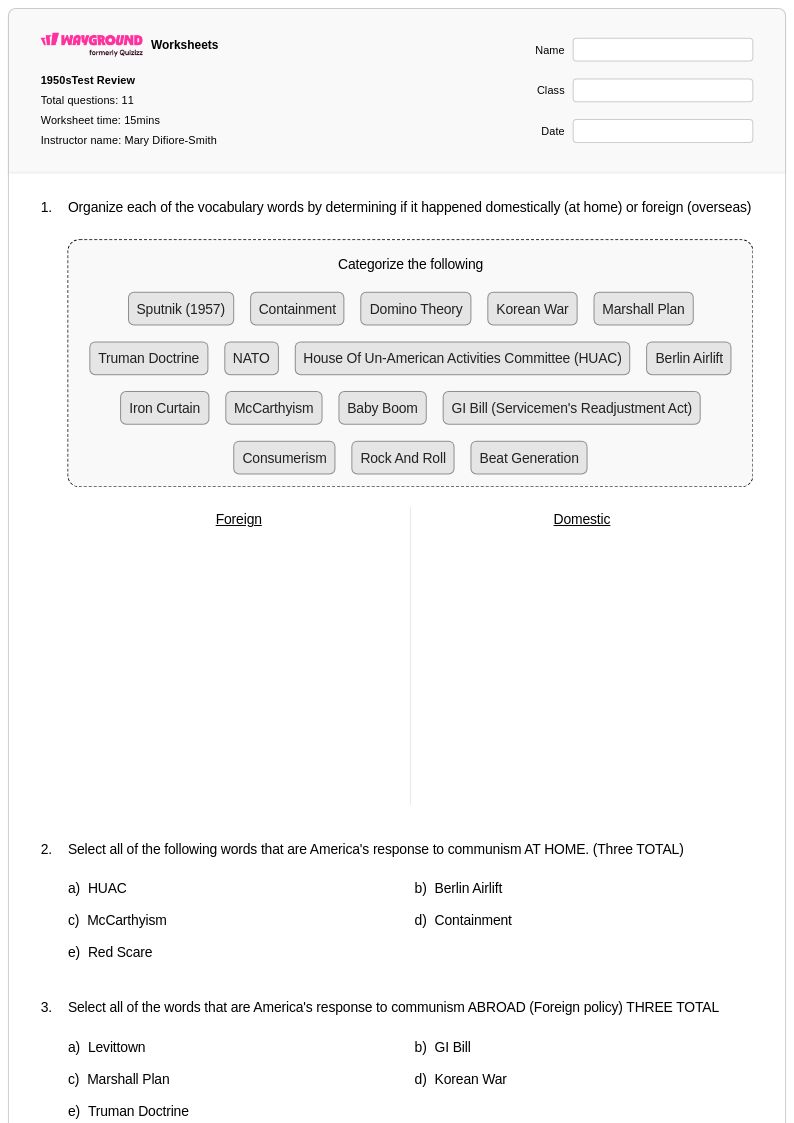
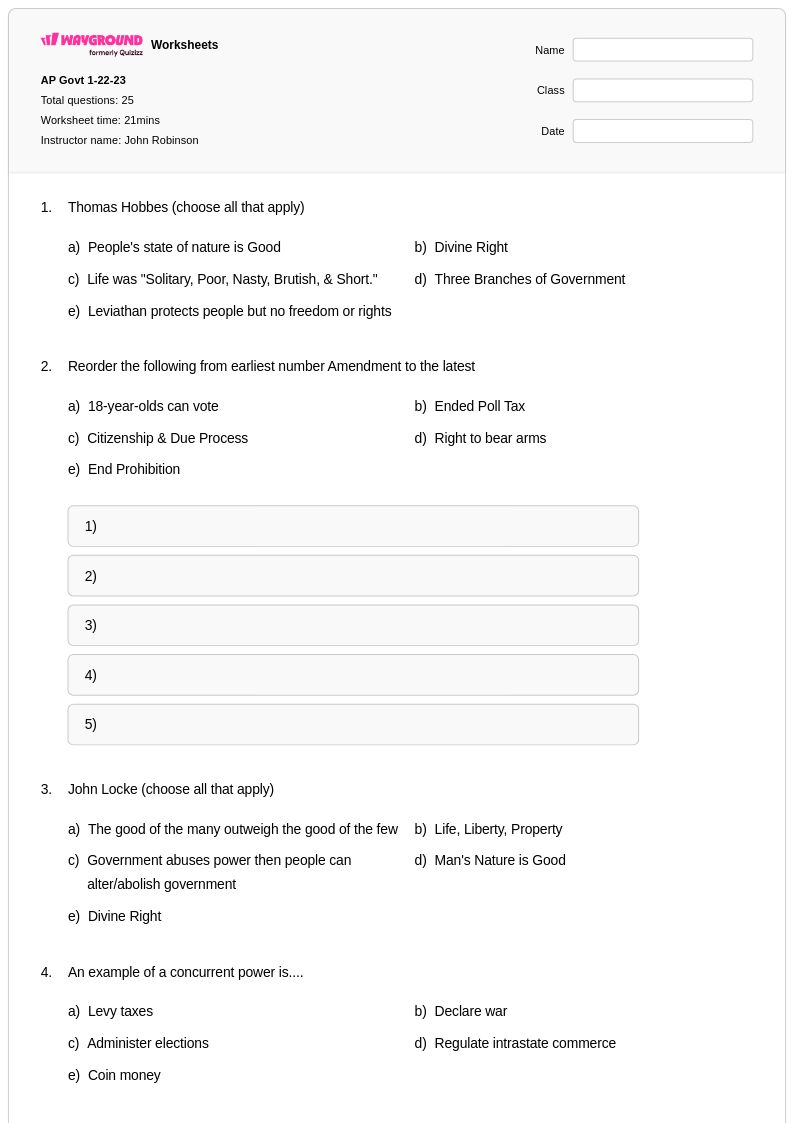
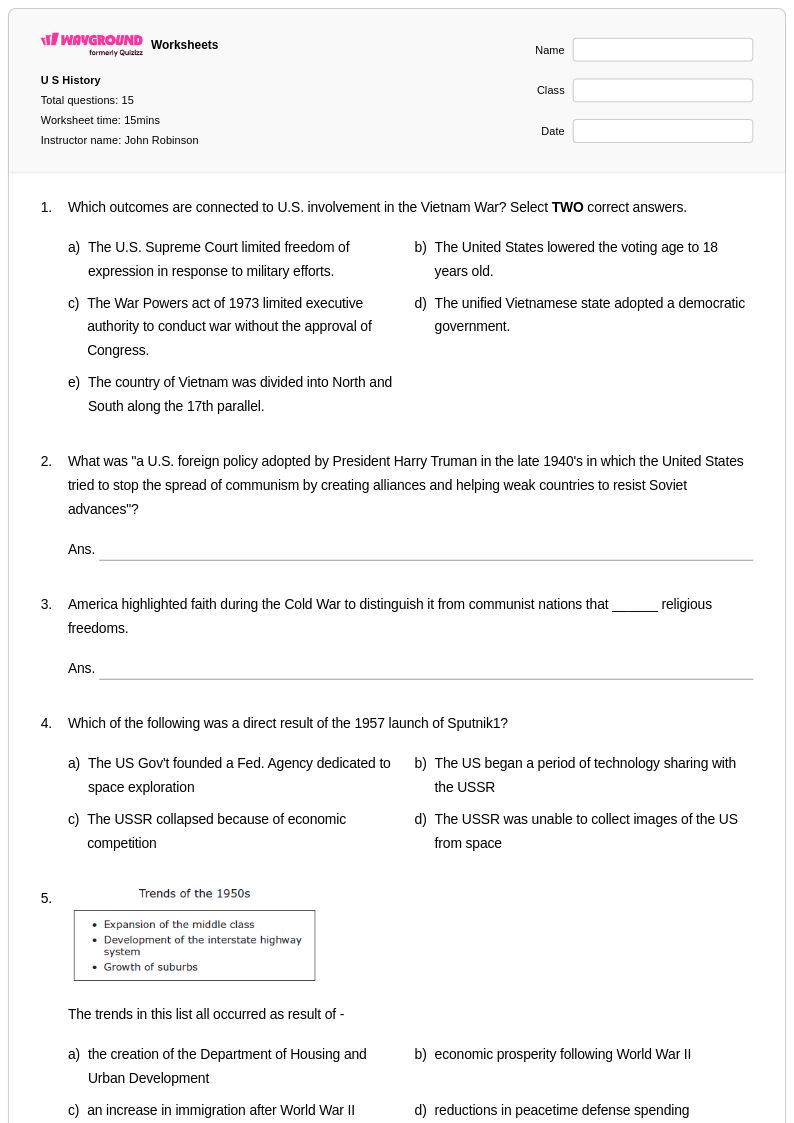
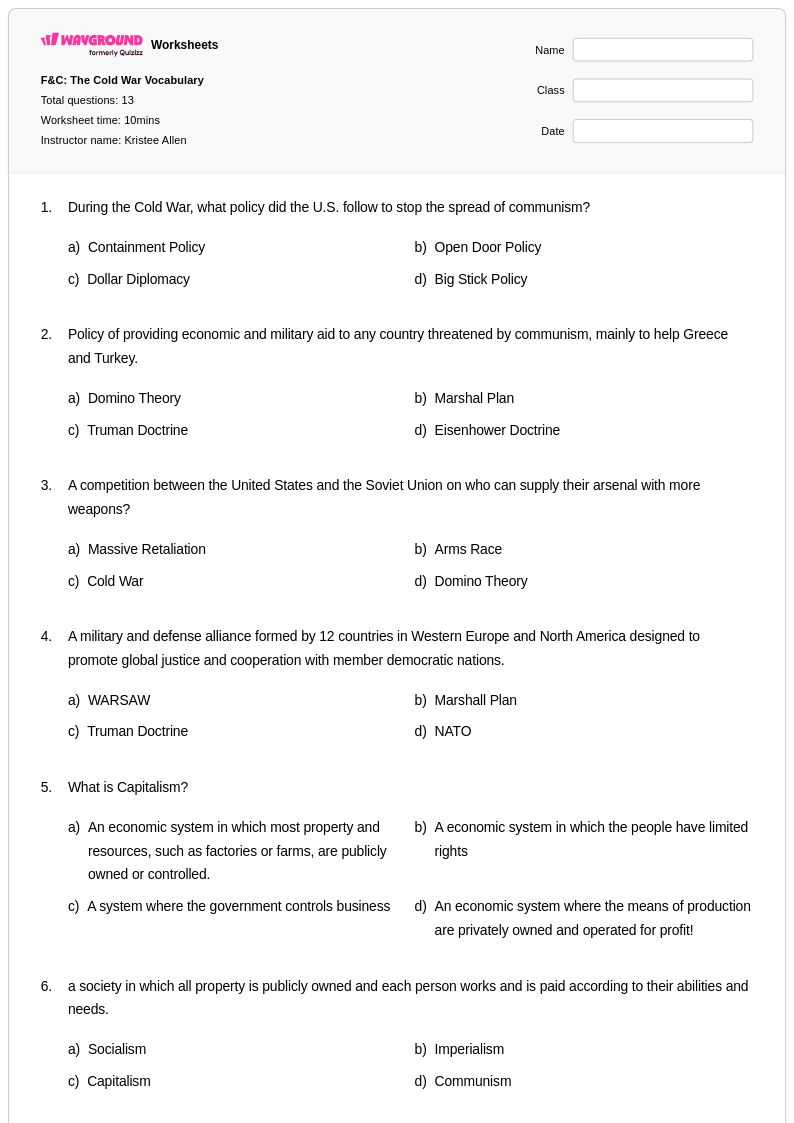
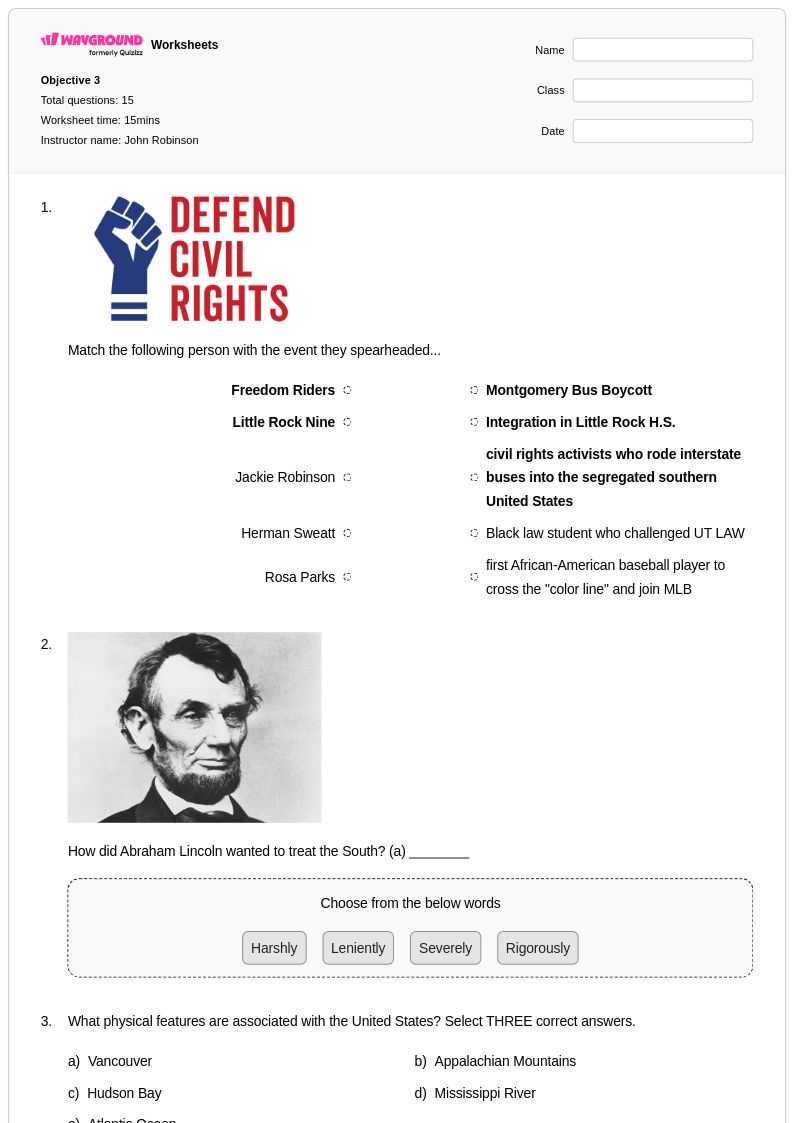
Marshall Plan worksheets available through Wayground (formerly Quizizz) provide Year 11 students with comprehensive resources to examine this pivotal post-World War II economic recovery program. These carefully designed worksheets guide students through the historical context, implementation, and far-reaching consequences of George Marshall's ambitious initiative to rebuild Western Europe between 1947 and 1951. Students develop critical analysis skills by evaluating primary source documents, examining economic data, and assessing the plan's role in shaping Cold War dynamics. The collection includes practice problems that challenge learners to connect the Marshall Plan's economic strategies with broader geopolitical objectives, while printable materials and answer keys support both independent study and classroom instruction. Free resources within this collection enable students to explore topics ranging from congressional debates over funding to the plan's impact on European integration and Soviet responses.
Wayground (formerly Quizizz) empowers educators with millions of teacher-created Marshall Plan resources that streamline lesson planning and enhance student engagement with this complex historical topic. The platform's robust search and filtering capabilities allow teachers to quickly locate materials aligned with state and national social studies standards, ensuring that Year 11 instruction meets rigorous academic expectations. Differentiation tools enable educators to customize worksheets for diverse learning needs, supporting both remediation for struggling students and enrichment opportunities for advanced learners. Teachers can access these resources in flexible formats, including downloadable pdf files for traditional classroom use and interactive digital versions that facilitate remote learning environments. This comprehensive approach to Marshall Plan instruction helps educators develop students' understanding of economic diplomacy, international relations, and the lasting influence of American foreign policy decisions on global affairs.
FAQs
How do I teach the Marshall Plan to high school students?
Start by grounding students in the postwar context: Europe's economic collapse, the threat of Soviet expansion, and the United States' emerging role as a global superpower. From there, introduce the Marshall Plan as a foreign policy decision driven by both humanitarian concern and Cold War strategy. Having students analyze Secretary of State George Marshall's 1947 Harvard speech as a primary source is an effective entry point, as it forces them to read policy language closely and identify the program's stated versus strategic goals.
What exercises help students practice analyzing the Marshall Plan?
Cause-and-effect mapping is one of the most effective exercises for this topic, asking students to trace how economic aid translated into political stability and democratic consolidation across Western Europe. Document analysis tasks using primary sources from the era, combined with structured writing prompts that ask students to evaluate the Marshall Plan's role in shaping Cold War alliances, build the analytical writing skills central to social studies assessment. Practice problems that ask students to compare recovery outcomes in Marshall Plan recipient countries versus Soviet-aligned Eastern European nations reinforce critical comparative thinking.
What mistakes do students commonly make when learning about the Marshall Plan?
The most common misconception is treating the Marshall Plan as purely humanitarian aid rather than as a strategic Cold War instrument designed to contain Soviet influence and prevent the spread of communism into economically weakened democracies. Students also frequently conflate the Marshall Plan with the Truman Doctrine, missing the distinction between military-political support and economic reconstruction assistance. A third common error is underestimating the plan's long-term significance, with students seeing it as a temporary relief effort rather than the foundation for modern transatlantic institutions and relationships.
How does studying the Marshall Plan connect to broader Cold War history?
The Marshall Plan is one of the clearest early examples of containment policy in action, making it an essential bridge between the end of World War II and the escalating superpower rivalry that defined the Cold War era. Understanding the Marshall Plan helps students contextualize subsequent developments like the formation of NATO, the Berlin Blockade, and the ideological competition between U.S.-led capitalism and Soviet-led communism. Teachers who address this connection explicitly help students build a coherent Cold War timeline rather than treating events as isolated episodes.
How can I use Marshall Plan worksheets in my classroom?
Marshall Plan worksheets on Wayground are available as printable PDFs, making them straightforward to distribute in traditional classroom settings, and in digital formats that support technology-integrated or hybrid learning environments. Teachers can also host worksheets as an interactive quiz directly on Wayground, which allows for real-time student responses and immediate feedback. The included answer keys make these resources easy to use for independent practice, homework assignments, or guided group analysis without requiring additional teacher preparation.
How do I differentiate Marshall Plan instruction for students at different skill levels?
For students who need additional support, pairing document analysis tasks with scaffolded graphic organizers helps break down complex diplomatic language into manageable components. Advanced learners benefit from extended writing tasks that ask them to evaluate the Marshall Plan's legacy from multiple historiographical perspectives, such as comparing revisionist critiques of American economic imperialism with traditional narratives of postwar generosity. On Wayground, teachers can apply accommodations such as read aloud support, reduced answer choices, and extended time on a per-student basis, ensuring that all learners can engage with the same rigorous content at an appropriate challenge level.