
Recommended Topics for you
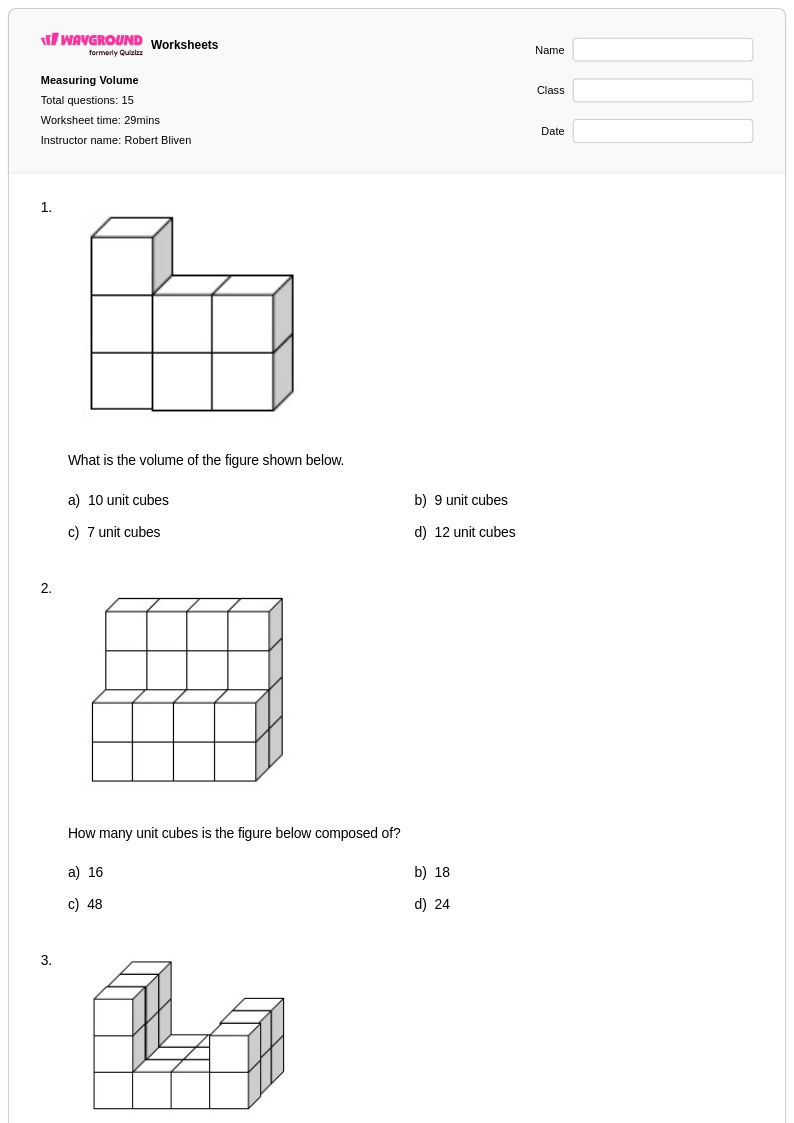
15 Q
5th
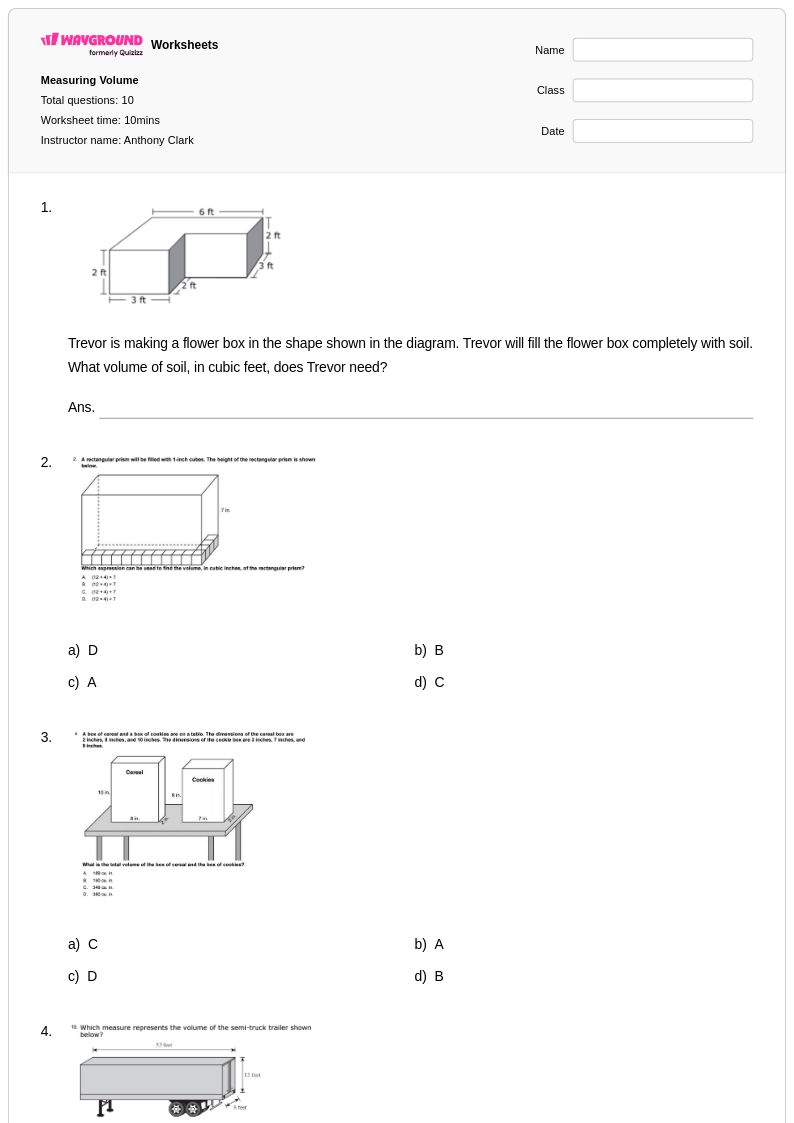
10 Q
3rd - Uni
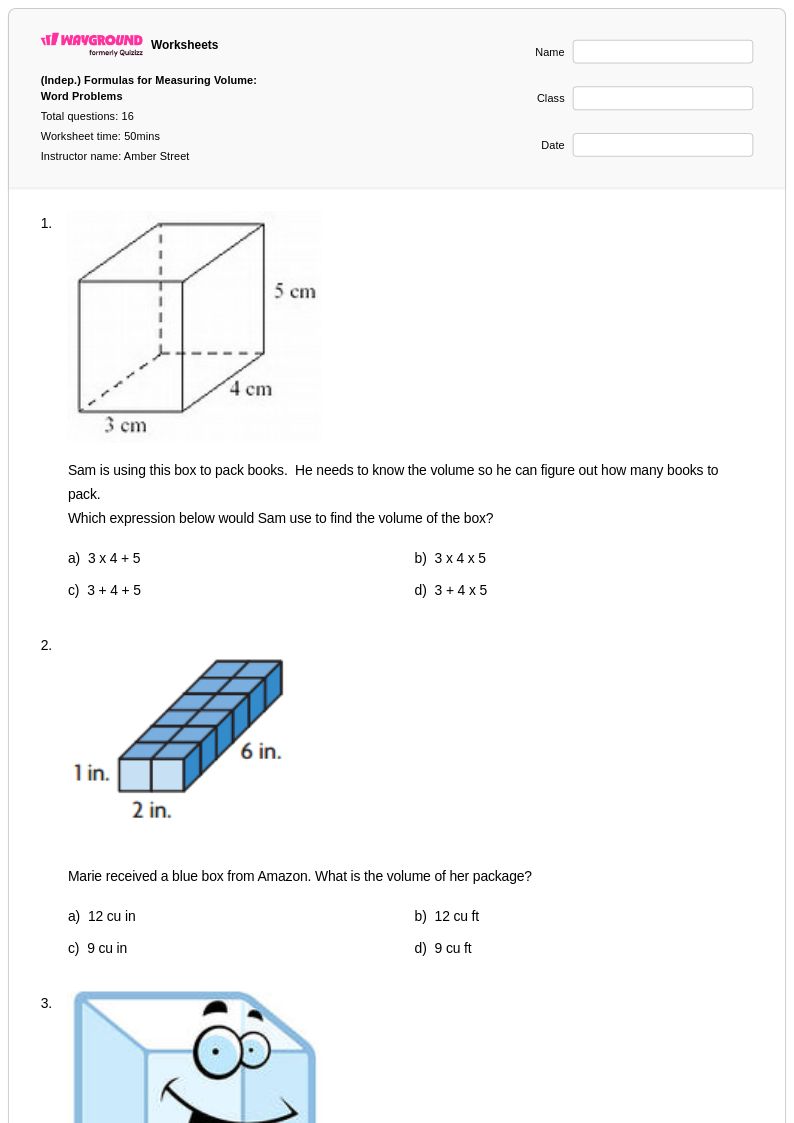
16 Q
5th
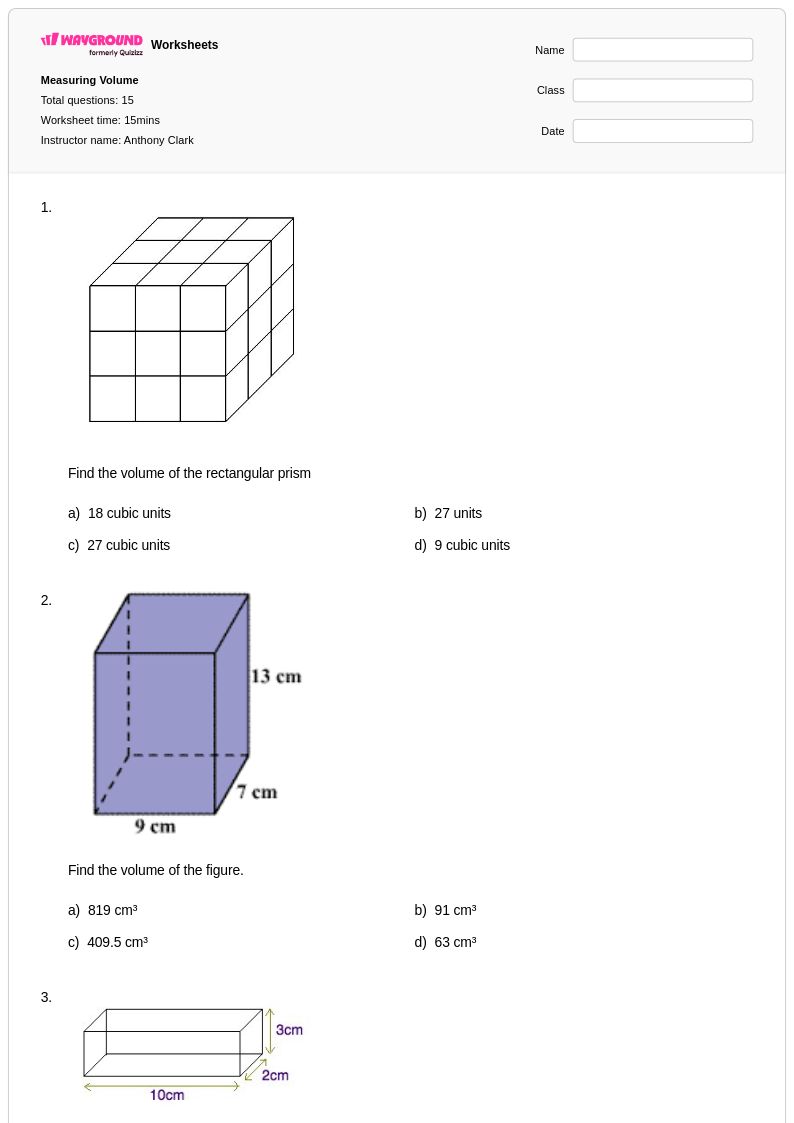
15 Q
3rd - Uni
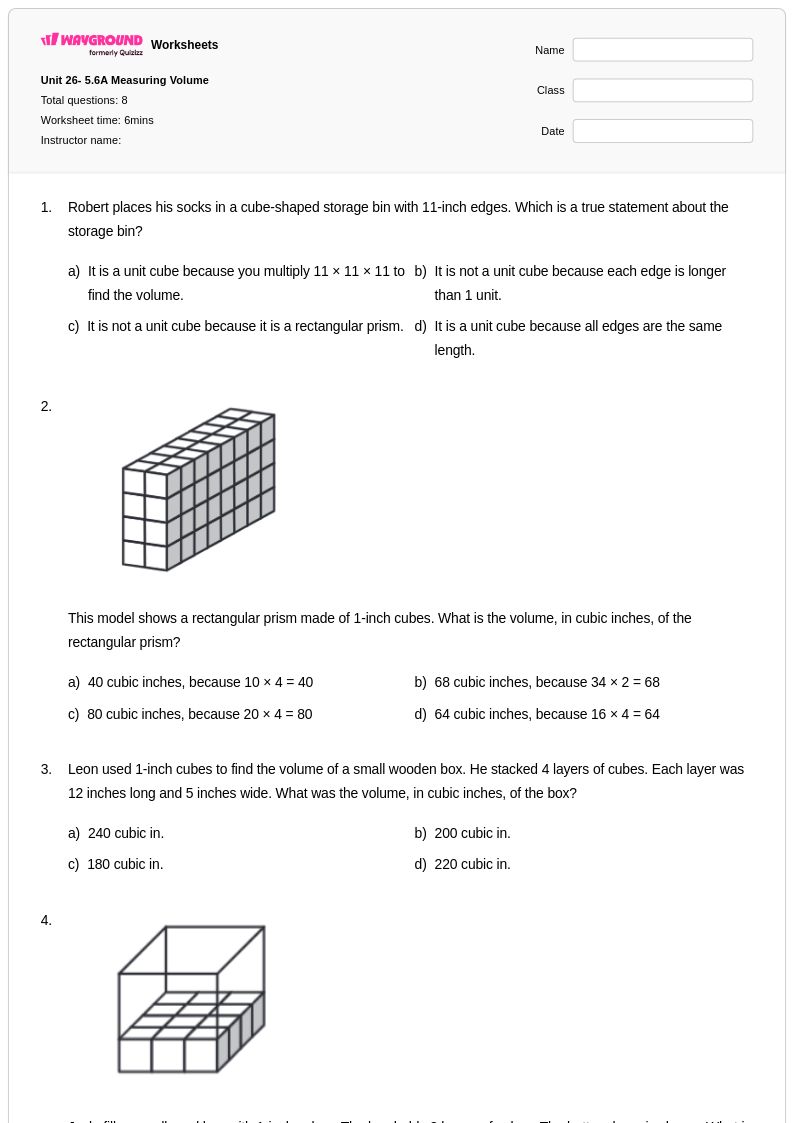
8 Q
5th
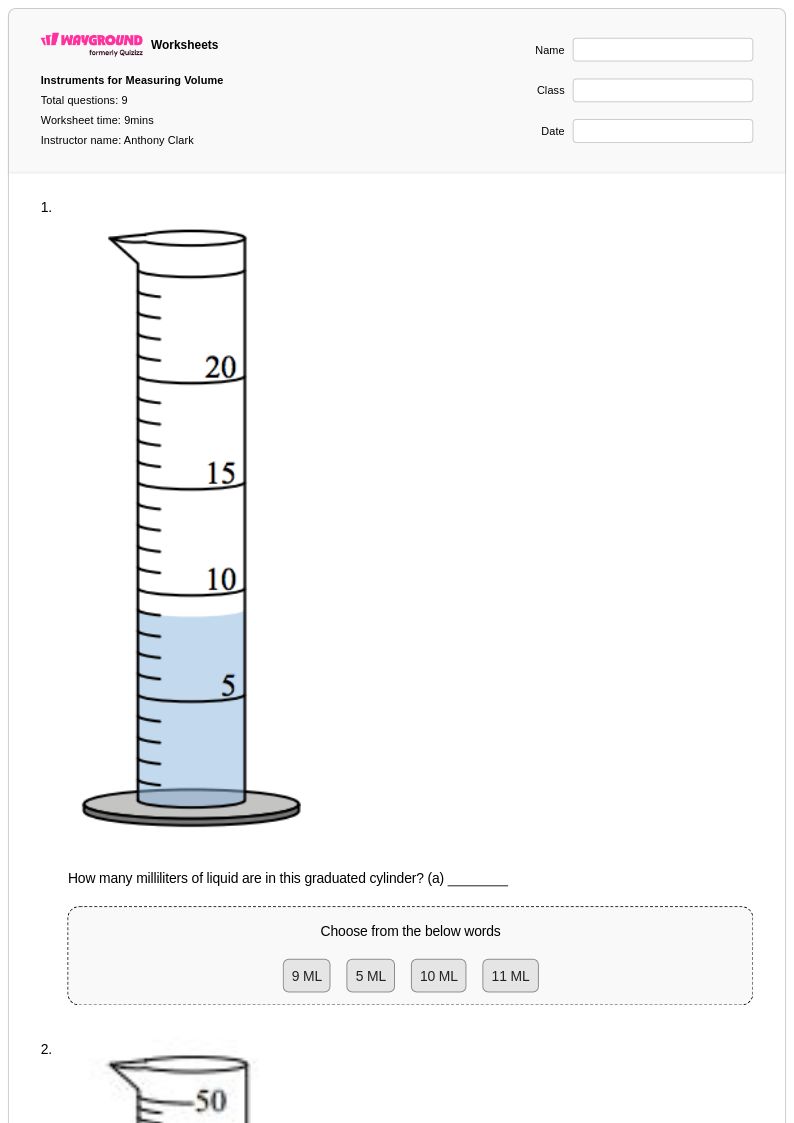
9 Q
5th - Uni
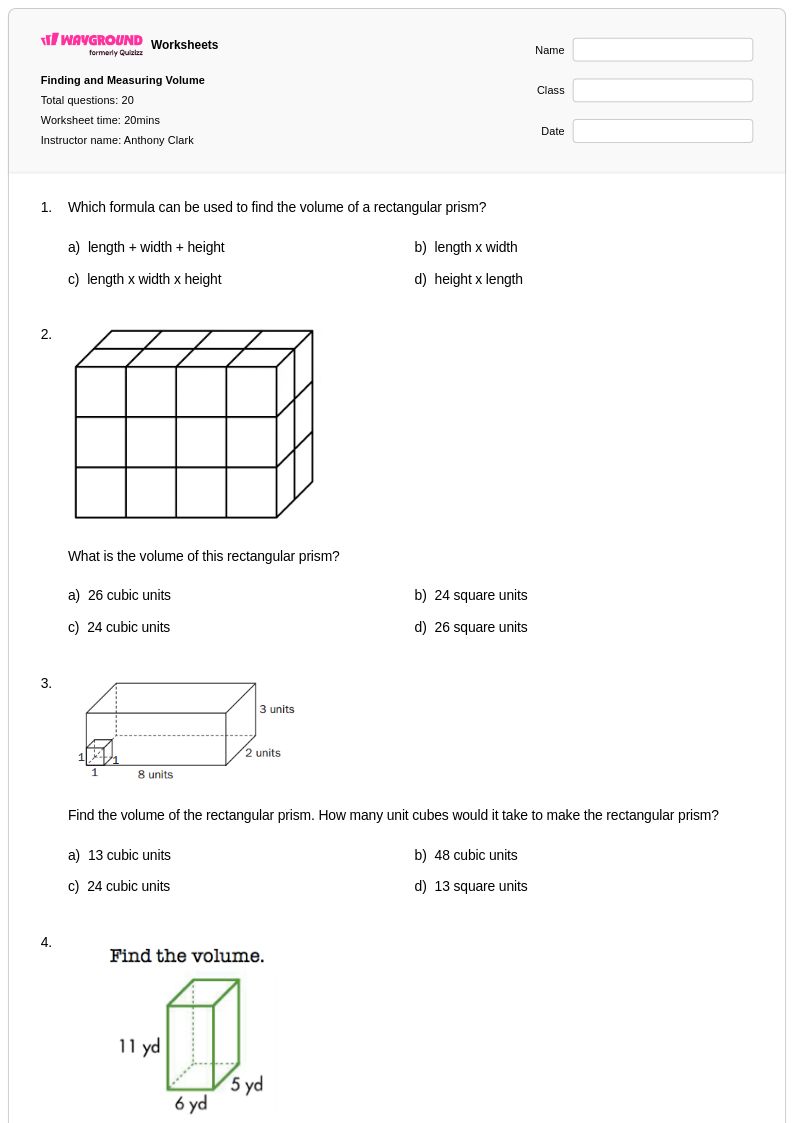
20 Q
5th - Uni
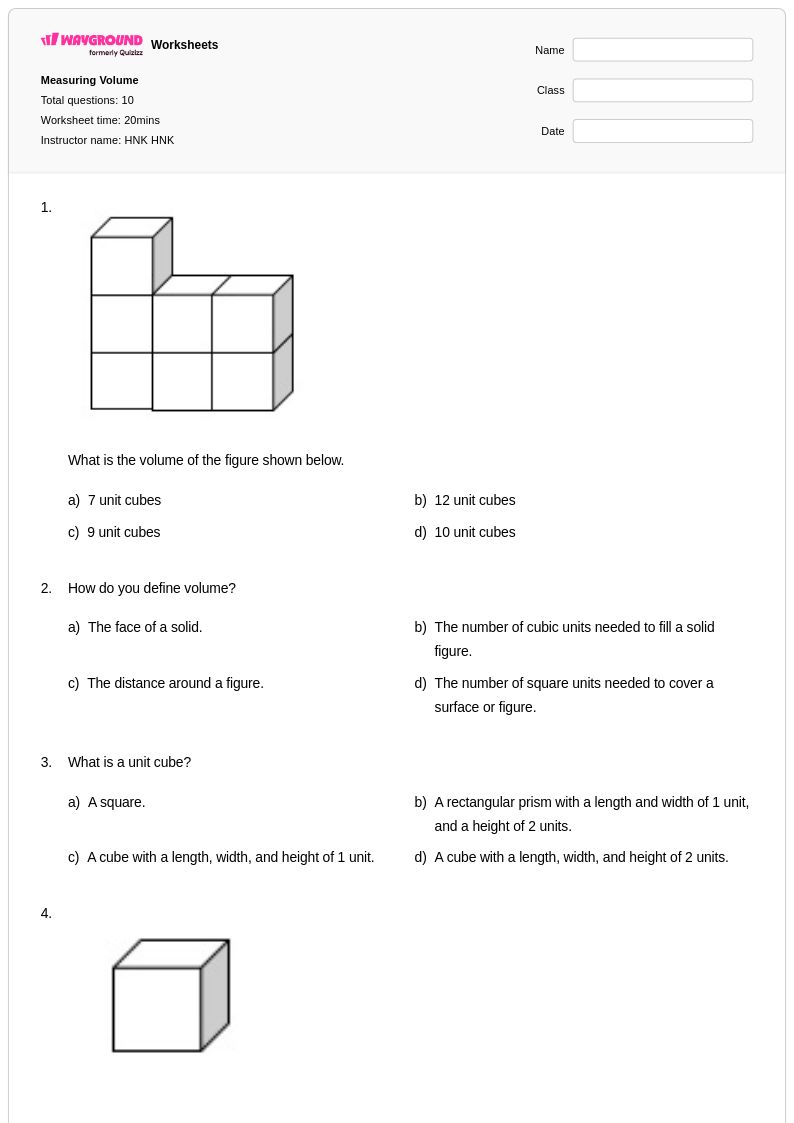
10 Q
5th
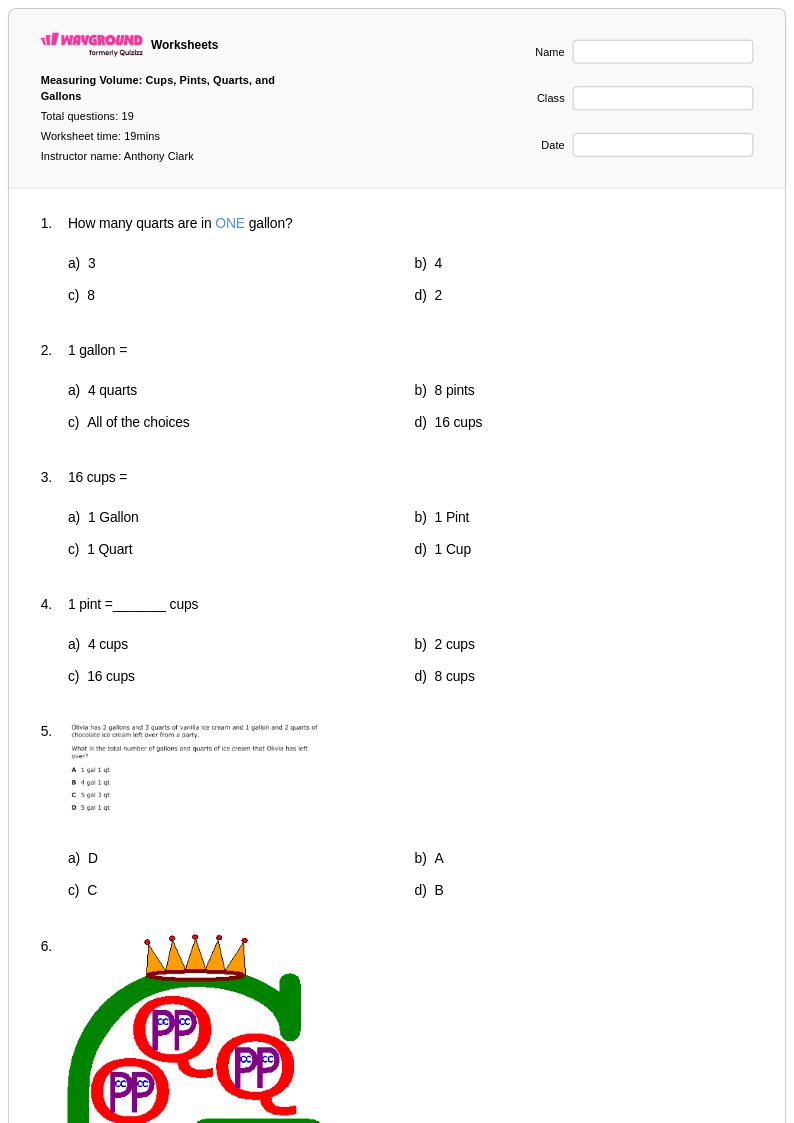
19 Q
3rd - Uni
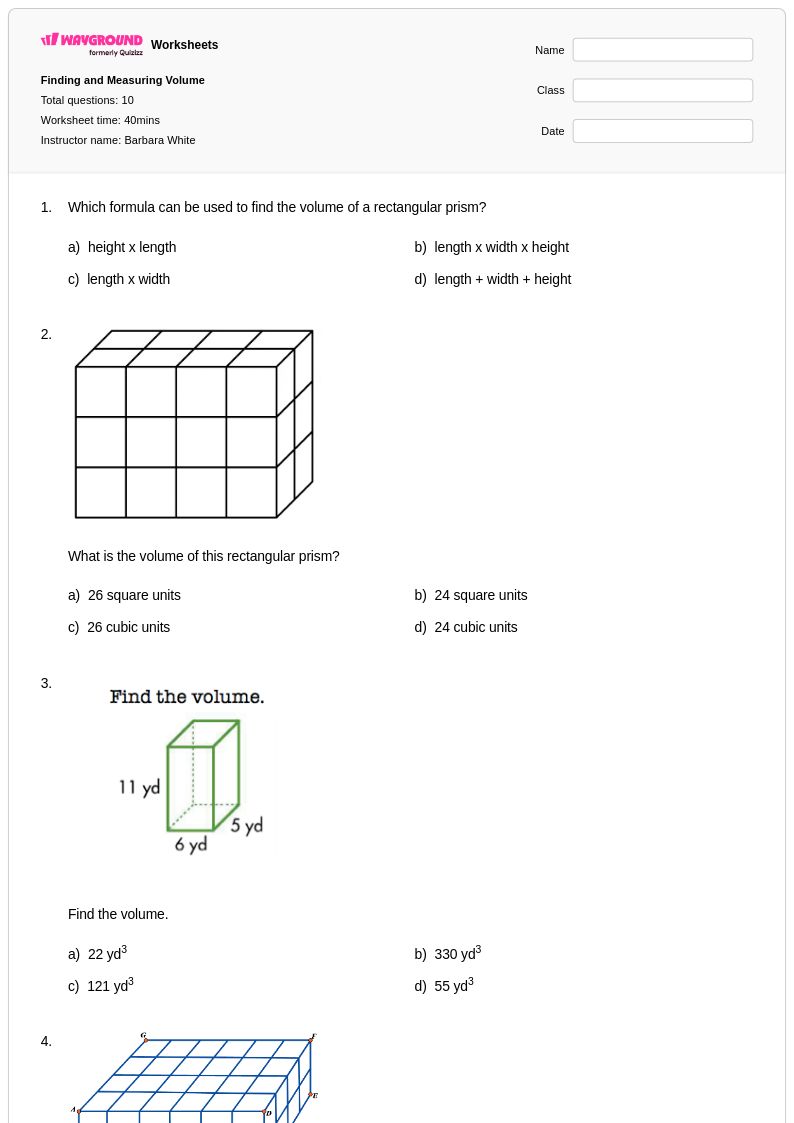
10 Q
5th
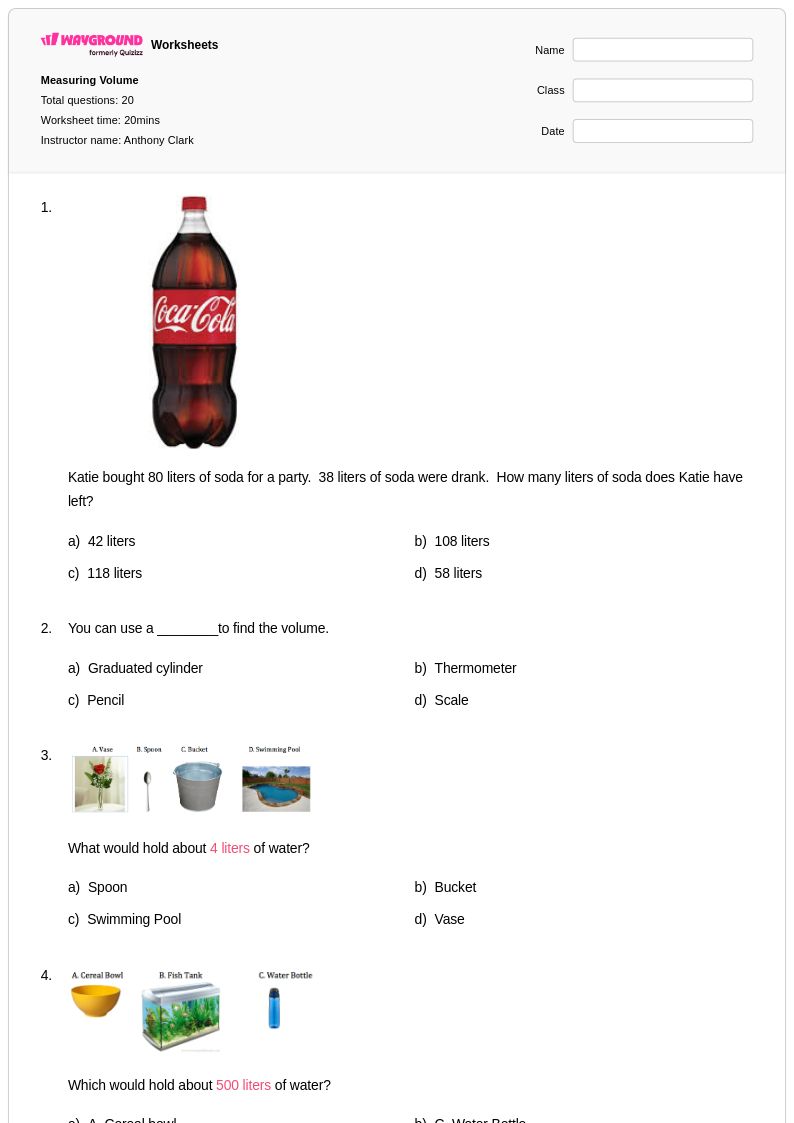
20 Q
3rd - Uni
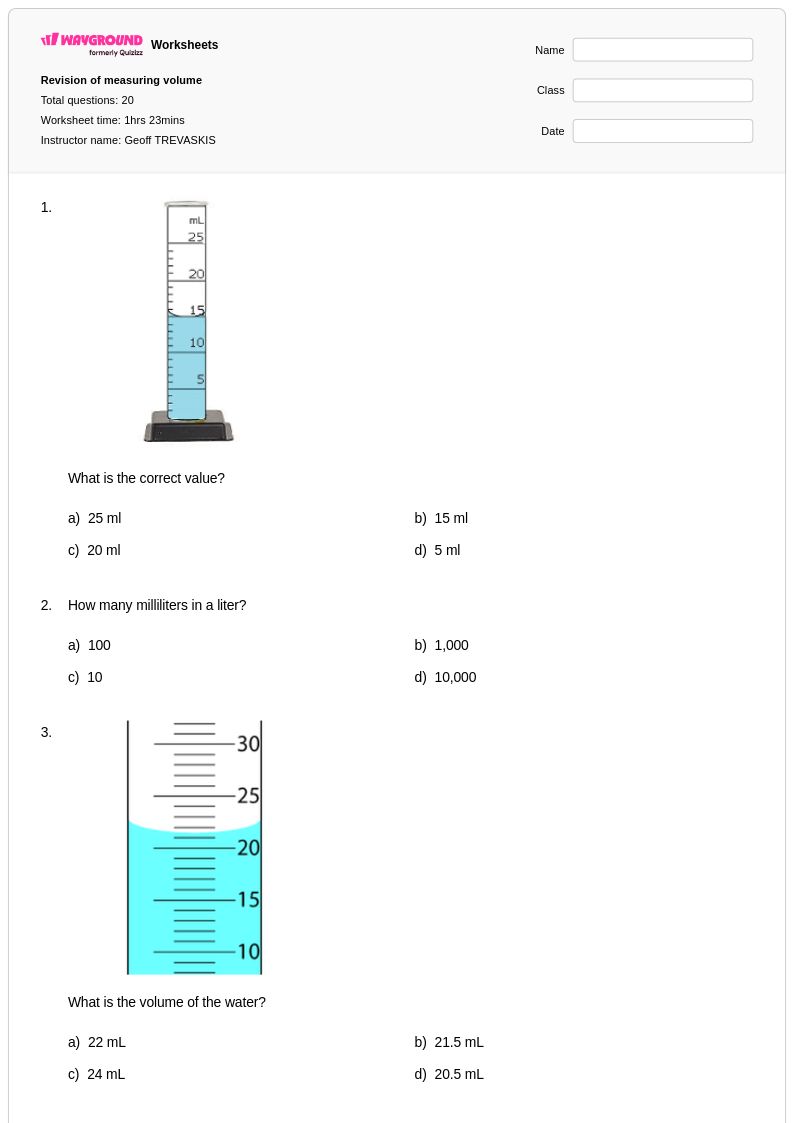
20 Q
4th - 7th
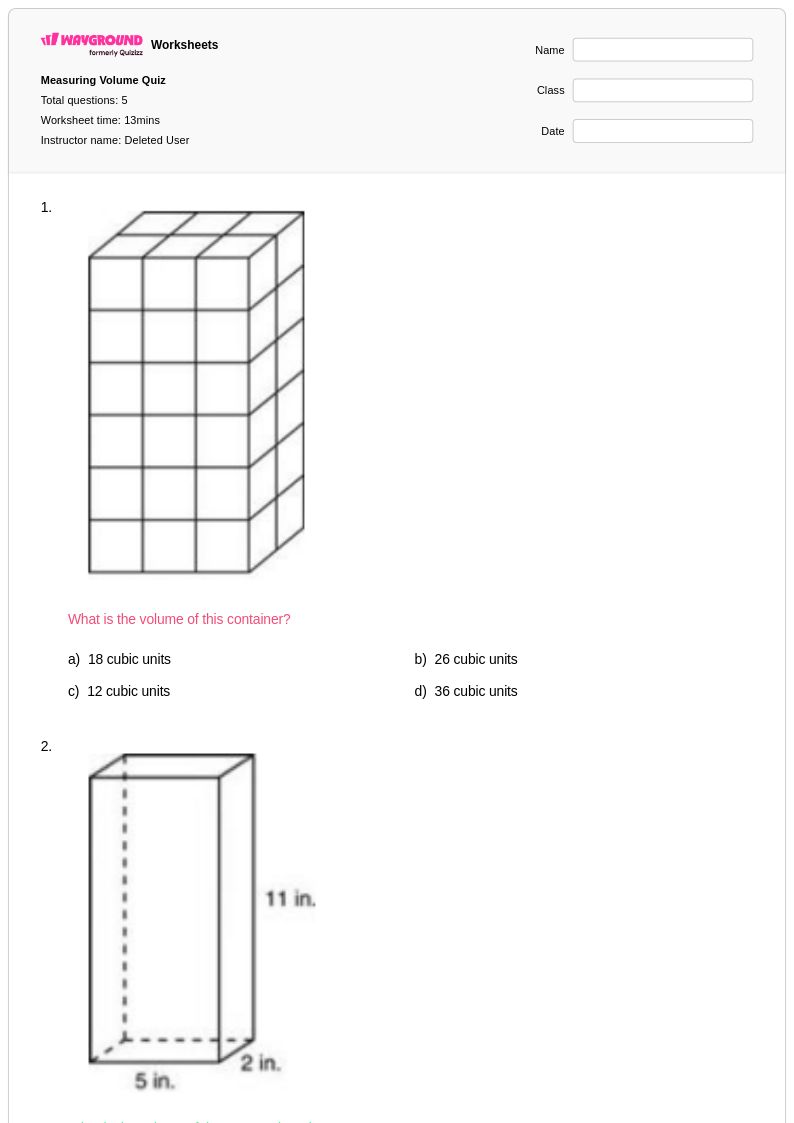
5 Q
5th
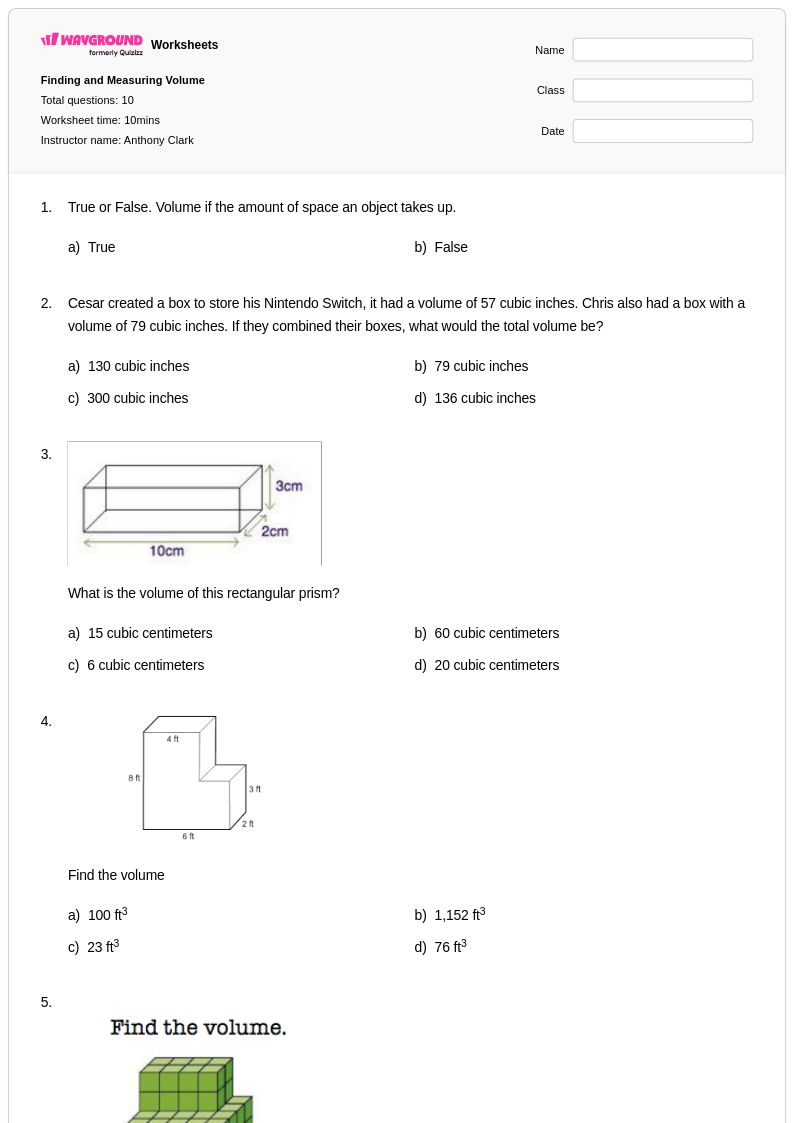
10 Q
5th - Uni
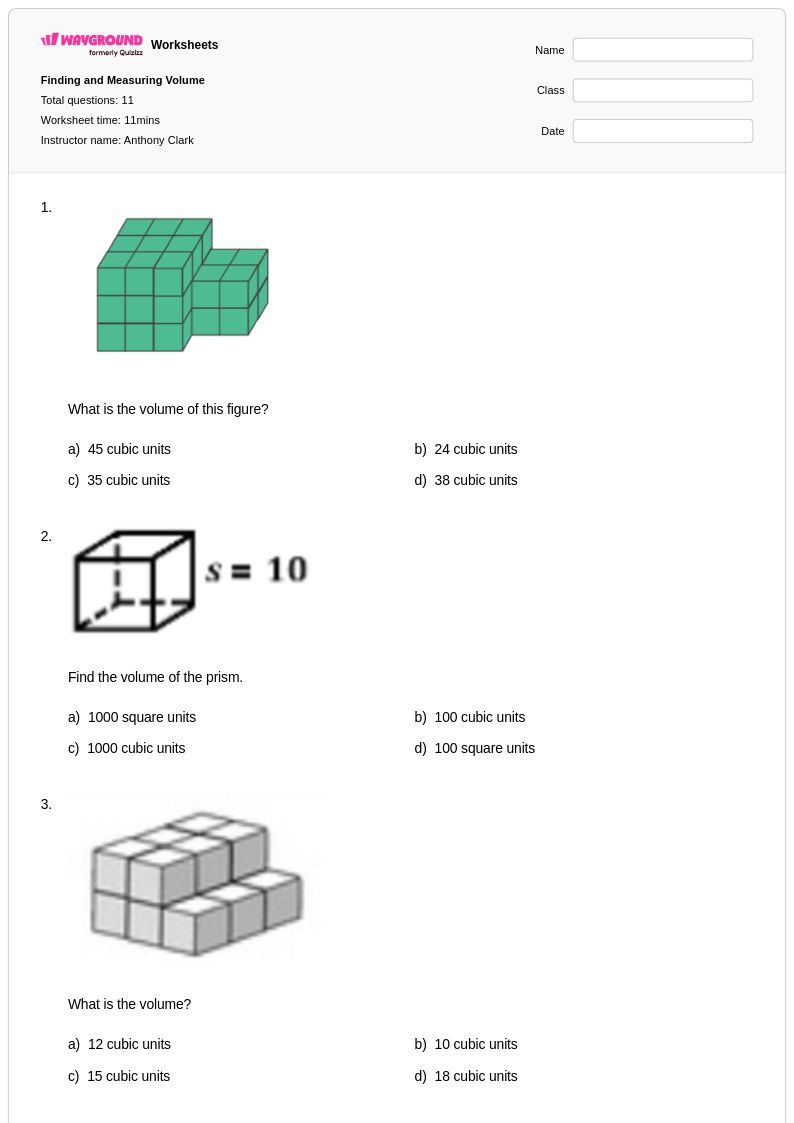
11 Q
5th - Uni
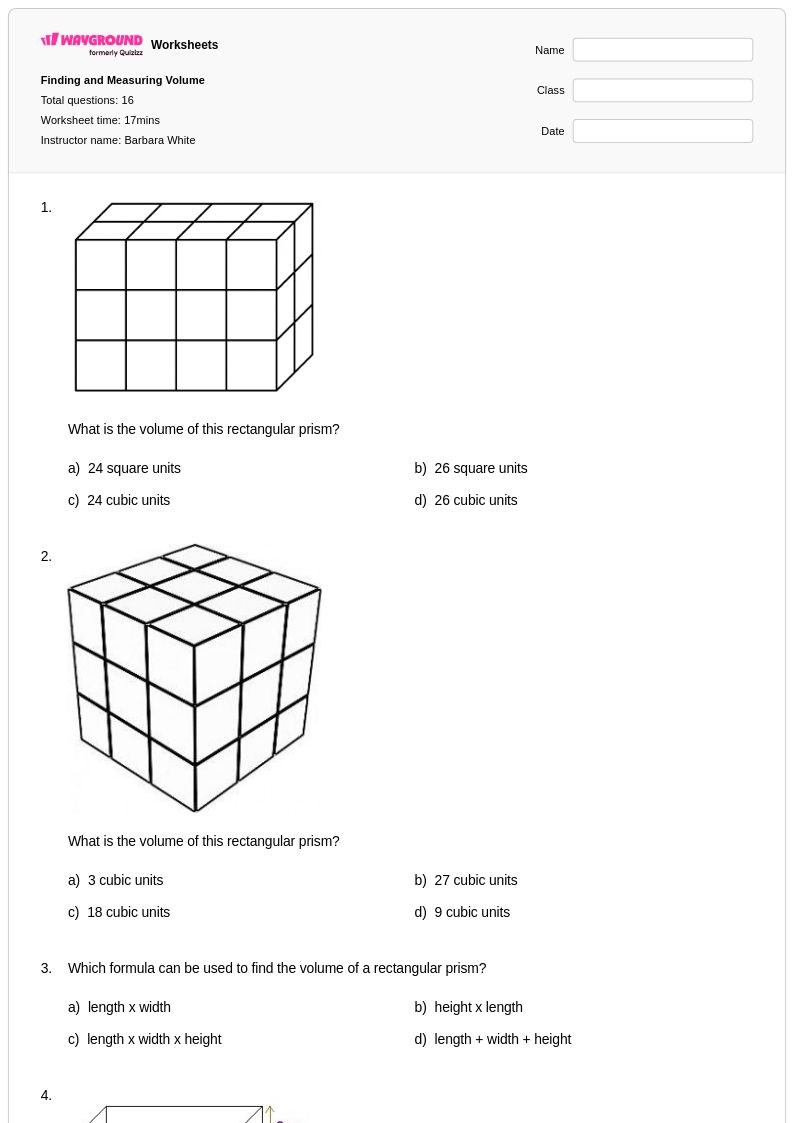
16 Q
4th - 5th
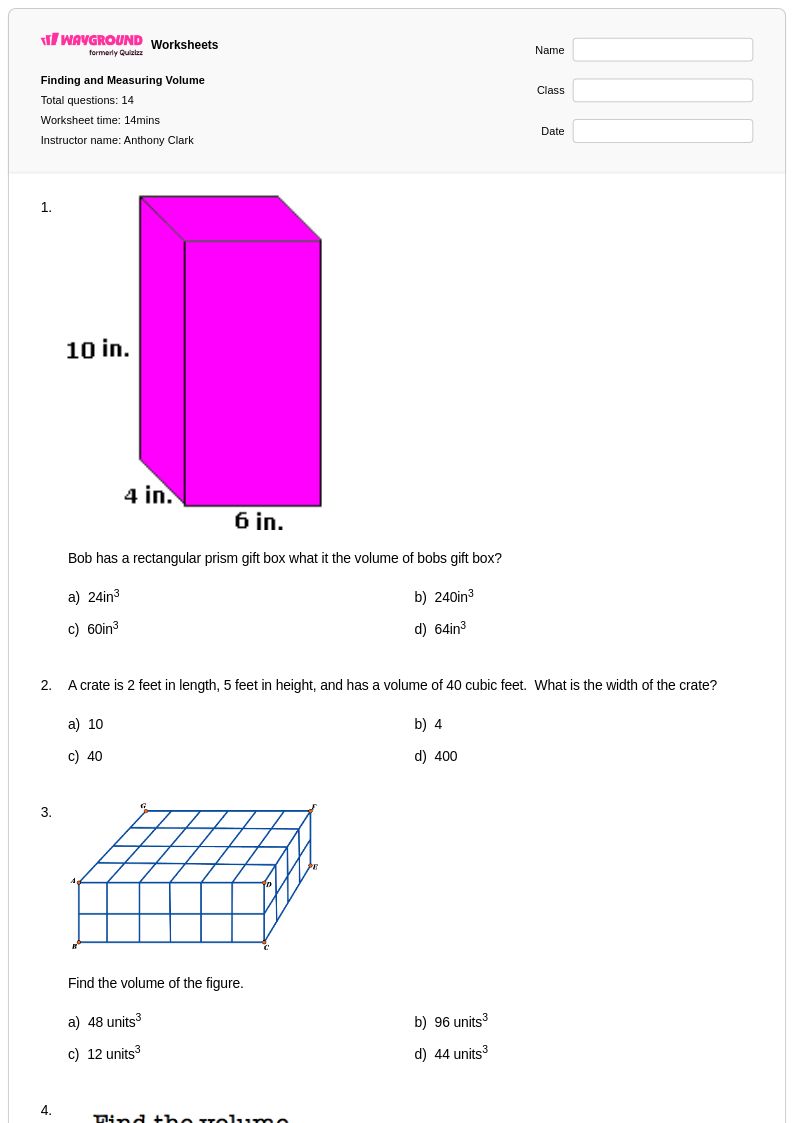
14 Q
5th - Uni
8 Q
4th - 5th
15 Q
5th
13 Q
5th
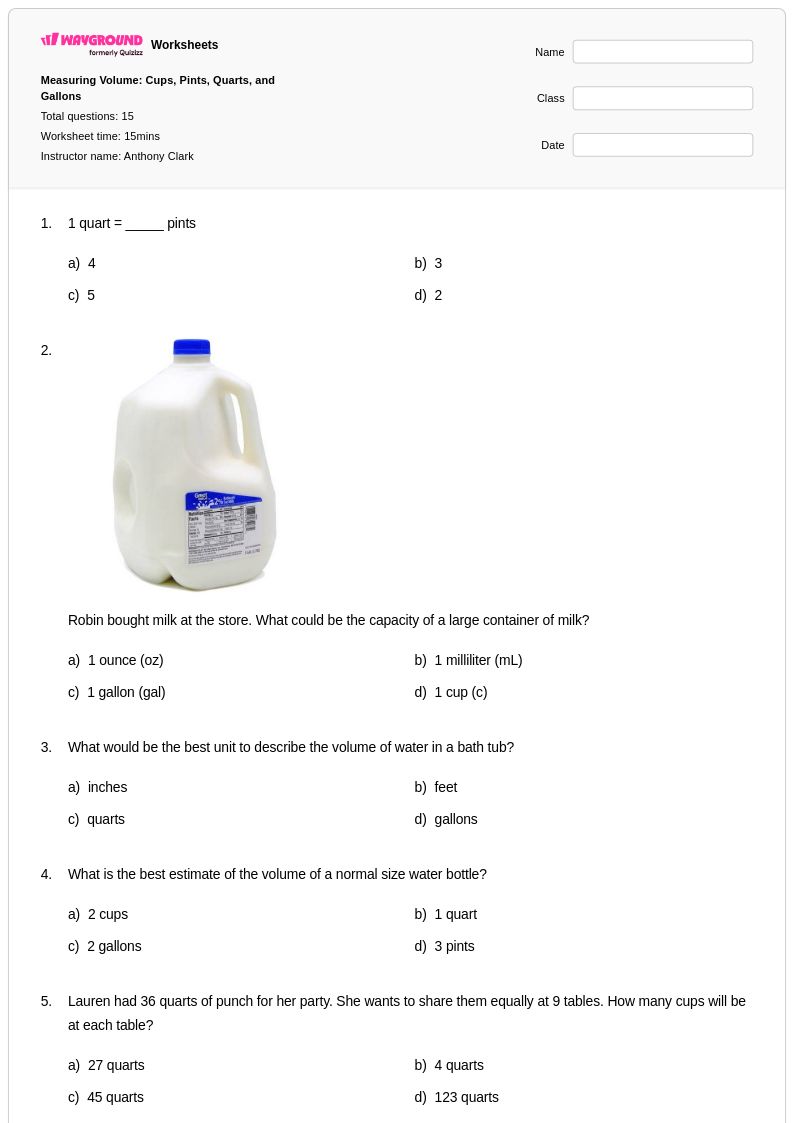
15 Q
3rd - Uni
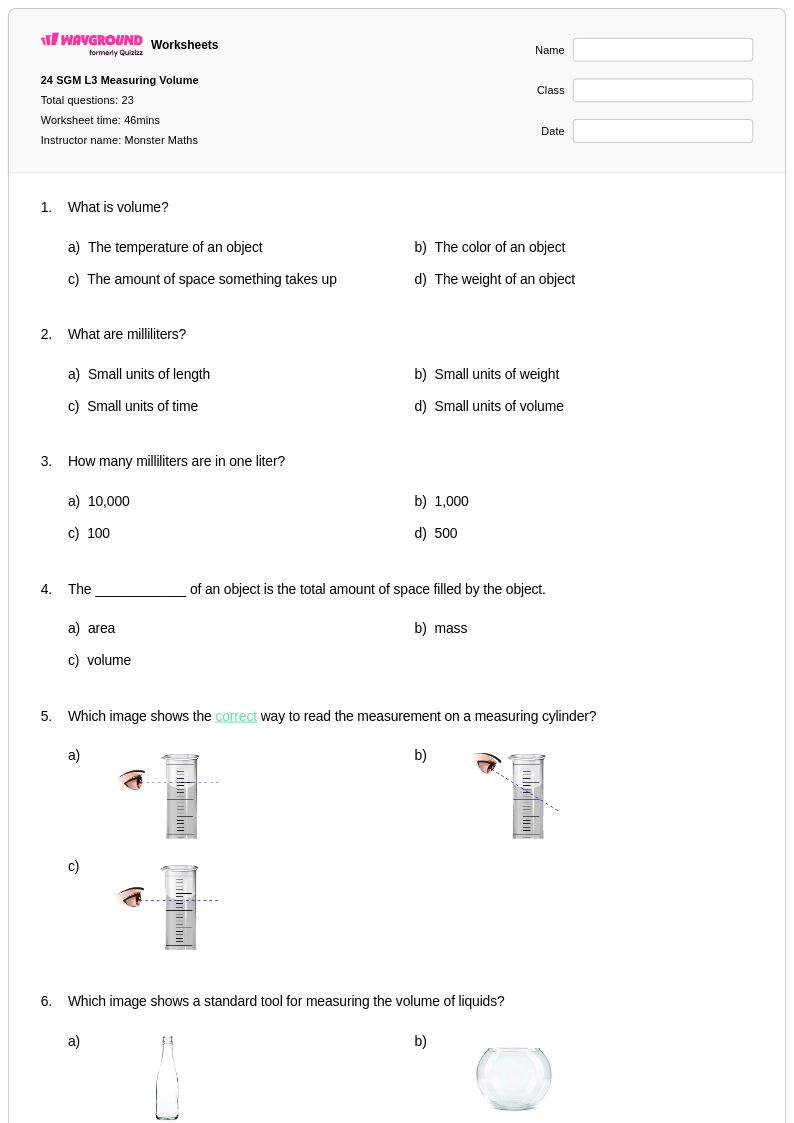
23 Q
1st - 5th
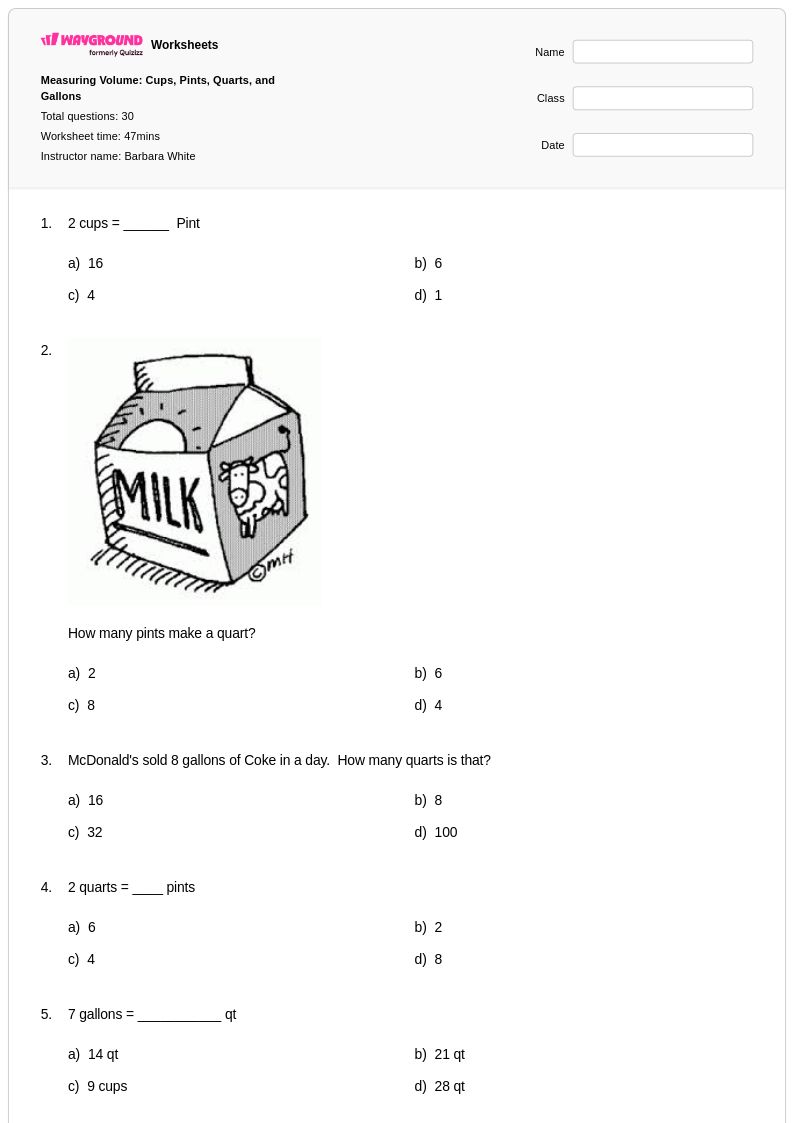
30 Q
5th
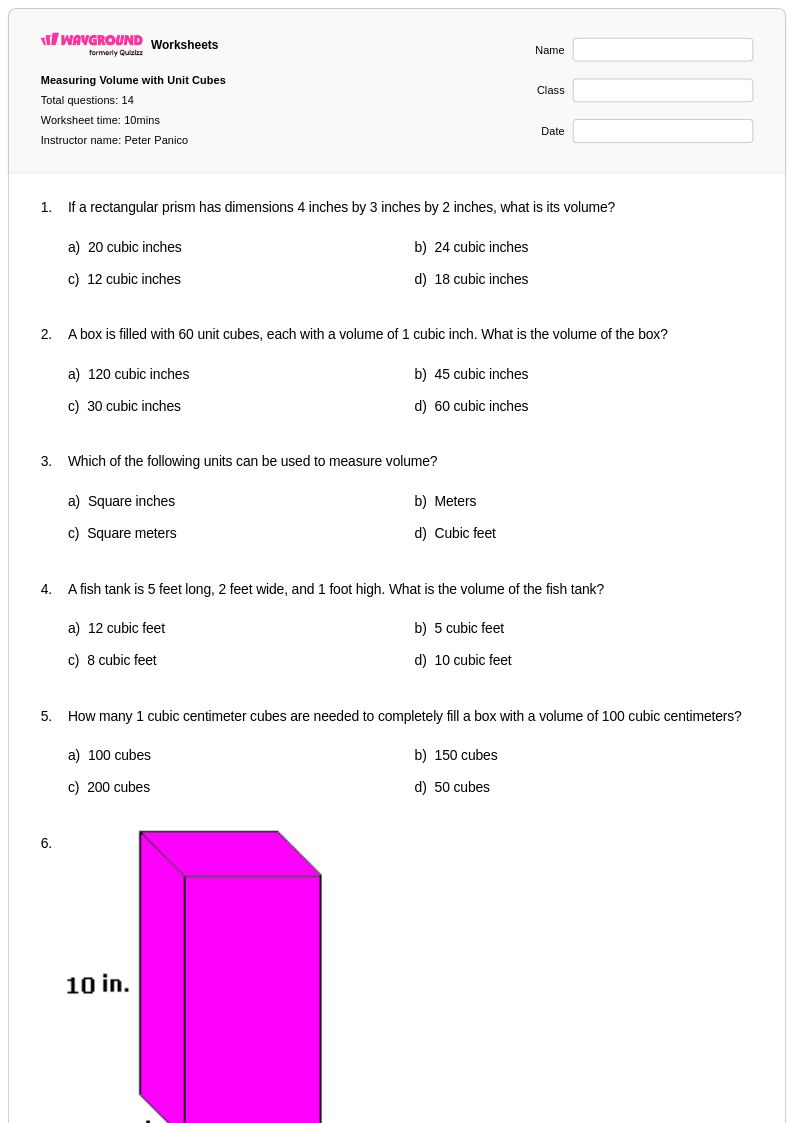
14 Q
5th
Explore Measuring Volume Worksheets for year 5 by Topic
Explore Other Subject Worksheets for year 5
Explore printable Measuring Volume worksheets for Year 5
Measuring volume worksheets for Year 5 students available through Wayground (formerly Quizizz) provide comprehensive practice opportunities for mastering this fundamental mathematical concept. These carefully designed printables focus on developing students' ability to calculate the volume of rectangular prisms using length, width, and height measurements, as well as understanding volume through counting unit cubes. The worksheets strengthen critical skills including spatial reasoning, multiplication of three dimensions, and the practical application of volume formulas in real-world contexts. Each free resource includes detailed practice problems that progress from basic cube counting exercises to more complex calculations involving fractional measurements, with accompanying answer keys that support both independent learning and guided instruction in pdf format.
Wayground's extensive collection draws from millions of teacher-created resources specifically designed to support Year 5 measurement instruction, offering educators powerful search and filtering capabilities to locate materials that align with specific curriculum standards and learning objectives. The platform's differentiation tools enable teachers to customize worksheets based on individual student needs, whether for remediation of foundational volume concepts or enrichment activities involving irregular shapes and complex problem-solving scenarios. These flexible resources are available in both printable and digital formats, allowing seamless integration into various instructional settings while supporting comprehensive lesson planning. Teachers can efficiently identify appropriate materials for skill practice, formative assessment, and targeted intervention, ensuring that students develop confidence and proficiency in measuring volume through systematic, scaffolded practice opportunities.
FAQs
How do I teach volume of rectangular prisms in Grade 5?
What exercises help fifth graders practice measuring volume?
What mistakes do Grade 5 students make when calculating volume?
How can I use these Grade 5 volume worksheets in class?
Are Grade 5 volume worksheets aligned with Common Core expectations?
How can I differentiate Grade 5 volume worksheets?
What grade are these measuring volume worksheets for?