Free Printable Multiple Meaning Words Worksheets for Year 4
Enhance Year 4 students' understanding of multiple meaning words with Wayground's comprehensive collection of free worksheets, printables, and practice problems that include detailed answer keys to build vocabulary skills.
Explore printable Multiple Meaning Words worksheets for Year 4
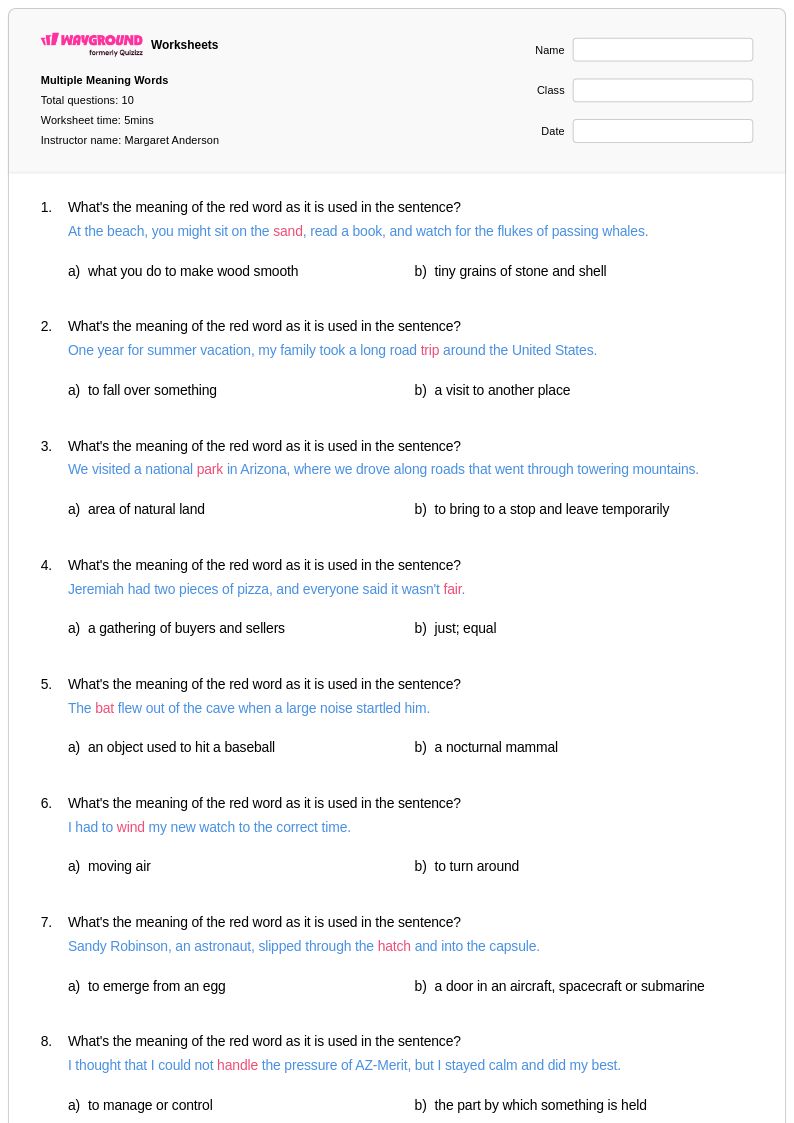
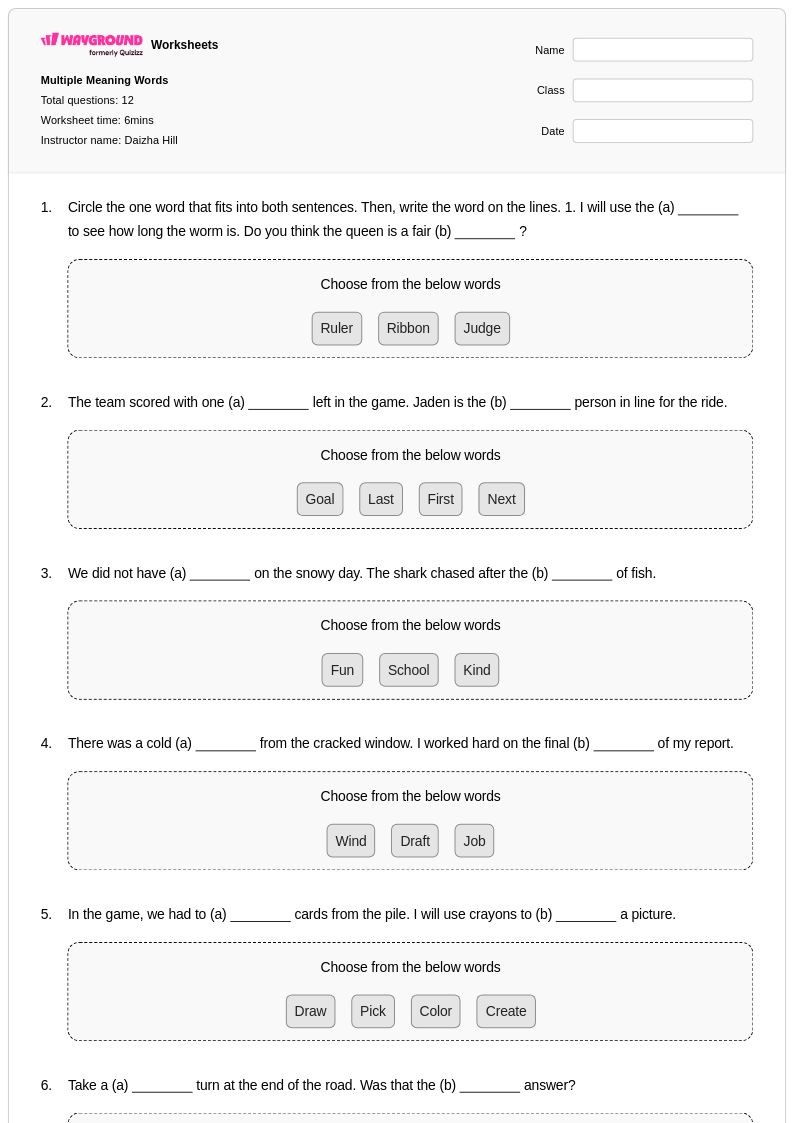
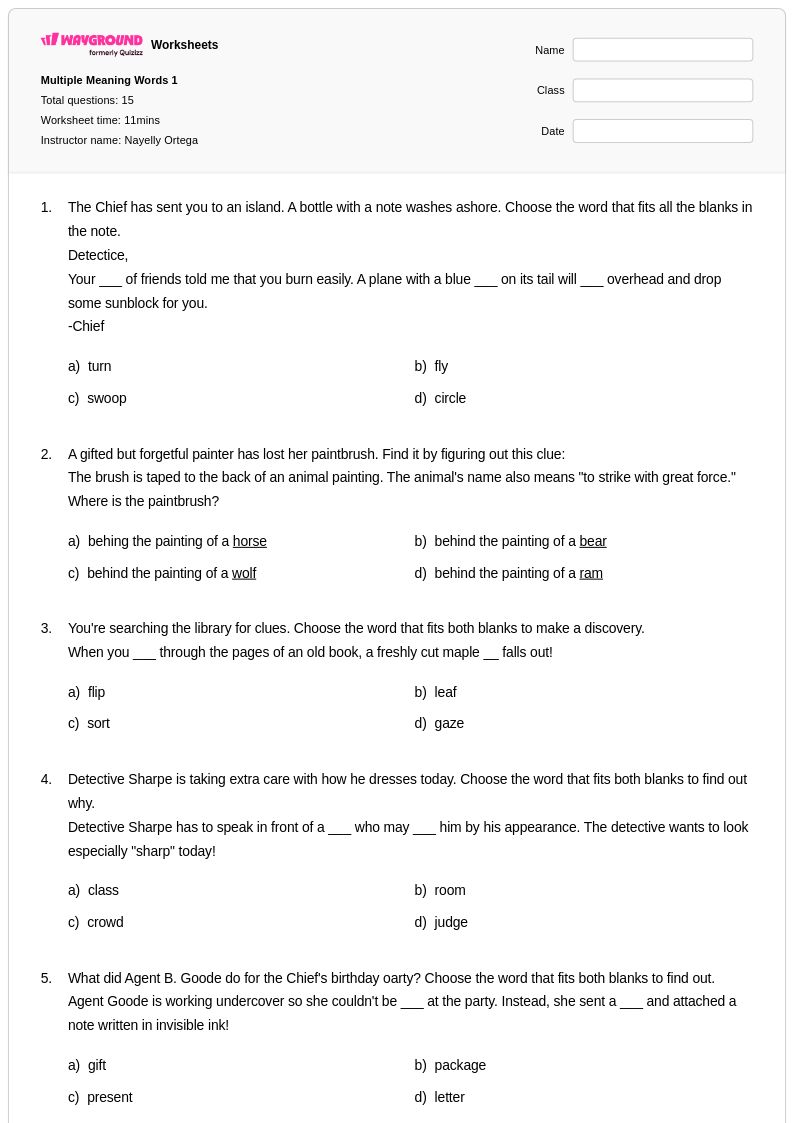
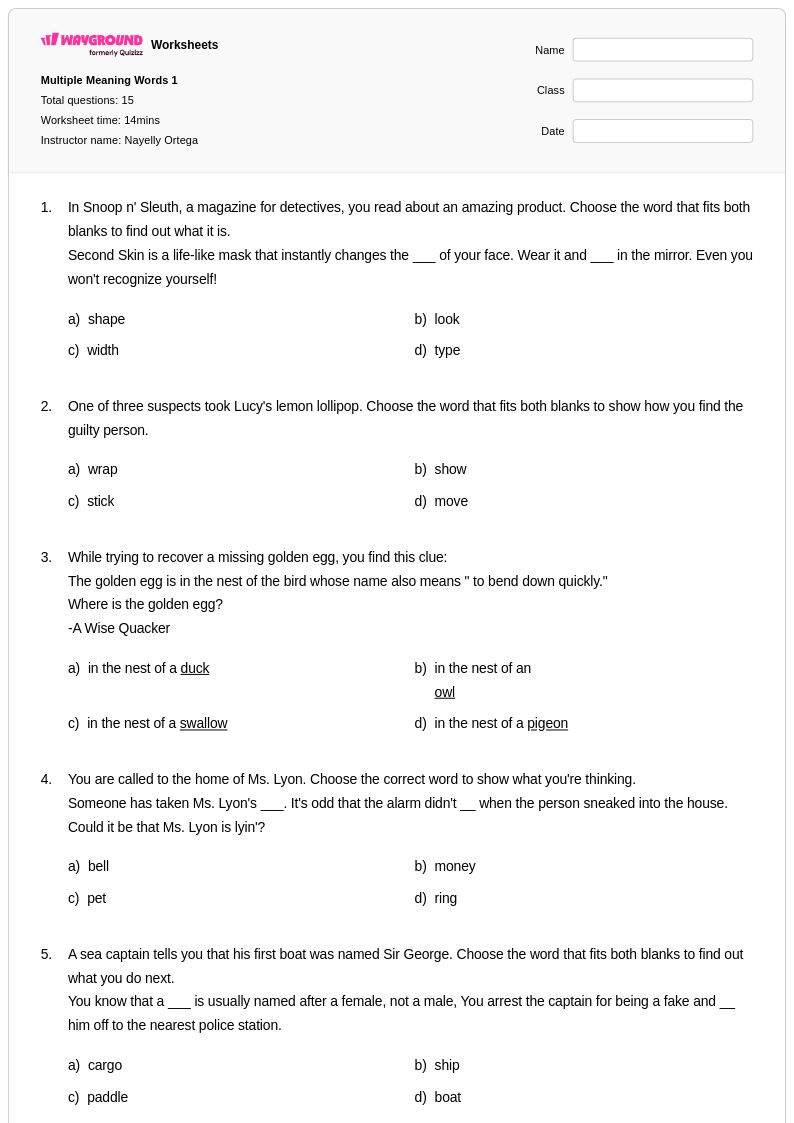
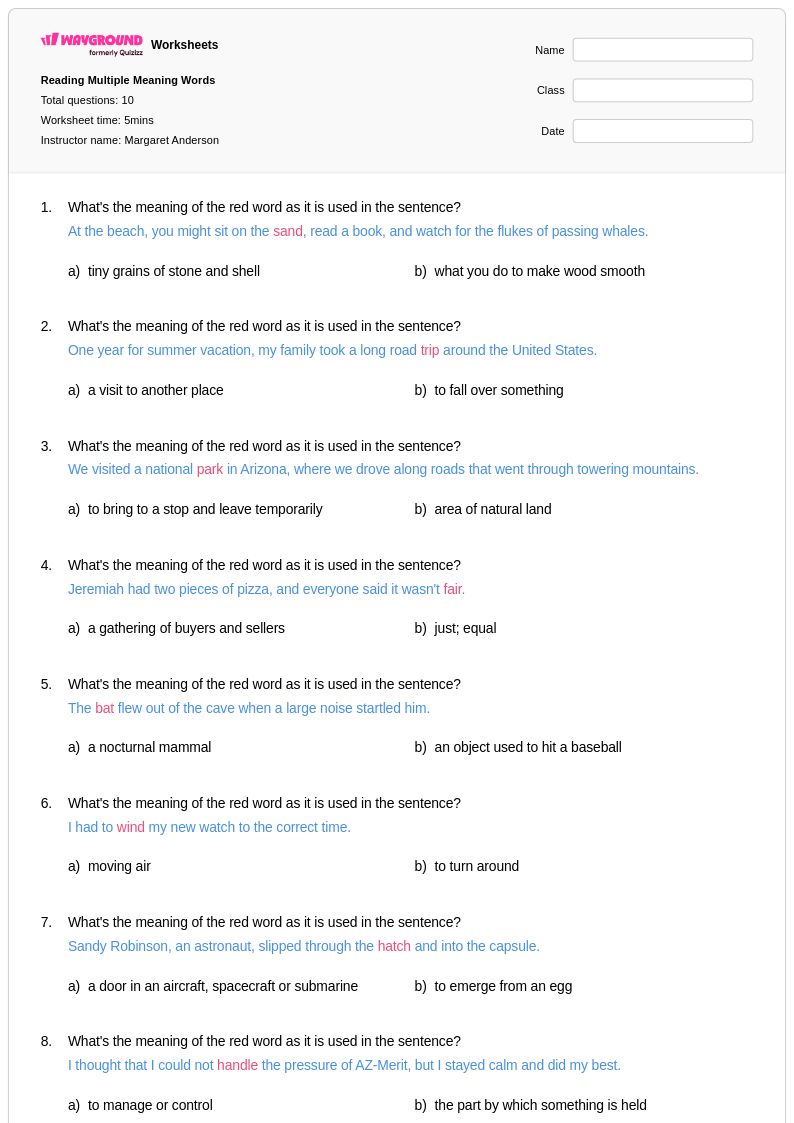
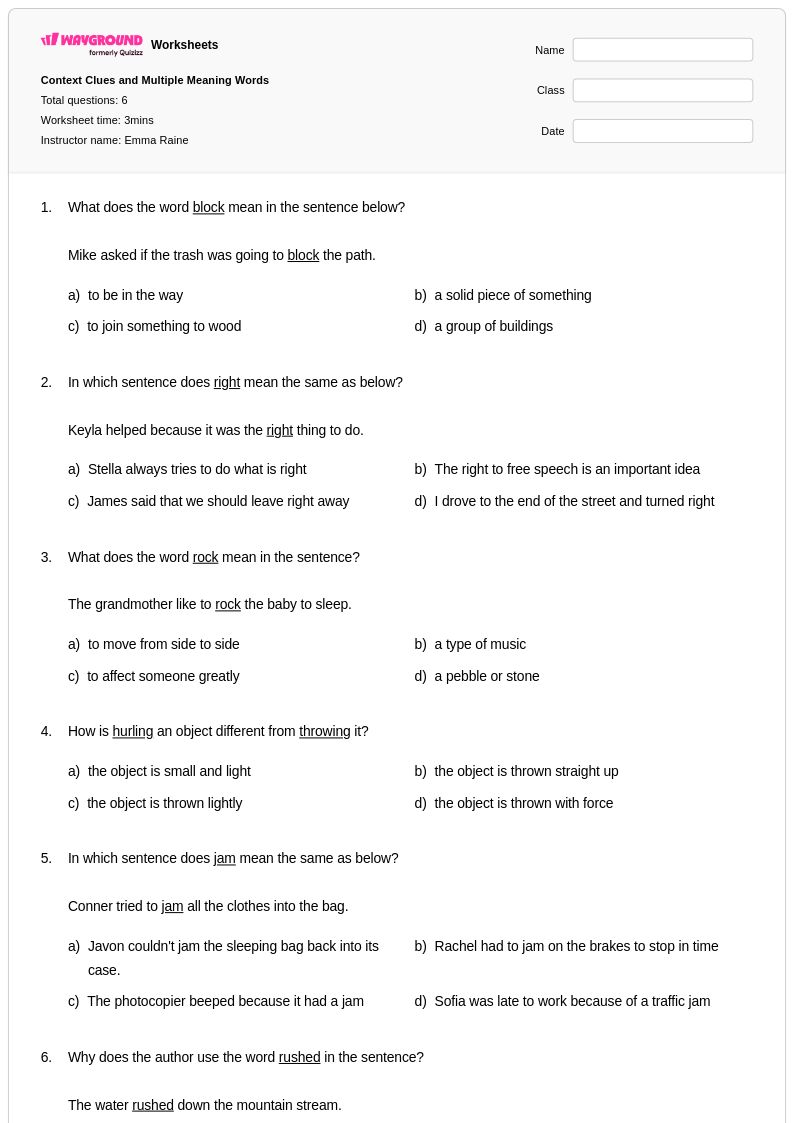
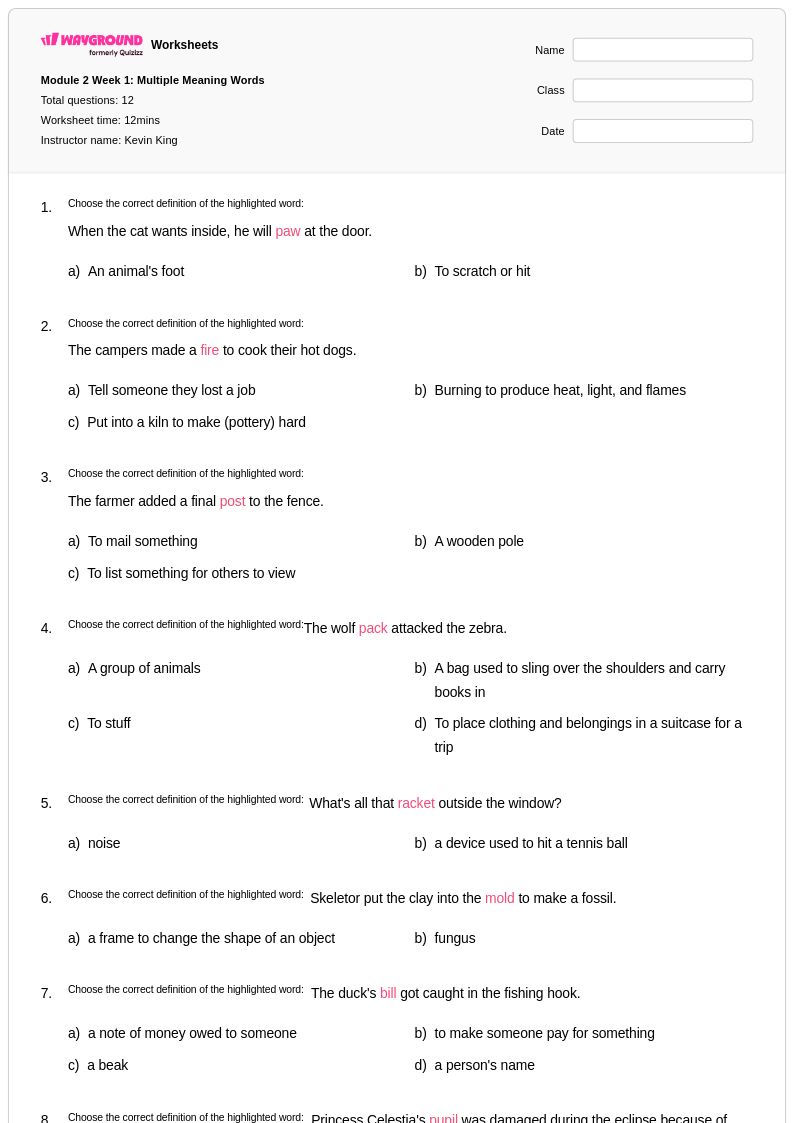
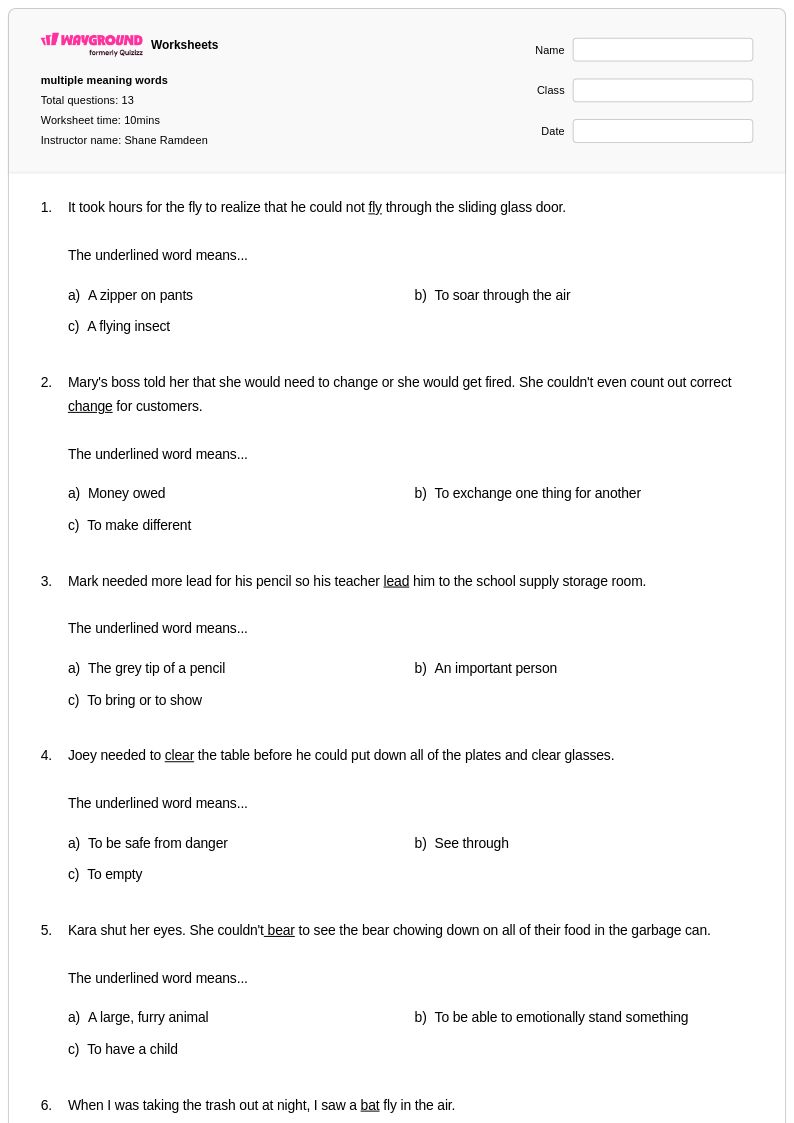
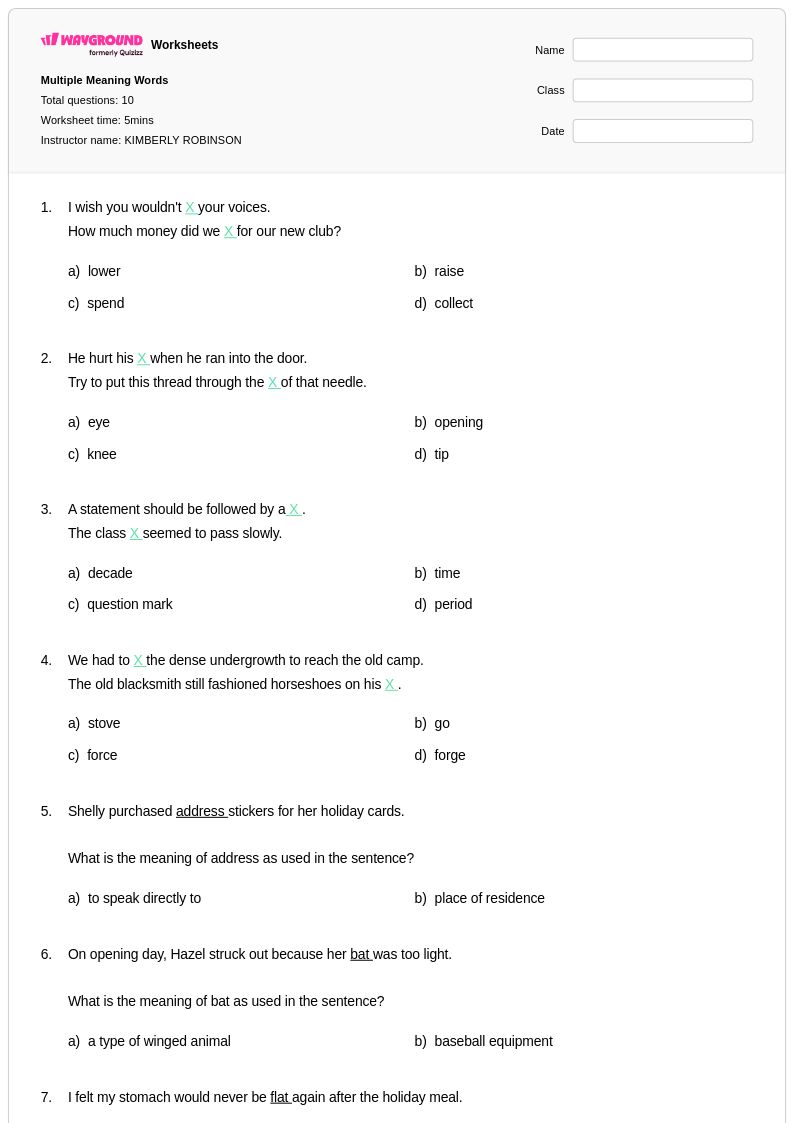
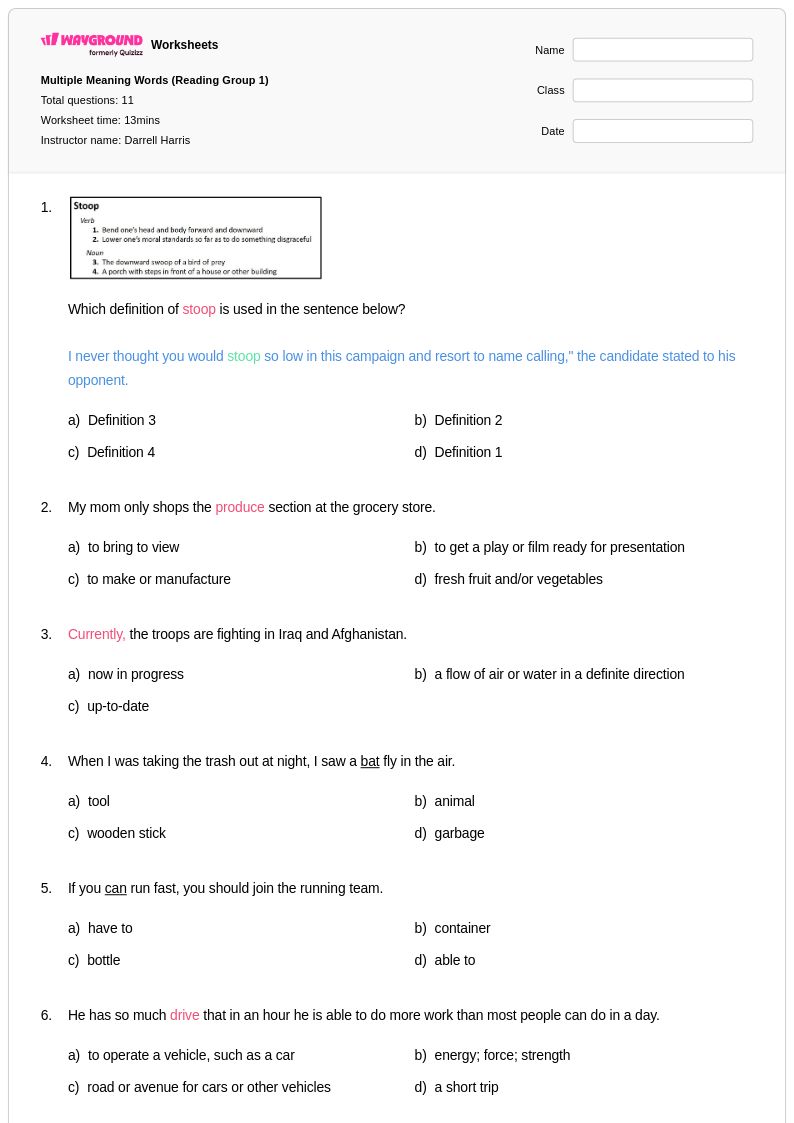
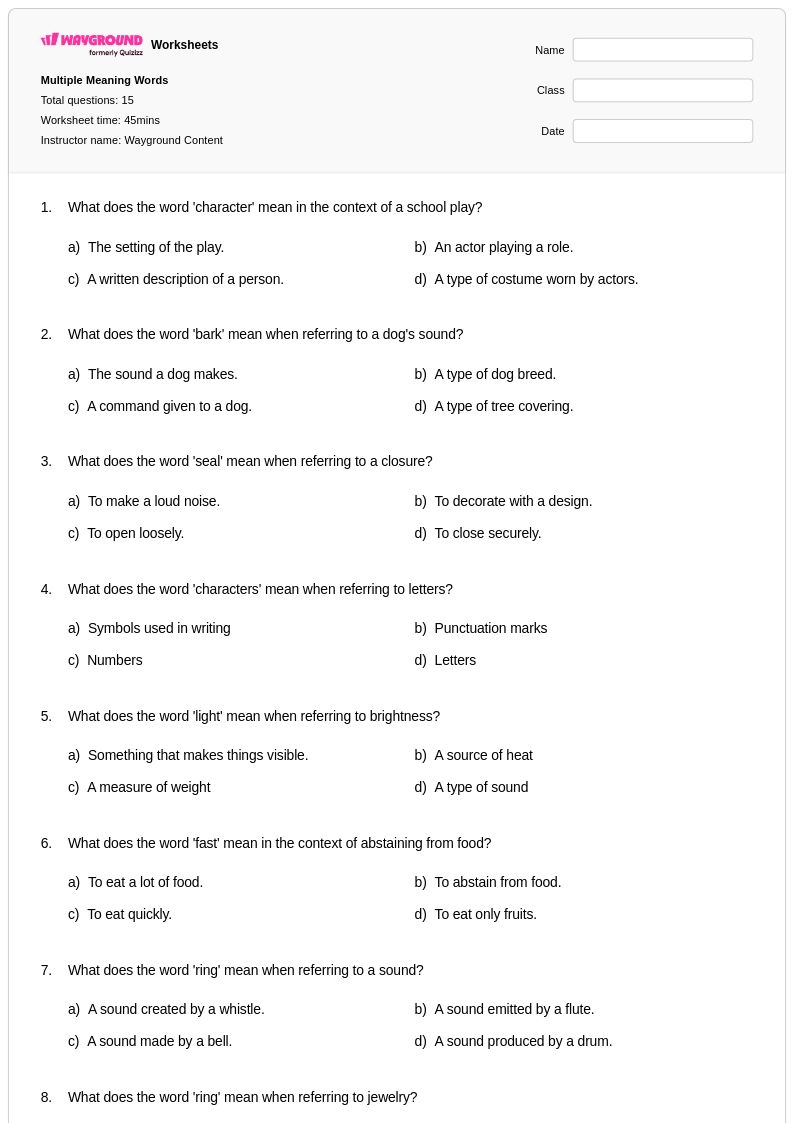
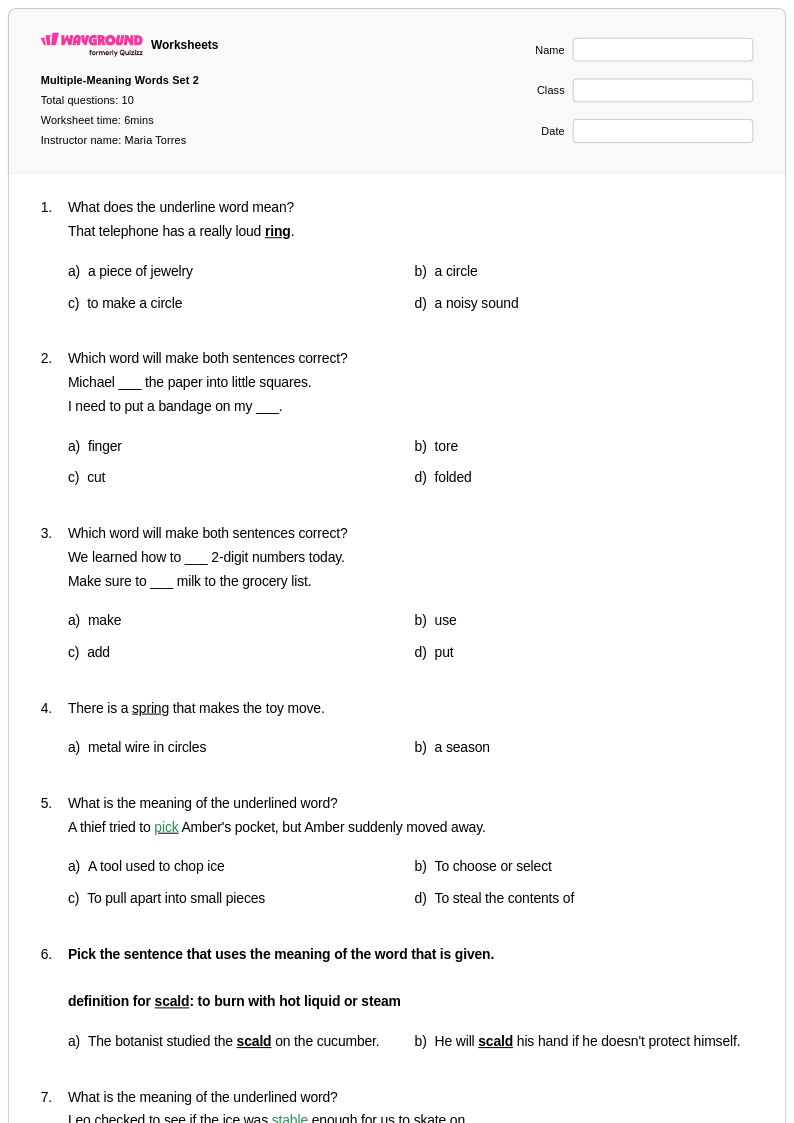
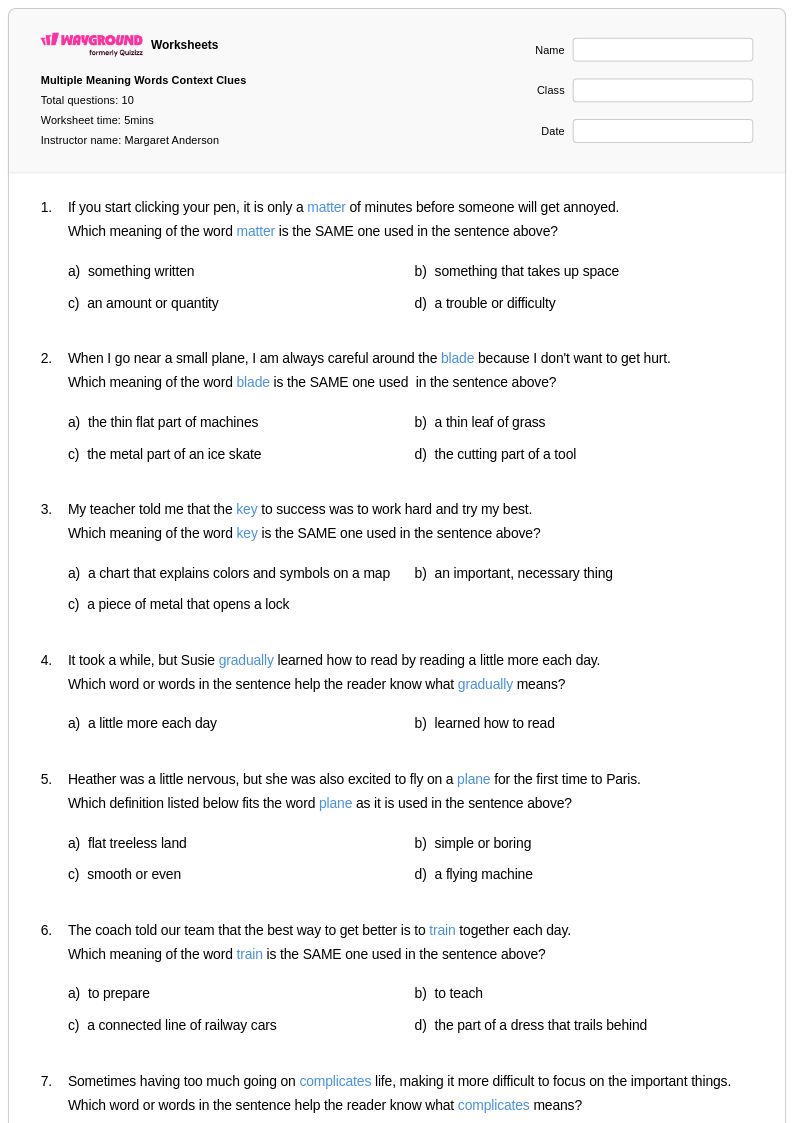
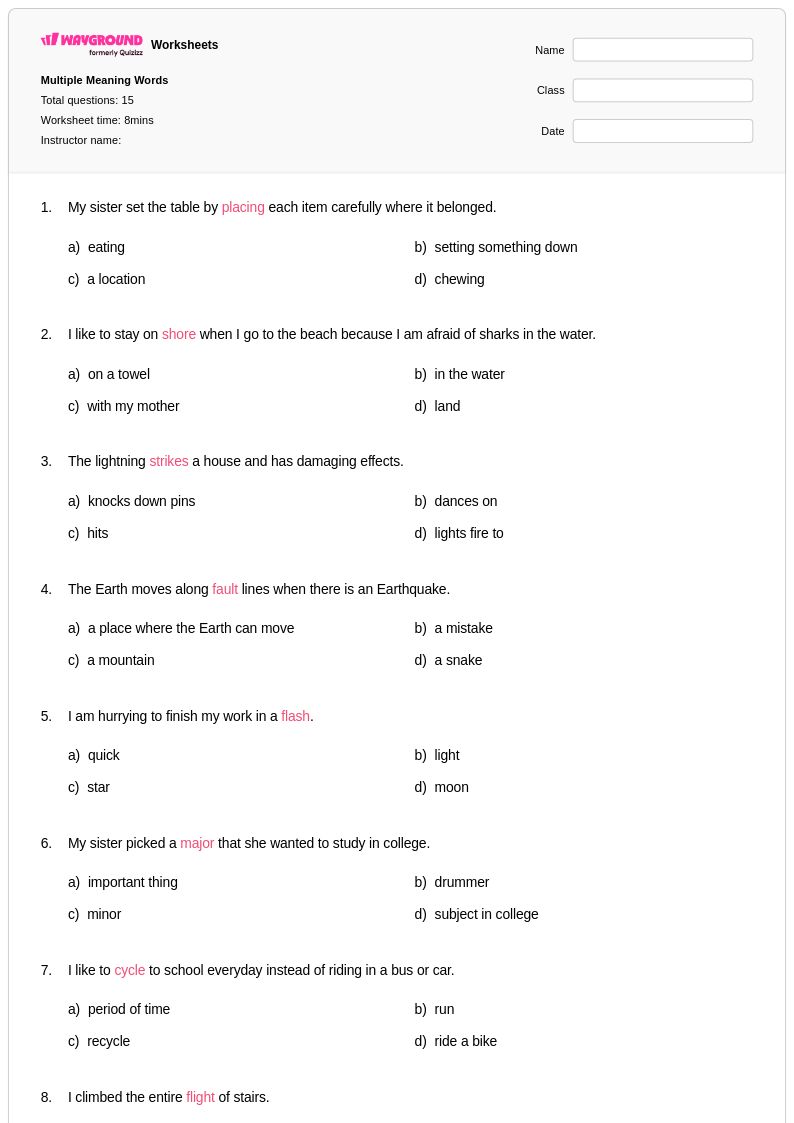
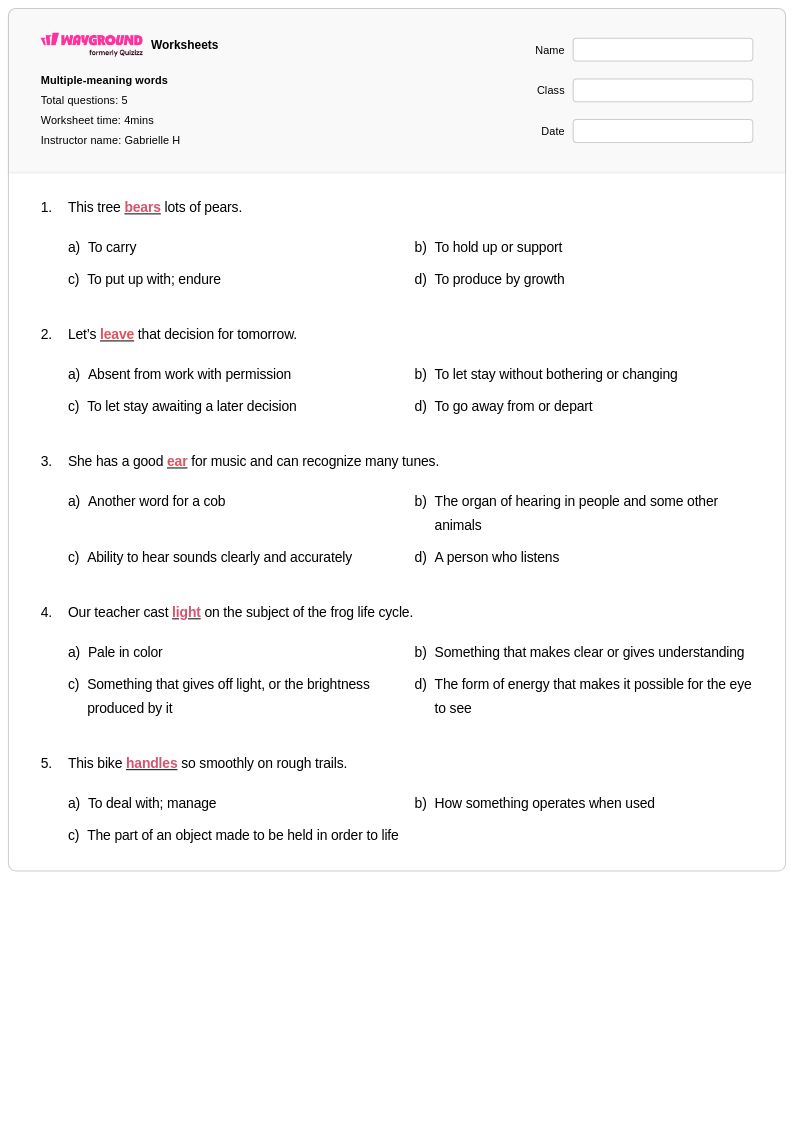
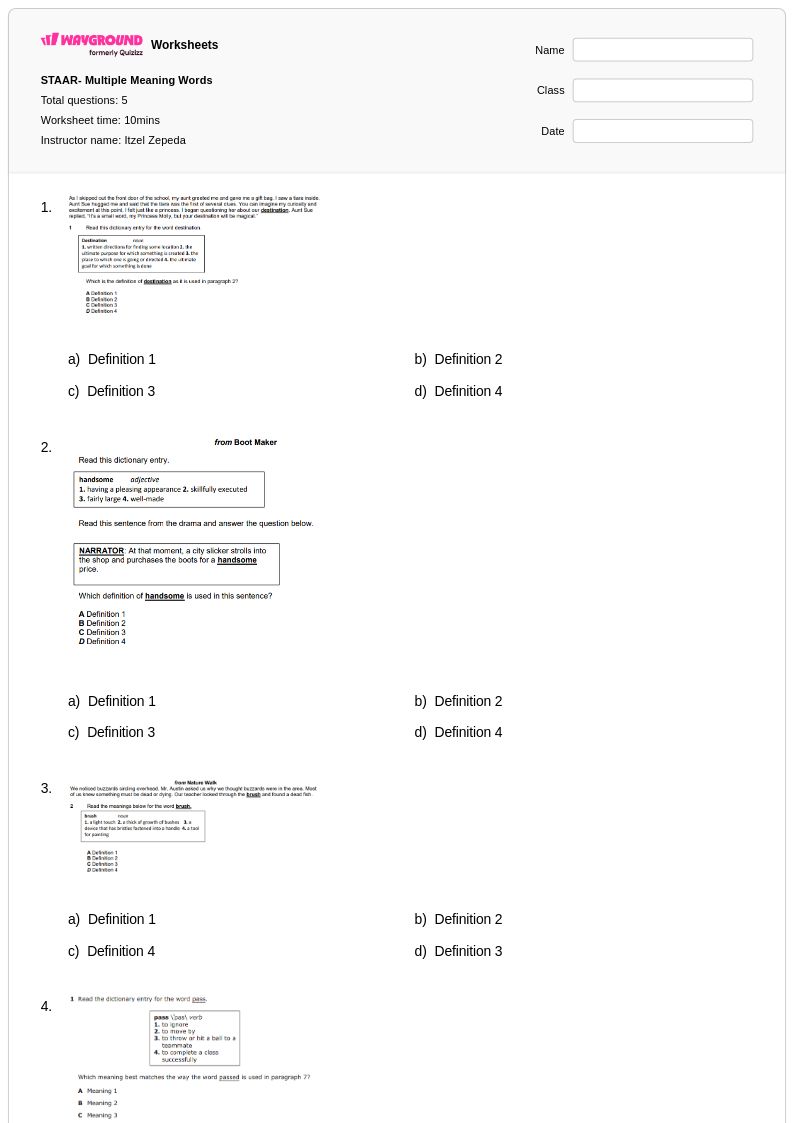
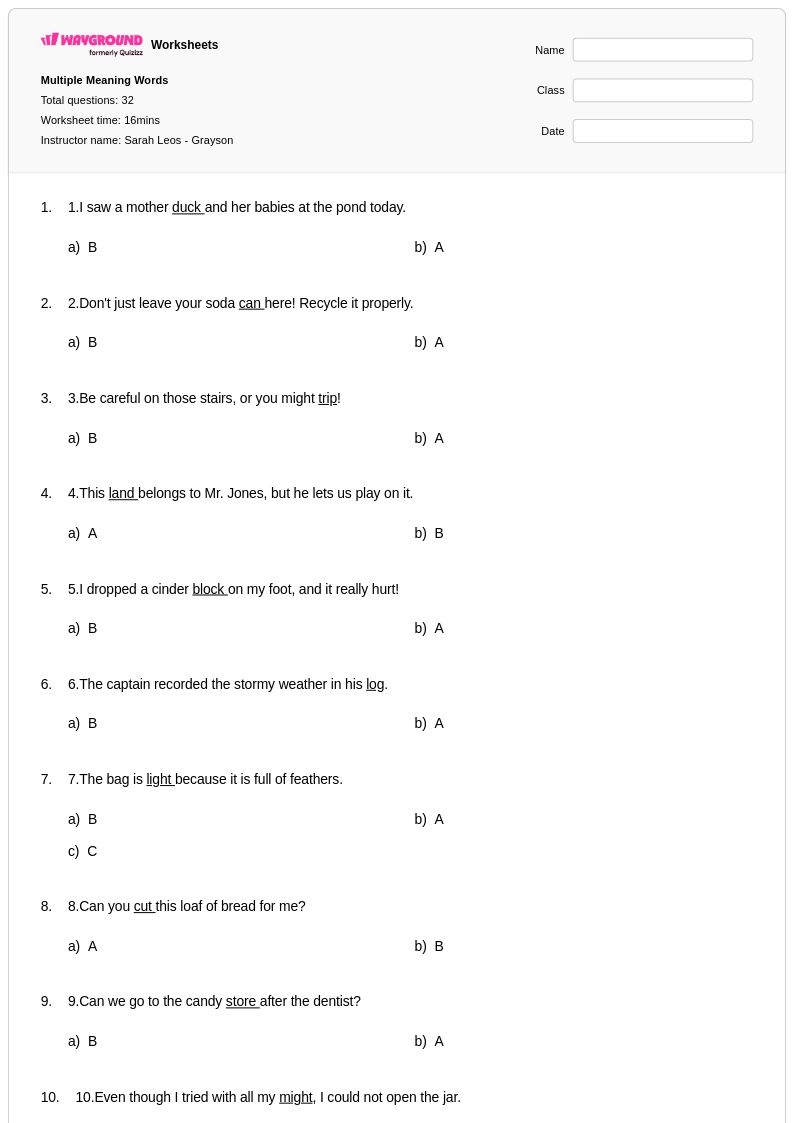
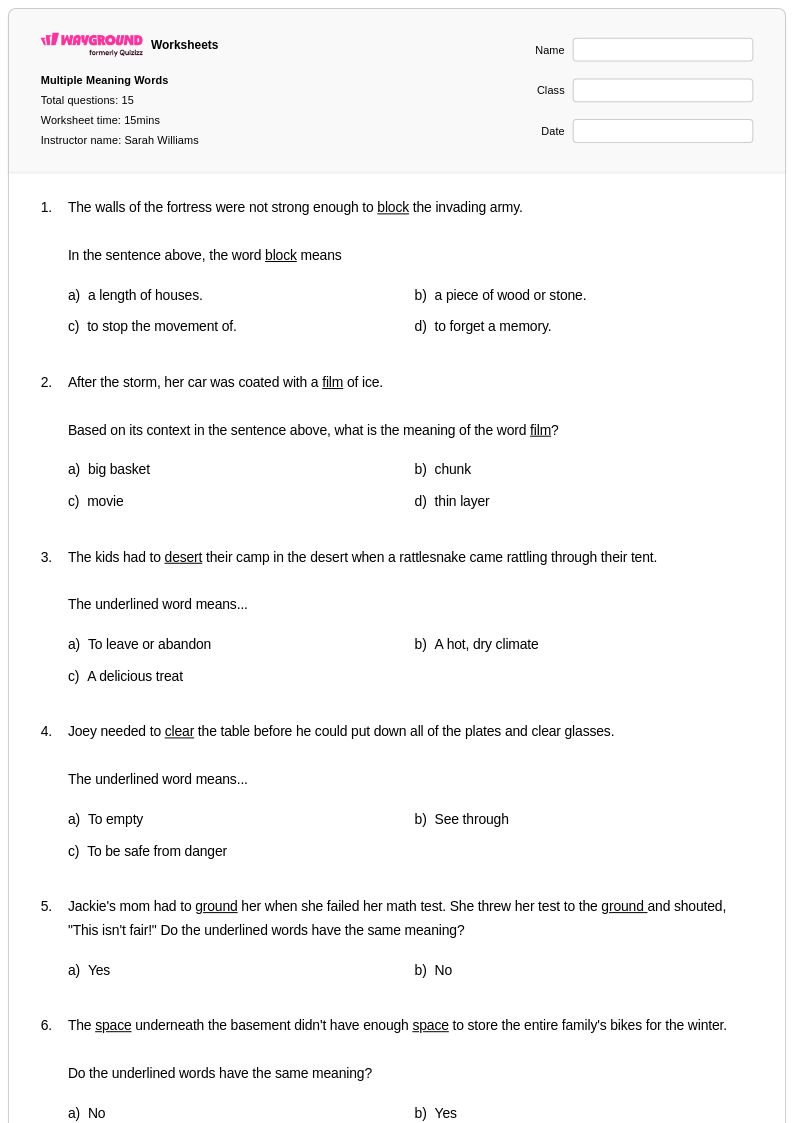
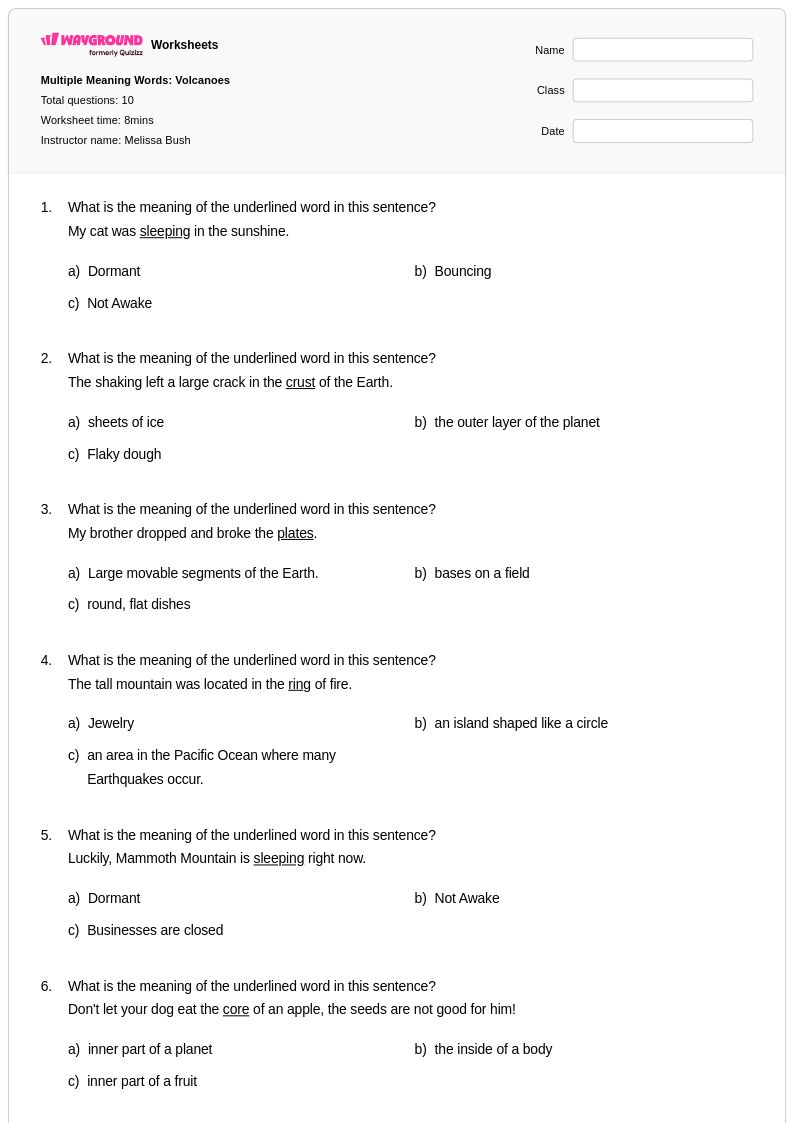
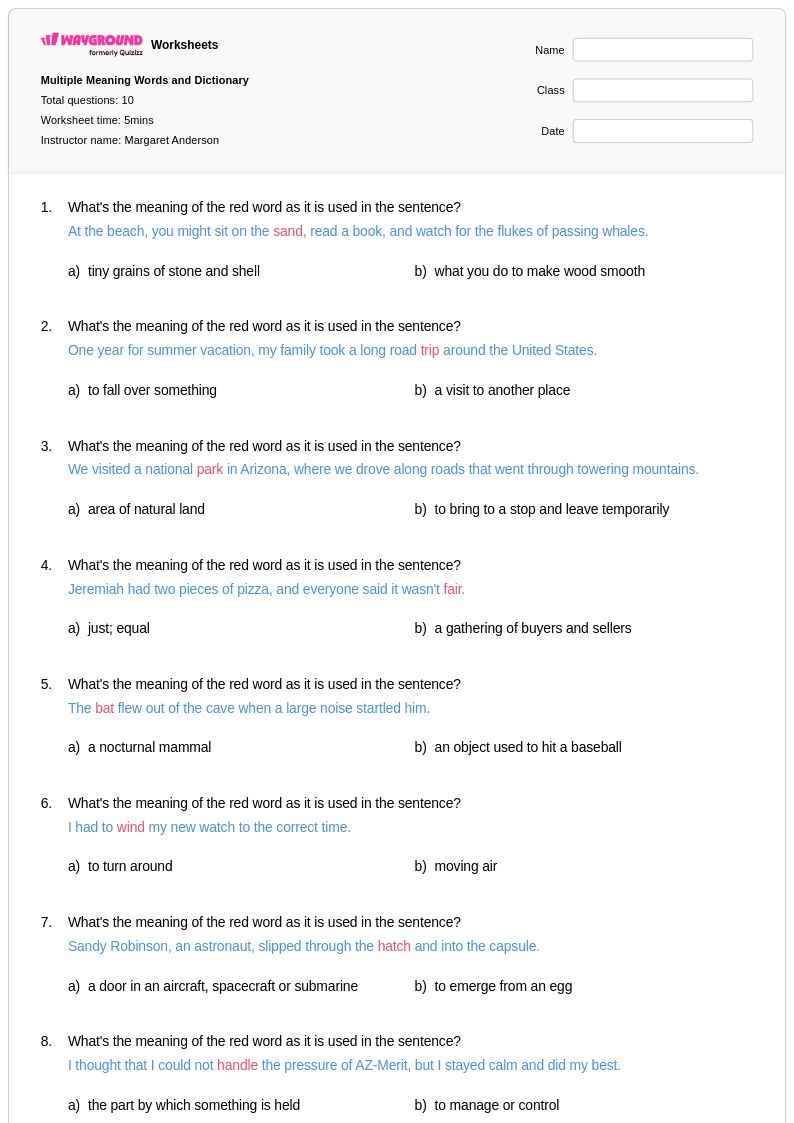
Multiple meaning words worksheets for Year 4 students available through Wayground (formerly Quizizz) provide comprehensive practice in understanding how single words can carry different meanings depending on their context. These educational resources strengthen critical vocabulary skills by challenging students to identify, analyze, and correctly use words that have multiple definitions, such as "bank" (financial institution versus river's edge) or "bark" (dog's sound versus tree covering). The carefully structured practice problems guide fourth graders through systematic exercises that build their ability to use context clues, recognize semantic relationships, and develop deeper word knowledge essential for reading comprehension and effective communication. Each worksheet includes a detailed answer key to support accurate assessment and provides free printable pdf formats that make implementation seamless for both classroom instruction and independent study.
Wayground (formerly Quizizz) empowers educators with an extensive collection of teacher-created multiple meaning words resources specifically designed for Year 4 learners, drawing from millions of high-quality worksheets that align with curriculum standards and learning objectives. The platform's robust search and filtering capabilities allow teachers to quickly locate materials that match their specific instructional needs, whether for initial concept introduction, skill reinforcement, or advanced enrichment activities. These versatile resources are available in both printable and digital formats, enabling flexible differentiation that accommodates diverse learning styles and classroom environments. Teachers can customize worksheets to target individual student needs, making these tools invaluable for lesson planning, targeted remediation sessions, and systematic vocabulary skill practice that builds students' confidence in navigating complex text with words that carry multiple meanings.
FAQs
How do I teach multiple meaning words effectively in the classroom?
The most effective approach to teaching multiple meaning words is grounding instruction in context. Introduce a word like 'bank' or 'bark' in two contrasting sentences and ask students to identify what changes between them — this trains them to look for context clues rather than memorizing definitions in isolation. Follow up with sorting activities where students match words to their correct meaning based on sentence context, gradually increasing complexity as students gain confidence.
What exercises help students practice multiple meaning words?
Sentence-based exercises are the most effective for practicing multiple meaning words because they force students to use context rather than rely on recall. Strong practice formats include fill-in-the-blank sentences where students choose the correct meaning, matching tasks pairing a word to its definition based on a given sentence, and short-answer prompts asking students to write two sentences using the same word in different ways. These formats build the habit of reading for meaning rather than skimming.
What mistakes do students commonly make with multiple meaning words?
The most common error is defaulting to the most familiar meaning of a word regardless of context — students who know 'bat' as an animal, for example, will often misread it in a sentence about baseball. Another frequent mistake is failing to read the full sentence before choosing a meaning, which leads to guessing rather than reasoning. Teachers should model the habit of reading the entire sentence first and asking 'Does this meaning make sense here?' before committing to an answer.
How do multiple meaning words connect to reading comprehension?
Multiple meaning words are a direct comprehension obstacle: when a student misreads the intended meaning of a word, they misunderstand the sentence, and that misunderstanding compounds as they continue reading. Explicit instruction in recognizing context clues for words like 'light,' 'run,' and 'set' directly improves a student's ability to monitor their own comprehension. This is why vocabulary instruction focused on polysemous words is particularly high-leverage for reading development.
How do I use Wayground's multiple meaning words worksheets in my class?
Wayground's multiple meaning words worksheets are available as printable PDFs for traditional classroom use and in digital formats for technology-integrated learning environments, including the option to host them as a quiz directly on Wayground. Teachers can use them for independent practice, small group vocabulary work, or whole-class instruction. Each worksheet includes a complete answer key, so they are ready to use without additional preparation.
How can I differentiate multiple meaning words instruction for struggling or advanced students?
For struggling learners, reduce complexity by starting with high-frequency words that have only two common meanings and provide sentences with strong, explicit context clues. For advanced students, introduce polysemous words with three or more meanings and ask them to generate original sentences for each use. On Wayground, teachers can apply accommodations such as read aloud support or reduced answer choices for individual students, while the rest of the class works with default settings.