
20 Q
4th - Uni
20 Q
3rd - Uni
10 Q
4th
11 Q
4th
12 Q
4th
10 Q
3rd - 5th
20 Q
4th
19 Q
4th
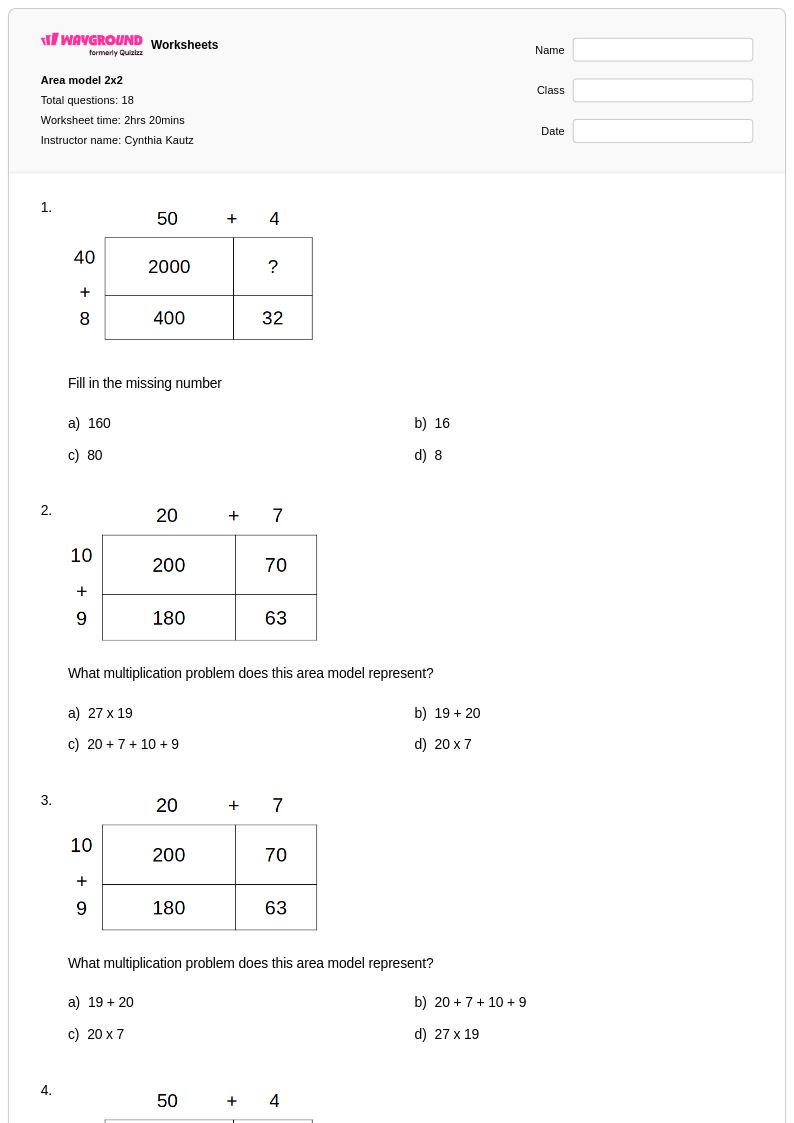
18 Q
4th
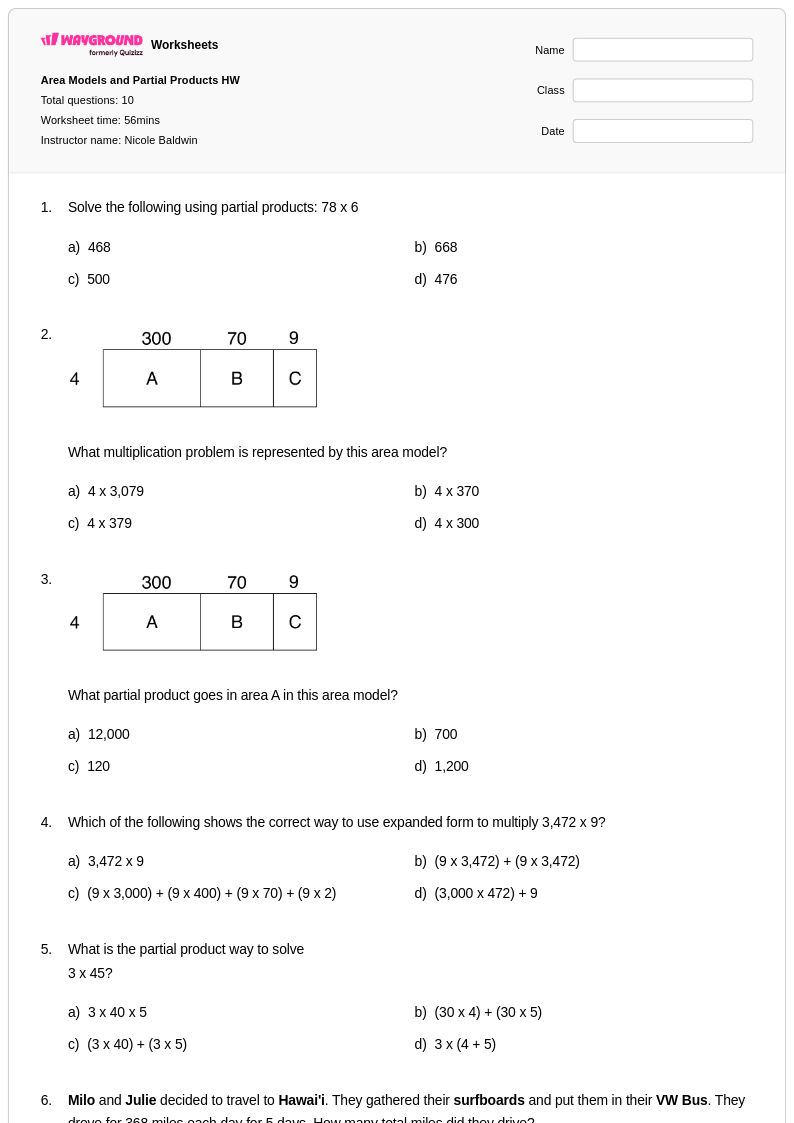
10 Q
4th
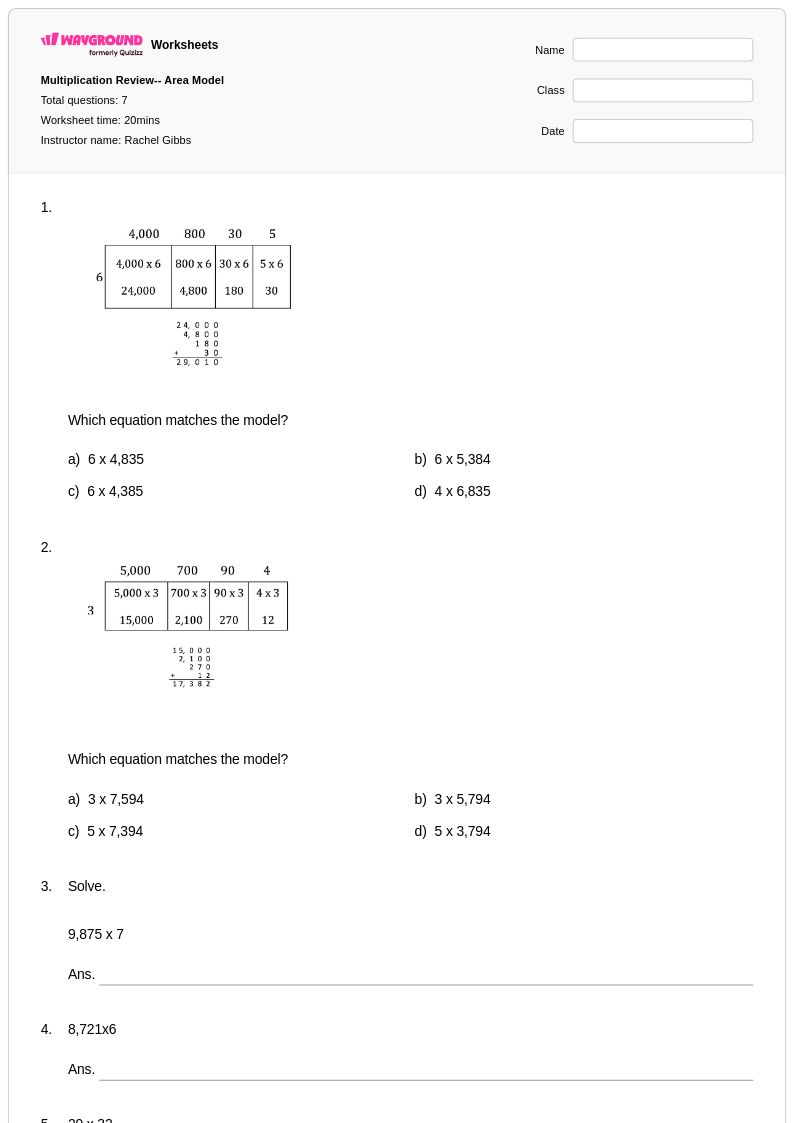
7 Q
4th - Uni
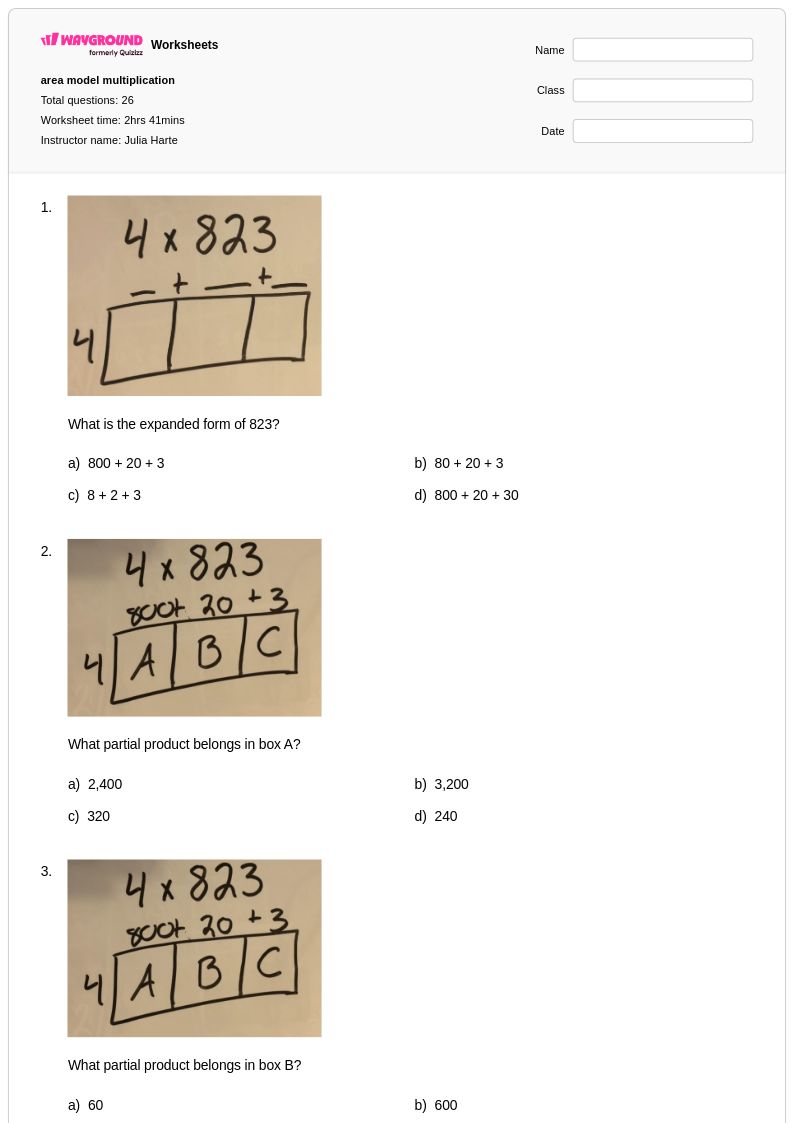
26 Q
4th - 5th
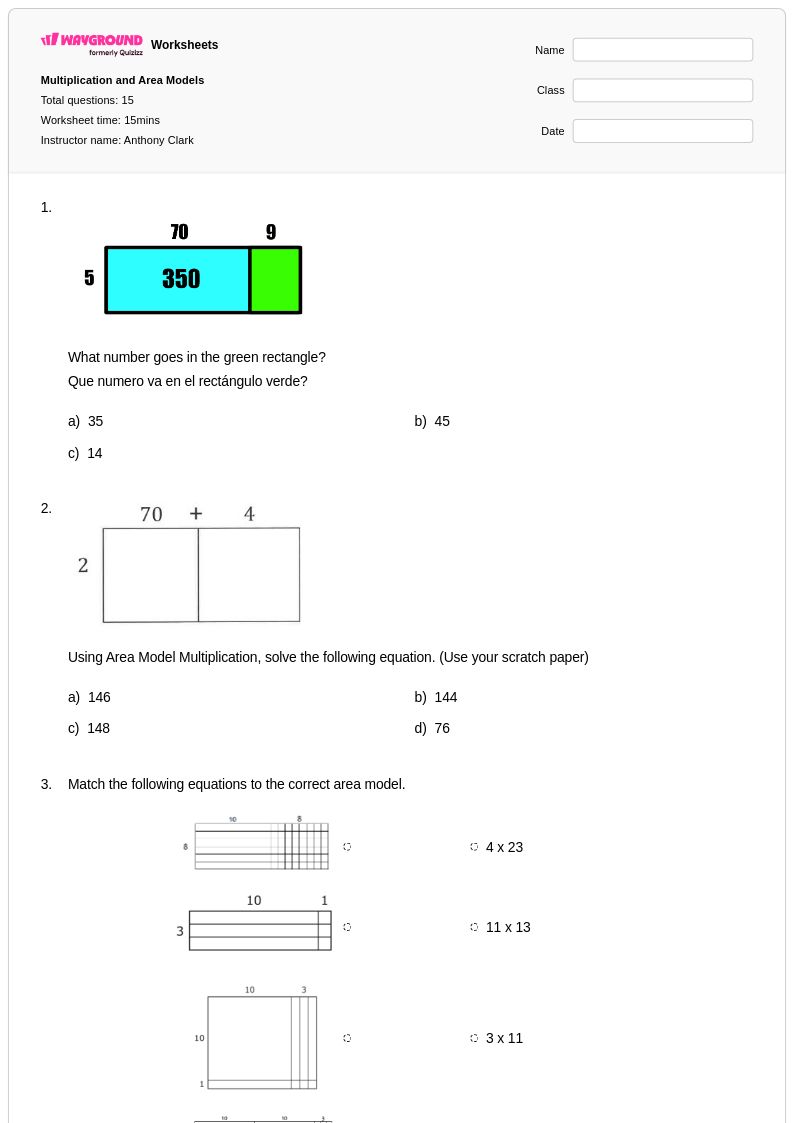
15 Q
4th - Uni
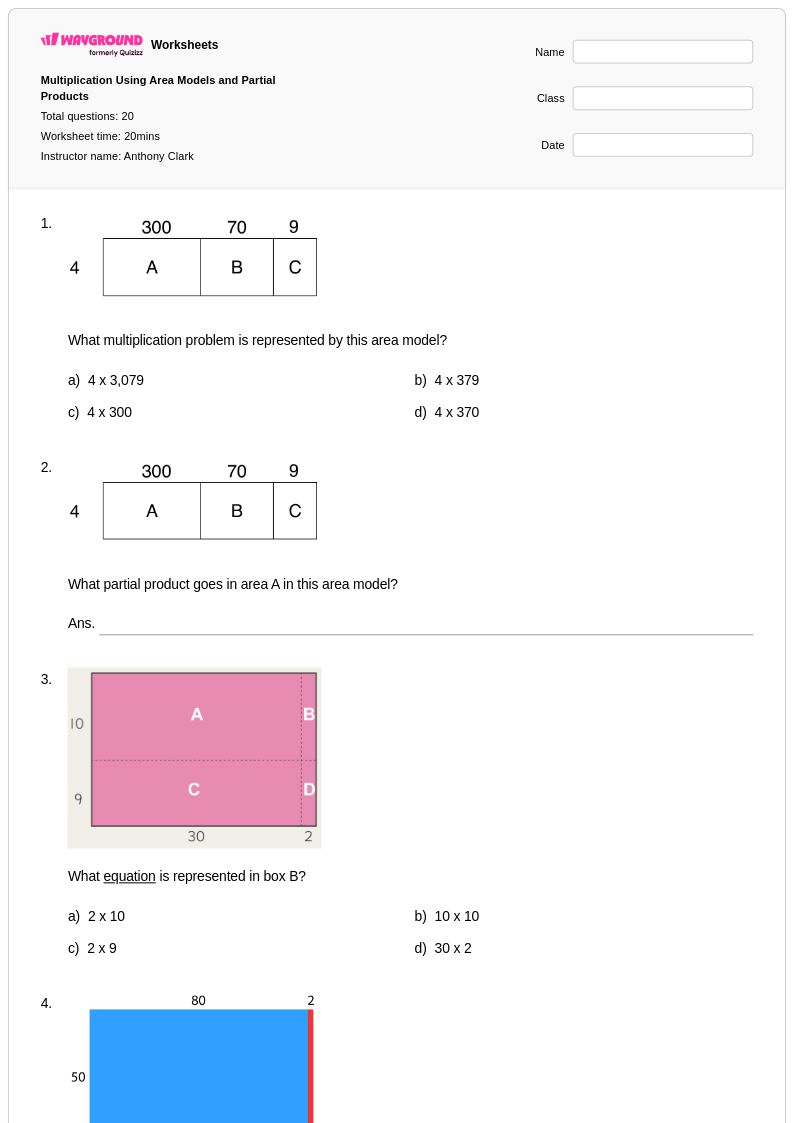
20 Q
4th - Uni
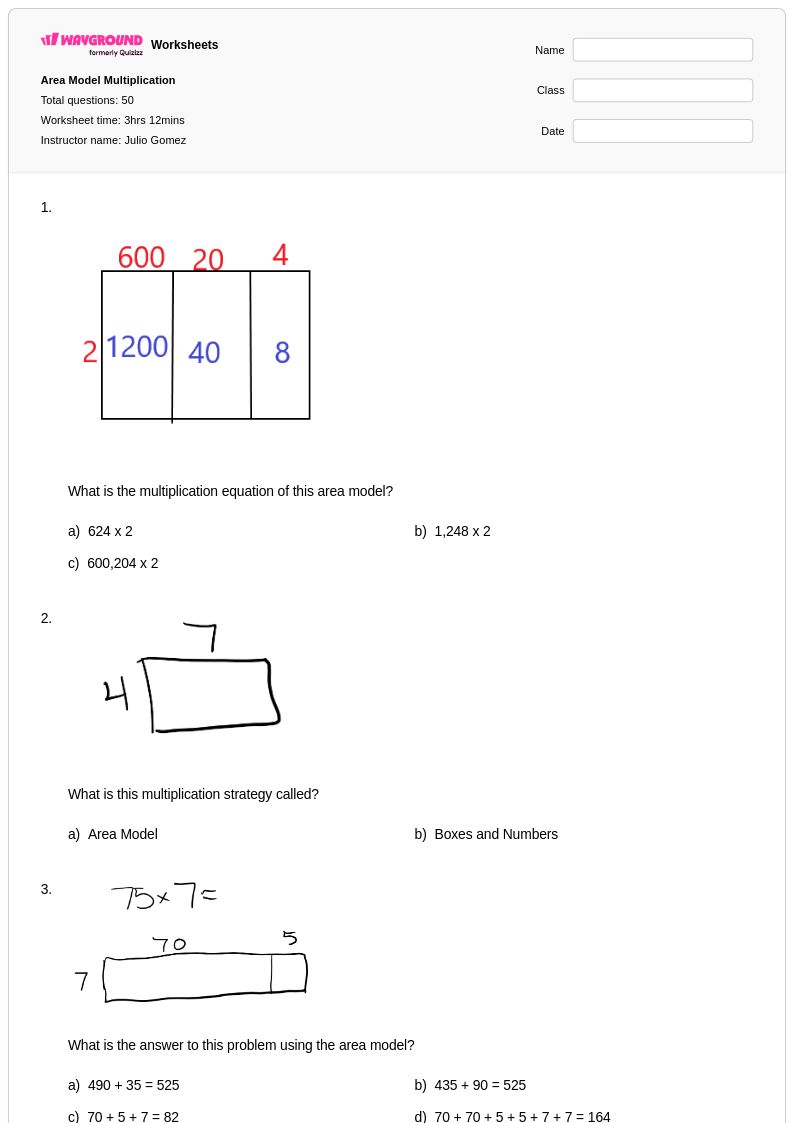
50 Q
4th
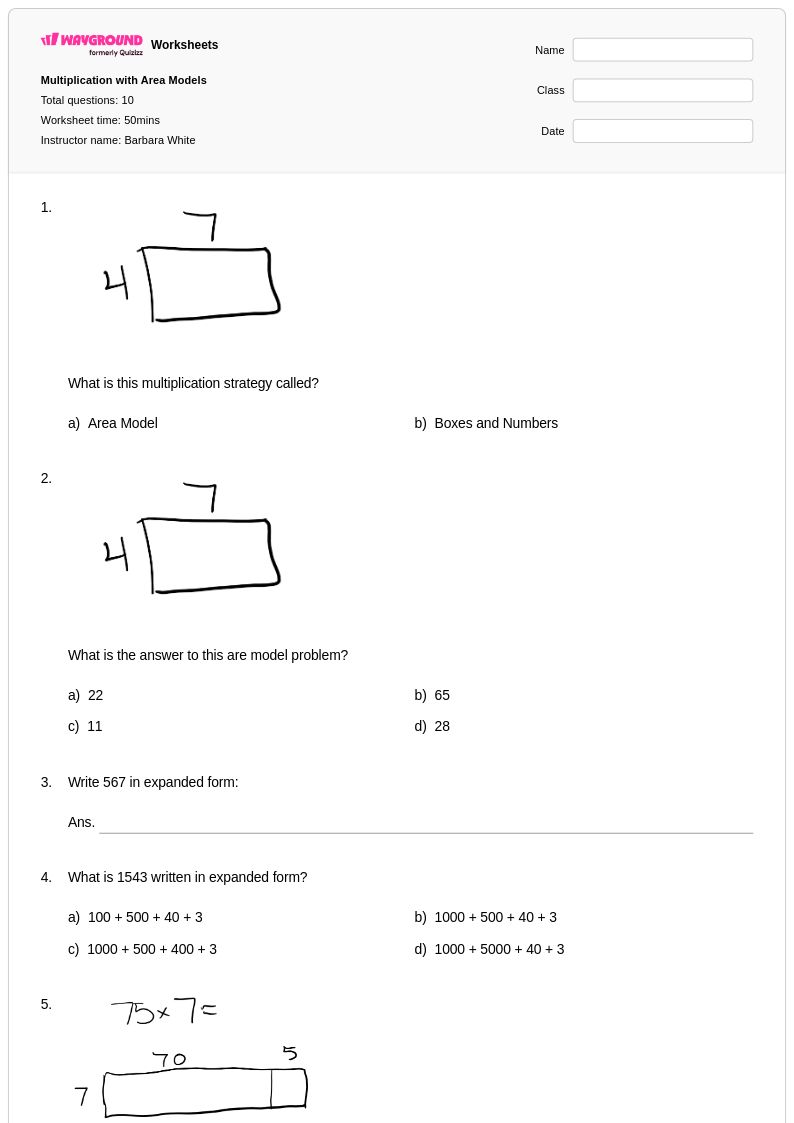
10 Q
4th
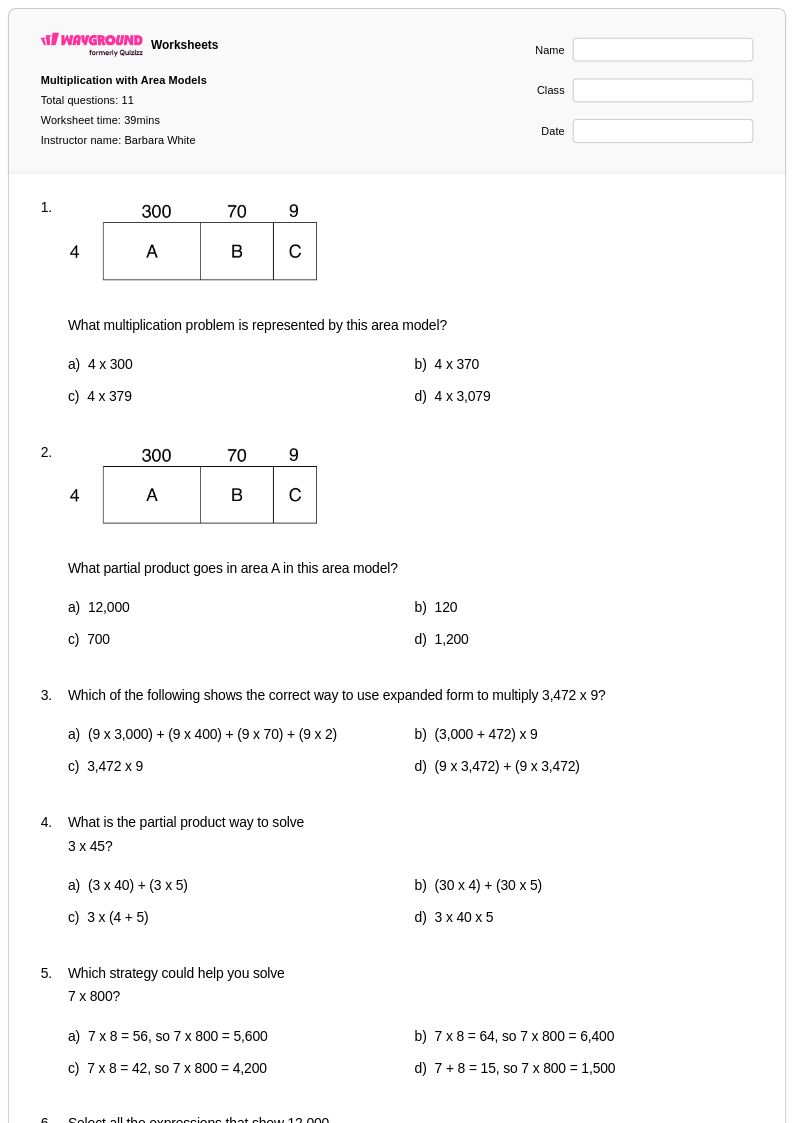
11 Q
4th
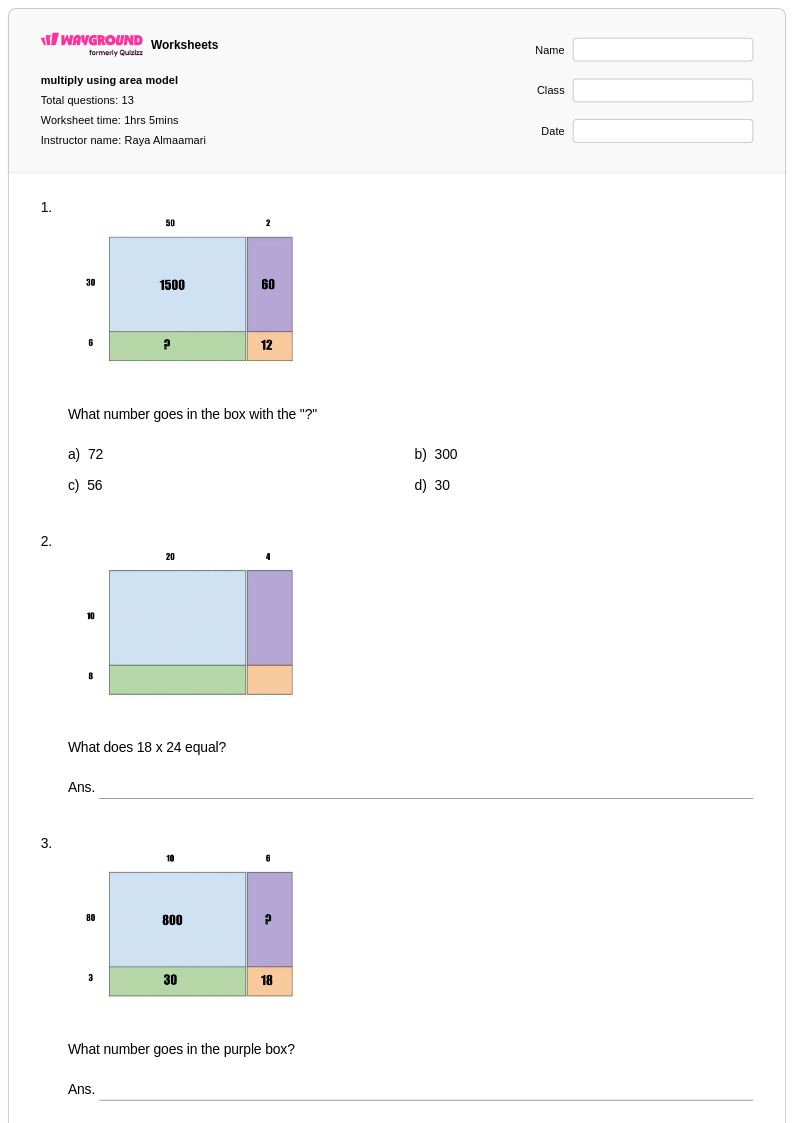
13 Q
4th
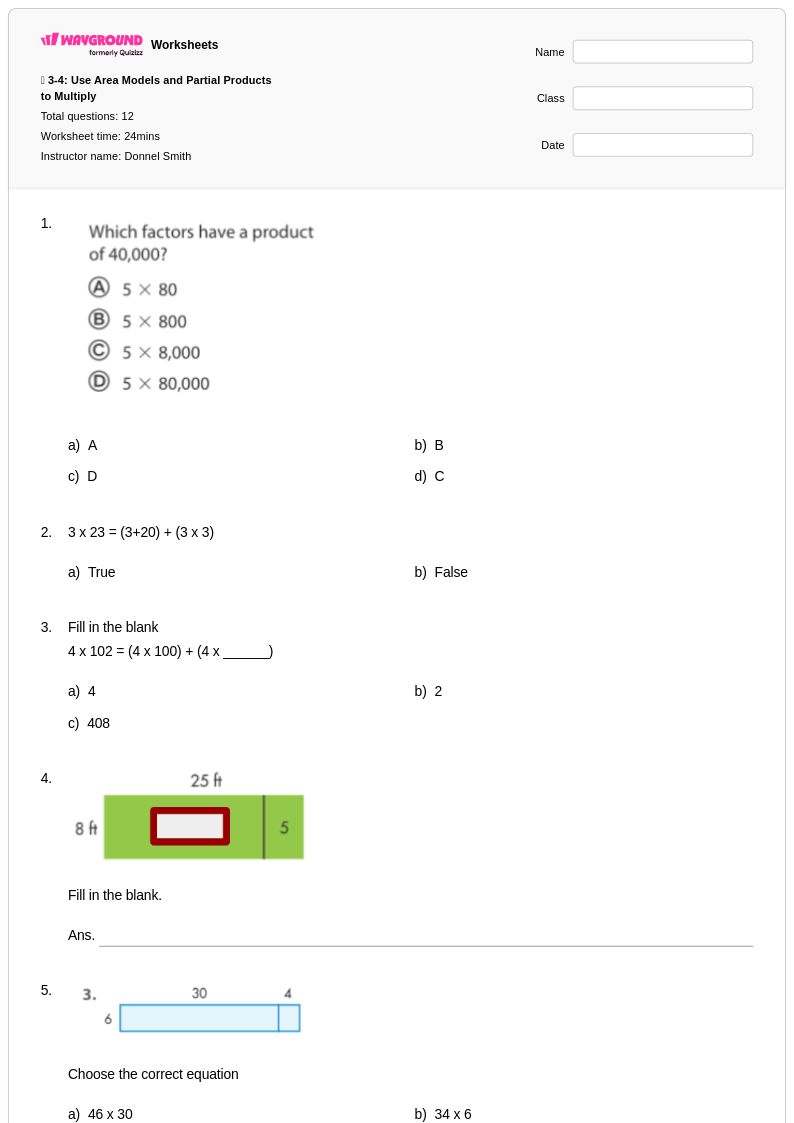
12 Q
4th
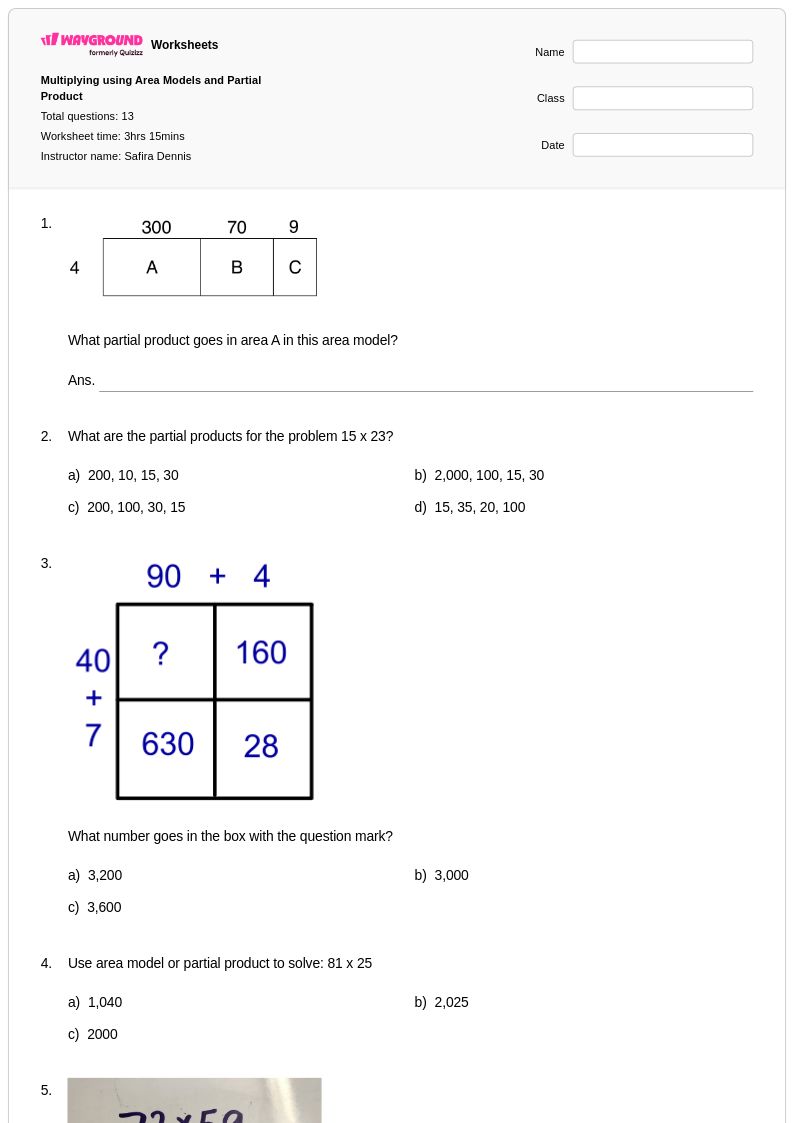
13 Q
4th
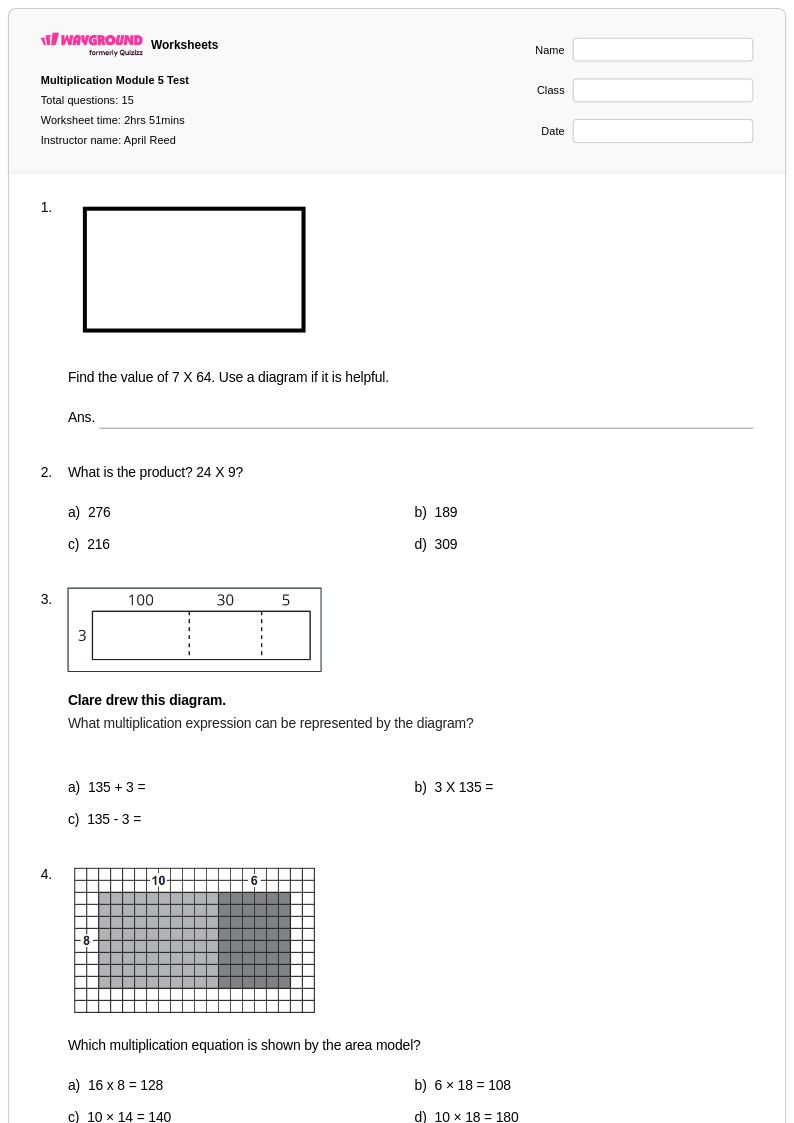
15 Q
4th
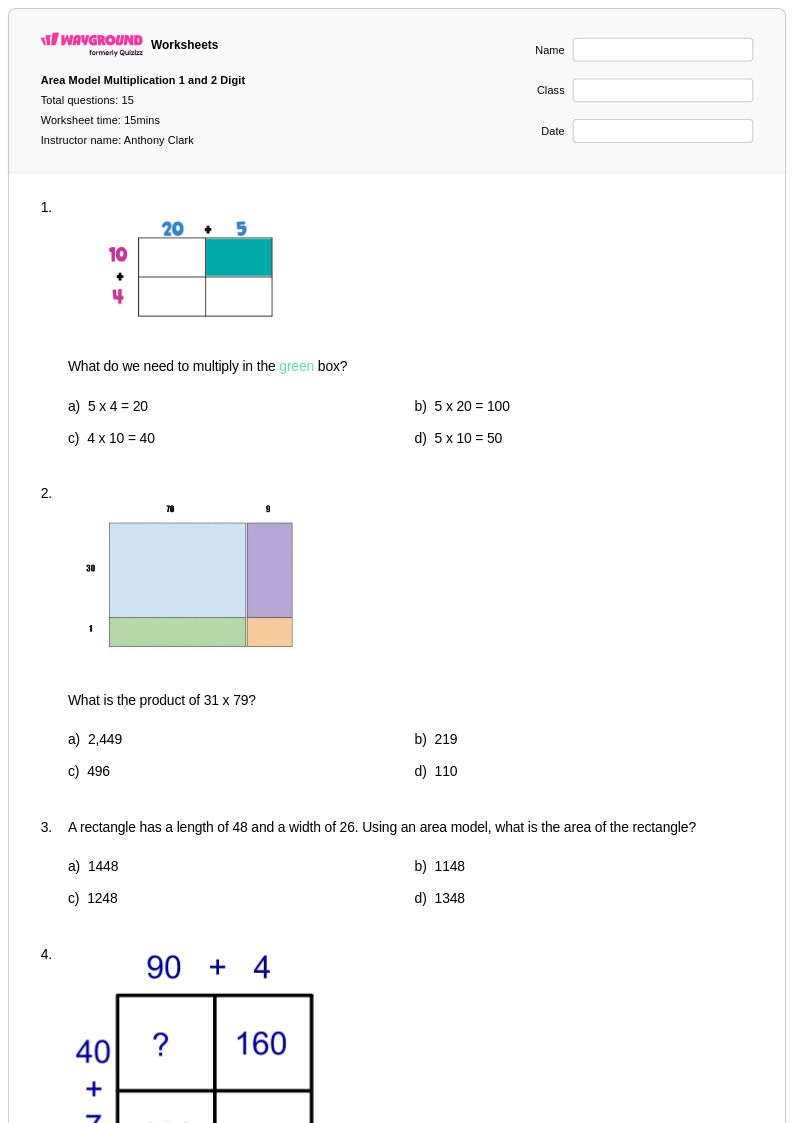
15 Q
4th - Uni
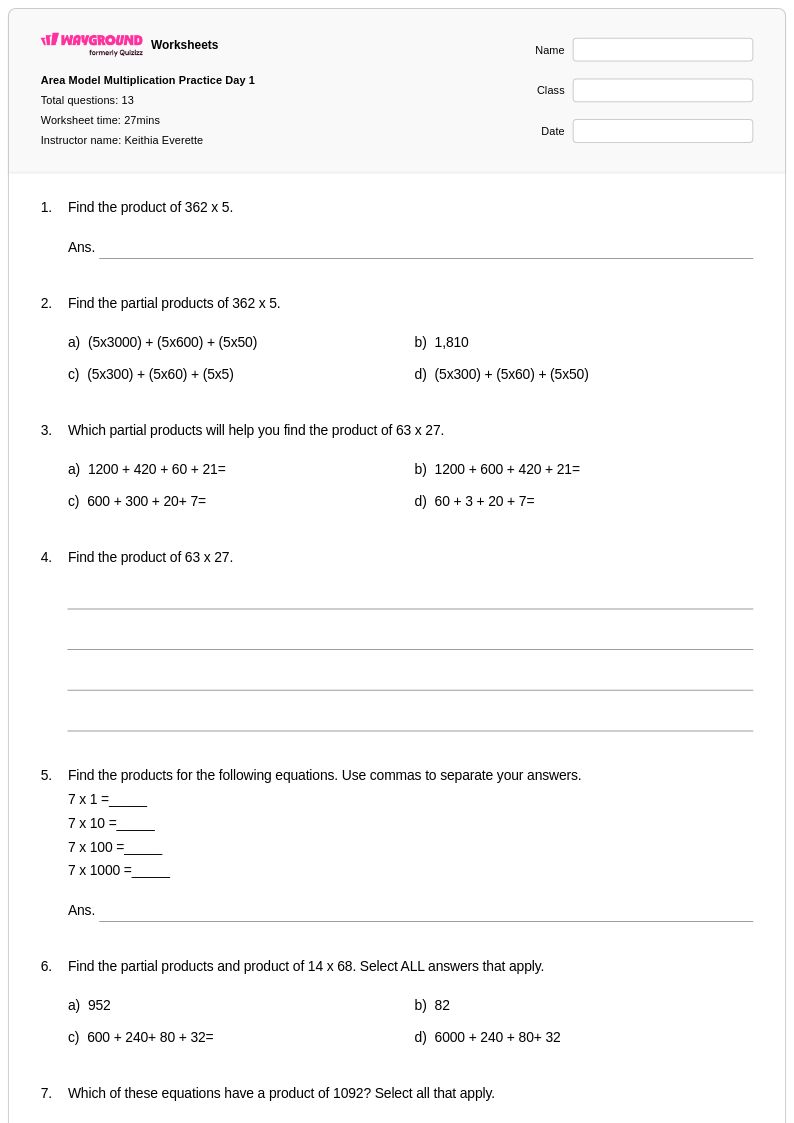
13 Q
4th
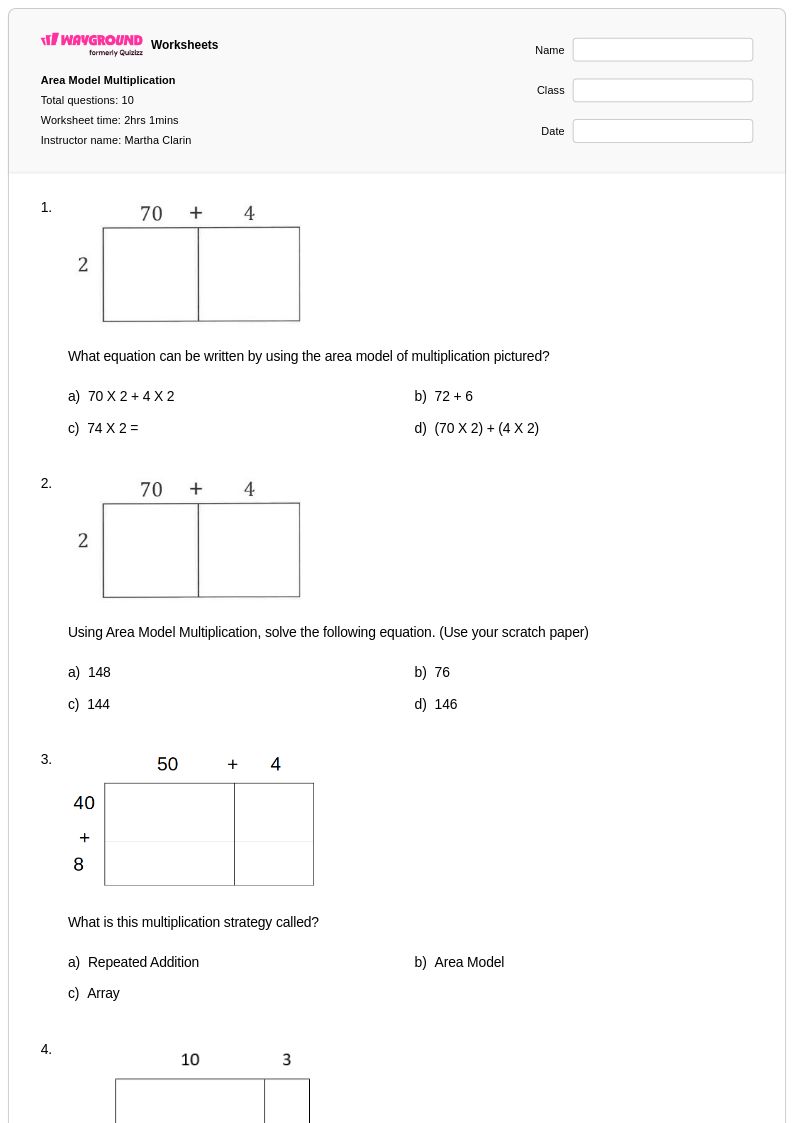
10 Q
4th
Explore Other Subject Worksheets for year 4
Explore printable Multiplication and Area Models worksheets for Year 4
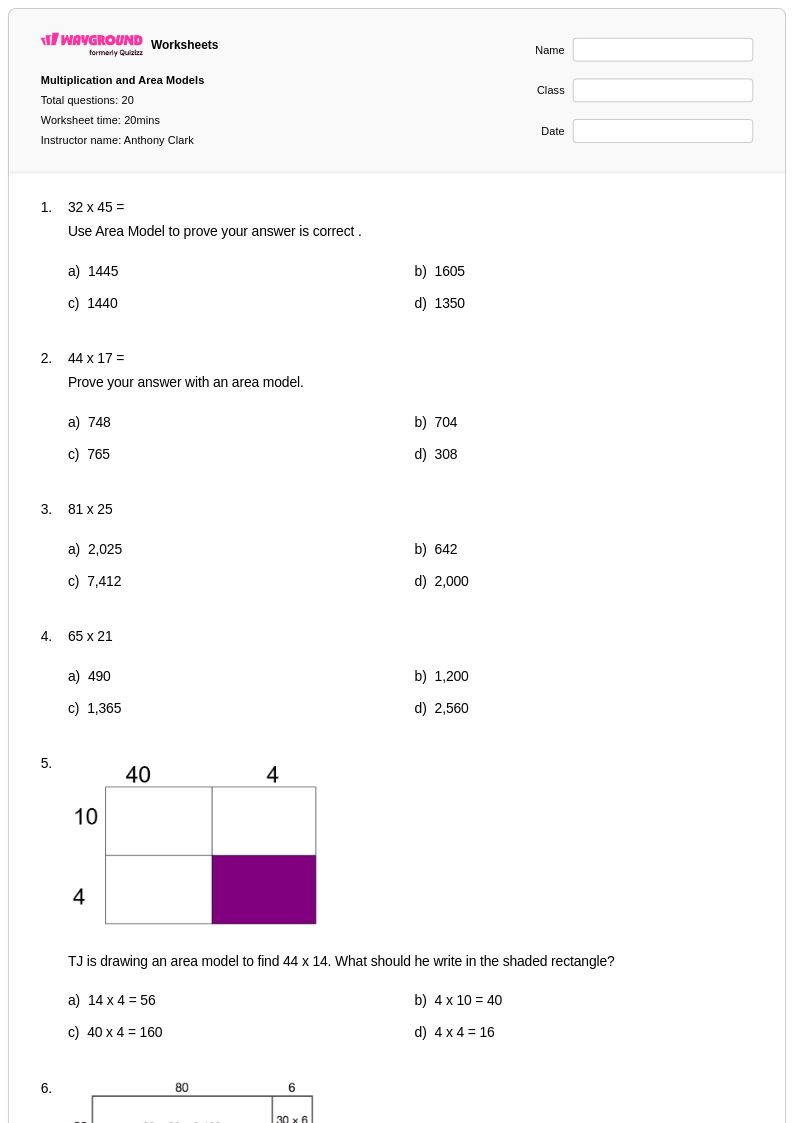
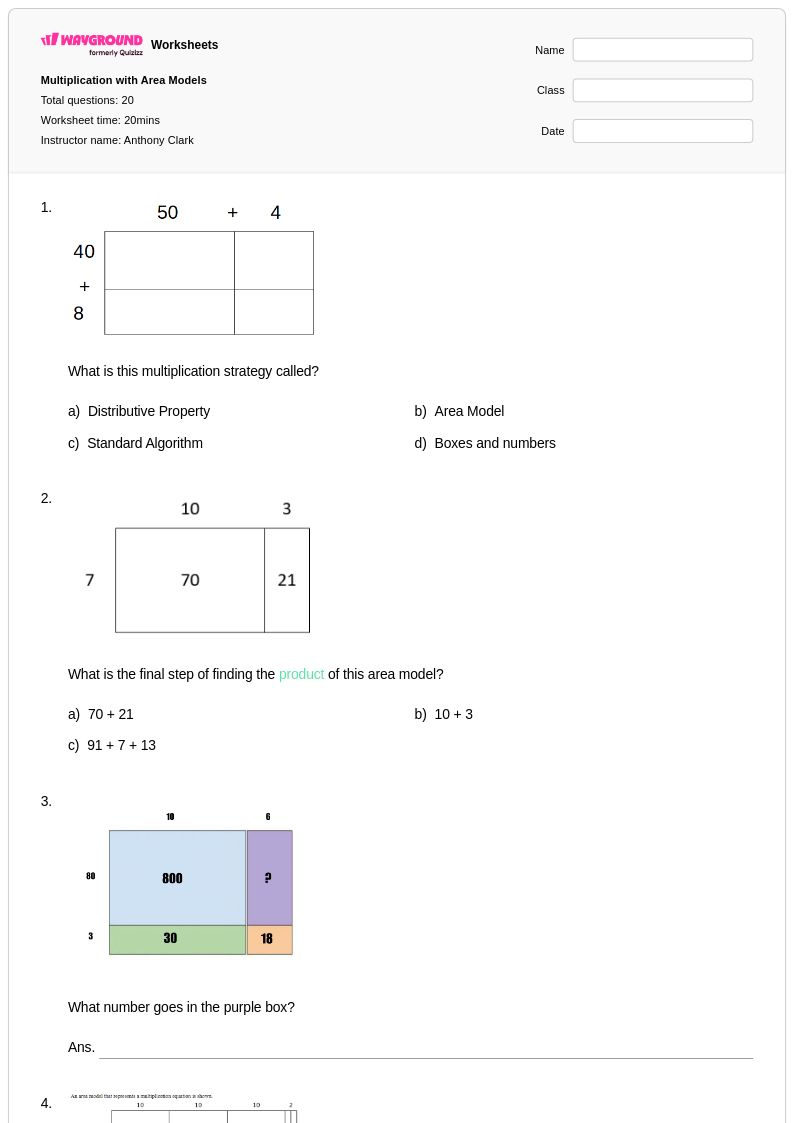
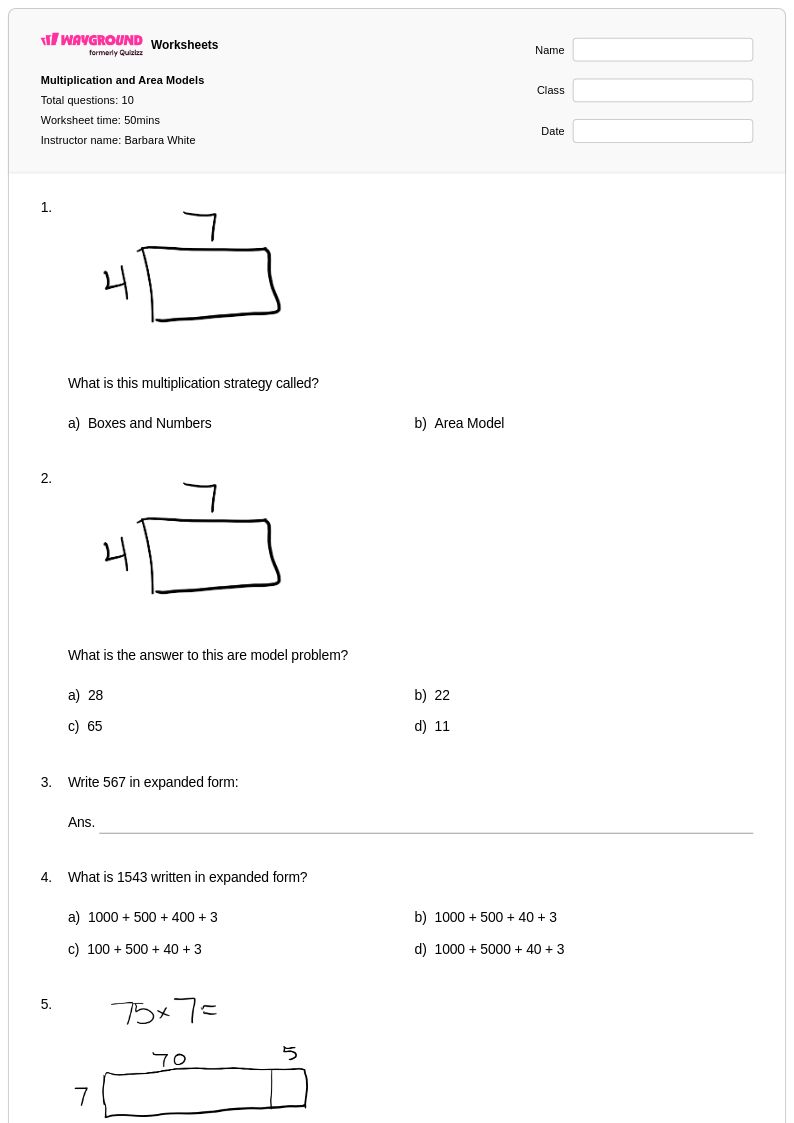
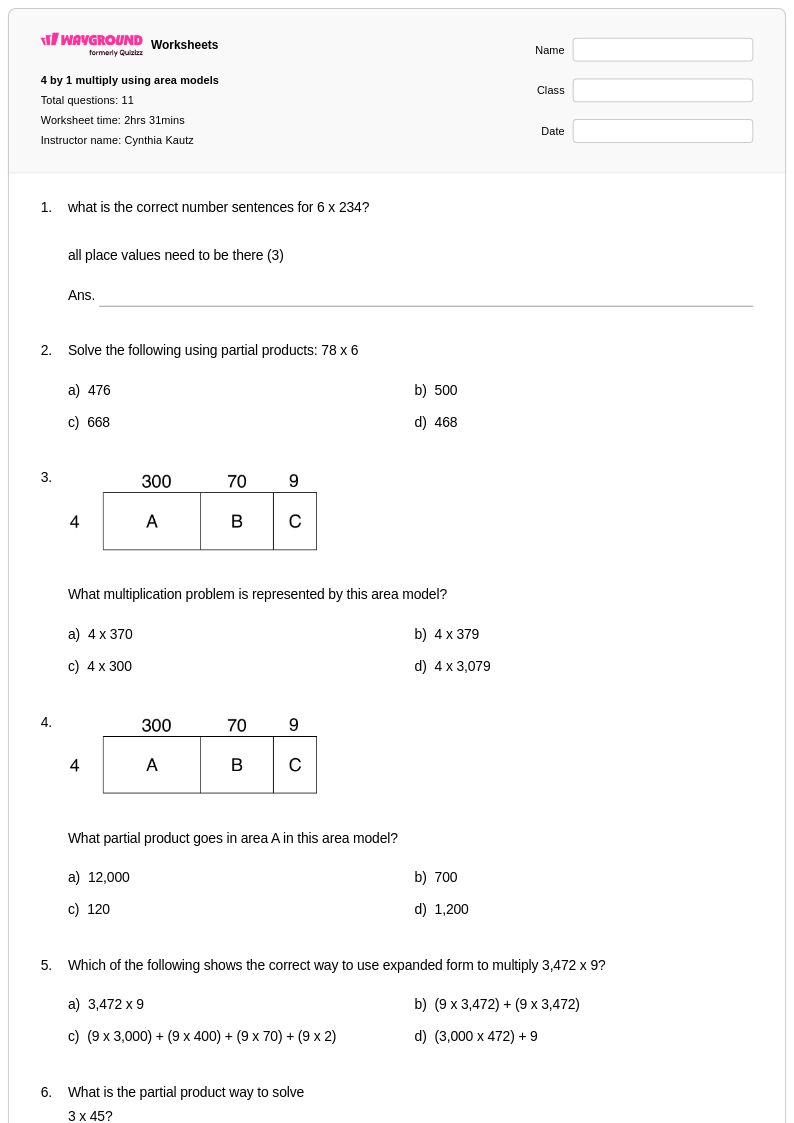
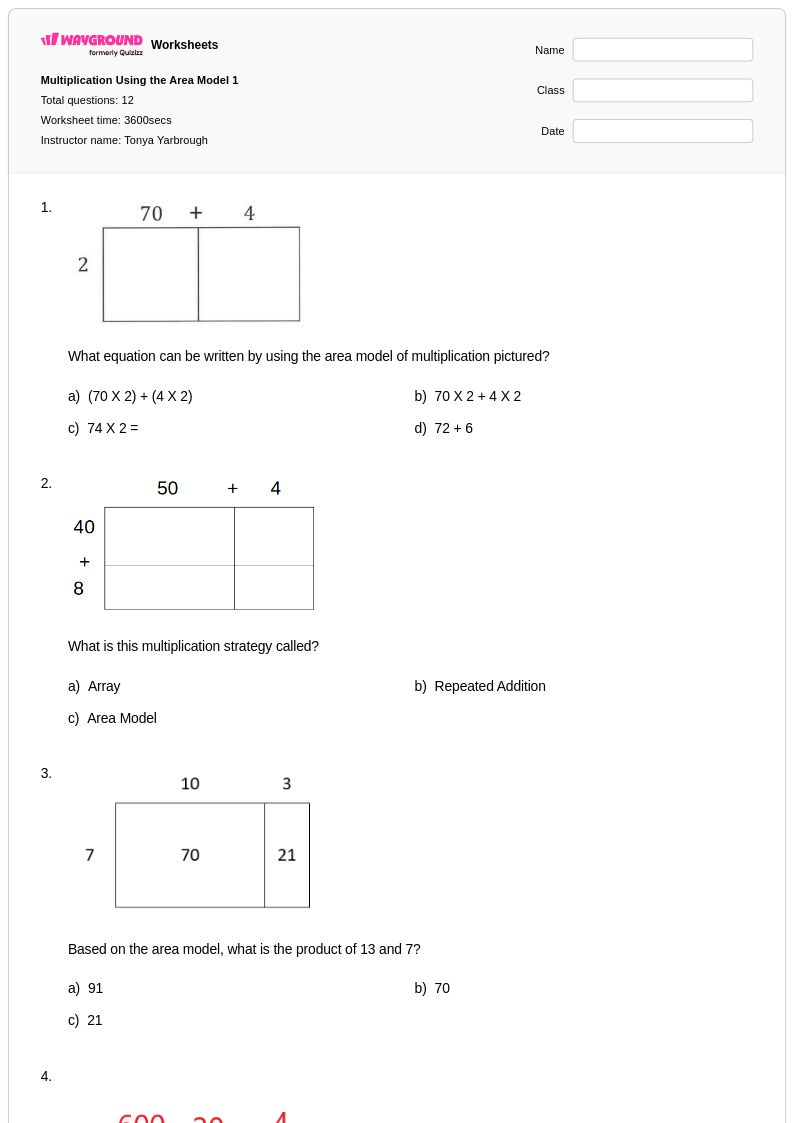
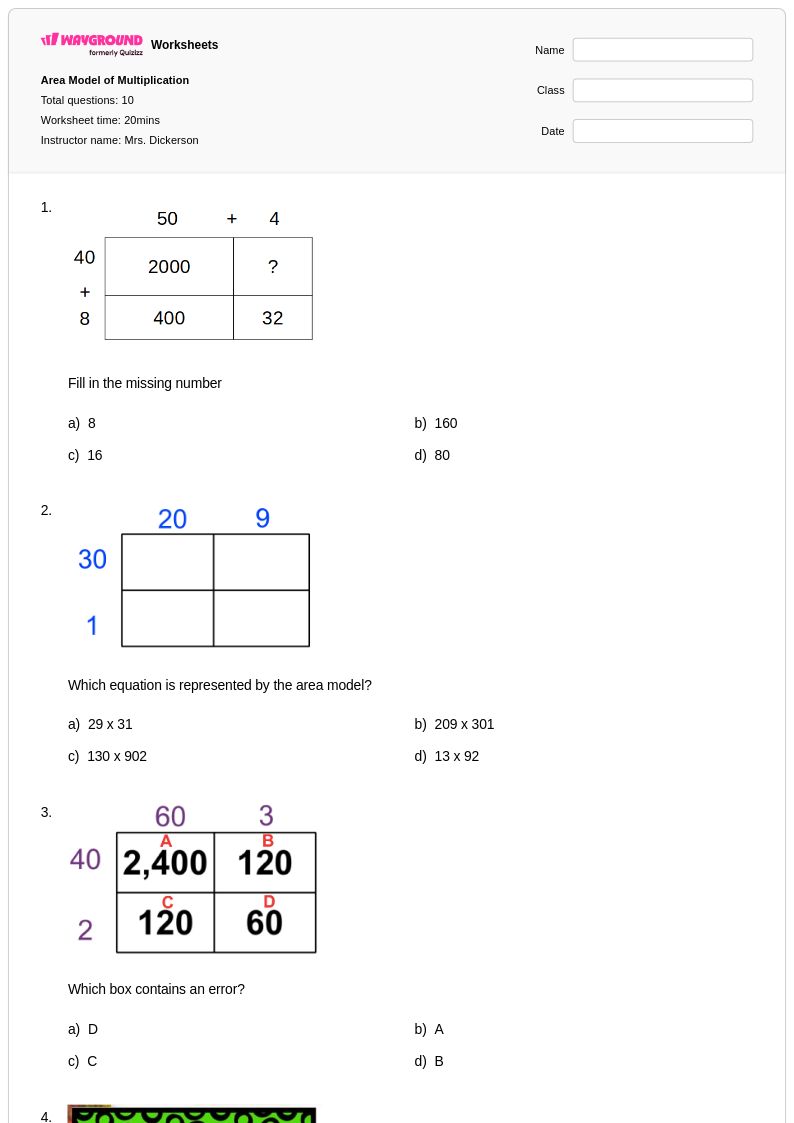
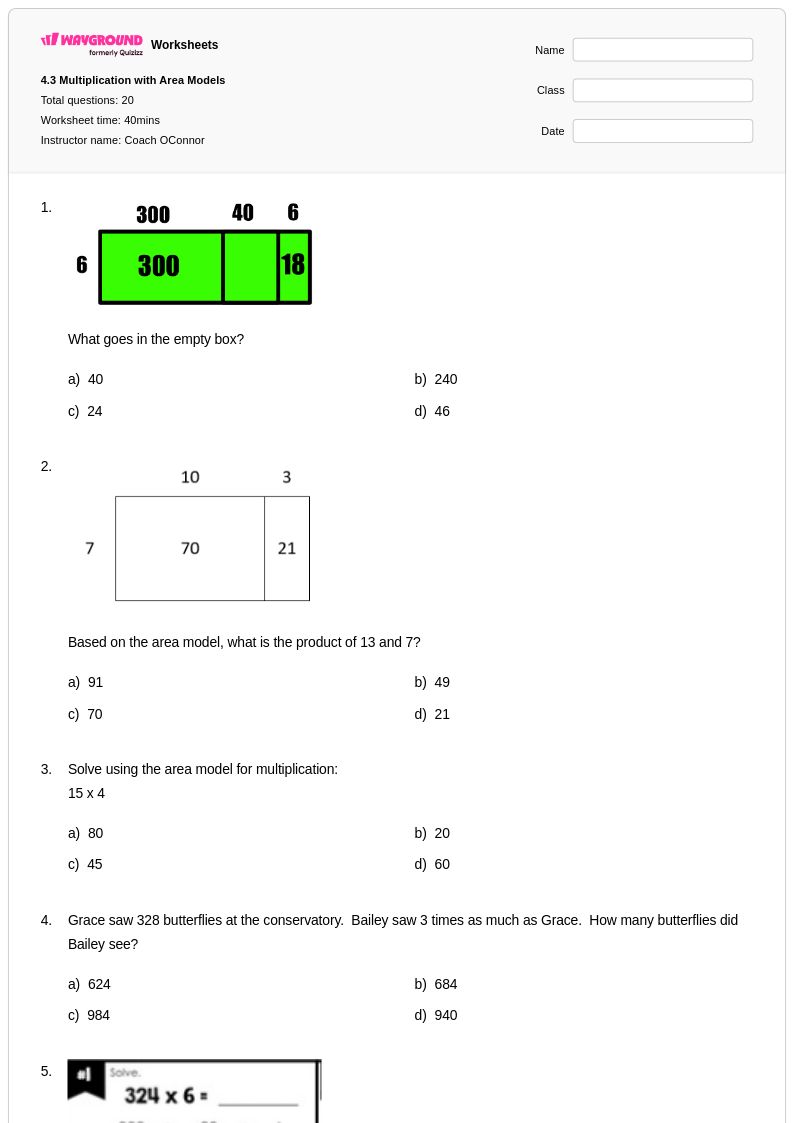
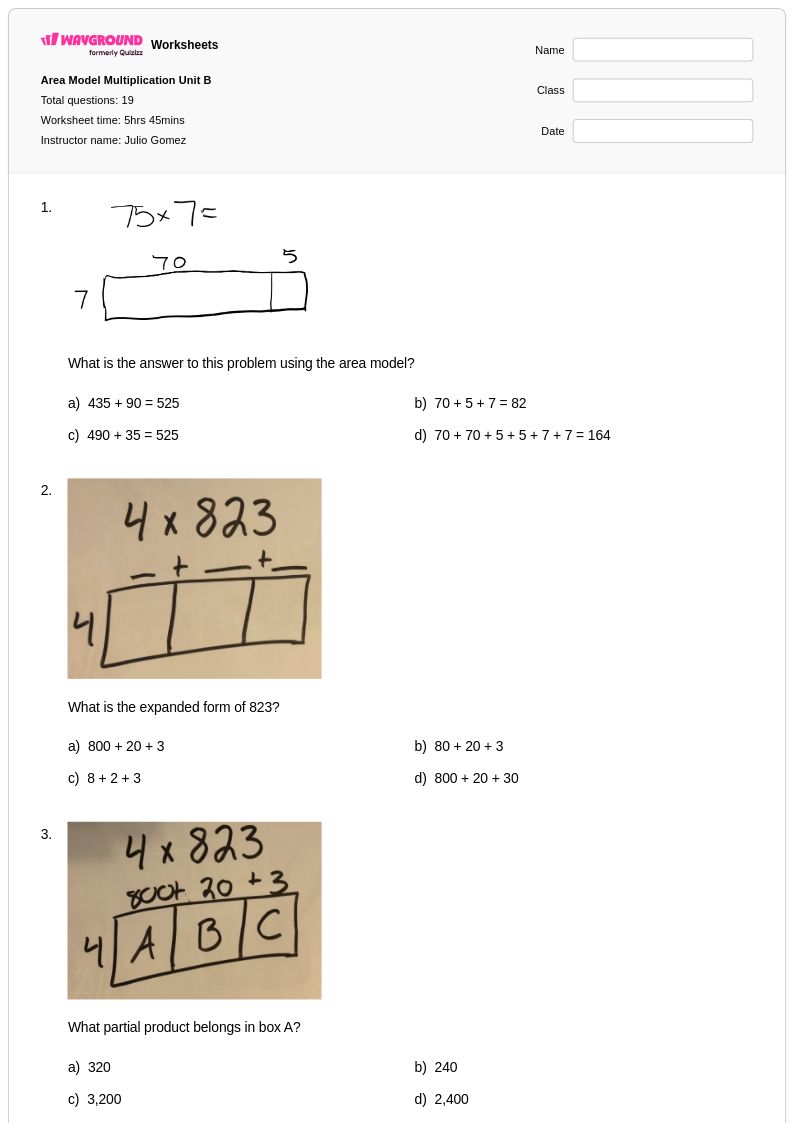
Multiplication and area models worksheets for Year 4 students through Wayground (formerly Quizizz) provide comprehensive practice with visual multiplication strategies that help young learners understand the relationship between multiplication operations and geometric representations. These carefully designed worksheets strengthen students' ability to break down multiplication problems into manageable rectangular arrays, where the length and width represent factors and the total area represents the product. Students work through practice problems that demonstrate how 6 × 8 can be visualized as a rectangle with dimensions of 6 units by 8 units, making abstract multiplication concepts concrete and accessible. Each worksheet includes detailed answer keys that show step-by-step area model solutions, and the free printable PDF format ensures teachers can easily distribute materials for both classroom instruction and homework assignments.
Wayground (formerly Quizizz) empowers teachers with an extensive collection of multiplication and area model resources created by millions of educators who understand the unique challenges of Year 4 mathematics instruction. The platform's robust search and filtering capabilities allow teachers to quickly locate worksheets that align with specific standards and match their students' current skill levels, while differentiation tools enable seamless modification of content for diverse learning needs. Teachers can customize these digital and printable resources to focus on particular area model strategies, adjust difficulty levels, or combine multiple approaches within a single worksheet. This flexibility proves invaluable for lesson planning, targeted remediation for struggling students, enrichment activities for advanced learners, and consistent skill practice that builds computational fluency through visual understanding.
FAQs
How do I teach multi-digit multiplication using an area model?
What types of problems are included in these Grade 4 worksheets?
What's the most common error in Grade 4 when using area models?
How does the area model support Grade 4 math standards?
How can I use this Grade 4 area model worksheet with my students?
How can I support struggling students with multi-digit area models?