Free Printable Multiplication and Division Worksheets for Kindergarten
Boost kindergarten students' understanding of multiplication and division concepts with Wayground's free science worksheets featuring engaging practice problems, printable PDFs, and comprehensive answer keys.
Explore printable Multiplication and Division worksheets for Kindergarten
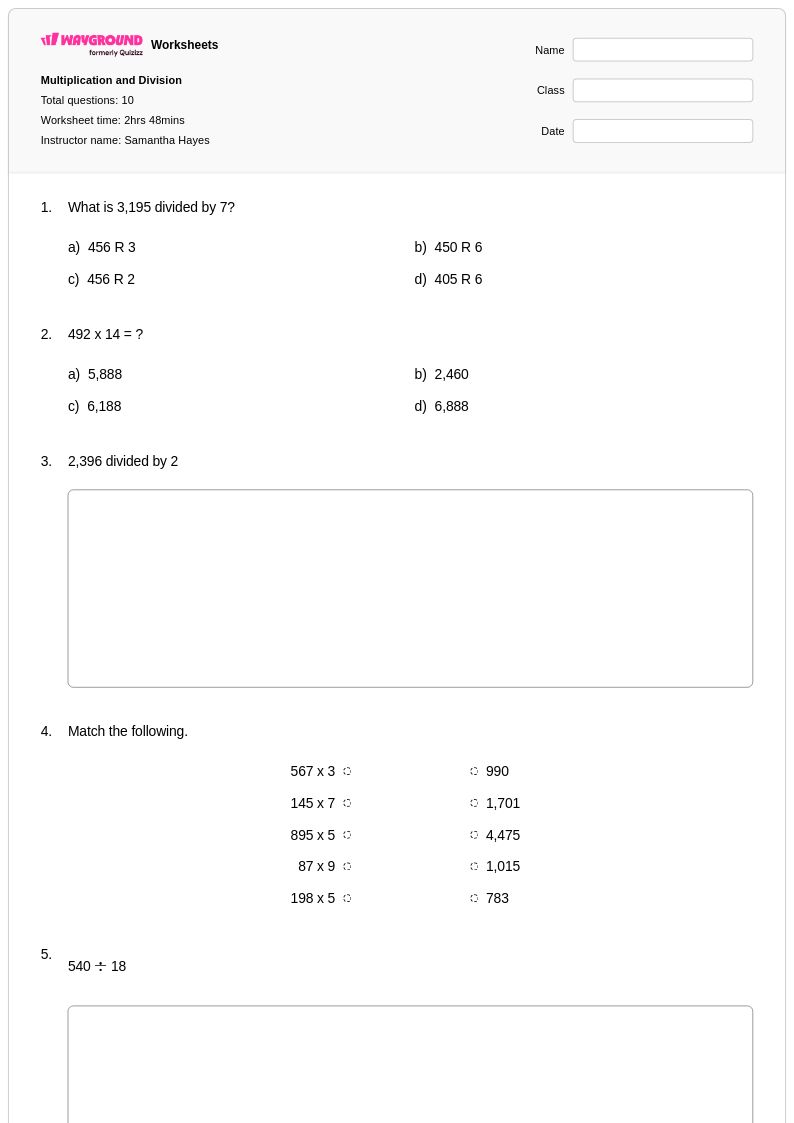
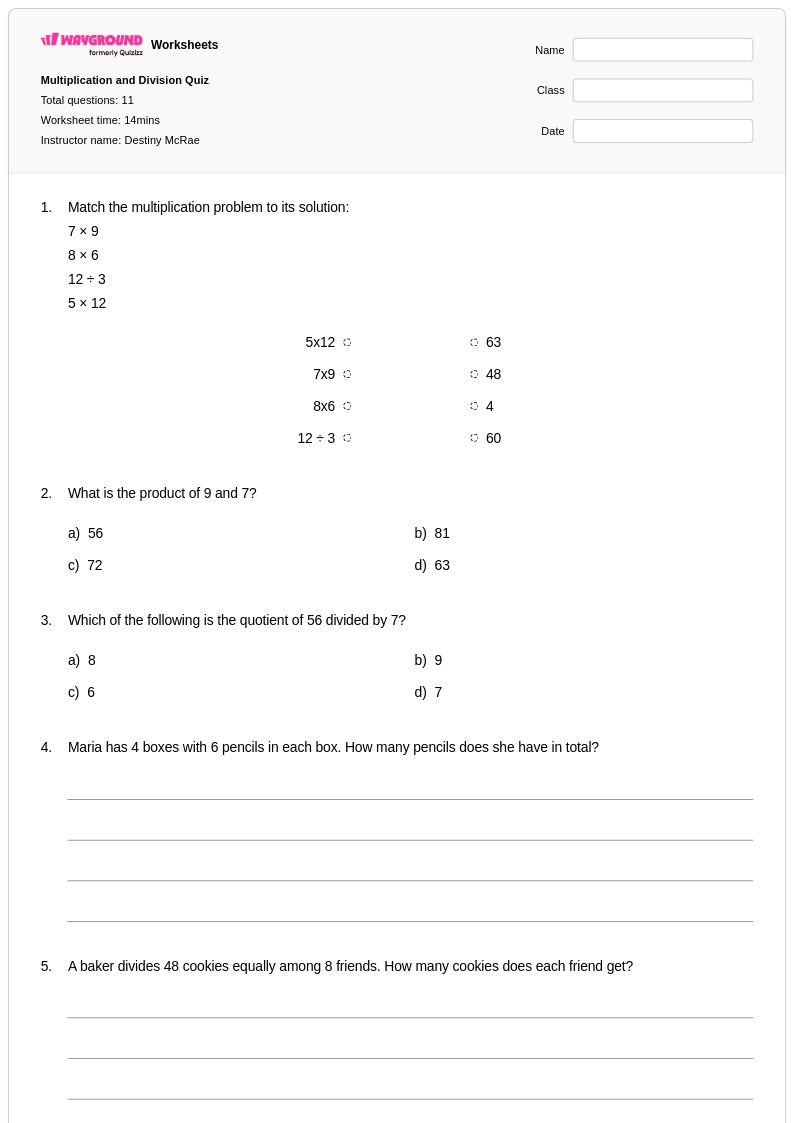
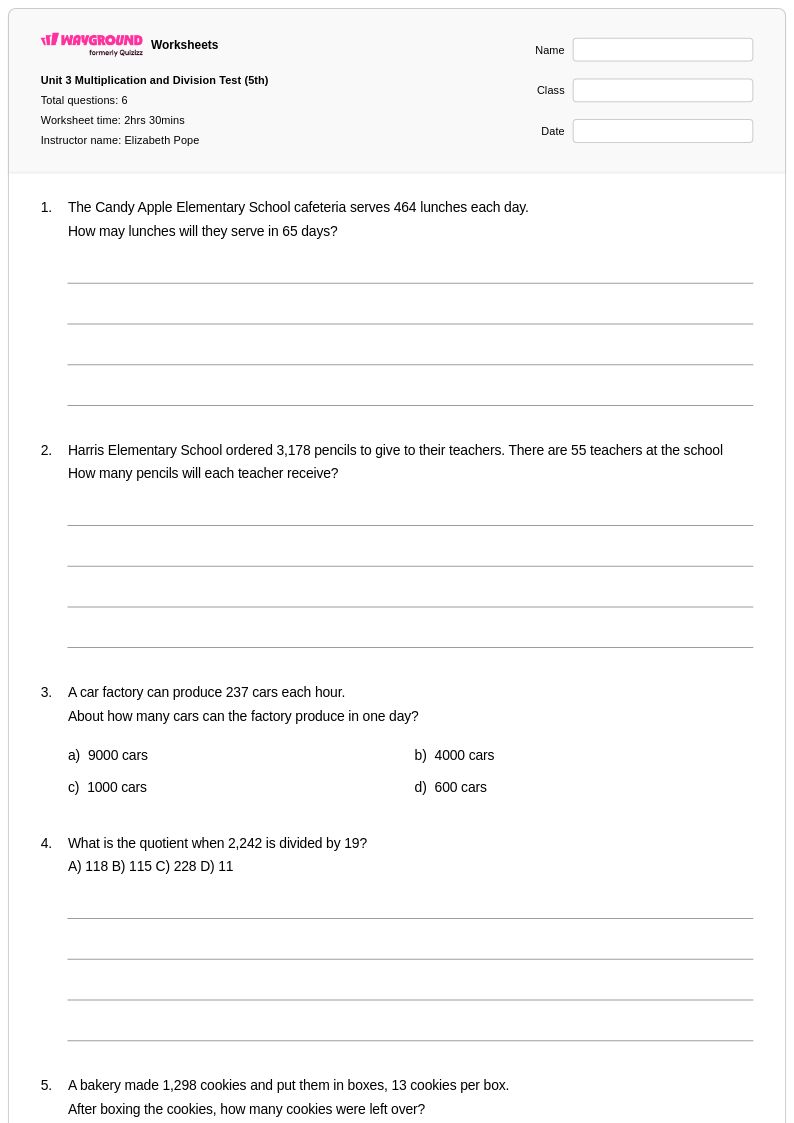
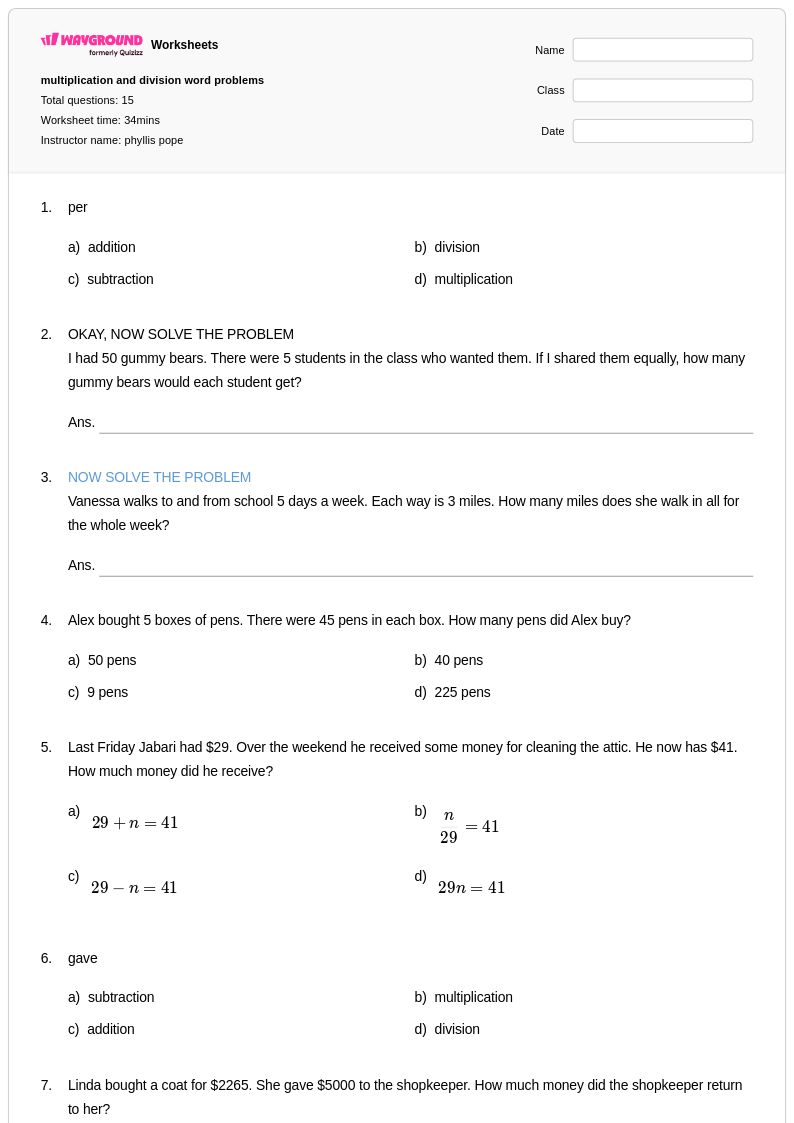
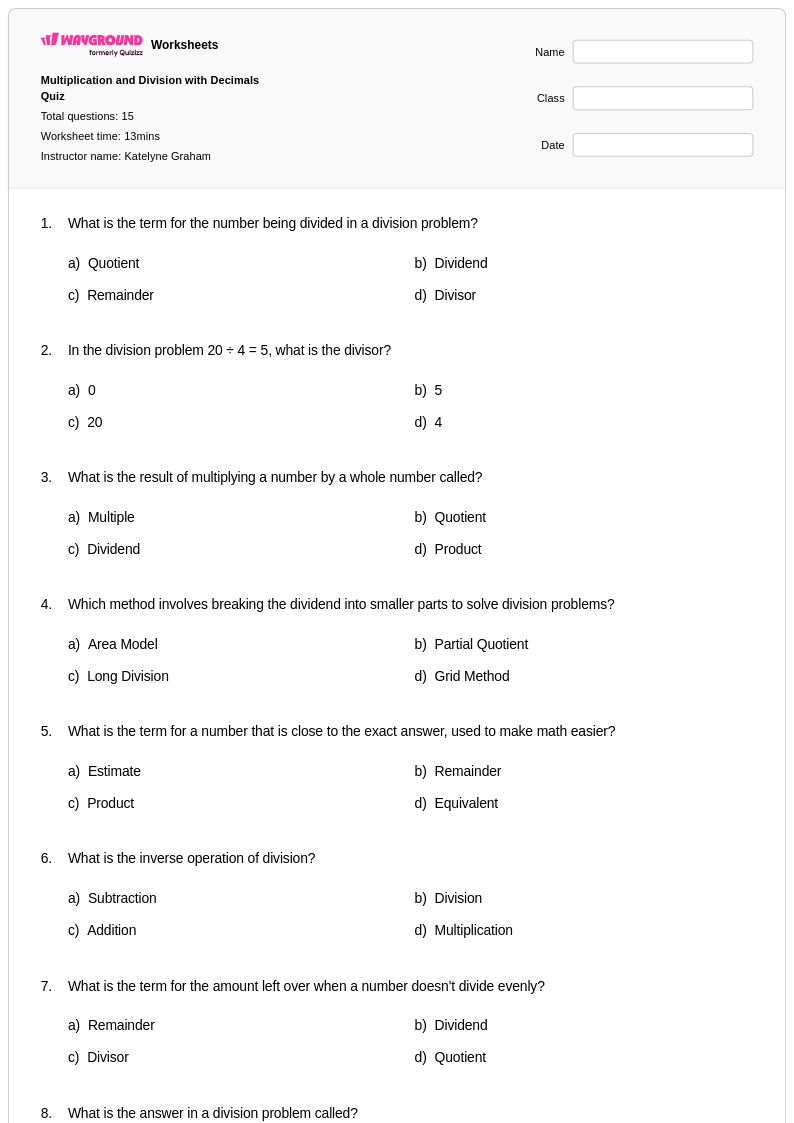
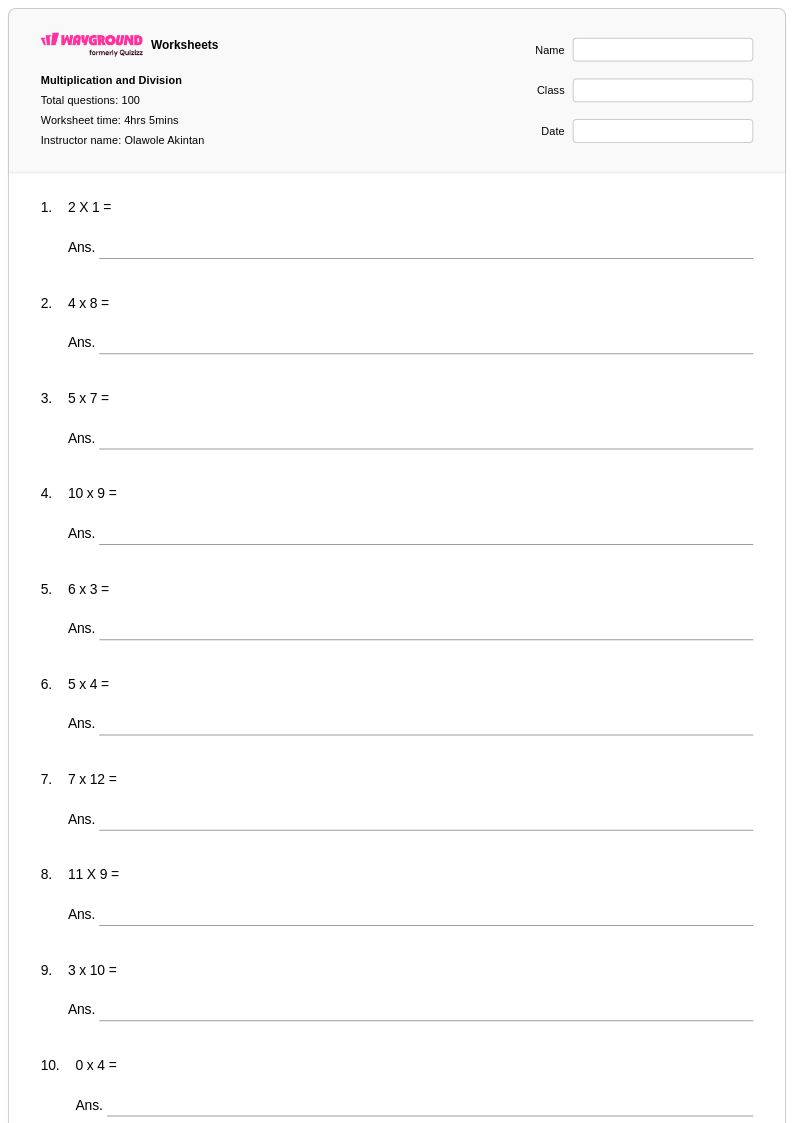
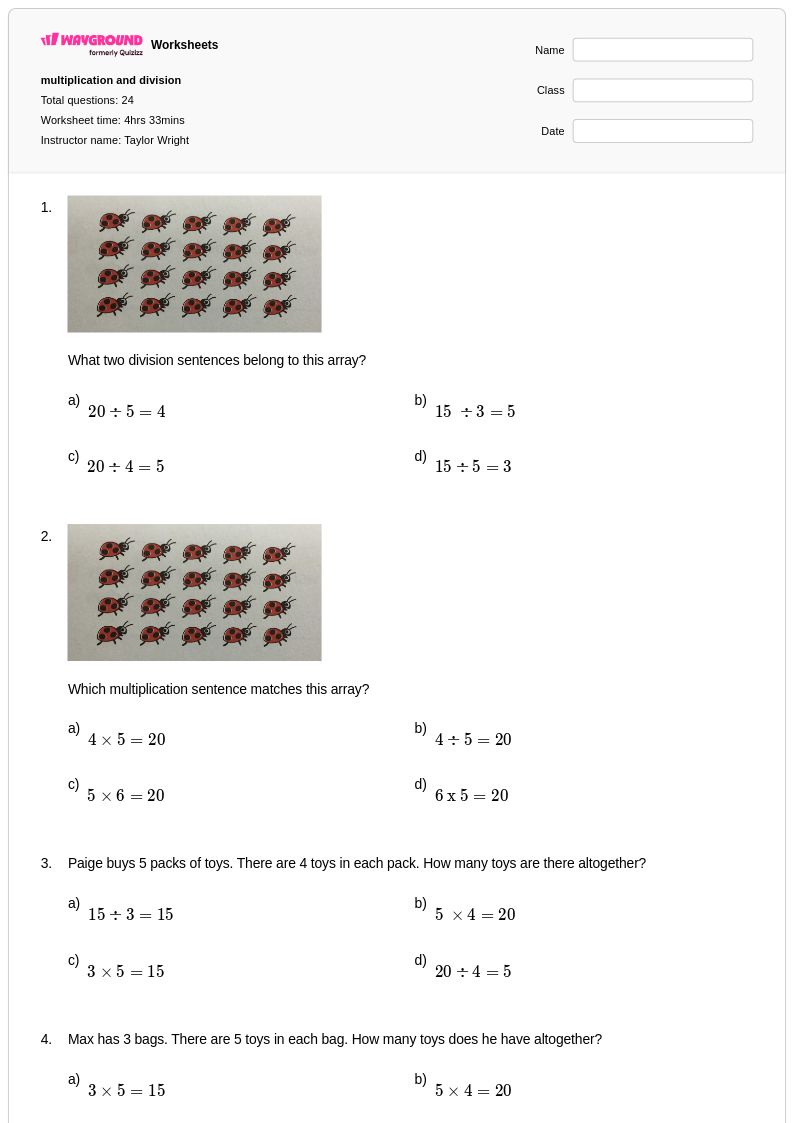
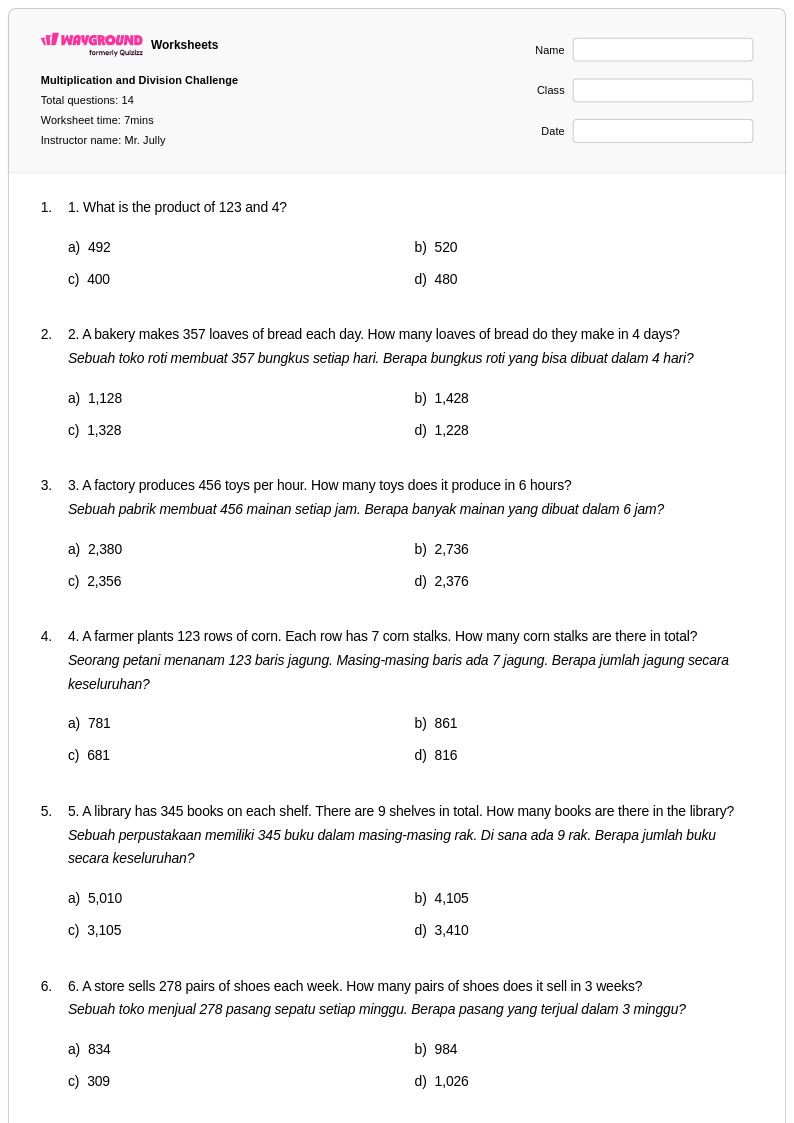
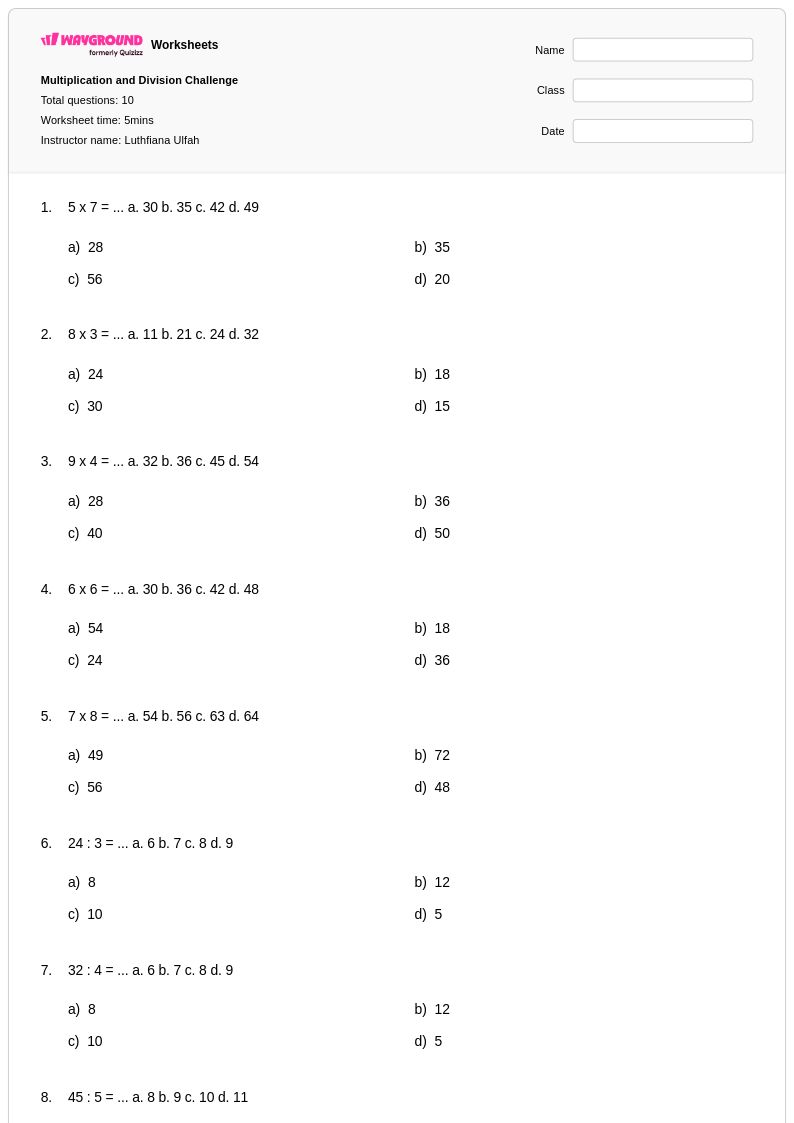
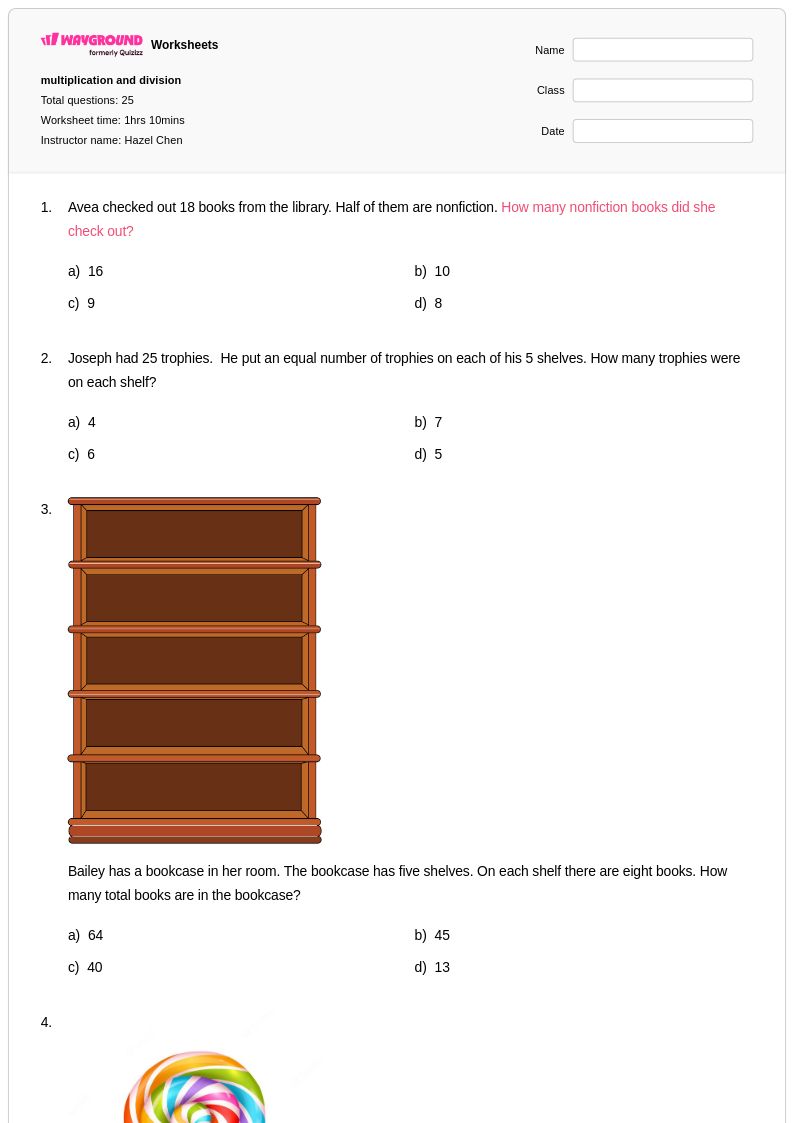
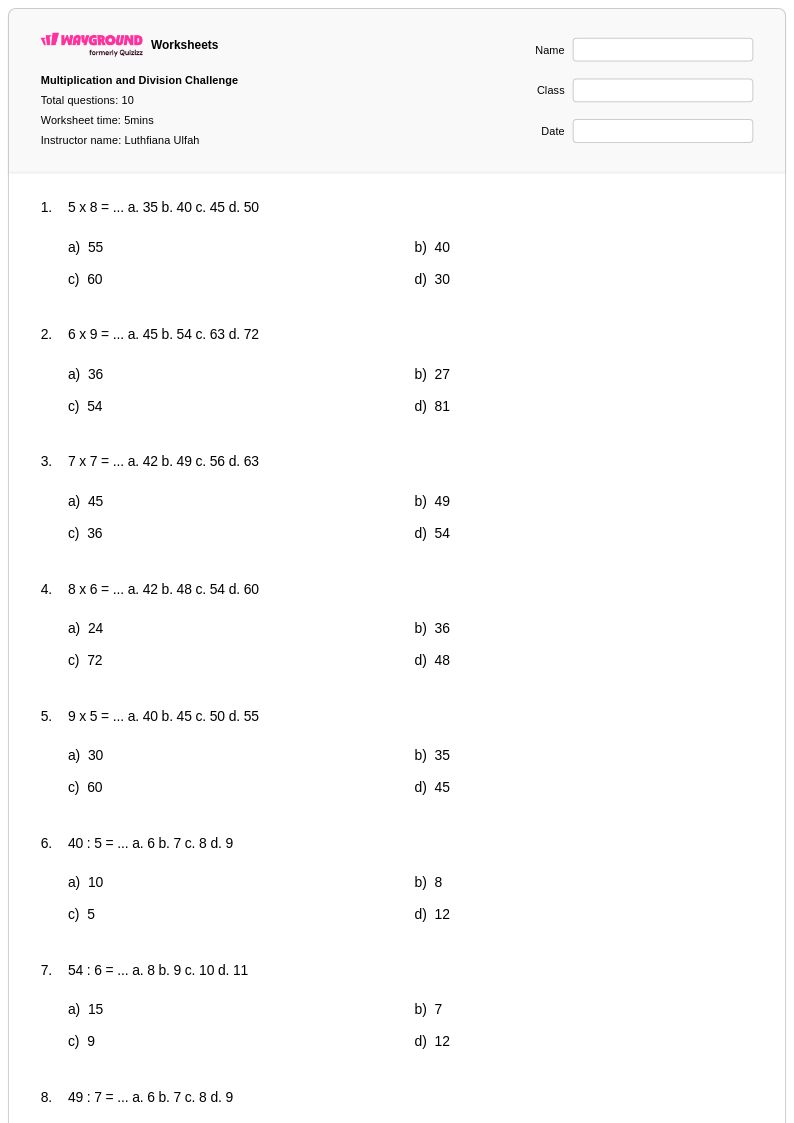
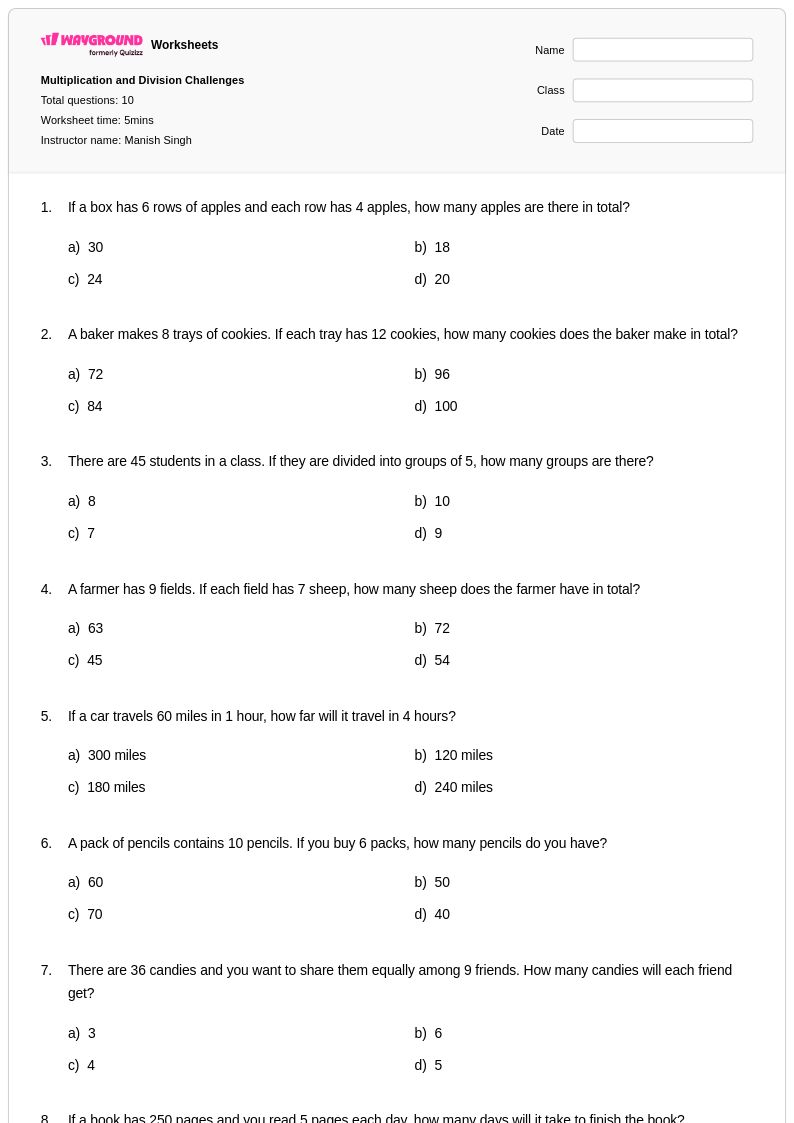
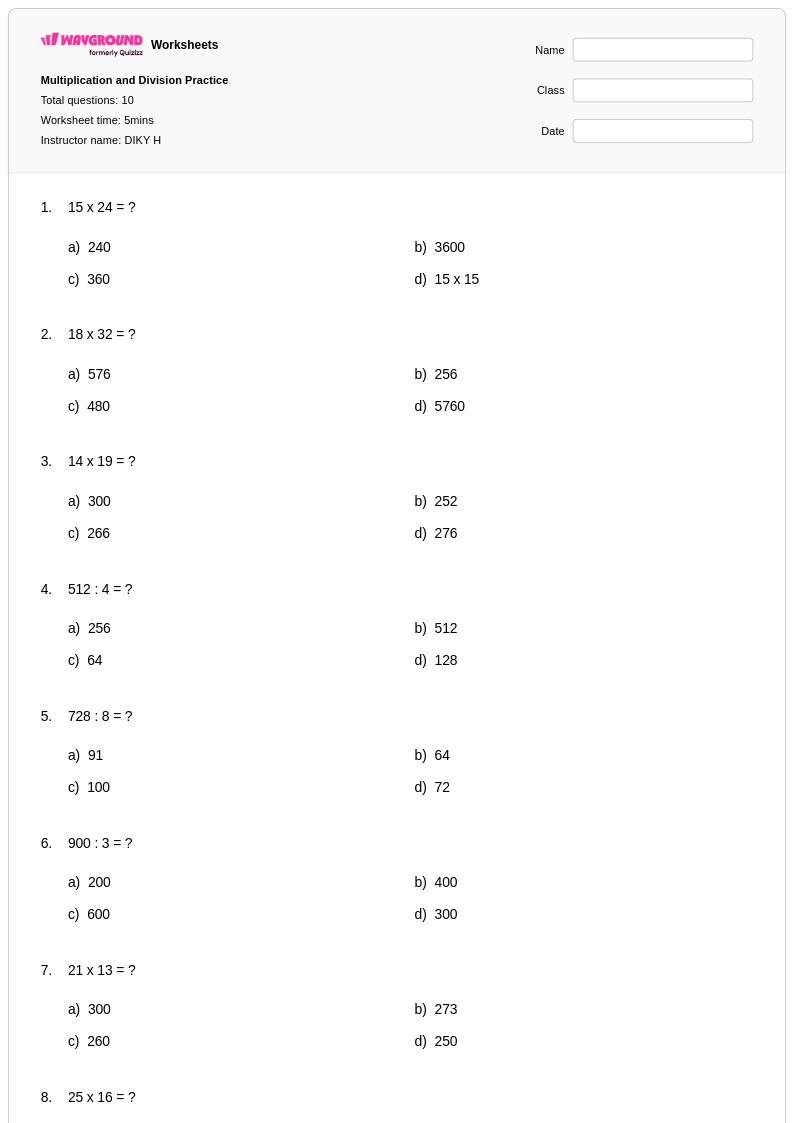
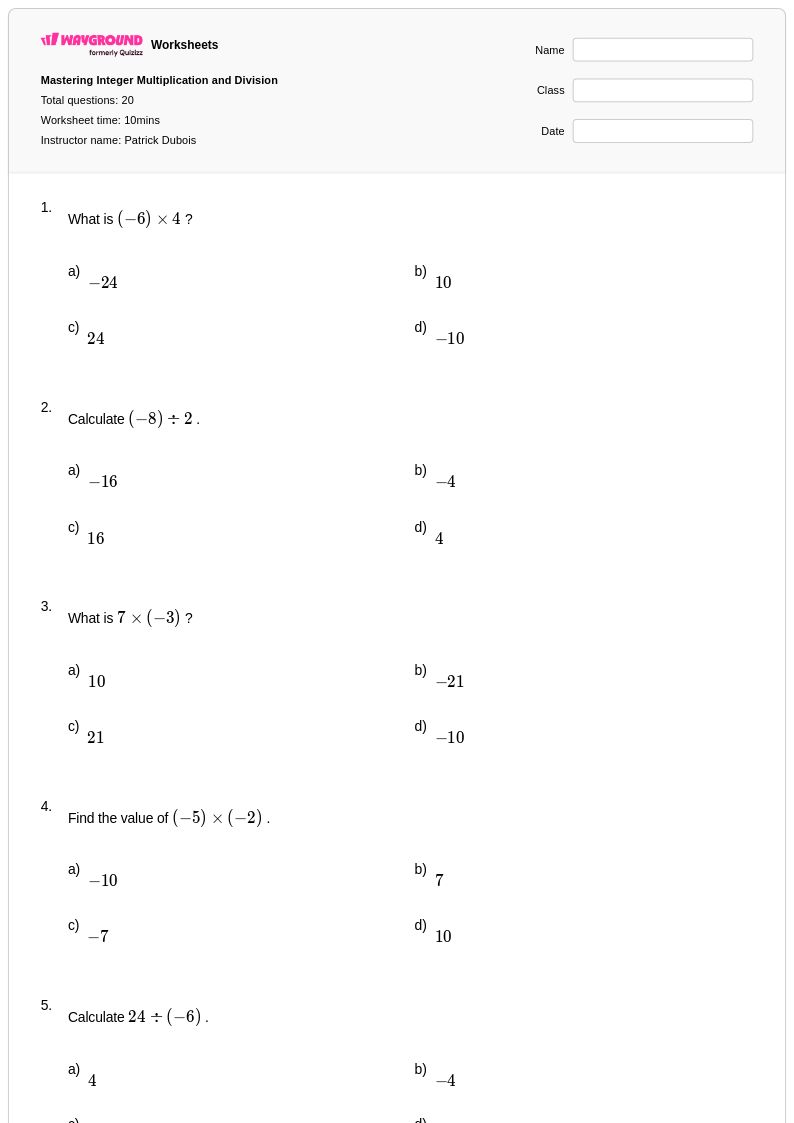
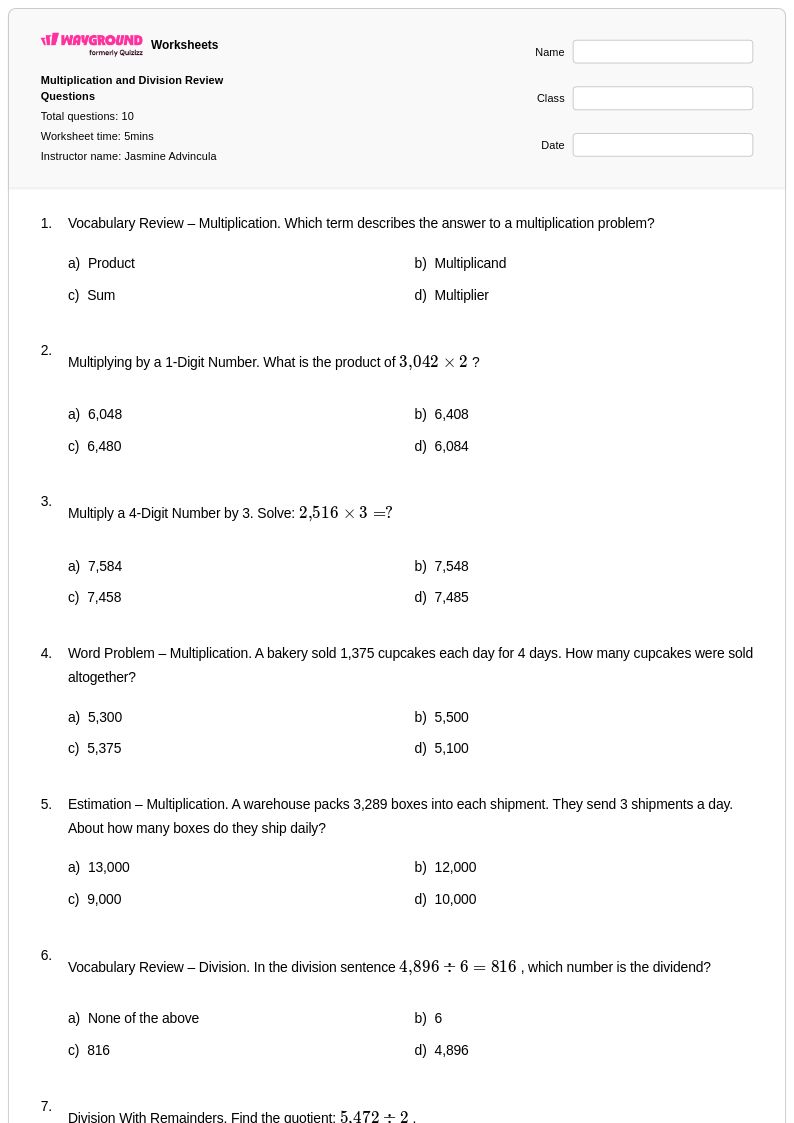
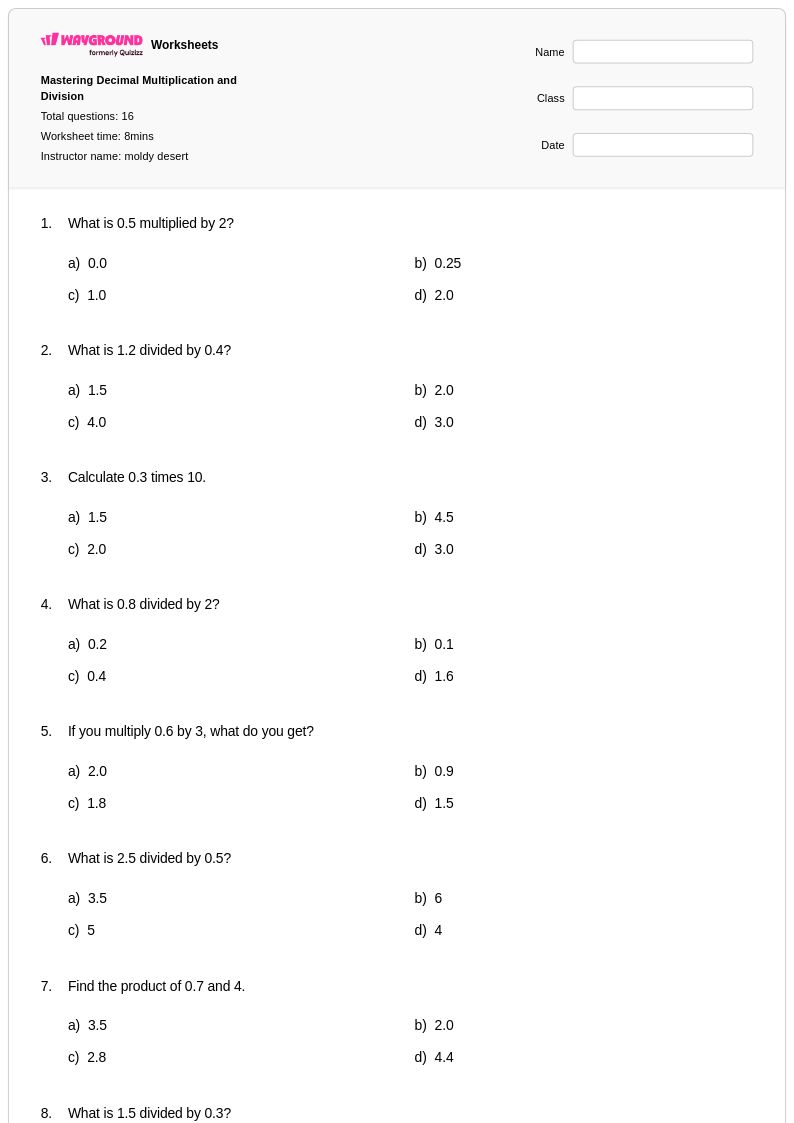
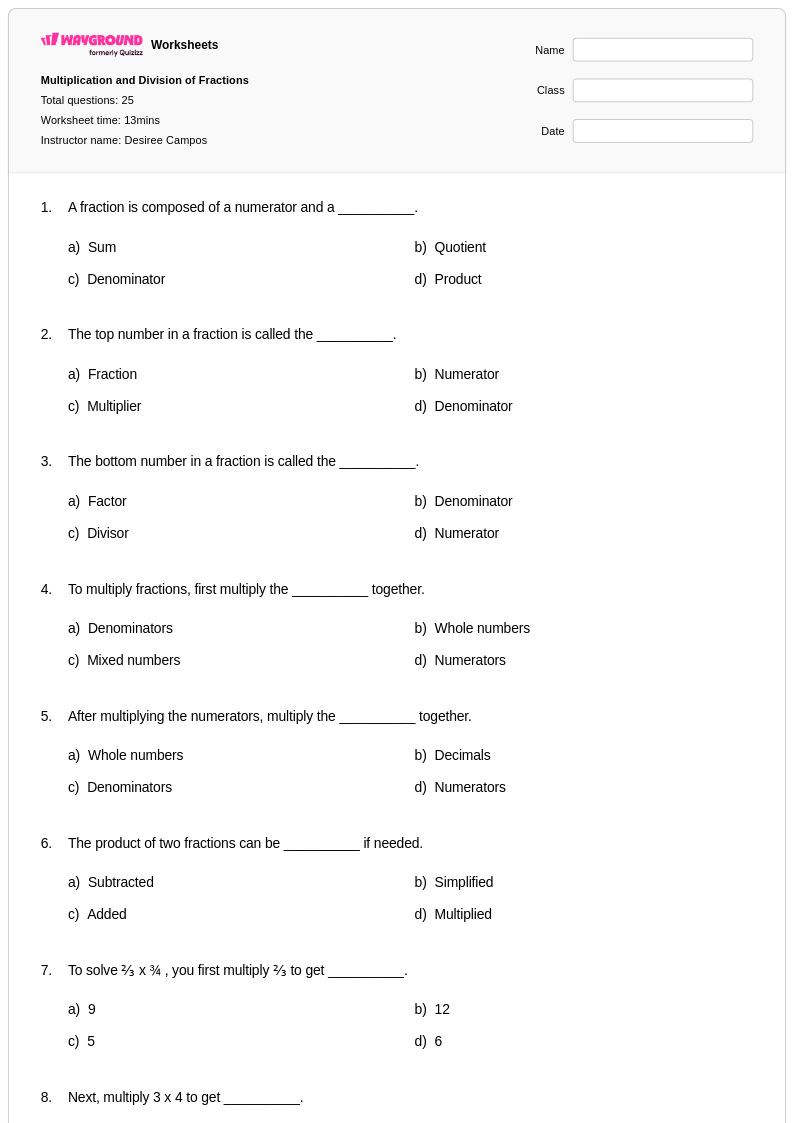
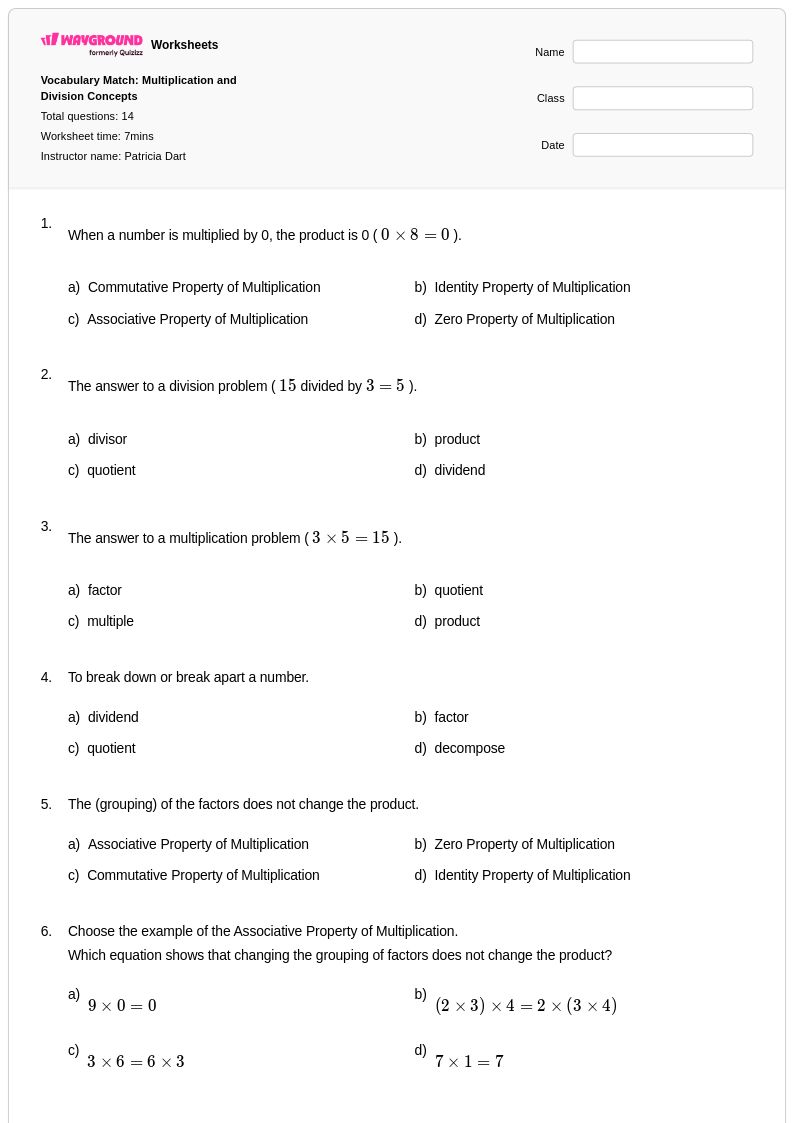
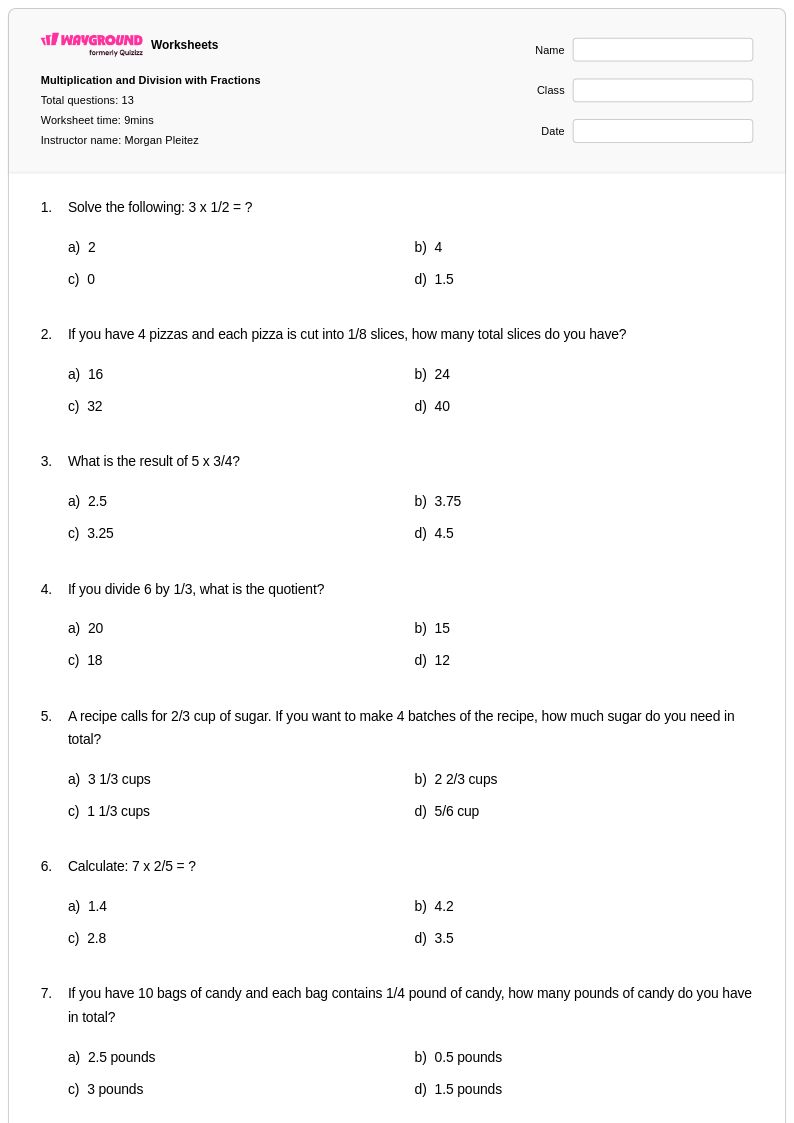
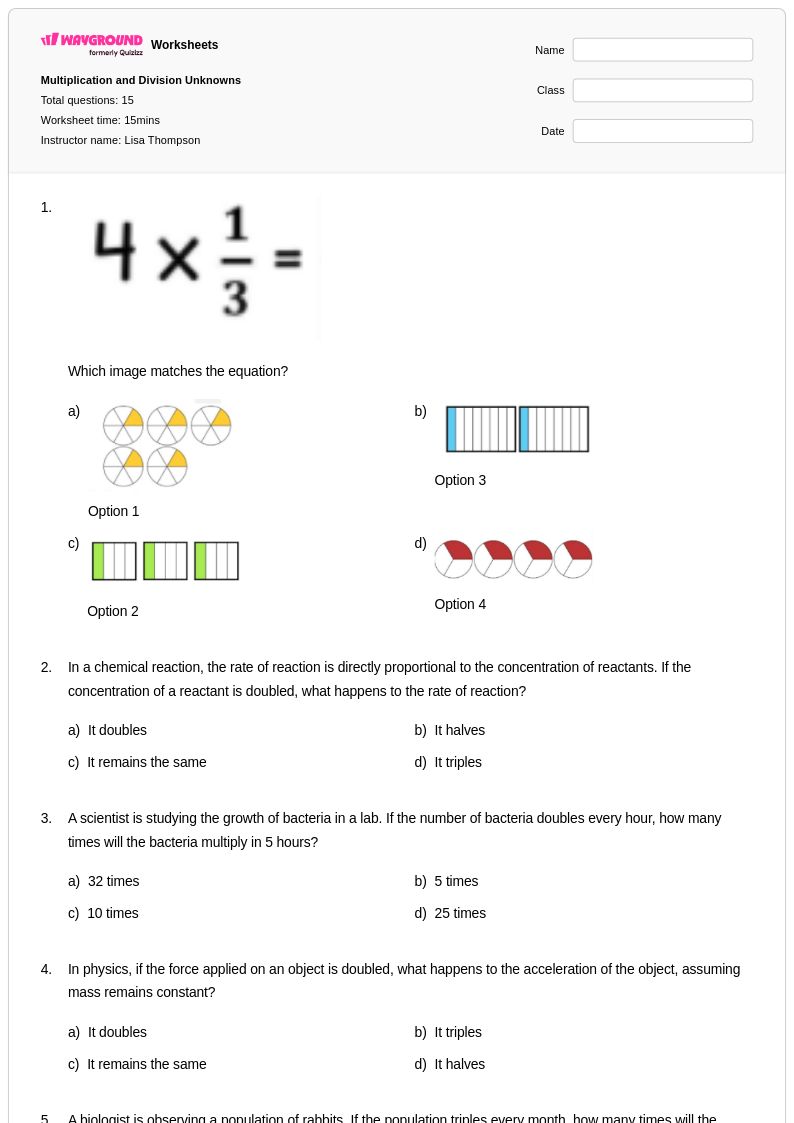
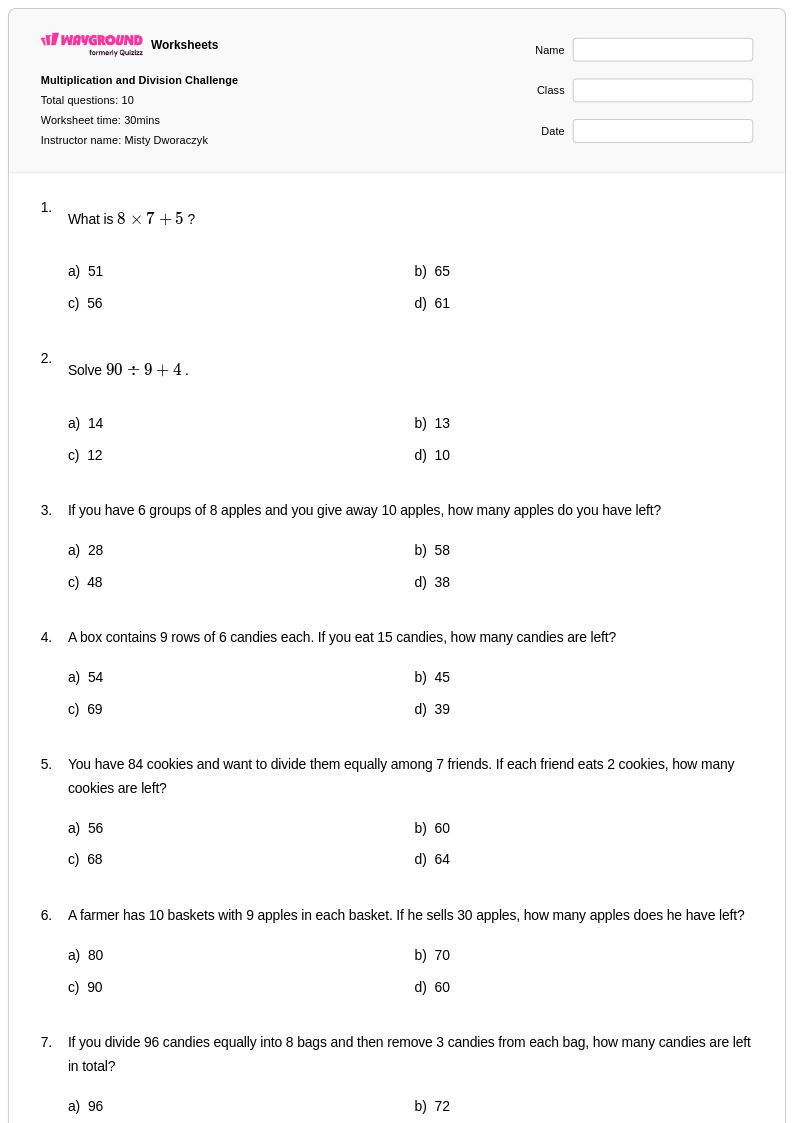
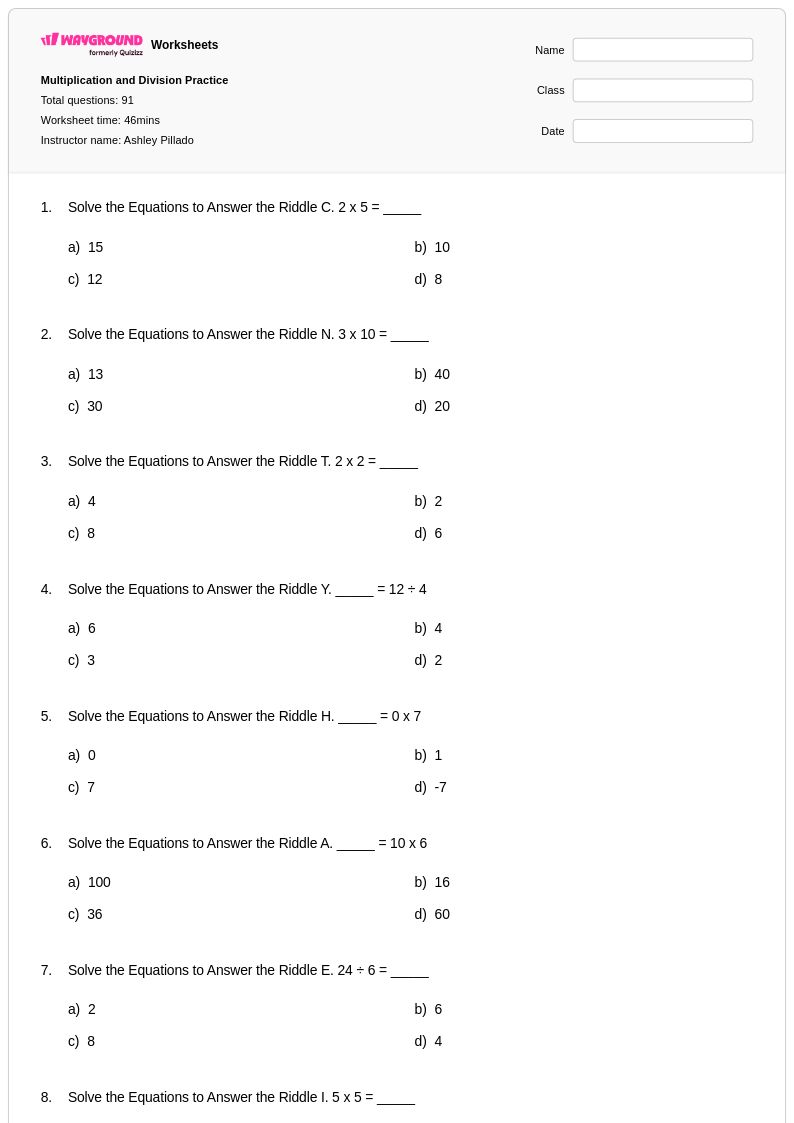
Multiplication and division worksheets for kindergarten students through Wayground (formerly Quizizz) introduce young learners to the foundational concepts that will shape their mathematical understanding for years to come. These carefully designed printables focus on concrete, hands-on approaches that make abstract mathematical operations accessible to developing minds, using visual representations, manipulatives, and real-world scenarios that kindergarteners can easily grasp. The worksheets strengthen essential pre-algebraic thinking skills by helping students recognize patterns, understand equal groups, and develop number sense through engaging practice problems that build confidence and mathematical fluency. Each free resource includes a comprehensive answer key and is available as a pdf download, making it simple for educators to incorporate these materials into daily instruction, homework assignments, or assessment activities.
Wayground (formerly Quizizz) empowers teachers with access to millions of educator-created multiplication and division resources specifically tailored for kindergarten learners, featuring robust search and filtering capabilities that help instructors quickly locate materials aligned with specific learning objectives and educational standards. The platform's differentiation tools allow teachers to customize worksheets based on individual student needs, accommodating various learning styles and ability levels within the same classroom. These flexible resources are available in both printable and digital formats, including pdf downloads, enabling seamless integration into traditional and technology-enhanced learning environments. Teachers can efficiently plan targeted instruction, provide remediation for struggling learners, offer enrichment opportunities for advanced students, and create consistent skill practice opportunities that support mathematical concept development throughout the academic year.
FAQs
How do I teach multiplication and division in the context of science units and measurement?
Start by grounding multiplication and division in concrete measurement scenarios students already encounter, such as converting kilometers to meters or grams to milligrams. Teach the relationship between metric prefixes and powers of ten so students understand why multiplying or dividing by 10, 100, or 1,000 produces a unit change rather than an arbitrary answer. Once students grasp the conceptual logic, move to procedural fluency with targeted practice problems that reinforce both the operation and the unit context together.
What exercises help students practice multiplying and dividing with measurement units?
Effective practice exercises include unit conversion chains (e.g., converting a value from kilometers to centimeters using sequential multiplication), multi-step word problems set in scientific contexts, and error-correction tasks where students identify mistakes in a worked conversion. Worksheets that pair metric prefix charts with practice problems help students internalize the multiplicative relationships between units. Mixing multiplication and division within the same problem set also builds flexible thinking rather than procedural pattern-matching.
What mistakes do students commonly make when multiplying and dividing with measurement units?
The most common error is multiplying when they should divide, or vice versa, because students memorize a conversion factor without understanding the direction of the conversion. Students also frequently confuse which prefix is larger, leading them to move the decimal point the wrong direction. A related error is dropping or incorrectly carrying the unit label through multi-step calculations, which makes it impossible to catch magnitude errors through dimensional analysis.
How can I differentiate multiplication and division worksheets for students at different skill levels?
For students who need support, reduce the number of answer choices on practice problems to lower cognitive load, or enable the Read Aloud feature so problem text is read to them rather than adding a reading barrier to a math task. On Wayground, these accommodations can be assigned to individual students while the rest of the class works with default settings. For advanced learners, assign multi-step problems that require applying multiplication and division across both metric and imperial systems within a single scenario.
How do I use Wayground's multiplication and division worksheets in my classroom?
Wayground's multiplication and division worksheets are available as printable PDFs for traditional classroom use and in digital formats for technology-integrated environments, giving you flexibility depending on your instructional setup. You can also host any worksheet as a live quiz on Wayground, which allows you to monitor student responses in real time and identify computational gaps immediately. Each worksheet includes a complete answer key, making them practical for independent practice, station work, or homework with minimal prep on your end.
How do multiplication and division skills connect to science and measurement instruction?
In science contexts, multiplication and division are not abstract operations but tools for working with real quantities, such as calculating density, converting measurement units, or scaling a recipe in a chemistry lab. Students who lack fluency with these operations struggle disproportionately in science because unit conversion requires both procedural accuracy and conceptual understanding of scale. Integrating computation practice directly within measurement contexts, rather than treating math and science separately, accelerates both skill sets simultaneously.