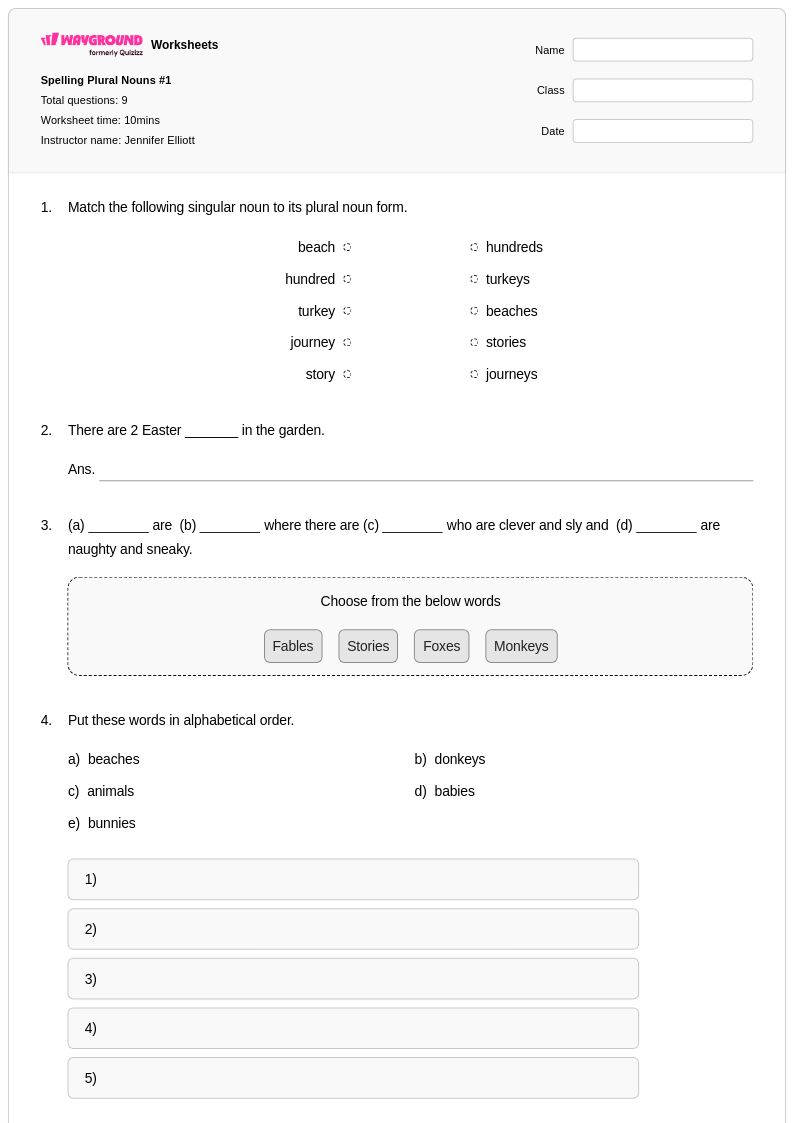
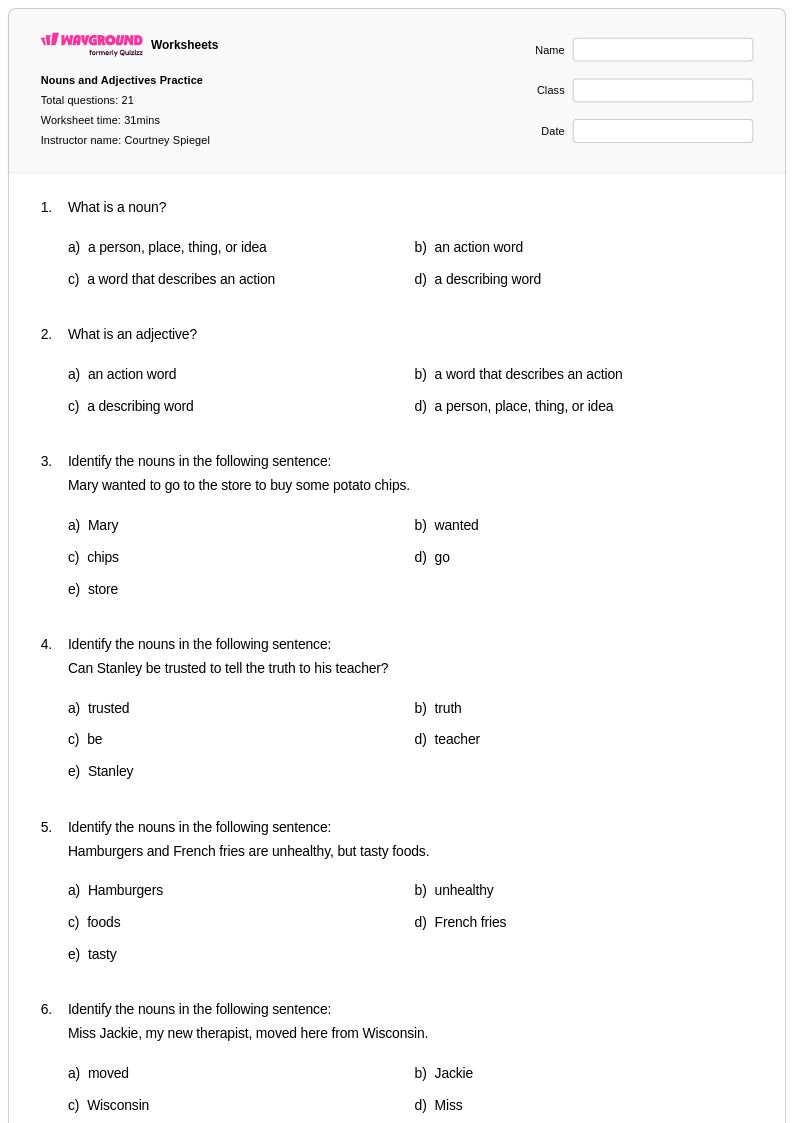
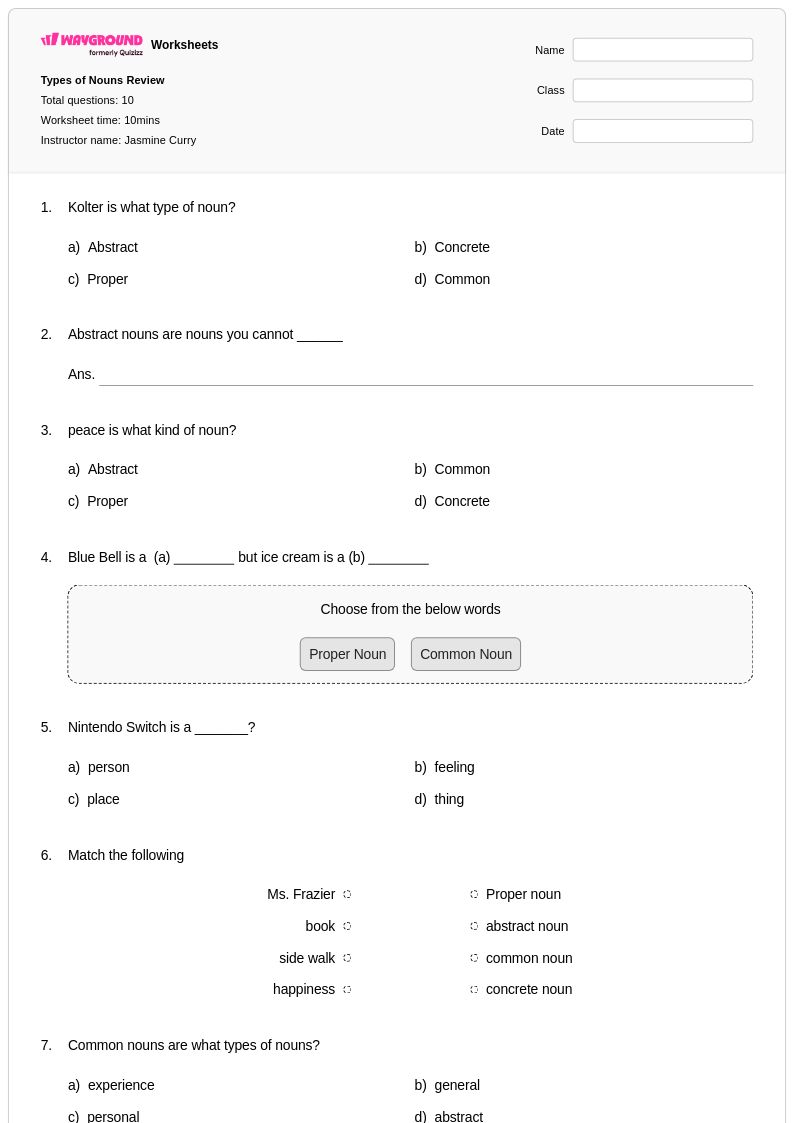
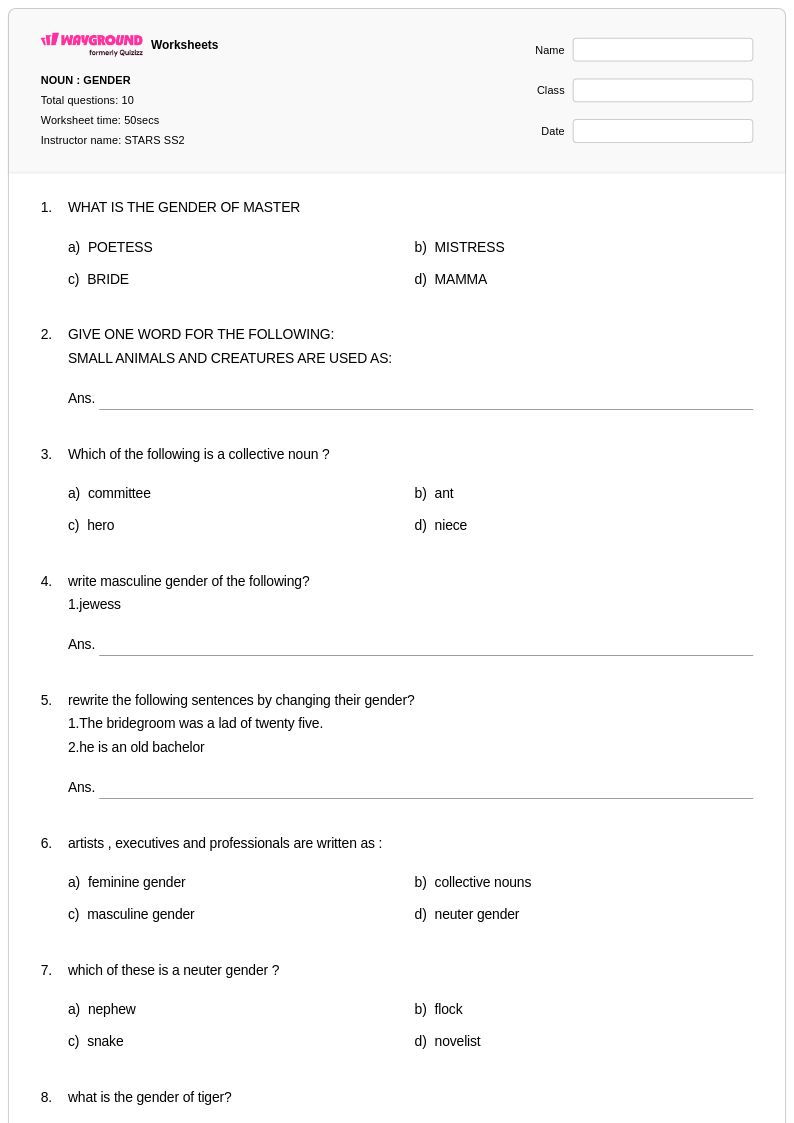
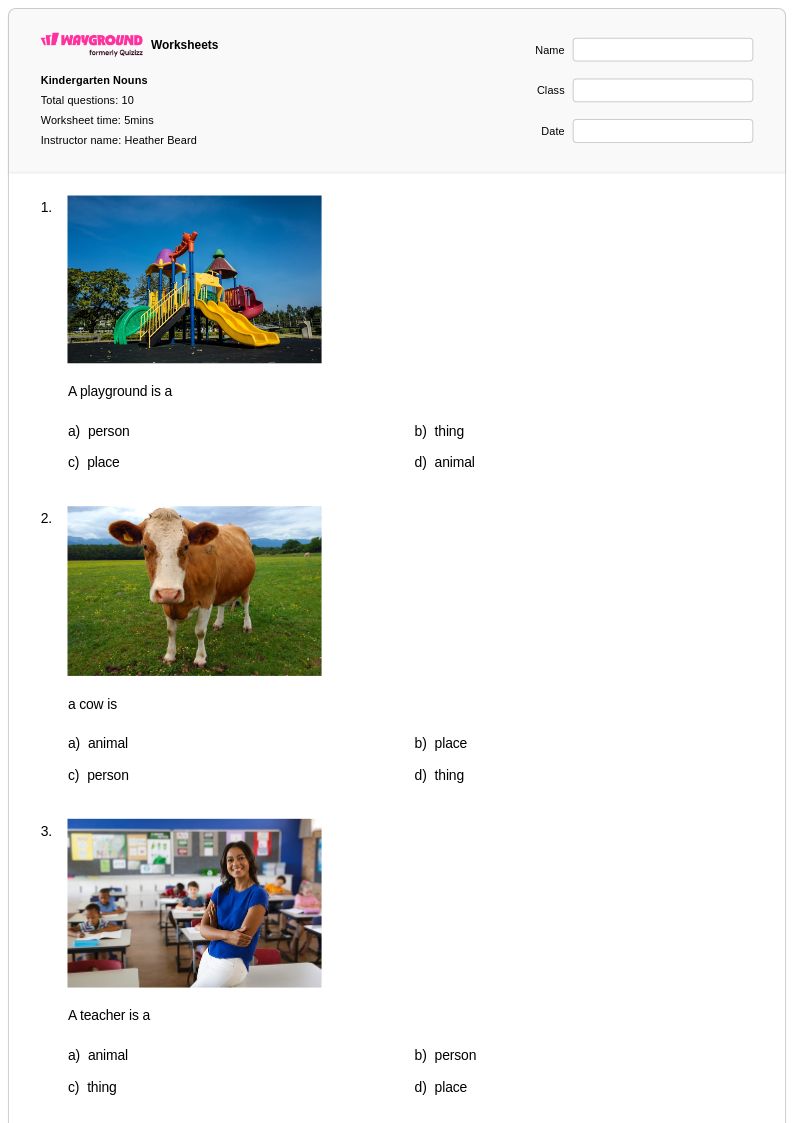
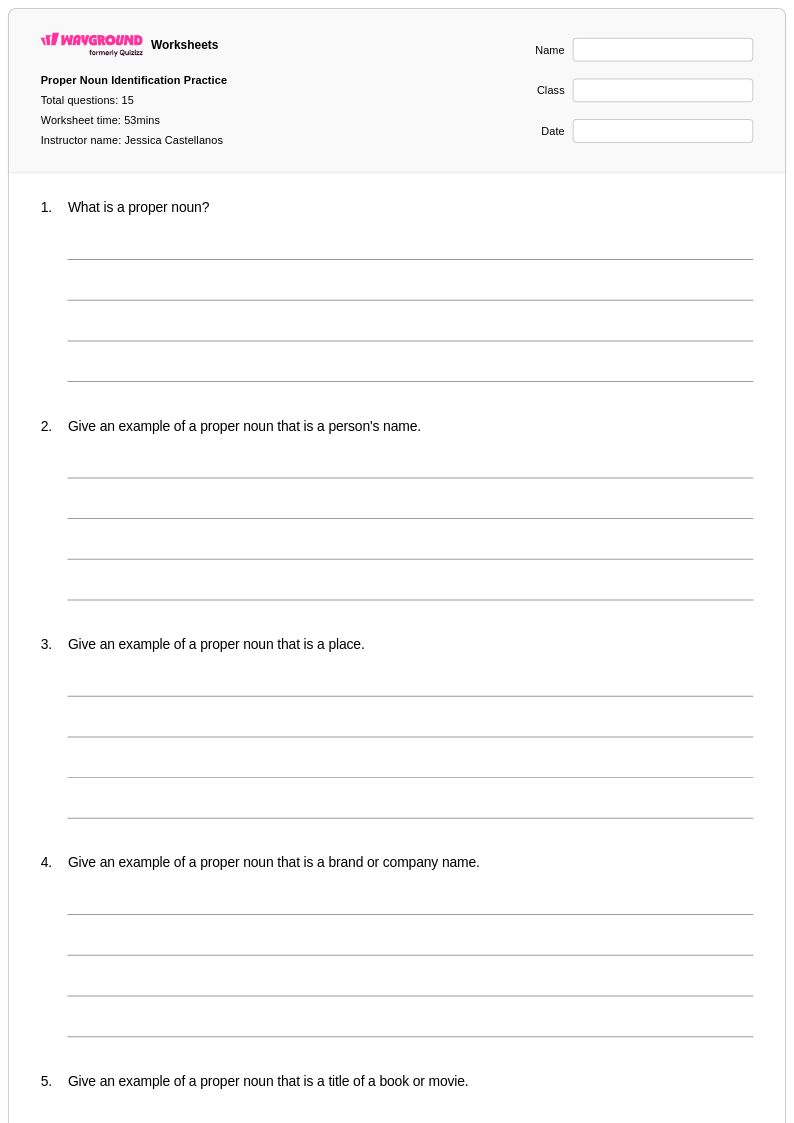
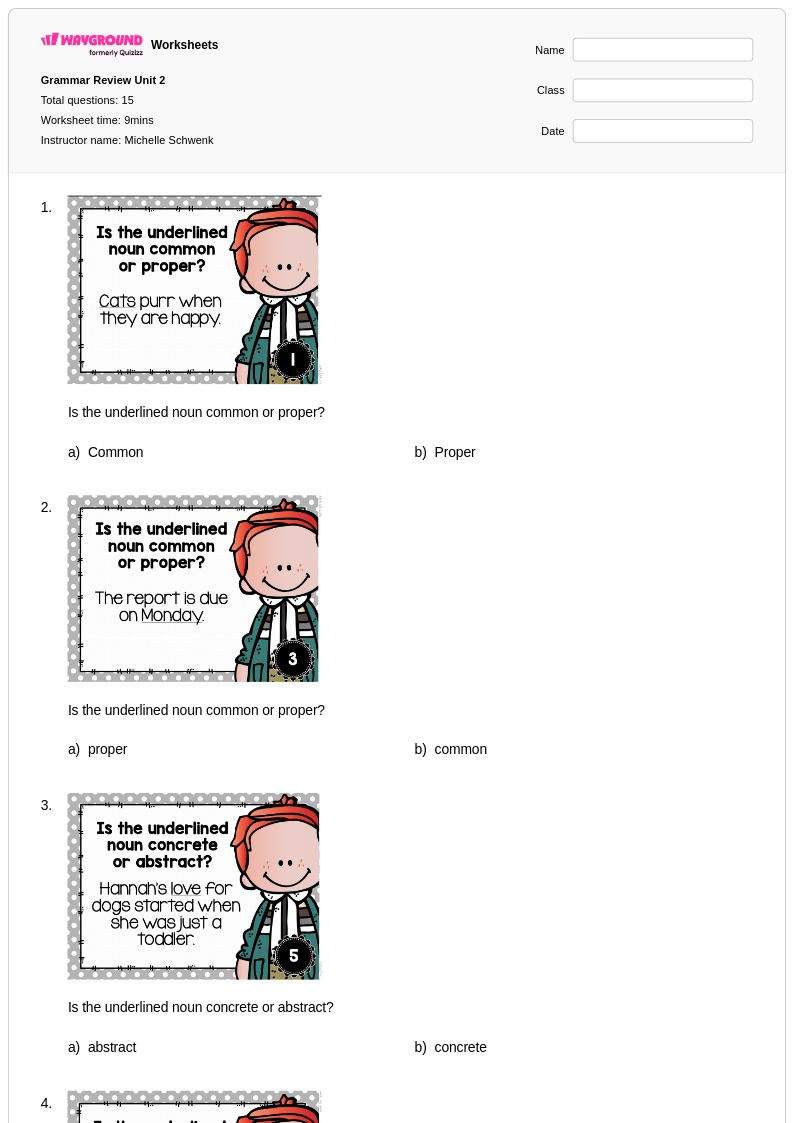
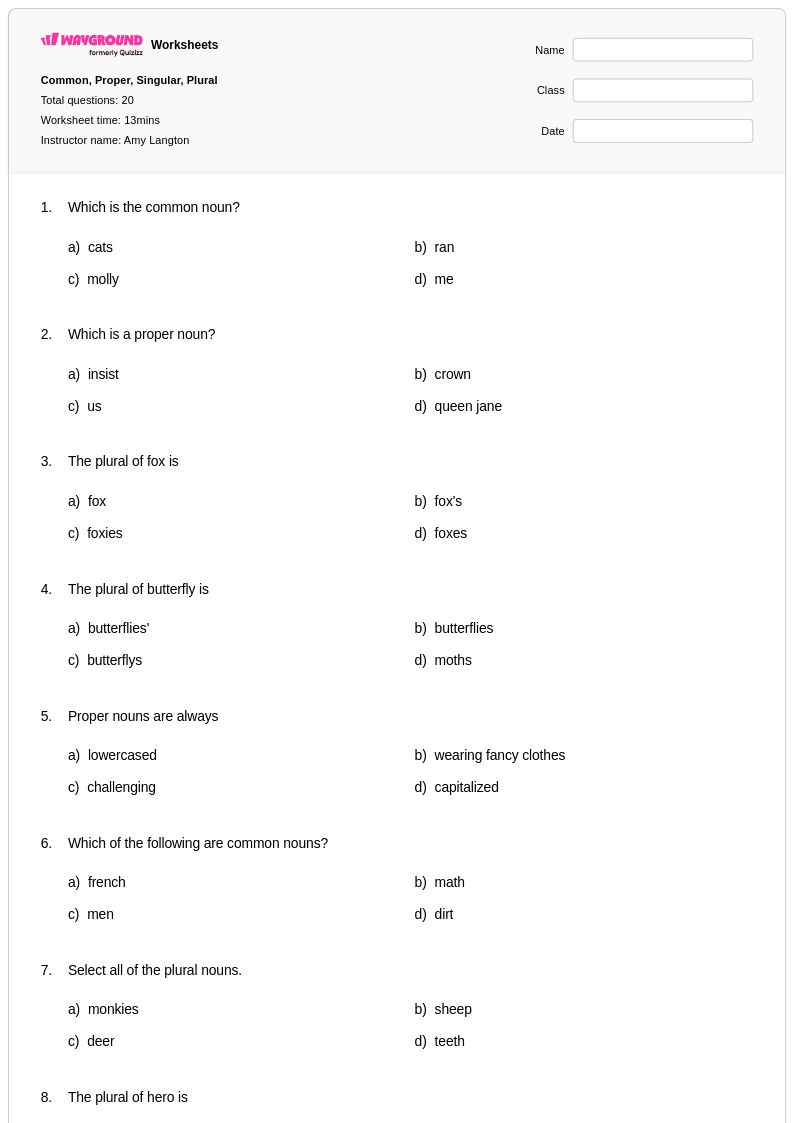
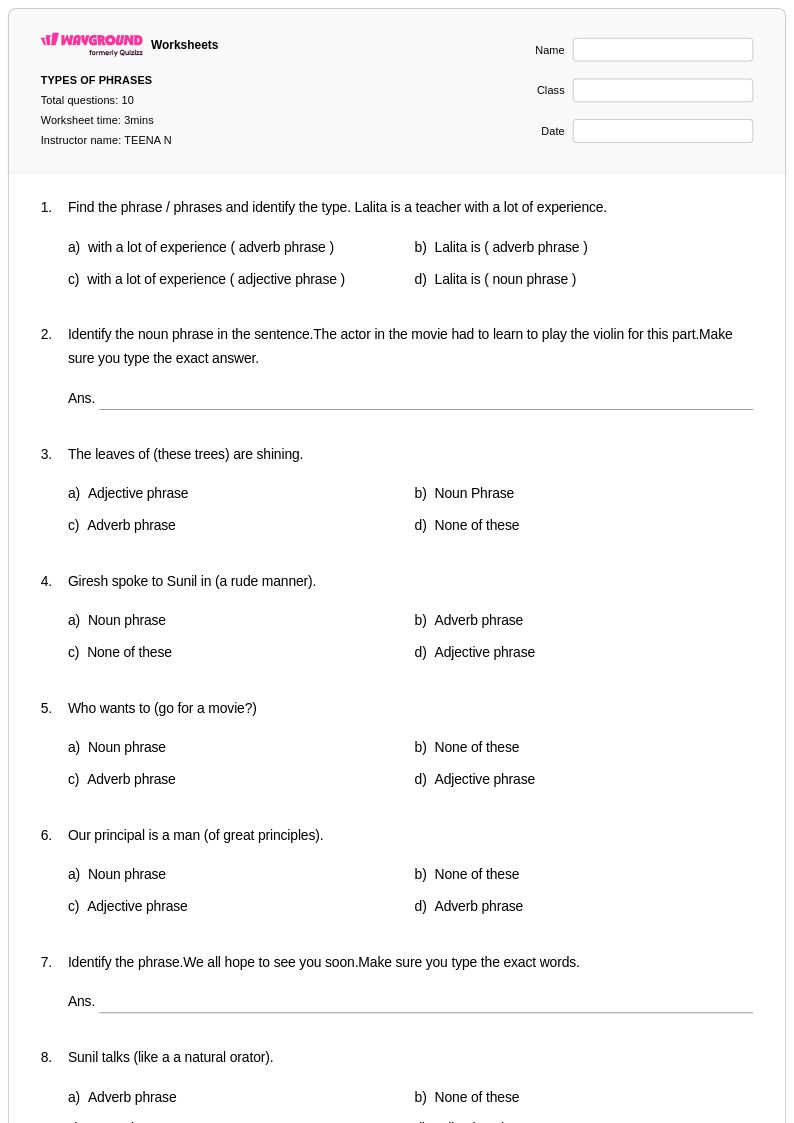
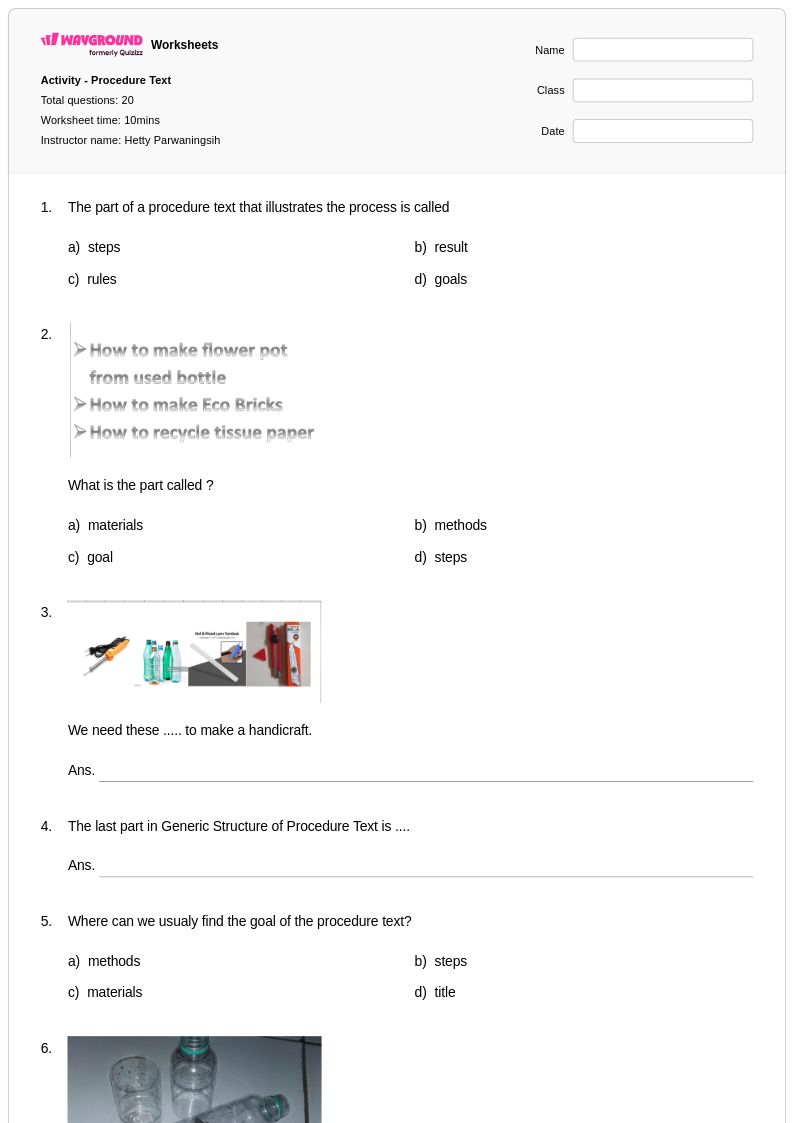
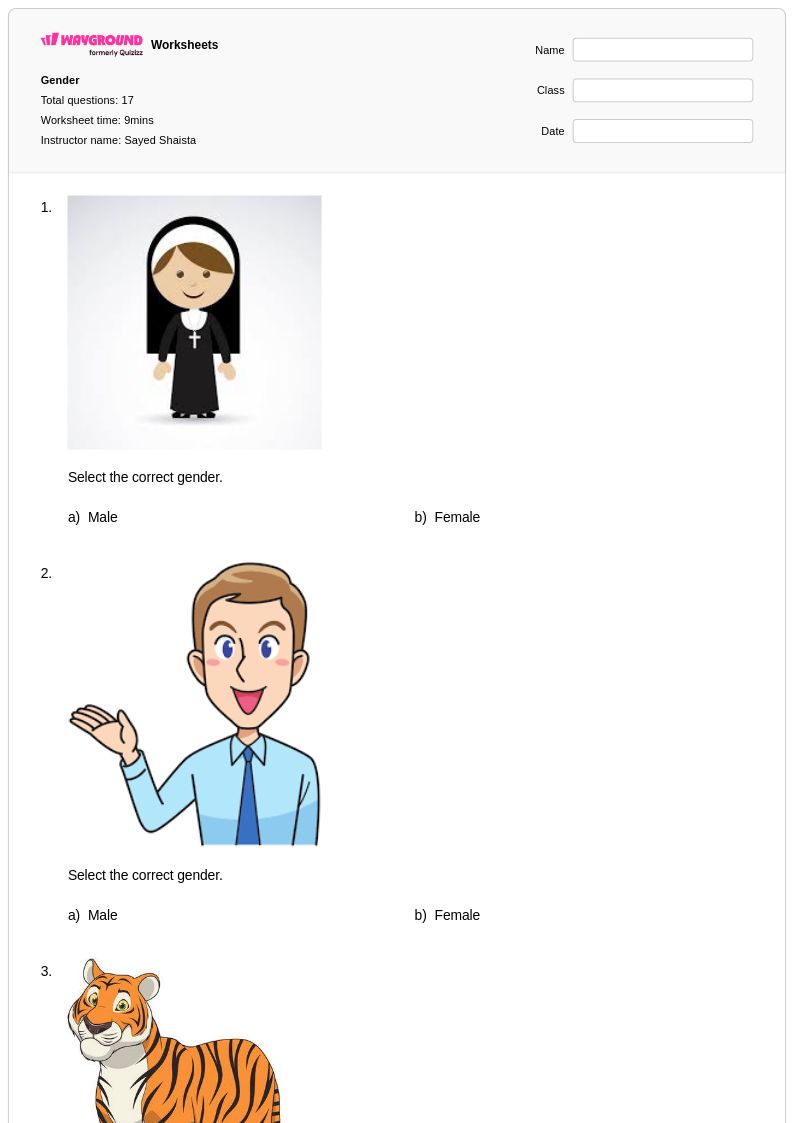
Wayground's free noun identification worksheets and printables help students master recognizing and categorizing nouns through engaging practice problems with comprehensive answer keys included.
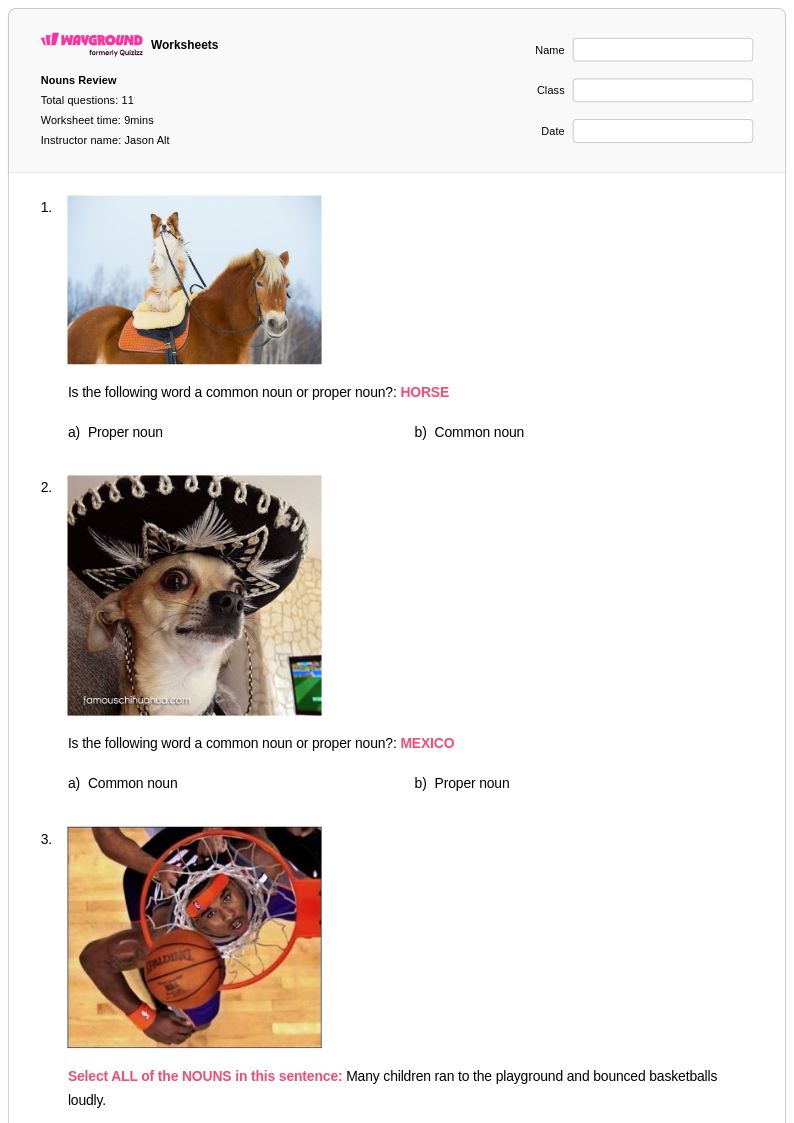
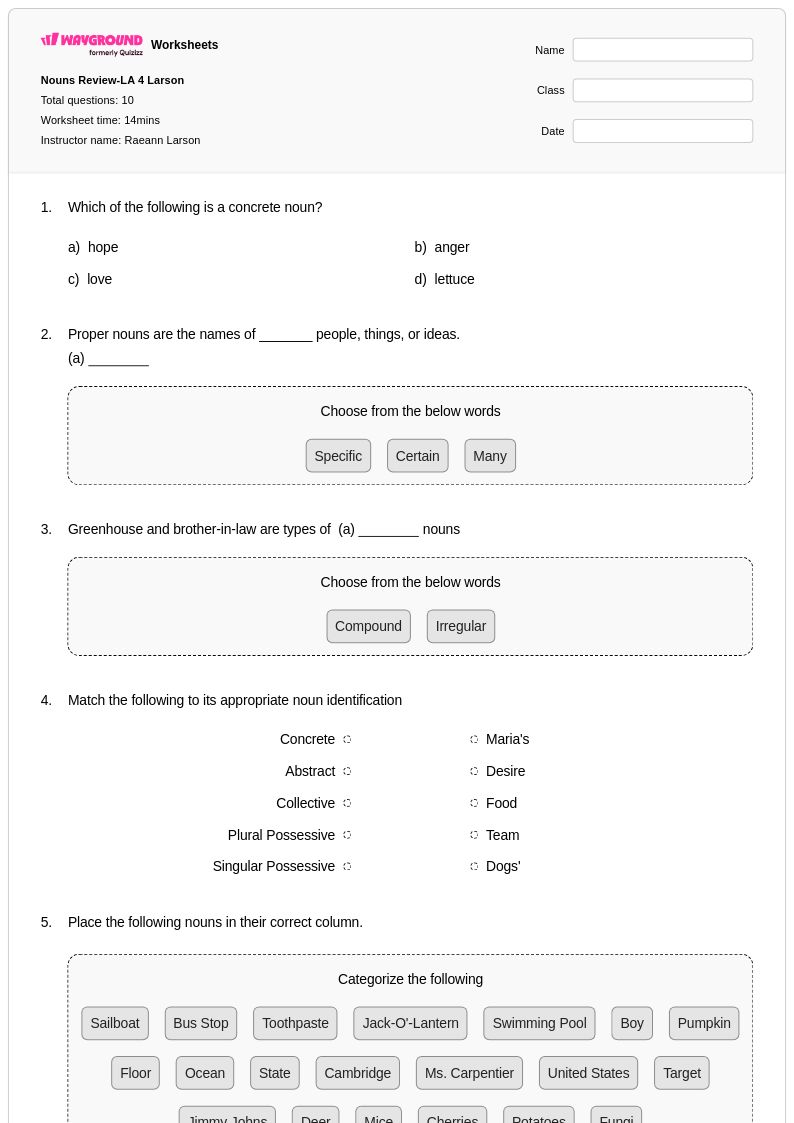
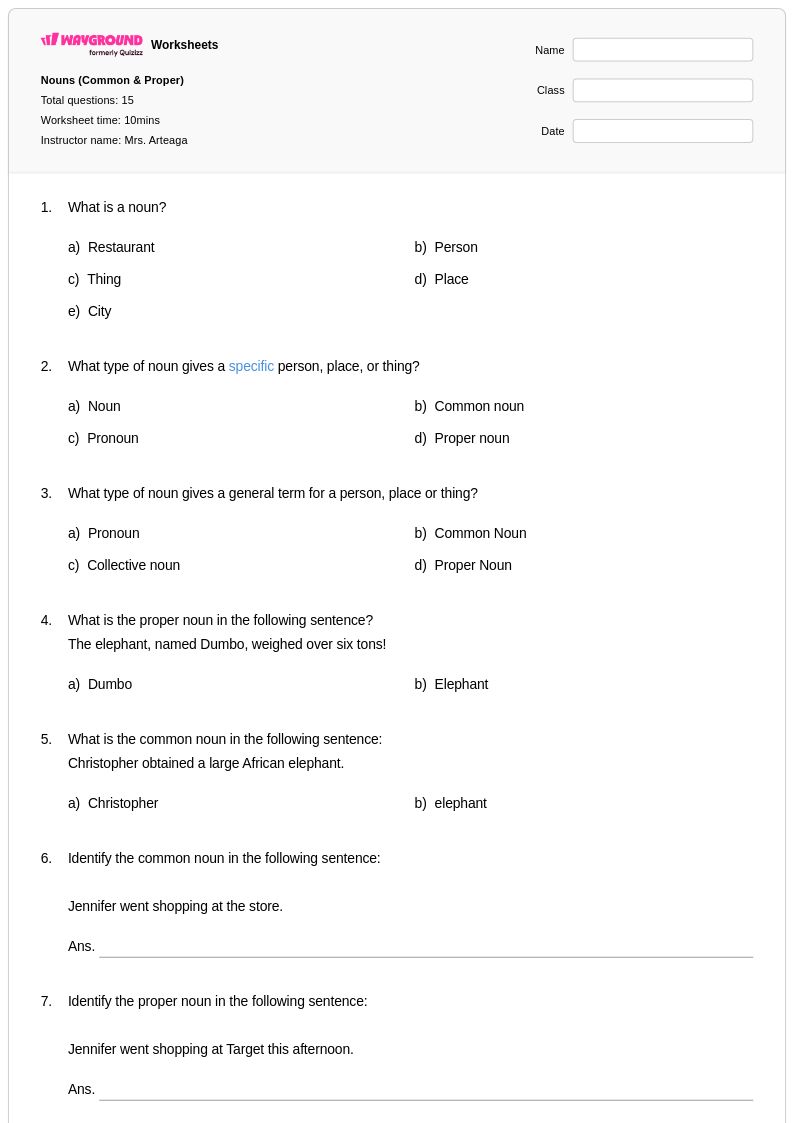
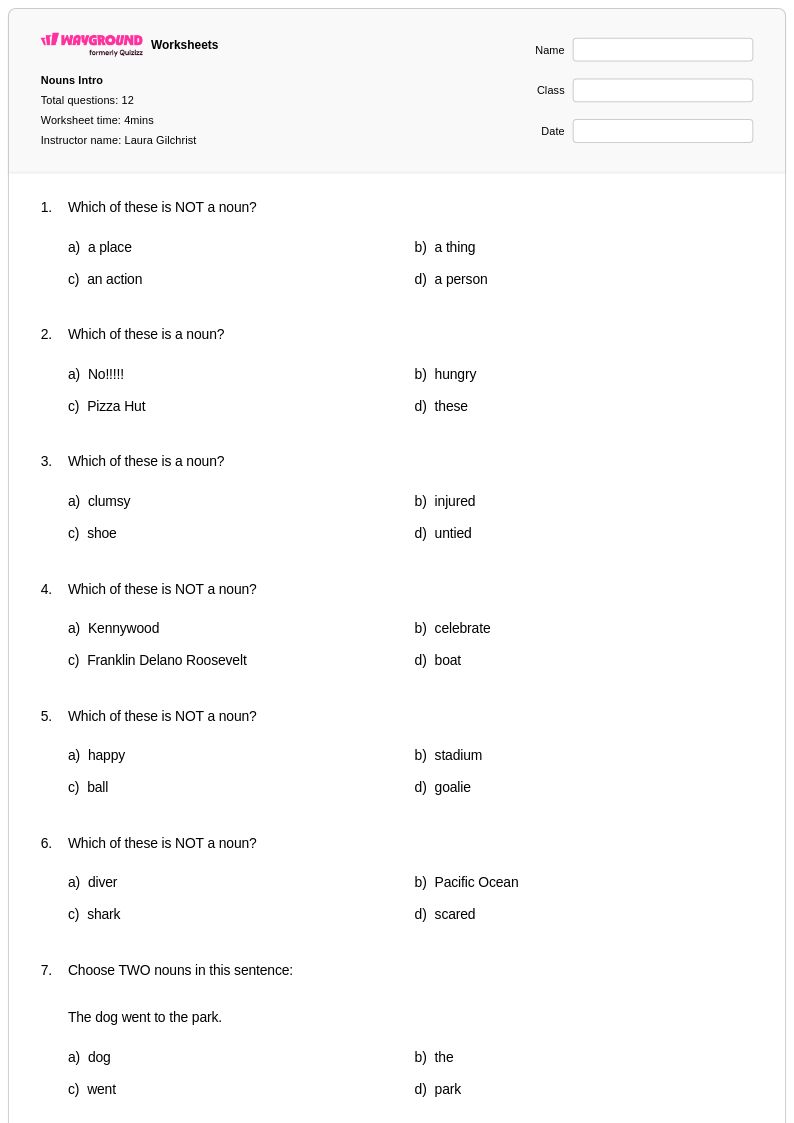
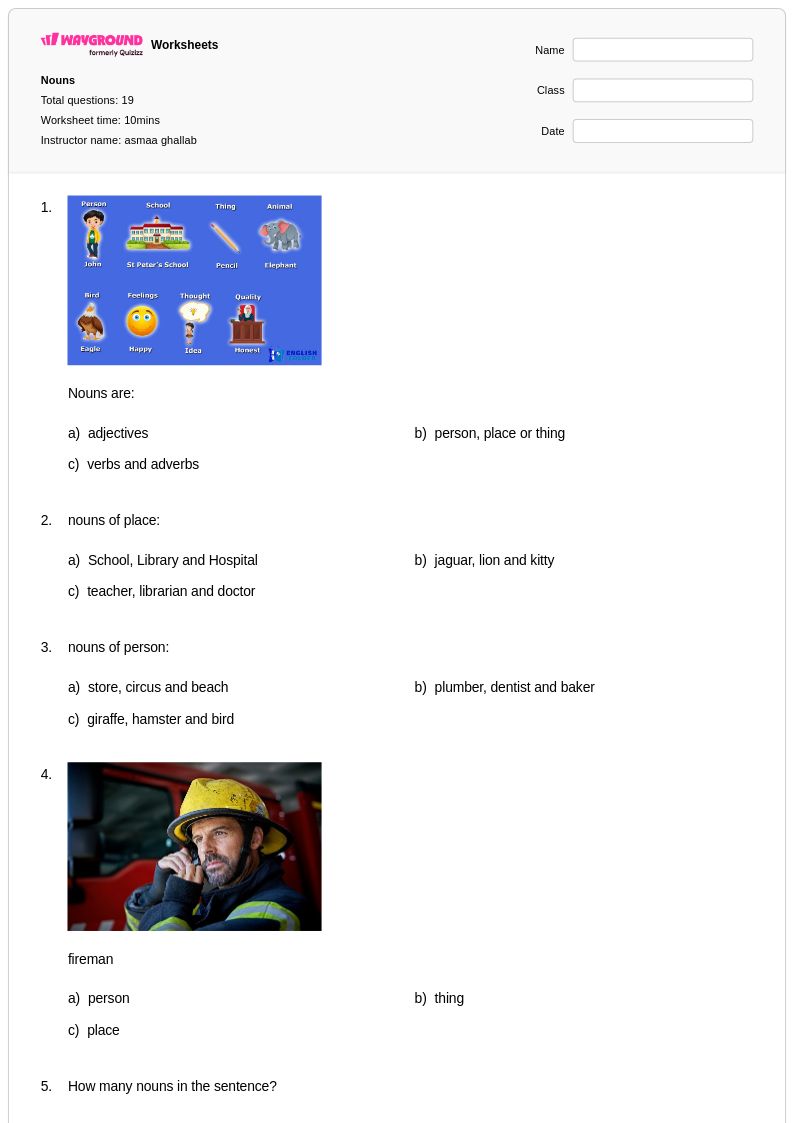
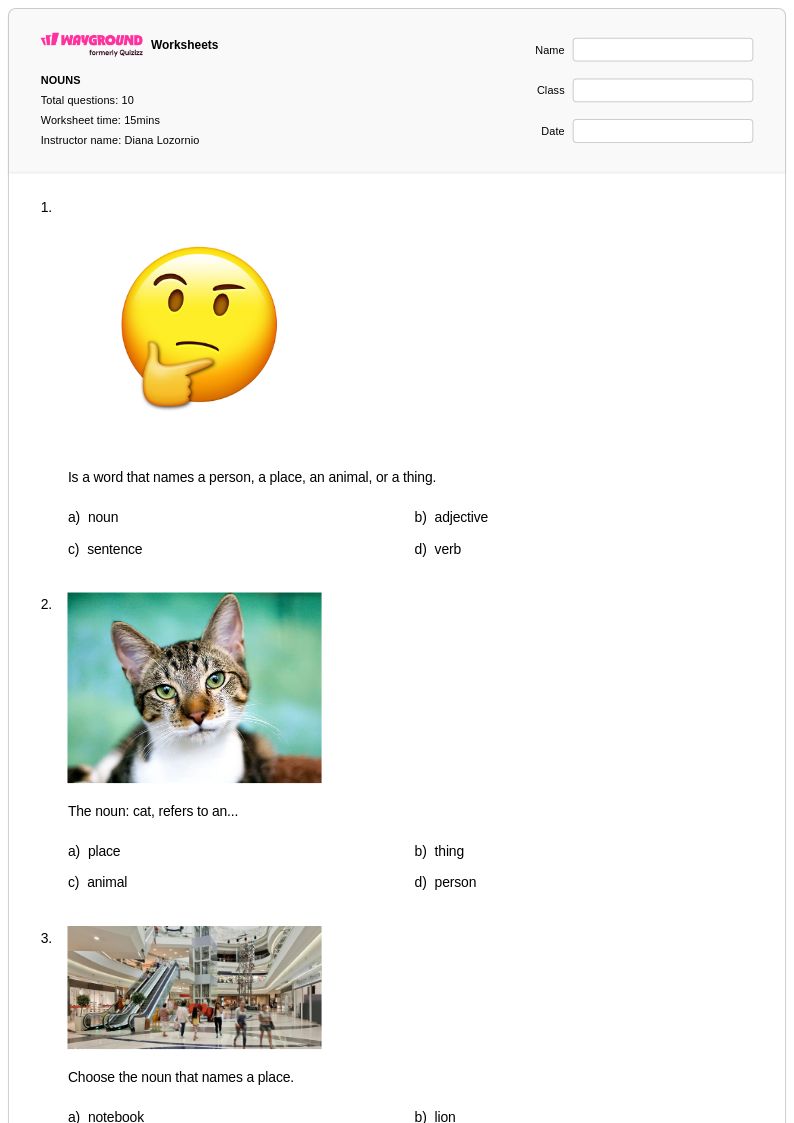
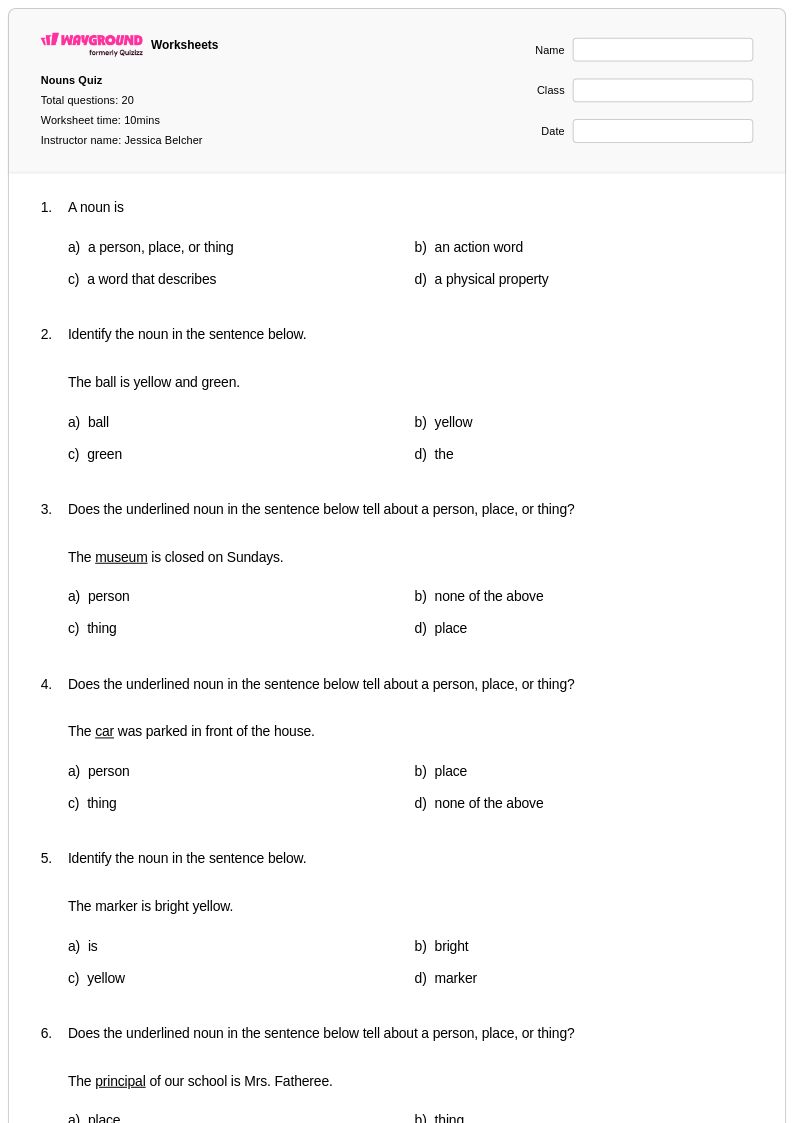
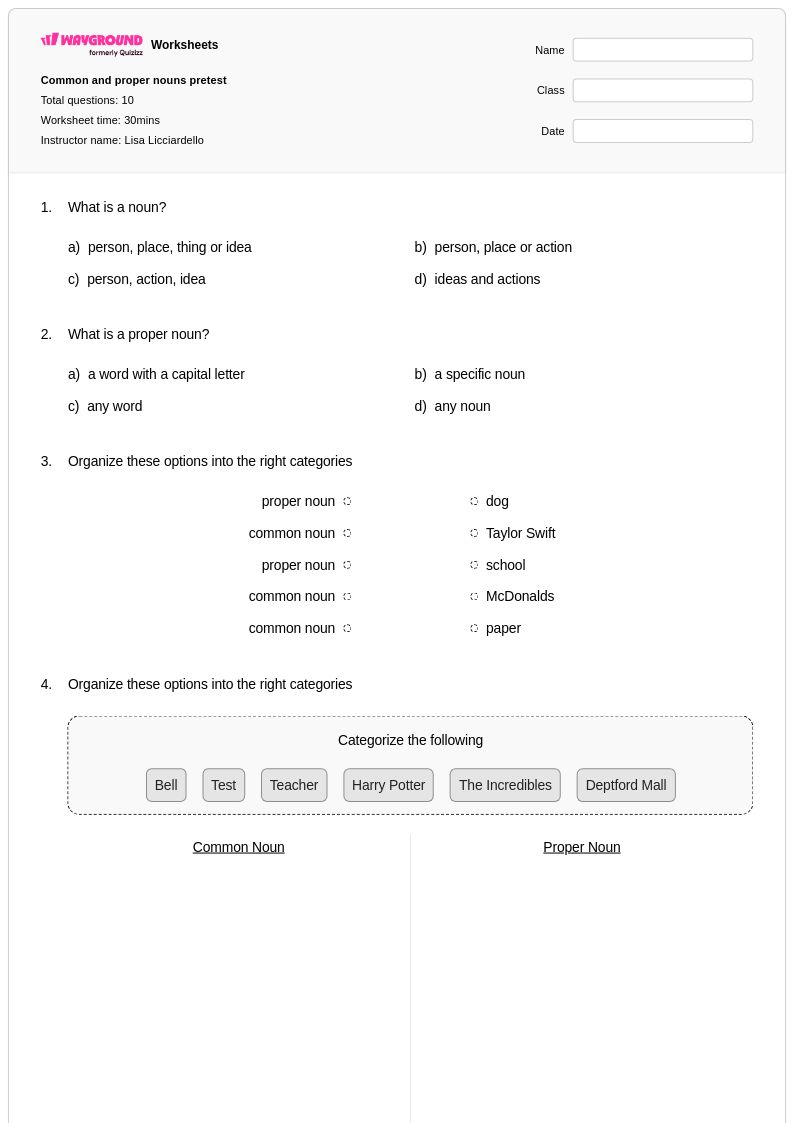
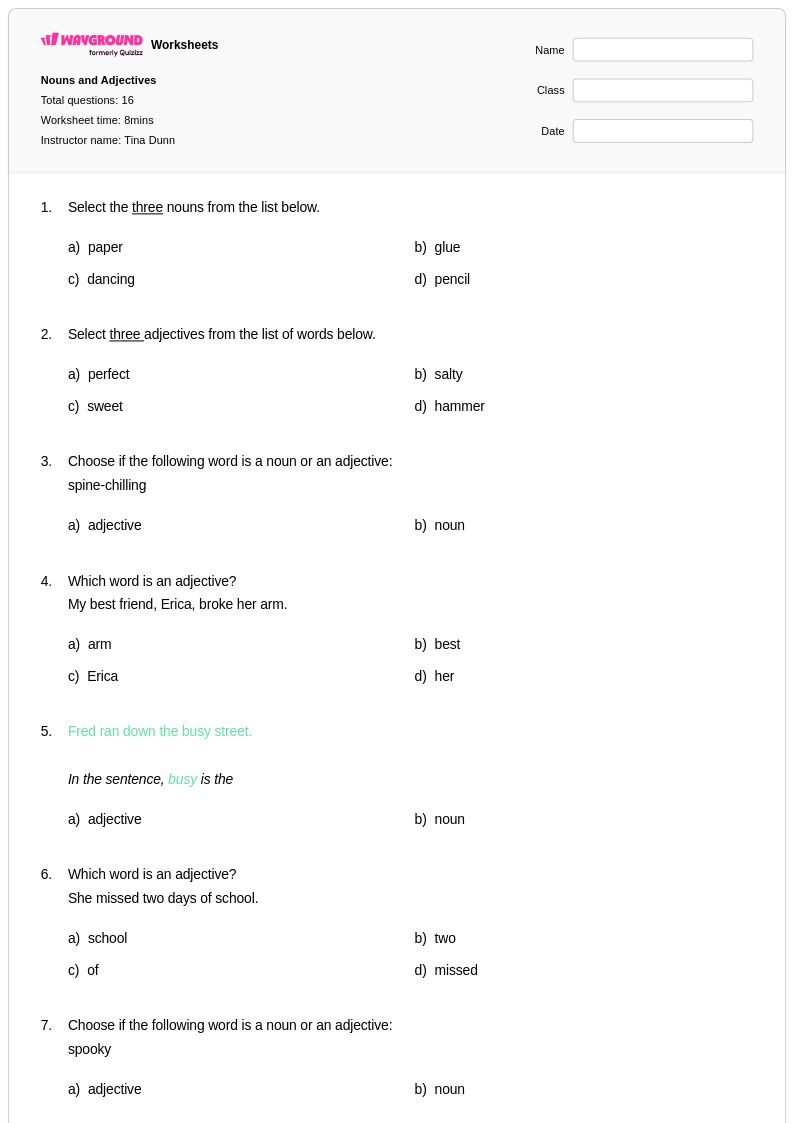
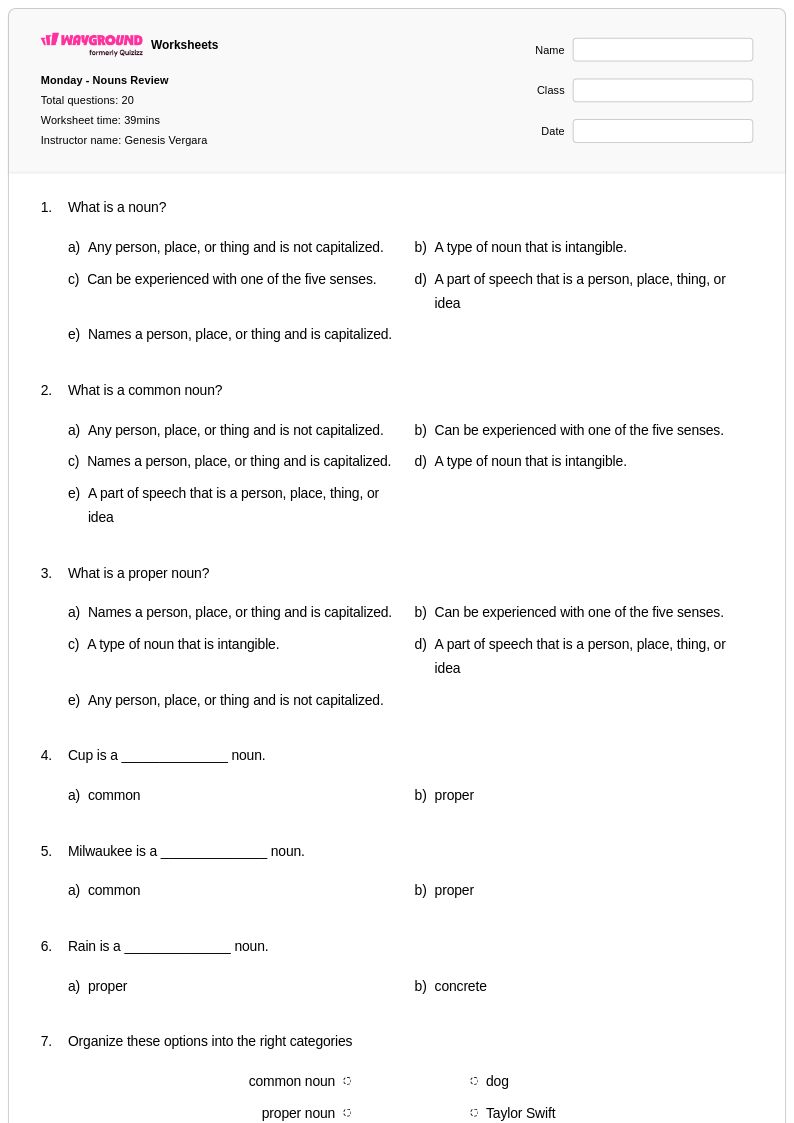
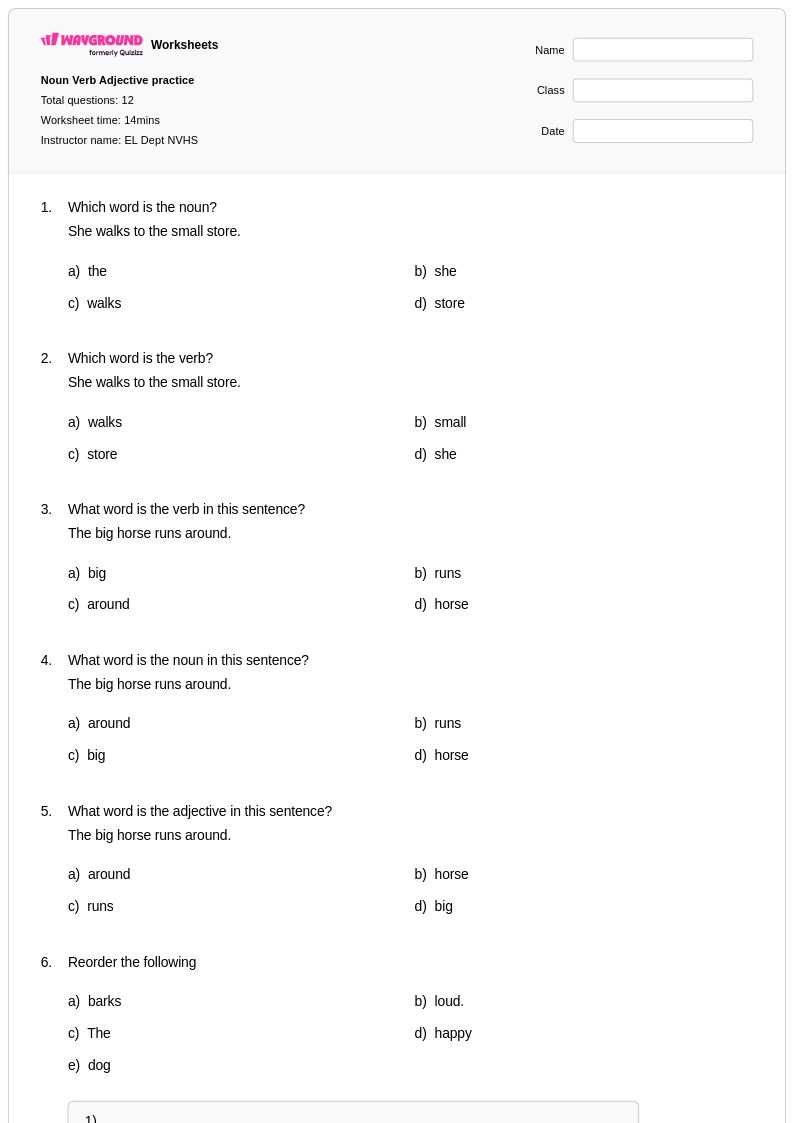
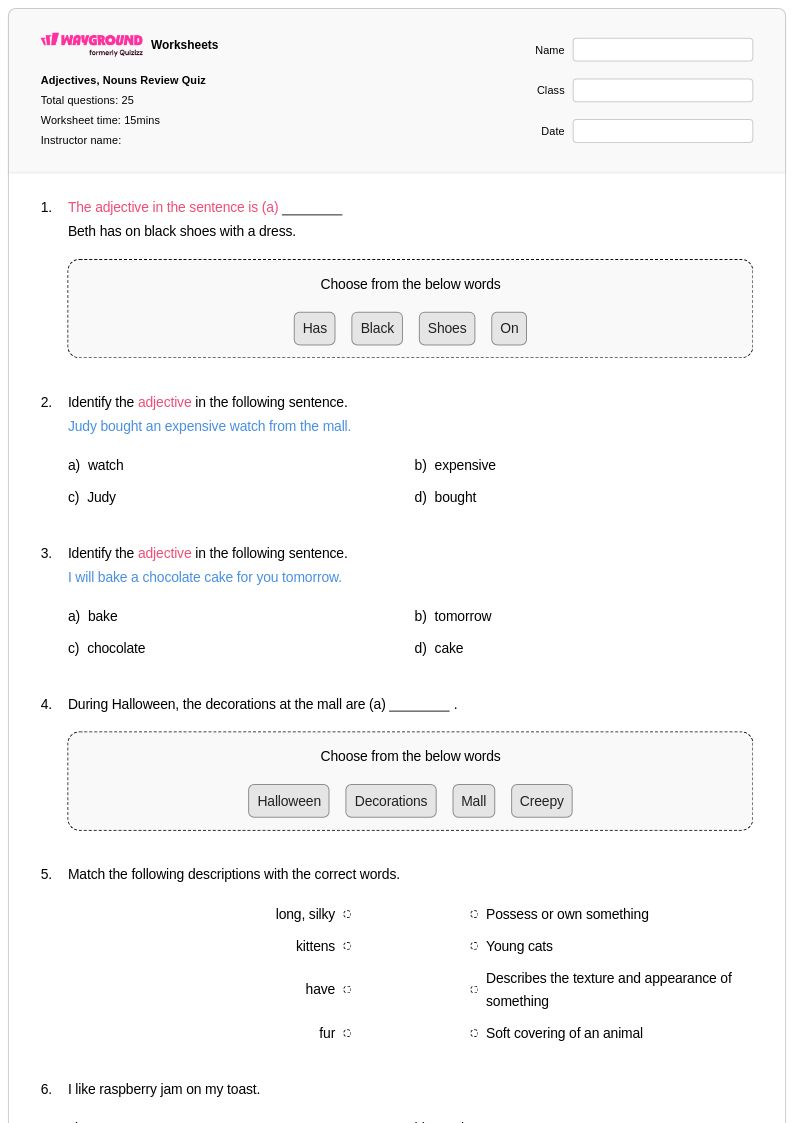
Noun identification worksheets available through Wayground (formerly Quizizz) provide essential foundation-building resources that help students master one of the most fundamental components of English grammar. These comprehensive worksheets focus specifically on developing students' ability to recognize and distinguish nouns from other parts of speech within various contexts, from simple sentences to complex passages. Each worksheet collection includes detailed answer keys and is available as free printable pdf resources, making them accessible for both classroom instruction and independent practice. The practice problems are carefully designed to progress from basic concrete nouns to more challenging abstract concepts, ensuring students build confidence while strengthening their grammatical recognition skills through systematic repetition and application.
Wayground (formerly Quizizz) empowers educators with millions of teacher-created noun identification resources that can be easily searched, filtered, and customized to meet diverse classroom needs. The platform's robust organizational system allows teachers to quickly locate materials aligned with specific standards and differentiate instruction based on individual student requirements. These flexible worksheet collections are available in both printable and digital formats, including downloadable pdf versions, enabling seamless integration into lesson planning, targeted remediation sessions, and enrichment activities. Teachers can modify existing worksheets or combine multiple resources to create comprehensive practice sets, making it simple to provide ongoing skill reinforcement while tracking student progress in noun recognition and grammatical understanding.
FAQs
How do I teach students to identify nouns in a sentence?
Start by establishing a clear, working definition: a noun names a person, place, thing, or idea. Then move students through a concrete-to-abstract progression, beginning with tangible nouns like 'dog' or 'school' before introducing abstract nouns like 'freedom' or 'courage.' Using sentence-level practice where students physically underline or label nouns reinforces the skill through repeated, low-stakes application.
What exercises help students practice identifying nouns?
Effective noun identification practice includes underlining nouns in sentences, sorting words into noun and non-noun categories, and filling in blanks with appropriate nouns. Progressing from simple sentences to more complex passages challenges students at multiple skill levels and prevents over-reliance on memorized word lists. Regular, varied repetition across different contexts is what builds reliable recognition.
What mistakes do students commonly make when identifying nouns?
Students frequently misidentify adjectives and verbs as nouns, especially when words can function as multiple parts of speech (e.g., 'run' or 'light'). Abstract nouns are another common stumbling block because they don't refer to physical objects, making them harder to recognize intuitively. Targeted practice with sentences that include these tricky cases helps students develop more precise grammatical judgment.
How can I differentiate noun identification instruction for struggling learners?
For struggling learners, reduce cognitive load by focusing exclusively on concrete nouns before introducing proper nouns, collective nouns, or abstract nouns. Sentence frames with fewer answer choices, visual noun anchors, and read-aloud support all reduce barriers to access. On Wayground, teachers can apply accommodations like reduced answer choices and Read Aloud to individual students, allowing differentiated support without disrupting the rest of the class.
How do I use Wayground's noun identification worksheets in my classroom?
Wayground's noun identification worksheets are available as printable PDFs for traditional classroom use and in digital formats for technology-integrated environments, giving teachers flexibility regardless of their setup. Teachers can also host worksheets as a quiz directly on Wayground, making it easy to assign practice, collect responses, and review results in one place. All worksheets include answer keys, so they work equally well for whole-class instruction, small group remediation, or independent practice.
How do I help students distinguish between abstract and concrete nouns?
Teach students to ask two questions: 'Can I touch it?' and 'Can I see it?' Concrete nouns answer yes to both; abstract nouns answer no to both. Sorting activities where students physically categorize words like 'happiness,' 'chair,' 'justice,' and 'river' make the distinction tangible. Revisiting abstract nouns in context, within actual sentences rather than word lists, accelerates retention.