Free Printable Parts of a Tree Worksheets for Kindergarten
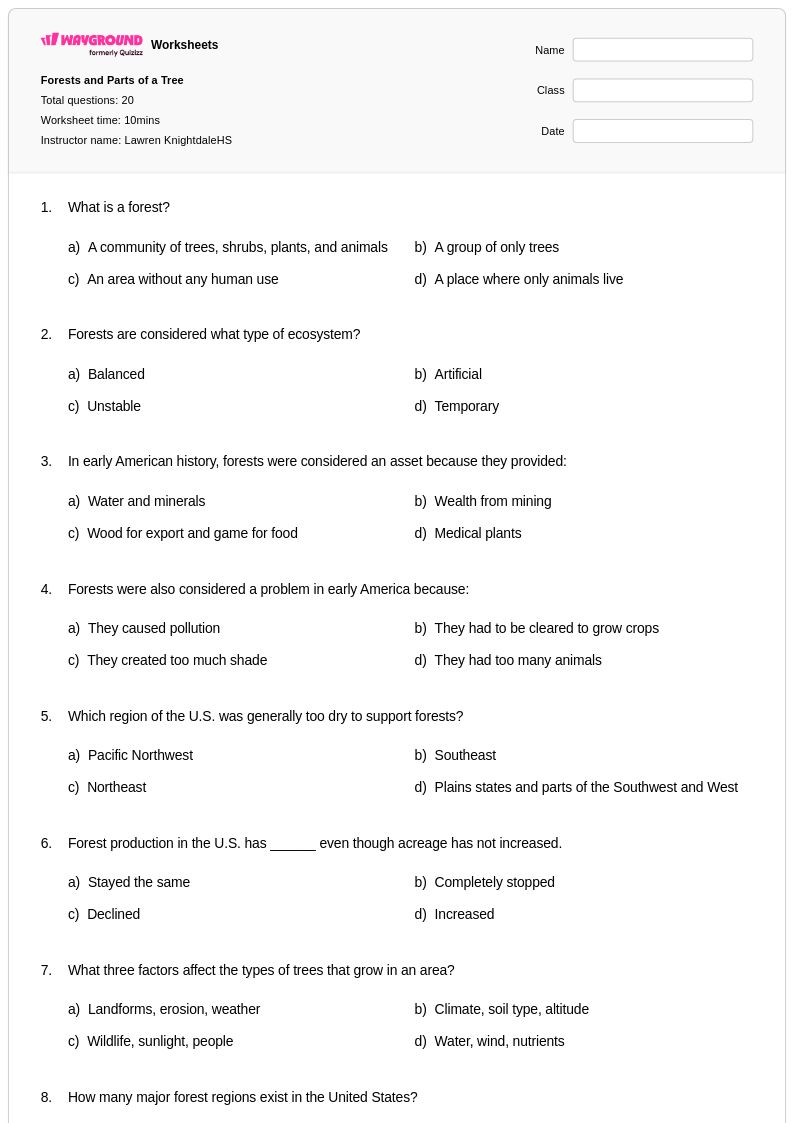
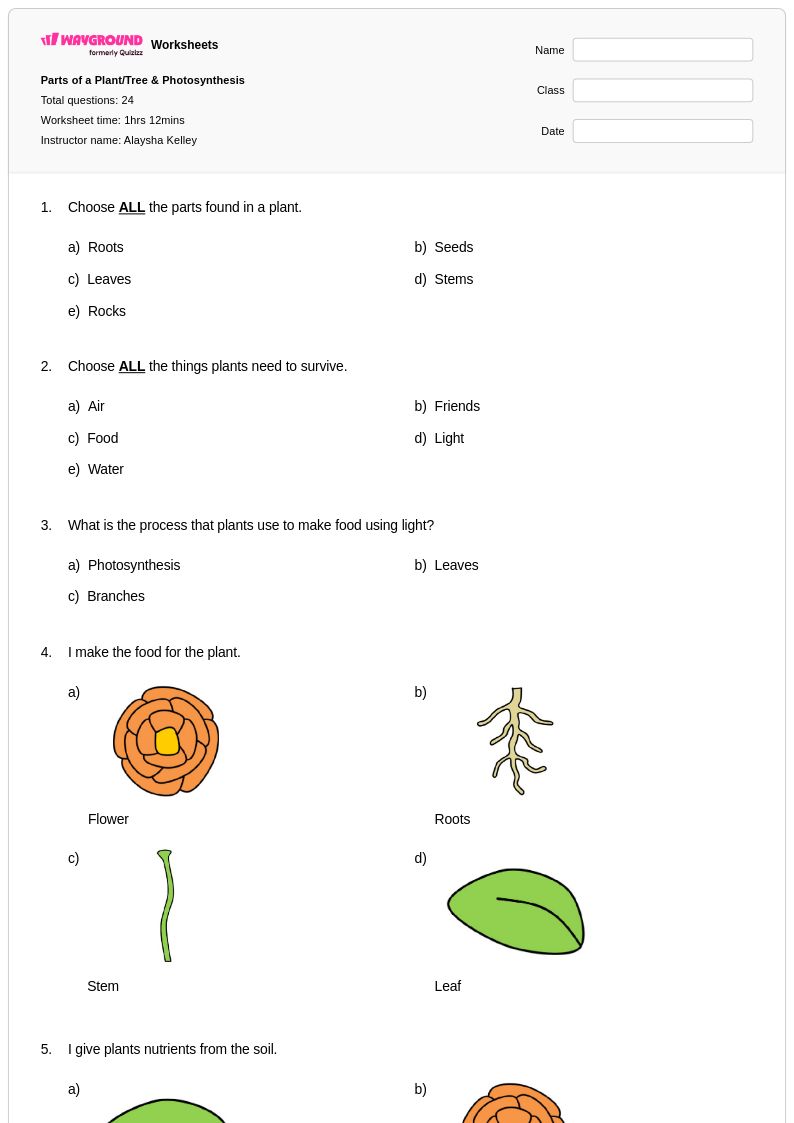
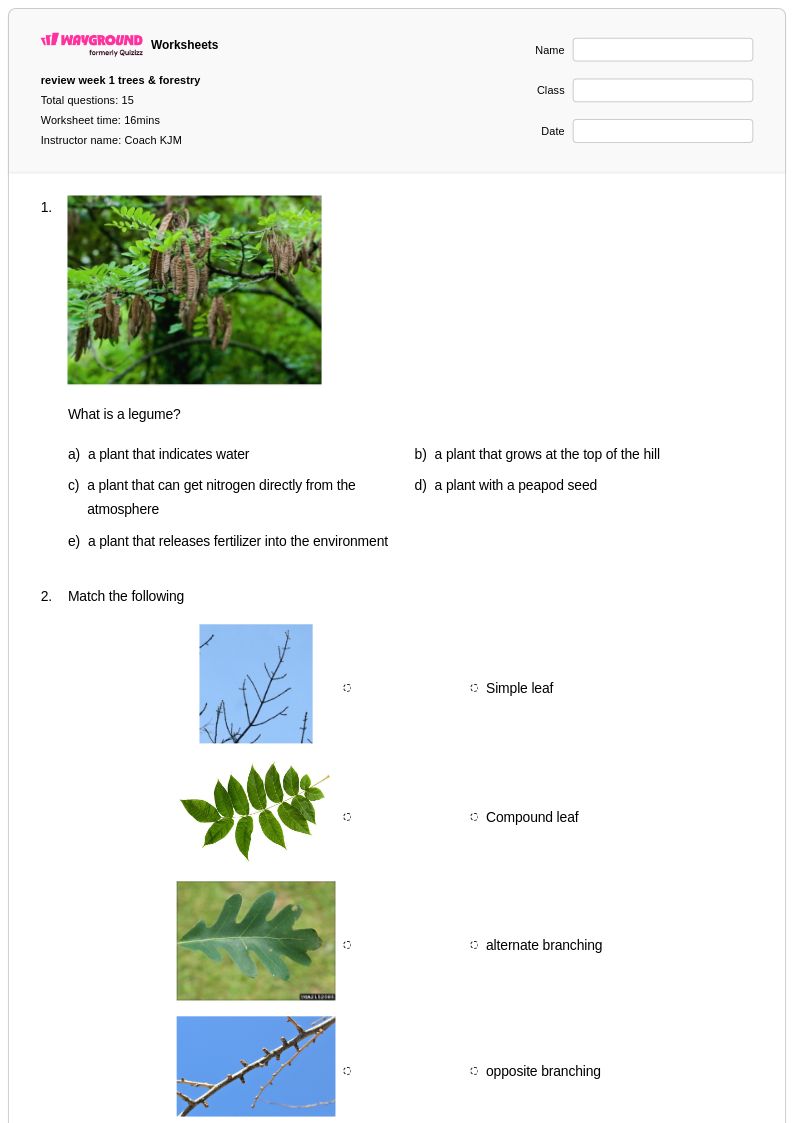
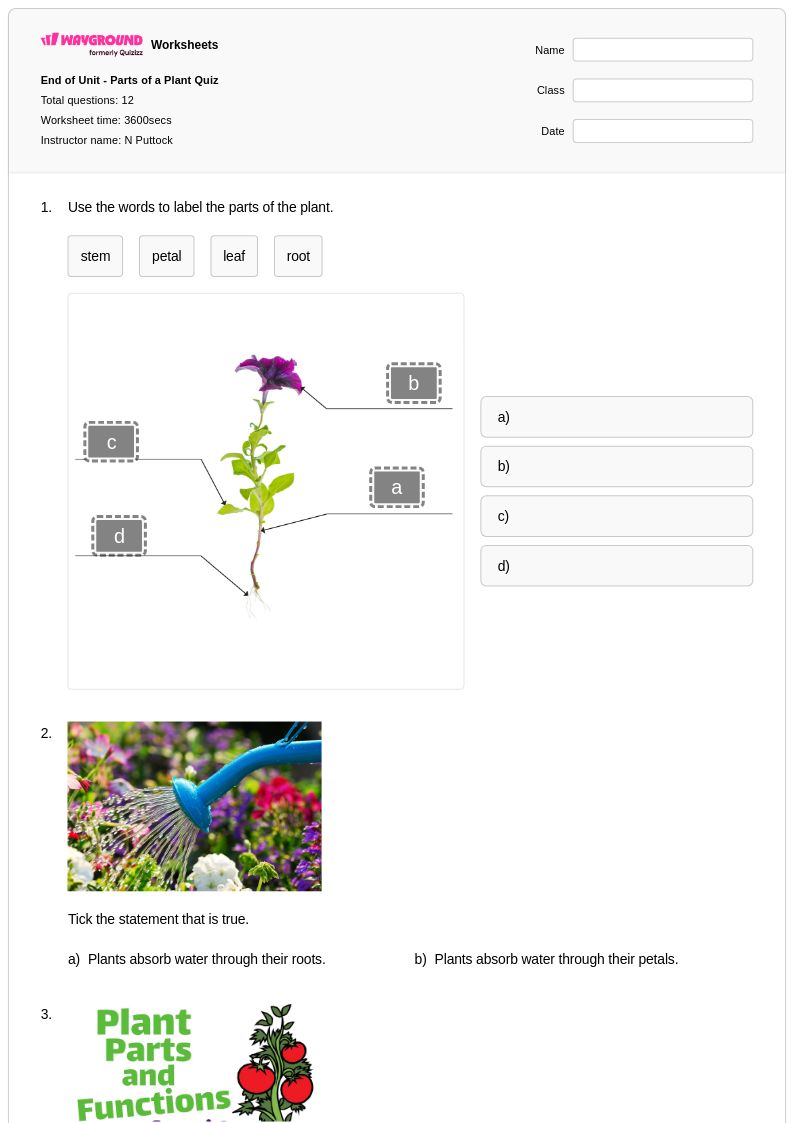
Explore Wayground's free kindergarten parts of a tree worksheets and printables that help young students identify tree components like roots, trunk, branches, and leaves through engaging practice problems with answer keys.
Explore printable Parts of a Tree worksheets for Kindergarten
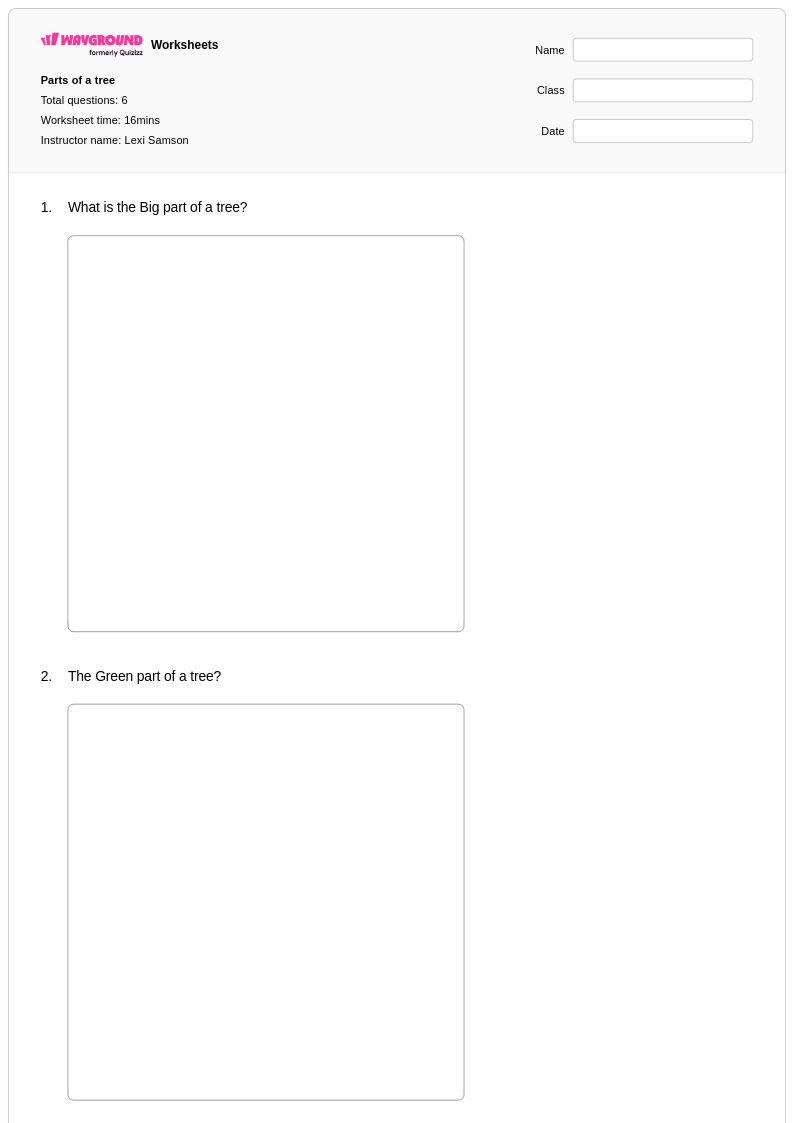
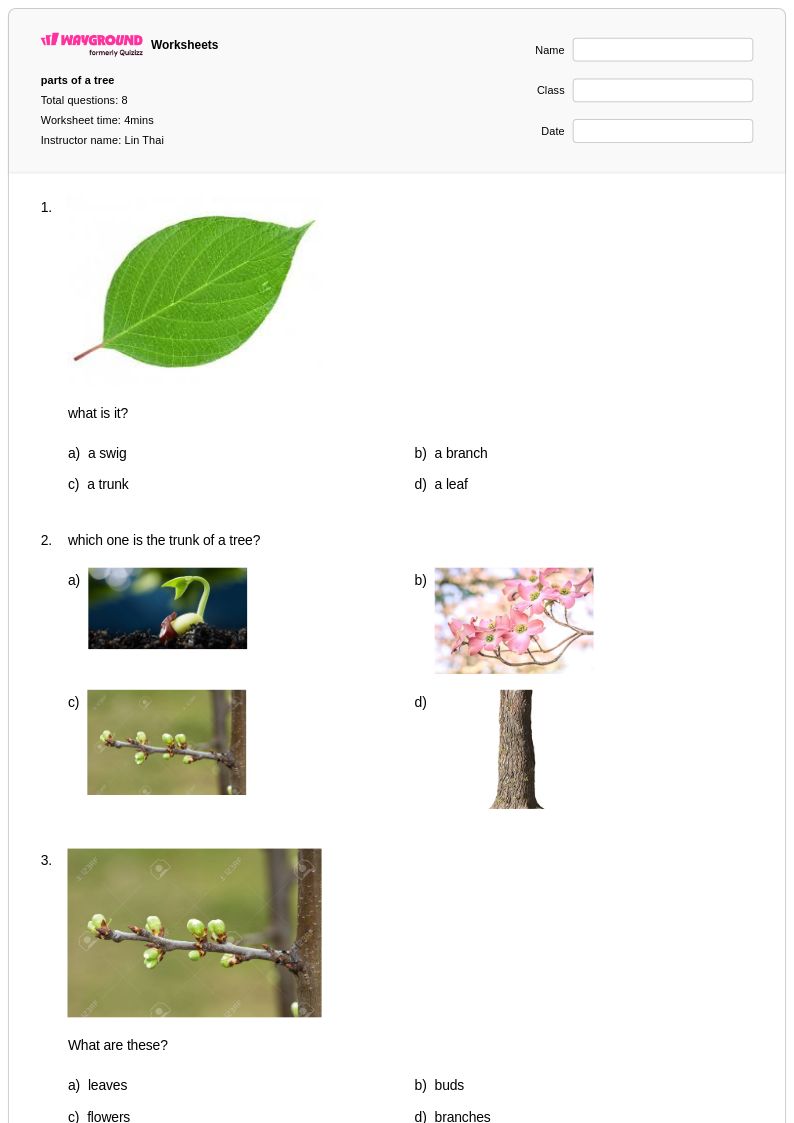
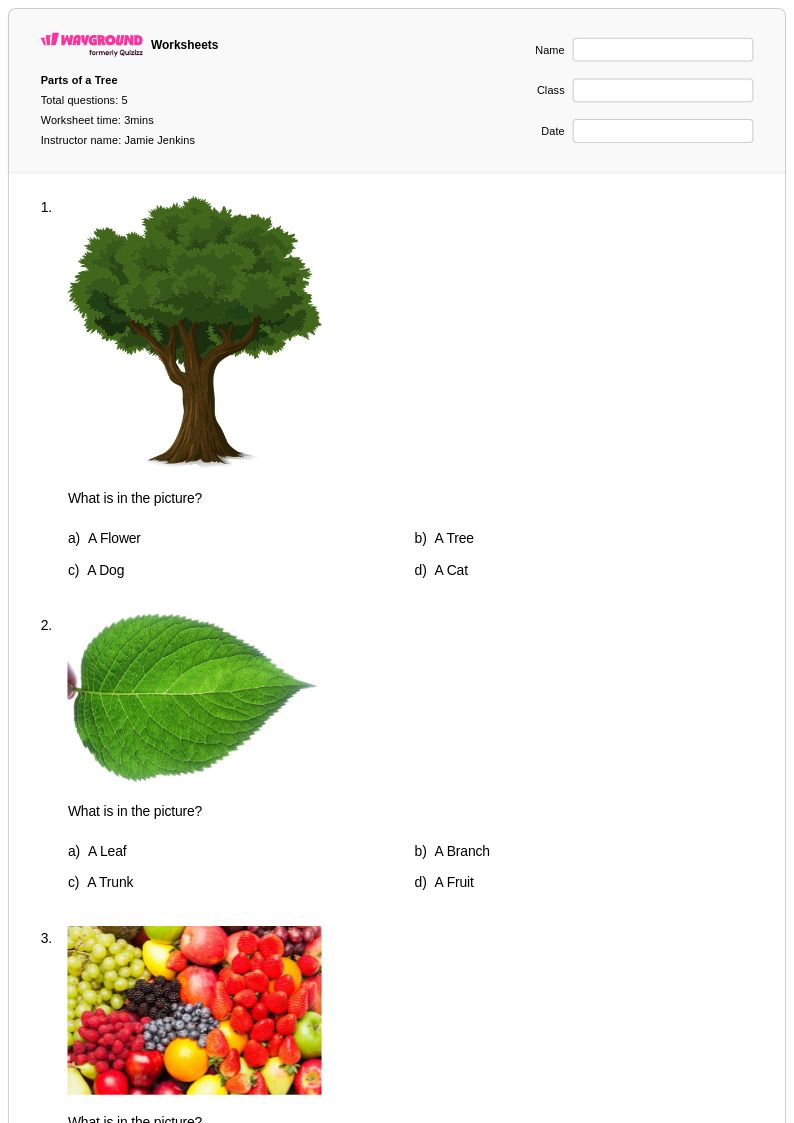
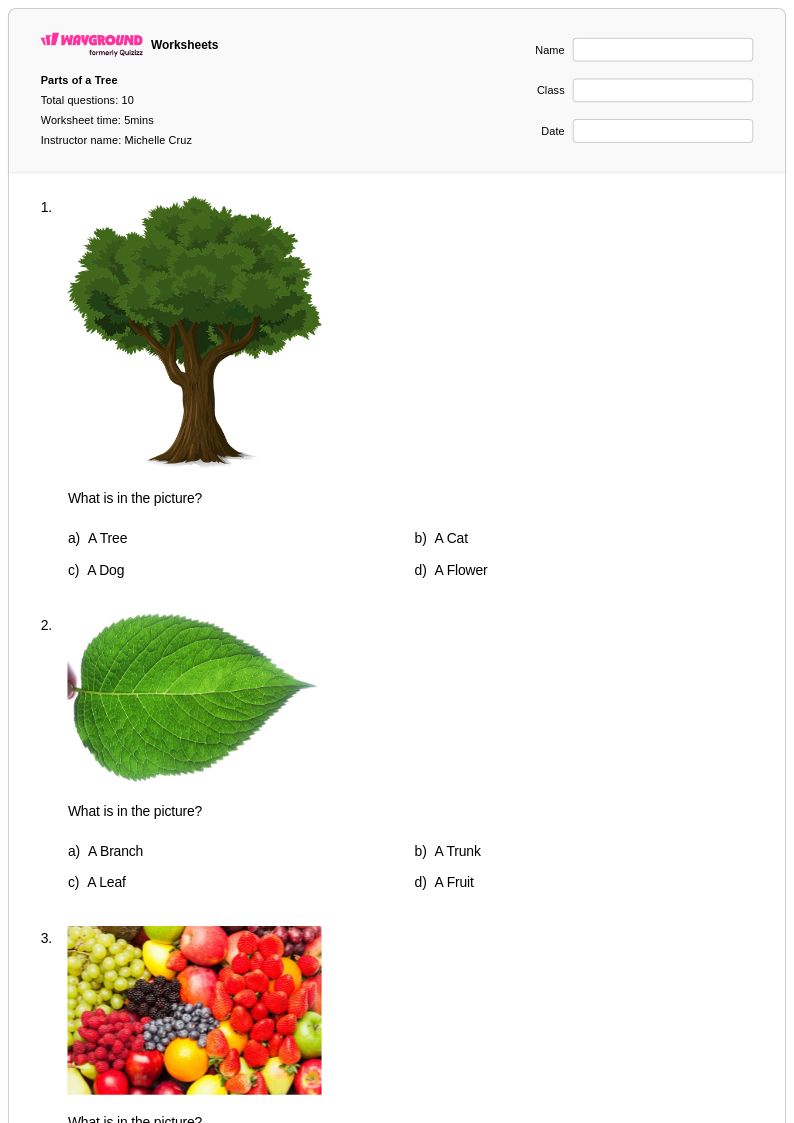
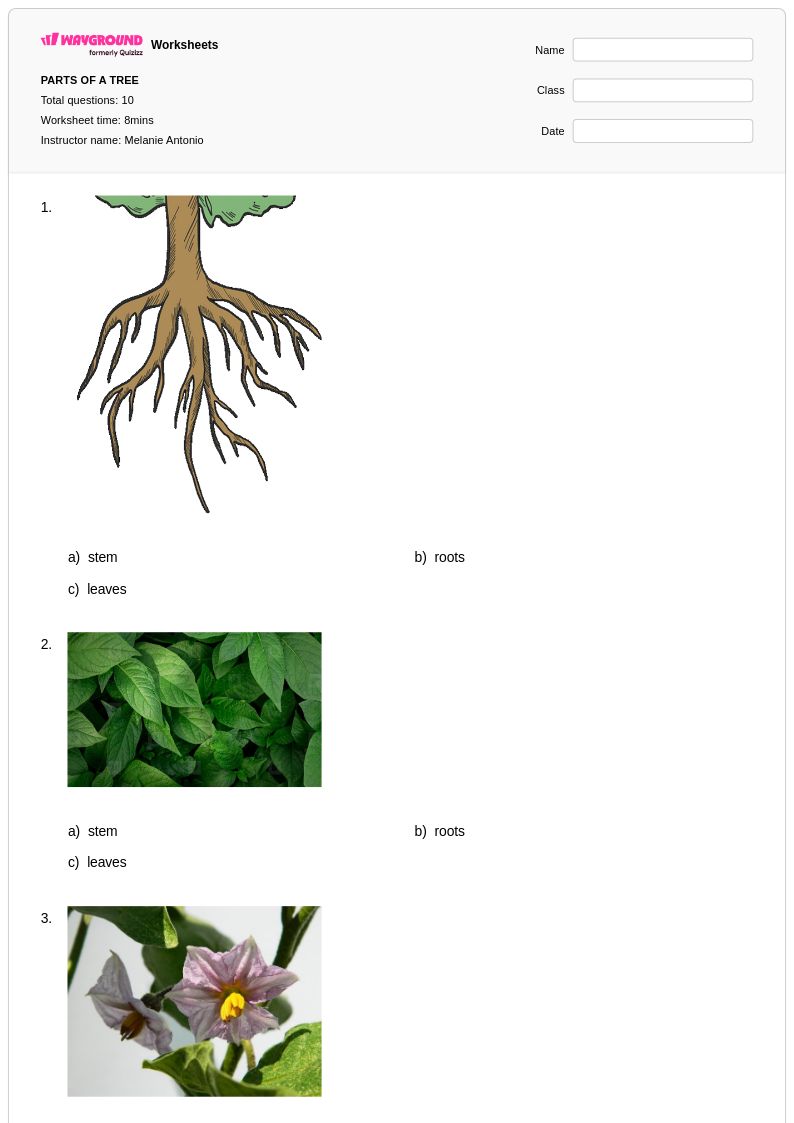
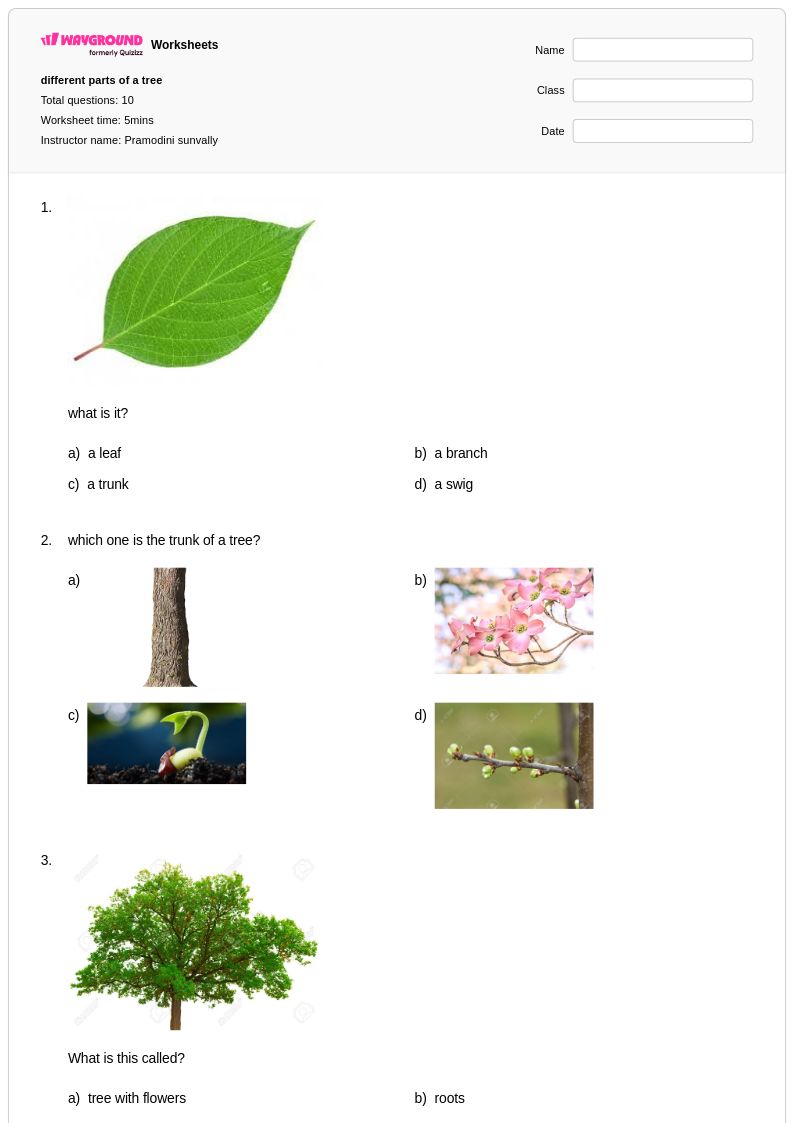
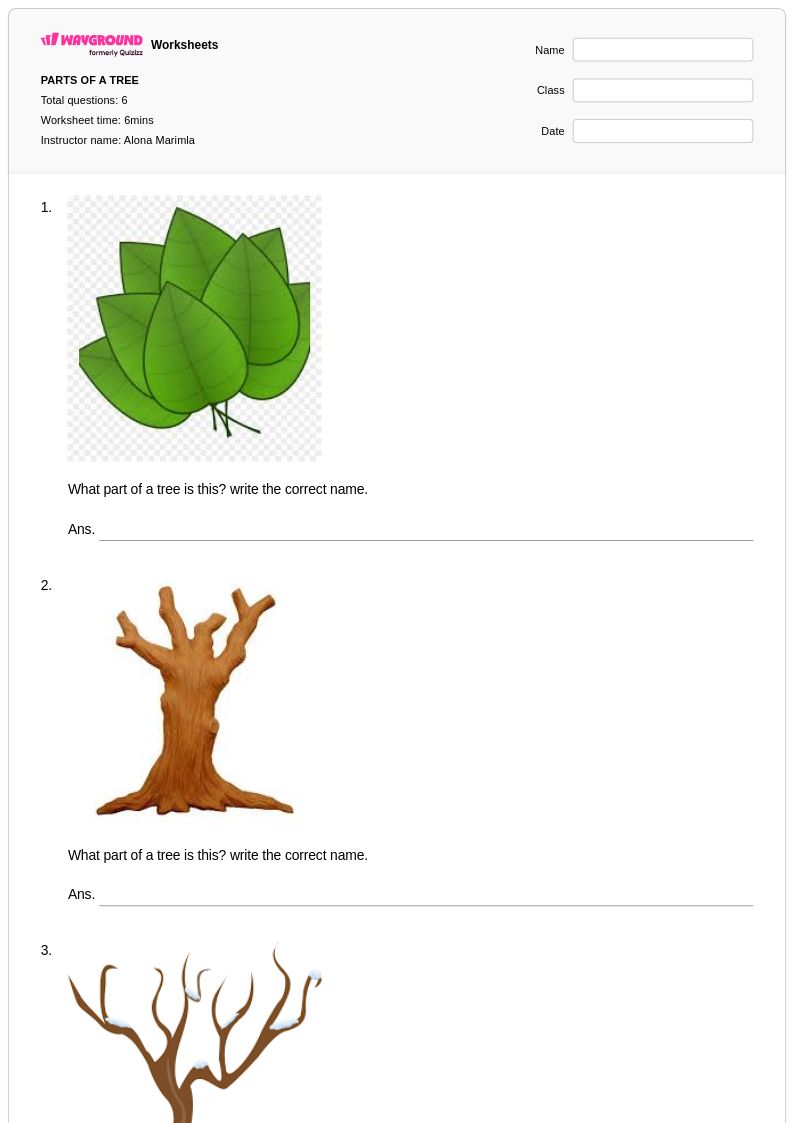
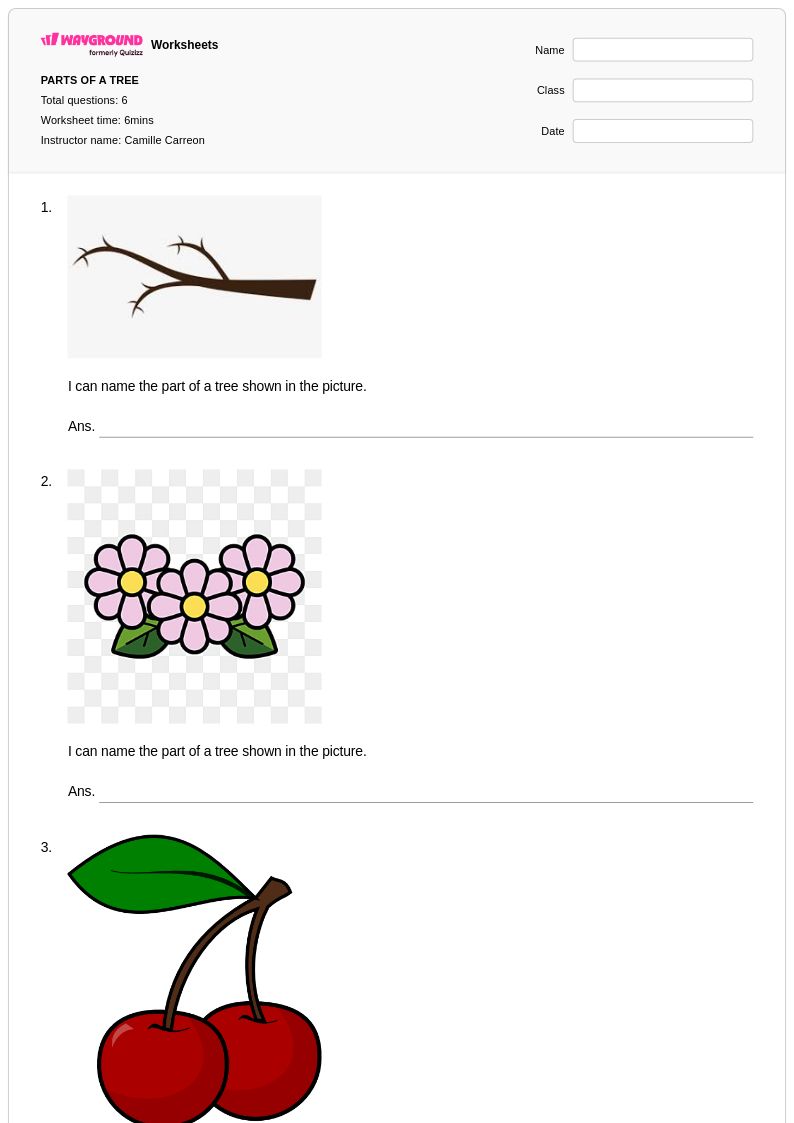
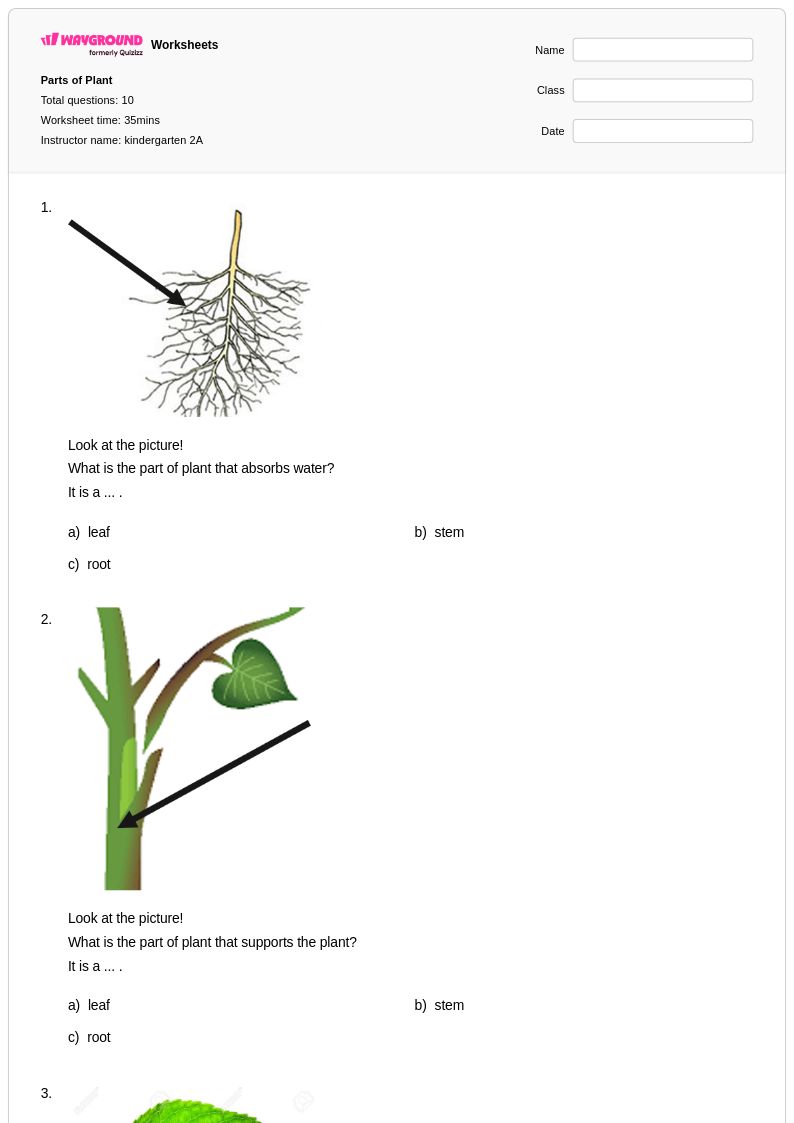
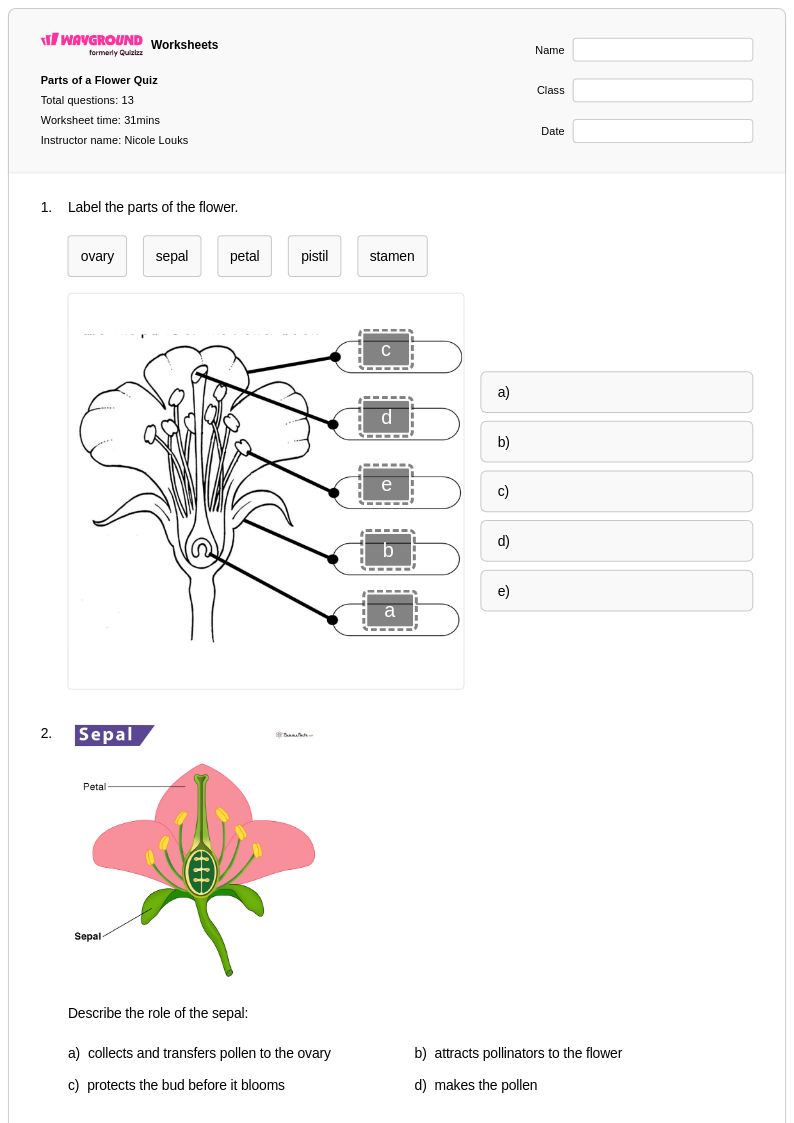
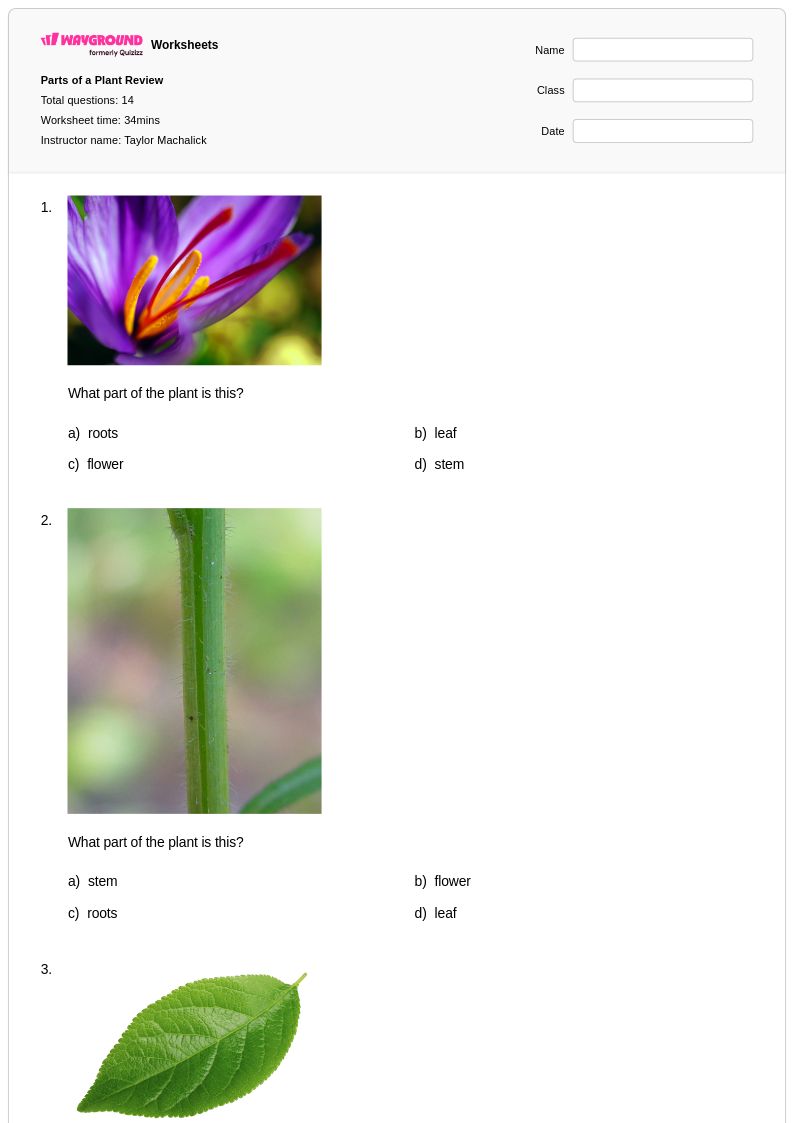
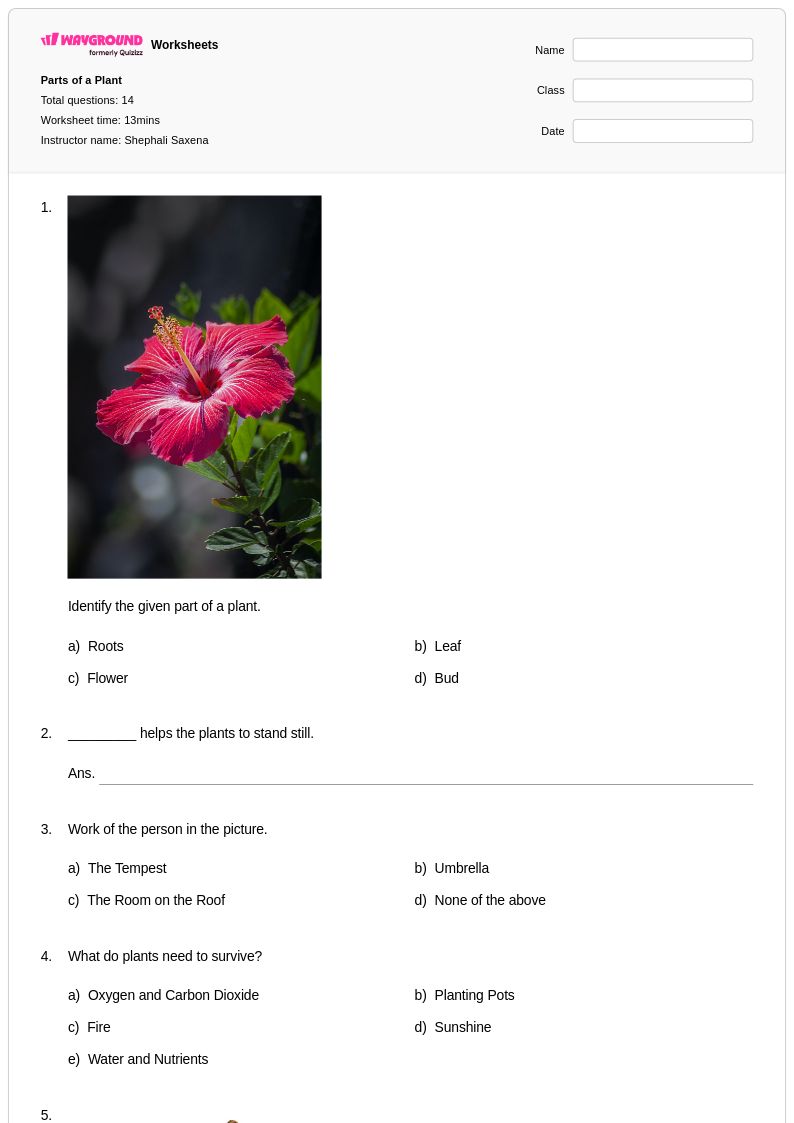
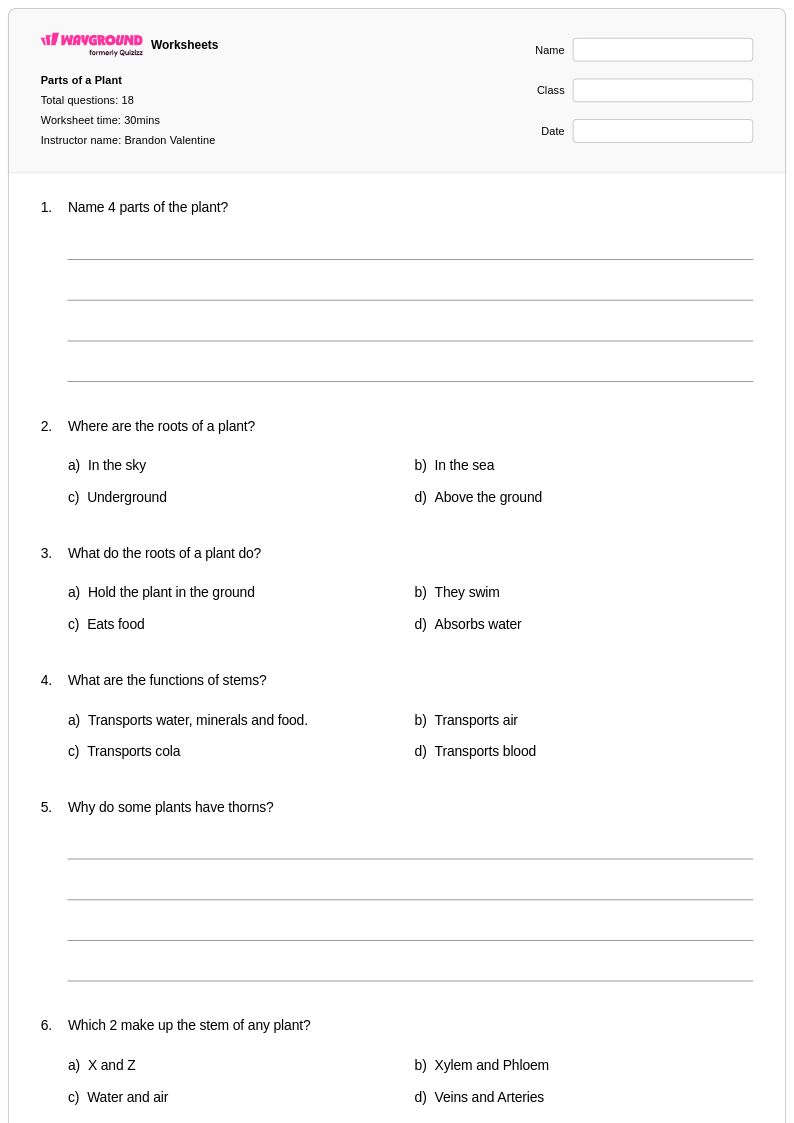
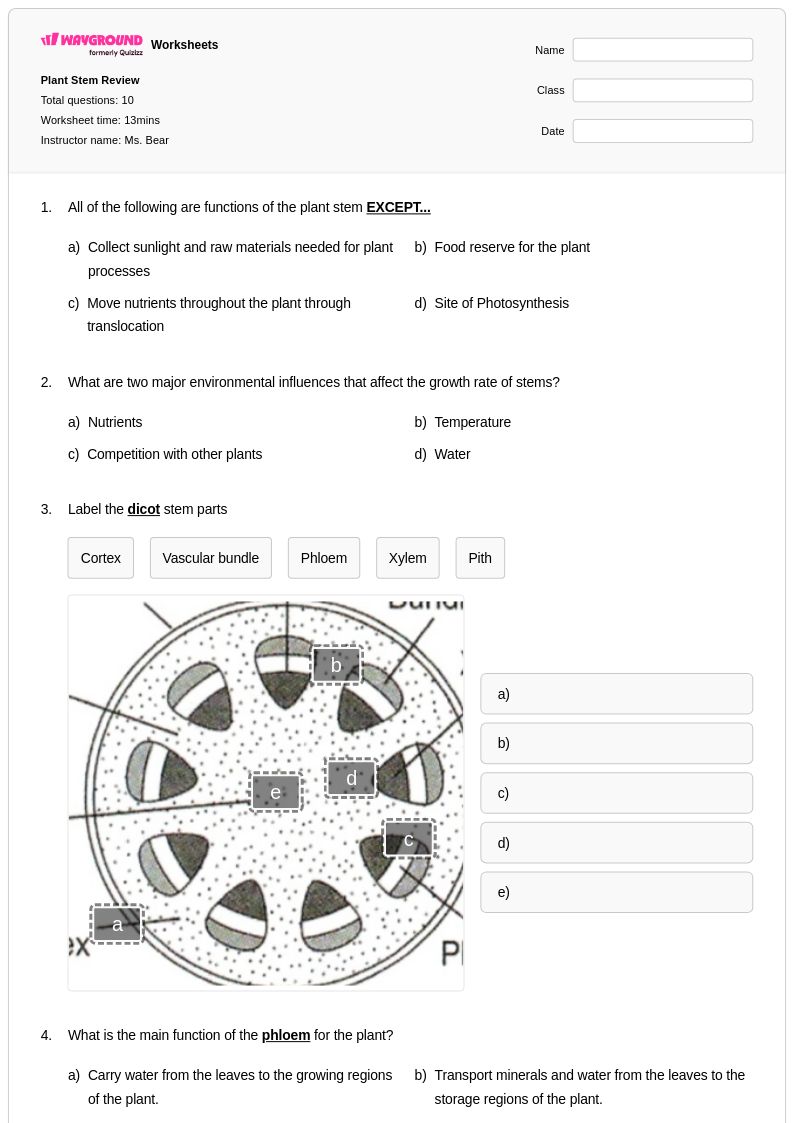
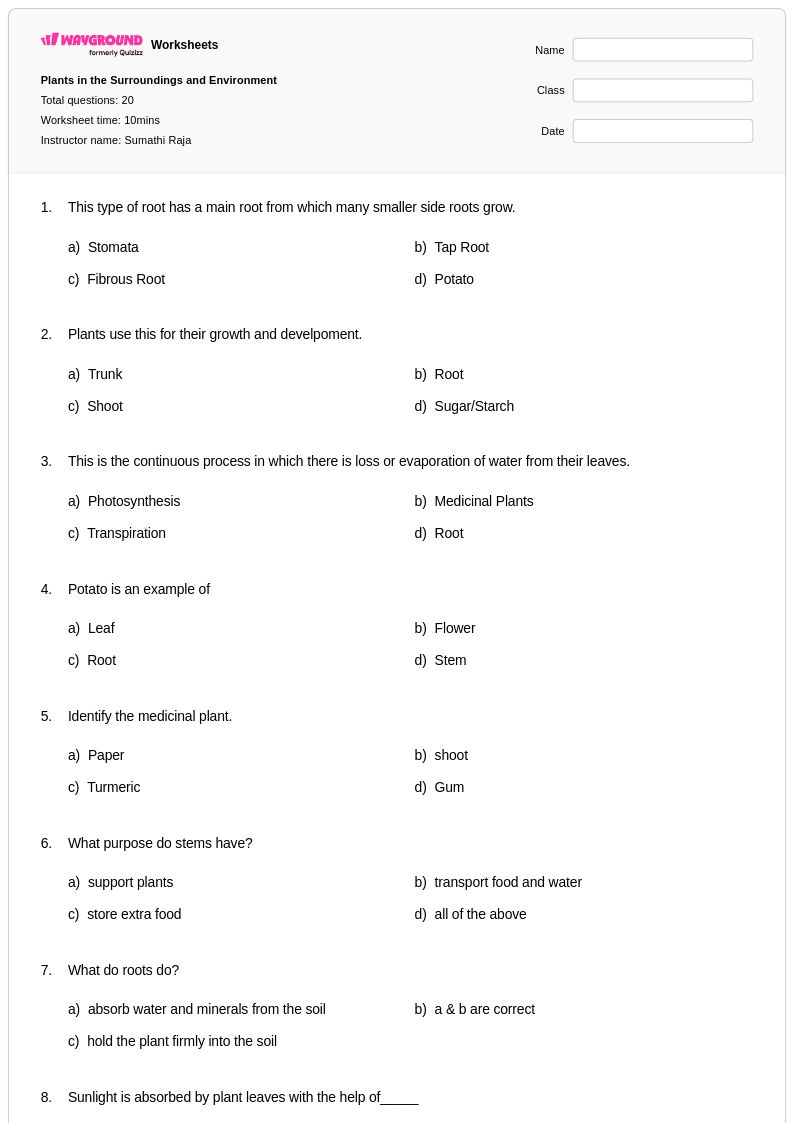
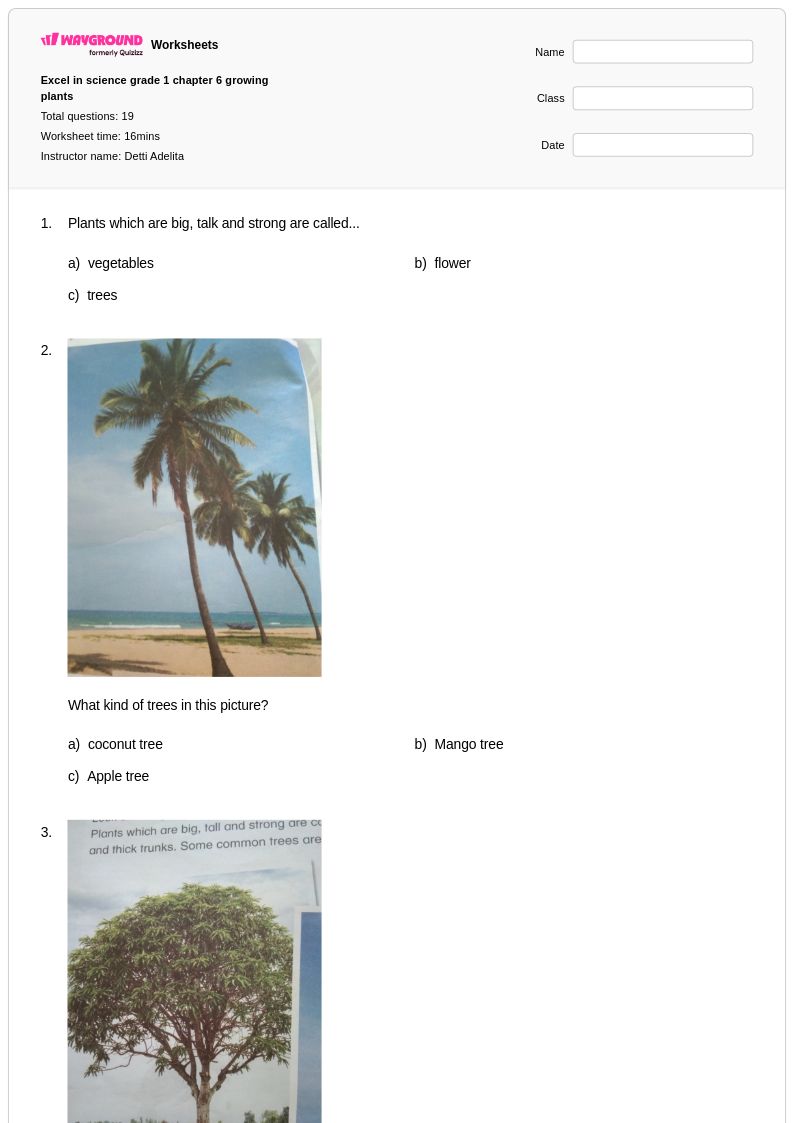
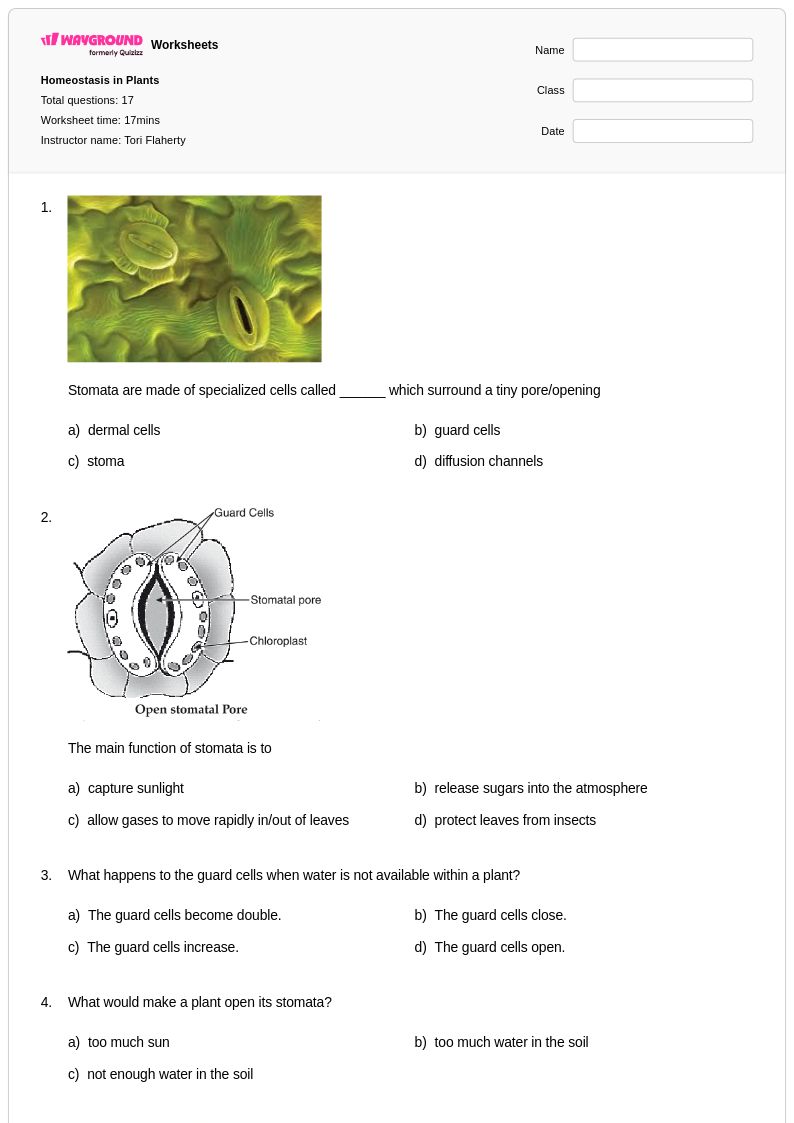
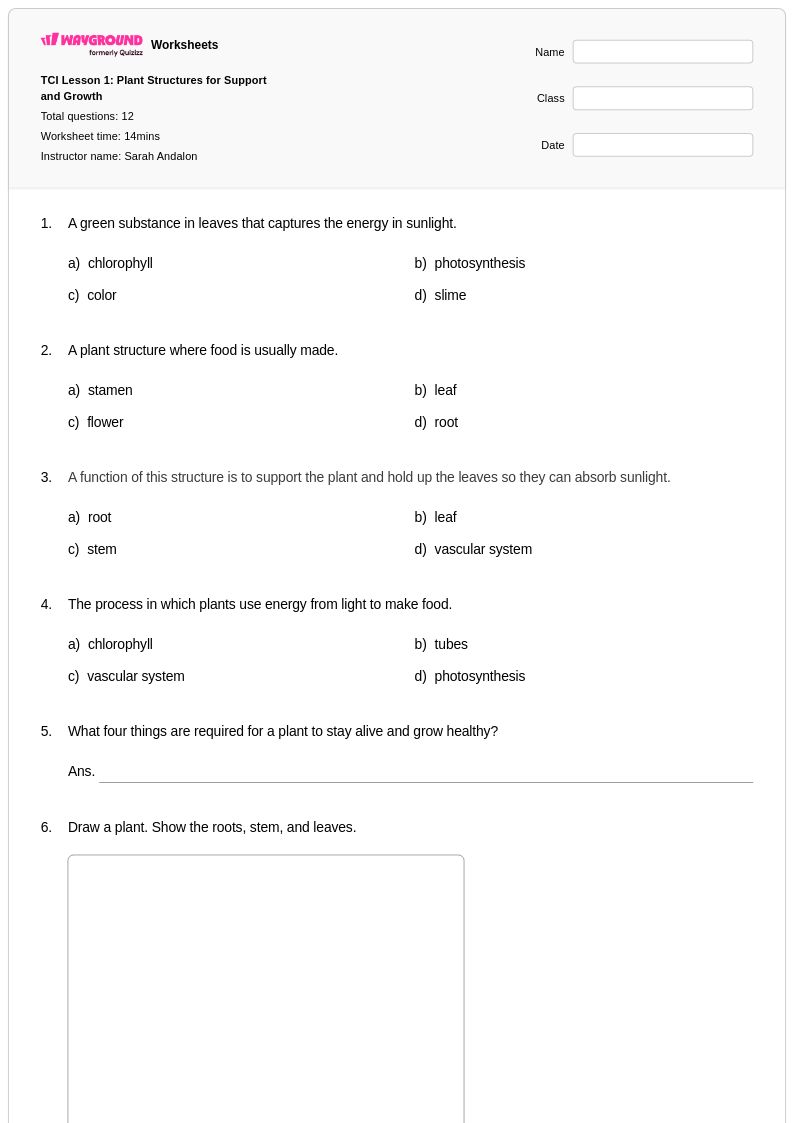
Parts of a tree worksheets for kindergarten students through Wayground (formerly Quizizz) introduce young learners to fundamental botanical concepts through age-appropriate activities that build scientific observation and vocabulary skills. These engaging printables help kindergarteners identify and label essential tree components including roots, trunk, branches, leaves, and bark while developing early science literacy and critical thinking abilities. The worksheets feature colorful illustrations, simple labeling exercises, and hands-on activities that make learning about tree anatomy accessible and enjoyable for emerging readers. Each free resource includes comprehensive practice problems designed to reinforce understanding, and teachers can access answer keys to support accurate assessment and provide immediate feedback during instruction.
Wayground (formerly Quizizz) empowers educators with an extensive collection of teacher-created resources specifically designed for kindergarten science instruction, featuring millions of worksheets that can be easily searched and filtered by grade level, topic, and learning objective. The platform's robust differentiation tools allow teachers to customize materials for diverse learning needs, while standards alignment ensures that parts of a tree activities support curriculum requirements and developmental benchmarks. These versatile resources are available in both printable pdf format for traditional classroom use and digital formats for interactive learning experiences, enabling flexible lesson planning that accommodates various teaching styles and student preferences. Teachers can efficiently utilize these materials for initial instruction, targeted remediation, enrichment activities, and ongoing skill practice, streamlining their preparation time while delivering high-quality science education that builds foundational knowledge about plant structures and biological systems.
FAQs
How do I teach parts of a tree to elementary students?
Start by grounding students in observation — have them examine a real tree or a large photograph before introducing vocabulary. Teach the major structures in functional pairs: roots anchor the tree and absorb water, the trunk supports and transports nutrients, branches extend the tree's reach for sunlight, and leaves carry out photosynthesis. Labeling diagrams after a brief direct instruction segment helps students connect vocabulary to visual structure, which is more effective than definition memorization alone.
What exercises help students practice identifying parts of a tree?
Labeling diagrams is the most effective practice format for tree anatomy because it requires students to recall and place each term, not just recognize it. Cross-sectional illustrations that show internal structures like heartwood, sapwood, and cambium layer add depth for students ready to move beyond surface-level identification. Mixing diagram labeling with short function-matching activities reinforces both the name and purpose of each tree part in the same session.
What mistakes do students commonly make when learning parts of a tree?
The most common error is confusing the function of roots with that of leaves — students often assume leaves absorb water rather than produce food through photosynthesis. Students also frequently treat bark as decorative rather than functional, missing that it protects the tree's vascular tissue. Another recurring misconception is thinking that branches are the topmost part of the tree, when the crown refers to the full upper canopy including branches and leaves together.
How can I use parts of a tree worksheets to support different learning levels?
For younger or struggling learners, use simple two-part diagrams with a word bank so students focus on matching rather than recall. For more advanced students, remove the word bank and add a column asking students to describe the function of each labeled part. On Wayground, teachers can apply accommodations such as read aloud for students who need audio support, reduced answer choices to lower cognitive load, and extended time settings — all configurable per student without disrupting the rest of the class.
How do I use Wayground's parts of a tree worksheets in my classroom?
Wayground's parts of a tree worksheets are available as printable PDFs for traditional classroom use and in digital formats for technology-integrated learning environments, including the option to host them as a quiz directly on Wayground. Teachers can filter by format or structure to find labeling exercises, cross-sectional diagrams, or function-focused practice problems. Each worksheet includes an answer key, making them practical for independent practice, homework, or station rotations without additional teacher preparation.
At what age or grade level should students learn the parts of a tree?
Parts of a tree is typically introduced in early elementary grades, often between kindergarten and second grade, as part of foundational life science and plant biology units. At this stage, instruction focuses on the four visible structures: roots, trunk, branches, and leaves. Internal structures like bark layers, cambium, and sapwood are more appropriate for upper elementary students who are ready to connect anatomy to biological function within an ecosystem.