Free Printable Patterns in the Sky Worksheets for Year 4
Year 4 printable worksheets and practice problems help students explore patterns in the sky through engaging Earth and Space Science activities, complete with free PDF resources and answer keys from Wayground.
Explore printable Patterns in the Sky worksheets for Year 4
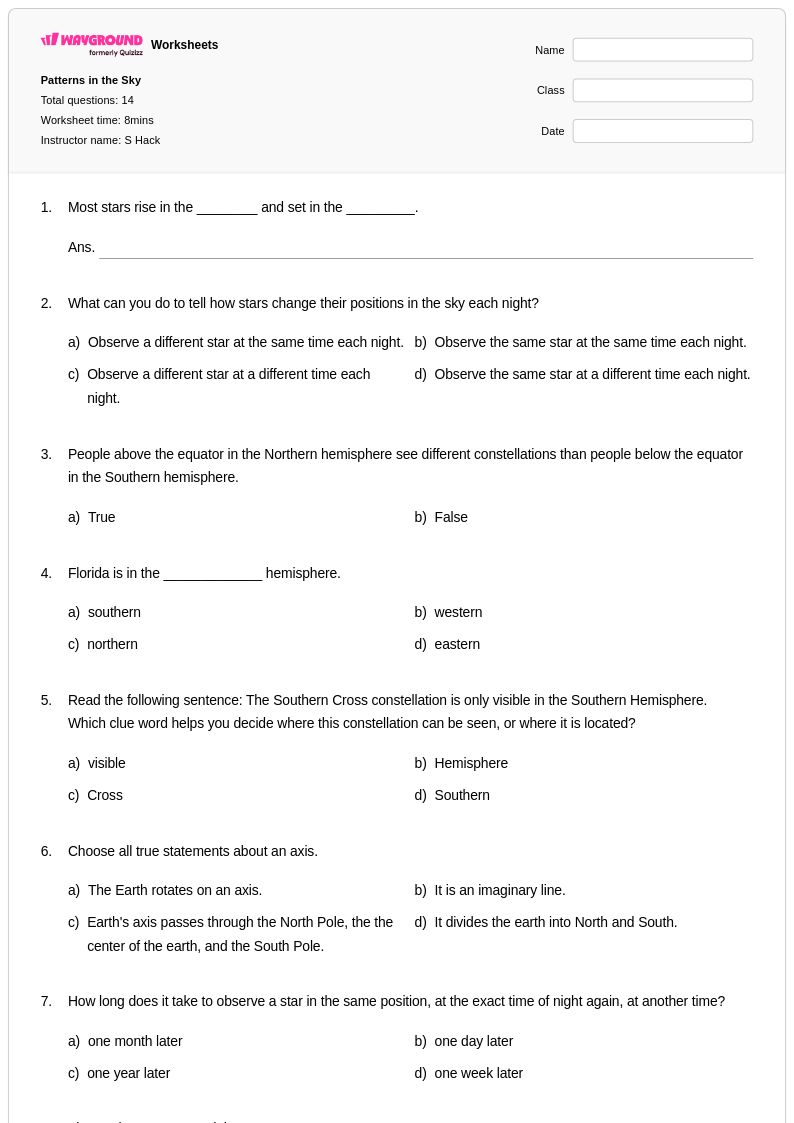
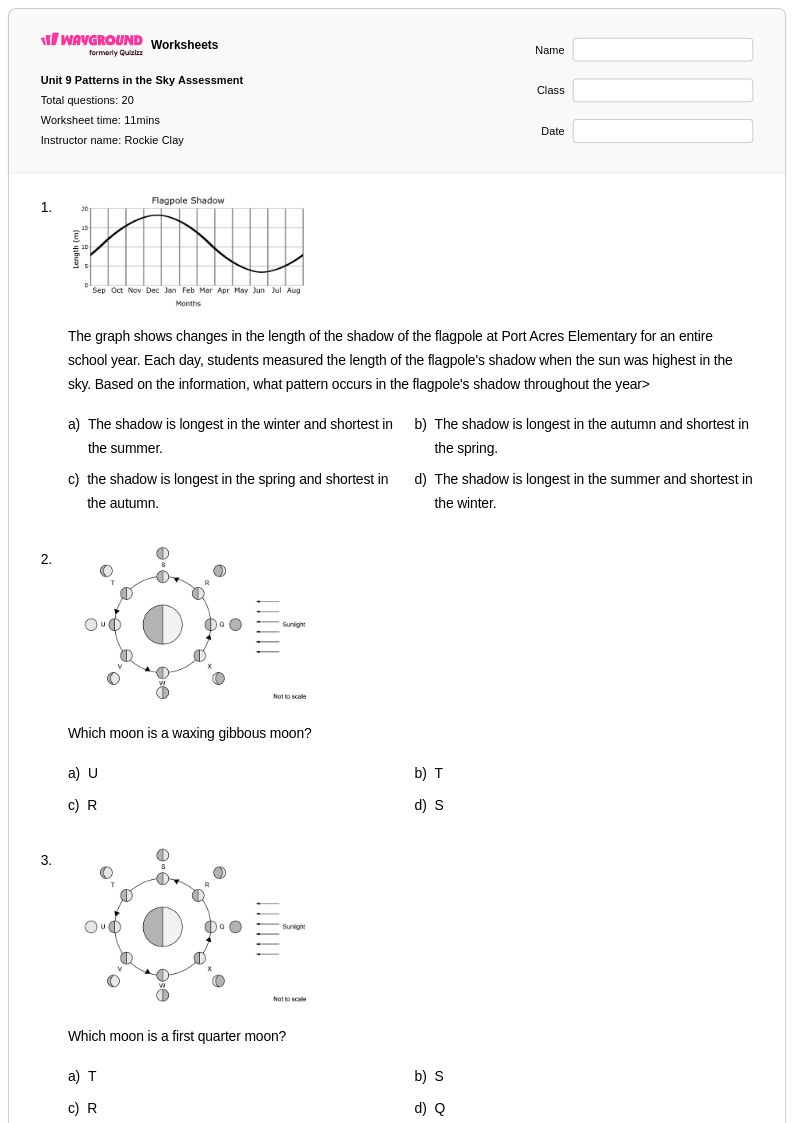
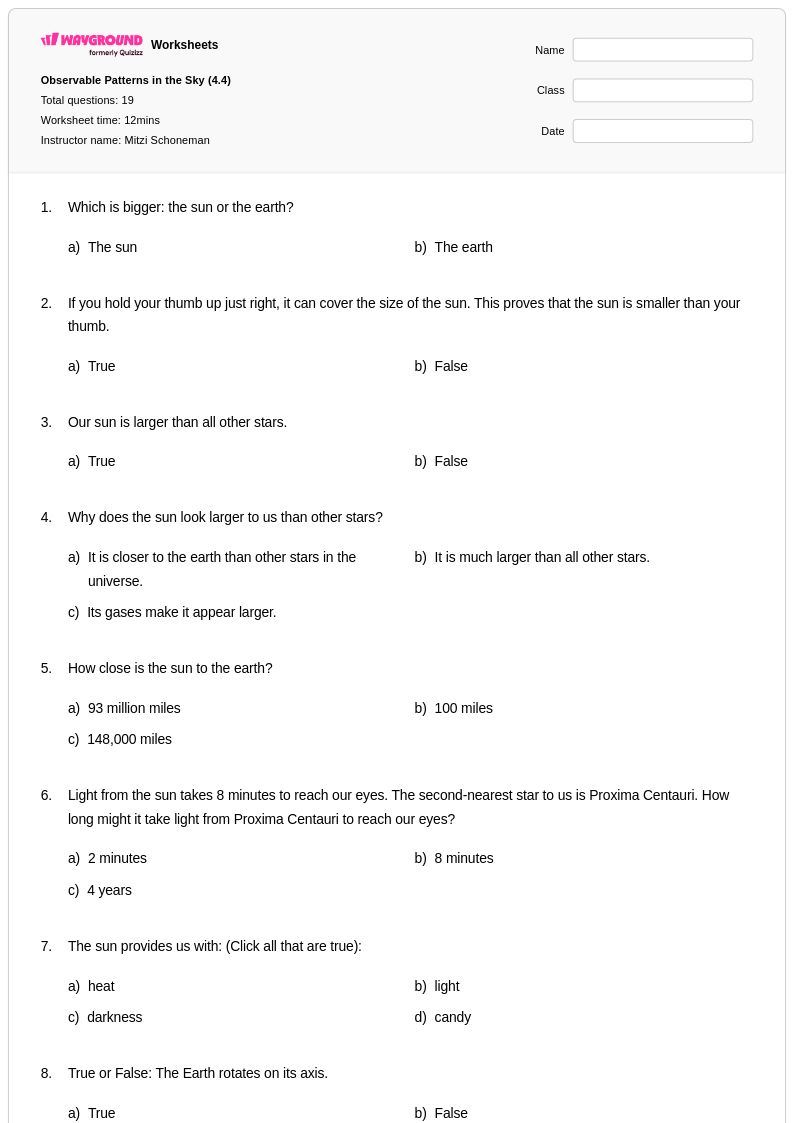
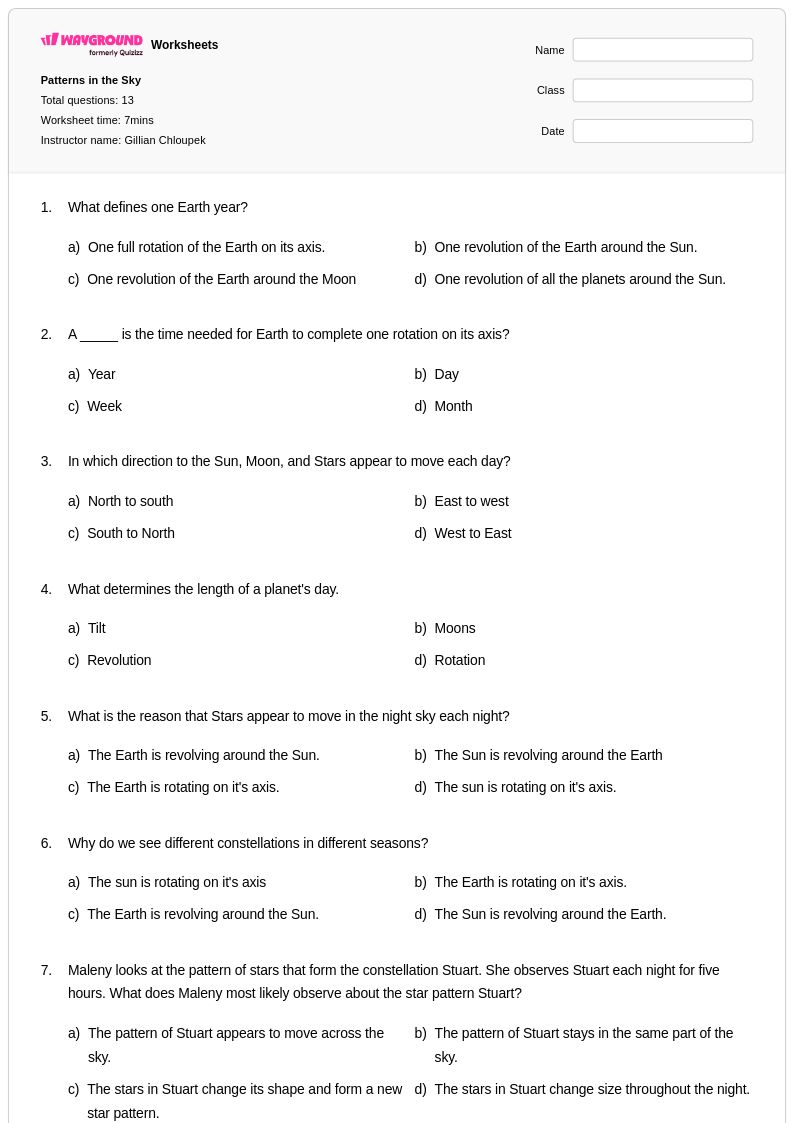
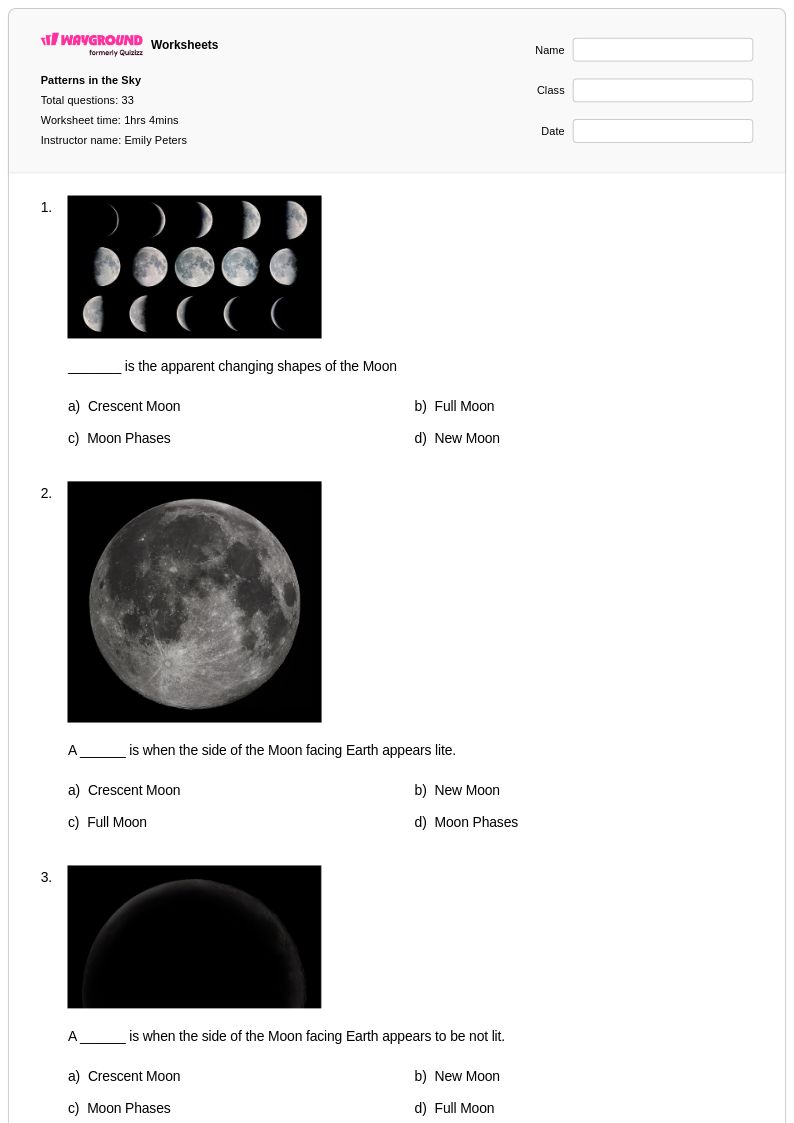
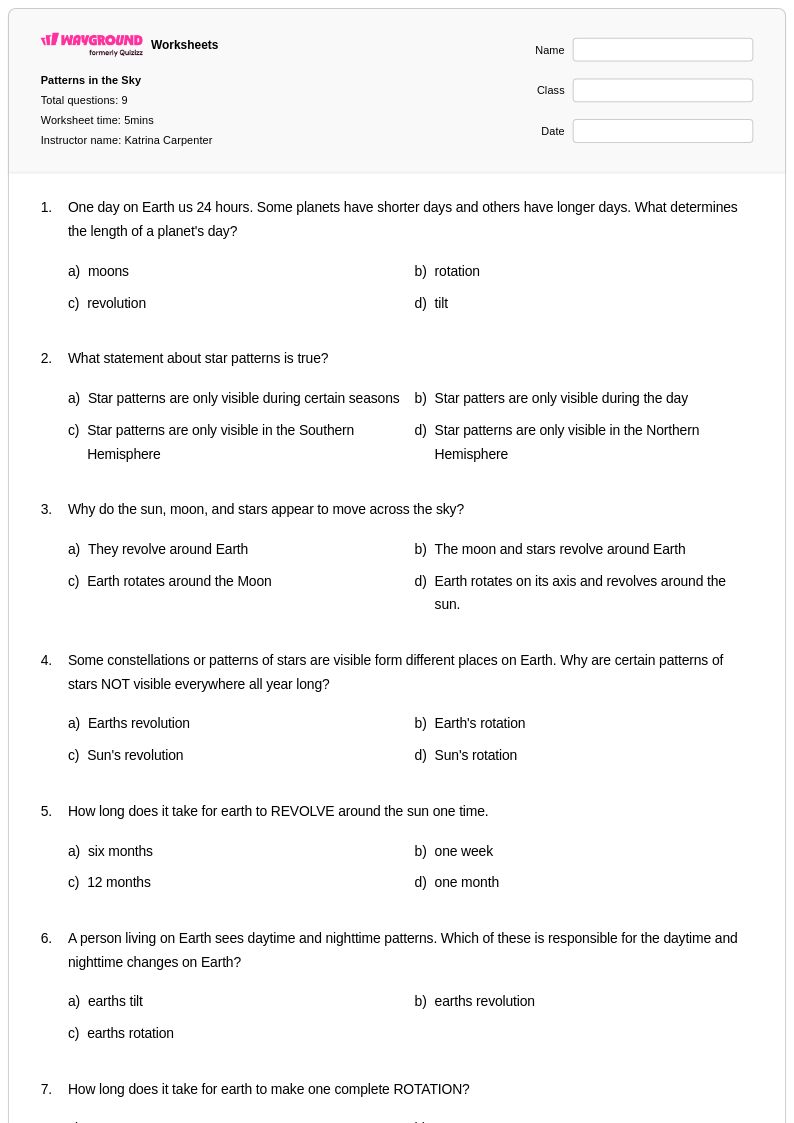
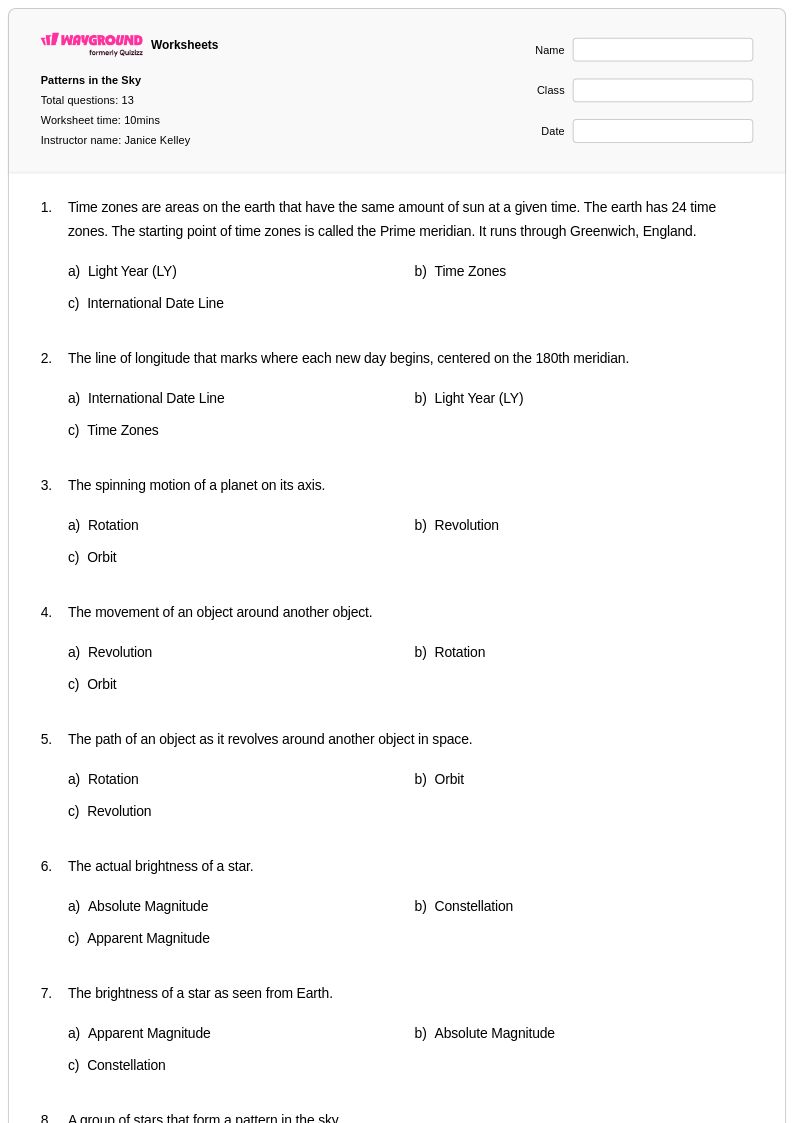
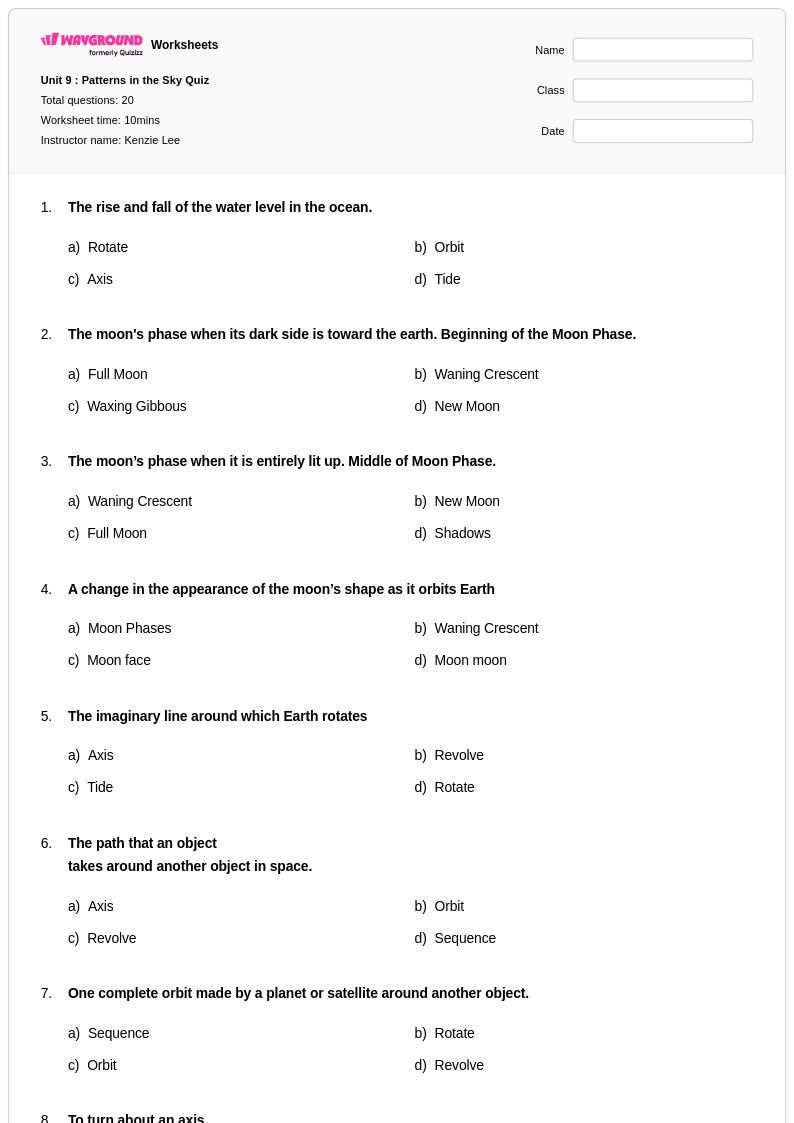
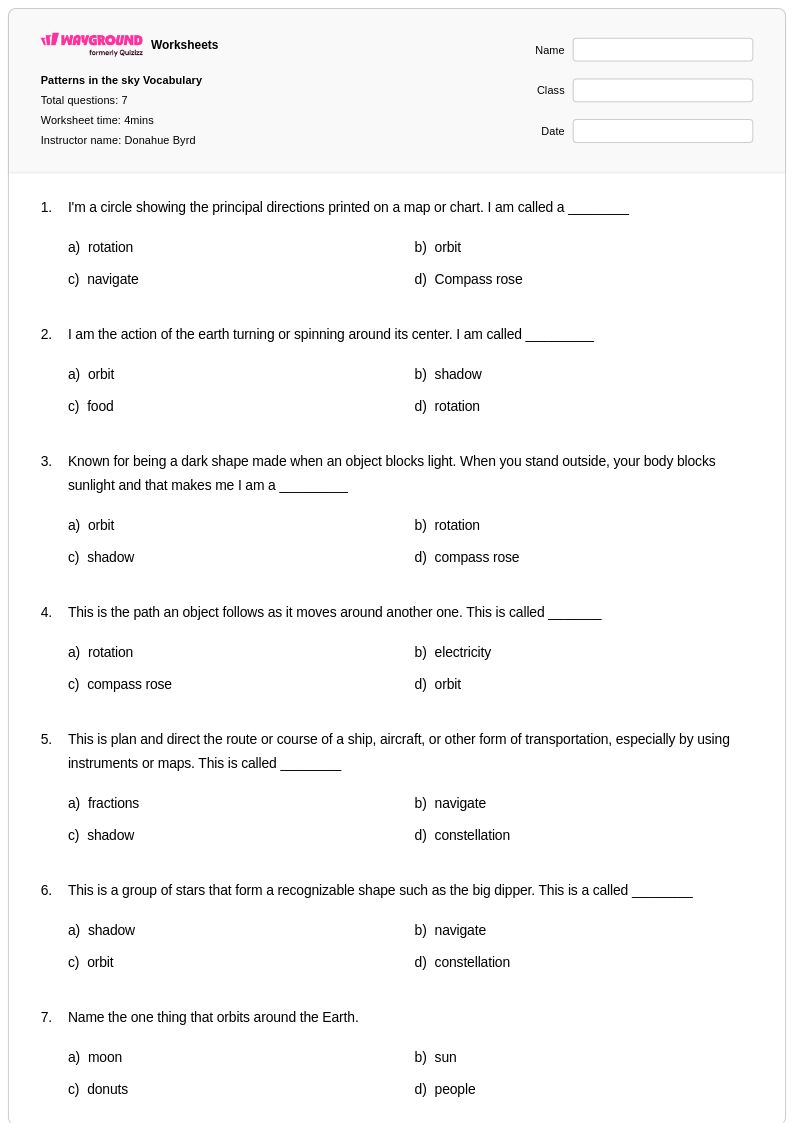
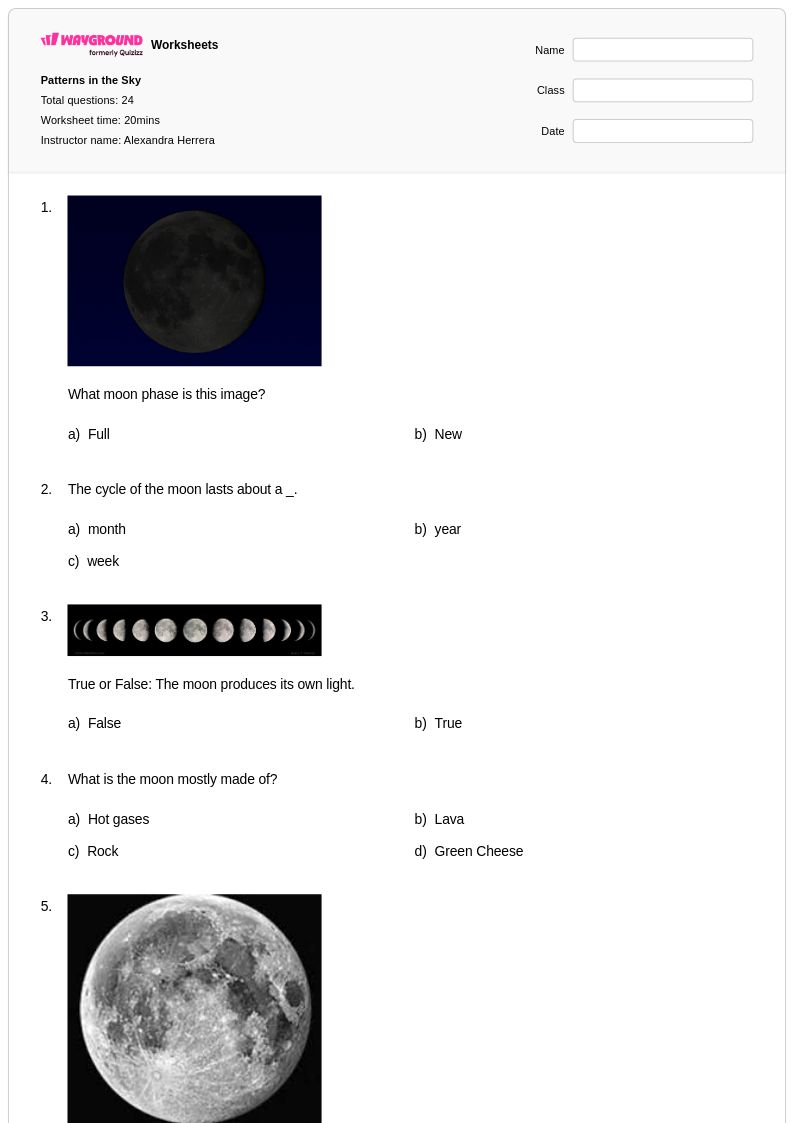
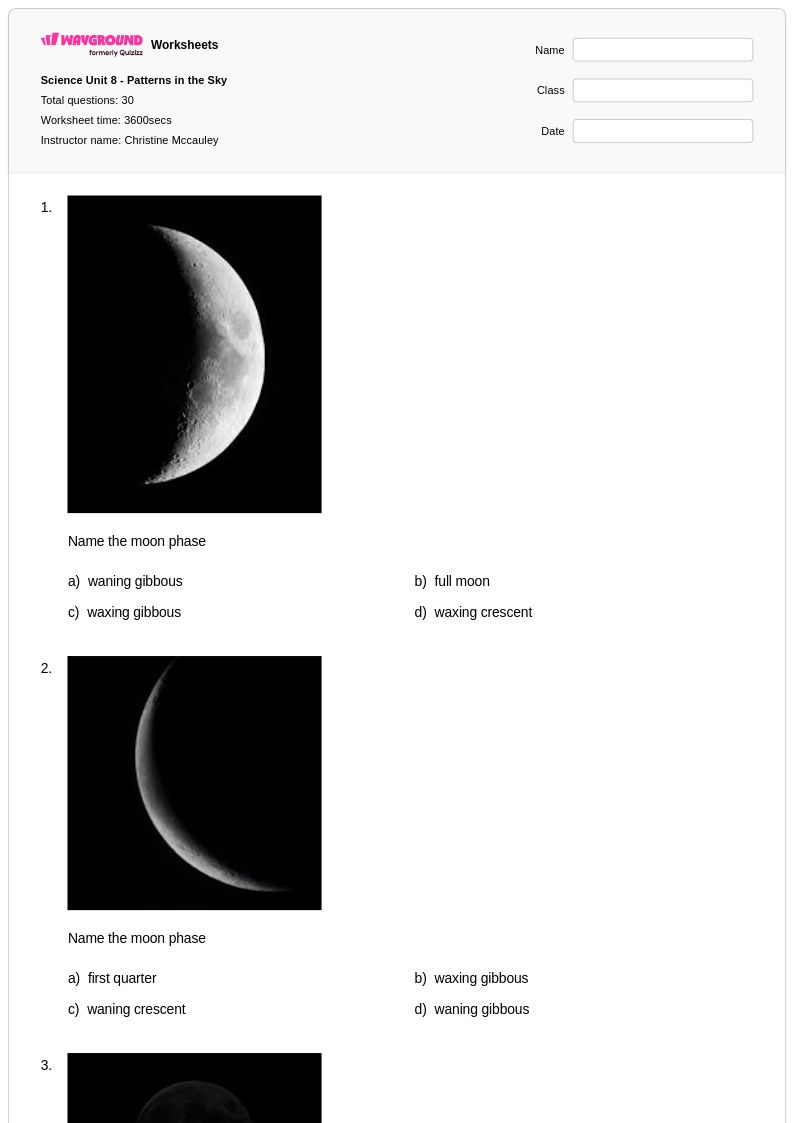
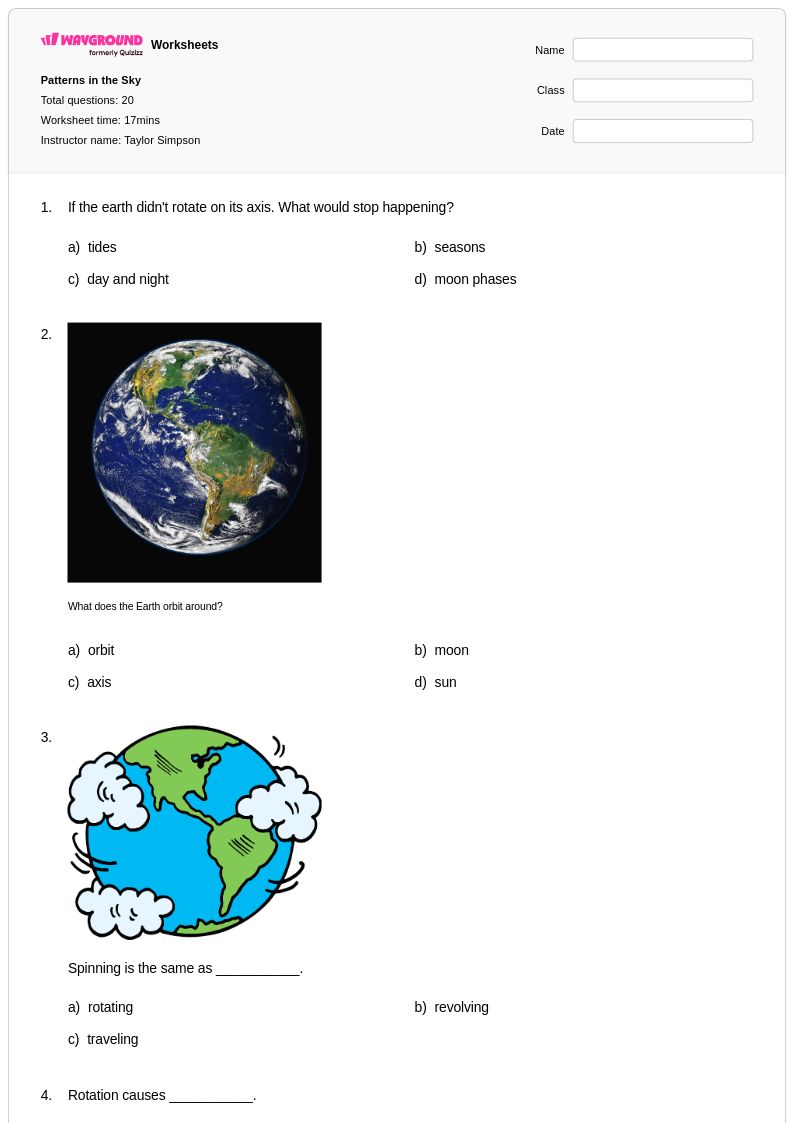
Patterns in the Sky worksheets for Year 4 students available through Wayground (formerly Quizizz) provide comprehensive exploration of celestial observations and astronomical phenomena that fourth graders can observe and analyze. These educational resources strengthen essential scientific skills including pattern recognition, data collection, observation recording, and scientific reasoning as students investigate the predictable movements of the sun, moon, stars, and planets across Earth's sky. The worksheet collection encompasses diverse practice problems that guide students through identifying daily and seasonal sky patterns, understanding the relationship between Earth's rotation and the apparent movement of celestial objects, and documenting changes in daylight duration throughout the year. Each worksheet includes detailed answer keys and explanations, making these free printables valuable tools for both independent student practice and guided instruction in fundamental astronomical concepts.
Wayground (formerly Quizizz) empowers educators with an extensive library of millions of teacher-created resources specifically designed to support Year 4 Earth and Space Science instruction focused on sky patterns and celestial observations. The platform's robust search and filtering capabilities enable teachers to quickly locate worksheets that align with specific learning standards and match their students' diverse skill levels, while differentiation tools allow for seamless customization of content difficulty and complexity. Teachers can access these materials in both printable pdf formats for traditional classroom use and digital versions for technology-integrated learning environments, providing maximum flexibility for lesson planning and delivery. This comprehensive worksheet collection serves multiple instructional purposes, from introducing new astronomical concepts and reinforcing classroom learning to providing targeted remediation for struggling students and offering enrichment opportunities for advanced learners ready to explore more complex sky pattern relationships.
FAQs
How do I teach patterns in the sky to elementary and middle school students?
Teaching patterns in the sky works best when students first build observational habits before moving to explanation. Start with concrete phenomena students can track themselves, such as sunrise and sunset times, moon phase changes over a month, or seasonal shifts in star visibility. Connect each observable pattern to an underlying cause, such as Earth's rotation, tilt, or orbit, so students understand that celestial cycles are predictable rather than random. Using structured recording activities alongside direct instruction helps students see patterns emerge from their own data.
What topics are covered in patterns in the sky worksheets?
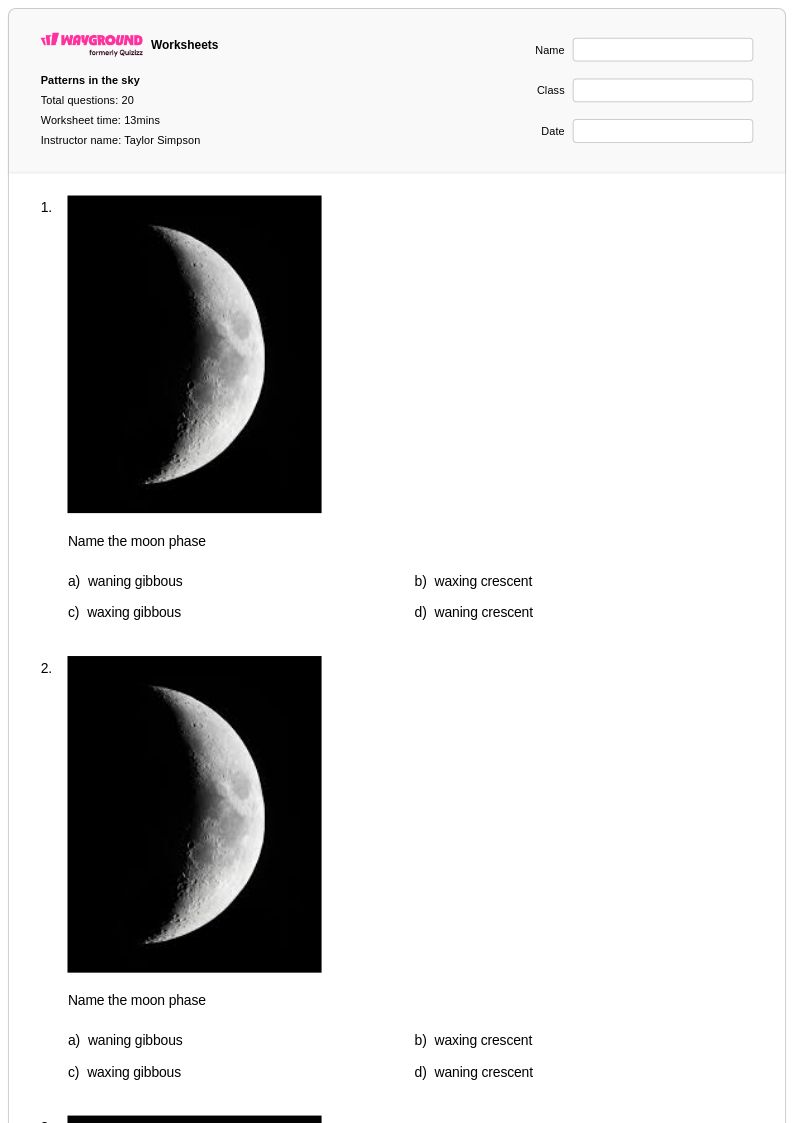
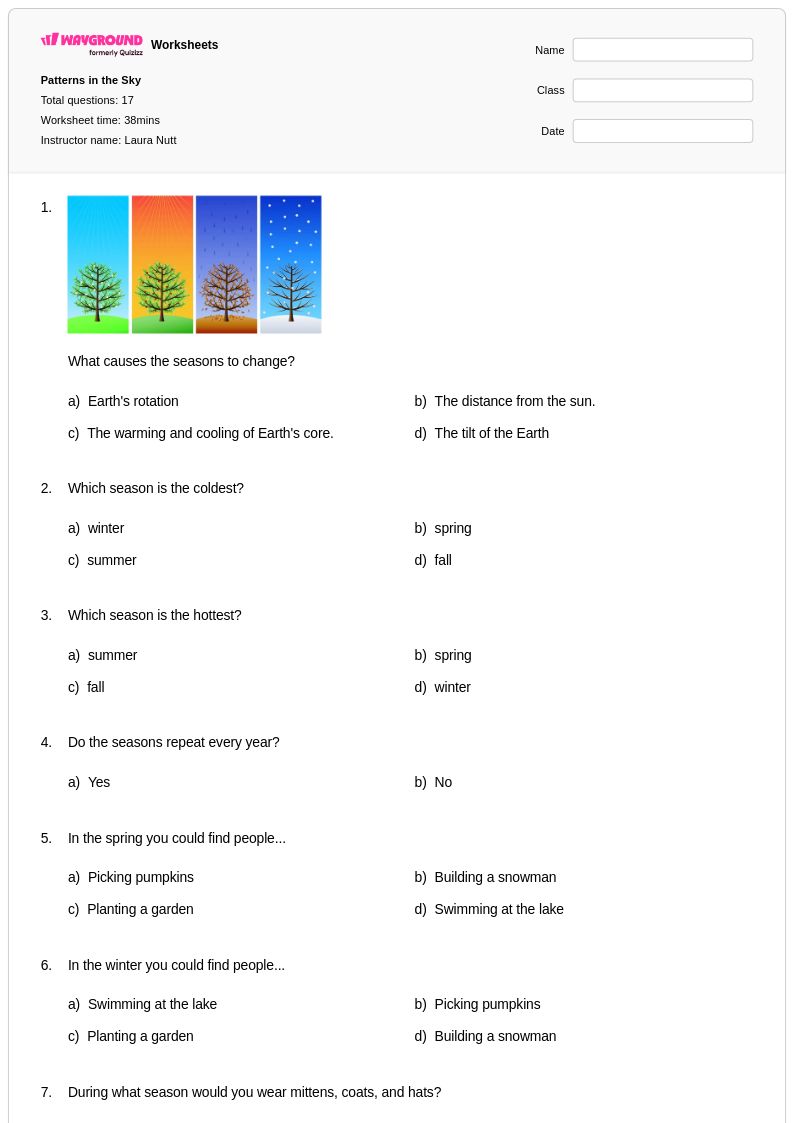
Patterns in the sky worksheets typically cover moon phases, the apparent motion of the sun across the sky, seasonal star patterns, and planet movements. Students practice recognizing that these phenomena follow predictable astronomical cycles tied to Earth's rotation and orbit. Strong worksheet sets also include data analysis tasks where students interpret diagrams, sequences, or observation records to identify and describe recurring patterns.
What are common mistakes students make when learning about patterns in the sky?
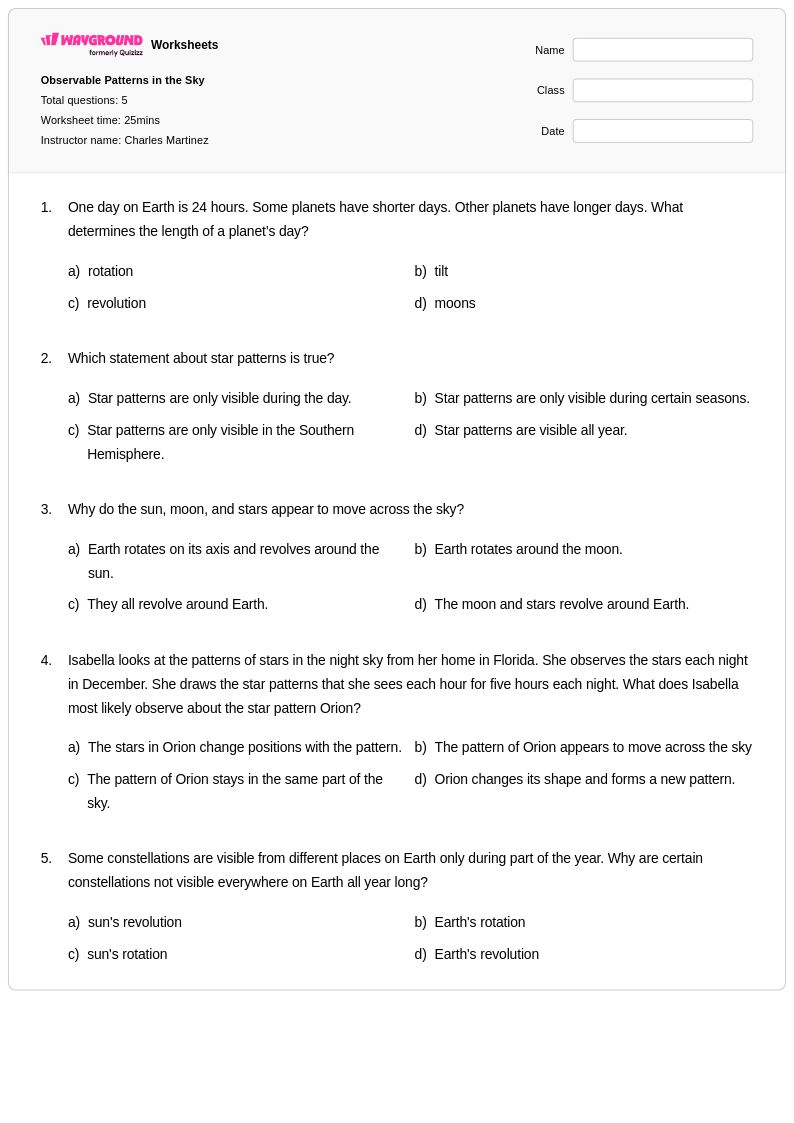
One of the most persistent misconceptions is that moon phases are caused by Earth's shadow falling on the moon, when they are actually caused by the changing angle between the moon, Earth, and the sun as the moon orbits. Students also frequently confuse Earth's rotation with its revolution, leading to errors when explaining daily versus seasonal patterns. Another common error is assuming that stars visible in summer are different stars than those in winter due to random change, rather than understanding that Earth's orbital position determines which portion of the sky faces away from the sun at night.
How can I use patterns in the sky worksheets to assess student understanding?
Patterns in the sky worksheets are well-suited for formative assessment because they require students to apply conceptual understanding to specific scenarios, such as identifying a moon phase from a diagram or predicting where the sun will appear at different times of year. Look for whether students can explain the cause behind a pattern rather than just labeling it, since surface-level recognition without causal reasoning is a common gap. Using worksheets before and after instruction also reveals whether key misconceptions, such as shadow-based moon phase explanations, have been addressed.
How do I use Wayground's patterns in the sky worksheets in my classroom?
Wayground's patterns in the sky worksheets are available as printable PDFs for traditional classroom use and in digital formats for technology-integrated instruction, making them flexible across different teaching environments and student preferences. Each worksheet includes a complete answer key, so they work well for independent practice, partner work, or self-paced review without requiring additional teacher prep. Teachers can also host worksheets as a digital quiz directly on Wayground, which allows for efficient review and immediate student feedback.
How do I differentiate patterns in the sky instruction for students at different readiness levels?
For students who are still developing foundational understanding, focus on single-cycle patterns, such as daily sun movement before introducing seasonal star changes, and provide labeled diagrams to scaffold interpretation. More advanced students can work with multi-variable tasks, such as predicting moon phase and its position in the sky at a given time of night. On Wayground, teachers can apply individual accommodations such as reduced answer choices or read-aloud support for students who need additional accessibility, while the rest of the class works with standard settings.