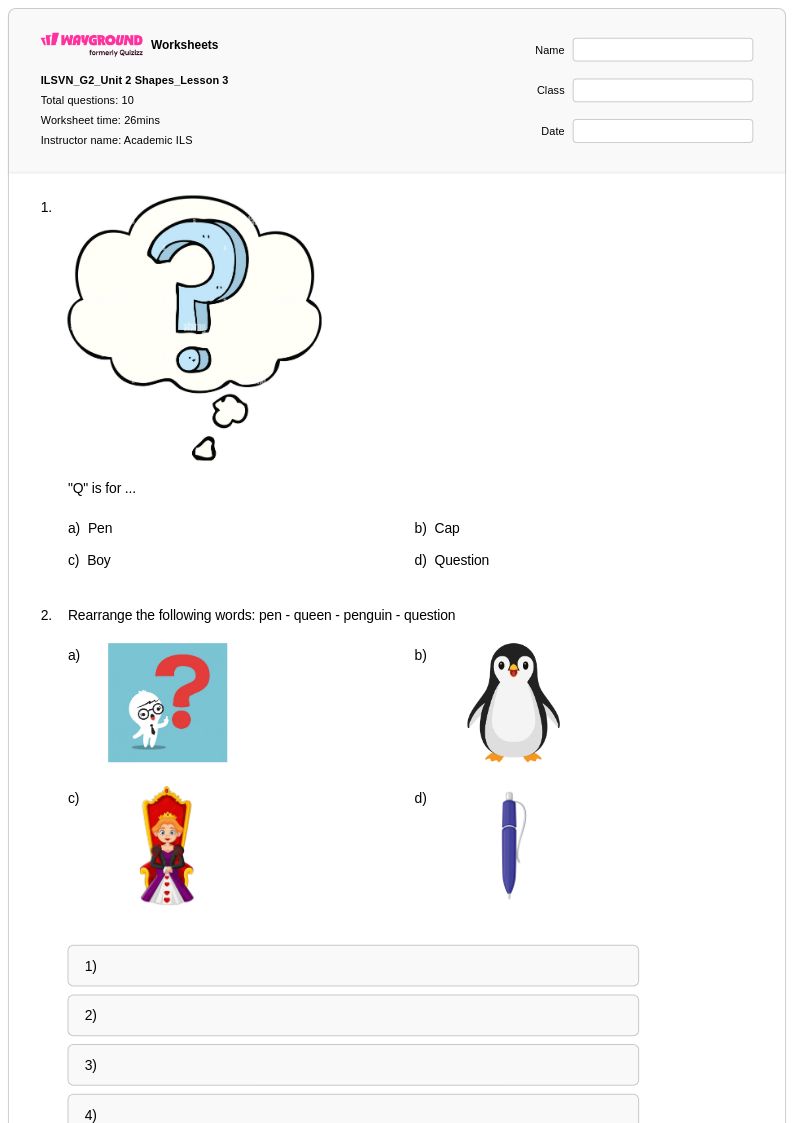
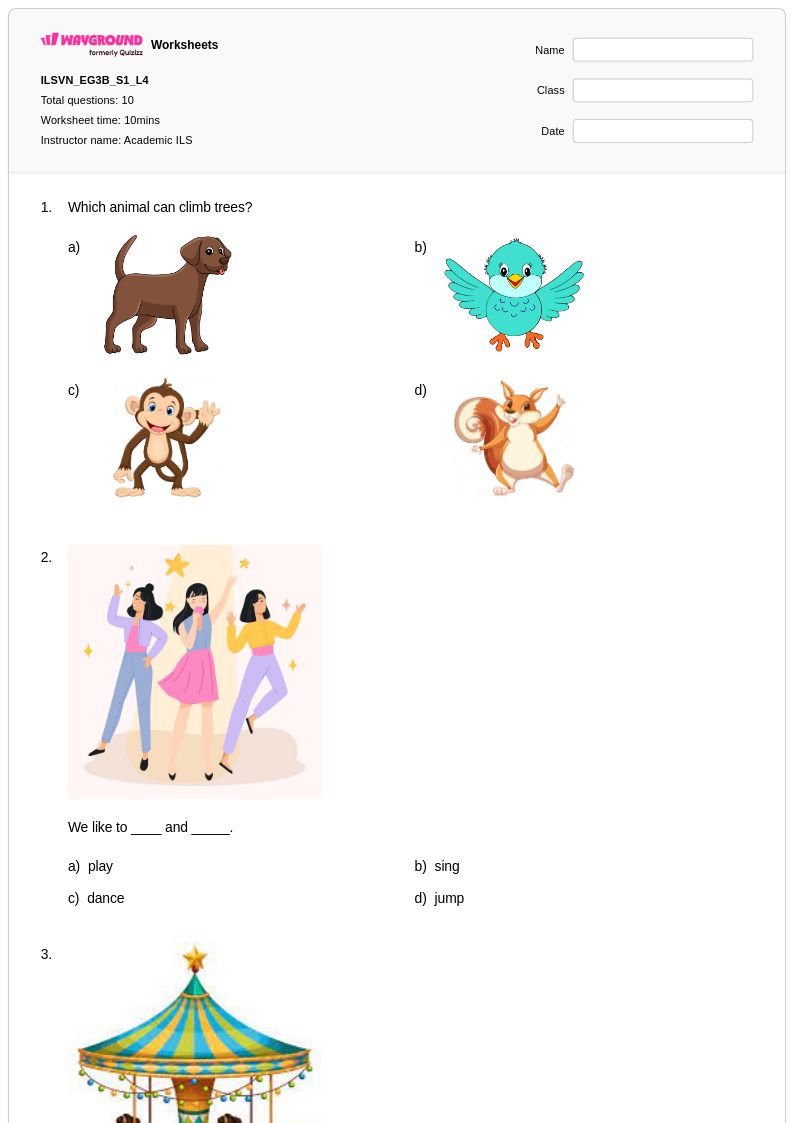
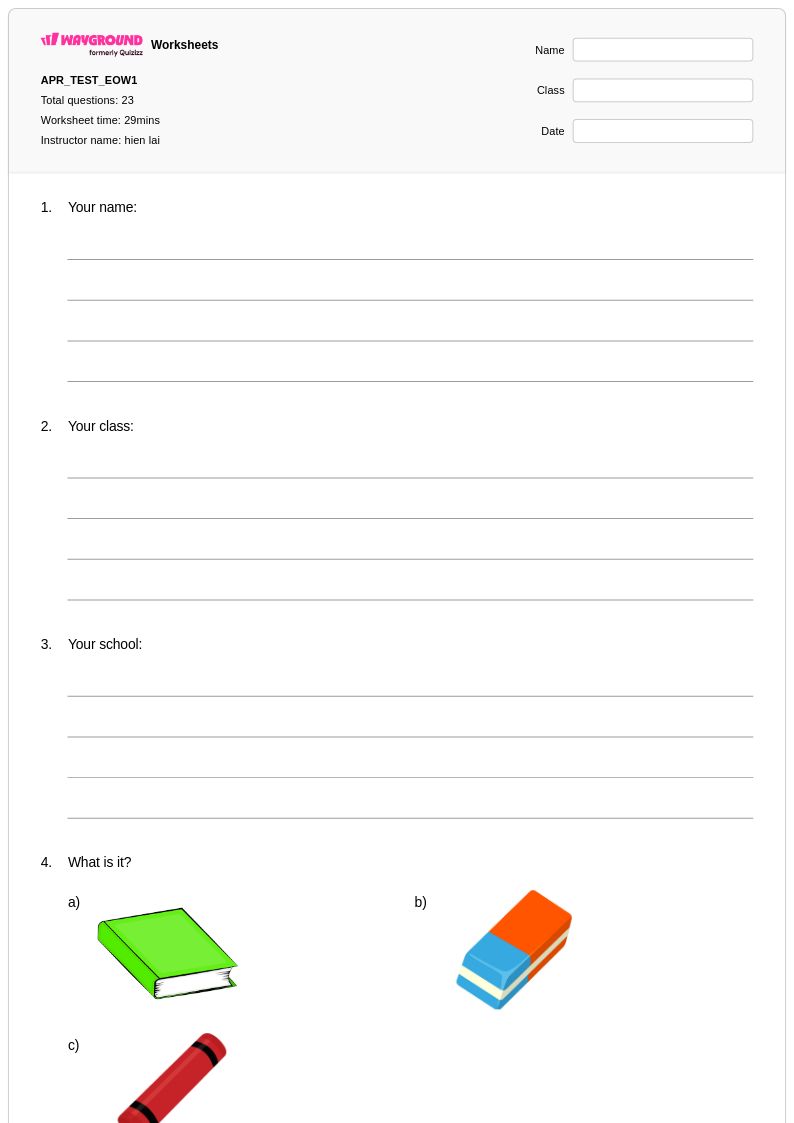
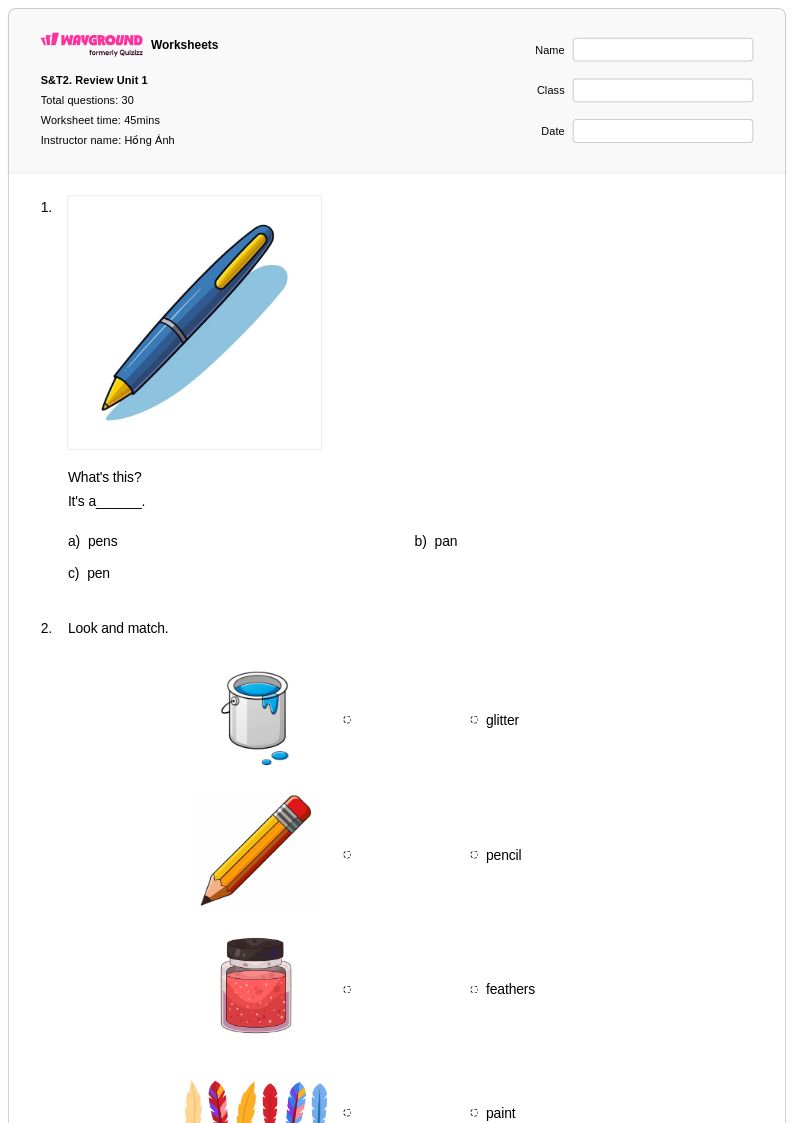
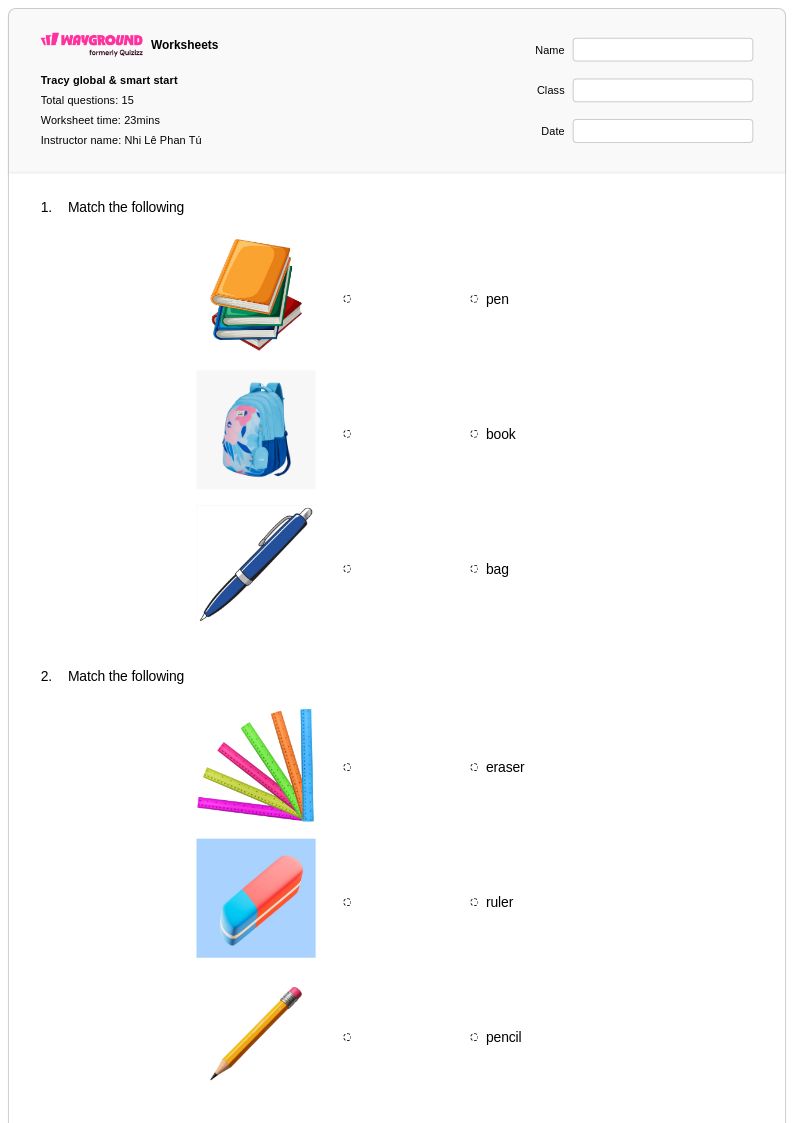
Year 1 pen control worksheets from Wayground offer free printables and practice problems that help young students develop proper grip, line tracing, and fine motor skills essential for handwriting success.
Explore printable Pen Control worksheets for Year 1
Pen control worksheets for Year 1 students available through Wayground (formerly Quizizz) provide essential foundational practice for developing proper writing mechanics and fine motor skills. These carefully designed printables focus on strengthening the precise hand and finger movements that young learners need to form letters correctly and write legibly. Students work through structured practice problems that emphasize grip positioning, pressure control, and directional movements while tracing lines, curves, and basic letter formations. Each worksheet includes comprehensive guidance and comes with an answer key to help educators assess student progress, making these free resources invaluable for building the muscular control and coordination that underlies all future handwriting success.
Wayground (formerly Quizizz) empowers teachers with an extensive collection of millions of teacher-created pen control worksheets that streamline lesson planning and support differentiated instruction for Year 1 classrooms. The platform's robust search and filtering capabilities allow educators to quickly locate age-appropriate materials that align with handwriting standards and individual student needs. Teachers can customize these resources to target specific skill gaps, provide remediation for struggling learners, or offer enrichment activities for advanced students. Available in both printable pdf format and interactive digital versions, these worksheets seamlessly integrate into any instructional approach, whether for whole-group lessons, small-group interventions, or independent practice sessions that reinforce proper pen control techniques.
FAQs
How do I teach pen control to young students?
Effective pen control instruction begins with teaching proper grip and posture before introducing any writing tasks. Start with large-scale movements — tracing wide curves and straight lines on paper — then gradually reduce the scale as students build muscle memory. Structured practice that isolates specific skills, such as maintaining consistent pressure or following a curved path without lifting the pen, helps students develop the fine motor control and hand-eye coordination that underpin legible handwriting.
What exercises help students practice pen control?
The most effective pen control exercises progress from simple to complex: begin with basic line tracing along straight and curved pathways, then move to pattern completion tasks that require directional changes. Exercises that target consistent pressure, smooth fluid strokes, and staying within boundaries build the muscular control students need before letter formation. Regular, short practice sessions are more effective than infrequent long ones for developing automaticity in fine motor movements.
What common mistakes do students make when learning pen control?
The most frequent errors include gripping the writing instrument too tightly, which limits fluid movement and causes hand fatigue, and applying uneven pressure that produces inconsistent line weight. Students also commonly lift the pen mid-stroke rather than maintaining contact across a continuous path, disrupting stroke fluidity. Rushing through tracing exercises without attending to accuracy is another pattern that reinforces poor habits rather than building genuine control.
How can I use pen control worksheets in my classroom?
Pen control worksheets work well as warm-up activities, independent practice stations, or targeted intervention tools for students who need additional fine motor support. Wayground's pen control worksheets are available as printable PDFs for traditional paper-based practice and in digital formats for technology-integrated learning environments, and can also be hosted as a quiz directly on the Wayground platform. This flexibility makes them easy to incorporate into morning routines, small-group sessions, or homework assignments depending on each student's needs.
How do I differentiate pen control practice for students at different skill levels?
Differentiation in pen control instruction typically means adjusting the complexity of pathways and the degree of guidance provided — students with emerging skills benefit from wide, clearly bounded tracing paths, while more advanced students can work with finer lines and multi-directional patterns. On Wayground, teachers can also apply individual accommodations such as Read Aloud for students who need instructions read to them, or reduced answer choices to lower cognitive load, so every student engages with practice at an appropriate level without singling anyone out.
At what age or grade level should pen control instruction begin?
Pen control instruction is most commonly introduced in pre-K and kindergarten, where it serves as a prerequisite for letter formation and formal handwriting. However, structured pen control practice remains relevant for early elementary students who show inconsistent grip, uneven pressure, or difficulty staying on pathways during writing tasks. For older students with identified fine motor delays, targeted pen control exercises can serve as a remediation tool at any grade level.