Free Printable Personal Space Worksheets for Year 2
Free Year 2 Personal Space worksheets and printables help students practice understanding appropriate physical boundaries and spatial awareness in physical education through engaging PDF activities with answer keys.
Explore printable Personal Space worksheets for Year 2
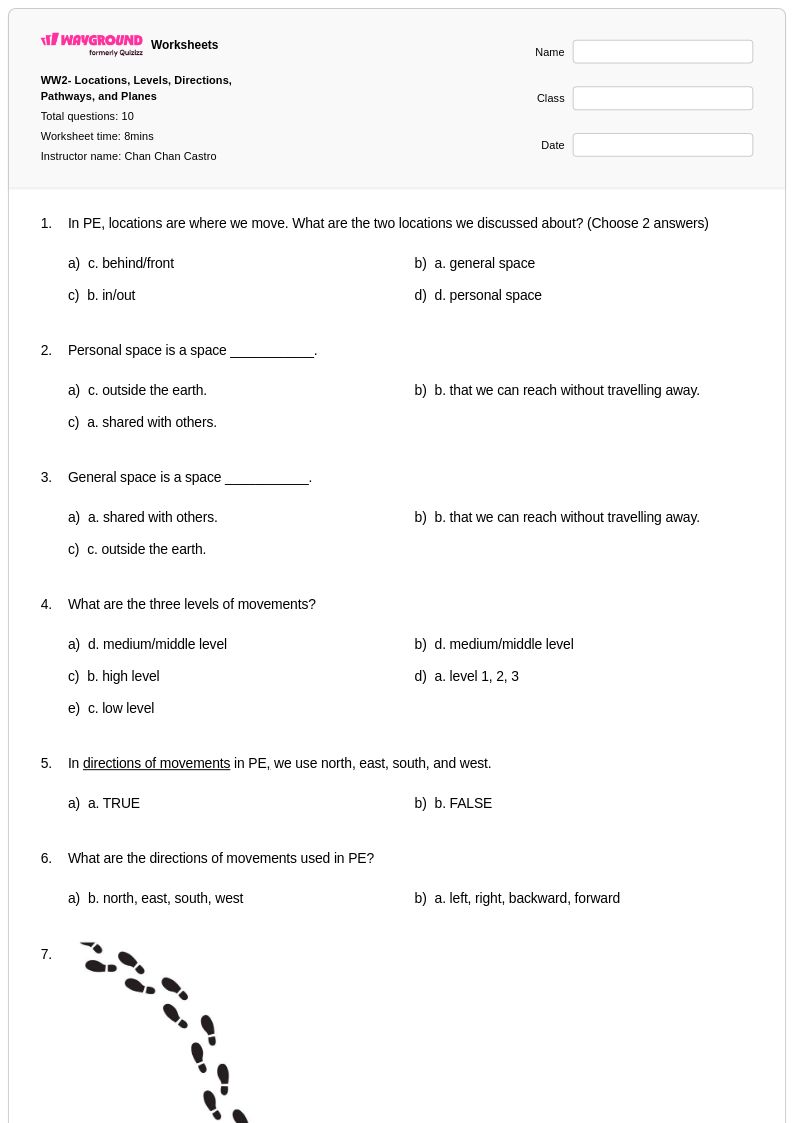
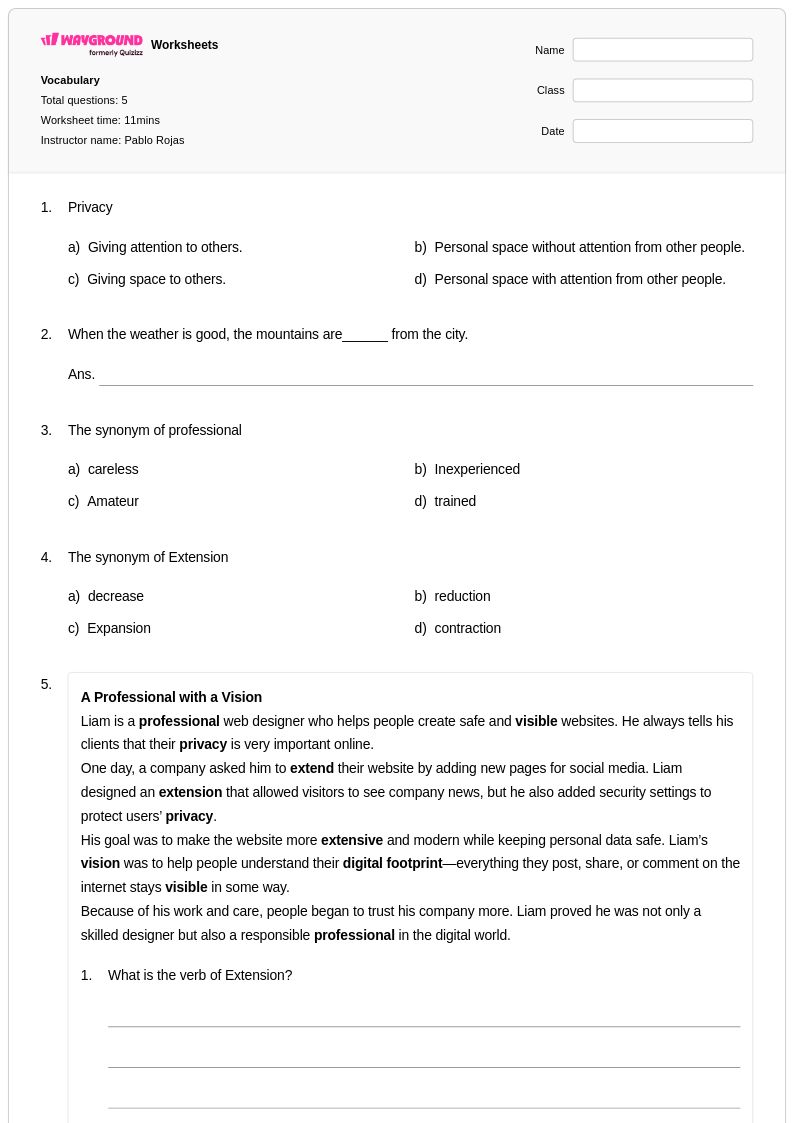
Personal space worksheets for Year 2 students available through Wayground (formerly Quizizz) provide essential resources for developing foundational social-emotional learning skills within physical education contexts. These carefully designed printables help young learners understand appropriate boundaries, body awareness, and respectful interaction with peers during physical activities and classroom settings. The worksheets strengthen critical skills including spatial awareness, self-regulation, and social communication through engaging practice problems that make abstract concepts concrete for second-grade minds. Teachers can access comprehensive materials that include visual scenarios, interactive exercises, and clear answer keys, all available as free downloadable pdf resources that support consistent skill reinforcement both in gymnasium and classroom environments.
Wayground (formerly Quizizz) empowers educators with an extensive collection of teacher-created personal space resources specifically tailored for Year 2 physical education and social-emotional learning integration. The platform's robust search and filtering capabilities allow teachers to quickly locate materials that align with curriculum standards while addressing diverse learning needs through built-in differentiation tools. These versatile worksheet collections support comprehensive lesson planning by offering both printable pdf formats for hands-on activities and digital versions for interactive learning experiences. Teachers can customize content to target specific skill gaps, provide targeted remediation for students struggling with personal boundaries, or offer enrichment opportunities for advanced learners, ensuring that every second-grade student develops the spatial awareness and social skills essential for successful participation in physical education activities and collaborative learning environments.
FAQs
How do I teach personal space to students in a physical education setting?
Teaching personal space in PE begins with concrete, kinesthetic activities that help students physically experience appropriate boundaries before connecting those experiences to social rules. A common approach is the 'bubble' or 'hula hoop' method, where students imagine an invisible circle around their body and practice moving through shared spaces without invading others'. Pairing movement-based lessons with structured discussion about why personal space matters for safety and respect helps students internalize the concept rather than simply following a rule.
What exercises help students practice personal space awareness?
Effective practice activities for personal space include guided movement exercises where students navigate shared spaces at different speeds while maintaining appropriate distances, as well as scenario-based tasks where students identify whether a depicted situation respects or violates personal boundaries. Role-play cards and illustrated worksheet scenarios are particularly useful because they let students apply the concept across contexts such as gymnasium games, playground interactions, and team activities without requiring real-time social risk. Repeated, low-stakes practice across multiple scenarios is what builds consistent, transferable behavior.
What misconceptions do students commonly have about personal space?
One of the most common misconceptions is that personal space is a fixed, universal distance, when in reality it varies by context, relationship, culture, and individual comfort level. Students often assume that touching someone briefly is always acceptable if it is accidental, failing to recognize that frequency and awareness matter too. Another frequent error is conflating physical proximity with intent, so a student who stands close due to excitement may not understand why others feel uncomfortable. Worksheets that present varied scenarios help students recognize these nuances rather than applying a single rigid rule.
How can I differentiate personal space instruction for students with different social-emotional needs?
For students who struggle with abstract social concepts, pairing visual cues with worksheet activities, such as diagrams showing appropriate versus inappropriate distances, helps make the concept concrete. On Wayground, teachers can apply individual accommodations including Read Aloud, which allows questions and scenarios to be read aloud for students who need additional support processing written text, and reduced answer choices to lower cognitive load for students who find decision-making in social scenarios overwhelming. These settings can be applied to individual students while the rest of the class receives standard materials, ensuring differentiation happens seamlessly without drawing attention to specific learners.
How do I use personal space worksheets from Wayground in my classroom?
Wayground's personal space worksheets are available as free printable PDFs for traditional classroom or gymnasium use, as well as in digital formats for technology-integrated environments, and can also be hosted as a quiz directly on the Wayground platform. Teachers can use them as standalone lessons, warm-up activities before a PE session, or as structured review following a whole-class discussion on social boundaries. The included answer keys make it straightforward to review responses with students or use the worksheets for quick formative checks without additional preparation.
How does personal space connect to social-emotional learning (SEL) standards?
Personal space is a foundational SEL concept tied to self-awareness, social awareness, and responsible decision-making, three of the core competency areas recognized by frameworks such as CASEL. In practice, understanding personal space teaches students to recognize their own physical comfort needs, read social cues from others, and make respectful choices in shared environments. Because these skills apply equally in physical education contexts and everyday social interactions, personal space instruction supports broader SEL goals across the school day, not just in the gym.