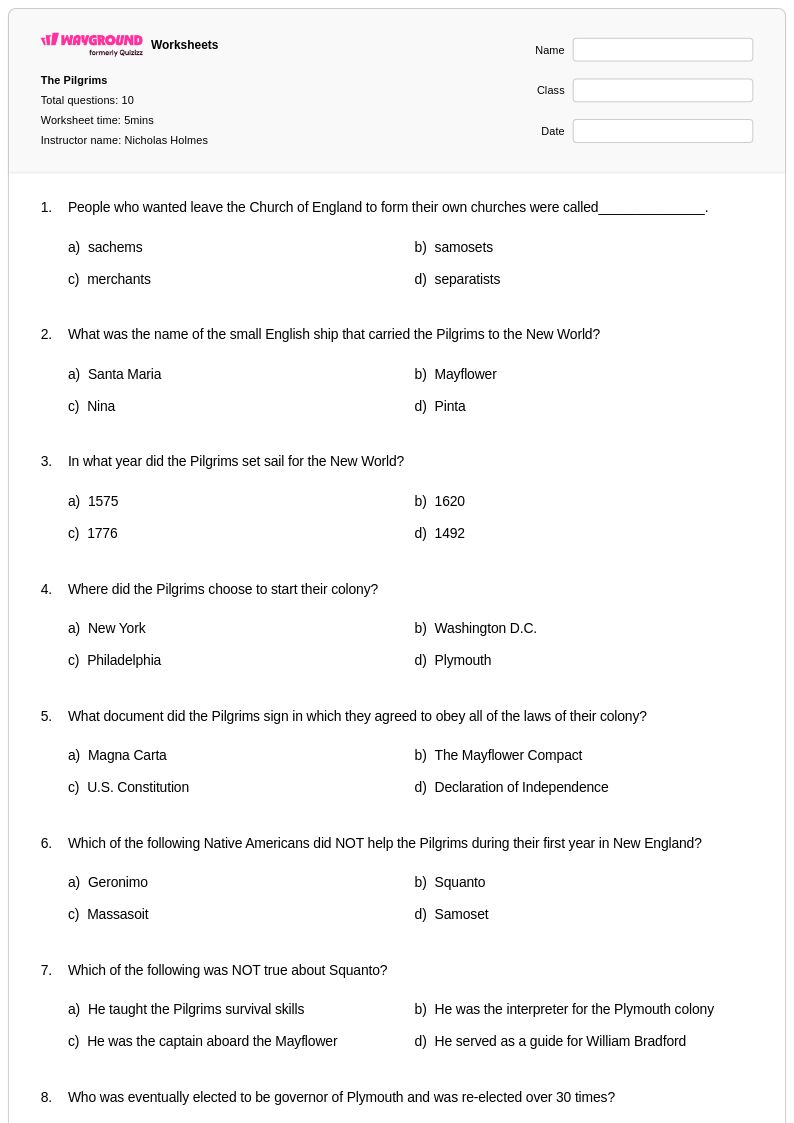
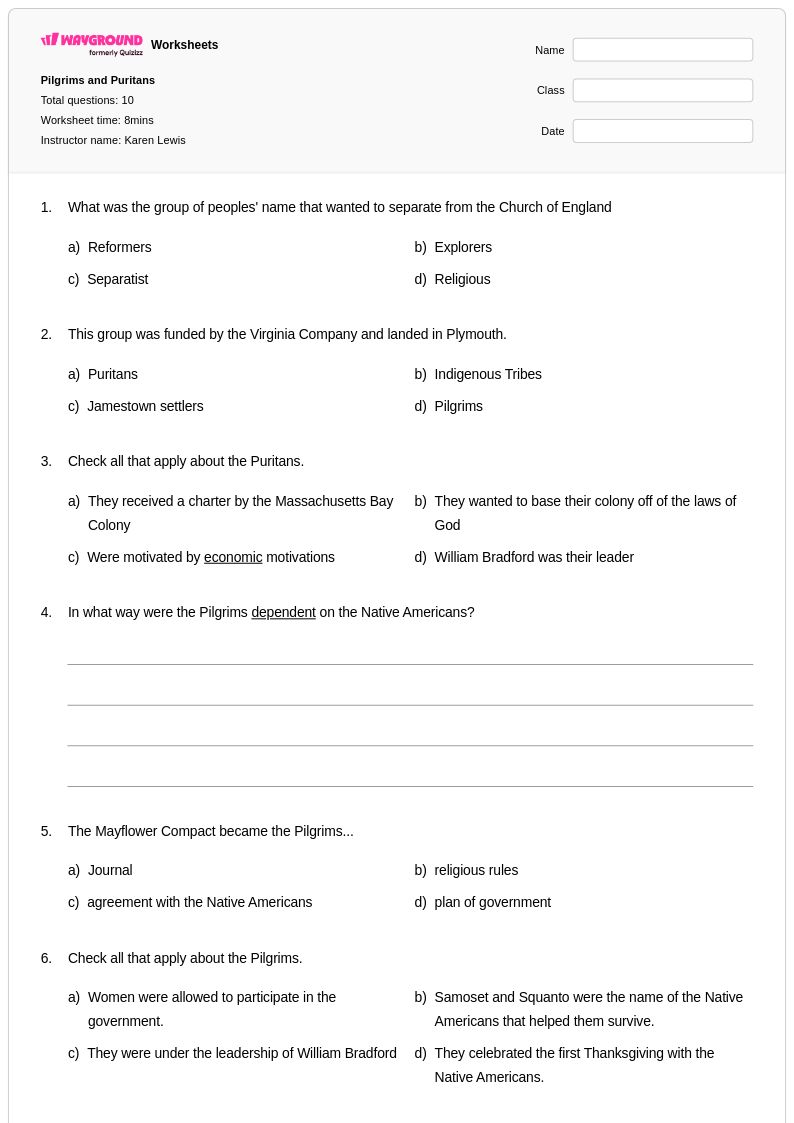
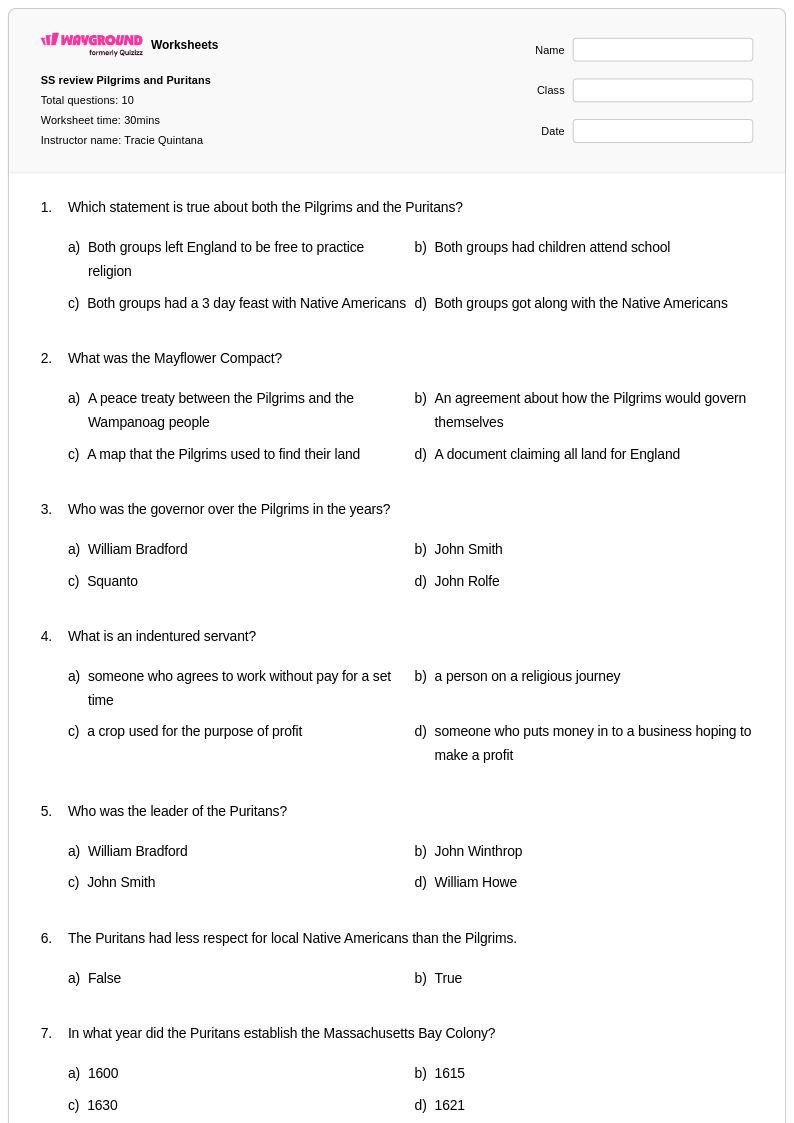
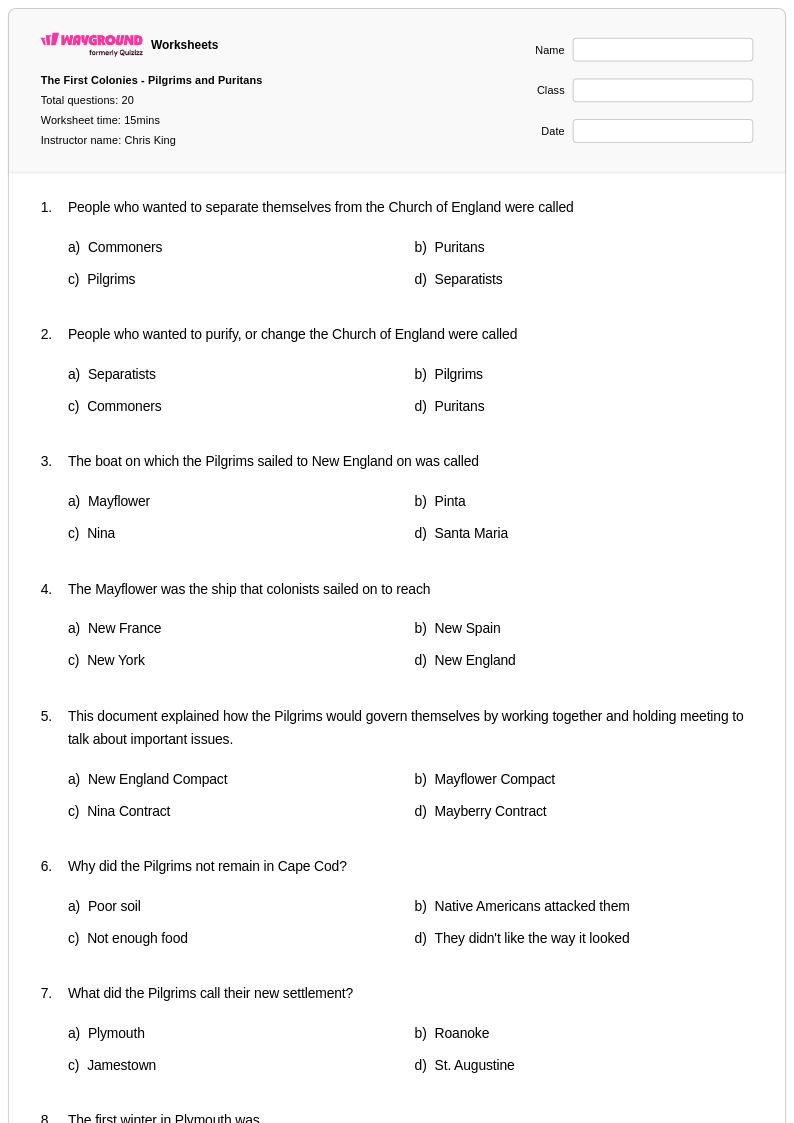
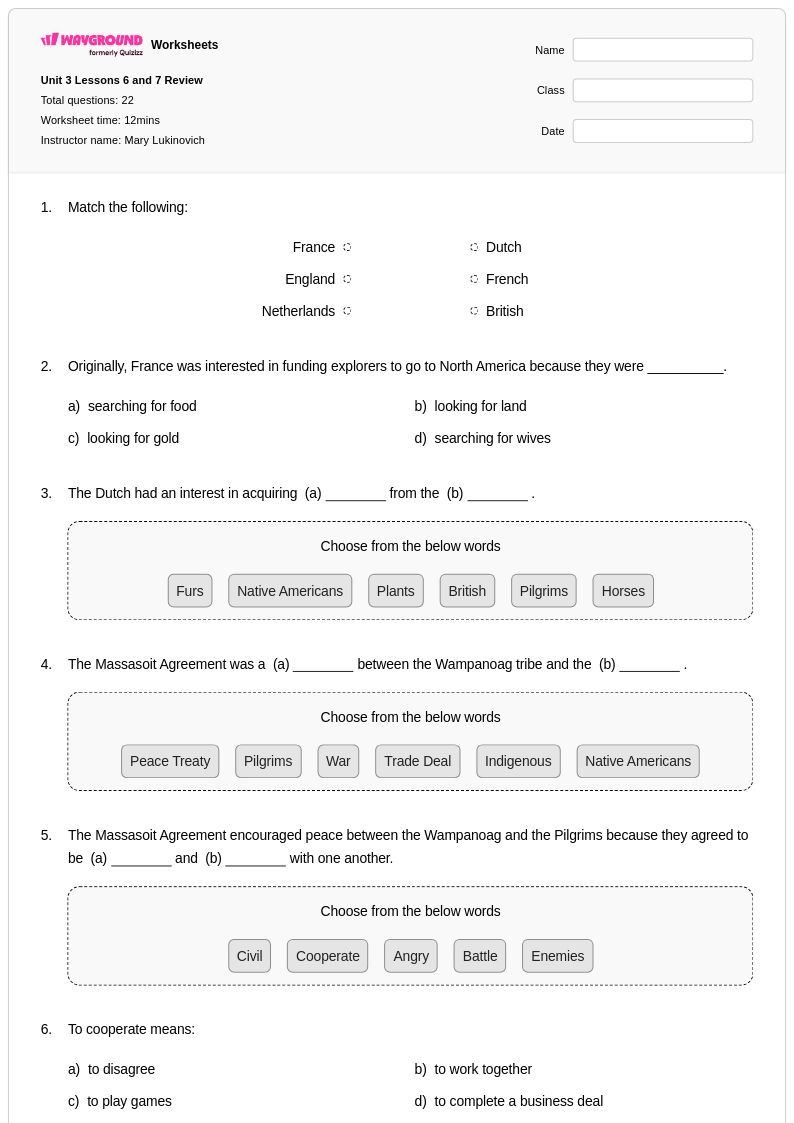
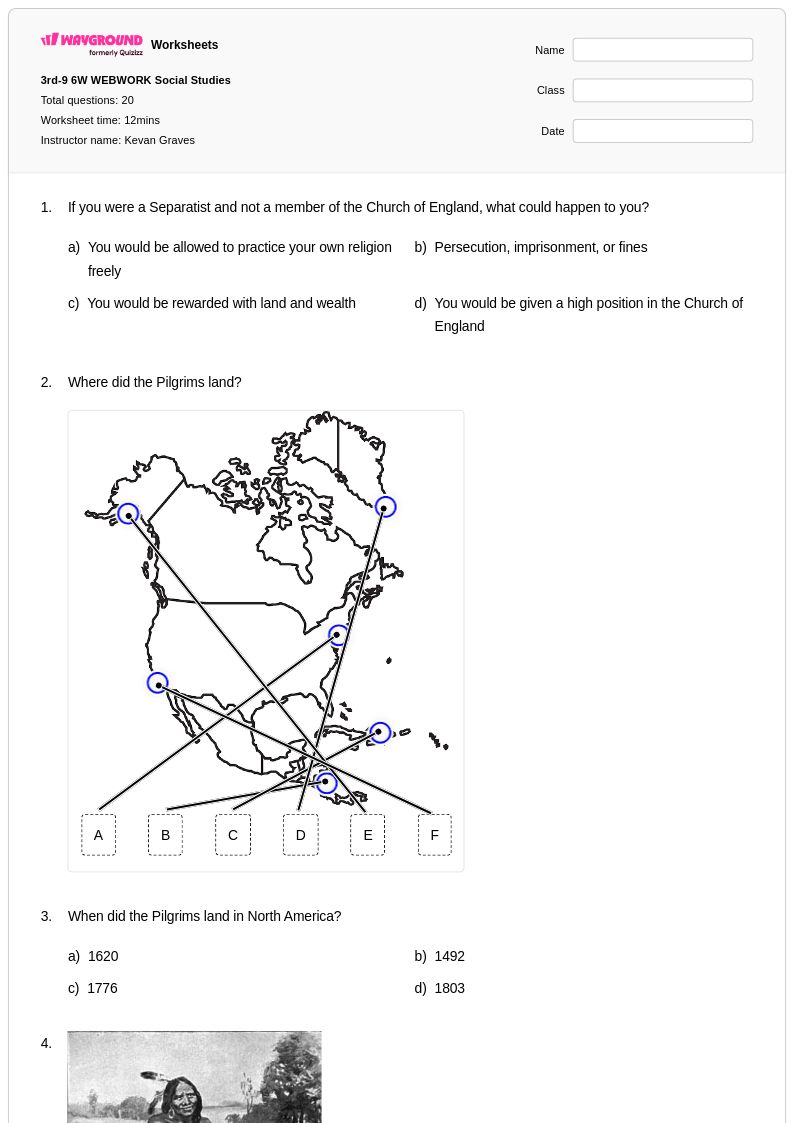
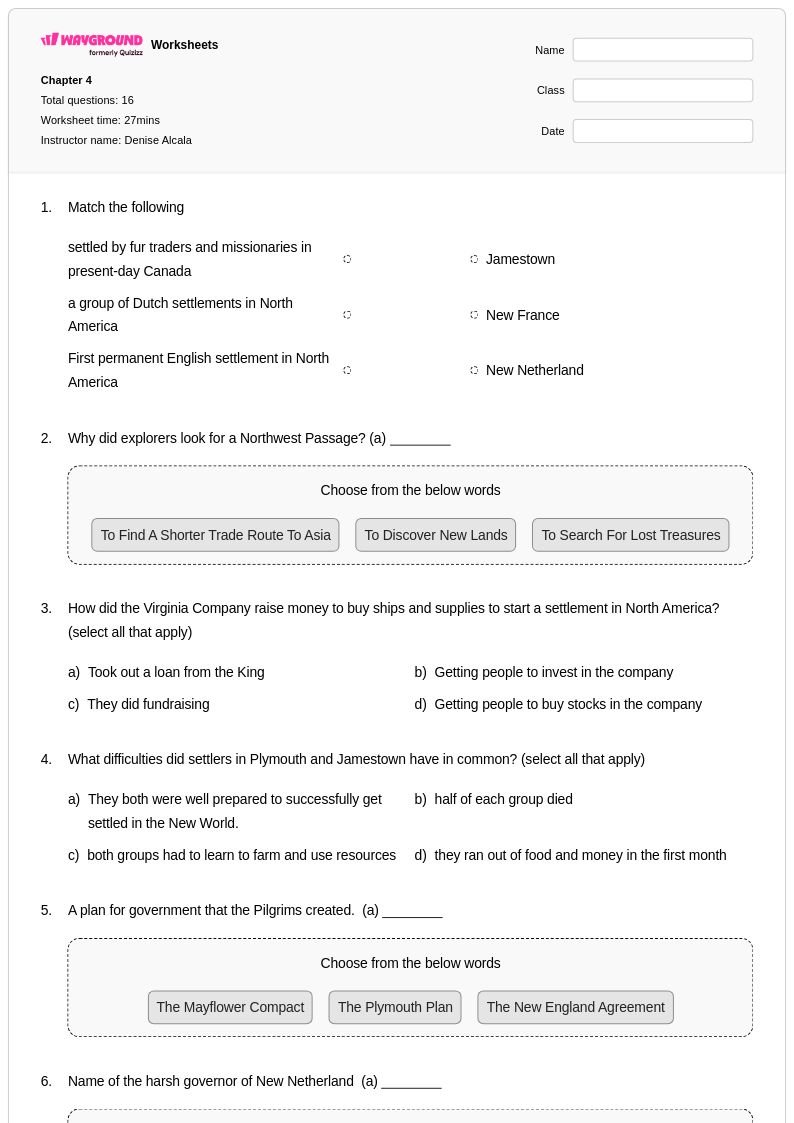
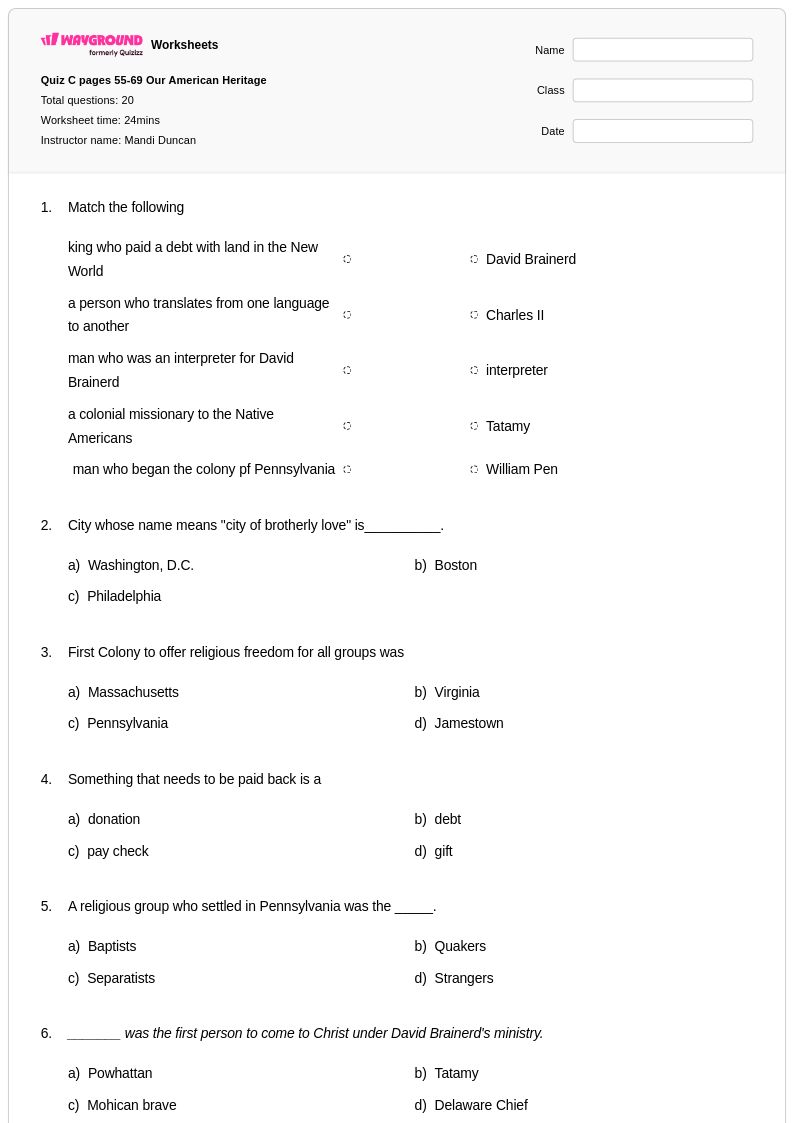
Explore Wayground's free Year 5 Pilgrims worksheets and printables that help students discover early American colonial history through engaging practice problems, interactive activities, and comprehensive answer keys in convenient PDF format.
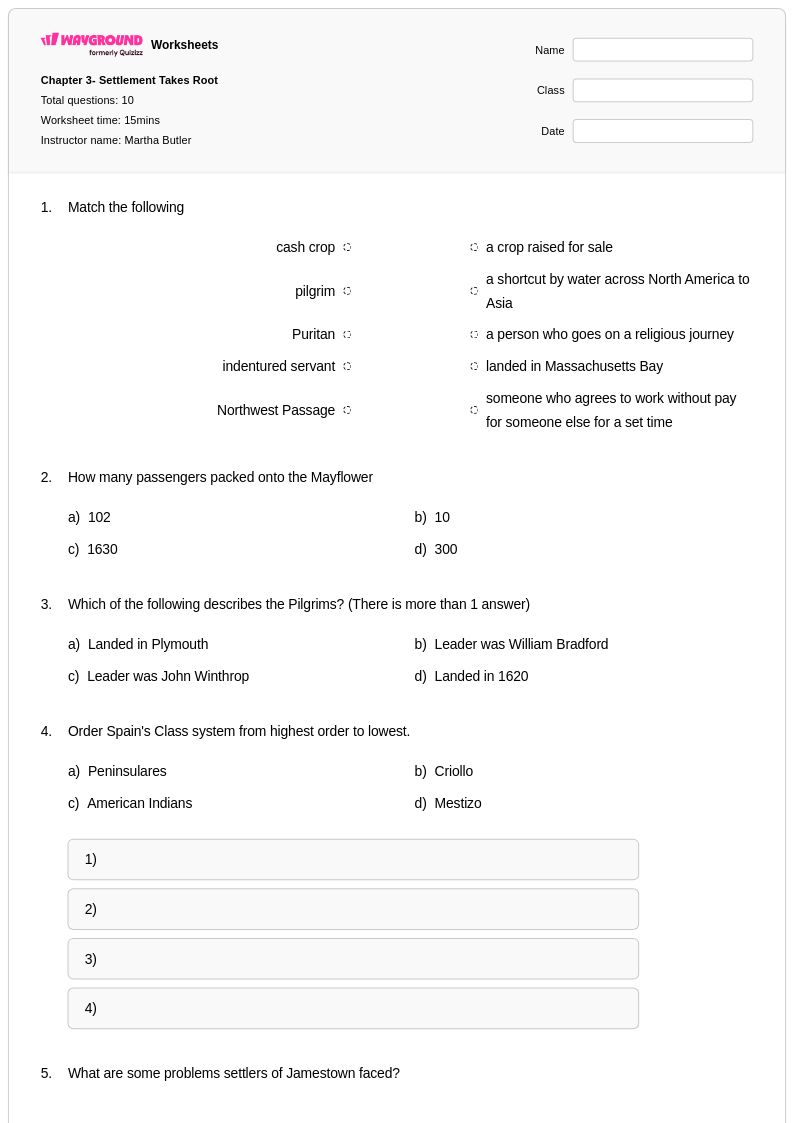
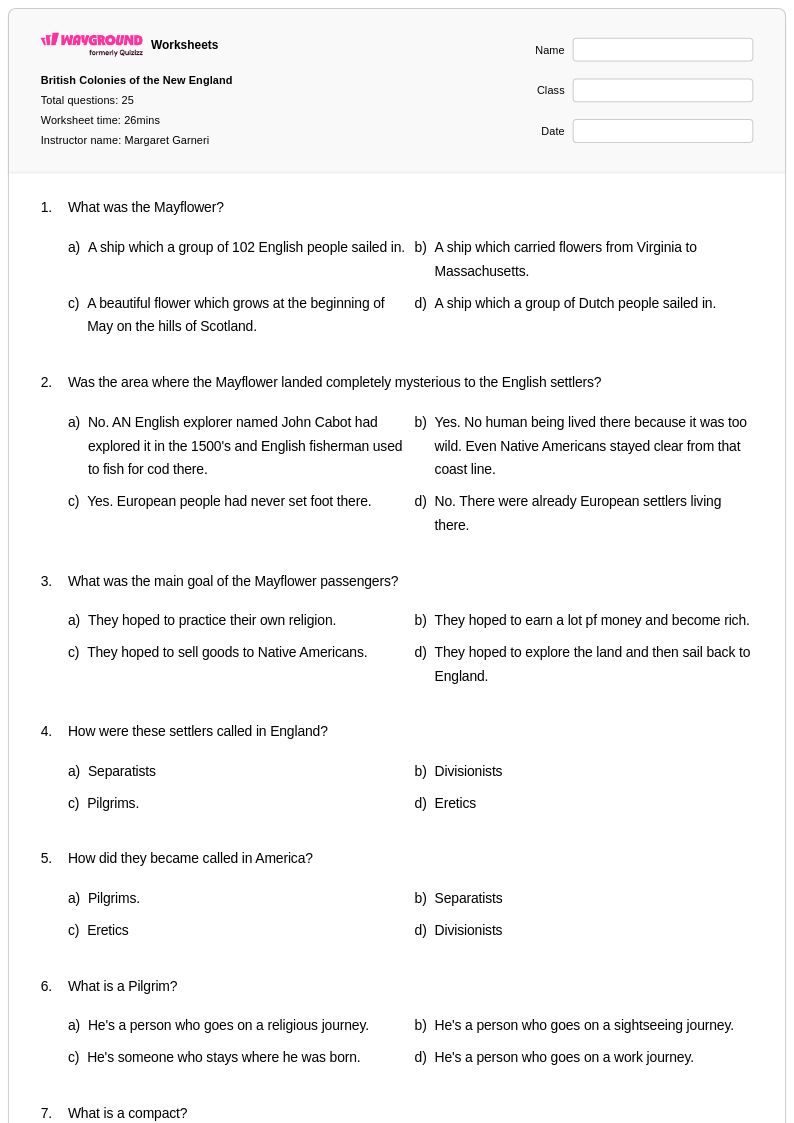
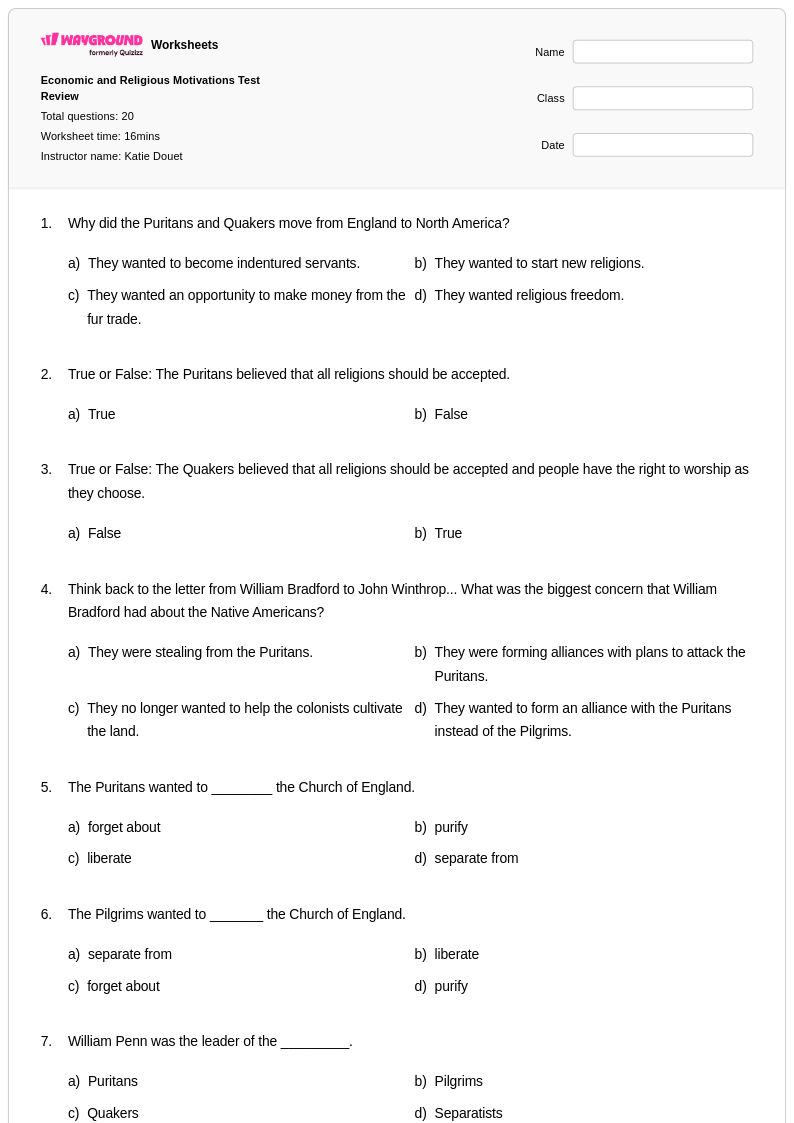
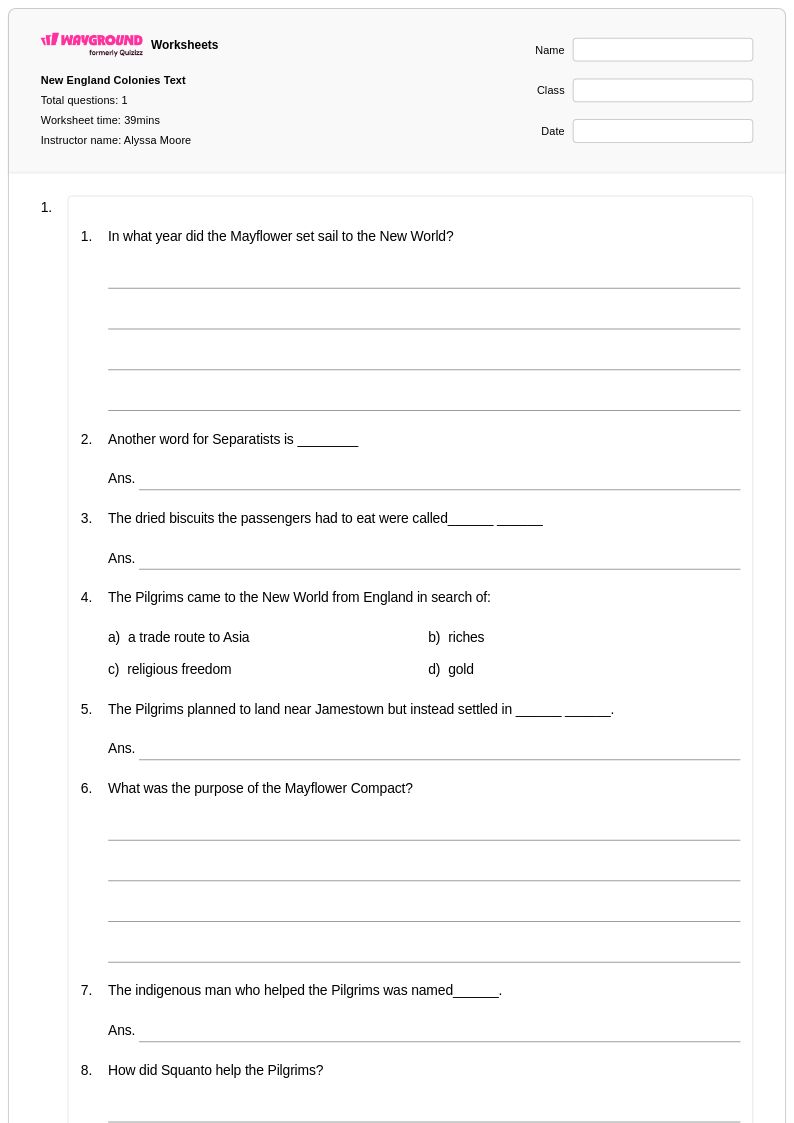
Pilgrims worksheets for Year 5 students available through Wayground (formerly Quizizz) provide comprehensive educational resources that explore the historical journey and cultural impact of the Pilgrims in early American history. These carefully designed worksheets strengthen critical thinking skills, reading comprehension, and historical analysis abilities as students examine primary source documents, timelines, and cause-and-effect relationships surrounding the Pilgrims' voyage on the Mayflower, their settlement at Plymouth Colony, and their interactions with Native American communities. Each worksheet collection includes detailed answer keys to support accurate assessment and features engaging practice problems that encourage students to analyze historical perspectives, compare cultural traditions, and evaluate the lasting significance of Pilgrim contributions to American society. These free printables are formatted as downloadable pdf files, making them easily accessible for both classroom instruction and independent study sessions.
Wayground (formerly Quizizz) empowers educators with an extensive library of millions of teacher-created resources specifically designed to enhance Year 5 social studies instruction on Pilgrims and early colonial history. The platform's robust search and filtering capabilities allow teachers to quickly locate worksheets that align with state and national social studies standards, ensuring content meets curriculum requirements while supporting diverse learning objectives. Advanced differentiation tools enable instructors to customize worksheets for varying skill levels, providing targeted remediation for struggling learners and enrichment opportunities for advanced students ready to explore more complex historical concepts. Available in both printable and digital formats including pdf downloads, these resources streamline lesson planning while offering flexibility for classroom implementation, homework assignments, and skill-building practice sessions that deepen students' understanding of this foundational period in American history.
FAQs
How do I teach the Pilgrims to elementary or middle school students?
Teaching the Pilgrims effectively means grounding the story in human motivation before introducing historical events. Start by asking students why people leave their homes and take risks, then connect those reasons to the Separatists' religious persecution in England. From there, introduce the Mayflower voyage, the Mayflower Compact as an early democratic agreement, and the founding of Plymouth Colony in 1620. Anchoring the narrative in cause and effect helps students retain the sequence and understand why the Pilgrims matter beyond the Thanksgiving story.
What are common misconceptions students have about the Pilgrims?
The most persistent misconception is that all early colonists were Pilgrims and that the Pilgrims and Puritans were the same group — they were not. Students also frequently conflate the Thanksgiving myth with historical fact, assuming the 1621 harvest feast was a formal, annually repeated celebration rather than a single diplomatic gathering between the Plymouth colonists and the Wampanoag. Another common error is portraying the relationship between Pilgrims and Native Americans as uniformly peaceful, when in reality it was complex, evolving, and eventually marked by conflict.
What worksheet activities help students practice their understanding of the Pilgrims?
Effective practice activities for the Pilgrims include analyzing excerpts from the Mayflower Compact to identify democratic principles, sequencing key events on historical timelines from the departure from England to the first winter at Plymouth, and comparing Pilgrim daily life to students' own experiences. Worksheets that ask students to evaluate the motivations behind the voyage — religious freedom, economic opportunity, political pressure — push beyond recall and build analytical thinking. These types of activities align closely with social studies standards around primary source analysis and historical interpretation.
How do I assess whether students understand the significance of the Mayflower Compact?
To assess understanding of the Mayflower Compact, go beyond asking students to define it and instead ask them to explain why it was necessary — the colonists had landed outside their original patent territory and needed a framework for self-governance. Strong comprehension means students can connect the Compact to later democratic documents and identify it as an early example of consent of the governed. Common errors include treating it as a legal land claim rather than a governing agreement, or failing to recognize that only male church members signed it, which is itself an important discussion point about who held power.
How do I use Pilgrims worksheets from Wayground in my classroom?
Wayground's Pilgrims worksheets are available as printable PDFs for traditional classroom use and in digital formats for technology-integrated or remote learning environments, giving teachers flexibility in how they deploy them. Teachers can also host worksheets as a quiz directly on Wayground, making them suitable for structured assessment alongside independent practice. The worksheets include answer keys, which streamlines grading and makes them practical for both initial instruction and review. Wayground also supports student-level accommodations such as read aloud, extended time, and reduced answer choices, which can be applied individually so that all learners can access the same material.
How do I teach the relationship between the Pilgrims and the Wampanoag in a historically accurate way?
Teach this relationship as a diplomatic alliance rather than a simple friendship, because that is what it was. Massasoit and the Plymouth colonists entered into a mutual aid agreement in 1621 largely because both sides faced threats from other groups — the Wampanoag had been decimated by epidemic disease and needed allies. Classroom activities that ask students to consider the Wampanoag perspective, examine what each side gained and lost, and trace how the relationship deteriorated over decades give students a far more accurate and respectful understanding than the simplified Thanksgiving narrative alone.