Year 2 plurals worksheets from Wayground help students master forming plural nouns through engaging printables and practice problems, complete with answer keys for effective learning reinforcement.
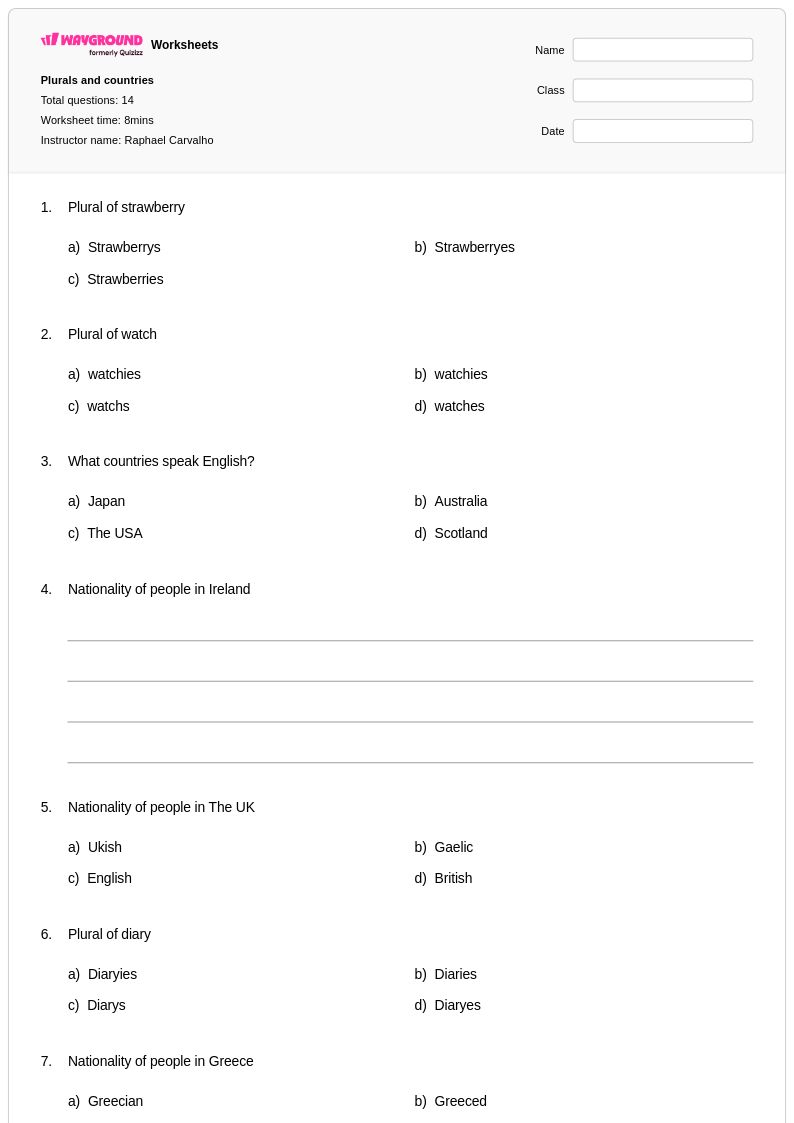
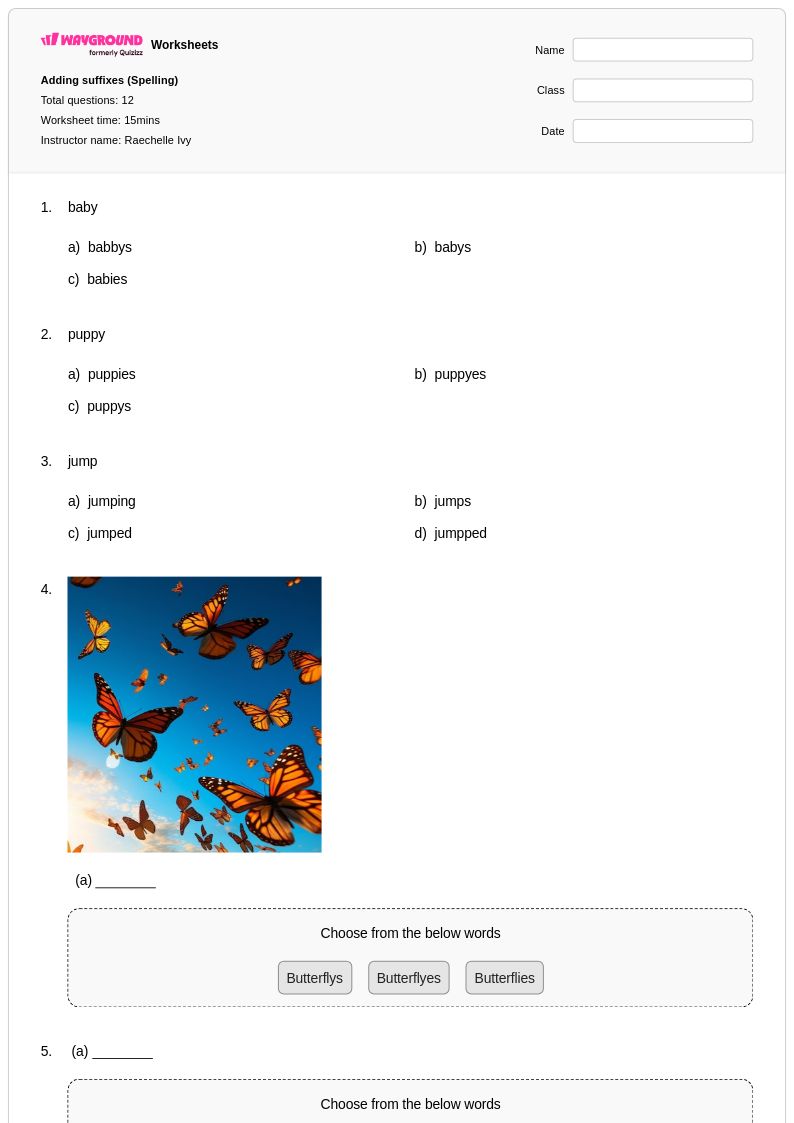
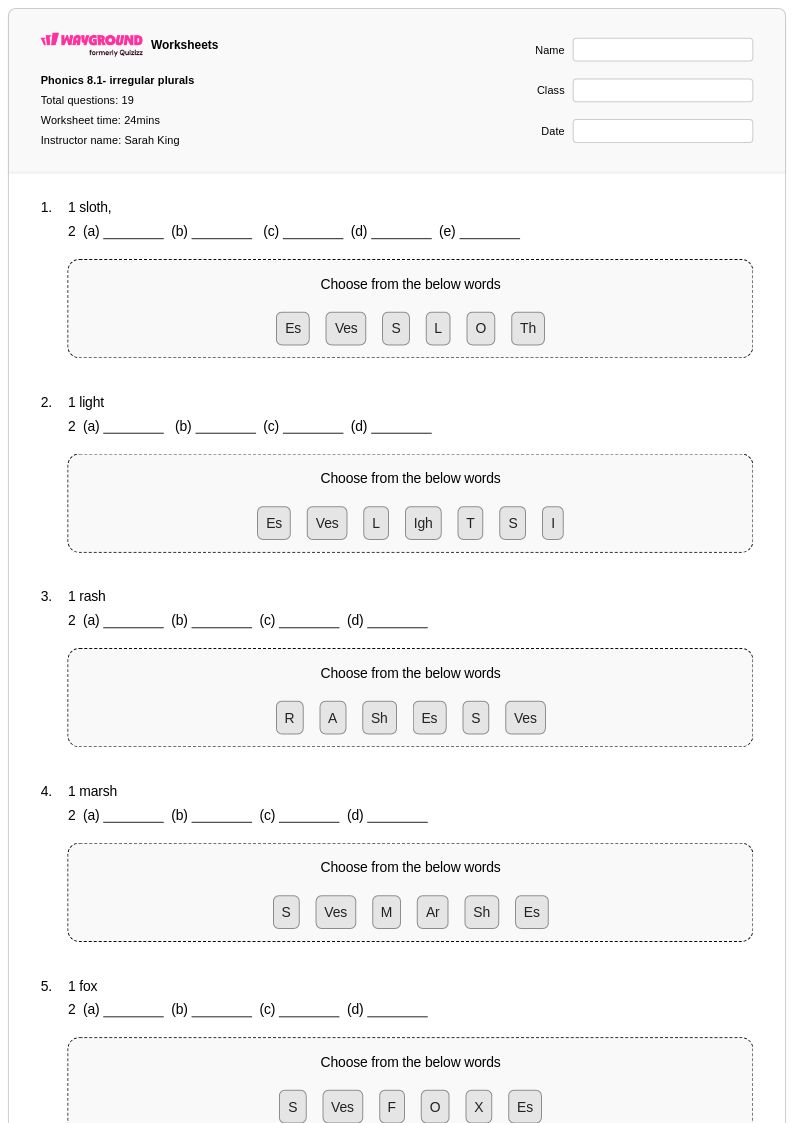
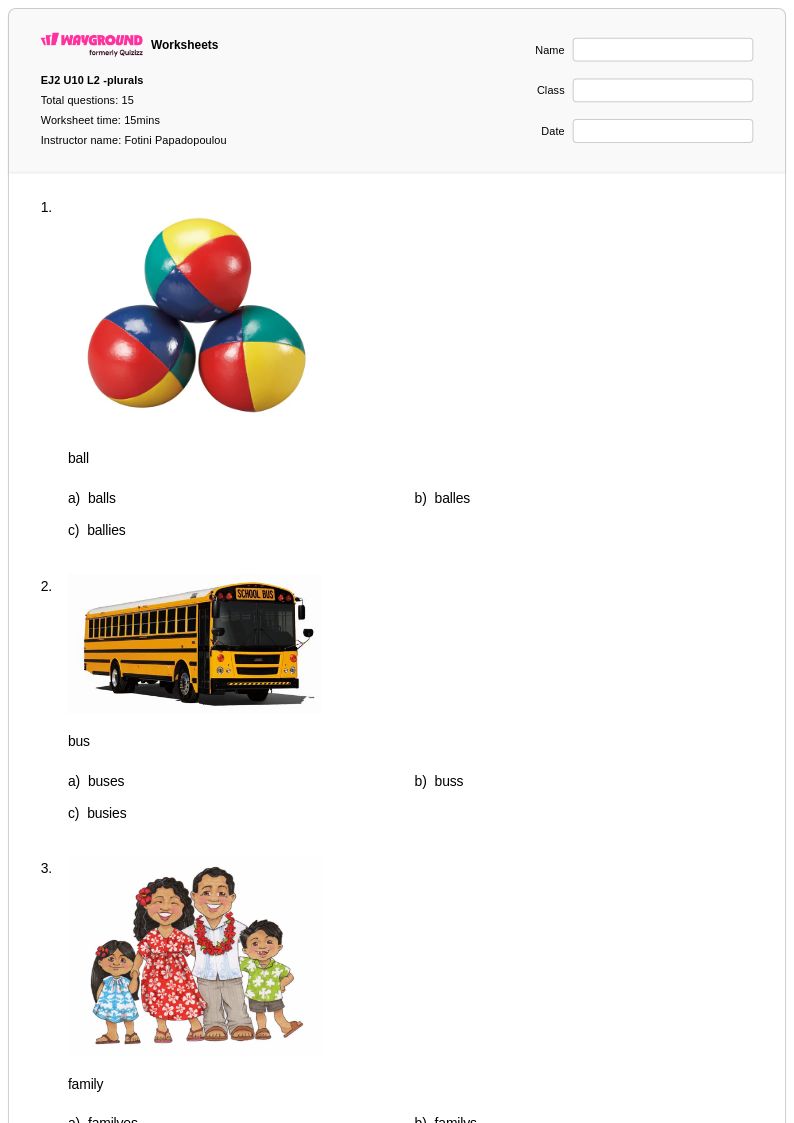
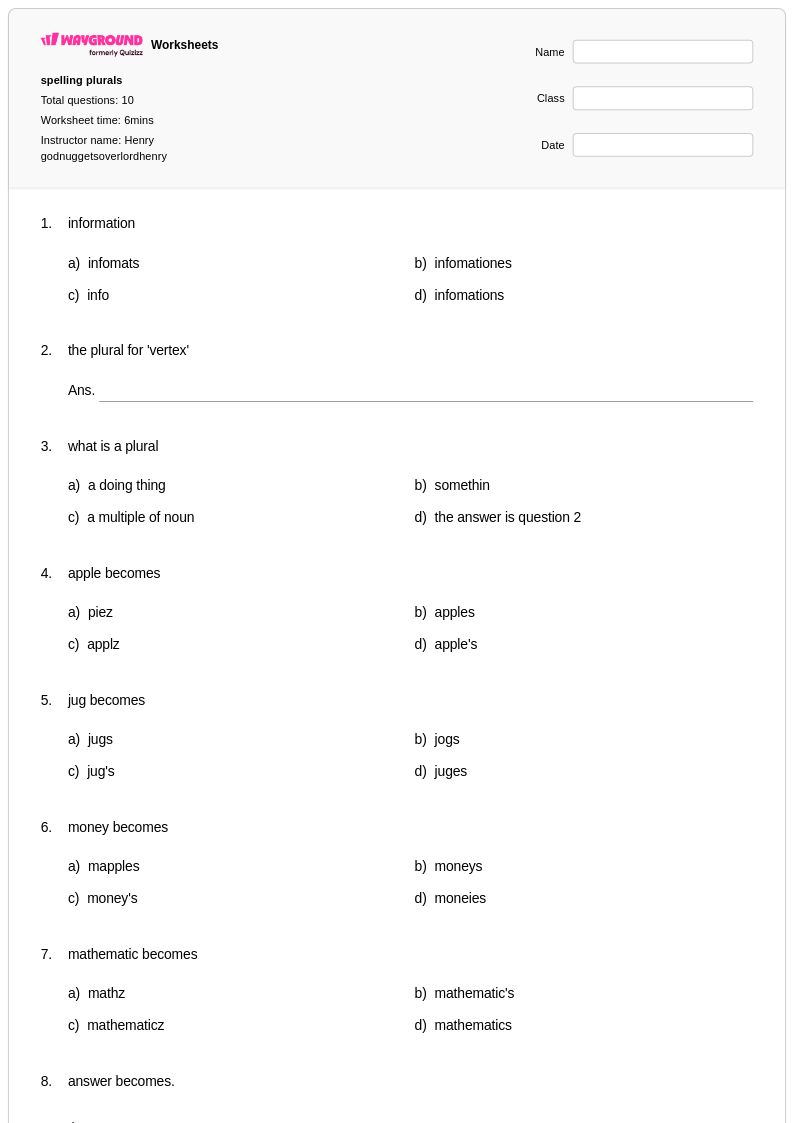
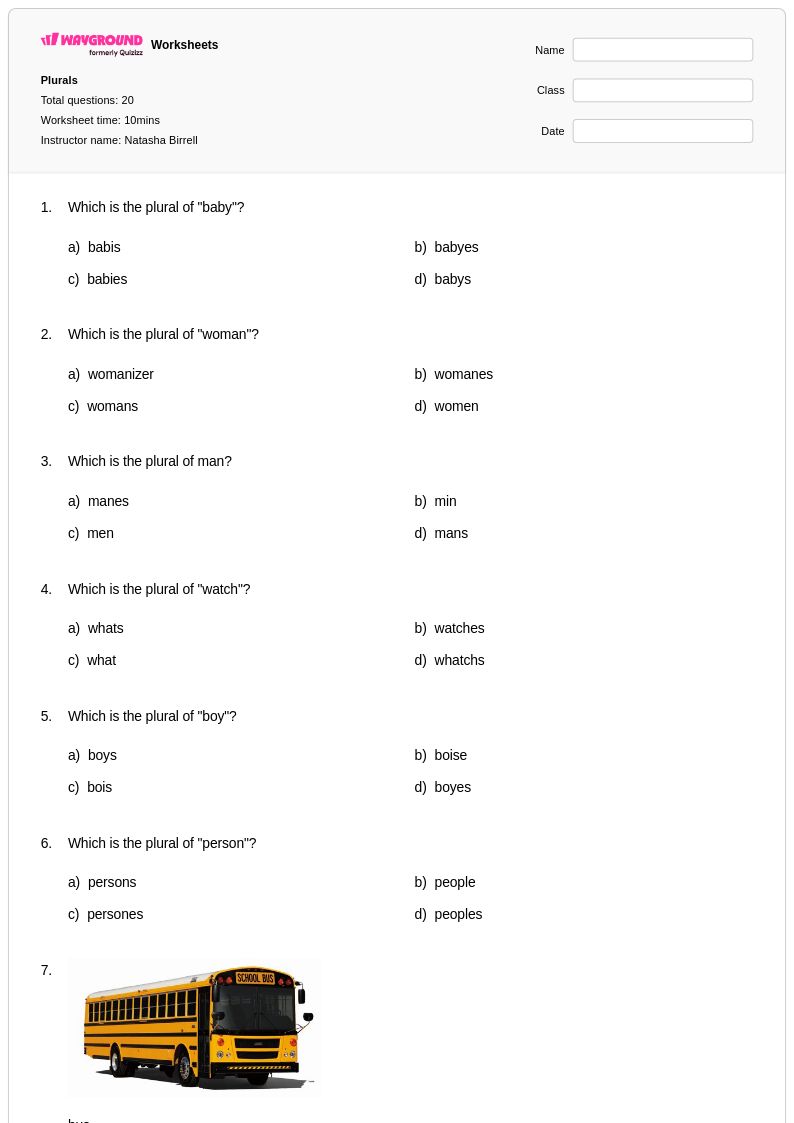
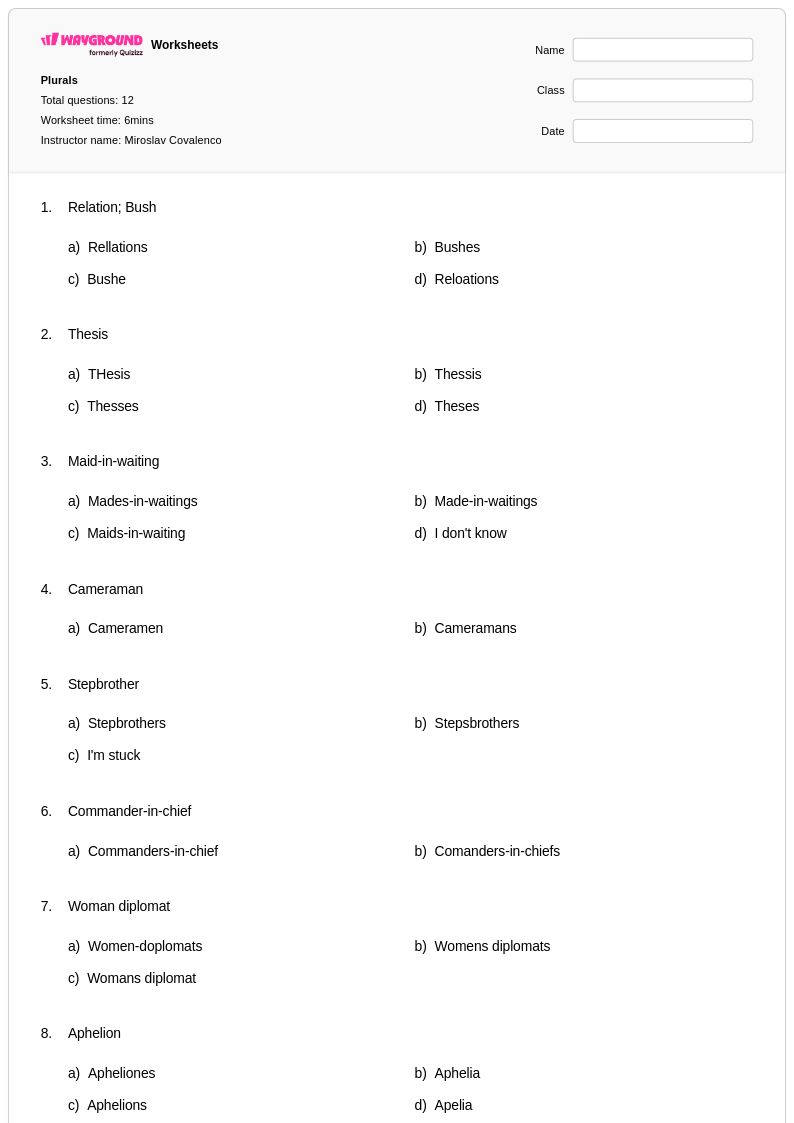
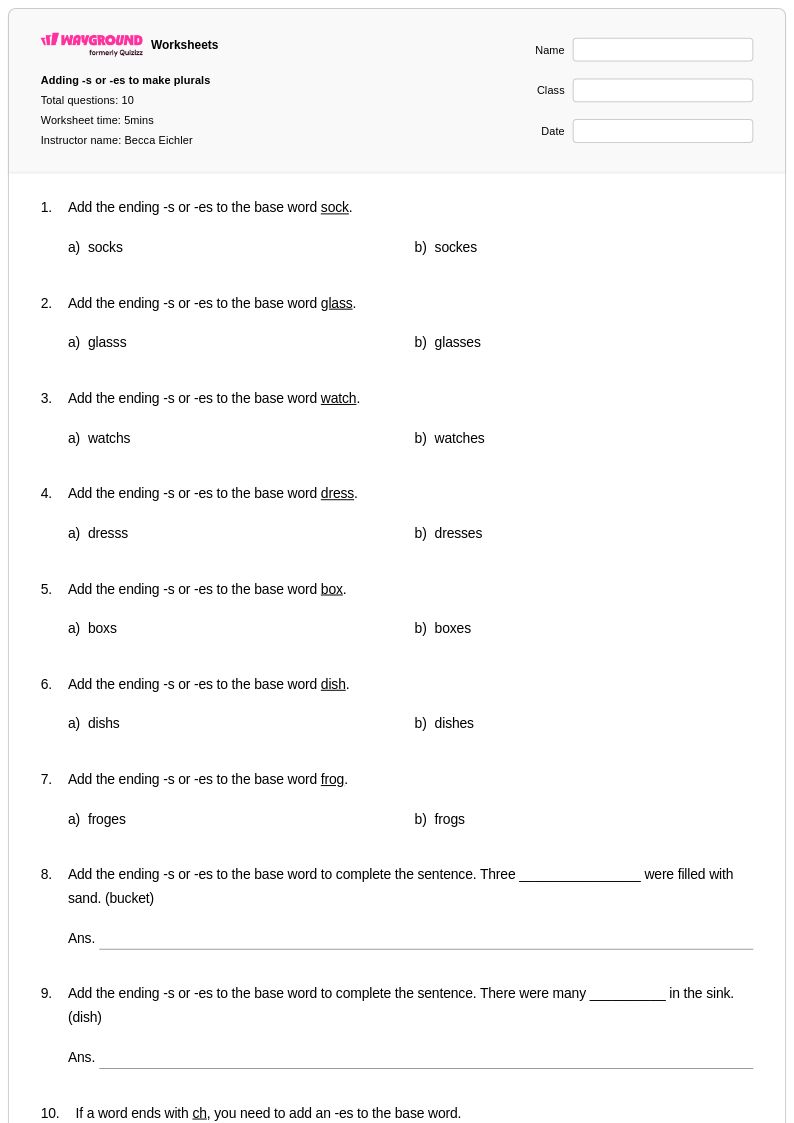
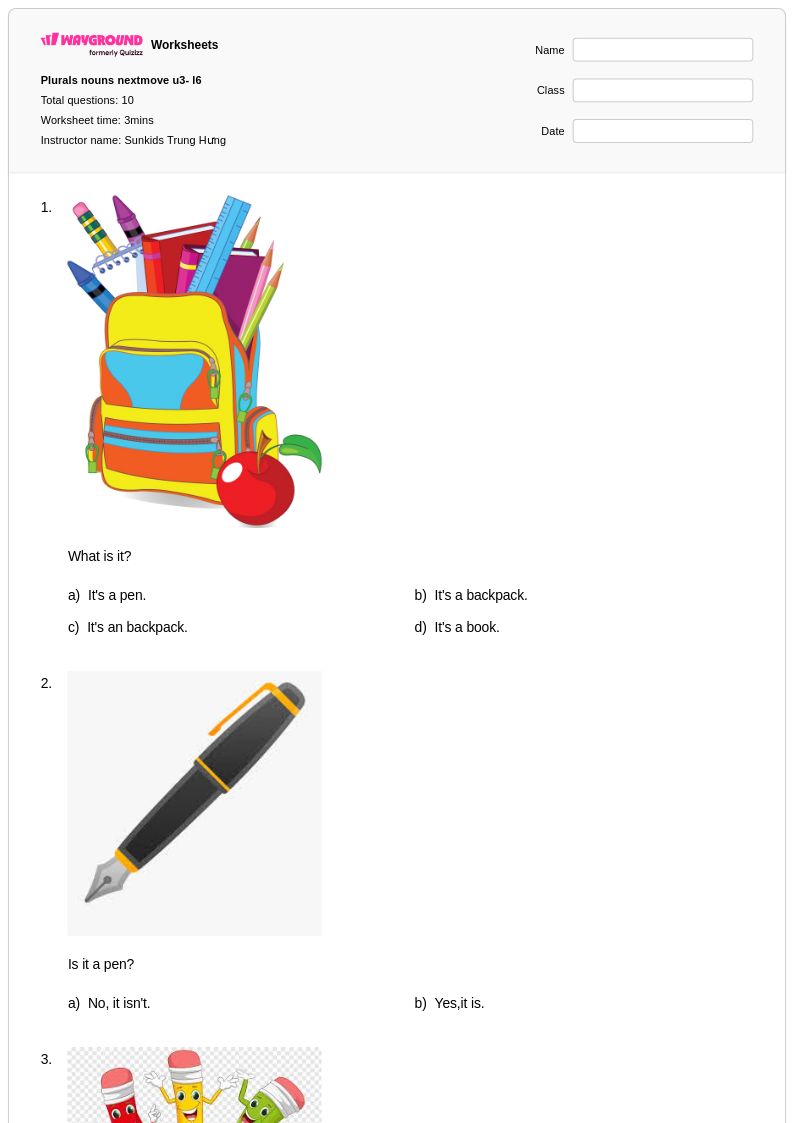
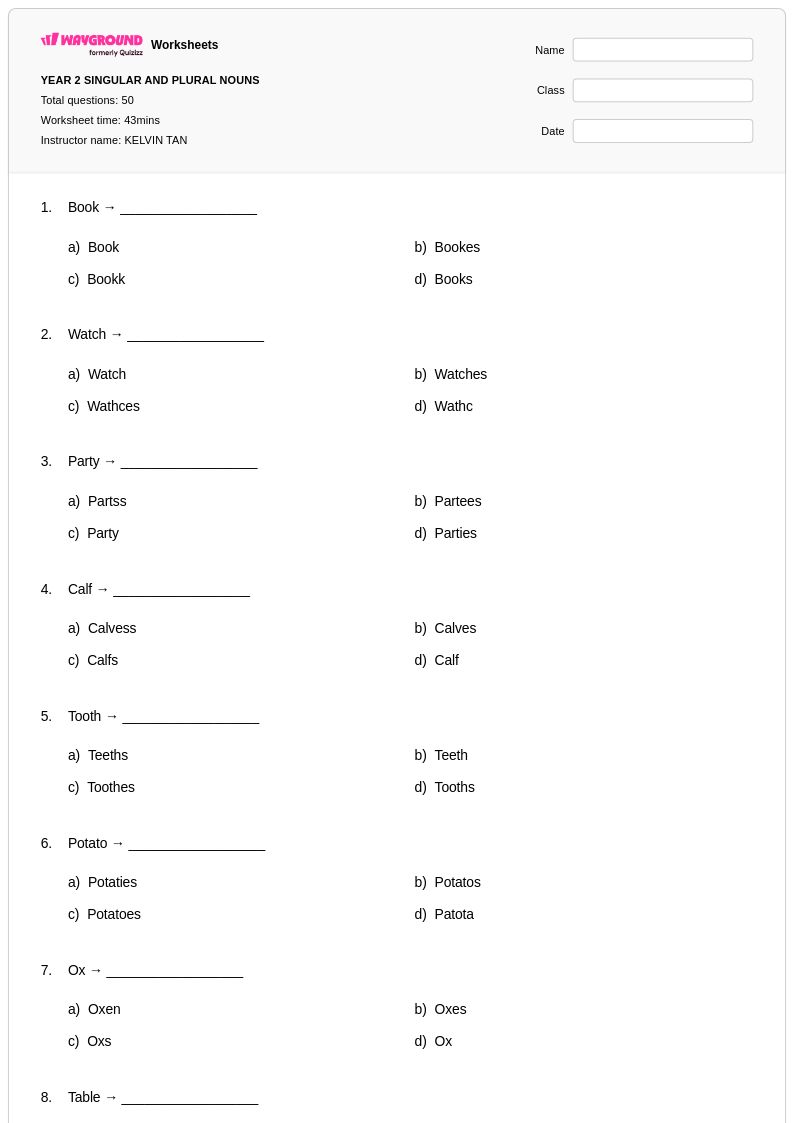
Plurals worksheets for Year 2 students available through Wayground (formerly Quizizz) provide essential practice in transforming singular nouns into their plural forms while reinforcing proper punctuation usage. These comprehensive printables focus on fundamental plural formation rules, including adding -s to most nouns, -es to words ending in s, x, z, ch, and sh, and changing y to -ies for words ending in consonant-y combinations. Each worksheet incorporates answer keys to support independent learning and self-assessment, while practice problems range from basic identification exercises to more complex sentence completion activities. The free resources systematically build students' understanding of how punctuation marks like apostrophes should not be used in simple plurals, helping young learners avoid common mistakes such as adding apostrophes to regular plural nouns.
Wayground (formerly Quizizz) empowers teachers with an extensive collection of millions of teacher-created plural worksheets specifically designed for Year 2 learners, featuring robust search and filtering capabilities that allow educators to quickly locate resources aligned with specific curriculum standards and learning objectives. The platform's differentiation tools enable teachers to customize worksheets based on individual student needs, whether for remediation of struggling learners or enrichment activities for advanced students. These versatile resources are available in both printable PDF formats for traditional classroom use and digital formats for interactive learning experiences, making lesson planning more efficient and flexible. Teachers can utilize these carefully curated materials for targeted skill practice, formative assessment, homework assignments, and intervention support, ensuring that every student develops confidence in forming plurals correctly while maintaining proper punctuation conventions.
FAQs
How do I teach plural rules to elementary students?
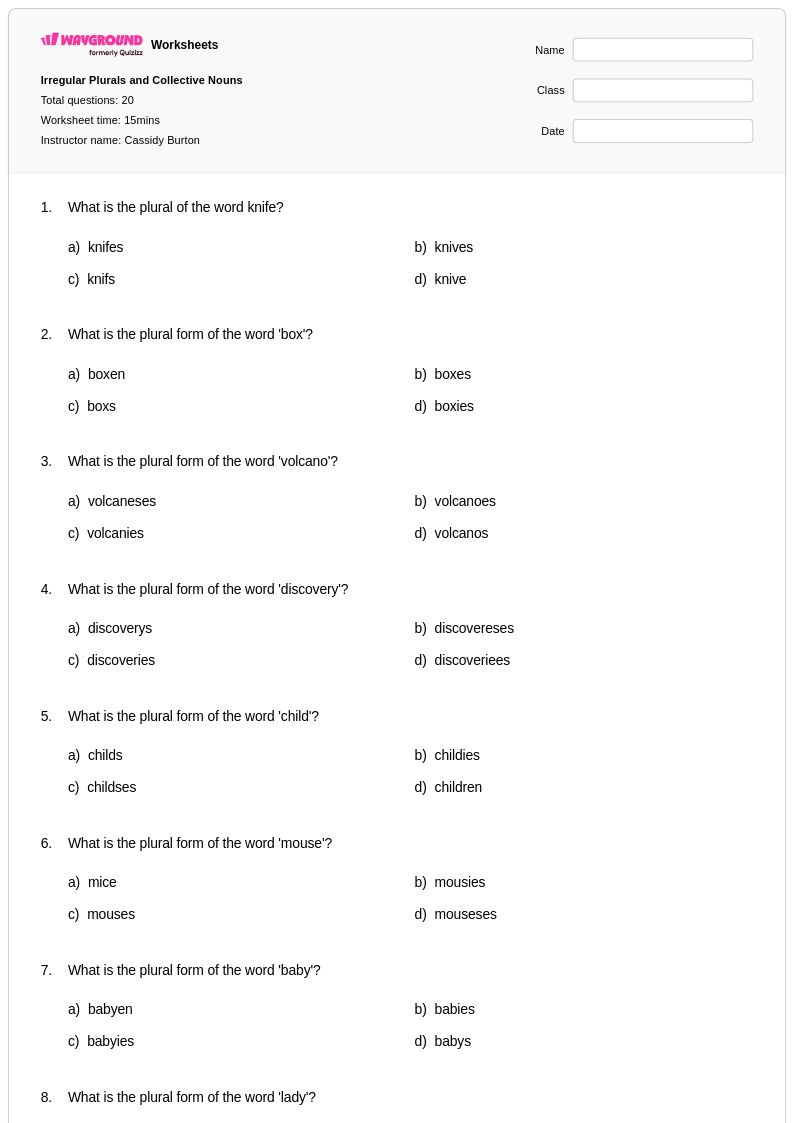
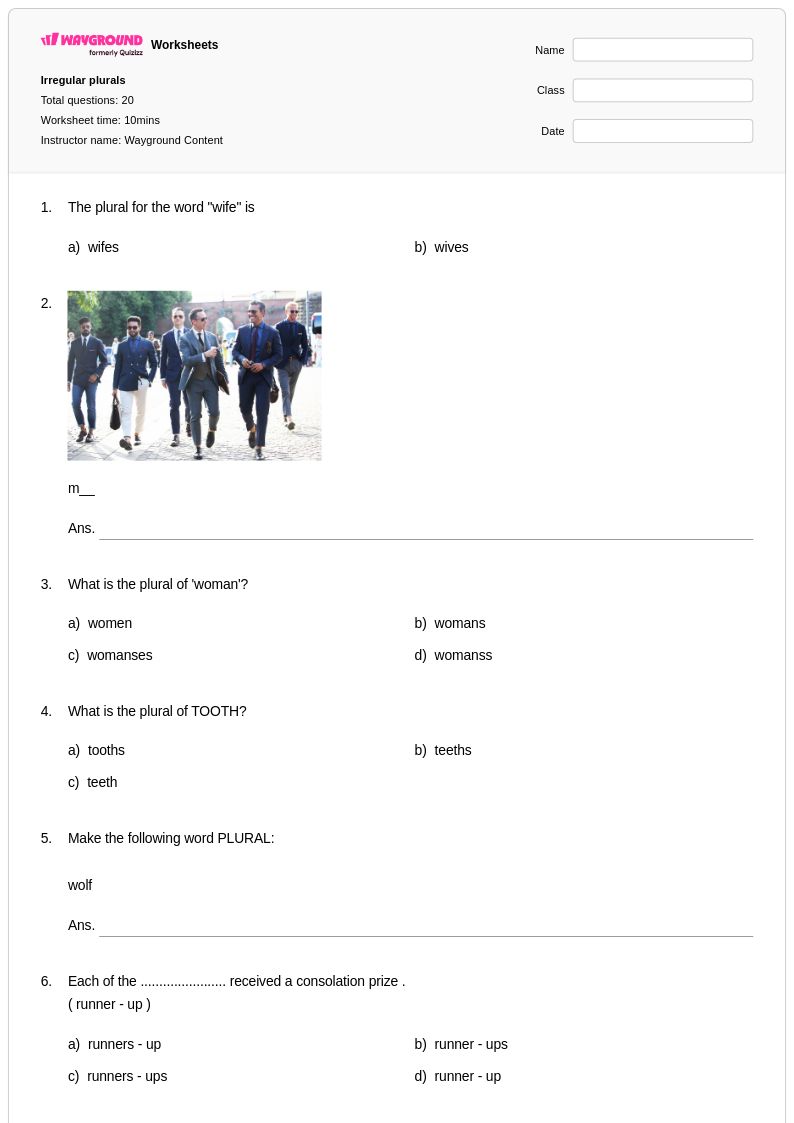
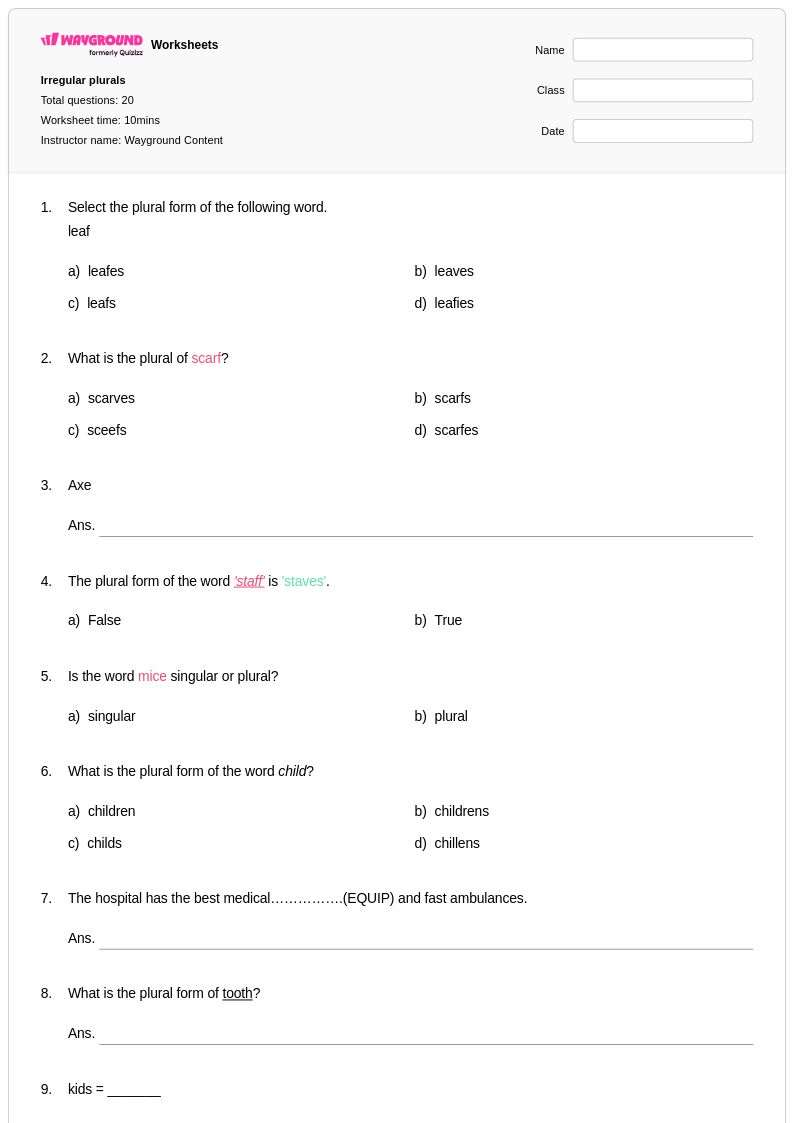
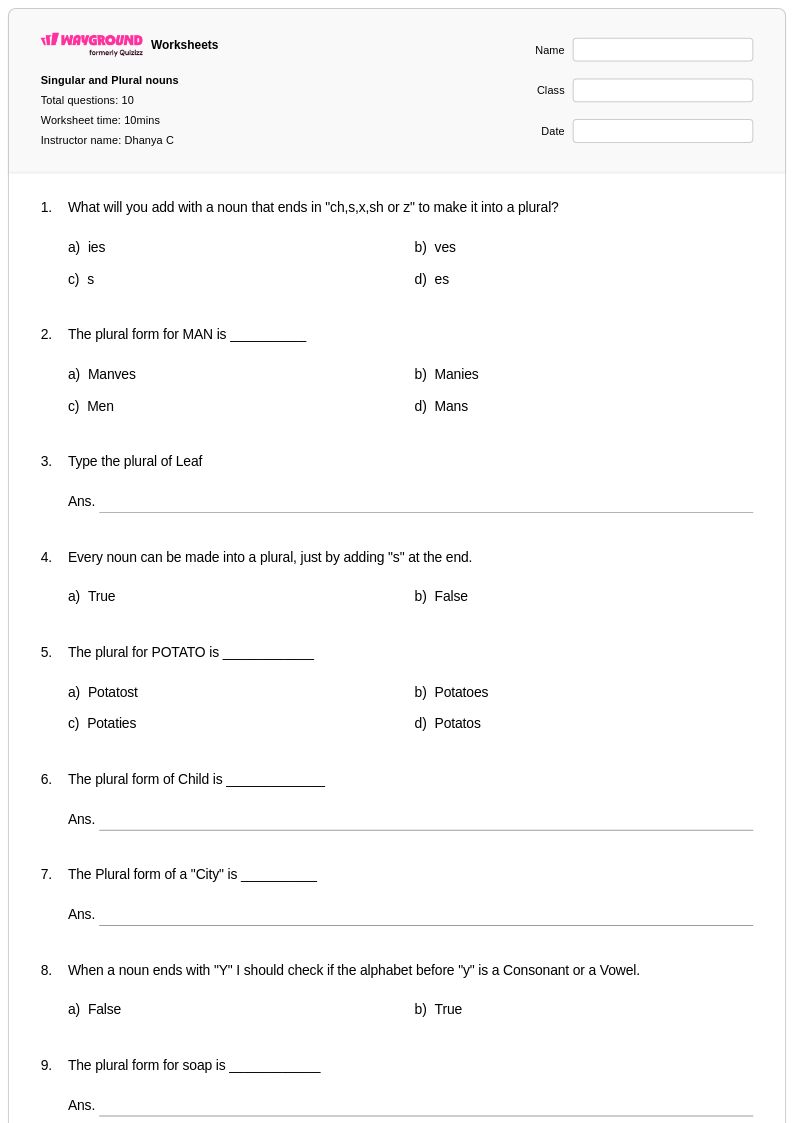
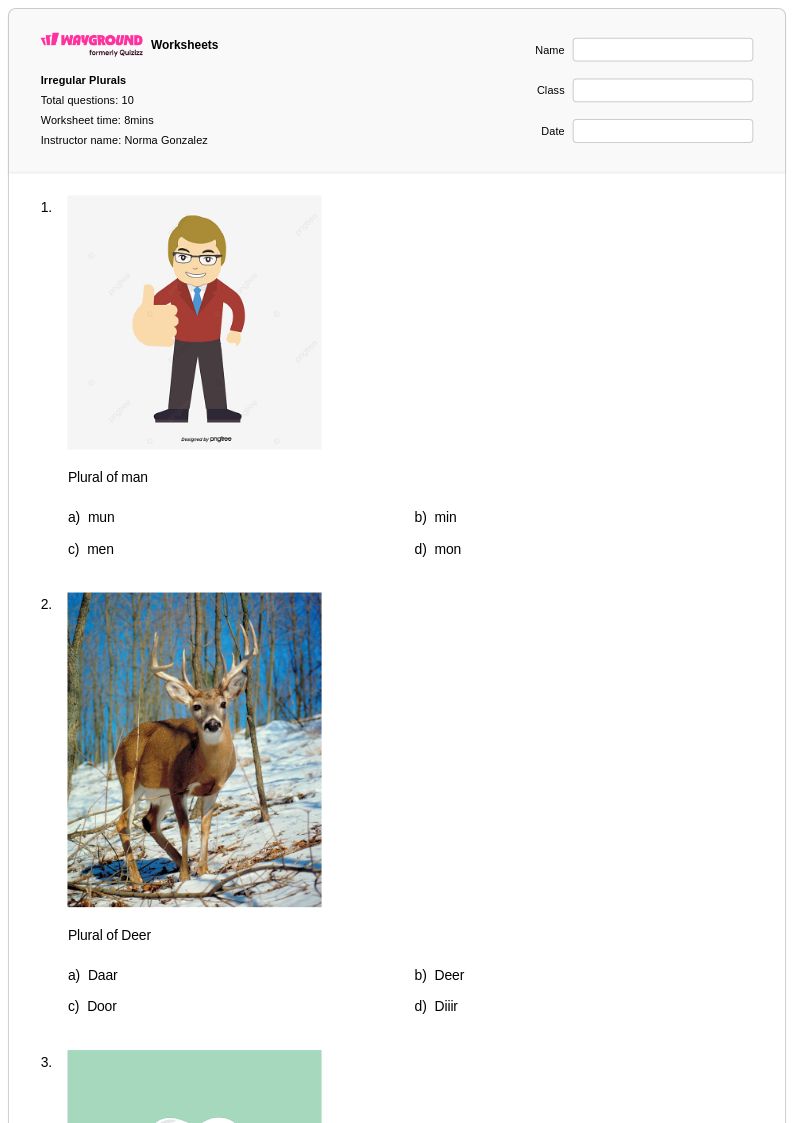
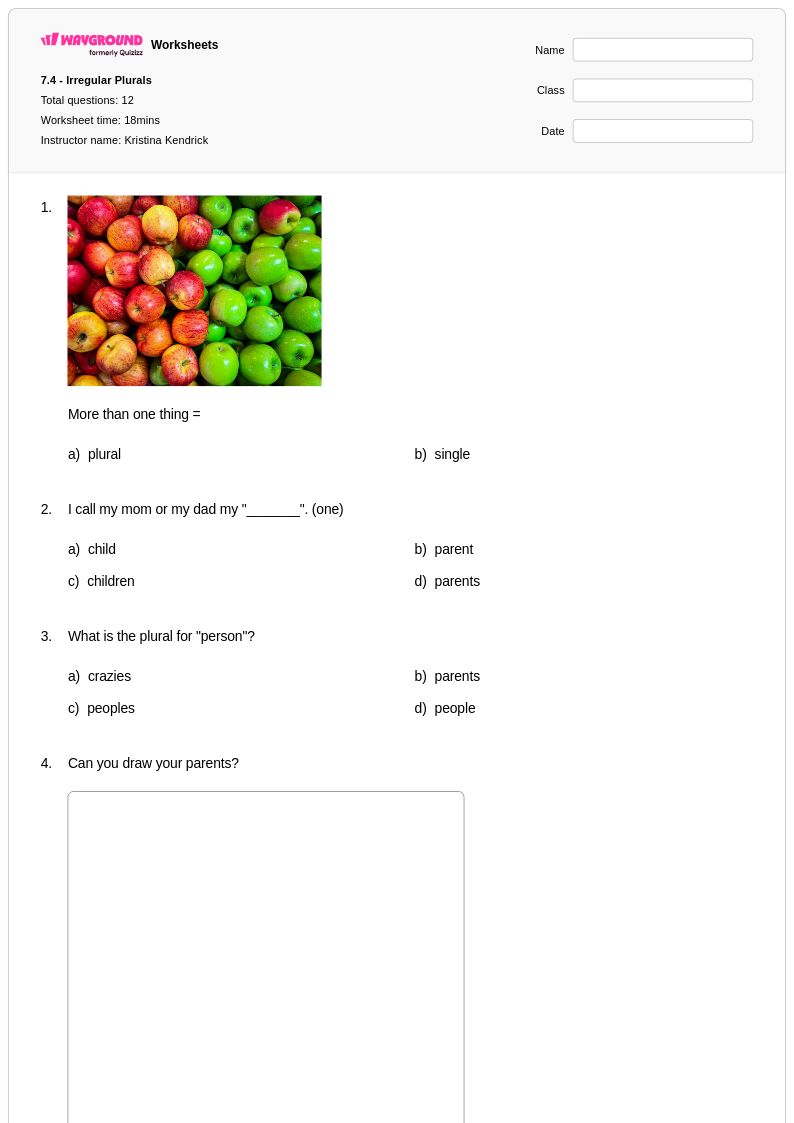
Start by establishing the default rule — adding -s to most nouns — before introducing pattern-based exceptions such as adding -es to words ending in -s, -sh, -ch, or -x. From there, teach words ending in -y (changing to -ies), -f or -fe (changing to -ves), and irregular plurals like 'child/children' or 'mouse/mice' as distinct categories. Using sorting activities where students group nouns by their pluralization rule helps build pattern recognition before moving to independent practice.
What exercises help students practice plural formation?
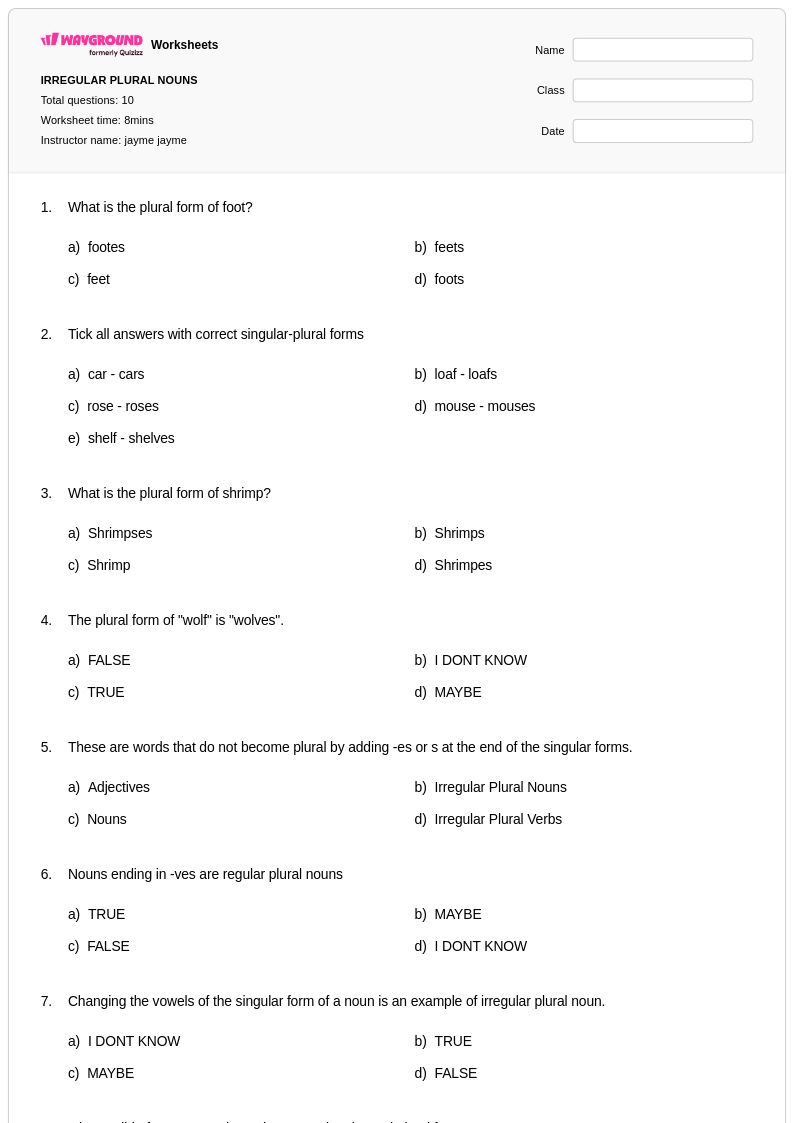
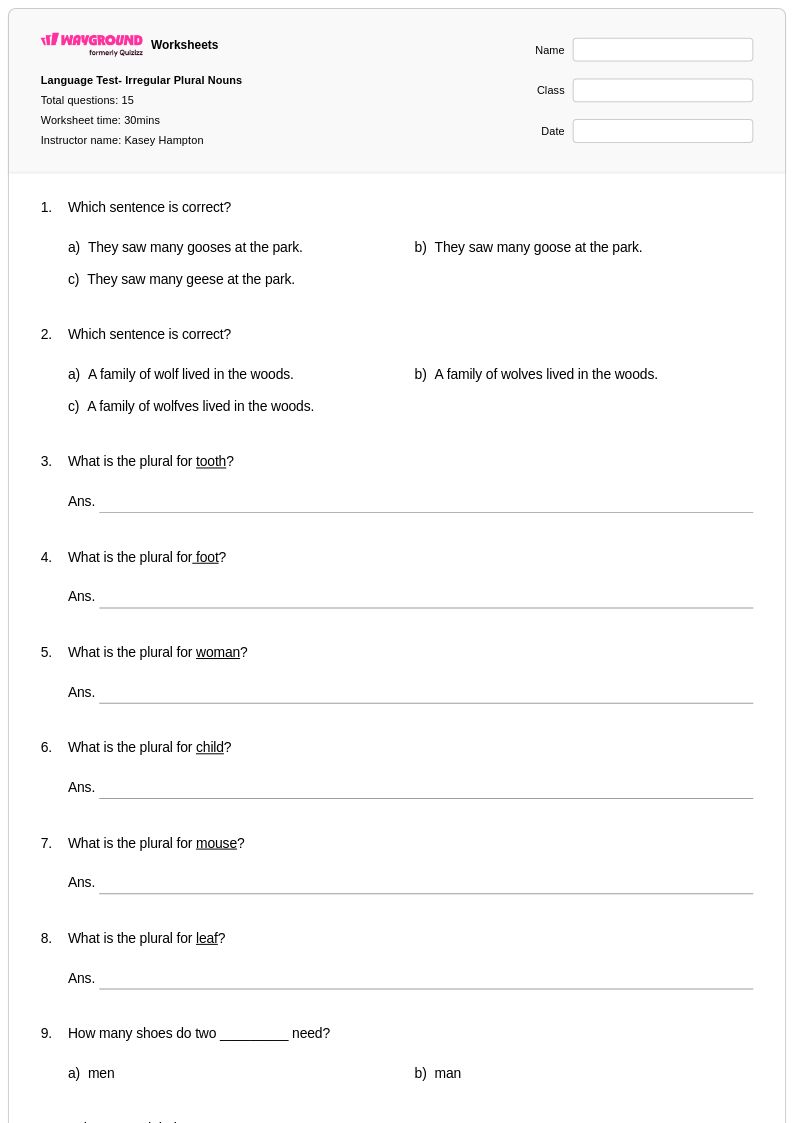
Effective plural practice includes transforming singular nouns into their correct plural forms, identifying errors in sentences, and completing fill-in-the-blank exercises that require applying specific rules. Mixed-format worksheets that combine rule identification with contextual writing tasks are especially useful because they reinforce both recognition and application. Targeting irregular plurals separately from regular patterns ensures students don't overgeneralize the -s rule.
What mistakes do students commonly make when forming plurals?
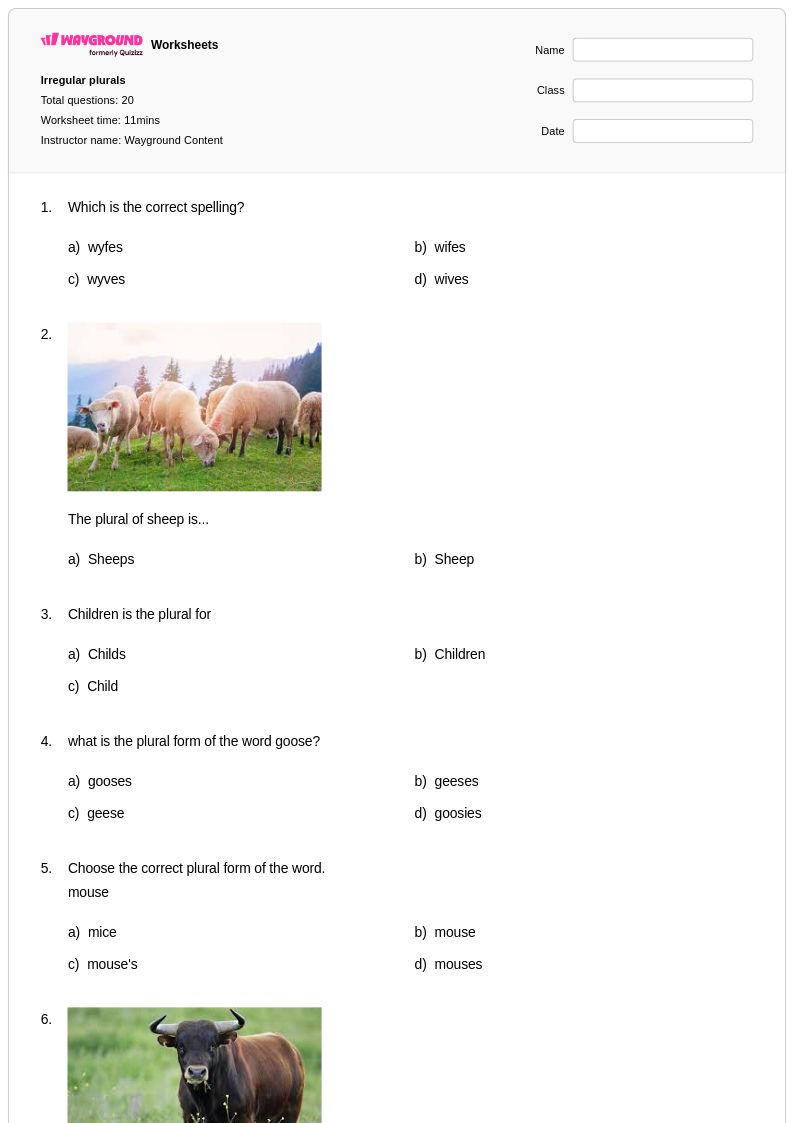
The most frequent error is overapplying the -s rule to irregular nouns, producing forms like 'childs' or 'mouses' instead of 'children' or 'mice.' Students also commonly mishandle nouns ending in -f or -fe, writing 'leafs' instead of 'leaves,' and nouns ending in -y, writing 'citys' instead of 'cities.' Providing explicit instruction on these exception categories, followed by targeted practice, is the most reliable way to reduce these recurring errors.
How do I use Wayground's plurals worksheets in my classroom?
Wayground's plurals worksheets are available as printable PDFs for traditional classroom use and in digital formats for technology-integrated or remote learning environments, giving teachers flexibility regardless of their instructional setting. You can also host them as a quiz directly on Wayground, which allows for real-time student responses and immediate feedback. Each worksheet includes a detailed answer key, supporting independent student practice, self-assessment, or teacher-led review.
How can I differentiate plural instruction for students at different proficiency levels?
For students who need additional support, focus first on regular plural rules with high-frequency nouns before introducing exceptions. Wayground's digital format allows teachers to apply accommodations such as read-aloud support, reduced answer choices, and extended time on a per-student basis without disrupting the experience for the rest of the class. Advanced learners can be challenged with irregular and context-dependent plural forms, as well as writing tasks that require applying pluralization in connected prose.
At what point in a grammar unit should I introduce irregular plural forms?
Irregular plurals are best introduced after students have a stable grasp of regular pluralization rules, typically after they can consistently apply the -s and -es patterns. Introducing irregulars too early can create confusion, while waiting until regular rules are automatic allows students to treat irregular forms as distinct vocabulary to be learned rather than as exceptions to a rule they haven't yet internalized. Short, repeated exposure to high-frequency irregular plurals — such as 'teeth,' 'feet,' and 'children' — across multiple sessions is more effective than a single concentrated lesson.

![Topic. Plurals [Exe2] - Printable Plurals Worksheets Year 2 - Quizizz](https://quizizz-static.s3.amazonaws.com/_media/worksheets-new/64b15395ff31f4001d6d806d-topic-plurals-exe2)