Free Printable Possessive Pronouns Worksheets for Year 1
Wayground's Year 1 possessive pronouns worksheets provide free printables and practice problems to help young students master using words like "my," "your," and "his" correctly, complete with answer keys for easy assessment.
Explore printable Possessive Pronouns worksheets for Year 1
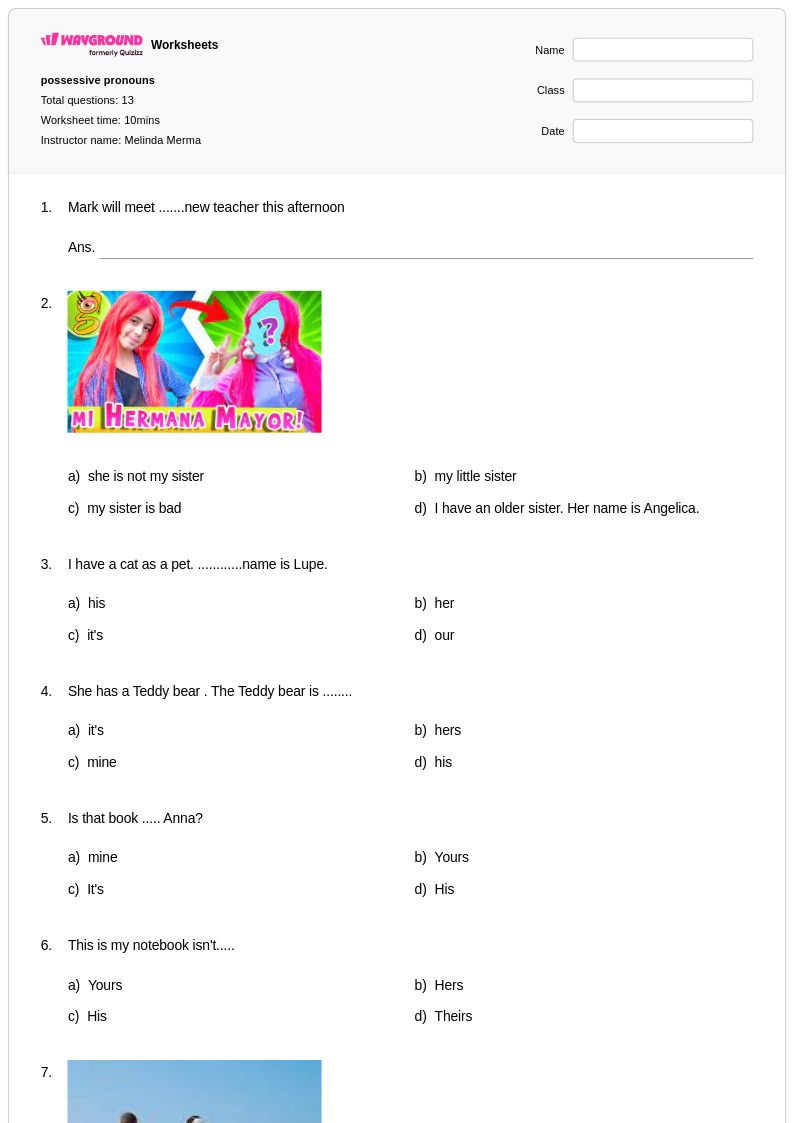
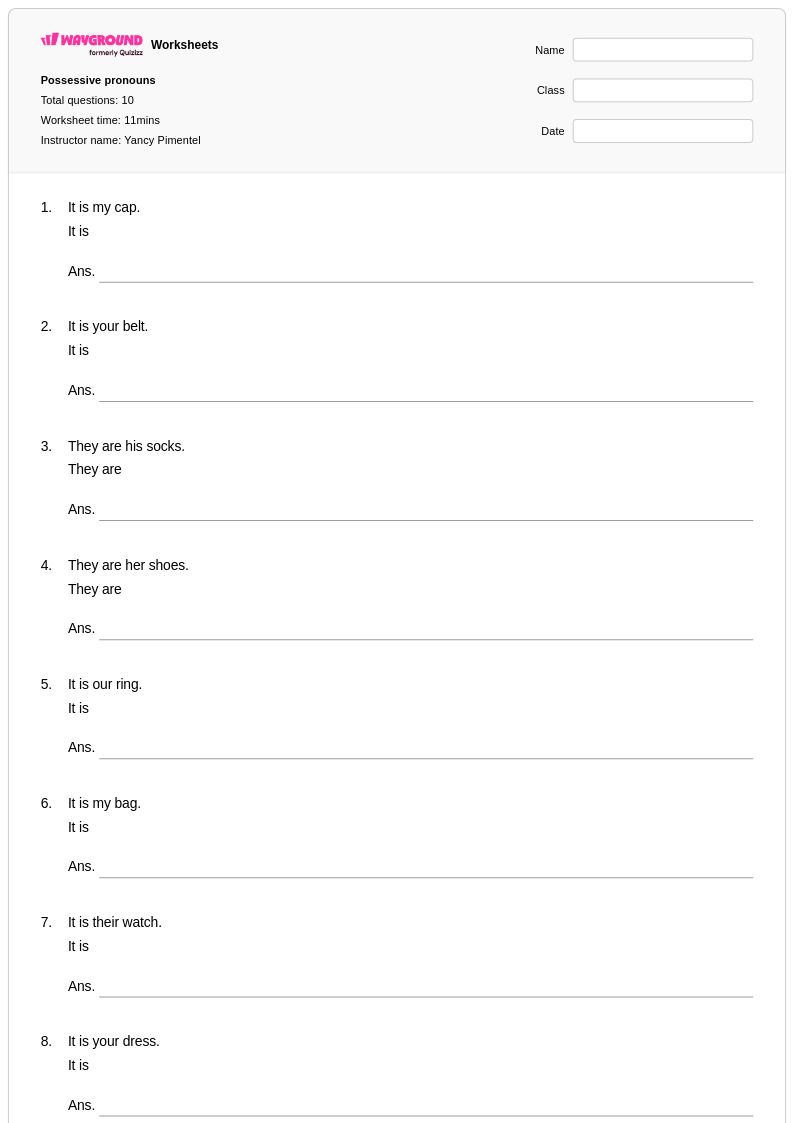
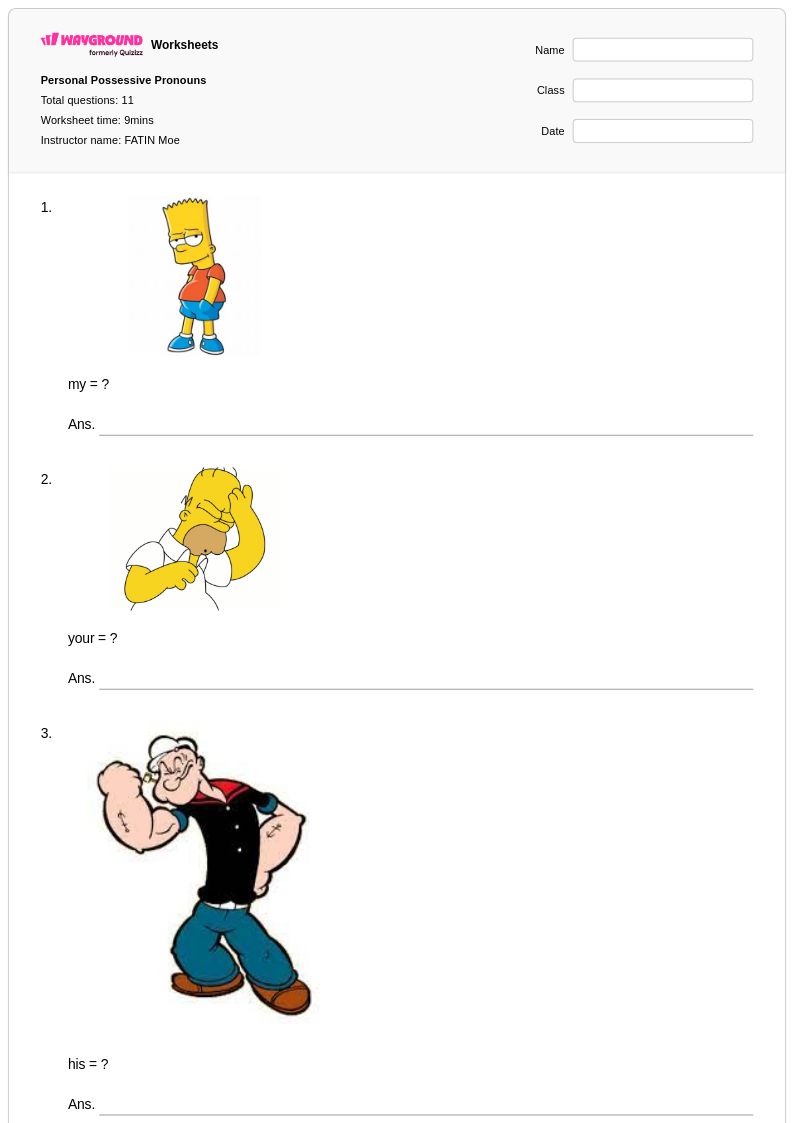
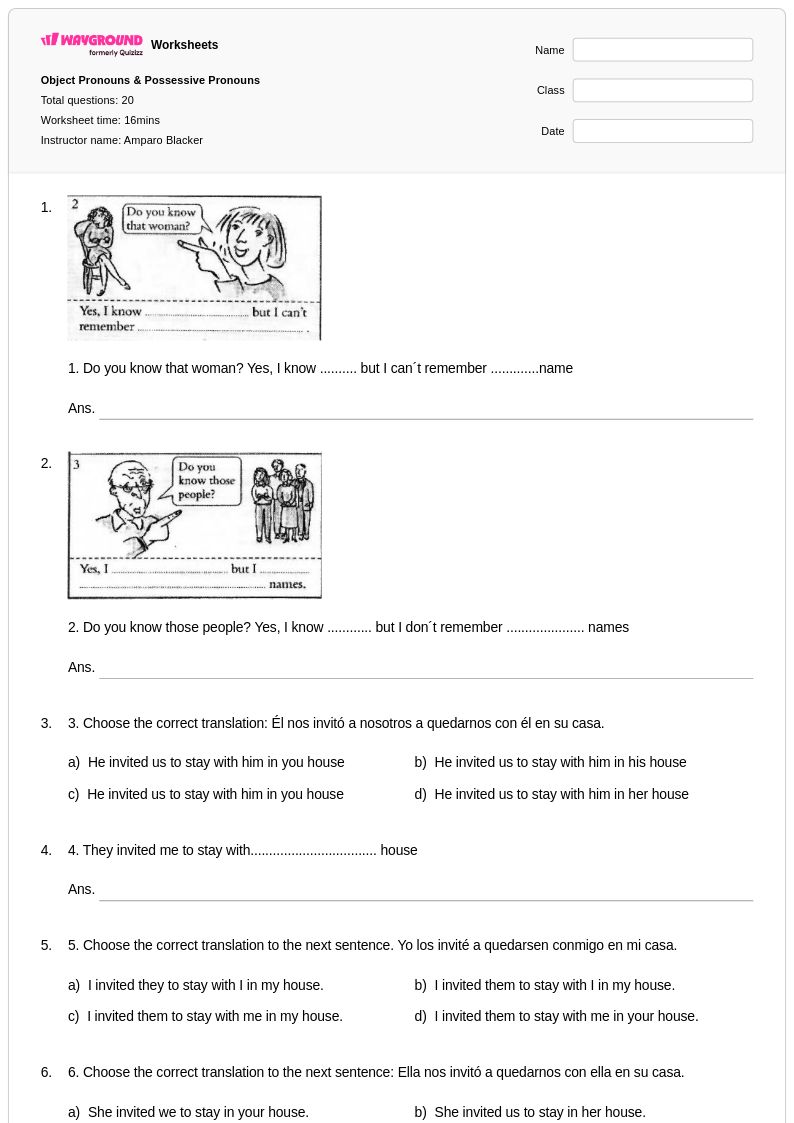
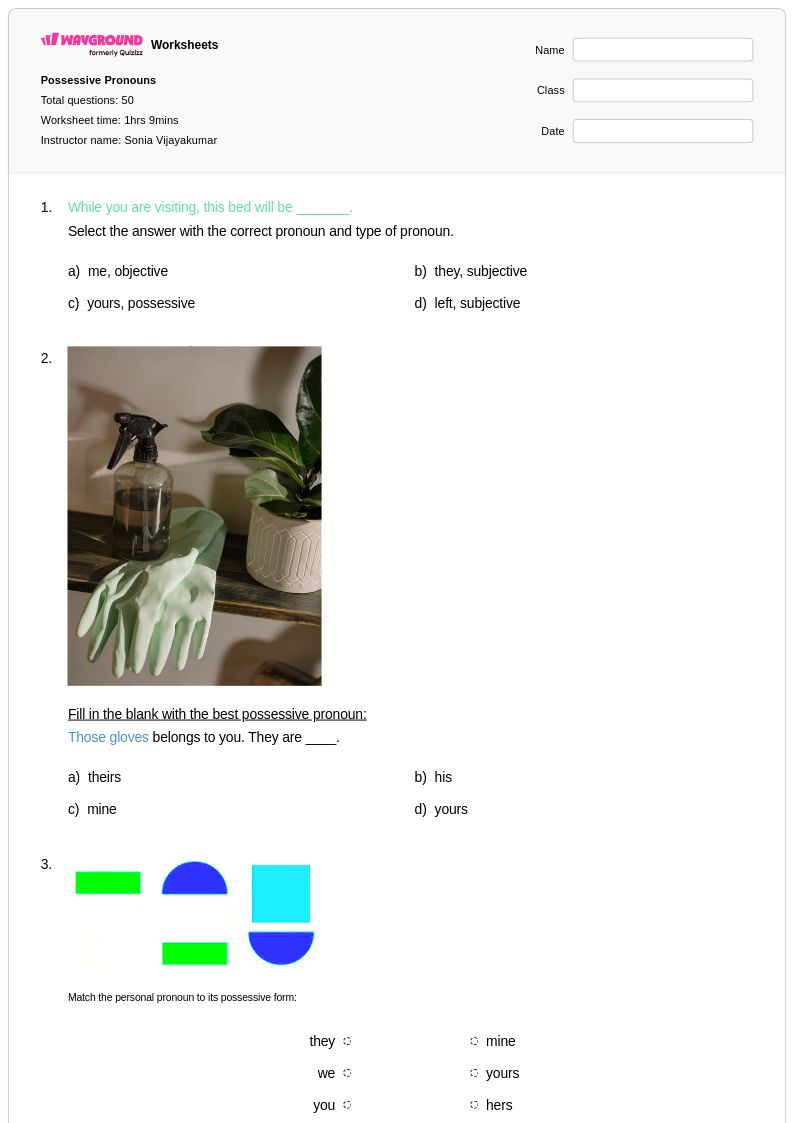
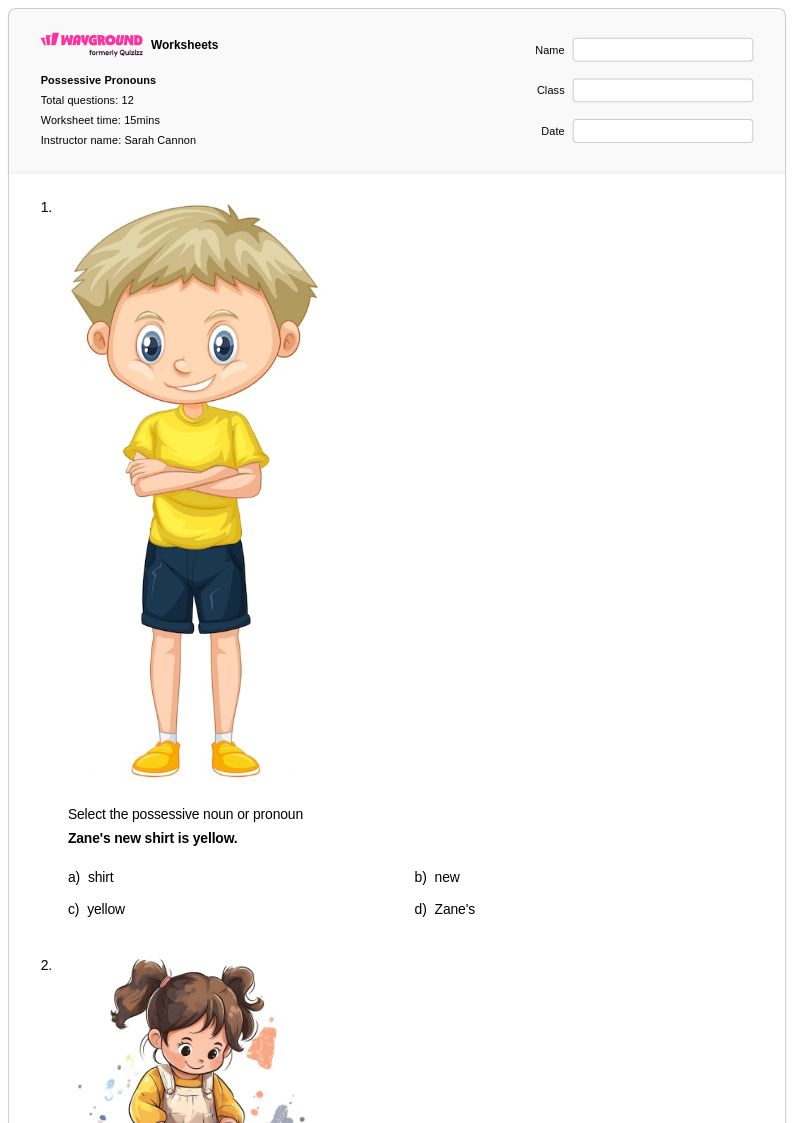
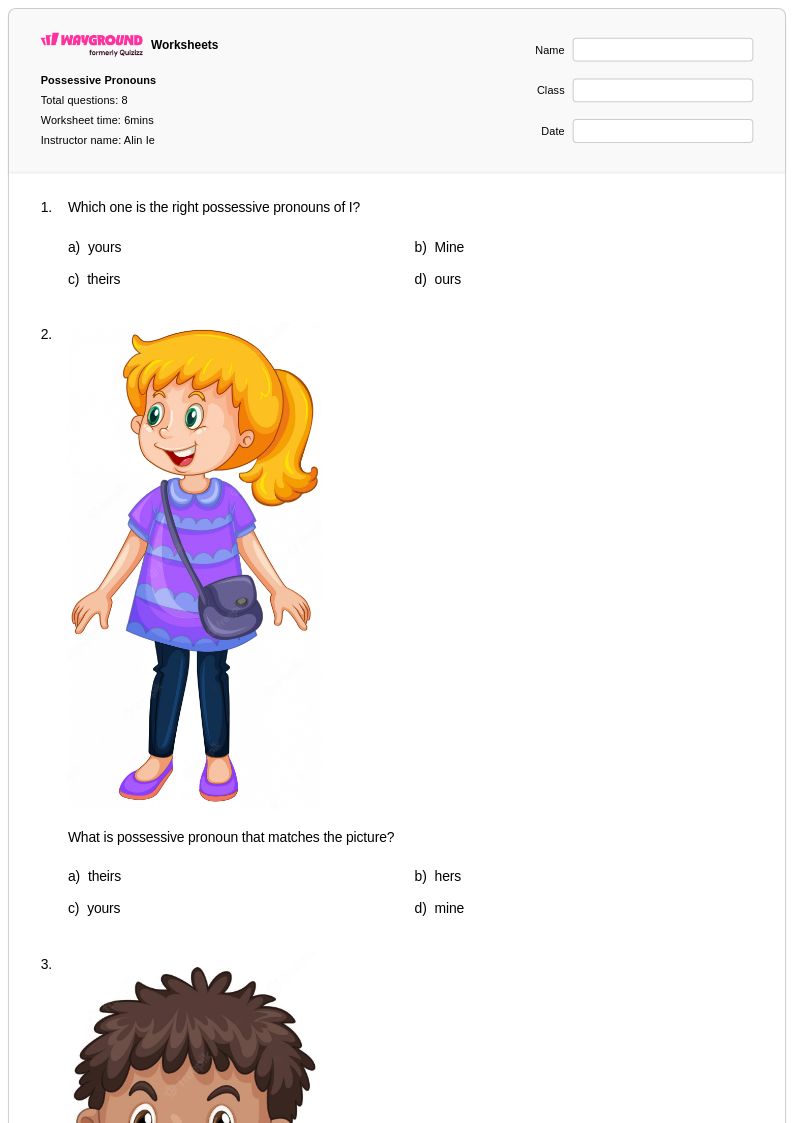
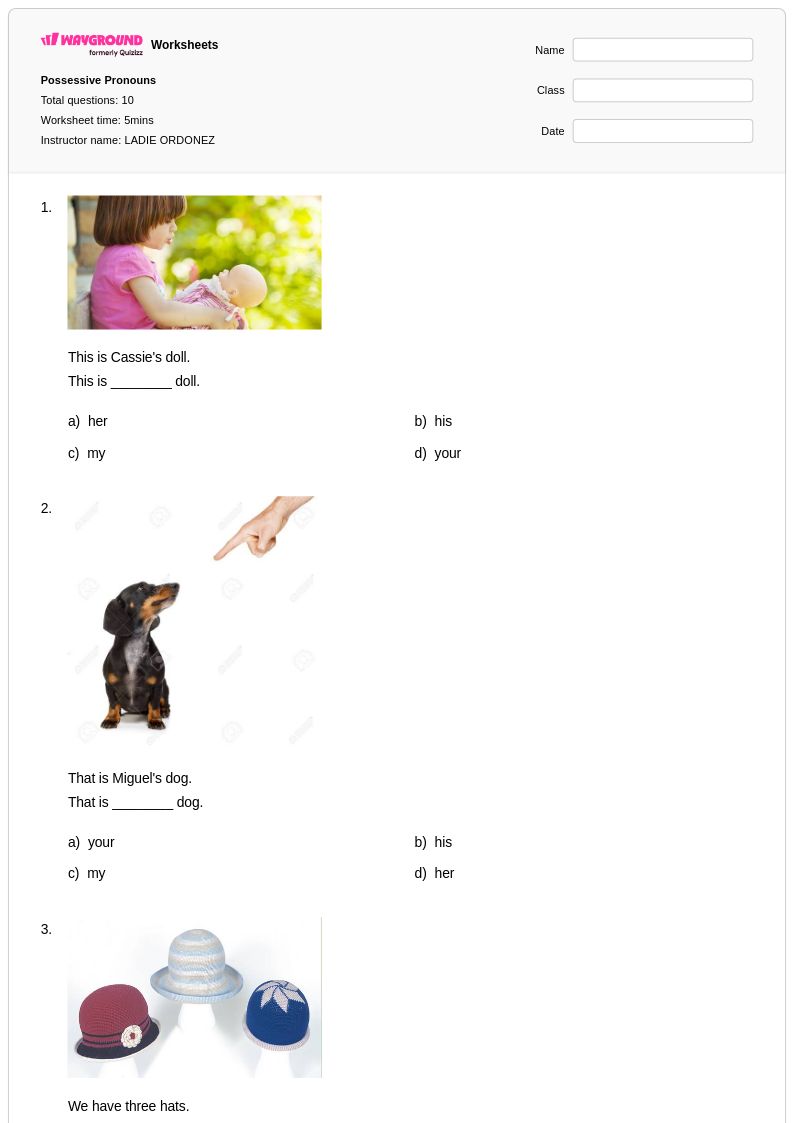
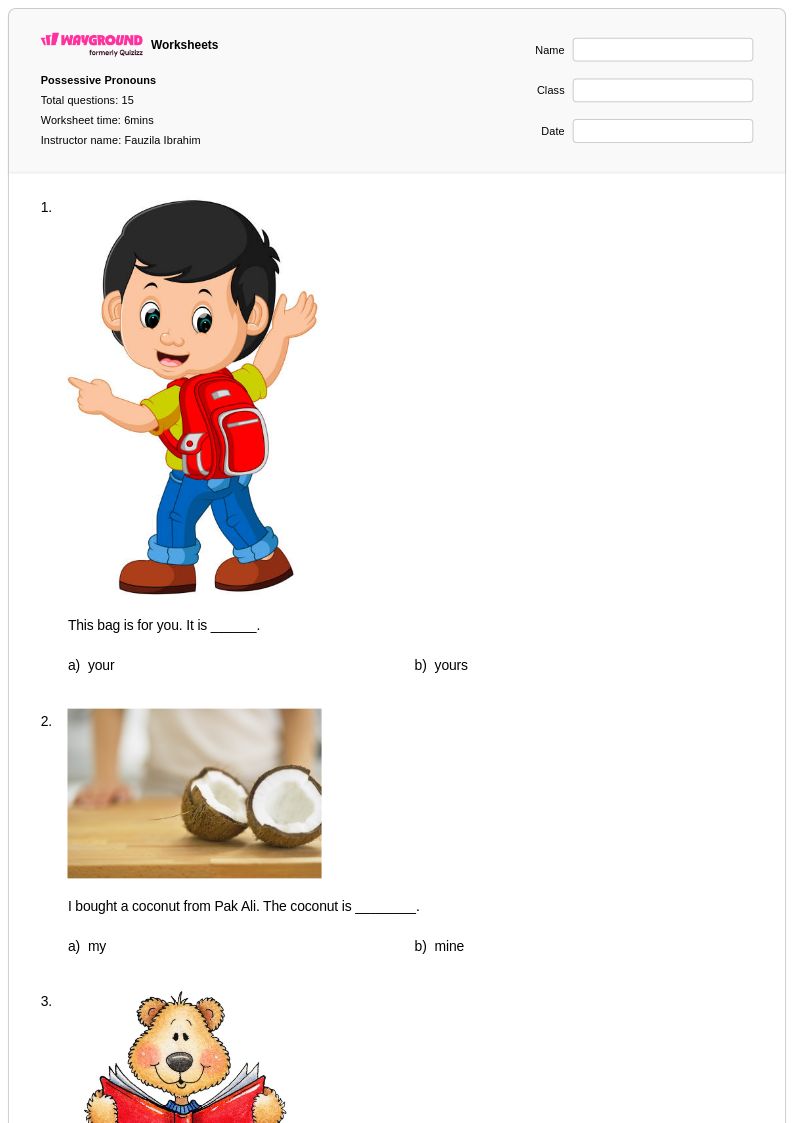
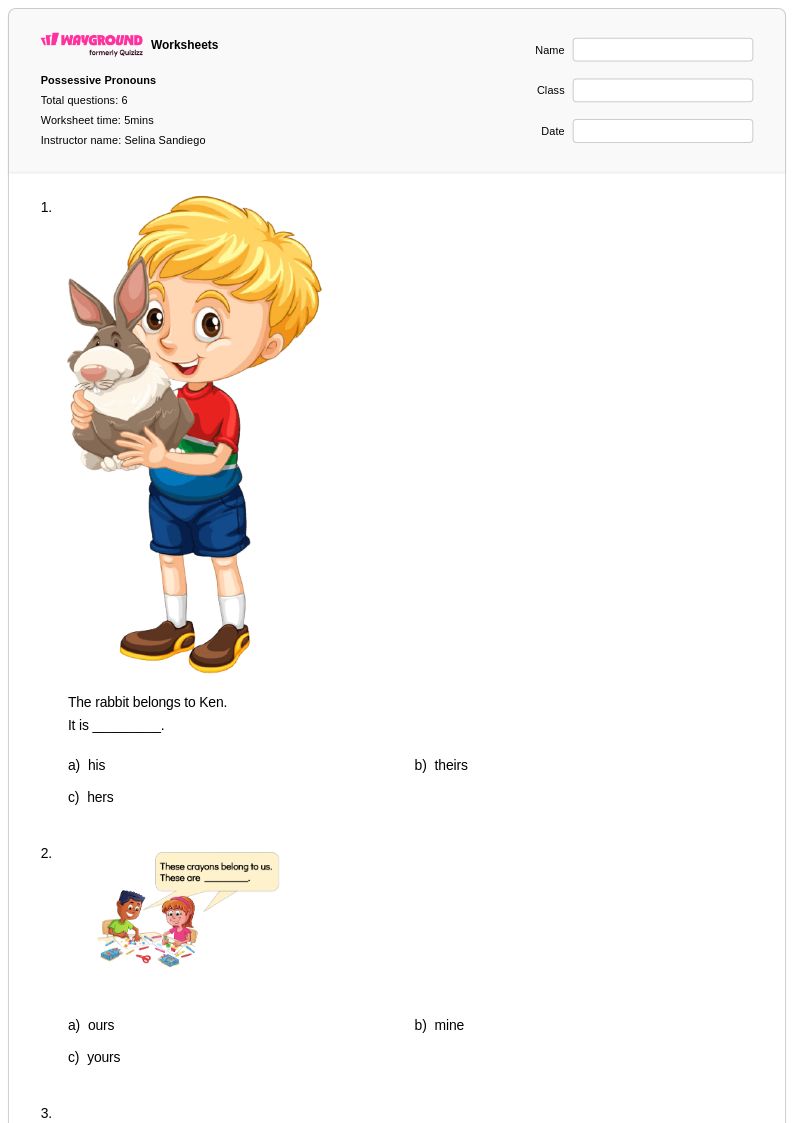
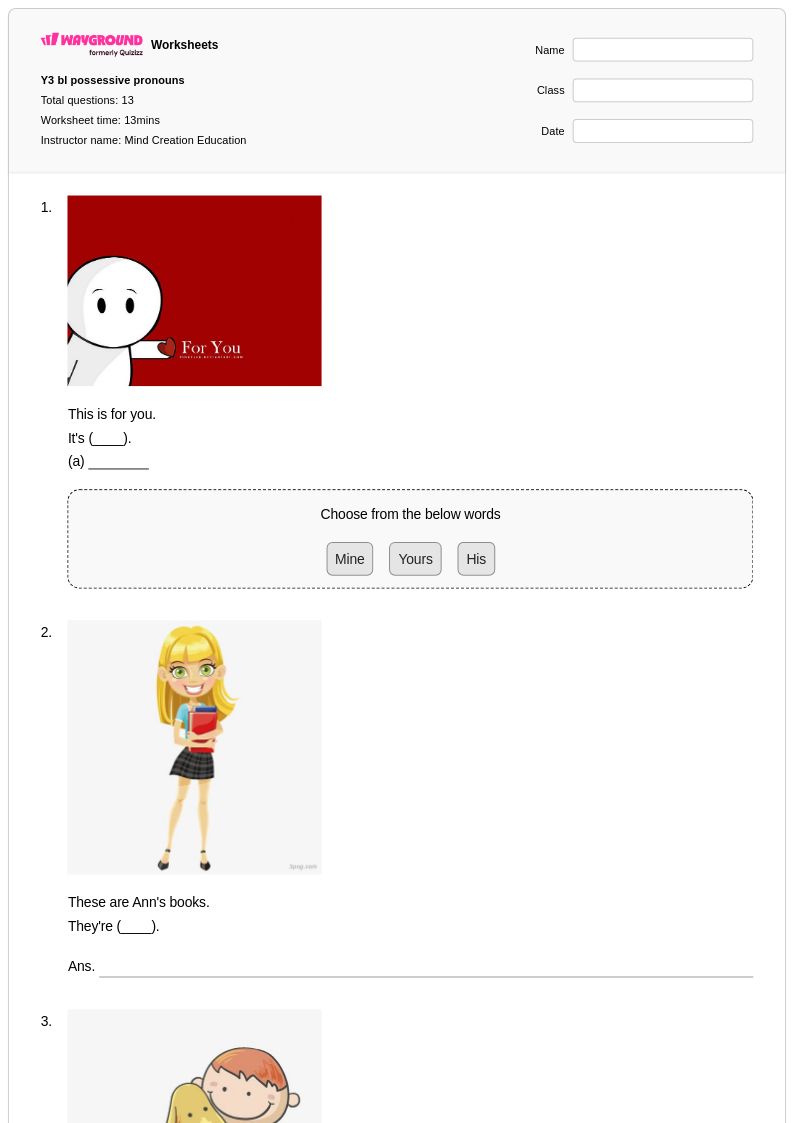
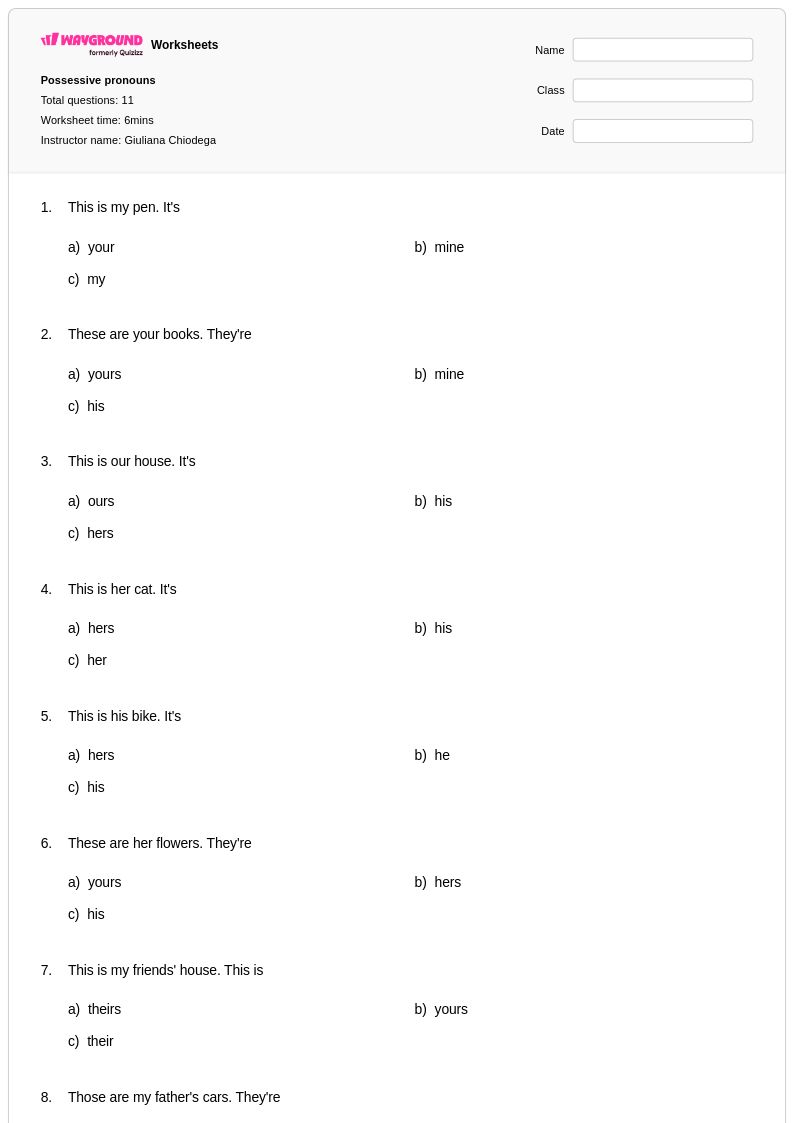
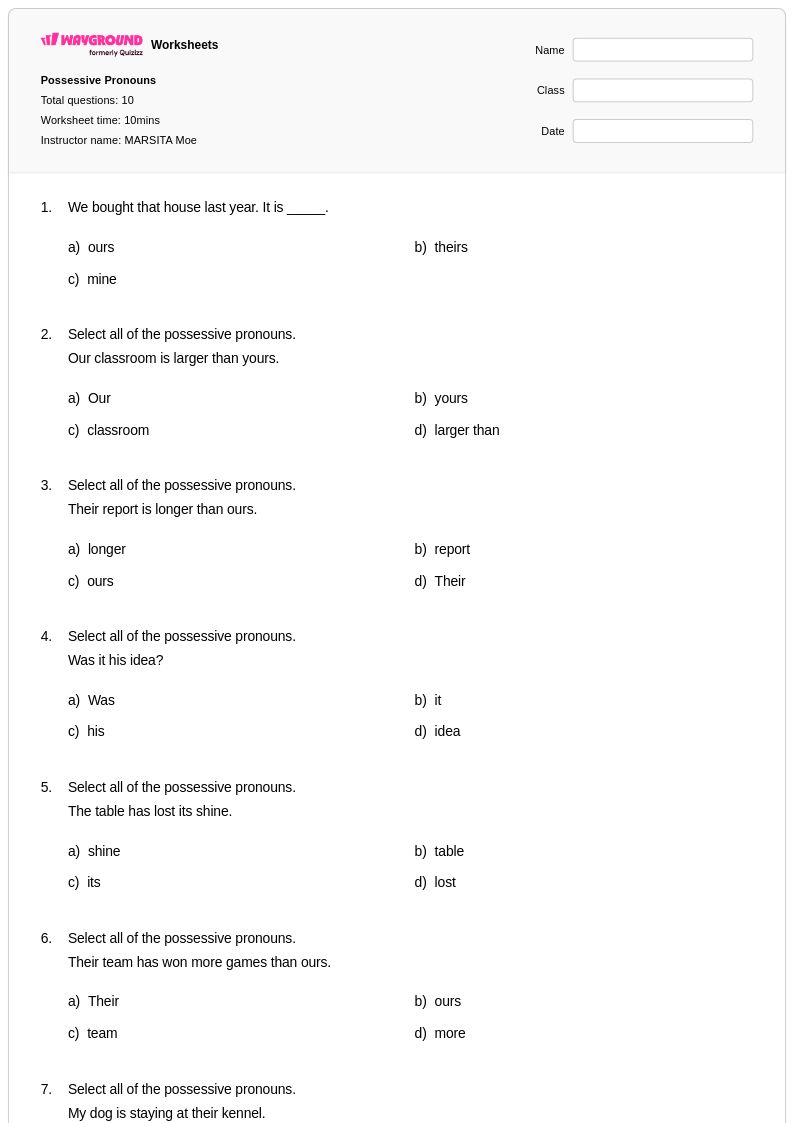
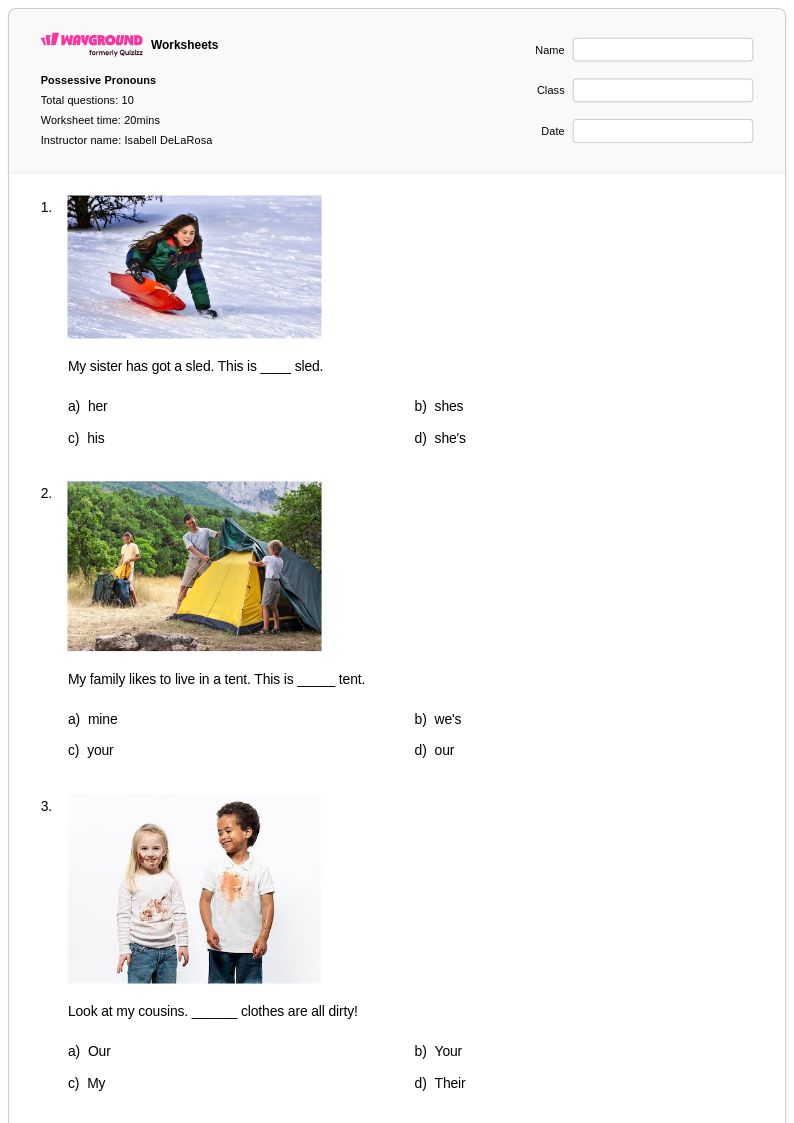
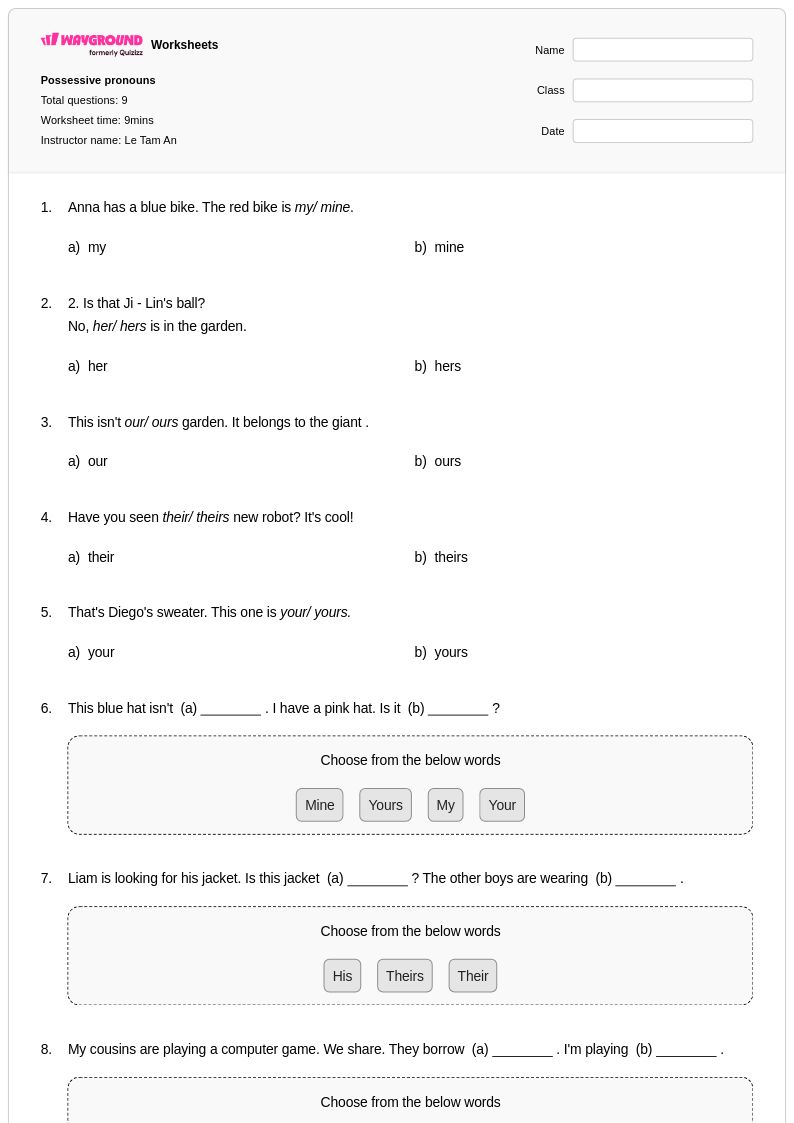
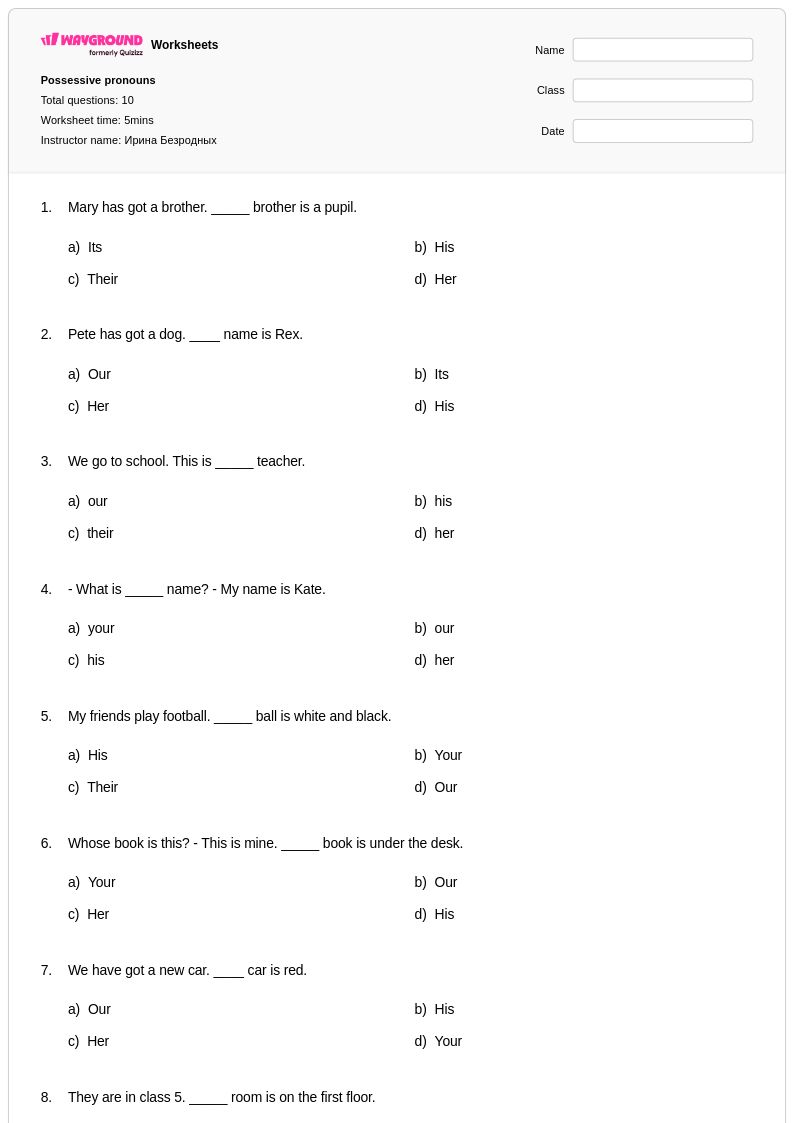
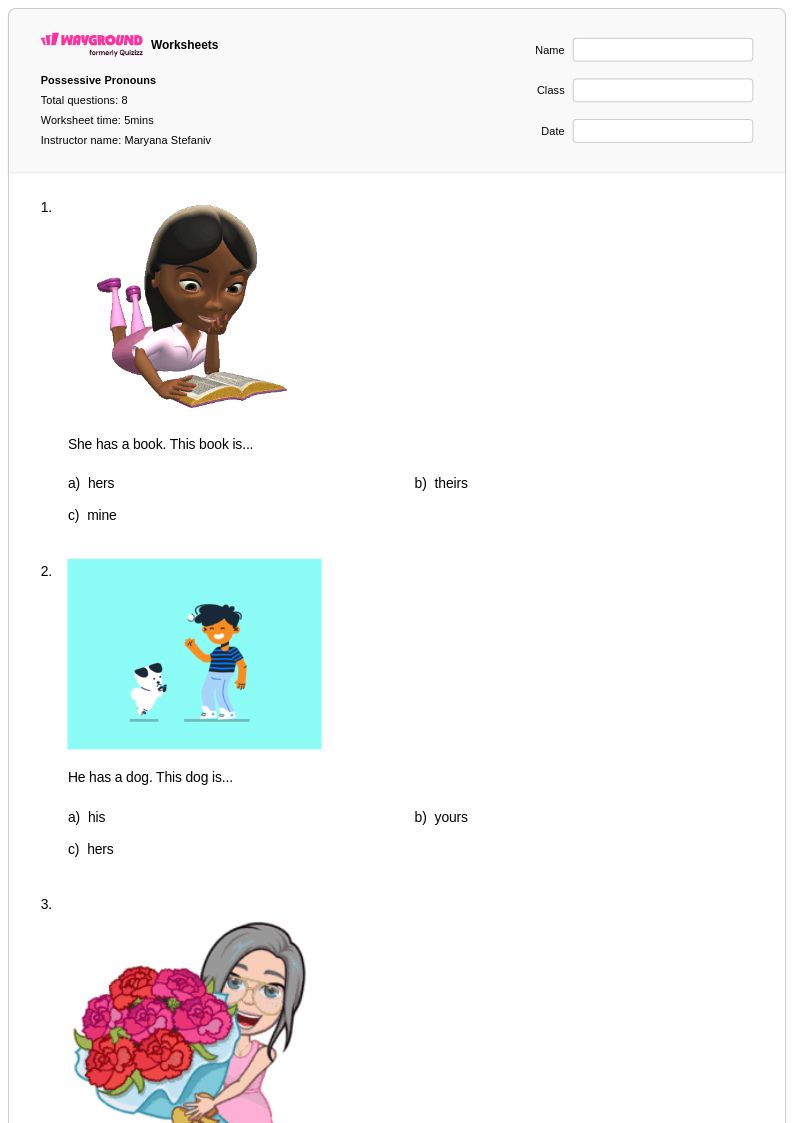
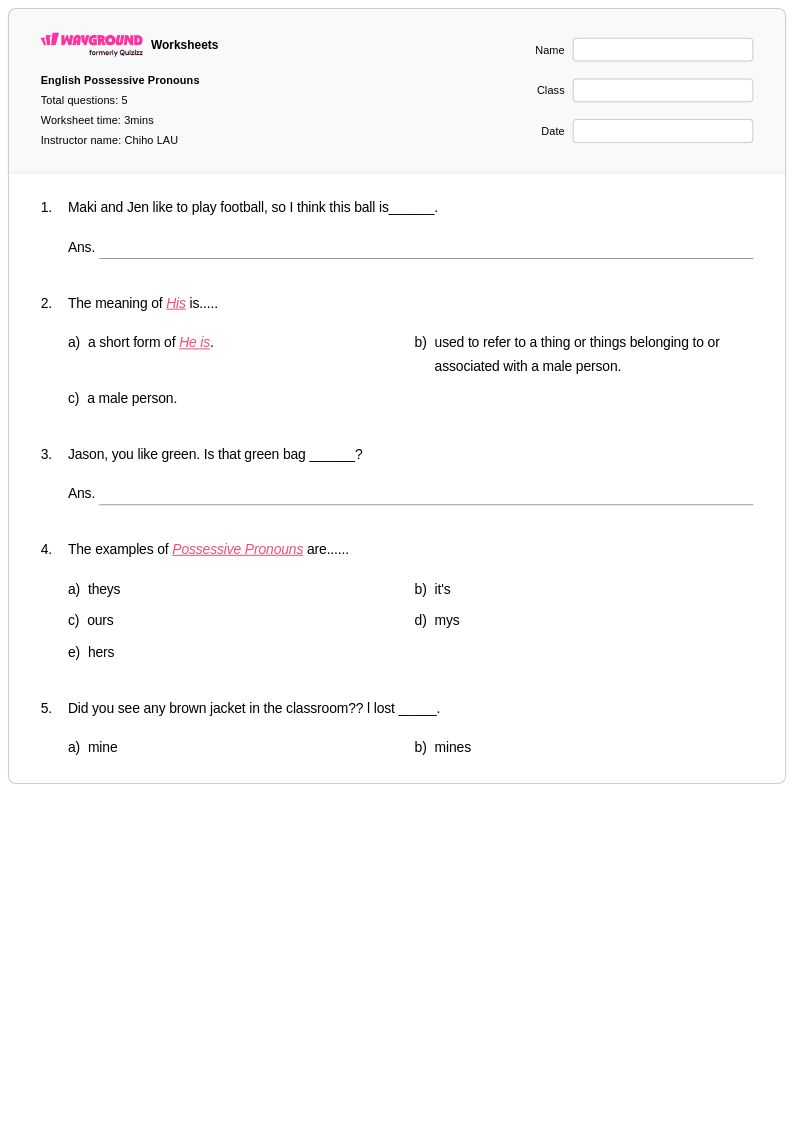
Possessive pronouns represent a foundational concept in Year 1 English education, and Wayground's comprehensive worksheet collection provides educators with carefully structured resources to introduce young learners to these essential language elements. These printable worksheets focus on helping first-grade students understand and correctly use basic possessive pronouns such as "my," "your," "his," "her," and "our" through age-appropriate exercises and practice problems. Each worksheet includes clear examples and engaging activities that strengthen students' ability to identify ownership relationships in sentences, while the included answer key enables teachers to provide immediate feedback and assess comprehension effectively. The free pdf format ensures easy classroom distribution and supports both individual practice and small group instruction.
Wayground's extensive library of teacher-created resources offers millions of possessive pronoun worksheets specifically designed for Year 1 learners, with robust search and filtering capabilities that allow educators to locate materials aligned with specific learning objectives and state standards. The platform's differentiation tools enable teachers to customize worksheets based on individual student needs, whether for remediation support or enrichment activities, while maintaining focus on core possessive pronoun concepts. Available in both printable and digital formats, these resources support flexible lesson planning and can be seamlessly integrated into grammar centers, homework assignments, or assessment protocols. The comprehensive collection empowers teachers to provide consistent skill practice opportunities that build students' confidence with possessive pronouns while accommodating diverse learning styles and classroom management preferences.
FAQs
How do I teach possessive pronouns to elementary students?
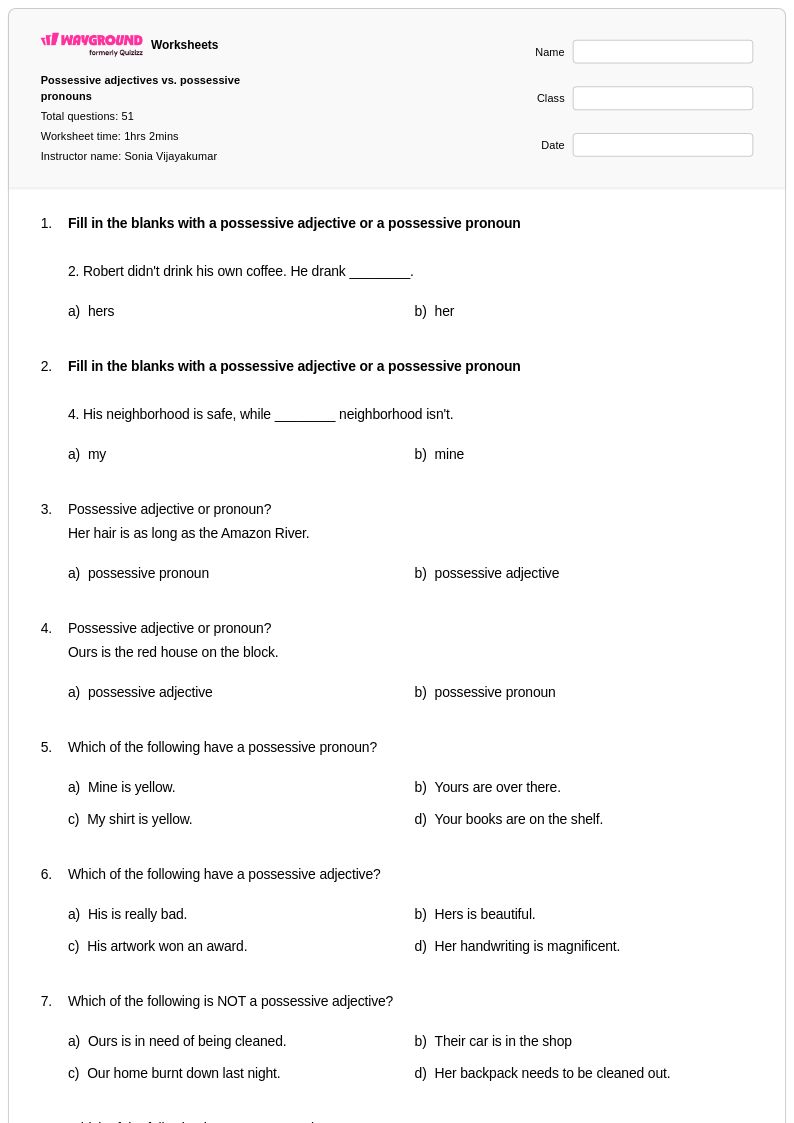
Start by contrasting possessive pronouns with possessive adjectives, since students often confuse 'her book' (adjective) with 'the book is hers' (pronoun). Use concrete, personal examples — 'This pencil is mine. That one is yours.' — before moving to written practice. Anchor instruction around the full set: mine, yours, his, hers, ours, theirs, and its, and have students sort them by singular and plural to build pattern recognition.
What exercises help students practice possessive pronouns?
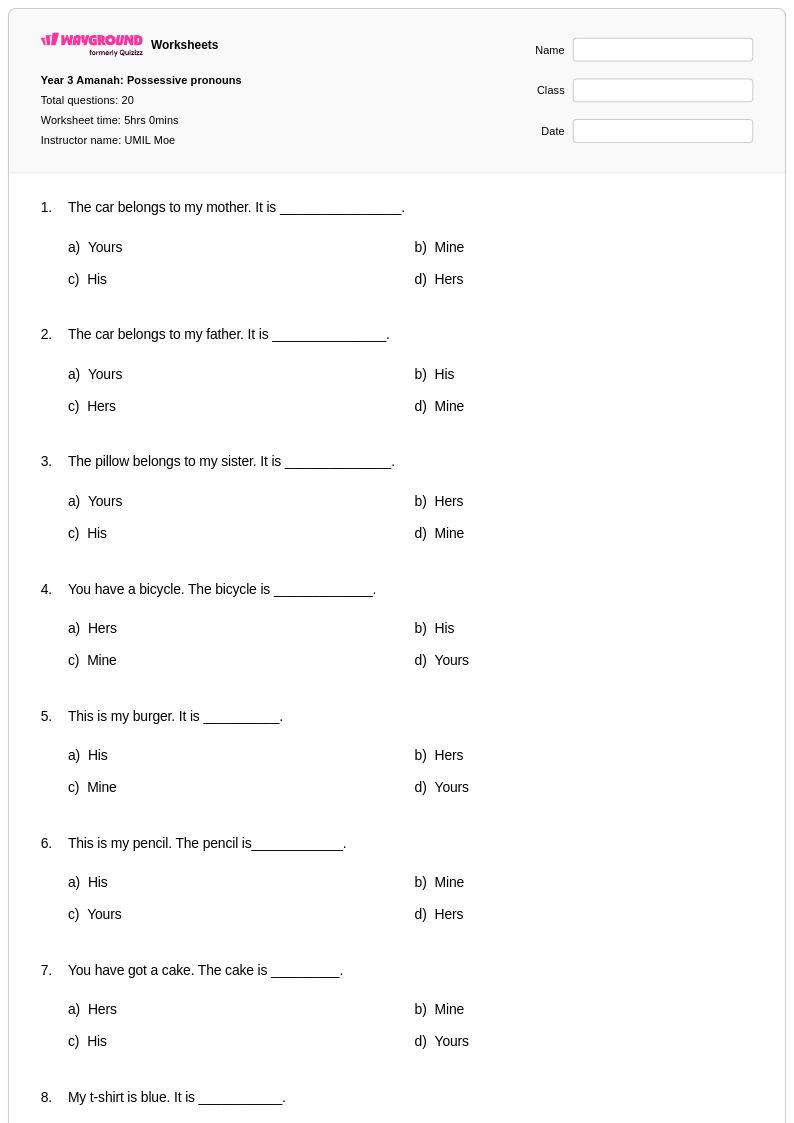
Effective practice tasks include sentence completion (filling in the correct possessive pronoun based on context), error correction (identifying where a possessive adjective was incorrectly used instead of a pronoun), and rewriting exercises that ask students to replace a noun phrase like 'the dog belonging to us' with the correct possessive pronoun form. Moving between singular and plural possessives in the same exercise set helps students internalize the distinction rather than memorizing forms in isolation.
What mistakes do students commonly make with possessive pronouns?
The most frequent error is confusing possessive pronouns with possessive adjectives — writing 'The jacket is her' instead of 'The jacket is hers.' Students also commonly confuse 'its' (possessive) with 'it's' (it is), and mix up 'theirs' with 'there's' or 'they're' due to phonetic similarity. Another common error is treating possessive pronouns as if they need an apostrophe, since students over-apply the apostrophe rule they learned for possessive nouns.
How do I differentiate possessive pronoun practice for students at different levels?
For students who are still developing confidence, reduce the number of answer choices in fill-in-the-blank tasks so they are choosing between two options rather than six. More advanced students benefit from open-ended writing tasks where they must construct original sentences using both singular and plural possessive pronouns in the same paragraph. On Wayground, teachers can apply reduced answer choices as an accommodation for individual students without affecting the experience of the rest of the class.
How do I use Wayground's possessive pronouns worksheets in my classroom?
Wayground's possessive pronouns worksheets are available as printable PDFs, which work well for independent seatwork, grammar centers, or homework, as well as in digital formats for use on devices in technology-integrated classrooms. Teachers can also host the worksheet as a live or assigned quiz directly on Wayground, making it easy to collect student responses and review performance data. Each worksheet includes a complete answer key, so students can self-check or teachers can use it for quick grading.
What is the difference between singular and plural possessive pronouns?
Singular possessive pronouns refer to ownership by one person or thing: mine, yours, his, hers, and its. Plural possessive pronouns indicate ownership shared by more than one: ours, yours (plural), and theirs. A key instructional point is that 'yours' appears in both categories depending on context, which often surprises students. Teaching this distinction explicitly — rather than presenting the full list as a flat set — helps students apply the correct form more reliably in writing.