Enhance Year 4 students' understanding of the prefix 're-' with Wayground's free printable worksheets featuring engaging practice problems and comprehensive answer keys to master word patterns.
Explore printable Prefix 'Re-' worksheets for Year 4
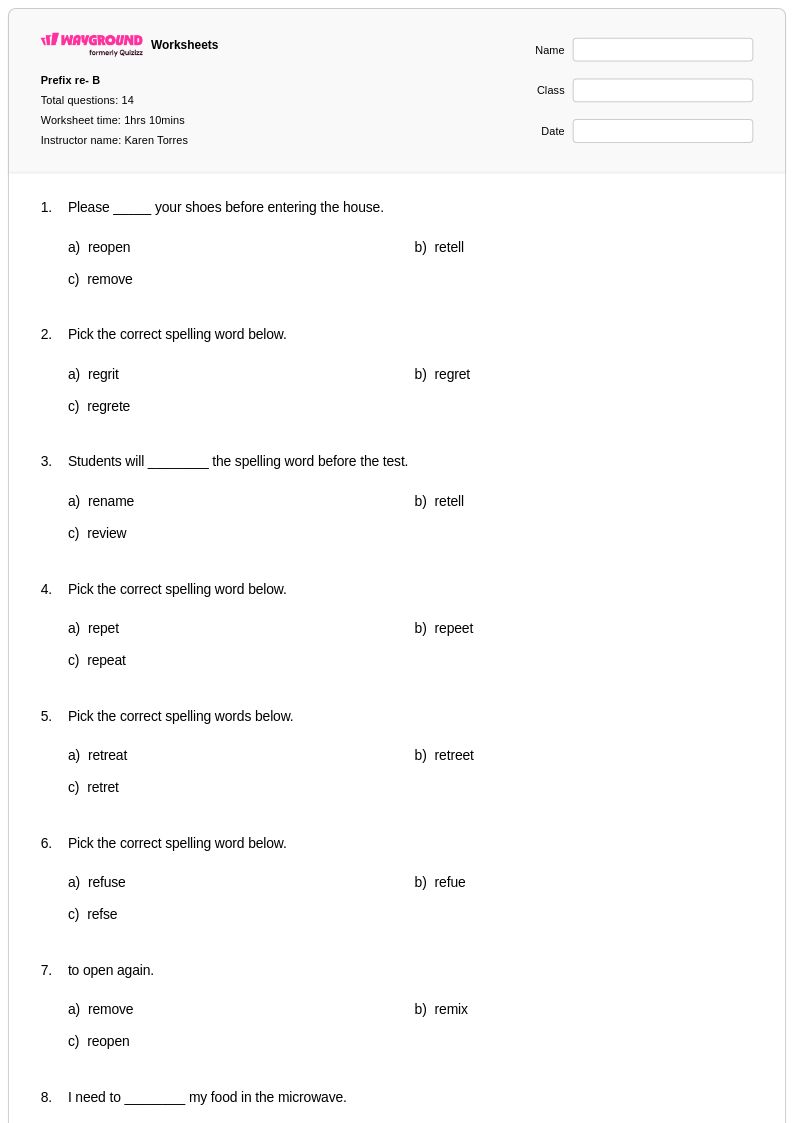
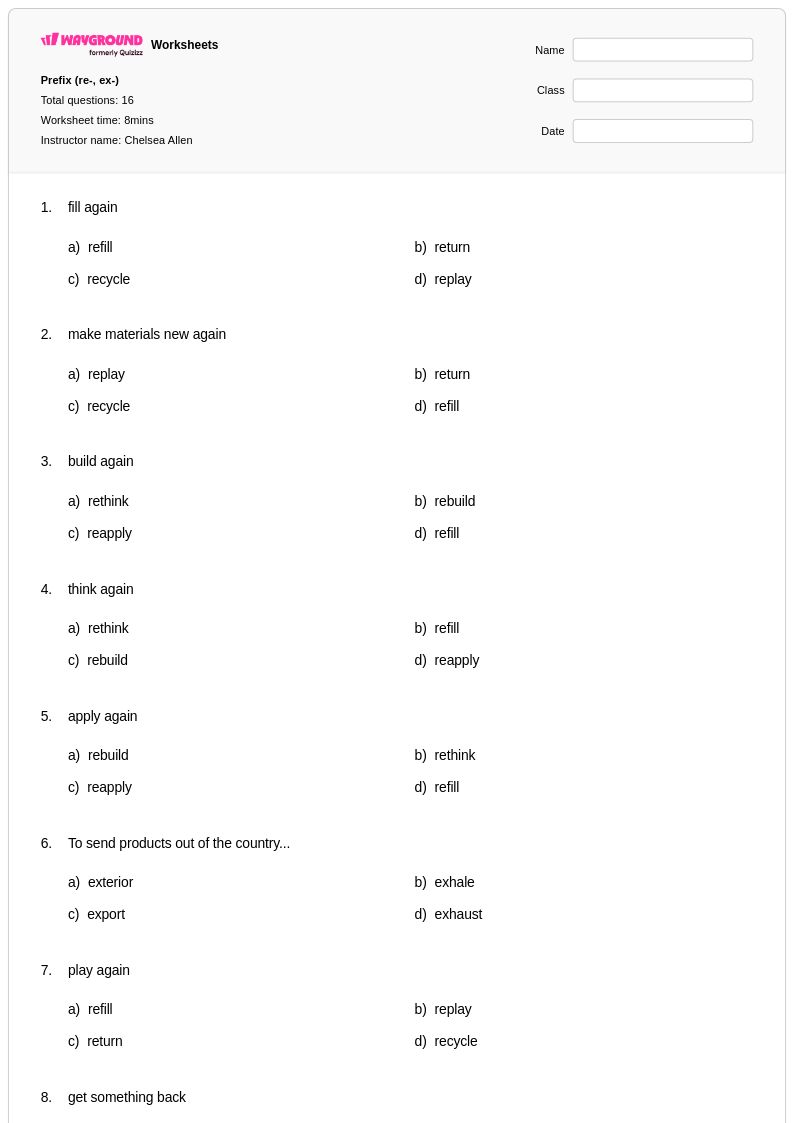
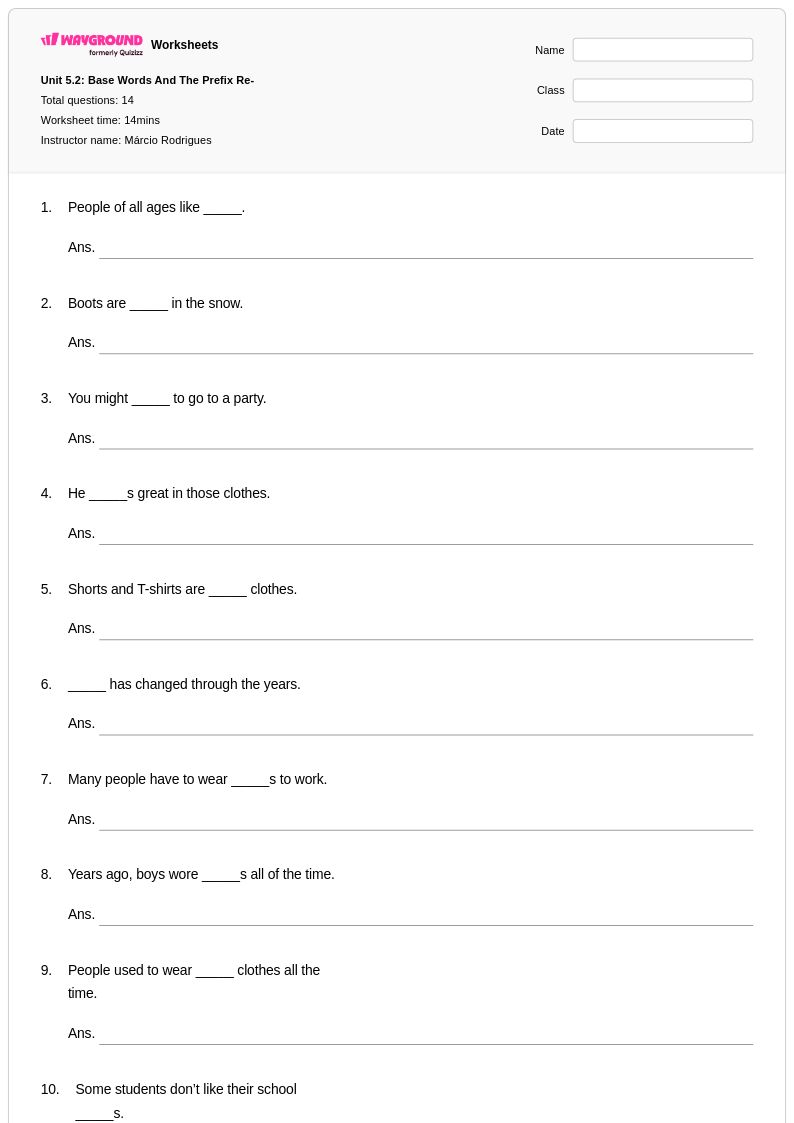
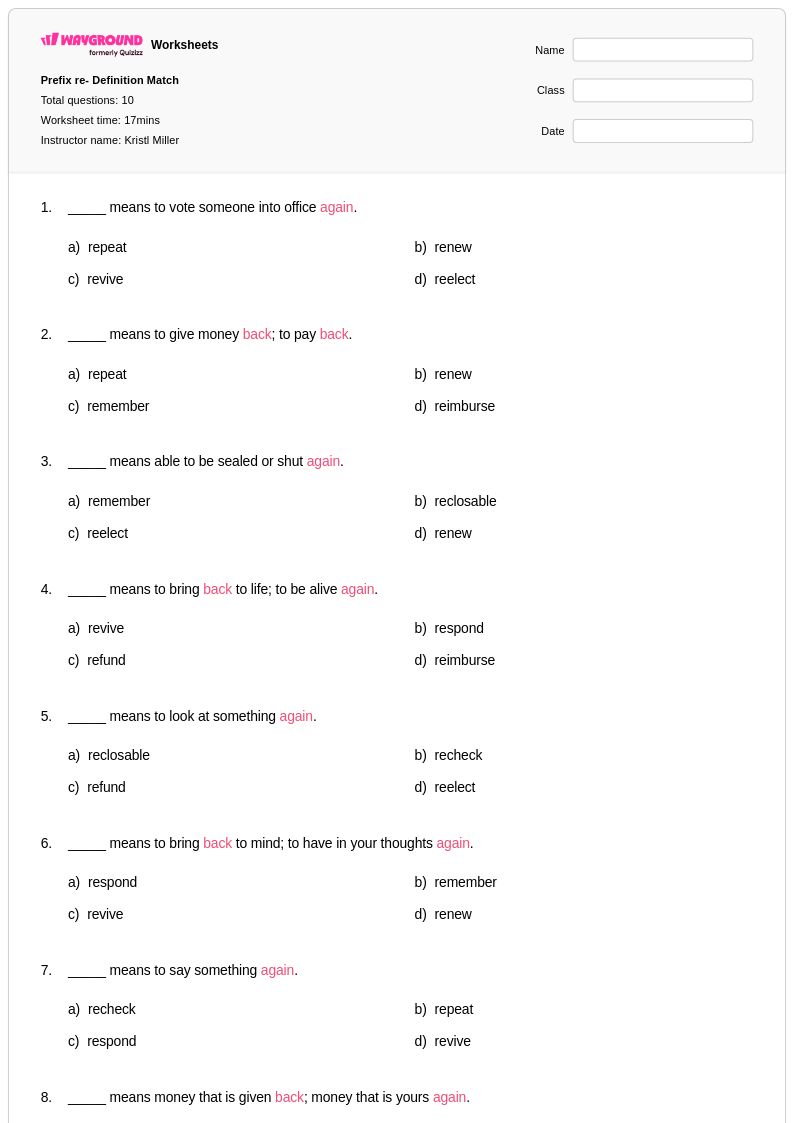
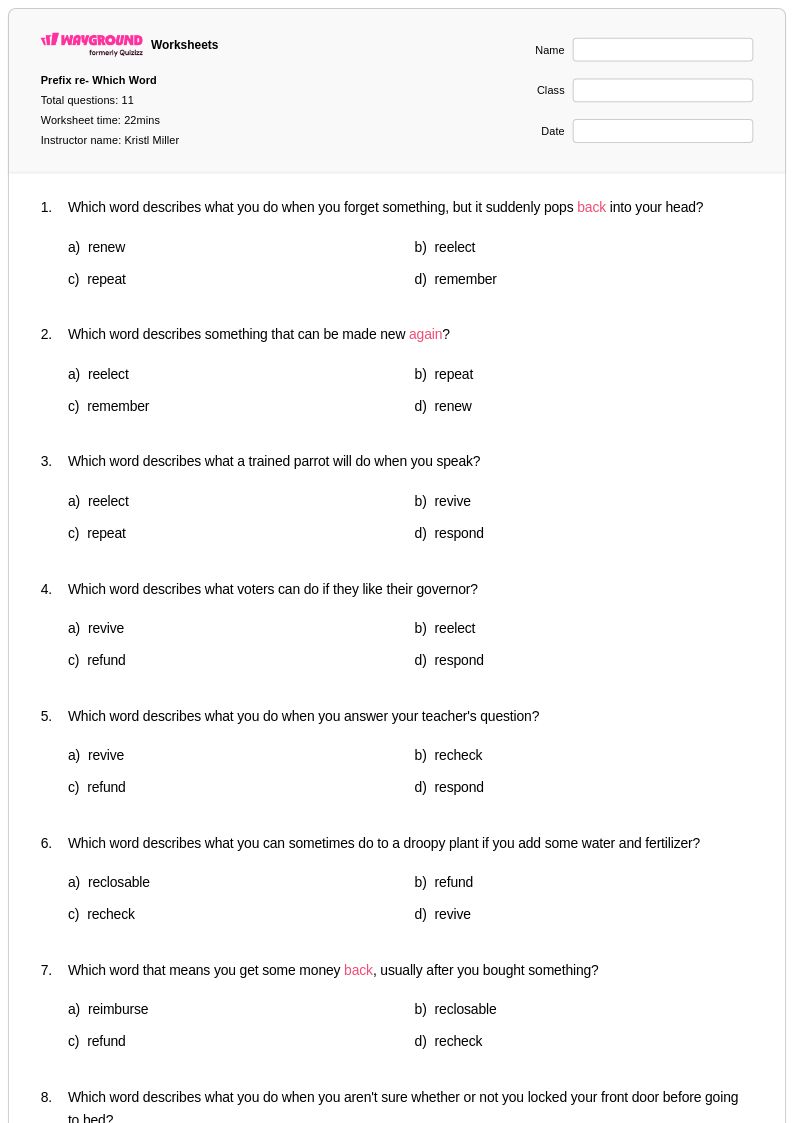
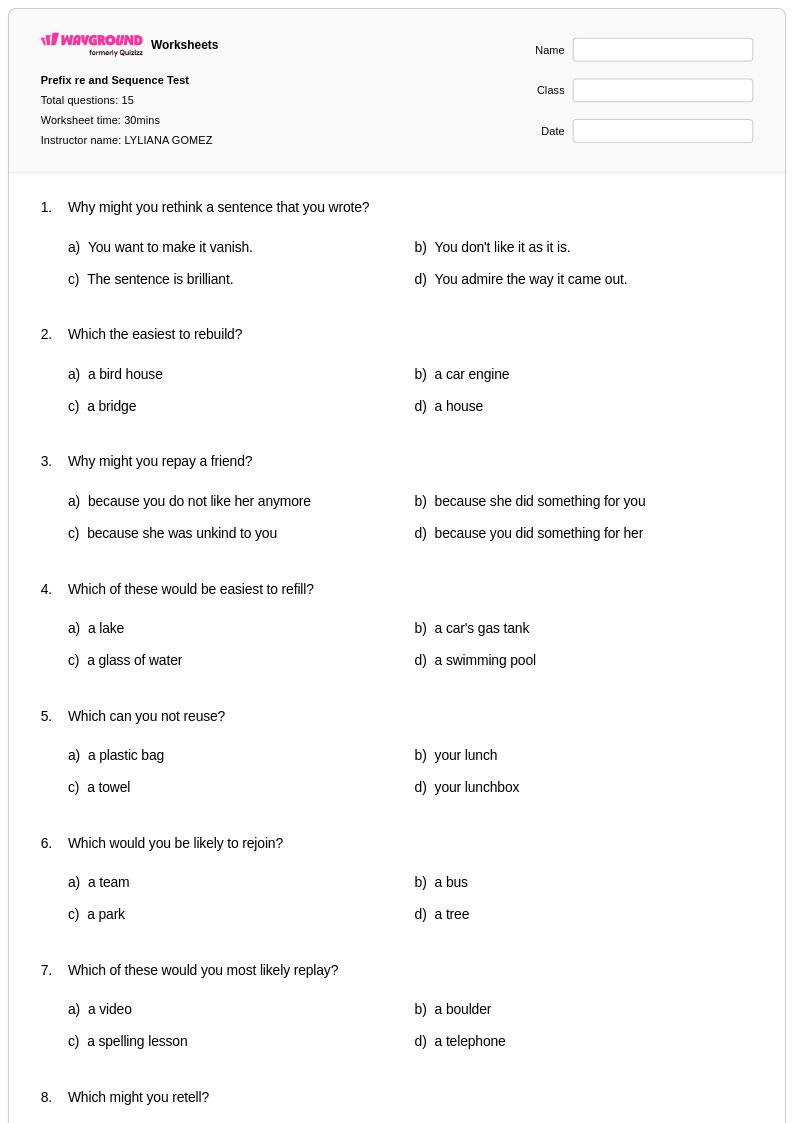
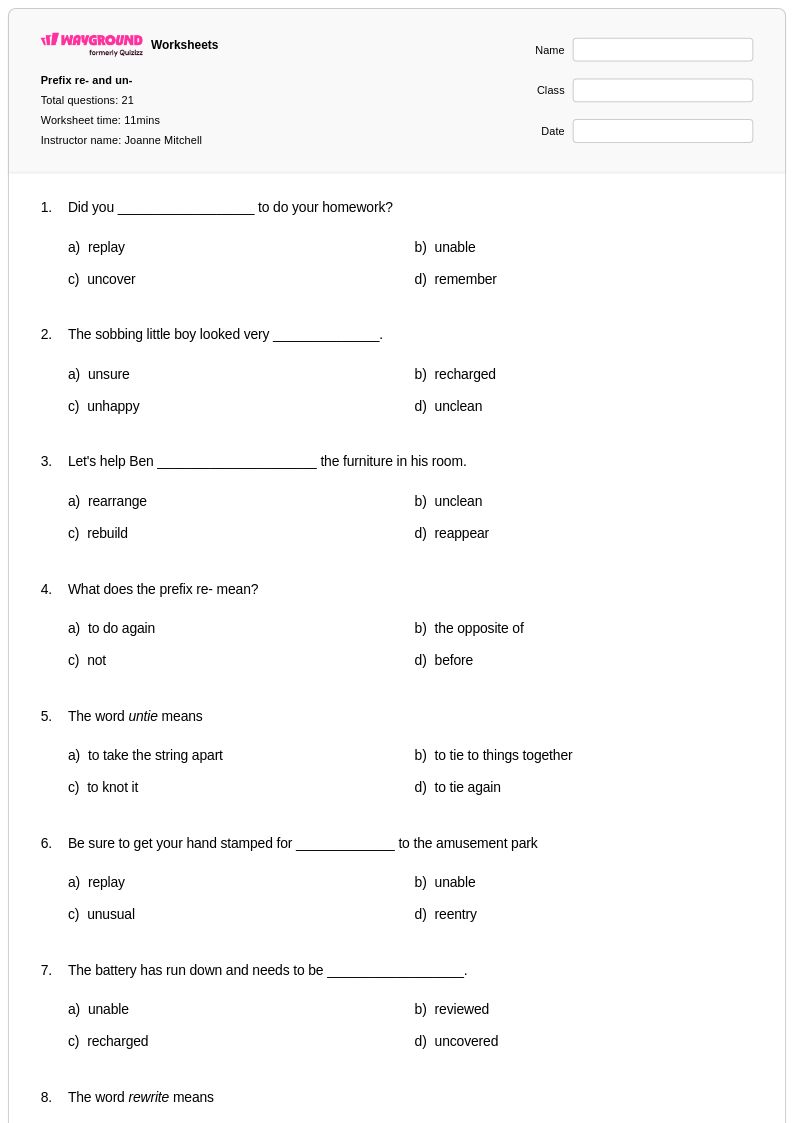
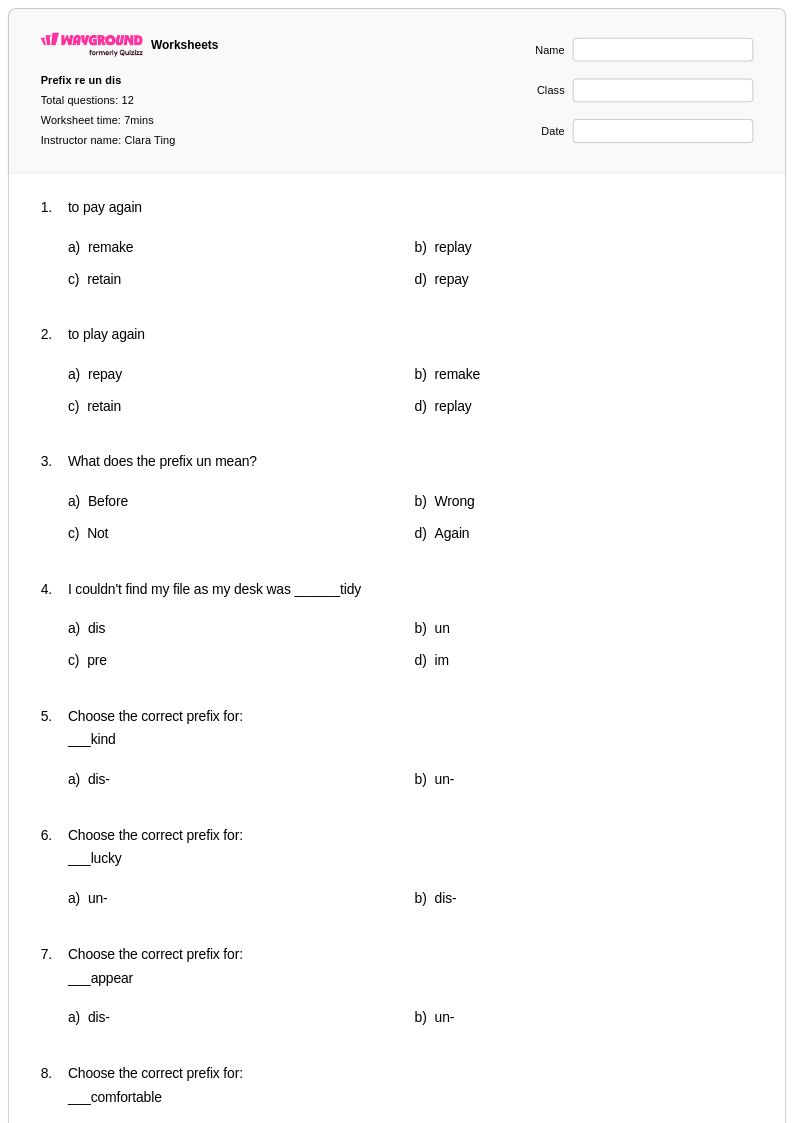
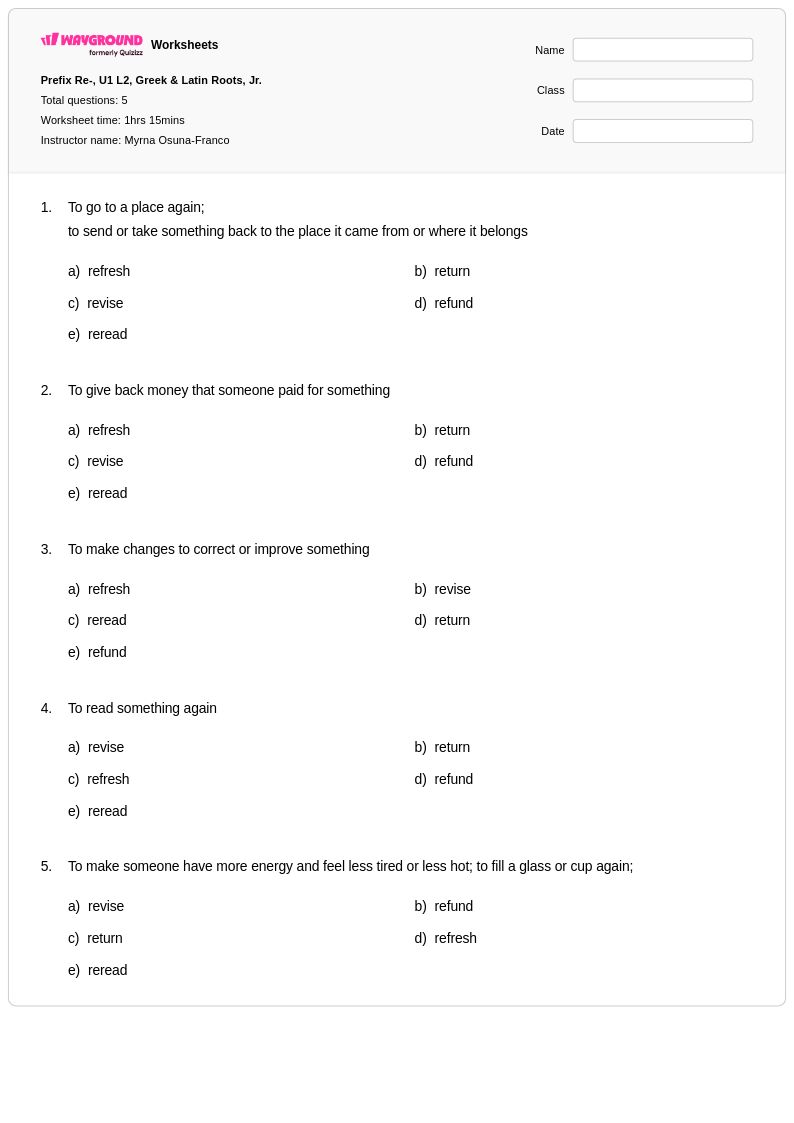
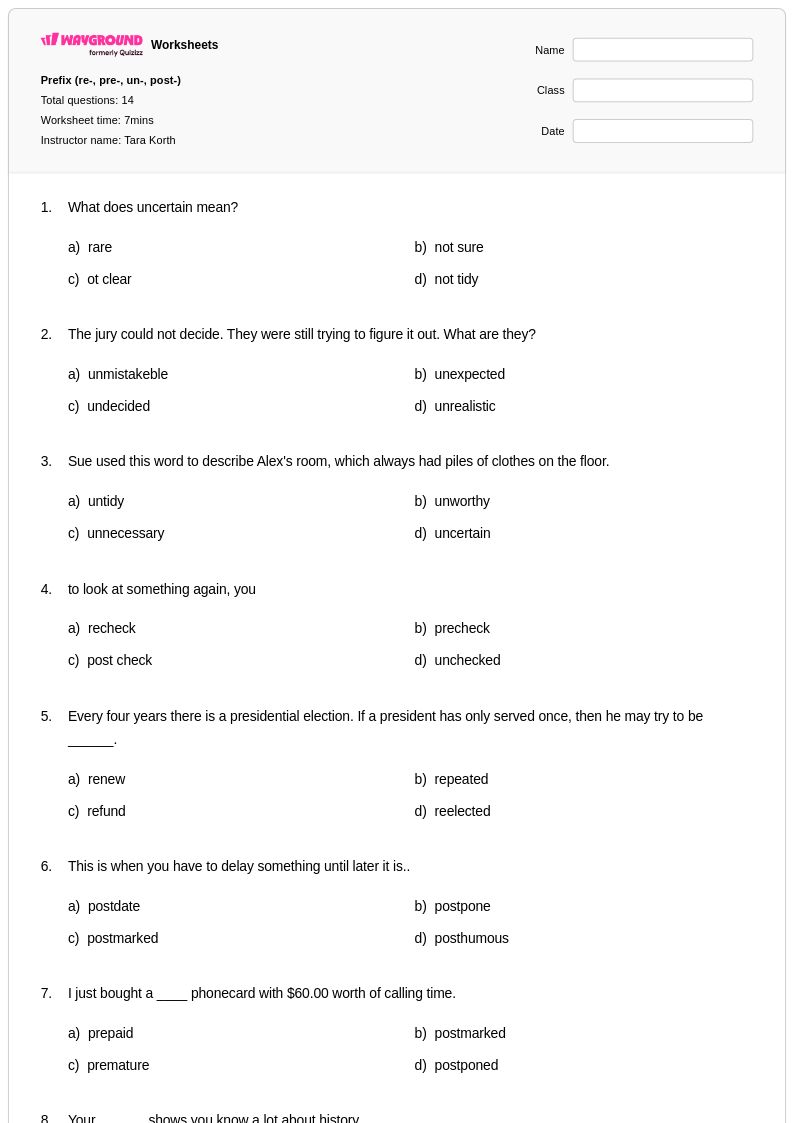
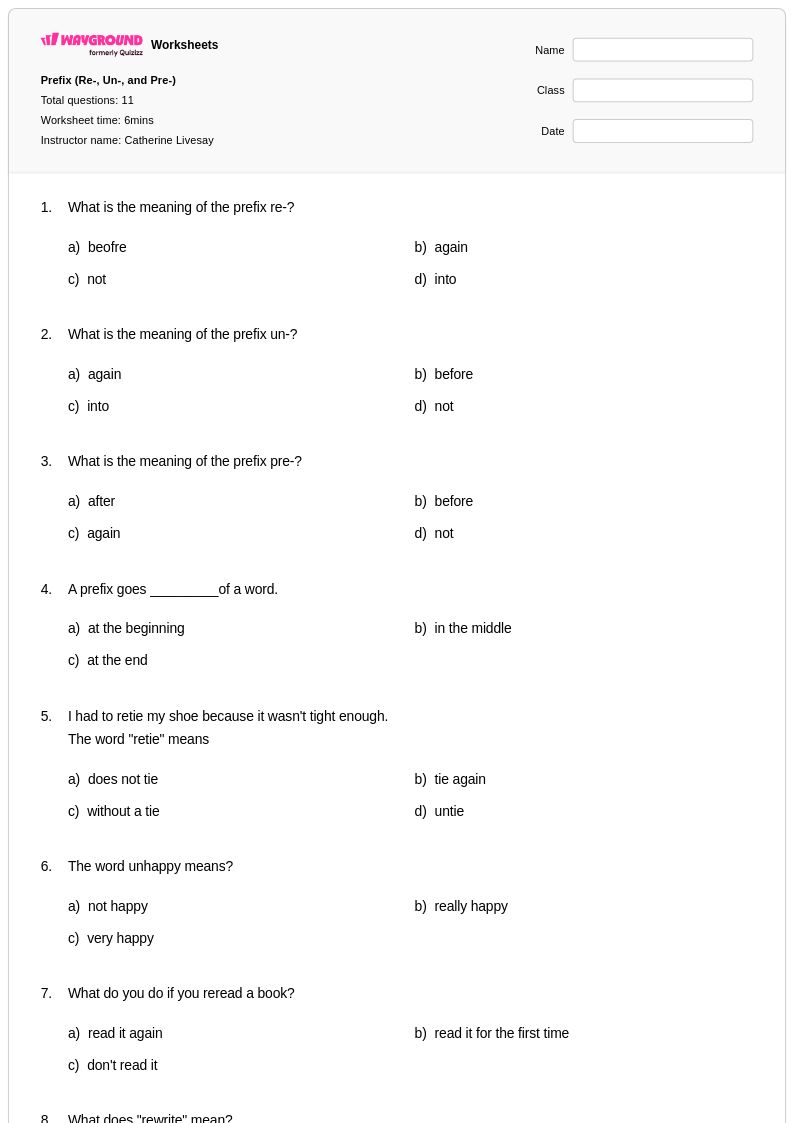
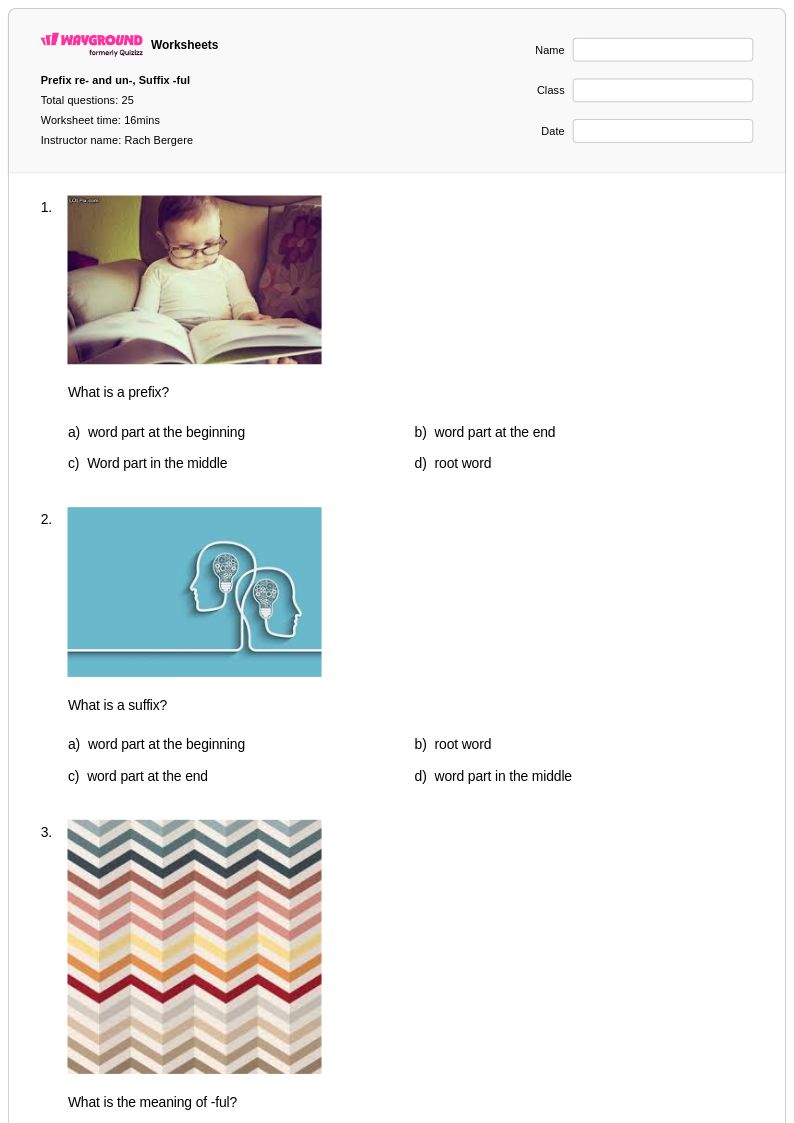
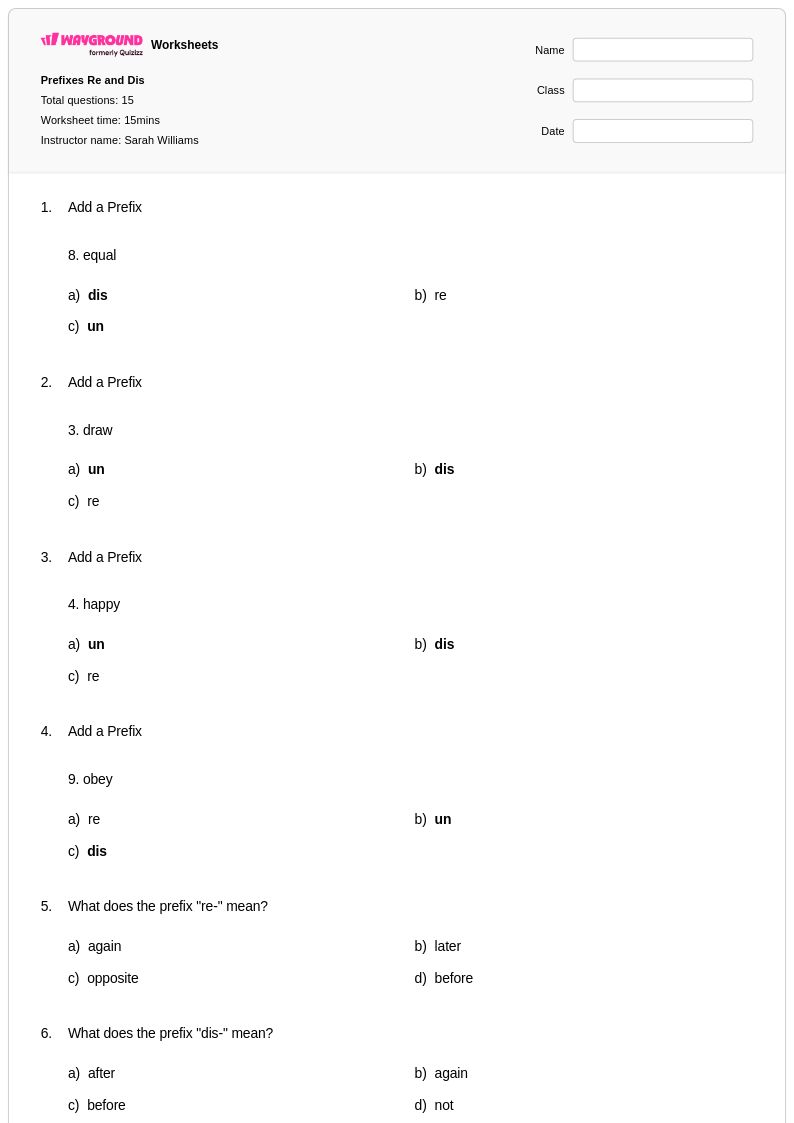
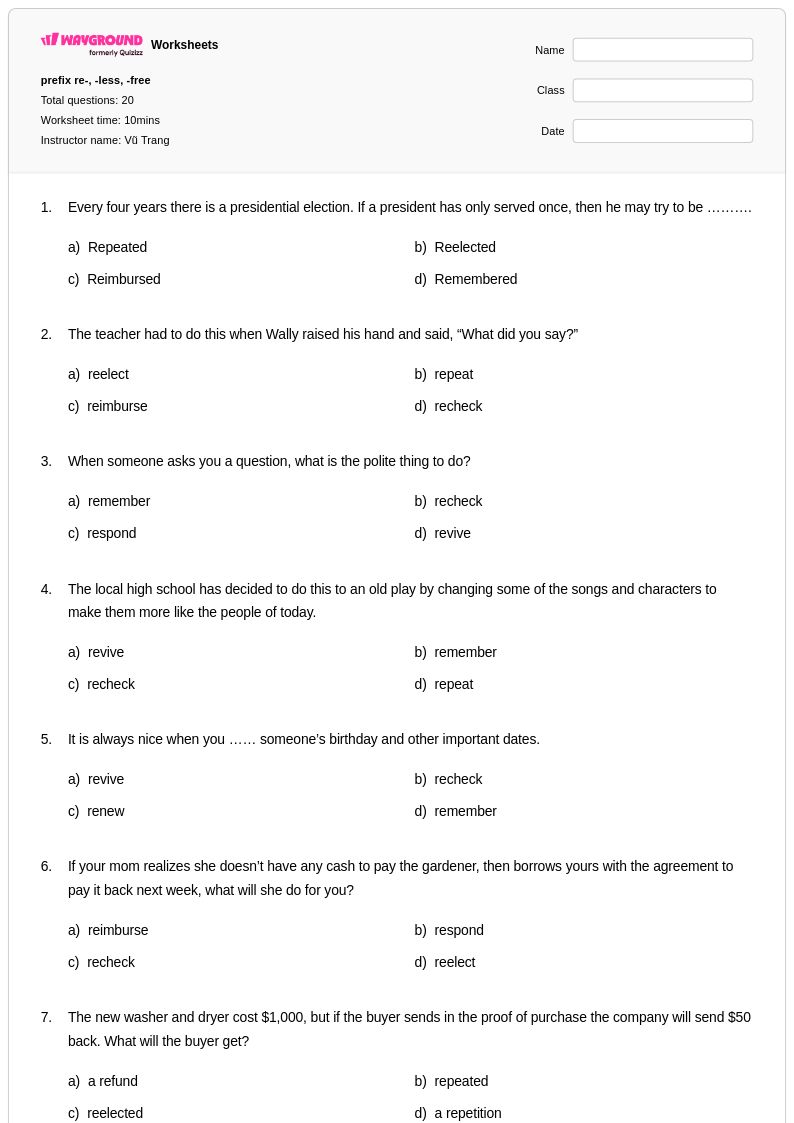
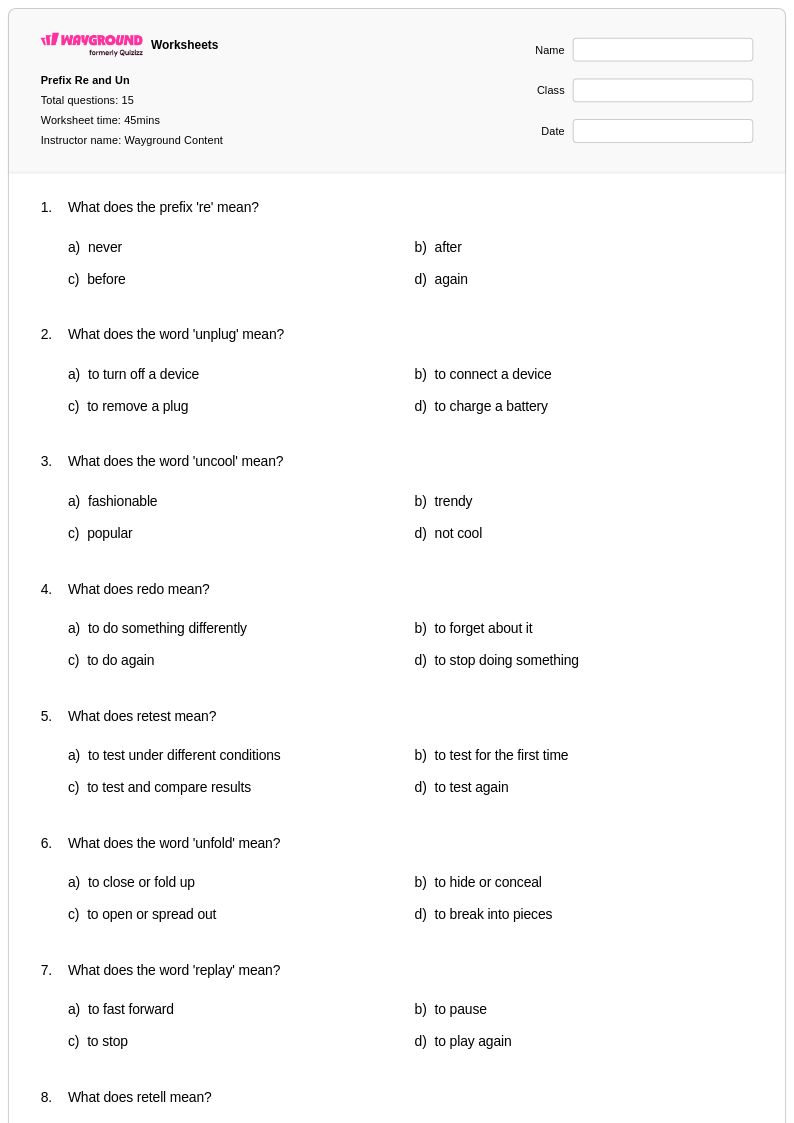
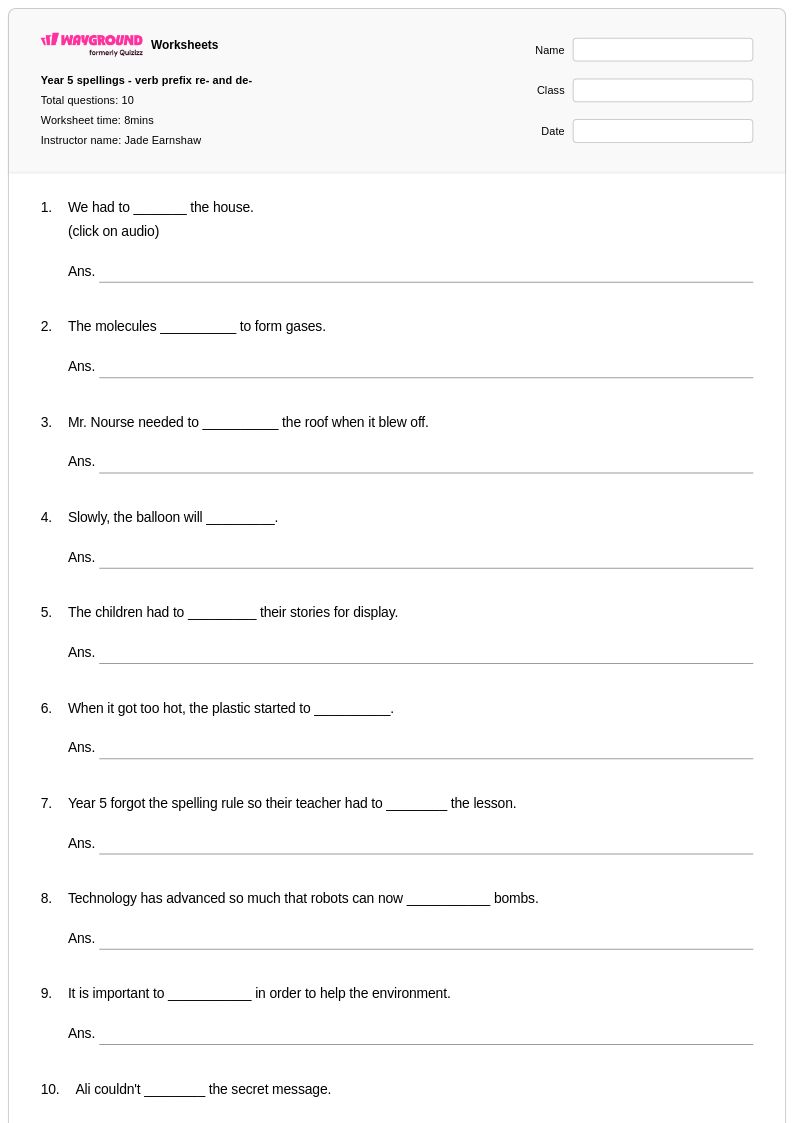
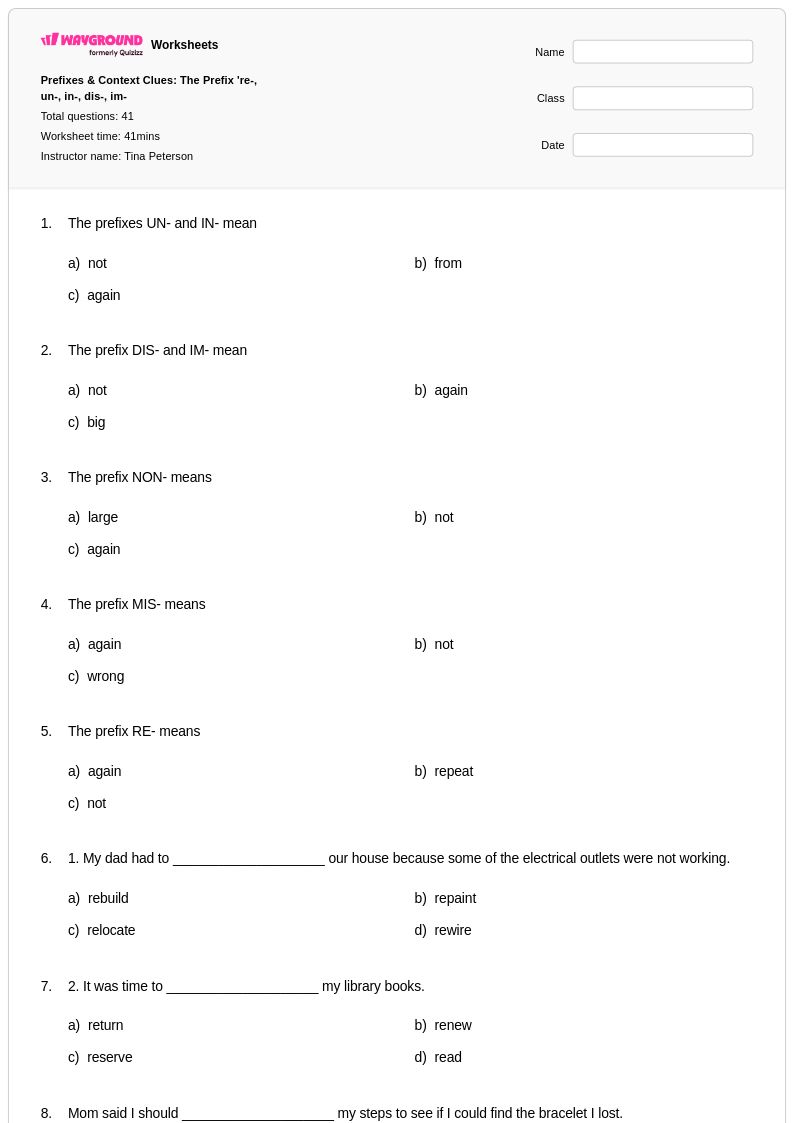
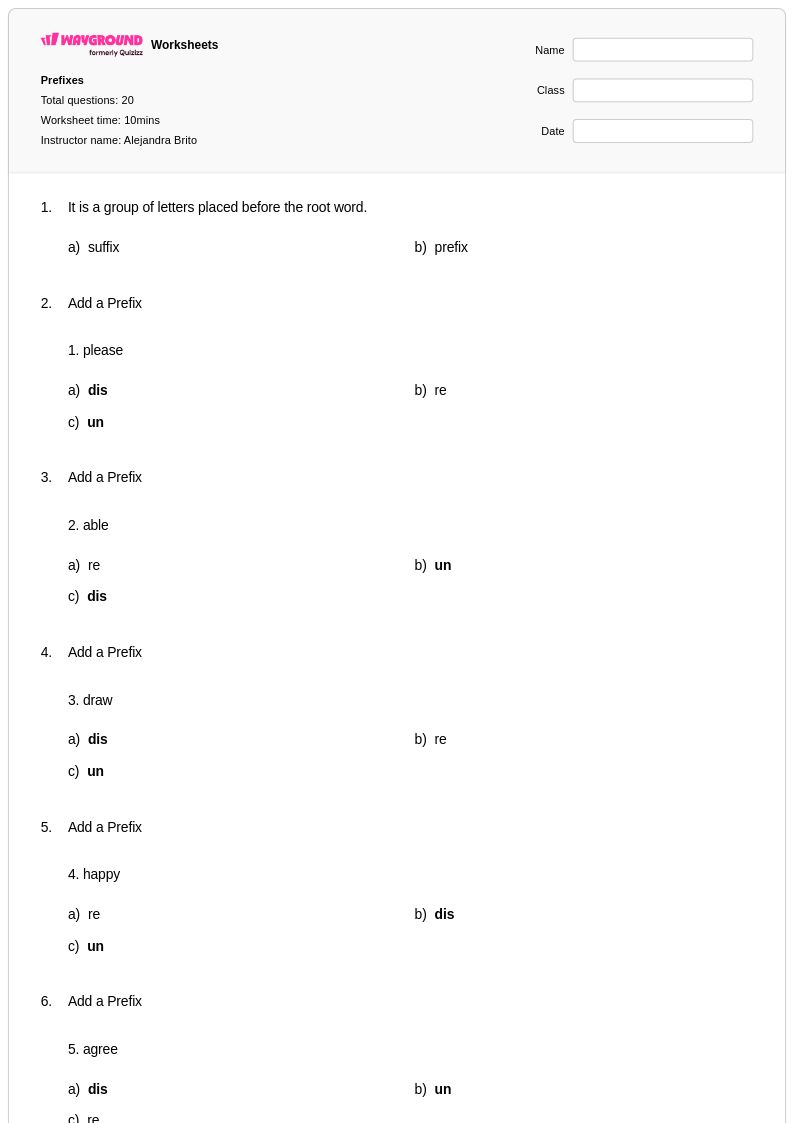
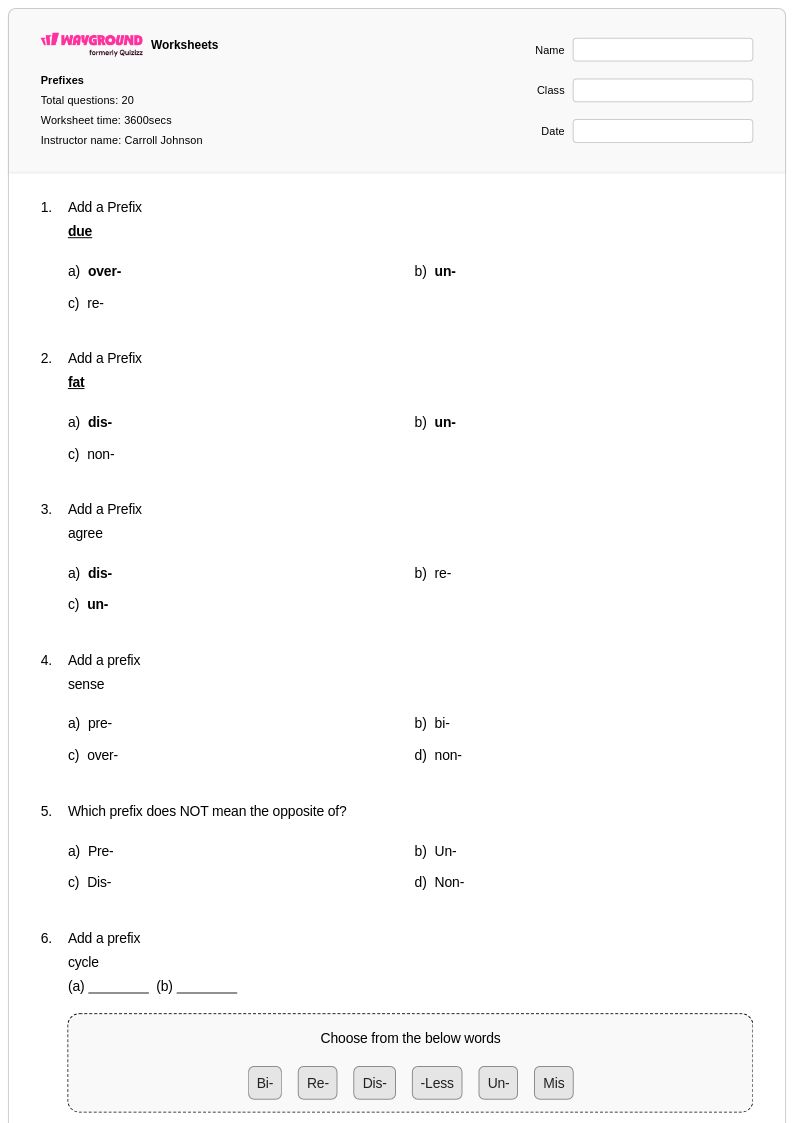
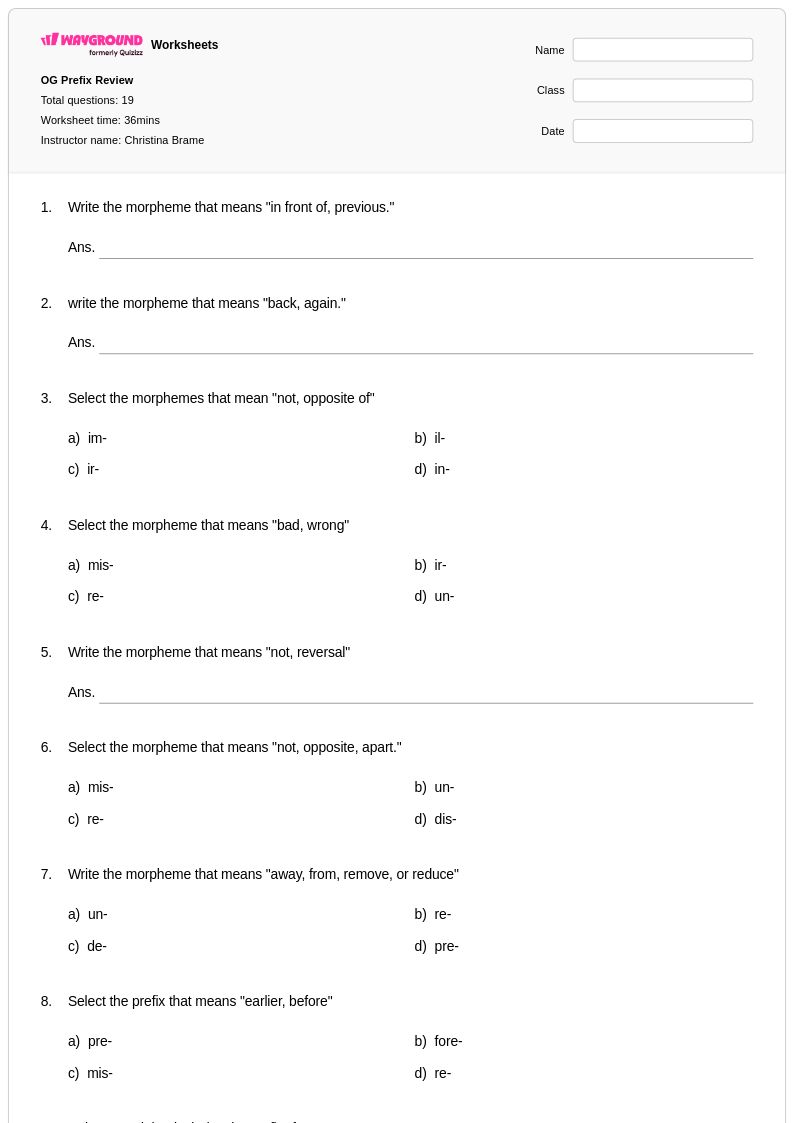
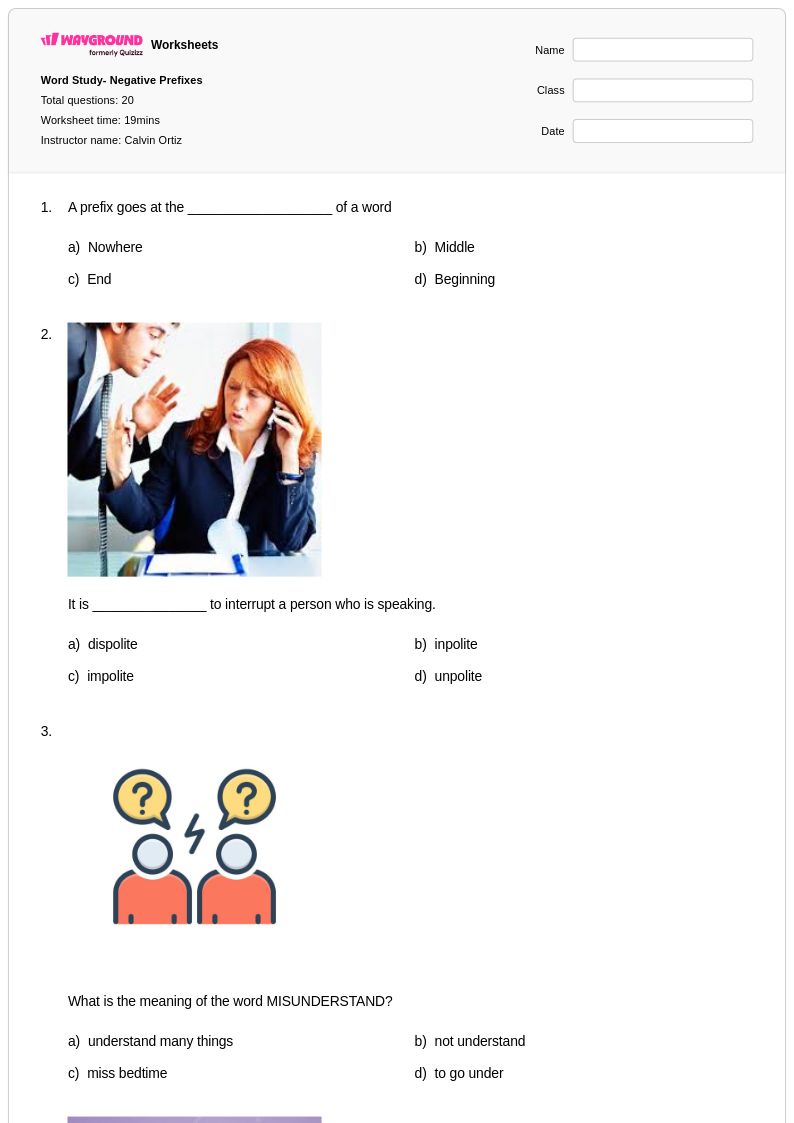
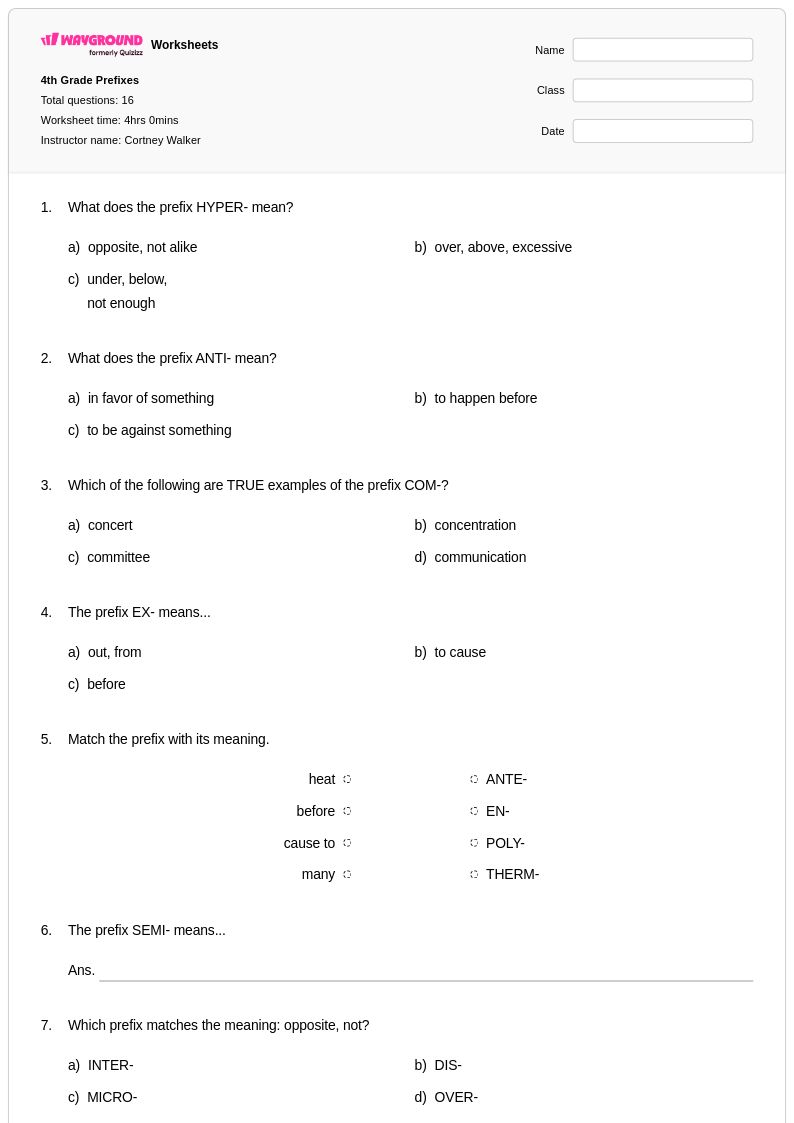
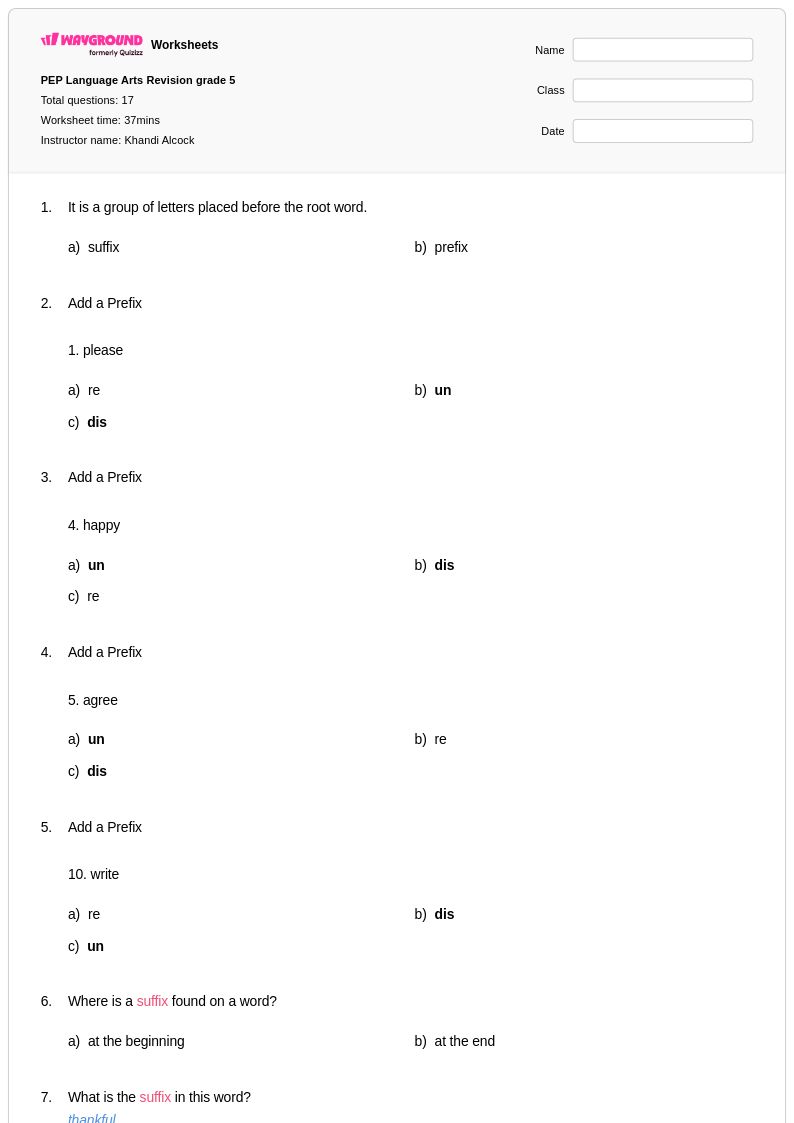
Year 4 students develop essential reading and vocabulary skills through comprehensive prefix 're-' worksheets available through Wayground (formerly Quizizz). These expertly designed resources help young learners understand how the prefix 're-' transforms base words to indicate repetition, backward movement, or doing something again. Students engage with practice problems that guide them through identifying, analyzing, and applying this common prefix in words like reread, replay, return, and rebuild. Each worksheet includes an answer key to support independent learning and self-assessment, while the free printable format makes these resources accessible for classroom instruction, homework assignments, and targeted skill practice.
Wayground (formerly Quizizz) empowers educators with millions of teacher-created resources specifically focused on prefix instruction and word pattern recognition. The platform's robust search and filtering capabilities allow teachers to quickly locate Year 4 appropriate materials that align with reading and language arts standards, ensuring students receive developmentally appropriate content. These differentiation tools enable instructors to customize worksheets for various learning levels within their classroom, supporting both remediation for struggling readers and enrichment for advanced students. Available in both printable pdf format and interactive digital versions, these resources streamline lesson planning while providing flexible options for in-class activities, assessment preparation, and extended learning opportunities that strengthen foundational literacy skills.
FAQs
How do I teach the prefix 're-' to elementary students?
Start by establishing the core meaning of 're-' as 'again' or 'back,' using high-frequency examples students already know, such as 'redo,' 'reread,' and 'return.' Once students grasp the meaning, shift to word-building activities where they attach 're-' to familiar base words and predict meanings before checking definitions. This morphological approach builds decoding independence by giving students a reusable strategy rather than isolated vocabulary memorization.
What exercises help students practice the prefix 're-'?
Effective practice formats for the prefix 're-' include word sorts, where students categorize words by whether 're-' signals 'again' or 'back,' and sentence completion exercises that require choosing the correct 're-' word based on context. Vocabulary building activities that ask students to construct original sentences using words like 'rebuild,' 'reconsider,' or 'rewrite' reinforce both meaning and application. Layering these formats moves students from recognition to production, which is where lasting word knowledge takes hold.
What mistakes do students commonly make with the prefix 're-'?
The most common error is treating 're-' as a prefix in words where it is not a separable morpheme, such as 'relax,' 'result,' or 'remember,' where removing 're-' does not leave a meaningful base word. Students also conflate the two core meanings, using 'again' when the word implies 'back' or vice versa, as with 'return' versus 'redo.' Explicit instruction on bound versus free base words, paired with meaning-checking strategies, directly addresses both error patterns.
How can I use prefix 're-' worksheets in different classroom settings?
Prefix 're-' worksheets on Wayground are available as printable PDFs for traditional classroom use and in digital formats for technology-integrated environments, making them adaptable whether you are teaching in person, in a blended model, or remotely. The digital format also allows you to host the worksheet as a quiz directly on Wayground, giving you real-time visibility into student responses. This flexibility makes the same resource usable as a whole-group warm-up, an independent practice assignment, or a self-paced remediation activity.
How does learning the prefix 're-' support broader reading comprehension?
Mastering the prefix 're-' builds morphological awareness, the ability to recognize and use word parts as meaning units, which is a documented predictor of reading comprehension in upper elementary and middle school students. When students can identify 're-' and apply its meaning to an unfamiliar word like 'reinstate' or 'reconfigure,' they can approximate meaning without stopping to look it up, which preserves reading fluency. This makes prefix instruction one of the highest-leverage vocabulary strategies available to literacy teachers.