Free Printable Preposition Location Worksheets for Year 1
Wayground's Year 1 preposition location worksheets help young learners master spatial relationships through engaging printables, practice problems, and answer keys that make understanding positional words fun and accessible.
Explore printable Preposition Location worksheets for Year 1
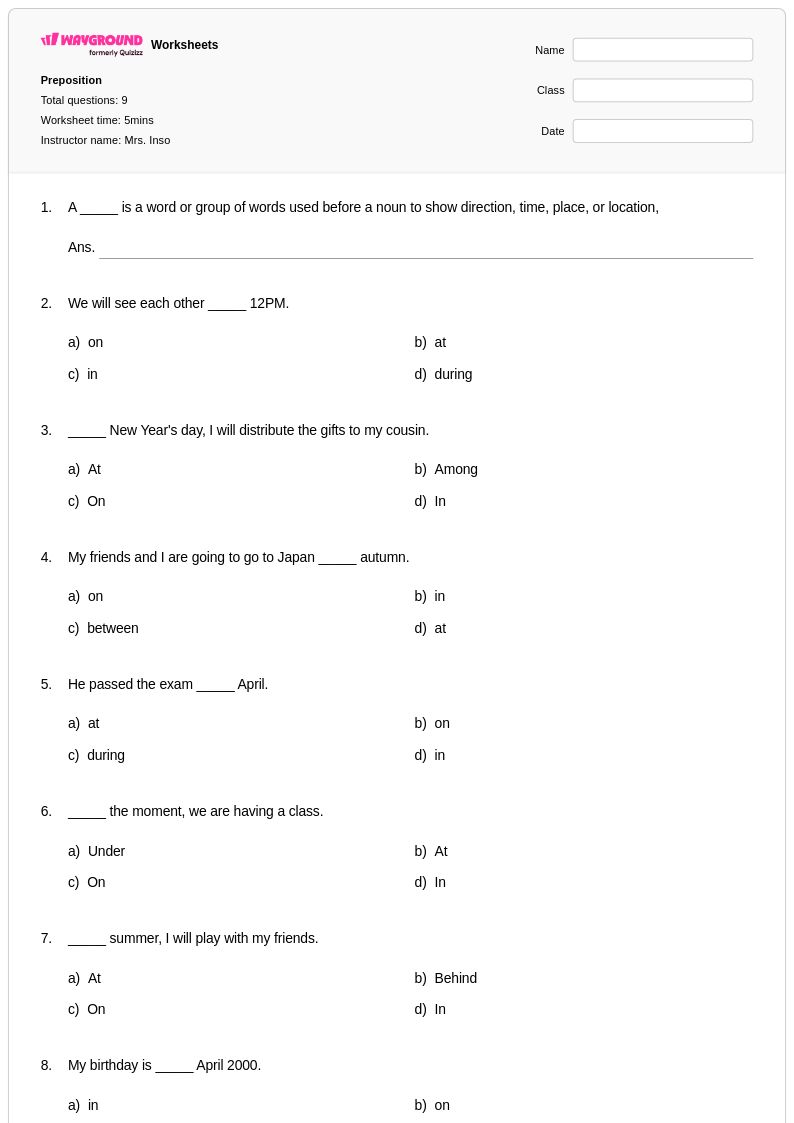
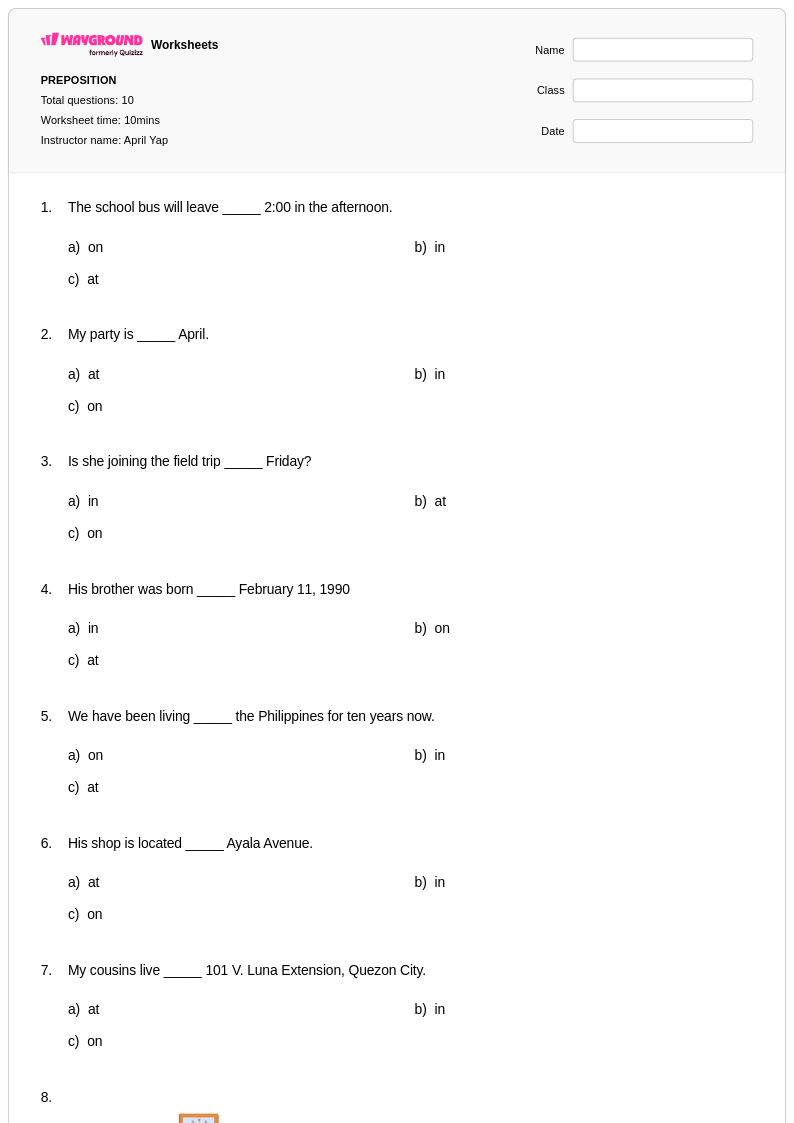
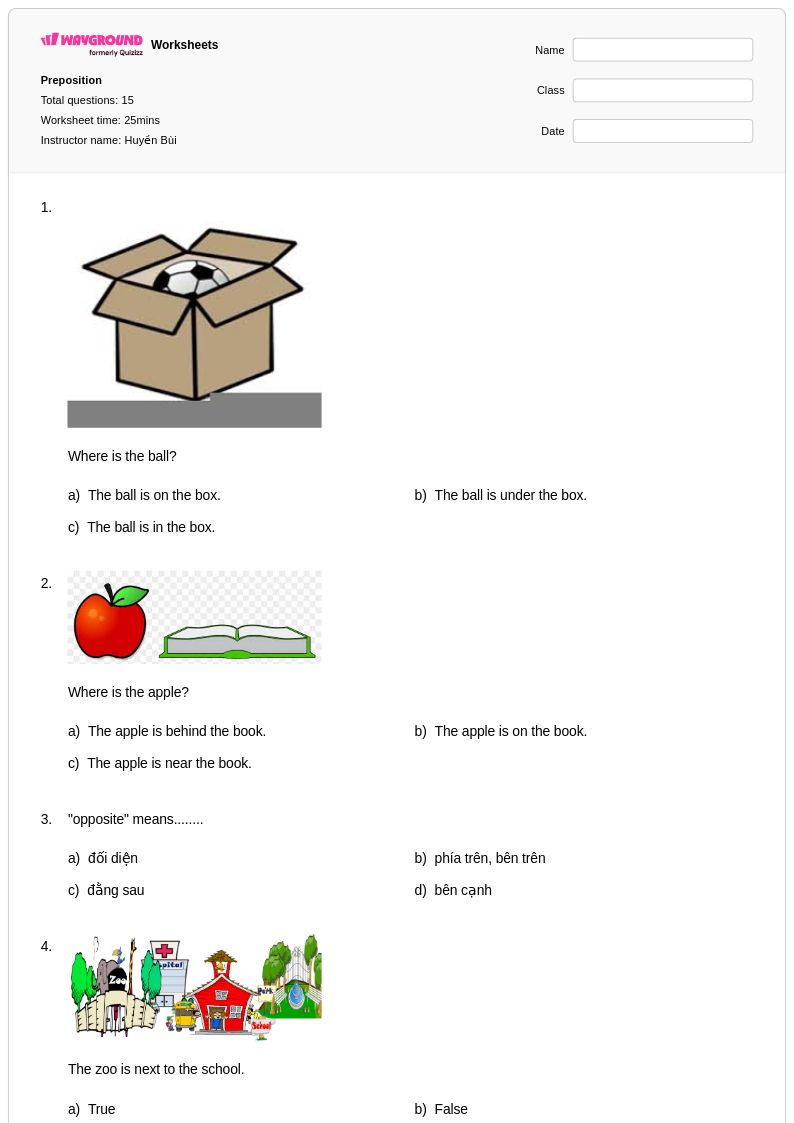
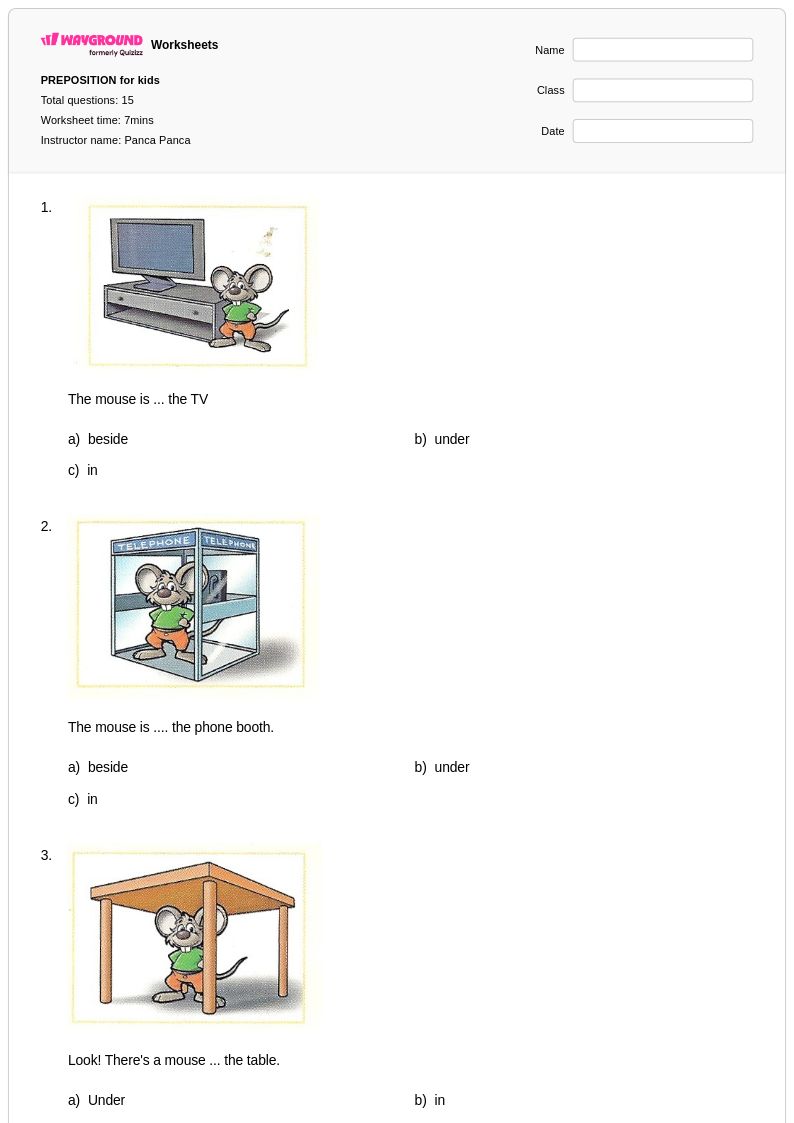
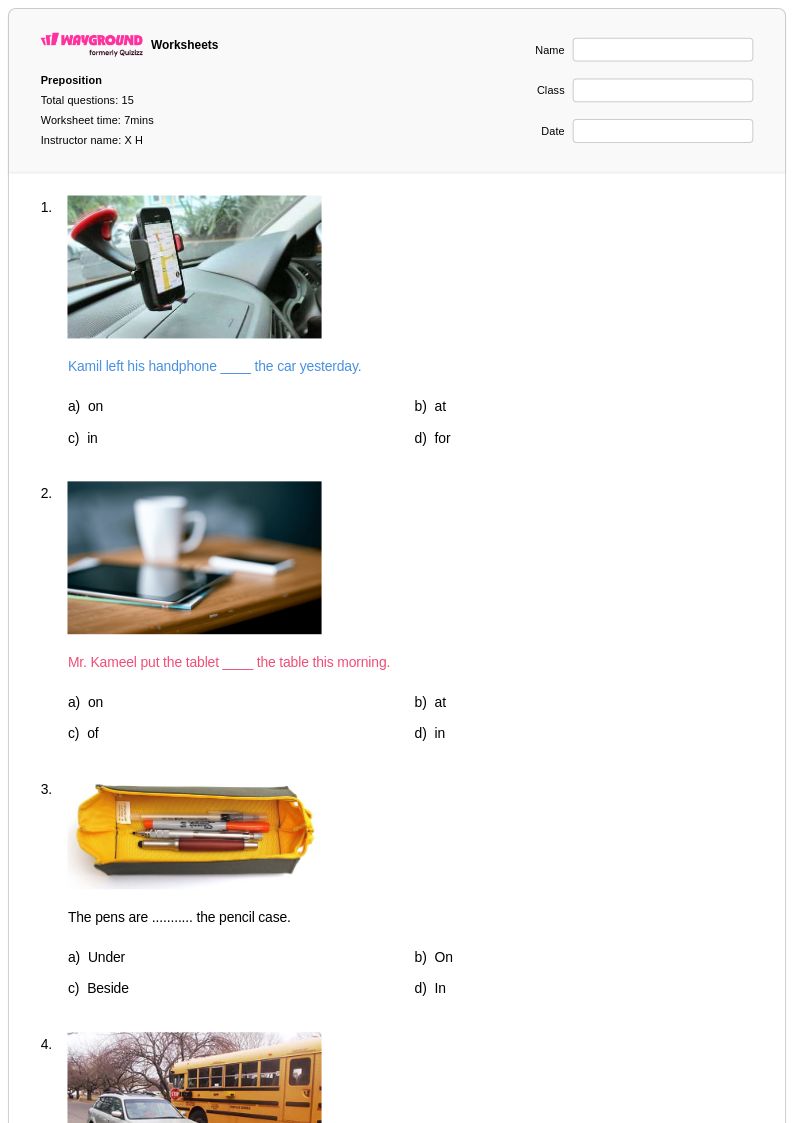
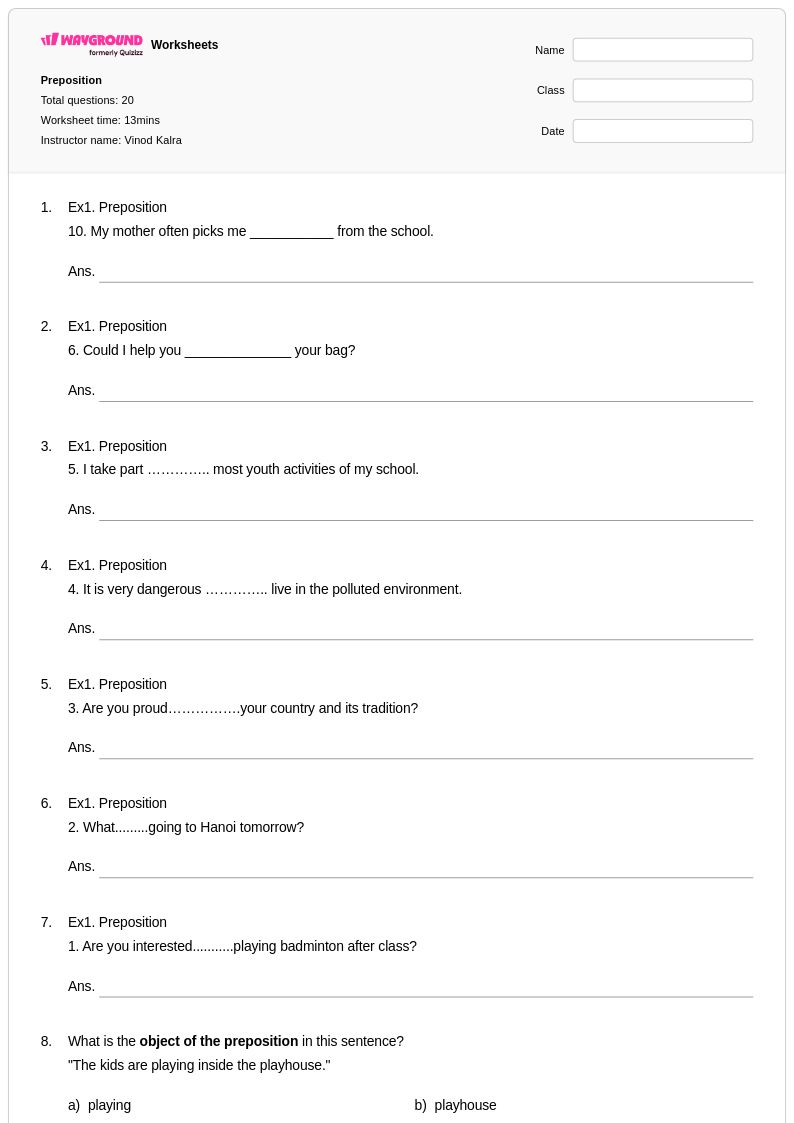
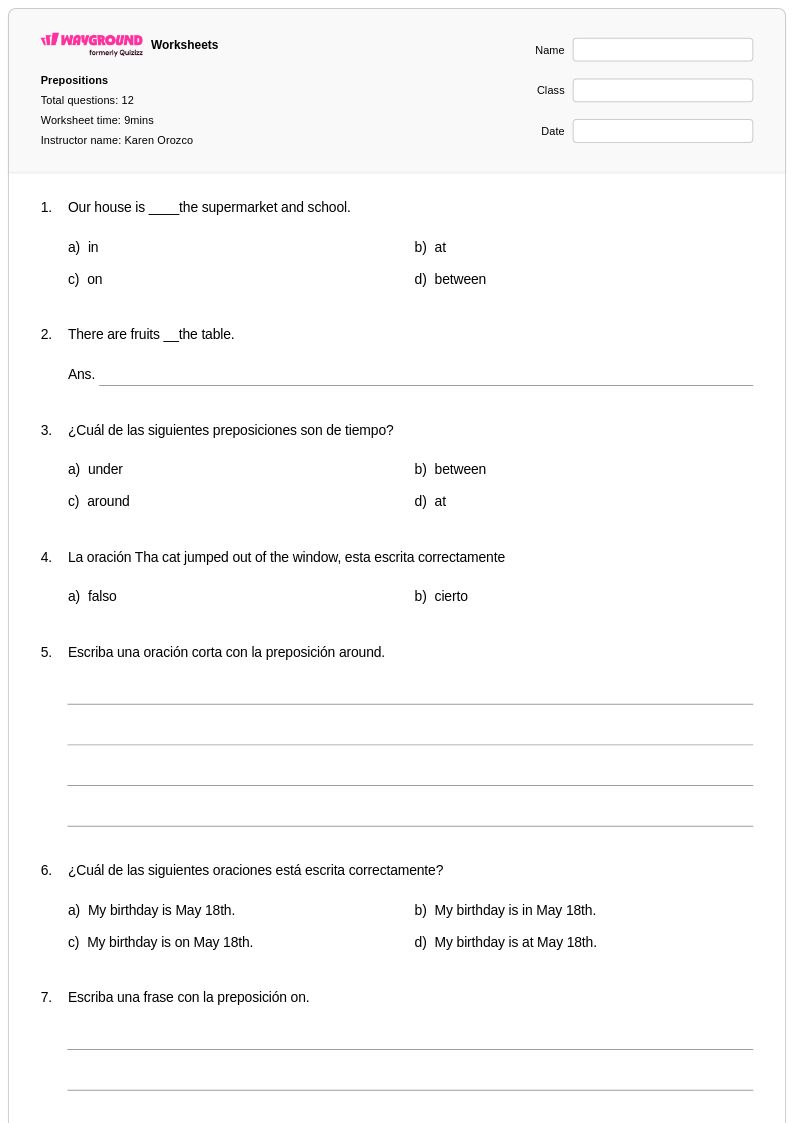
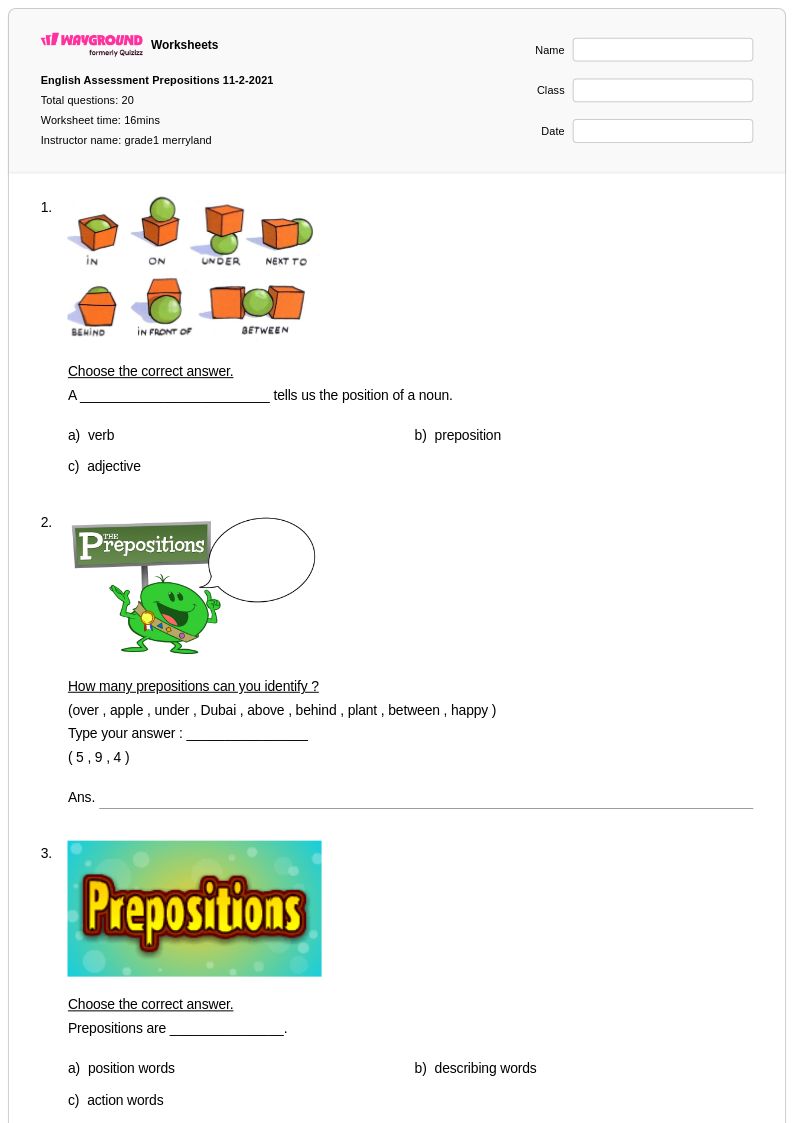
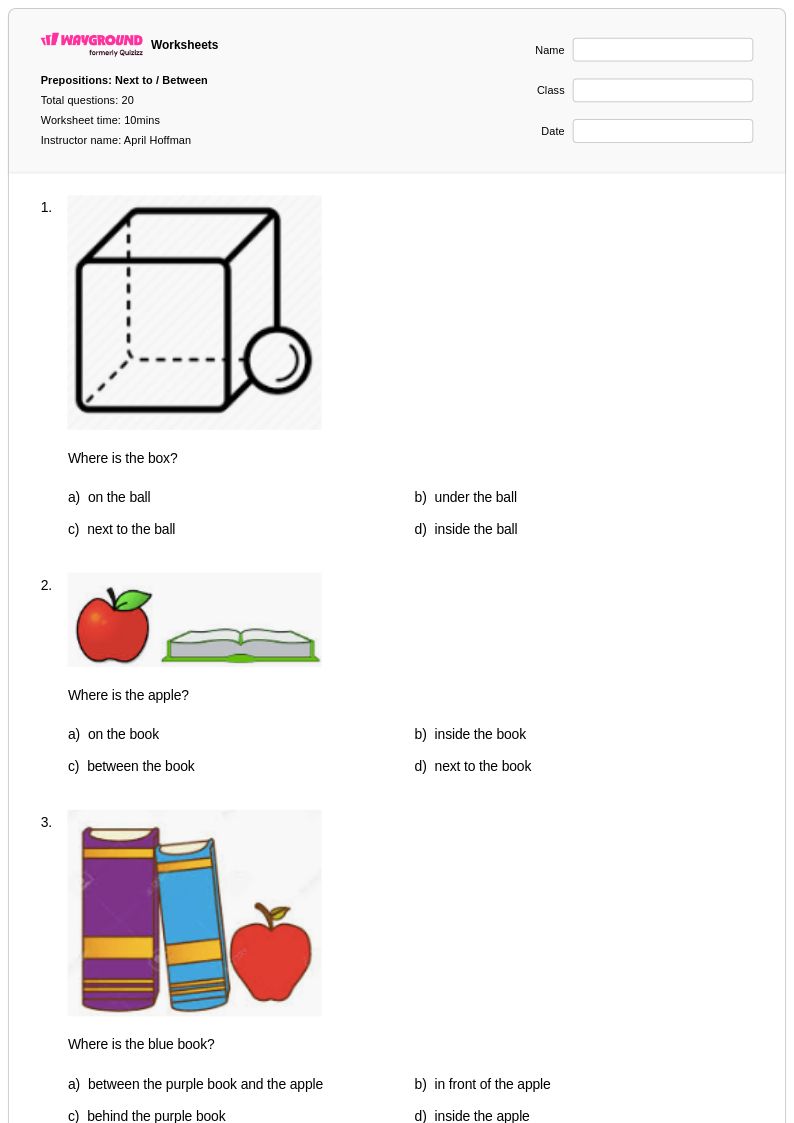
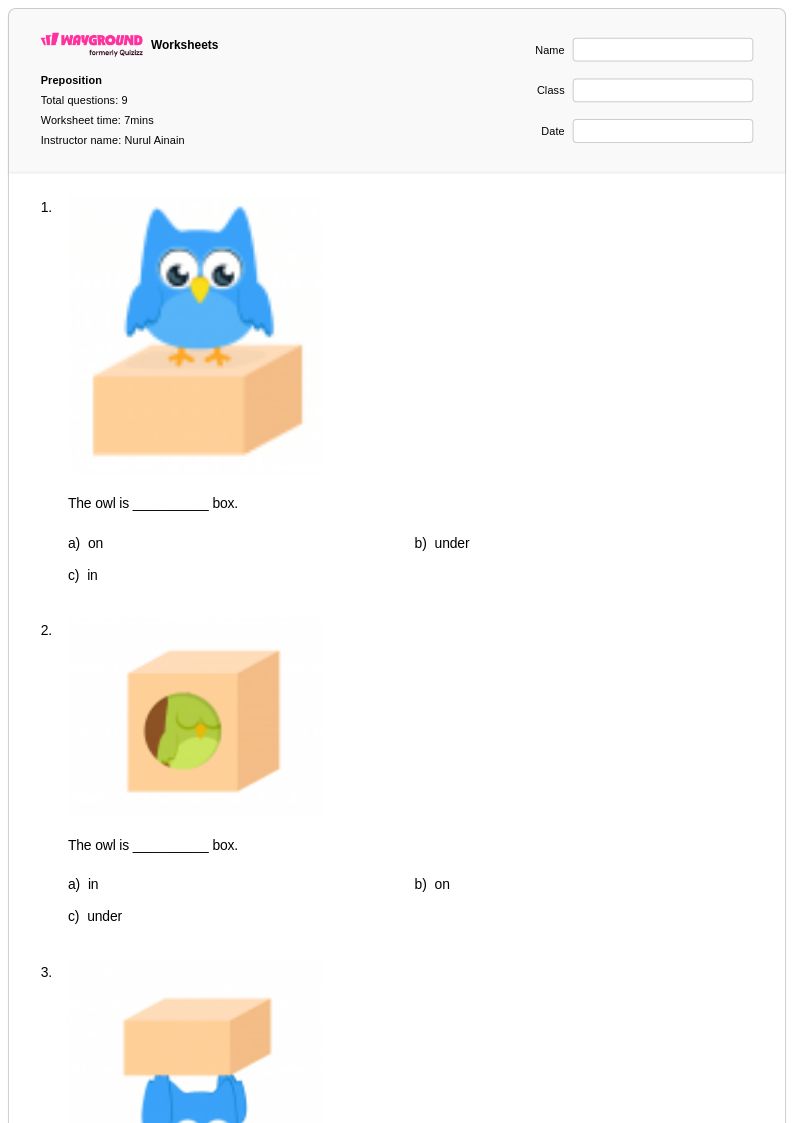
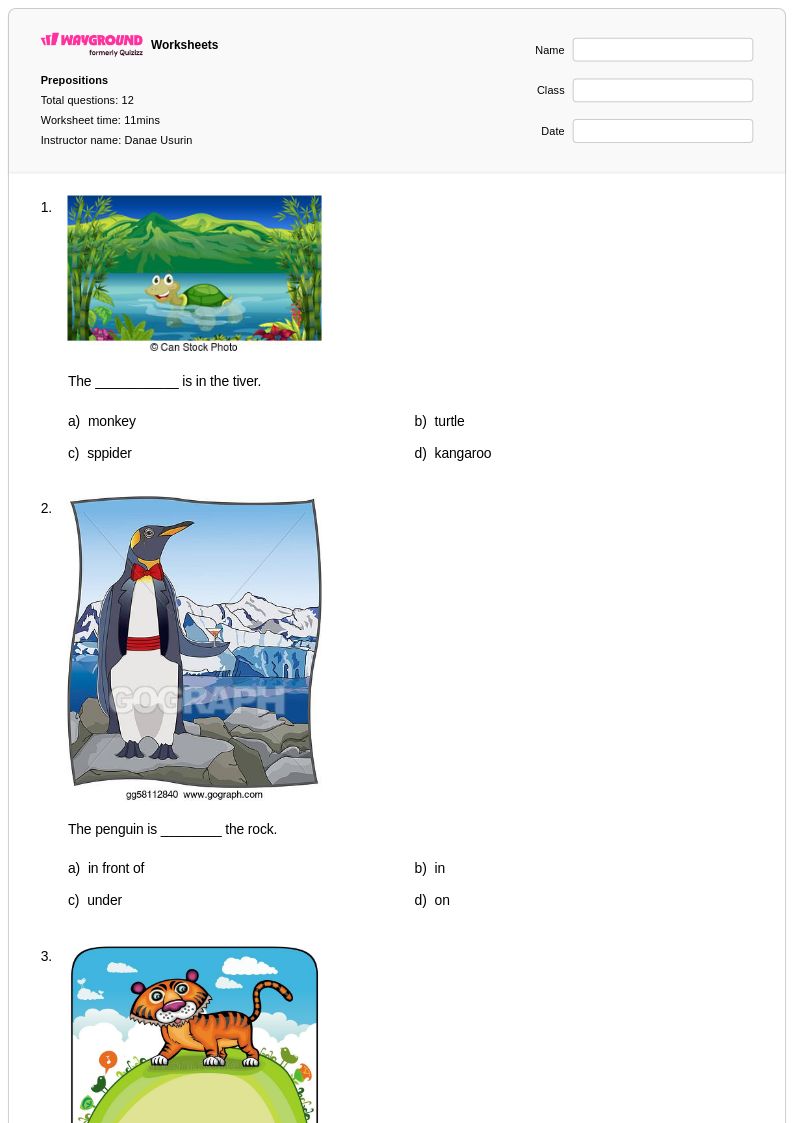
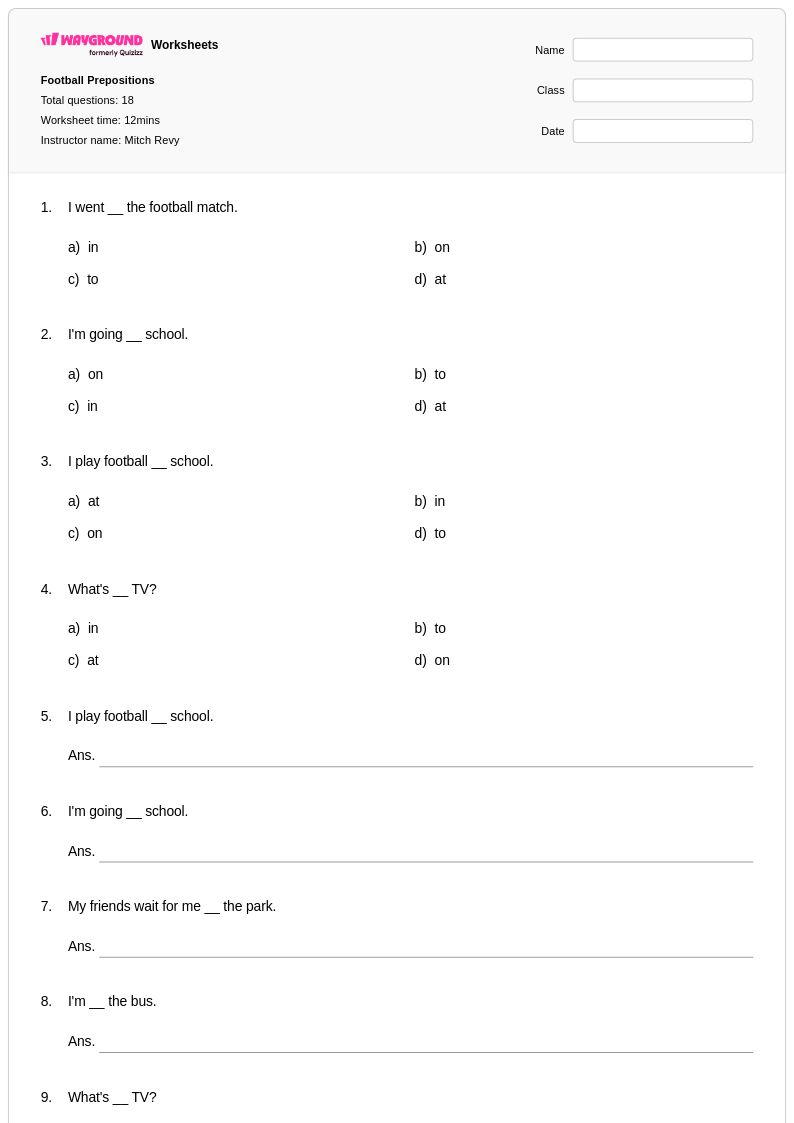
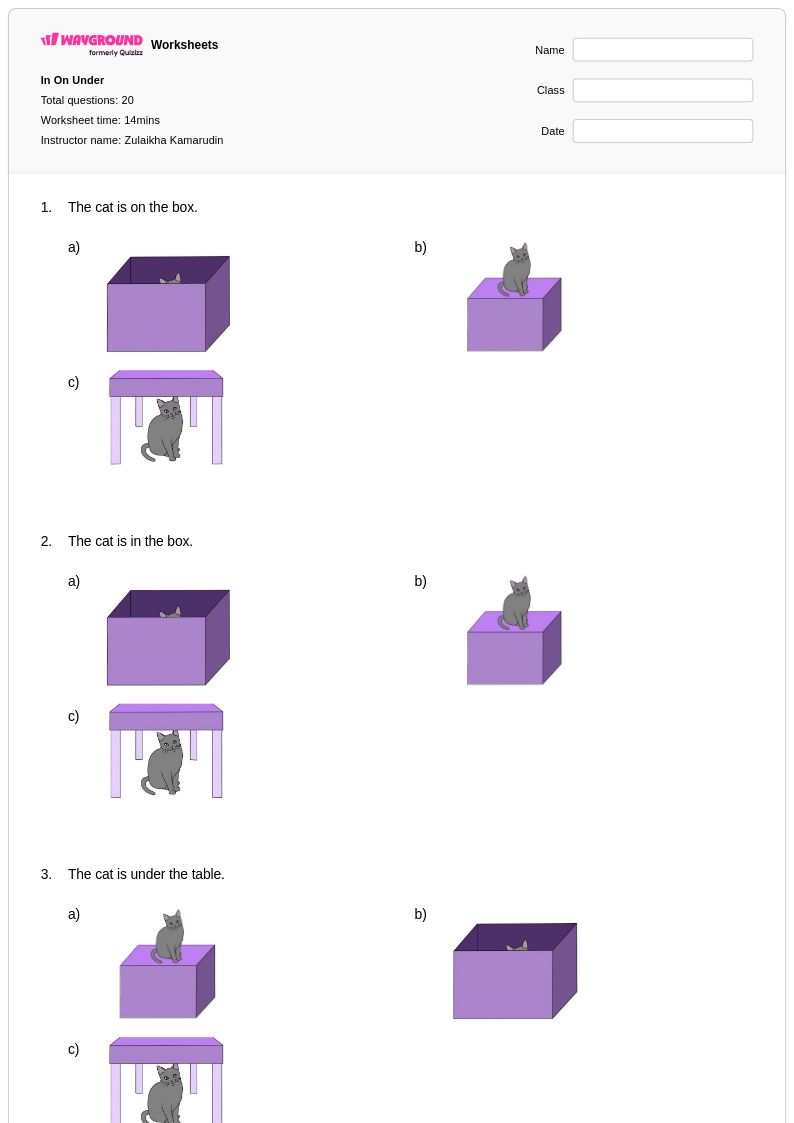
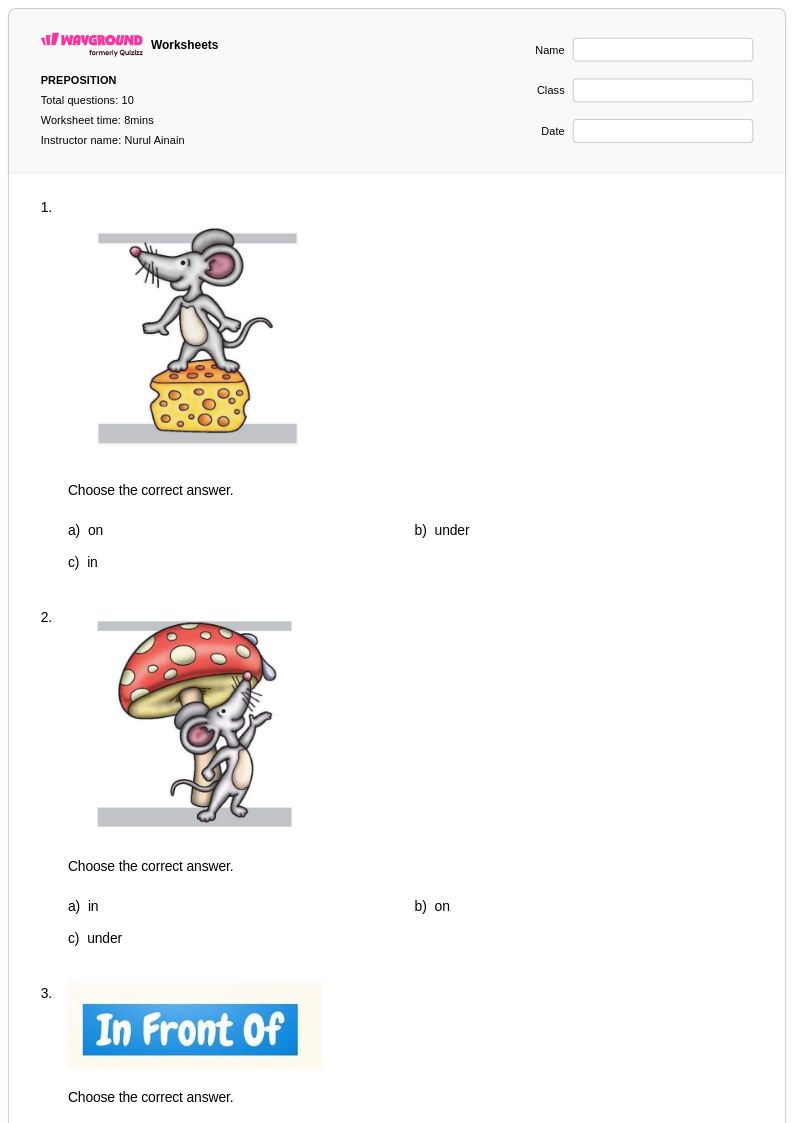
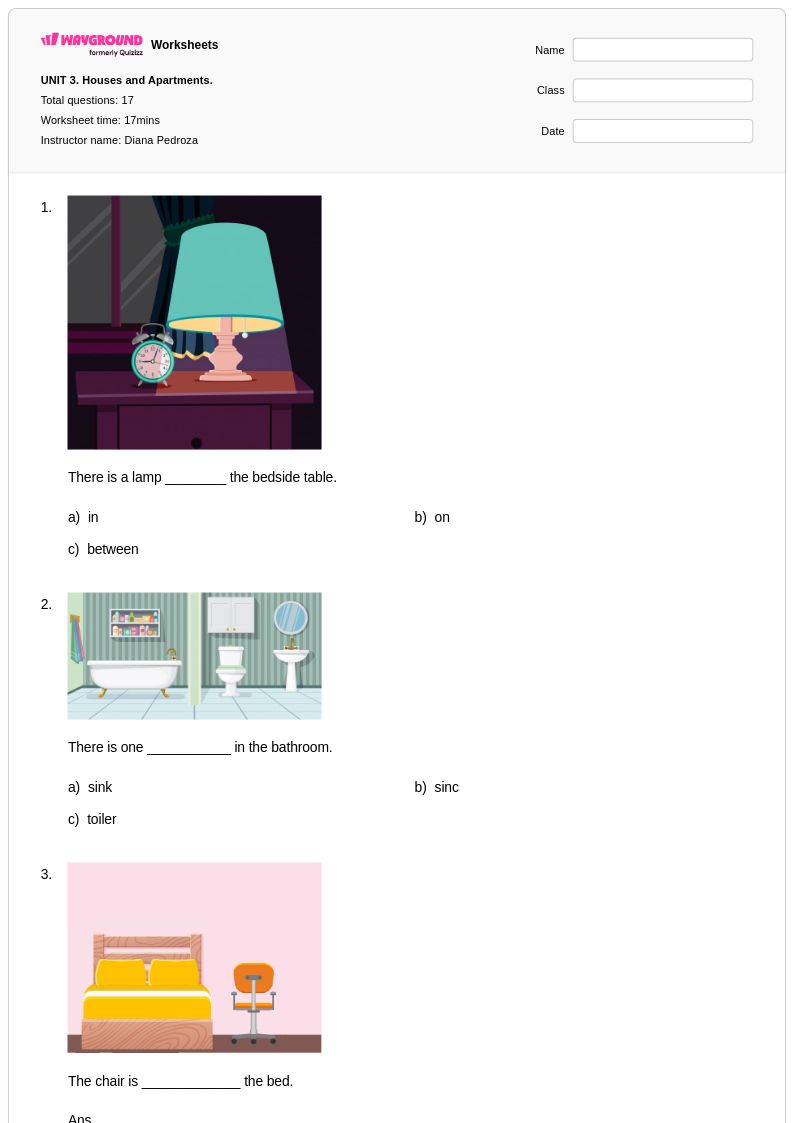
Preposition location worksheets for Year 1 students available through Wayground (formerly Quizizz) provide essential foundational practice for young learners developing spatial awareness and language skills. These carefully designed printables focus specifically on positional prepositions such as on, under, beside, in front of, and behind, helping first-grade students understand how objects relate to one another in space. Each worksheet collection includes engaging activities where students identify object positions, complete sentences with appropriate prepositions, and connect visual representations with corresponding prepositional phrases. The free pdf resources come with comprehensive answer keys that enable teachers to quickly assess student understanding while providing structured practice problems that build confidence in using location-based prepositions correctly.
Wayground (formerly Quizizz) empowers teachers with access to millions of educator-created preposition location worksheets specifically tailored for Year 1 instruction. The platform's robust search and filtering capabilities allow teachers to quickly locate materials aligned with curriculum standards while offering differentiation tools to meet diverse learning needs within the classroom. Teachers can customize existing worksheets or select from ready-to-use printable and digital formats, including downloadable pdf versions that work seamlessly for both in-person and remote learning environments. These versatile resources support comprehensive lesson planning by providing options for initial skill introduction, targeted remediation for struggling learners, enrichment activities for advanced students, and ongoing practice opportunities that reinforce preposition location concepts throughout the academic year.
FAQs
How do I teach prepositions of location to my students?
Start by anchoring instruction in concrete, visual contexts — use classroom objects or pictures to demonstrate words like 'above,' 'below,' 'beside,' and 'between' before asking students to work with them in text. Gradually move from physical demonstrations to written sentence practice, then to independent construction tasks. Connecting each preposition to a real spatial relationship helps students internalize meaning rather than memorize definitions.
What kinds of exercises help students practice prepositions of location?
Effective practice exercises include gap-fill sentences where students select the correct positional preposition, picture-based tasks where students describe an object's position in a scene, and sentence construction prompts that require using specific prepositions accurately. Progressing from identification to production ensures students can both recognize and apply prepositions of location in context.
What mistakes do students commonly make with prepositions of location?
Students frequently confuse prepositions with overlapping spatial meanings, such as 'above' versus 'over' or 'beside' versus 'next to,' using them interchangeably when context calls for precision. Another common error is omitting the preposition entirely in sentence writing, particularly among English language learners who may default to structures from their first language. Targeted practice that highlights the distinctions between easily confused prepositions helps address these patterns directly.
How can I use preposition location worksheets to support English language learners?
For English language learners, pairing visual exercises with written tasks is especially effective because it reduces reliance on prior language knowledge and builds meaning from images. Worksheets that include sentence frames or word banks scaffold the transition to independent sentence construction. On Wayground, teachers can also enable the Read Aloud accommodation so questions and prompts are read to students who need additional language support, and reduce answer choices to lower cognitive load during early practice stages.
How do I use preposition location worksheets from Wayground in my classroom?
Wayground's preposition location worksheets are available as printable PDFs for traditional classroom use and in digital formats for technology-integrated environments, including the option to host them as a live quiz on the Wayground platform. Teachers can assign digital versions to individual students or the whole class and apply accommodations such as extended time or read aloud for students who need them. The included answer keys make these worksheets suitable for independent practice, guided instruction, or formative assessment.
At what grade level should students be introduced to prepositions of location?
Prepositions of location are typically introduced in the early elementary grades, often as part of foundational grammar and writing instruction, and revisited with increasing complexity through middle school as students are expected to use them accurately in academic writing. English language learners at any grade level may also require explicit instruction in positional prepositions regardless of their overall English proficiency. The key indicator for readiness is whether a student can describe basic spatial relationships verbally before being asked to apply them in writing.