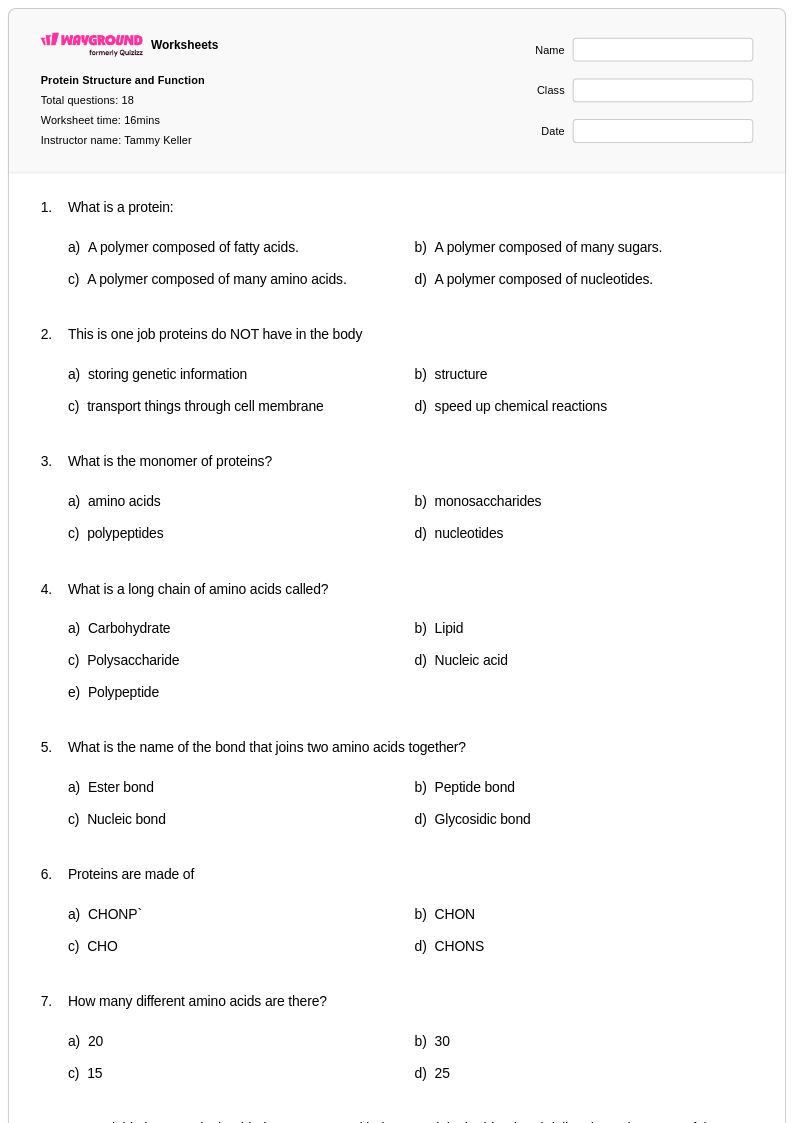
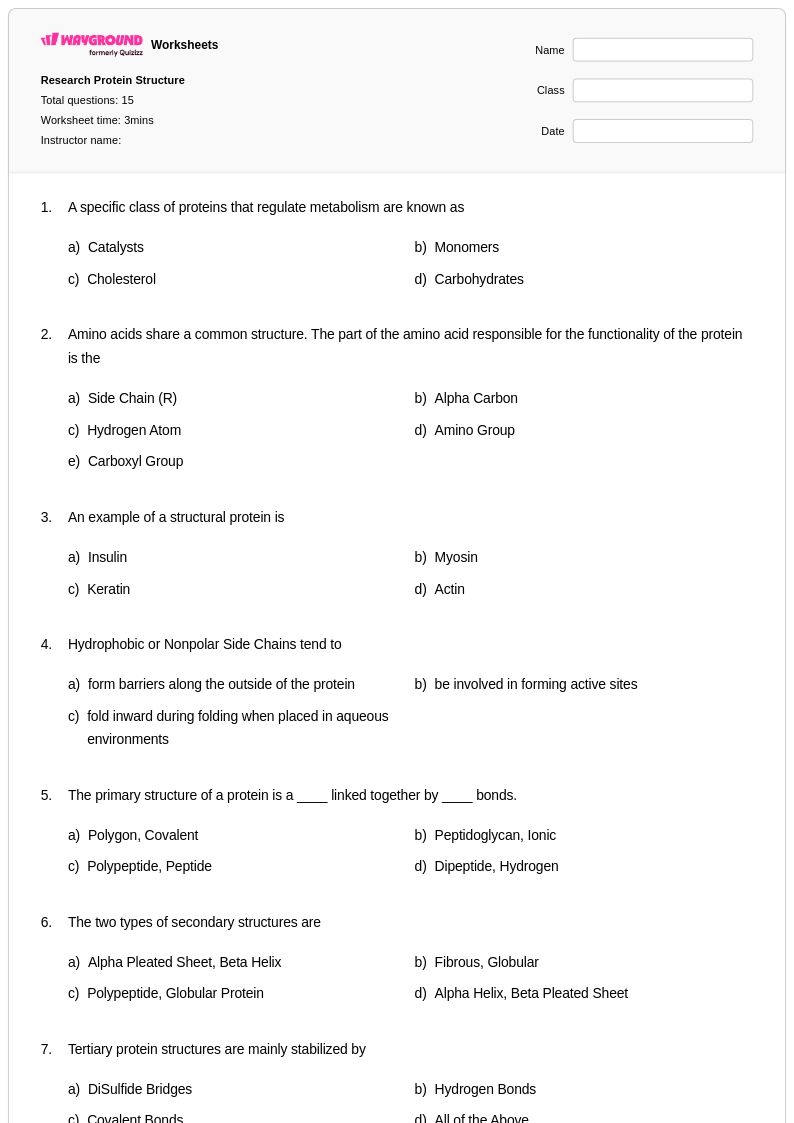
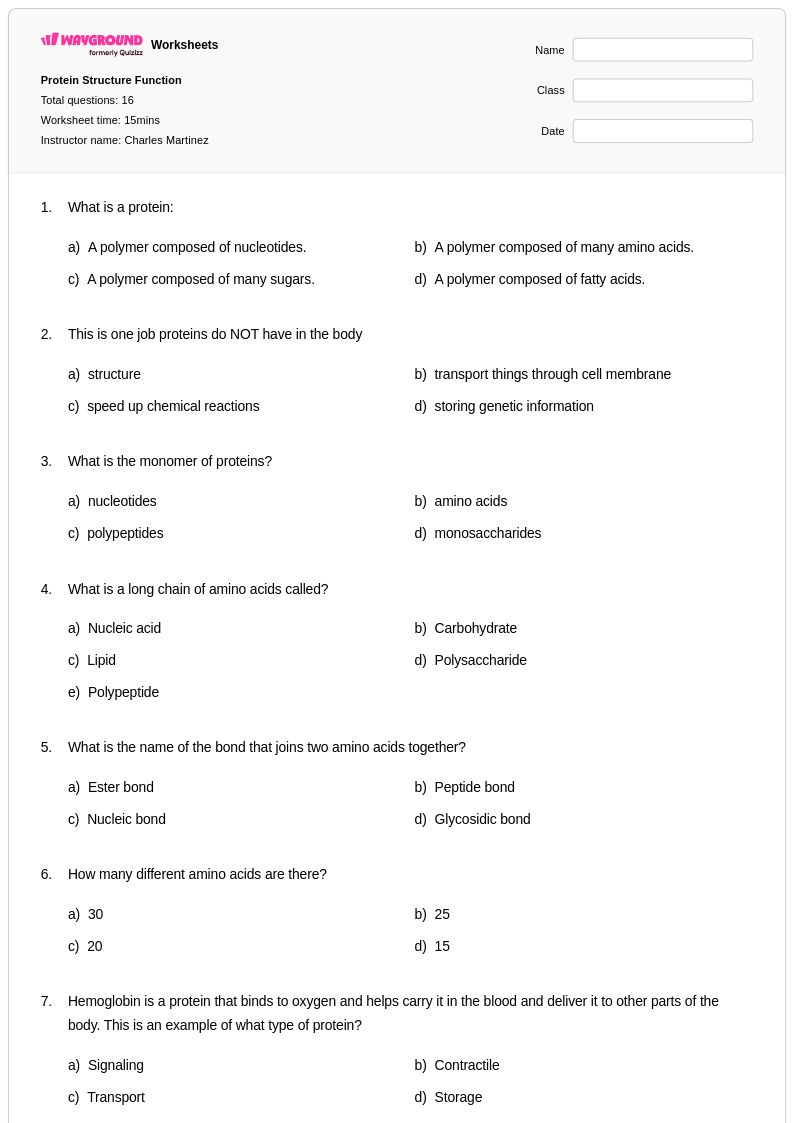
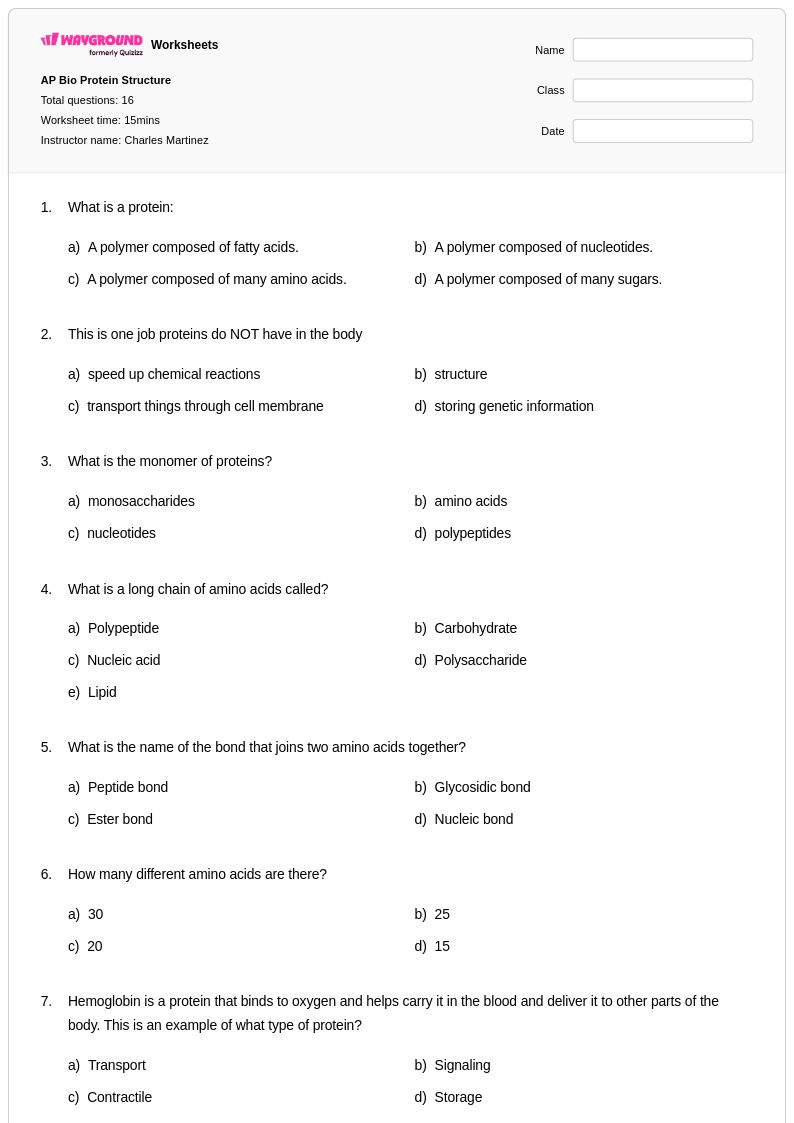
Free Printable Protein Structure Worksheets for Year 11
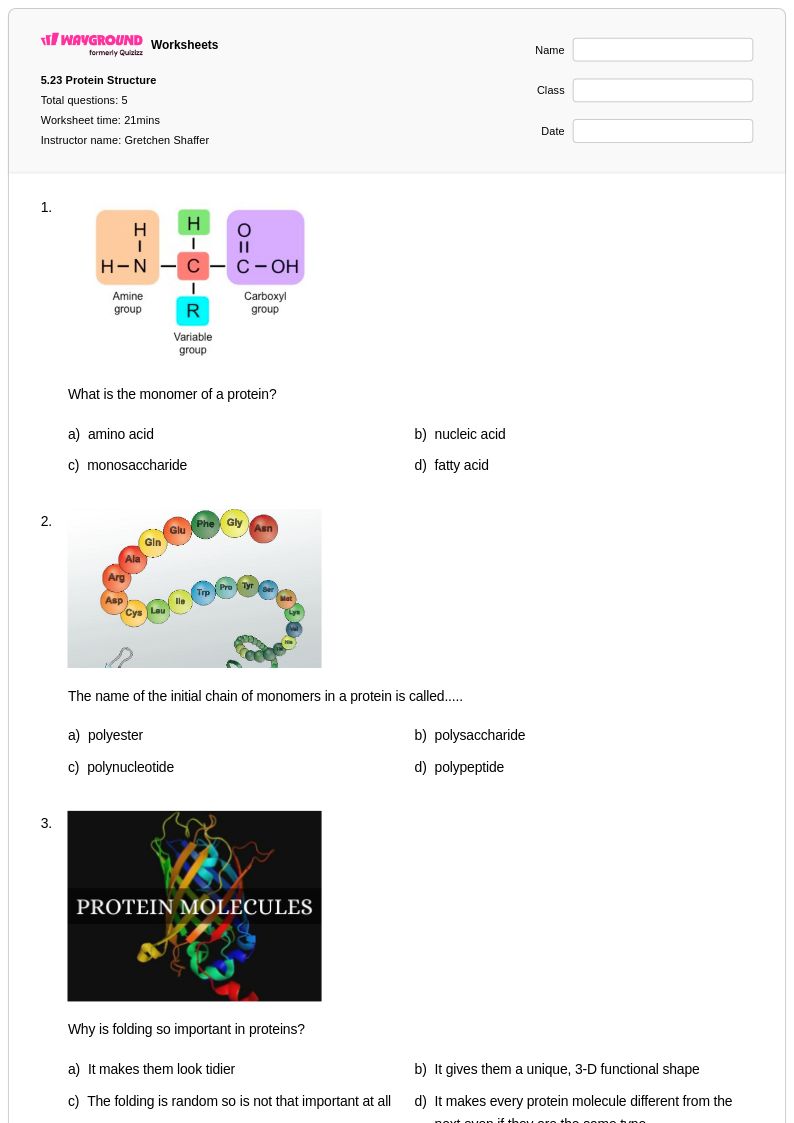
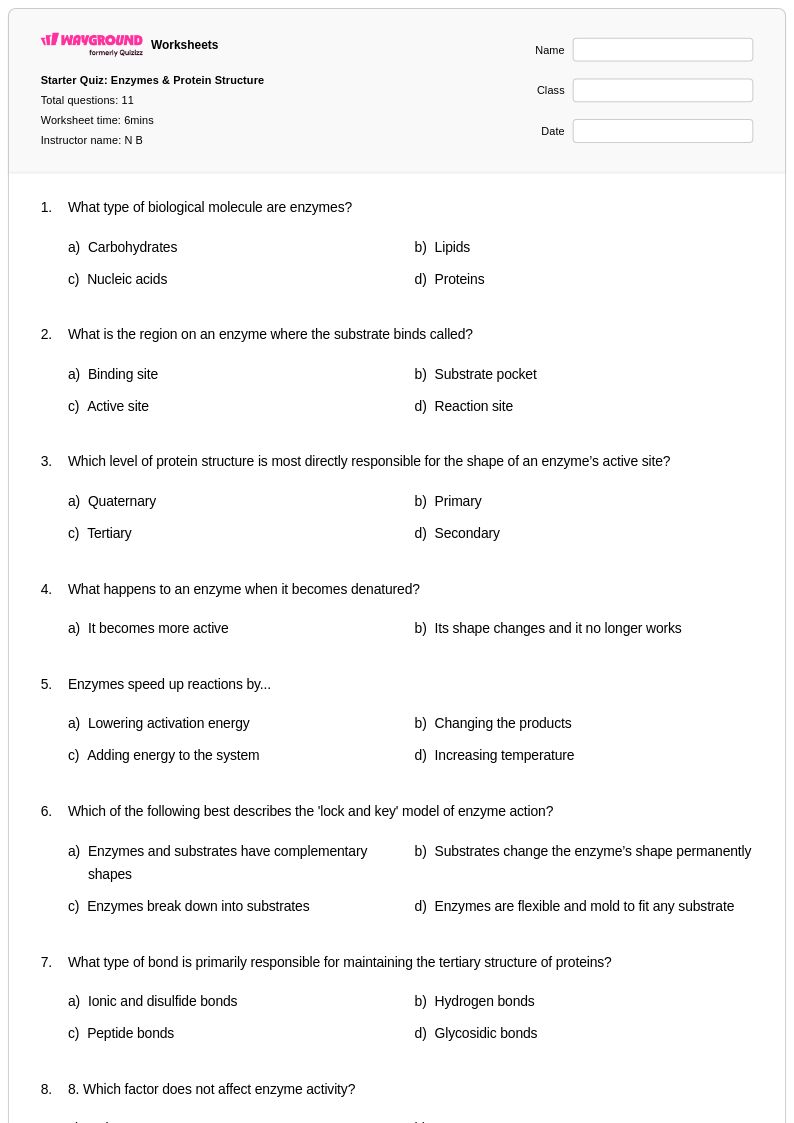
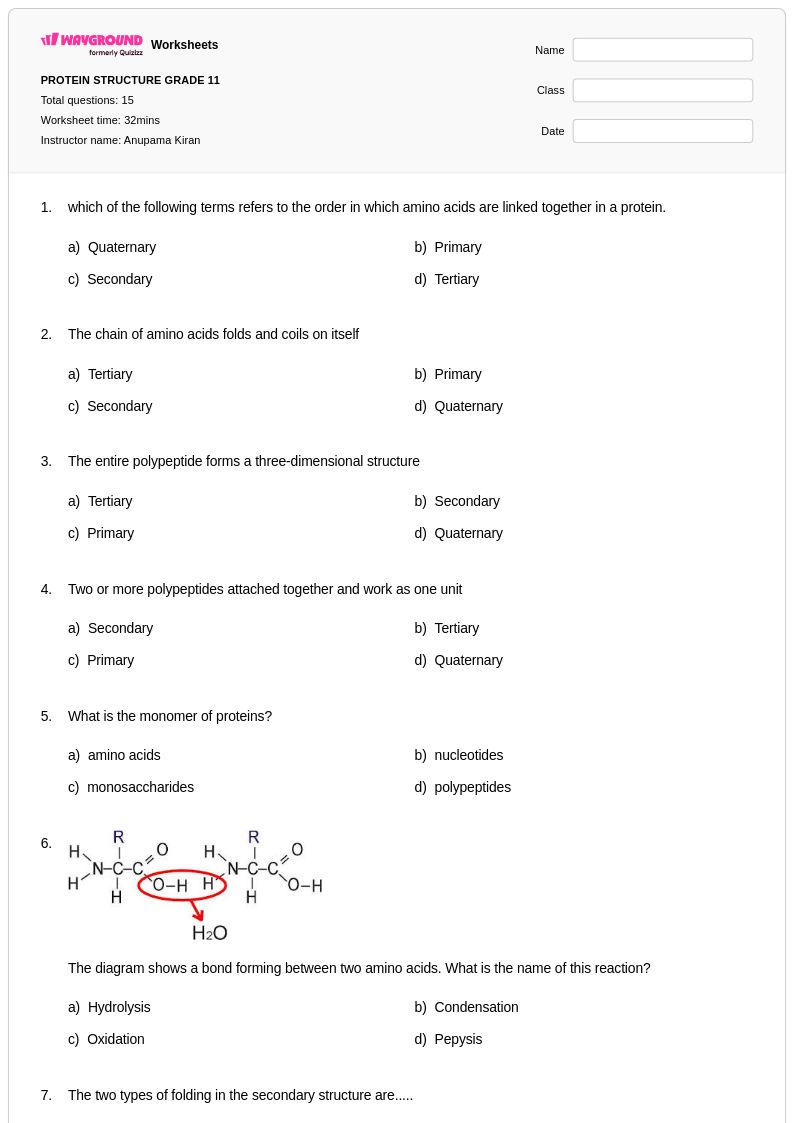
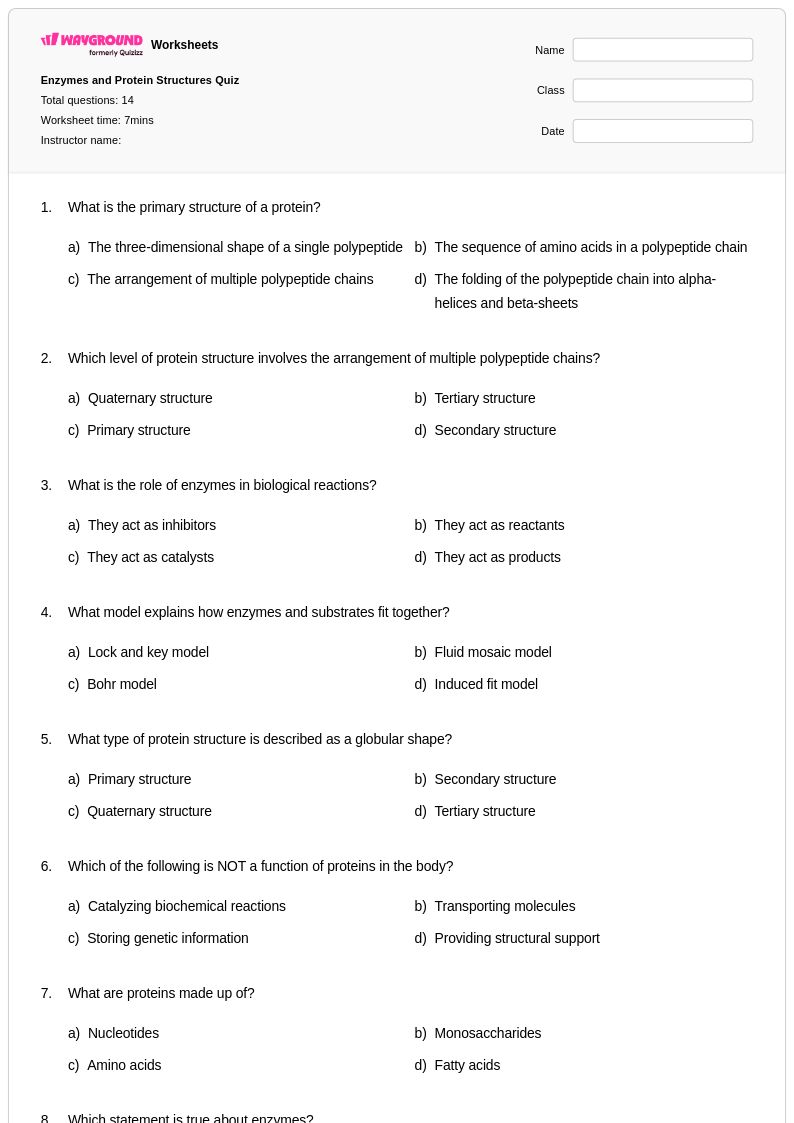
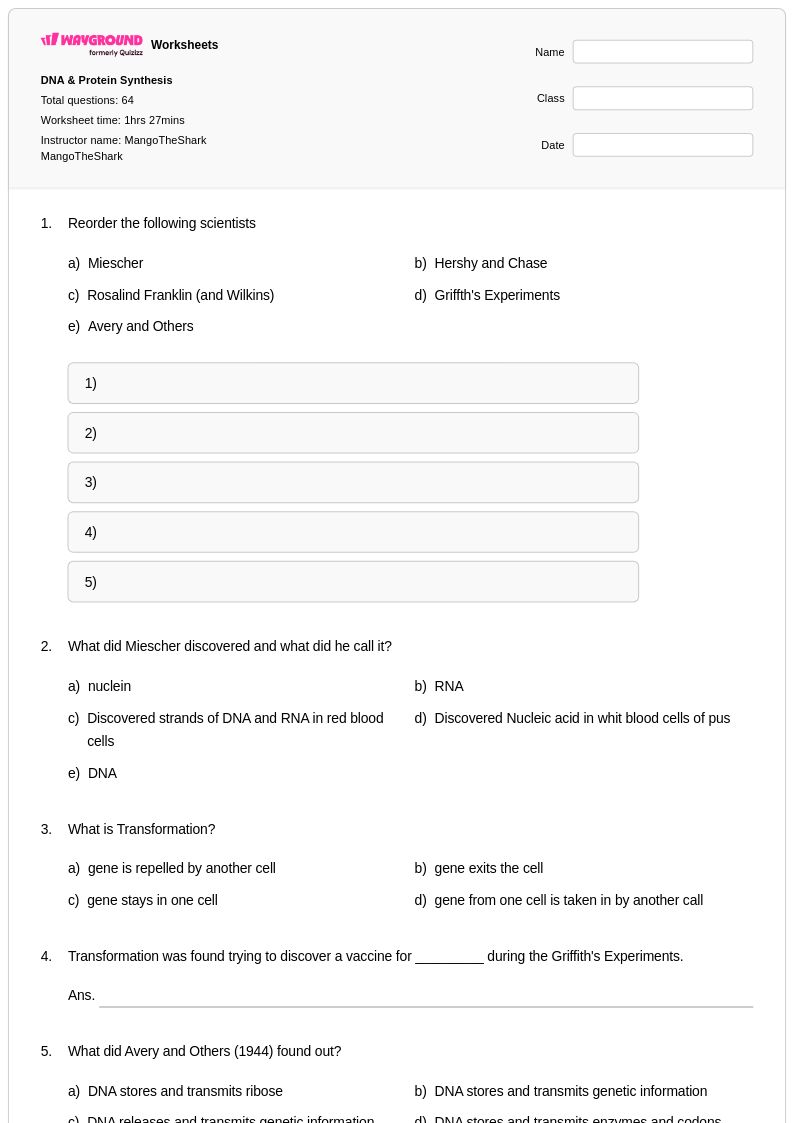
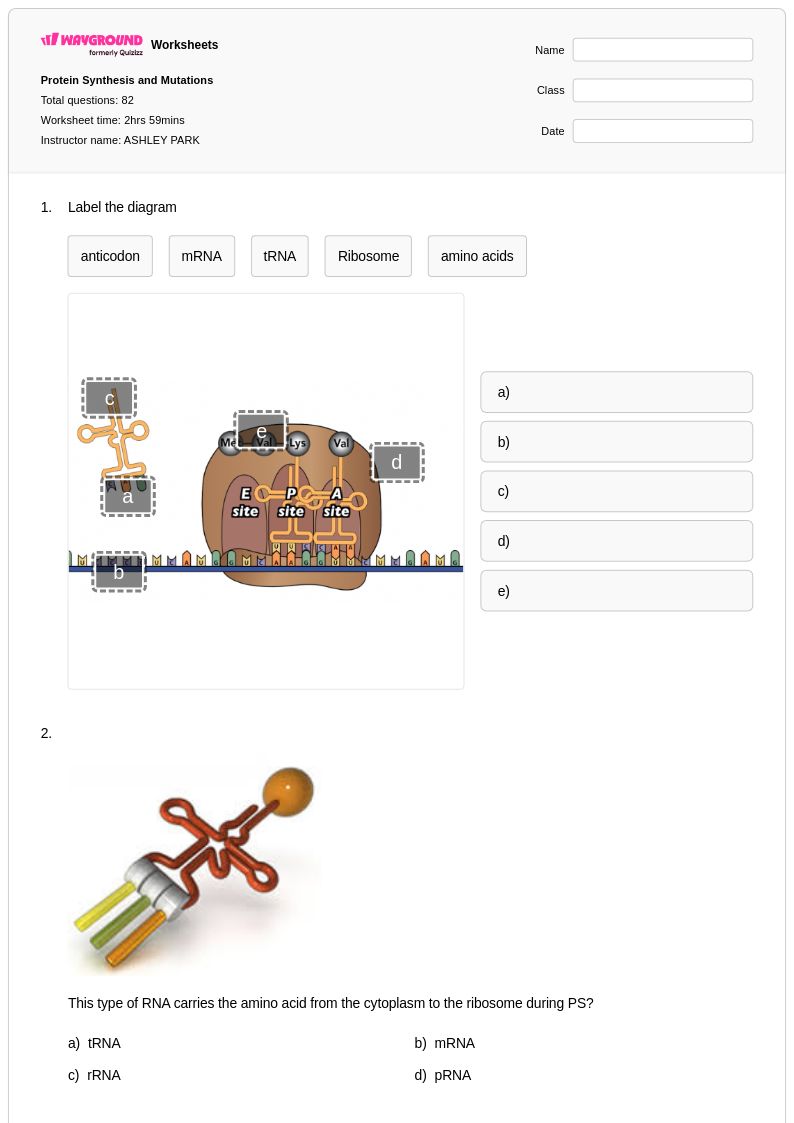
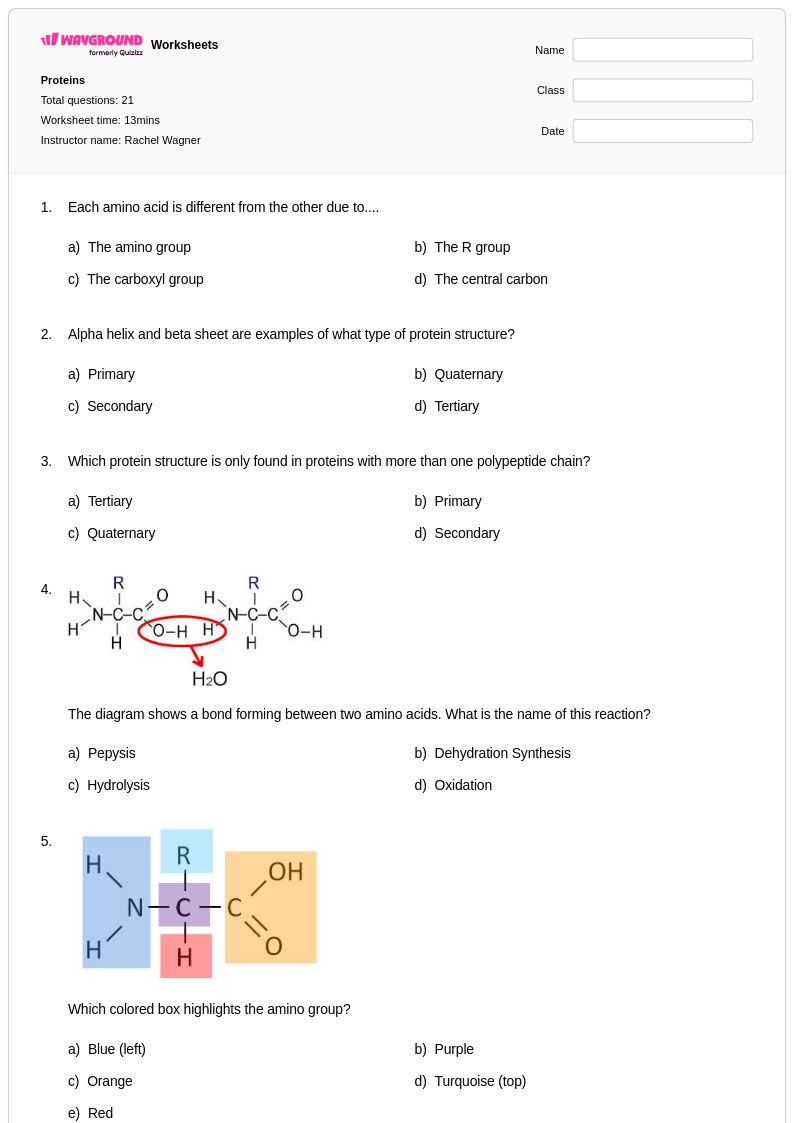
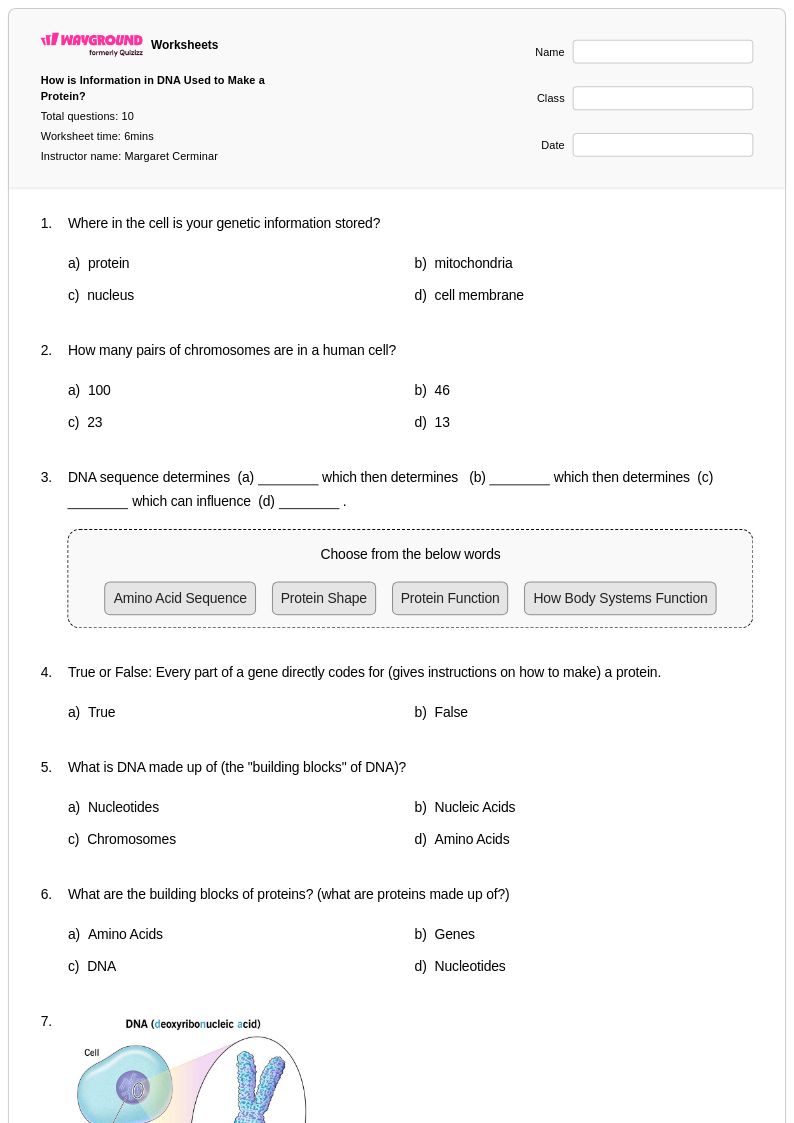
Explore Year 11 protein structure worksheets and printables through Wayground that help students master amino acid sequences, protein folding, and molecular interactions with comprehensive practice problems and answer keys.
Explore printable Protein Structure worksheets for Year 11
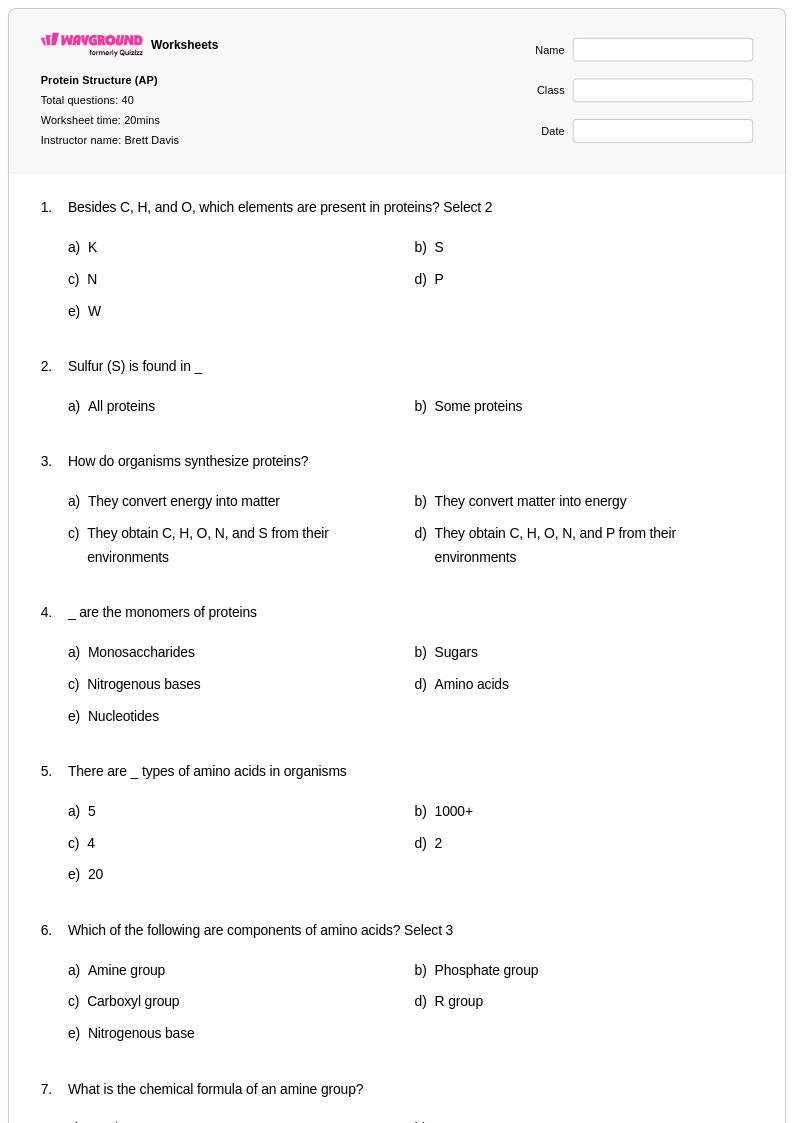
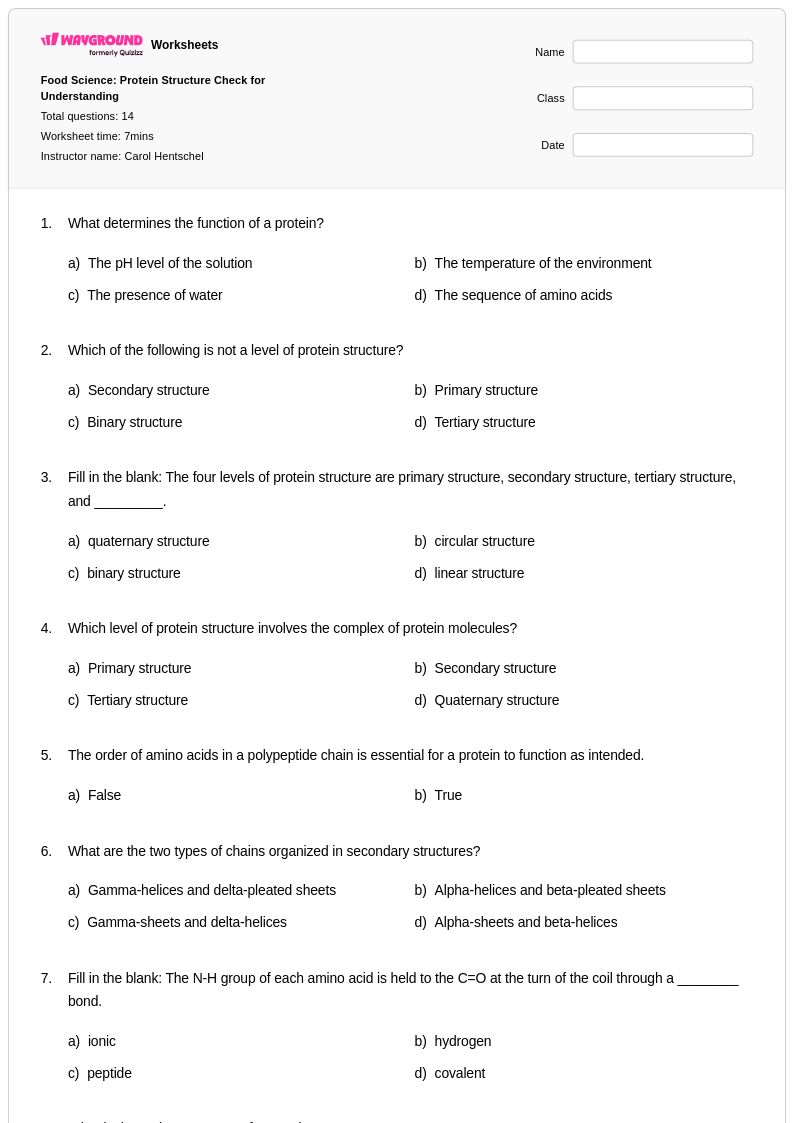
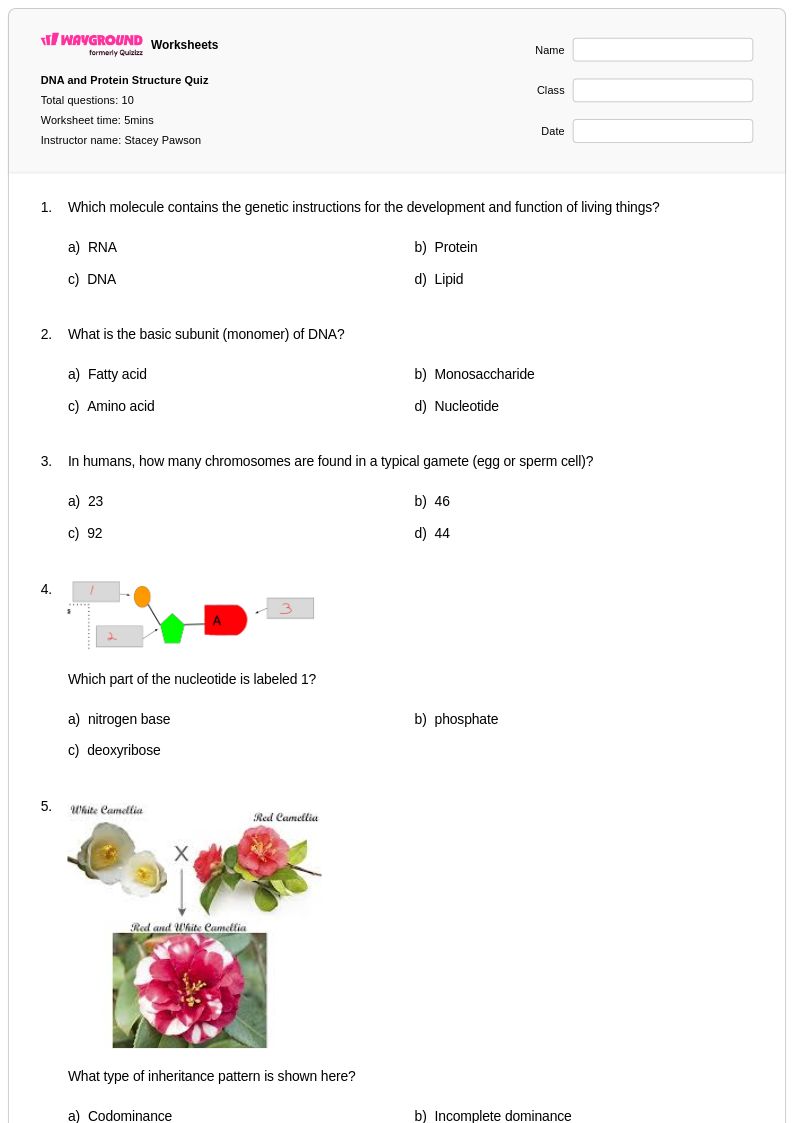
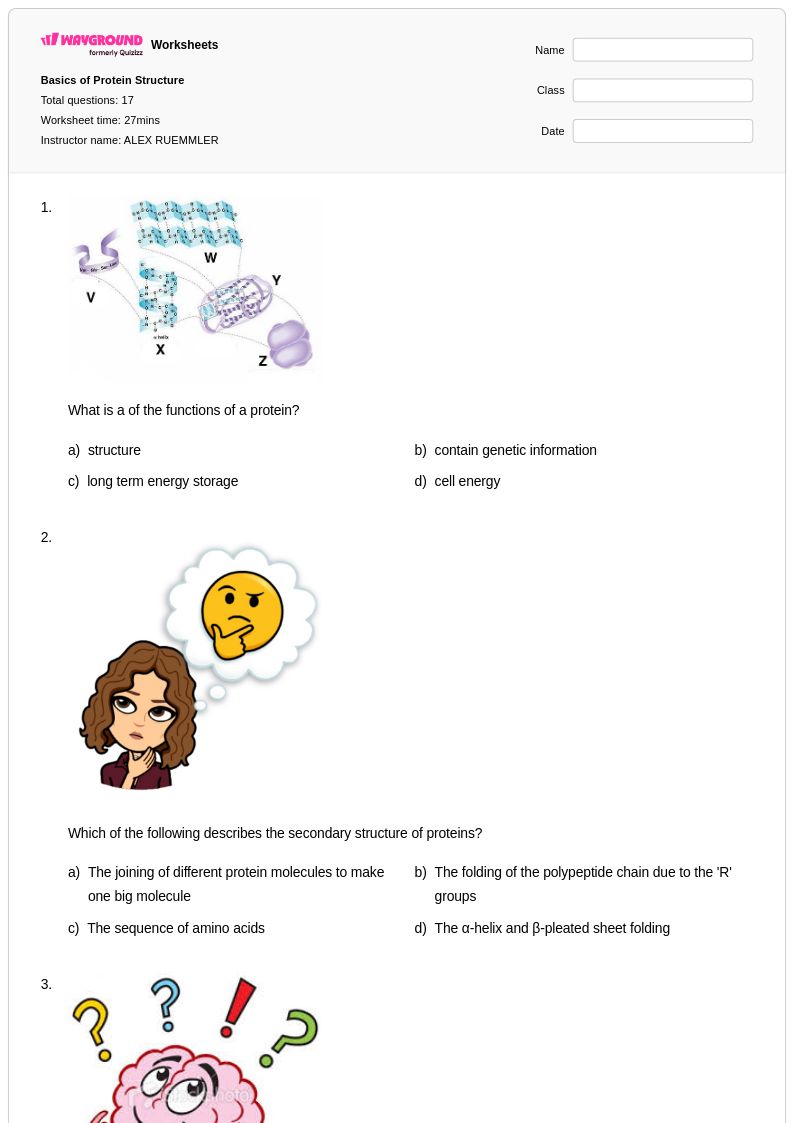
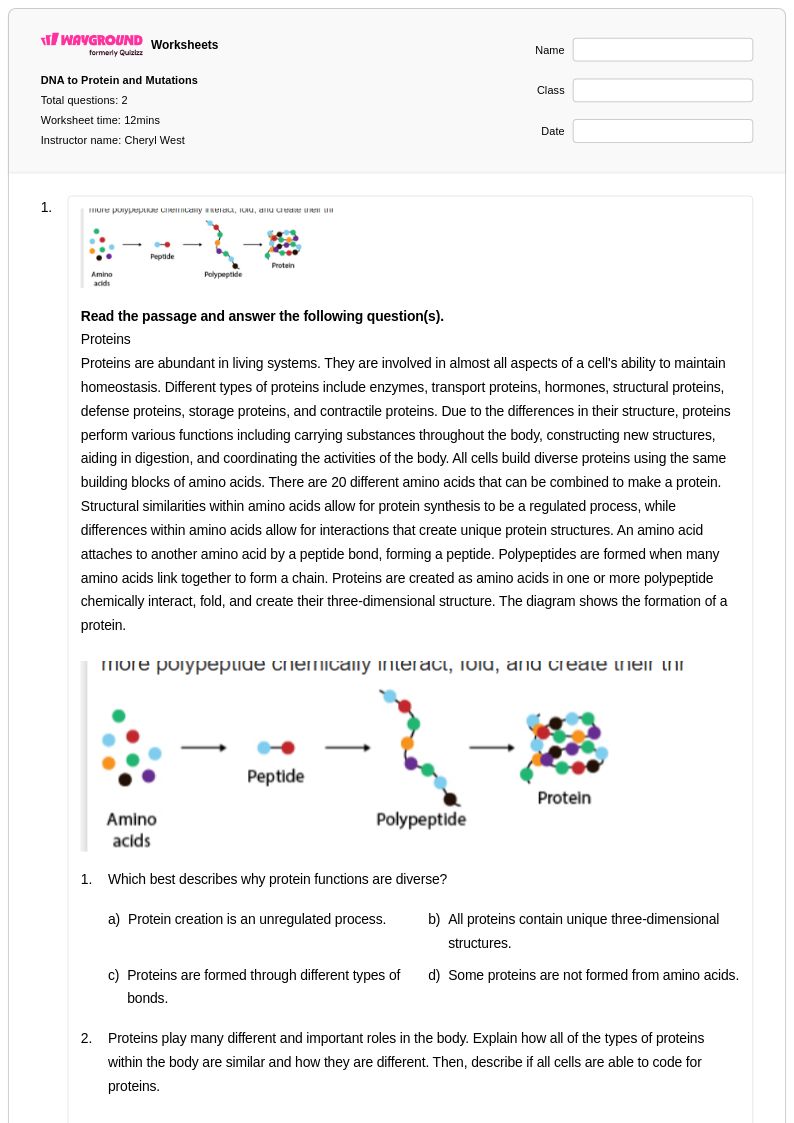
Year 11 protein structure worksheets available through Wayground (formerly Quizizz) provide comprehensive coverage of this fundamental biochemistry concept, helping students master the four levels of protein organization from primary amino acid sequences to complex quaternary structures. These expertly designed resources strengthen critical analytical skills as students explore how protein folding determines function, examine the roles of various chemical bonds in maintaining protein stability, and investigate the relationship between protein denaturation and biological activity. The collection includes detailed practice problems that challenge students to identify structural motifs, predict folding patterns based on amino acid properties, and analyze real-world examples of protein dysfunction in genetic disorders, with complete answer keys and free printable pdf formats supporting both independent study and classroom instruction.
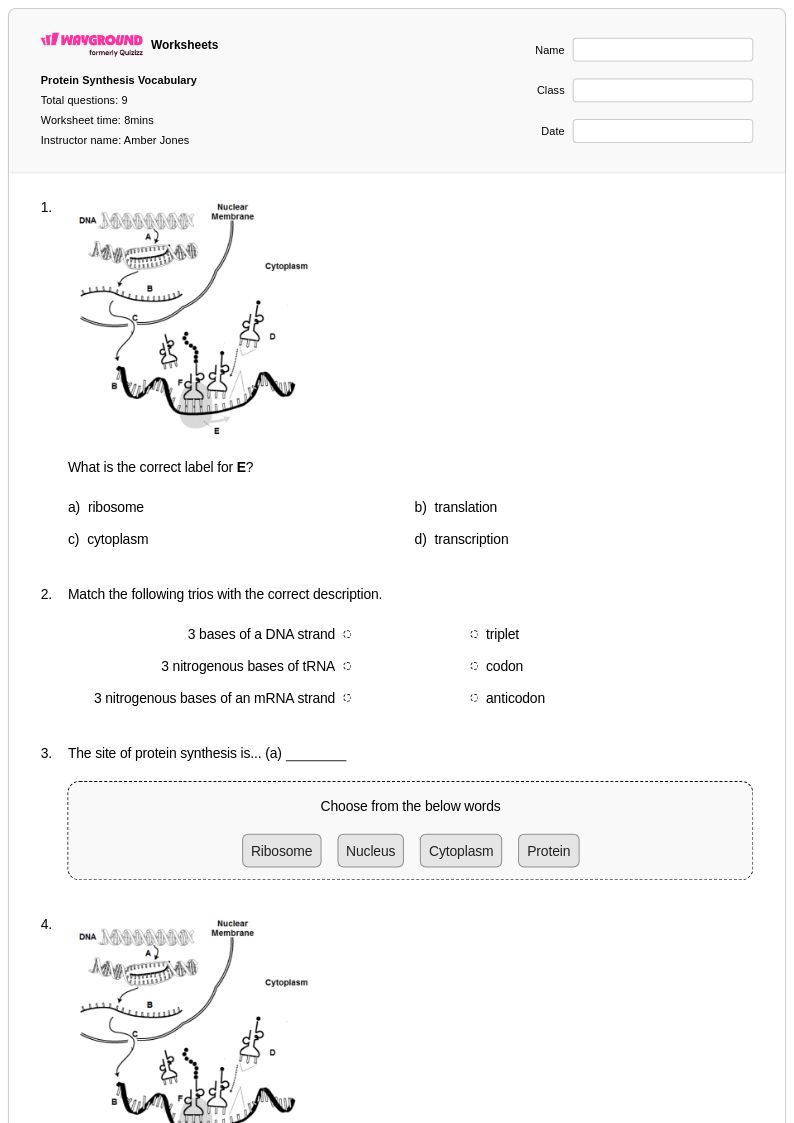
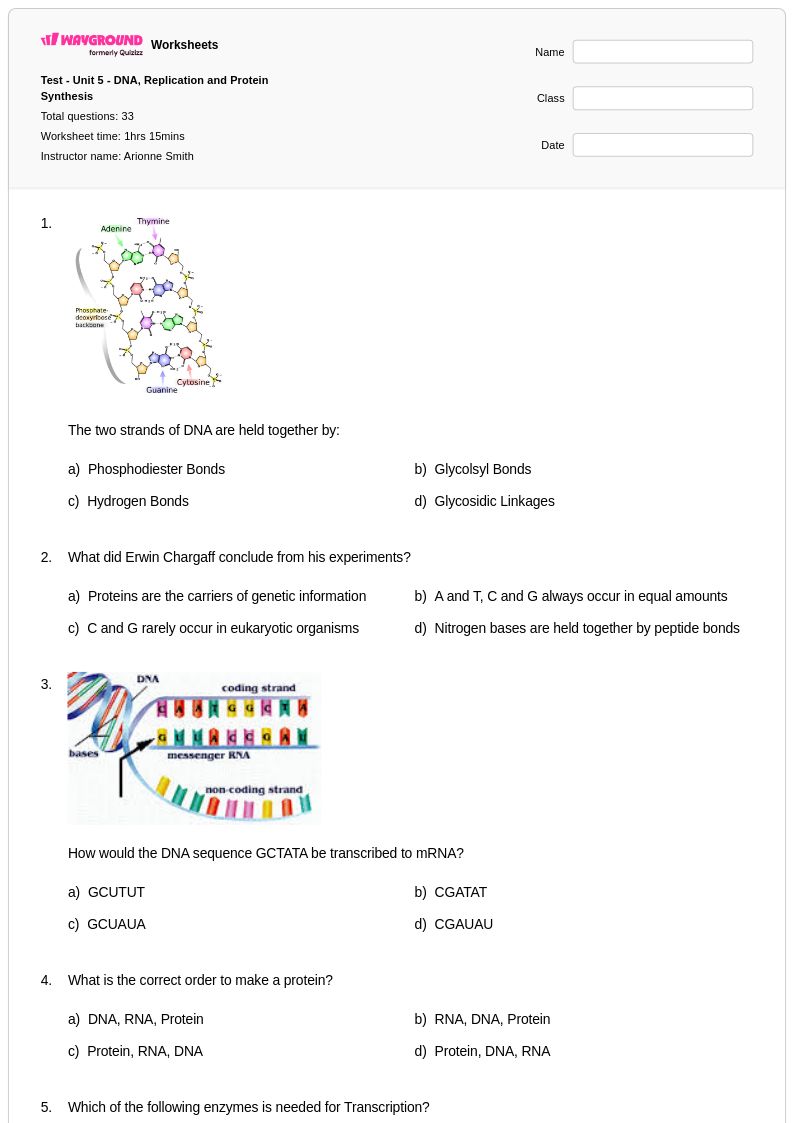
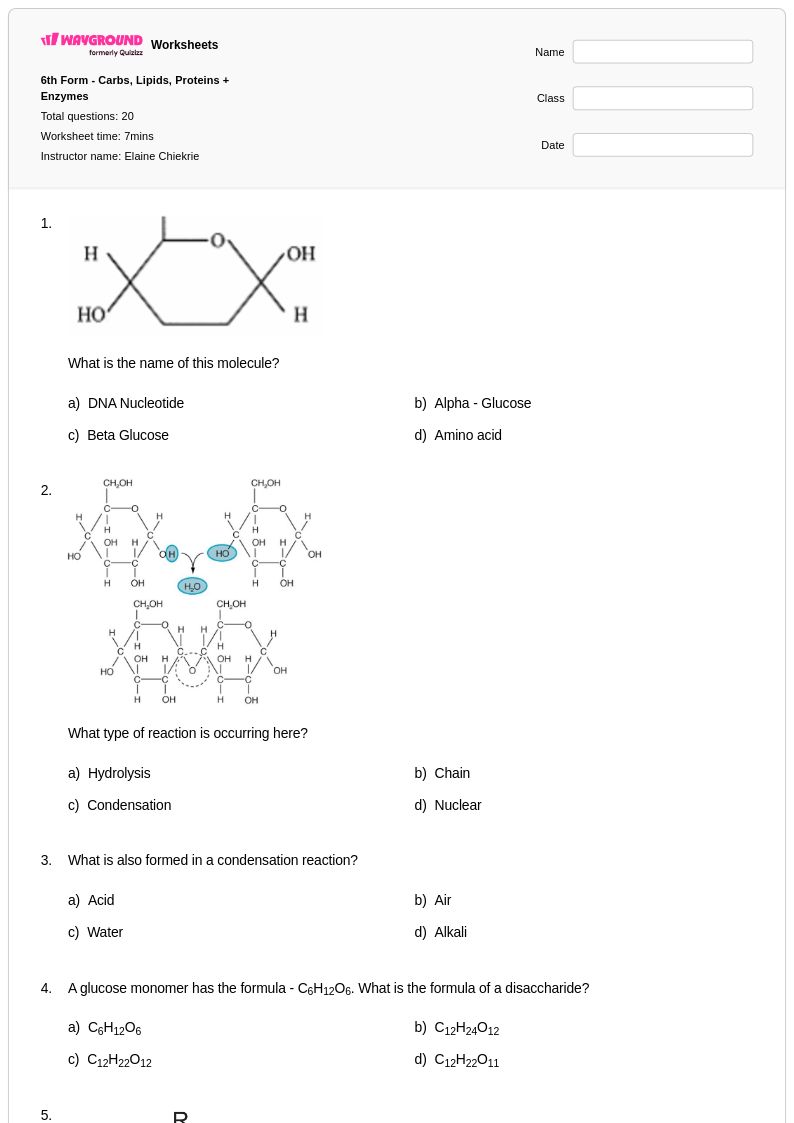
Wayground (formerly Quizizz) empowers educators with millions of teacher-created protein structure resources that streamline lesson planning and enhance student learning outcomes across diverse classroom environments. The platform's robust search and filtering capabilities allow teachers to quickly locate materials aligned with specific curriculum standards, whether focusing on enzyme structure-function relationships, membrane protein organization, or protein synthesis and post-translational modifications. Advanced differentiation tools enable seamless customization of worksheets to accommodate varying skill levels within Year 11 biology courses, while the availability of both printable and digital pdf formats provides maximum flexibility for in-person and remote instruction. These comprehensive resources support targeted remediation for struggling students, enrichment opportunities for advanced learners, and systematic skill practice that builds confidence in understanding complex molecular biology concepts.
FAQs
How do I teach protein structure to high school biology students?
Teaching protein structure effectively means building understanding level by level, starting with amino acid chemistry before introducing primary, secondary, tertiary, and quaternary organization. Students benefit from connecting each structural level to a specific type of chemical interaction, such as peptide bonds at the primary level and hydrogen bonds in alpha helices and beta sheets at the secondary level. Visual models, labeled diagrams, and structure-function case studies, like hemoglobin or enzymes, help make abstract molecular concepts concrete and memorable.
What are common mistakes students make when learning about protein structure?
One of the most persistent misconceptions is that students confuse the four levels of protein structure, particularly tertiary and quaternary, often believing any folded protein has quaternary structure when it only applies to multi-subunit proteins. Students also frequently struggle to distinguish between the types of bonds and interactions at each structural level, conflating covalent peptide bonds with the noncovalent forces that drive folding. Another common error is failing to connect environmental factors like temperature and pH to protein denaturation, treating structure as fixed rather than dynamic.
What practice exercises help students understand amino acid sequences and protein folding?
Effective practice for protein structure includes exercises where students identify R-group properties, such as polar, nonpolar, or charged, and predict how those properties influence folding and function. Practice problems that ask students to trace a polypeptide from its amino acid sequence through to its three-dimensional shape, identifying which interactions form at each stage, reinforce the logic of protein folding. Connecting structural diagrams to functional outcomes, such as explaining why a misfolded prion protein is dysfunctional, builds the deeper analytical reasoning expected in AP Biology and college-prep science.
How do I use Wayground's protein structure worksheets in my classroom?
Wayground's protein structure worksheets are available as free printable PDFs for traditional classroom use and in digital formats for technology-integrated environments, giving teachers flexibility across in-person, hybrid, and remote settings. Teachers can also host worksheets directly as a quiz on Wayground, enabling interactive student submission and instant scoring. Each worksheet includes a complete answer key, making them practical for independent practice, guided instruction, or formative assessment without additional preparation time.
How can I differentiate protein structure instruction for students at different skill levels?
For struggling students, scaffolded worksheets that walk through peptide bond formation step by step before asking students to analyze full protein structures can reduce cognitive overload. When hosting worksheets digitally on Wayground, teachers can apply individual accommodations such as read aloud support, reduced answer choices, and extended time, all configurable per student without other students being notified. Advanced learners benefit from open-ended analysis tasks that ask them to connect specific amino acid sequences to real protein dysfunction, such as in sickle cell disease, pushing beyond memorization into biochemical reasoning.
How do I assess whether students truly understand protein structure versus just memorizing the levels?
Surface-level memorization of the four structural levels is easy to detect when students cannot explain why those levels exist or what would happen if a specific interaction were disrupted. Strong assessment tasks ask students to predict the effect of a single amino acid substitution on protein shape and function, or to explain why denaturation is sometimes irreversible. Including questions that require students to analyze novel protein scenarios, rather than recall familiar examples, reliably distinguishes conceptual understanding from rote memorization.