Free Printable Question Words Worksheets for Year 3
Explore our collection of free Year 3 question words worksheets and printables that help students master interrogative words like who, what, where, when, why, and how through engaging practice problems with complete answer keys.
Explore printable Question Words worksheets for Year 3
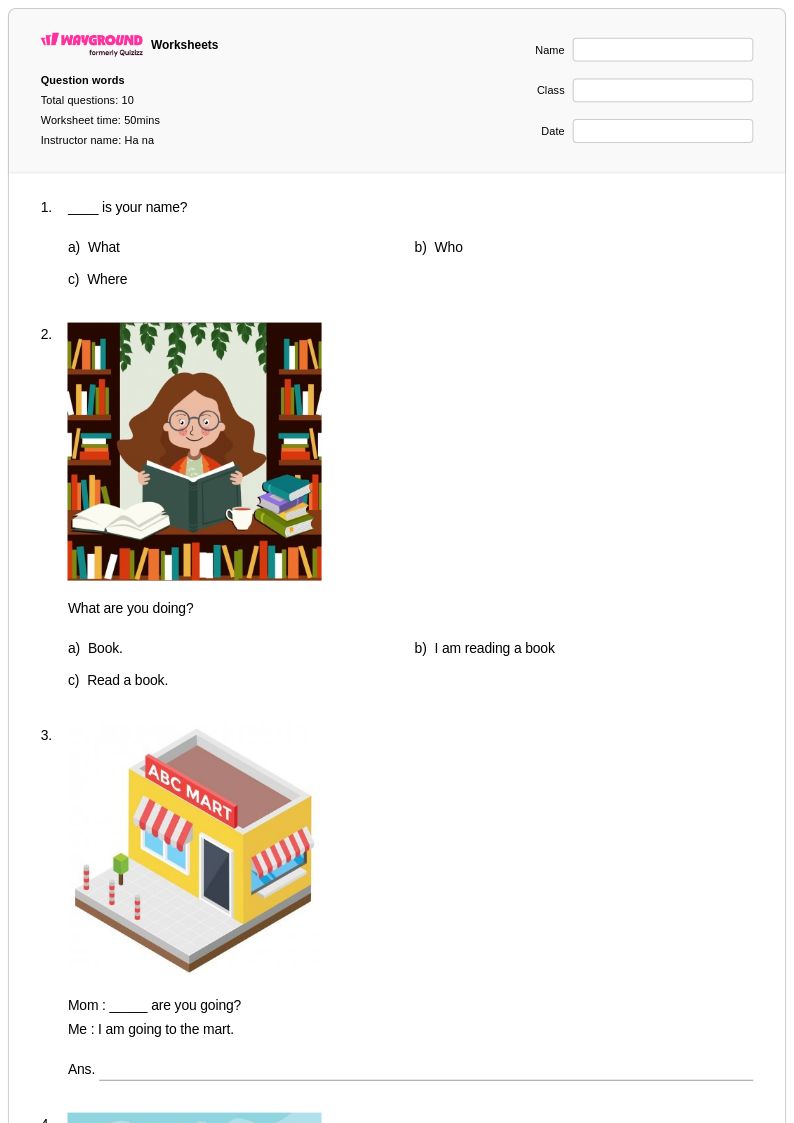
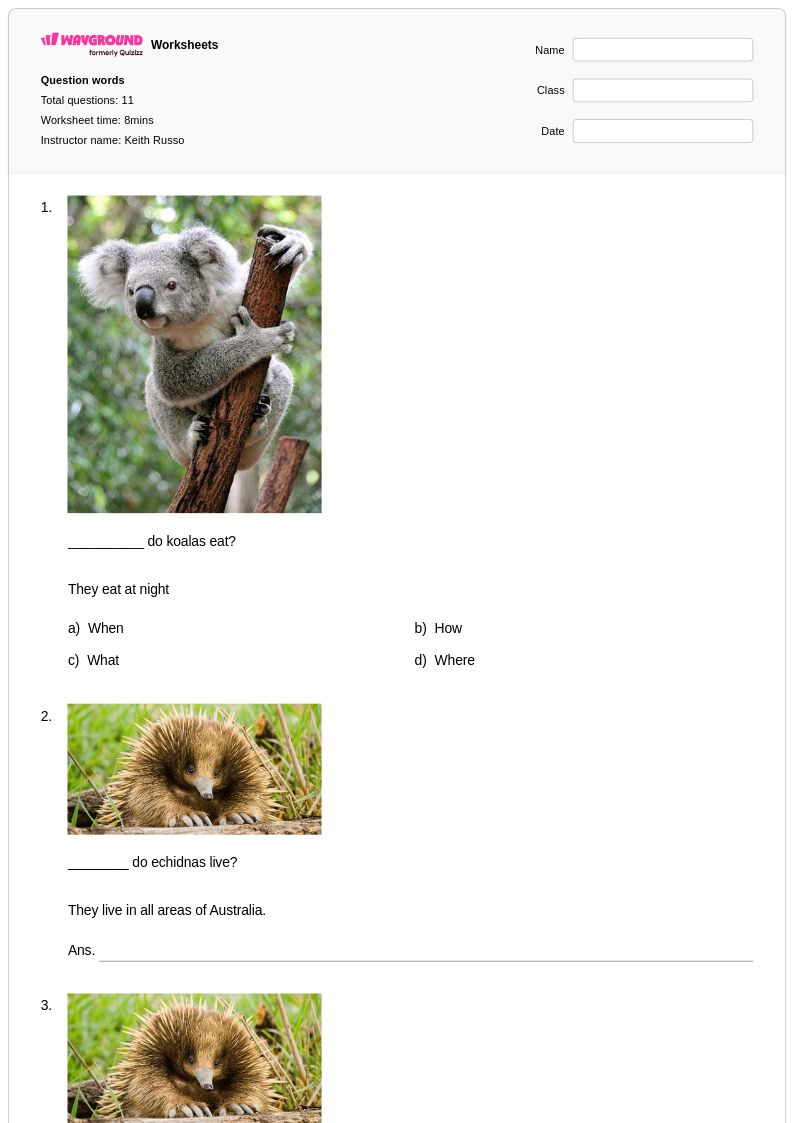
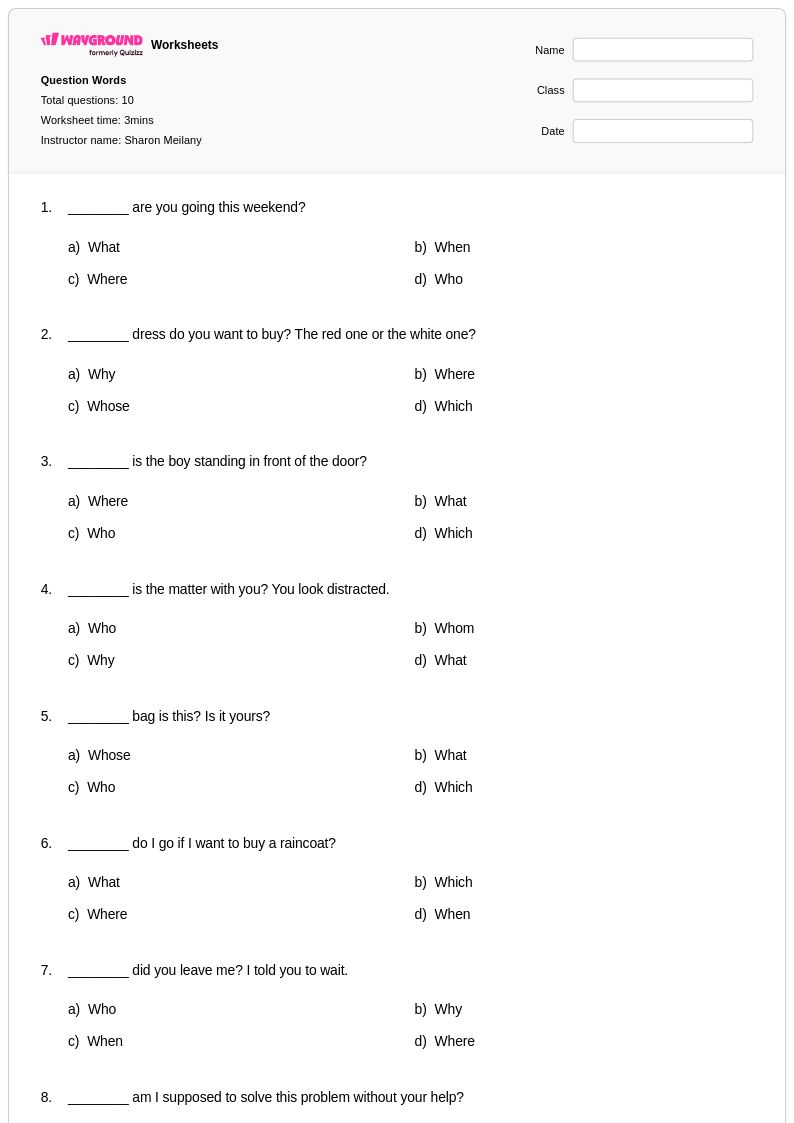
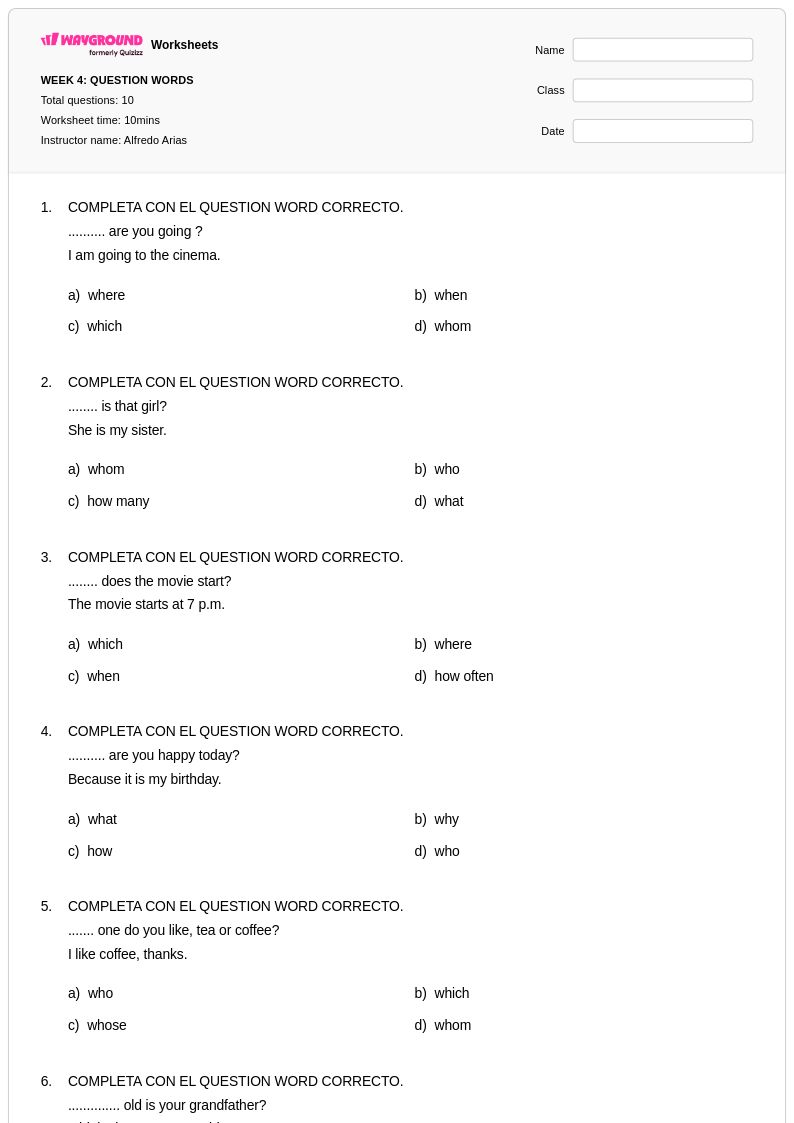
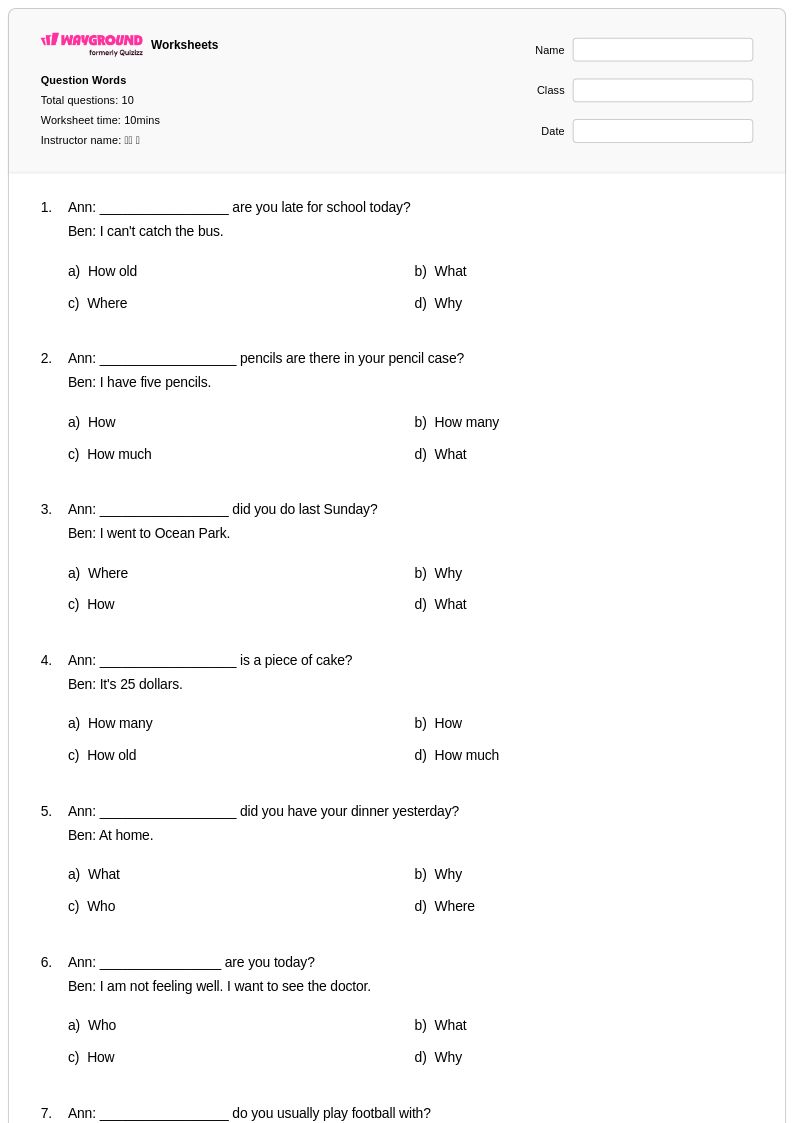
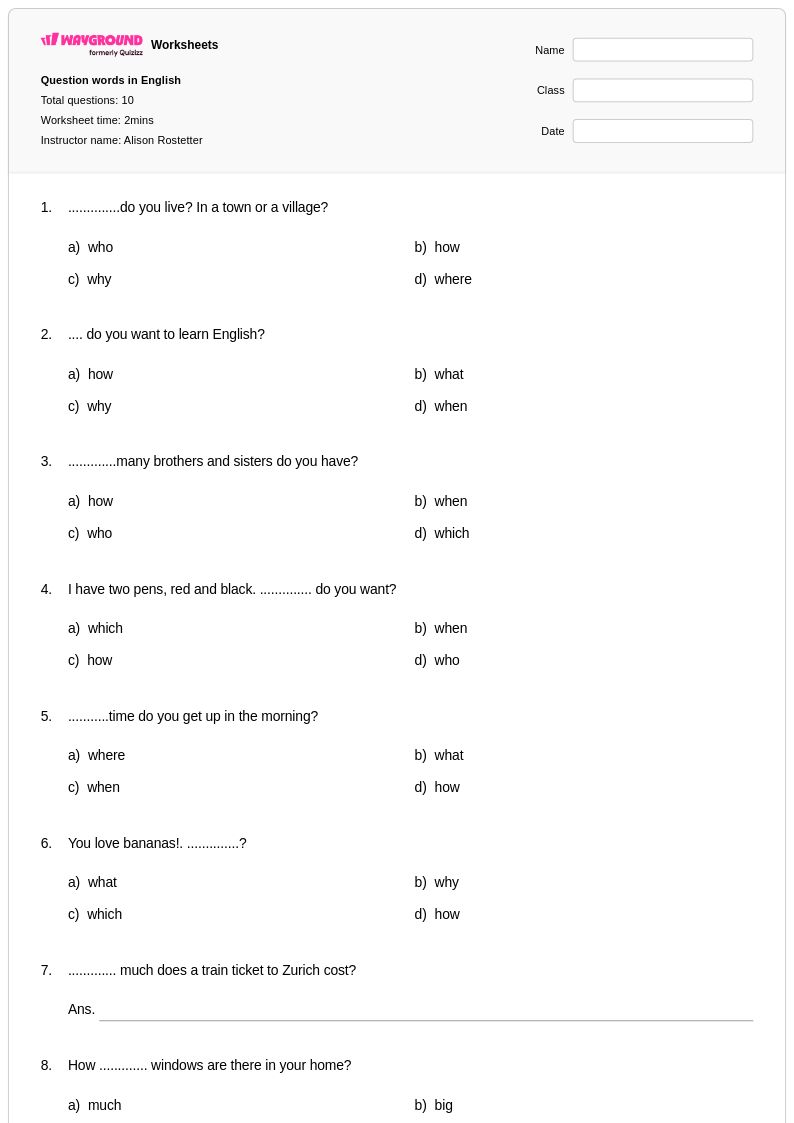
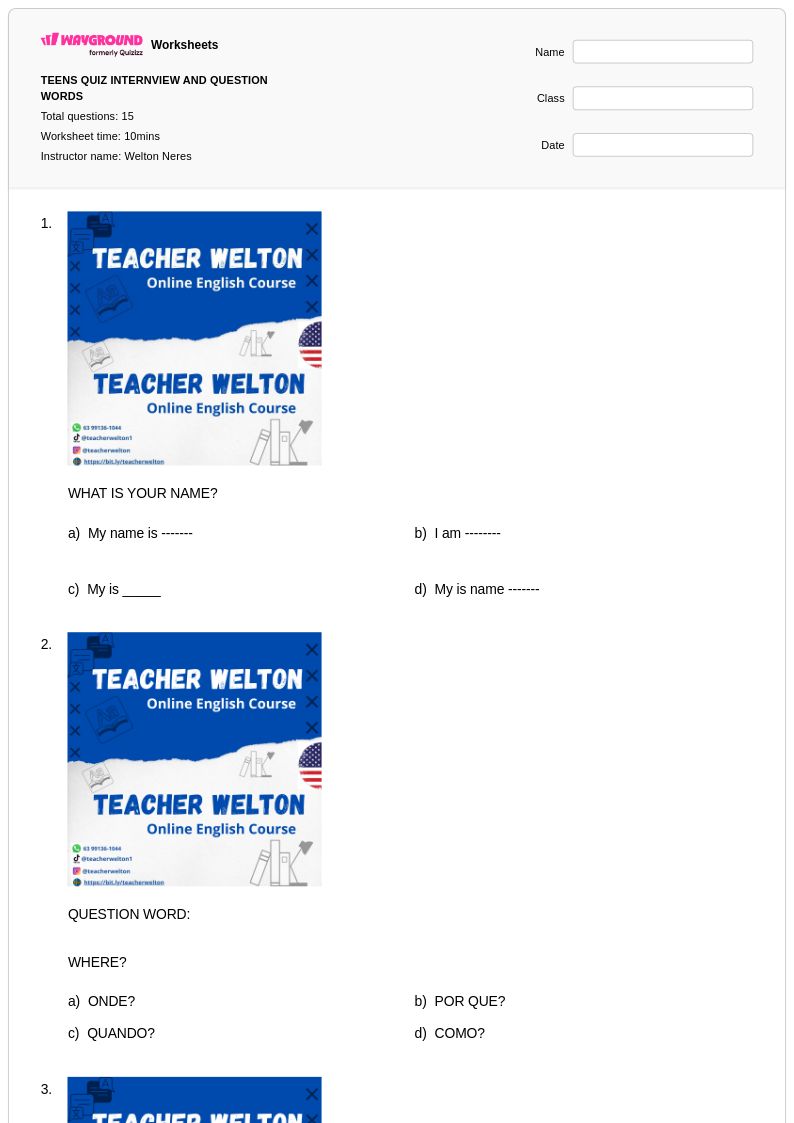
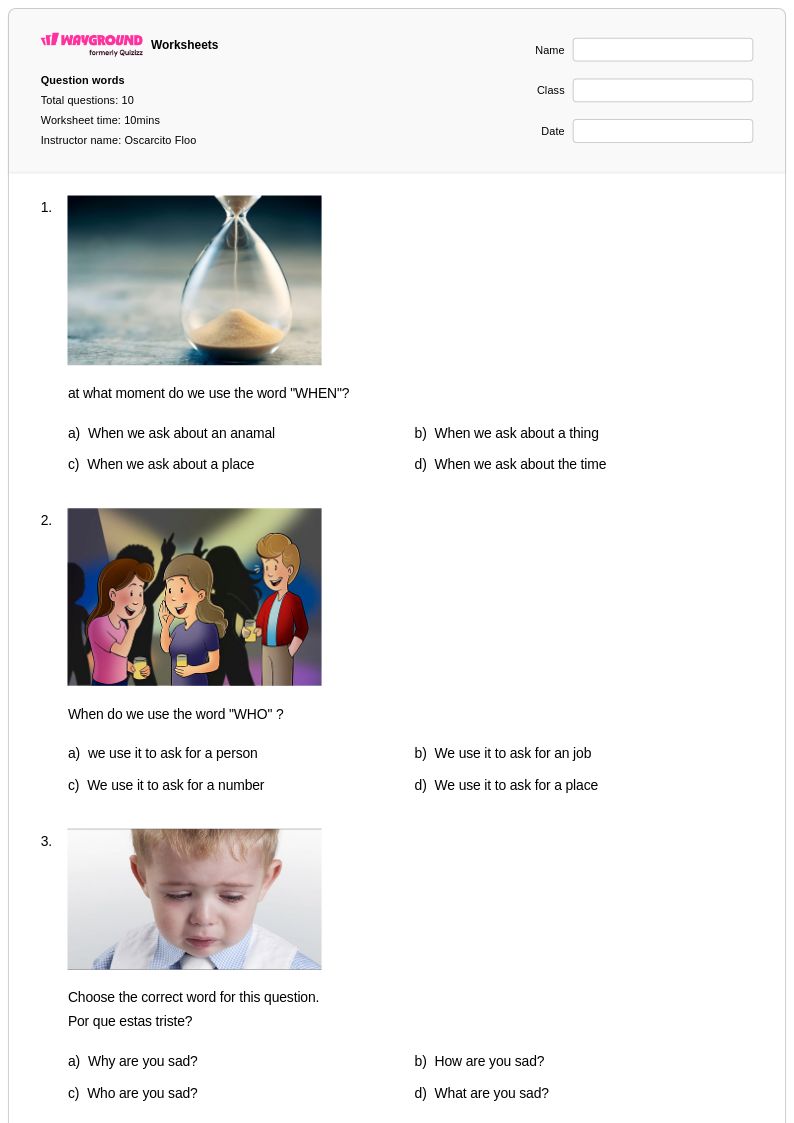
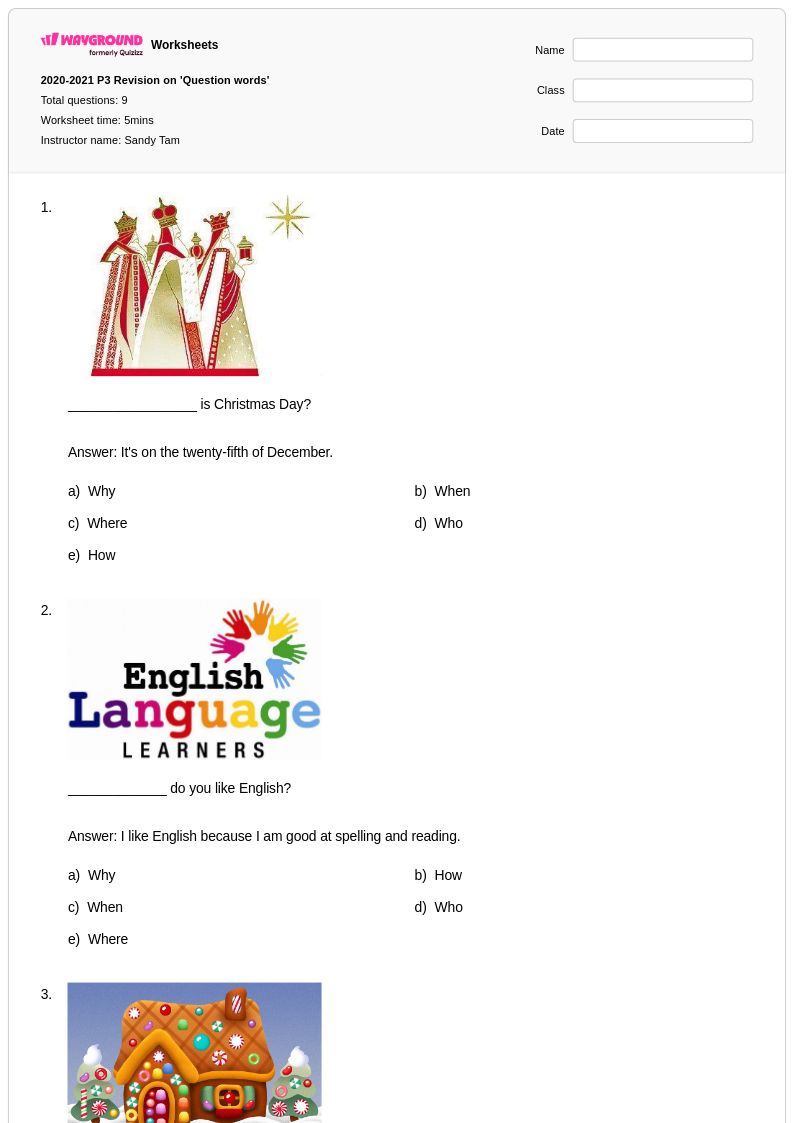
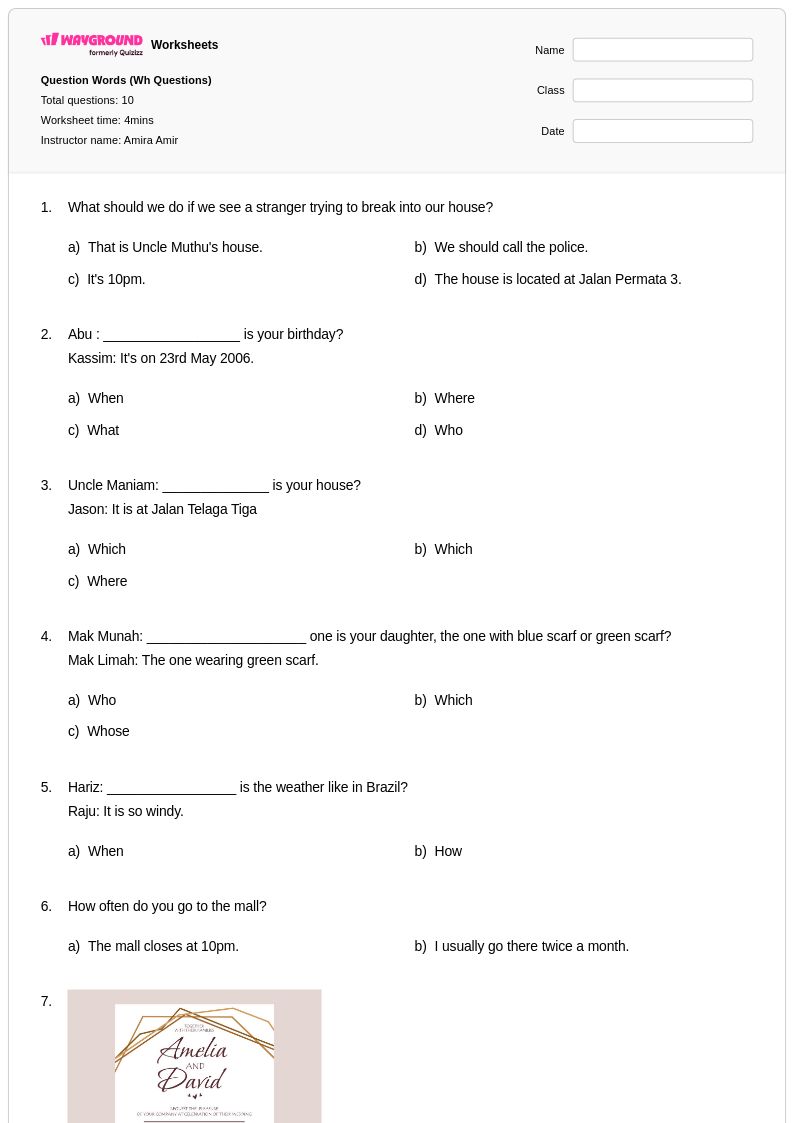
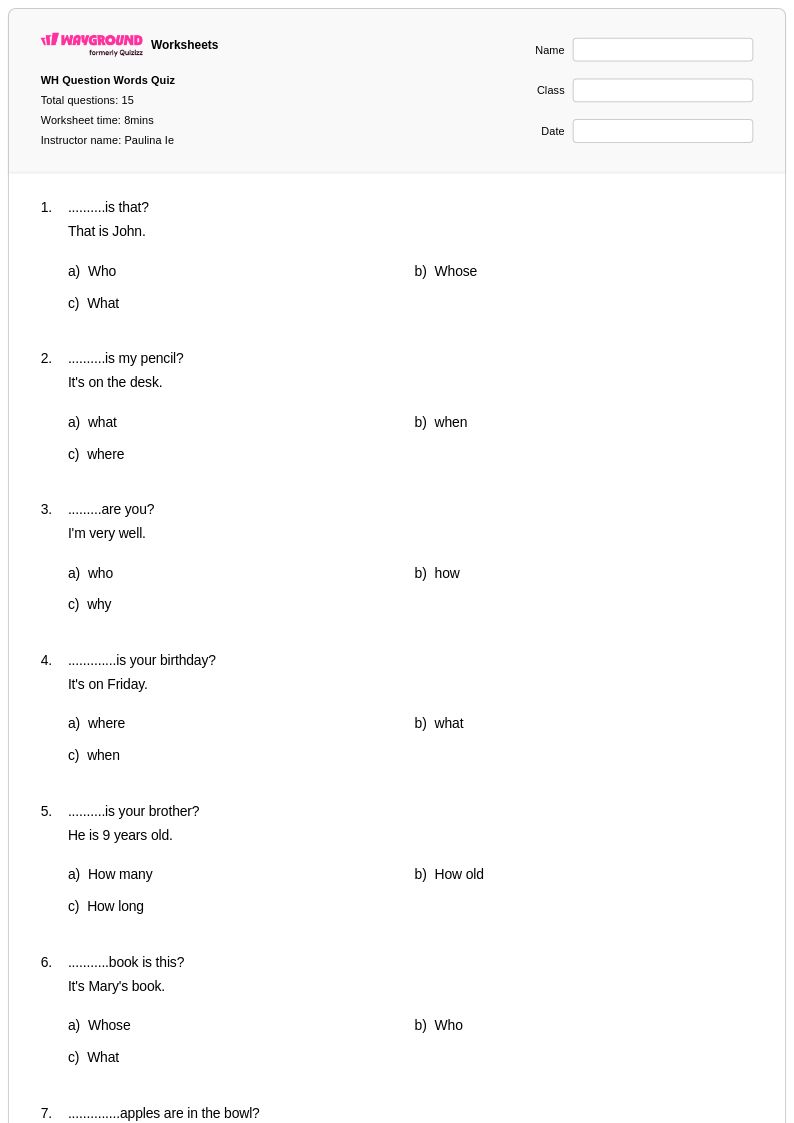
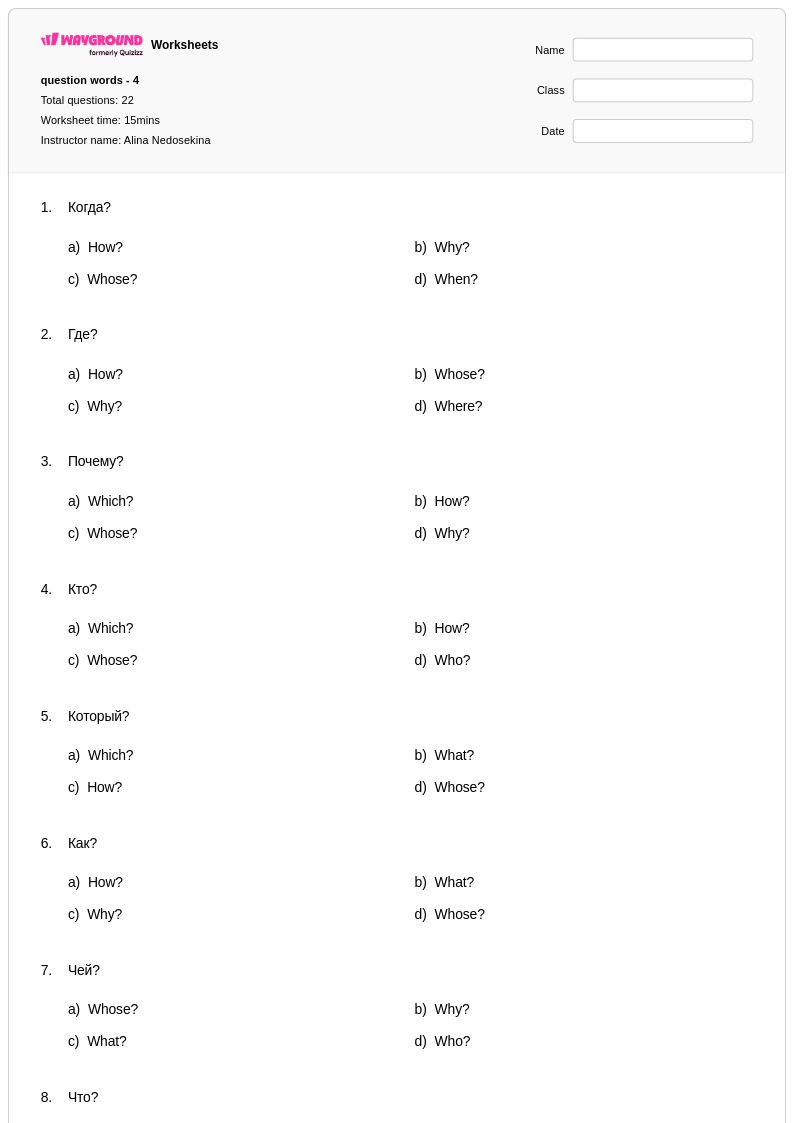
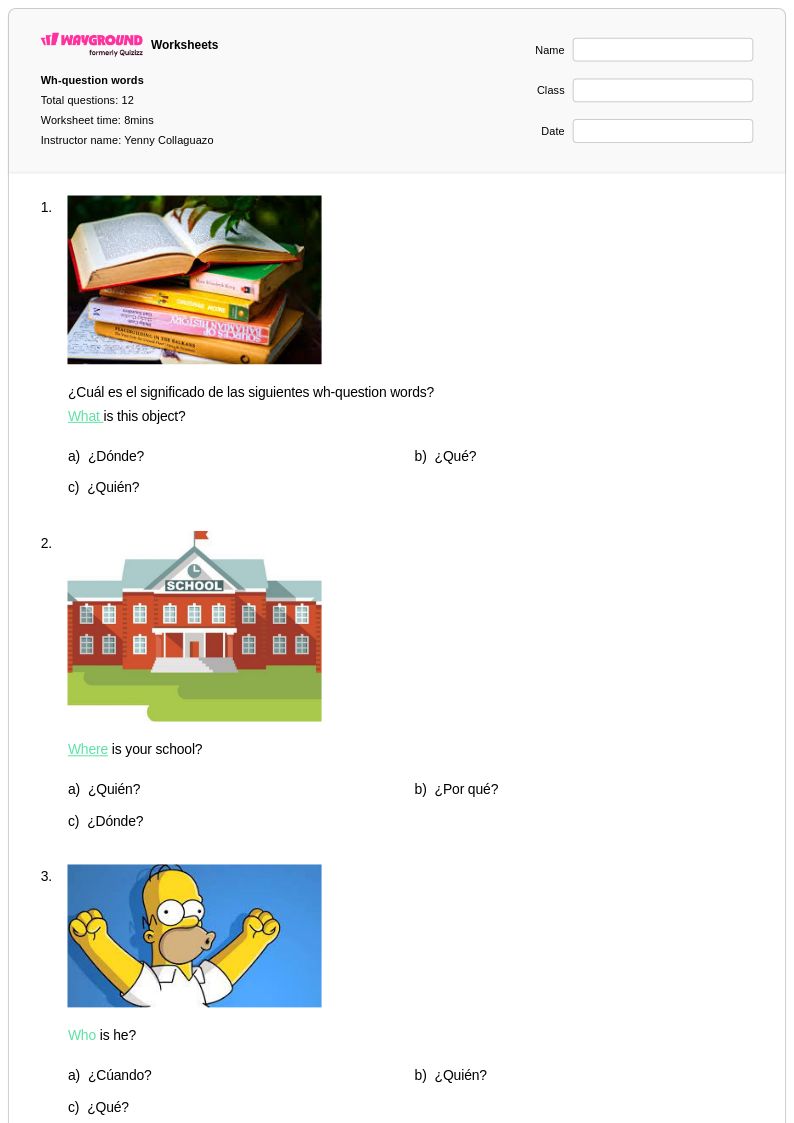
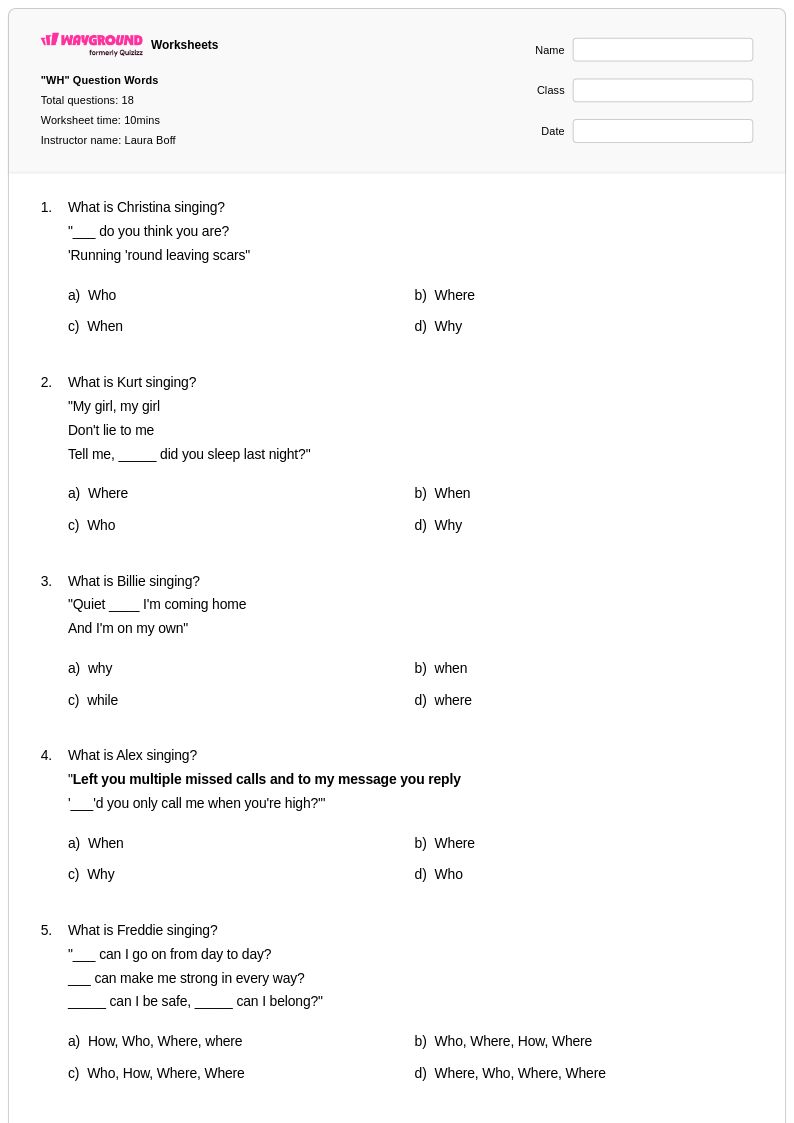
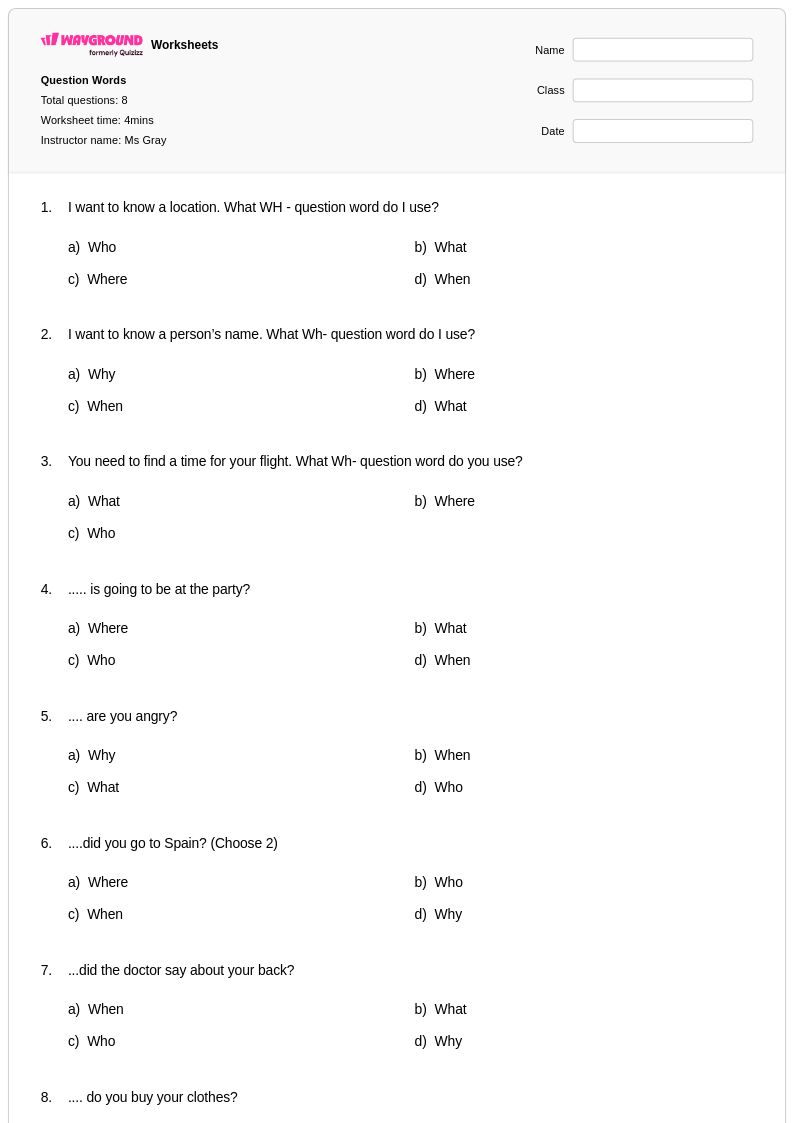
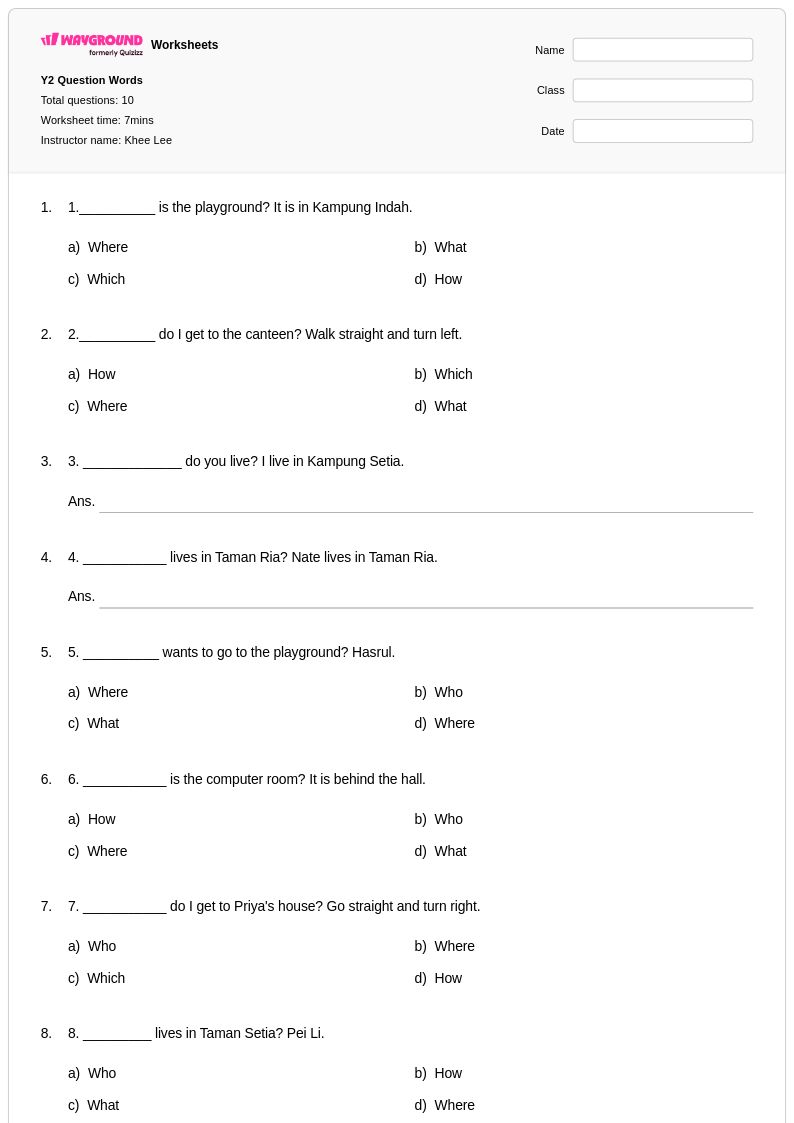
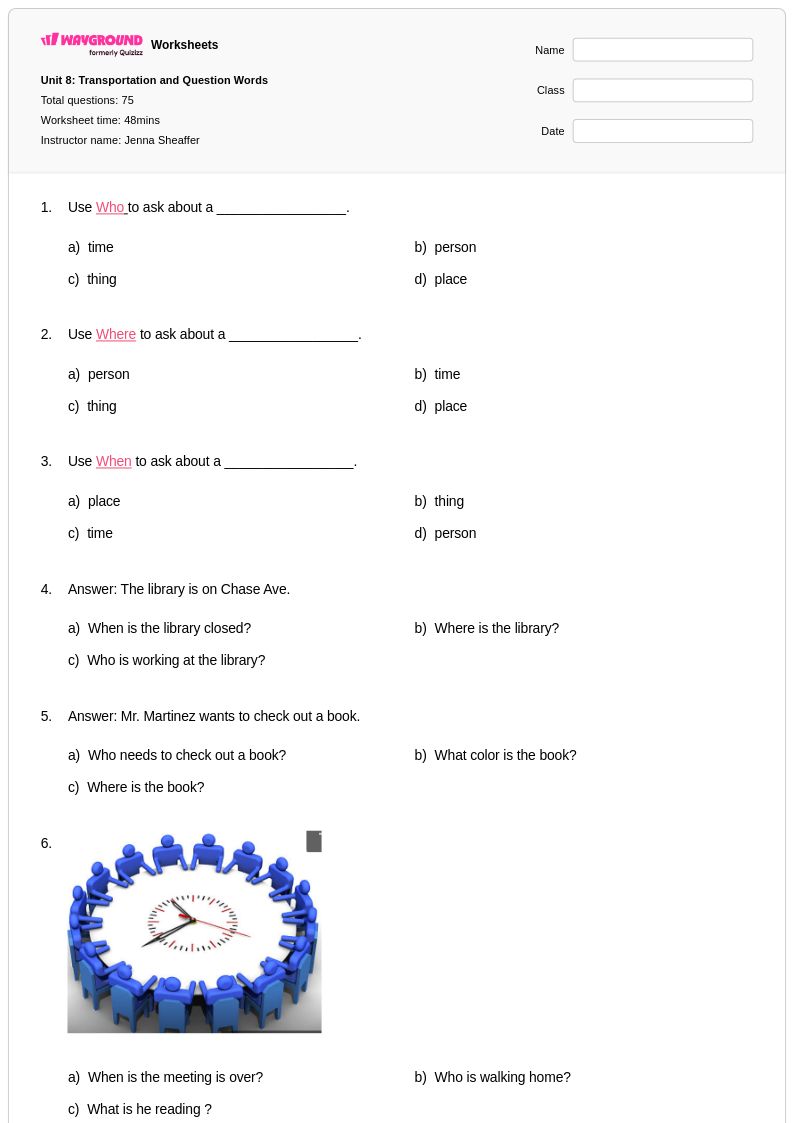
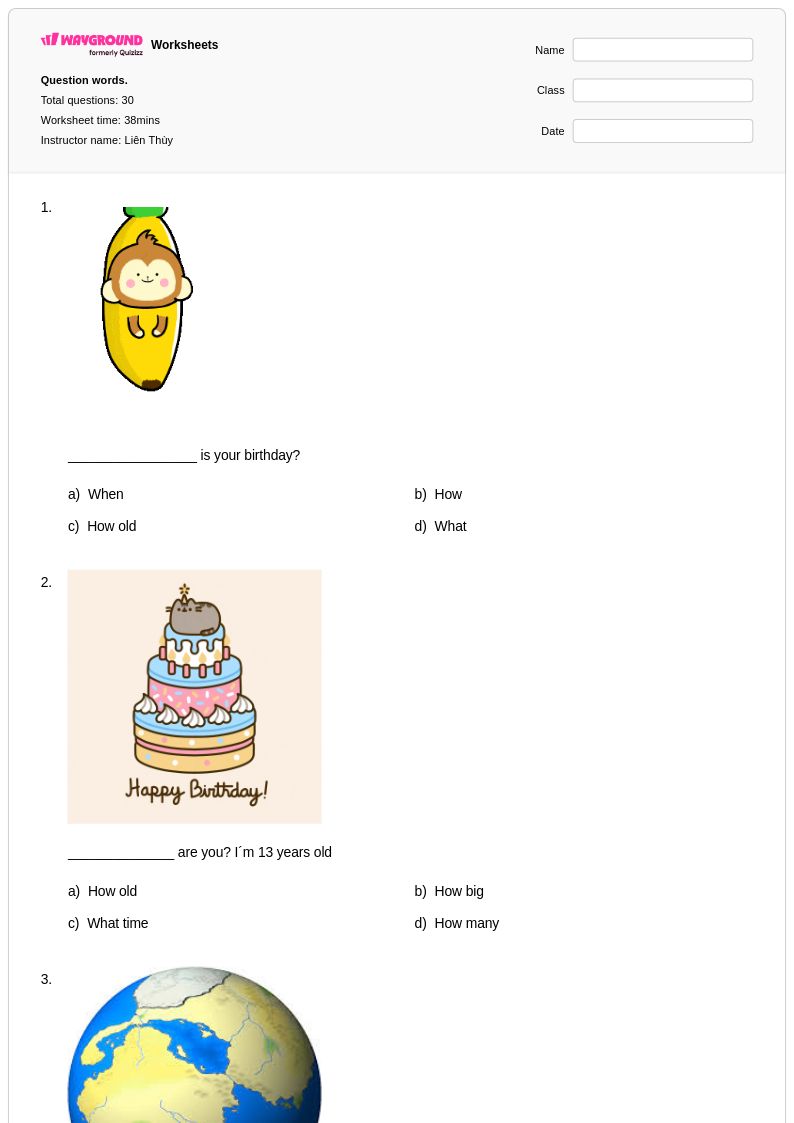
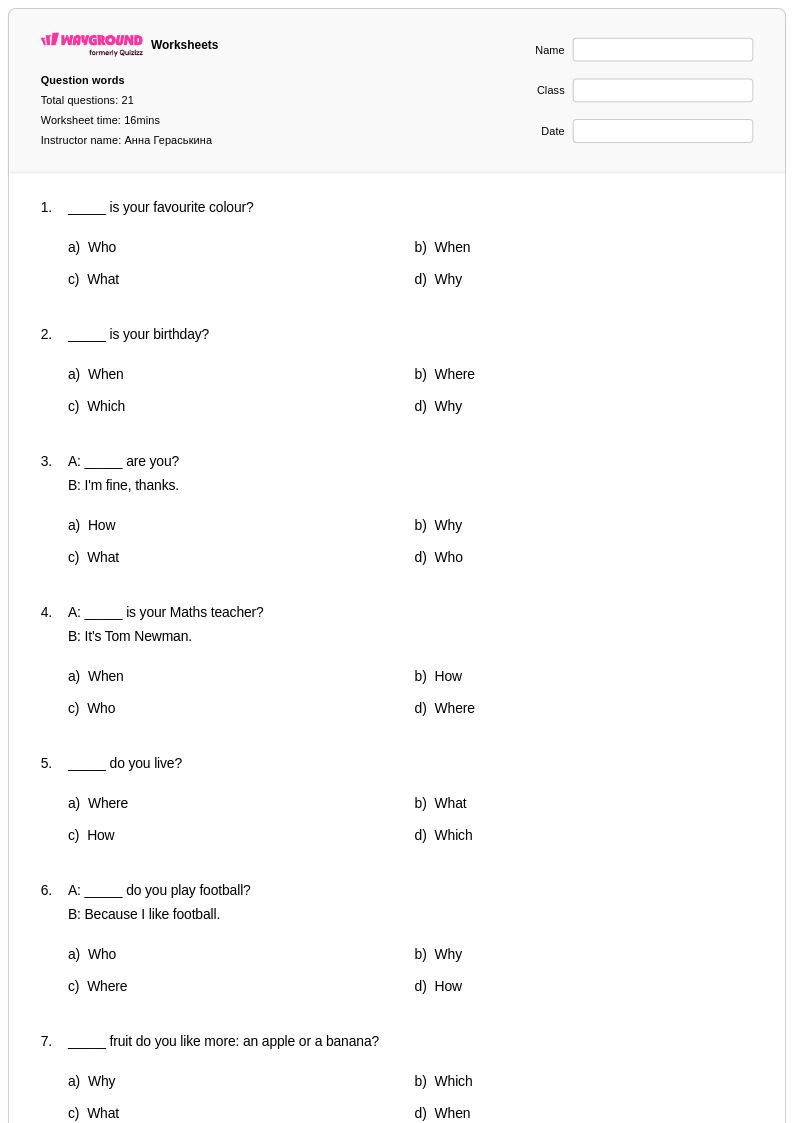
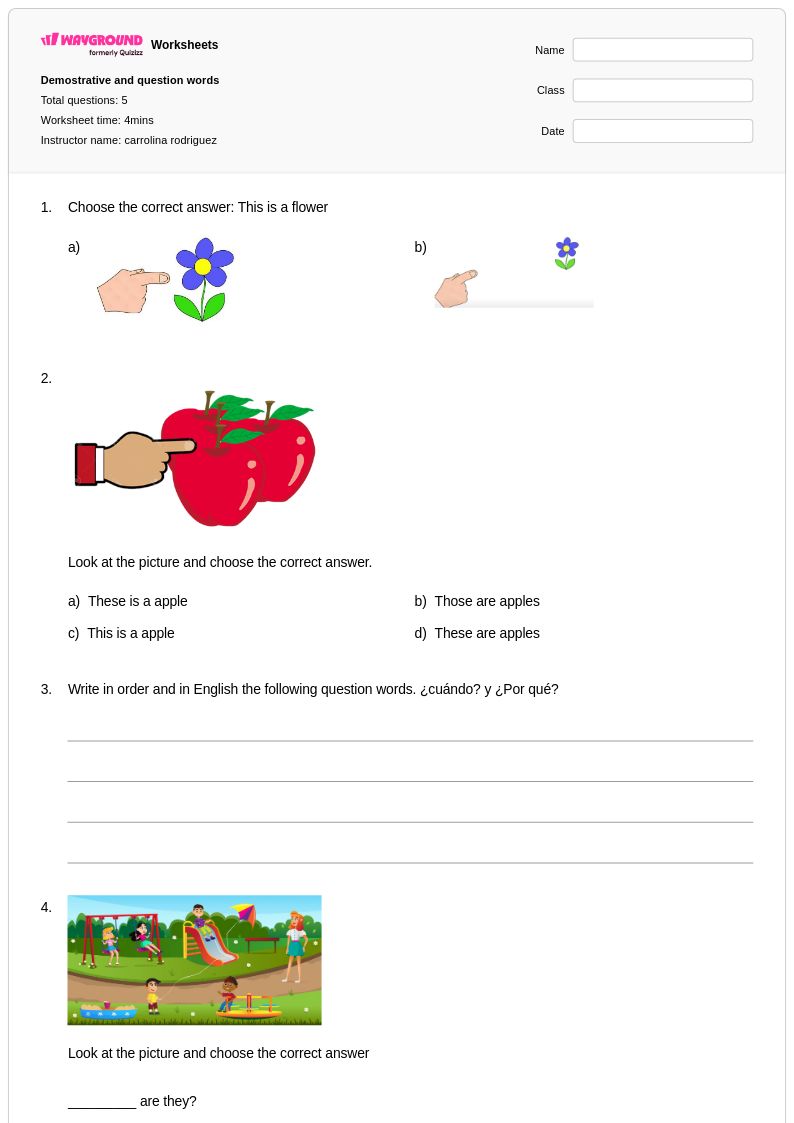
Question words form the foundation of effective communication and reading comprehension for Year 3 students, and Wayground's comprehensive worksheet collection provides targeted practice to master these essential interrogative terms. These carefully designed worksheets help third-grade learners identify, understand, and correctly use question words such as who, what, when, where, why, and how in various contexts. Students develop critical thinking skills as they practice formulating questions, analyzing text for specific information, and distinguishing between different types of inquiries. The collection includes engaging practice problems that range from basic identification exercises to more complex sentence construction activities, with each worksheet featuring a complete answer key to support independent learning and immediate feedback. These free printables offer structured opportunities for students to strengthen their vocabulary knowledge while building the foundational skills necessary for effective reading comprehension and oral communication.
Wayground's extensive library contains millions of teacher-created resources specifically designed to support educators in delivering comprehensive question words instruction for Year 3 students. The platform's advanced search and filtering capabilities allow teachers to quickly locate worksheets that align with specific learning objectives and educational standards, making lesson planning more efficient and targeted. These differentiation tools enable educators to select materials appropriate for various skill levels within their classroom, supporting both remediation for struggling learners and enrichment for advanced students. The flexible customization features allow teachers to modify existing worksheets or combine multiple resources to create personalized learning experiences, while the availability of both printable and digital pdf formats ensures seamless integration into any instructional setting. This comprehensive approach supports systematic skill practice and helps educators track student progress in mastering question words and related vocabulary concepts.
FAQs
How do I teach question words to students who are just starting out?
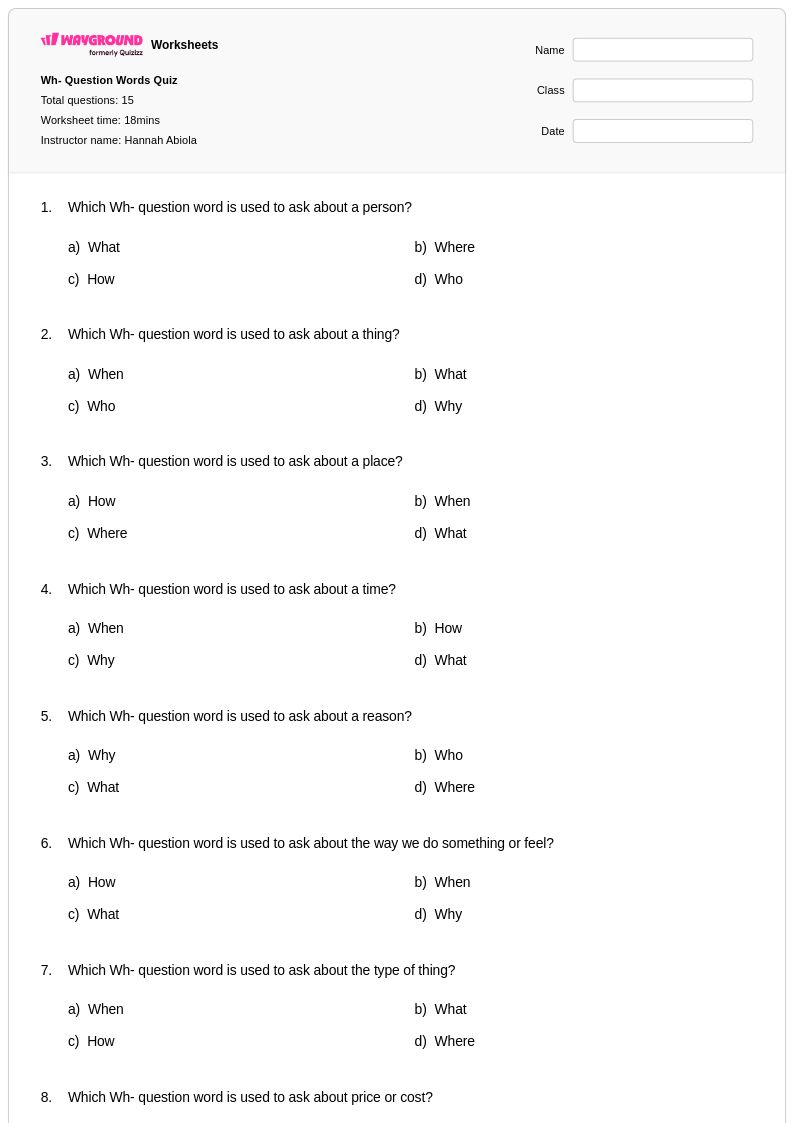
Begin by introducing each of the six core question words (who, what, when, where, why, and how) one at a time, anchoring each to a clear, concrete purpose: who asks about a person, where asks about a place, and so on. Use familiar scenarios and short texts so students can see each question word in context before being asked to produce one independently. Once students can reliably identify which word fits a given situation, shift to having them formulate their own questions, which deepens both vocabulary retention and comprehension skills.
What exercises help students practice using question words correctly?
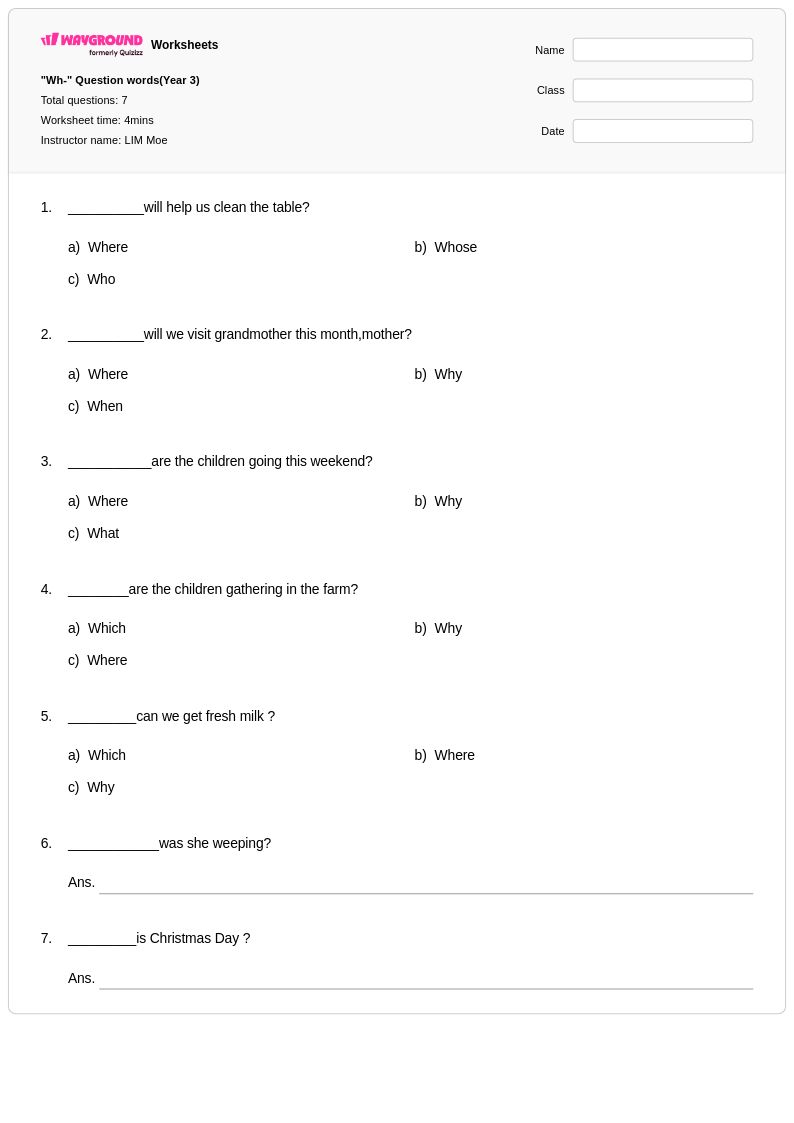
Effective practice exercises include fill-in-the-blank sentences where students choose the appropriate question word, short reading passages followed by guided question-writing tasks, and matching activities that pair question words with their specific informational purpose. Having students sort questions by type and then write their own questions for a given answer (reverse questioning) is particularly effective for cementing understanding. These structured formats help students move from recognition to independent application.
What mistakes do students commonly make when learning question words?
One of the most frequent errors is confusing 'who' and 'what' when asking about subjects, especially in sentences where the subject is ambiguous. Students also commonly misuse 'when' and 'where,' swapping time and place references, particularly in second-language learners. Another recurring issue is defaulting to 'what' as a catch-all question word instead of selecting the interrogative that best fits the information being sought, which weakens both reading comprehension and writing precision.
How can I use question words worksheets to support English language learners in my classroom?
For English language learners, question words worksheets work best when paired with visual supports or sentence frames that reinforce the function of each interrogative. Starting with matching and identification tasks before moving to open-ended question writing gives ELL students a lower-stakes entry point. On Wayground, teachers can enable the Read Aloud accommodation so questions and prompts are read to students, and Reduced Answer Choices can be applied to minimize cognitive load for students still building vocabulary.
How do I use Wayground's question words worksheets in my class?
Wayground's question words worksheets are available as printable PDFs, which work well for independent seat work or homework, and in digital formats that support technology-integrated or hybrid classroom environments. Teachers can also host the worksheets as a quiz directly on Wayground, enabling real-time student responses and built-in answer key feedback. Each worksheet includes an answer key, making it straightforward to use for formative assessment or structured practice without additional prep.
How do question words connect to reading comprehension instruction?
Question words are directly tied to reading comprehension because they map onto the core informational categories readers track while reading: who is involved, what is happening, when and where it occurs, why it matters, and how it unfolds. Teaching students to generate and answer questions using these six interrogatives gives them an active comprehension strategy they can apply independently across any text or subject area. This is why question word practice is considered foundational across both language arts and content-area reading instruction.