
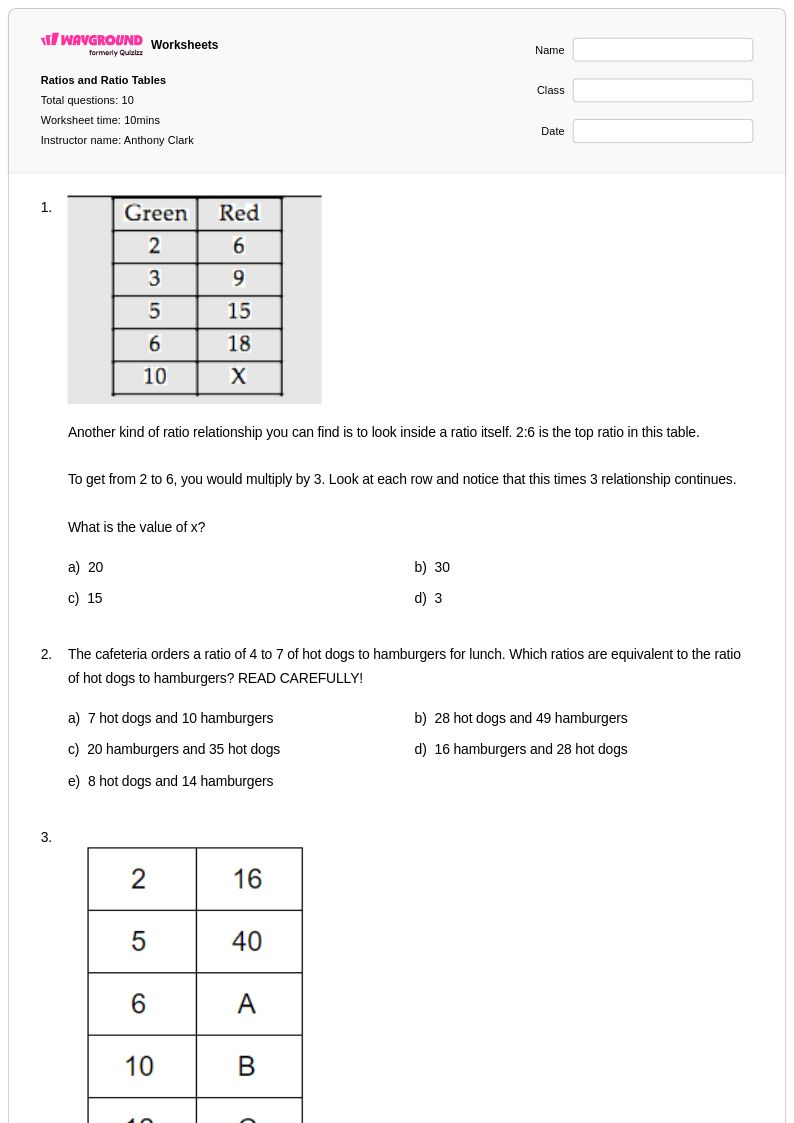
10 Q
6th - Uni
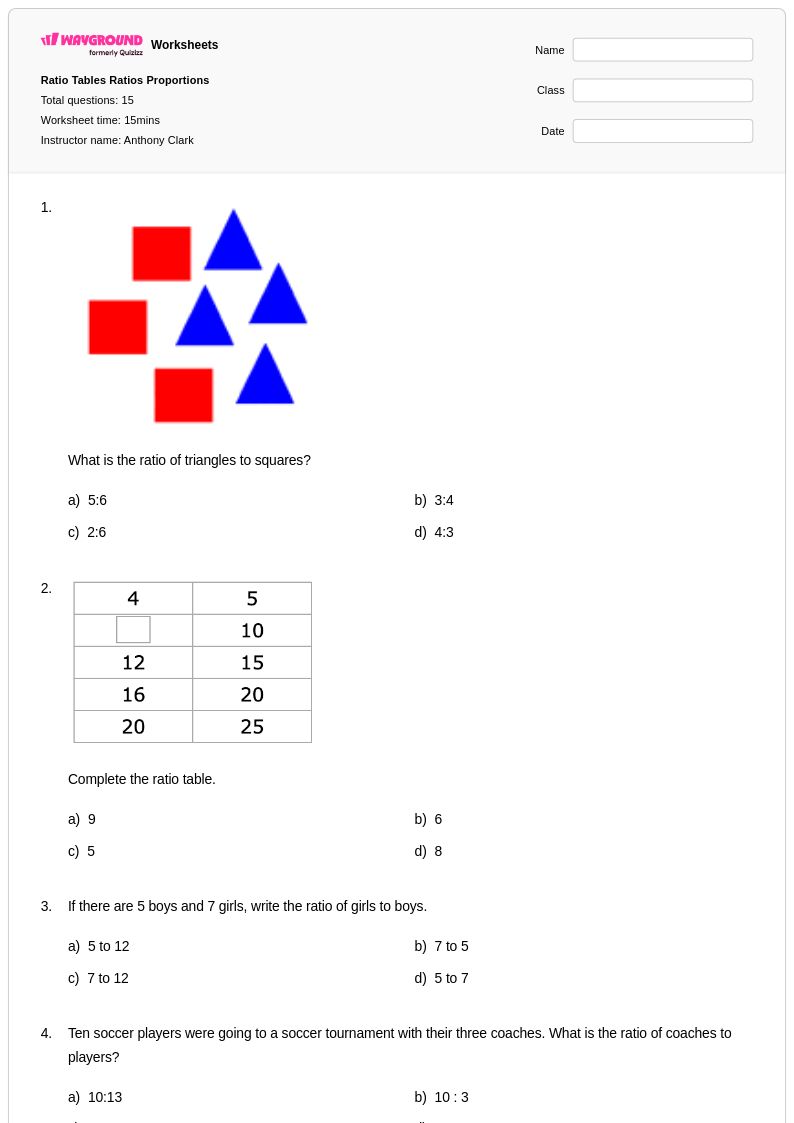
15 Q
6th - Uni
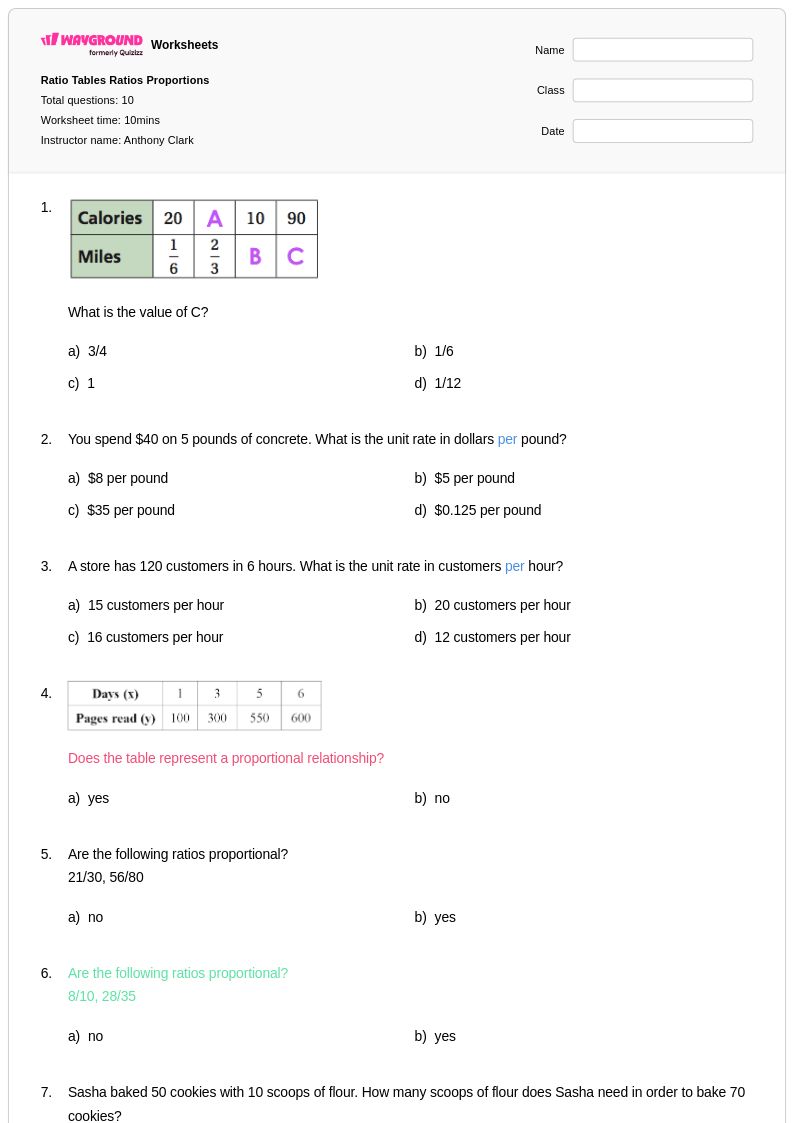
10 Q
6th - Uni
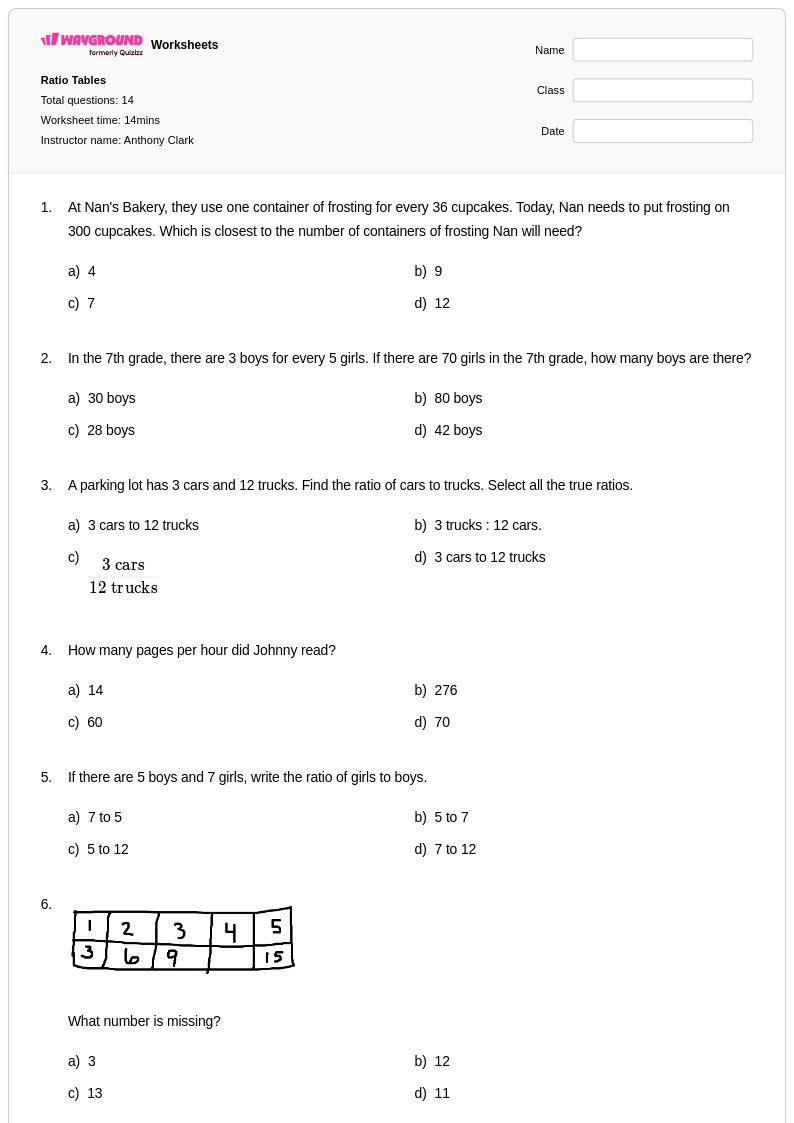
14 Q
6th - Uni
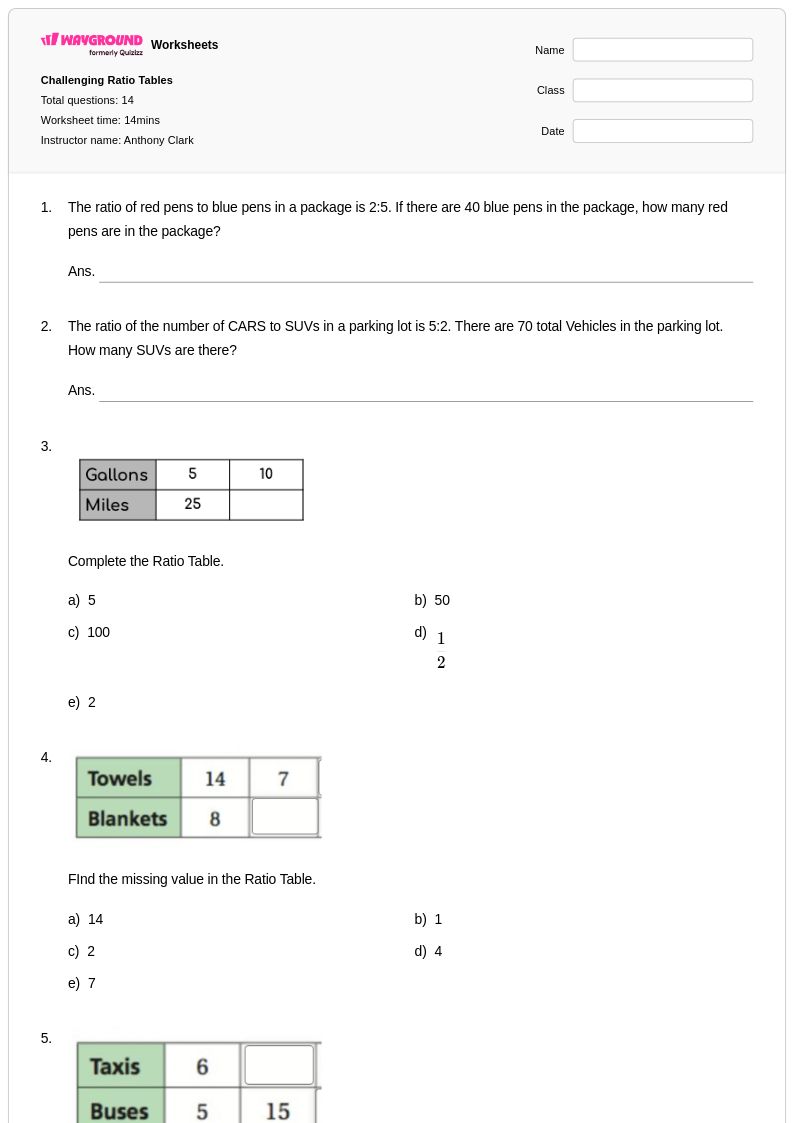
14 Q
6th - Uni
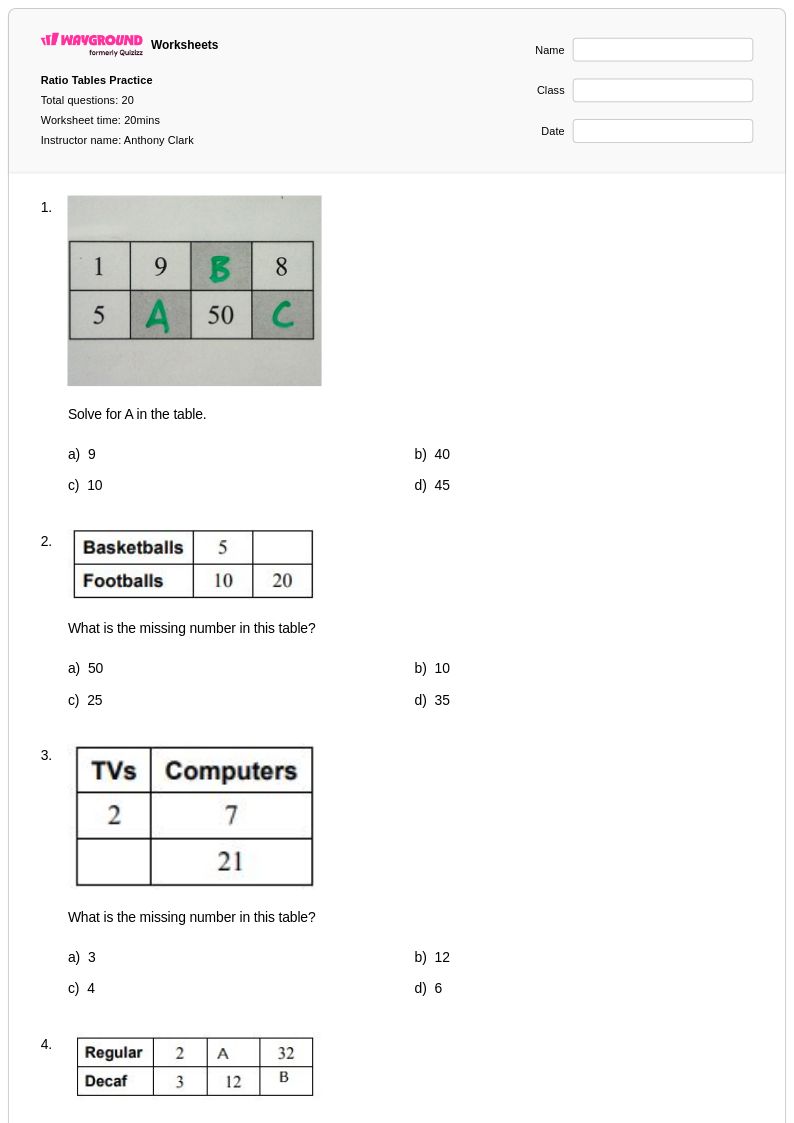
20 Q
6th - Uni
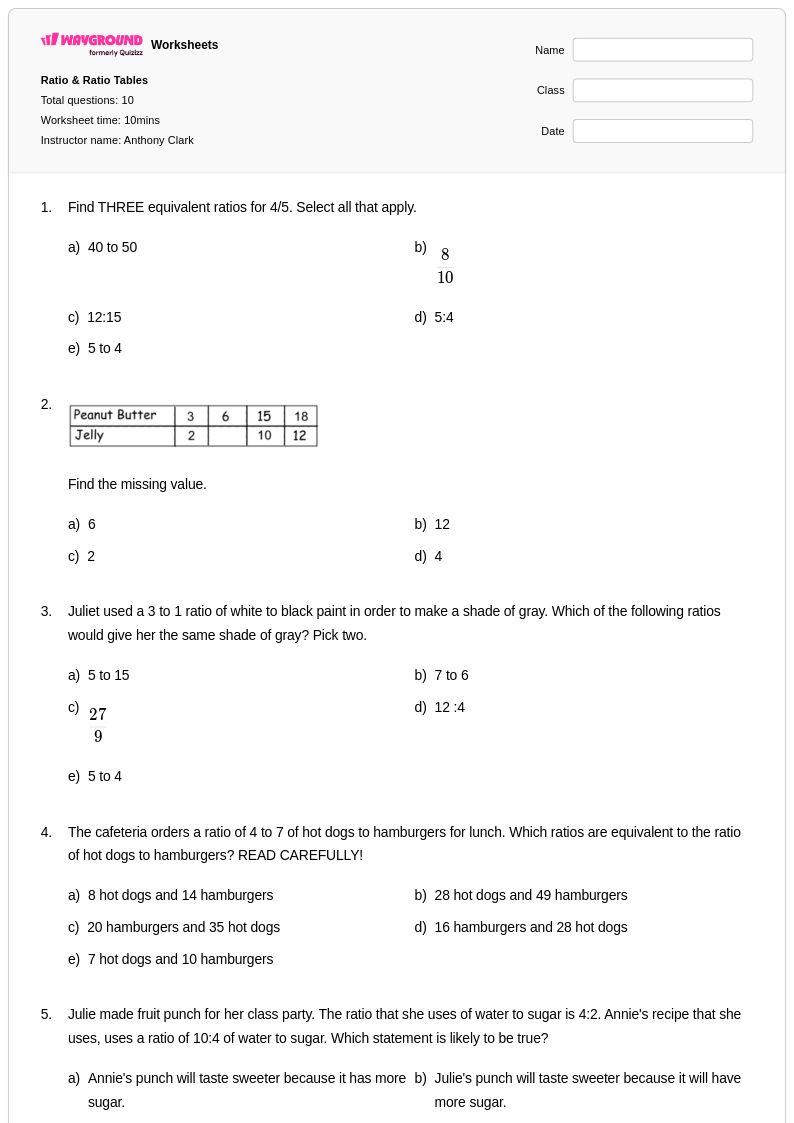
10 Q
6th - Uni
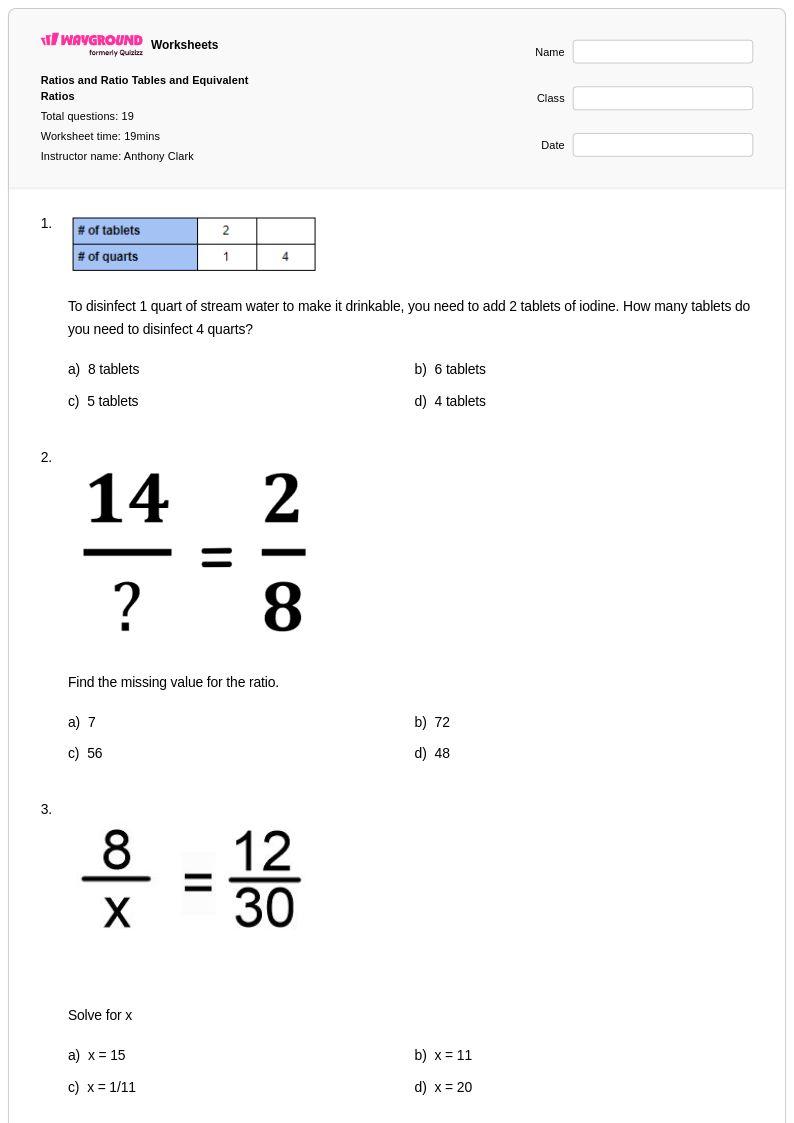
19 Q
6th - Uni
20 Q
6th - Uni
12 Q
6th - Uni
20 Q
6th - Uni
20 Q
6th - Uni
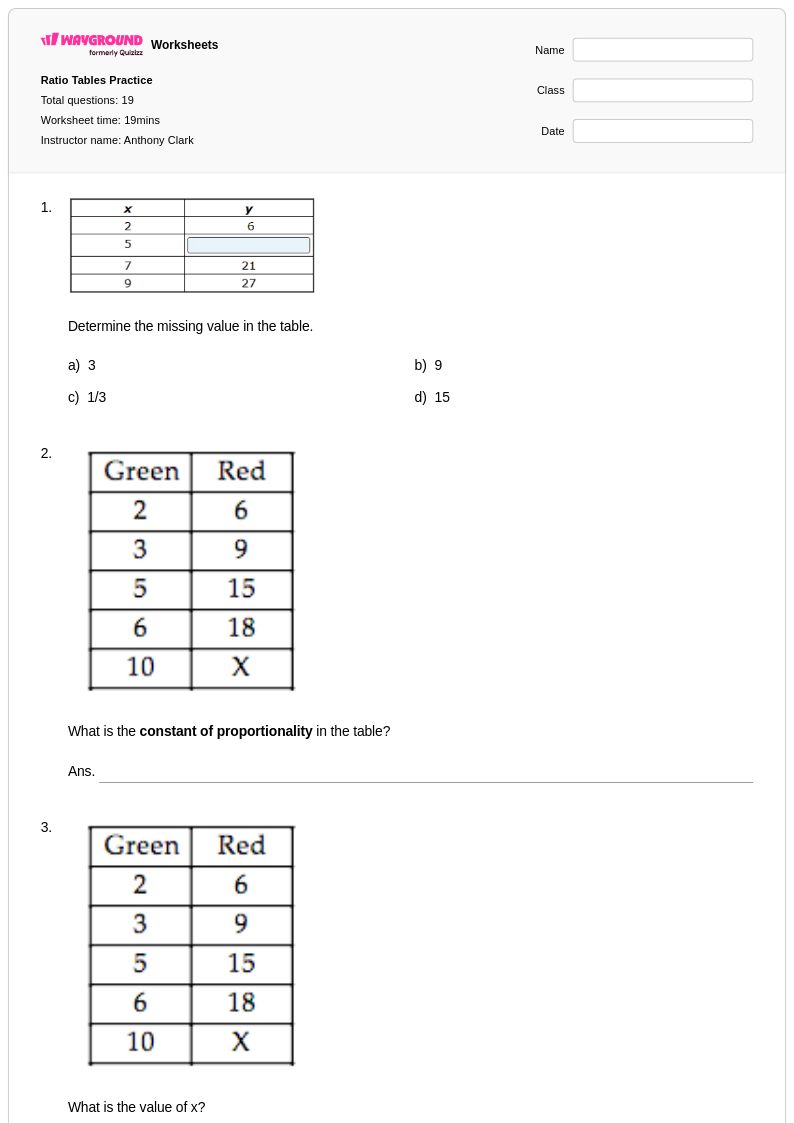
19 Q
6th - Uni
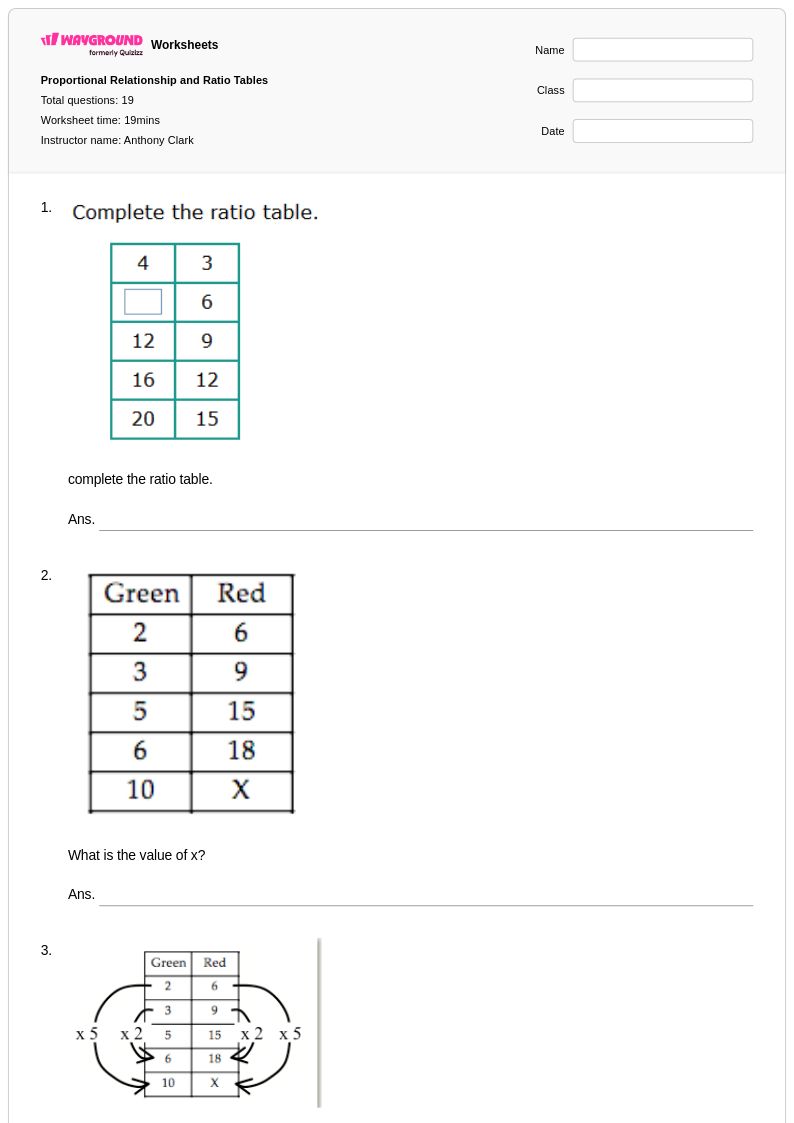
19 Q
7th - Uni
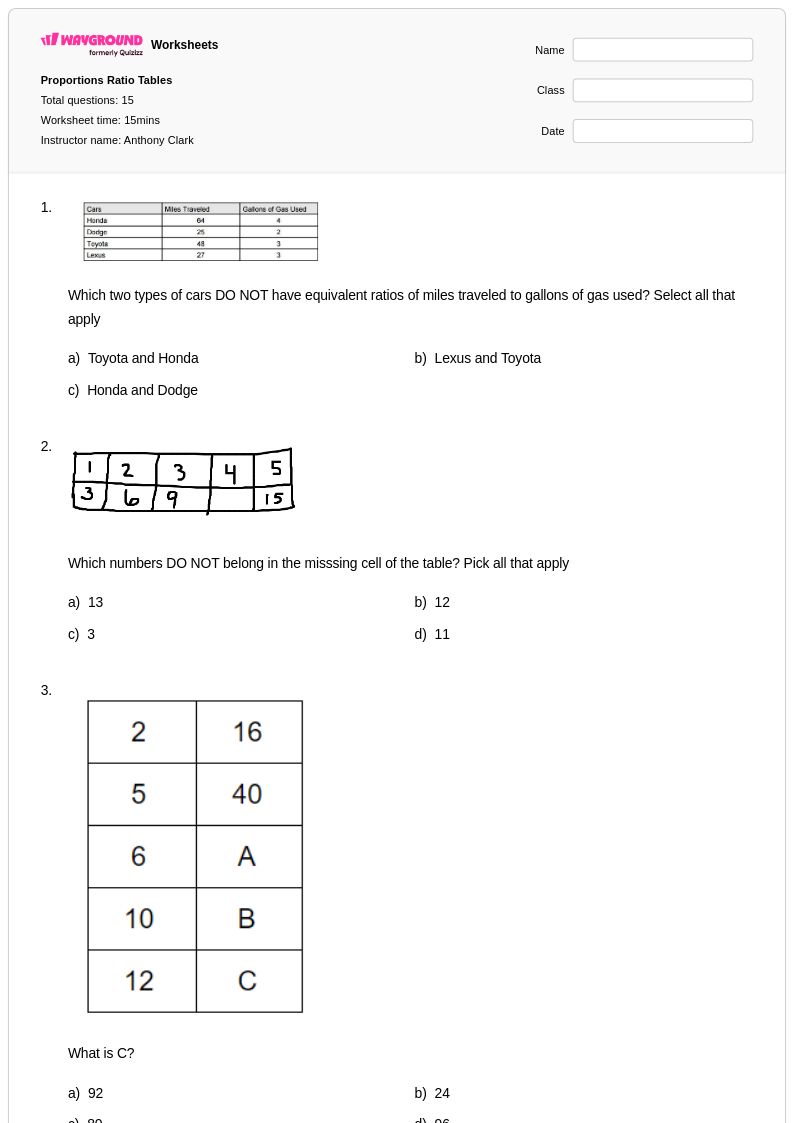
15 Q
6th - Uni
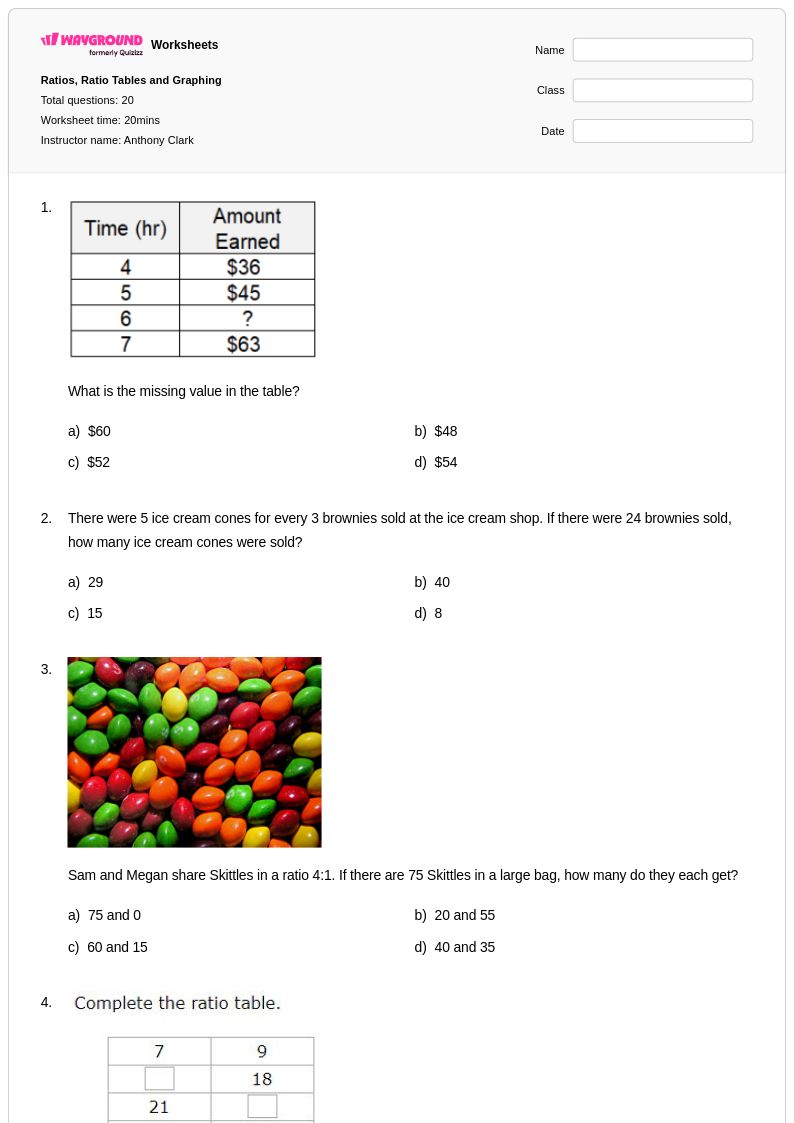
20 Q
6th - Uni
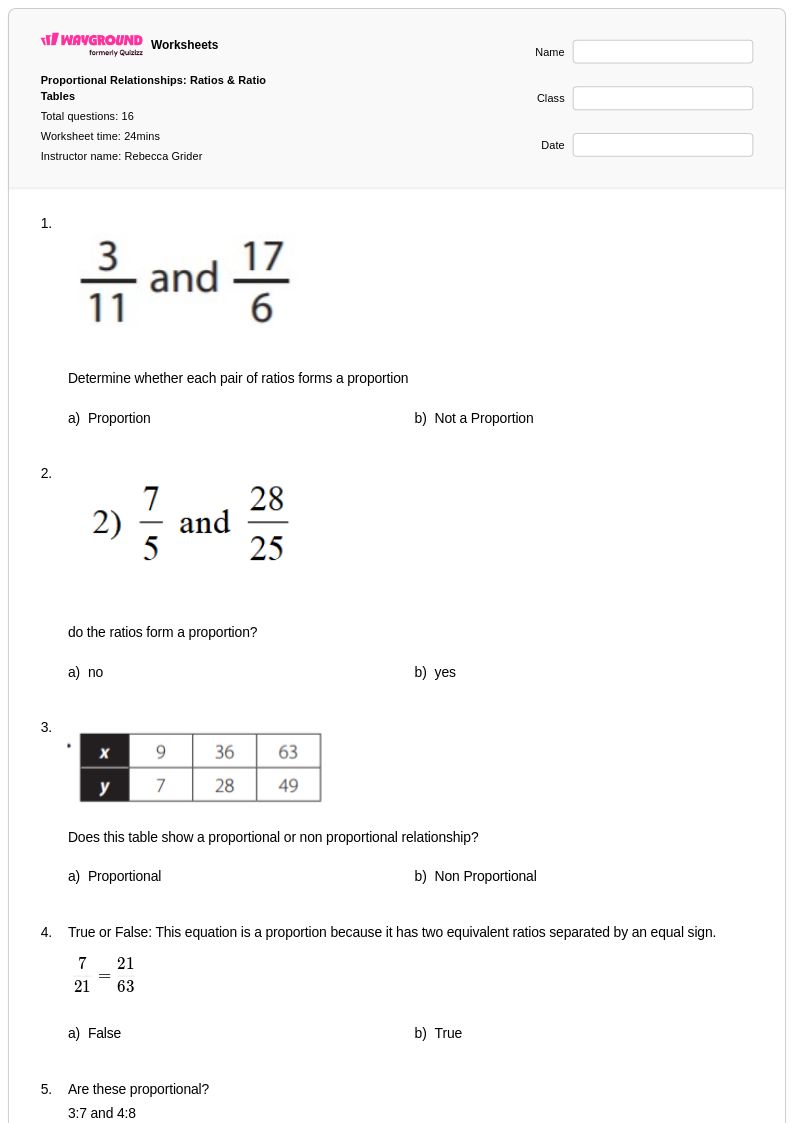
16 Q
6th - 8th
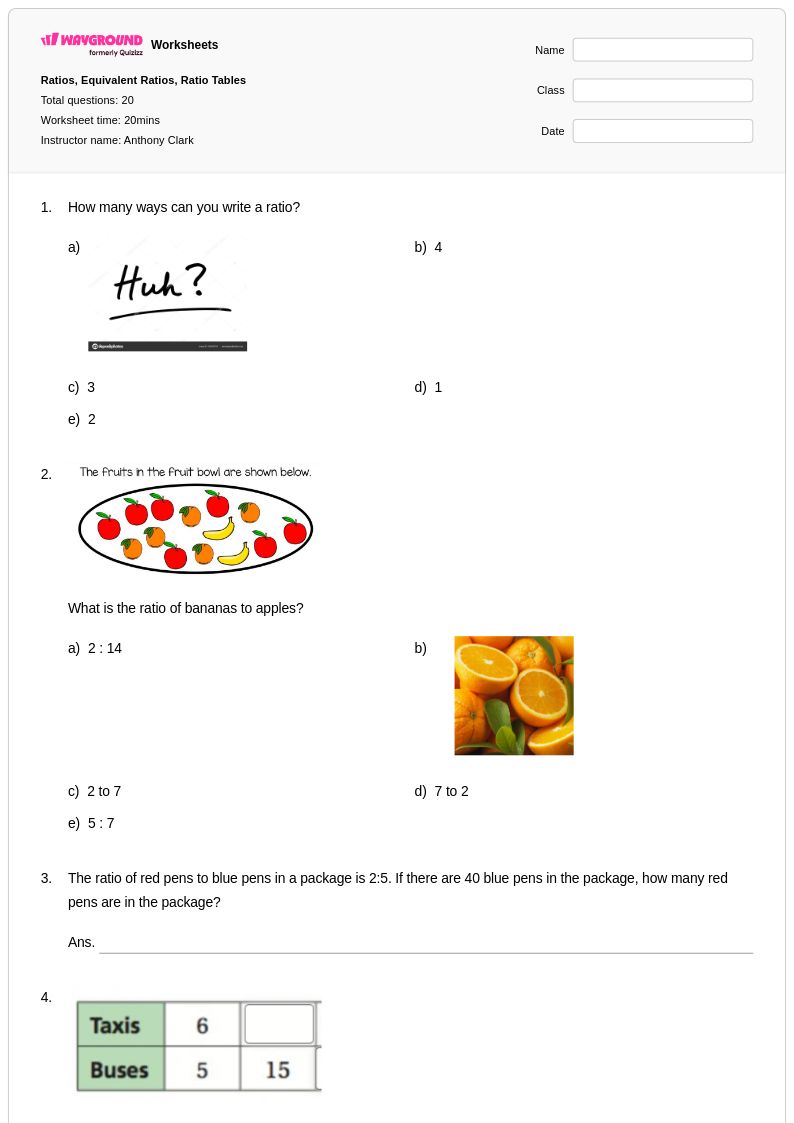
20 Q
6th - Uni
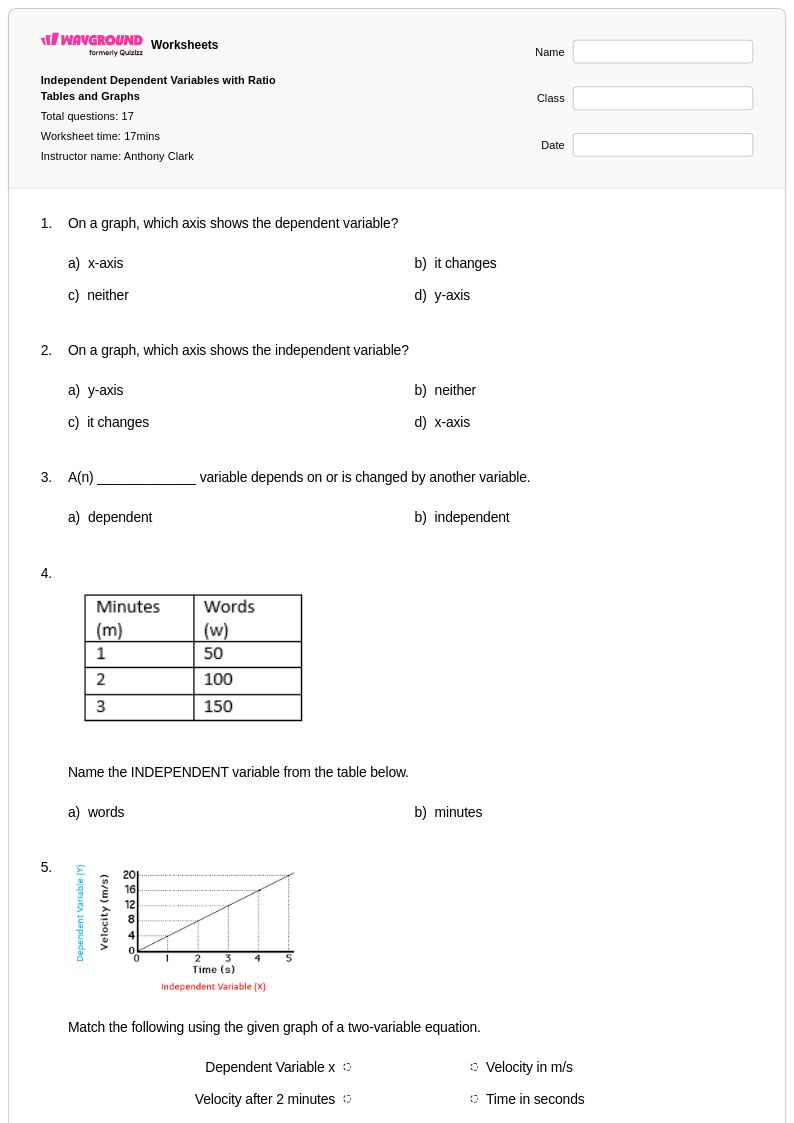
17 Q
6th - Uni
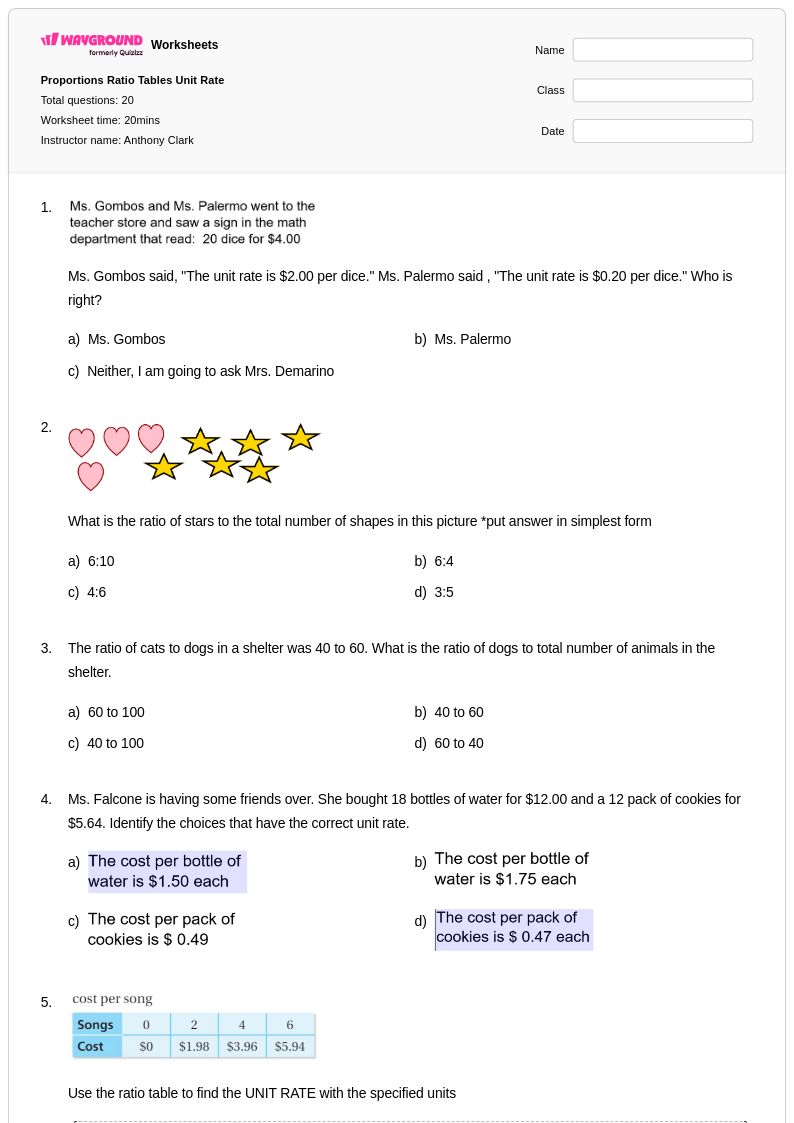
20 Q
6th - Uni
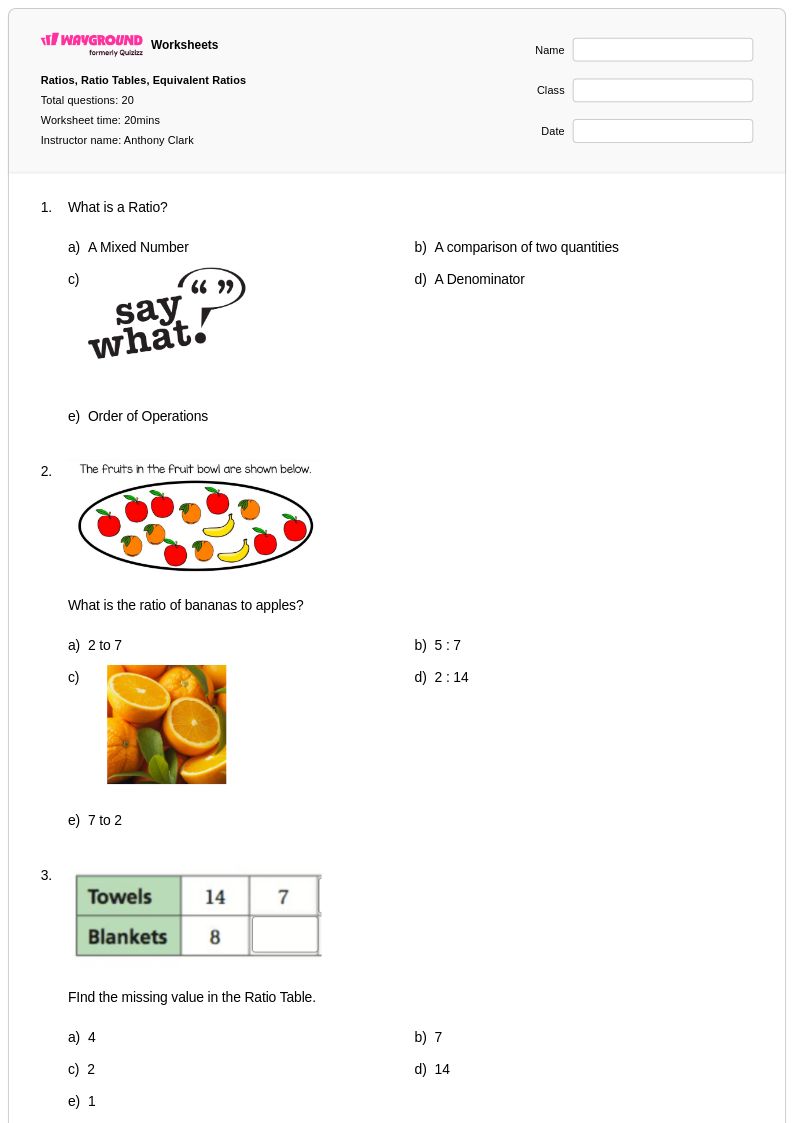
20 Q
6th - Uni
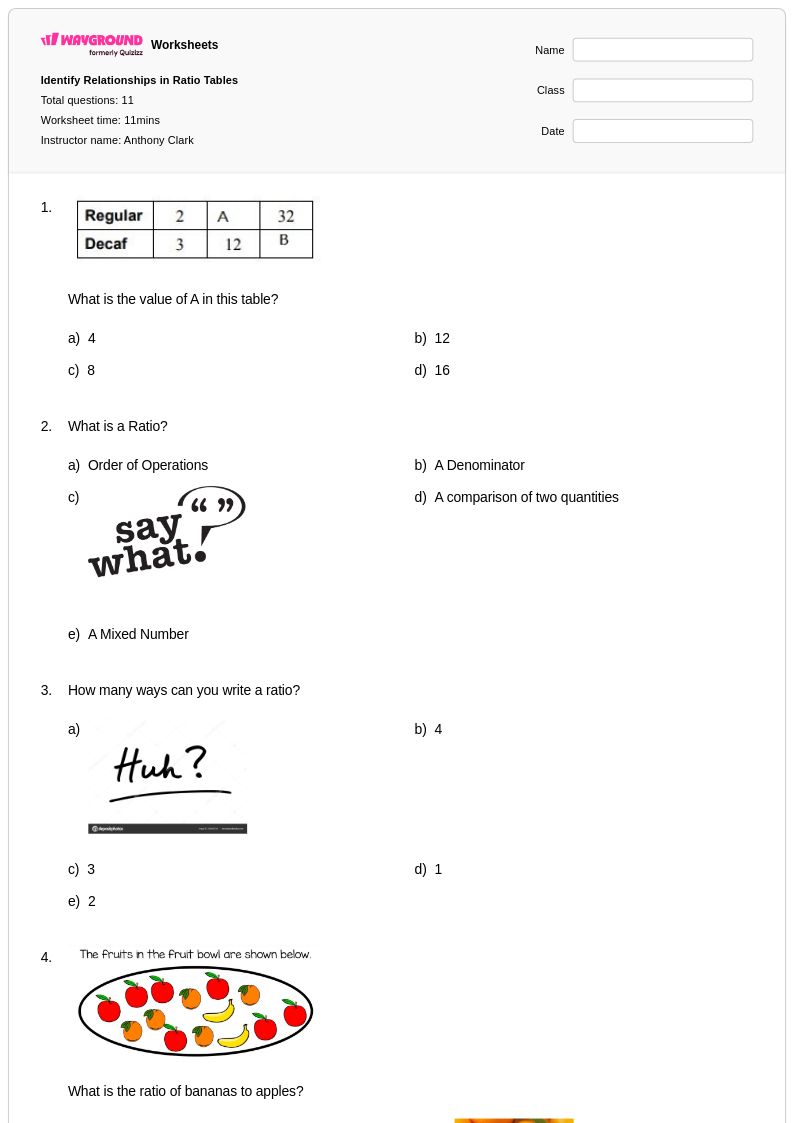
11 Q
6th - Uni
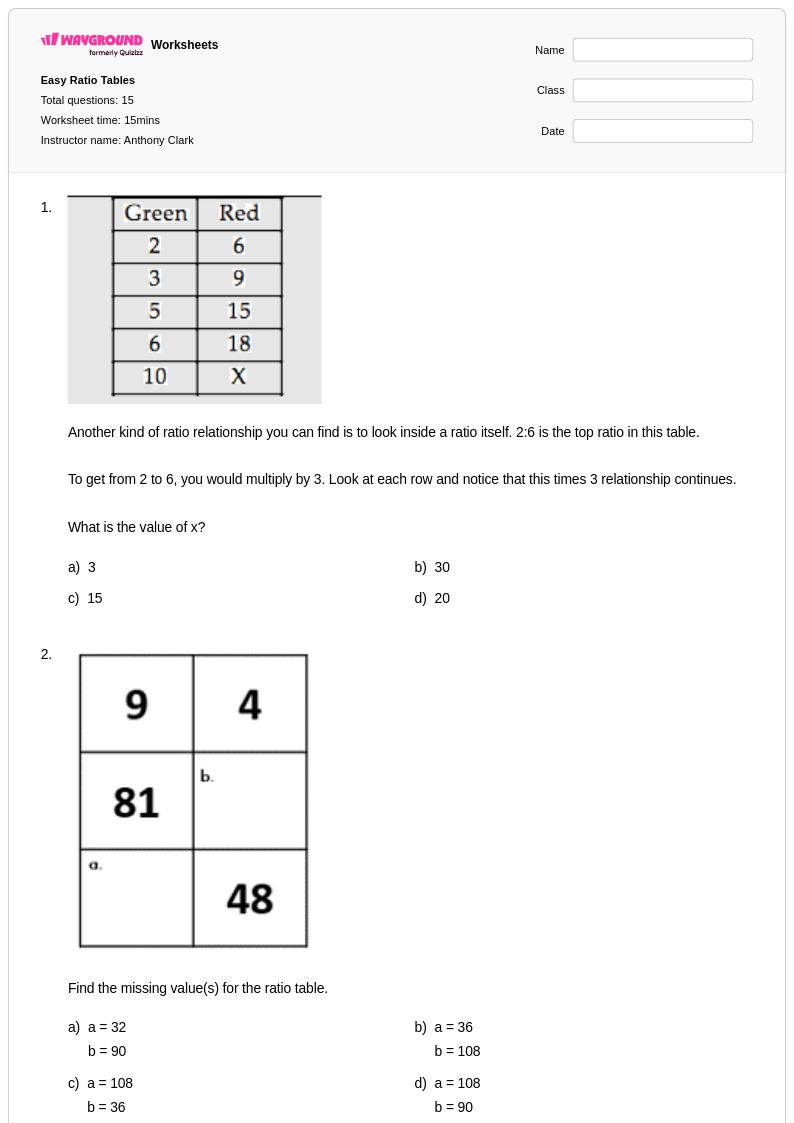
15 Q
6th - Uni
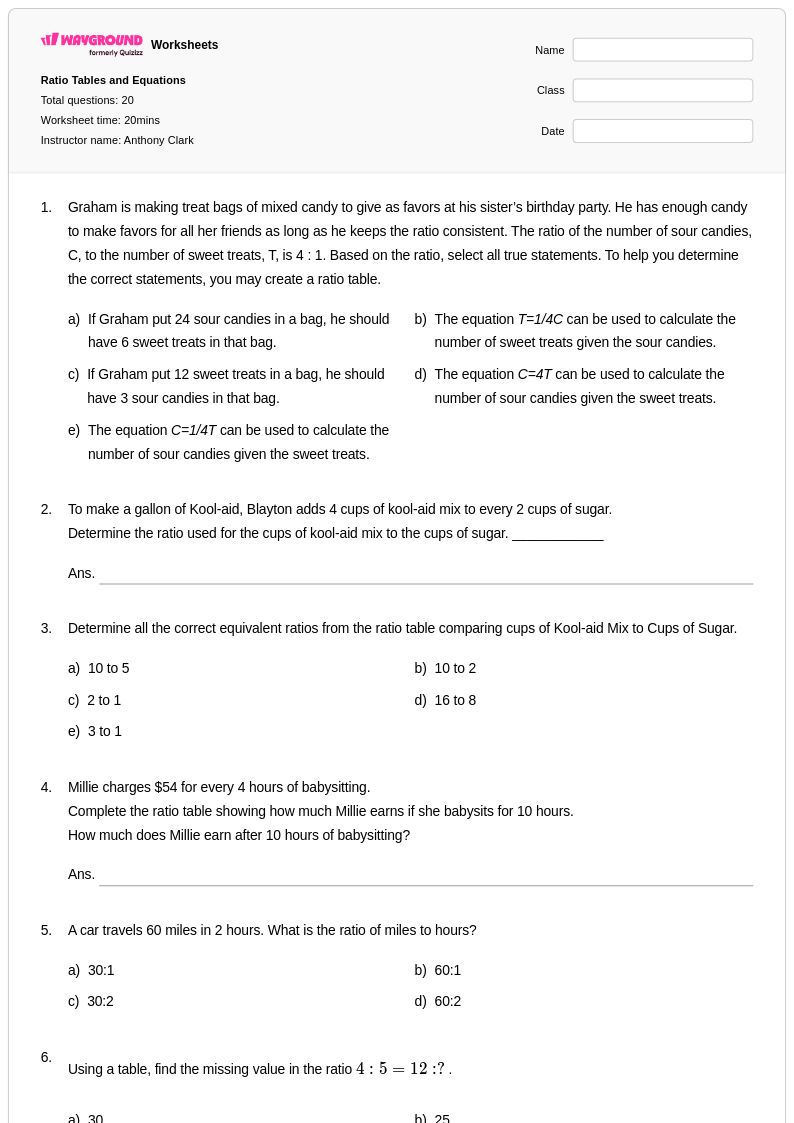
20 Q
6th - Uni
Explore Other Subject Worksheets for year 8
Explore printable Ratio Tables worksheets for Year 8
Ratio tables serve as fundamental organizational tools in Year 8 mathematics, helping students visualize and solve complex proportional relationships through structured data arrangements. Wayground's comprehensive collection of ratio table worksheets provides educators with expertly designed practice problems that strengthen students' ability to identify patterns, calculate missing values, and understand the multiplicative relationships between quantities. These free printable resources include detailed answer keys and span various real-world applications, from recipe scaling and unit conversions to distance-time relationships and pricing comparisons. Each worksheet systematically guides students through the process of creating, completing, and analyzing ratio tables, building essential foundational skills for more advanced proportional reasoning and algebraic thinking.
Wayground's extensive library of teacher-created ratio table resources offers educators unparalleled flexibility in planning differentiated instruction for diverse Year 8 classrooms. With millions of worksheets available through intuitive search and filtering systems, teachers can quickly locate materials aligned to specific standards and customize them to meet individual student needs for remediation or enrichment. The platform's dual-format availability ensures seamless integration into any teaching environment, whether educators prefer traditional printable worksheets or interactive digital activities delivered as PDFs. These comprehensive tools enable teachers to provide targeted skill practice, assess student understanding of proportional relationships, and create scaffolded learning experiences that build confidence in mathematical reasoning while preparing students for advanced concepts in algebra and beyond.
FAQs
What is the role of ratio tables in 8th grade math?
How can I connect ratio tables to linear equations for my 8th graders?
Where do 8th graders typically struggle when connecting ratios to functions?
How can I use this 8th grade worksheet with my class?
How do these worksheets align with 8th grade Common Core standards?
How can I differentiate this topic for 8th graders?