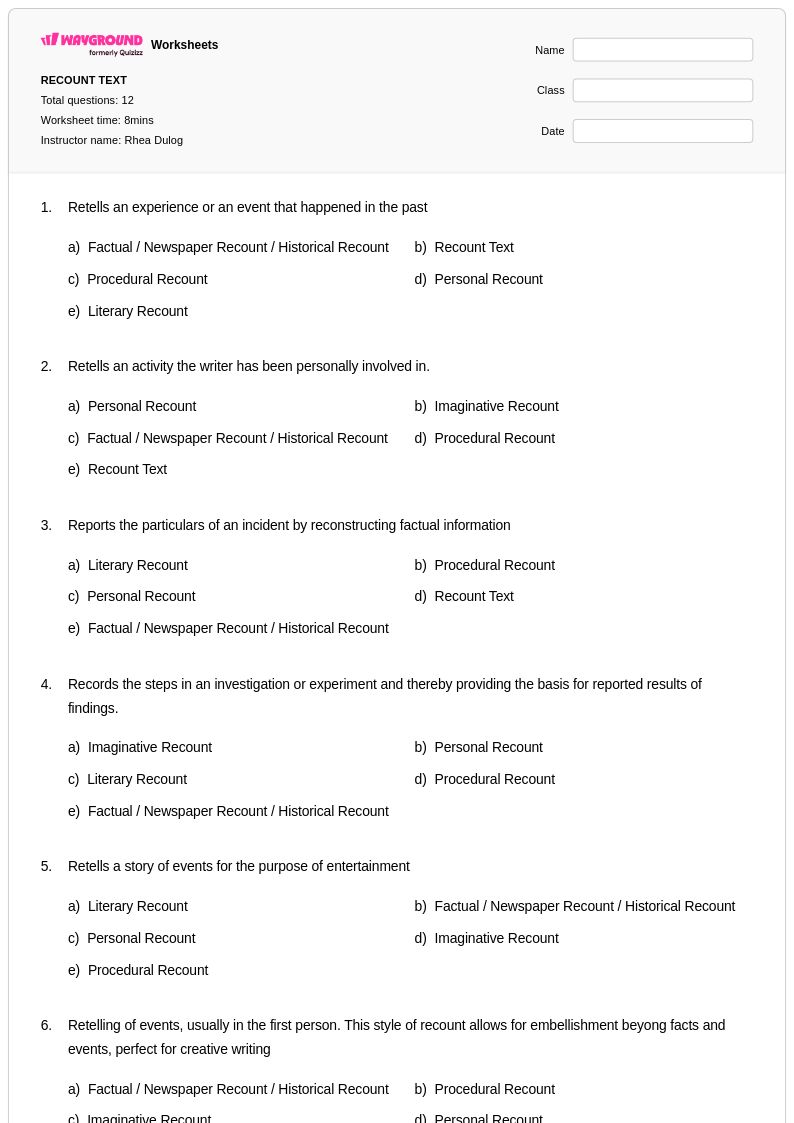
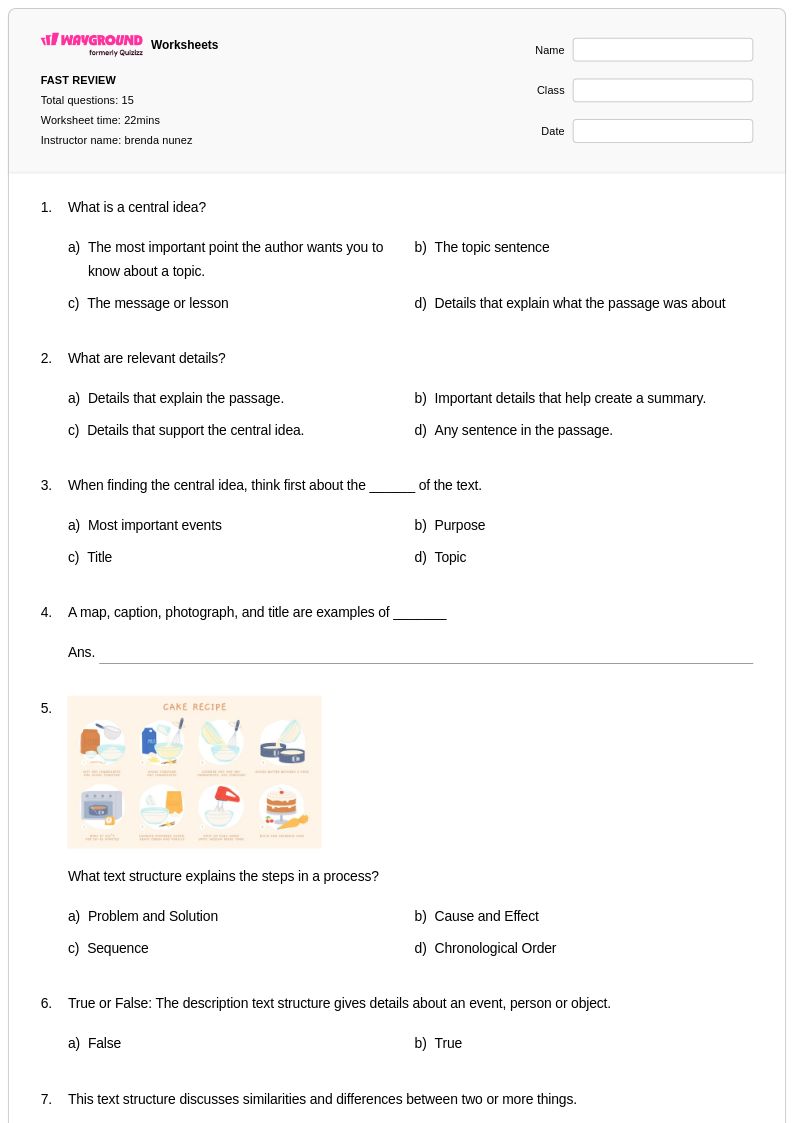
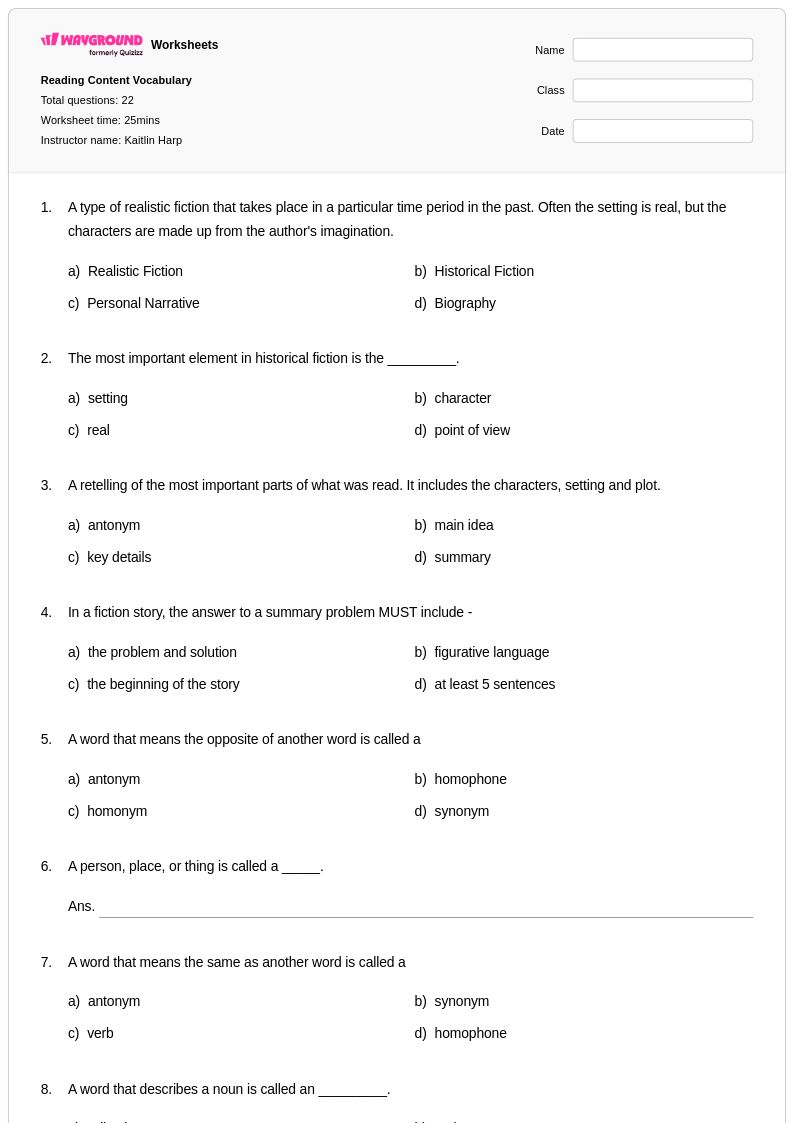
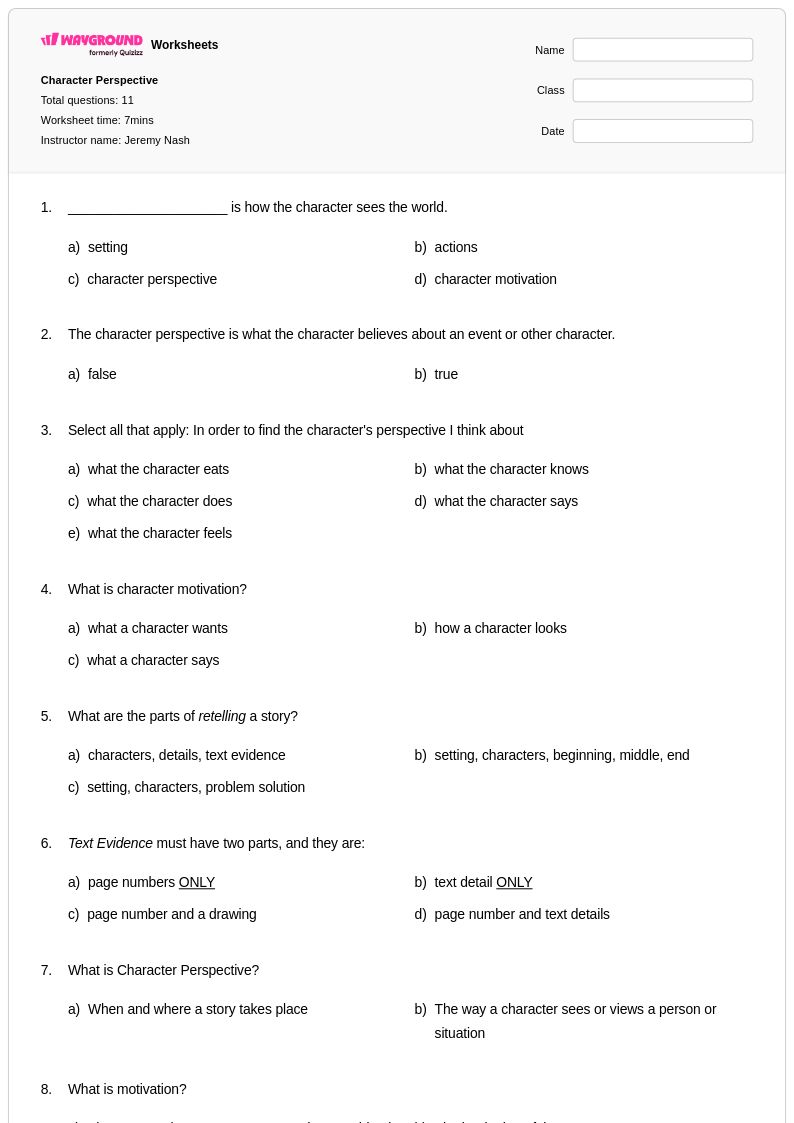
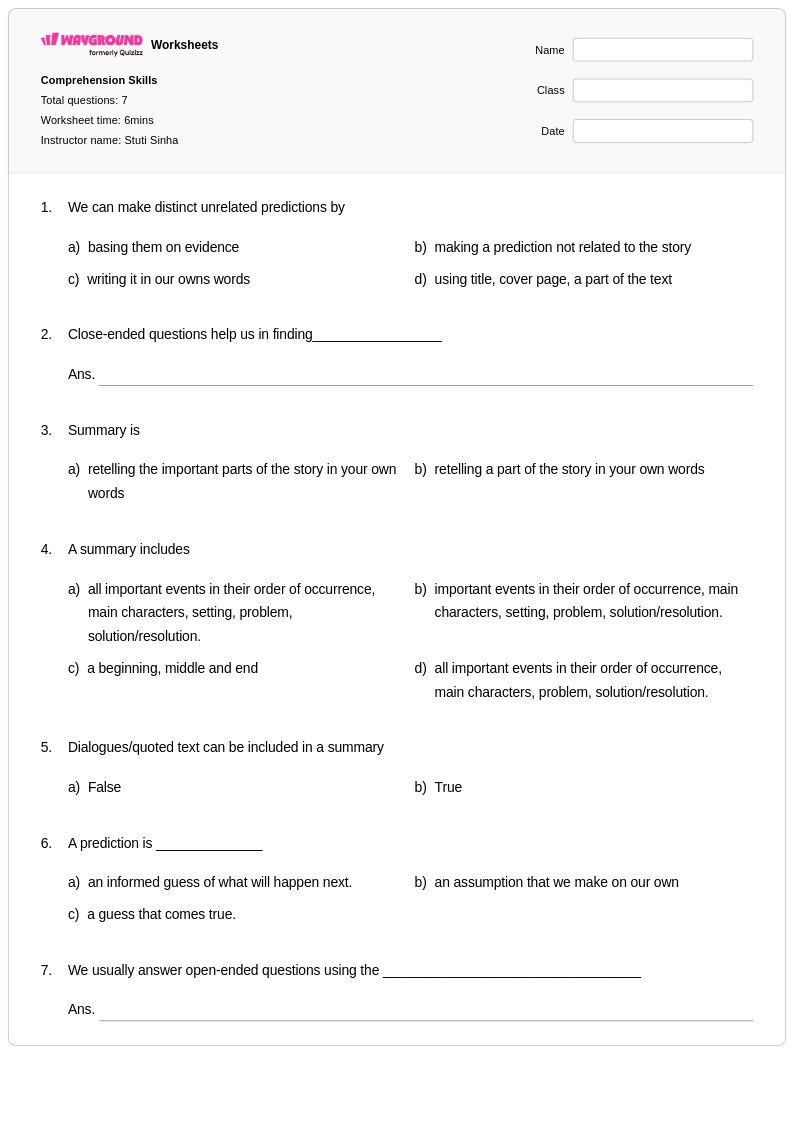
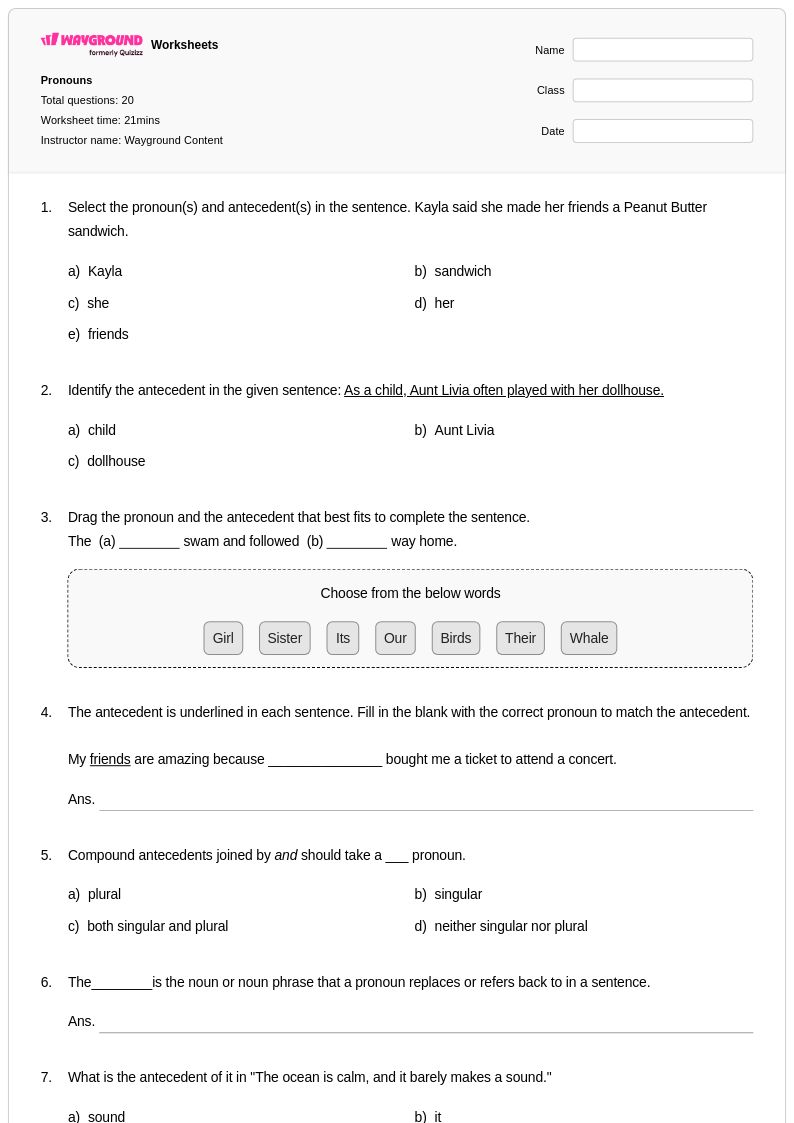
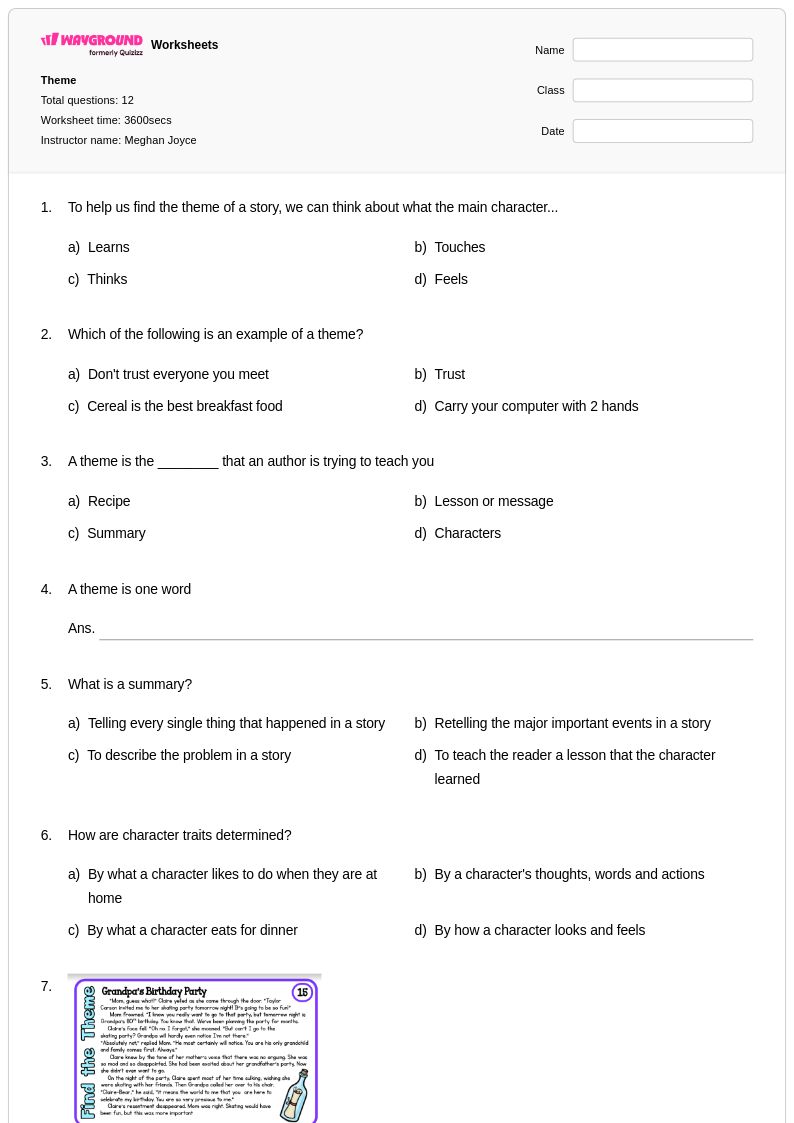
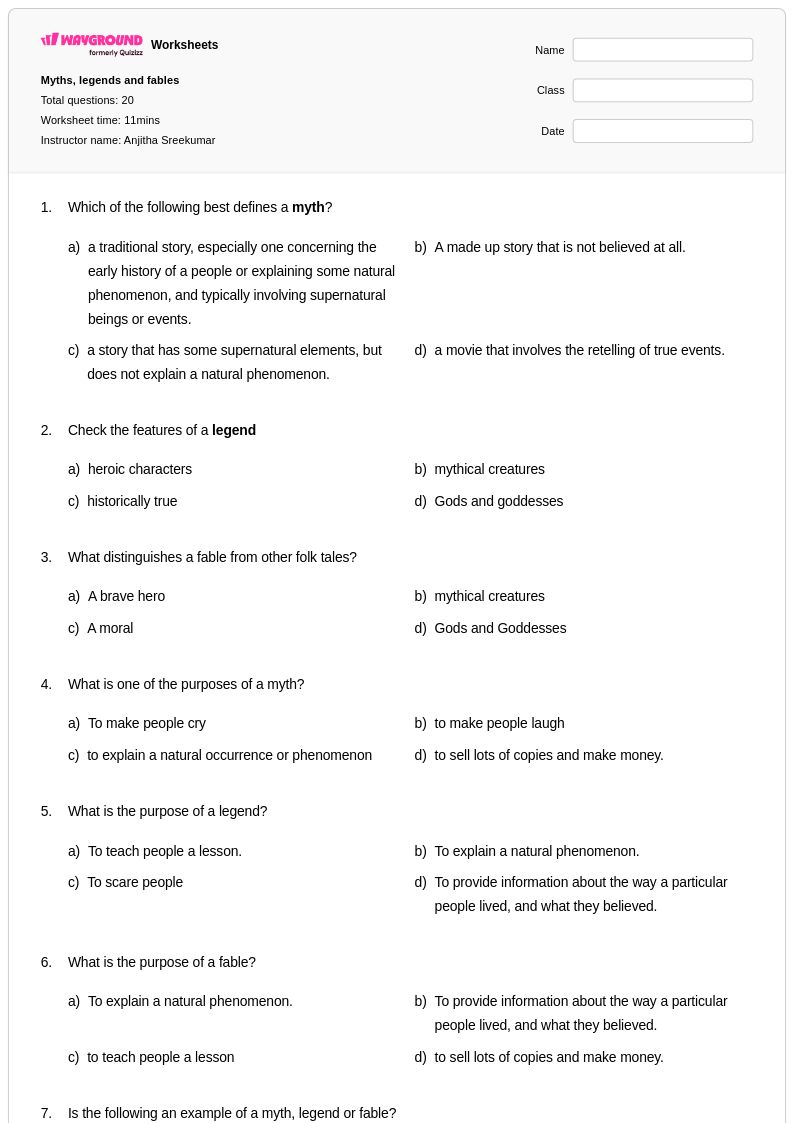
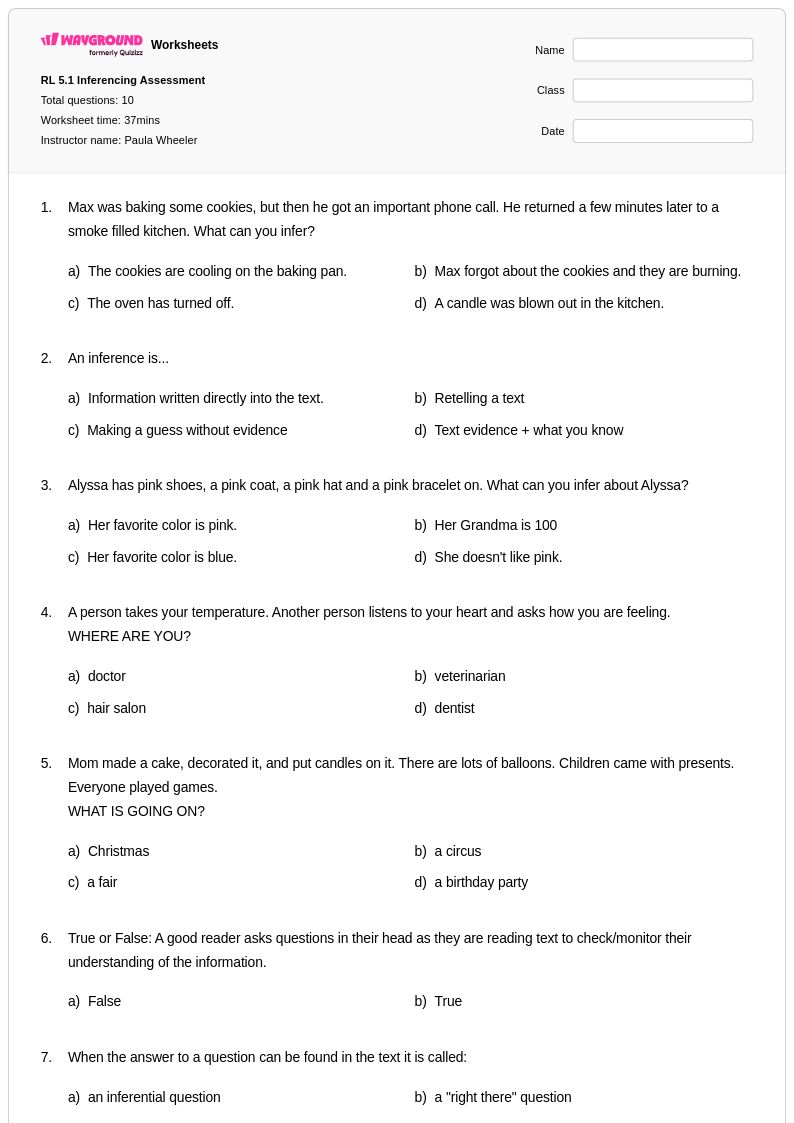
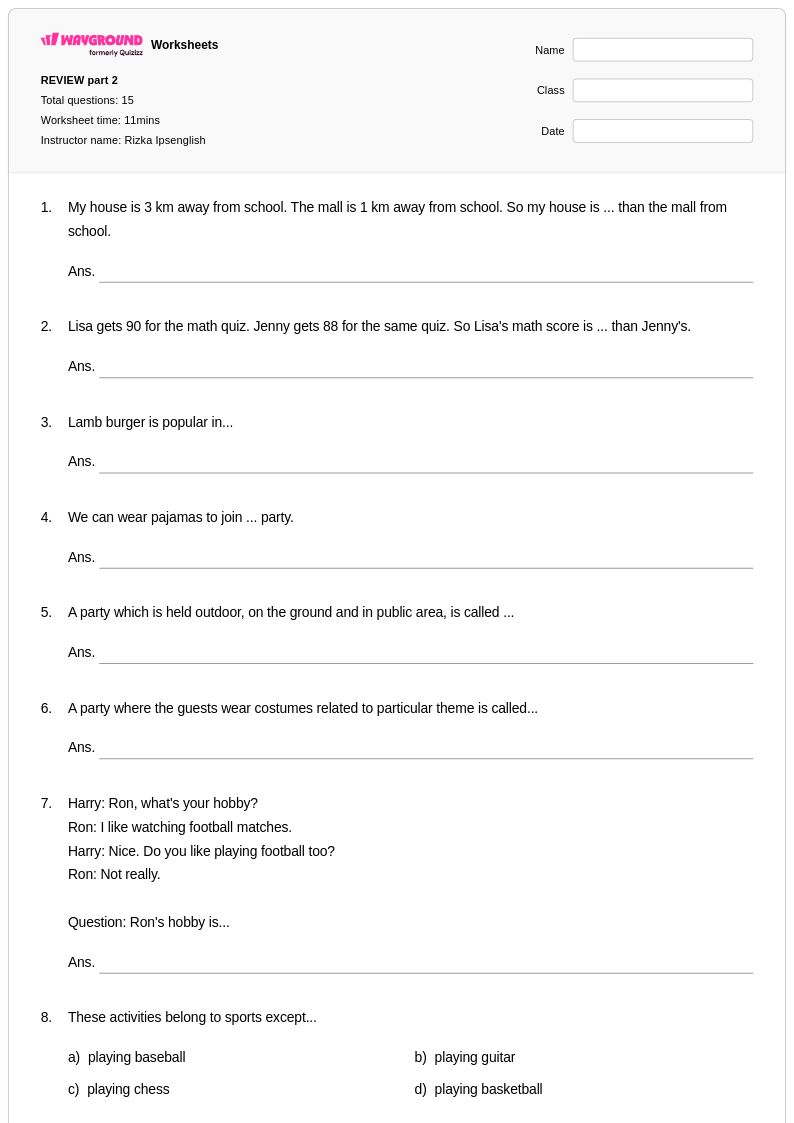
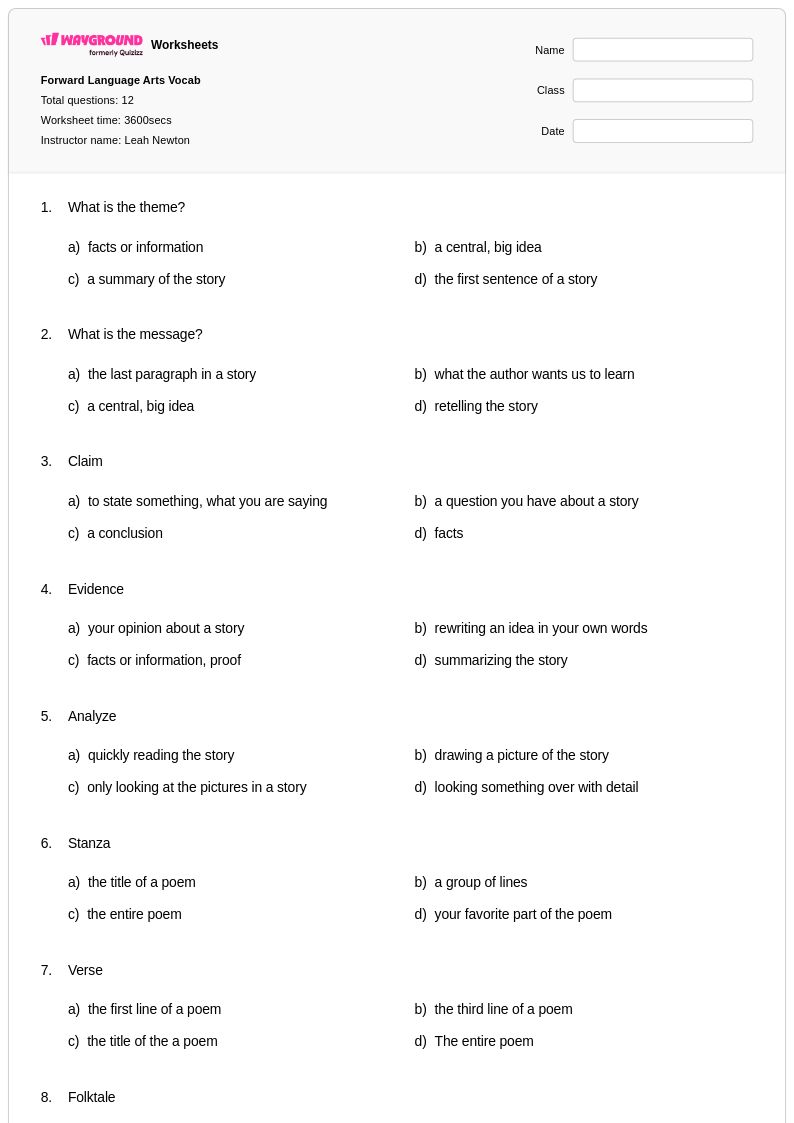
Enhance Year 4 students' retelling skills with Wayground's free reading comprehension worksheets, featuring engaging printables, practice problems, and answer keys to develop story sequencing and narrative summary abilities.
Retelling worksheets for Year 4 students available through Wayground (formerly Quizizz) provide comprehensive practice in one of the most fundamental reading comprehension strategies. These carefully designed materials help fourth-grade learners develop the essential skill of accurately summarizing and recounting stories, informational texts, and passages in their own words while maintaining proper sequence and including key details. The worksheets strengthen students' ability to identify main ideas, supporting details, character development, plot structure, and cause-and-effect relationships through structured practice problems that gradually increase in complexity. Each printable resource includes detailed answer keys to support independent learning and self-assessment, while the free pdf format ensures easy access for both classroom instruction and home practice.
Wayground (formerly Quizizz) empowers educators with an extensive collection of millions of teacher-created retelling worksheets specifically aligned to Year 4 reading standards and learning objectives. The platform's robust search and filtering capabilities allow teachers to quickly locate materials that match their students' specific needs, reading levels, and text complexity requirements. These differentiation tools enable seamless customization of worksheets to support both remediation for struggling readers and enrichment opportunities for advanced students. Available in both printable pdf and interactive digital formats, these resources streamline lesson planning while providing flexible options for in-class activities, homework assignments, and targeted skill practice sessions that reinforce proper retelling techniques and comprehension strategies.
FAQs
How do I teach retelling to elementary students?
Effective retelling instruction begins with explicit modeling using familiar texts, where the teacher thinks aloud while identifying the beginning, middle, and end of a story. Graphic organizers that prompt students to record characters, setting, problem, and solution give learners a visual scaffold before they attempt independent retelling. Gradually releasing responsibility — from shared retelling to partner retelling to independent practice — builds the confidence students need to reconstruct narratives in their own words.
What is the difference between retelling and summarizing?
Retelling involves recounting a text in sequence, including characters, events, and details, whereas summarizing requires the reader to condense the text to its most essential ideas and omit minor details. Both are comprehension strategies, but retelling is typically introduced first because it relies on recall and sequencing before students are ready to evaluate what is most important. Teachers often use retelling as a bridge skill that develops the close reading habits needed for effective summarizing.
What exercises help students practice retelling a story?
Story-sequencing activities, where students order events using picture cards or numbered sentence strips, are among the most effective retelling practice exercises because they reinforce chronological thinking. Structured worksheets that prompt students to fill in story element frames — who, what, where, when, problem, solution — provide consistent practice with the language of retelling. Having students retell to a partner and then compare responses also deepens comprehension by requiring them to justify their choices.
What mistakes do students commonly make when retelling a story?
The most common error is reciting a list of random details rather than connecting events in logical sequence, which indicates the student is recalling rather than reconstructing the narrative arc. Students also frequently confuse their opinion of the story with the actual content, inserting personal reactions instead of text-based events. Another common misconception is believing that more detail always means a better retelling; students need explicit instruction that retelling should be complete but focused on key story elements.
How can I use retelling worksheets to assess reading comprehension?
Retelling worksheets function as formative assessment tools because a student's written retelling reveals which story elements they understood, which they missed, and whether they can sequence events accurately. Teachers can use a simple rubric aligned to the worksheet prompts — covering characters, setting, problem, events, and resolution — to score responses consistently and identify skill gaps. Reviewing completed worksheets before a lesson allows teachers to form targeted small groups for reteaching specific comprehension components.
How do I use Wayground's retelling worksheets in my classroom?
Wayground's retelling worksheets are available as printable PDFs for traditional classroom use and in digital formats for technology-integrated learning environments, and teachers can also host them as a quiz directly on Wayground. The worksheets include detailed answer keys, making them ready to use for independent practice, guided reading follow-up, or homework assignments without additional teacher preparation. For classrooms with diverse learners, Wayground supports individual accommodations such as read aloud, extended time, and reduced answer choices, which can be assigned to specific students without disrupting the experience of the rest of the class.