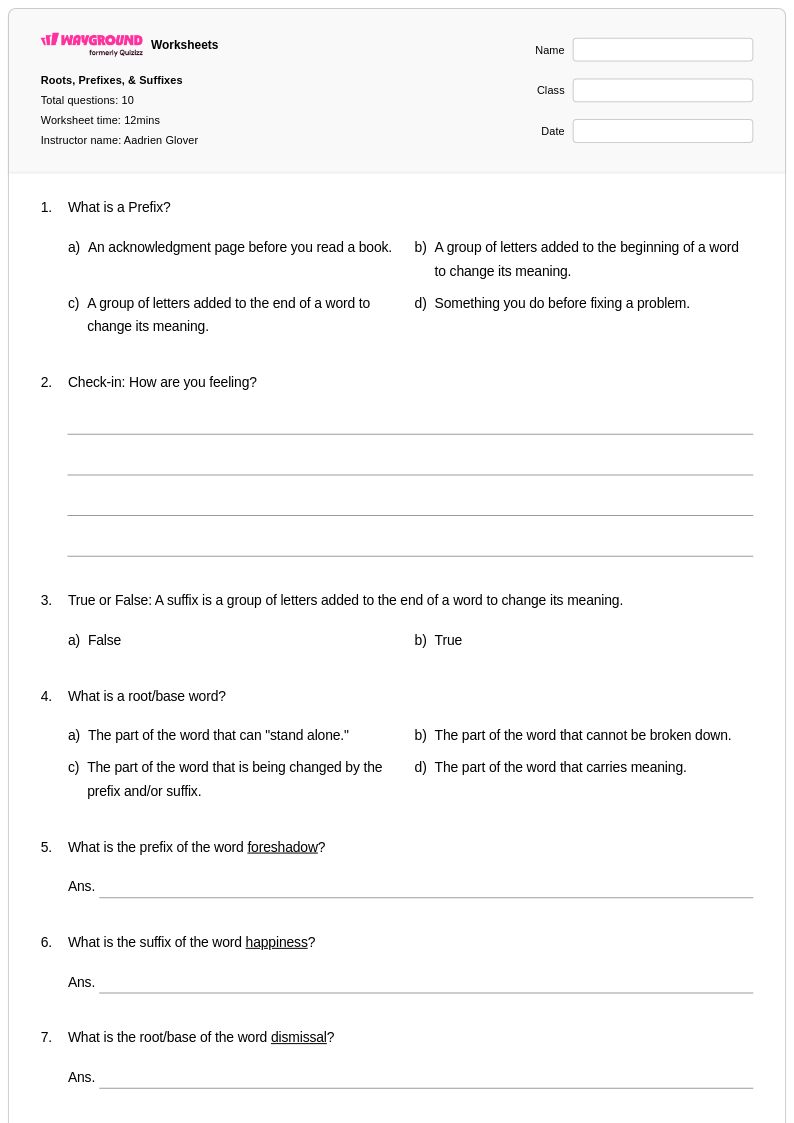
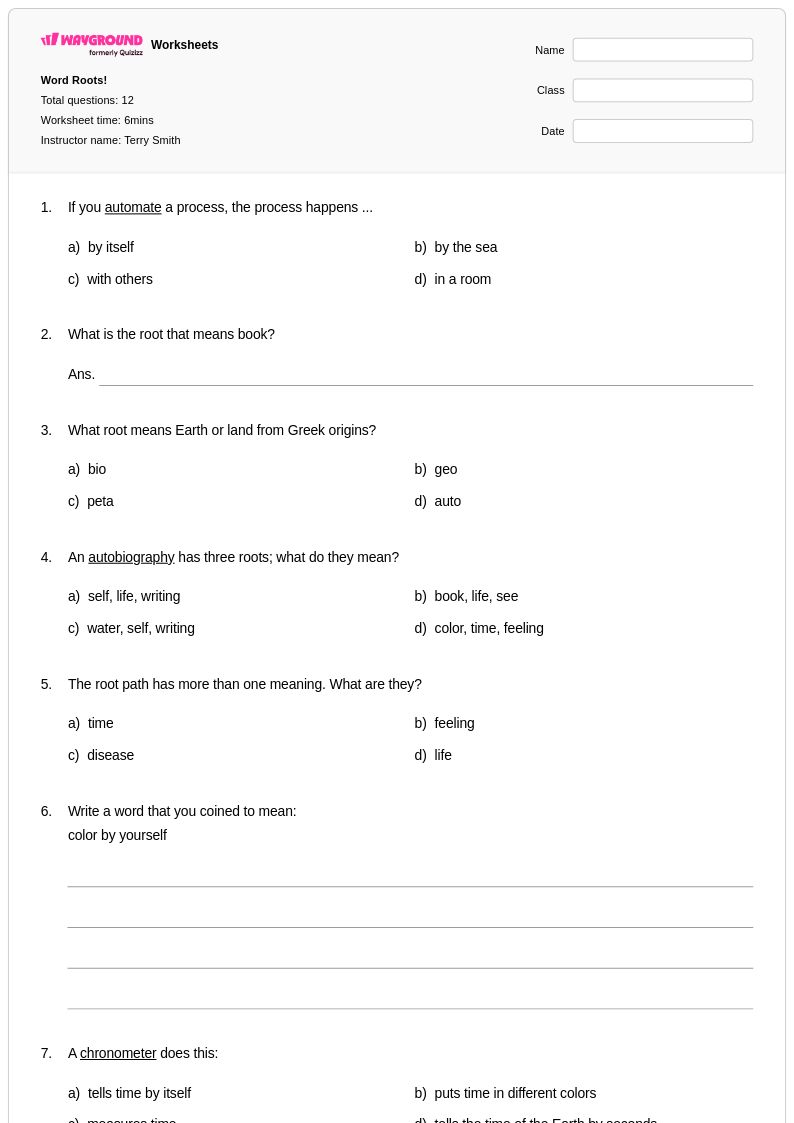
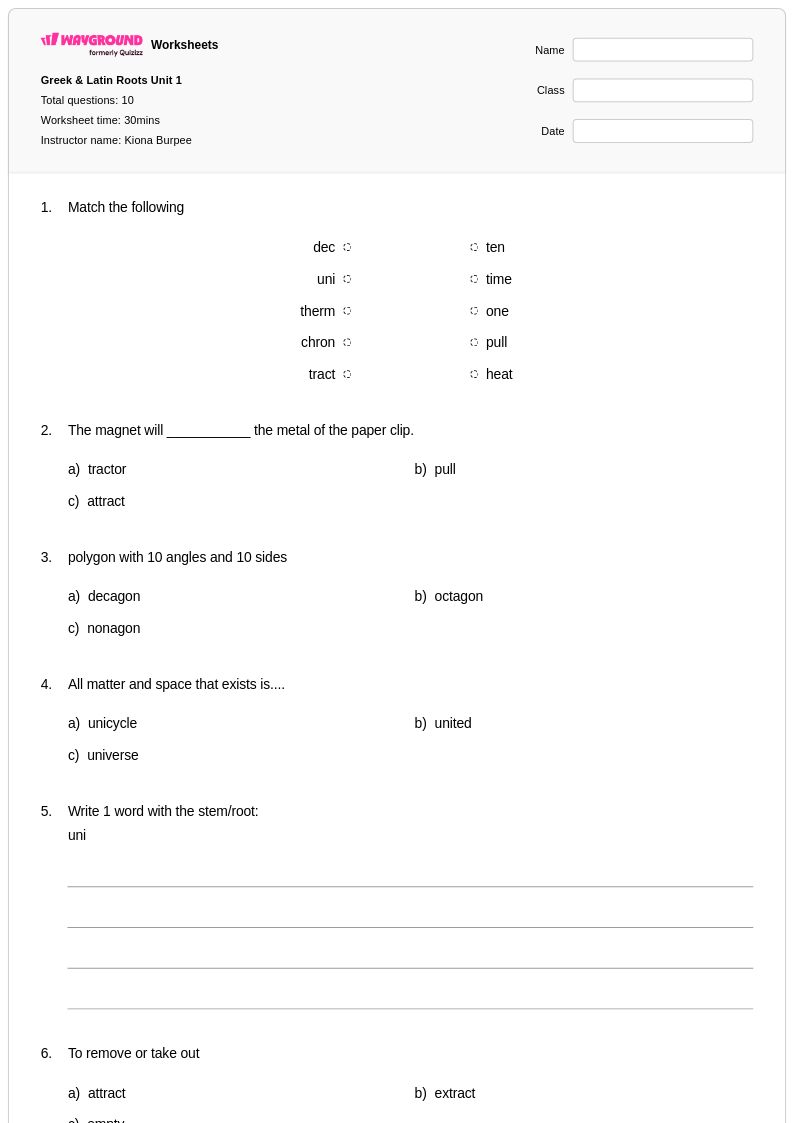
Discover free printable PDF worksheets focused on word roots that help students master foundational word patterns through engaging practice problems and comprehensive answer keys available on Wayground.
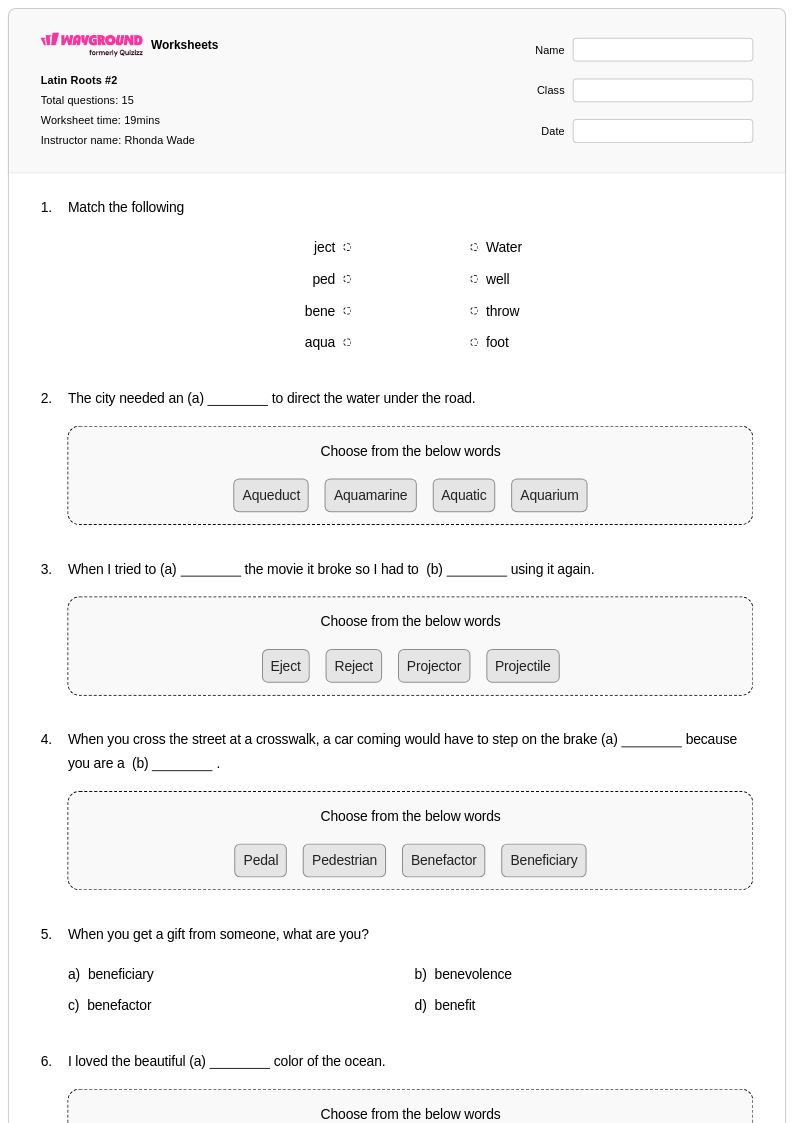
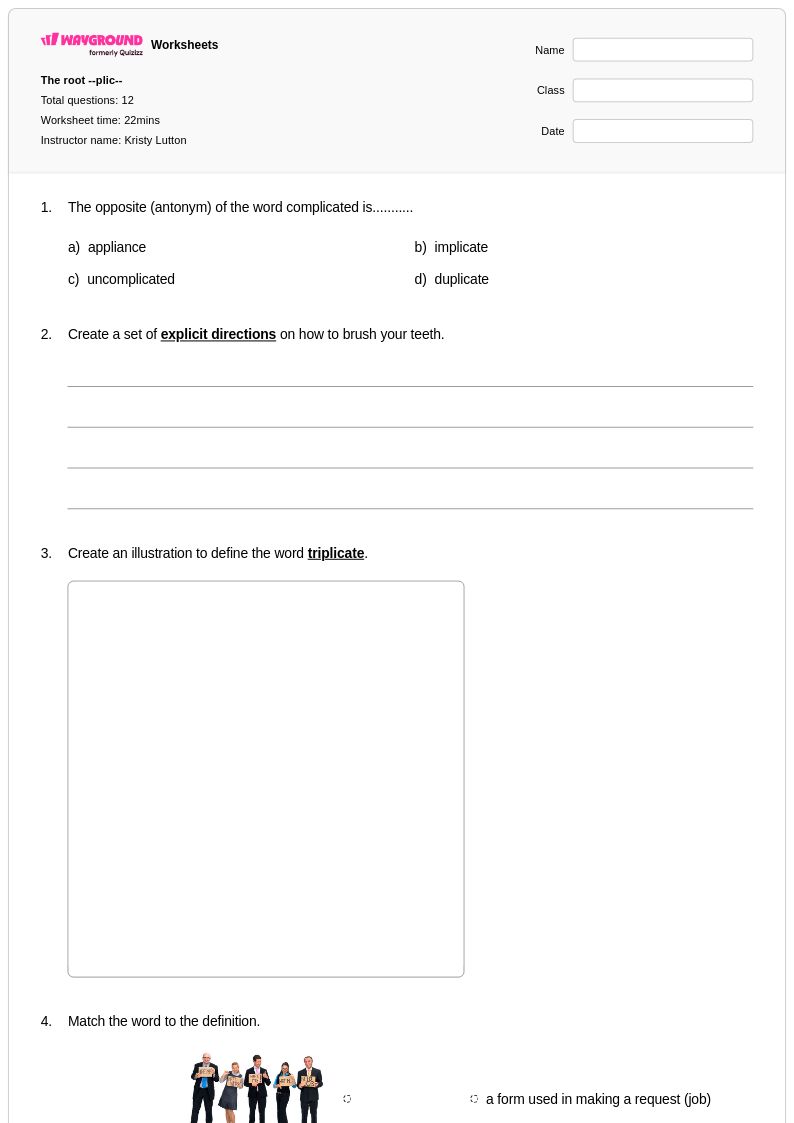
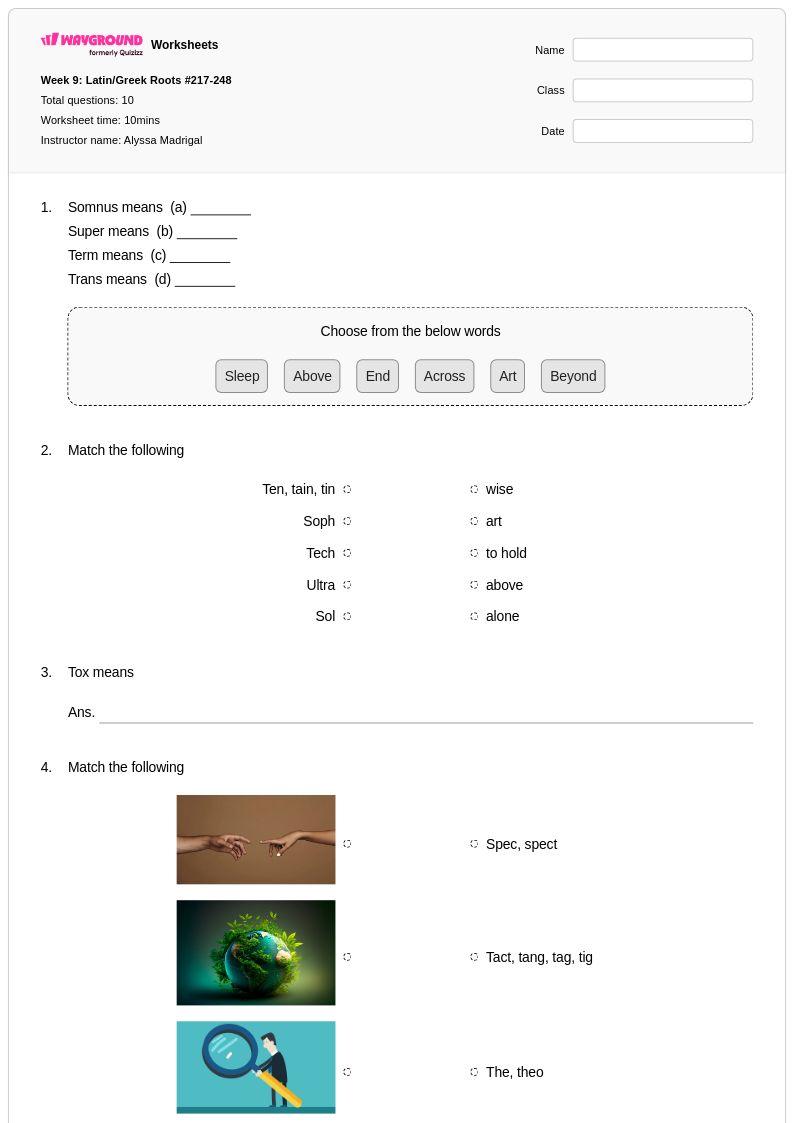
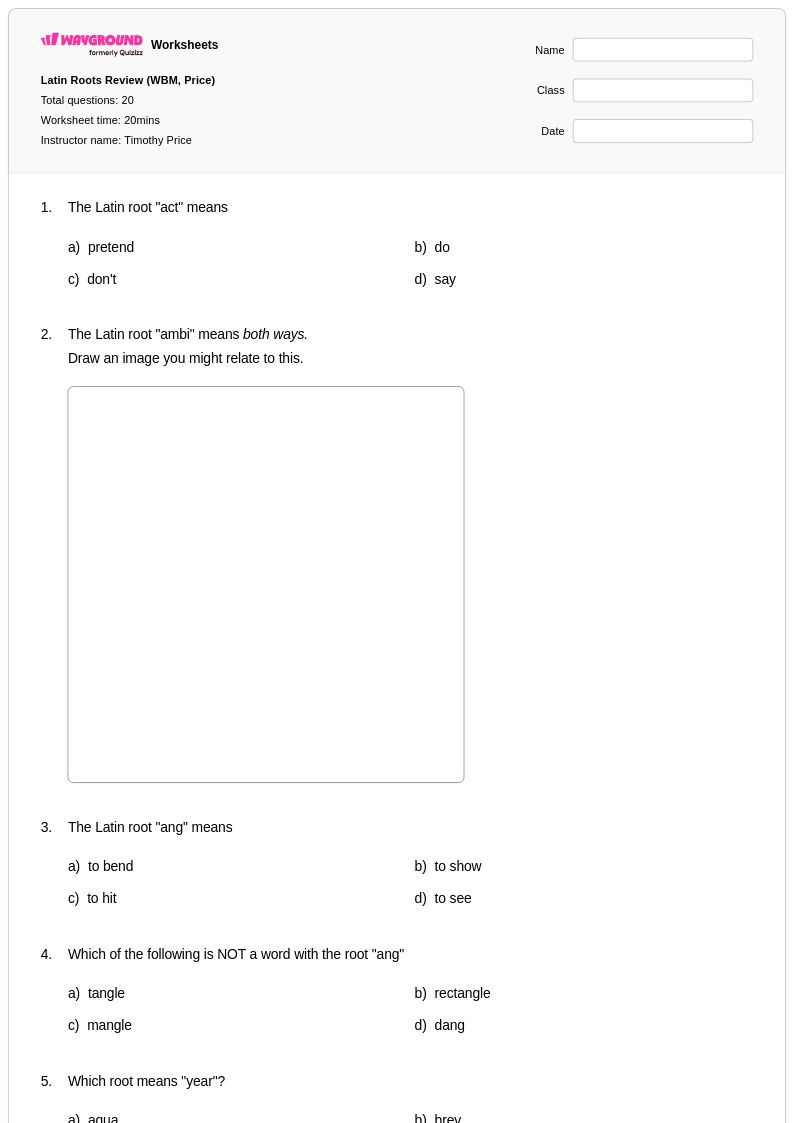
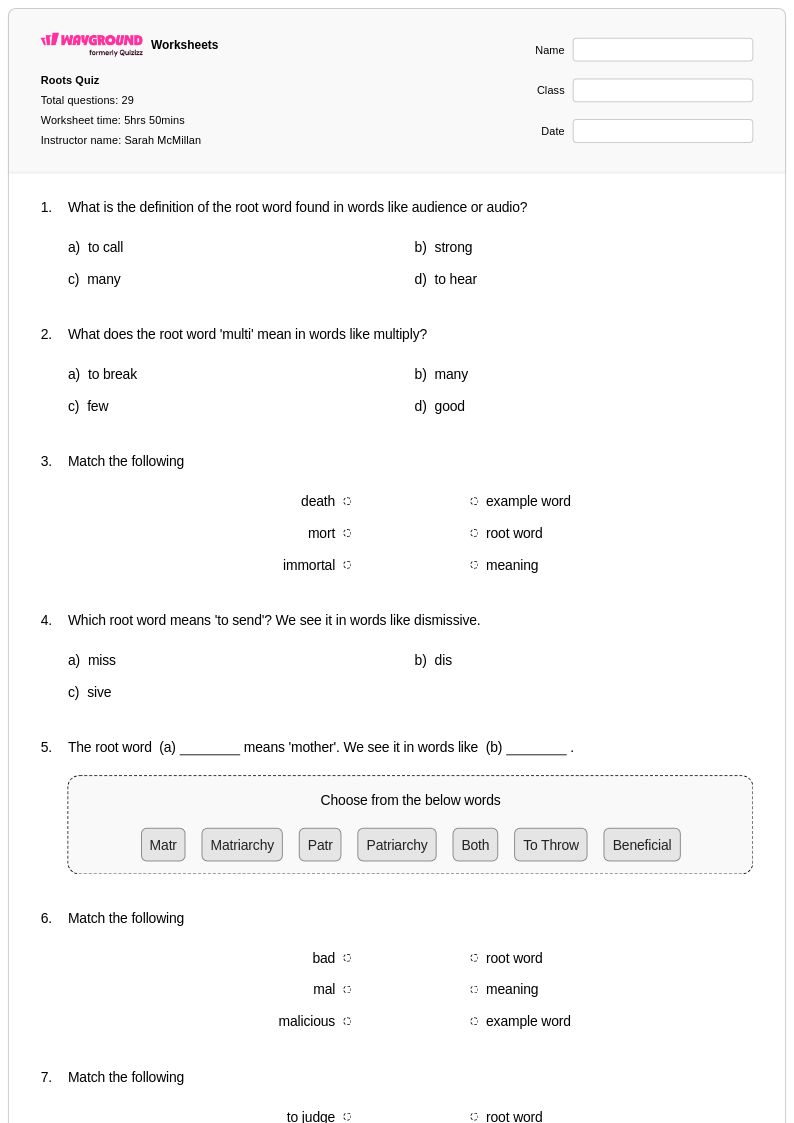
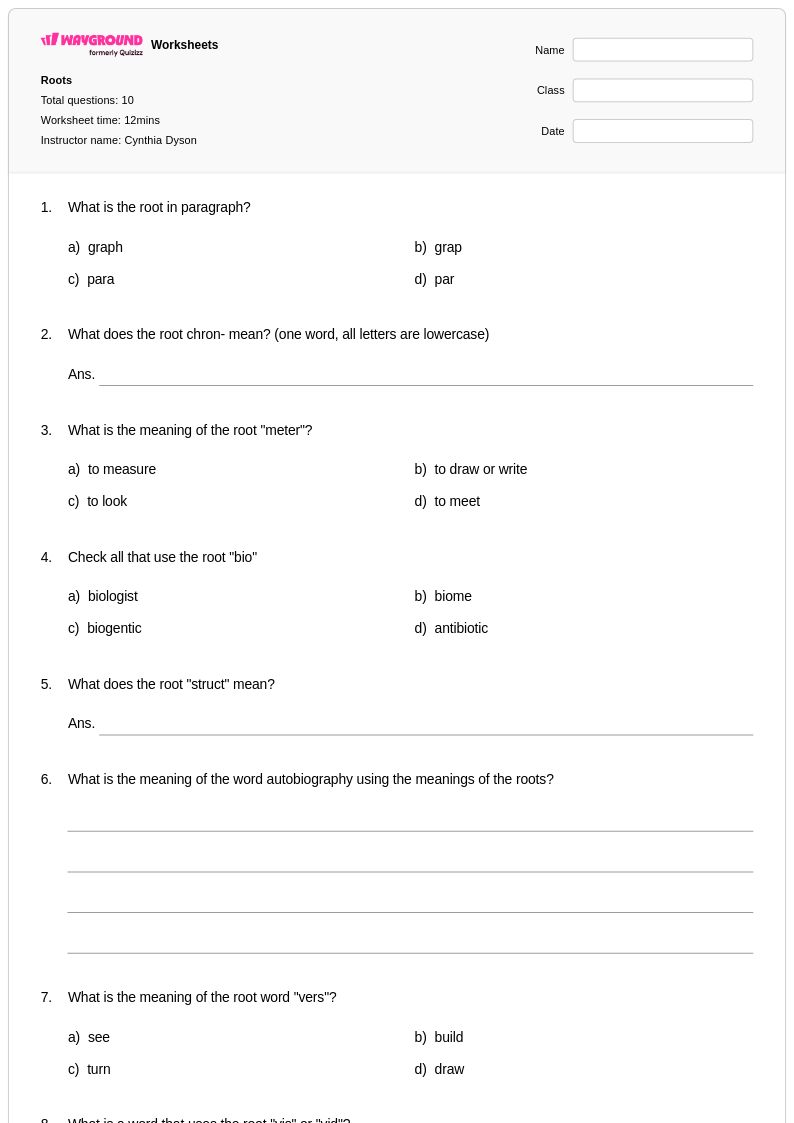
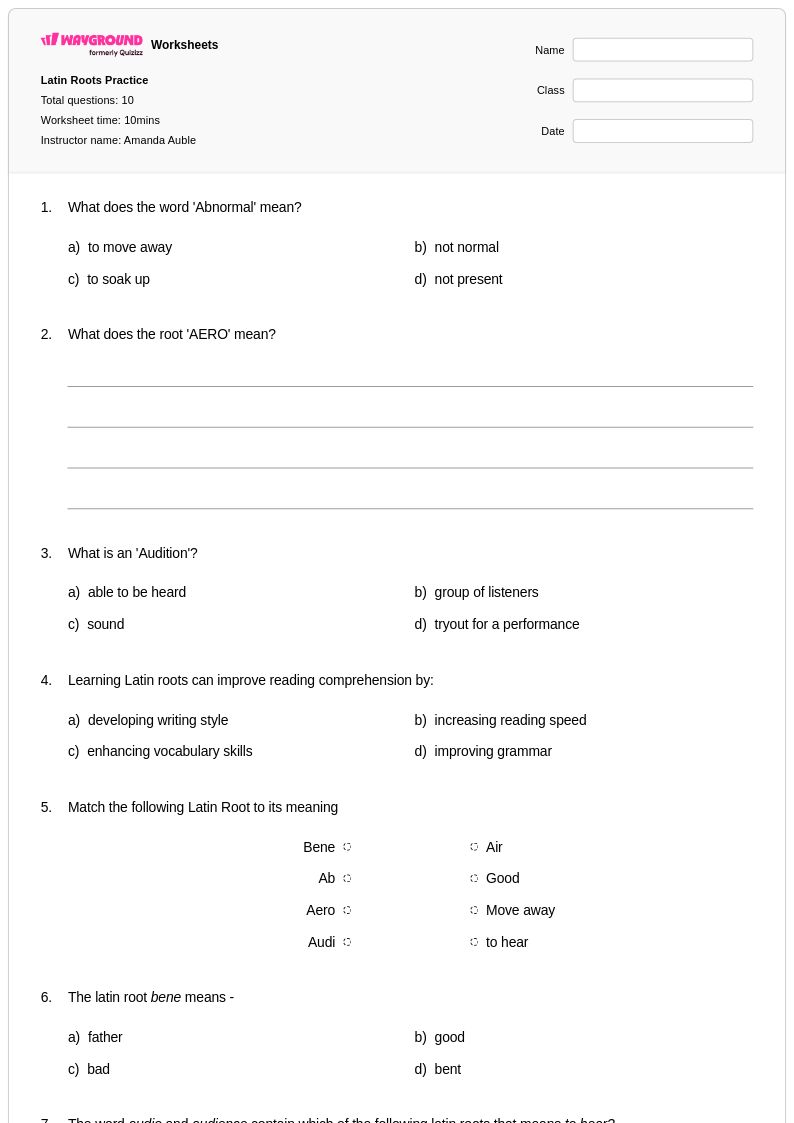
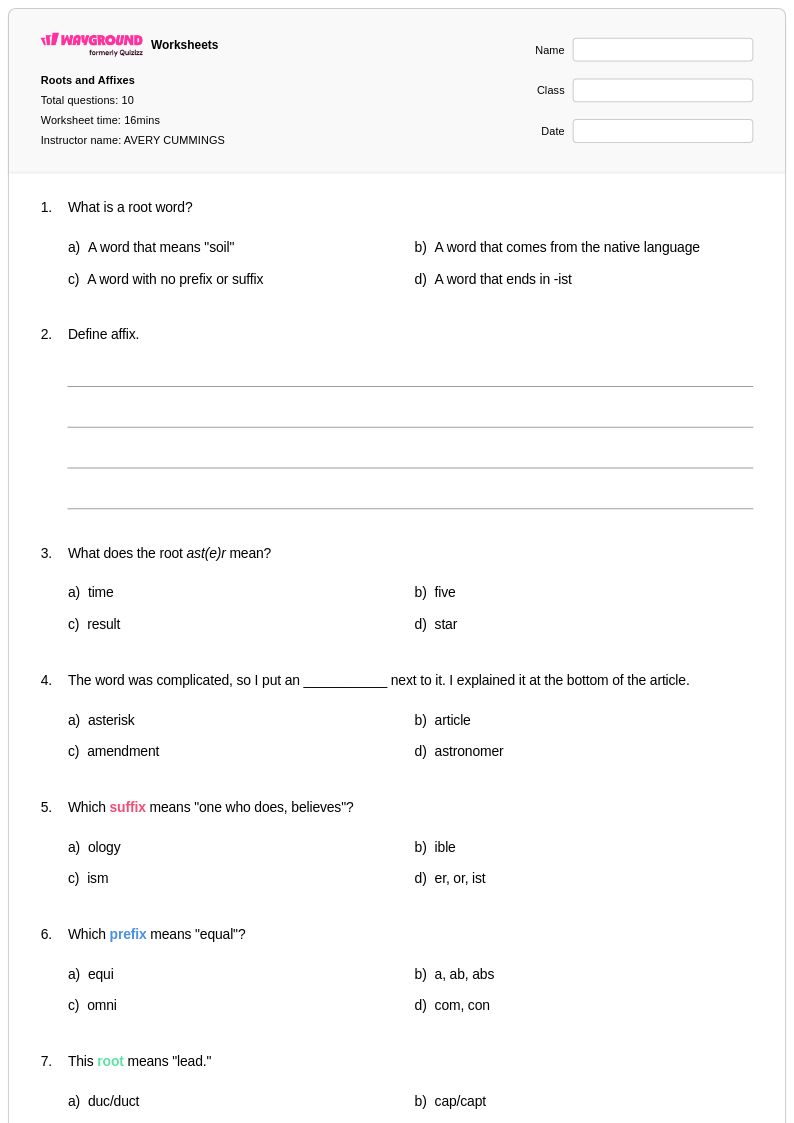
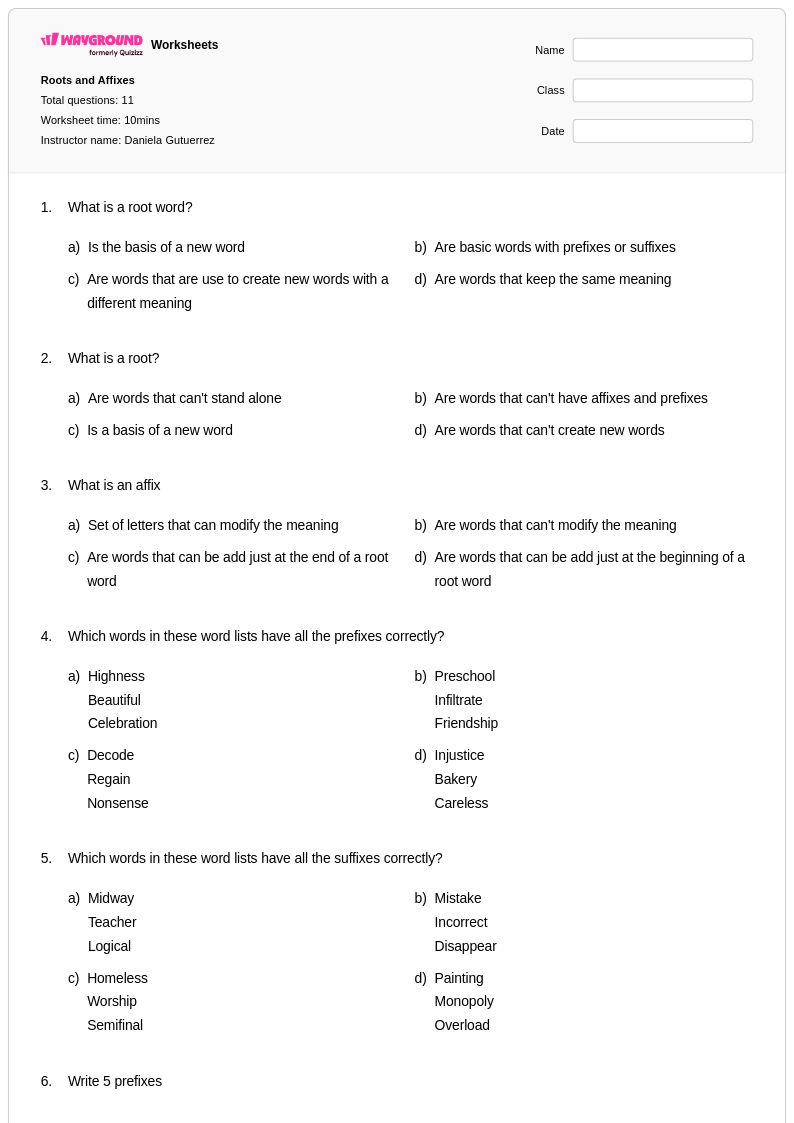
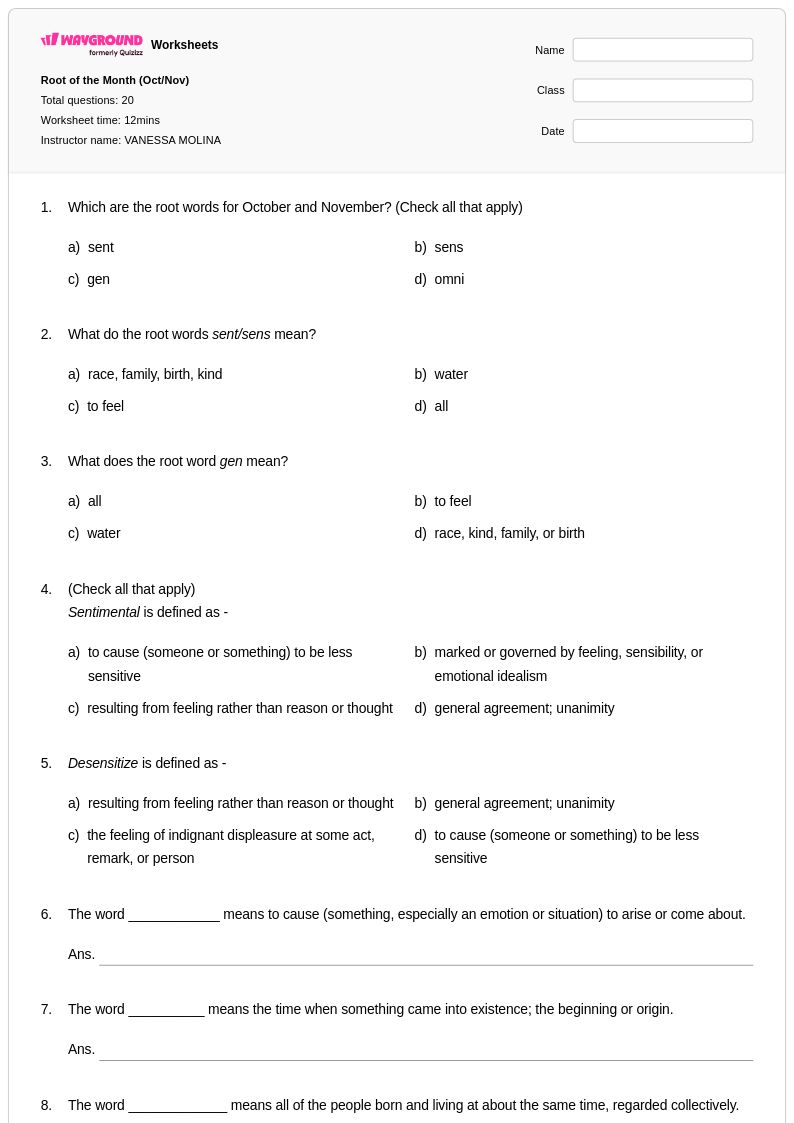
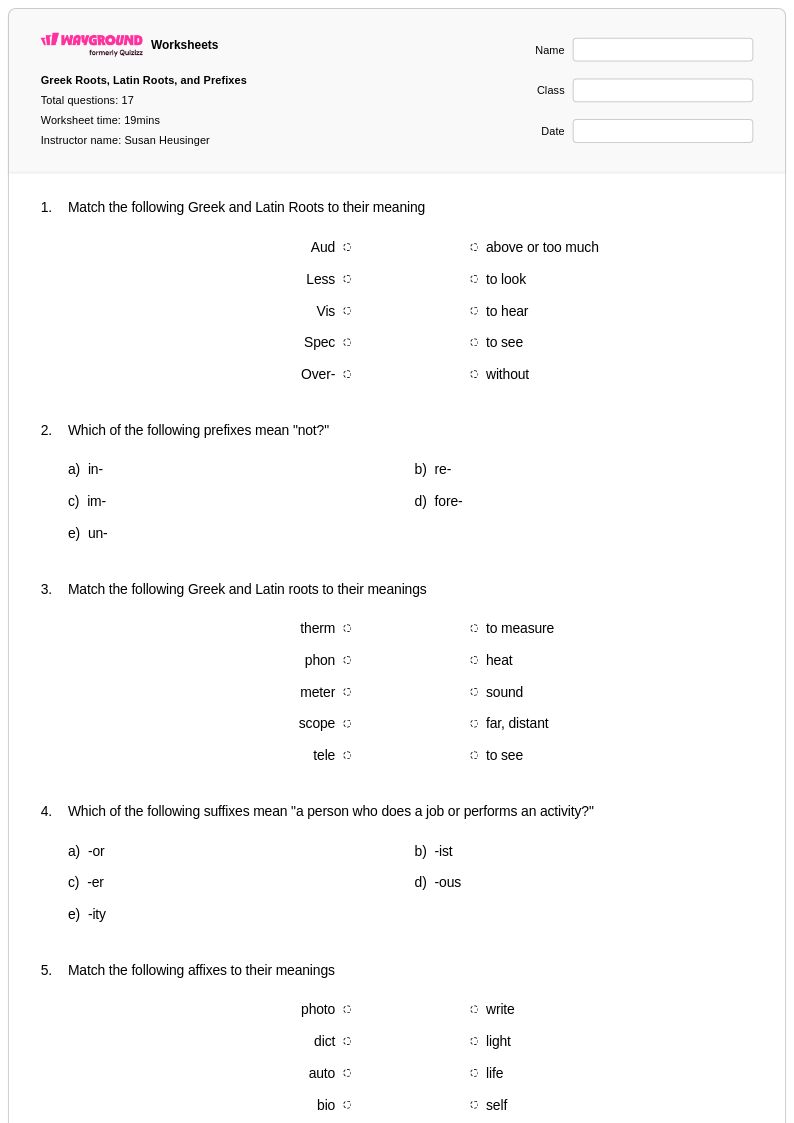
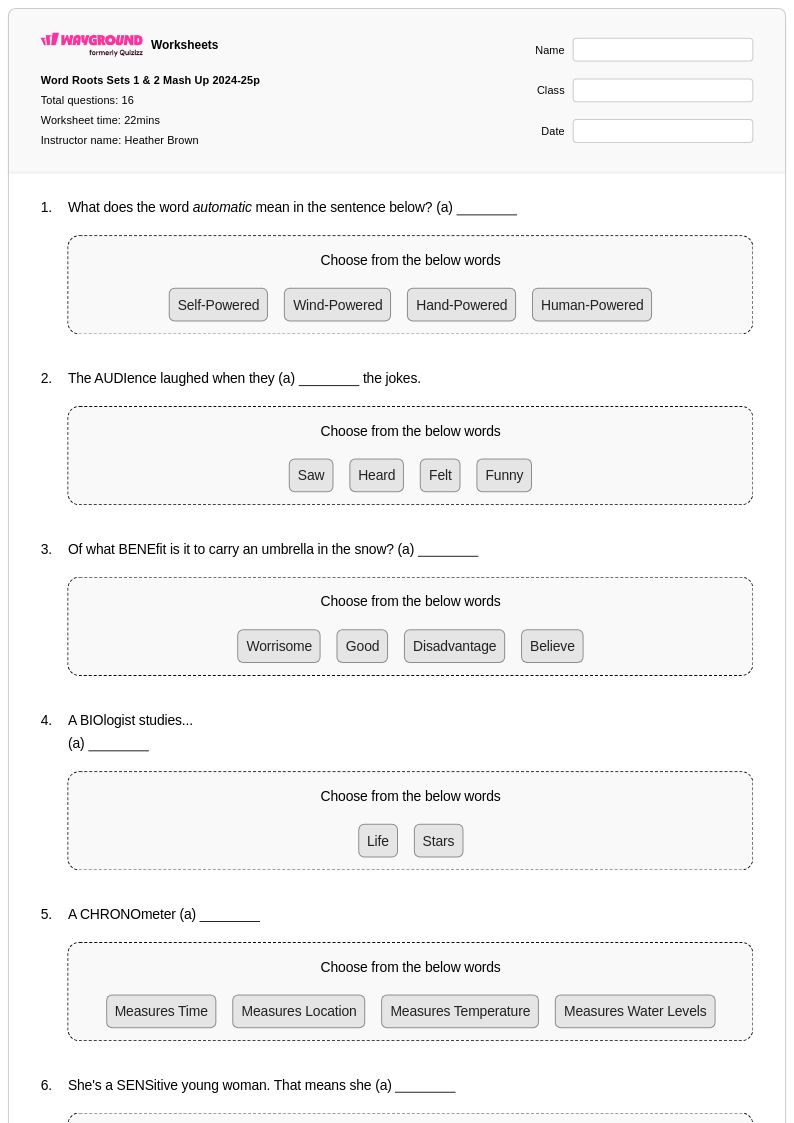
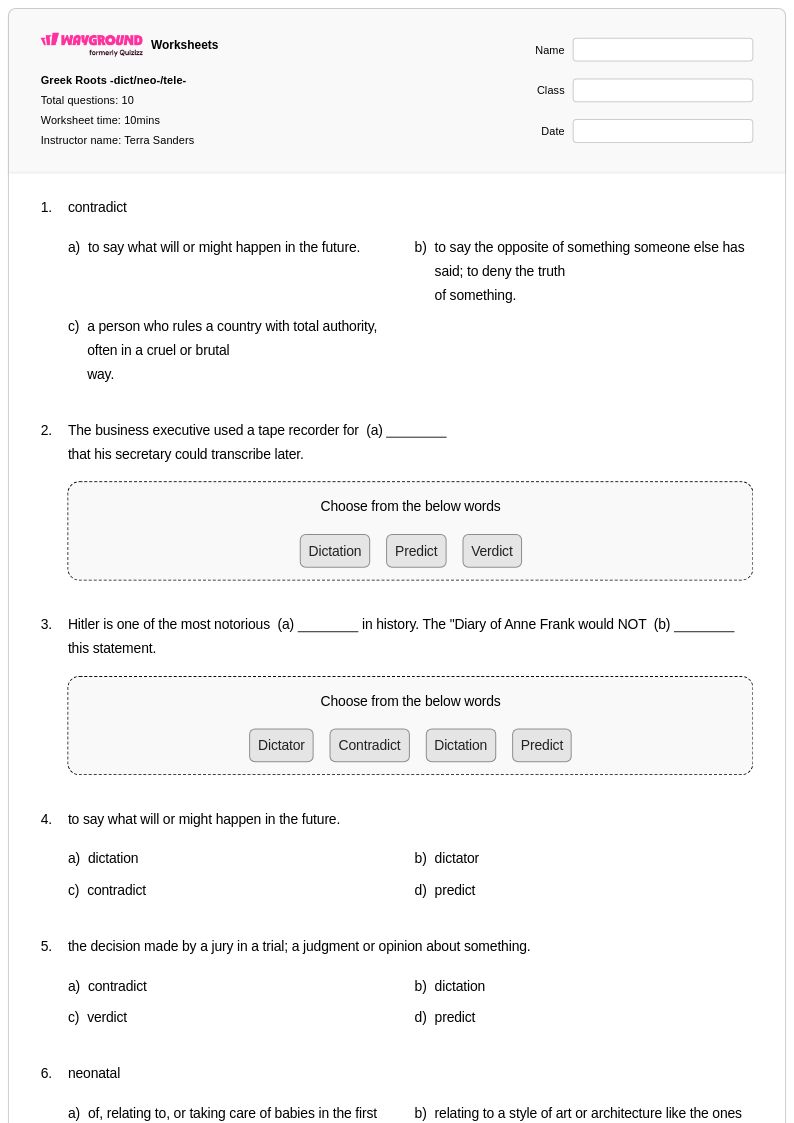
Roots worksheets available through Wayground (formerly Quizizz) provide comprehensive practice for students learning to identify and understand word roots as fundamental building blocks of English vocabulary. These expertly designed printables strengthen critical language skills by teaching students to recognize common Greek and Latin roots, decode unfamiliar words, and build vocabulary systematically through pattern recognition. Each worksheet collection includes detailed answer keys and offers free access to practice problems that guide students through progressively challenging exercises, from identifying basic roots like "spect" (to see) and "struct" (to build) to applying root knowledge for advanced word analysis and meaning determination.
Wayground (formerly Quizizz) empowers educators with millions of teacher-created root pattern resources that feature robust search and filtering capabilities, making it effortless to locate materials aligned with specific curriculum standards and learning objectives. The platform's differentiation tools allow teachers to customize worksheets for diverse skill levels, while flexible formatting options provide both printable pdf versions and interactive digital activities to accommodate various classroom environments. These comprehensive features streamline lesson planning and enable targeted remediation for struggling learners, enrichment opportunities for advanced students, and consistent skill practice that builds student confidence in tackling complex vocabulary across all academic subjects.
FAQs
How do I teach word roots to students effectively?
Start by grouping roots by origin — Greek and Latin are the most common in academic English — and introduce them in clusters of meaning rather than in isolation. For example, teaching 'port' (to carry), 'struct' (to build), and 'spect' (to see) together with real word examples like transport, construct, and inspect helps students build pattern recognition quickly. Anchor each root to a visual or mnemonic and revisit it across multiple lessons so it sticks before moving on to new roots.
What exercises help students practice identifying word roots?
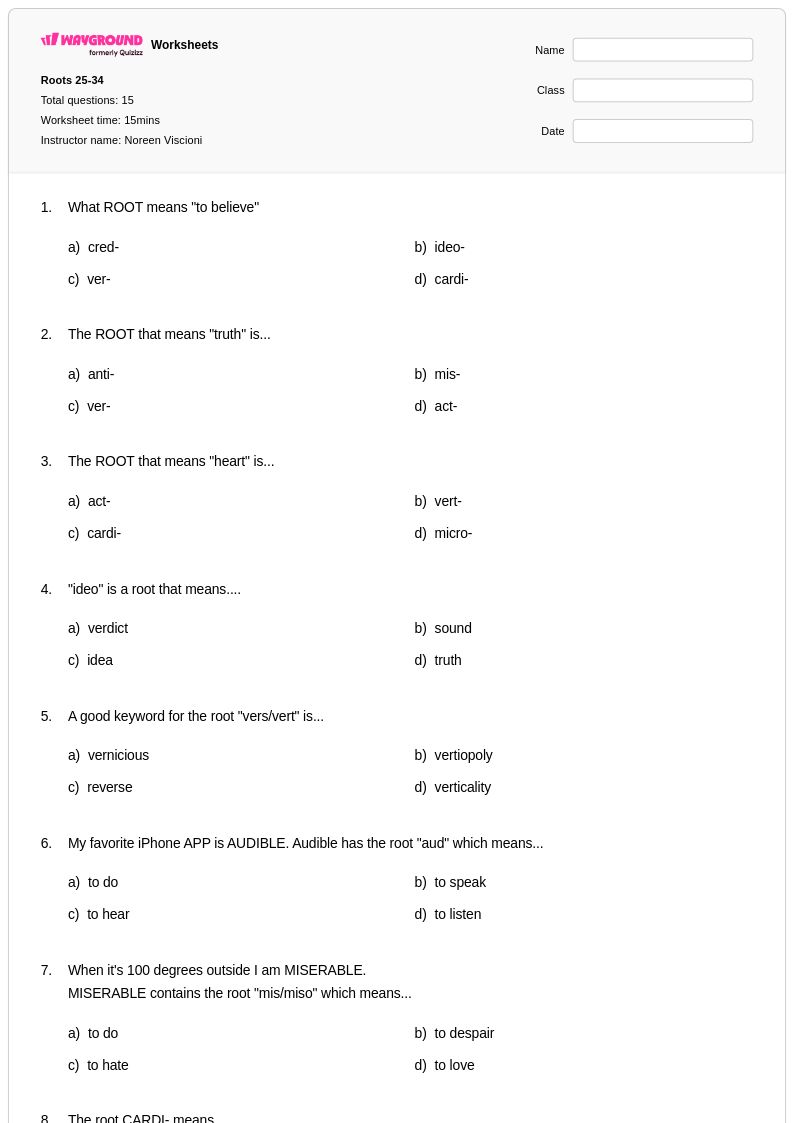
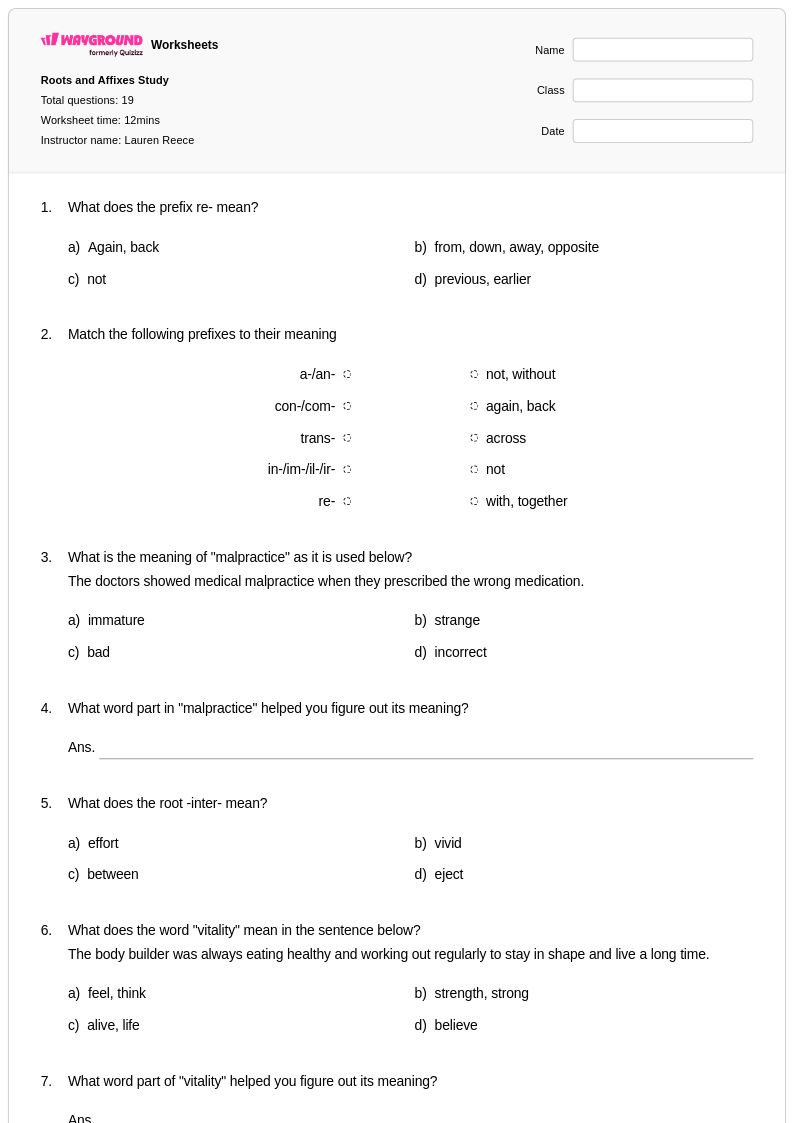
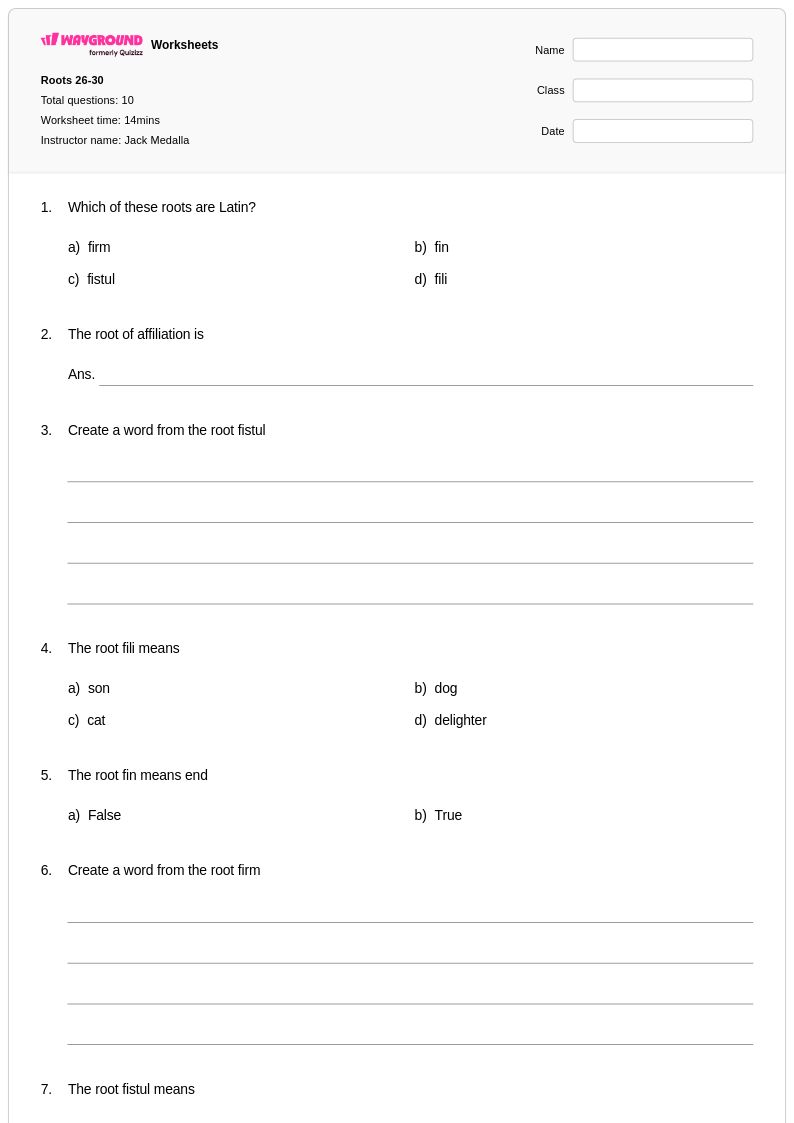
Effective practice exercises include root identification tasks where students underline or isolate the root in a given word, meaning-matching activities that connect roots to definitions, and word-building exercises where students generate new words from a single root. Worksheets that progress from simple recognition to applying root knowledge to unfamiliar words are especially useful because they push students from recall into genuine comprehension. Regular, short practice sessions with varied formats reinforce root patterns without becoming repetitive.
What mistakes do students commonly make when working with word roots?
The most common error is confusing letter strings that look like a root with actual roots — for instance, treating 'car' in 'cartoon' as a meaningful root rather than coincidental spelling. Students also frequently misapply root meanings too literally, assuming that if 'bio' means life, 'biography' must mean 'a life' rather than 'a written account of a life.' Teaching students to cross-check root meaning against context and the full word meaning helps correct this over-reliance on isolated root definitions.
How do I differentiate word roots instruction for students at different skill levels?
For struggling learners, limit practice to high-frequency roots with clear, concrete meanings and provide word banks to reduce cognitive load. Advanced students benefit from exercises that ask them to analyze unfamiliar academic or scientific vocabulary using root knowledge, moving beyond identification into inference and application. On Wayground, teachers can apply accommodations such as reduced answer choices and read-aloud support to individual students, so differentiated practice happens within the same assignment without singling anyone out.
How do I use Wayground's word roots worksheets in my classroom?
Wayground's roots worksheets are available as printable PDFs for traditional classroom use and in digital formats for technology-integrated environments, including the option to host them as a quiz directly on Wayground. This flexibility makes them suitable for independent practice, small group work, homework, or formative assessment. Each worksheet includes a complete answer key, so teachers can distribute materials and grade efficiently without additional preparation.
Why is learning word roots important for vocabulary development?
Understanding word roots gives students a transferable decoding strategy they can apply to unfamiliar words across every subject, from biology ('bio', 'gen') to history ('chron', 'dem') to literature. Research consistently shows that students with strong root knowledge acquire new vocabulary faster because they recognize patterns rather than memorizing each word individually. This is especially valuable in upper elementary and middle school, where academic vocabulary demands increase sharply across content areas.