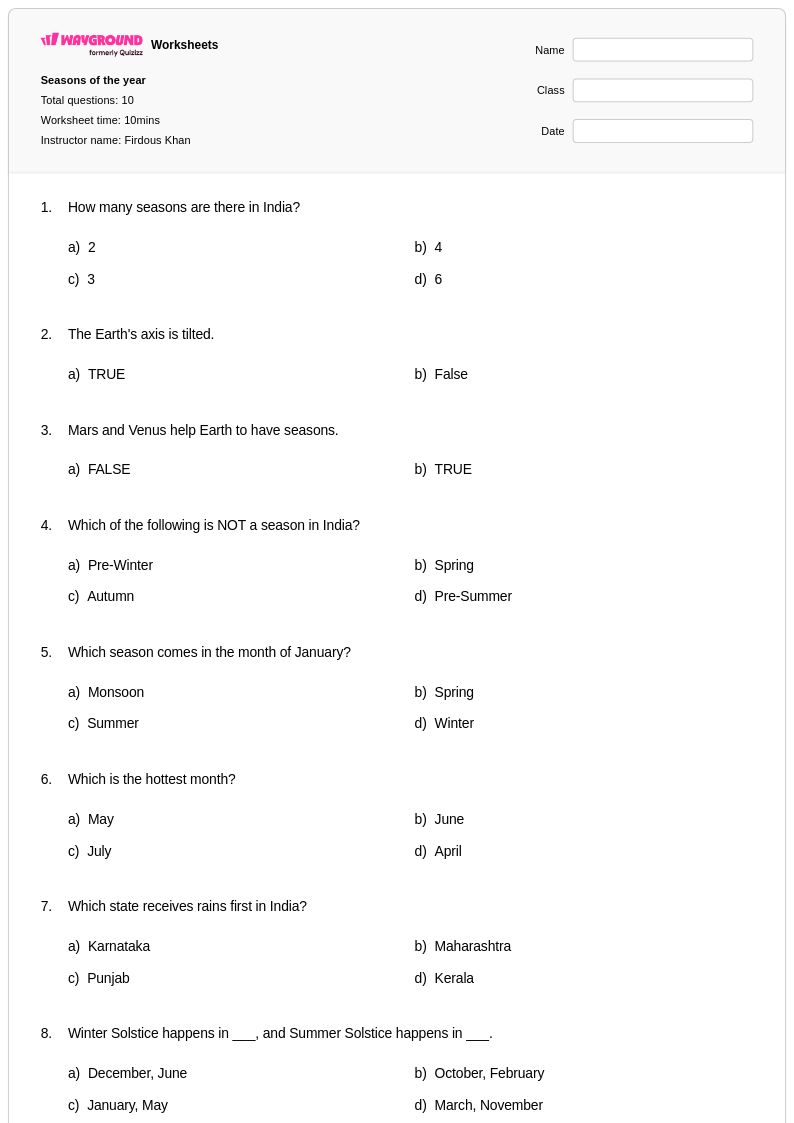
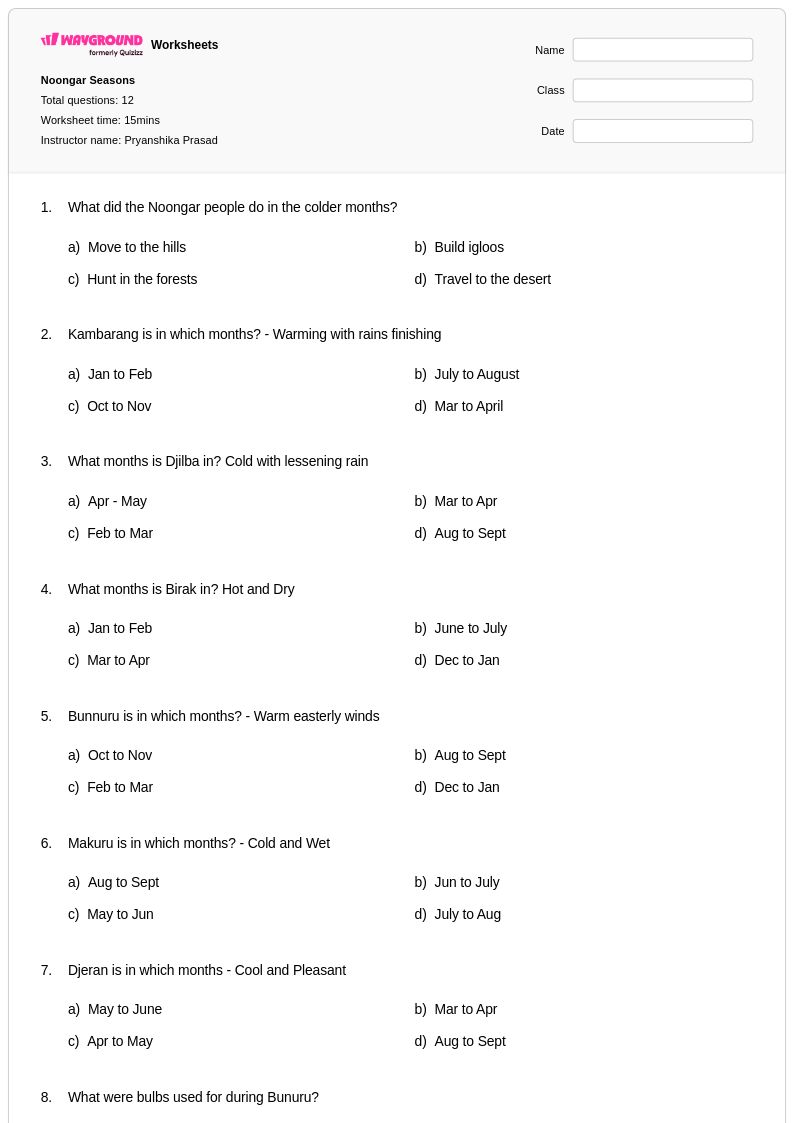
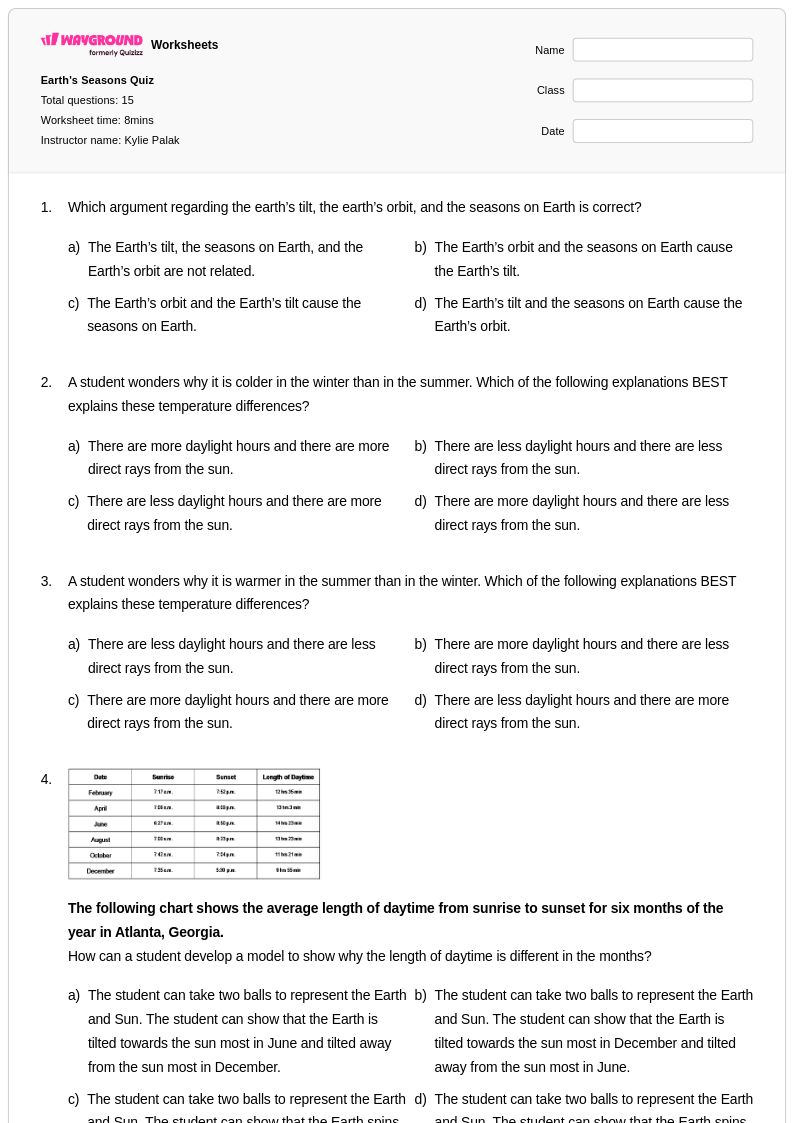
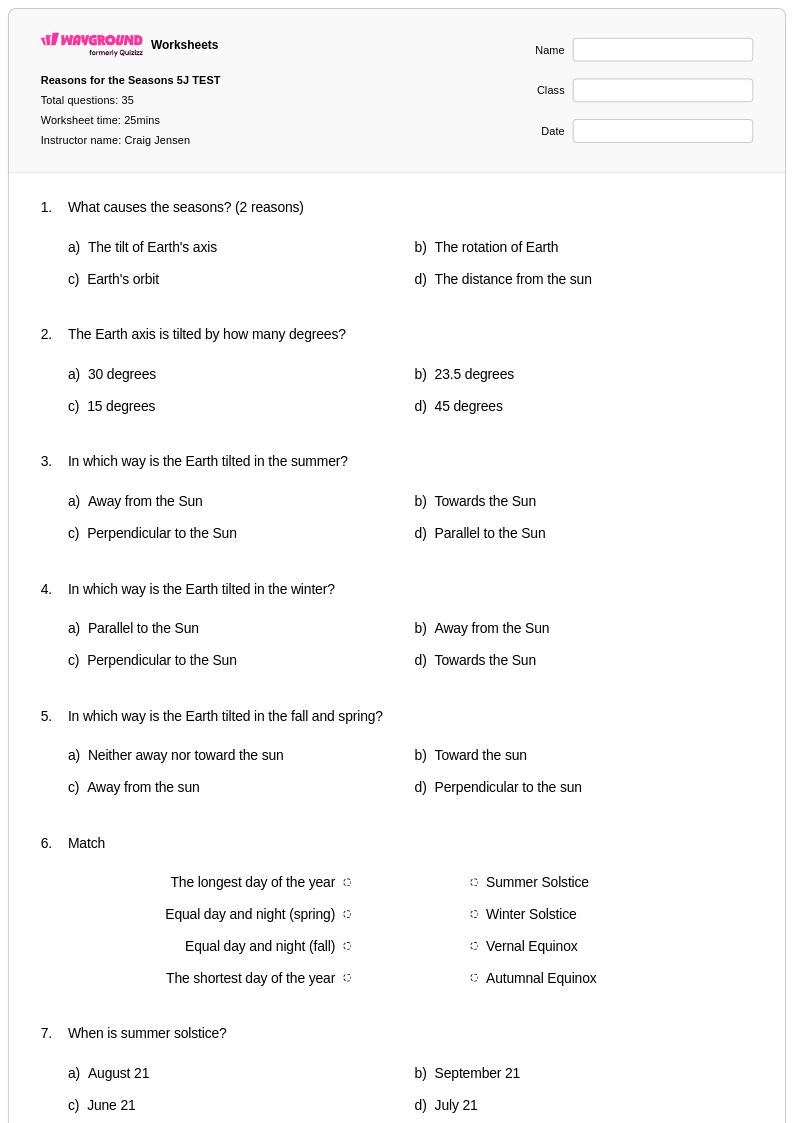
Explore our free Year 5 seasons worksheets and printables that help students understand seasonal changes, weather patterns, and Earth's rotation through engaging practice problems with complete answer keys.
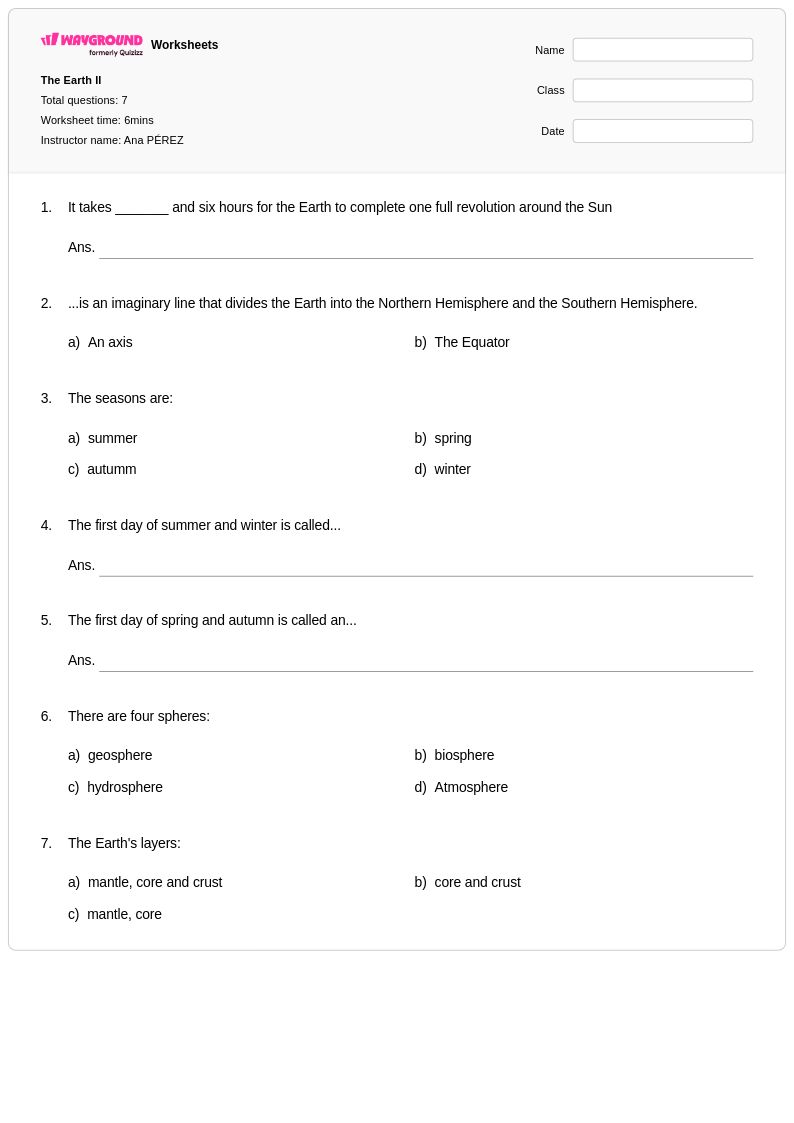
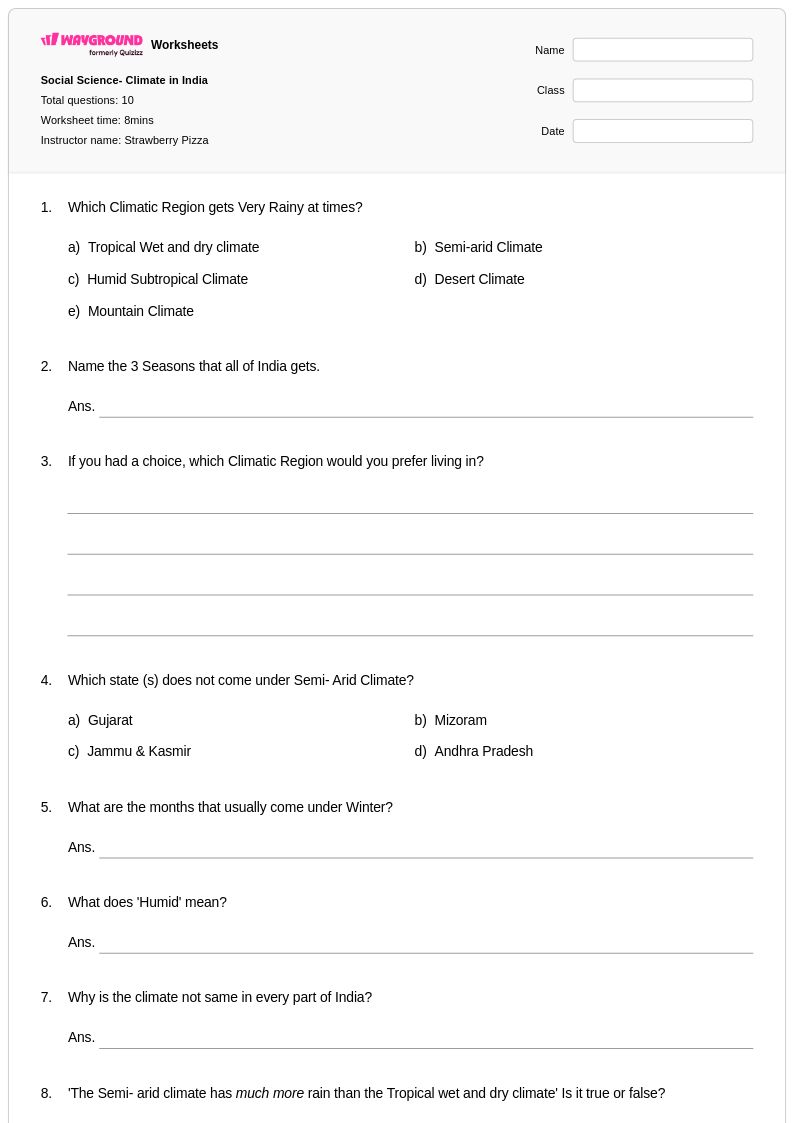
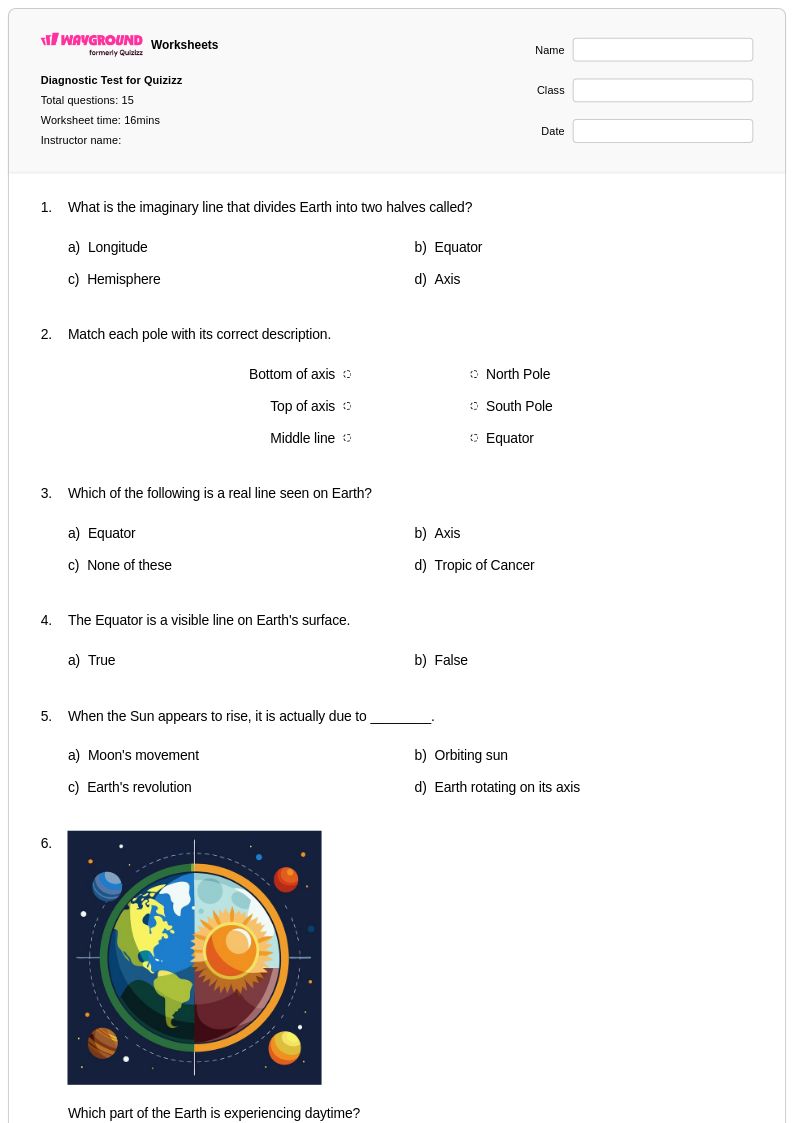
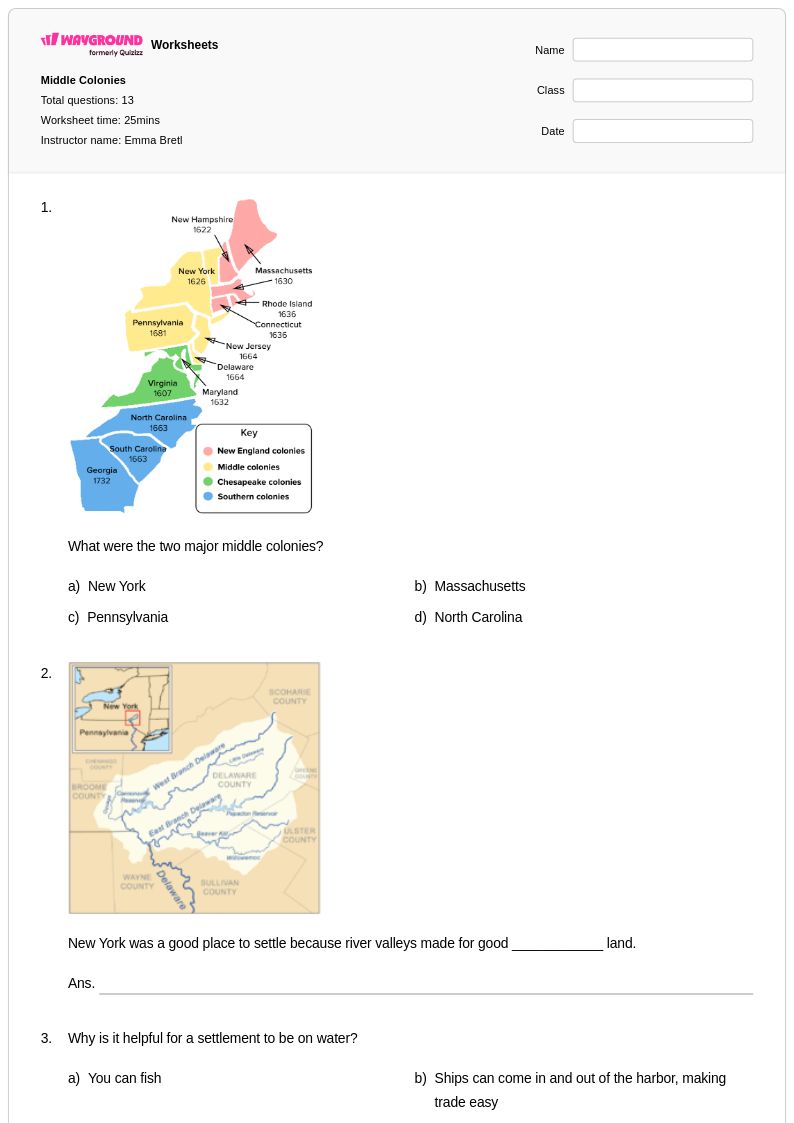
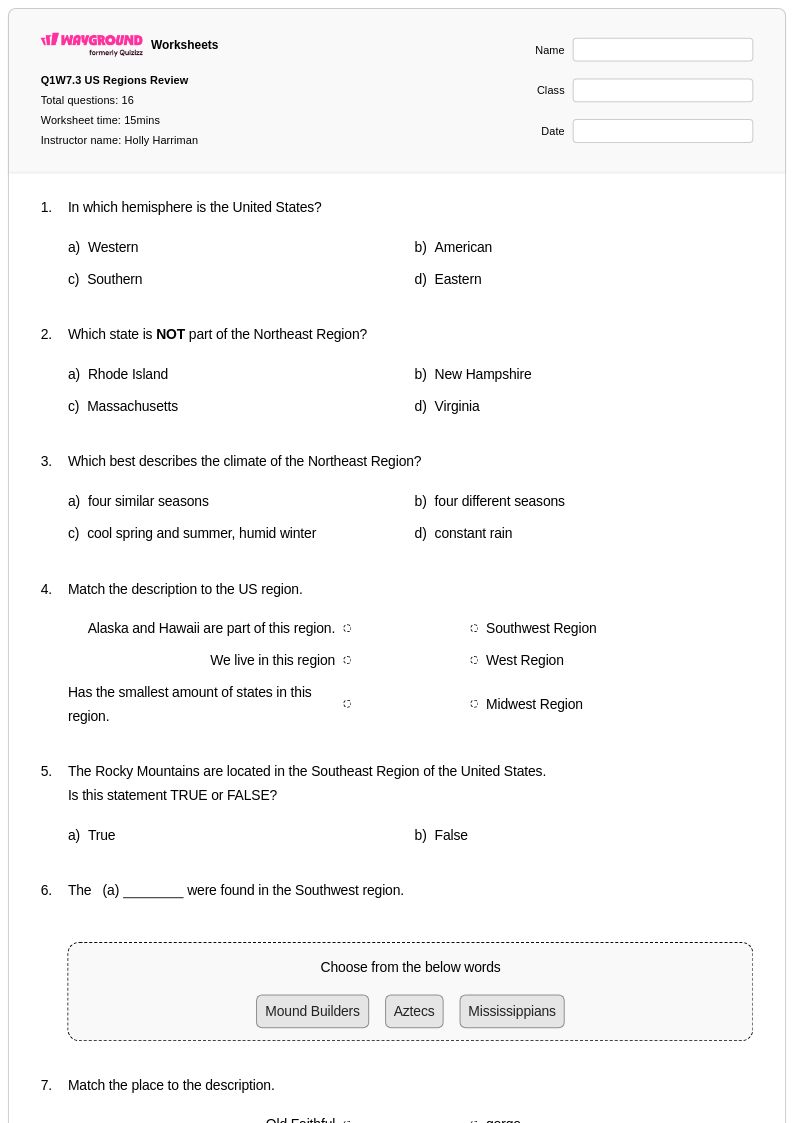
Seasons worksheets for Year 5 students through Wayground (formerly Quizizz) provide comprehensive educational resources that help young learners understand the cyclical patterns of Earth's seasonal changes and their impact on weather, daylight, and human activities. These carefully designed worksheets strengthen critical thinking skills as students explore the scientific reasons behind seasonal variations, including Earth's tilt and orbit around the sun, while developing their ability to analyze seasonal patterns across different geographic regions. Each worksheet collection includes practice problems that challenge students to identify seasonal characteristics, compare climate data, and connect seasonal changes to agricultural practices and cultural traditions worldwide. Teachers can access complete answer keys and free printable pdf versions that support both classroom instruction and independent study, making these resources invaluable for reinforcing seasonal geography concepts.
Wayground (formerly Quizizz) empowers educators with an extensive library of millions of teacher-created resources specifically designed for seasonal geography instruction, featuring advanced search and filtering capabilities that allow teachers to quickly locate worksheets aligned with state and national social studies standards. The platform's robust differentiation tools enable instructors to customize content complexity and format, ensuring that seasonal geography concepts are accessible to learners with varying abilities and learning styles. Teachers can seamlessly transition between printable pdf formats for traditional classroom use and interactive digital versions for technology-enhanced learning environments, while the flexible customization options support targeted skill practice, remediation for struggling students, and enrichment activities for advanced learners. This comprehensive approach to resource management streamlines lesson planning and enables educators to provide consistent, high-quality seasonal geography instruction that builds students' understanding of Earth's natural cycles and their geographic significance.
FAQs
How do I teach seasons to elementary students?
Teaching seasons effectively starts with connecting abstract Earth science concepts to students' lived experiences, such as changes in clothing, daylight hours, and local weather. Use diagrams showing Earth's axial tilt and its orbit around the sun to explain why seasons occur, emphasizing that it is tilt, not distance from the sun, that drives seasonal change. Hands-on activities like graphing temperature data across months or comparing seasonal photos from different hemispheres help students build concrete understanding before moving to more abstract analysis.
What exercises help students practice identifying seasonal changes?
Effective practice exercises include interpreting weather data charts to identify seasonal patterns, matching environmental characteristics to the correct season, and comparing seasonal conditions across different geographic regions and hemispheres. Activities that ask students to analyze how seasons affect agriculture, animal behavior, or cultural traditions extend practice beyond simple identification toward applied understanding. Worksheets that present real-world scenarios, such as explaining why Australia experiences summer in December, are particularly useful for reinforcing the underlying science.
What mistakes do students commonly make when learning about seasons?
The most persistent misconception is that Earth is closer to the sun in summer and farther away in winter, when in fact seasons are caused by Earth's axial tilt. Students also frequently assume that the entire world experiences the same seasons simultaneously, overlooking that the Northern and Southern Hemispheres have opposite seasons at any given time. Additionally, students near the equator may struggle to connect the concept of seasons to their own experience, since equatorial regions show minimal seasonal temperature variation.
How can I use seasons worksheets to support different learners in my classroom?
Seasons worksheets on Wayground are available as both printable PDFs and in digital formats, making them easy to deploy in traditional or technology-integrated classrooms and host as a quiz directly on Wayground. For students who need additional support, Wayground's accommodation tools allow teachers to enable read-aloud functionality so questions are read to students, reduce answer choices to lower cognitive load, or grant extended time on digital assignments. These settings can be applied to individual students while the rest of the class works under standard conditions, and they are saved for reuse in future sessions.
How do seasons affect agriculture and human settlement patterns?
Seasonal patterns directly determine growing seasons, influencing which crops can be cultivated in a region and when planting and harvesting occur. Communities across history have organized their economic and cultural calendars around predictable seasonal cycles, from monsoon-dependent rice farming in Southeast Asia to winter wheat cultivation in temperate regions. Understanding this relationship helps students connect Earth science concepts to human geography, social studies, and economics in a meaningful, cross-disciplinary way.
How do seasons differ between the Northern and Southern Hemispheres?
Because Earth's axial tilt means one hemisphere is angled toward the sun while the other is angled away, the Northern and Southern Hemispheres experience opposite seasons at the same time. When it is summer in the United States, it is winter in Australia, and vice versa. This is a concept students frequently find counterintuitive, and practice comparing seasonal data from cities in both hemispheres, such as New York and Sydney, is one of the most effective ways to build durable understanding.