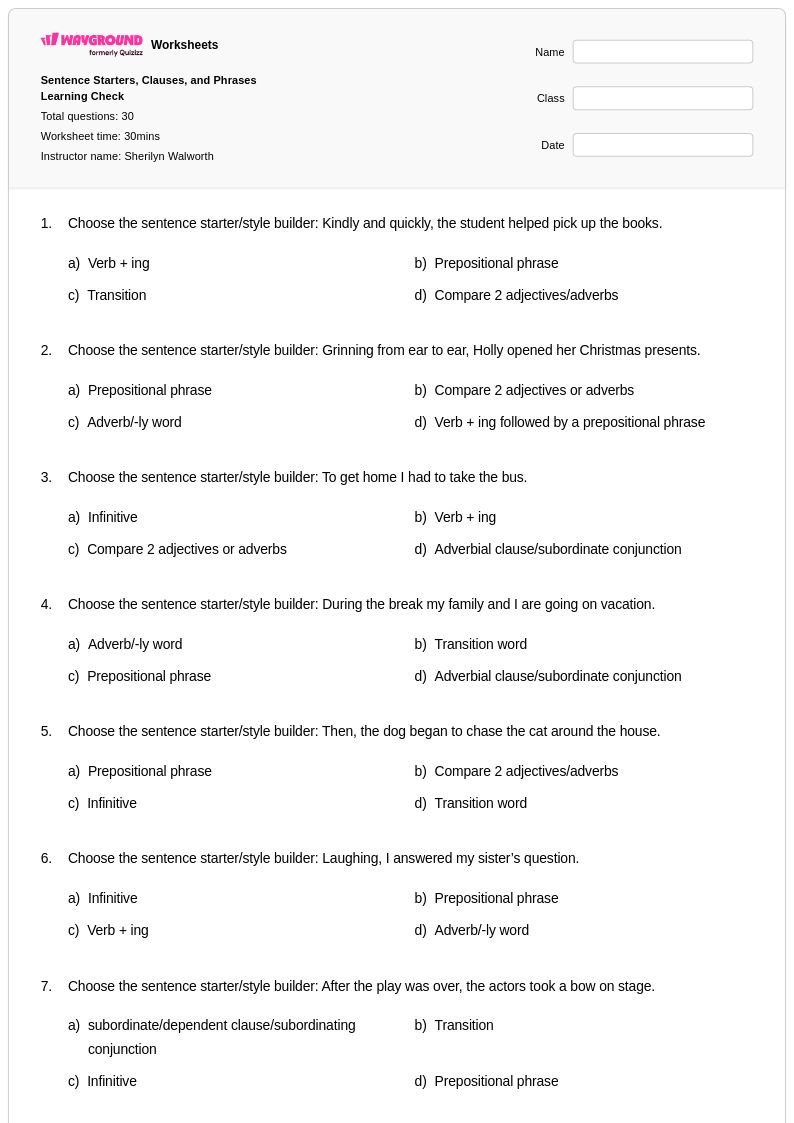
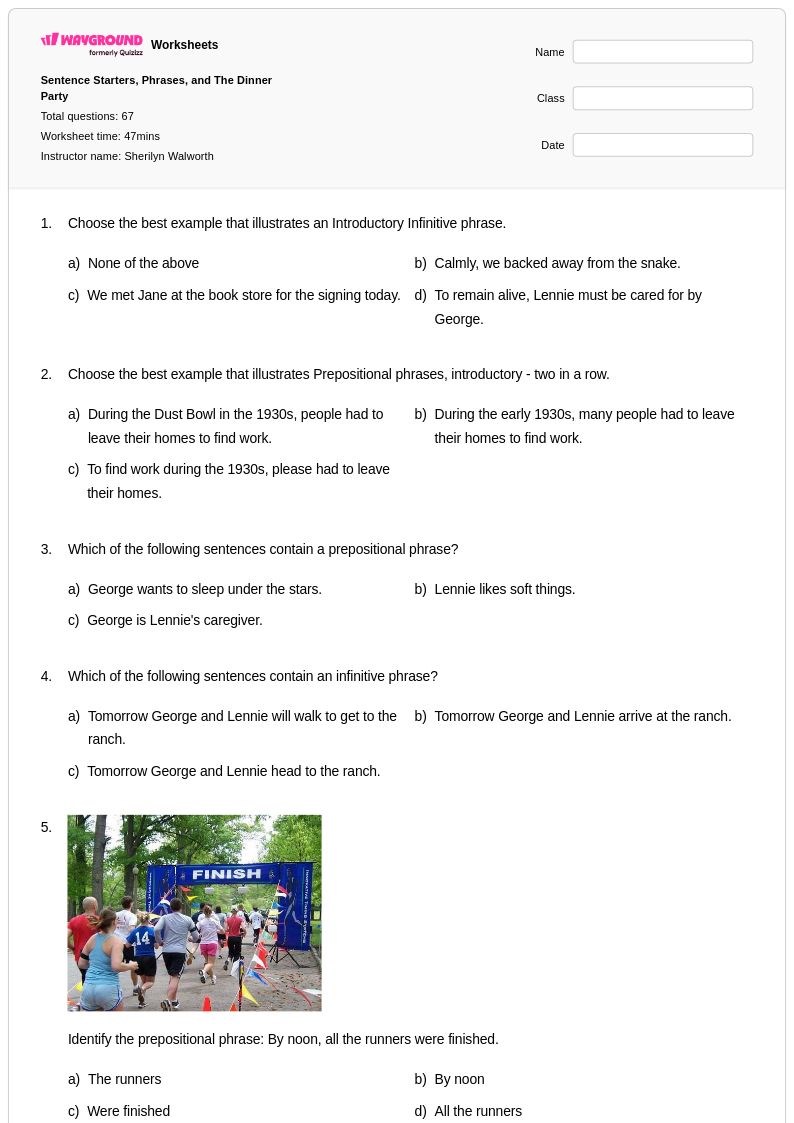
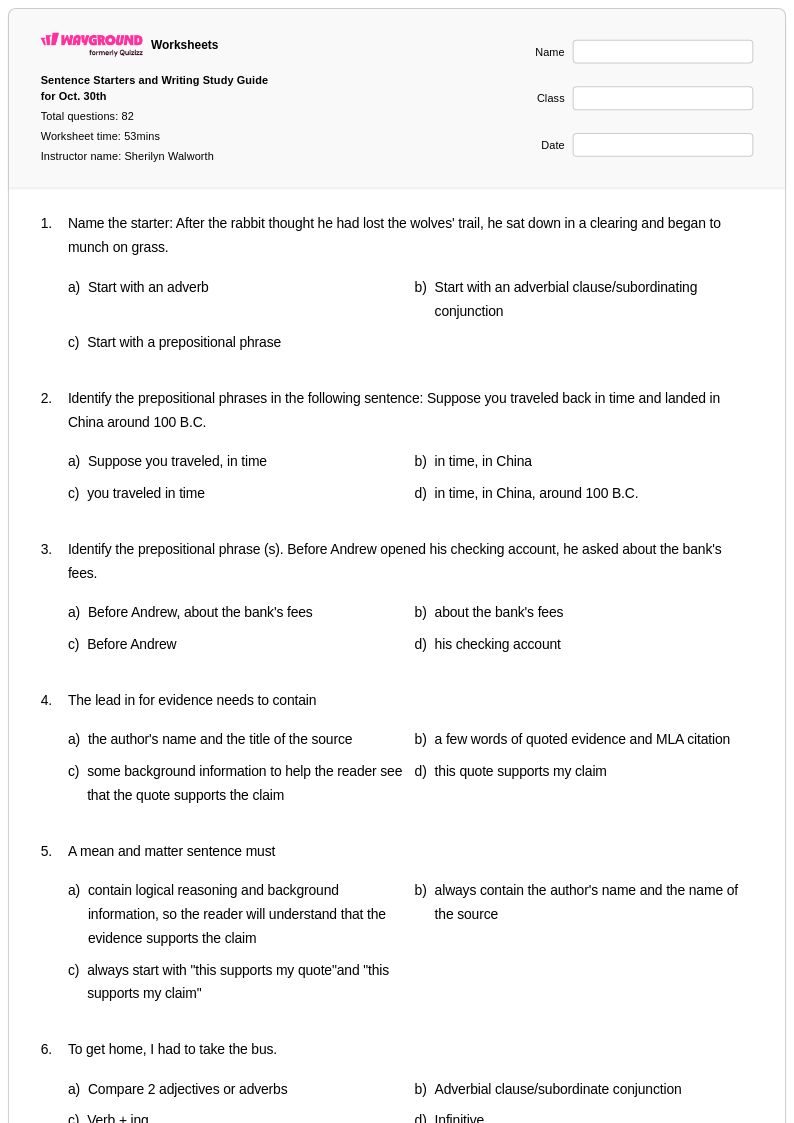
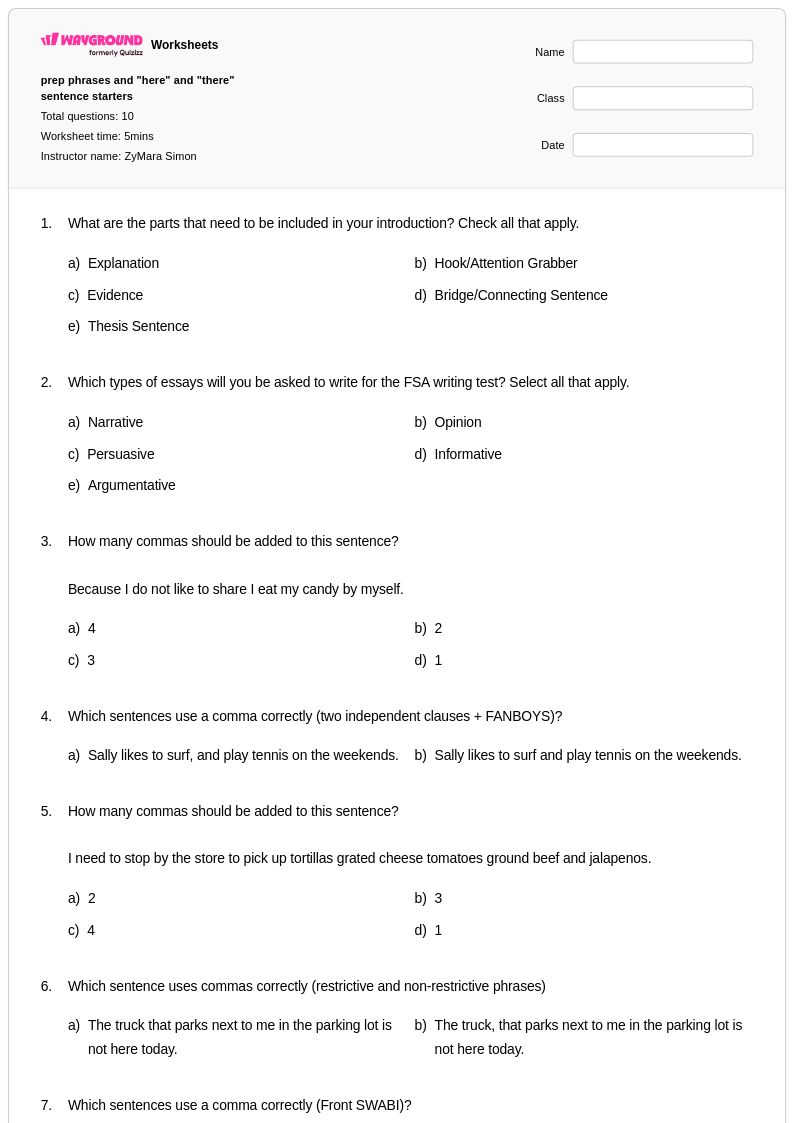
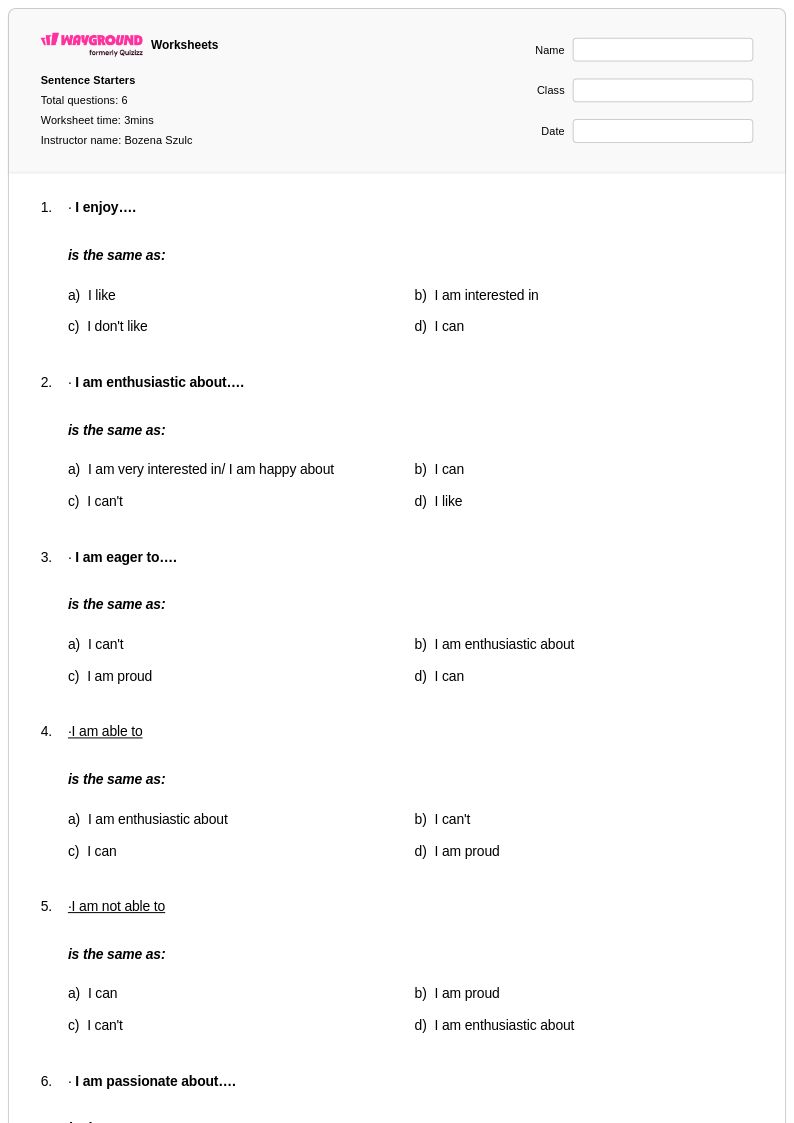
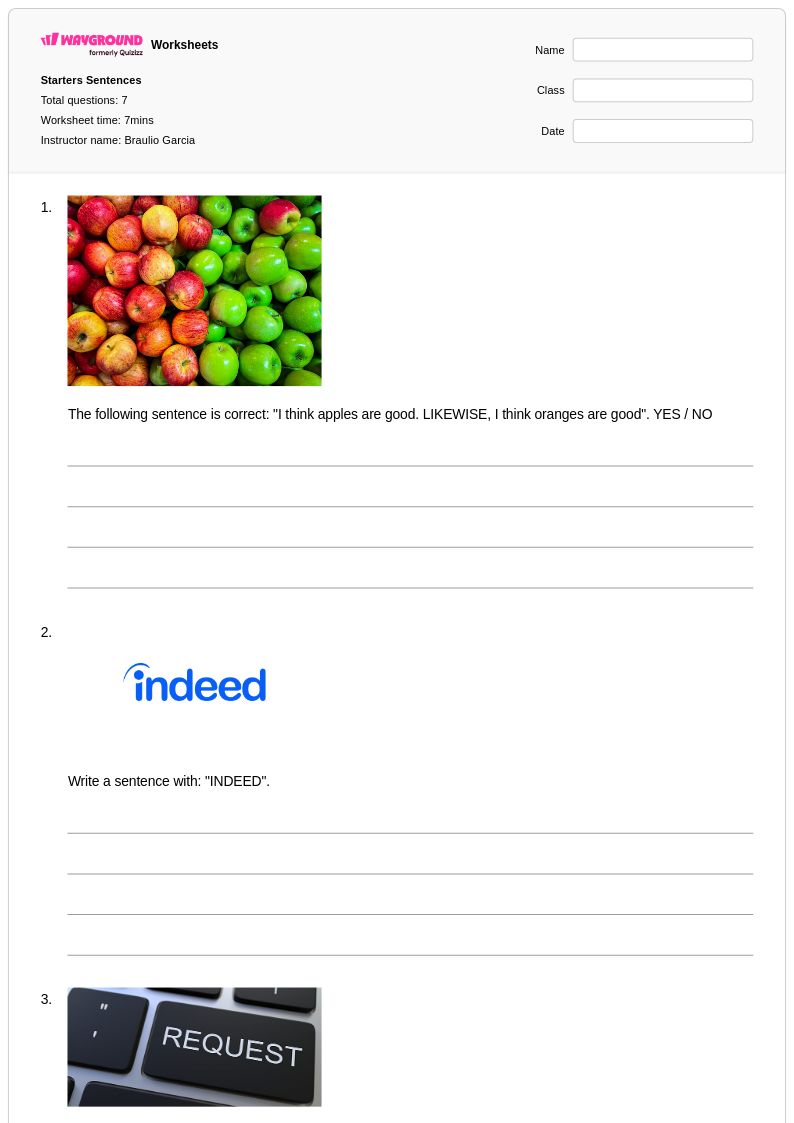
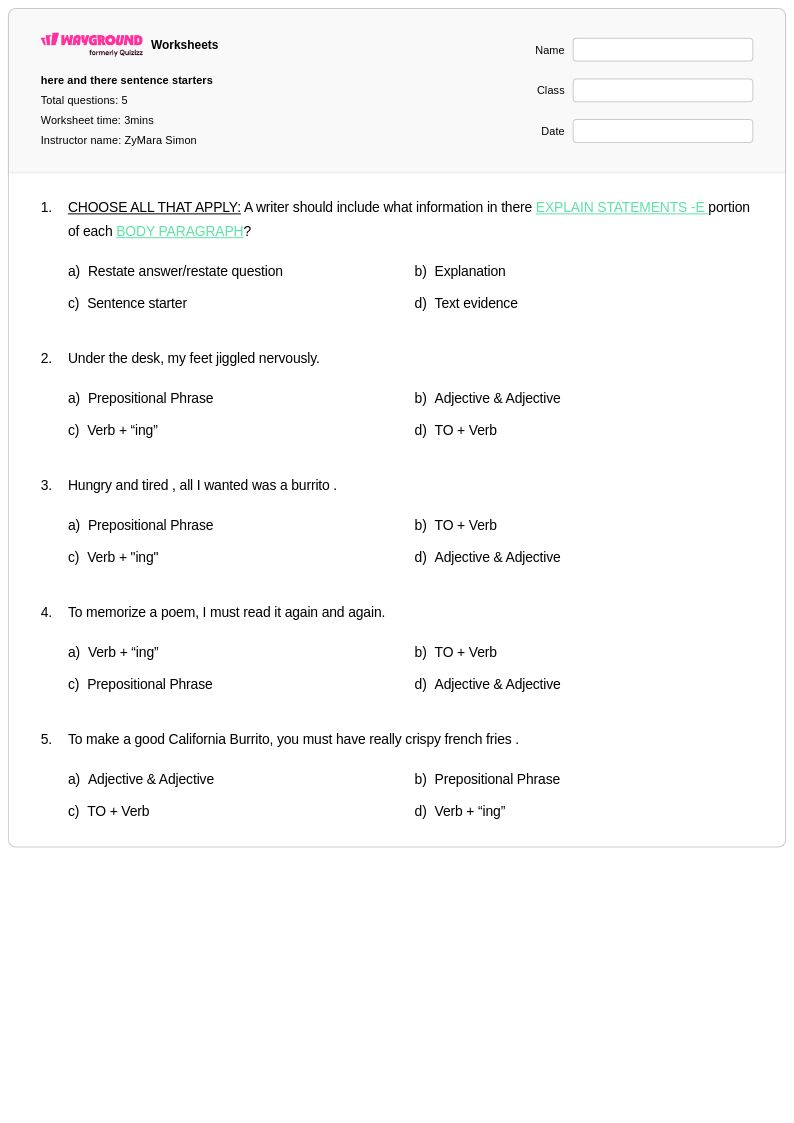
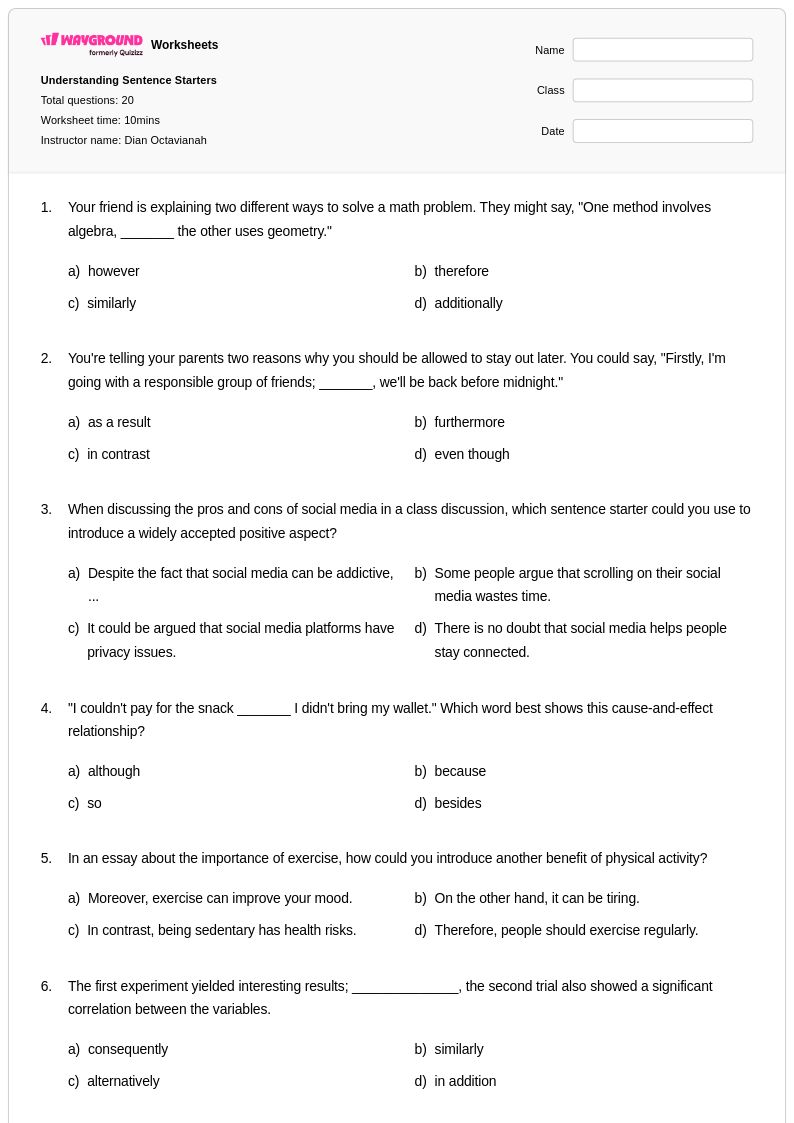
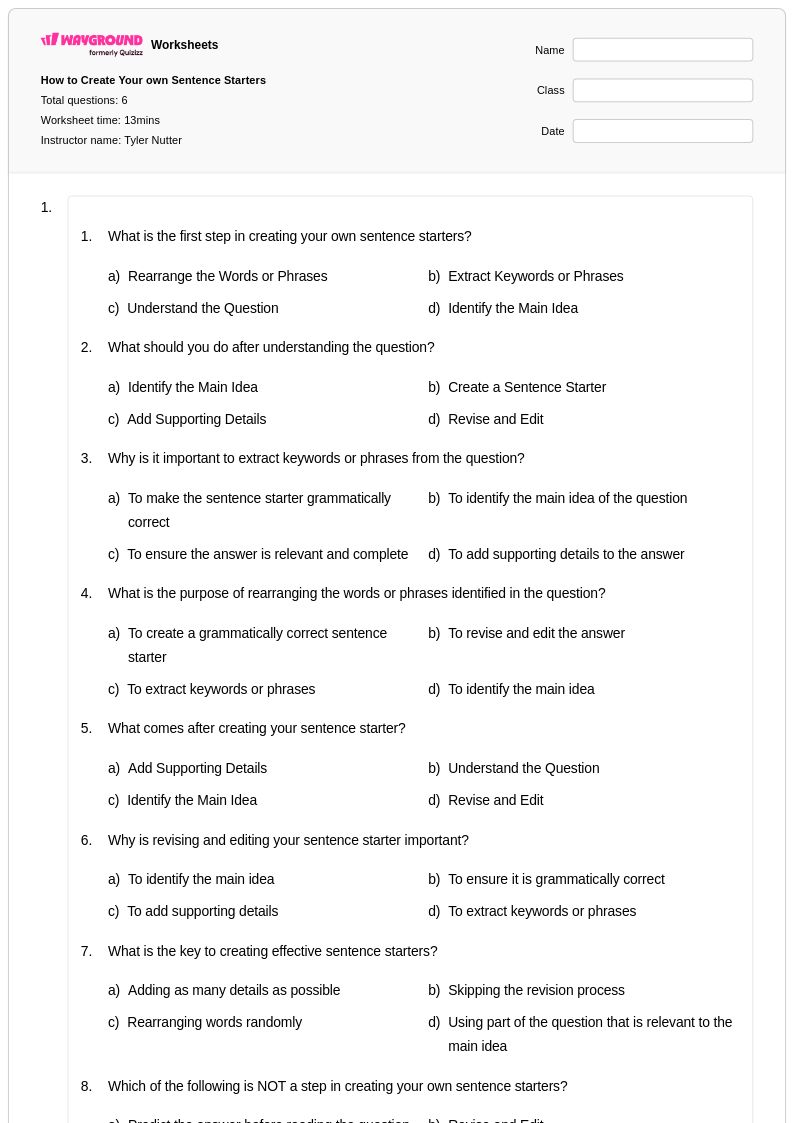
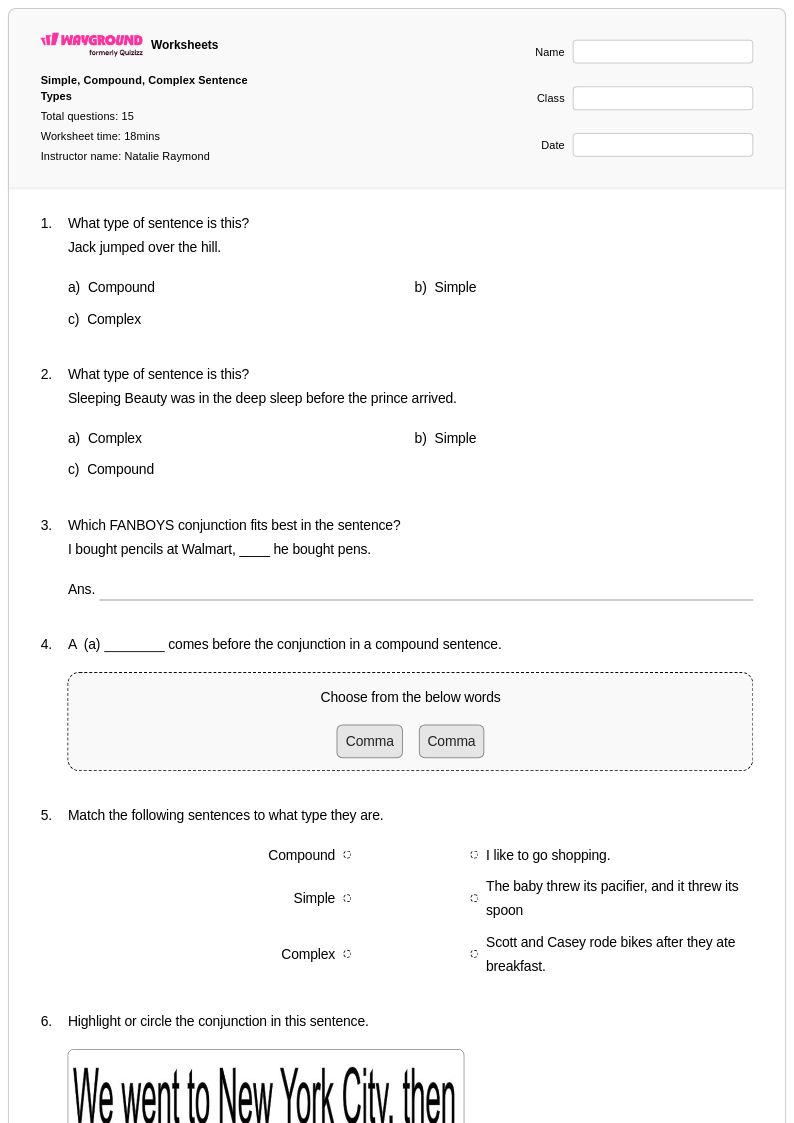
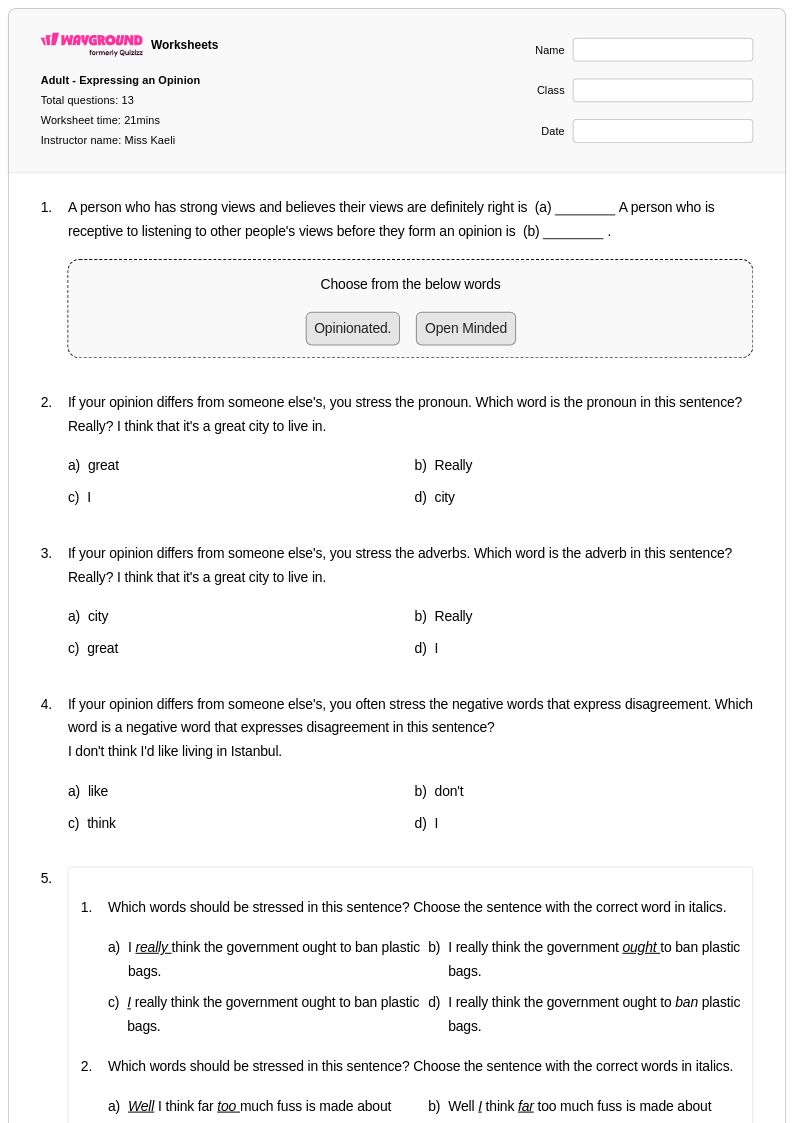
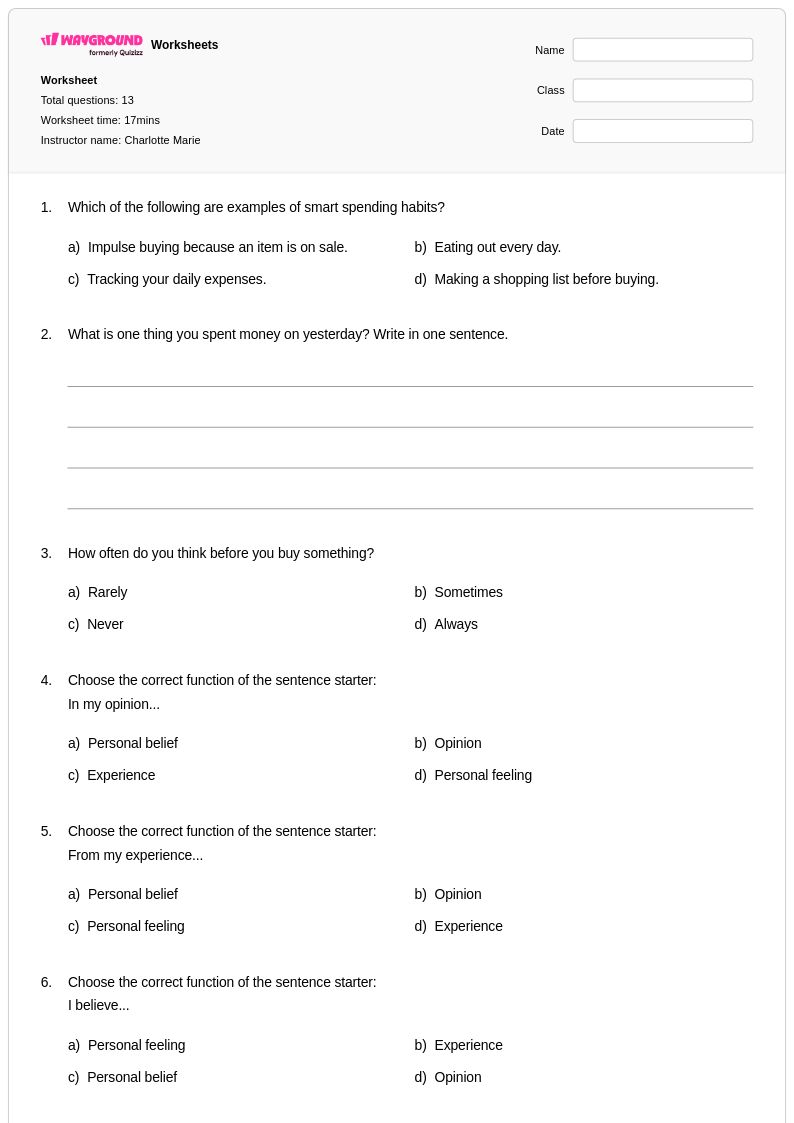
Enhance student writing skills with Wayground's free sentence starters worksheets and printables, featuring practice problems and answer keys to help learners craft engaging opening sentences and improve their overall writing process.
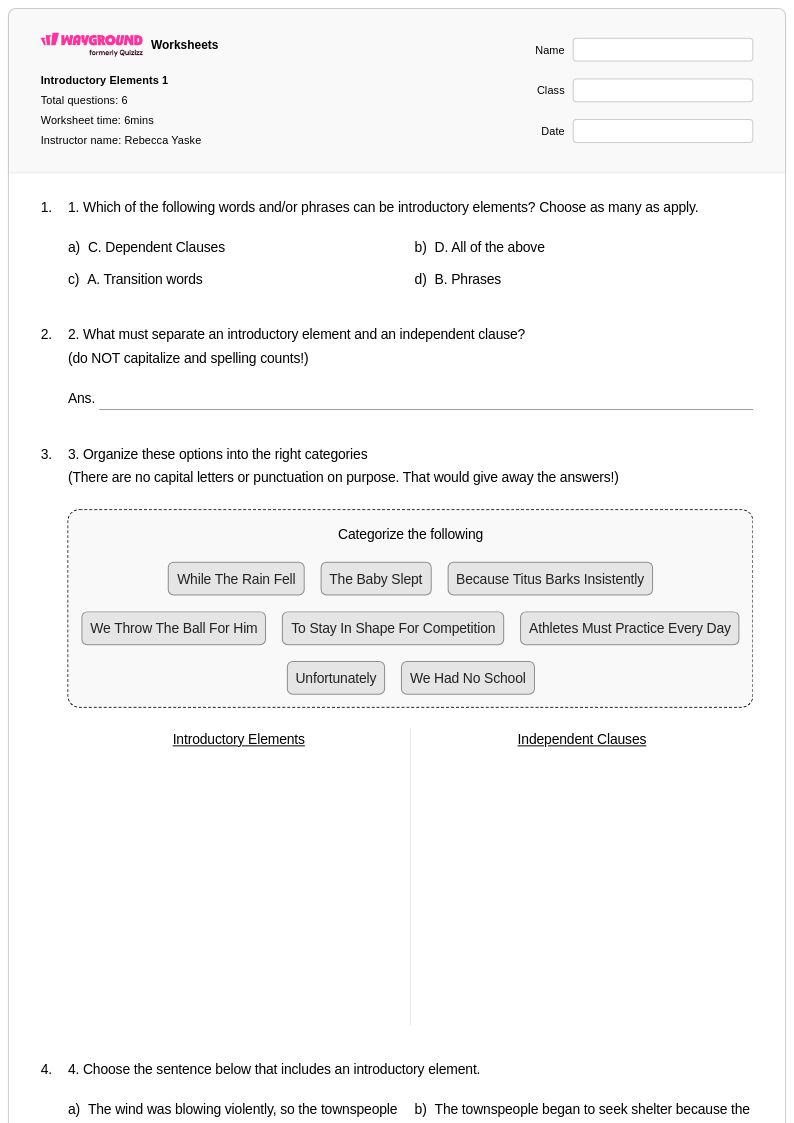
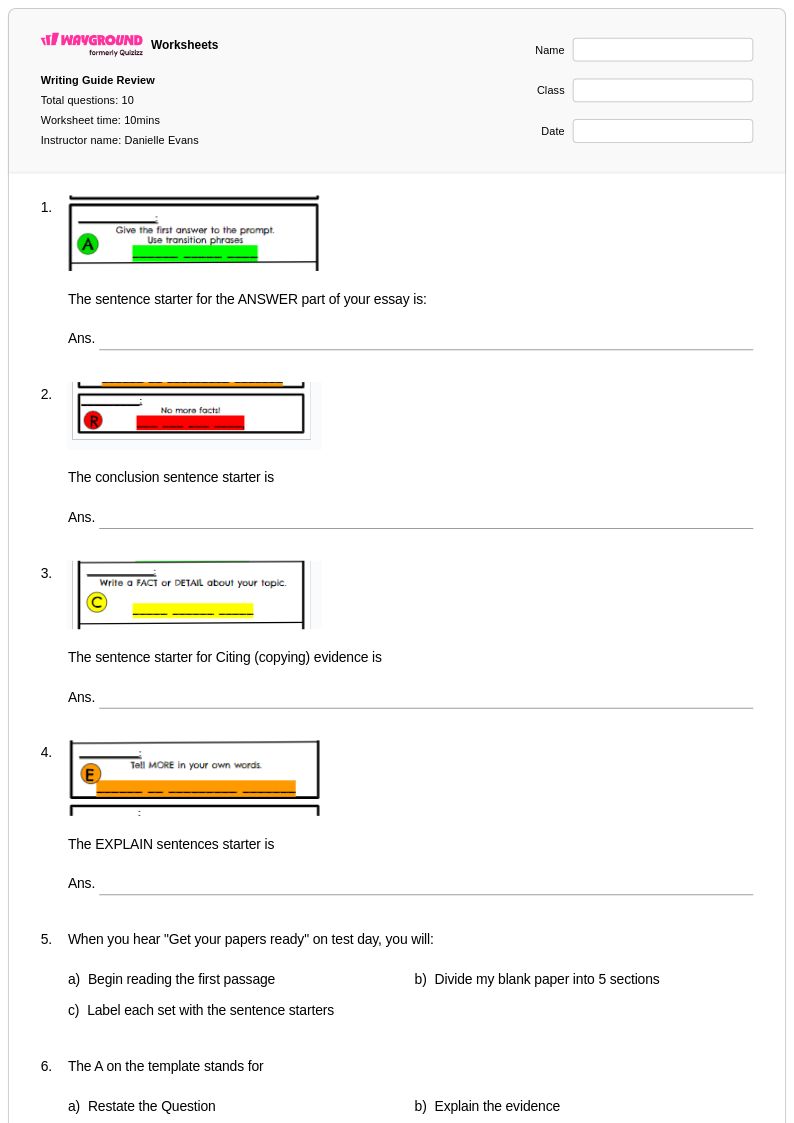
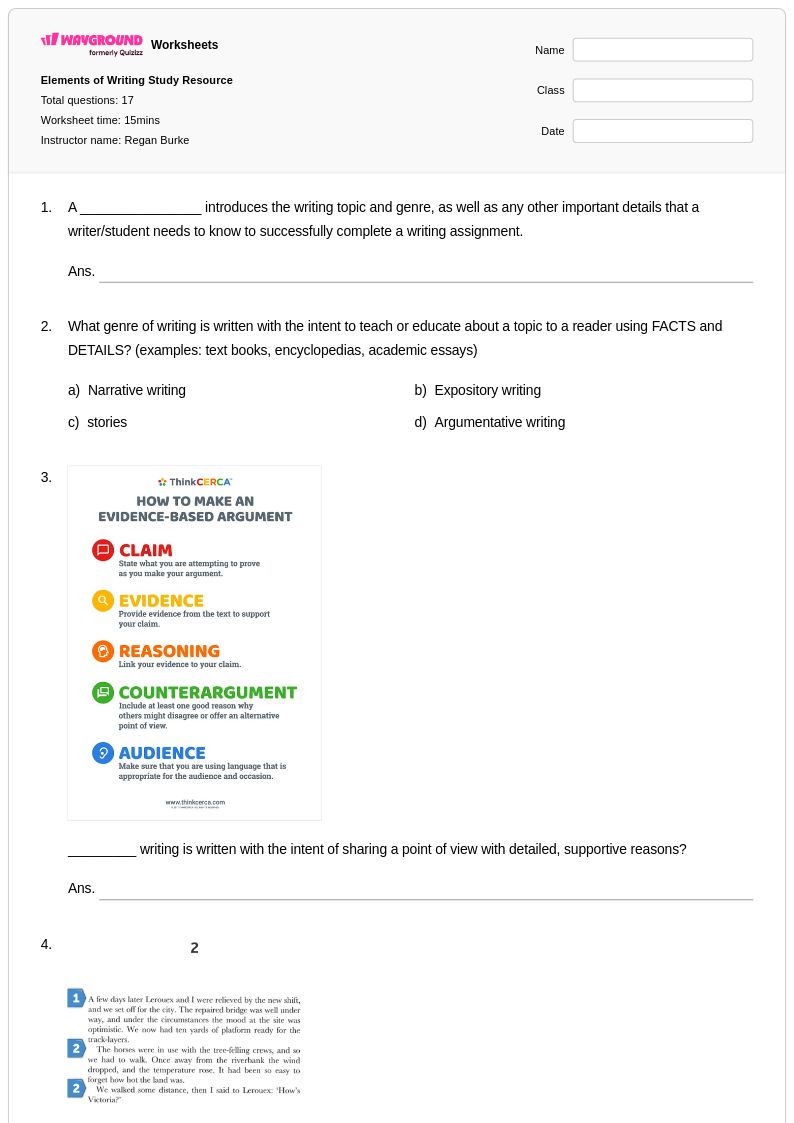
Sentence starters worksheets available through Wayground (formerly Quizizz) provide essential scaffolding for developing writers who need structured support to begin their thoughts and organize their ideas effectively. These comprehensive practice materials focus on building foundational writing skills by offering students various prompts, transition phrases, and opening clauses that help overcome the blank page syndrome and encourage more sophisticated sentence construction. The worksheets systematically introduce different types of sentence beginnings, from simple declarative starters to complex subordinate clauses, enabling students to expand their repertoire of writing techniques. Each printable resource includes targeted practice problems that reinforce proper usage, along with answer keys that allow for immediate feedback and self-assessment. These free educational materials emphasize the critical connection between strong sentence openings and overall writing fluency, helping students develop the confidence to express complex ideas with clarity and variety.
Wayground (formerly Quizizz) empowers educators with millions of teacher-created sentence starter resources that streamline lesson planning and provide flexible differentiation options for diverse learning needs. The platform's robust search and filtering capabilities enable teachers to quickly locate worksheets aligned with specific writing standards and tailored to their students' developmental levels, whether for remediation support or enrichment challenges. These digital and printable materials, available in convenient pdf formats, can be seamlessly customized to match individual classroom objectives and integrated into existing writing curricula. Teachers benefit from the extensive variety of sentence starter formats, including narrative prompts, expository transitions, persuasive openers, and creative writing catalysts, all designed to support systematic skill building. The platform's comprehensive approach to sentence construction resources helps educators implement targeted interventions, track student progress in writing development, and provide consistent practice opportunities that build toward independent, sophisticated writing abilities.
FAQs
How do I teach sentence starters to students who struggle to begin writing?
Start by explicitly modeling different types of sentence openings — declarative, question-based, and subordinate clause starters — using mentor texts students already know. Give students a small bank of starter phrases (e.g., 'Although...', 'One reason...', 'Imagine...') and have them practice completing each one before applying them independently. Reducing the cognitive load of 'how to begin' frees students to focus on developing their actual ideas.
What types of sentence starters should I teach at different writing levels?
Beginning writers benefit most from simple declarative starters and first-person prompts that lower the entry barrier. Intermediate writers should practice transition phrases and cause-and-effect openers that signal relationships between ideas. Advanced writers can work with subordinate clauses, participial phrases, and rhetorical openers to build syntactic variety and sophistication.
What exercises help students practice using sentence starters effectively?
Sentence completion activities, where students are given an opener and must finish the thought coherently, build both confidence and fluency. Sentence sorting tasks — where students match starters to appropriate writing contexts like narrative, expository, or persuasive — reinforce purposeful word choice. Regular low-stakes practice with varied prompts helps students internalize a broader repertoire of opening structures over time.
What mistakes do students commonly make when using sentence starters?
The most frequent error is overusing the same starter repeatedly, which flattens the rhythm and variety of a piece. Students also commonly use a complex opener without completing the thought grammatically — for example, beginning with a subordinate clause but never providing the main clause. Teaching students to read their sentences aloud after writing is an effective self-correction strategy for catching these patterns.
How can I use sentence starters worksheets to support diverse learners in my classroom?
Sentence starters worksheets provide built-in scaffolding that benefits struggling writers, English language learners, and students with writing anxiety by reducing the friction of starting. On Wayground, teachers can apply accommodations such as Read Aloud for students who need audio support and reduced answer choices to lower cognitive load for students who need additional structure. These settings can be assigned individually so differentiated support is seamless and unobtrusive for the rest of the class.
How do I use Wayground's sentence starters worksheets in my classroom?
Wayground's sentence starters worksheets are available as printable PDFs for traditional classroom use and in digital formats for technology-integrated environments, making them flexible for homework, centers, or whole-class instruction. Teachers can also host the worksheets as a live quiz on Wayground, enabling real-time response tracking and immediate feedback for students. Each worksheet includes answer keys, so they work equally well for teacher-led lessons, independent practice, or self-paced review.