
11Q
PD
42Q
6th - 8th
12Q
4th
20Q
7th
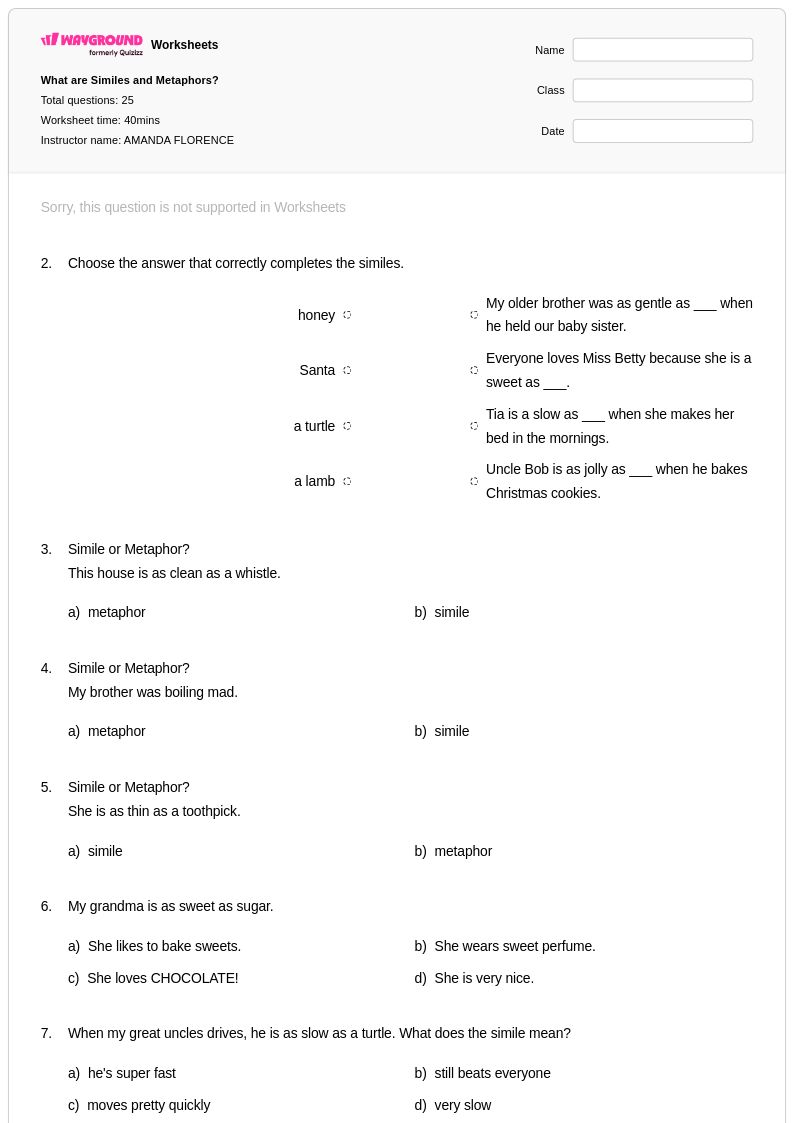
24Q
4th
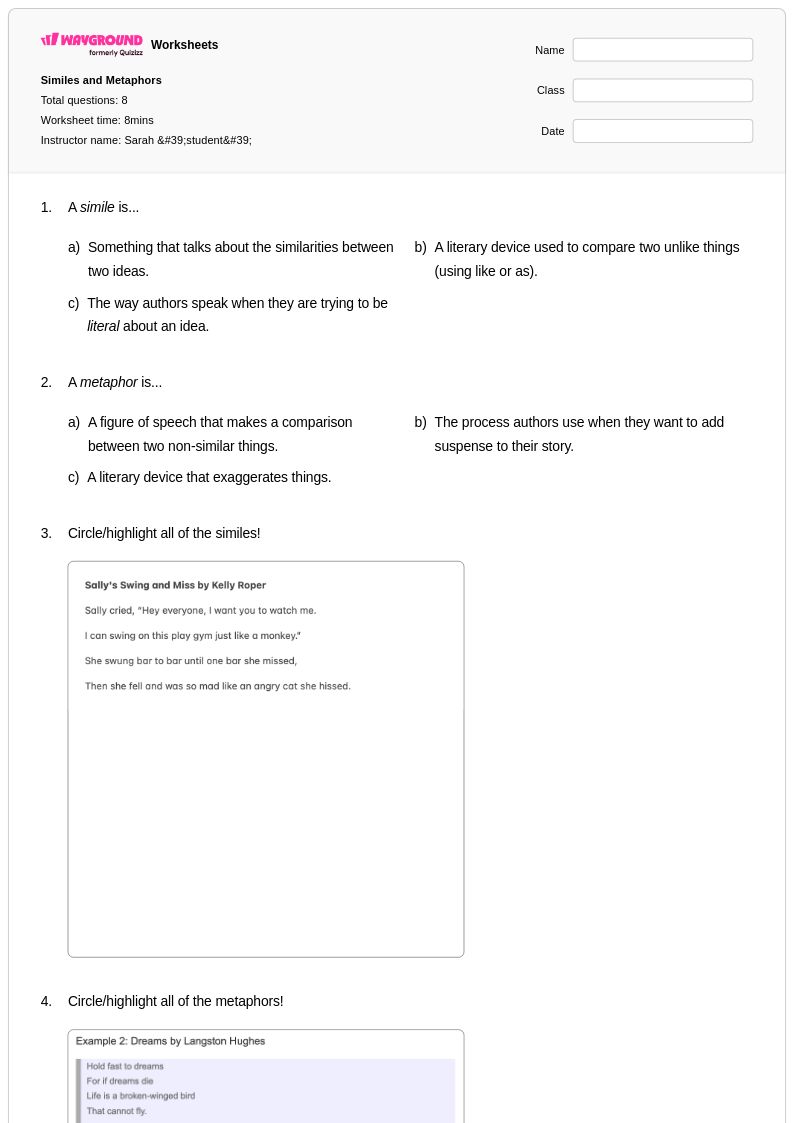
8Q
5th
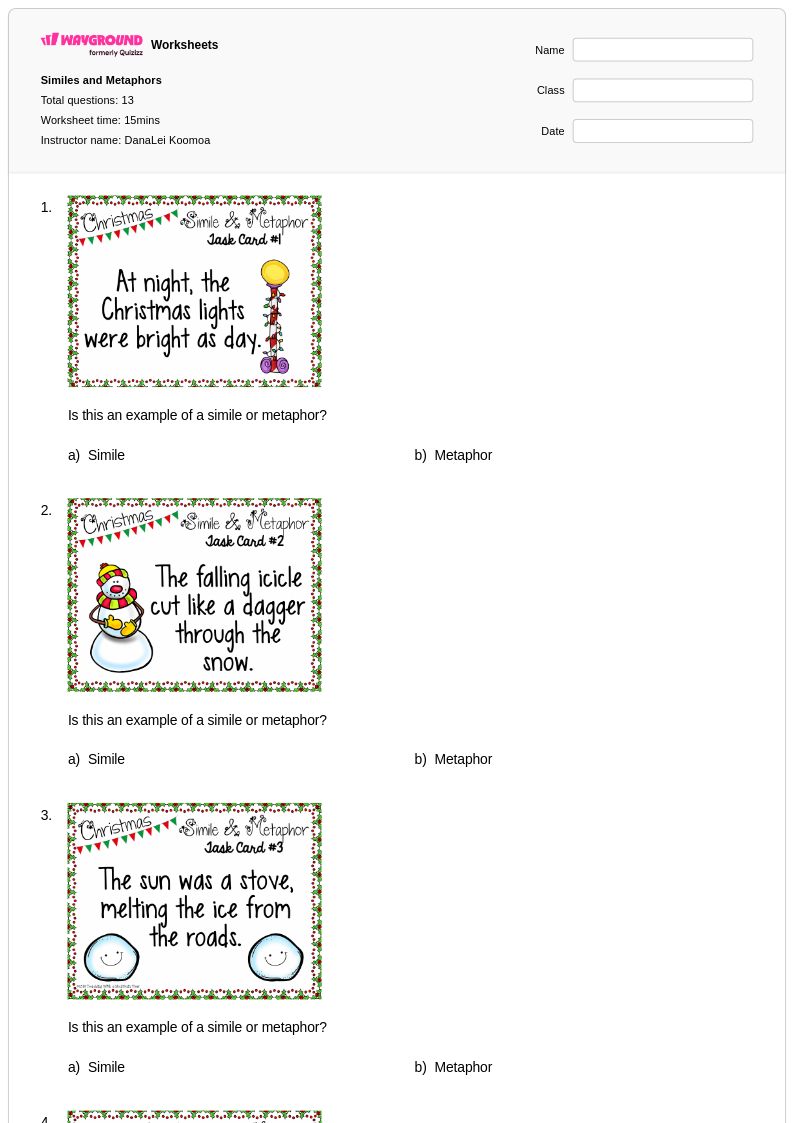
13Q
4th
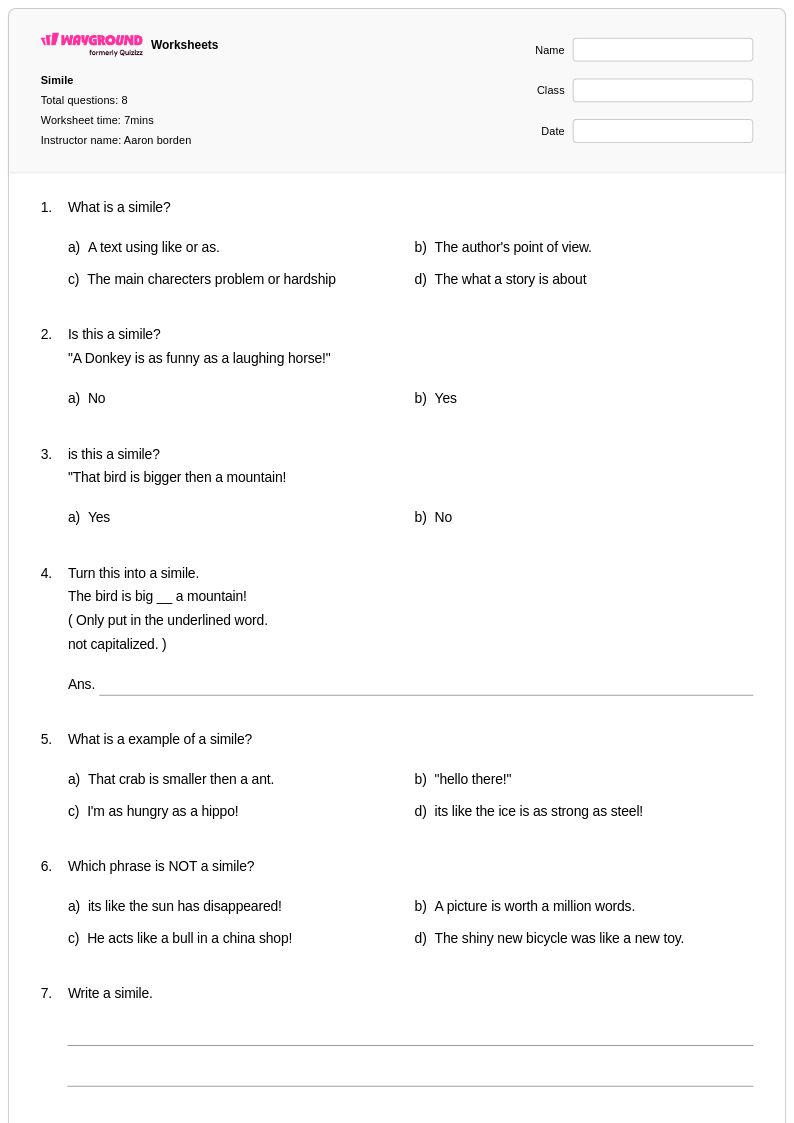
8Q
4th - 6th
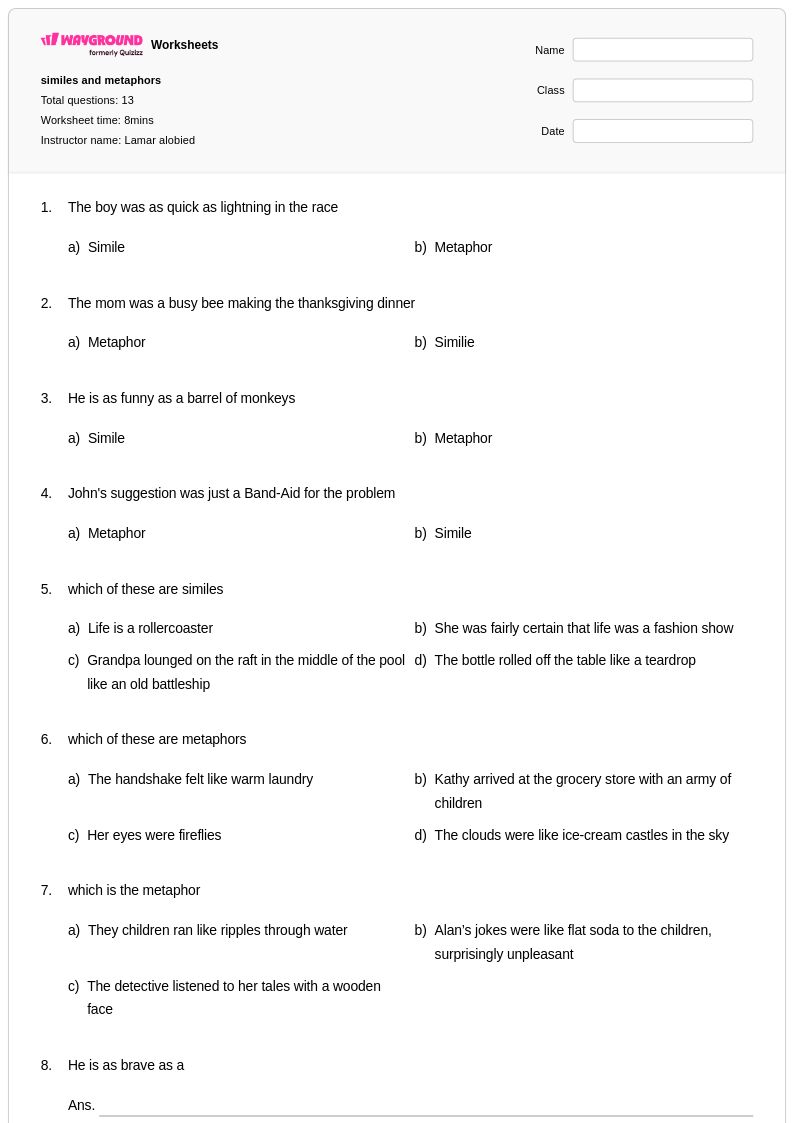
13Q
3rd - 6th
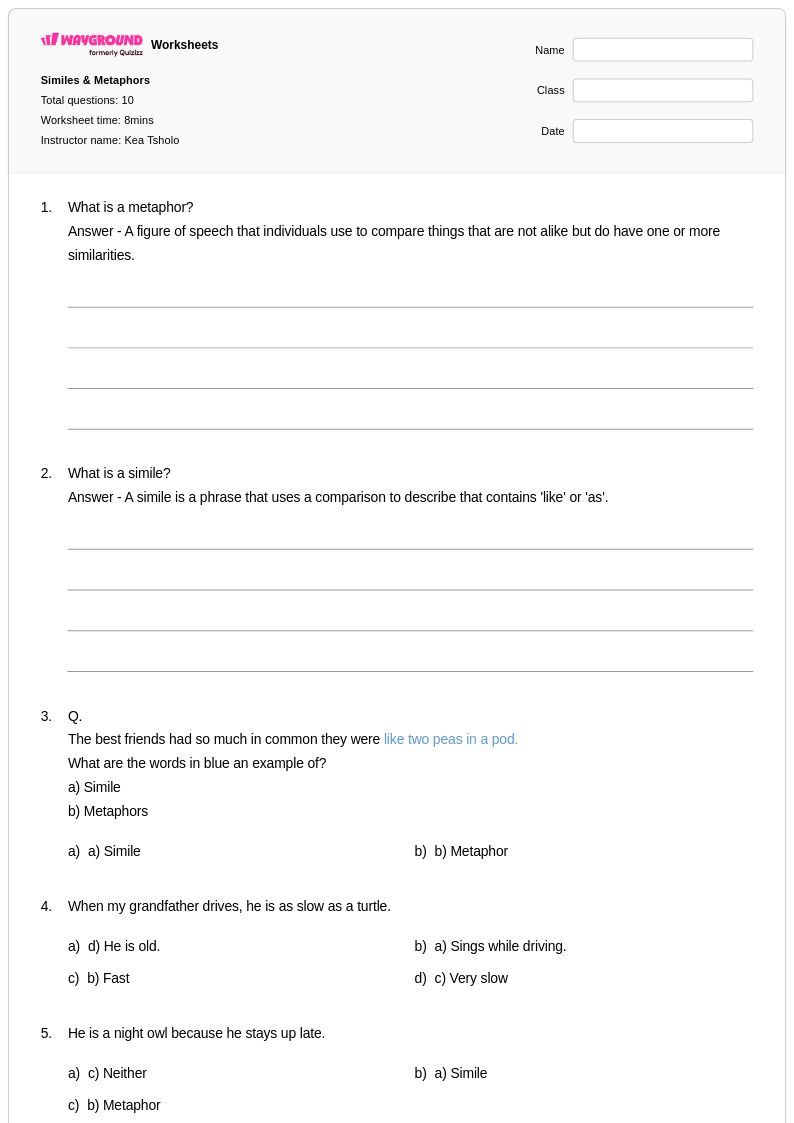
10Q
5th
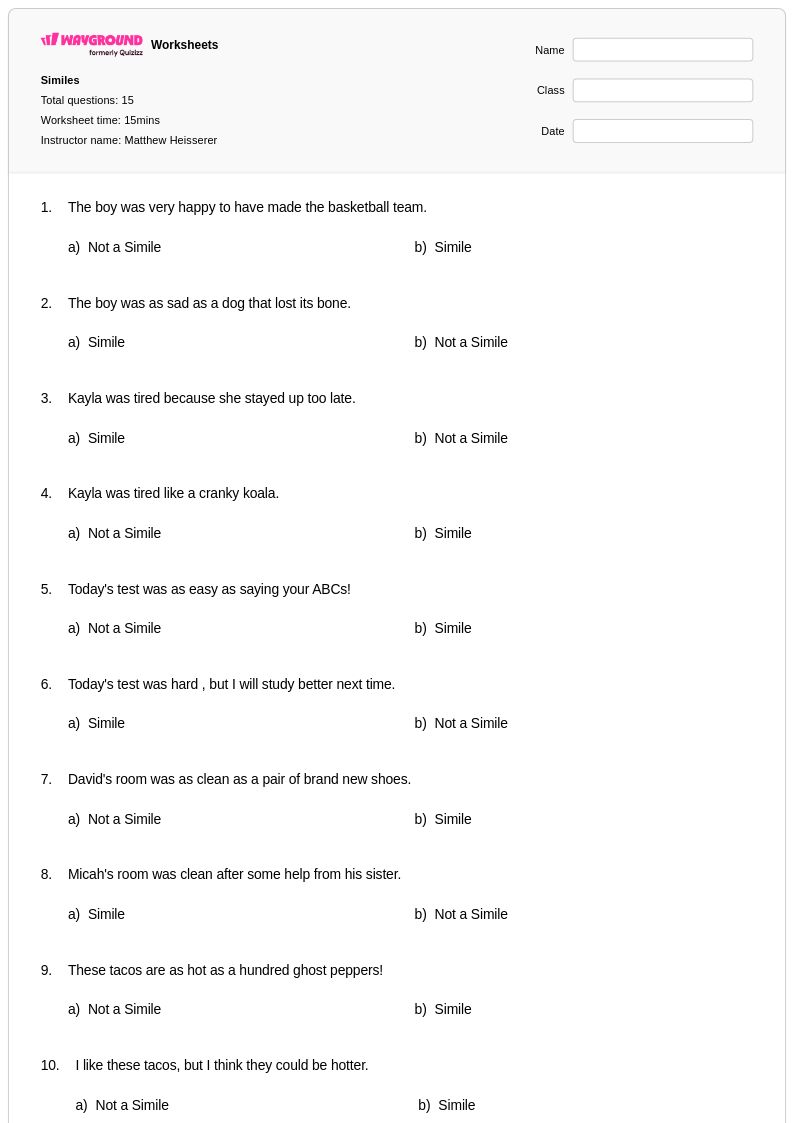
15Q
3rd
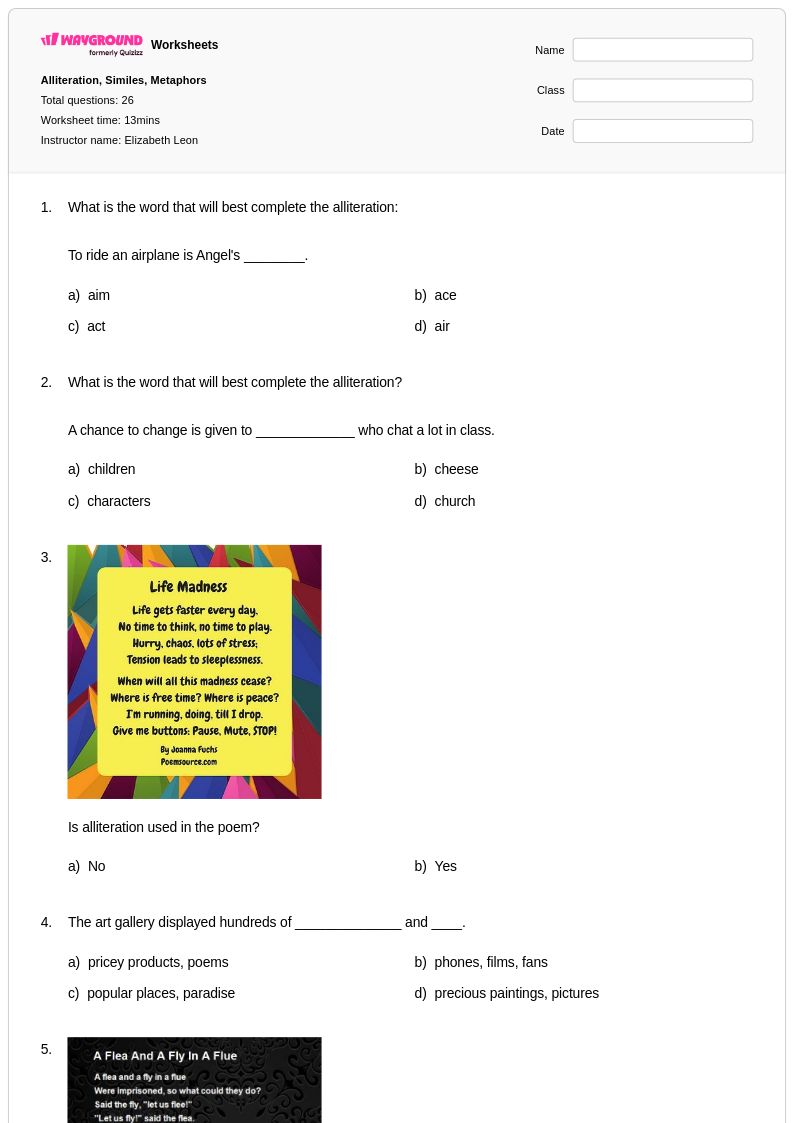
26Q
6th
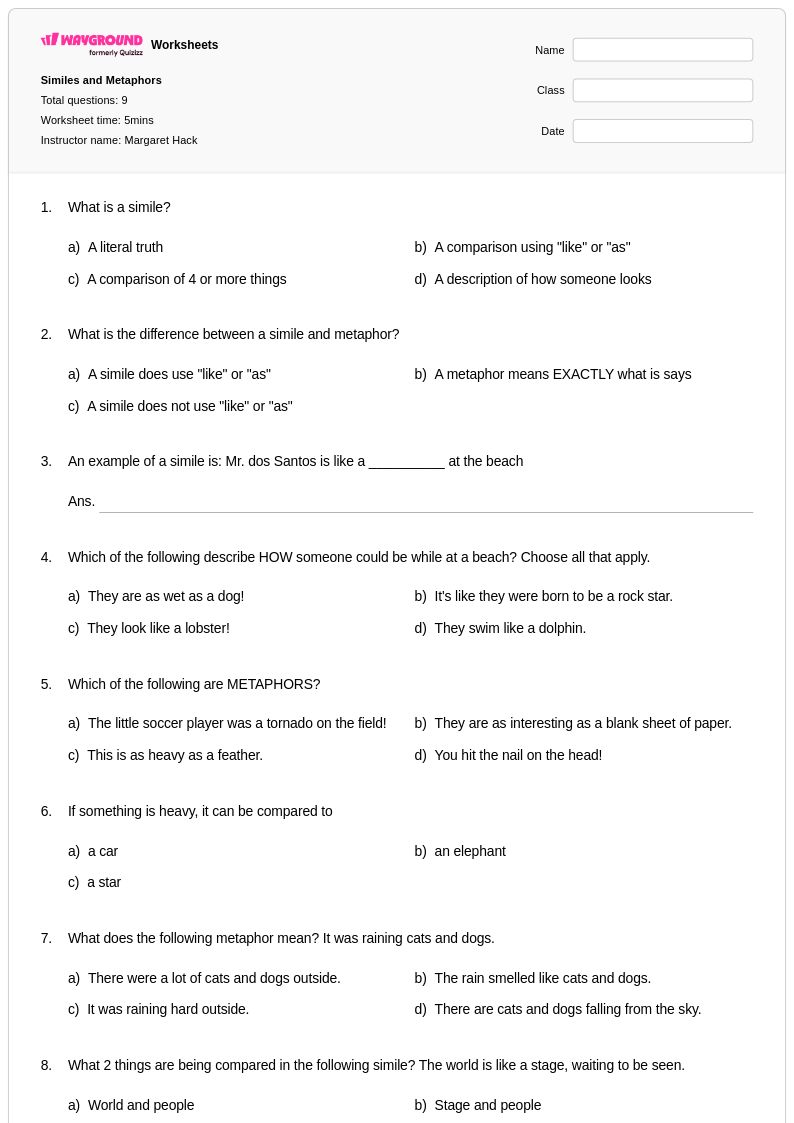
9Q
6th
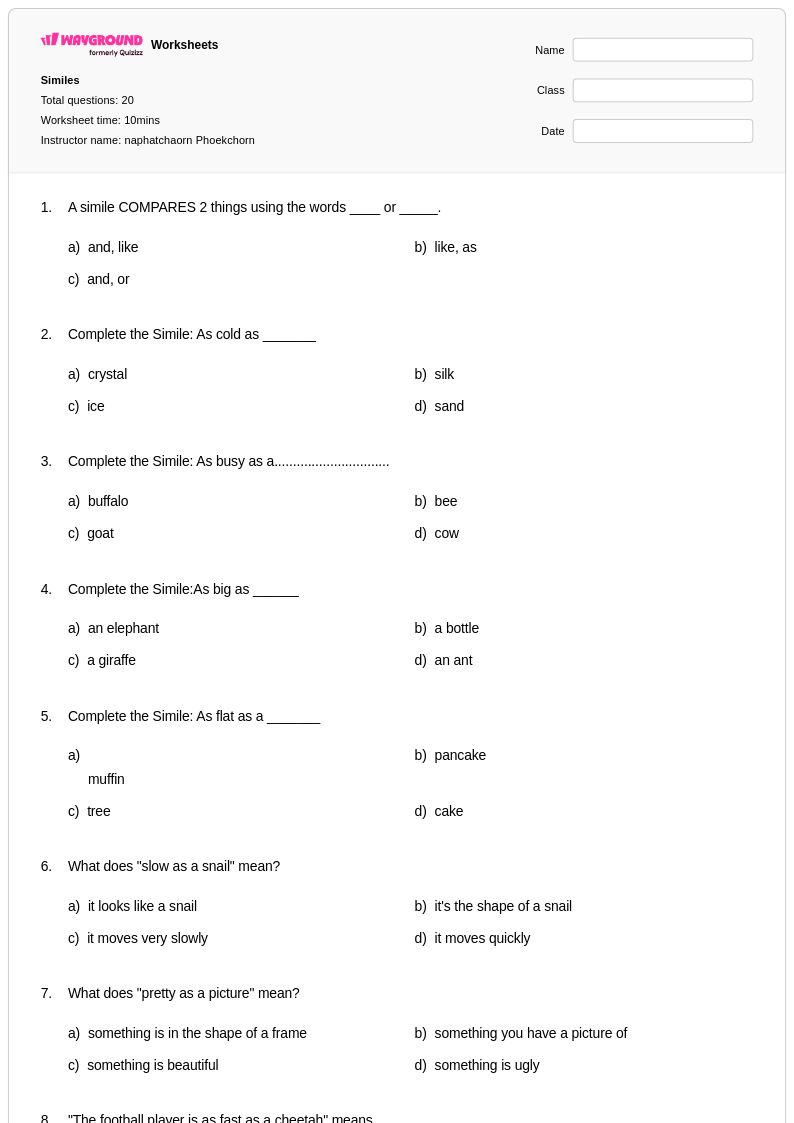
20Q
4th
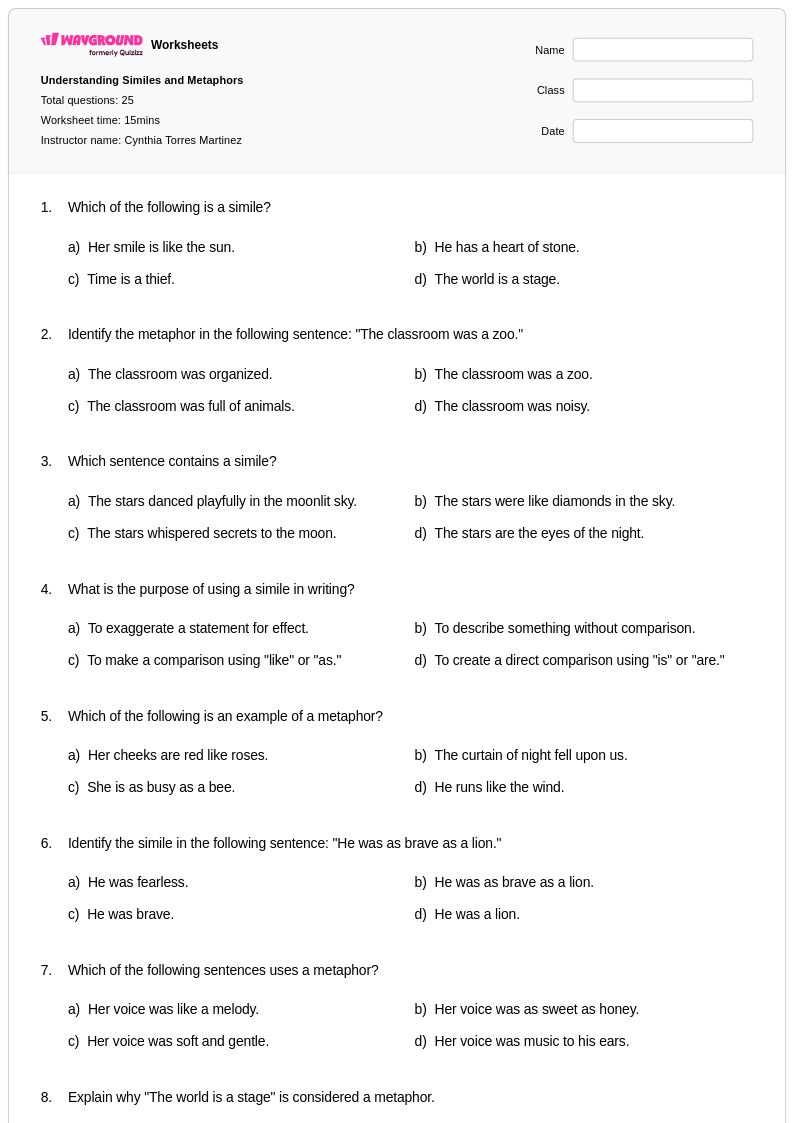
25Q
7th
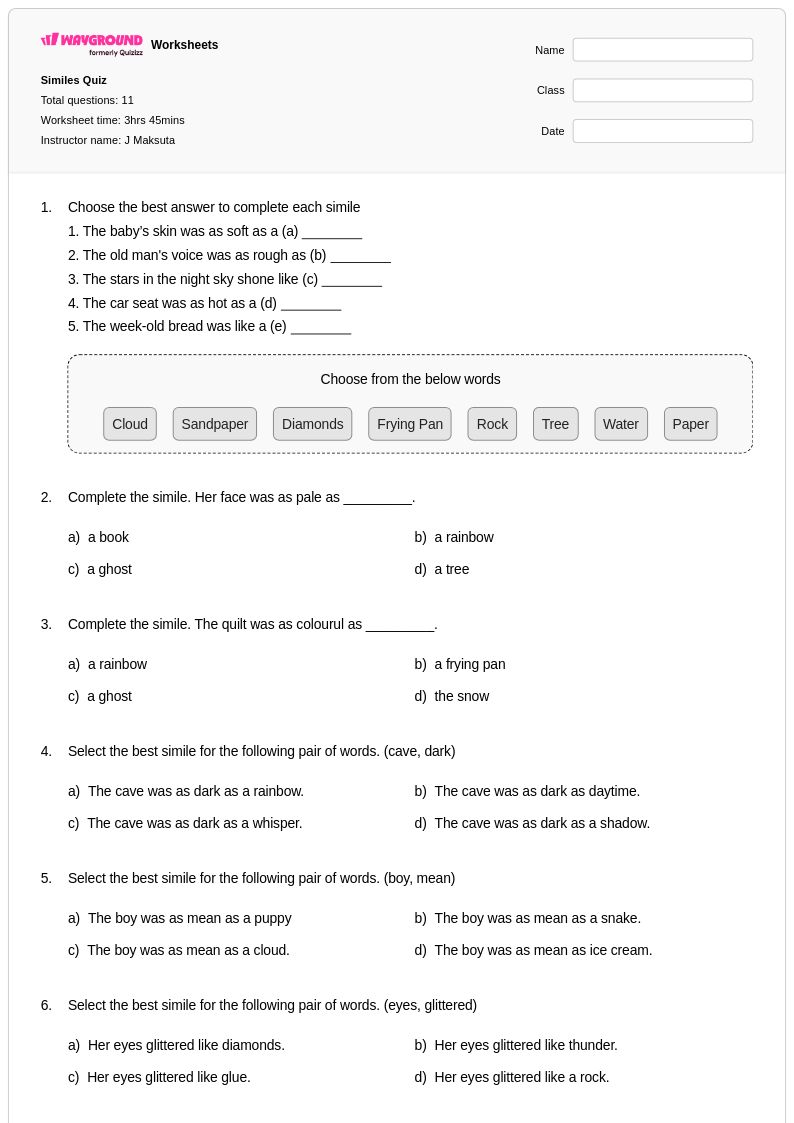
11Q
6th
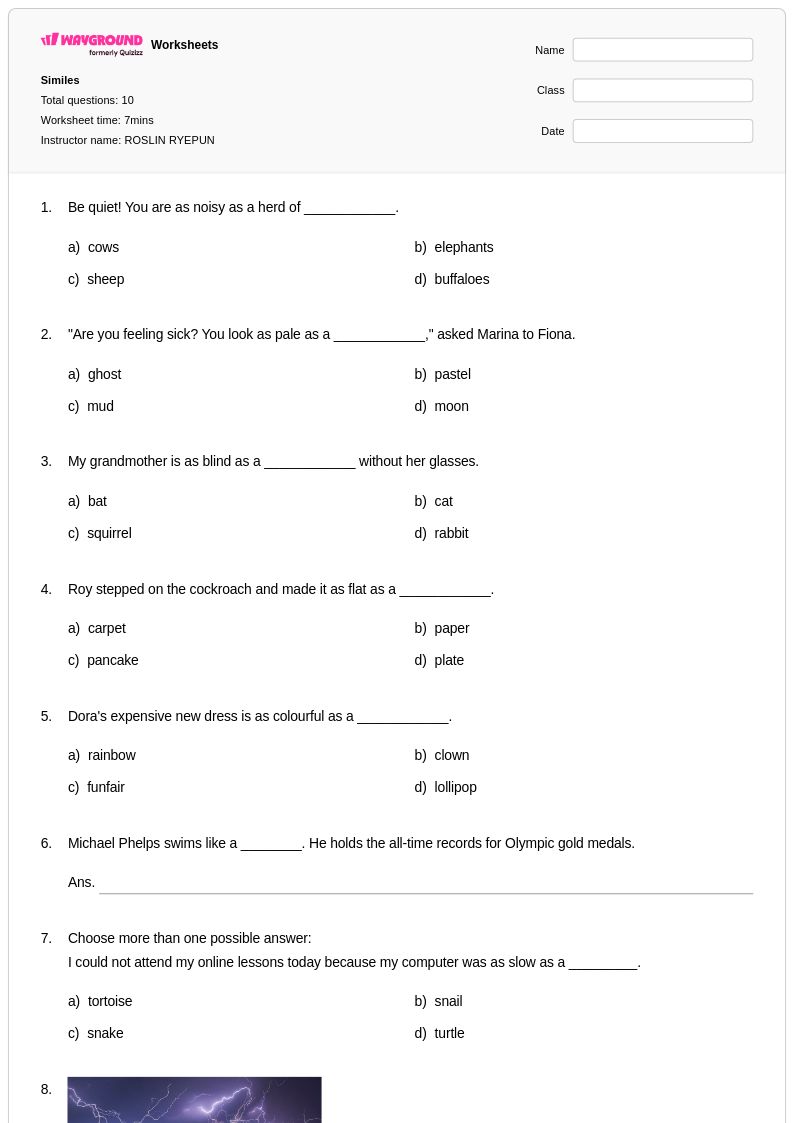
10Q
2nd - 3rd
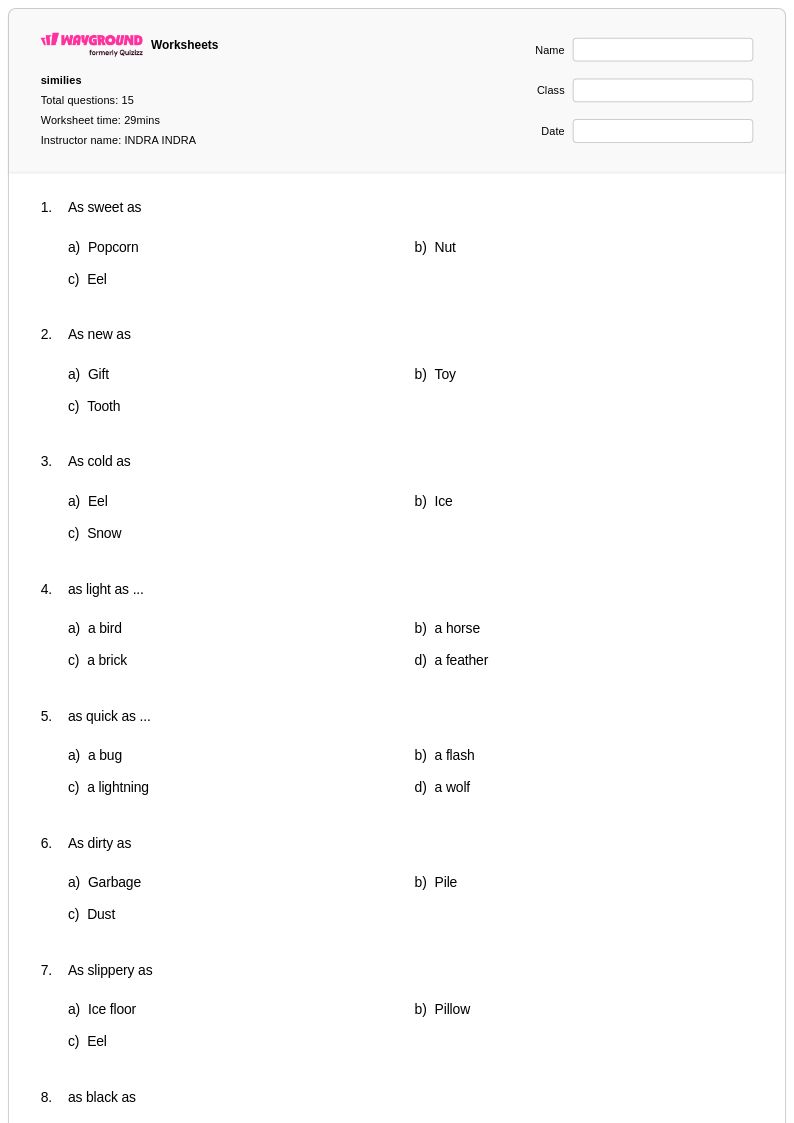
15Q
5th
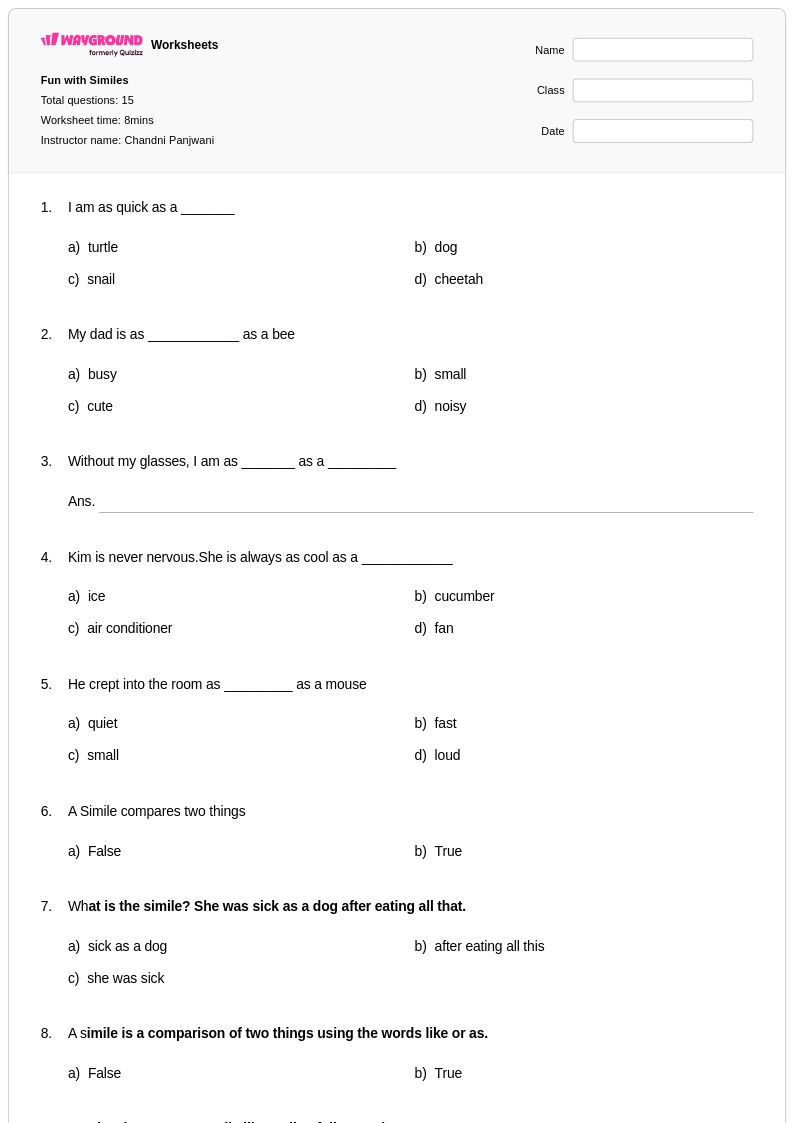
15Q
2nd
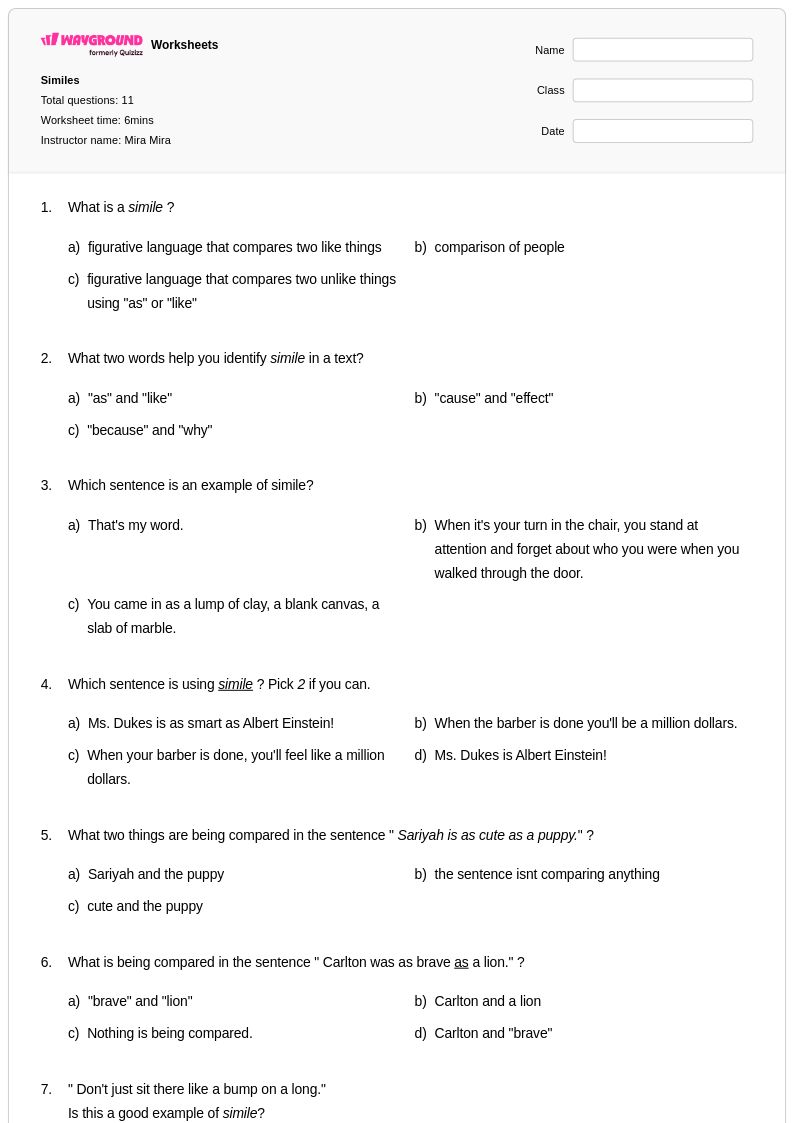
11Q
6th
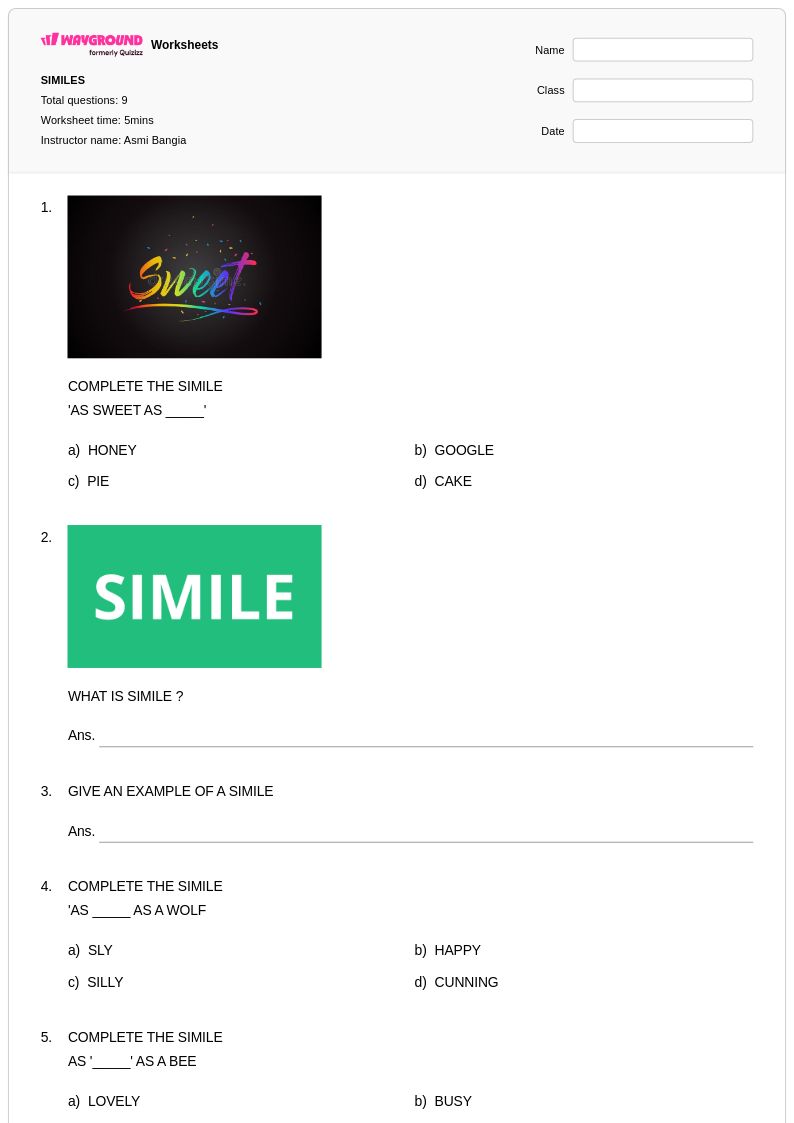
9Q
4th - 5th
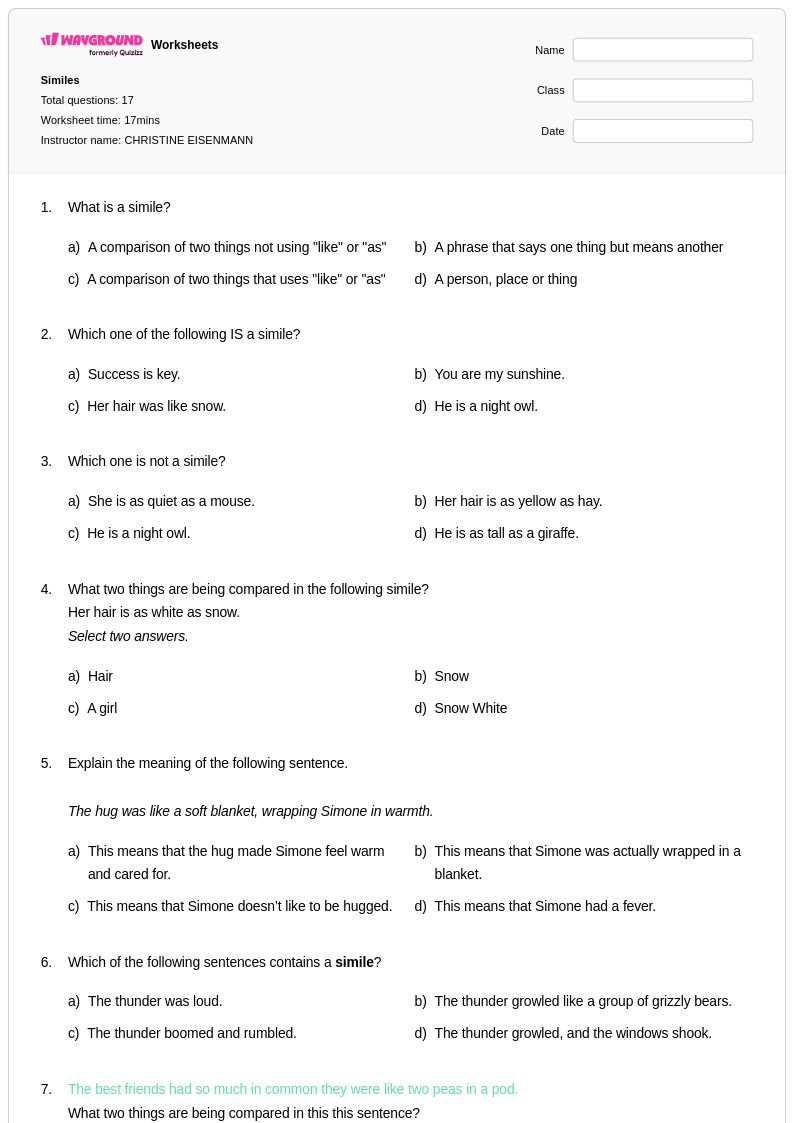
17Q
4th - 7th
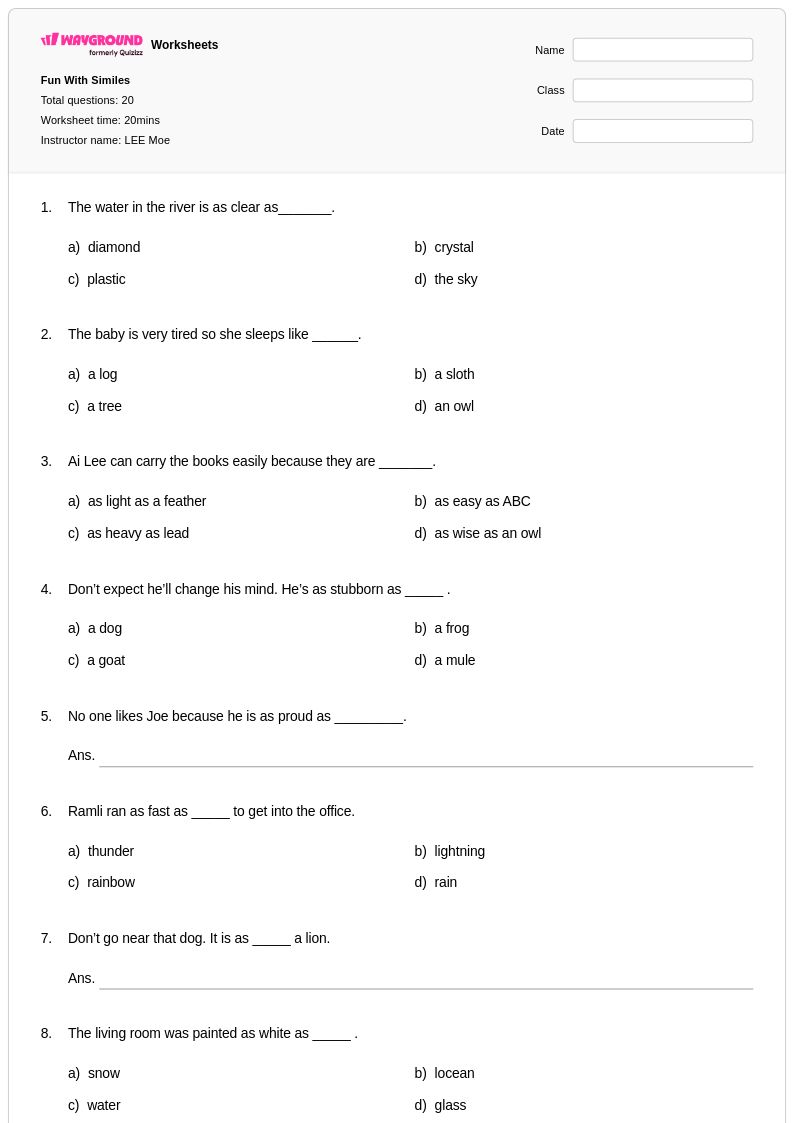
20Q
6th
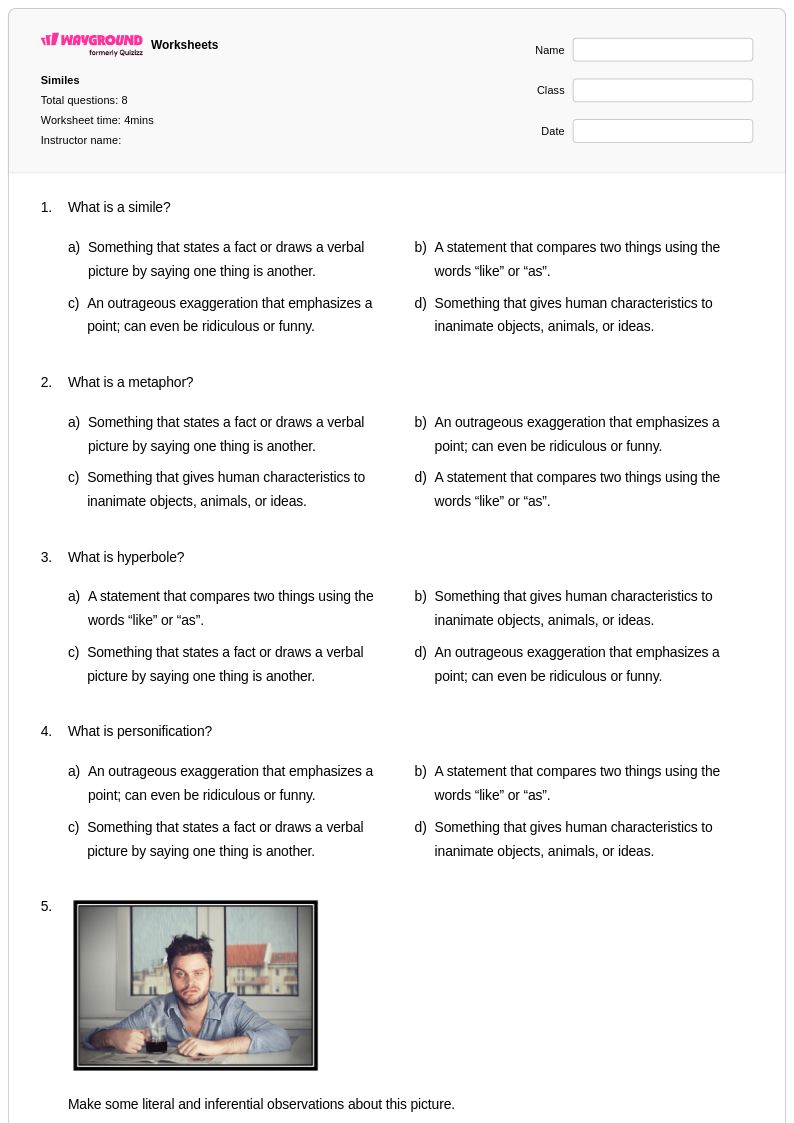
8Q
3rd - 5th
Explorar hojas de trabajo por materias
Explore printable Similes worksheets
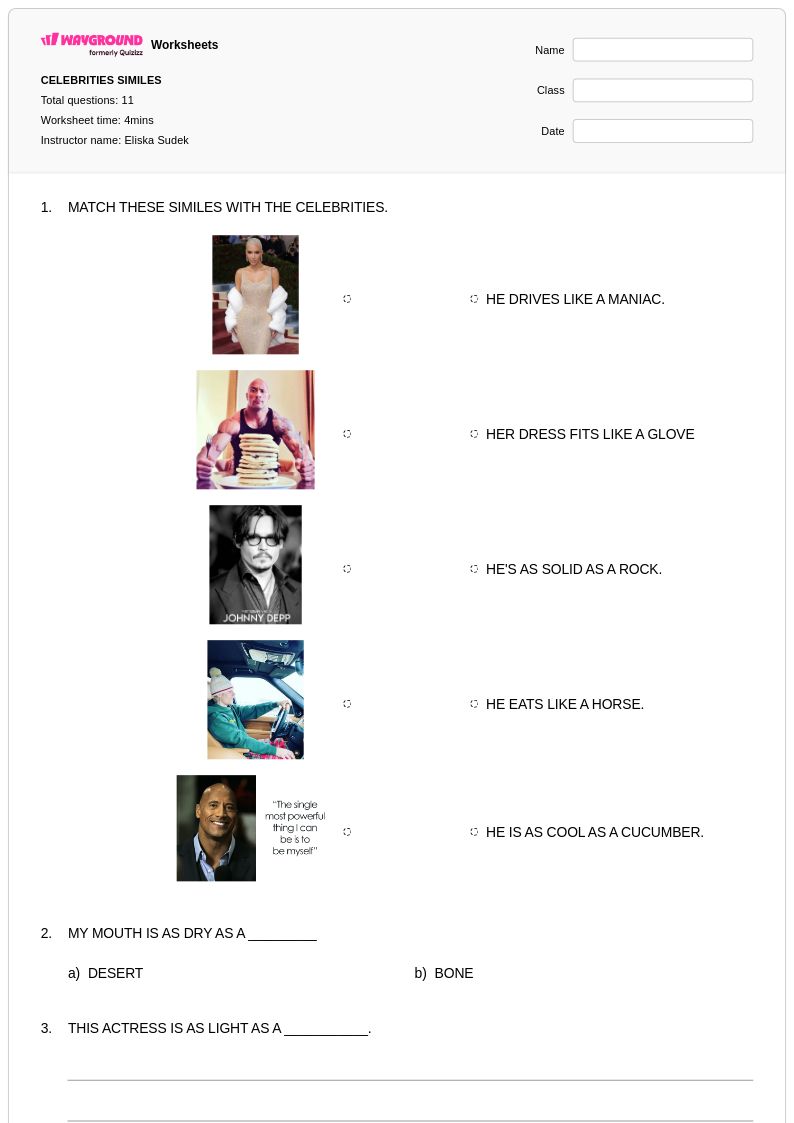
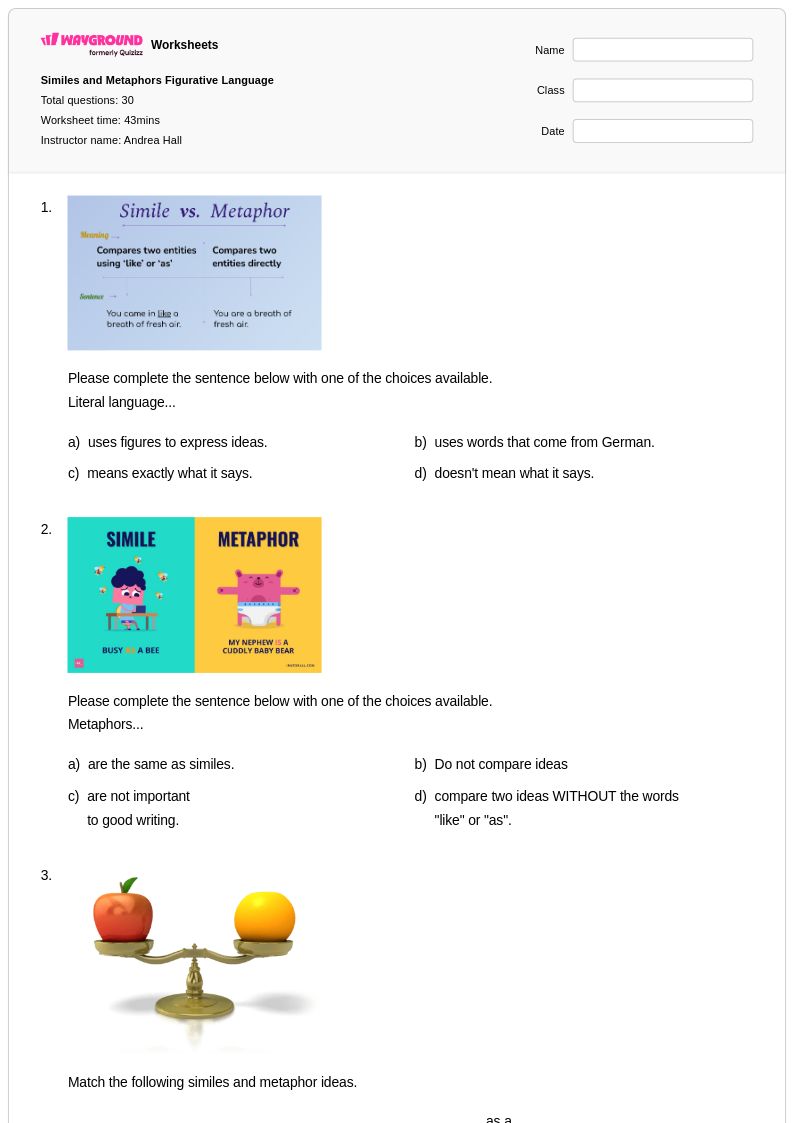
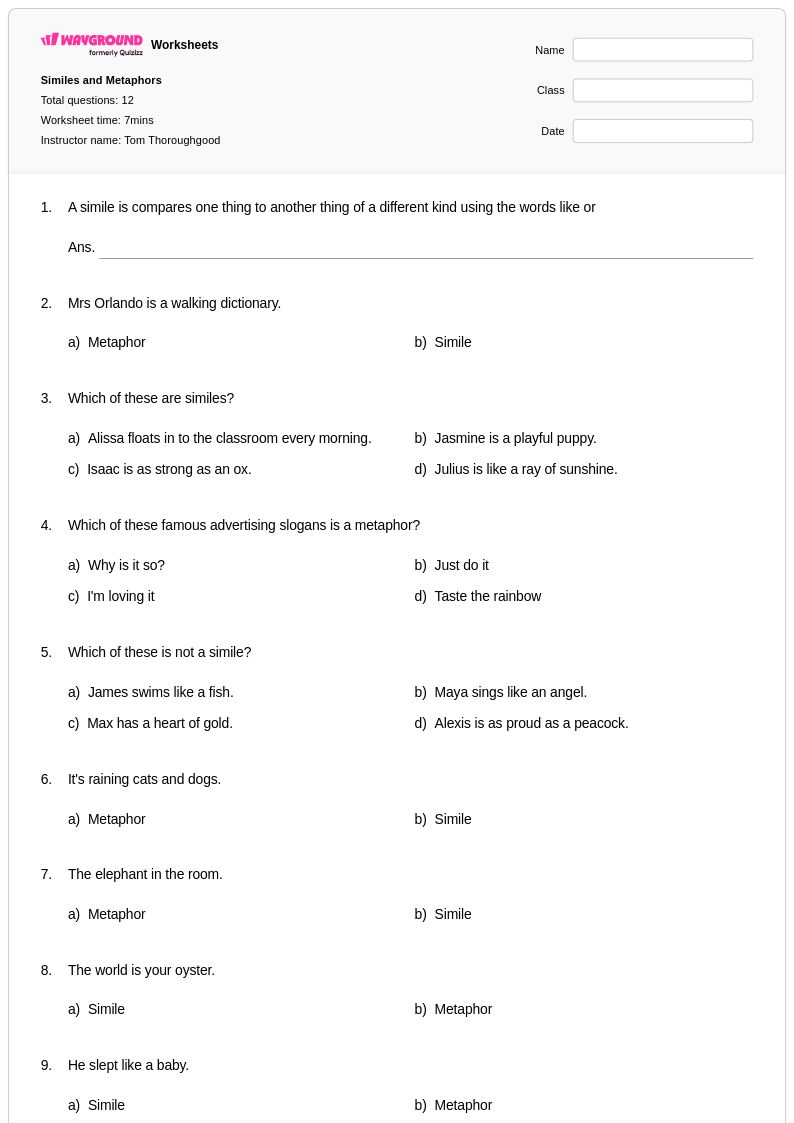
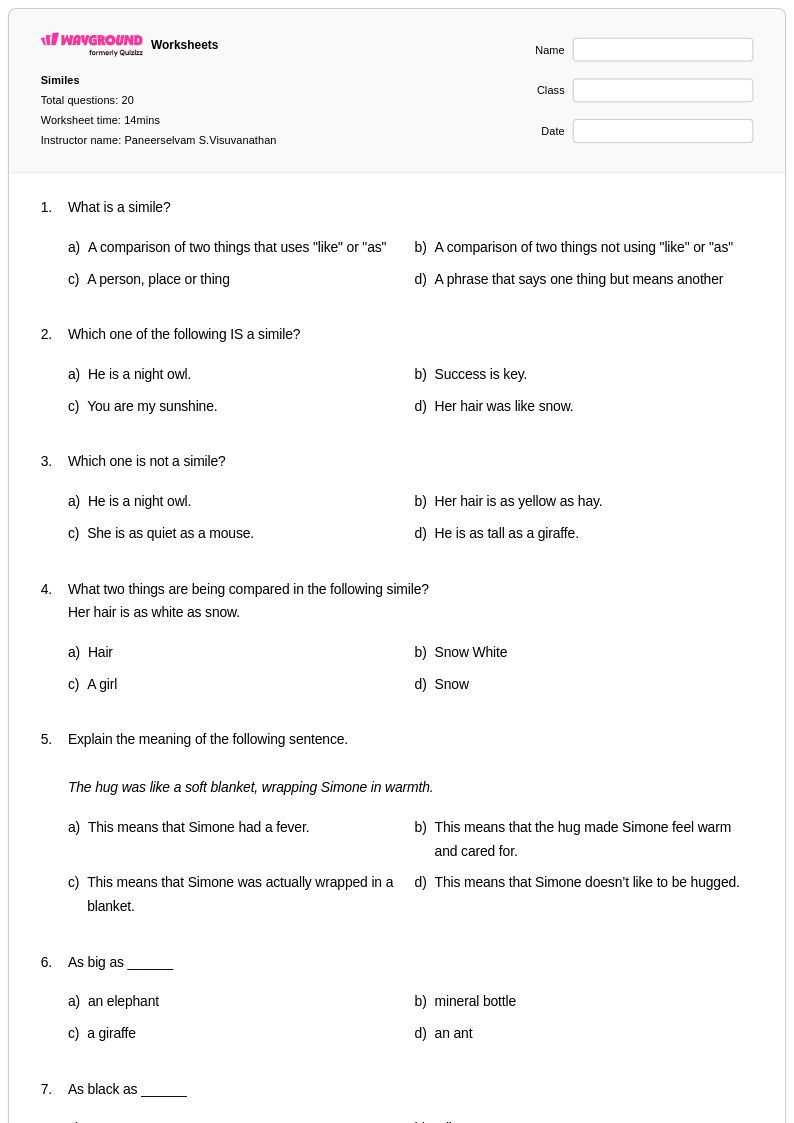
Similes worksheets available through Wayground (formerly Quizizz) provide comprehensive practice opportunities for students to master this fundamental figurative language concept. These educational resources focus on helping learners identify, analyze, and create similes—comparisons between two unlike things using "like" or "as" to establish vivid connections and enhance descriptive writing. The worksheets strengthen critical reading comprehension skills by teaching students to recognize how authors use similes to create imagery, convey emotions, and make abstract concepts more relatable. Students engage with diverse practice problems that range from basic identification exercises to more complex analysis tasks, with each worksheet including a detailed answer key to support independent learning. These free printables offer structured practice in understanding how similes function within various text types, from poetry and literature to everyday writing.
Wayground (formerly Quizizz) supports English teachers with an extensive collection of teacher-created simile worksheets drawn from millions of educational resources developed by classroom professionals. The platform's robust search and filtering capabilities allow educators to quickly locate materials that align with specific learning objectives and curriculum standards, ensuring that instruction targets the precise figurative language skills students need to develop. Teachers can differentiate instruction effectively using the platform's customization tools, which enable them to modify existing worksheets or combine multiple resources to meet diverse learner needs. Available in both printable pdf format and digital versions, these simile worksheets facilitate flexible lesson planning whether educators need materials for whole-group instruction, small-group practice, individual remediation, or enrichment activities that challenge advanced learners to explore more sophisticated comparative language techniques.