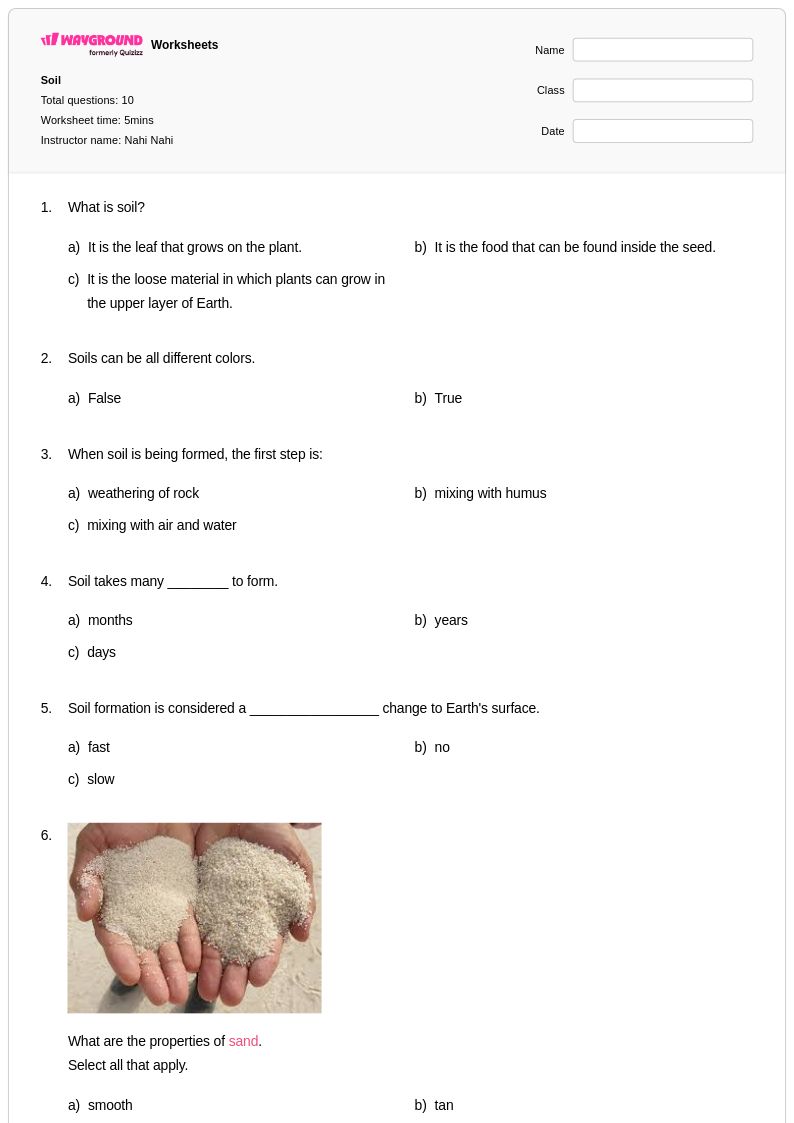
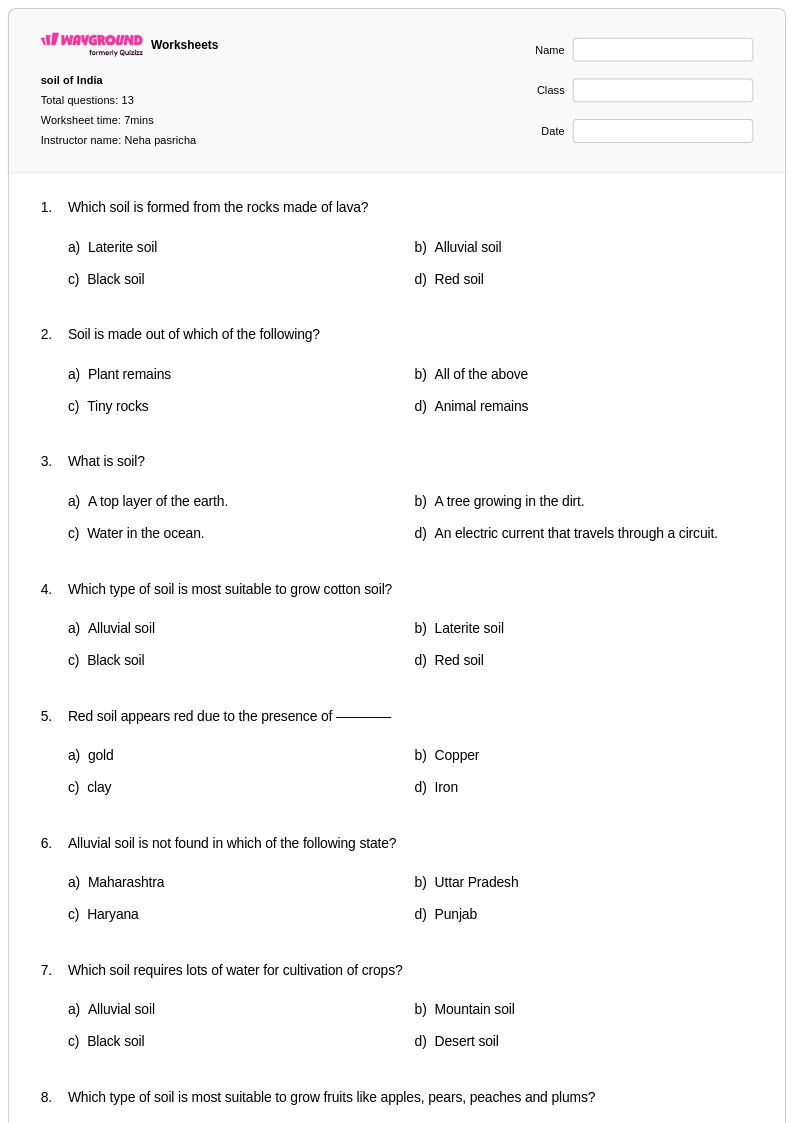
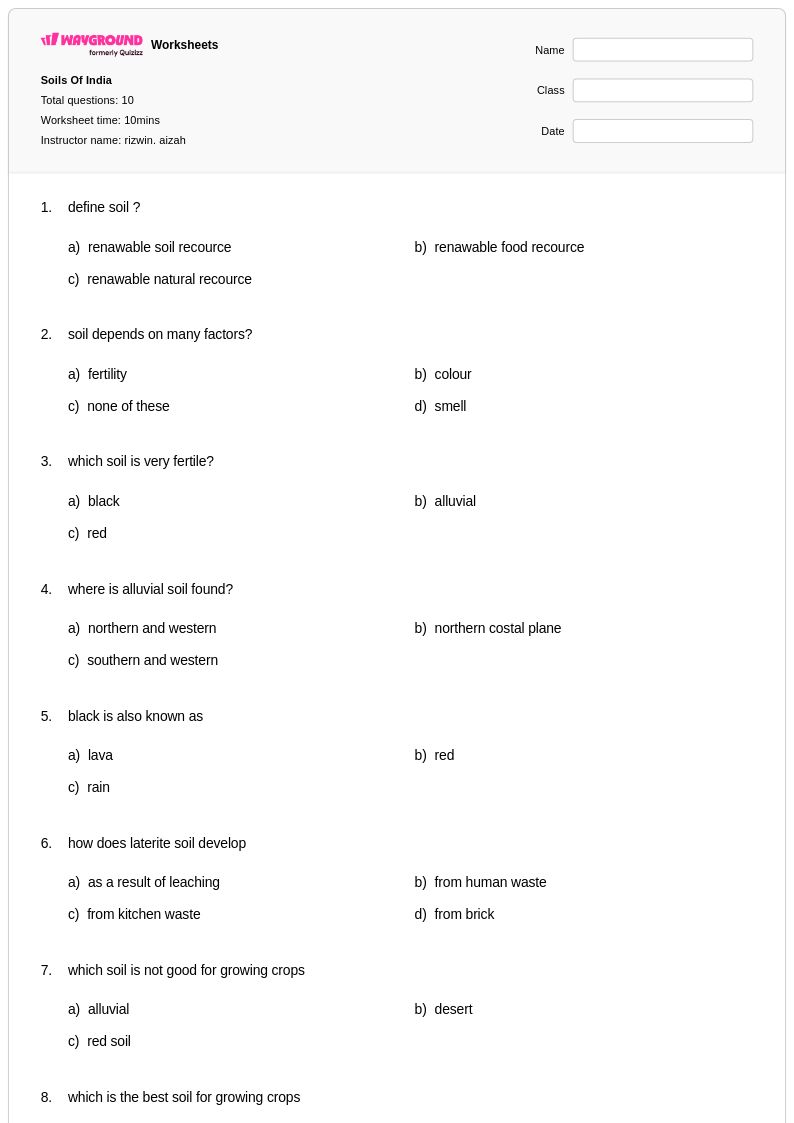
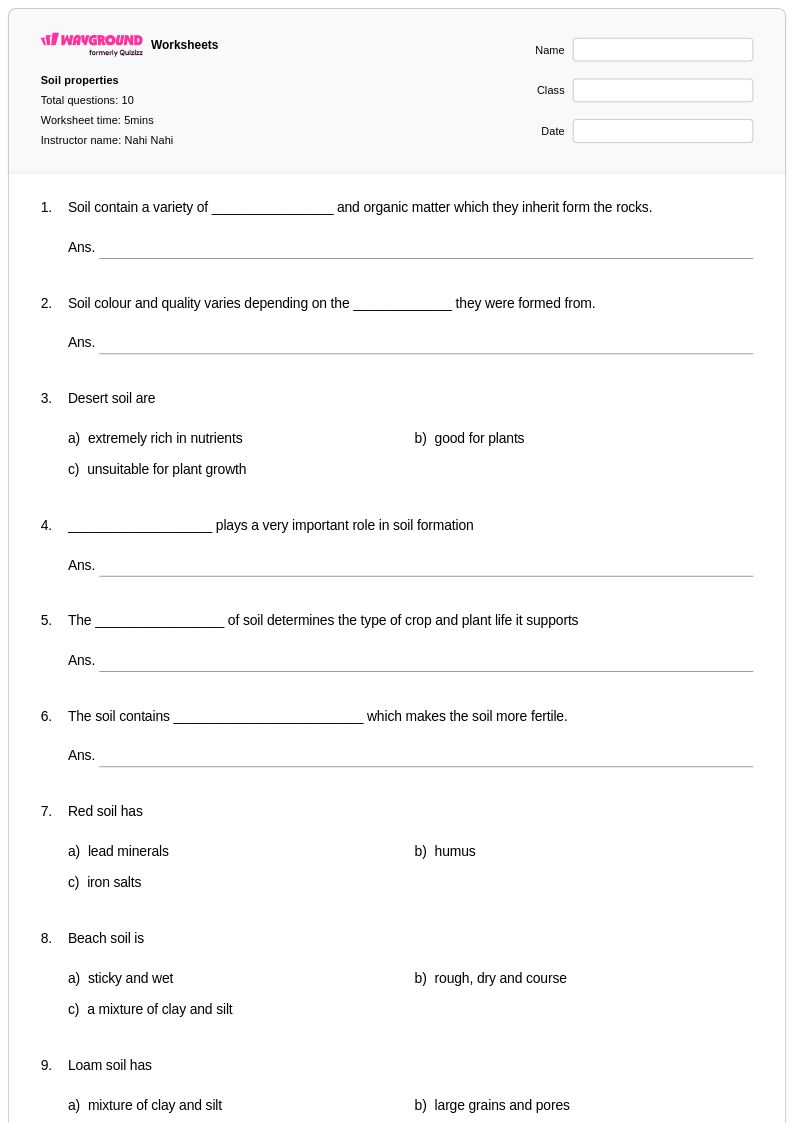
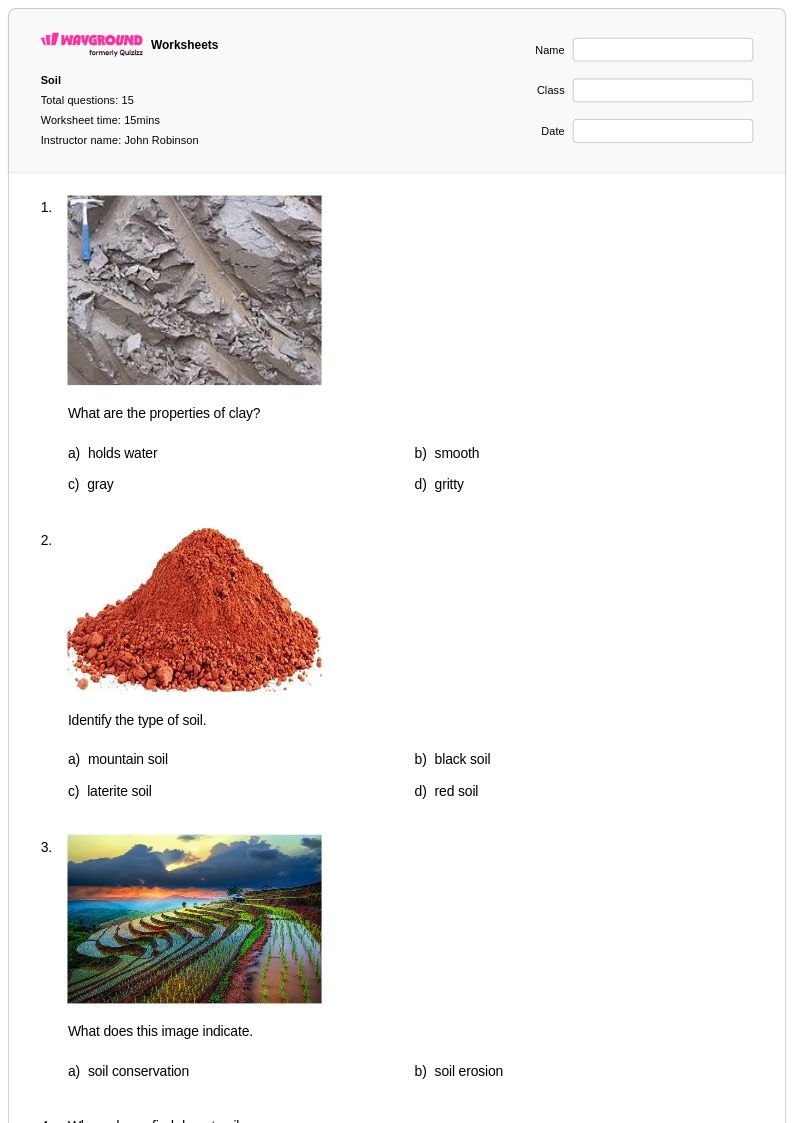
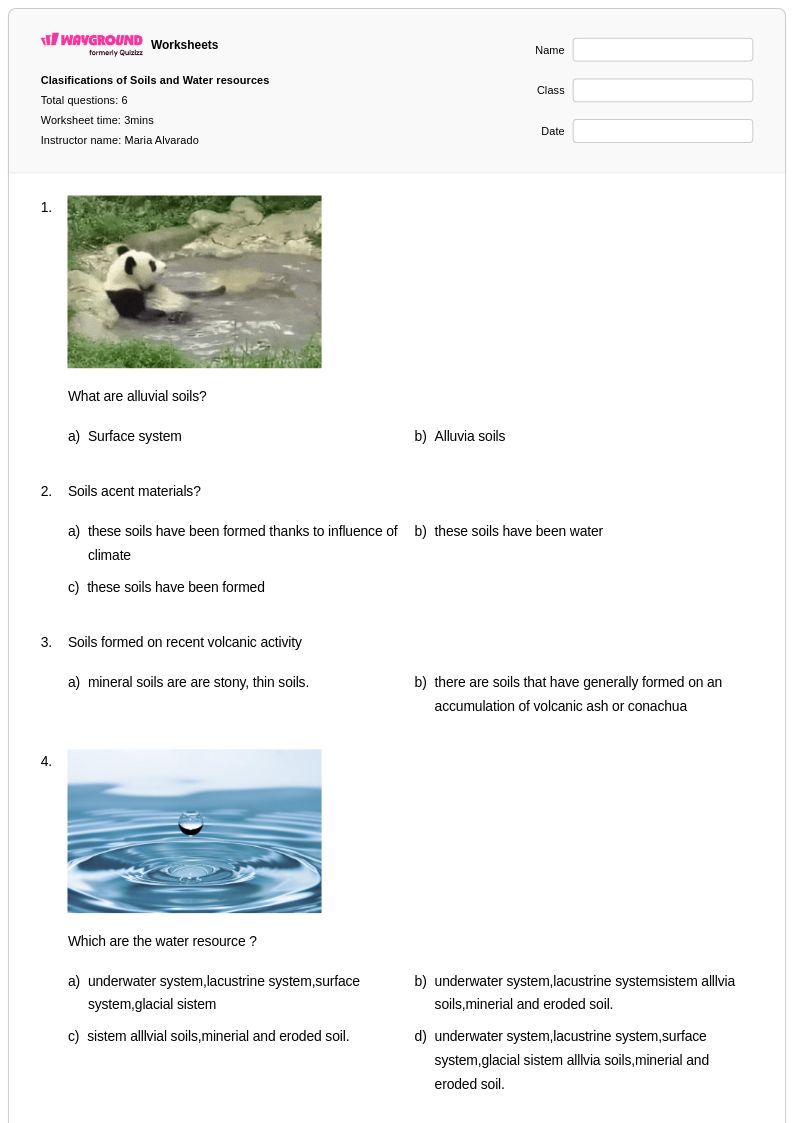
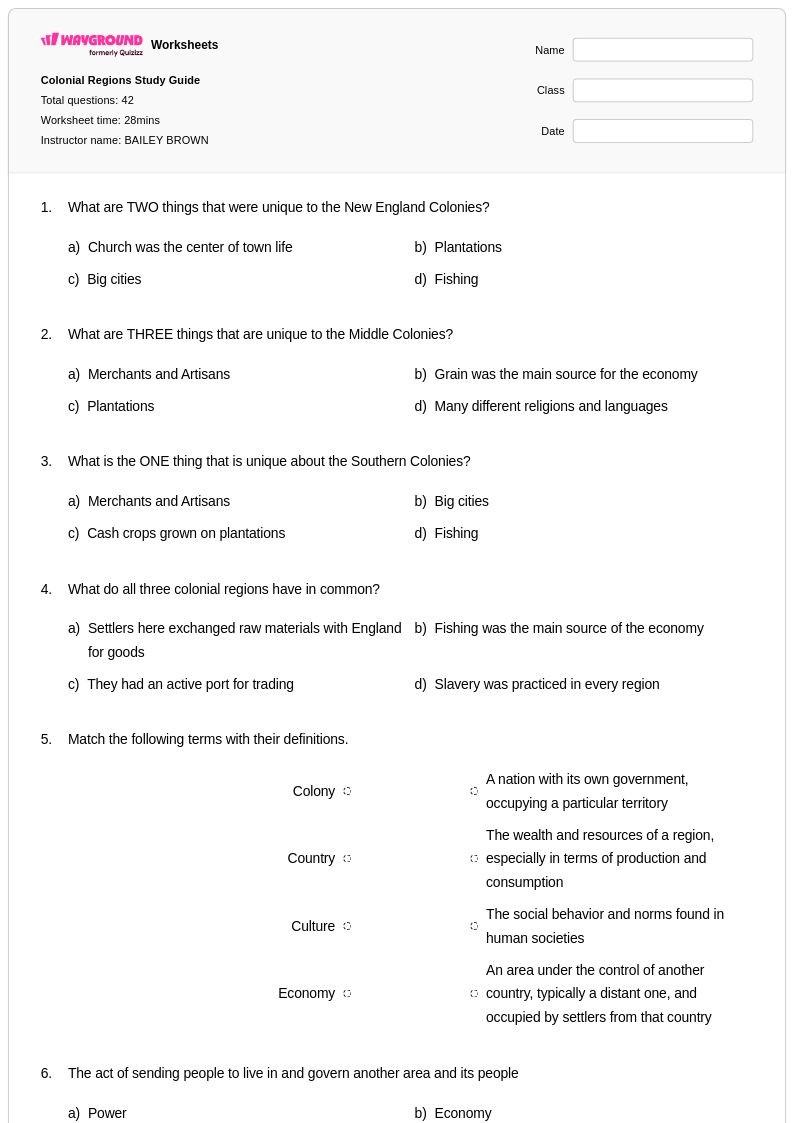
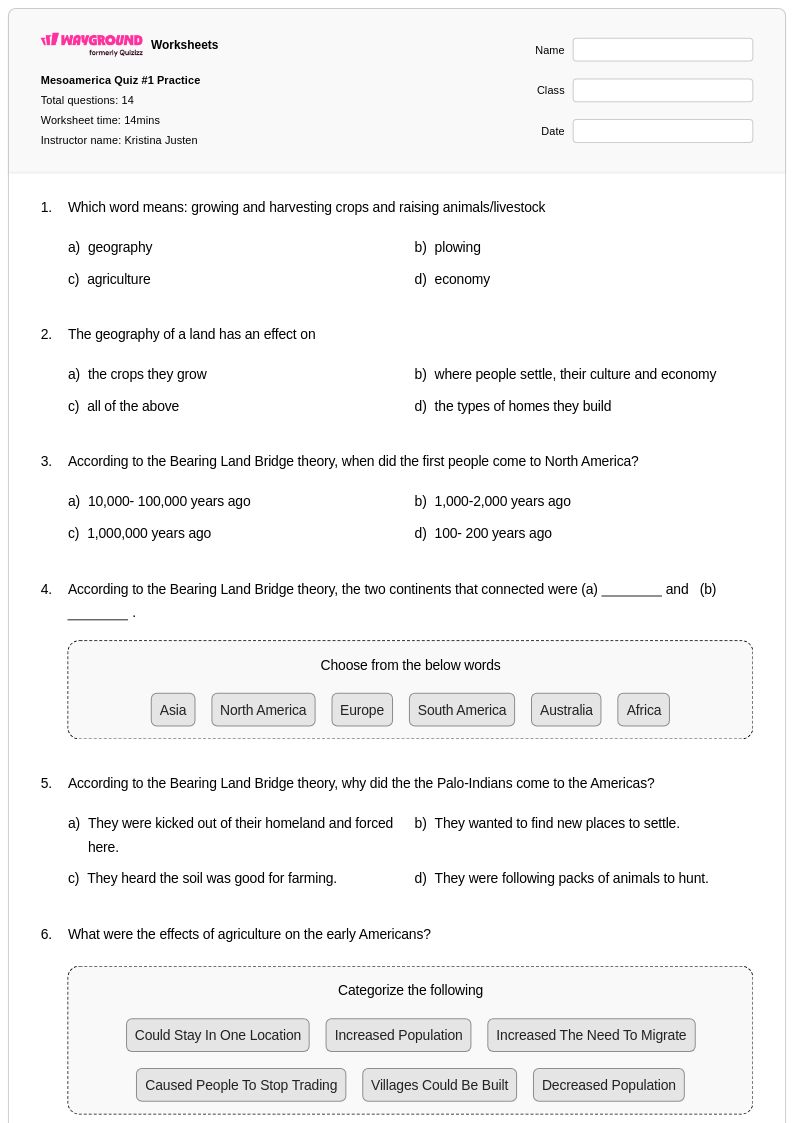
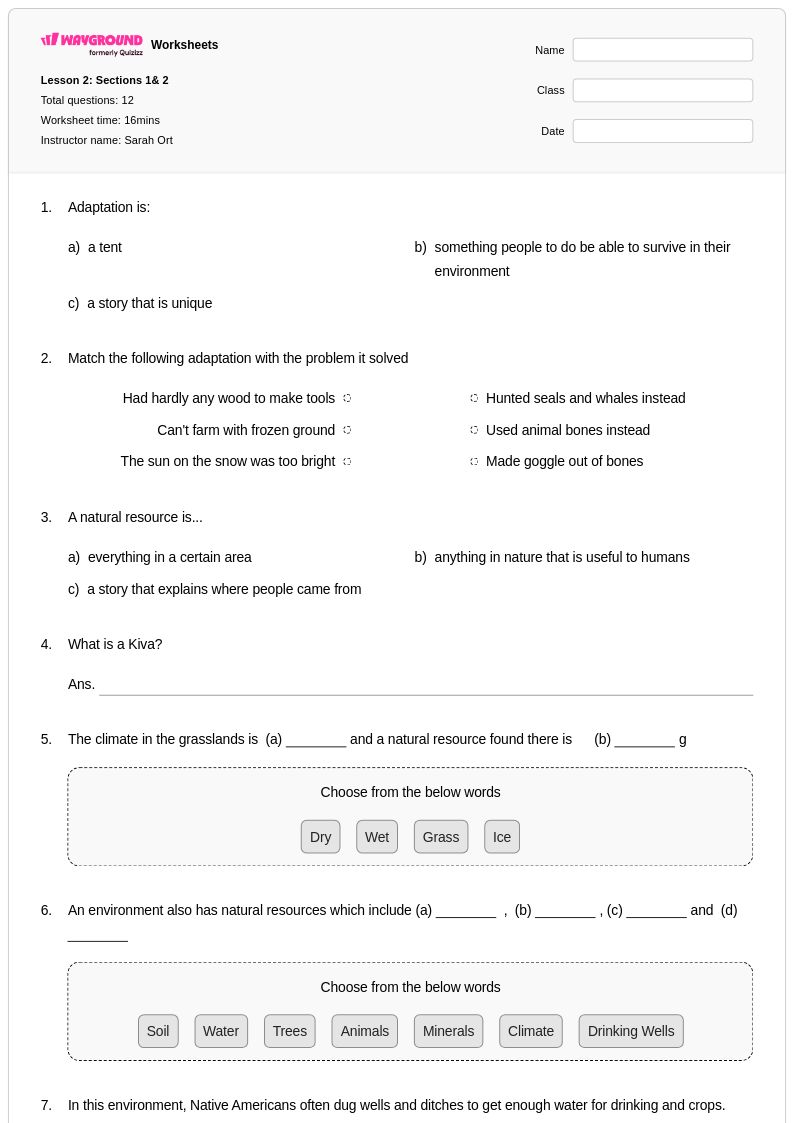
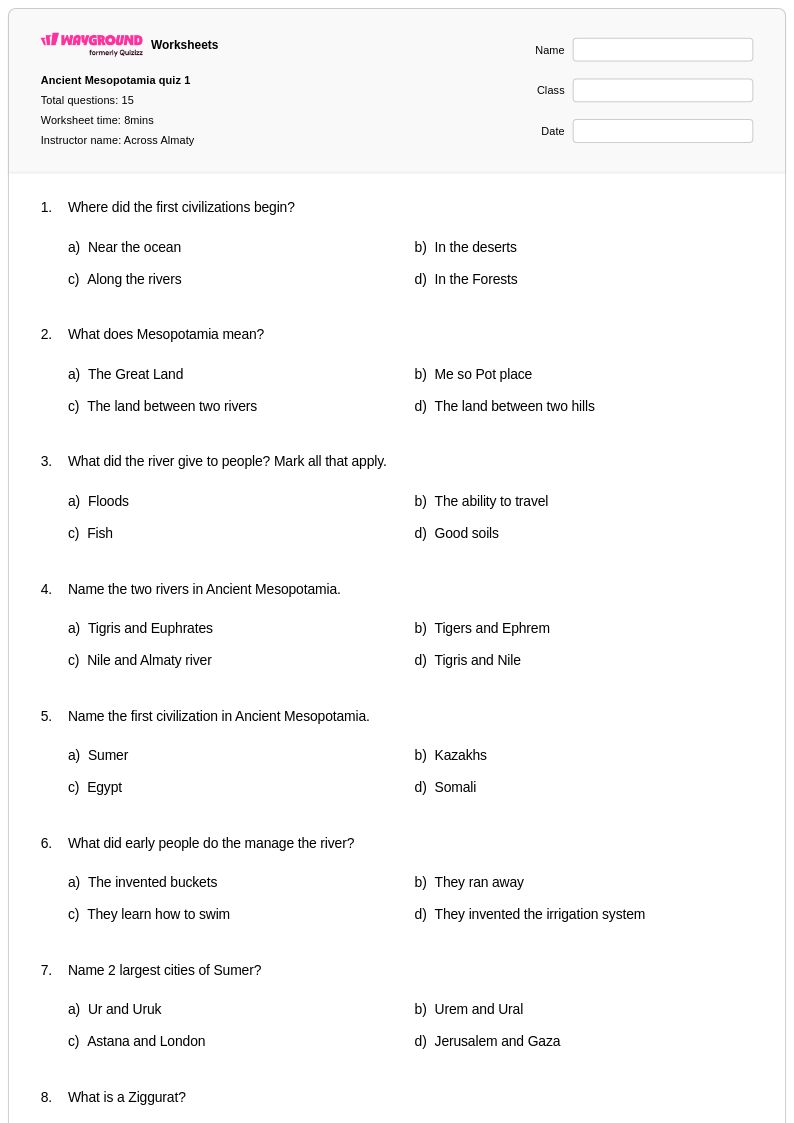
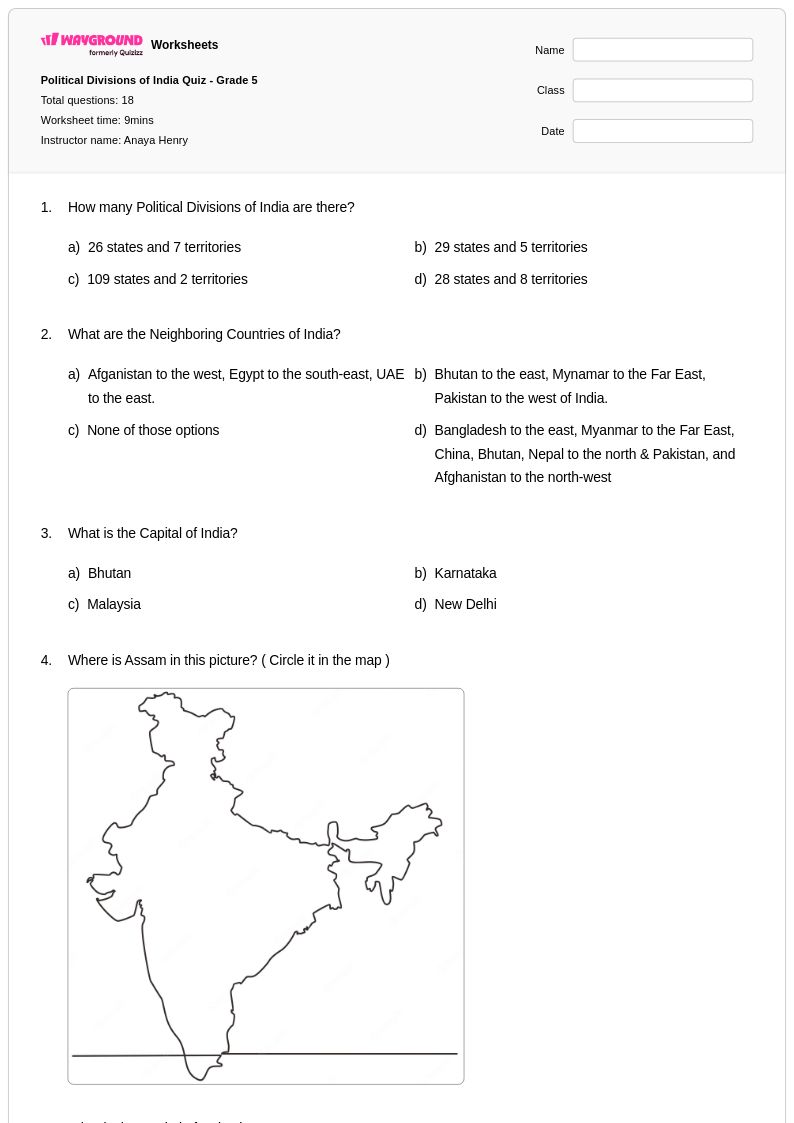
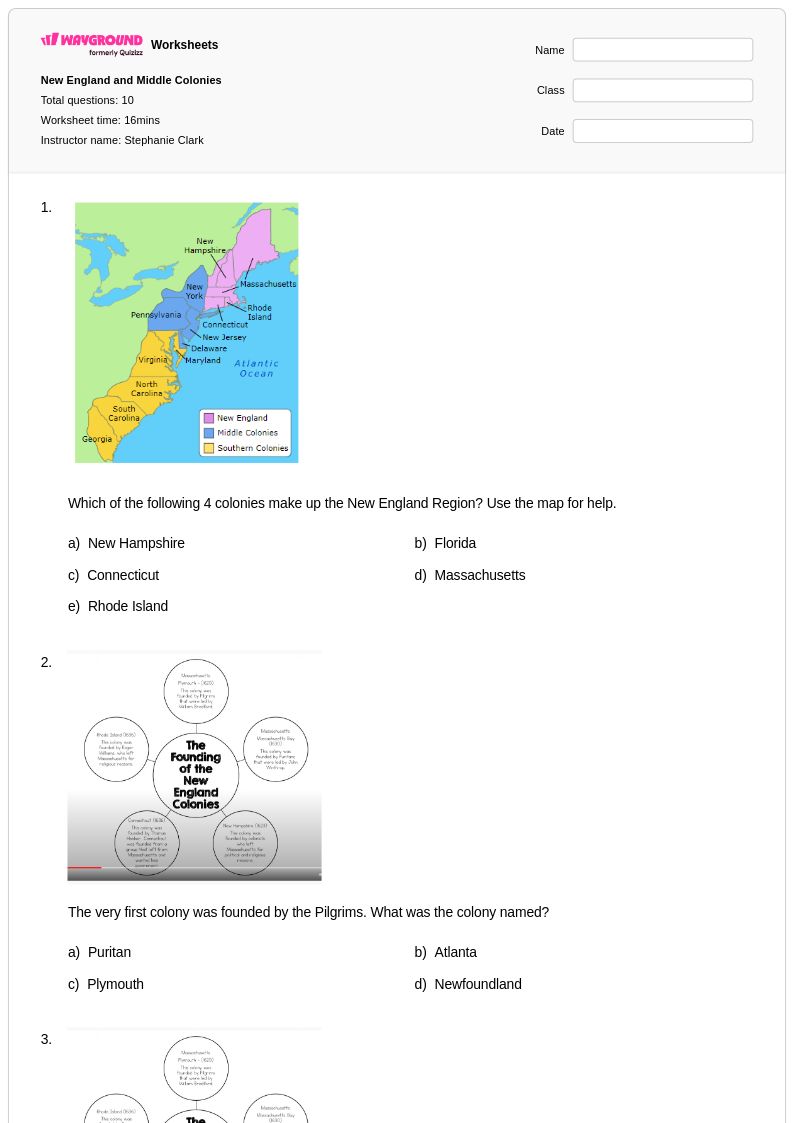
Year 5 soils worksheets and printables help students explore soil composition, formation, and types through engaging practice problems, free PDF resources, and comprehensive answer keys for effective geography learning.
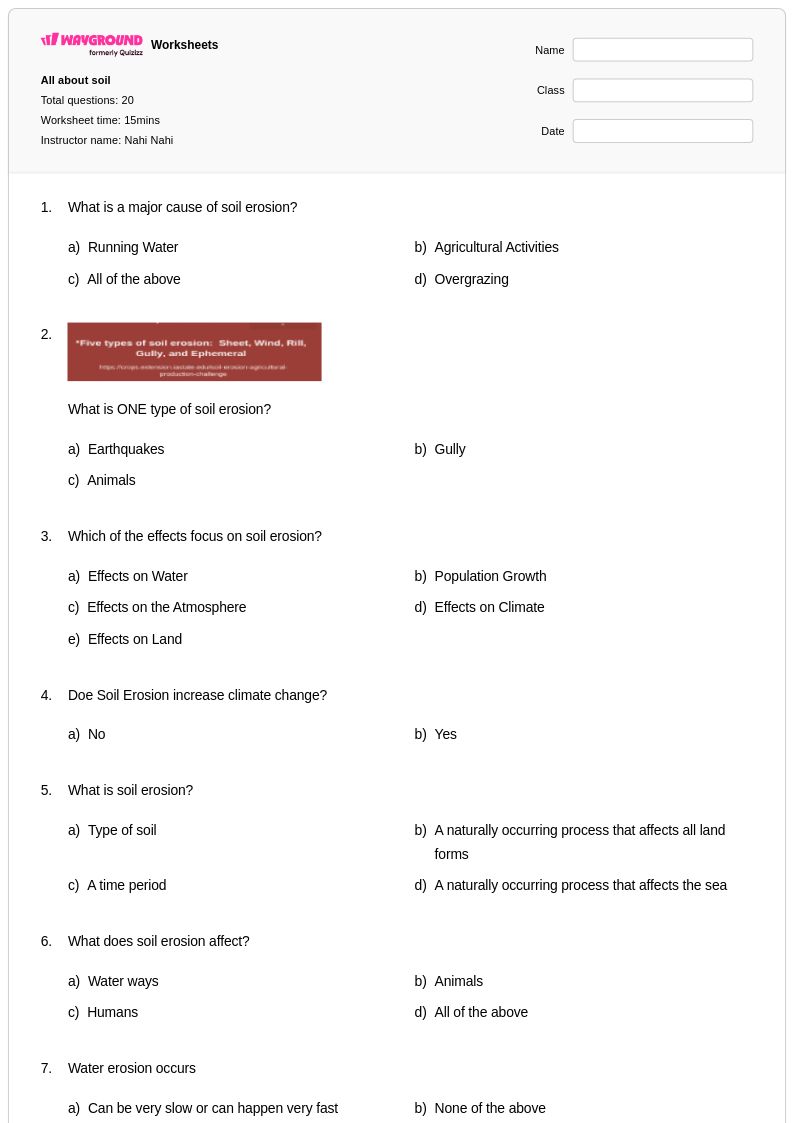
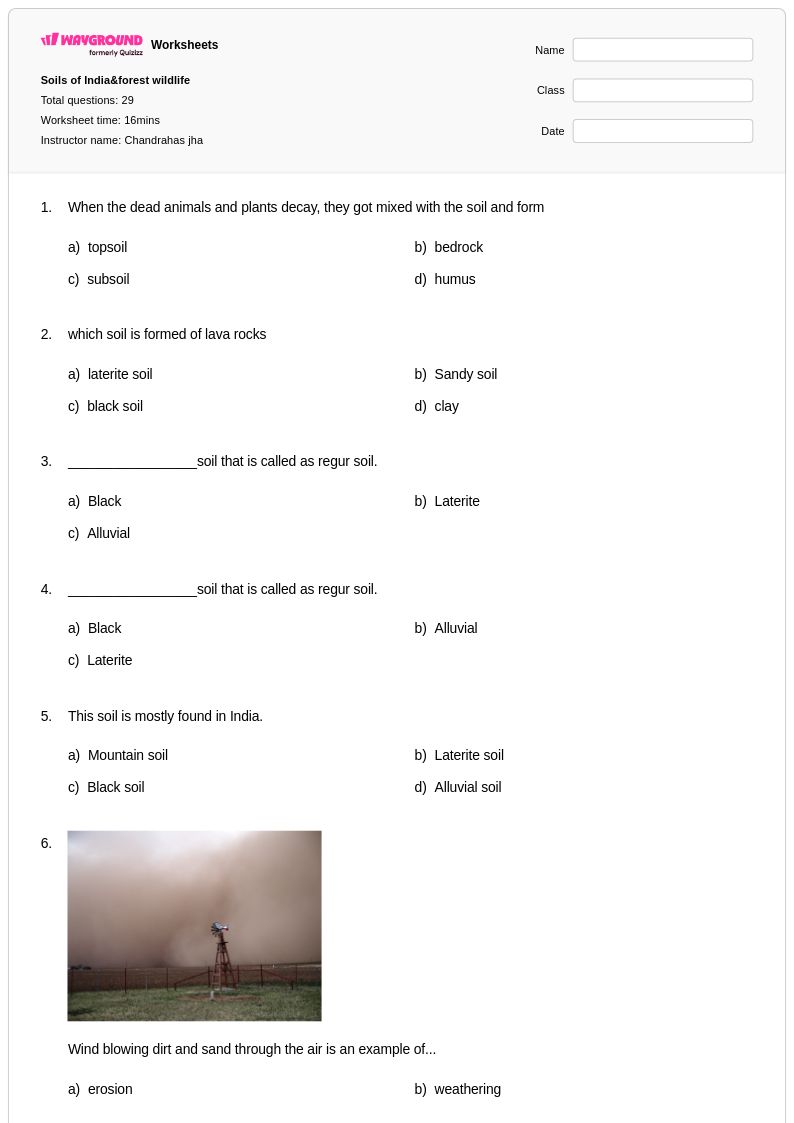
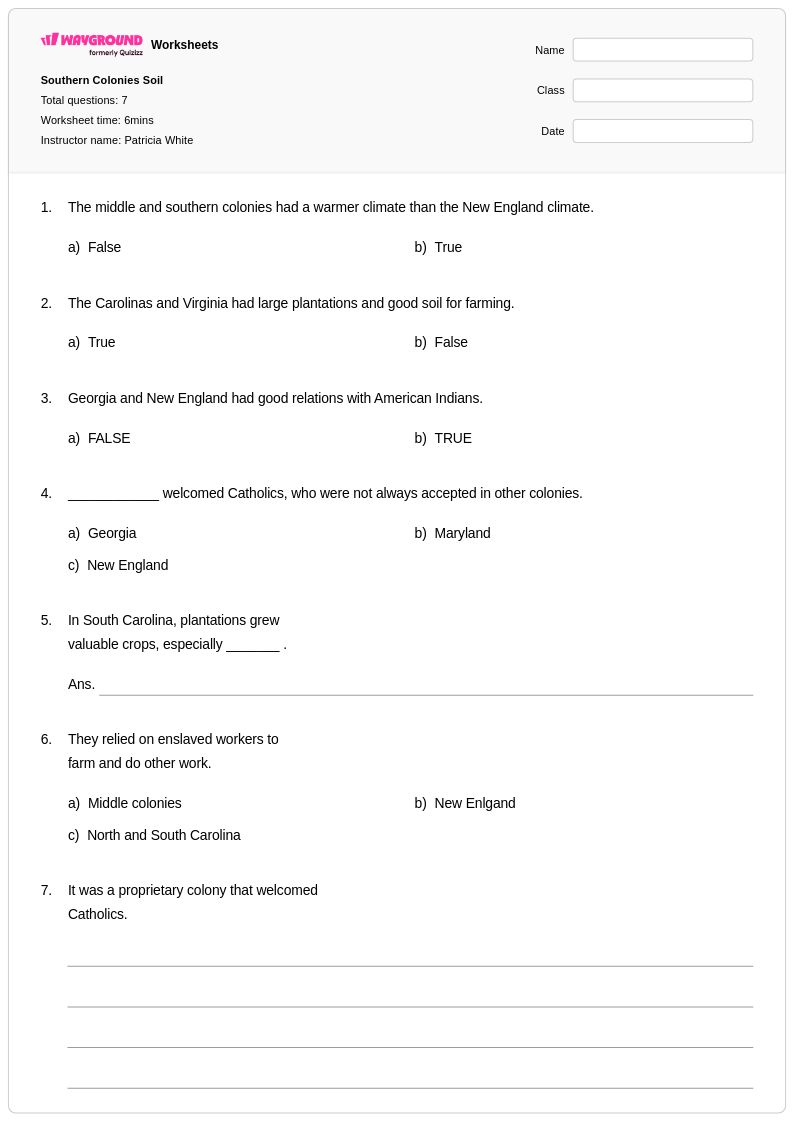
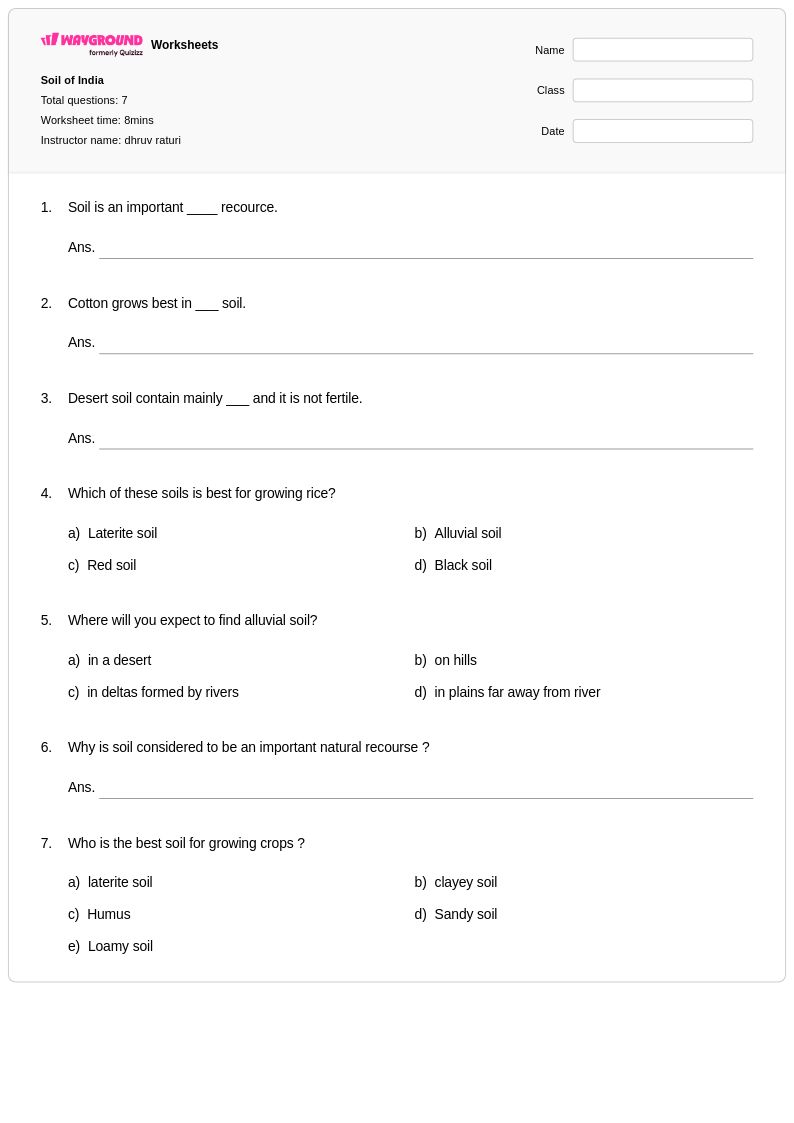
Soils worksheets for Year 5 students available through Wayground (formerly Quizizz) provide comprehensive exploration of earth science fundamentals within the social studies curriculum. These educational resources strengthen students' understanding of soil formation processes, soil layers and horizons, and the critical relationship between different soil types and human activities such as agriculture and construction. The worksheets feature detailed practice problems that guide fifth graders through identifying soil components, analyzing how climate and geography influence soil development, and examining the role of decomposition in creating fertile earth. Each printable resource includes a complete answer key, making these free materials valuable for both independent study and classroom instruction, while pdf formats ensure consistent accessibility across different learning environments.
Wayground's extensive collection draws from millions of teacher-created resources specifically designed to support educators in delivering effective soils instruction for Year 5 social studies programs. The platform's robust search and filtering capabilities allow teachers to quickly locate worksheets aligned with specific curriculum standards, while differentiation tools enable customization for students with varying ability levels and learning needs. Teachers can seamlessly transition between printable pdf versions for traditional classroom use and digital formats for technology-integrated lessons, supporting flexible instructional planning that accommodates diverse teaching environments. These comprehensive worksheet collections serve multiple pedagogical purposes, from introducing foundational soil science concepts to providing targeted practice for skill remediation and offering enrichment opportunities for advanced learners exploring the intersection of geography and environmental stewardship.
FAQs
How do I teach soil formation and horizons to middle or high school students?
Start by grounding students in the concept of parent material and weathering before introducing soil horizons, since students often struggle to connect surface-level soil to the bedrock beneath it. Using soil profile diagrams alongside hands-on activities, such as comparing soil samples from different depths, helps students visualize the O, A, B, and C horizons in sequence. From there, linking horizon characteristics to time, climate, and vegetation reinforces why soils vary across regions and ecosystems.
What exercises help students practice soil classification and composition?
Soil texture triangle activities are highly effective because they require students to interpret percentages of sand, silt, and clay and map them to a named soil class, combining reading comprehension with analytical reasoning. Soil horizon labeling exercises, soil map interpretation tasks, and classification worksheets that ask students to compare soil samples from different biomes all reinforce compositional understanding. Practice problems that connect soil type to agricultural suitability push students to apply classification knowledge in a real-world context.
What misconceptions do students commonly have about soil?
One of the most persistent misconceptions is that soil is simply dirt, leading students to underestimate its complexity as a living system containing minerals, organic matter, water, air, and microorganisms. Students also frequently confuse soil formation as a fast process, when in reality forming just one inch of topsoil can take hundreds to thousands of years. A third common error is treating all soil types as equally productive for agriculture, overlooking how texture, pH, and organic content directly affect crop viability.
How can I use soil worksheets to assess student understanding of erosion and conservation?
Worksheets that present case studies of erosion events and ask students to identify contributing factors, such as vegetation loss, slope, or rainfall intensity, are effective formative assessment tools. Follow-up questions that require students to propose conservation strategies, such as contour plowing, terracing, or cover crops, reveal whether students can apply conceptual knowledge to environmental problem-solving. Reviewing common errors, like confusing erosion with weathering or conflating deposition with conservation, can guide targeted reteaching.
How do I use Wayground's soils worksheets in my classroom?
Wayground's soils worksheets are available as printable PDFs for traditional classroom use and in digital formats for technology-integrated learning environments, so they fit both paper-based lessons and online instruction. Teachers can also host the worksheets as a quiz directly on Wayground, enabling live student response tracking and immediate feedback. Each worksheet includes a comprehensive answer key, supporting independent student practice, self-assessment, and efficient teacher grading.
How can I differentiate soils instruction for students with different learning needs?
On Wayground, teachers can apply individual student accommodations including Read Aloud for students who need audio support, reduced answer choices to lower cognitive load for struggling learners, and extended time settings configurable per student. These accommodations can be assigned to specific students while the rest of the class receives default settings, without any notification to peers. Because accommodation profiles are saved and reusable, teachers can apply the same settings across multiple soil science sessions without reconfiguring each time.