
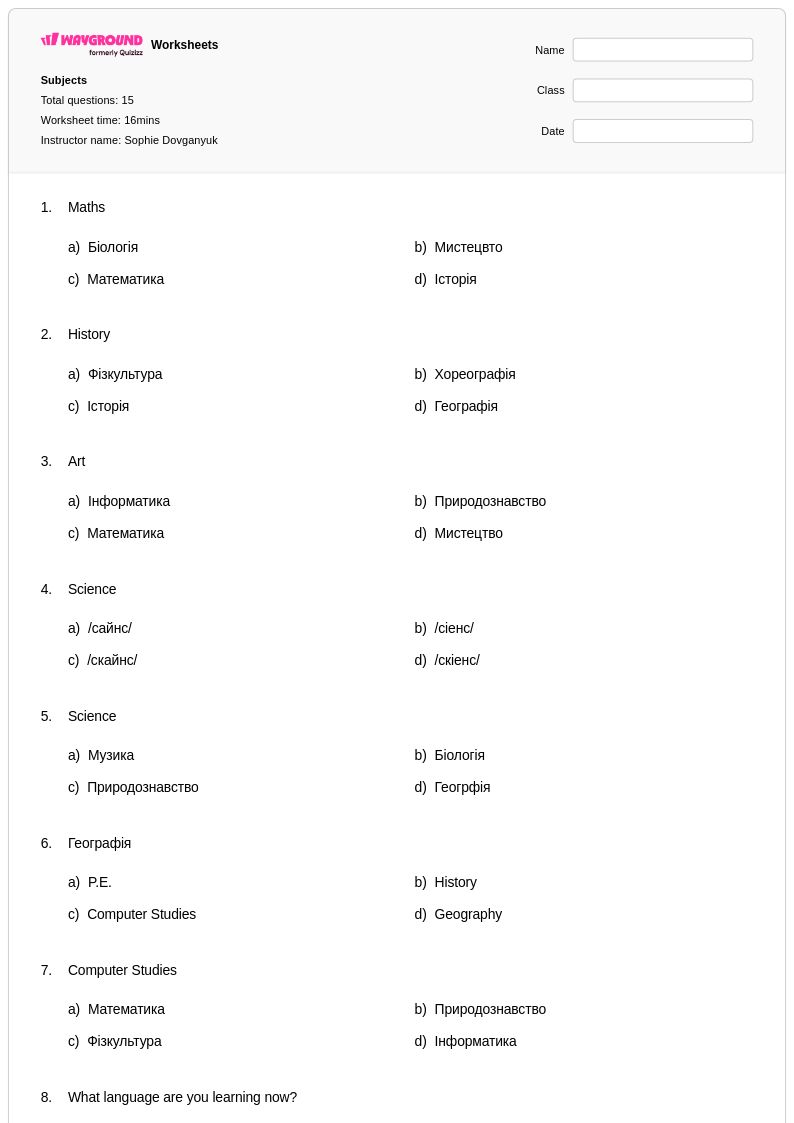
15 Q
1st - 5th
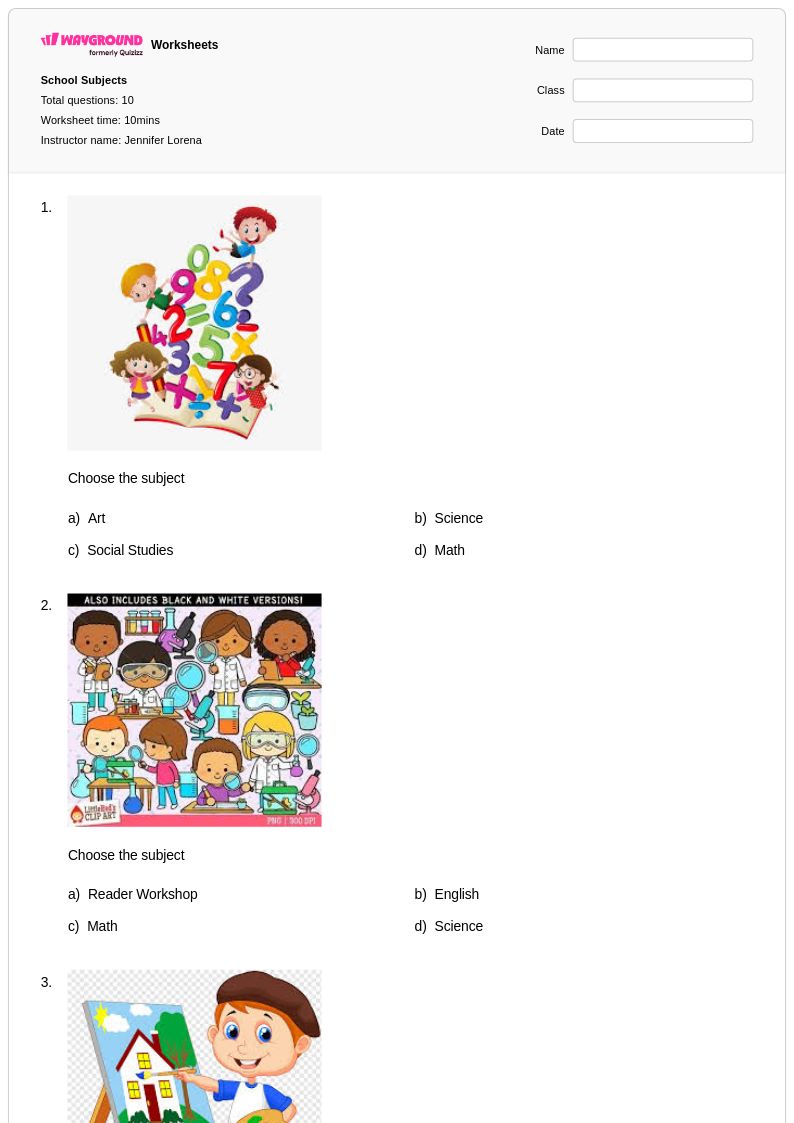
10 Q
2nd
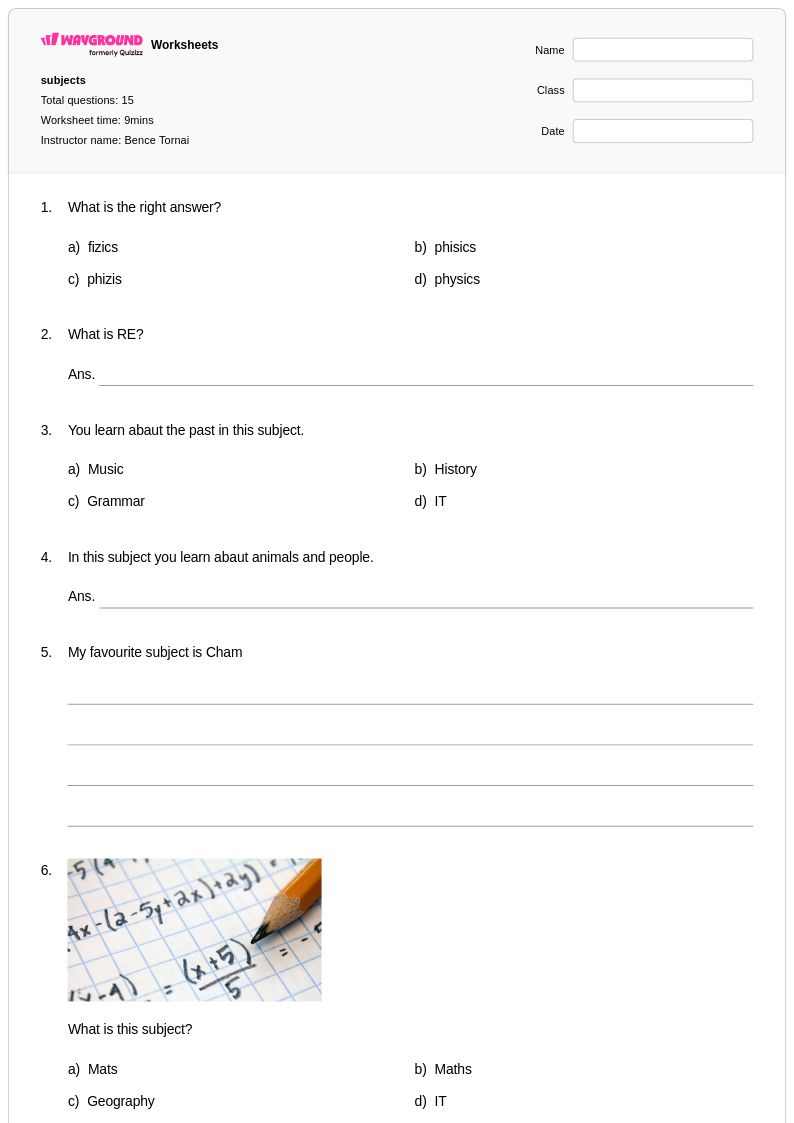
15 Q
2nd
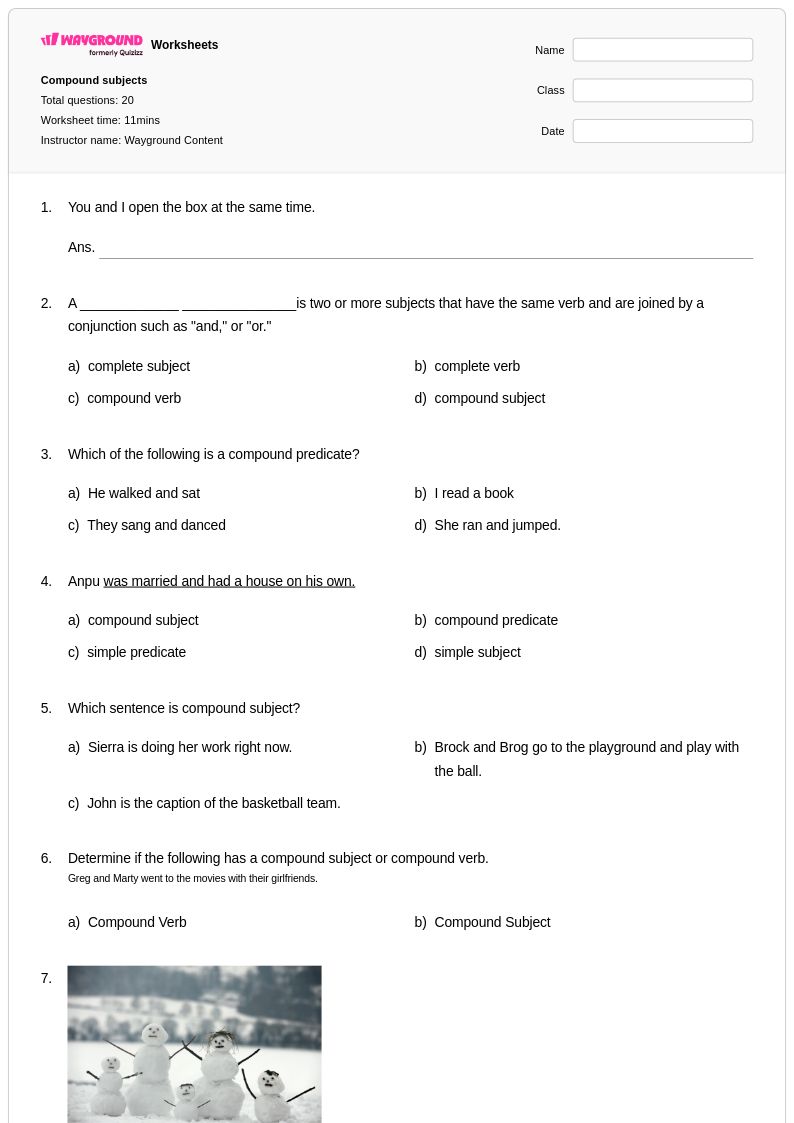
20 Q
1st - 3rd
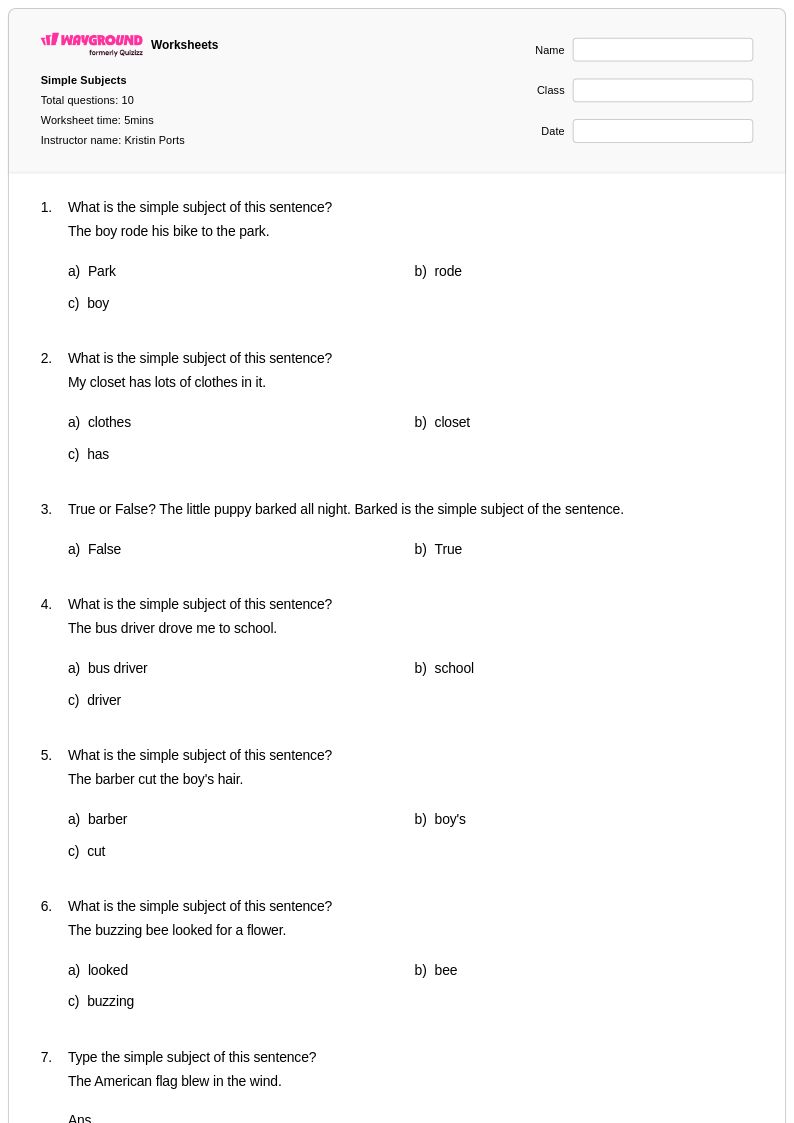
10 Q
2nd - 3rd
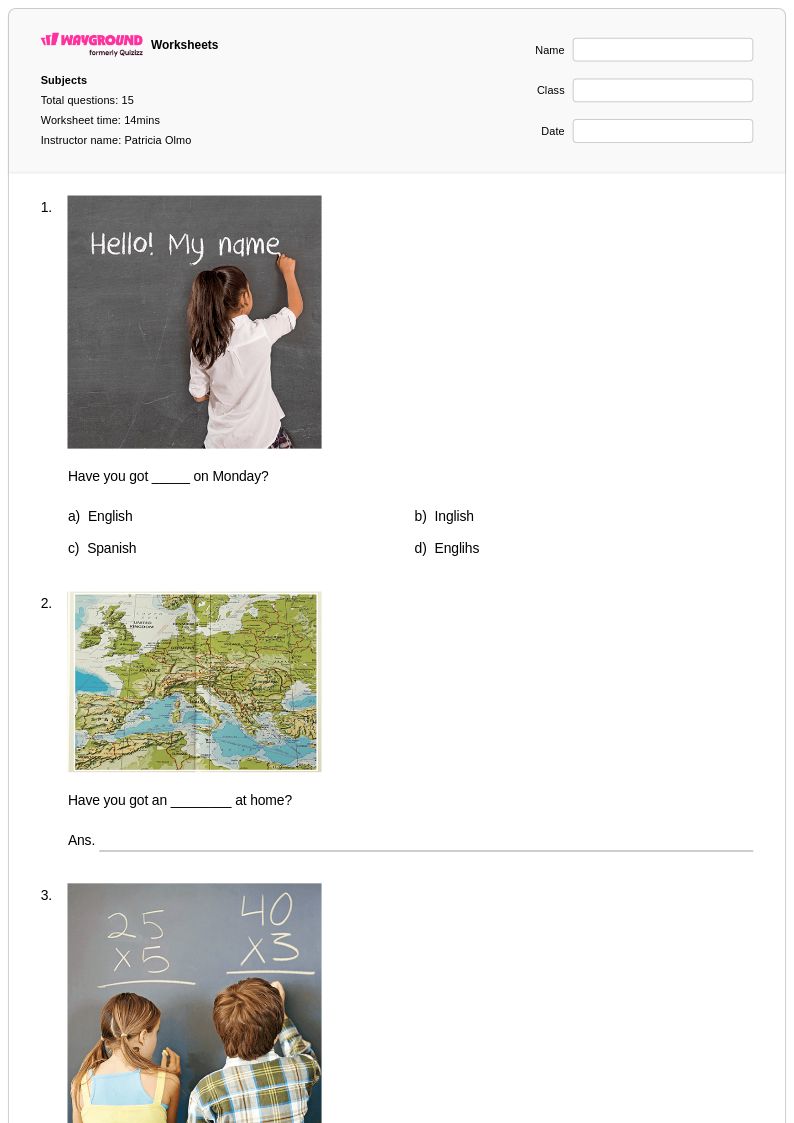
15 Q
1st - 10th
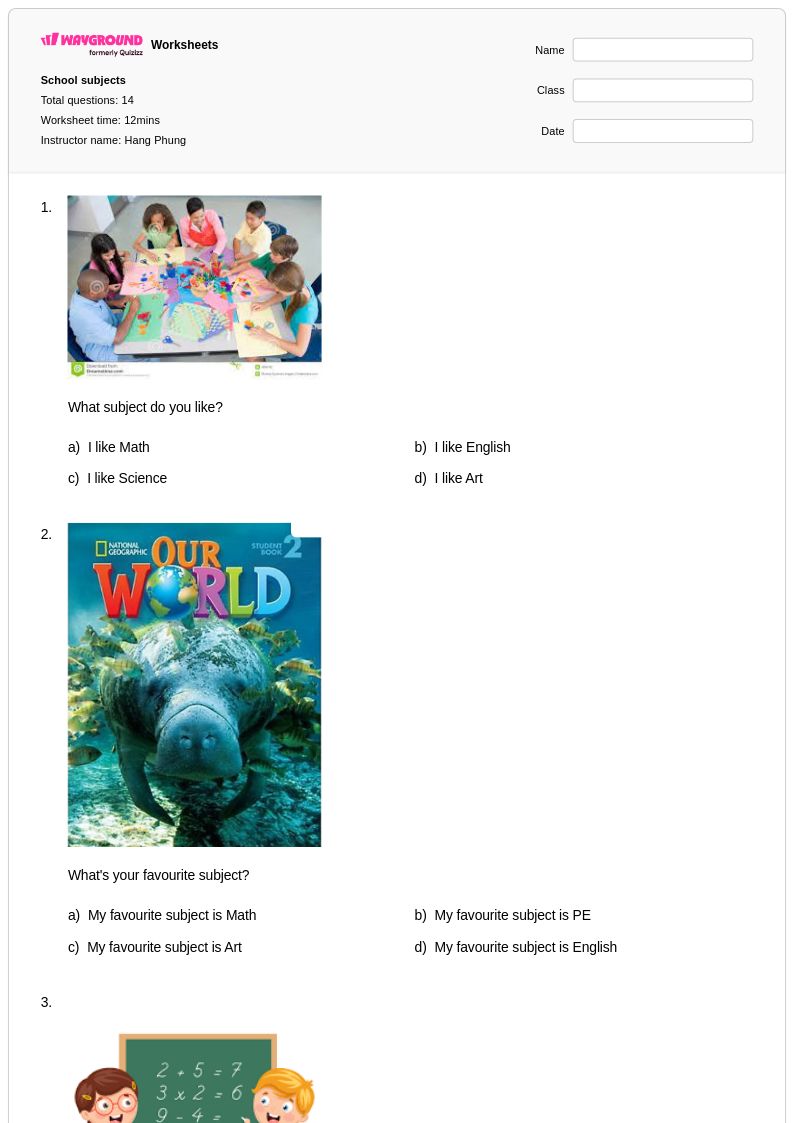
14 Q
2nd
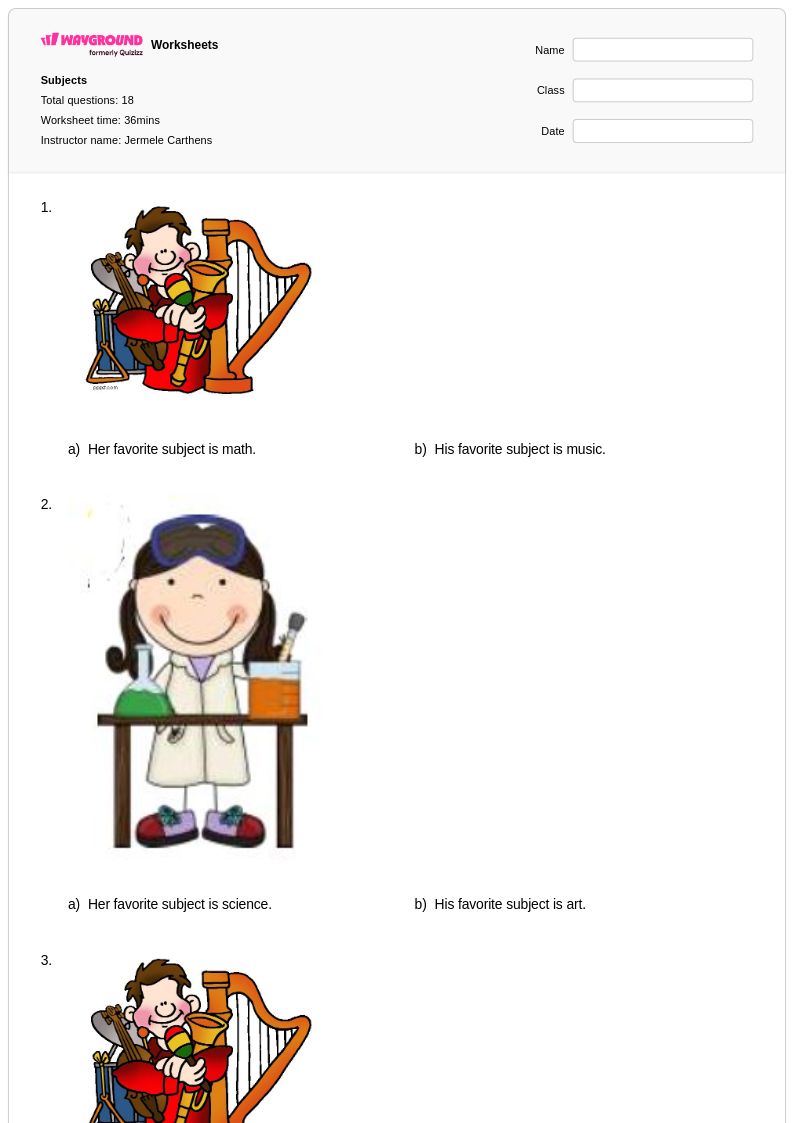
18 Q
2nd
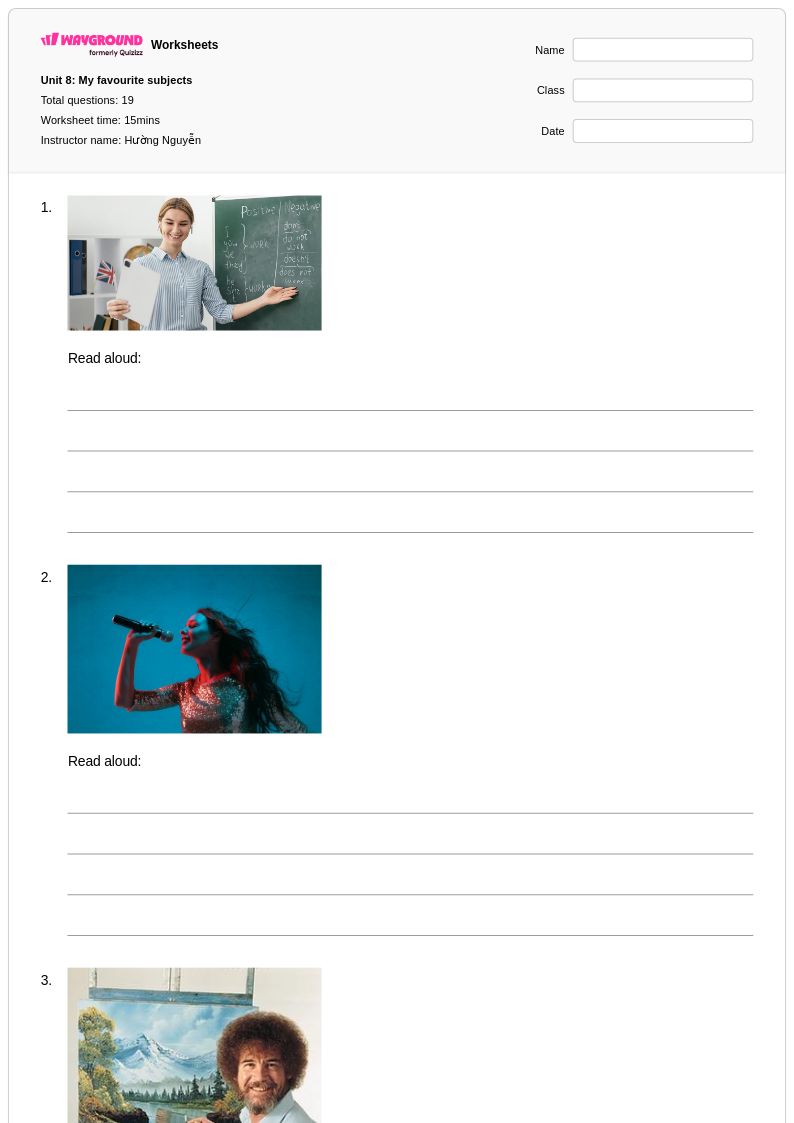
24 Q
1st - 5th
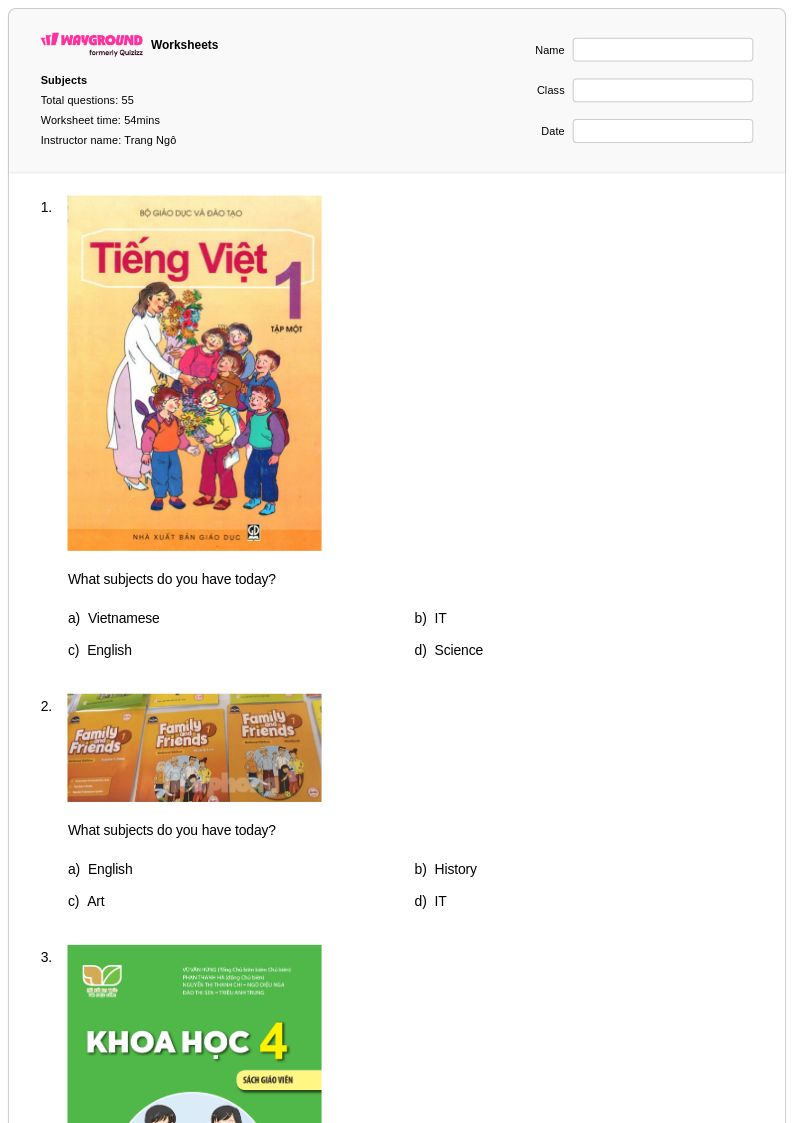
55 Q
1st - 5th
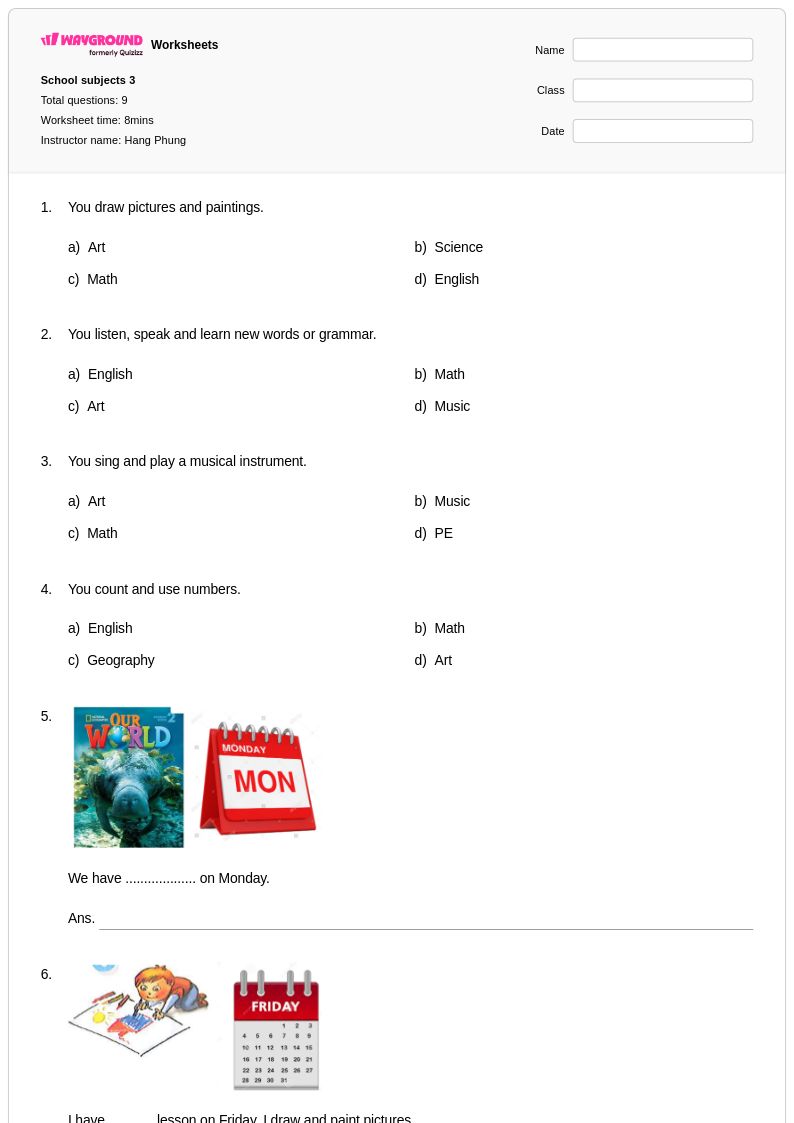
9 Q
2nd
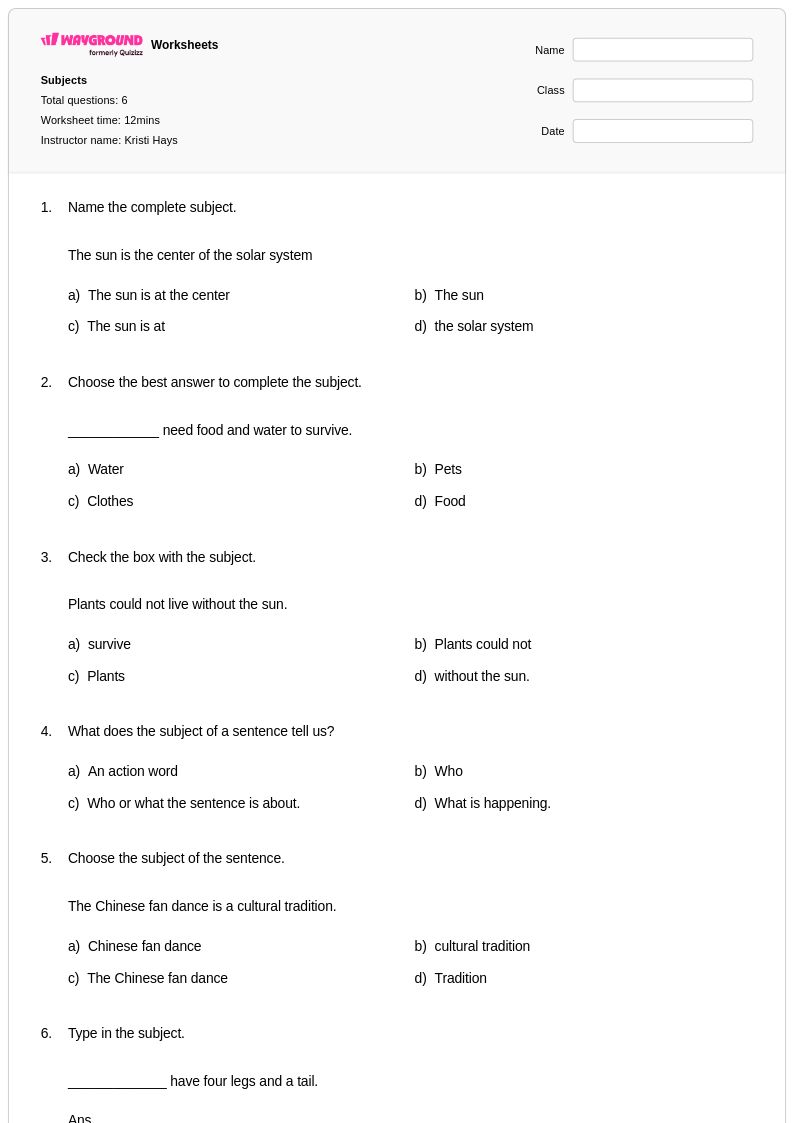
6 Q
1st - 3rd
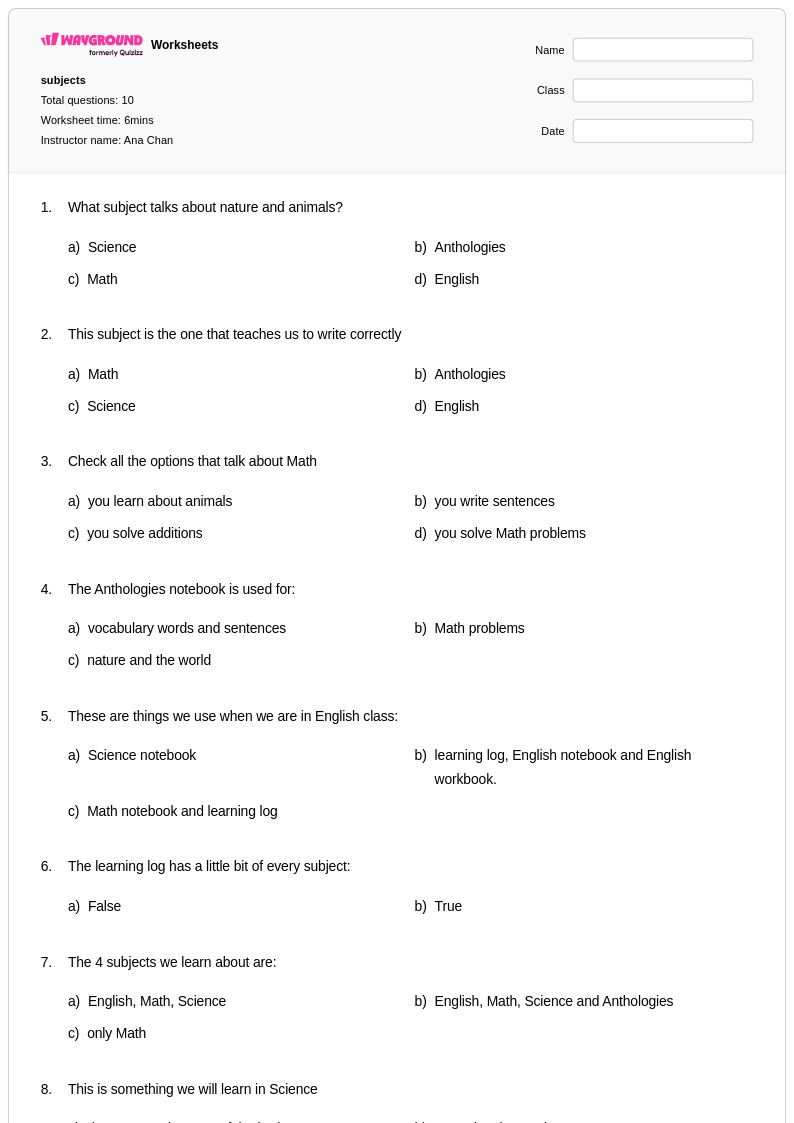
10 Q
2nd
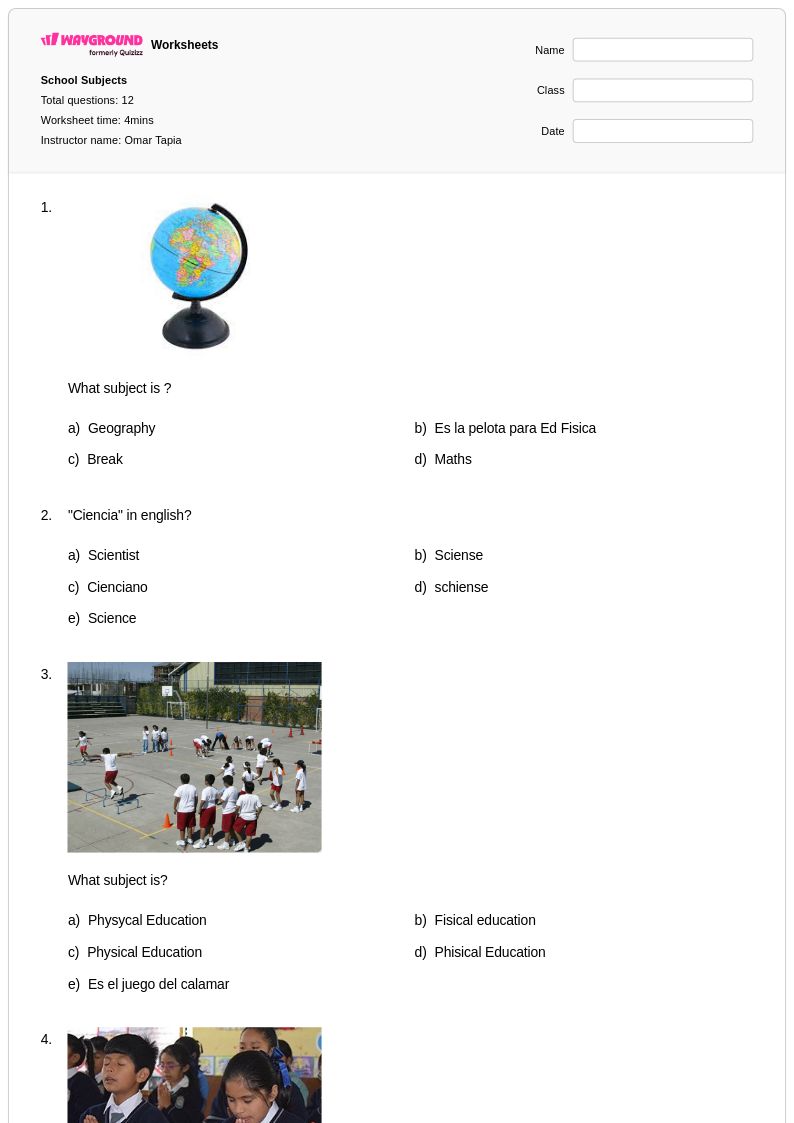
12 Q
1st - 11th
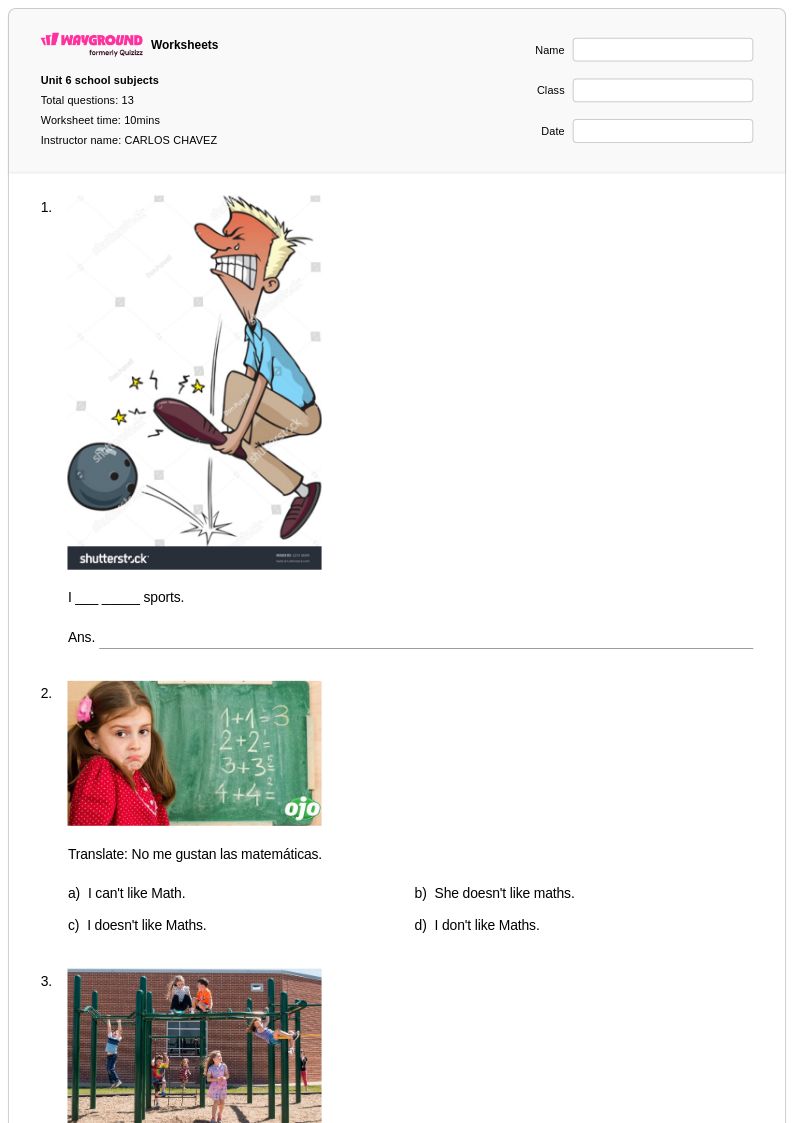
13 Q
2nd
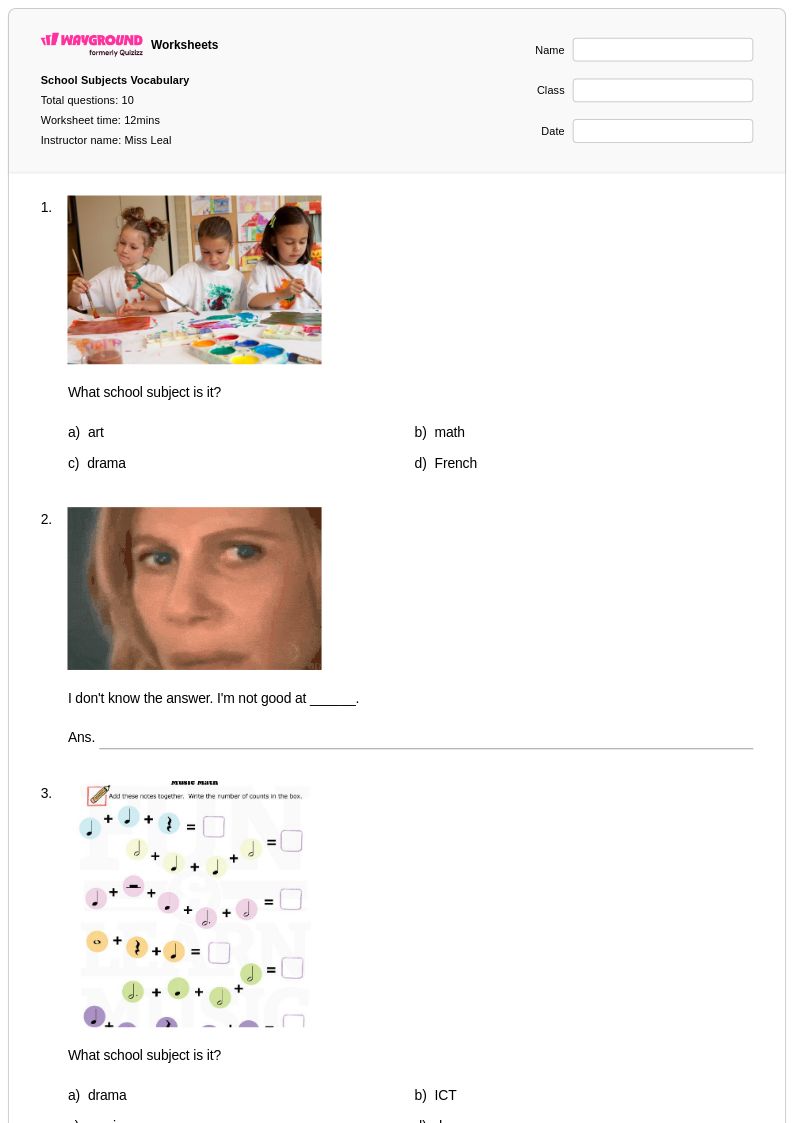
10 Q
1st - 2nd
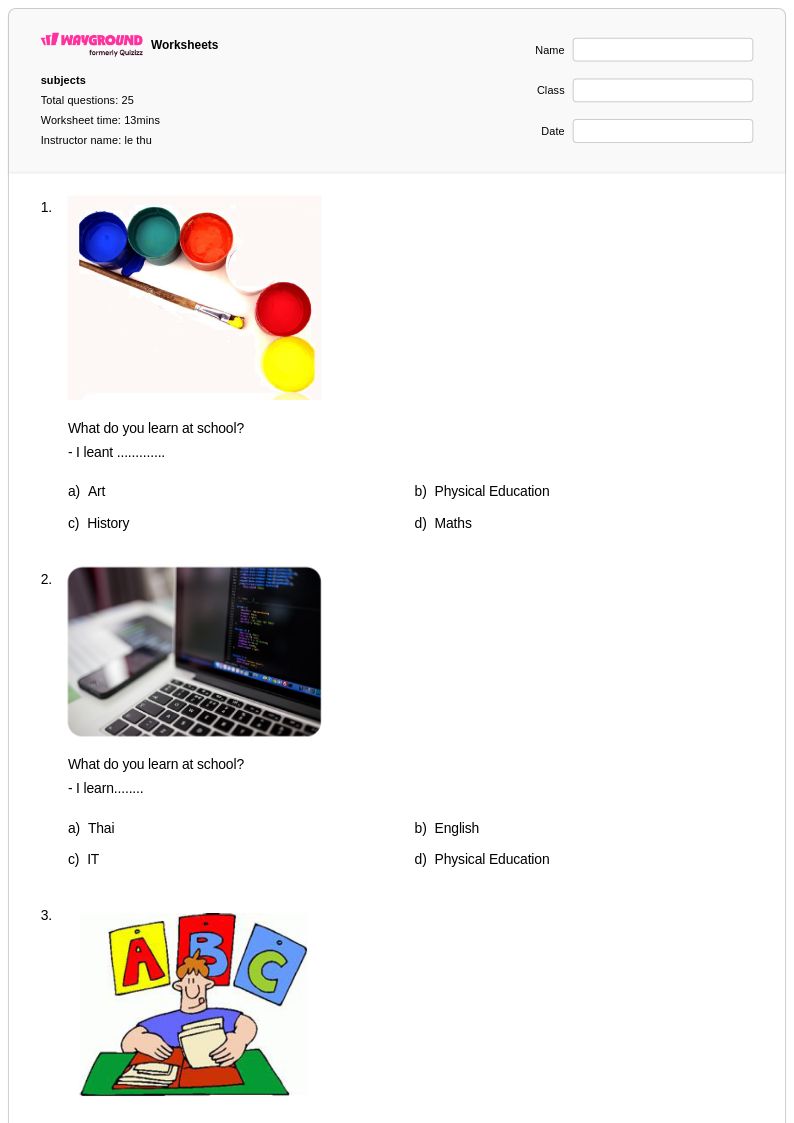
25 Q
1st - 5th
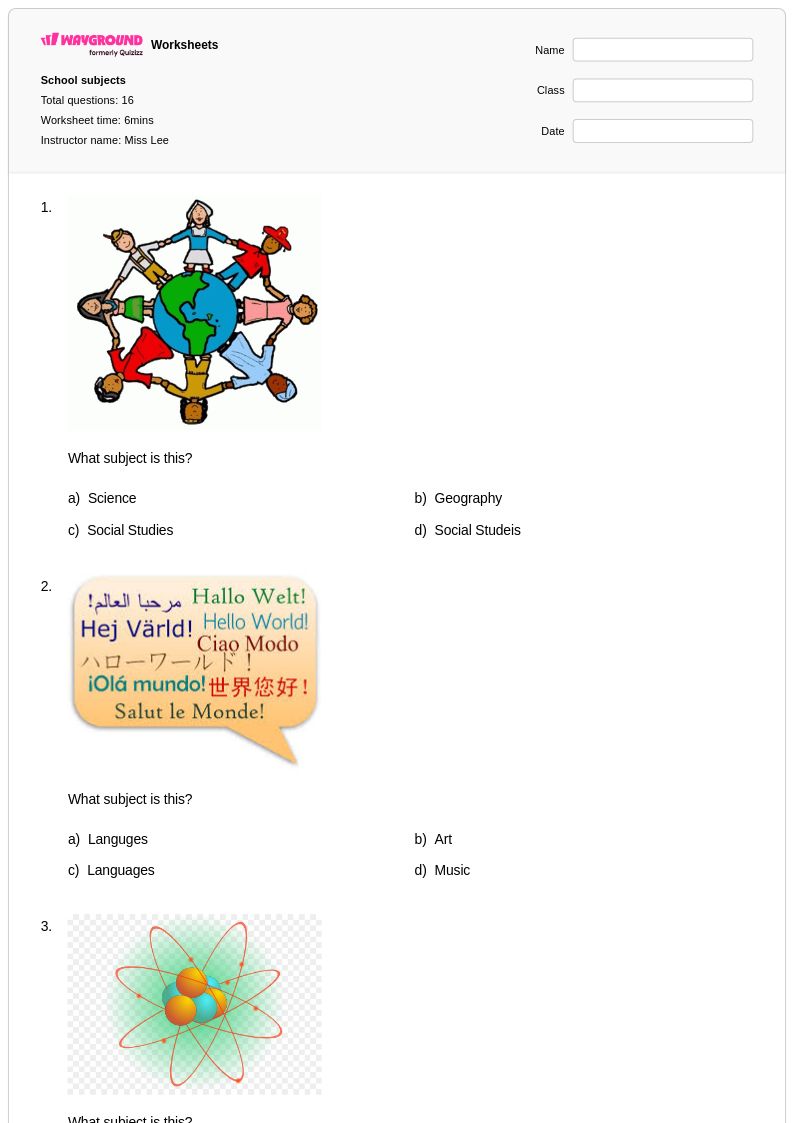
16 Q
1st - 12th
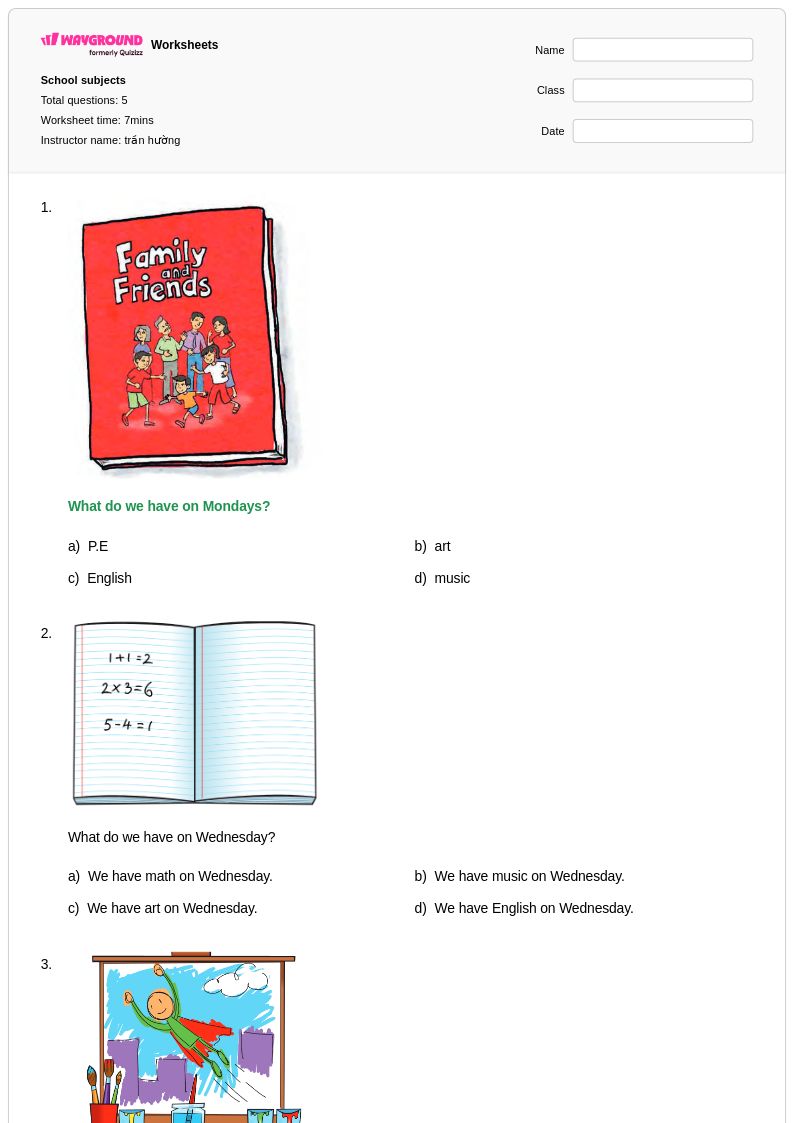
5 Q
1st - 5th

8 Q
2nd
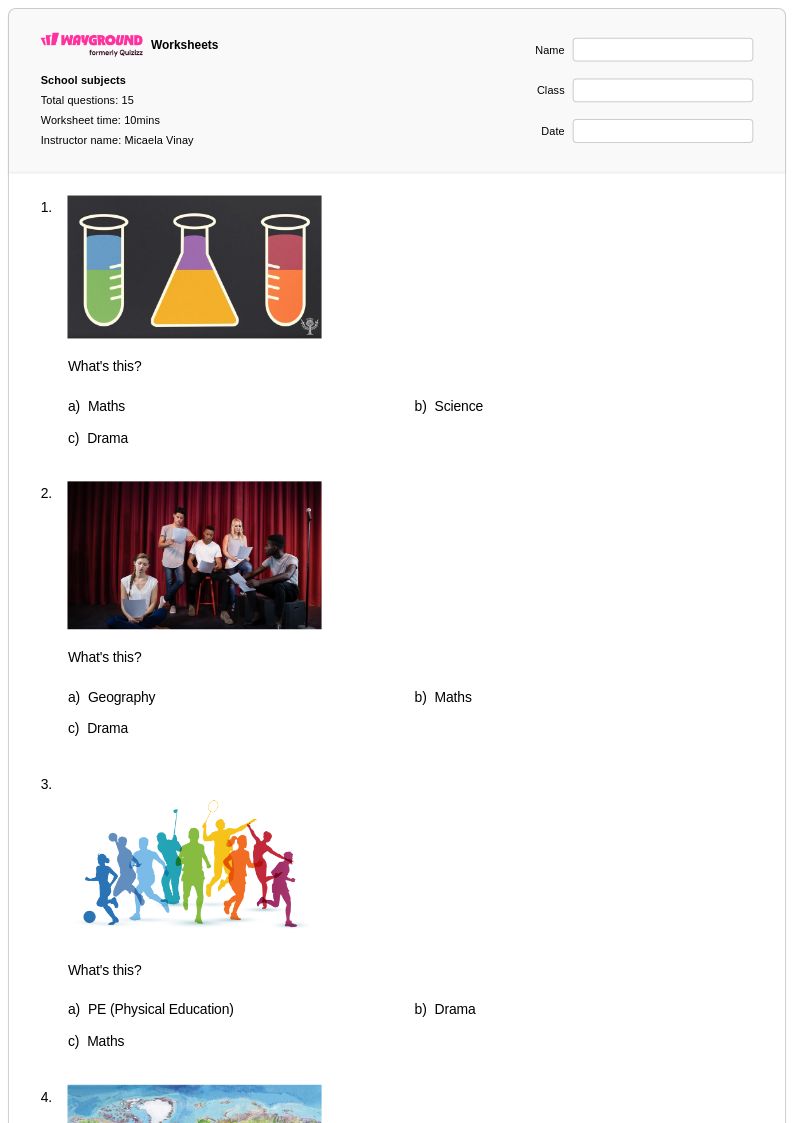
15 Q
2nd
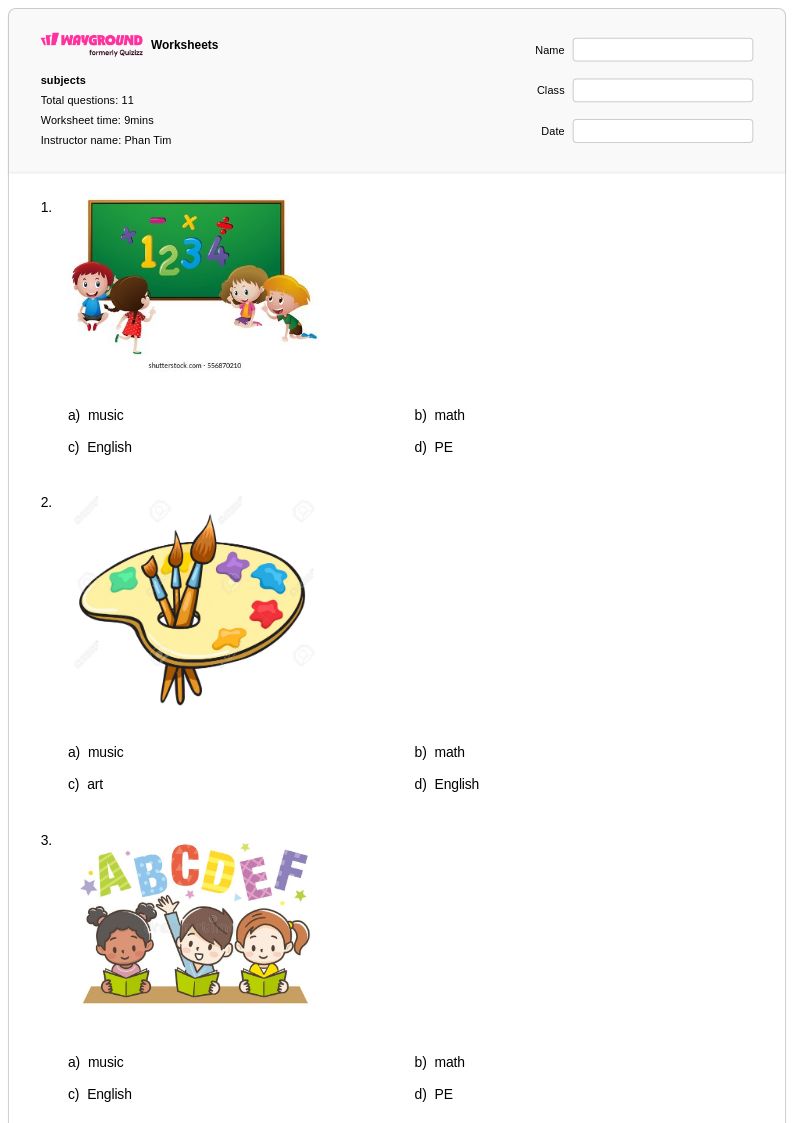
11 Q
2nd - 3rd
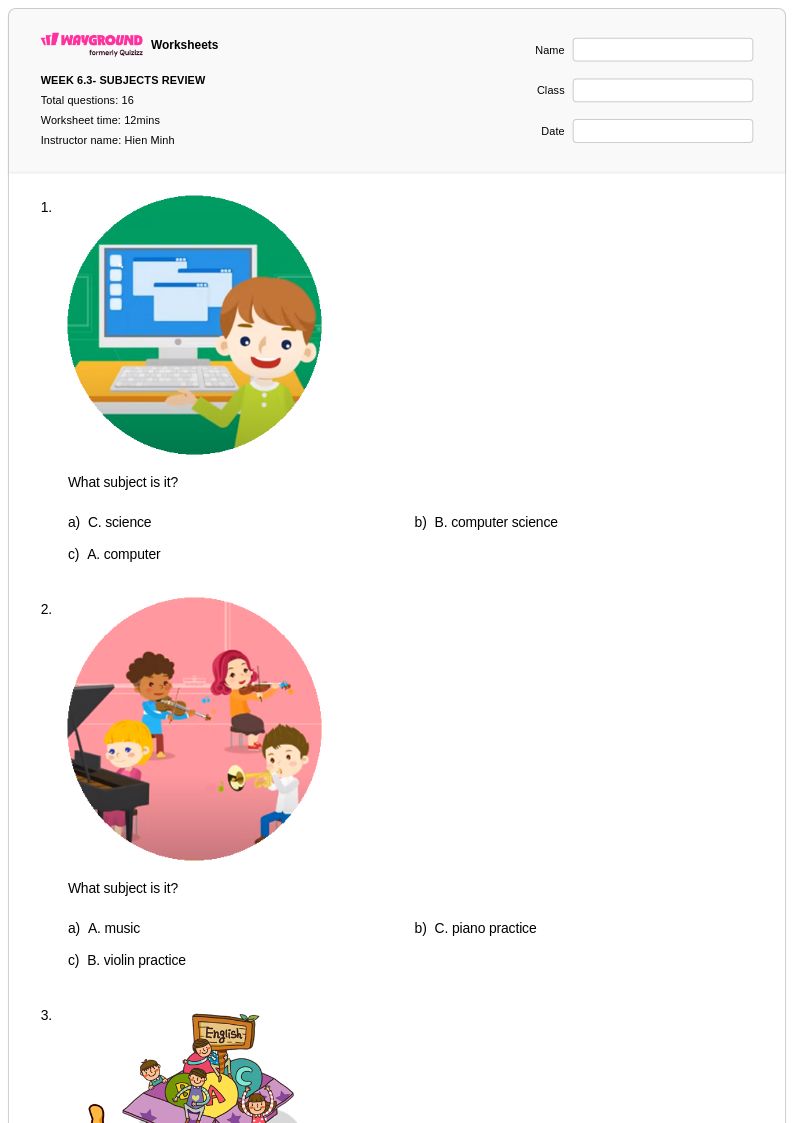
16 Q
2nd - 5th
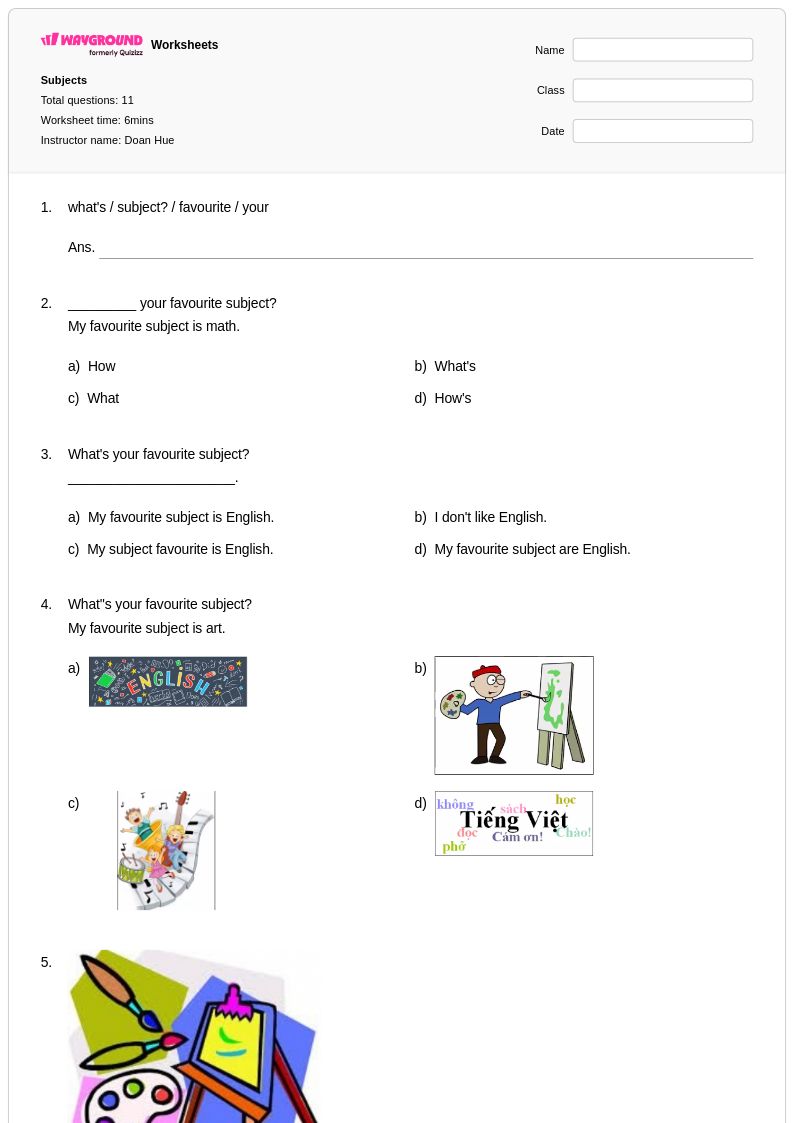
11 Q
2nd - 4th
Explore Other Subject Worksheets for year 2
Explore printable Subjects worksheets for Year 2
Subjects worksheets for Year 2 students available through Wayground (formerly Quizizz) provide essential foundation-building practice in identifying and understanding the central components of sentences. These comprehensive resources help young learners develop critical reading and writing skills by teaching them to recognize who or what is performing the action in various sentence structures. The worksheets feature age-appropriate exercises that guide second graders through identifying subjects in simple sentences, distinguishing between singular and plural subjects, and understanding how subjects relate to predicates. Each printable resource includes clear instructions, engaging activities, and a complete answer key to support both independent practice and guided instruction. These free educational materials offer diverse practice problems that range from basic subject identification to more complex exercises involving compound subjects, helping students build confidence in this fundamental grammar concept through systematic skill development.
Wayground (formerly Quizizz) empowers educators with an extensive collection of teacher-created subject identification worksheets, drawing from millions of carefully curated resources that support comprehensive Year 2 English instruction. The platform's robust search and filtering capabilities allow teachers to quickly locate materials that align with specific curriculum standards and learning objectives, while built-in differentiation tools enable customization for diverse learning needs and ability levels. These versatile worksheets are available in both digital and printable PDF formats, providing flexibility for classroom instruction, homework assignments, and remote learning environments. Teachers can leverage these resources for targeted remediation with struggling students, enrichment activities for advanced learners, and regular skill practice that reinforces subject identification concepts throughout the school year, making lesson planning more efficient and instruction more effective.
FAQs
How do I teach students to identify the subject of a sentence?
What is the difference between a simple subject and a complete subject?
What exercises help students practice identifying sentence subjects?
What mistakes do students commonly make when identifying sentence subjects?
How do I support struggling students who can't identify subjects in complex sentences?
How do I use Wayground's subjects worksheets in my classroom?