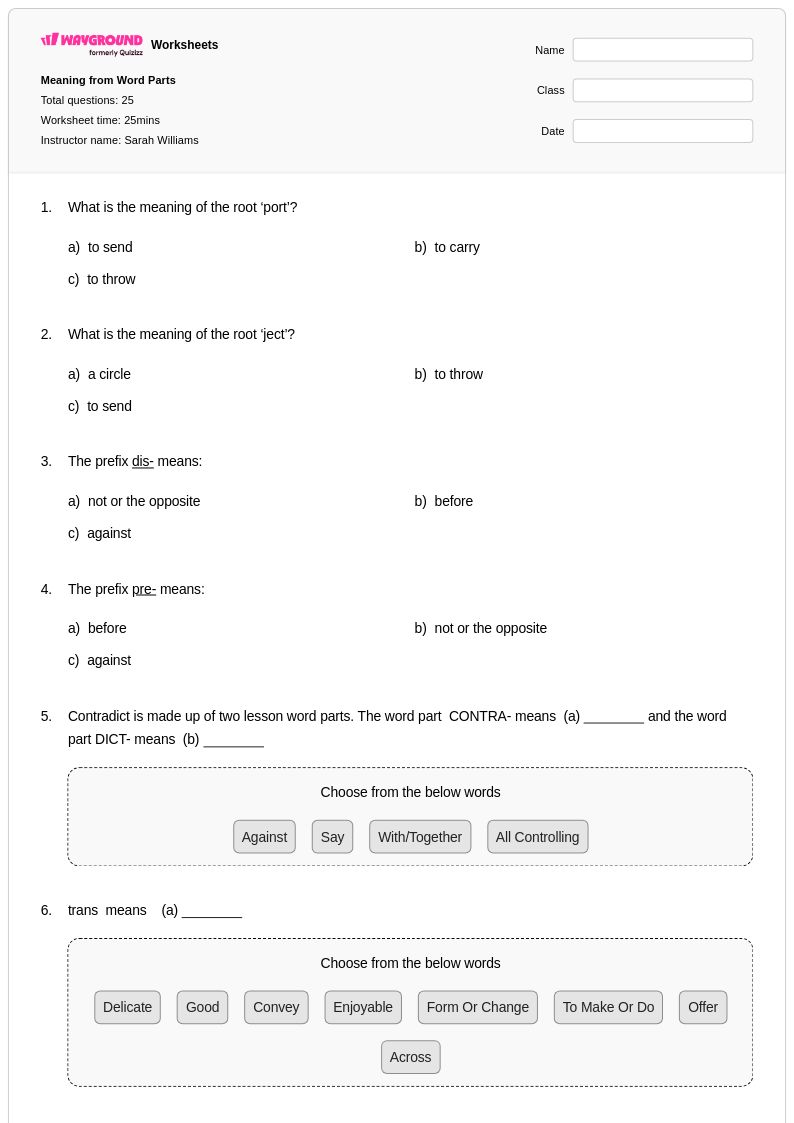
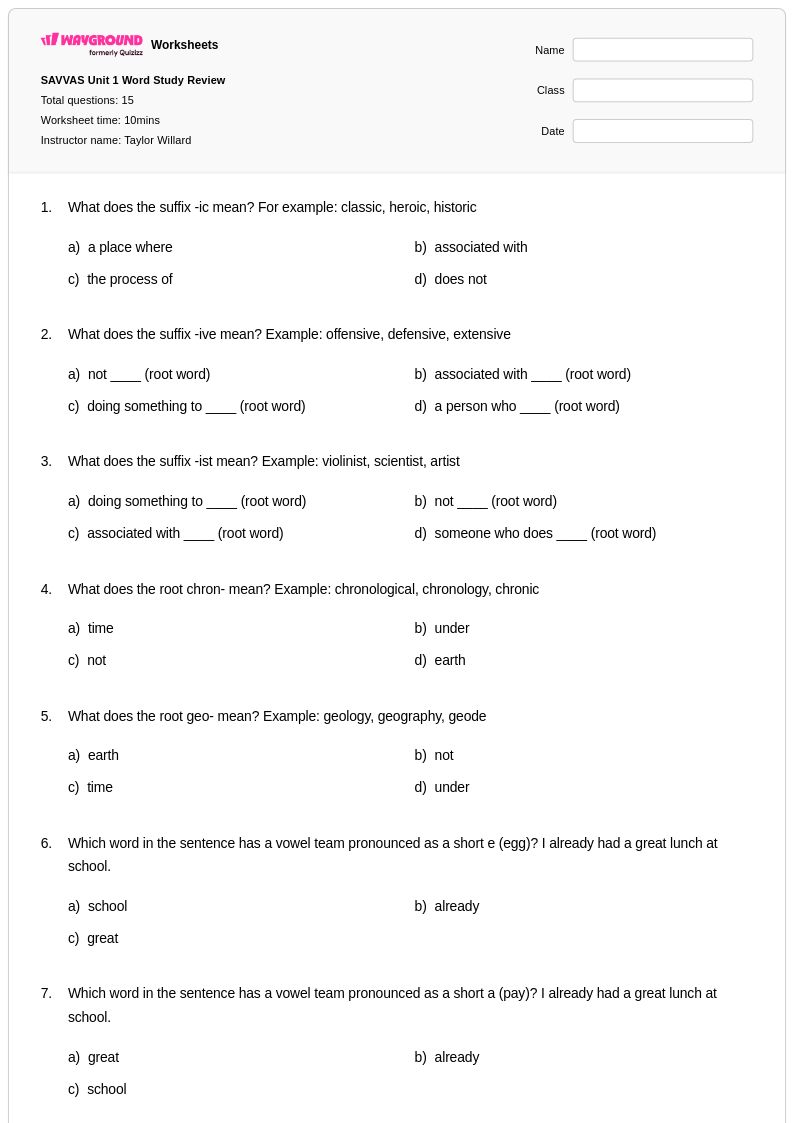
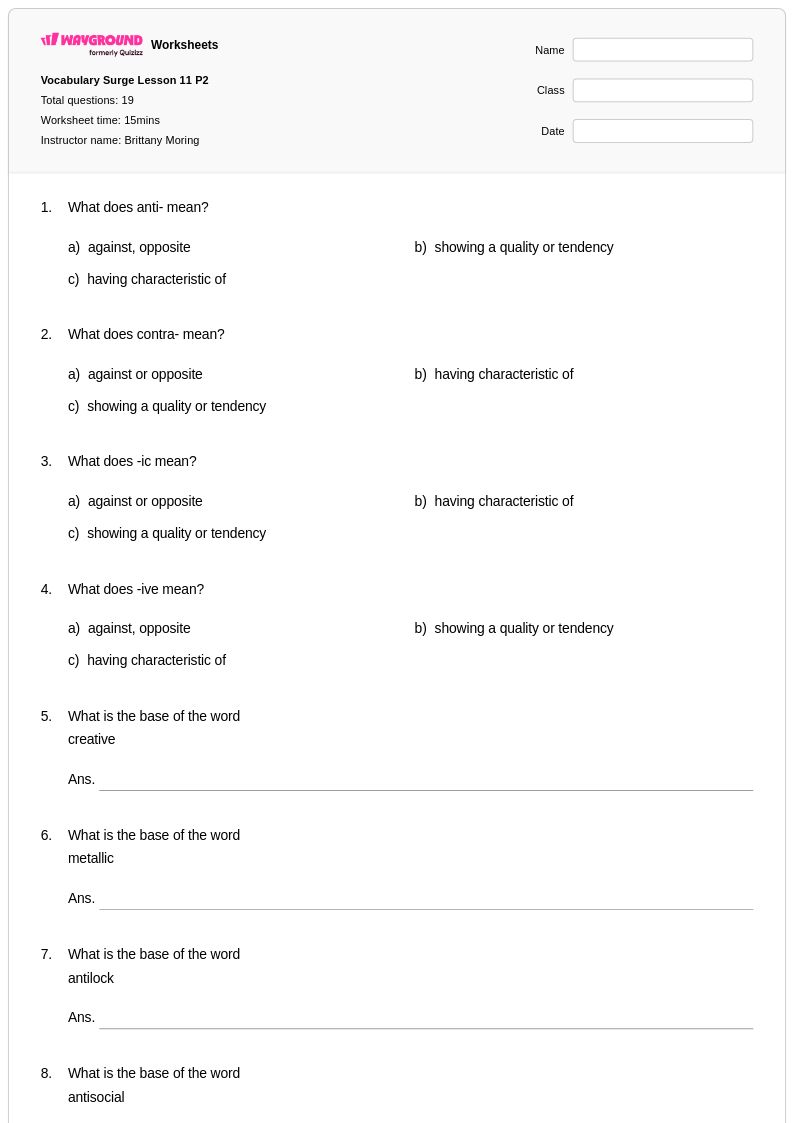
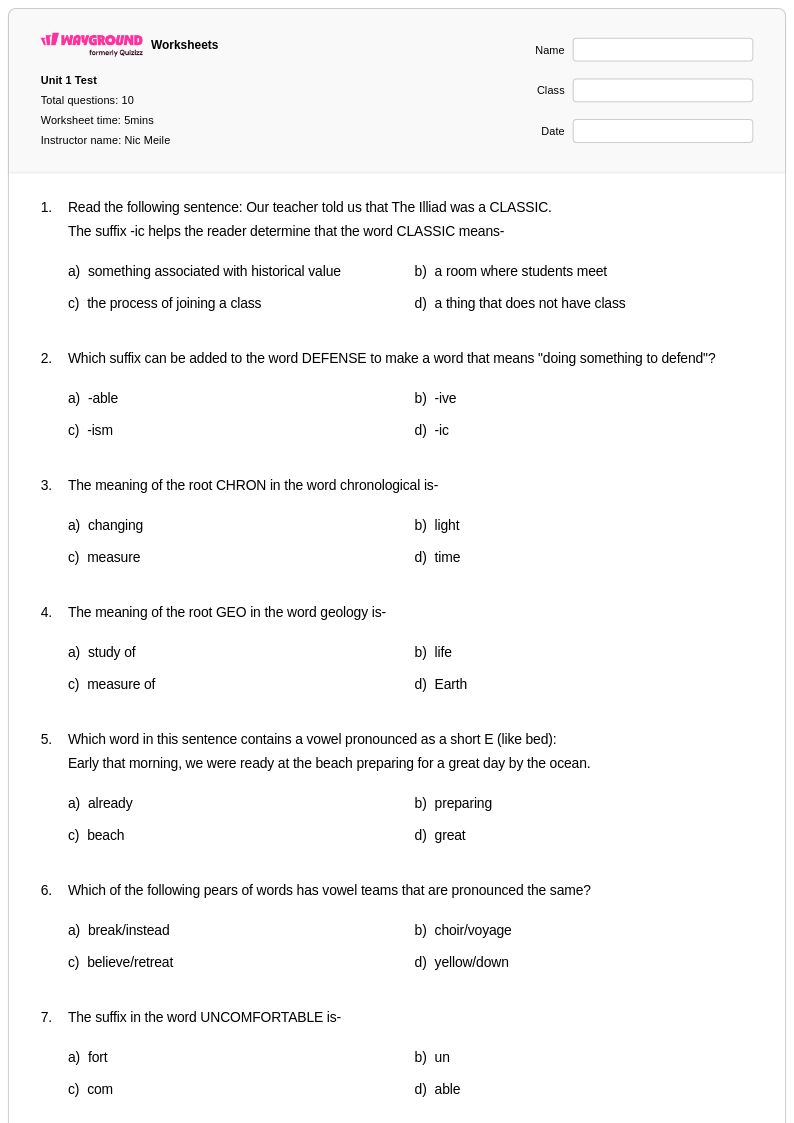
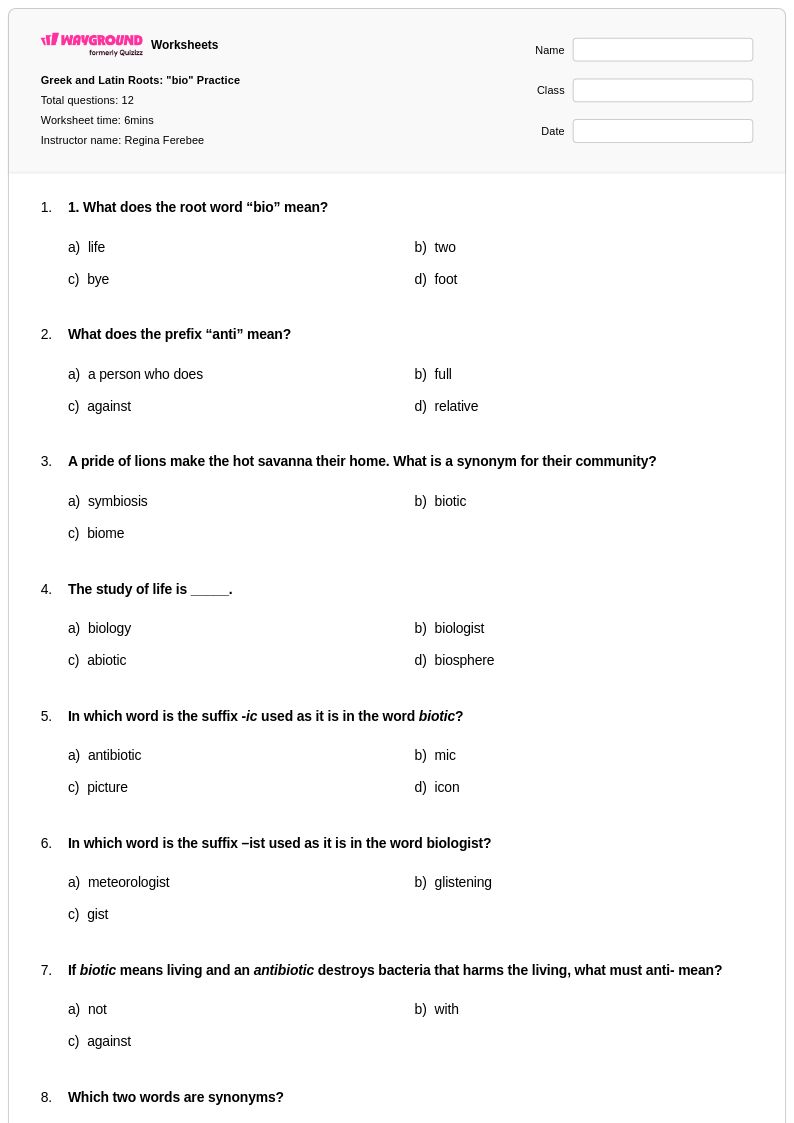
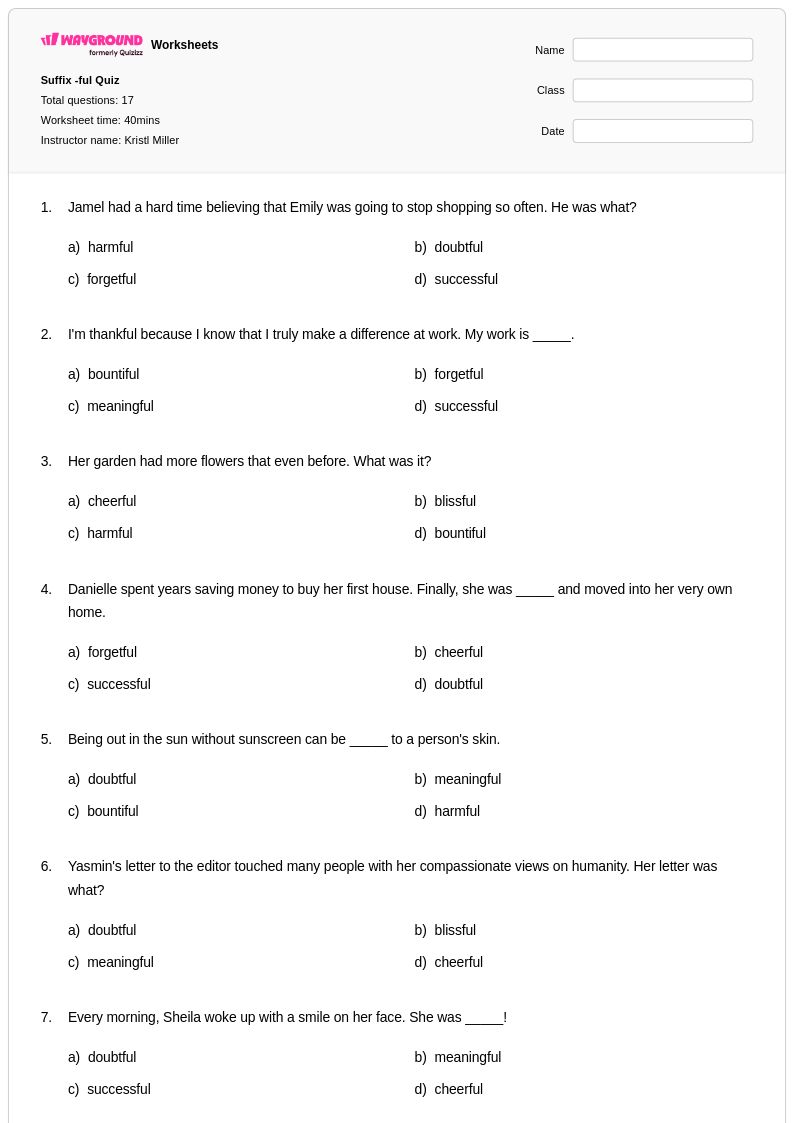
Year 5 students master the suffix -ic through Wayground's comprehensive collection of free worksheets and printables, featuring engaging practice problems and answer keys to reinforce word pattern recognition skills.
Explore printable Suffix -Ic worksheets for Year 5
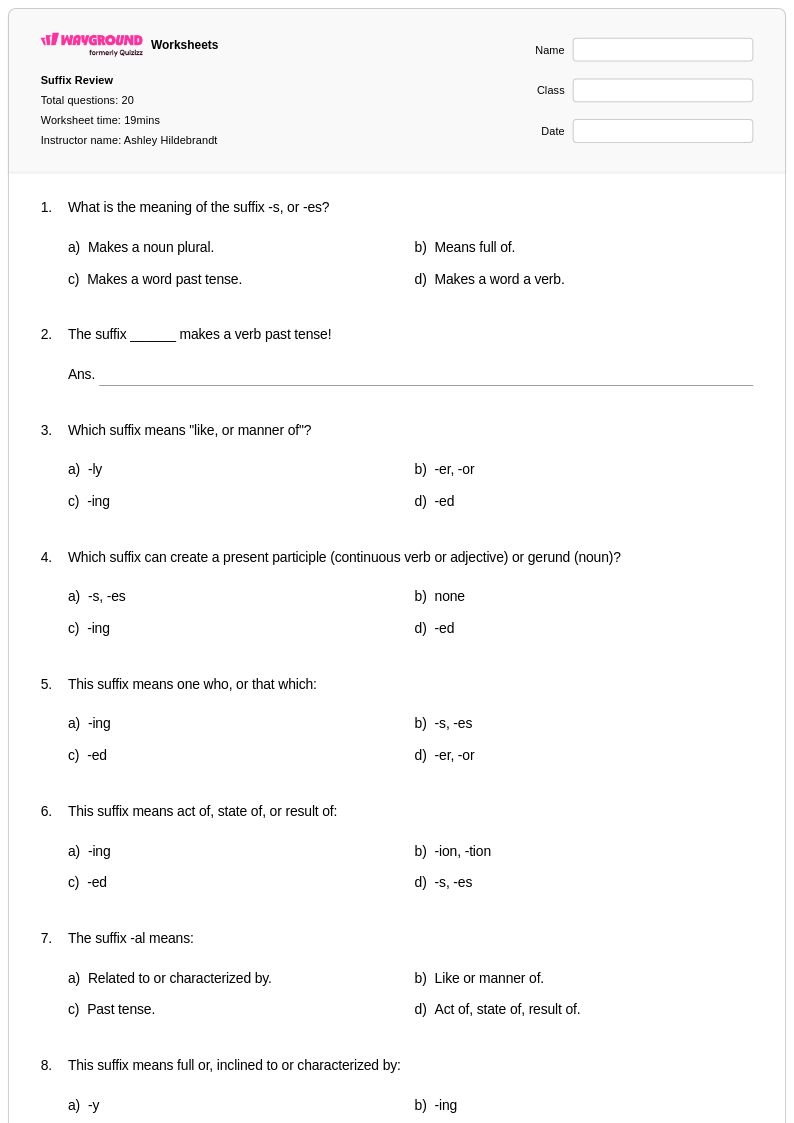
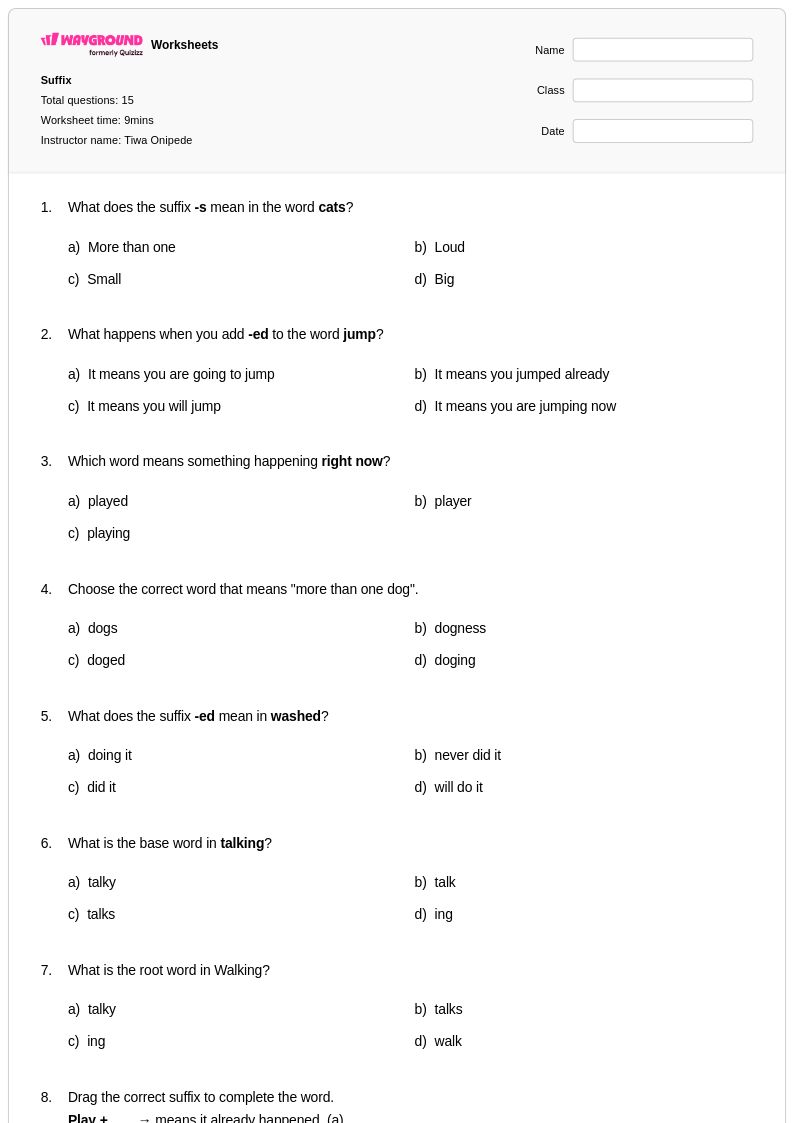
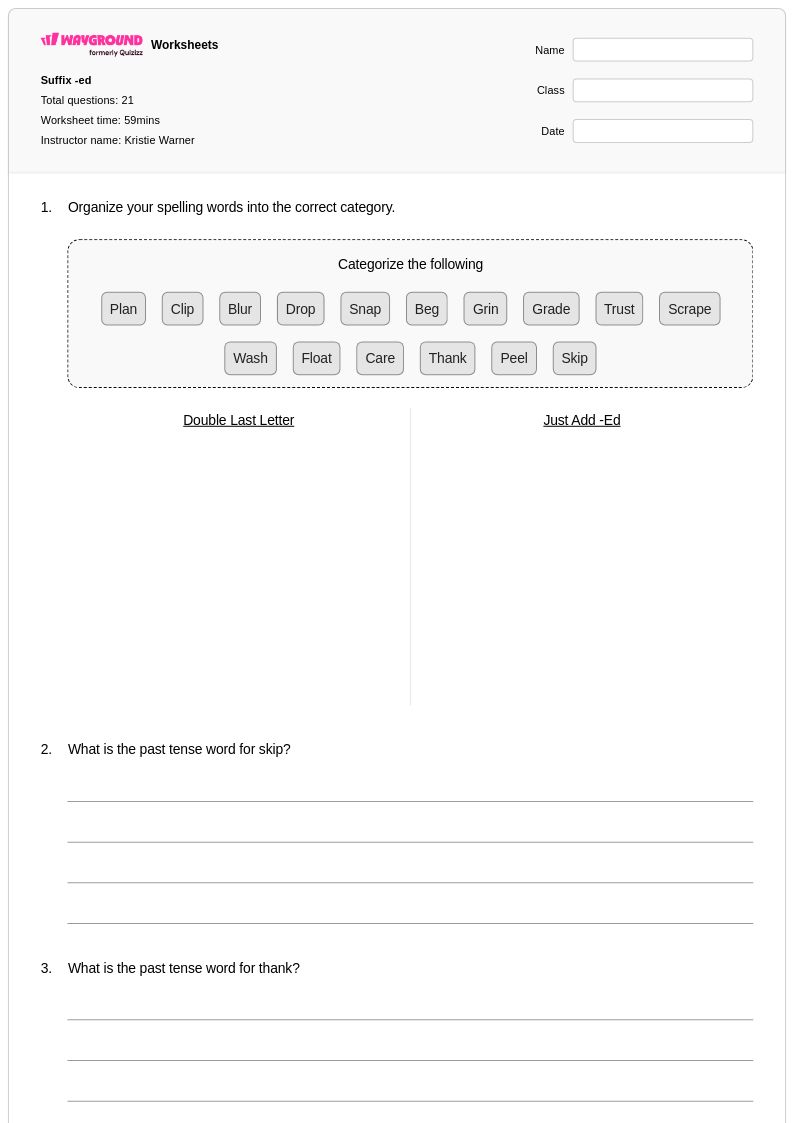
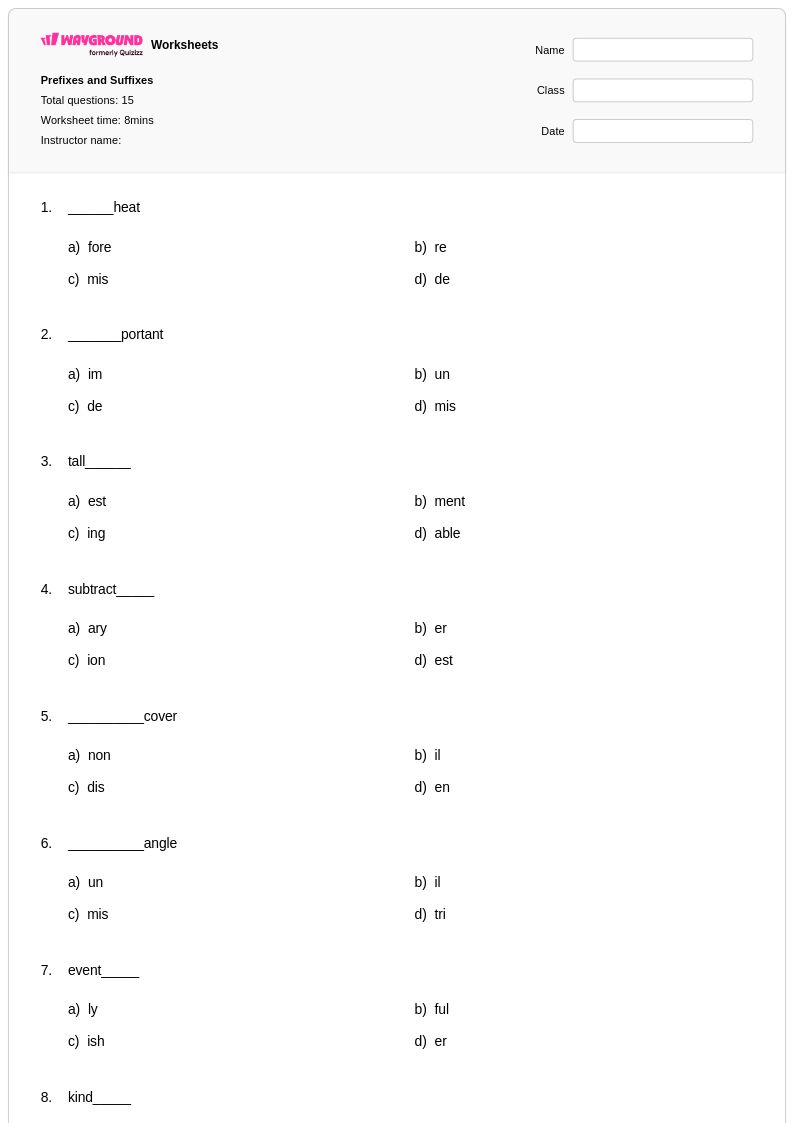
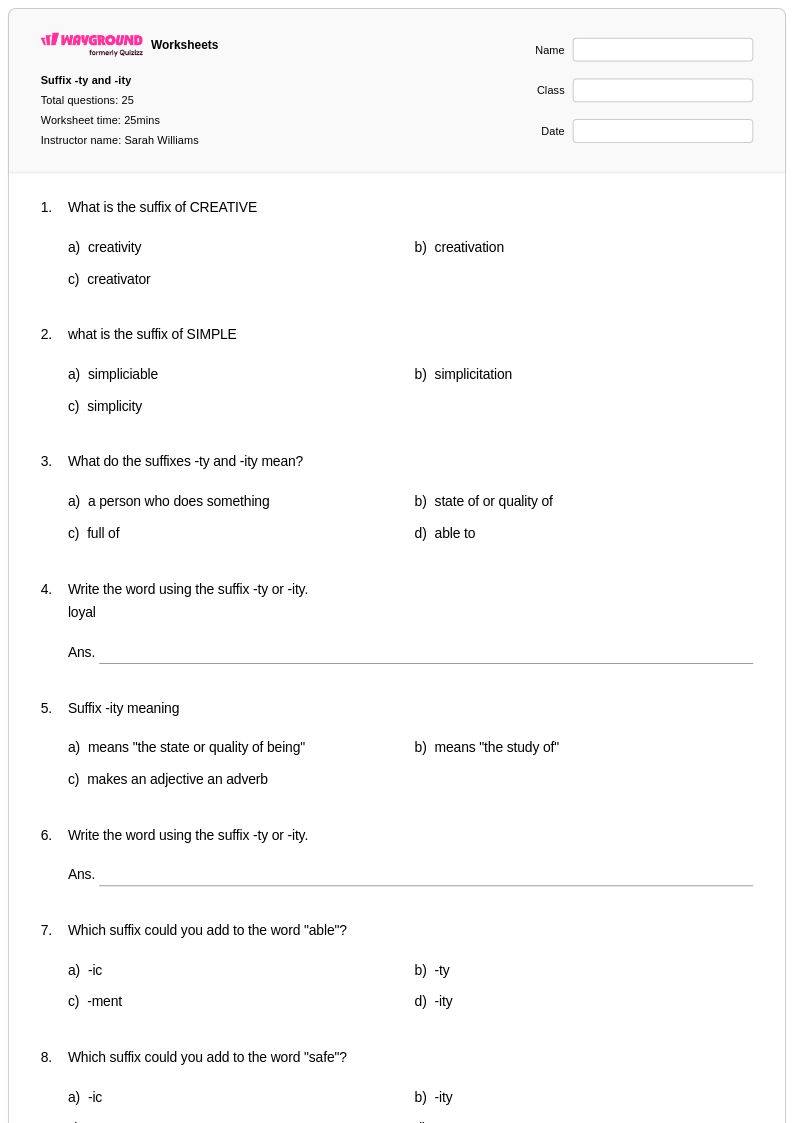
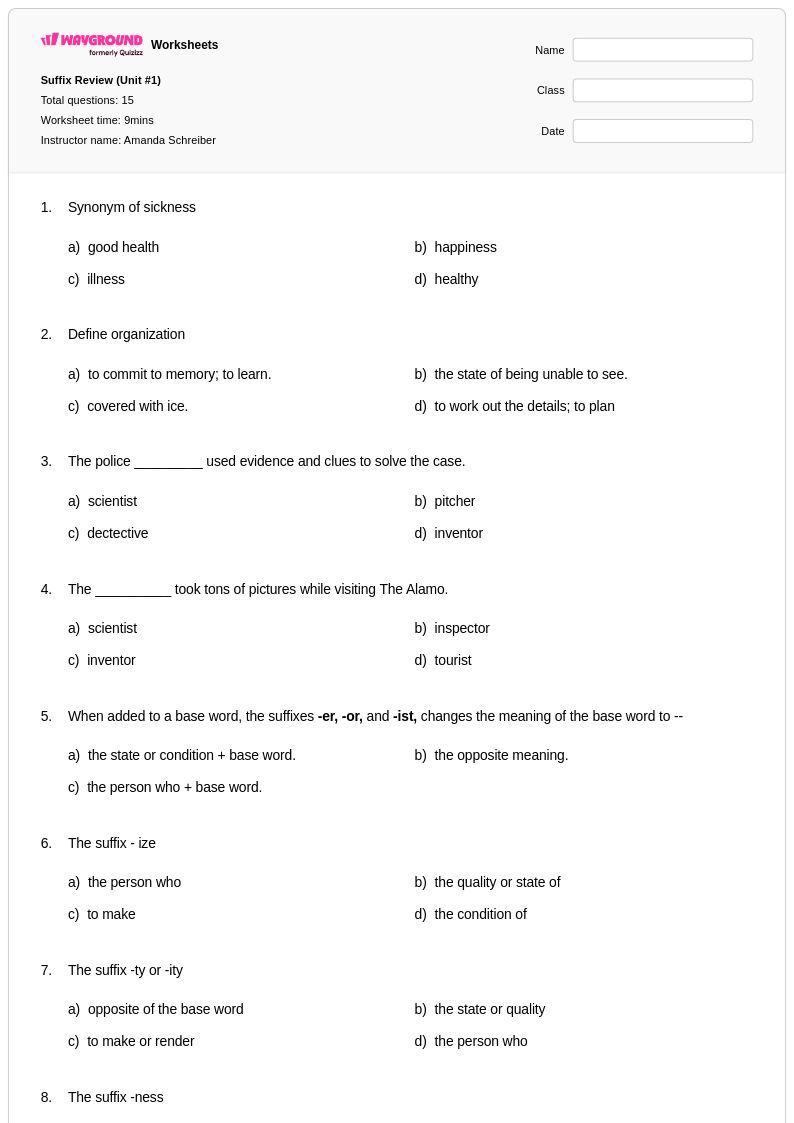
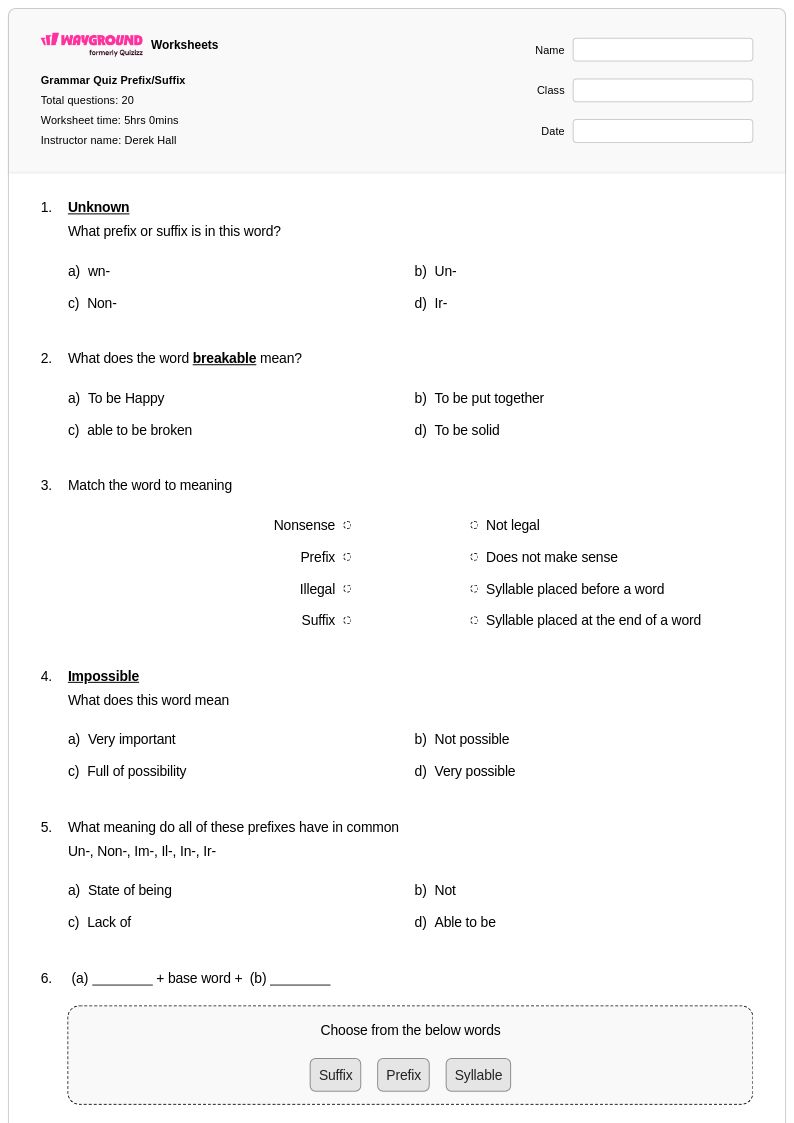
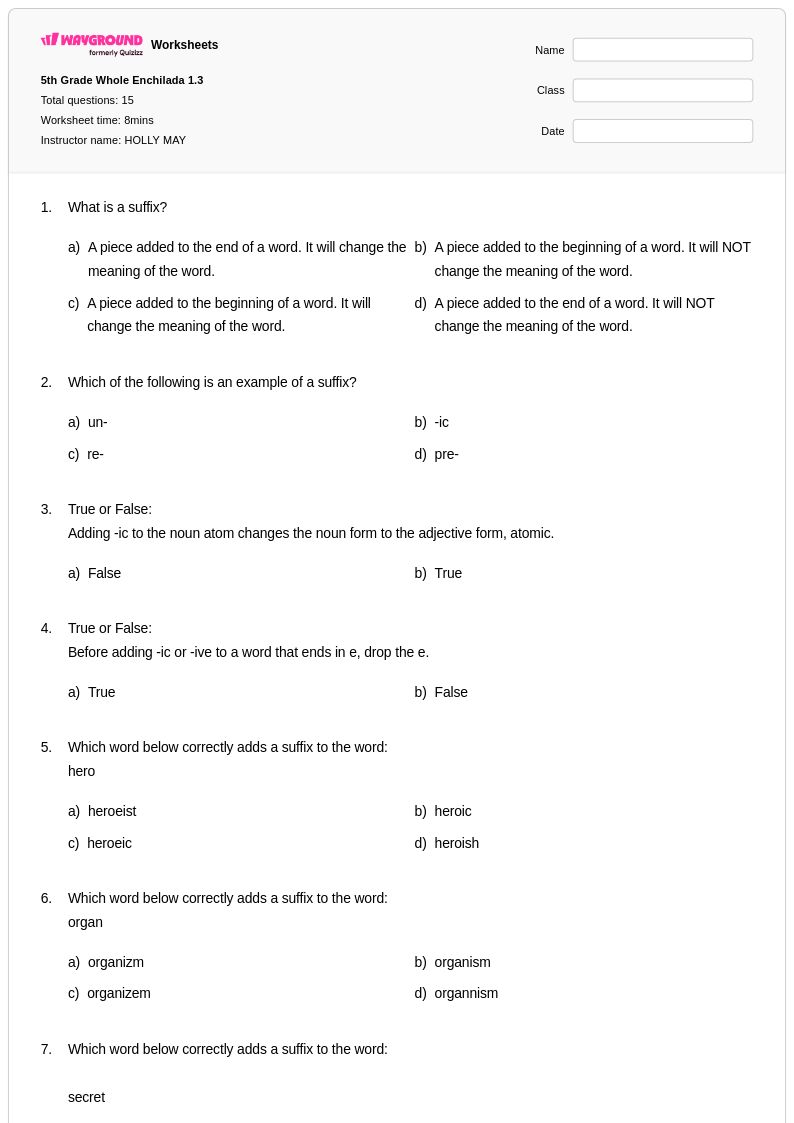
Year 5 suffix -ic worksheets available through Wayground (formerly Quizizz) provide comprehensive practice with this essential word pattern that transforms nouns into adjectives. These educational resources strengthen students' morphological awareness by teaching them to recognize how the suffix -ic creates descriptive words like "heroic" from "hero," "artistic" from "artist," and "historic" from "history." The worksheets include diverse practice problems that challenge fifth graders to identify base words, apply the suffix correctly, and understand meaning changes that occur during transformation. Each printable resource comes with a detailed answer key, making independent study and self-assessment possible, while the free pdf format ensures easy classroom distribution and homework assignments that reinforce this critical spelling and vocabulary pattern.
Wayground (formerly Quizizz) supports educators with millions of teacher-created suffix -ic worksheet collections that feature robust search and filtering capabilities for quick resource discovery. The platform's standards-aligned materials offer flexible customization options, allowing teachers to modify existing worksheets or combine multiple resources to meet diverse learning needs within their Year 5 classrooms. These differentiation tools prove invaluable for remediation with struggling readers, enrichment for advanced learners, and targeted skill practice during intervention periods. Available in both printable and digital formats including downloadable pdf versions, these worksheet collections streamline lesson planning while providing consistent, high-quality practice opportunities that help students master this fundamental English word pattern through repeated exposure and application.
FAQs
How do I teach the suffix -ic to students?
Start by introducing the suffix -ic as a word-forming element that transforms nouns into adjectives, using familiar examples like 'history' becoming 'historic' or 'drama' becoming 'dramatic.' Teach students to identify the base word first, then apply the spelling change rule — many base words ending in 'y' drop that letter before adding -ic. Anchor instruction in word families so students see the pattern across multiple examples rather than memorizing individual words in isolation.
What exercises help students practice words with the suffix -ic?
Effective practice for the suffix -ic includes transformation exercises where students convert given nouns into their adjective forms, sentence completion tasks that require selecting the correctly formed -ic word, and word sort activities that group base words with their -ic derivatives. Recognition exercises — where students identify the -ic suffix in context and determine the original base word — build morphological awareness and strengthen both spelling and vocabulary skills.
What mistakes do students commonly make with the suffix -ic?
The most common error is failing to drop the 'y' when the base word ends in that letter, leading to misspellings like 'historyic' instead of 'historic.' Students also frequently confuse -ic with other adjectival suffixes such as -ical (e.g., 'historic' vs. 'historical'), not recognizing that both forms can exist with different or overlapping meanings. Additionally, students may struggle to identify the base word in less transparent derivations, making it helpful to build vocabulary explicitly alongside suffix instruction.
How can I use suffix -ic worksheets to support different skill levels in the same class?
For students who are still developing foundational skills, begin with high-frequency, transparent word pairs like 'atom/atomic' before moving to less obvious derivations. Advanced students can work with more complex base words and be challenged to generate original sentences or identify -ic words in authentic texts. On Wayground, teachers can apply accommodations such as reduced answer choices for students who need additional support, and enable Read Aloud so questions are read to students who benefit from audio access — all without other students being notified of these adjustments.
How do I use Wayground's suffix -ic worksheets in my classroom?
Wayground's suffix -ic worksheets are available as printable PDFs for traditional classroom use and in digital formats for technology-integrated or remote learning environments. Teachers can also host worksheets as a quiz directly on Wayground, giving students an interactive experience while generating completion data. Each worksheet includes a complete answer key, so they are ready to deploy for independent practice, small-group instruction, or homework with minimal preparation time.
How does learning the suffix -ic help students expand their vocabulary?
Understanding the suffix -ic gives students a productive decoding strategy because it is one of English's most common adjective-forming patterns, appearing in academic, scientific, and literary vocabulary across content areas. When students recognize that 'academy' underlies 'academic' or 'base' underlies 'basic,' they can infer the meanings of unfamiliar -ic words by working backward to the root. This morphological awareness compounds across subjects, supporting reading comprehension in science, social studies, and ELA simultaneously.