Free Printable Syllable Division Worksheets for Year 4
Year 4 syllable division worksheets from Wayground help students master breaking words into syllables through engaging printables, practice problems, and comprehensive answer keys for effective phonics learning.
Explore printable Syllable Division worksheets for Year 4
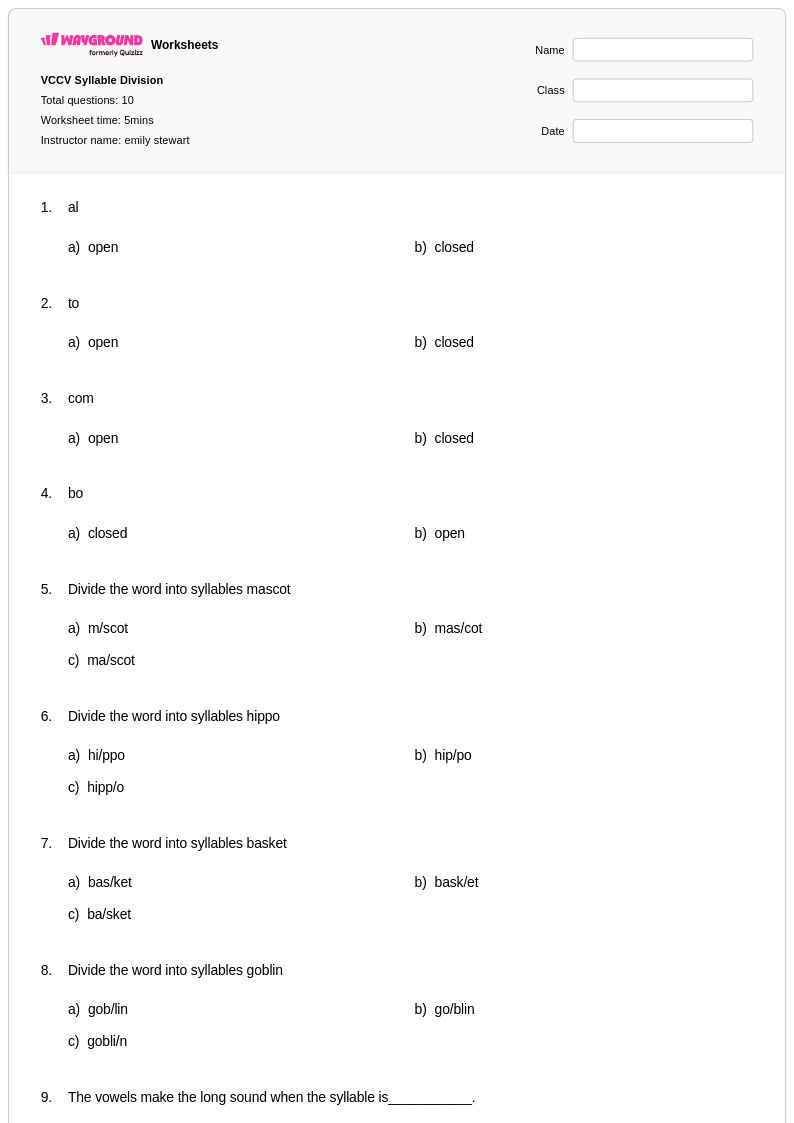
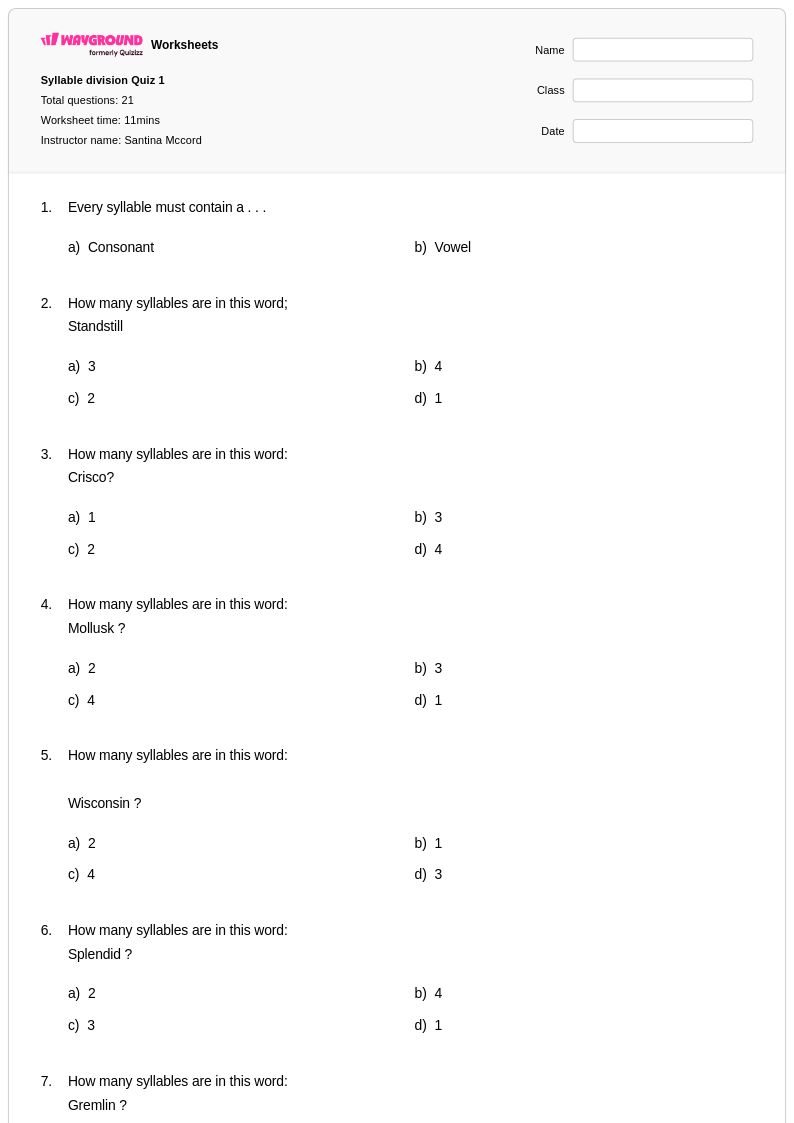
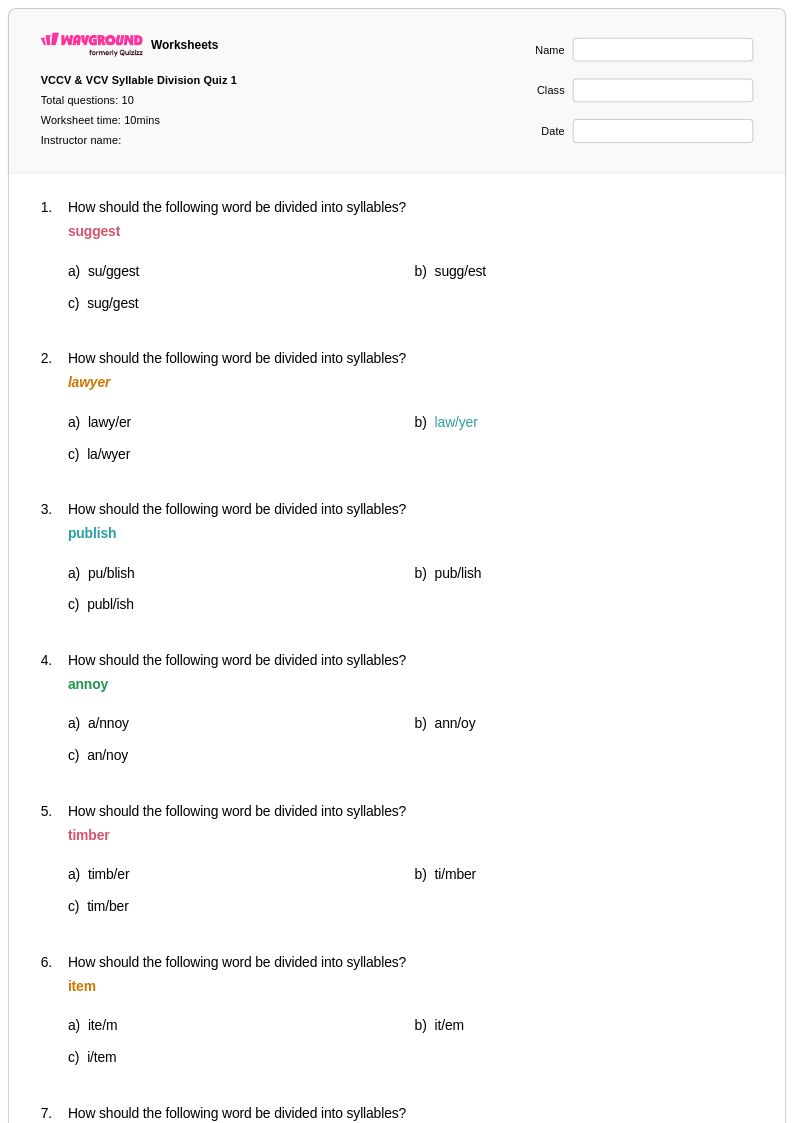
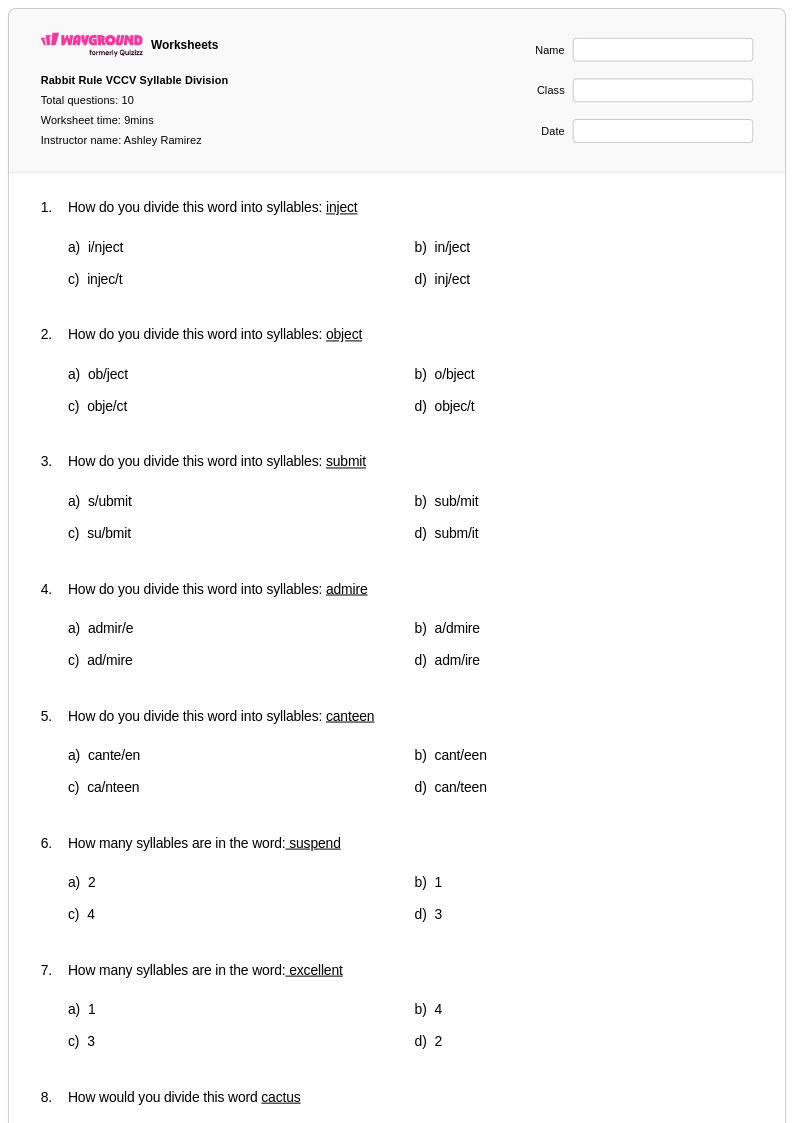
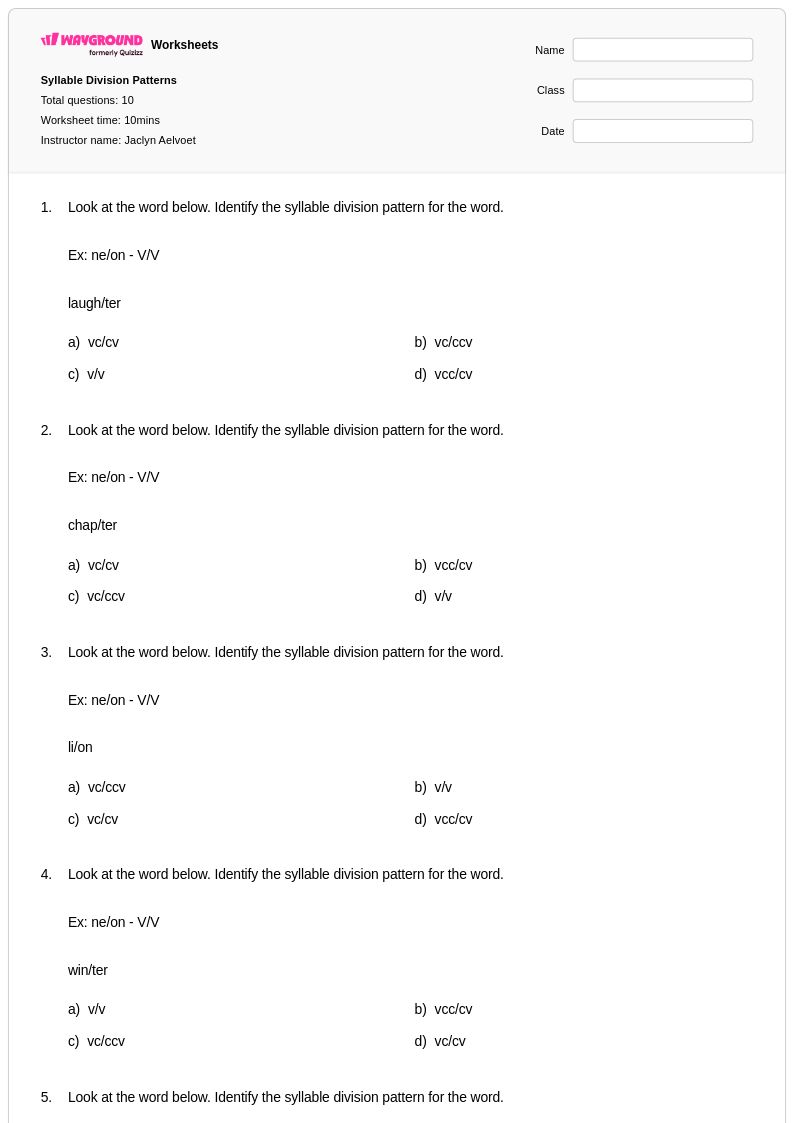
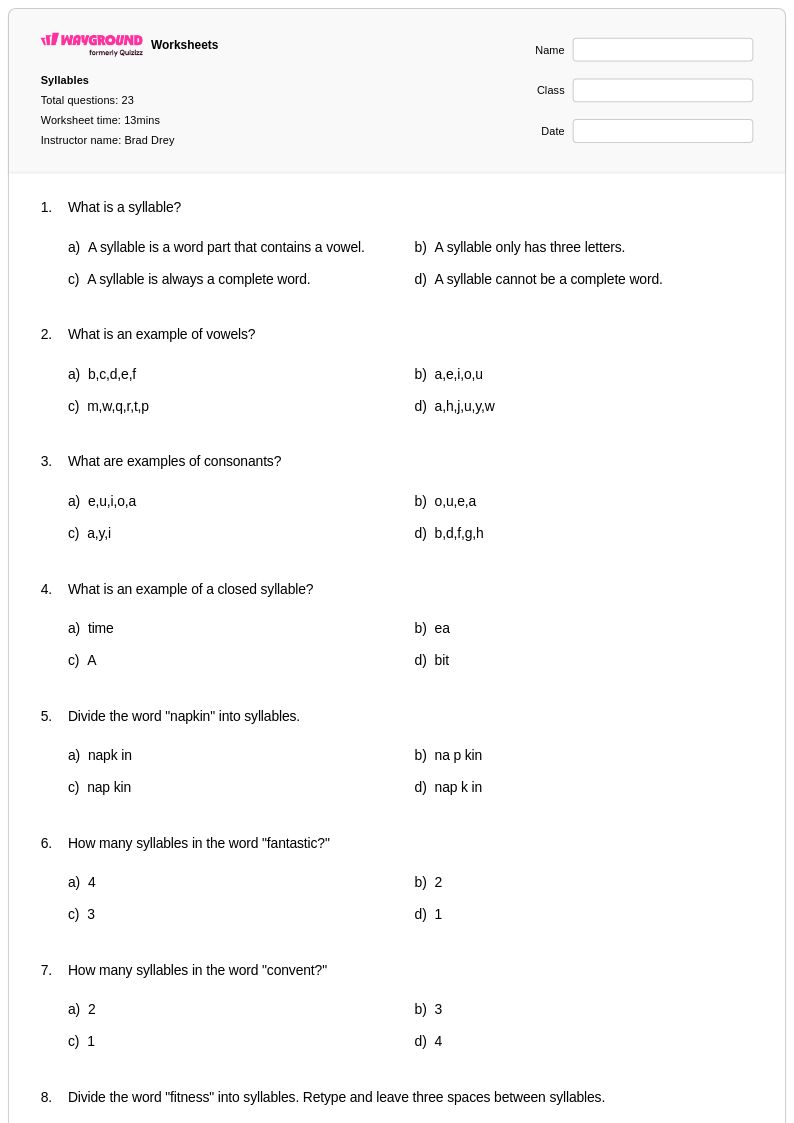
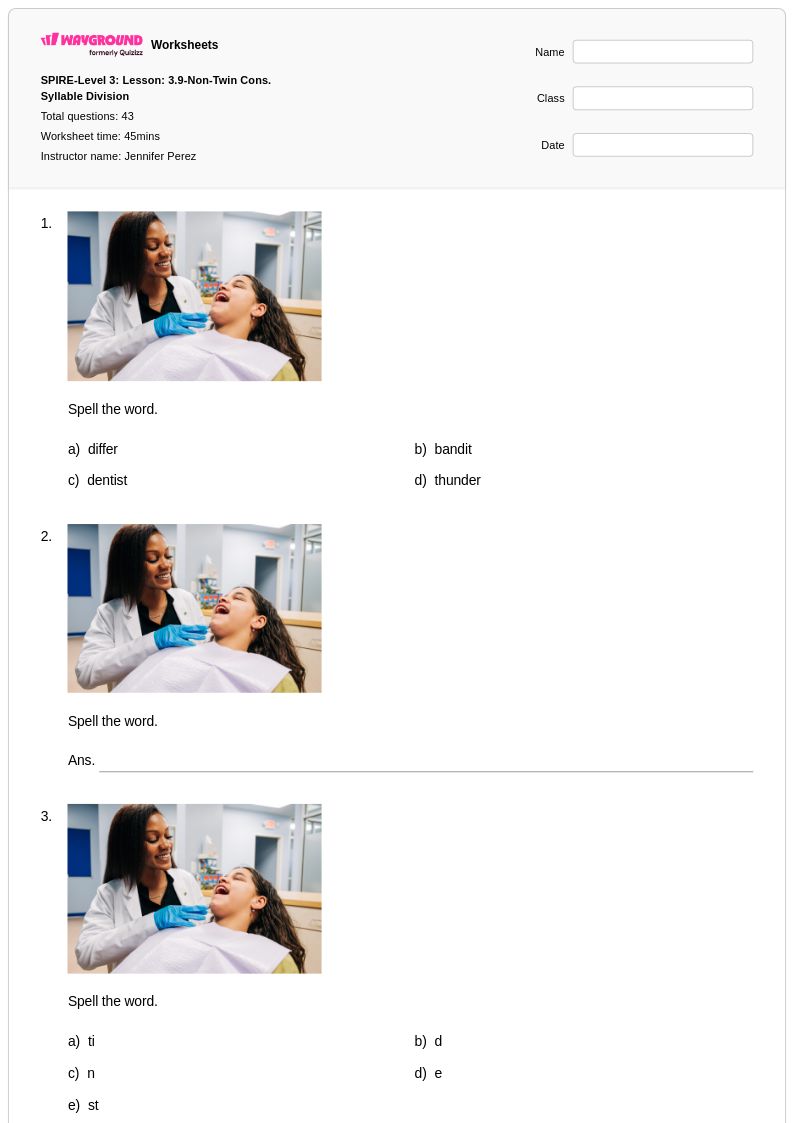
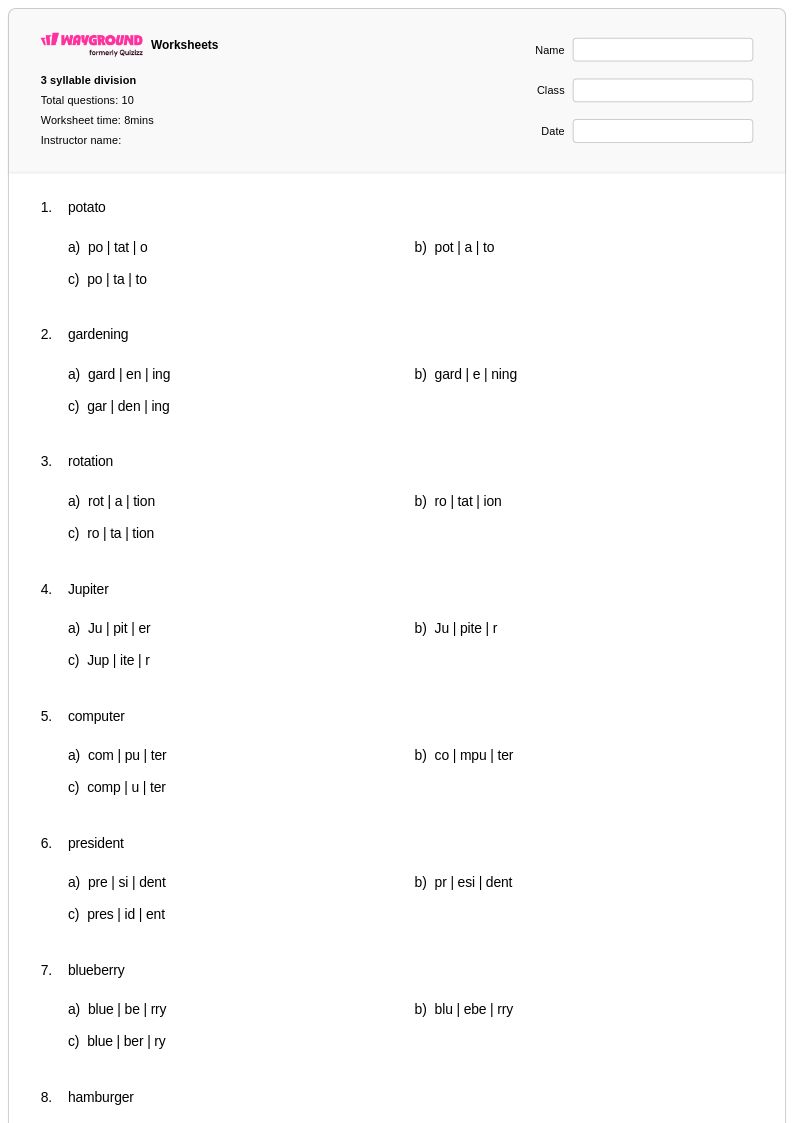
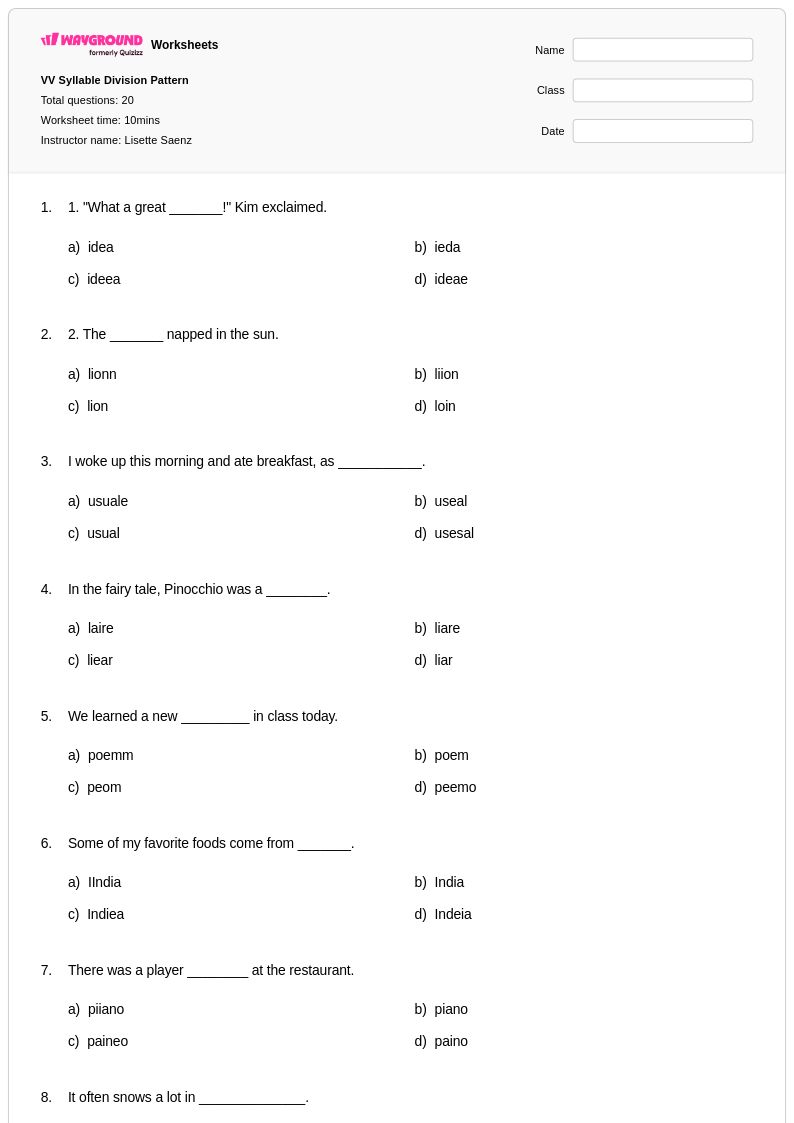
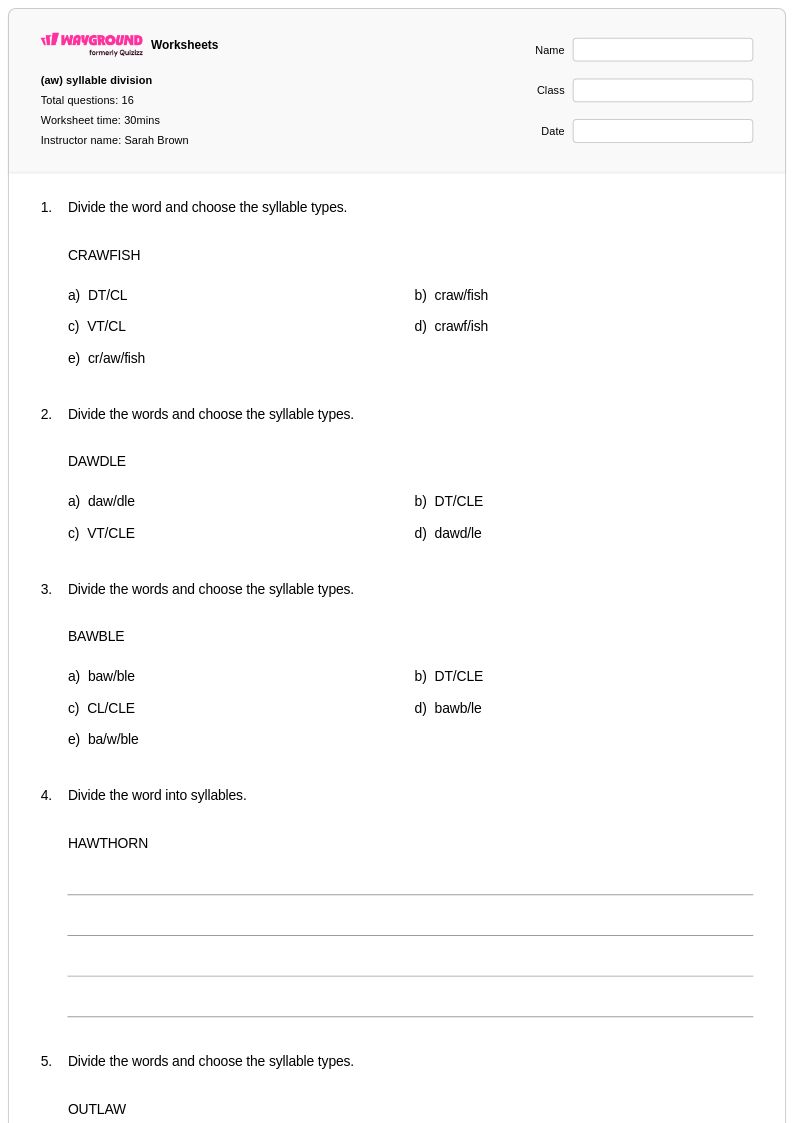
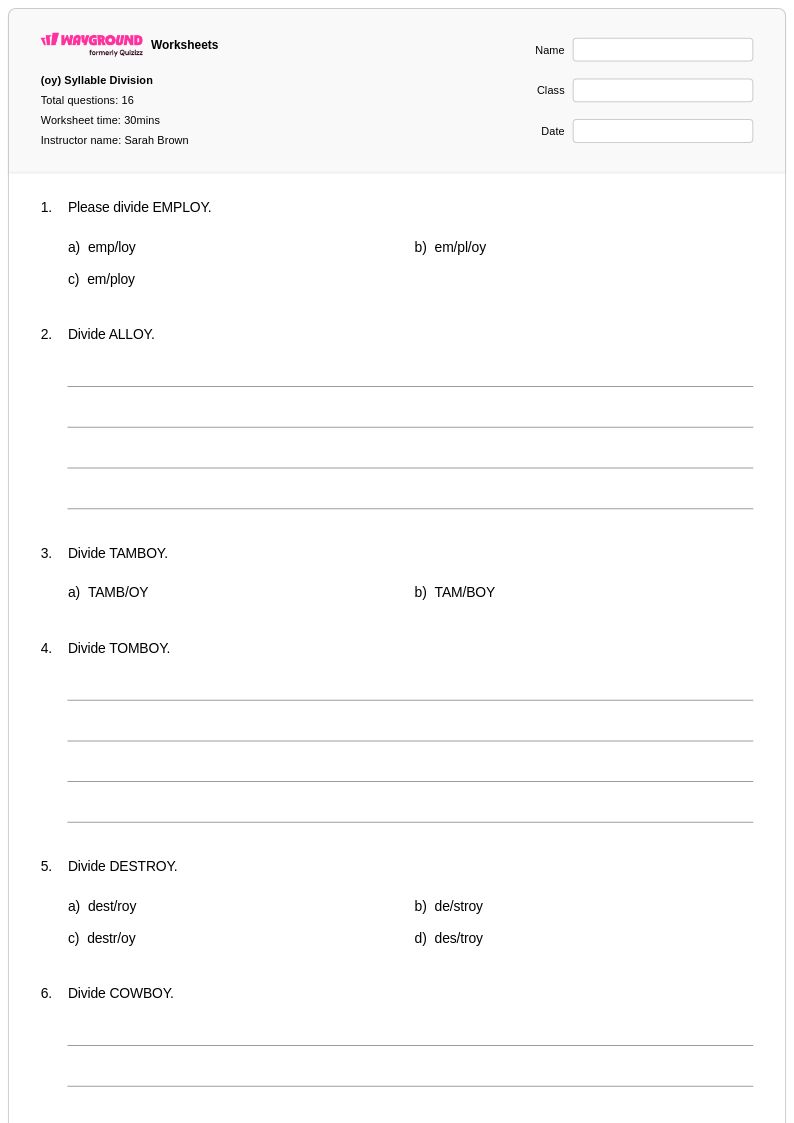
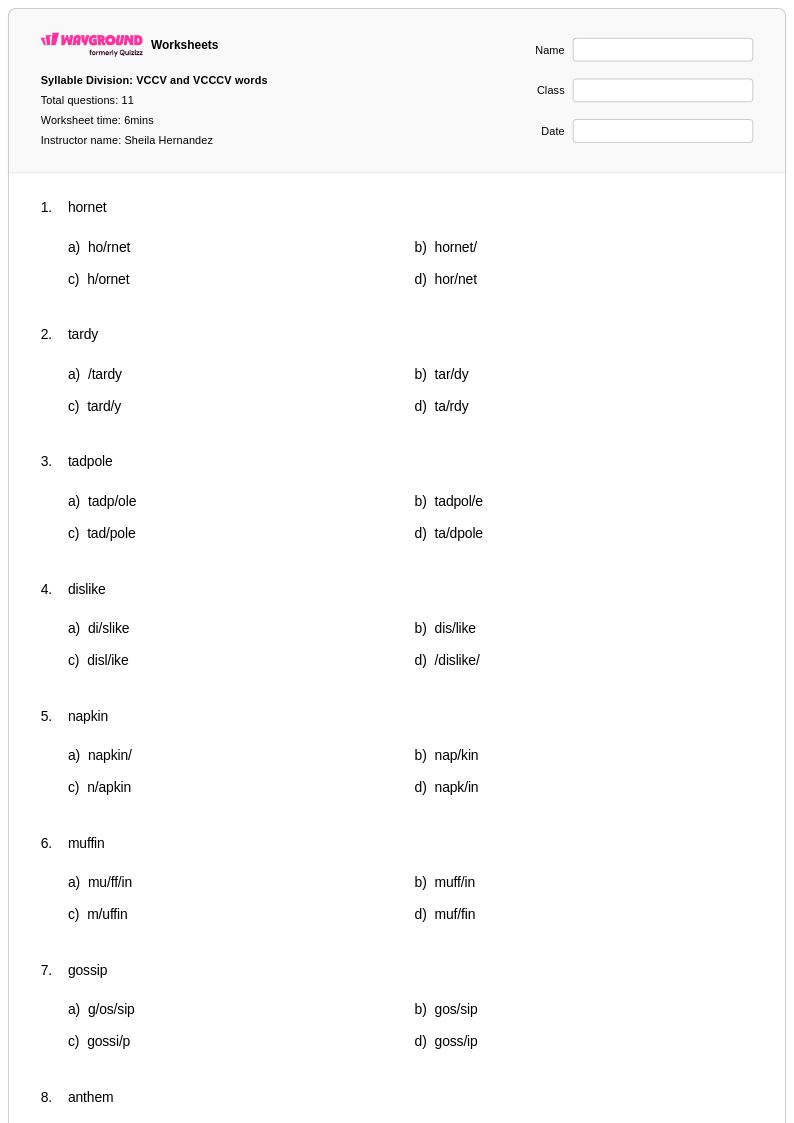
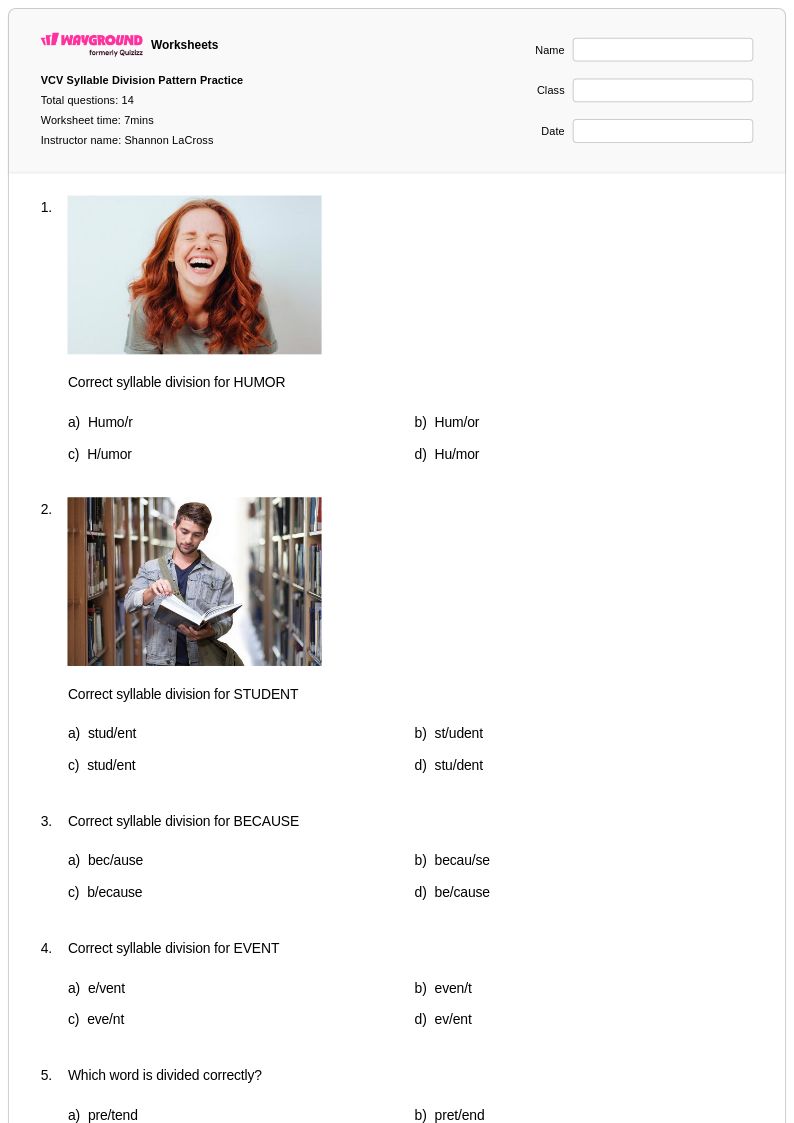
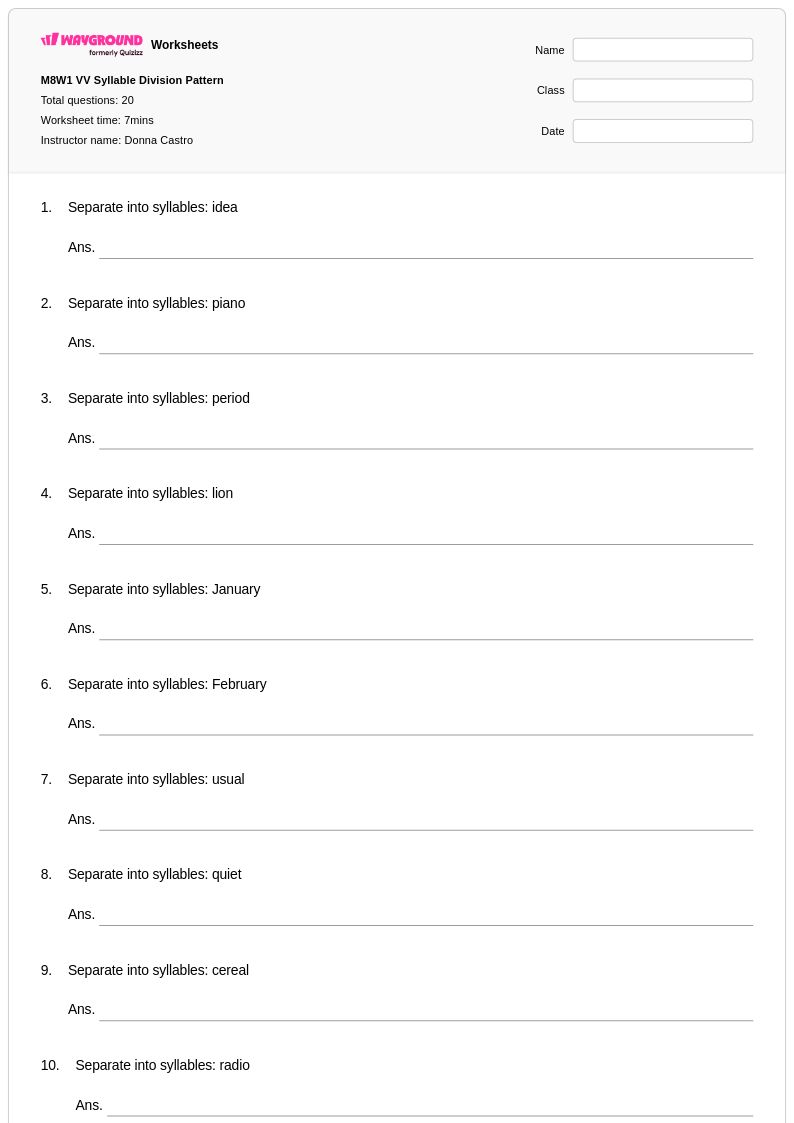
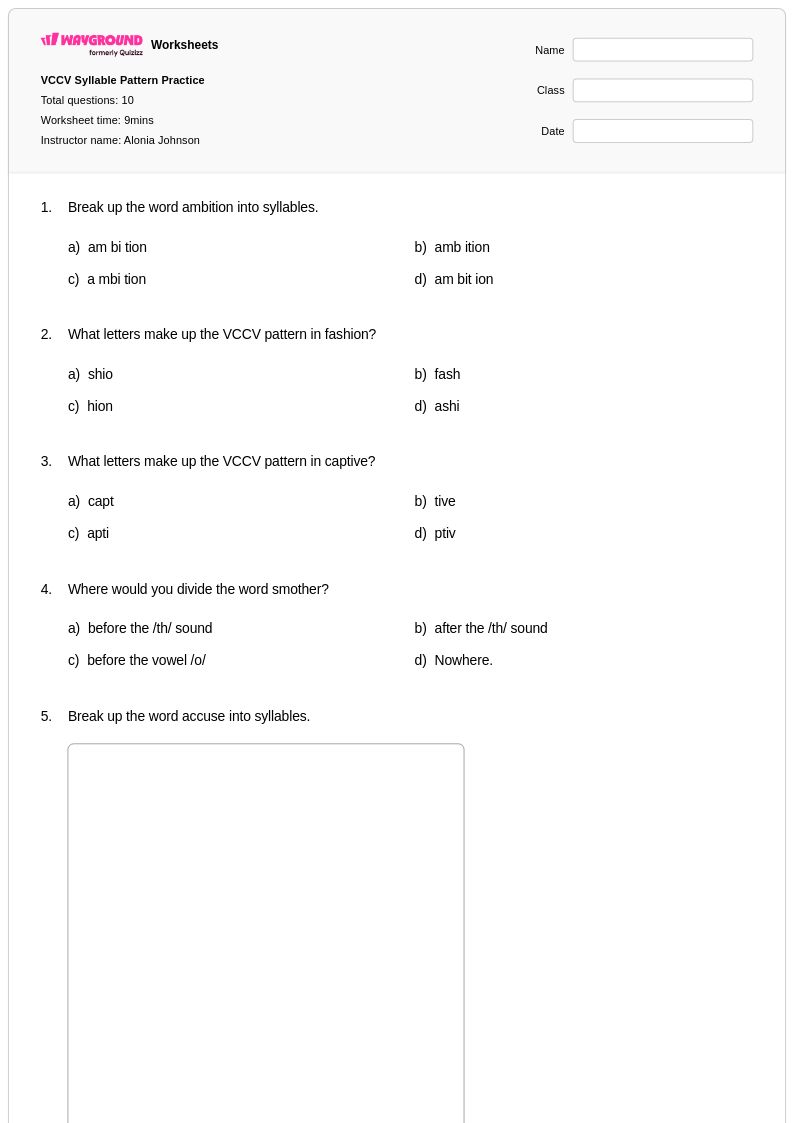
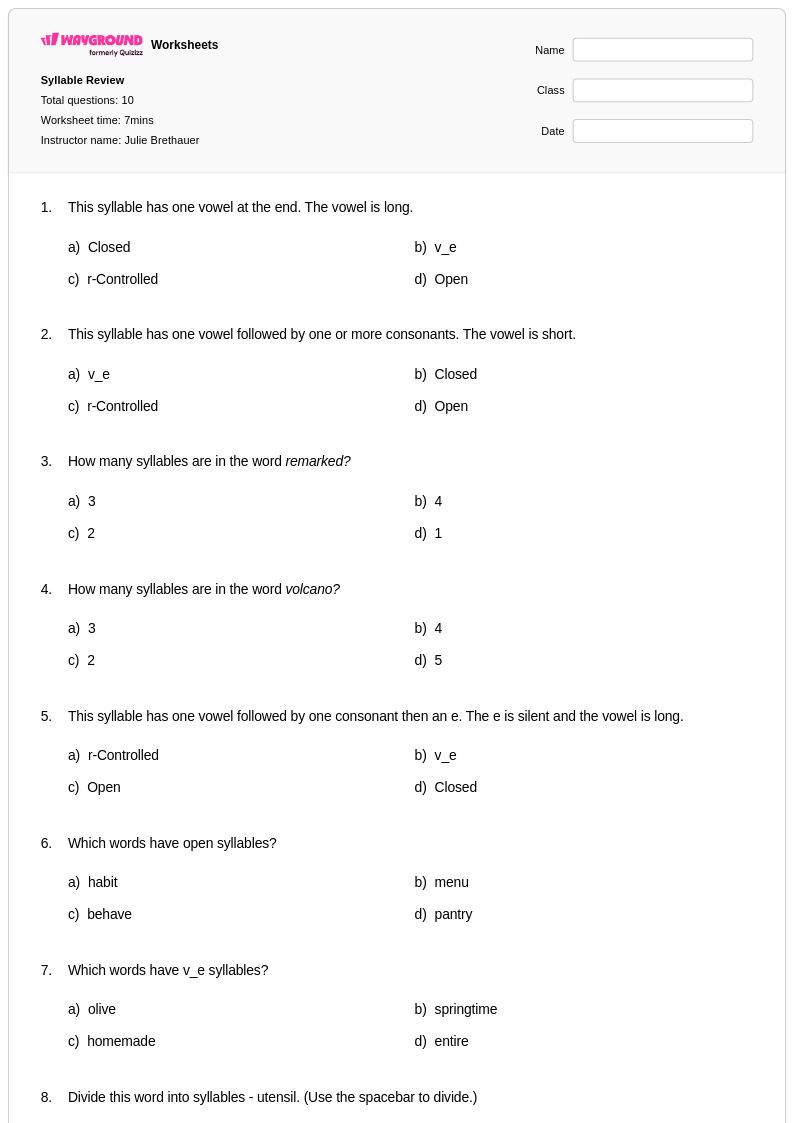
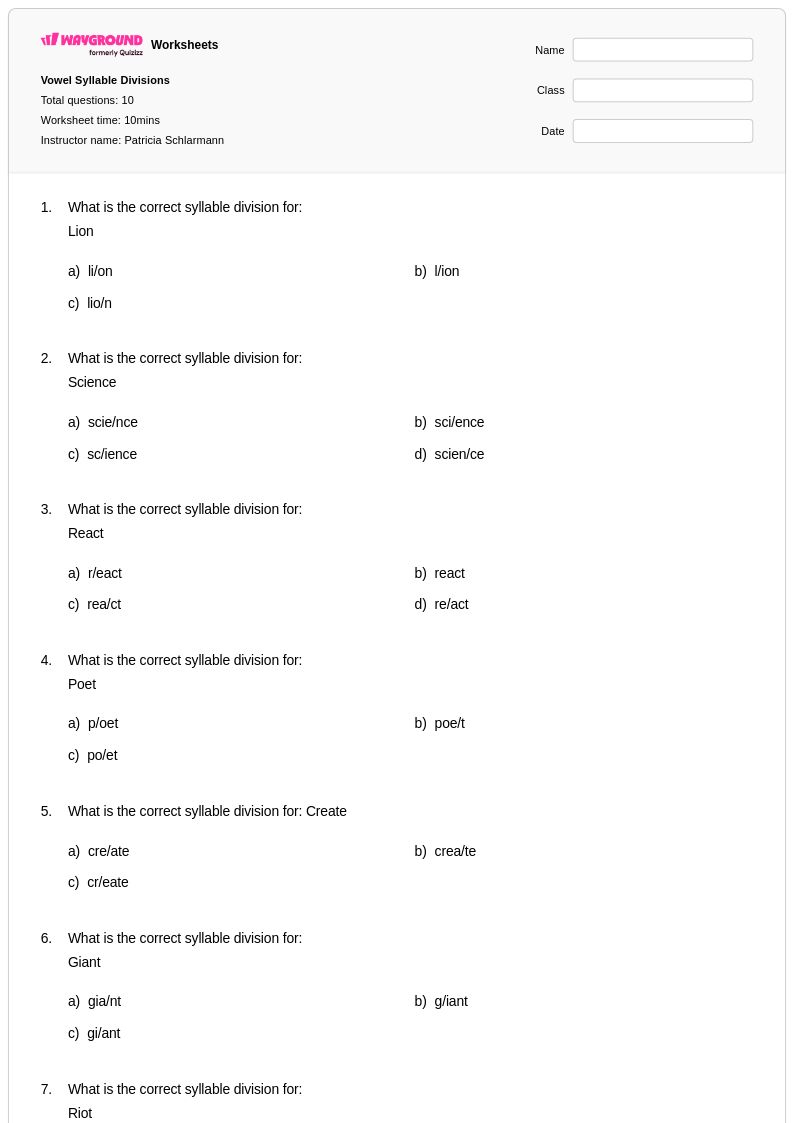
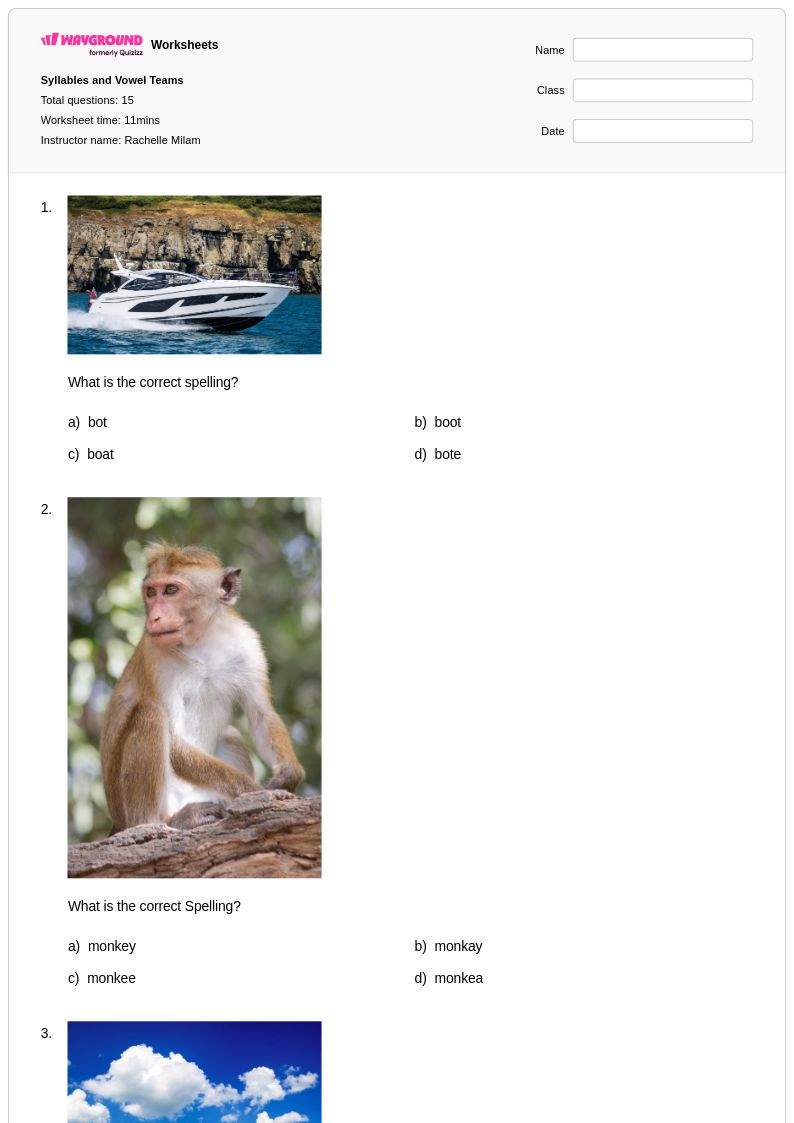
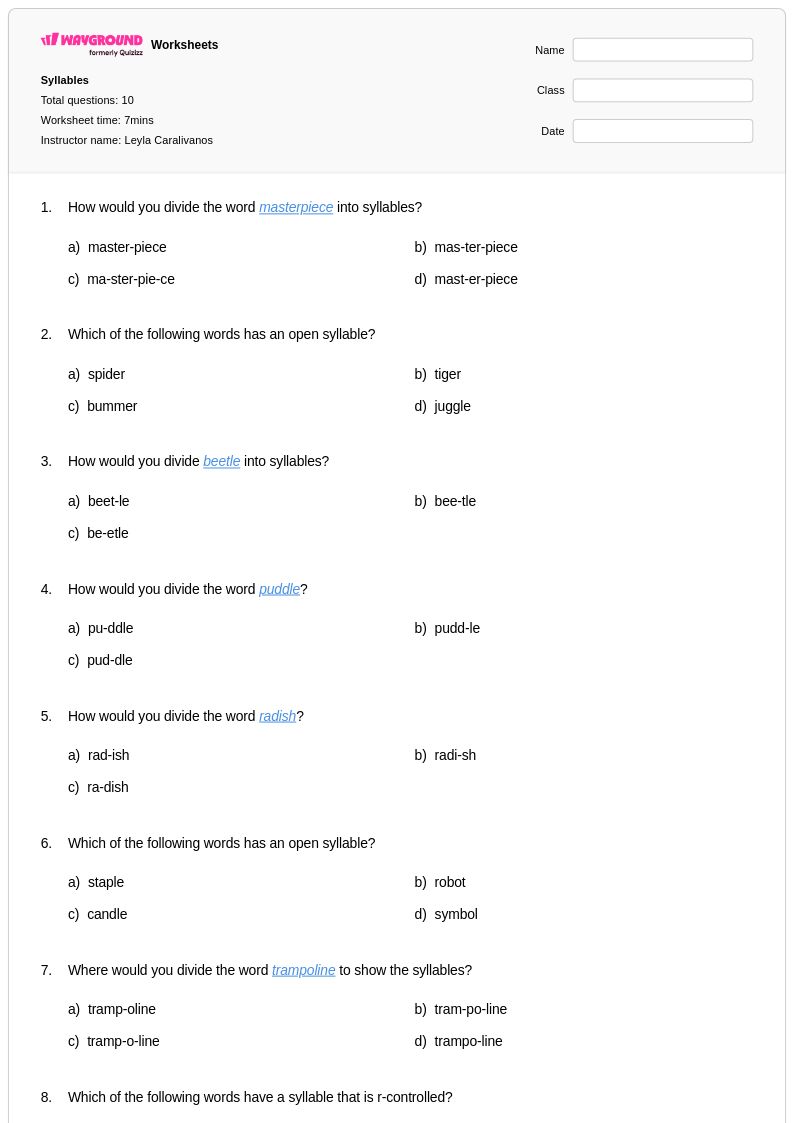
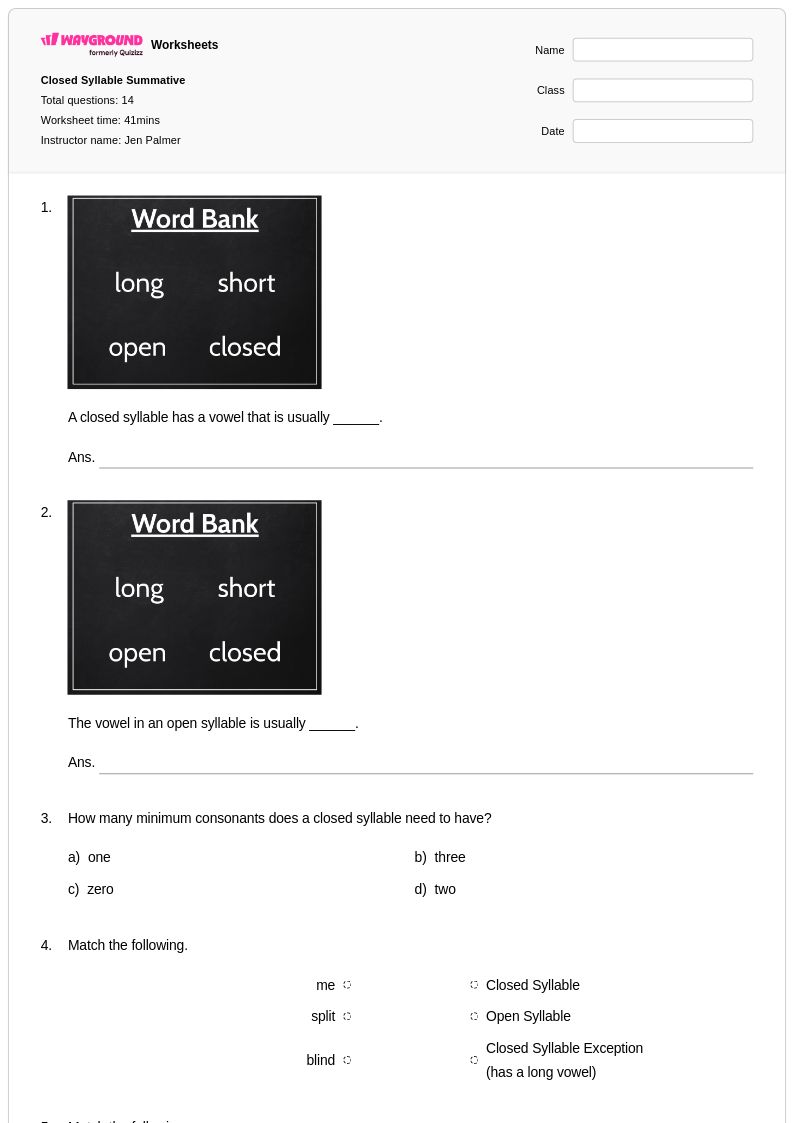
Syllable division worksheets for Year 4 students available through Wayground (formerly Quizizz) provide comprehensive practice in breaking words into their constituent syllables, a fundamental phonics skill that enhances reading fluency and spelling accuracy. These carefully crafted resources help fourth-grade learners master essential syllable patterns including closed syllables, open syllables, vowel-consonant-e patterns, and consonant-le endings while developing their ability to identify syllable boundaries in multisyllabic words. Each worksheet collection includes varied practice problems that progress from simple two-syllable words to more complex multisyllabic vocabulary, complete with answer keys that enable independent learning and self-assessment. The free printables cover critical concepts such as identifying vowel sounds within syllables, applying division rules for different consonant patterns, and understanding how syllable structure affects pronunciation and meaning.
Wayground (formerly Quizizz) empowers educators with an extensive library of millions of teacher-created syllable division resources that streamline lesson planning and provide targeted skill practice for Year 4 phonics instruction. The platform's robust search and filtering capabilities allow teachers to quickly locate worksheets aligned with specific learning standards while accessing differentiation tools that accommodate diverse learning needs within the classroom. These flexible collections are available in both printable pdf format for traditional paper-based activities and digital formats for interactive learning experiences, making them ideal for whole-group instruction, small-group remediation, or independent enrichment activities. Teachers can customize existing worksheets or combine multiple resources to create comprehensive practice sets that address individual student needs, whether for reinforcing foundational syllable concepts or challenging advanced learners with complex phonetic patterns.
FAQs
How do I teach syllable division patterns to elementary students?
Start by teaching students the most common syllable division rules in a structured sequence: VC/CV (rabbit), V/CV (open syllables like robot), and VC/V (closed syllables like lemon). Use visual cues such as underlining vowels and marking consonant boundaries before introducing students to multisyllabic words. Building pattern recognition through repeated, explicit instruction before moving to independent decoding is essential for fluency gains.
What syllable division patterns should students learn first?
Students should begin with closed syllable patterns (VC/CV), where a single consonant between two vowels divides after the first consonant, as in 'nap-kin' or 'bas-ket.' Once students are confident with this pattern, introduce open syllables (V/CV), where the vowel is long and the syllable ends with a vowel, as in 'si-lent.' Vowel-consonant-e and consonant-le endings typically come later in the sequence as students build decoding automaticity.
What common mistakes do students make when dividing words into syllables?
The most frequent error is misidentifying where the syllable boundary falls, particularly in V/CV versus VC/V words — students often default to splitting after the first consonant regardless of vowel sound. Another common mistake is failing to recognize vowel teams or digraphs as single units, which causes incorrect divisions in words like 'rain-bow' or 'teach-er.' Students also frequently forget that every syllable must contain exactly one vowel sound, leading to divisions that produce unpronounceable segments.
How do syllable division worksheets help students improve reading fluency?
Syllable division practice trains students to chunk unfamiliar multisyllabic words into manageable units rather than guessing or skipping them, which directly reduces reading errors and increases reading rate. When students internalize division patterns, they can apply them automatically during reading, freeing up cognitive resources for comprehension. Regular, structured practice with a variety of word types builds the decoding independence that is the foundation of reading fluency.
How can I use Wayground's syllable division worksheets in my classroom?
Wayground's syllable division worksheets are available as printable PDFs for traditional classroom use and in digital formats for technology-integrated environments, giving you flexibility for whole-class instruction, small groups, or independent centers. You can also host worksheets as a quiz directly on Wayground, making it easy to assign practice digitally and collect student responses in one place. The included answer keys support immediate feedback, whether students are self-checking or you are reviewing work as a group.
How do I differentiate syllable division instruction for struggling readers?
For students who struggle, isolate one syllable pattern at a time and provide color-coded or marked text to help them visually identify vowels before attempting to divide. On Wayground, you can support individual learners further by enabling accommodations such as Read Aloud, which allows students to hear words read to them, or Reduced Answer Choices, which lowers cognitive load for students who need it. Selecting worksheets that begin with two-syllable words and gradually increase complexity ensures that foundational pattern recognition is secure before students encounter multisyllabic terms.