
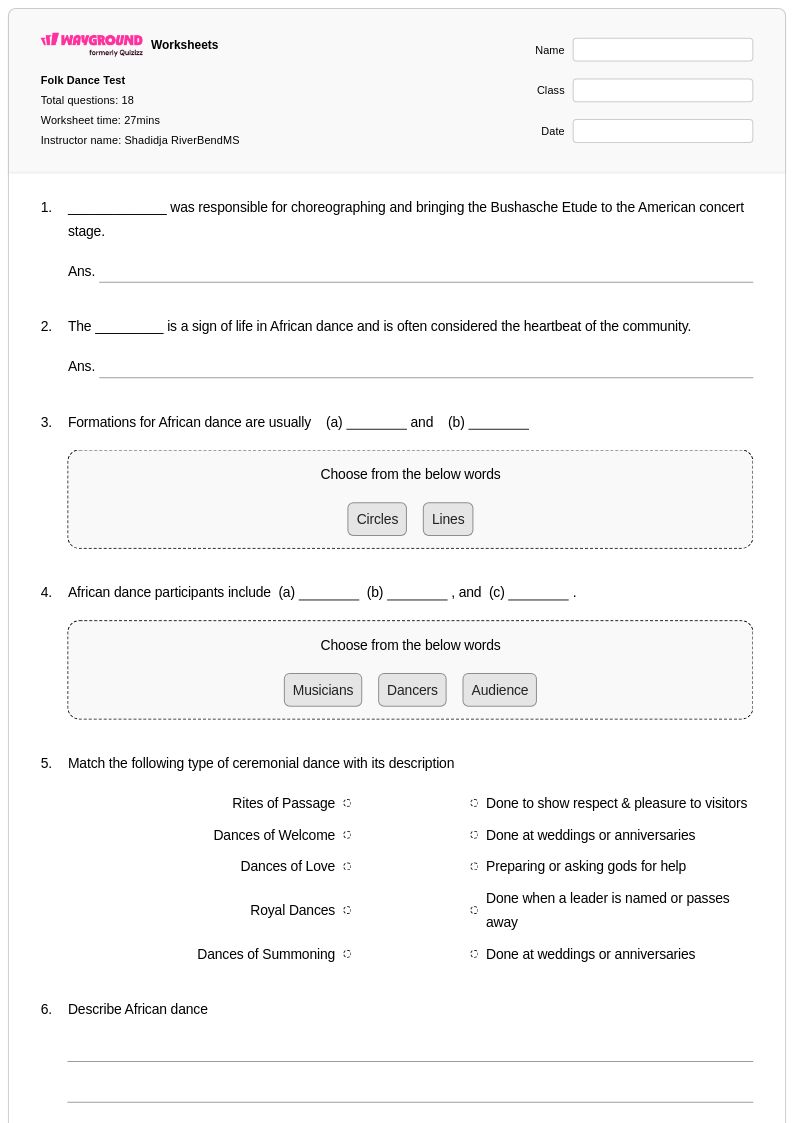
18 Q
6th
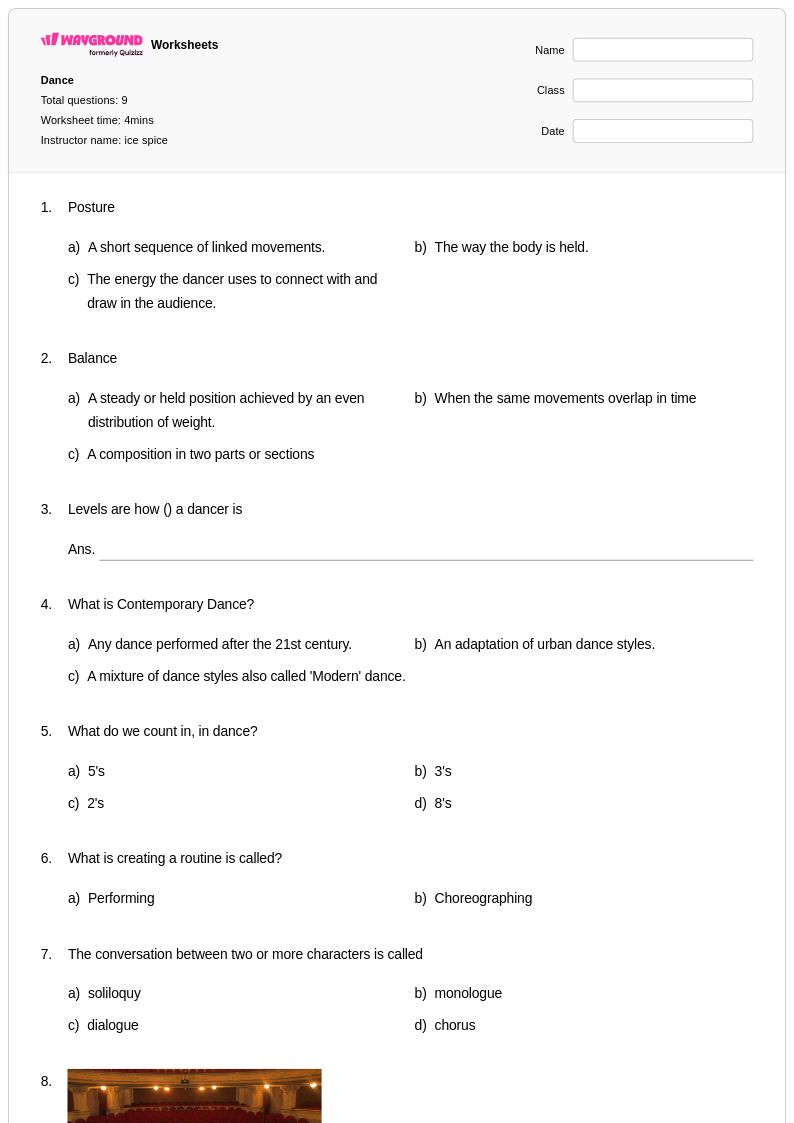
9 Q
6th
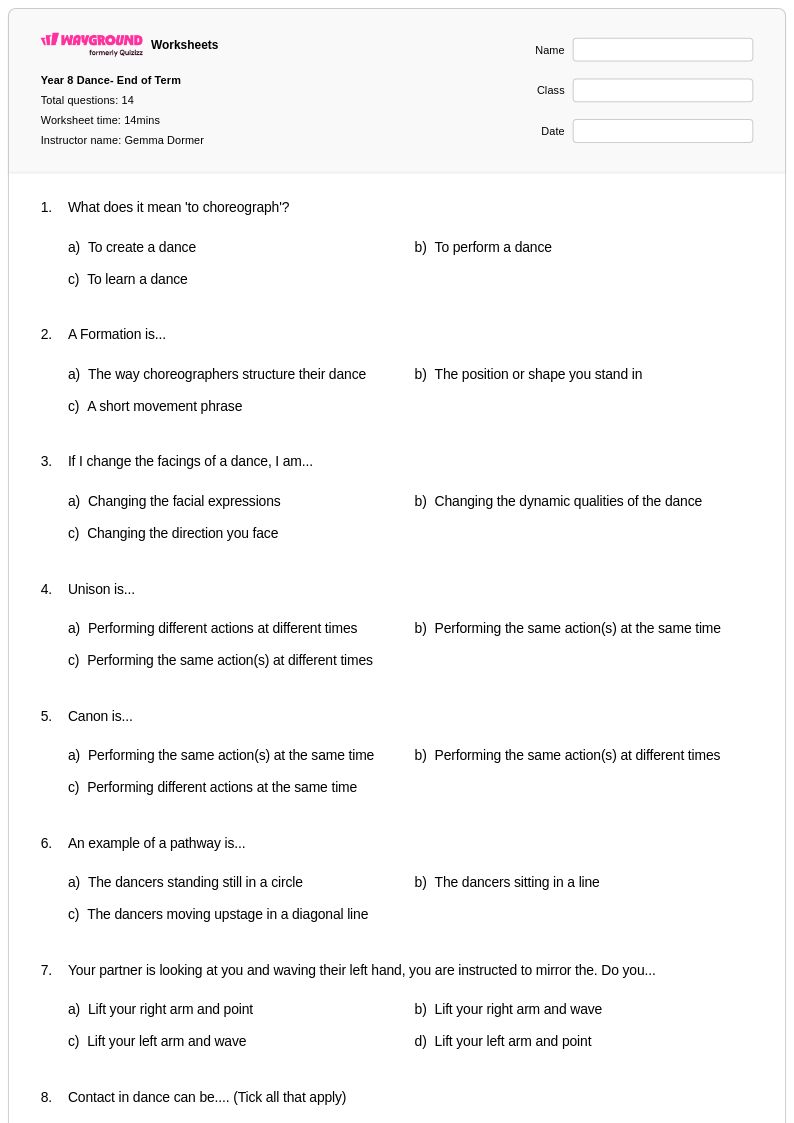
14 Q
6th
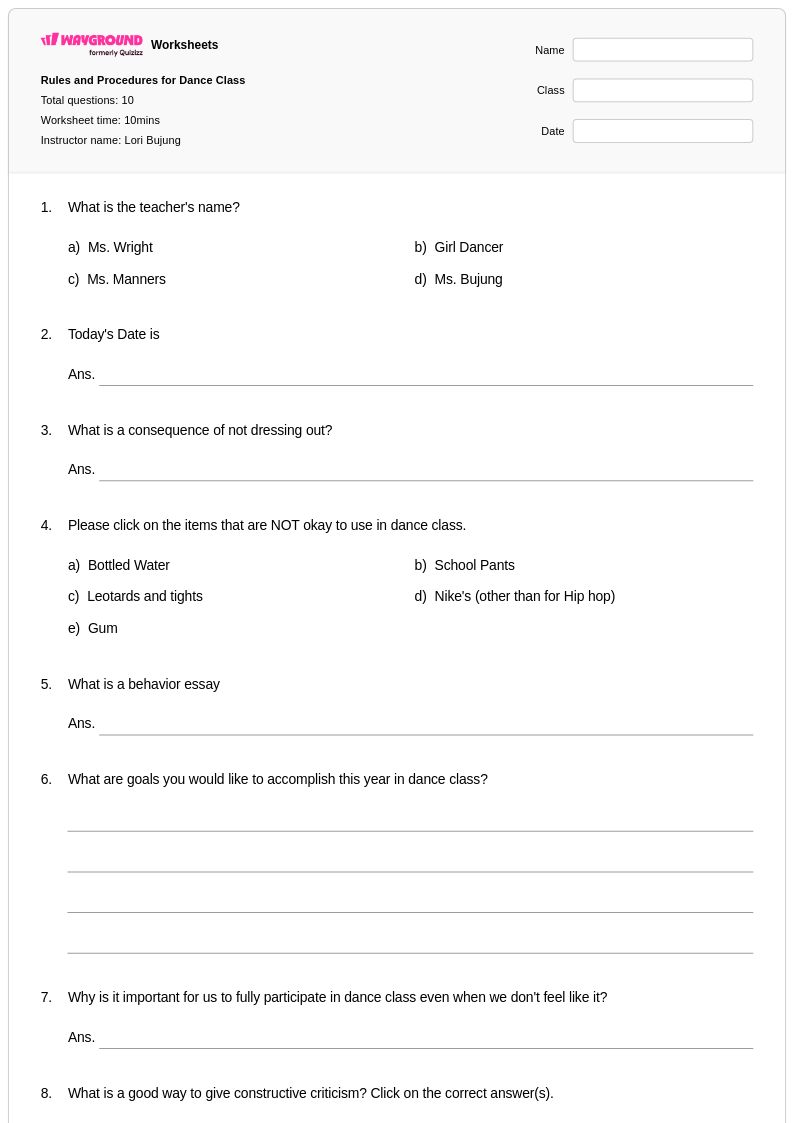
10 Q
6th - 8th
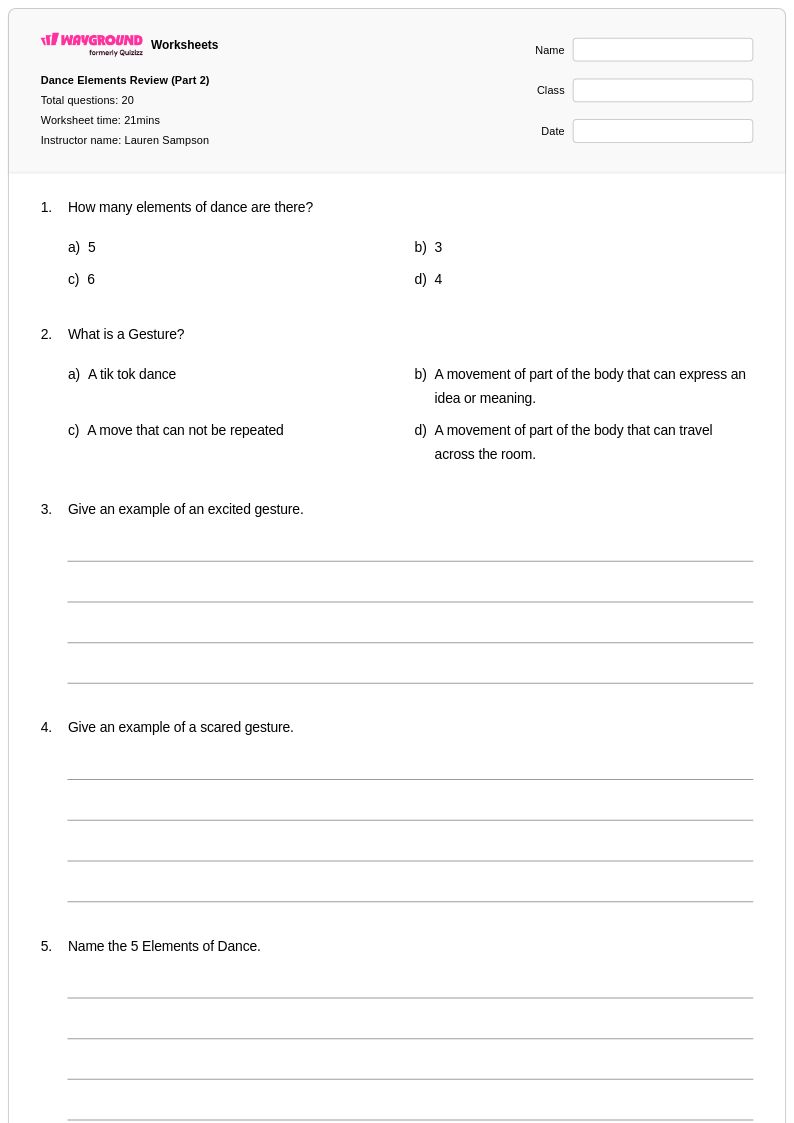
20 Q
6th - 8th
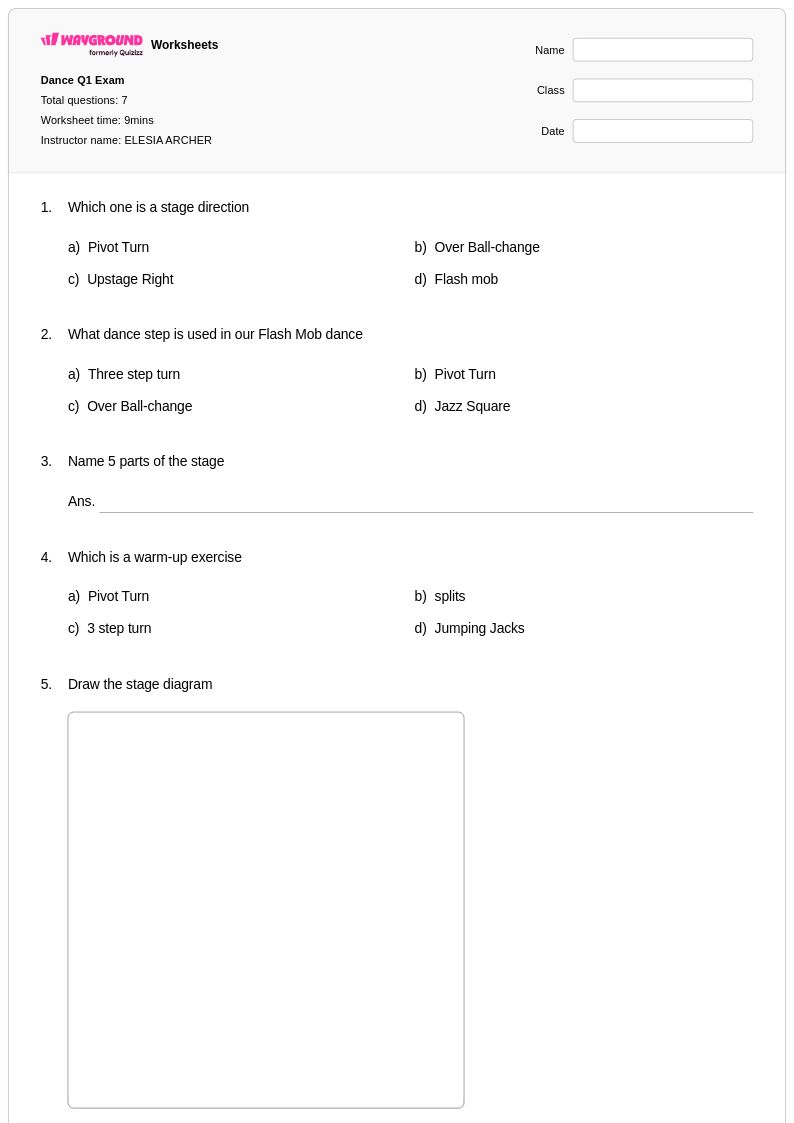
7 Q
6th - 8th
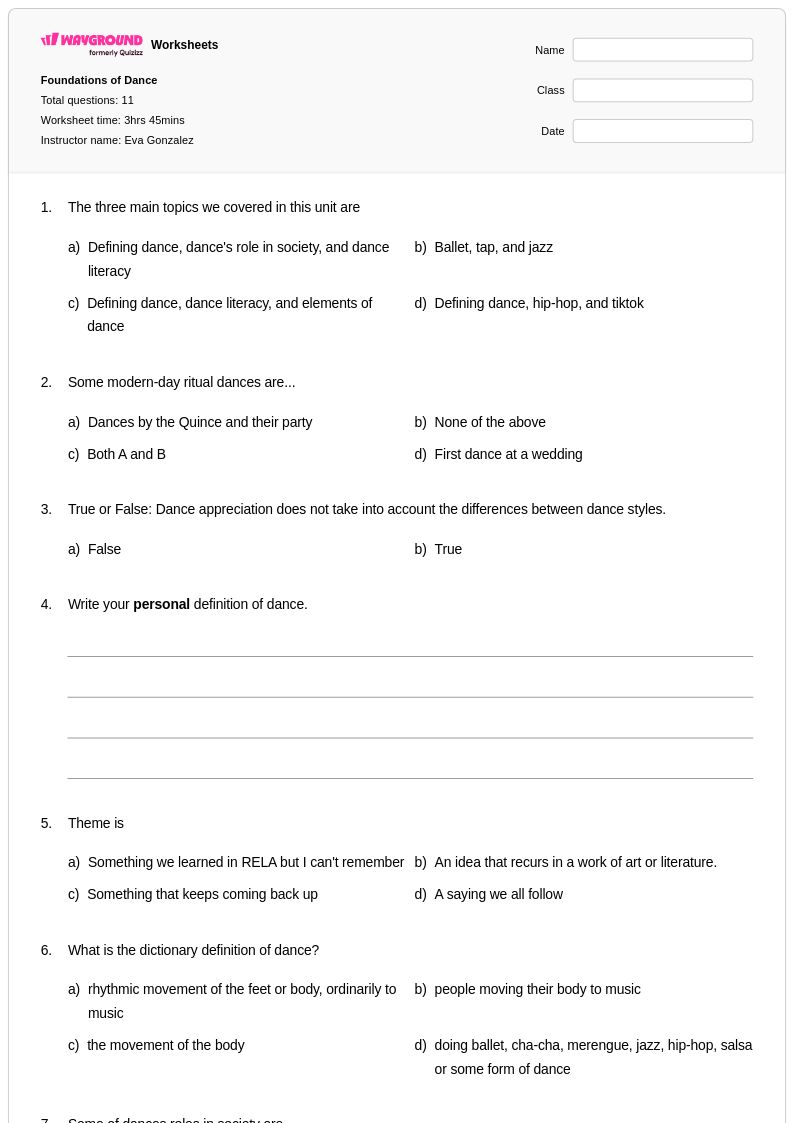
11 Q
6th - 8th
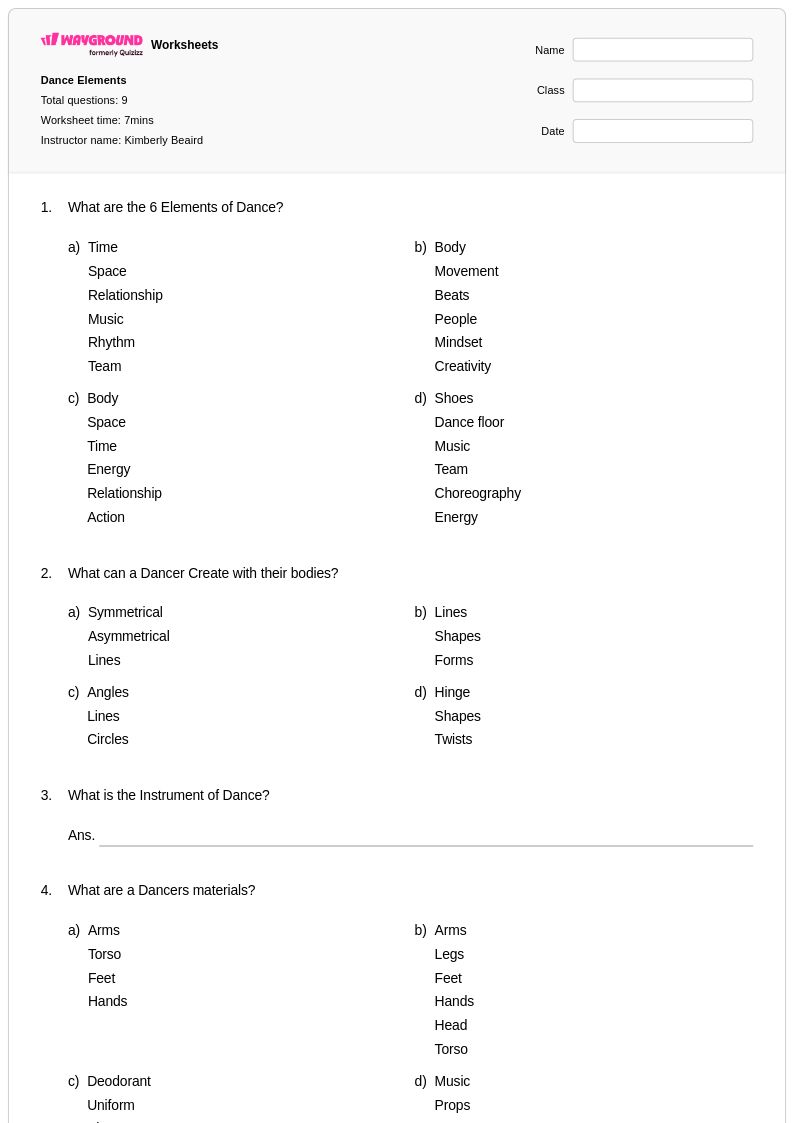
9 Q
6th - 8th
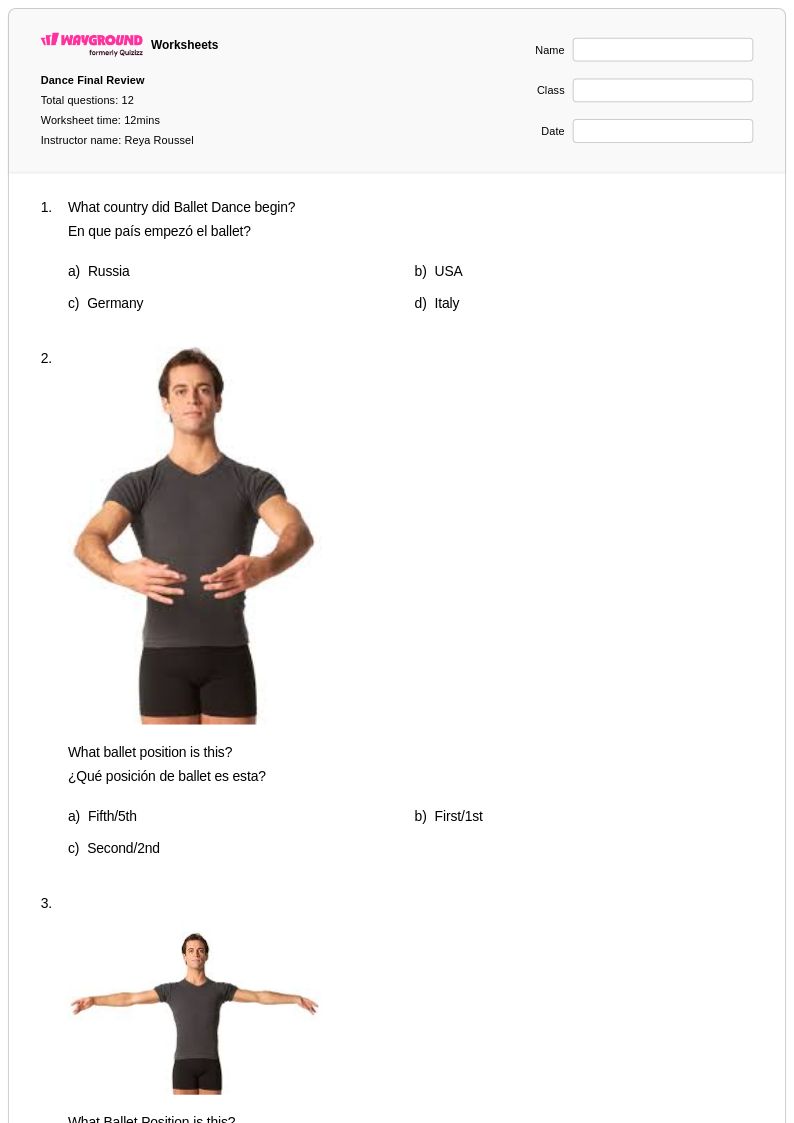
12 Q
6th - 8th
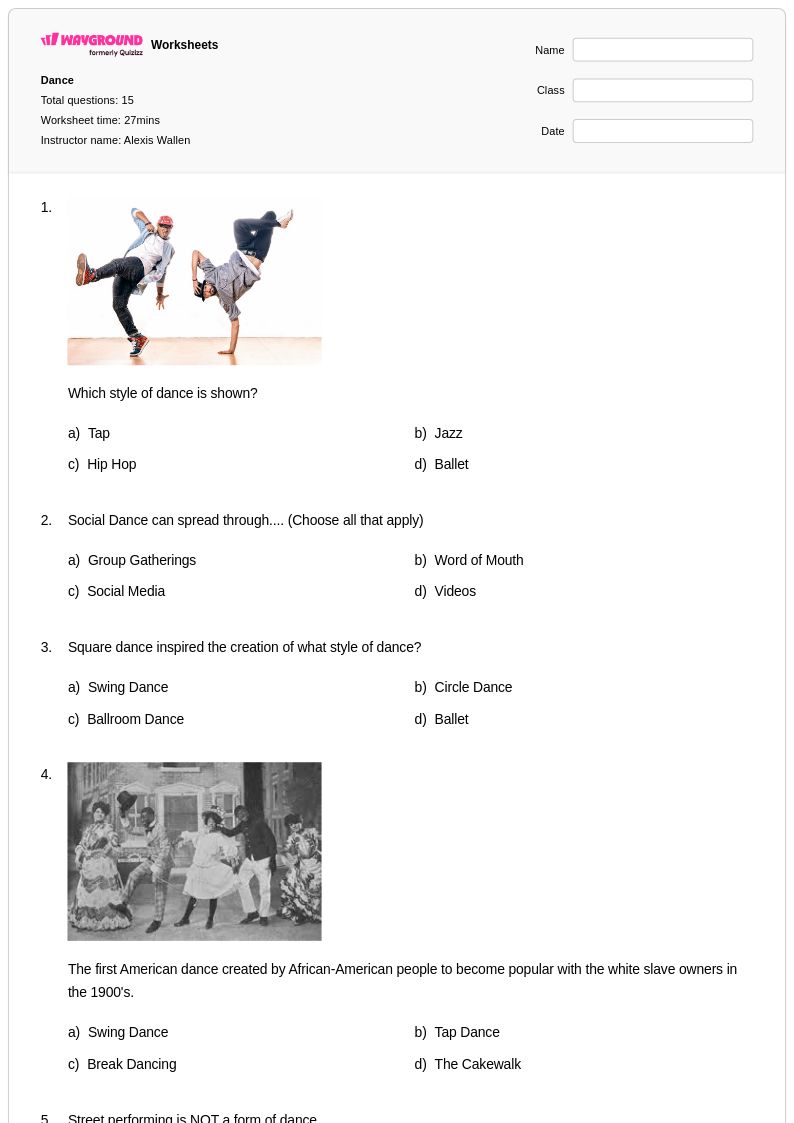
15 Q
5th - 8th
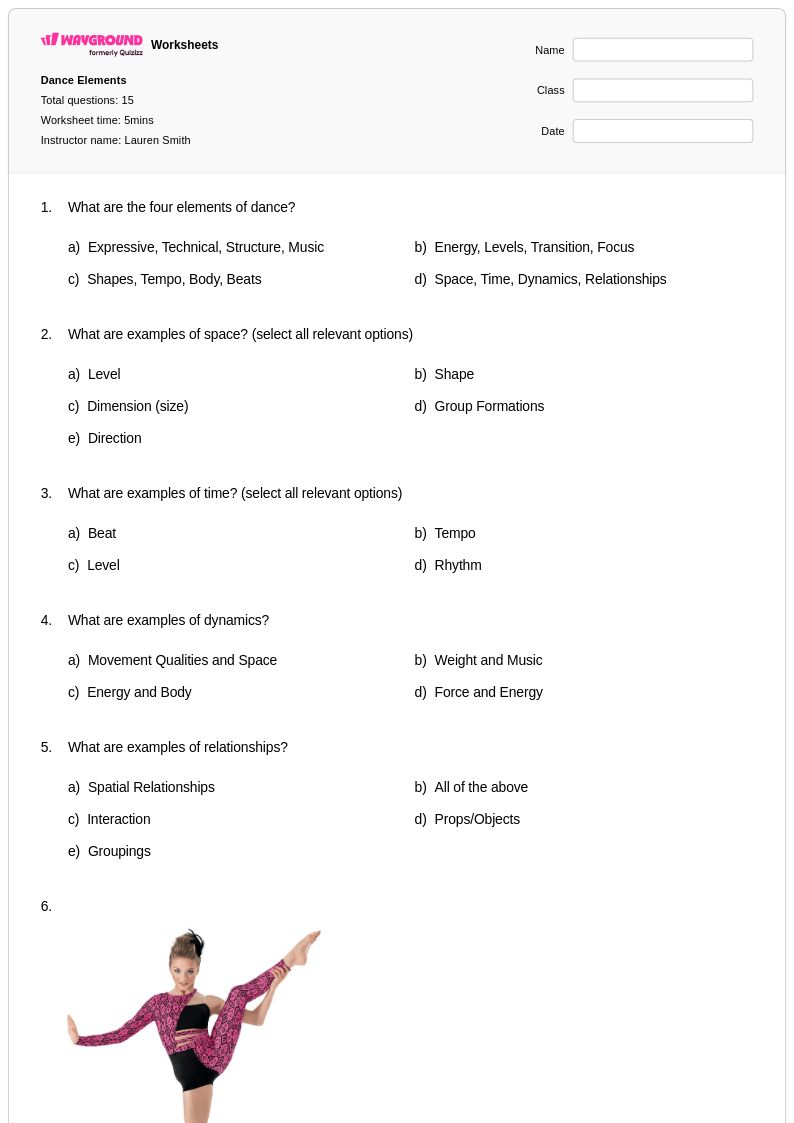
15 Q
6th - 7th
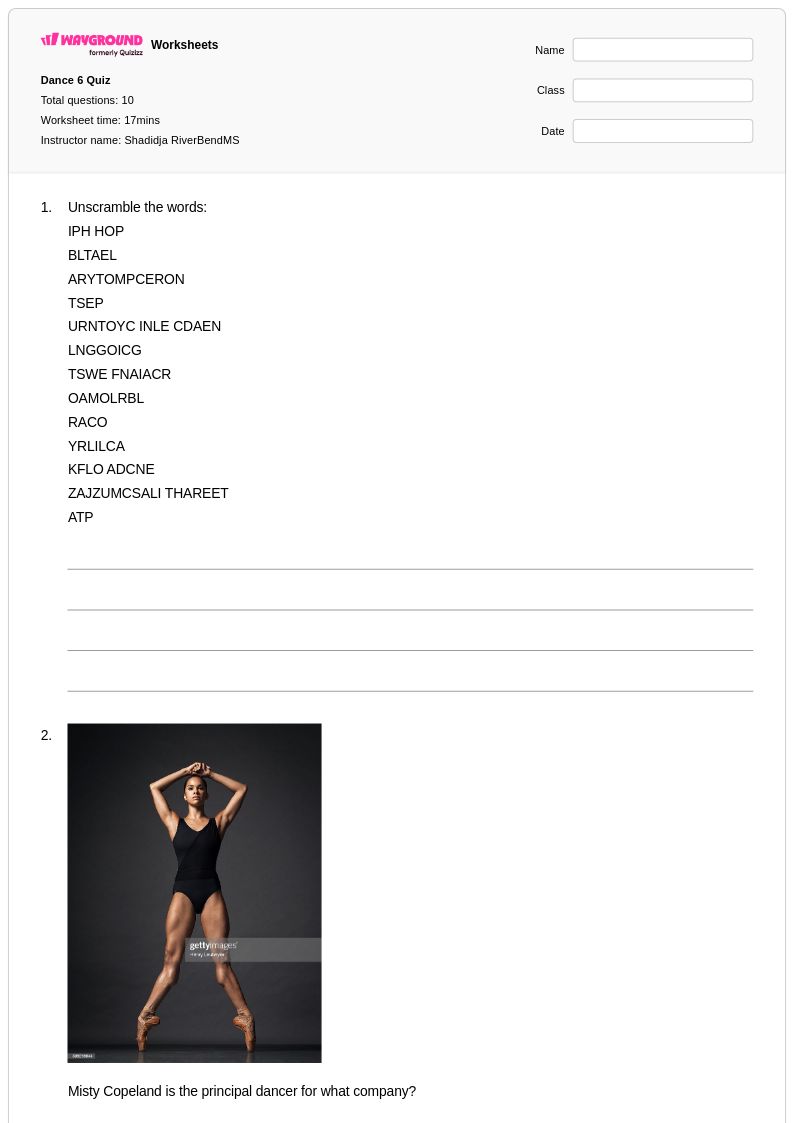
10 Q
6th
9 Q
KG - Uni
10 Q
4th - 6th
16 Q
6th - 8th
10 Q
6th - 7th
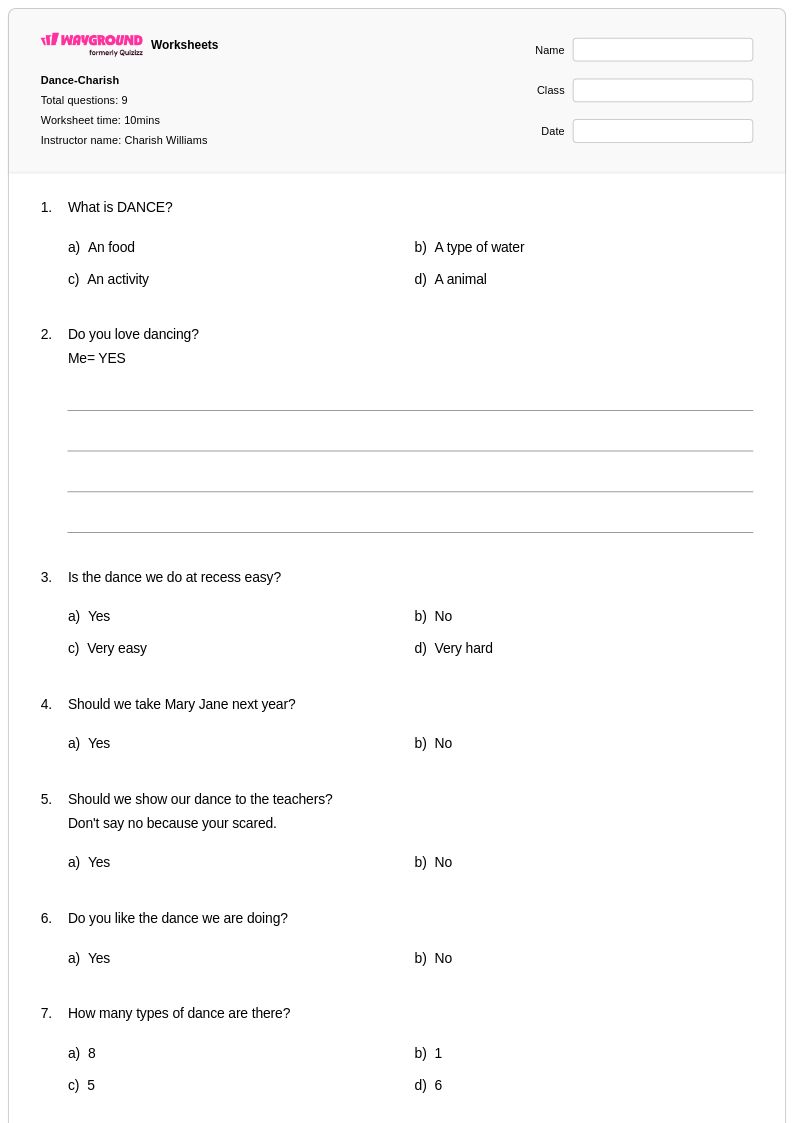
9 Q
4th - 6th
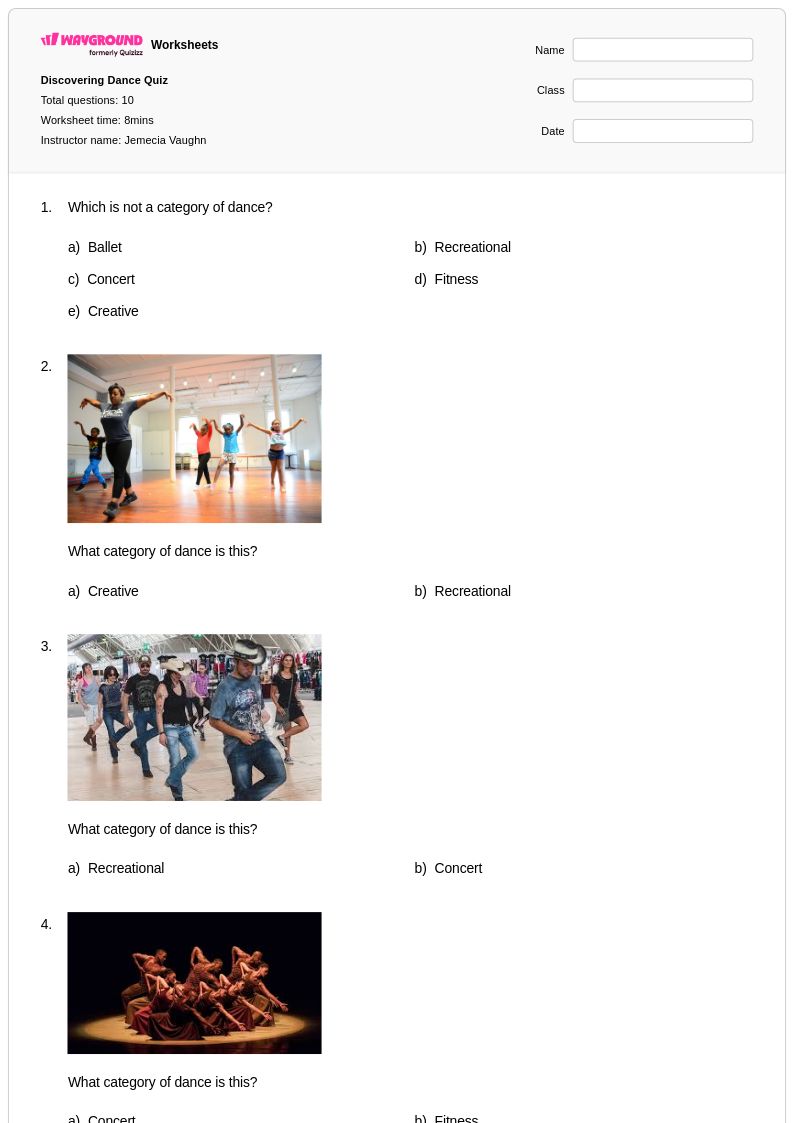
10 Q
6th - 8th
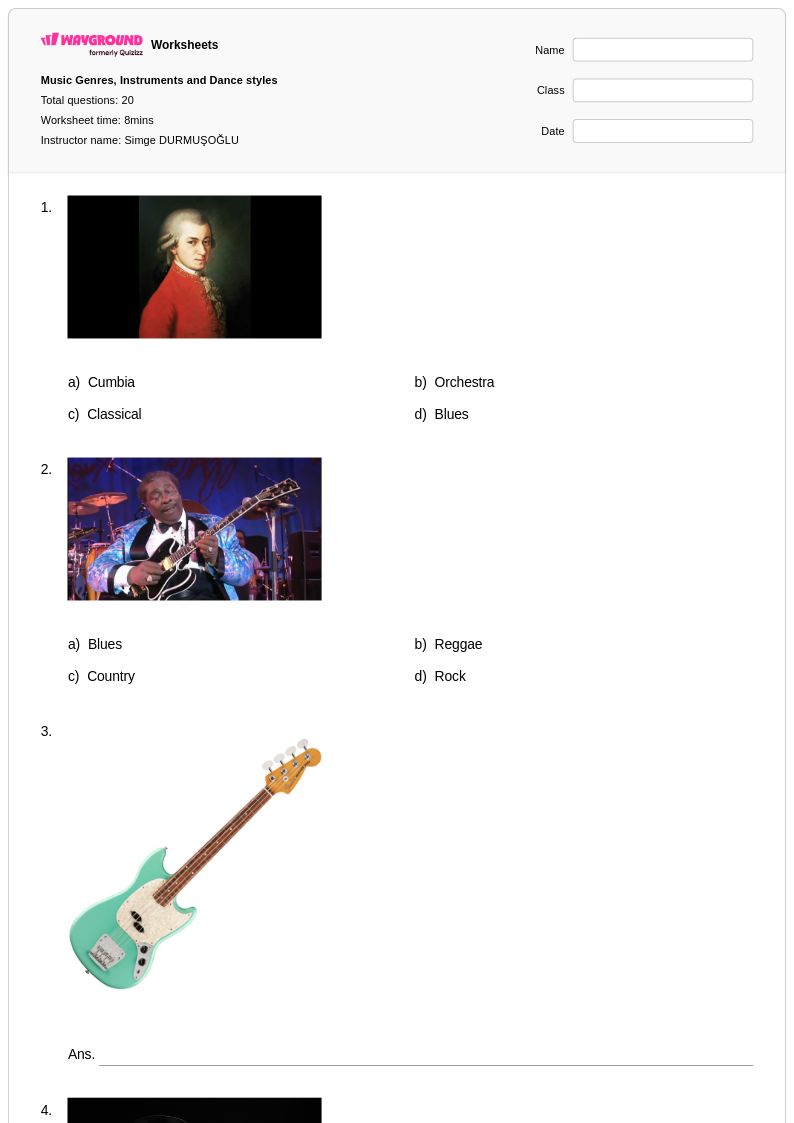
20 Q
6th
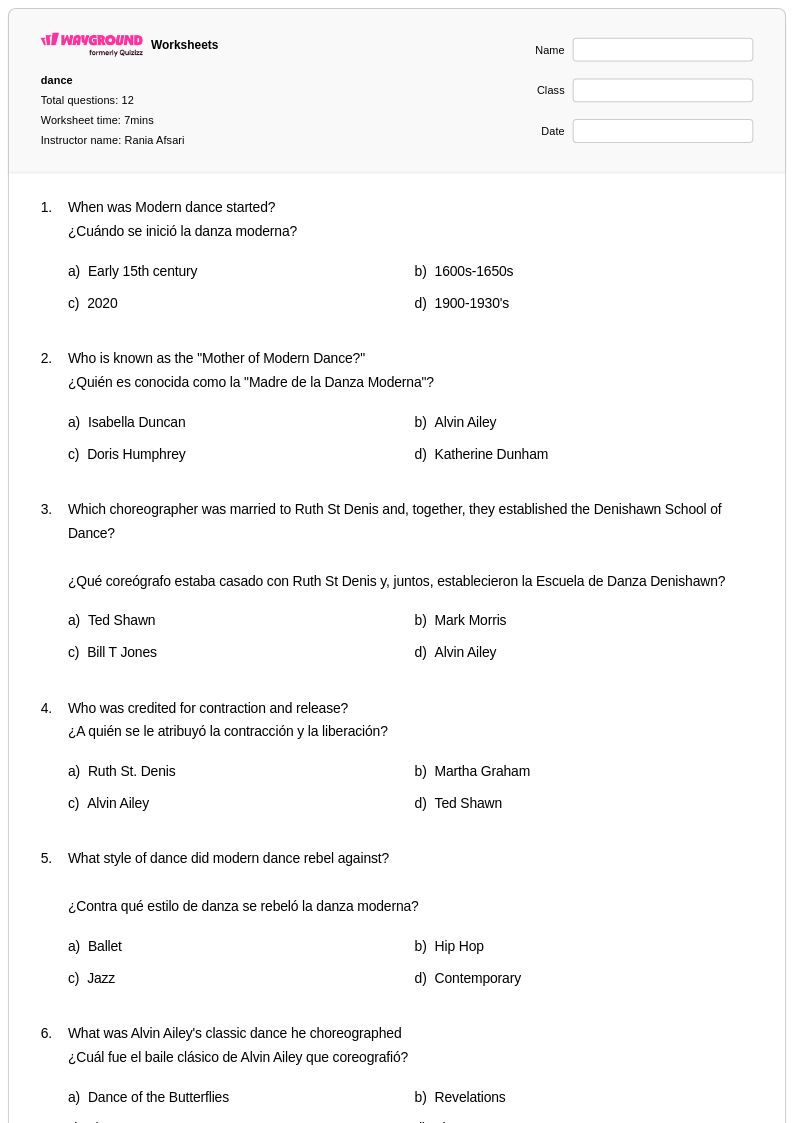
12 Q
6th
15 Q
KG - PD
15 Q
6th
15 Q
3rd - 7th
10 Q
KG - Uni
Explore Other Subject Worksheets for year 6
Explore printable Dance worksheets for Year 6
Dance worksheets for Year 6 students available through Wayground (formerly Quizizz) provide comprehensive educational resources that transform movement and rhythm into structured learning experiences within the physical education curriculum. These carefully designed materials help sixth-grade students develop essential dance skills including spatial awareness, rhythmic coordination, cultural appreciation, and creative expression while building confidence in movement patterns and choreographic sequences. The collection features diverse dance styles from ballet fundamentals and folk traditions to contemporary movement and hip-hop basics, with each worksheet including detailed instructions, movement descriptions, and assessment rubrics. Teachers can access free printables that cover dance history, terminology, and technique analysis, while practice problems focus on beat counting, formation changes, and choreography planning, with comprehensive answer keys provided in convenient pdf format for easy classroom implementation.
Wayground (formerly Quizizz) supports physical education teachers with an extensive library of millions of teacher-created dance resources that streamline lesson planning and enhance student engagement across all skill levels. The platform's robust search and filtering capabilities allow educators to quickly locate grade-appropriate materials aligned with national physical education standards, while differentiation tools enable customization for students with varying movement abilities and learning styles. Teachers can modify worksheets to address specific curriculum objectives, incorporate cultural celebrations, or focus on particular dance techniques, with resources available in both printable and digital formats including downloadable pdf versions for flexible classroom use. These comprehensive tools facilitate targeted skill practice, support remediation for students developing coordination, and provide enrichment opportunities for advanced dancers, ensuring every Year 6 student can participate meaningfully in dance education regardless of their starting point or physical capabilities.
FAQs
How do I teach dance concepts in a physical education class?
What exercises help students practice rhythm and choreography?
What mistakes do students commonly make when learning dance terminology and choreographic elements?
How can I use dance worksheets to support students with different learning needs?
How do I use Wayground's dance worksheets in my classroom?
How do I incorporate dance history and cultural context into my lessons?