Free Printable Units of Time Worksheets for Year 4
Wayground's free Year 4 units of time worksheets and printables help students master measuring time intervals, converting between time units, and solving practice problems with comprehensive answer keys included.
Explore printable Units of Time worksheets for Year 4
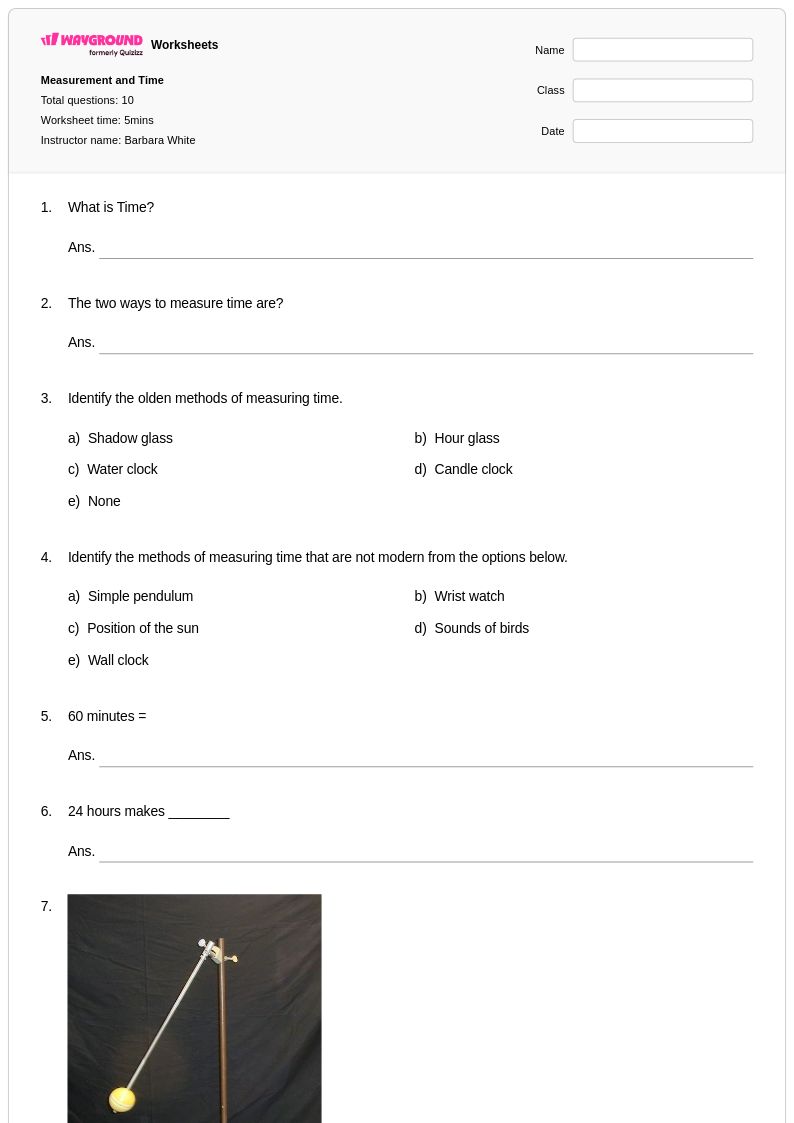
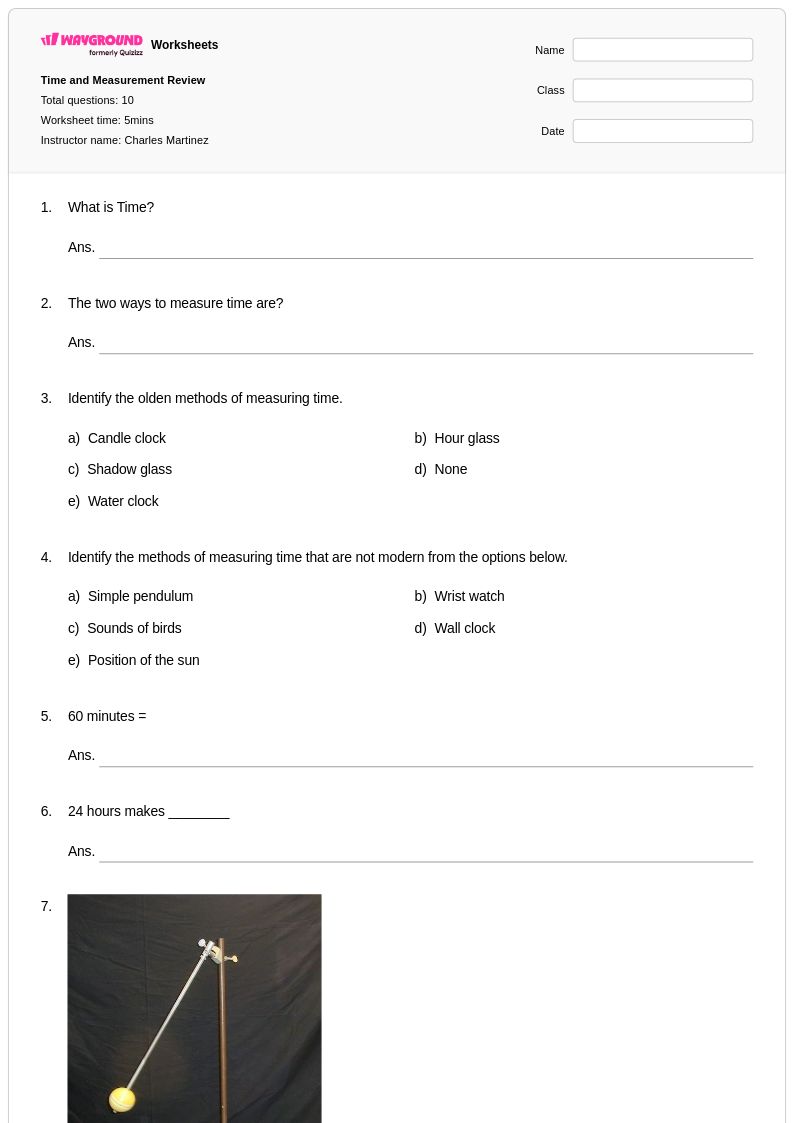
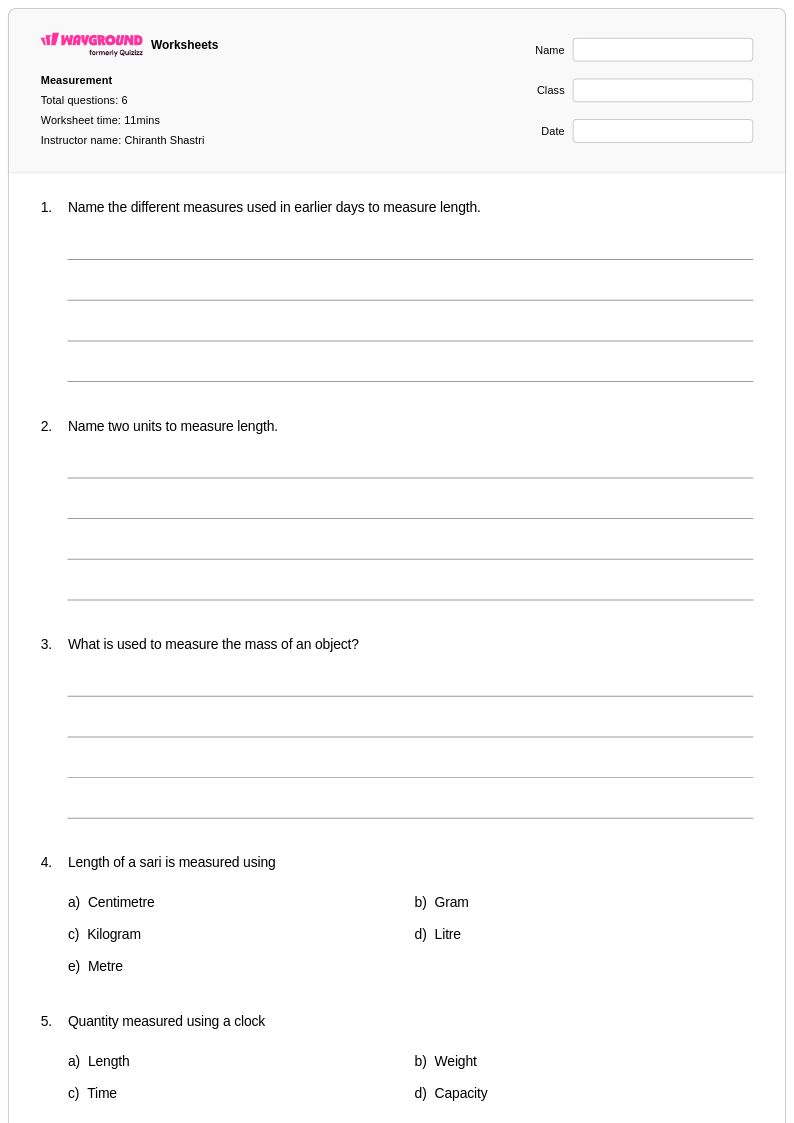
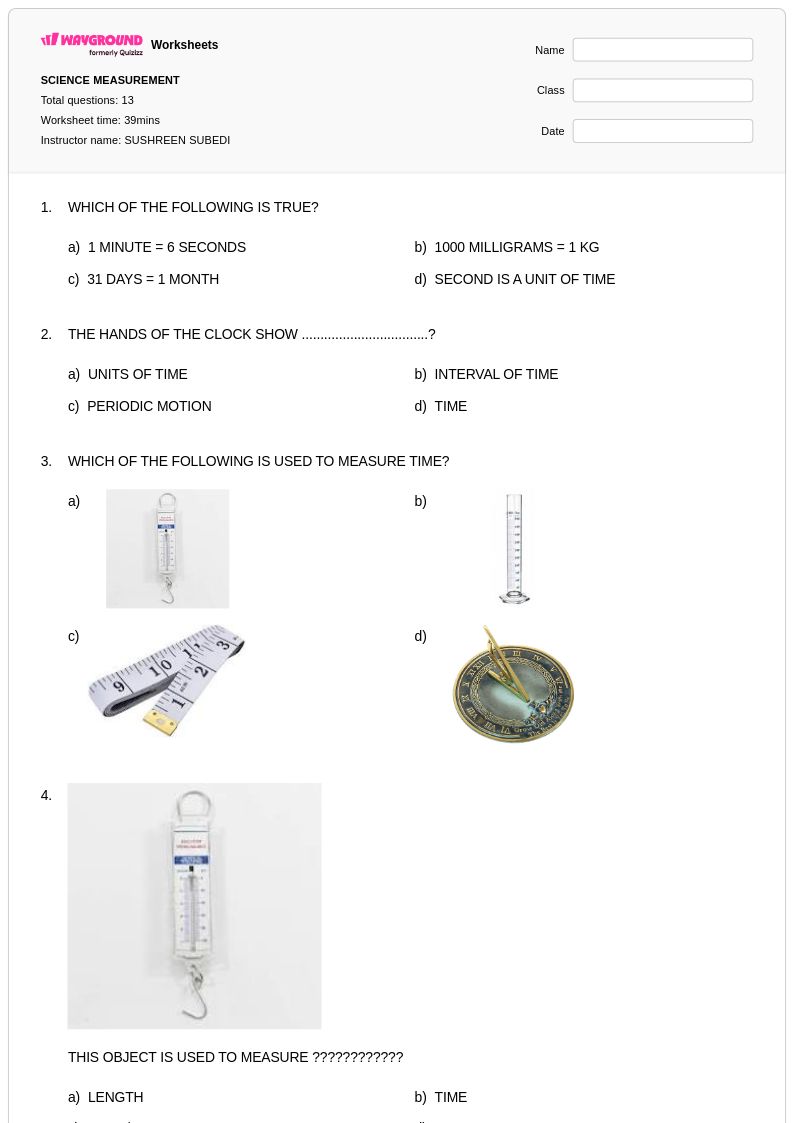
Units of time worksheets for Year 4 students available through Wayground (formerly Quizizz) provide comprehensive practice with essential temporal measurement concepts that form the foundation of mathematical understanding. These expertly designed resources guide fourth-grade learners through critical skills including converting between seconds, minutes, and hours, reading analog and digital clocks, calculating elapsed time, and solving real-world problems involving time intervals. Each worksheet collection includes detailed answer keys and is available as free printables in convenient pdf format, allowing students to work systematically through practice problems that reinforce their understanding of time relationships, duration calculations, and the practical applications of temporal measurement in daily life.
Wayground (formerly Quizizz) empowers educators with access to millions of teacher-created units of time resources specifically curated for Year 4 instruction, featuring robust search and filtering capabilities that align with mathematical standards and learning objectives. The platform's differentiation tools enable teachers to customize worksheets based on individual student needs, while flexible formatting options provide both printable pdf versions and interactive digital alternatives that accommodate diverse classroom environments. These comprehensive collections support strategic lesson planning by offering varied difficulty levels for skill practice, targeted materials for remediation of foundational time concepts, and enrichment activities that challenge advanced learners to apply their temporal measurement knowledge in complex problem-solving scenarios.
FAQs
How do I teach units of time to elementary students?
Start by anchoring abstract time units to concrete, familiar experiences — a minute of silence, a week until a field trip, a year between birthdays. Build outward from seconds and minutes before introducing days, weeks, months, and years, and connect each unit to something students already track in daily life. Once students have intuitive anchors, introduce formal conversion relationships (60 seconds = 1 minute, 60 minutes = 1 hour) with repeated, low-stakes practice problems that gradually increase in complexity.
What exercises help students practice converting units of time?
Conversion chain exercises — where students must convert across multiple units in a single problem, such as converting 150 minutes into hours and minutes — are especially effective for building fluency. Elapsed time problems grounded in real scenarios (e.g., 'A movie starts at 2:15 PM and runs for 1 hour 45 minutes — when does it end?') force students to apply conversion skills meaningfully rather than mechanically. Mixing analog clock reading with unit conversion in the same worksheet reinforces that both skills are part of a unified understanding of time.
What mistakes do students commonly make when converting units of time?
The most frequent error is applying base-10 logic to time — for example, treating 1.5 hours as 1 hour 50 minutes instead of 1 hour 30 minutes. Students also regularly confuse the direction of conversion, dividing when they should multiply and vice versa. A third common misconception is assuming all months have the same number of days, which causes errors in calendar-based elapsed time problems.
How do I help struggling students who can't read analog clocks accurately?
Isolate the skill before combining it with unit conversion — students who can't reliably read an analog clock will compound errors when also asked to calculate elapsed time. Use labeled clock faces with incremental tick marks and have students practice reading times in isolation first. Once analog reading is stable, reintroduce it alongside conversion tasks. On Wayground, the Read Aloud accommodation can support students with reading difficulties during digital practice sessions, and reduced answer choices can lower cognitive load for students who are still building clock-reading fluency.
How can I use Units of Time worksheets from Wayground in my classroom?
Wayground's Units of Time worksheets are available as printable PDFs for traditional classroom use and in digital formats for technology-integrated instruction, giving you flexibility for both in-person and remote settings. You can also host them as a live quiz directly on Wayground, which is useful for warm-ups, formative checks, or whole-class review. Each worksheet includes a complete answer key, so students can self-assess immediately or you can use it for quick grading.
How do I differentiate Units of Time practice for students at different skill levels?
Structure your worksheet sequence so that foundational problems — identifying time units, reading clocks — come before multi-step conversion and elapsed time problems, then assign students to entry points based on pre-assessment. On Wayground, you can apply individual accommodations such as extended time, reduced answer choices, or Read Aloud for specific students without alerting the rest of the class, allowing differentiation to happen seamlessly within a single shared assignment.