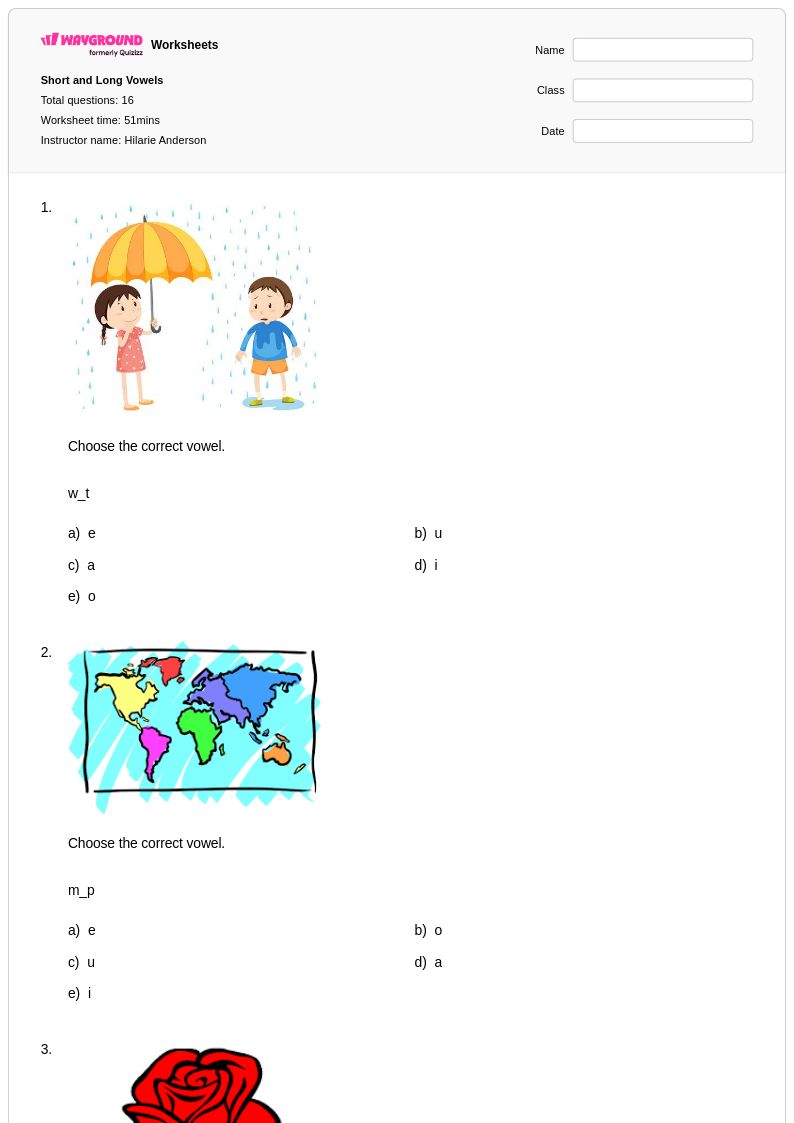
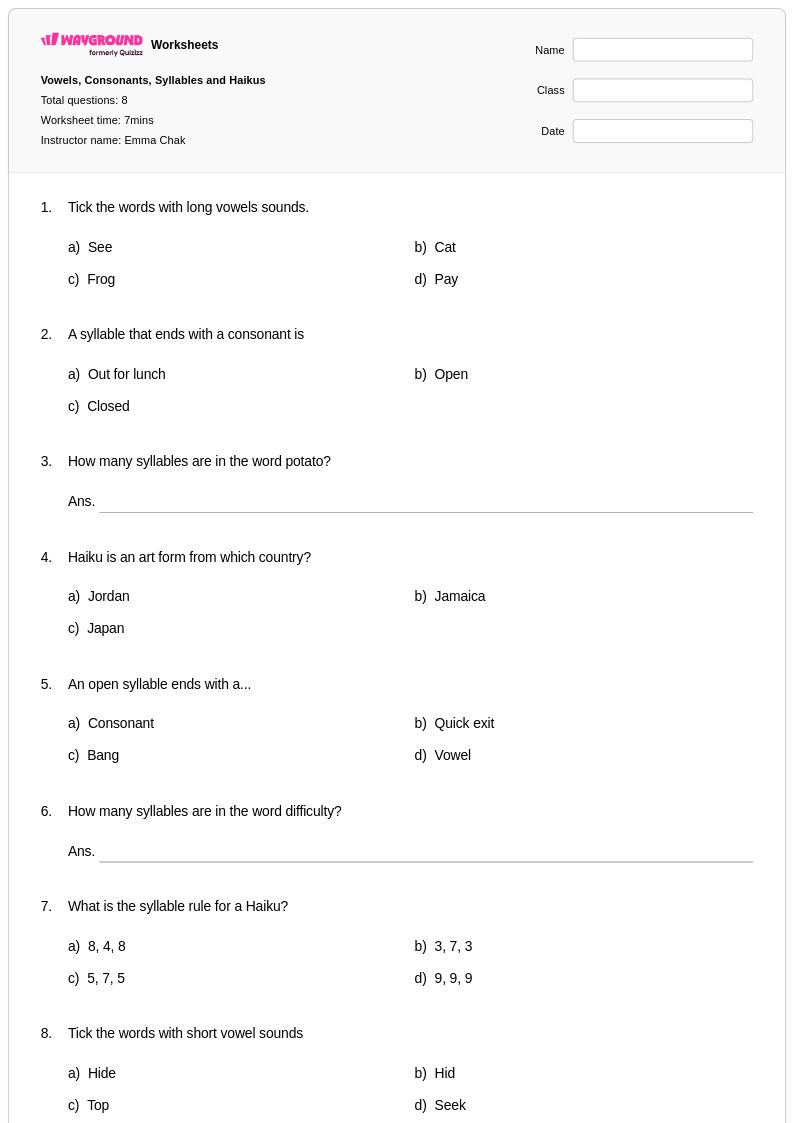
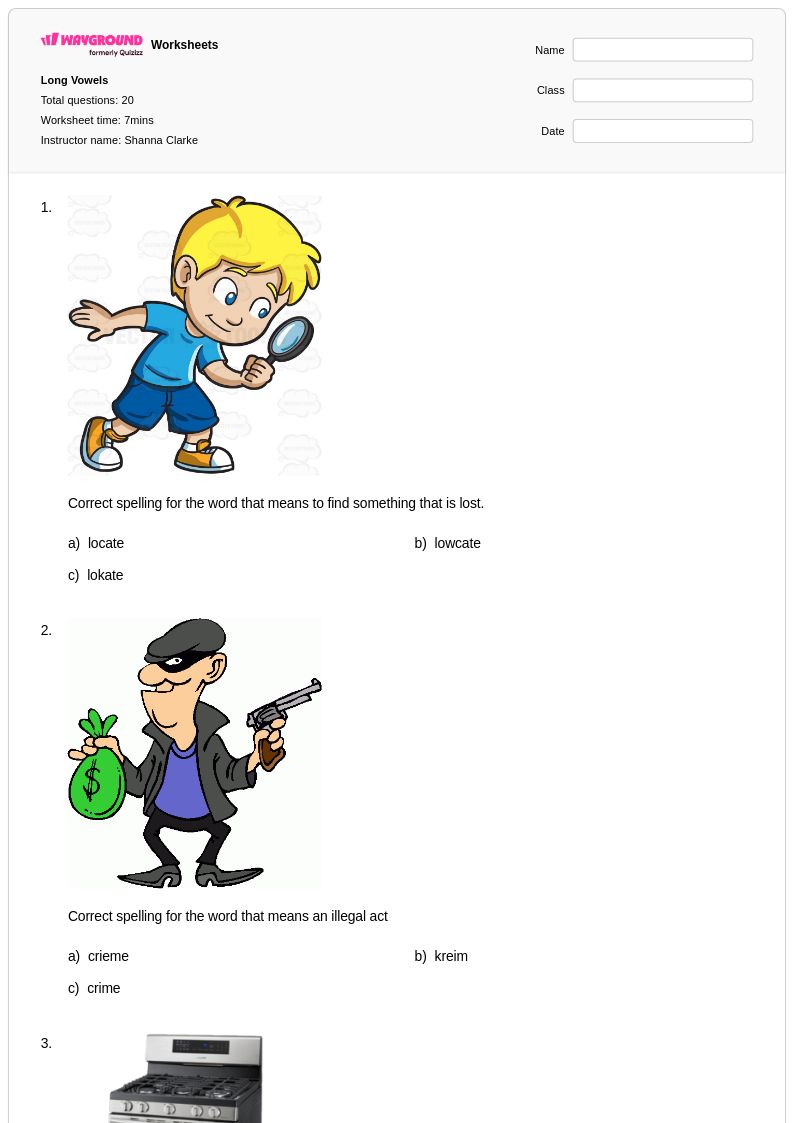
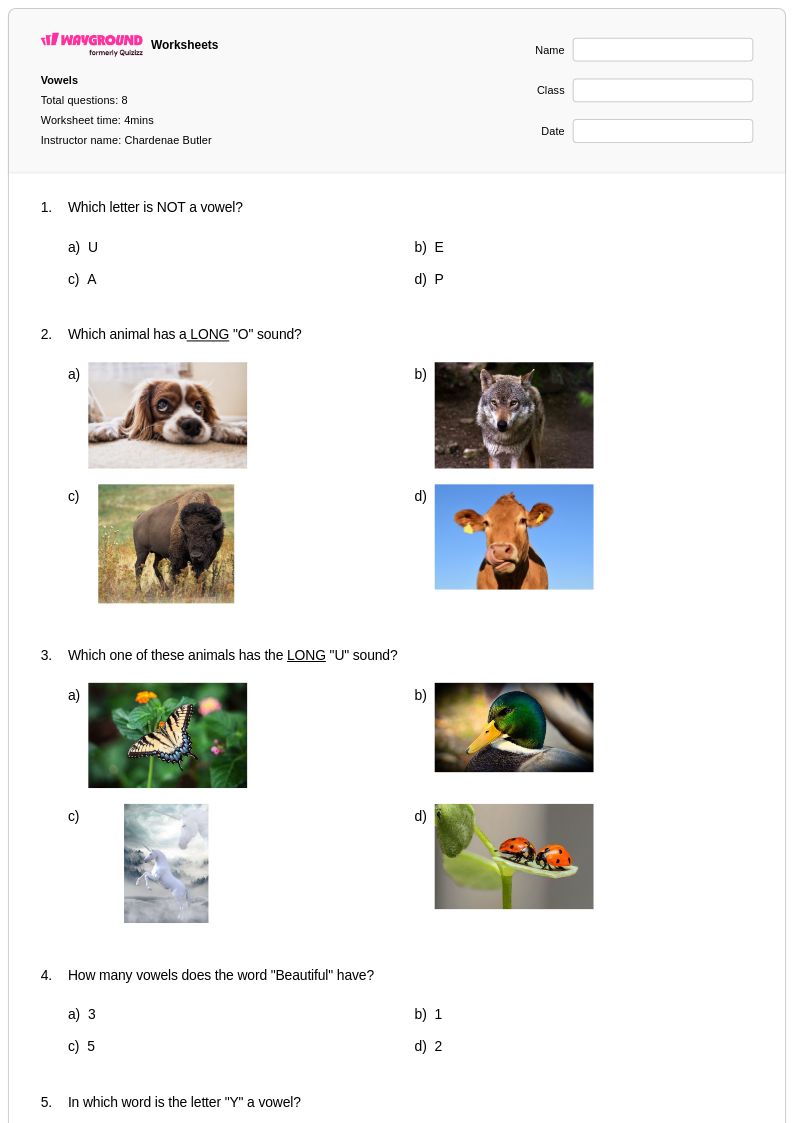
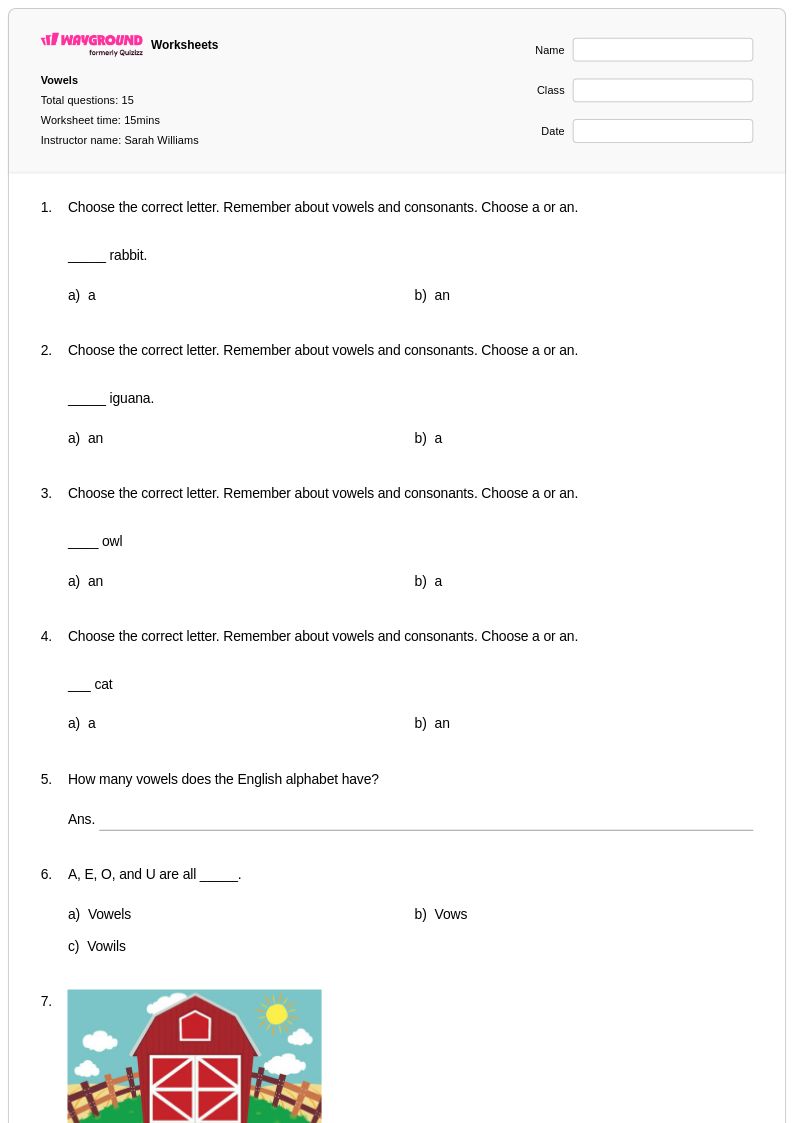
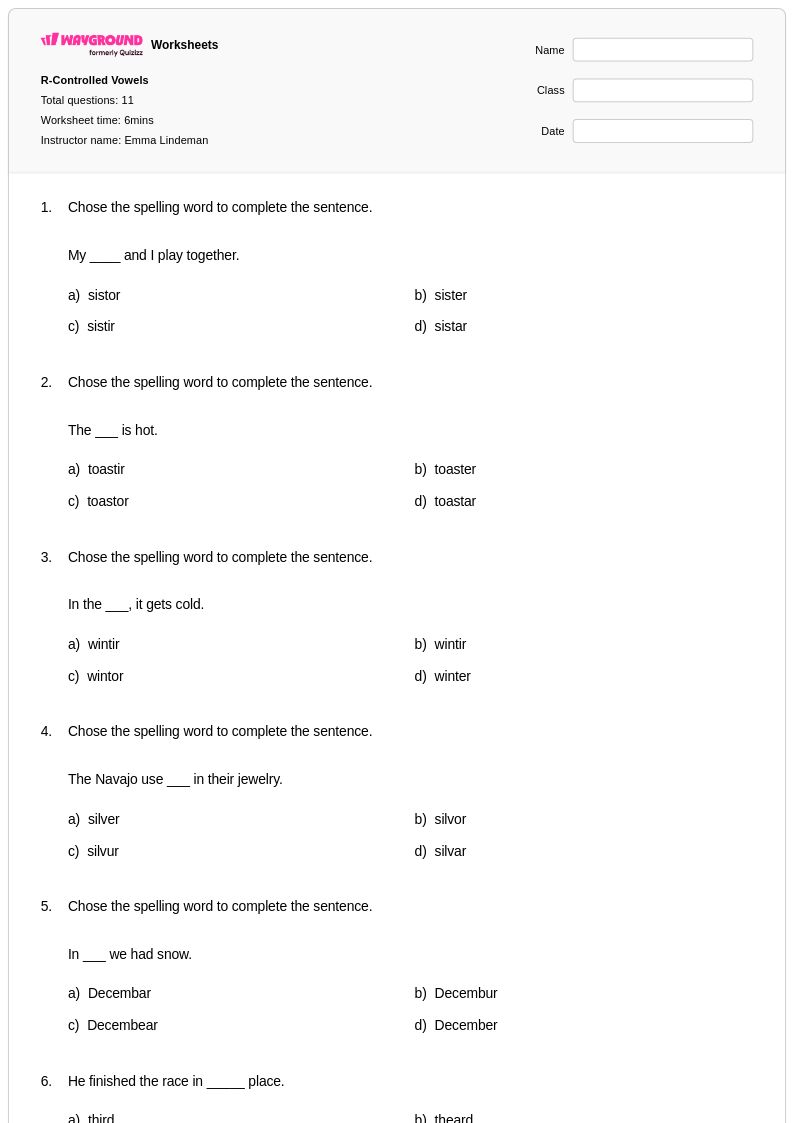
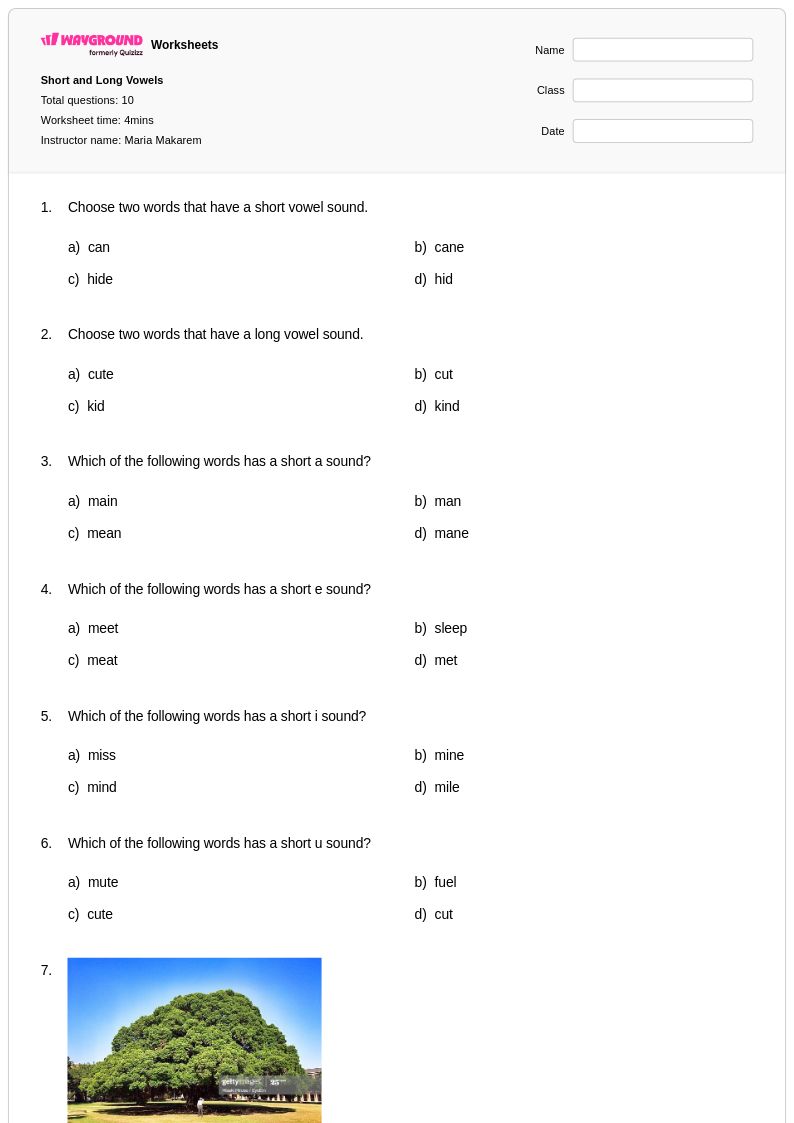
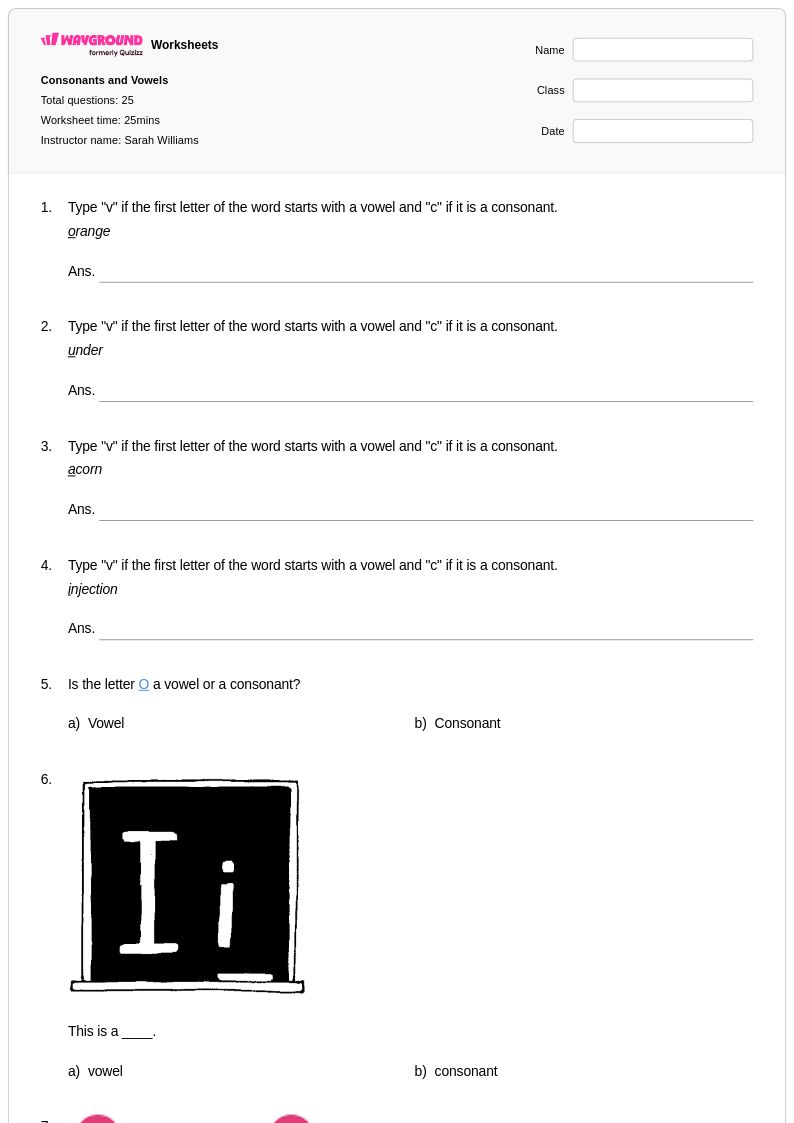
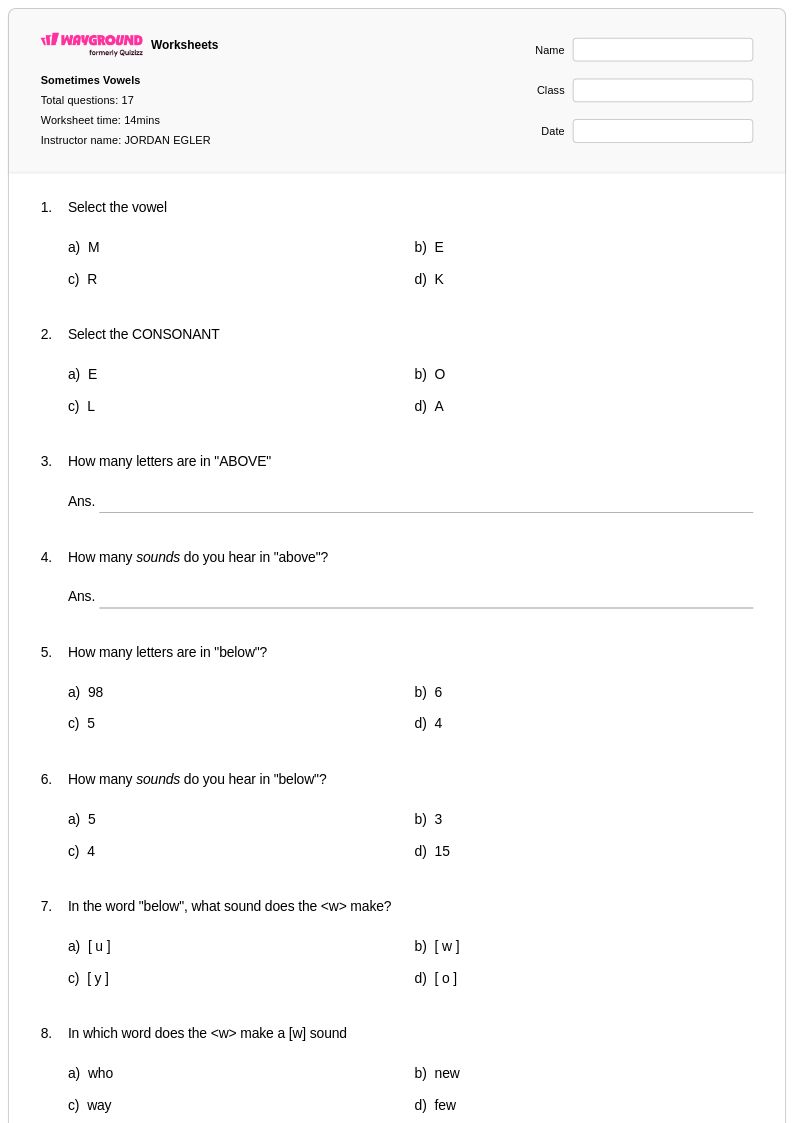
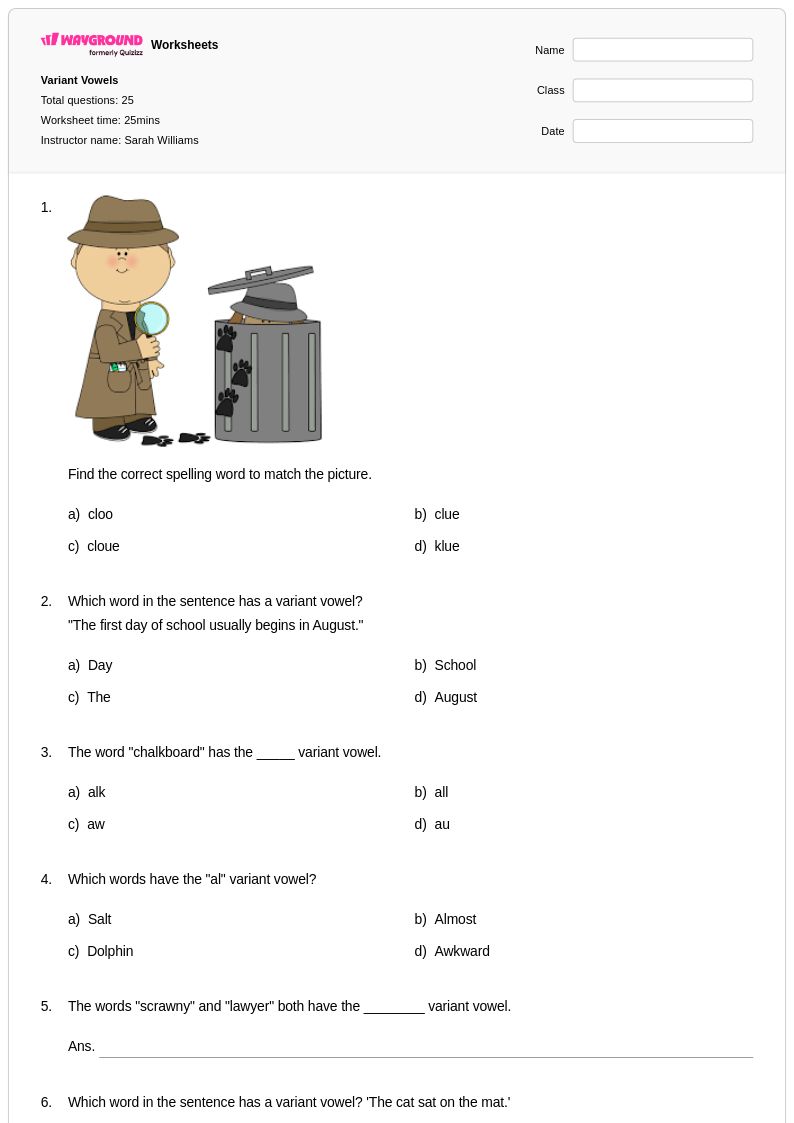
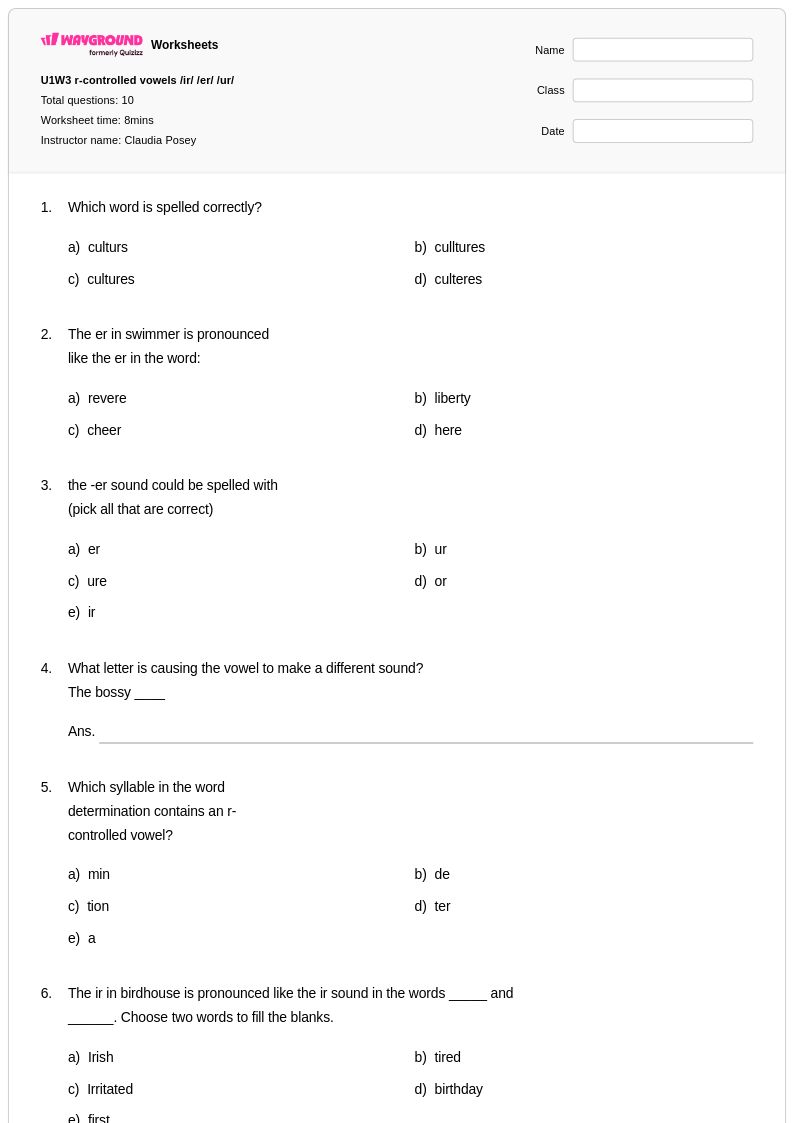
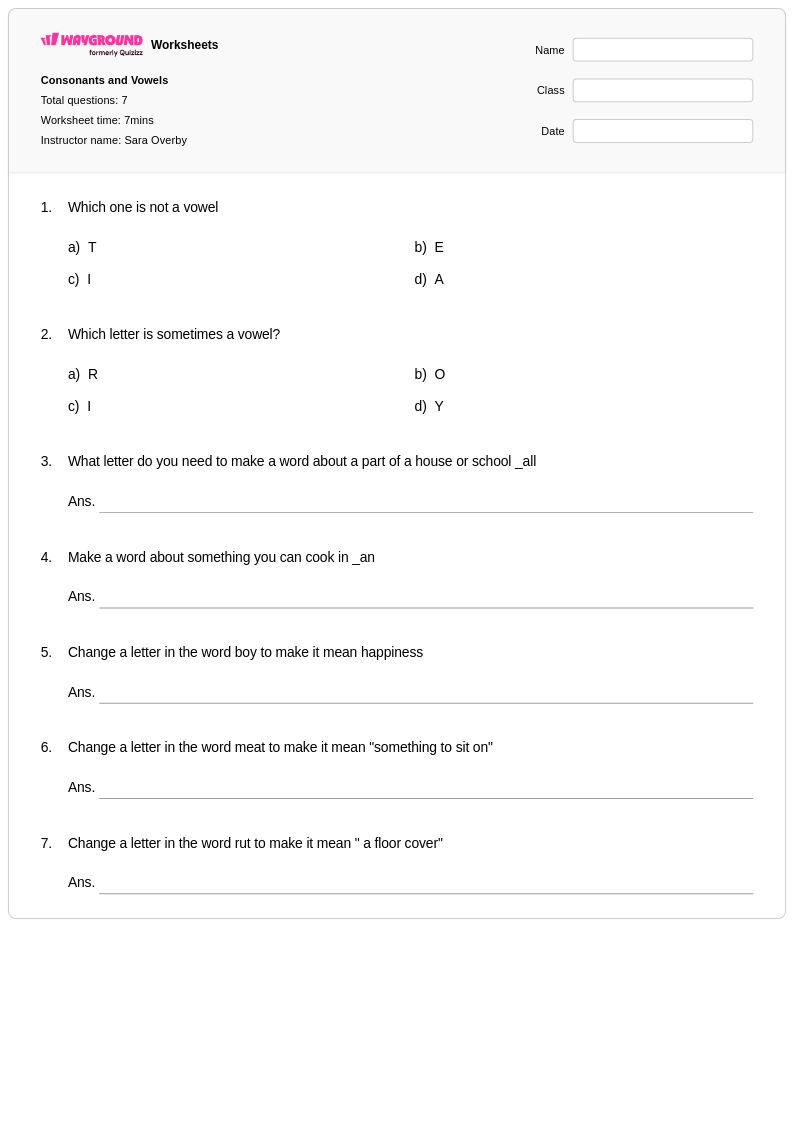
Year 4 vowel sounds worksheets from Wayground help students master vowel recognition and pronunciation through engaging printables, practice problems, and comprehensive answer keys available as free PDF downloads.
Vowels form the foundation of reading fluency and phonetic understanding, making Year 4 vowel worksheets an essential component of any comprehensive literacy curriculum. These carefully designed practice materials from Wayground (formerly Quizizz) target the complex vowel patterns that fourth-grade students must master, including long and short vowel sounds, vowel digraphs, diphthongs, and r-controlled vowels. Each worksheet strengthens critical phonemic awareness skills while building students' ability to decode unfamiliar words independently. Teachers can access these resources as free printables in convenient pdf format, complete with detailed answer keys that streamline grading and enable immediate feedback. The practice problems progressively challenge students to identify vowel sounds in isolation, within syllables, and in multisyllabic words, ensuring comprehensive skill development across all vowel patterns appropriate for fourth-grade reading levels.
Wayground (formerly Quizizz) empowers educators with an extensive collection of millions of teacher-created vowel resources specifically curated for Year 4 instruction. The platform's robust search and filtering capabilities allow teachers to quickly locate materials aligned with state standards and curriculum requirements, whether focusing on specific vowel patterns or comprehensive phonics review. Advanced differentiation tools enable instructors to customize worksheets for diverse learning needs, supporting both remediation for struggling readers and enrichment opportunities for advanced students. These versatile resources are available in both printable and digital formats, including downloadable pdfs that facilitate seamless integration into lesson planning, independent practice sessions, homework assignments, and assessment preparation. The platform's comprehensive approach to vowel instruction supports teachers in creating targeted skill practice that addresses individual student needs while maintaining alignment with grade-level expectations and phonics scope and sequence requirements.
FAQs
How do I teach long and short vowel sounds to early readers?
Start by teaching short vowel sounds first, as they appear most frequently in simple CVC (consonant-vowel-consonant) words like 'cat', 'sit', and 'hop'. Once students can reliably identify short vowels, introduce long vowel patterns, including silent E, vowel teams, and r-controlled vowels, through explicit phonics instruction with clear examples and word sorting activities. Connecting each pattern to high-frequency words students already know helps anchor new phonetic rules to familiar reading experiences.
What exercises help students practice vowel sounds?
Effective practice exercises include word sorting by vowel sound, fill-in-the-blank activities that require students to choose the correct vowel pattern, and picture-word matching where students identify the vowel sound heard in a spoken or illustrated word. Targeted drills on specific patterns such as silent E, vowel teams like 'ai' and 'ea', and r-controlled vowels such as 'ar' and 'or' give students repeated exposure to each rule in isolation before applying it in connected text.
What mistakes do students commonly make when learning vowel sounds?
One of the most common errors is confusing short vowel sounds, particularly short /i/ and short /e/, since the mouth positions for these sounds are very similar. Students also frequently misapply the silent E rule, adding a long vowel sound to words where the final E does not actually signal a vowel team or CVCe pattern. Over-generalizing vowel team rules, such as assuming 'oa' always makes the long O sound regardless of context, is another predictable misconception that targeted practice can address.
How do I differentiate vowel instruction for struggling readers versus advanced students?
For struggling readers, begin with one short vowel sound at a time using high-contrast word pairs and provide extended practice before introducing long vowel patterns. Advanced students can move into vowel team patterns, diphthongs, and multisyllabic words more quickly, with exercises that require them to apply vowel rules in writing as well as decoding. On Wayground, teachers can apply individual accommodations such as read-aloud support and reduced answer choices for students who need additional scaffolding, while other students work with standard settings simultaneously.
How can I use Wayground vowel worksheets in my classroom?
Wayground vowel worksheets are available as printable PDFs for traditional classroom use and in digital formats for technology-integrated learning environments, making them easy to deploy as independent practice, homework, or small-group intervention materials. Teachers can also host any worksheet as a live quiz on Wayground, allowing real-time participation and immediate feedback. The collection covers a wide range of vowel subtopics, from basic short vowel identification to vowel teams and r-controlled vowels, so teachers can select resources that precisely match current instructional goals.
In what order should I introduce vowel patterns during phonics instruction?
Most systematic phonics programs recommend introducing short vowels first, beginning with the most visually and auditorily distinct sounds such as short /a/ and short /i/, before moving to the remaining three. Once short vowels are secure, introduce the silent E (CVCe) pattern, then common vowel teams, and finally r-controlled vowels, which behave differently from standard short and long vowel rules. Following this sequence reduces cognitive overload and ensures students have a stable foundation before encountering more complex phonetic patterns.