Free Printable Water Displacement Worksheets for Year 2
Explore Year 2 water displacement worksheets and free printables that help young students discover how objects change water levels through engaging practice problems with answer keys.
Explore printable Water Displacement worksheets for Year 2
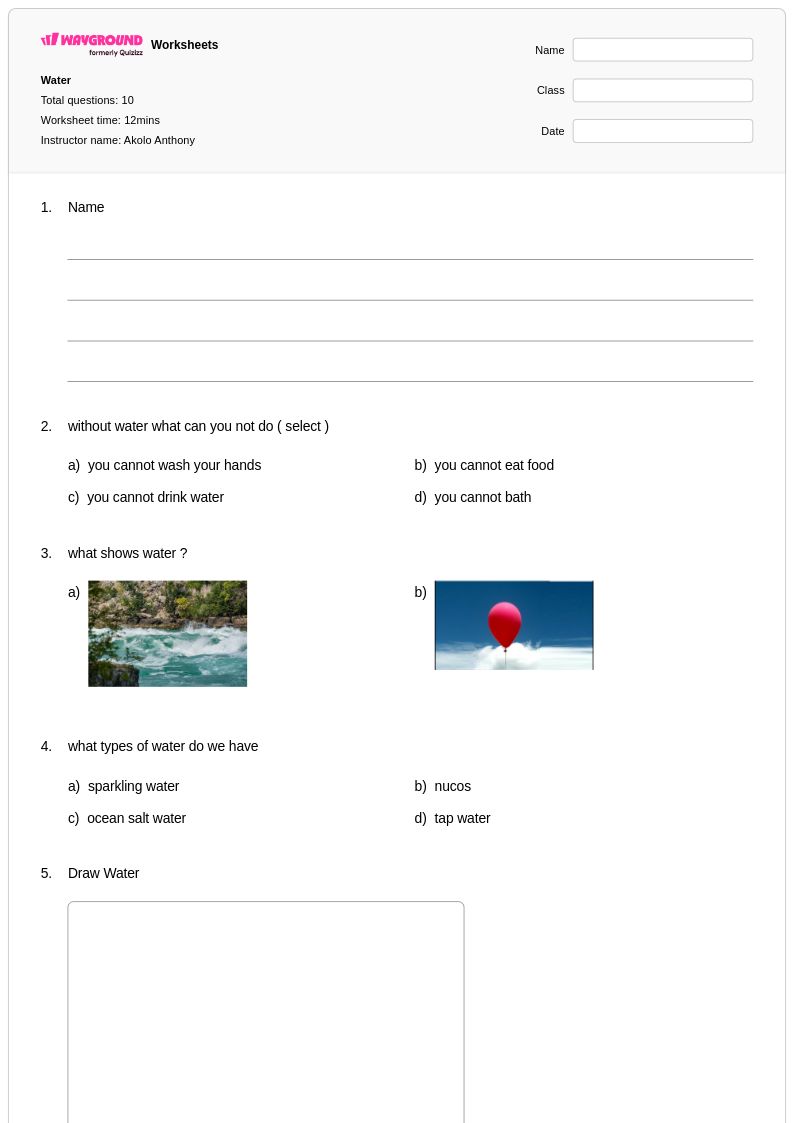
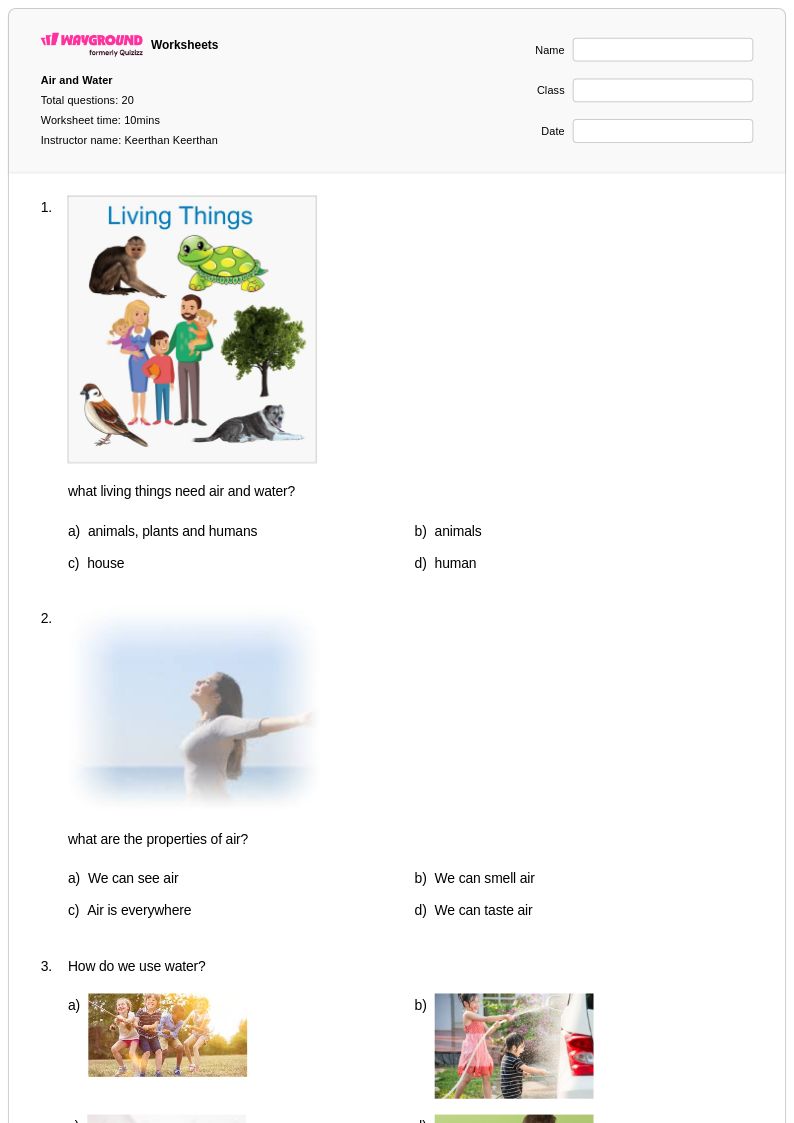
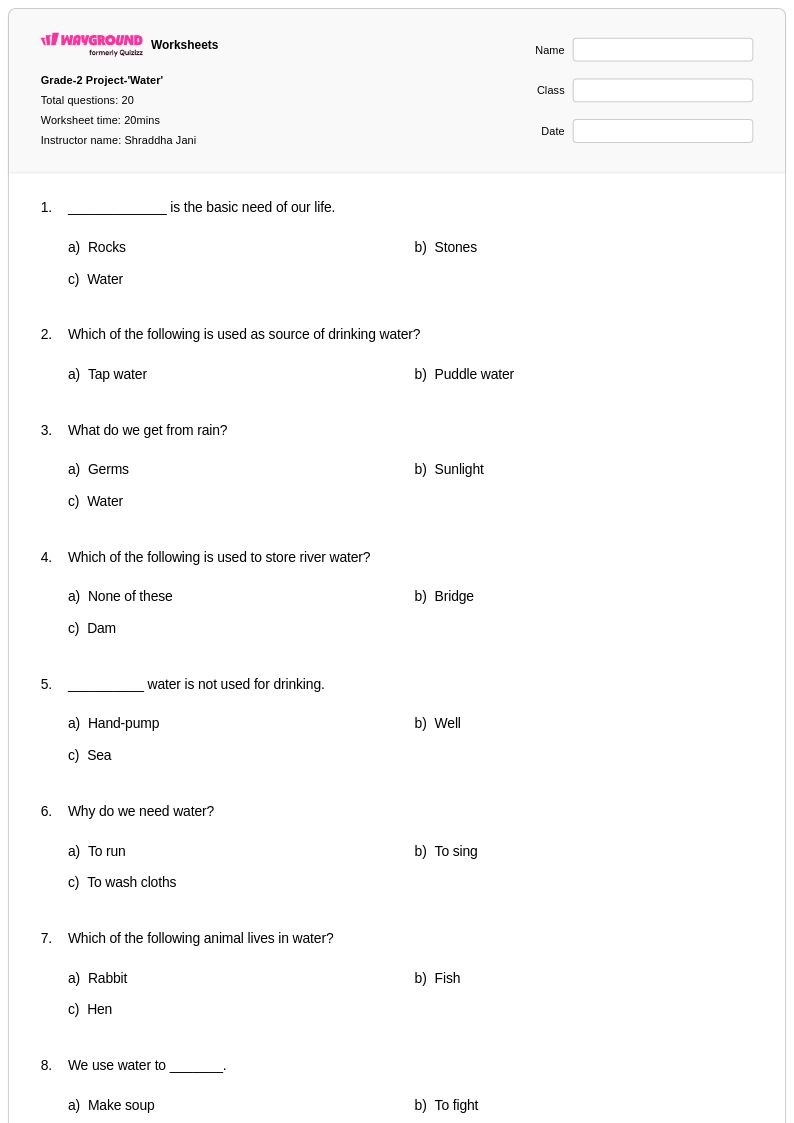
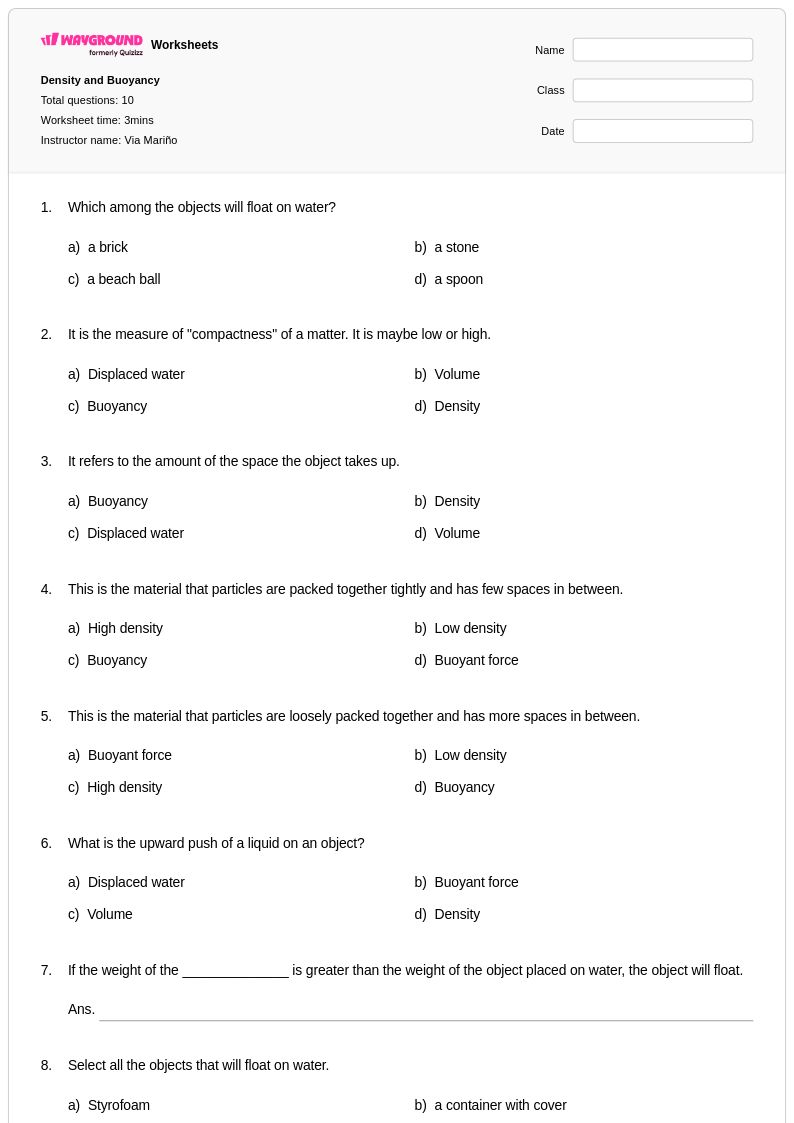
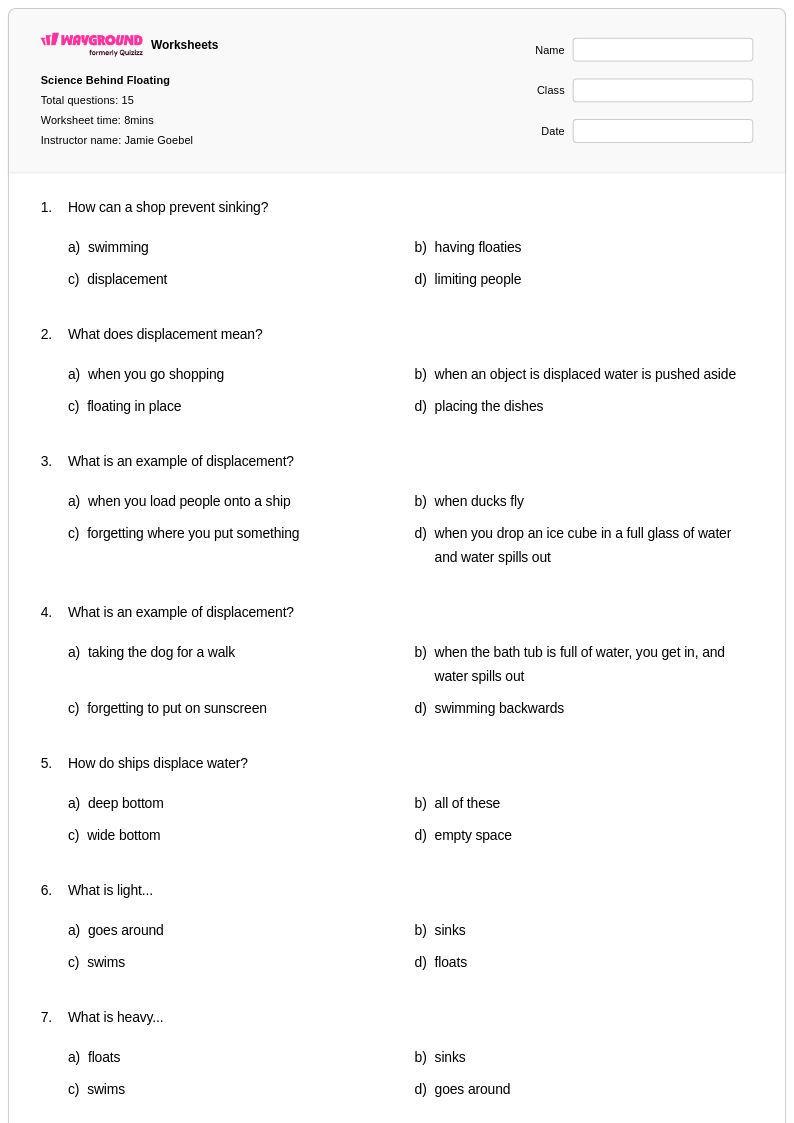
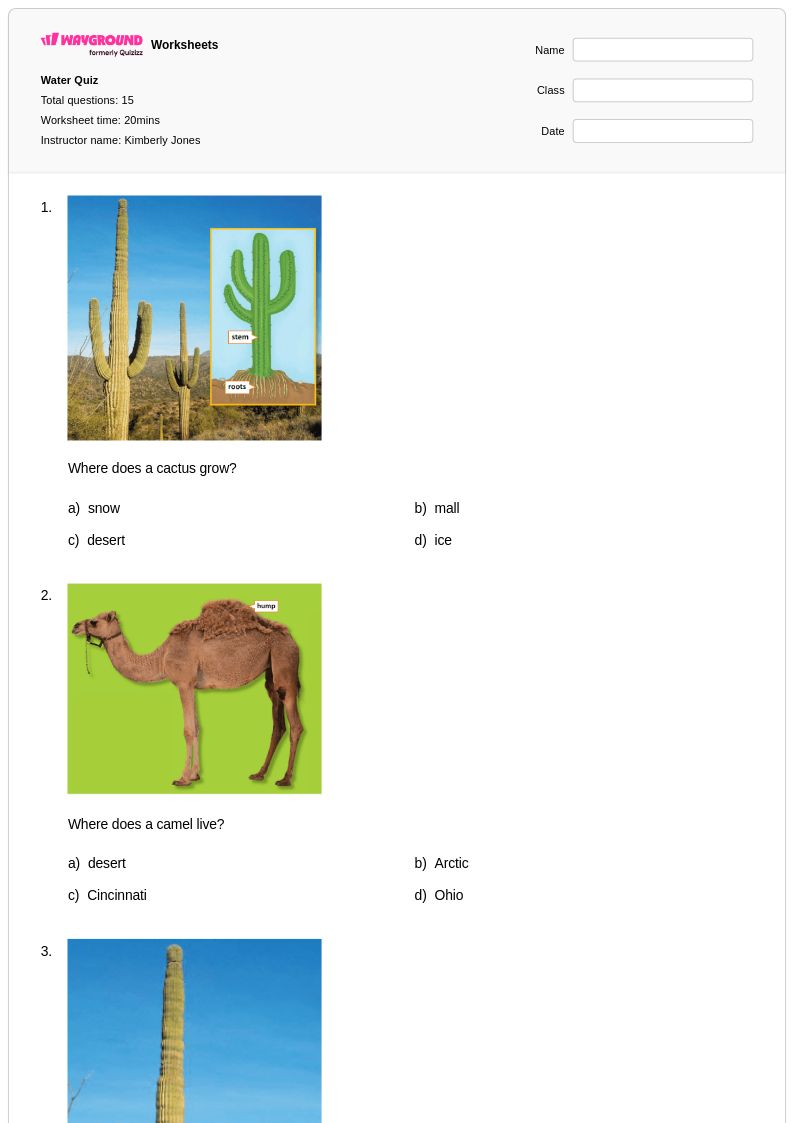
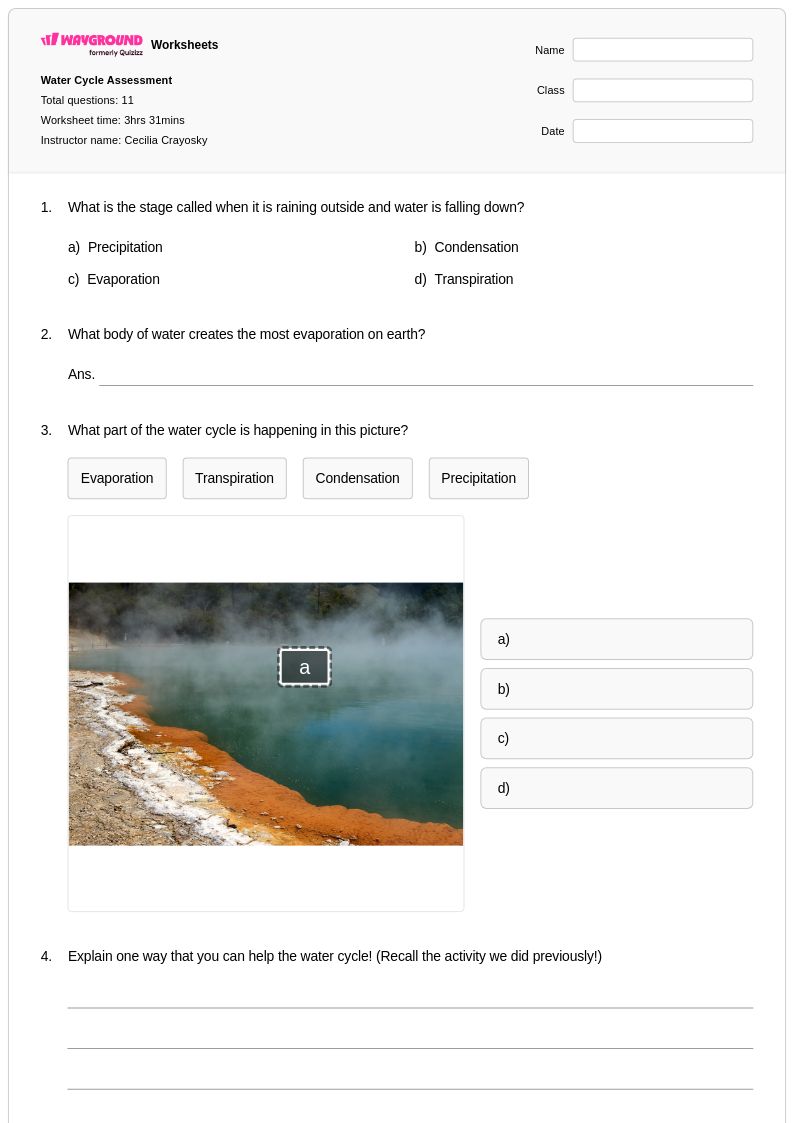
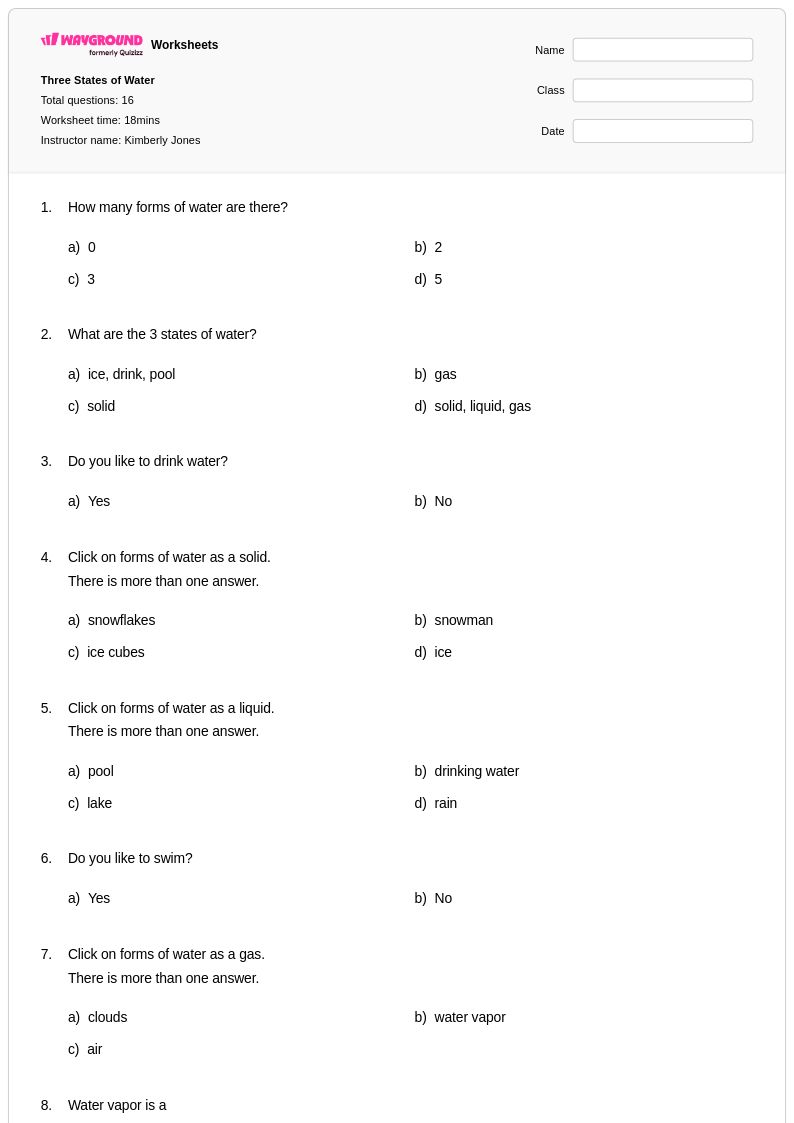
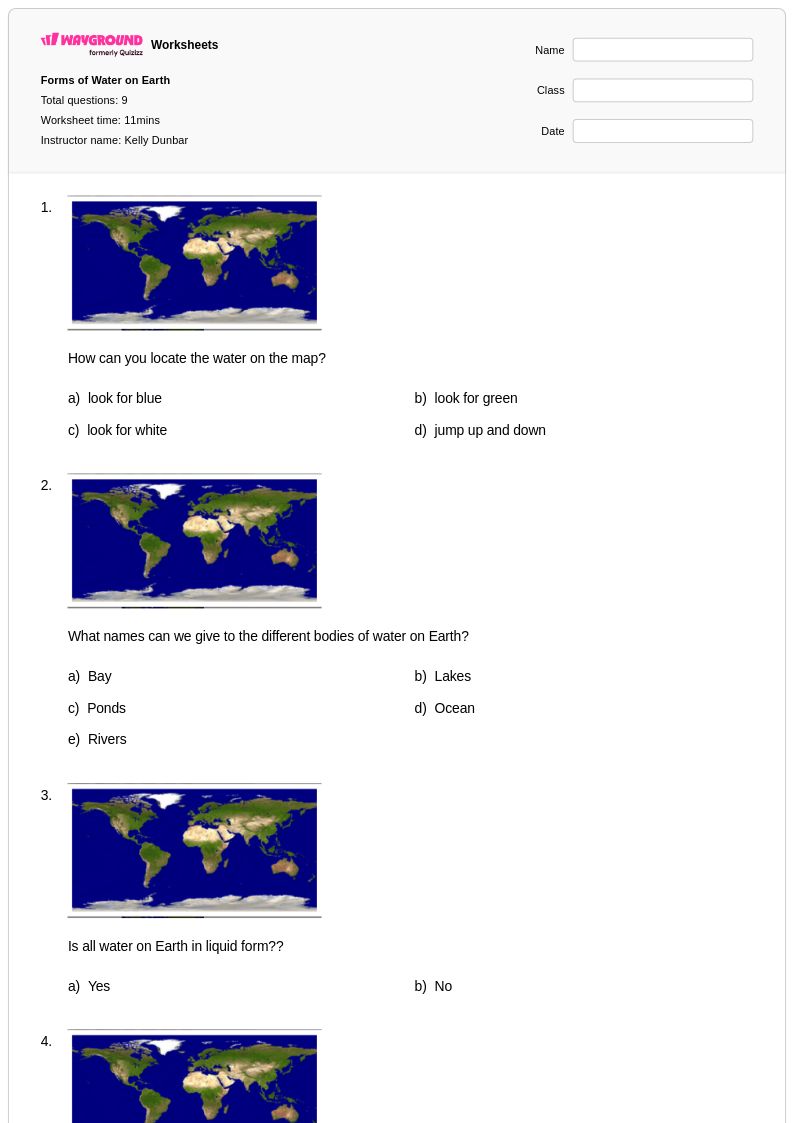
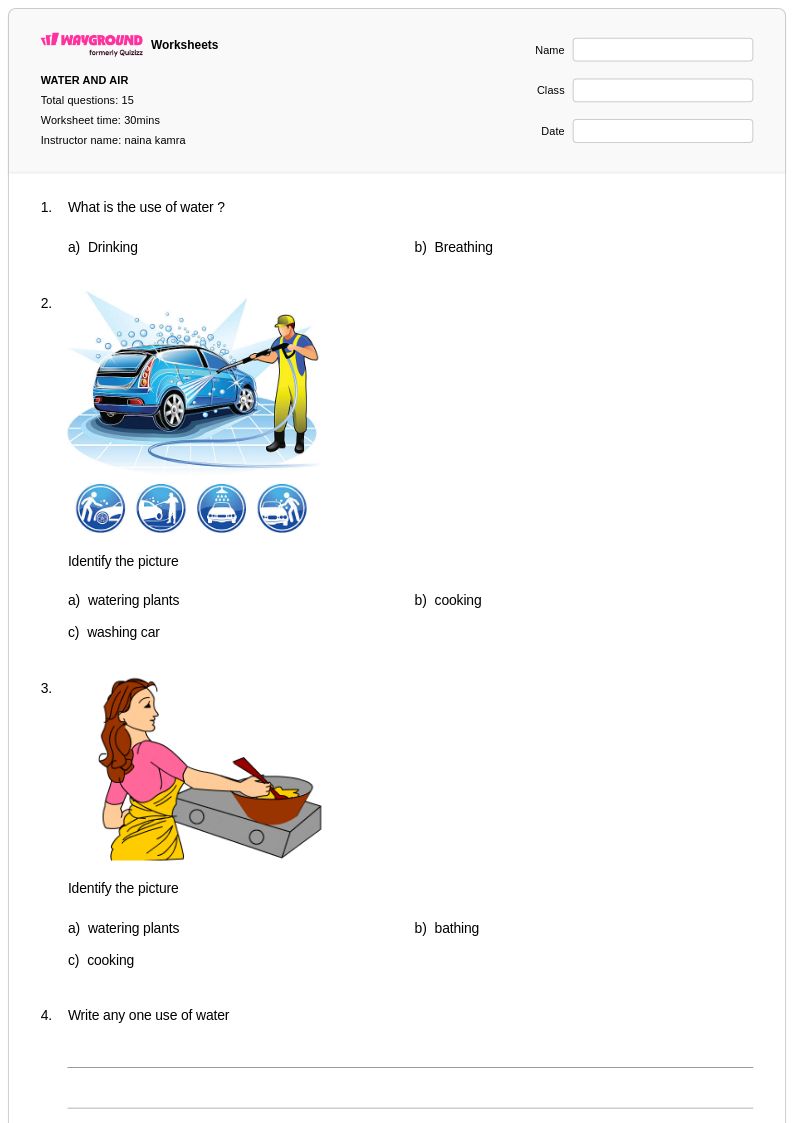
Water displacement worksheets for Year 2 students available through Wayground (formerly Quizizz) introduce young learners to this fundamental physics concept through hands-on exploration and observation activities. These carefully designed educational materials help second-grade students understand how objects take up space when placed in water, building essential scientific thinking skills through guided practice problems that encourage prediction, observation, and measurement. The comprehensive worksheet collection includes engaging exercises where students predict water level changes, record their observations, and draw conclusions about volume and space, with each printable resource featuring clear instructions and answer keys to support both independent learning and teacher-guided instruction. These free educational materials strengthen critical thinking abilities while introducing foundational physics principles through age-appropriate experiments and visual demonstrations that make abstract concepts concrete and accessible.
Wayground (formerly Quizizz) empowers educators with millions of teacher-created resources specifically designed to support Year 2 water displacement instruction across diverse classroom environments. The platform's robust search and filtering capabilities enable teachers to quickly locate worksheets that align with specific learning objectives and state science standards, while built-in differentiation tools allow for seamless customization to meet varying student ability levels and learning styles. These comprehensive collections are available in both printable pdf formats for traditional classroom use and digital formats for interactive learning experiences, providing educators with flexible options for lesson planning, targeted remediation, and enrichment activities. Teachers can efficiently organize skill practice sessions, assess student understanding, and adapt instruction based on individual needs, ensuring that every second-grade student develops a solid foundation in basic physics concepts through structured, evidence-based learning experiences.
FAQs
How do I teach water displacement to my students?
Water displacement is best introduced through hands-on demonstration before moving to quantitative problem solving. Start by submerging objects of known volume into a graduated cylinder filled with water and having students record the change in water level. This builds the conceptual foundation for Archimedes' principle before students encounter calculations involving buoyant force, density, and irregular object volume.
What kinds of practice problems help students understand water displacement?
Effective practice problems for water displacement move from simple volume measurement to multi-step reasoning. Students should practice determining the volume of irregularly shaped objects using displacement data, predicting whether an object will float or sink based on density comparisons, and calculating the apparent weight loss of submerged objects. Problems that use real-world contexts, such as ships, submarines, or laboratory equipment, help students connect the math to observable phenomena.
What mistakes do students commonly make when solving water displacement problems?
The most common error is confusing the displaced volume with the total volume of water in the container rather than recognizing it as the difference between initial and final water levels. Students also frequently conflate mass and volume, leading to incorrect density calculations. A third persistent misconception is assuming that heavier objects always sink, when buoyancy depends on density, not mass alone.
How can I use water displacement worksheets to support students at different skill levels?
Water displacement worksheets can be scaffolded effectively by selecting problems that range from straightforward volume-by-displacement readings to complex multi-step buoyant force calculations. For students who need additional support, Wayground allows teachers to enable accommodations such as read aloud, reduced answer choices, and extended time on a per-student basis, so struggling learners receive targeted help without disrupting the rest of the class. Advanced learners can be directed toward problems that integrate density, mass, and Archimedes' principle in a single problem set.
How do I use Wayground's water displacement worksheets in my classroom?
Wayground's water displacement worksheets are available as free printable PDFs for traditional classroom and lab use, as well as in digital formats for technology-integrated environments. Teachers can distribute printed versions alongside laboratory activities or assign the digital format as independent practice or homework. Worksheets can also be hosted as a quiz directly on Wayground, giving teachers access to student response data without any additional setup.
How do I find water displacement worksheets that match my physics standards?
Wayground's search and filtering tools allow physics teachers to locate water displacement resources that align with specific standards and target particular skill levels. Because the collection is drawn from materials created by experienced classroom teachers, most worksheets reflect the sequencing and vocabulary already familiar to students in standard physics curricula. Filtering by difficulty or concept focus, such as buoyancy versus volume measurement, helps narrow results quickly.