Free Printable Word Formation Worksheets for Year 4
Enhance Year 4 students' word formation skills with Wayground's free spelling worksheets and printables, featuring practice problems and answer keys to build vocabulary and morphological awareness through engaging PDF exercises.
Explore printable Word Formation worksheets for Year 4
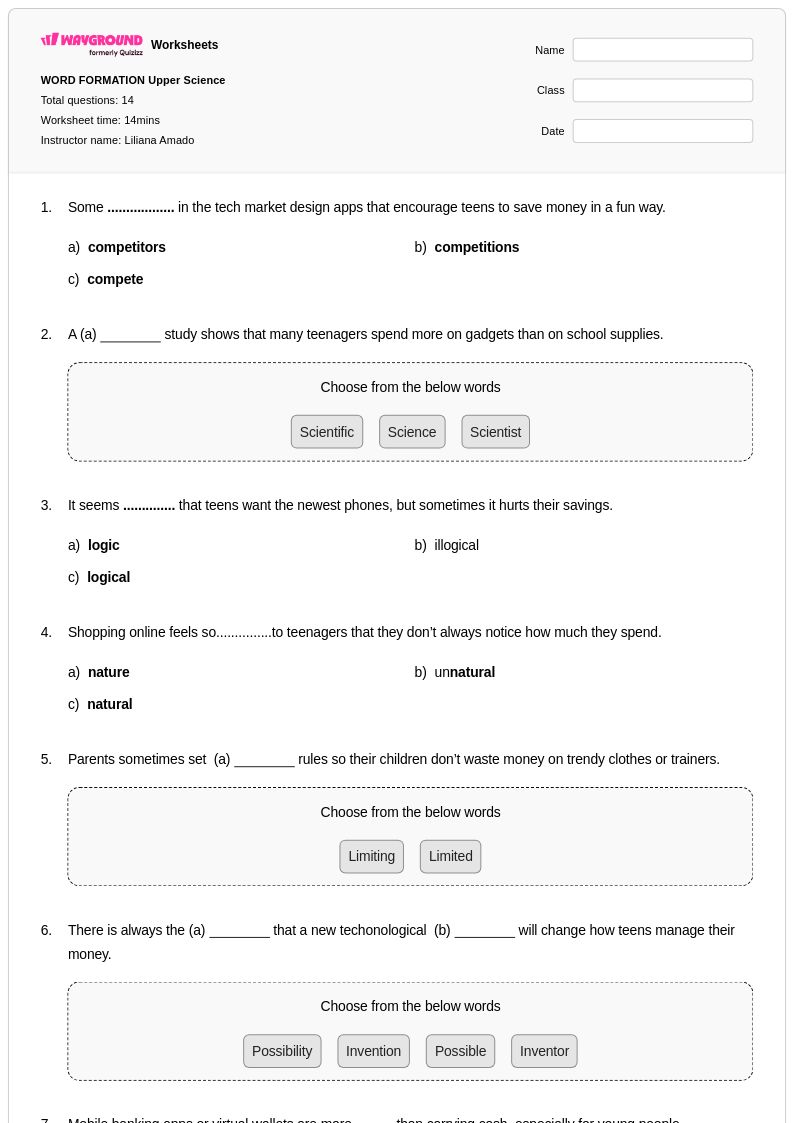
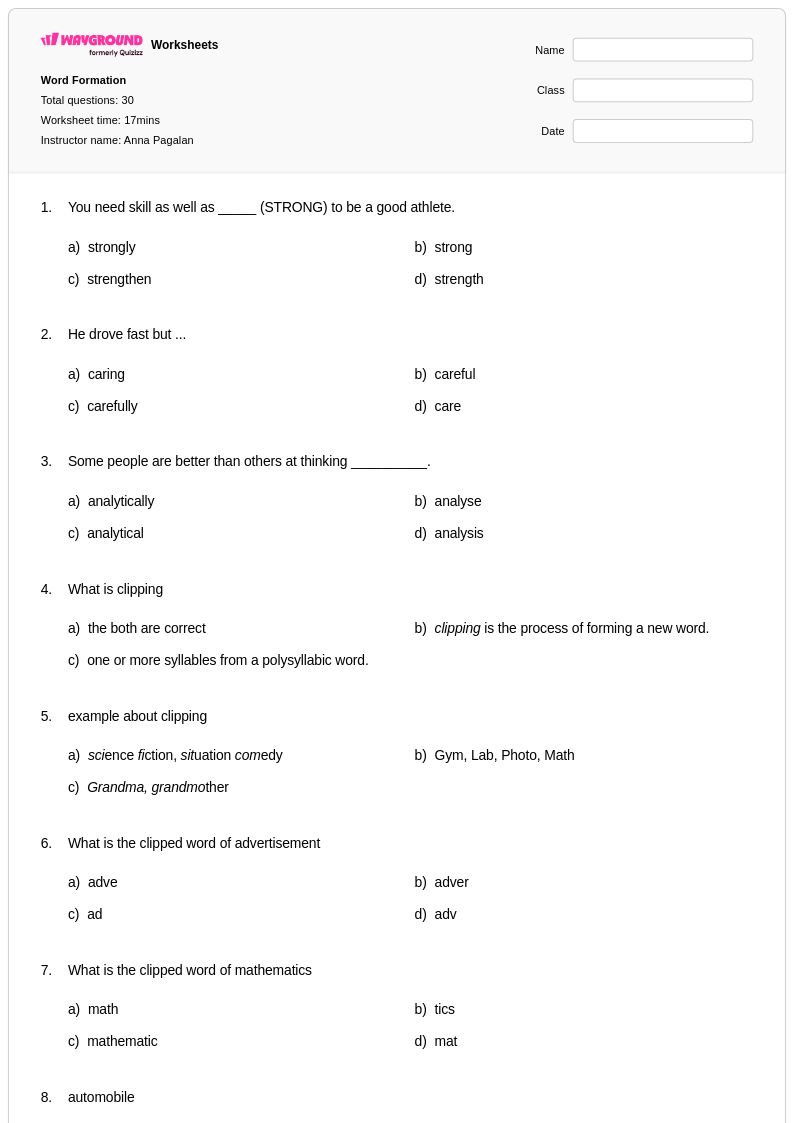
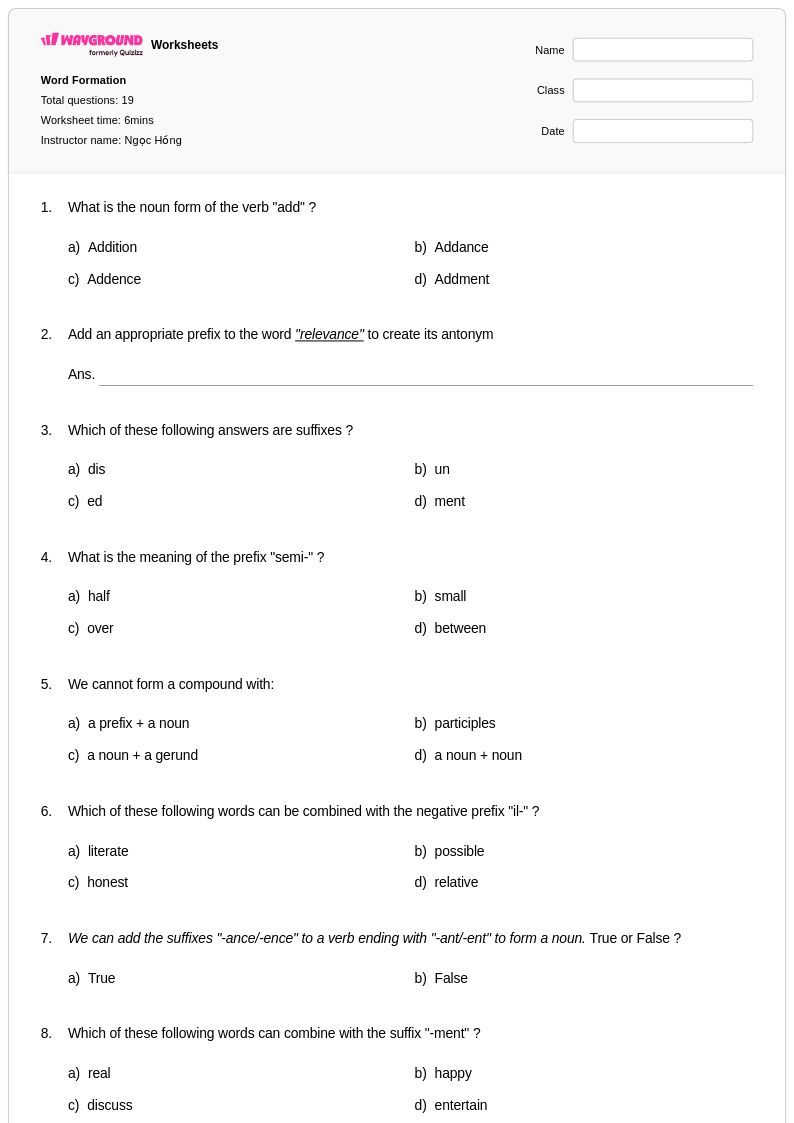
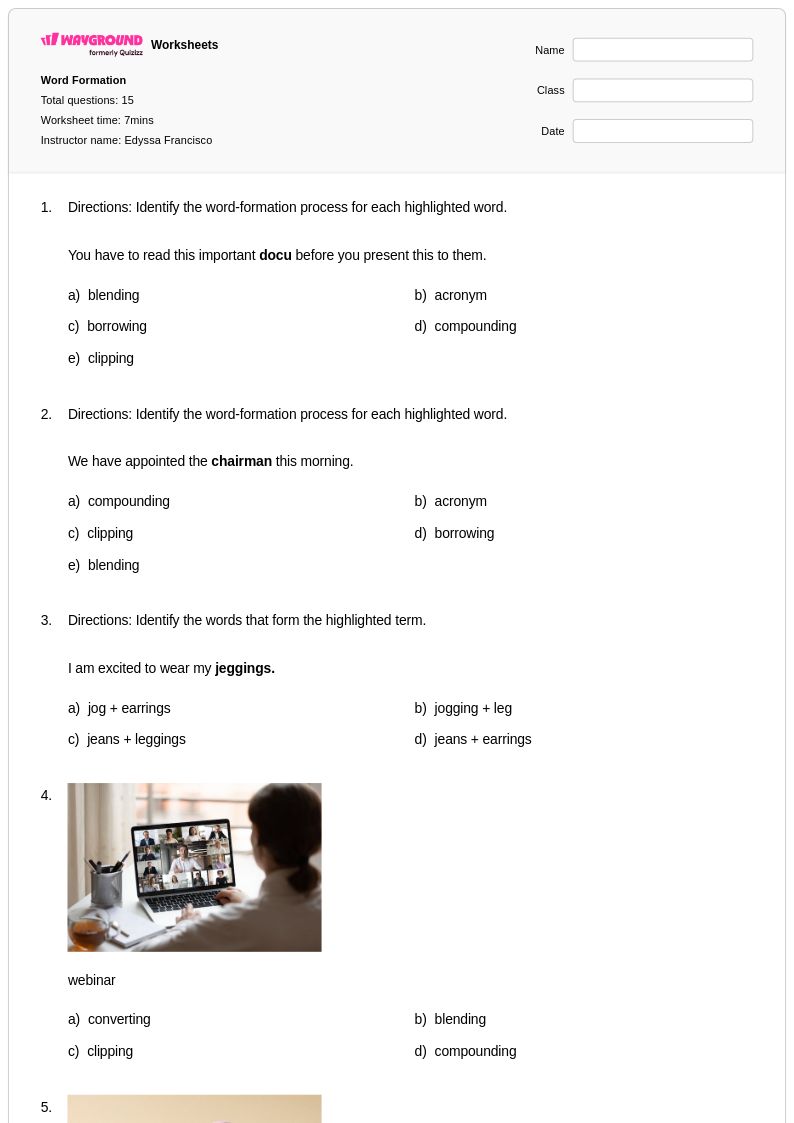
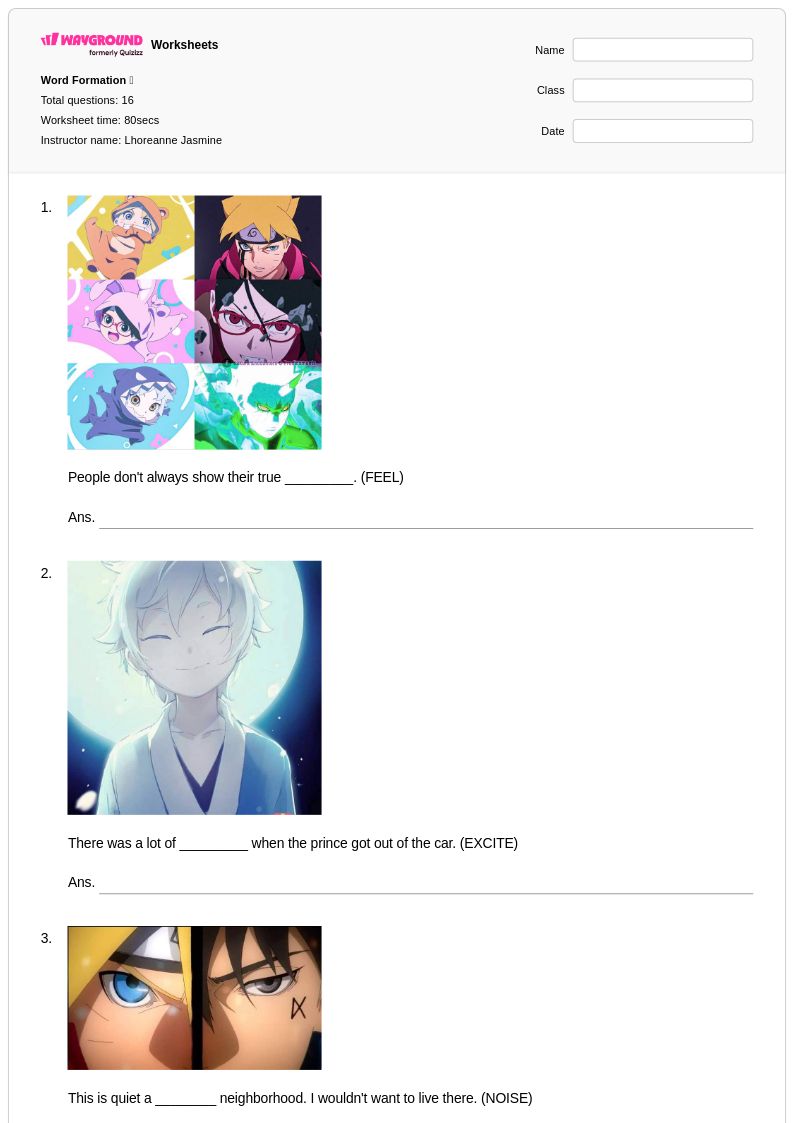
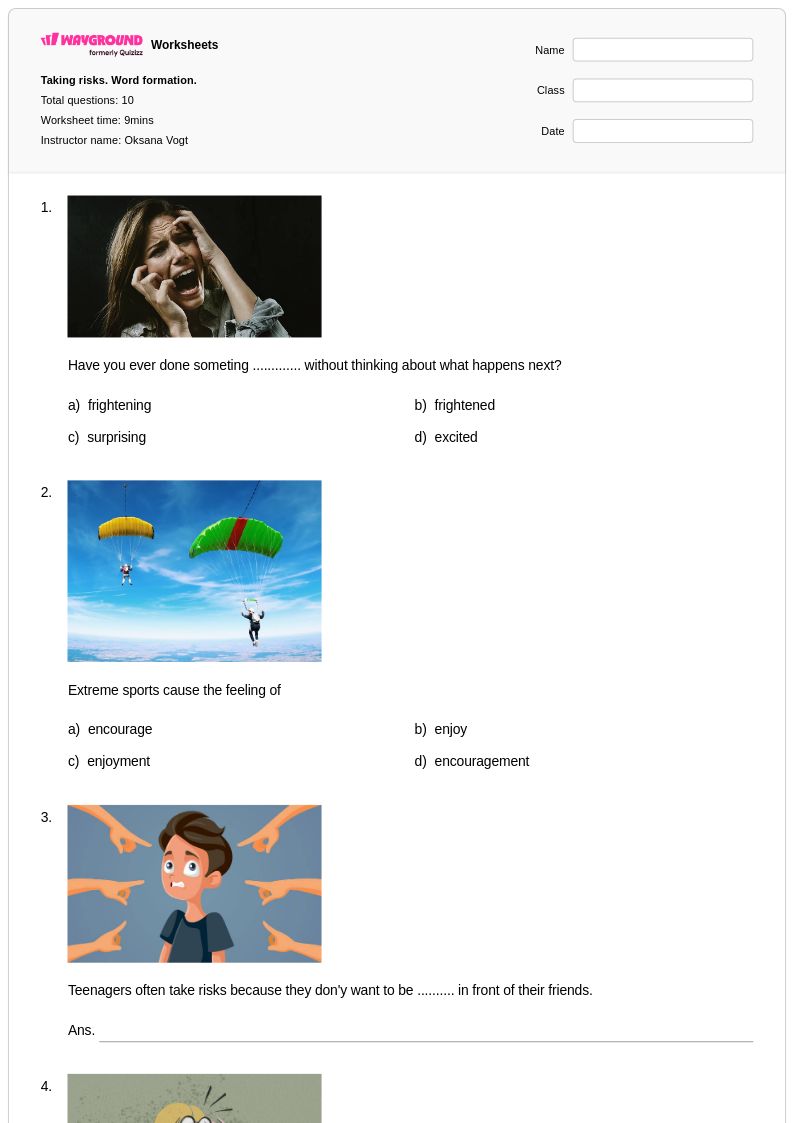
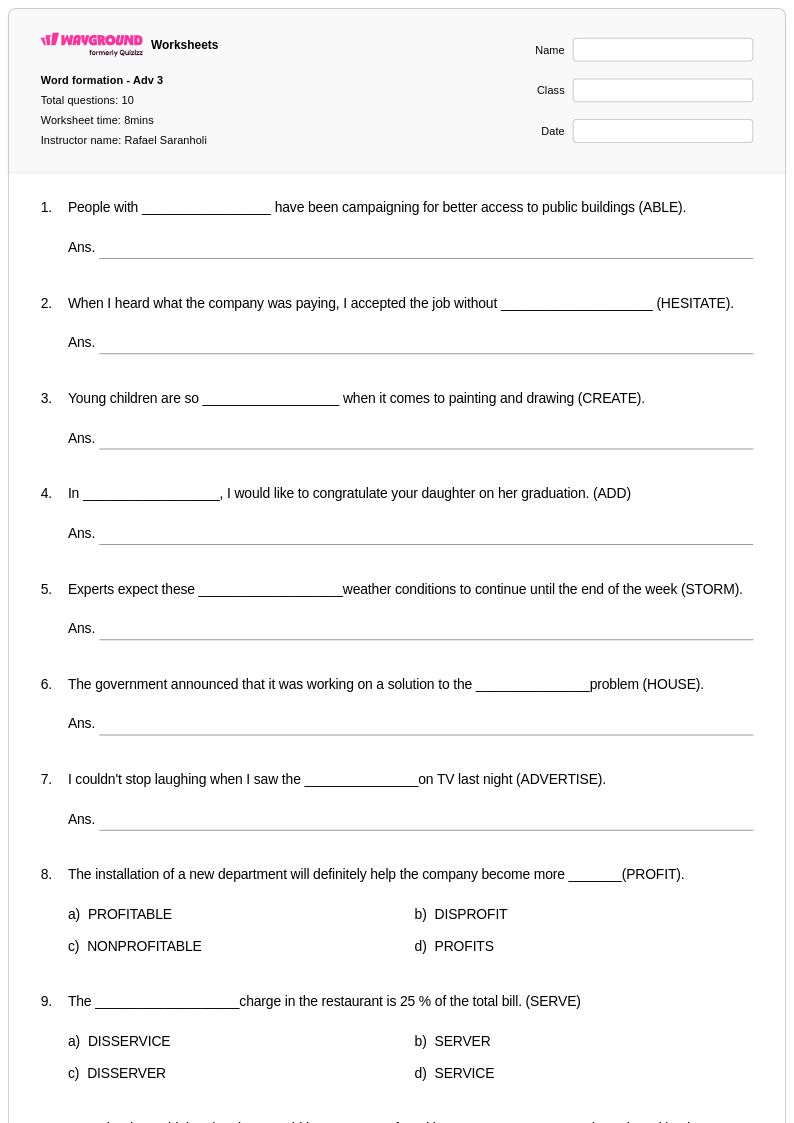
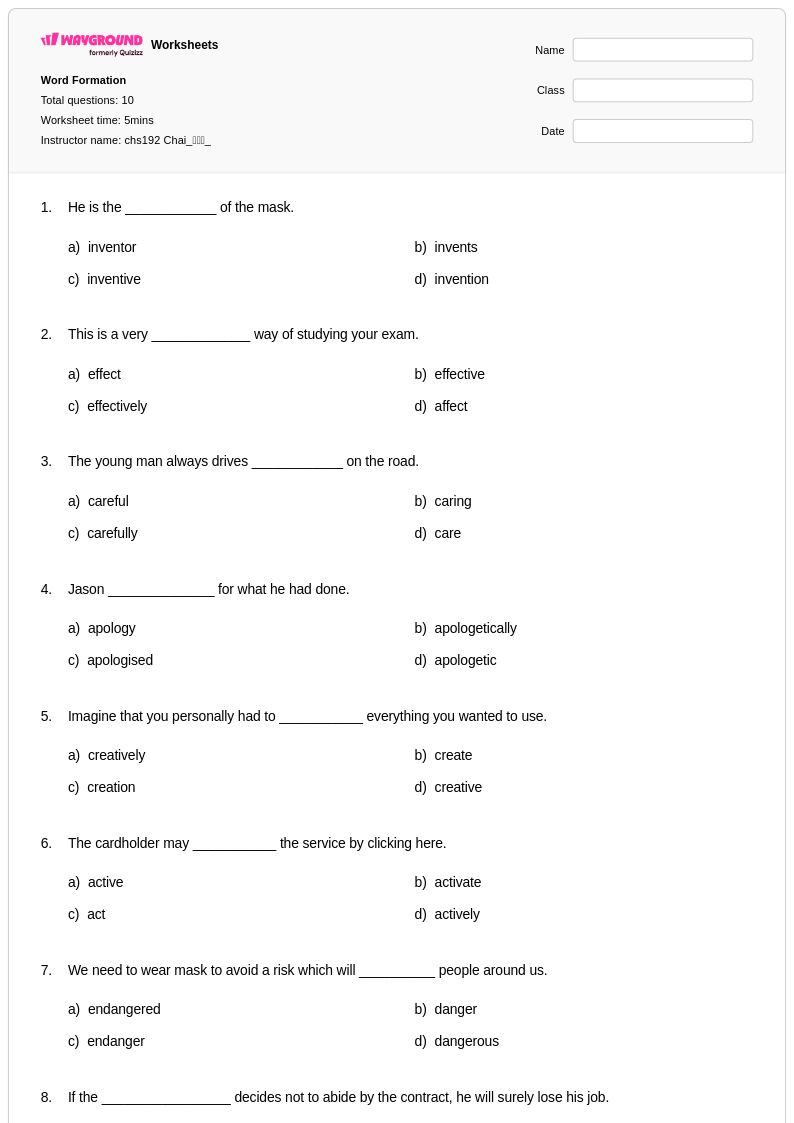
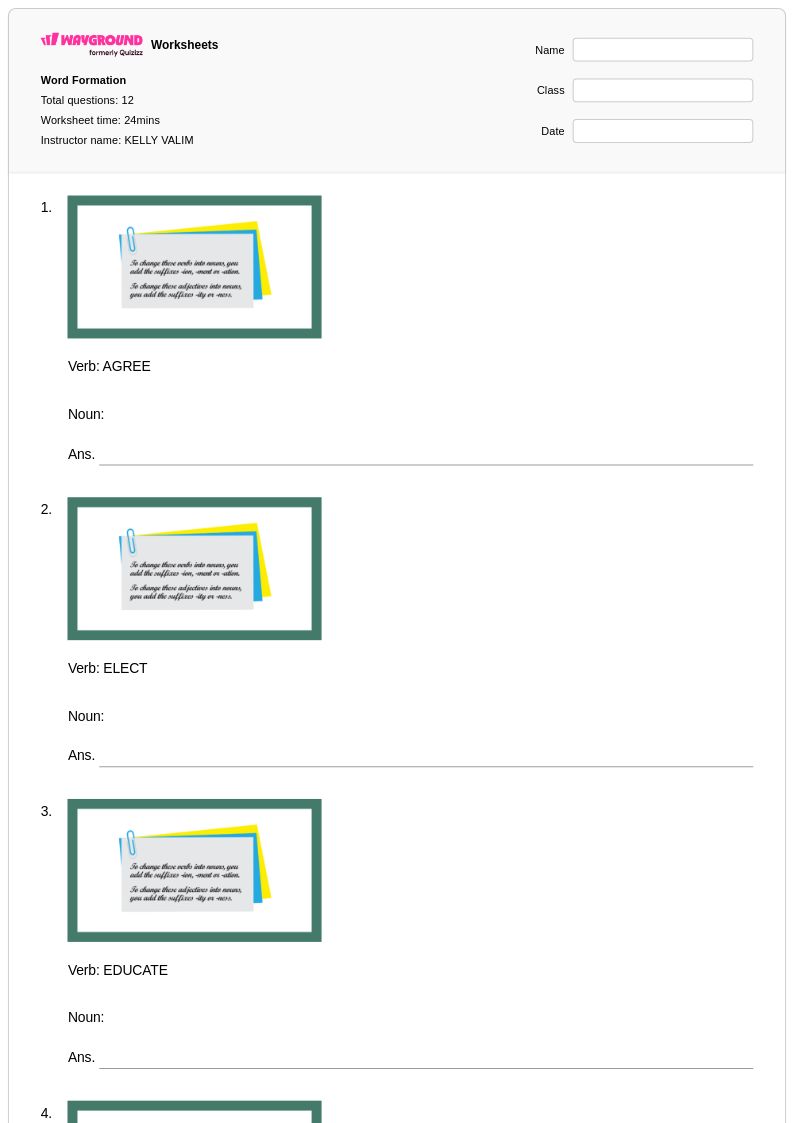
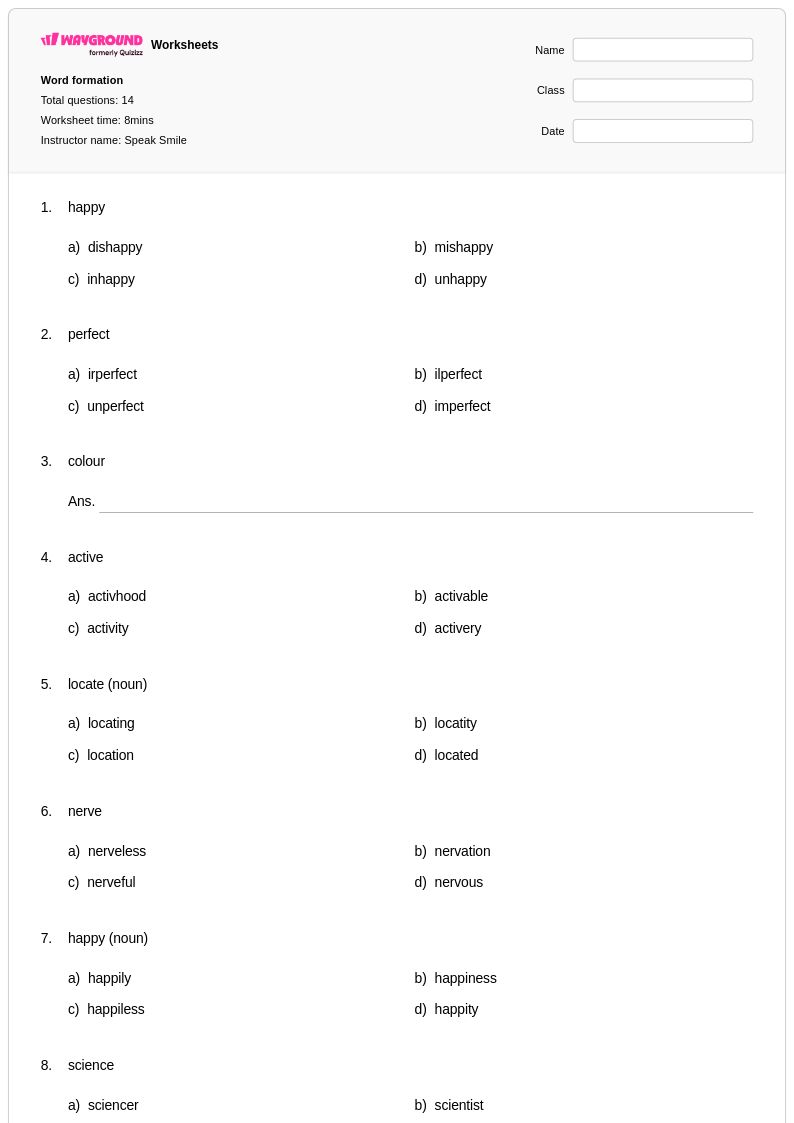
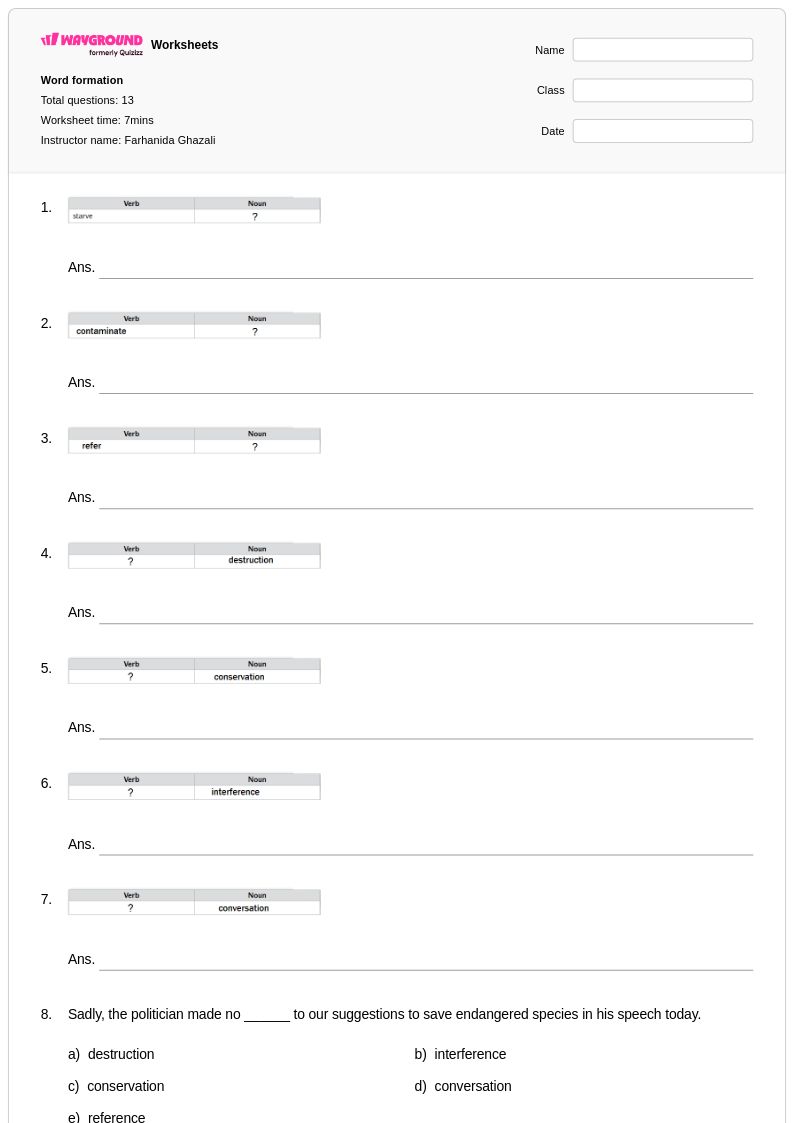
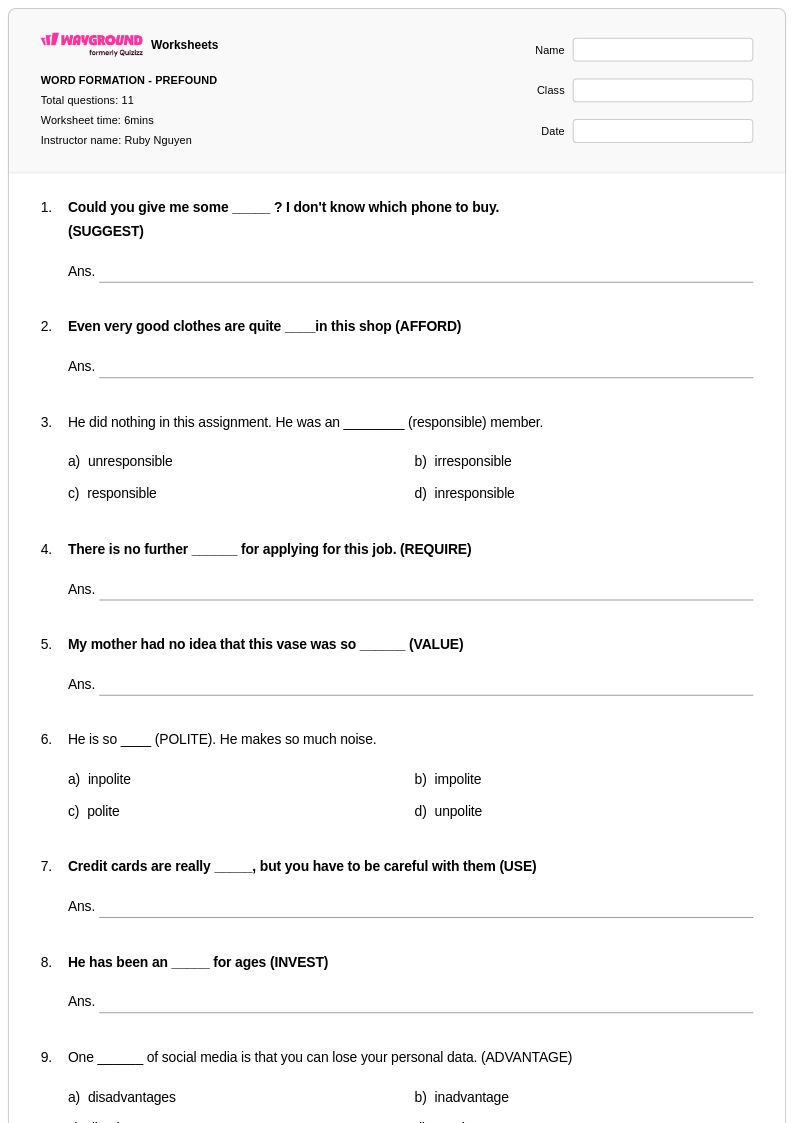
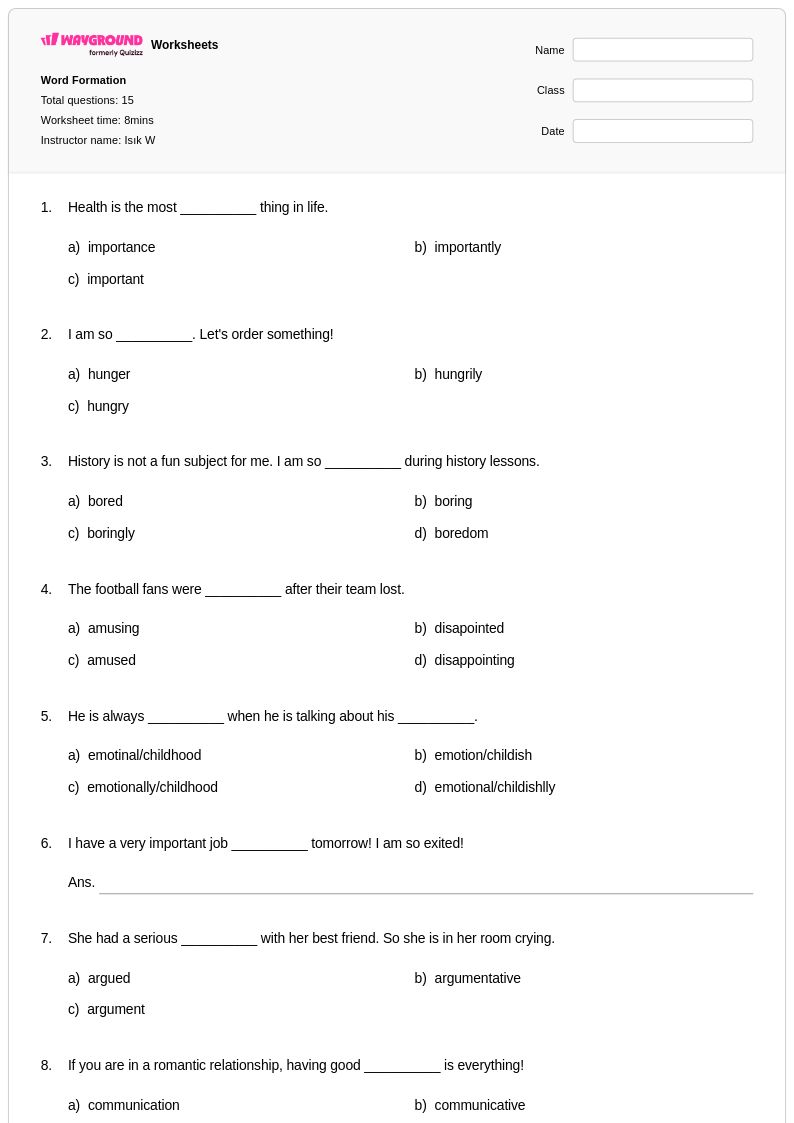
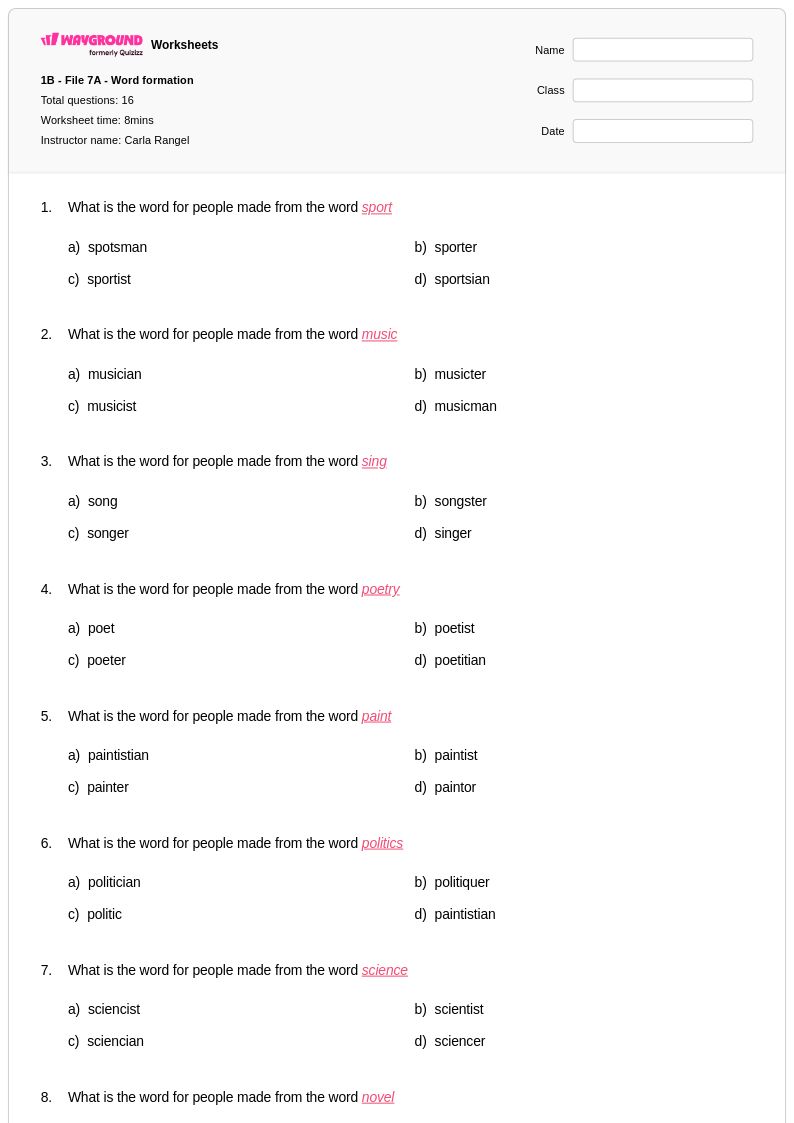
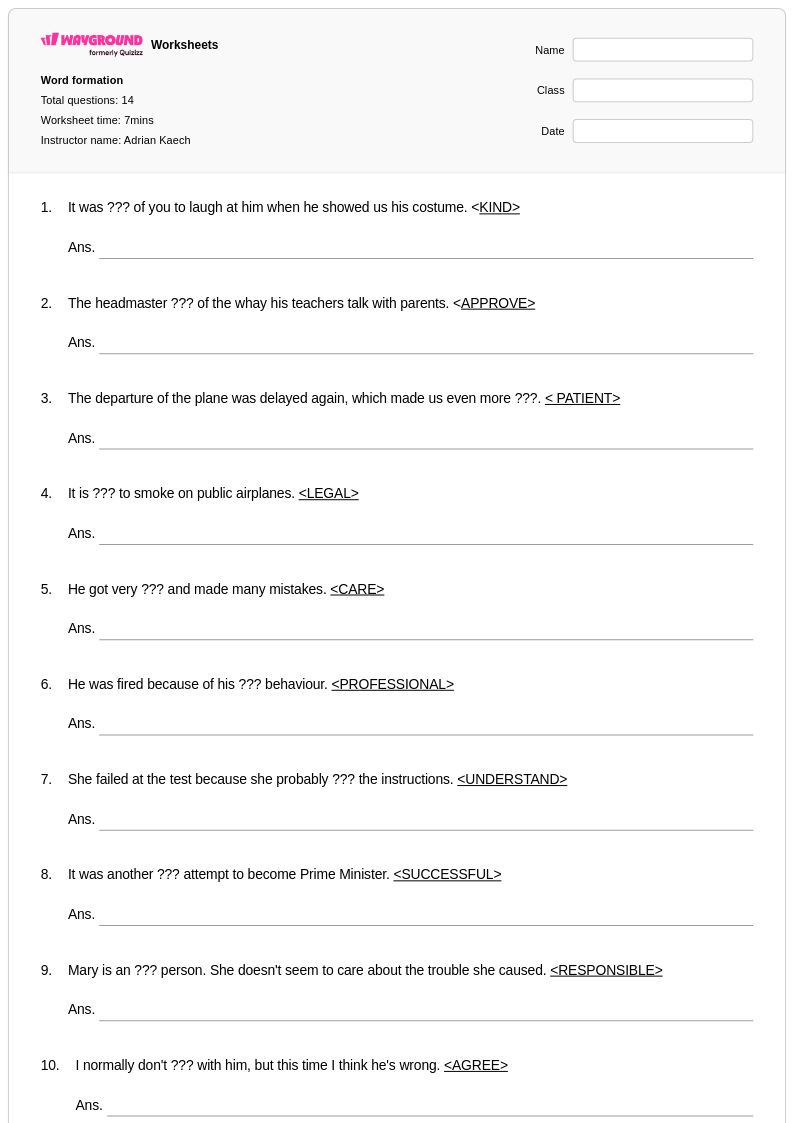
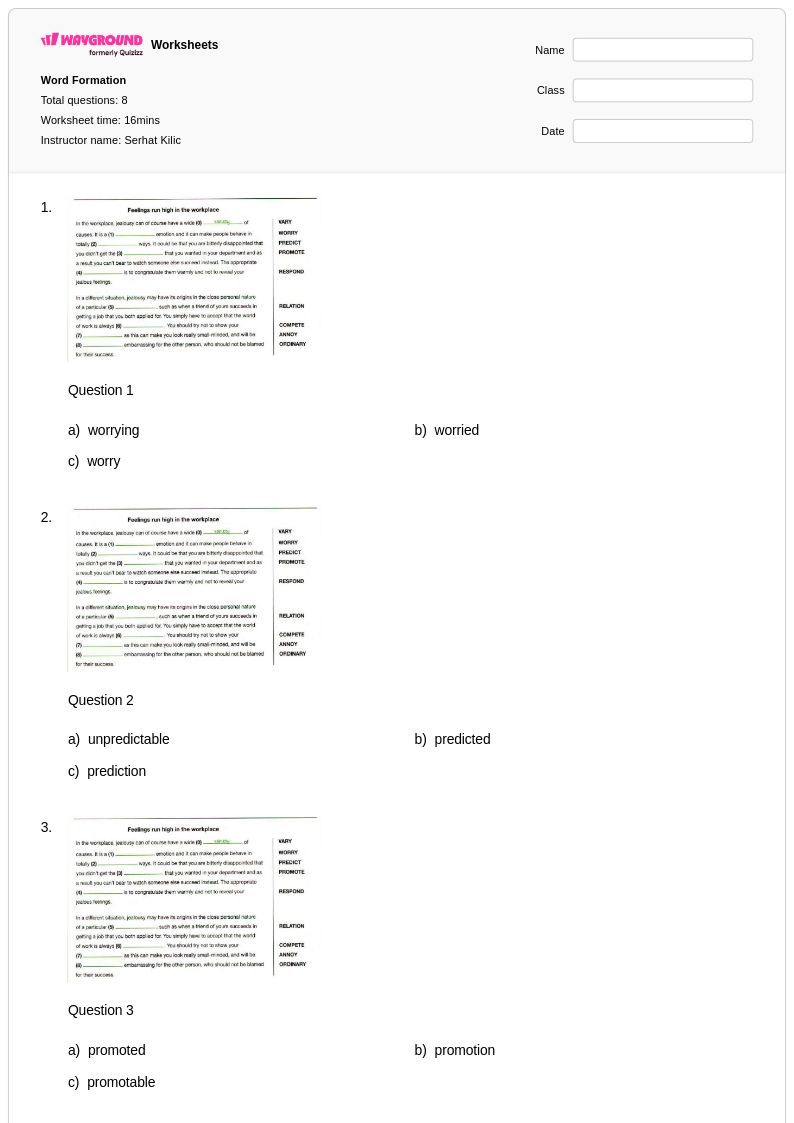
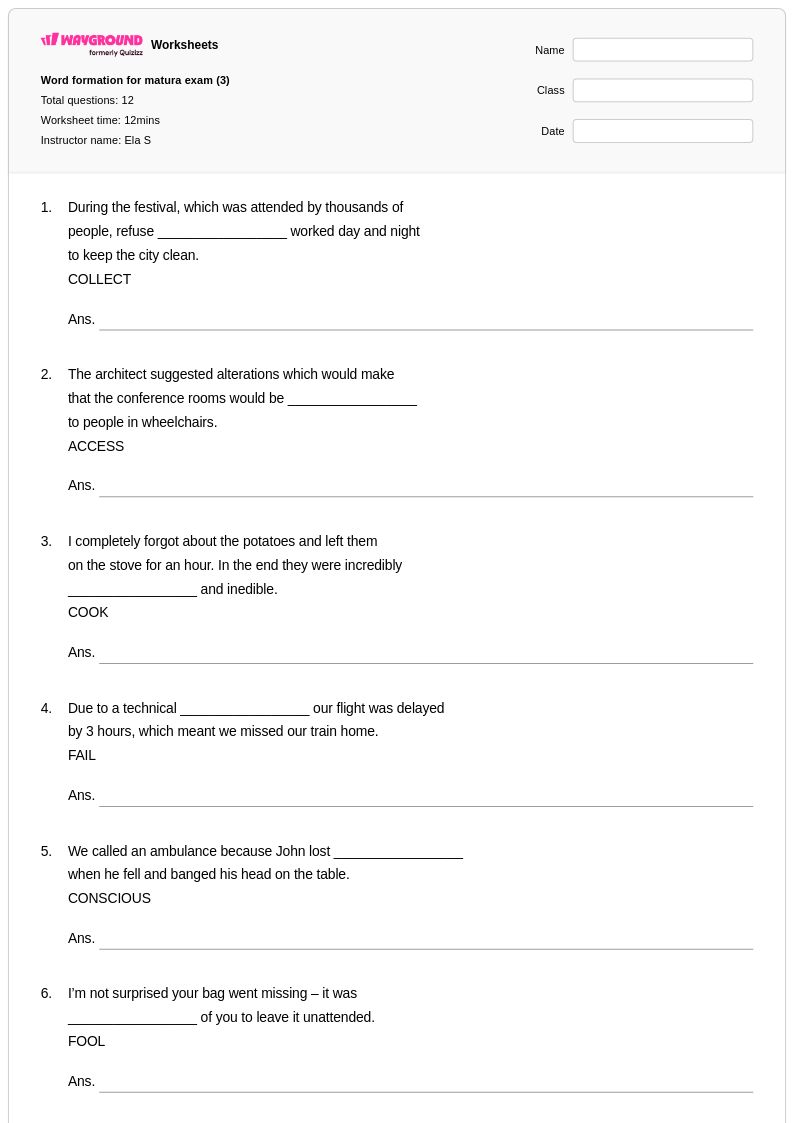
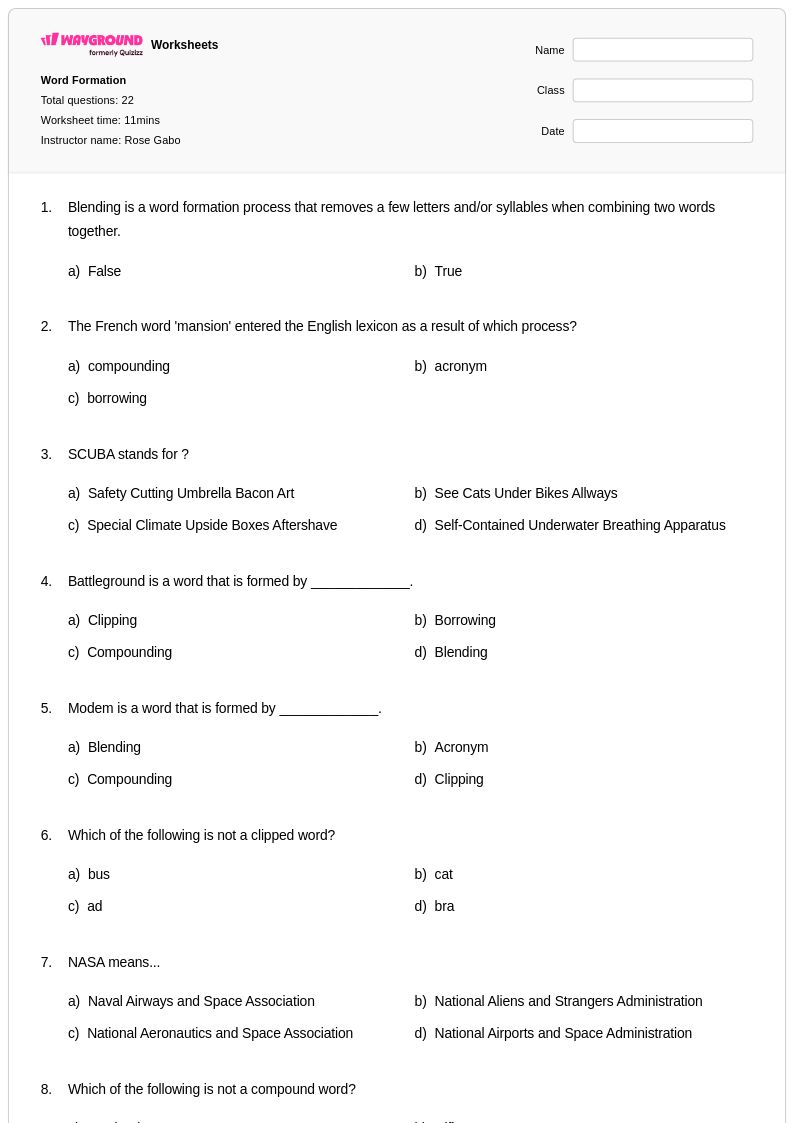
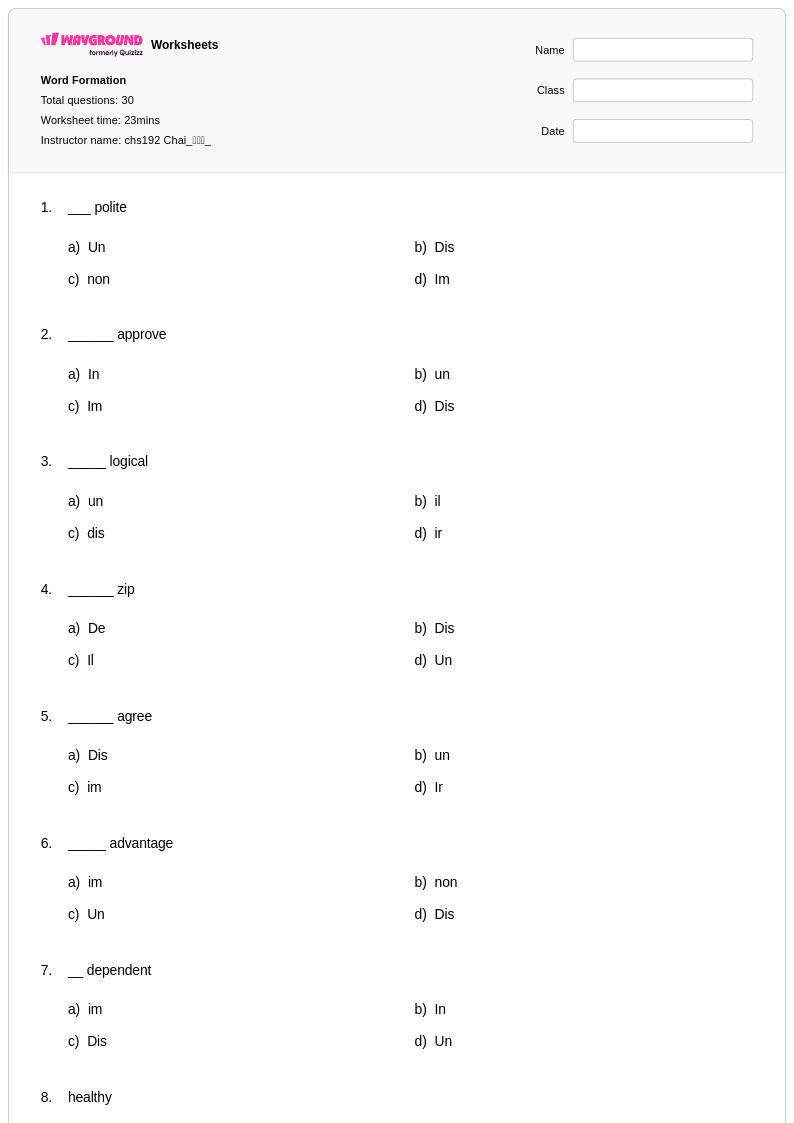
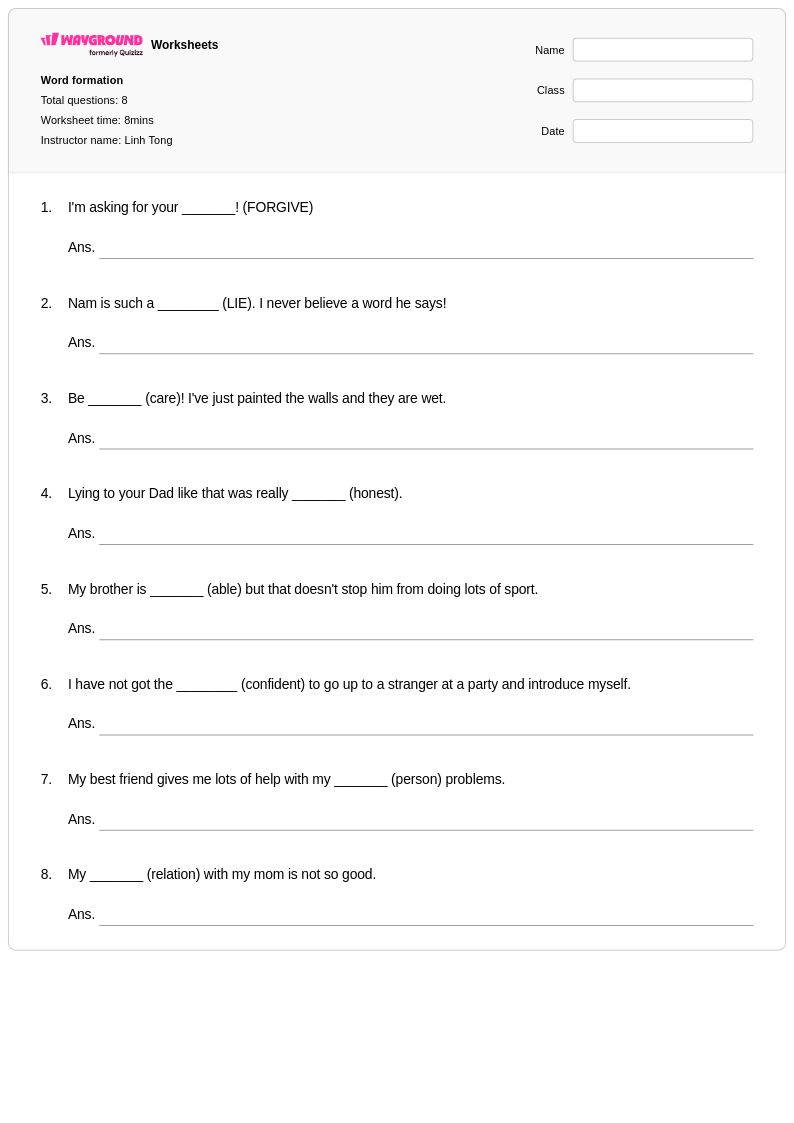
Word formation worksheets for Year 4 students available through Wayground (formerly Quizizz) provide comprehensive practice in understanding how words are constructed through prefixes, suffixes, root words, and compound word creation. These educational resources strengthen students' morphological awareness by teaching them to recognize common word parts such as prefixes like "un-" and "re-", suffixes like "-ing" and "-ed", and how root words serve as the foundation for creating new vocabulary. The practice problems guide fourth graders through systematic exercises that build their ability to decode unfamiliar words, expand their vocabulary, and improve their overall reading comprehension. Each printable worksheet includes an answer key and offers free access to structured activities that help students master the fundamental building blocks of English word construction through engaging, grade-appropriate challenges delivered in convenient pdf format.
Wayground (formerly Quizizz) supports educators with an extensive collection of millions of teacher-created word formation resources specifically designed for fourth grade instruction. The platform's robust search and filtering capabilities allow teachers to quickly locate worksheets that align with curriculum standards and match their students' specific learning needs. These differentiation tools enable instructors to customize content difficulty levels, ensuring appropriate challenges for advanced learners while providing additional support for students requiring remediation. The flexible format options include both printable pdf versions for traditional classroom use and digital formats for technology-integrated learning environments. This comprehensive approach to word formation practice helps teachers efficiently plan targeted skill instruction, provide meaningful enrichment opportunities, and deliver consistent practice that reinforces students' understanding of how English words are systematically constructed and modified.
FAQs
How do I teach word formation to students who struggle with spelling?
Start by anchoring instruction in morphology: teach students that words are built from meaningful parts, including prefixes, suffixes, and root words, rather than treating every spelling as an isolated memorization task. Begin with high-frequency roots and affixes so students can decode and spell a wide range of unfamiliar words by recognizing familiar components. Explicit instruction in spelling rules, such as consonant doubling before -ing or dropping a silent -e before a vowel suffix, gives students a reliable framework they can apply independently rather than relying on rote memorization.
What exercises help students practice adding prefixes and suffixes correctly?
Targeted practice problems that ask students to attach prefixes and suffixes to base words, then use the new words in context, build both accuracy and understanding. Word sorting activities, where students group words by the spelling rule they follow when a suffix is added, are particularly effective for reinforcing patterns like vowel changes and consonant doubling. Requiring students to explain why a spelling changed, rather than simply producing the correct form, deepens orthographic awareness and reduces recurring errors.
What mistakes do students commonly make with word formation and suffixes?
The most frequent errors occur at morpheme boundaries: students often forget to double the final consonant before a vowel suffix in short-vowel words (e.g., writing 'runing' instead of 'running') or fail to drop the silent -e before suffixes that begin with a vowel. Students also frequently overgeneralize rules, applying consonant doubling where it does not apply or retaining the -e when it should be dropped. Pointing out these specific error patterns directly, with clear examples of both the mistake and the correct form, is more effective than general reminders to 'check your spelling.'
How do I use word formation worksheets to differentiate instruction across skill levels?
Wayground allows teachers to apply student-level accommodations individually, so lower-level learners can receive reduced answer choices to lower cognitive load while more advanced students work with the full range of options. The Read Aloud feature can support students with decoding difficulties, allowing them to focus on the morphological task rather than struggling with the question text. Because accommodation settings are saved per student and reusable across sessions, teachers can set up differentiated access once and deploy the same worksheet to the whole class without disrupting the experience for students who do not require modifications.
How do I use Wayground's word formation worksheets in my classroom?
Wayground's word formation worksheets are available as printable PDFs for traditional classroom use and in digital formats for technology-integrated environments, making them flexible for independent work, homework, or whole-class instruction. Teachers can also host worksheets as a quiz directly on Wayground, giving students an interactive experience while the platform handles scoring. Each worksheet includes a complete answer key, so teachers can distribute practice with confidence that self-correction or teacher review is straightforward.
How do compound words fit into word formation instruction?
Compound words are an accessible entry point for teaching word formation because they demonstrate clearly how combining two known words creates a new meaning, making the concept of morphological construction concrete and intuitive. Instruction should address the three forms compounds take in English, solid (notebook), hyphenated (well-known), and open (ice cream), since students frequently misspell compounds by incorrectly spacing or hyphenating them. Practice that asks students to identify the component words and infer meaning from the parts reinforces the same morphological reasoning skills they will apply when working with prefixes and suffixes.