This Grade 6 mathematics worksheet gives students focused practice finding the area of rectangles and parallelograms. Across 18 multiple-choice questions, students identify and apply the formulas length × width and base × height, recognize the perpendicular height of a parallelogram, distinguish area from perimeter, and select appropriate square units. The set includes diagram-based items, decimal measurements, a missing-height problem using A = bh, and a real-world rectangular-window problem.
The questions help students connect visual models and measurements to accurate area calculations rather than relying on formula recall alone. Students also evaluate common choices such as adding dimensions, using a slanted side as the height, or labeling area in cubic units. This free printable worksheet is designed for Grade 6 math instruction, independent practice, review, or assessment, and it includes a complete answer key for efficient checking.
Worksheet settings
Font size
S
M
L
XL
Worksheets
Area of Rectangles and Parallelograms 22
Total questions: 18
Name
Class
Date
1.
The formula for the area of a rectangle is the same as the formula for the area of a parallelogram.
a)
True
b)
False
2.
Area is measured in cube units.
a)
True
b)
False
3.
How would you find the area of the pink model?
a)
Add 4 and 3
b)
Multiply 4 and 3
c)
Add 4 and 4
d)
Multiply 4 and 4
4.
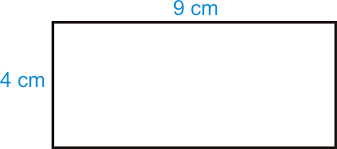
Find the area of the rectangle.
a)
40 square cm
b)
45 square cm
c)
36 cm
d)
36 square cm
5.
How do you find the area of a rectangle?
a)
Length + Length + Length + Length
b)
Length + Width
c)
Length x Width
d)
Width x Width
6.
How do you find the perimeter of a rectangle?
a)
Add the side lengths together
b)
Length x Width
c)
Width x Width
d)
Length + Length
7.
A parallelogram has a base of 5.12in and a height of 4.1 in. What is the area of the parallelogram?
a)
20.992in2
b)
29.12 in2
c)
5.23 in2
d)
100.23 in2
8.
What is the area of the parallelogram above?
a)
13 cm2
b)
28.5 cm2
c)
45.6 cm2
d)
40 cm2
9.
Which of these numbers is the height?
a)
10
b)
5
c)
4
10.
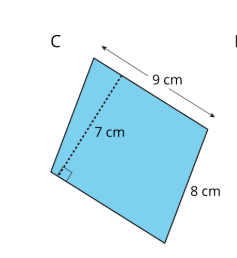
What is the area of the parallelogram?
a)
63 cm2
b)
72 cm2
c)
56 cm2
11.
Area = 36 ft2 What is the height of the rectangle?
Remember: A = bh
a)
9 ft
b)
27 ft
c)
4 ft
d)
18 ft
12.
Determine the area of the rectangle above.
a)
37.5 square inches
b)
17.5 square inches
c)
45 square inches
d)
30 square inches
13.
A broken rectangular-shaped window is being replaced. It measures 24 inches by 18 inches. How many square inches of glass are needed to repair the window?
a)
118 square inches
b)
432 square inches
c)
42 square inches
d)
480 square inches
14.
Determine the area of the parallelogram above.
a)
22.4 square cm
b)
32.4 square cm
c)
18.2 square cm
d)
17.6 square cm
15.
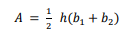
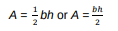
Which is the correct area formula for Parallelograms?
a)
b)
c)
16.
What is the area of this parallelogram?
a)
38 m2
b)
56 m2
c)
77 m2
d)
88 m2
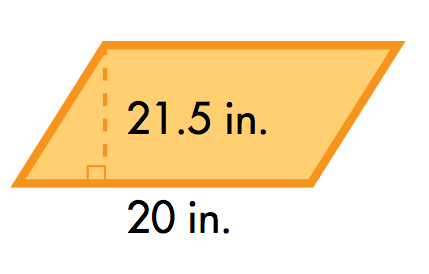
17.
Find the area
a)
430 in2
b)
215 in2
c)
41.5 in2
d)
1.5 in2
18.
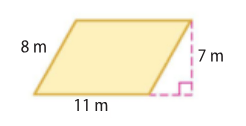
What is the perimeter of this parallelogram?
a)
7.6 m
b)
8.6 m
c)
9 m
Answer Key
Area of Rectangles and Parallelograms 22
Total questions: 18
1.
a)
True
2.
b)
False
3.
b) Multiply 4 and 3
4.
d) 36 square cm
5.
c) Length x Width
6.
a) Add the side lengths together
7.
a)
20.992in2
8.
d)
40 cm2
9.
c)
4
10.
a)
63 cm2
11.
c) 4 ft
12.
a)
37.5 square inches
13.
b)
432 square inches
14.
d)
17.6 square cm
15.
a)
16.
c)
77 m2
17.
a) 430 in2
18.
c)
9 m
140 %
Browse by subjects
Browse by grades
Browse by format
FAQs
What does the Area of Rectangles and Parallelograms 22 worksheet cover?
This Grade 6 worksheet uses 18 multiple-choice questions to practise finding rectangle and parallelogram area with length × width or base × height. Students interpret diagrams, identify the perpendicular height, use square units, solve with decimal measurements, and determine a missing rectangle height from A = bh.
How can I use this worksheet to teach area of rectangles and parallelograms?
Begin by modeling why rectangle area is length × width and why a parallelogram uses base × perpendicular height, then have students explain the formulas behind the worksheet’s multiple-choice options. Use the diagram items to discuss which measurement is the height, contrast area with perimeter, and finish with the decimal and missing-height questions as guided practice.
What mistakes should I watch for when students complete this area worksheet?
Watch for students adding dimensions instead of multiplying, choosing a slanted side rather than the perpendicular height of a parallelogram, or confusing the area formula with the perimeter rule. Students may also report cubic units instead of square units, omit units, or fail to rearrange A = bh correctly when finding the rectangle’s missing height.
How do I assign and grade this Area of Rectangles and Parallelograms worksheet?
The worksheet is available as a printable PDF and as a digital quiz on Wayground, with a complete answer key for all 18 multiple-choice questions. For printable submissions, you can scan student work with the Wayground for Teachers app to grade it efficiently. The printable format also gives schools an option for reducing screen time.
How can I differentiate this rectangles and parallelograms worksheet for my students?
Use the worksheet’s Advanced Settings to adjust font spacing and font size so the area diagrams, measurements, and multiple-choice options are easier to read. You can also enable a dyslexia-friendly font or translate the worksheet into another language, while keeping the same rectangle and parallelogram area practice.
Where can I find more worksheets like this on Wayground?
Wayground offers a comprehensive collection of free printable worksheets and practice problems across all subjects, with downloadable PDFs and answer keys to help students master essential skills and concepts. Browse more resources at https://wayground.com/en-us/worksheets.

 Worksheets