This Grade 9 mathematics worksheet helps students classify proportional and non-proportional relationships by examining graphs and equations. Students identify whether a graph passes through the origin, recognize equations such as y = 75x and y = 6x as proportional, and distinguish them from equations with added constant terms. The worksheet includes 17 questions: 14 multiple-choice items and 3 multiple-select items requiring students to choose all graphs or equations that represent proportional relationships.
Designed for Grade 9 mathematics and special education instruction, this resource supports repeated practice with the visual and algebraic representations of proportionality. Students apply the defining origin test across yes-or-no questions, equation classifications, graph identifications, and explanations of why a relationship is non-proportional. It is a free printable worksheet with a complete answer key, making it useful for guided practice, independent work, review, or a quick check of understanding.
Worksheet settings
Font size
S
M
L
XL
Worksheets
Proportional and Non-proportional Relationships
Total questions: 17
Name
Class
Date
1.
Which graph is proportional?
a)
A
b)
B
c)
C and D
d)
All of the graphs are proportional
2.
Does the equation show a proportional relationship?
a)
Yes
b)
No
3.
Which best describes the equation? y = 75x
a)
Proportional
b)
Nonproportional
4.
Why does this graph show a non-proportional relationship?
a)
Because it is proportional
b)
It goes through the origin
c)
It does not go through the origin
d)
It is a straight line
5.
Does the equation show a proportional relationship?
a)
Yes
b)
No
6.
Which best describes the equation? y = 75x
a)
Proportional
b)
Nonproportional
7.
Which of the equations below is proportional?
a)
y = 6x
b)
y = 3x + 2
c)
y = 2x + 4
d)
y = -2x -1
8.
Select all graphs that represent proportional relationships.
a)
b)
9.
Select all graphs that represent a proportional relationship.
a)
b)
10.
Select all equations that represent a proportional relationship.
a)
b)
11.
Is the graph proportional?
a)
Yes
b)
No
12.
Is the graph proportional?
a)
Yes
b)
No
13.
These two lines are graphs of nonproportional relationships. What makes them nonproportional?
a)
They are not straight
b)
They are not linear
c)
They do not go through the origin
d)
They do not show a constant rate of change
14.
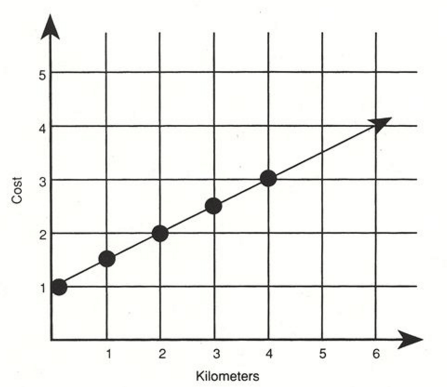
Identify whether the graph represents a proportional or non-proportional relationship.
a)
Proportional Relationship
b)
Non-Proportional Relationship
15.
Why does this graph show a non-proportional relationship?
a)
Because it is proportional
b)
It goes through the origin
c)
It does not go through the origin
d)
It is a straight line
16.
Is the graph proportional or non proportional?
a)
proportional
b)
non proportional
17.
Which graph is non-proportional?
a)
A
b)
B
c)
C
d)
D
Answer Key
Proportional and Non-proportional Relationships
Total questions: 17
1.
d) All of the graphs are proportional
2.
b) No
3.
a) Proportional
4.
c) It does not go through the origin
5.
b) No
6.
a) Proportional
7.
a)
y = 6x
8.
a) , b)
9.
b)
10.
a) , b)
11.
a)
Yes
12.
b)
No
13.
c)
They do not go through the origin
14.
a) Proportional Relationship
15.
c) It does not go through the origin
16.
b) non proportional
17.
d) D
140 %
Browse by subjects
Browse by grades
Browse by format
FAQs
What does the Proportional and Non-proportional Relationships worksheet cover?
This worksheet builds students’ ability to classify relationships as proportional or non-proportional using graphs and equations. Its 14 multiple-choice and 3 multiple-select questions ask students to check whether graphs pass through the origin, identify equations such as y = 75x and y = 6x as proportional, and select all matching graphs or equations.
How can I use this worksheet to teach proportional and non-proportional relationships?
Introduce the worksheet by modeling the origin test on one graph and comparing an equation in the form y = kx with an equation that includes a constant term. Then have students explain their choices on the yes-or-no and proportional-versus-non-proportional items before completing the multiple-select questions, where they must evaluate every graph or equation rather than stop after finding one correct choice.
What mistakes should I watch for when students complete this worksheet?
Students may assume that every straight-line graph is proportional, even when it does not pass through the origin; this is the key error addressed by the worksheet’s explanation questions. They may also select an equation such as y = 3x + 2 as proportional because it is linear-looking, or choose only one option on the multiple-select graph and equation items instead of selecting all that apply.
How do I assign and grade this worksheet?
The Proportional and Non-proportional Relationships worksheet is available as a printable PDF and as a digital quiz on Wayground, with a complete answer key for all 17 questions. You can grade printable student submissions by scanning their completed work with the Wayground for Teachers app, or review responses from the digital version.
How can I differentiate this worksheet for my students?
In the worksheet’s Advanced Settings, adjust font spacing or choose a larger font size to make the graph, equation, and answer-choice items easier to read. You can also enable a dyslexia-friendly font or translate the worksheet into another language while keeping the same proportional-relationship practice.
Where can I find more worksheets like this on Wayground?
Wayground offers a broad collection of free printable worksheets and practice problems across subjects, with downloadable PDFs and answer keys to help students master essential skills and concepts. Browse more resources at https://wayground.com/en-us/worksheets.


 Worksheets