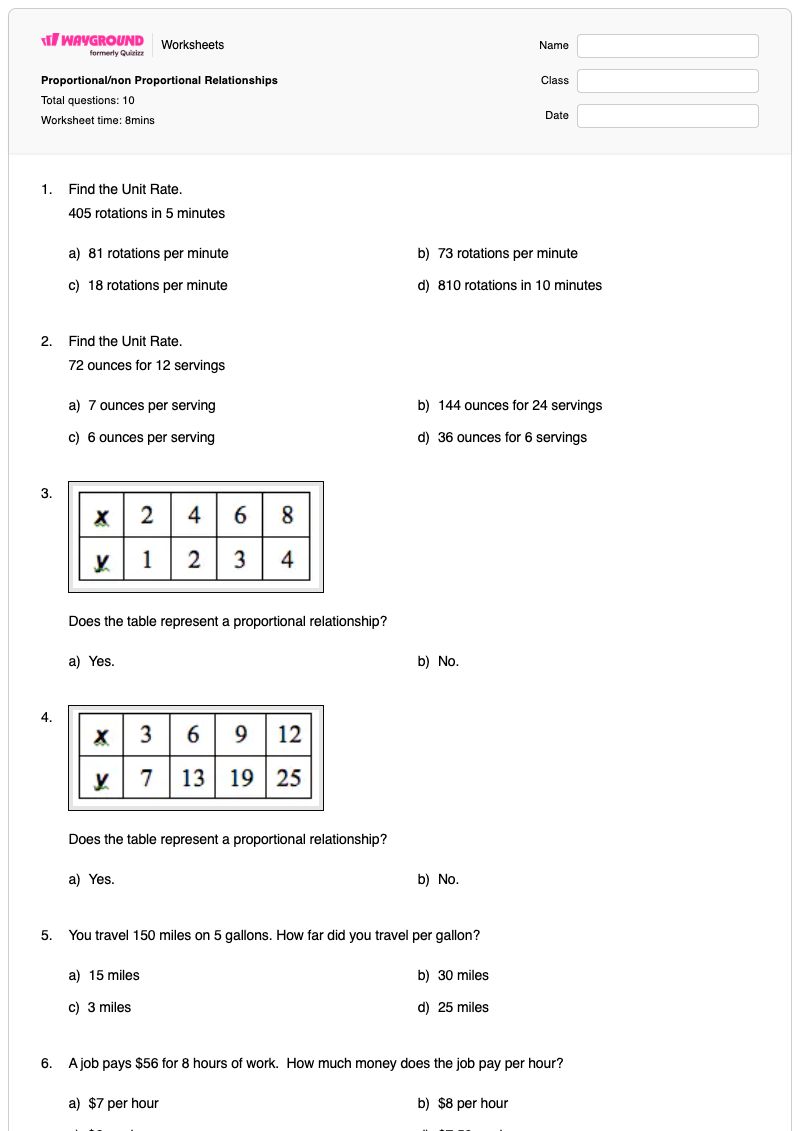
This Grade 7 mathematics worksheet builds fluency with unit rates and helps students distinguish proportional from non-proportional relationships. Across 10 multiple-choice questions, students calculate rates from rotations and minutes, servings and ounces, travel, wages, and price per pound. They also identify whether tables represent proportional relationships and recognize that a unit rate can be written as a fraction with a denominator of one.
Use it for pre-algebra practice, guided review, independent work, or a quick check of students’ ability to interpret rates in real-world contexts. The varied items ask students to divide one quantity by another, select the correct per-one rate, and classify relationships shown in tables. This free printable worksheet includes a complete answer key for efficient checking. Teachers can also use its digital version on Wayground to review student responses and identify whether errors come from calculating the unit rate or classifying the relationship.
Worksheet settings
Font size
S
M
L
XL
Worksheets
Proportional/non Proportional Relationships
Total questions: 10
Name
Class
Date
1.
Find the Unit Rate. 405 rotations in 5 minutes
a)
81 rotations per minute
b)
73 rotations per minute
c)
18 rotations per minute
d)
810 rotations in 10 minutes
2.
Find the Unit Rate.
72 ounces for 12 servings
a)
7 ounces per serving
b)
144 ounces for 24 servings
c)
6 ounces per serving
d)
36 ounces for 6 servings
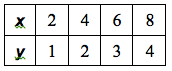
3.
Does the table represent a proportional relationship?
a)
Yes.
b)
No.
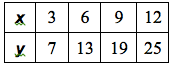
4.
Does the table represent a proportional relationship?
a)
Yes.
b)
No.
5.
You travel 150 miles on 5 gallons. How far did you travel per gallon?
a)
15 miles
b)
30 miles
c)
3 miles
d)
25 miles
6.
A job pays $56 for 8 hours of work. How much money does the job pay per hour?
a)
$7 per hour
b)
$8 per hour
c)
$6 per hour
d)
$7.50 per hour
7.
Which statement best describes the relationship between x and y in the table?
a)
Proportional
b)
Not Proportional
8.
REVIEW QUESTION Is this table proportional or non-proportional?
a)
Proportional
b)
Non-Proportional
c)
both
d)
neither
9.
Which of these describes the unit rate?
a)
a unit of measure
b)
a fraction with a numerator of one
c)
a fraction with a denominator of one
d)
a proportion
10.
Find the unit rate: $3.60 for 3 pounds of apples. How much does it cost for 1 pound of apples?
a)
$1.00 per pound
b)
$3.60 per pound
c)
$1.20 per pound
d)
$1.10 per pound
Answer Key
Proportional/non Proportional Relationships
Total questions: 10
1.
a) 81 rotations per minute
2.
c) 6 ounces per serving
3.
a) Yes.
4.
b) No.
5.
b) 30 miles
6.
a) $7 per hour
7.
a) Proportional
8.
a) Proportional
9.
c) a fraction with a denominator of one
10.
c) $1.20 per pound
140 %
Browse by subjects
Browse by grades
Browse by format
FAQs
What does this worksheet cover?
This Grade 7 pre-algebra worksheet uses 10 multiple-choice questions to practise finding unit rates and deciding whether relationships shown in tables are proportional or non-proportional. Students calculate per-one rates for rotations, servings, miles, wages, and cost per pound, then apply those ideas to classify relationships.
How can I use this worksheet to teach unit rates and proportional relationships?
Begin by modelling how to divide the quantity by the number of units to find a per-one rate, such as miles per gallon or dollars per hour. Then have students explain why a unit rate is represented by a fraction with a denominator of one before using the table questions to decide whether the relationship is proportional. Ask students to justify each Yes or No choice with the rate they found or compared.
What mistakes should I watch for when students complete this worksheet?
Students may reverse the quantities when calculating rates, such as dividing gallons by miles instead of miles by gallons, or select a total equivalent amount instead of a per-one rate. In the table questions, watch for students who label a relationship without checking whether the rate remains consistent. The unit-rate definition item may also reveal confusion between a fraction with a numerator of one and one with a denominator of one.
How do I assign and grade this worksheet?
Wayground provides this worksheet as a printable PDF and as a digital quiz, and both versions include a complete answer key. You can grade printable submissions by scanning student work with the Wayground for Teachers app, or review responses from the digital quiz. The printable format also supports schools that are reducing screen time.
How can I differentiate this unit-rate worksheet for my students?
Use the worksheet’s Advanced Settings to adjust font spacing or increase the font size so the multiple-choice rate calculations and table questions are easier to read. You can also apply a dyslexia-friendly font or translate the worksheet into another language when those options support access to the unit-rate and proportional-relationship tasks.
Where can I find more worksheets like this on Wayground?
Wayground offers a comprehensive collection of free printable worksheets and practice problems across subjects, with downloadable PDFs and answer keys to help students master essential skills and concepts. Browse more resources at https://wayground.com/en-us/worksheets.


 Worksheets