
Wayground
Slope as a Rate of Change - Printable Mathematics Worksheets - Wayground

Slope as a Rate of Change

26 questions

8th - 9th Grade

Mathematics

Slope as a Rate of Change is a Grade 8–9 mathematics worksheet with 26 multiple-choice questions that builds fluency with interpreting and calculating slope. Students identify slope from graphs, calculate rate of change from real-world situations, use rise over run and change in y over change in x, and find slope between two coordinate points. The worksheet also asks students to recognize zero rate of change and identify the slope and y-intercept in y = mx + b. The varied questions connect procedural calculation to contexts such as hiking altitude, rainfall, earning money, and changing height over time. Students must select the correct rate, sign, units, or equation feature, making the worksheet useful for checking both computation and conceptual understanding. It is designed for Grade 8 and Grade 9 math practice, independent review, homework, or formative assessment. This free printable worksheet includes a complete answer key for efficient checking and feedback.

Worksheet settings

Font size

S
M
L
XL
Worksheets

Slope as a Rate of Change

Total questions: 26

Name
Class
Date
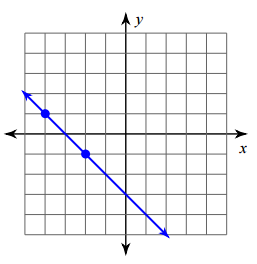
1.
Find the slope of the line.
a)
-2
b)
2
c)
-1
d)
1
2.
A climber is on a hike. After 2 hours he is at an altitude of 400 feet. After 6 hours, he is at an altitude of 700 feet. What is the average rate of change? 
a)
200
b)
150
c)
300
d)
75
3.
Which of the following are ways to find the rate of change?
a)
change in y over change in x
b)
rise over run
c)
subtract y coordinates over subtract x coordinates
d)
all of the above
4.
At 0 seconds, Mrs. Taylor was 10 feet off the ground.  At 5 seconds, she was 20 feet off the ground.  What is her rate in feet per second?
a)
10 feet per second
b)
5 feet per second
c)
2 feet per second
d)
6 feet per second
5.
At what rate did the rain fall?
a)
2 cm per hour
b)
1/4 cm per hour
c)
1/2 cm per hour
d)
4 cm per hour
6.
Find the rate of change.
a)
$10 per hour
b)
$30 per hour
c)
$60 per hour
d)
$80 per hour
7.
Find the slope
a)
-5/3
b)
-3/5
c)
5/3
d)
3/5
8.

Which section of the graph represents a rate of change of zero?

a)

0-5s

b)

5-10s

c)

10-15s

d)

None of these

9.
Find the slope of the line that passes through the points (2, 4) and (6, 12)
a)
1/2
b)
-1/2
c)
2
d)
-2
10.
Determine the slope and y-intercept from the following equation:   y = 3/2x + 3
a)
slope: 5   y-intercept:  (0,3) 
b)
slope: 3/2   y-intercept:  (0,3) 
c)
slope:  4  y-intercept:  (0,3/2)
d)
slope: 1/5   y-intercept:  (0,5) 
11.
Find the slope of the line that passes through (10, -8) and (1, 12).
a)
20/9
b)
-20/9
c)
4/9
d)
9/4
12.
Frank earned $552 dollars over the last 6 weeks. At week 0, he started off with only $30. What was his rate of earning?
a)
$87 per week
b)
$30 per week
c)
$92 per week 
d)
$138 per week
13.
Find the slope between the two points below:
(-3, 10) and (1, 5)
a)
4/5
b)
5/4
c)
-4/5
d)
-5/4
14.
What does "b" represent in y=mx+b
a)
y-intercept
b)
macaroni
c)
nothing
d)
slope
15.
In the equation y=mx+b, what does the m represent?
a)
slope
b)
y-intercept
c)
linear
d)
point-slope
16.
What is the slope?
a)
1/2
b)
2
c)
7
d)
3
17.
What is the slope?
a)
-1/3
b)
-3
c)
-4
d)
5
18.
Which table shows a proportional relationship?
a)
A
b)
B
c)
C
d)
D
19.
Which graph is non-proportional?
a)
A
b)
B
c)
C
d)
D
20.
y=6x
a)
Proportional
b)
Nonproportional
21.
Is the graph proportional or non proportional?
a)
Proportional because it is a straight line and passes through the origin (0,0).
b)
Non-Proportional because it doesn't pass through the origin (0,0).
22.
Why does this graph show a non-proportional relationship?
a)
It doesn't, it is proportional because it is a straight line
b)
It goes through the origin
c)
It does not go through the origin
d)
It is a straight line
23.
Give the x-intercept
3x + 8y = 24
a)
(8, 0)
b)
(0, 8)
c)
(3, 0)
d)
(0, 3)
24.
What is the y-intercept?
a)
(0,7)
b)
(0,0)
c)
(1,9)
d)
(2,11)
25.
Give the y-interecept
5x + y = 5
a)
(1,0)
b)
(0,5)
c)
(5,0)
d)
(0,1)
26.
What is the x and y intercept for the following equation ?
4x - 10y = 20
a)
x - int = 4    
y-int = -10
b)
x-int = 5
y-int = 2
c)
x - int = 5
y int = -2
d)
x -int = 4
y -int = -10
Answer Key

Slope as a Rate of Change

Total questions: 26

1.
c) -1
2.
d) 75
3.
d) all of the above
4.
c) 2 feet per second
5.
a) 2 cm per hour
6.
a) $10 per hour
7.
a) -5/3
8.
b)

5-10s

9.
c) 2
10.
b) slope: 3/2   y-intercept:  (0,3) 
11.
b) -20/9
12.
a) $87 per week
13.
d) -5/4
14.
a) y-intercept
15.
a) slope
16.
b) 2
17.
b) -3
18.
a) A
19.
d) D
20.
a) Proportional
21.
a) Proportional because it is a straight line and passes through the origin (0,0).
22.
c) It does not go through the origin
23.
a) (8, 0)
24.
a) (0,7)
25.
b) (0,5)
26.
c) x - int = 5
y int = -2

FAQs

What does the Slope as a Rate of Change worksheet cover?

This Grade 8–9 worksheet uses 26 multiple-choice questions to practice calculating and interpreting slope as a rate of change. Students find slope from graphs and coordinate pairs, calculate rates in real-world contexts, recognize zero rate of change, and identify m as slope and b as the y-intercept in y = mx + b.

How can I use this worksheet to teach slope as a rate of change?

Introduce slope through the worksheet’s equivalent ideas—rise over run, change in y over change in x, and the difference between two coordinate values—before students begin the multiple-choice items. Then have students explain how the numerical rate connects to units in contexts such as altitude, rainfall, earnings, and feet per second. Use the equation questions to connect the calculated rate to m and the starting value to b.

What mistakes should I watch for when students complete this slope worksheet?

Watch for students reversing the coordinate subtraction order, losing the negative sign, or confusing rise over run with run over rise when finding slope from points or graphs. In the word problems, students may divide by the wrong time interval or ignore the units, and in y = mx + b they may interchange the roles of m and b. Students may also overlook that a horizontal graph section represents a rate of change of zero.

How do I assign and grade this slope worksheet?

The worksheet is available as a printable PDF and as a digital quiz on Wayground, and it includes a complete answer key. You can assign the PDF for written practice or use the digital version for online responses; printable submissions can also be graded by scanning student work with the Wayground for Teachers app.

How can I differentiate this slope worksheet for my students?

Use the worksheet’s Advanced Settings to adjust font spacing or font size so the 26 multiple-choice slope items are easier to read and navigate. You can also apply a dyslexia-friendly font or translate the worksheet into another language when students need those file-level options.

Where can I find more worksheets like this on Wayground?

Wayground offers a broad collection of free printable worksheets and practice problems across all subjects, with downloadable PDFs and answer keys to support essential skills and concepts. Browse more resources at https://wayground.com/en-us/worksheets.