

Wayground
Ten Stages of Genocide - Printable English Worksheets year 12 - Wayground

Ten Stages of Genocide

13 questions

12th - 12th Grade

English

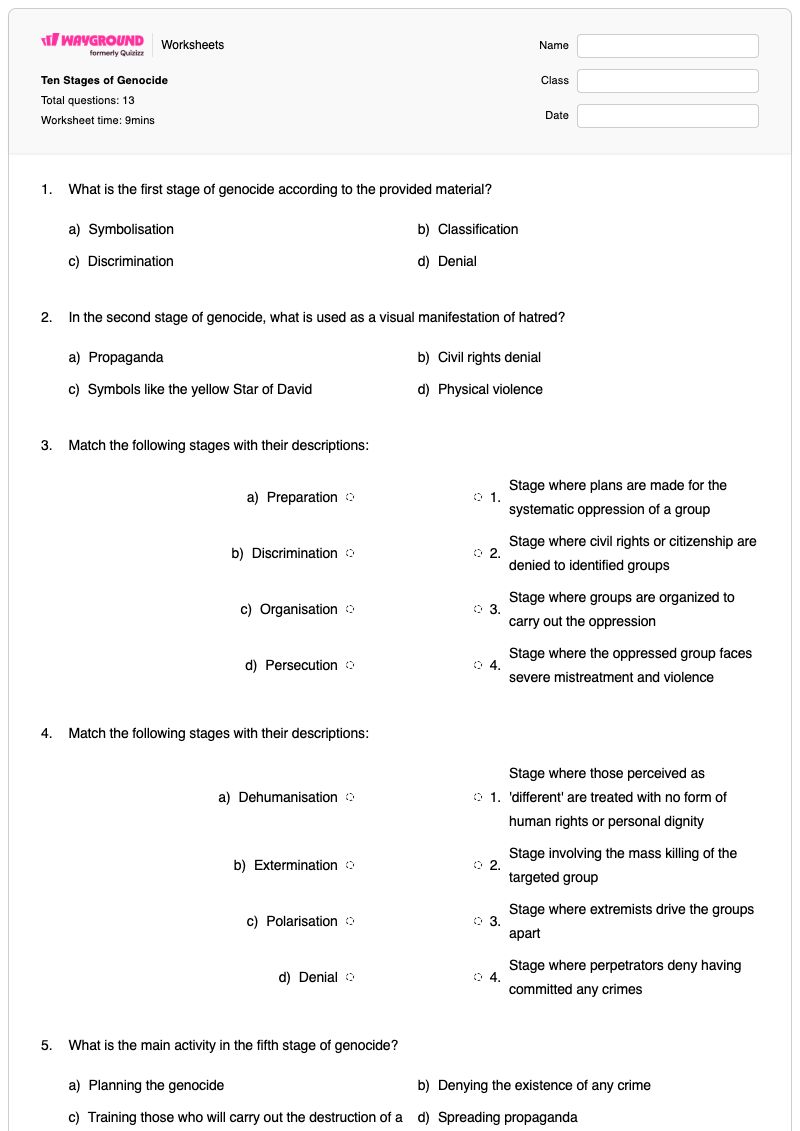
Ten Stages of Genocide is a Grade 12 English worksheet that helps students identify, sequence, and interpret the ten-stage genocide framework. Across 13 questions, students answer multiple-choice questions about stages such as classification, symbolisation, preparation, persecution, extermination, and denial; match stages with descriptions and related vocabulary; select an answer from a dropdown; and complete a drag-and-drop item. The worksheet reinforces precise reading of stage definitions and helps students distinguish closely related concepts, including how groups are classified, how hatred is represented, how persecution is carried out, and how denial is expressed. It is suitable for introducing the framework, checking understanding after instruction, or reviewing key terminology. This free printable worksheet includes a complete answer key for efficient checking and classroom use.

Worksheet settings

Font size

S
M
L
XL
Worksheets

Ten Stages of Genocide

Total questions: 13

Name
Class
Date
1.

What is the first stage of genocide according to the provided material?

a)

Symbolisation

b)

Classification

c)

Discrimination

d)

Denial

2.

In the second stage of genocide, what is used as a visual manifestation of hatred?

a)

Propaganda

b)

Civil rights denial

c)

Symbols like the yellow Star of David

d)

Physical violence

3.

Match the following stages with their descriptions:

Preparation

Stage where plans are made for the systematic oppression of a group

Discrimination

Stage where civil rights or citizenship are denied to identified groups

Organisation

Stage where groups are organized to carry out the oppression

Persecution

Stage where the oppressed group faces severe mistreatment and violence

4.

Match the following stages with their descriptions:

Dehumanisation

Stage where those perceived as 'different' are treated with no form of human rights or personal dignity

Extermination

Stage involving the mass killing of the targeted group

Polarisation

Stage where extremists drive the groups apart

Denial

Stage where perpetrators deny having committed any crimes

5.

What is the main activity in the fifth stage of genocide?

a)

Planning the genocide

b)

Denying the existence of any crime

c)

Training those who will carry out the destruction of a people

d)

Spreading propaganda

6.

What begins to be spread by hate groups during the sixth stage of genocide?

a)

Symbols

b)

Propaganda

c)

Civil rights

d)

Denial

7.

What is often used by perpetrators to cloak their intentions during the preparation stage?

a)

Propaganda

b)

Euphemisms

c)

Symbols

d)

Denial

8.

During the persecution stage, victims are (a)  

Choose from the below words
They are given civil rights
They are identified and segregated
They are treated with dignity
They are denied citizenship
9.

The ninth stage of genocide is (a)  

Choose from the below words
Denial
Extermination
Organisation
Preparation
10.

What do perpetrators or later generations do during the denial stage?

a)

Plan the genocide

b)

Deny the existence of any crime

c)

Spread propaganda

d)

Use euphemisms

11.

Match the following

Killing a number of human beings under circumstances of atrocity and cruelty

Massacre

A simplistic, often negative general characteristic given to all members of a group.

Stereotype

Individual or group unfairly blamed for problems not of their making

Scapegoat

Deliberate, systematic destruction of a group.

Genocide

A set of beliefs based on perception of racial superiority or inferiority

Racism

12.

What is the first stage of genocide where differences between people are not respected, leading to a division of "us" and "them"?

a)

Symbolization

b)

Classification

c)

Dehumanization

13.
What is genocide?
a)
The mass extermination of a group of people for ethnic, racial, religious or other reasons
b)
A war between Germany and other European nations
c)
A political movement in Germany
d)
A religious conflict in Europe
Answer Key

Ten Stages of Genocide

Total questions: 13

1.
b)

Classification

2.
c)

Symbols like the yellow Star of David

3.

Preparation

 - 

Stage where plans are made for the systematic oppression of a group

, 

Discrimination

 - 

Stage where civil rights or citizenship are denied to identified groups

, 

Organisation

 - 

Stage where groups are organized to carry out the oppression

, 

Persecution

 - 

Stage where the oppressed group faces severe mistreatment and violence

4.

Dehumanisation

 - 

Stage where those perceived as 'different' are treated with no form of human rights or personal dignity

, 

Extermination

 - 

Stage involving the mass killing of the targeted group

, 

Polarisation

 - 

Stage where extremists drive the groups apart

, 

Denial

 - 

Stage where perpetrators deny having committed any crimes

5.
c)

Training those who will carry out the destruction of a people

6.
b)

Propaganda

7.
b)

Euphemisms

8.
They are identified and segregated
9.
Extermination
10.
b)

Deny the existence of any crime

11.

Killing a number of human beings under circumstances of atrocity and cruelty

 - 

Massacre

, 

A simplistic, often negative general characteristic given to all members of a group.

 - 

Stereotype

, 

Individual or group unfairly blamed for problems not of their making

 - 

Scapegoat

, 

Deliberate, systematic destruction of a group.

 - 

Genocide

, 

A set of beliefs based on perception of racial superiority or inferiority

 - 

Racism

12.
b)

Classification

13.
a) The mass extermination of a group of people for ethnic, racial, religious or other reasons

FAQs

What does the Ten Stages of Genocide worksheet cover?

This Grade 12 English worksheet covers the ten-stage genocide framework through 13 items: 8 multiple-choice questions, 3 matching tasks, 1 dropdown question, and 1 drag-and-drop question. Students identify stages such as classification, symbolisation, preparation, persecution, extermination, and denial, then connect stages and vocabulary with their descriptions to build accurate understanding of the framework.

How can I use this worksheet to teach the ten stages of genocide?

Introduce the framework by having students focus on how each stage is named and defined, then use the matching items to connect stage labels with descriptions. Before students complete the multiple-choice questions, ask them to explain how classification differs from symbolisation and how preparation, persecution, extermination, and denial represent different points in the framework. Review the dropdown and drag-and-drop responses as a class so students can justify each stage identification from the material.

What mistakes should I watch for when students complete this genocide stages worksheet?

Students may confuse classification, identified as the first stage, with symbolisation, which the worksheet presents as the second stage, or select a general term such as propaganda when a question asks about euphemisms during preparation. They may also mix up persecution, where victims are identified and segregated, with extermination, identified in the drag-and-drop item as the ninth stage. In the matching tasks, check that students are using the full descriptions rather than matching stages by familiar-sounding words alone.

How do I assign and grade the Ten Stages of Genocide worksheet?

The worksheet is available as a printable PDF and as a digital quiz on Wayground, and it includes a complete answer key for the multiple-choice, matching, dropdown, and drag-and-drop items. For printable submissions, scan student work with the Wayground for Teachers app to support grading and review.

How can I differentiate this ten-stage genocide worksheet for my students?

Because this worksheet combines stage definitions with matching and selection tasks, you can adjust font spacing and font size to make the text and response options easier to navigate. In the worksheet’s Advanced Settings, you can also enable a dyslexia-friendly font or translate the worksheet into another language when that supports access to the stage vocabulary.

Where can I find more worksheets like this on Wayground?

Wayground offers a broad collection of free printable worksheets and practice problems across subjects, with downloadable PDFs and answer keys to help students master essential skills and concepts. Browse more resources at https://wayground.com/en-us/worksheets.