
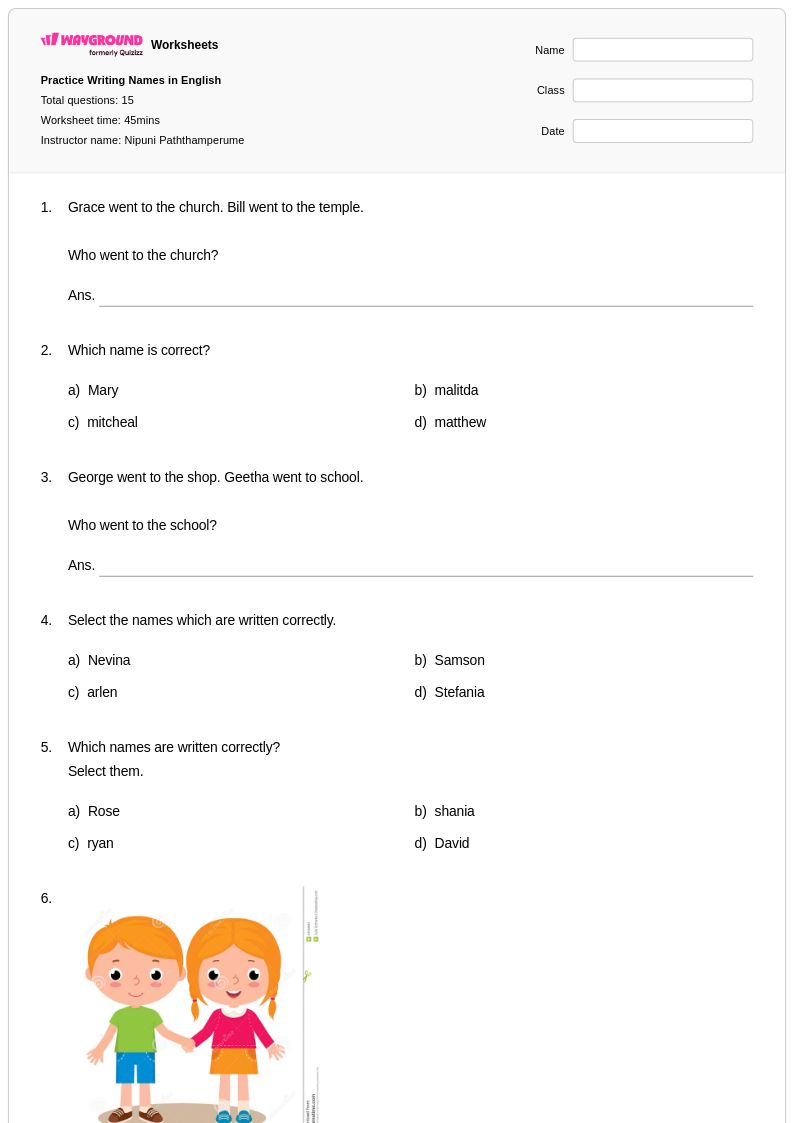
15 Q
1st - 5th
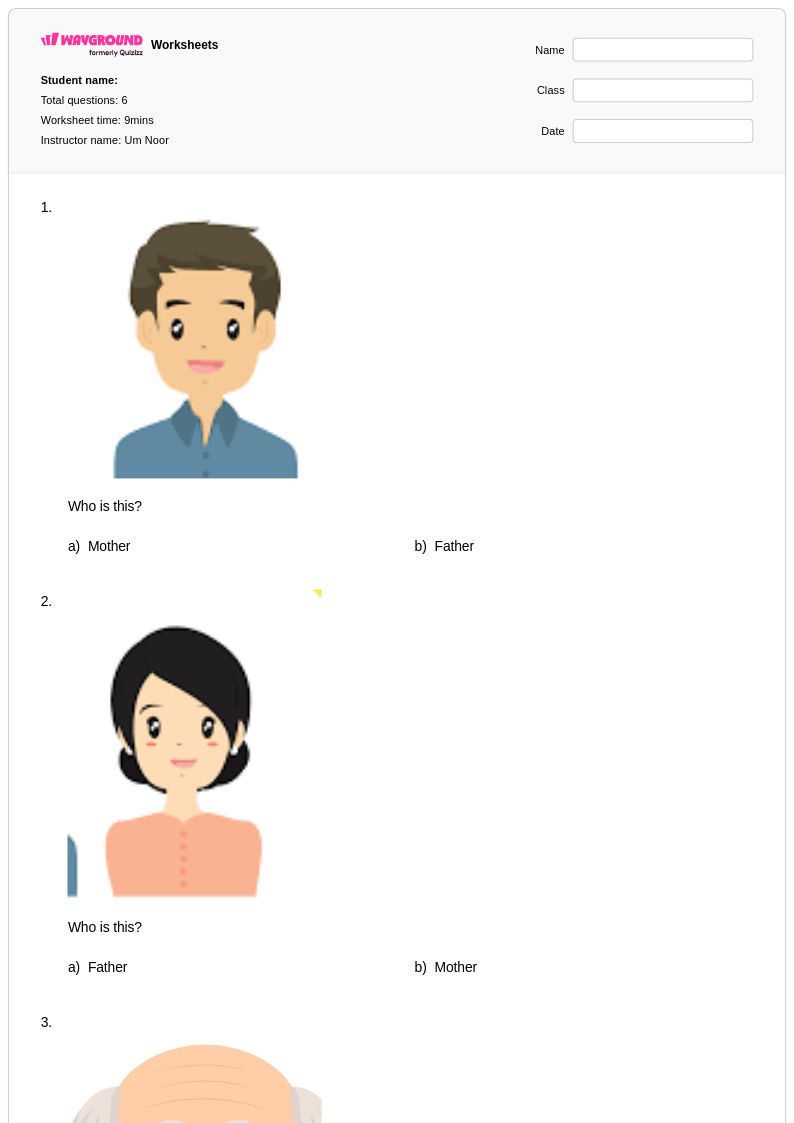
6 Q
2nd
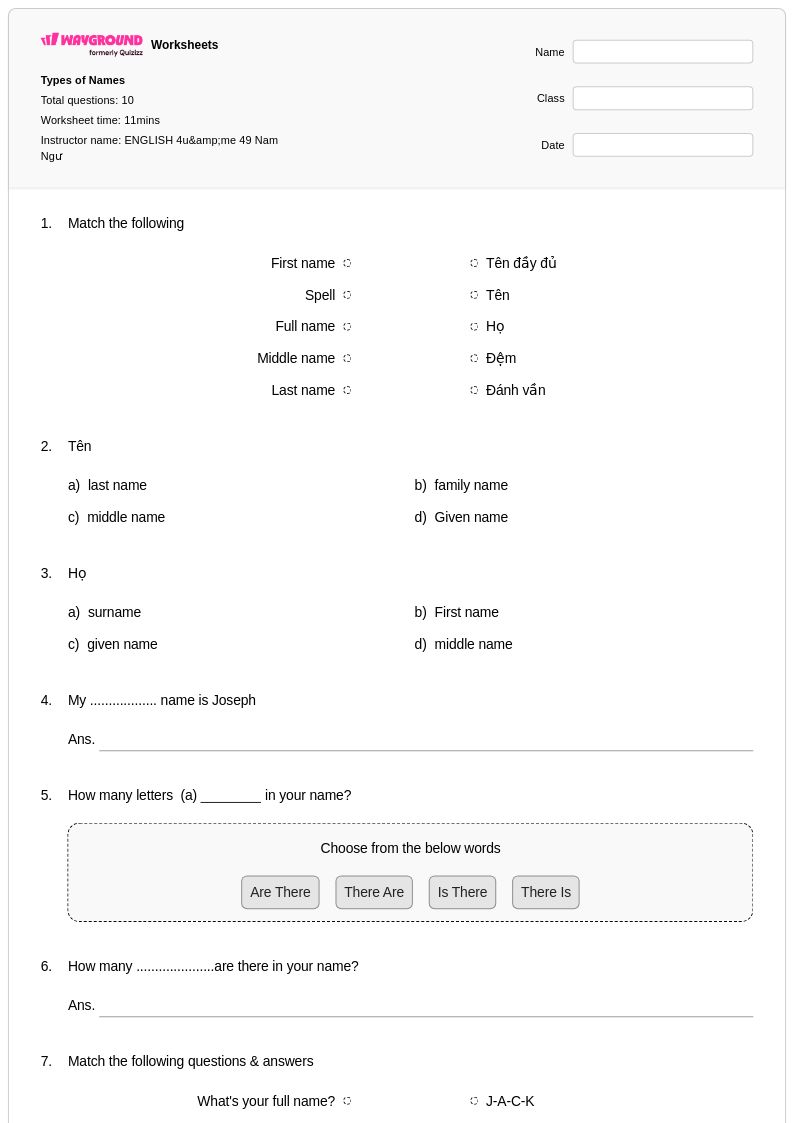
10 Q
1st - 5th
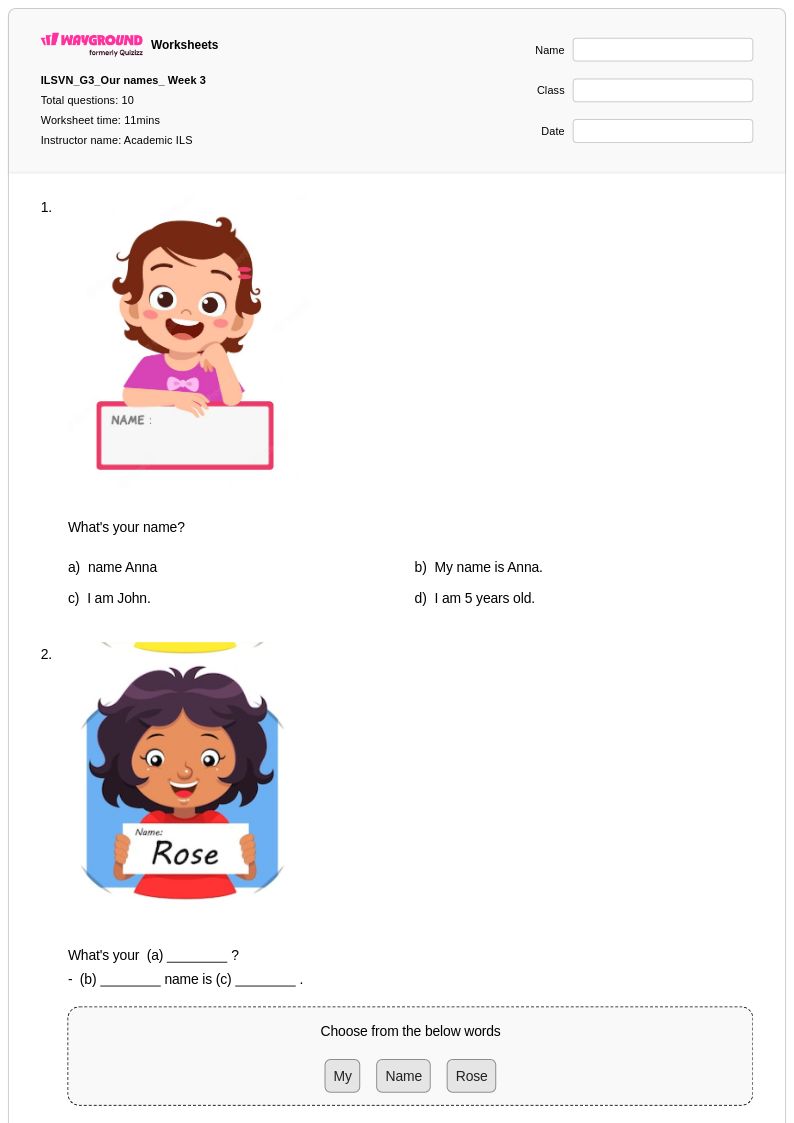
10 Q
1st - 5th
10 Q
KG - 2nd
9 Q
2nd
9 Q
2nd
17 Q
2nd
10 Q
1st - 5th
11 Q
2nd
20 Q
2nd
10 Q
1st - 10th
8 Q
2nd
8 Q
2nd - PD
10 Q
2nd
12 Q
2nd
16 Q
1st - 5th
11 Q
2nd
21 Q
1st - 5th
10 Q
2nd
10 Q
2nd
20 Q
1st - 4th
10 Q
1st - 5th
10 Q
1st - 3rd
Explore Writing Names Worksheets by Grades
Explore Other Subject Worksheets for year 2
Explore printable Writing Names worksheets for Year 2
Writing names represents a fundamental milestone in Year 2 early literacy development, and Wayground's comprehensive worksheet collection provides targeted practice for students mastering this essential skill. These carefully designed worksheets guide second-grade learners through progressive exercises that strengthen letter formation, spacing, capitalization, and fine motor control while building confidence in personal identity expression through writing. Students engage with varied practice problems that include tracing their own names, writing family member names, copying classroom friends' names, and creating original name labels for personal belongings. Each worksheet comes with a detailed answer key to support accurate assessment, and the free printable format ensures accessibility for both classroom instruction and home practice, allowing students to develop proper penmanship habits through consistent repetition.
Wayground, formerly Quizizz, empowers Year 2 teachers with an extensive library of millions of teacher-created writing names worksheets that streamline lesson planning and differentiated instruction. The platform's robust search and filtering capabilities enable educators to quickly locate resources aligned with specific learning standards and student needs, whether for initial skill introduction, remediation support, or enrichment activities. Teachers can seamlessly customize worksheet content to match individual student names and classroom demographics, while the dual availability in both digital and printable pdf formats provides flexibility for diverse learning environments. These comprehensive tools support systematic skill progression, allowing educators to track student development in name writing proficiency while providing targeted practice opportunities that accommodate varying ability levels within the Year 2 classroom setting.
FAQs
How do I teach young children to write their own name?
What activities help students practice writing their names?
What mistakes do young learners commonly make when learning to write their names?
How can I differentiate name writing practice for students at different skill levels?
How do I use Wayground's name writing worksheets in my classroom?