Free Printable Abstract Nouns Worksheets for Class 7
Class 7 abstract nouns worksheets from Wayground help students master identifying and using intangible concepts through engaging printables, practice problems, and comprehensive answer keys for effective learning.
Explore printable Abstract Nouns worksheets for Class 7
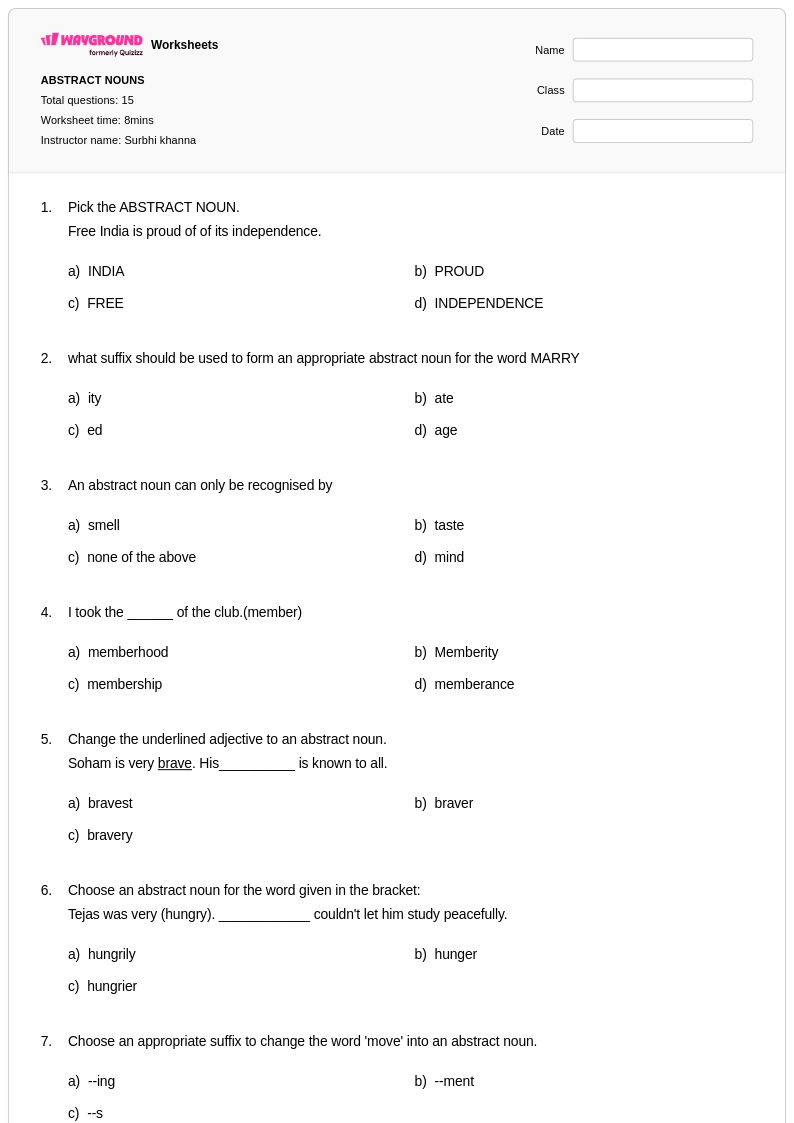
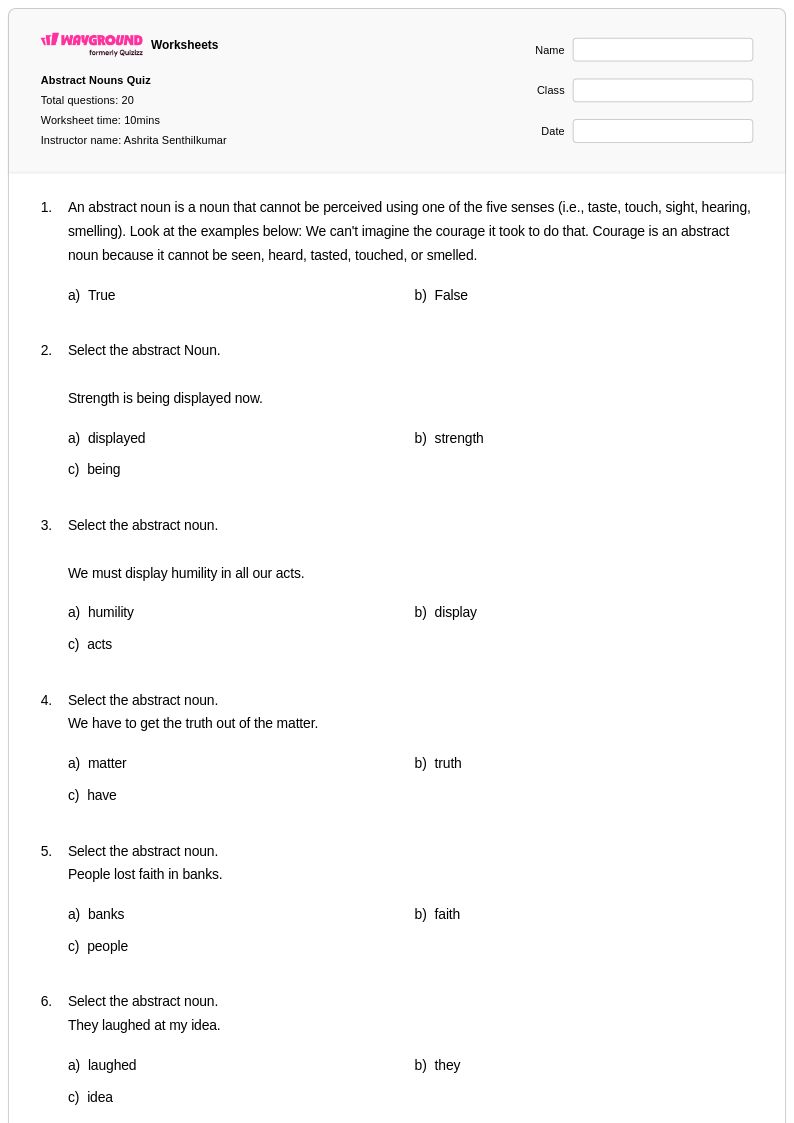
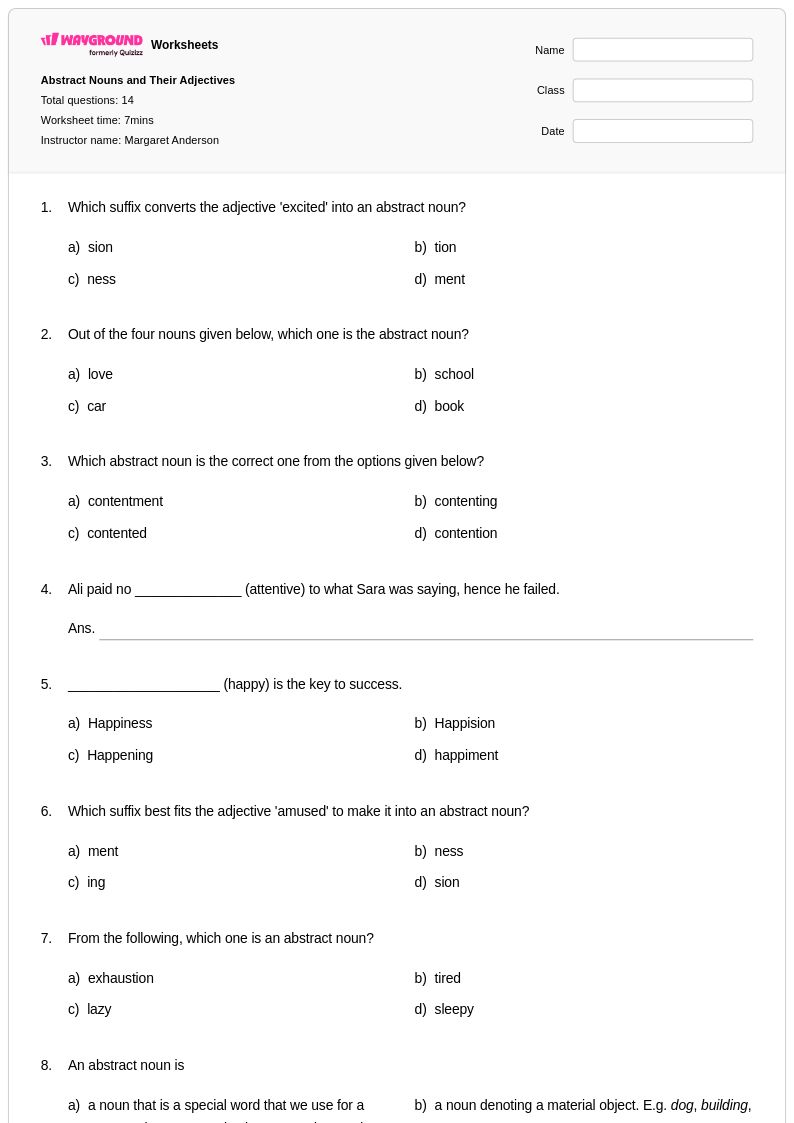
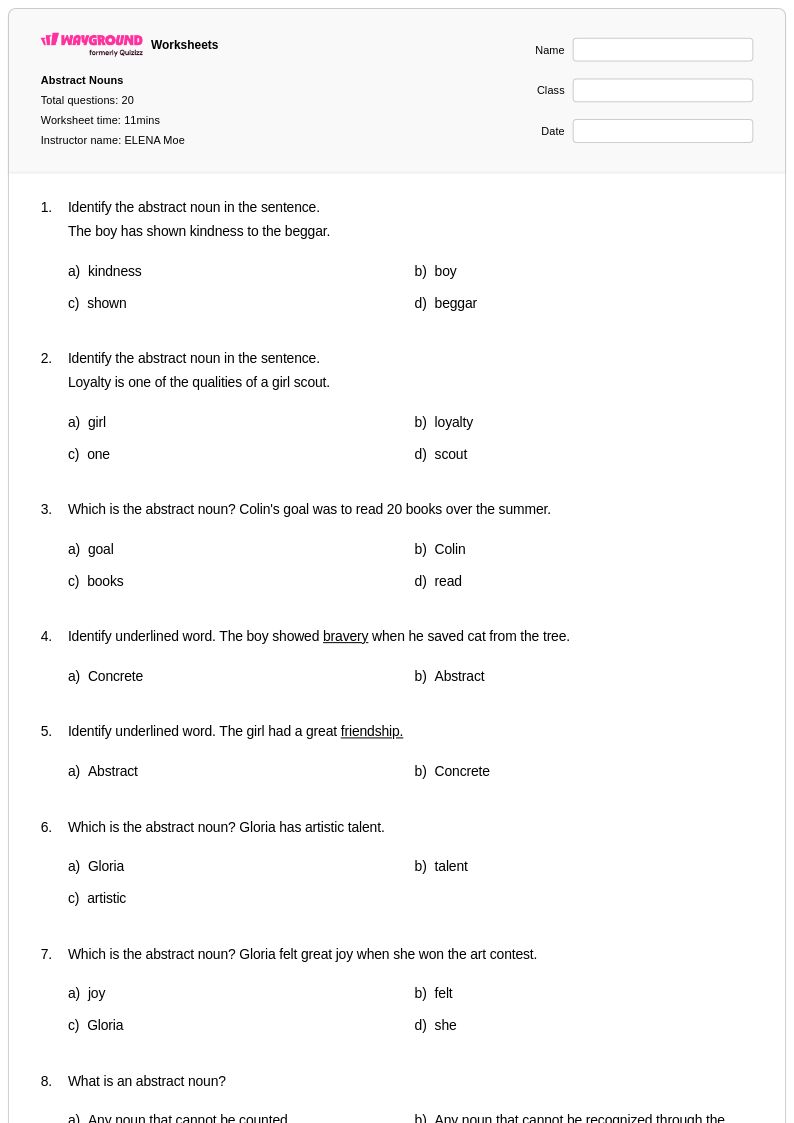
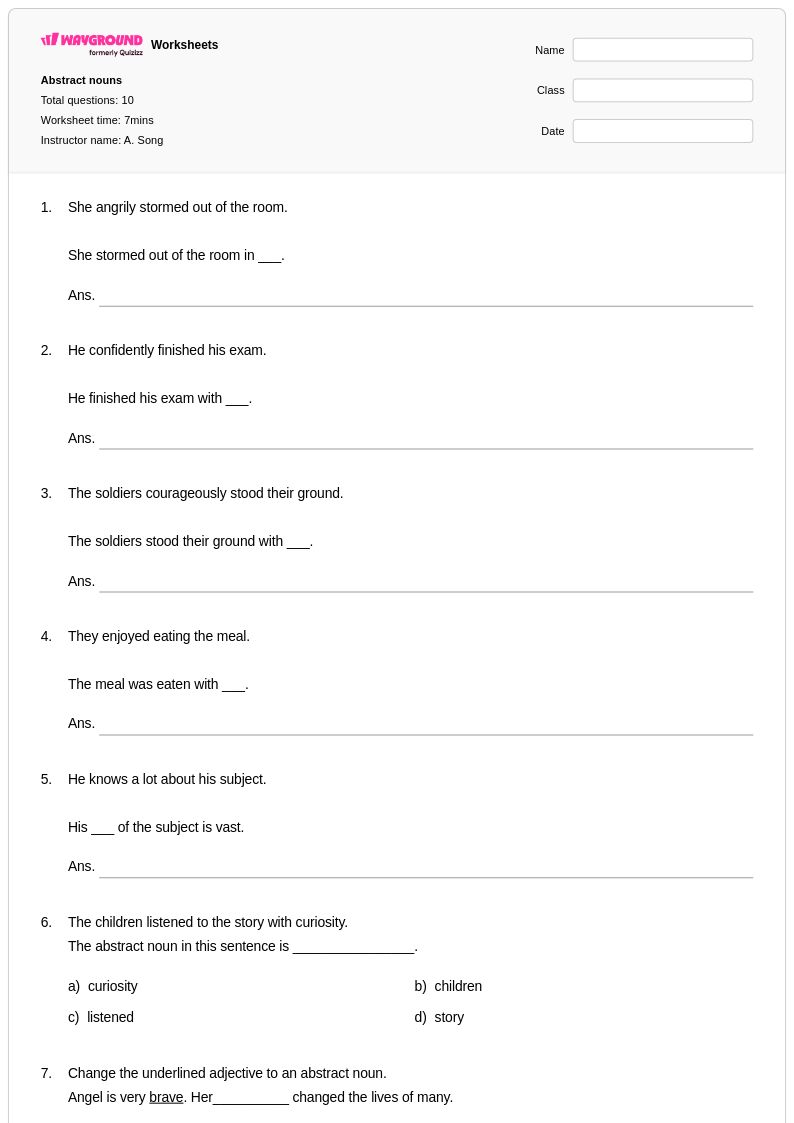
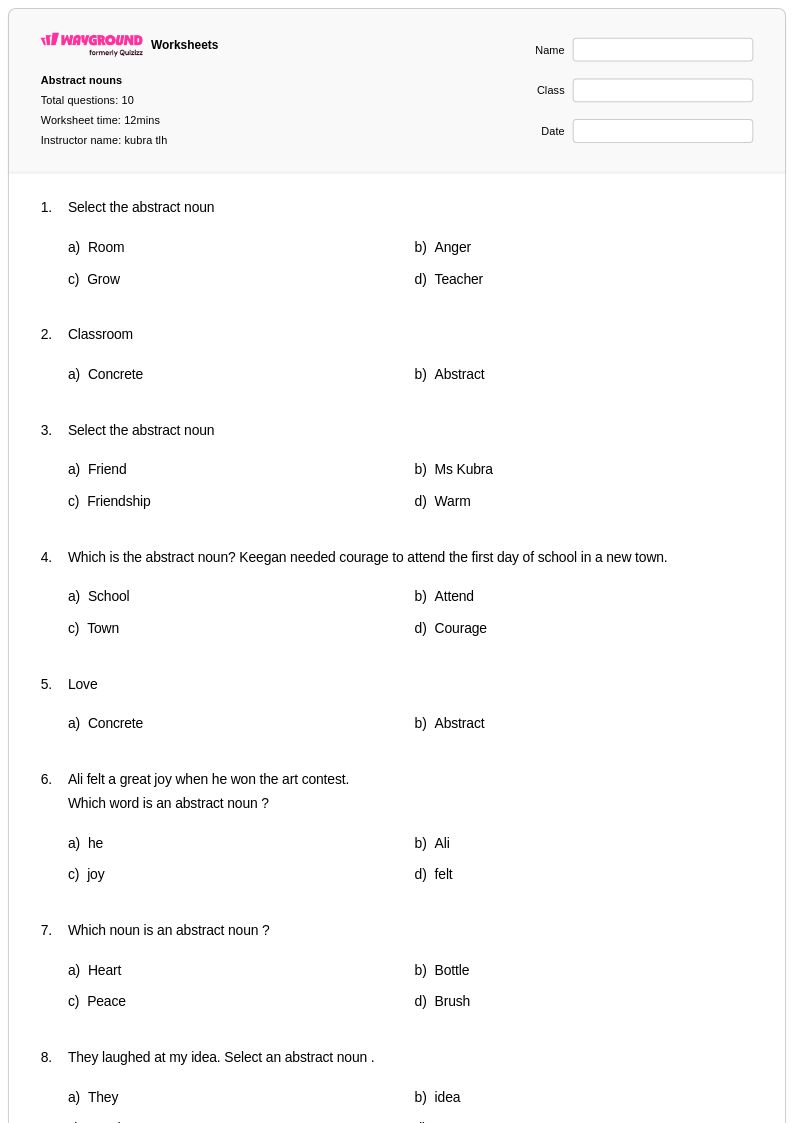
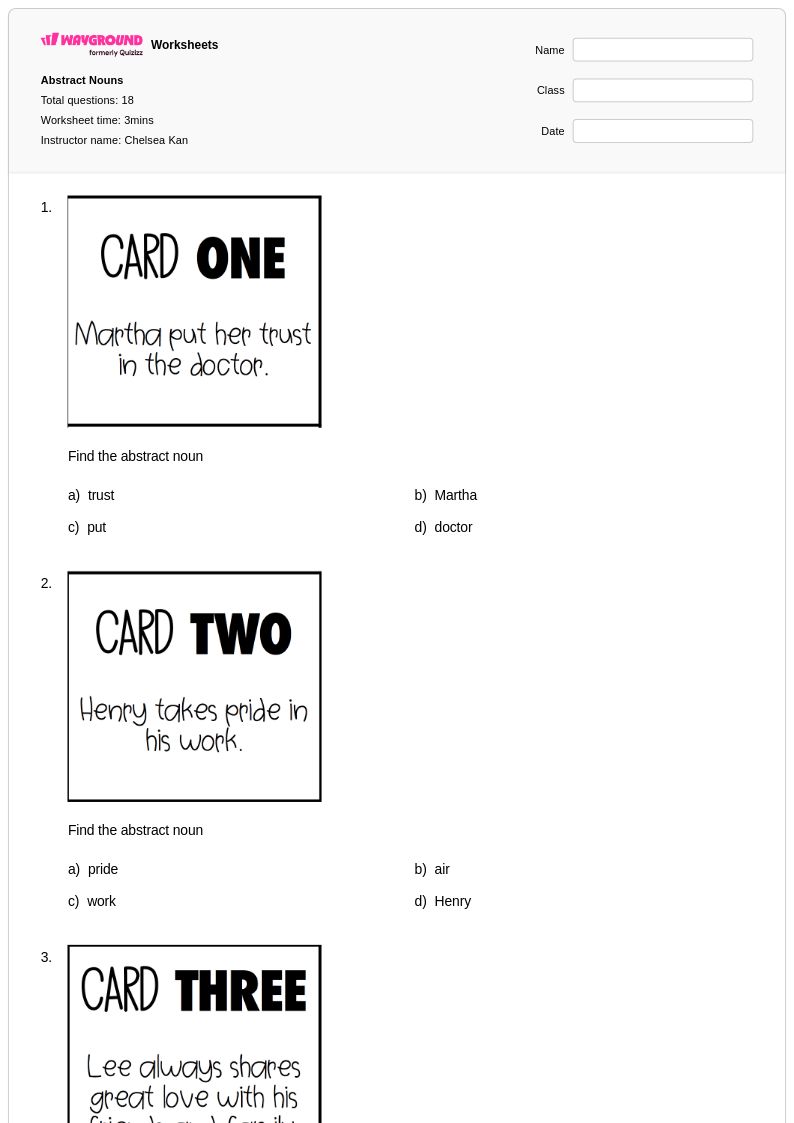
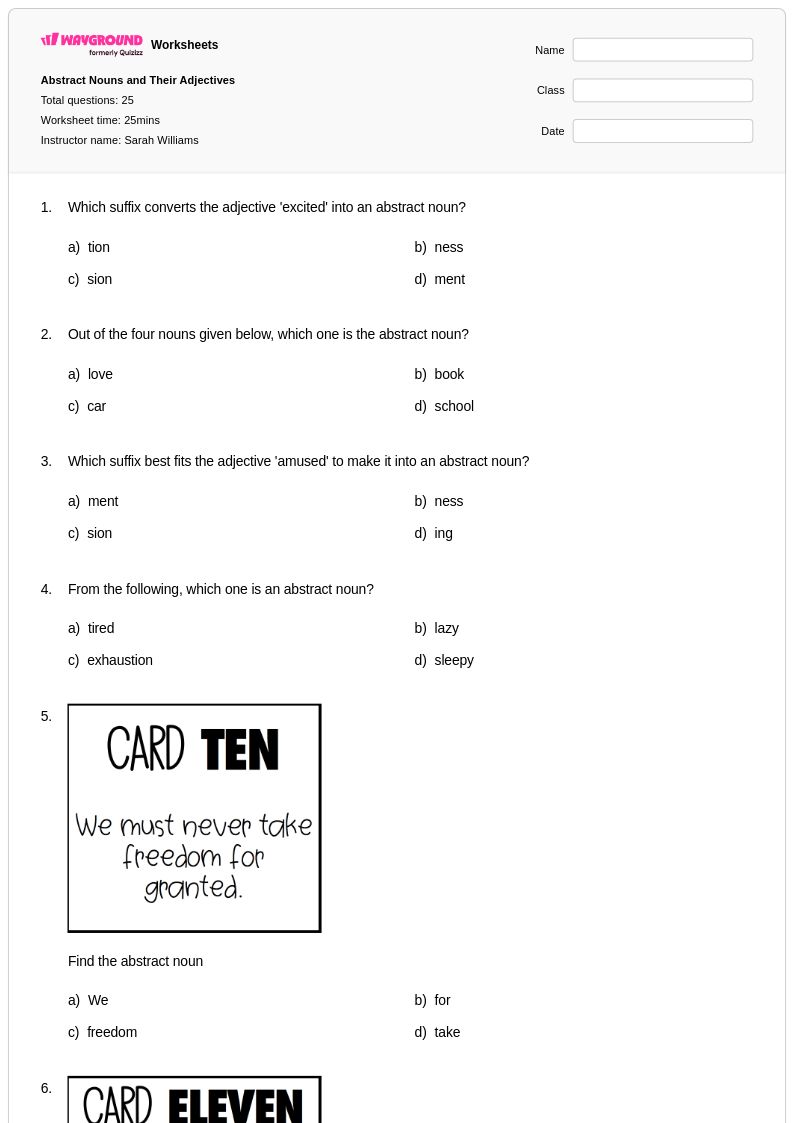
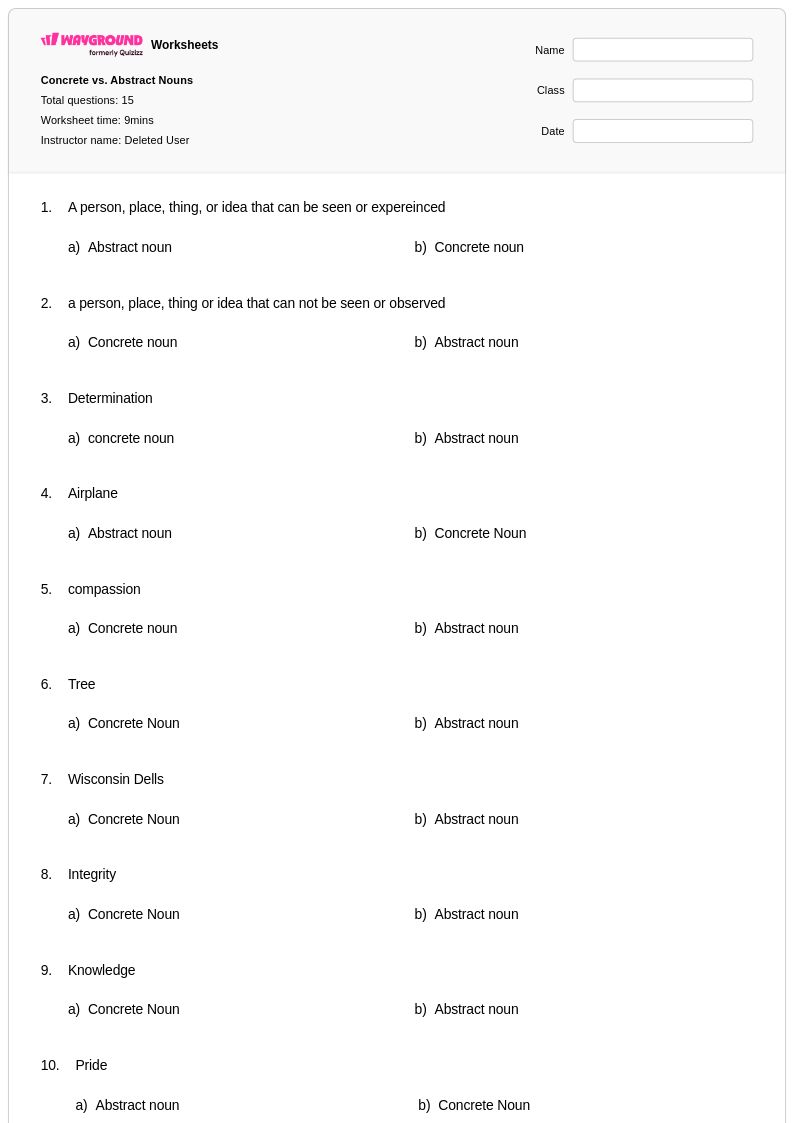
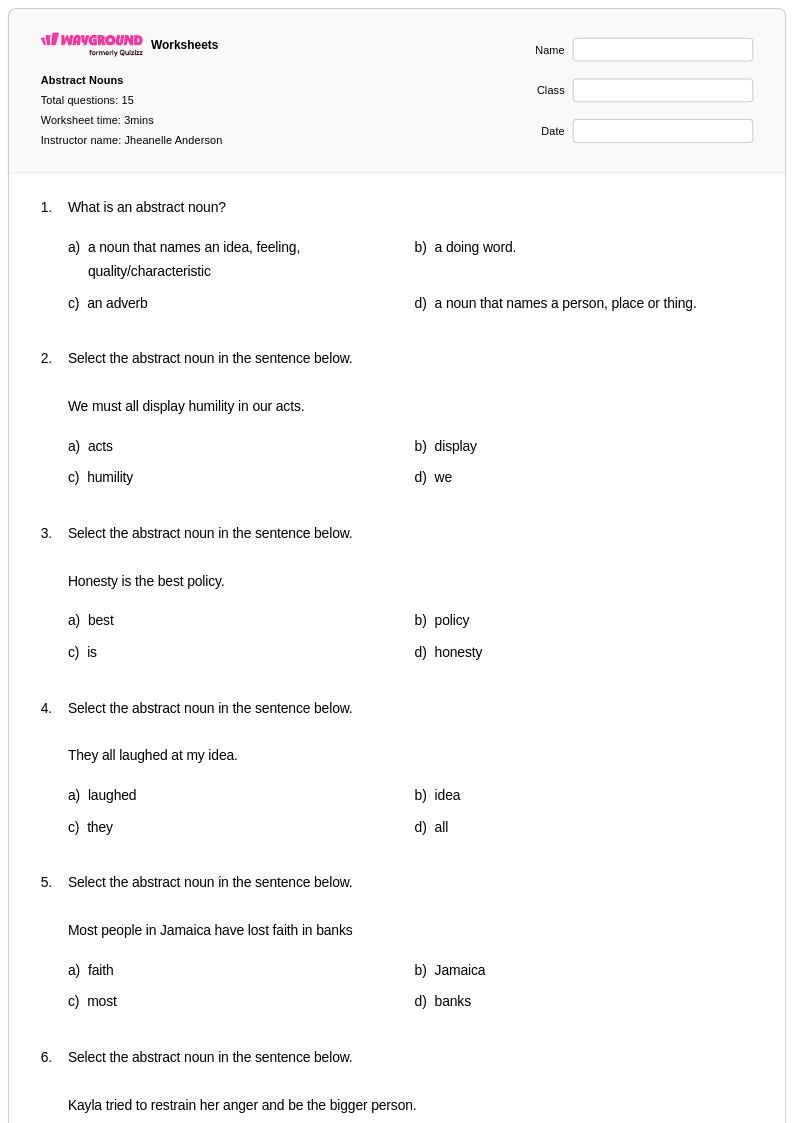
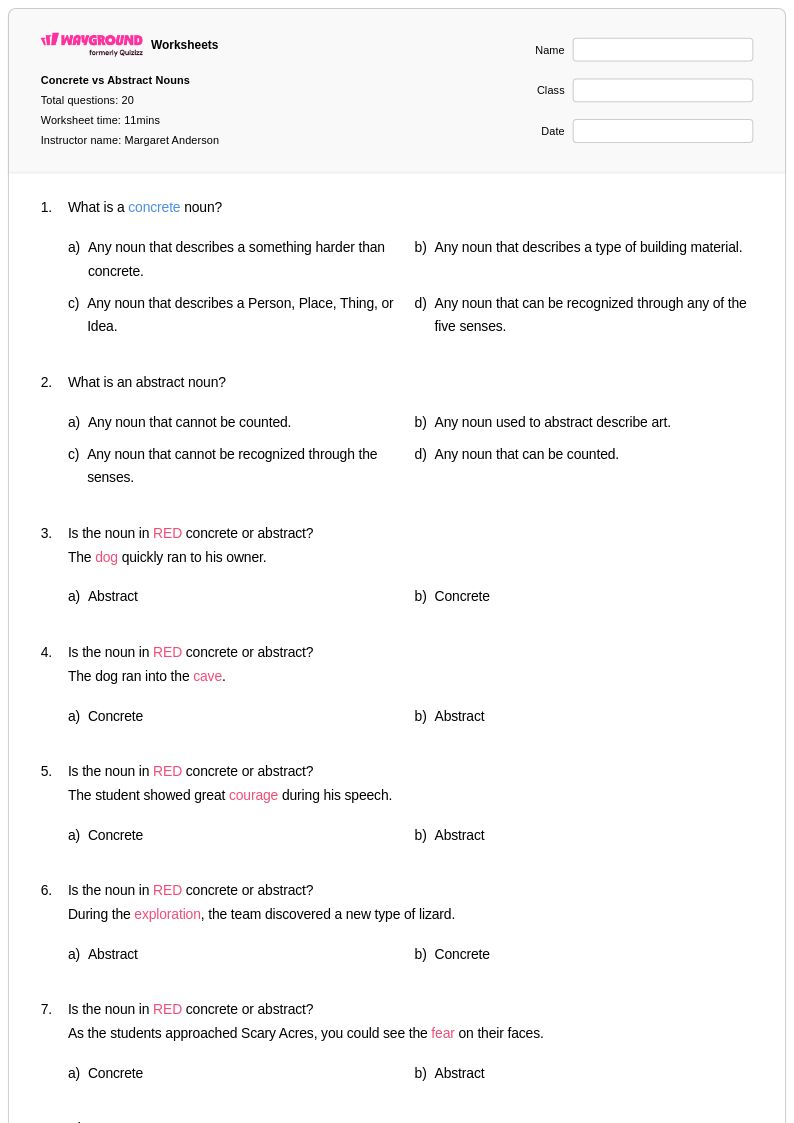
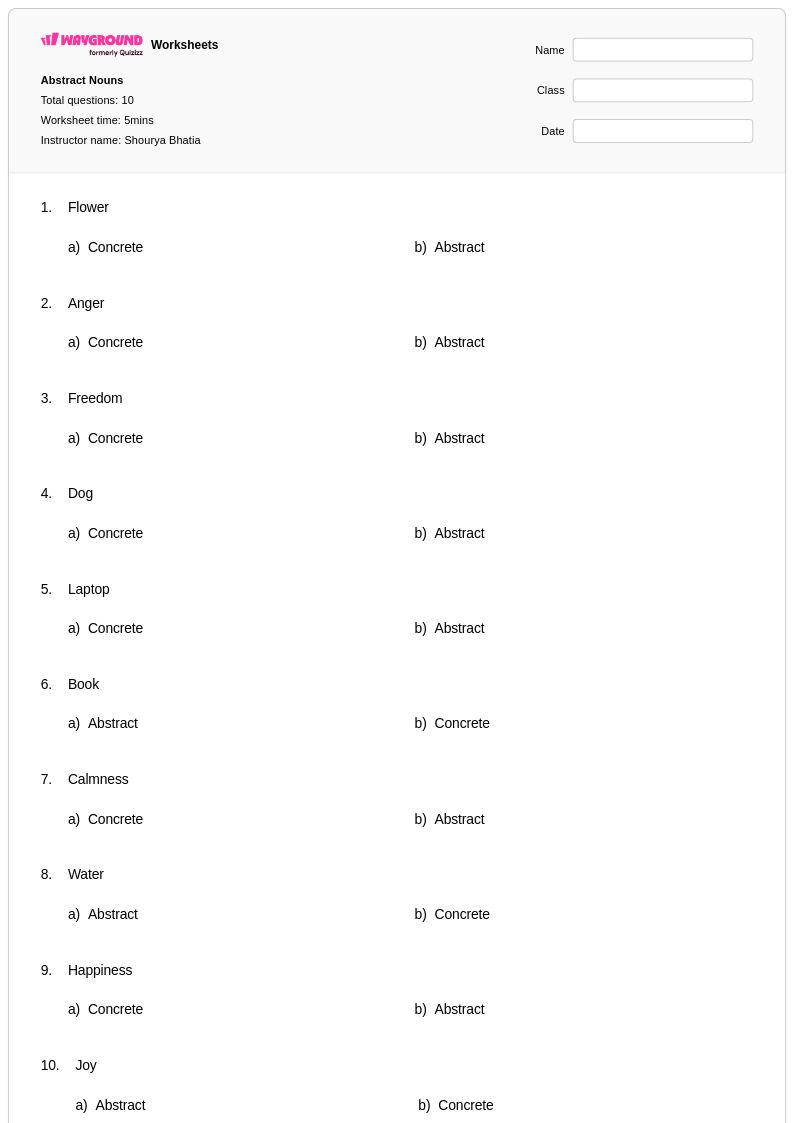
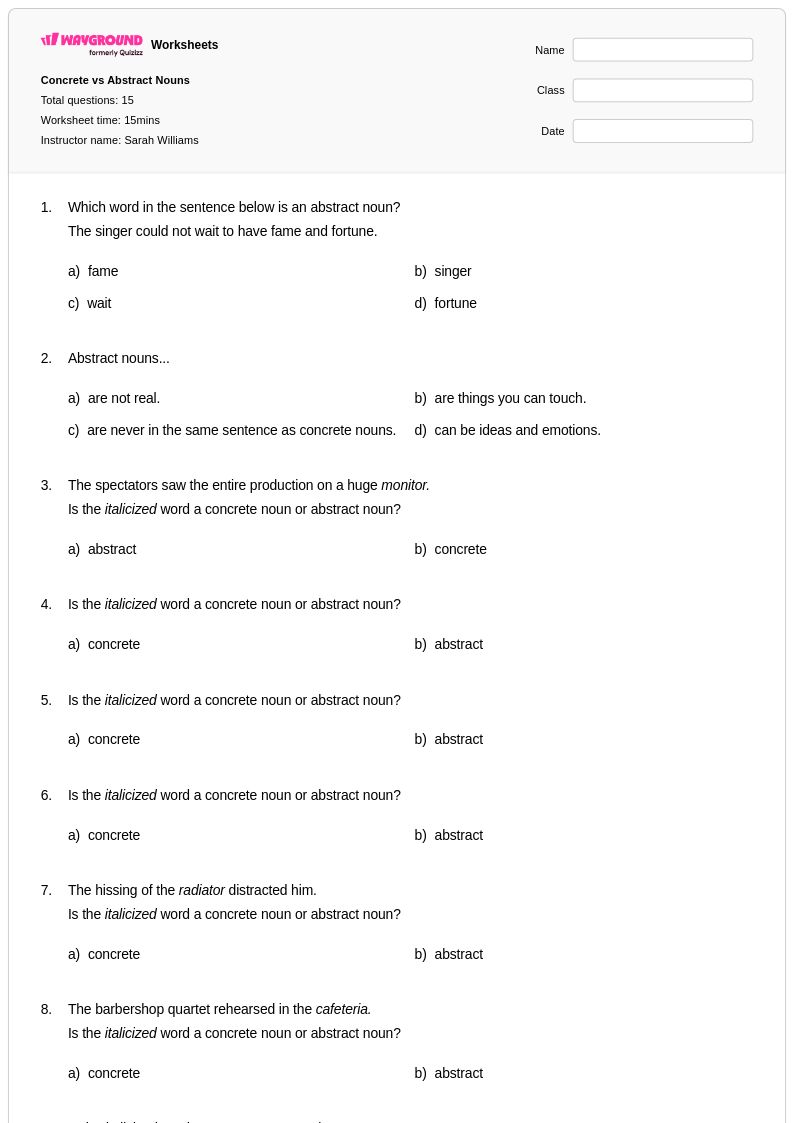
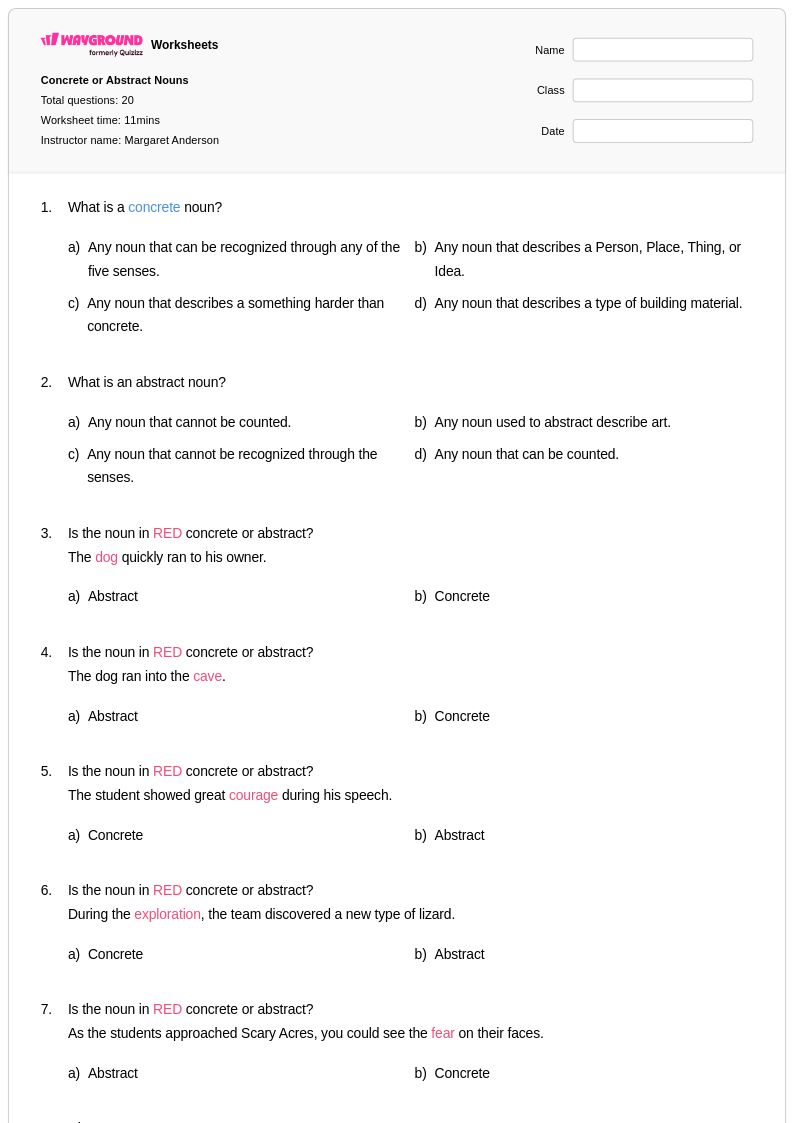
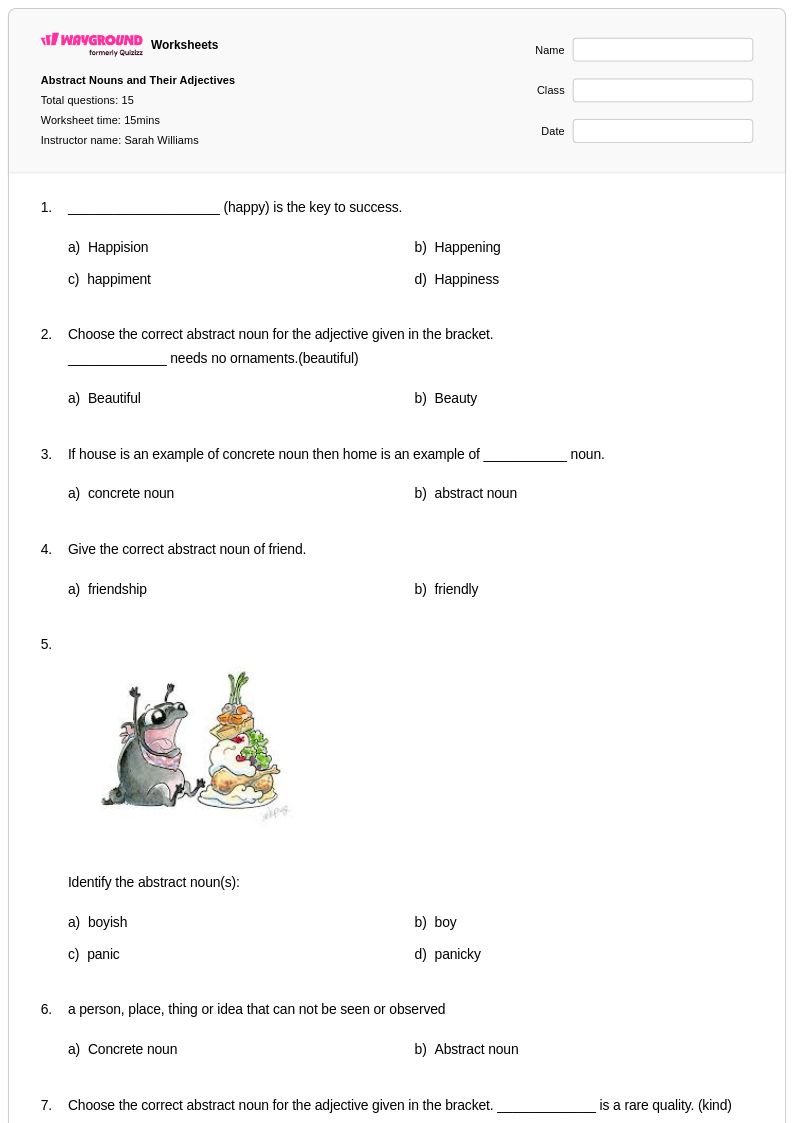
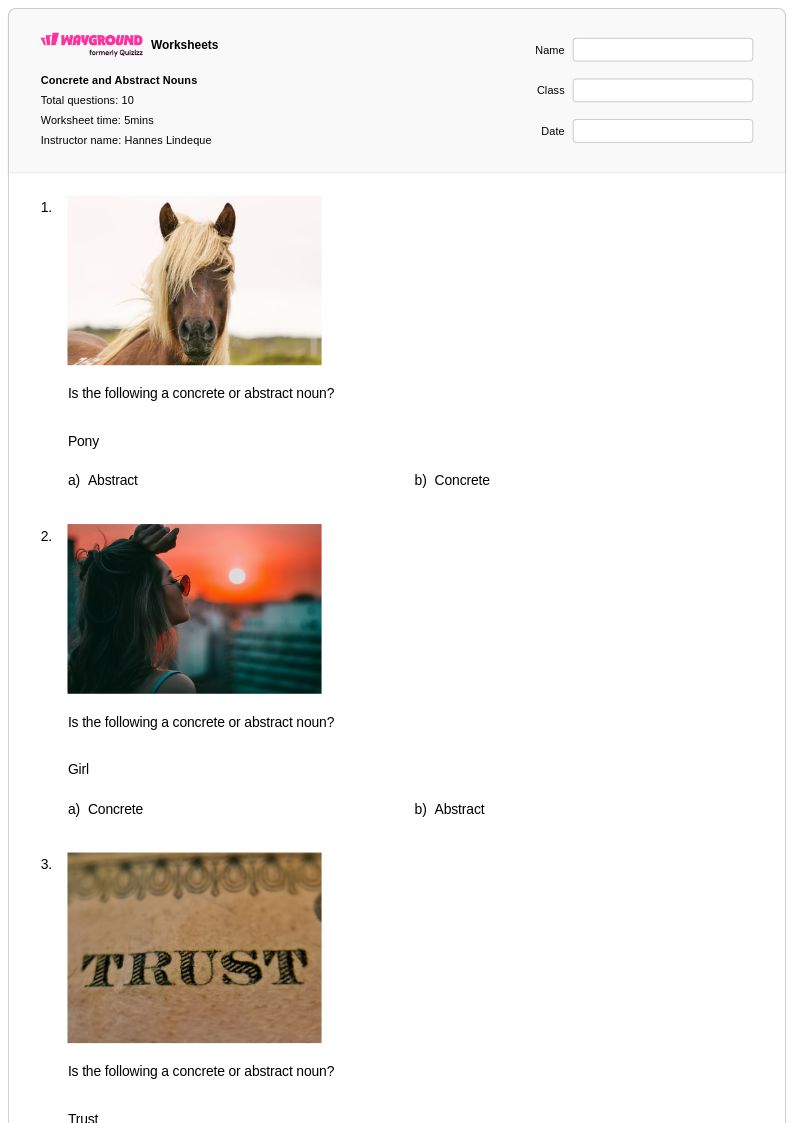
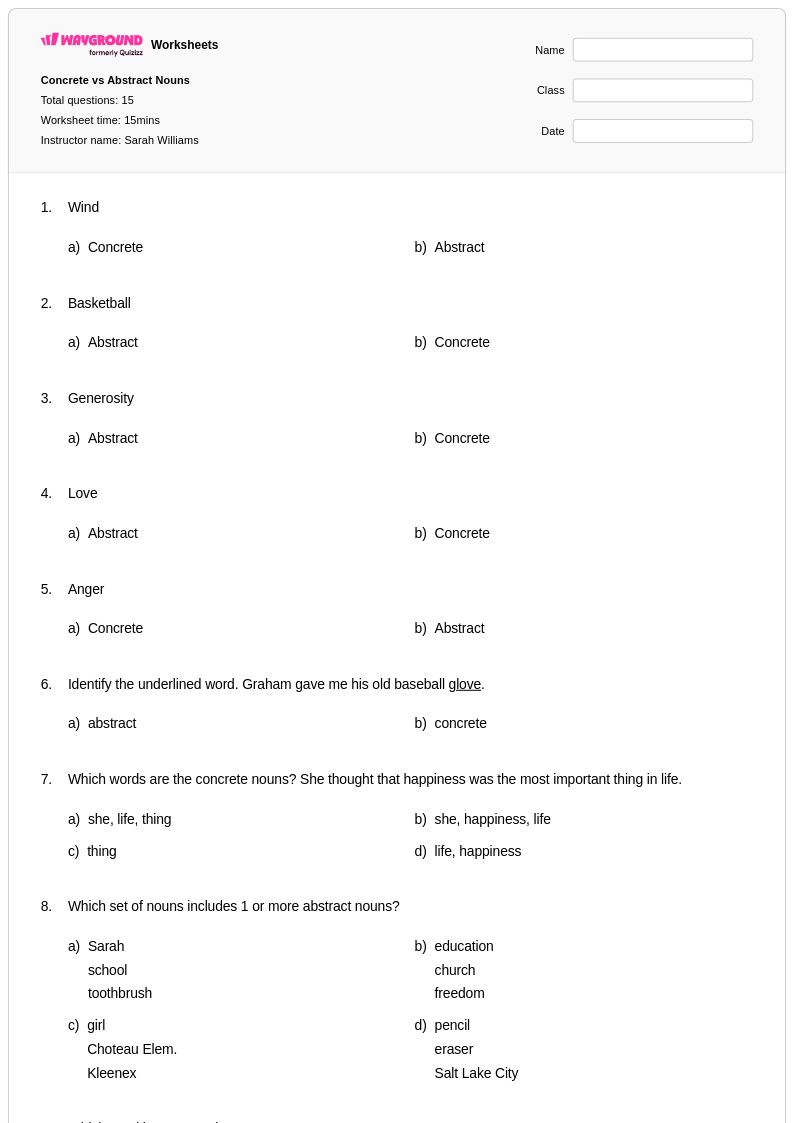
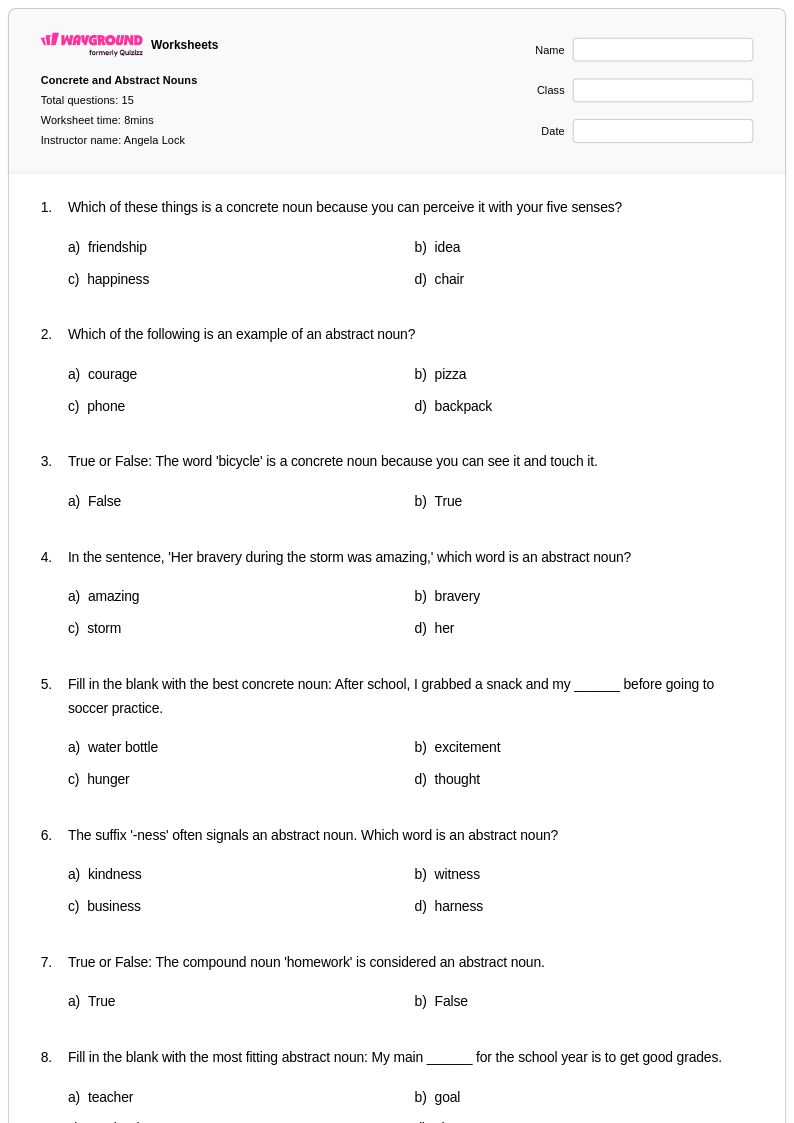
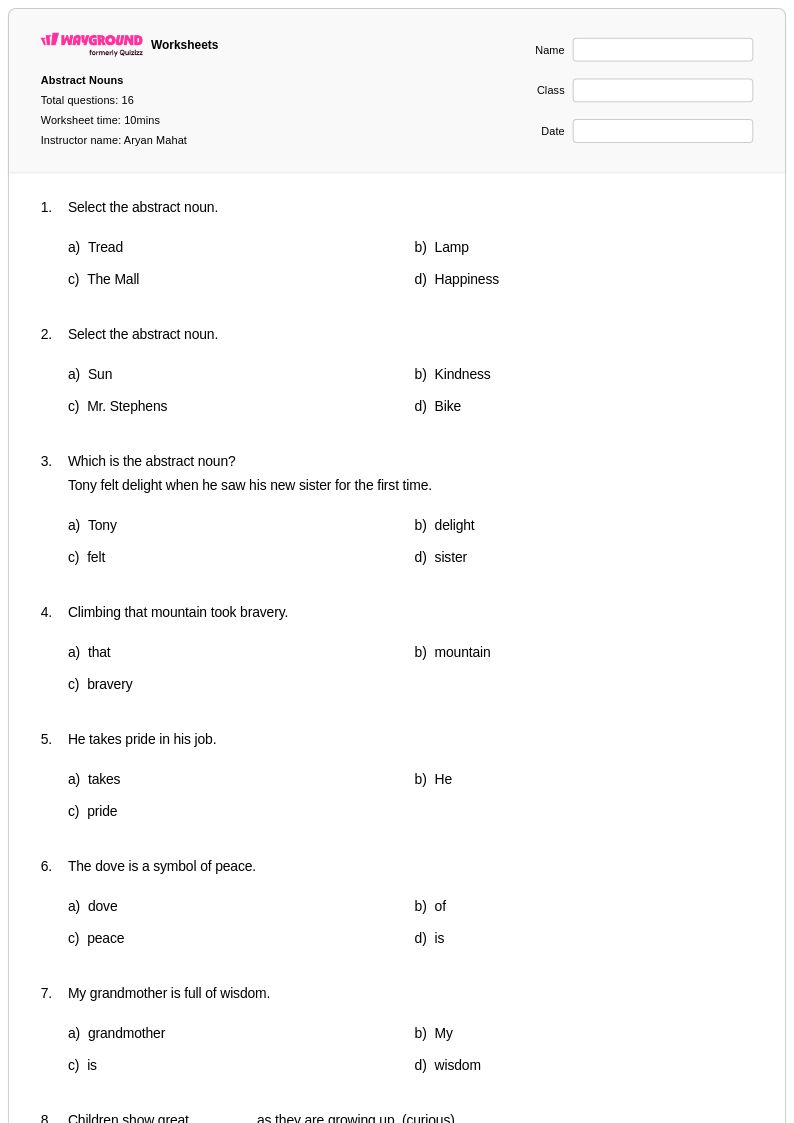
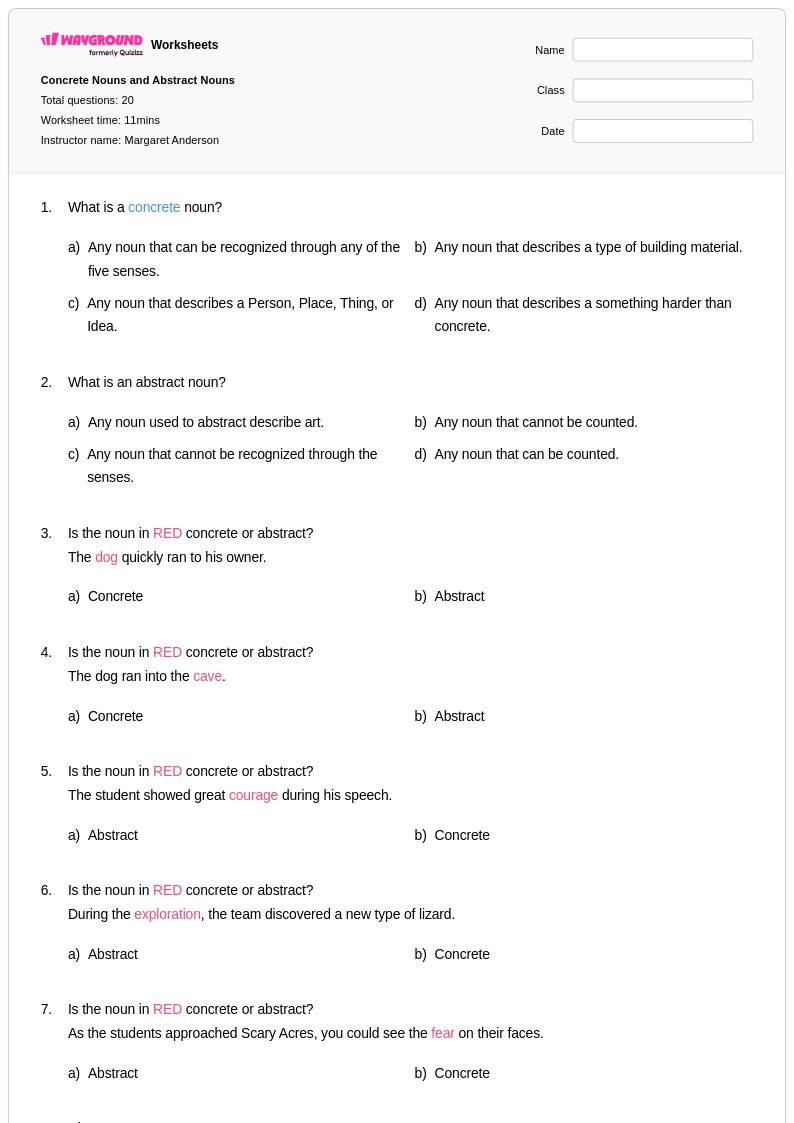
Abstract nouns present a sophisticated conceptual challenge for Class 7 students as they master the identification and usage of intangible ideas, emotions, and qualities that cannot be perceived through the five senses. Wayground's comprehensive collection of abstract noun worksheets provides targeted practice problems that guide students through distinguishing abstract concepts like courage, happiness, and freedom from concrete nouns they can physically touch or see. These educational resources strengthen critical thinking skills by requiring students to analyze context clues, categorize different noun types, and apply abstract nouns effectively in their own writing. Teachers can access complete answer keys and free printable pdf versions that support both classroom instruction and independent study, ensuring students develop the sophisticated vocabulary recognition essential for advanced reading comprehension and expressive writing at the middle school level.
Wayground's extensive library draws from millions of teacher-created resources specifically designed to support Class 7 abstract noun instruction through powerful search and filtering capabilities that align with state language arts standards. Educators can easily customize worksheets to match diverse learning needs, selecting from printable pdf formats for traditional classroom use or digital versions for technology-integrated lessons. The platform's differentiation tools enable teachers to provide targeted remediation for students struggling with abstract concept recognition while offering enrichment activities that challenge advanced learners to explore nuanced applications of abstract nouns in literary analysis and creative writing. This flexible approach to skill practice supports comprehensive lesson planning by providing immediate access to varied exercises that reinforce abstract noun identification, usage, and application across multiple learning modalities and assessment formats.
FAQs
How do I teach abstract nouns to students who struggle to understand intangible concepts?
Start by contrasting abstract nouns with concrete nouns students already know — pair words like 'joy' with 'smile' or 'freedom' with 'open door' to make the invisible visible. Anchor instruction in emotions and experiences students have personally felt, then gradually move toward more complex abstractions like justice or loyalty. Using sentence frames that require students to use abstract nouns in context helps solidify understanding beyond simple definition recall.
What exercises help students practice identifying abstract nouns?
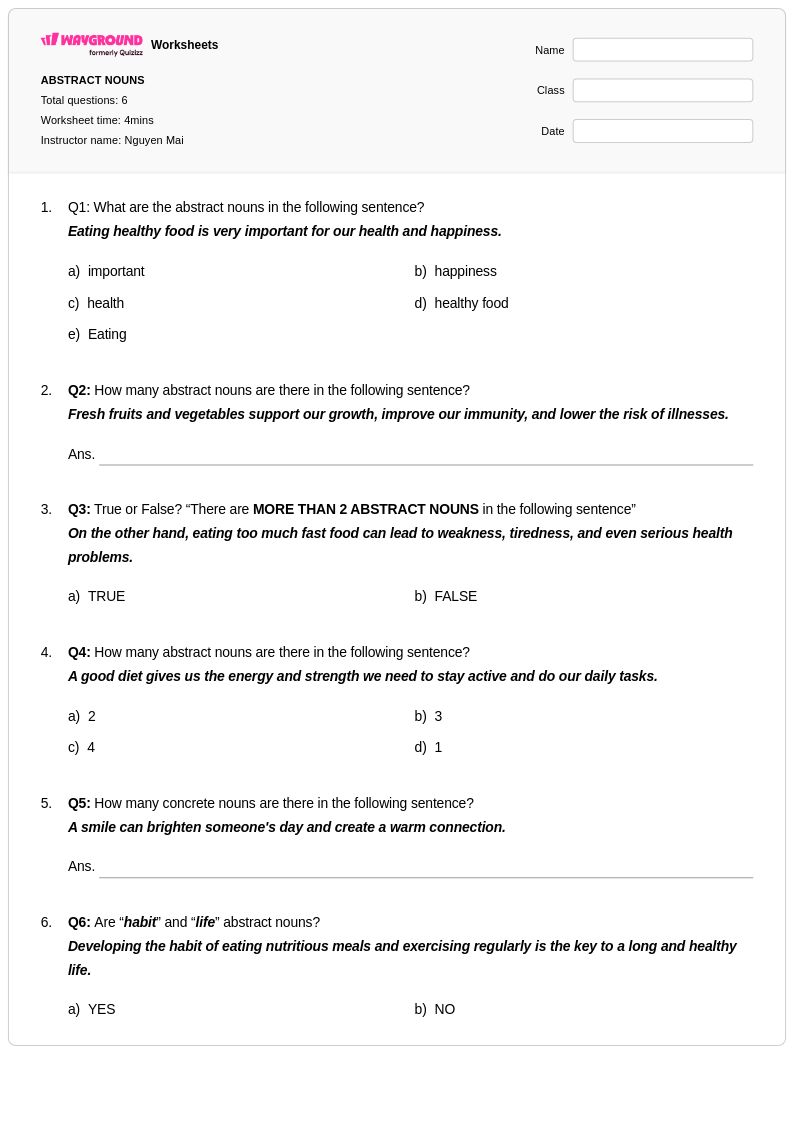
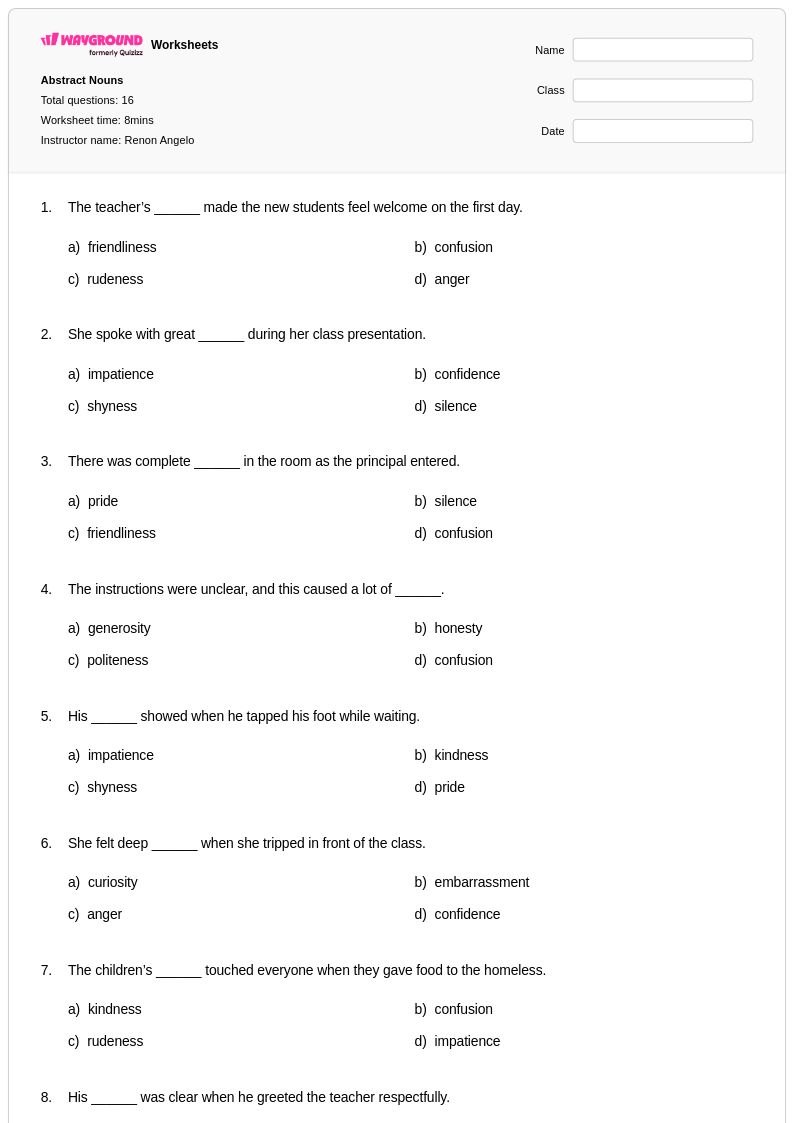
Effective practice includes categorization tasks where students sort word lists into concrete and abstract columns, sentence completion exercises that require choosing the correct abstract noun, and analysis tasks where students identify abstract nouns within real sentences. These exercise types build both recognition and application skills, ensuring students can spot abstract nouns in context rather than just in isolation.
What mistakes do students commonly make when learning abstract nouns?
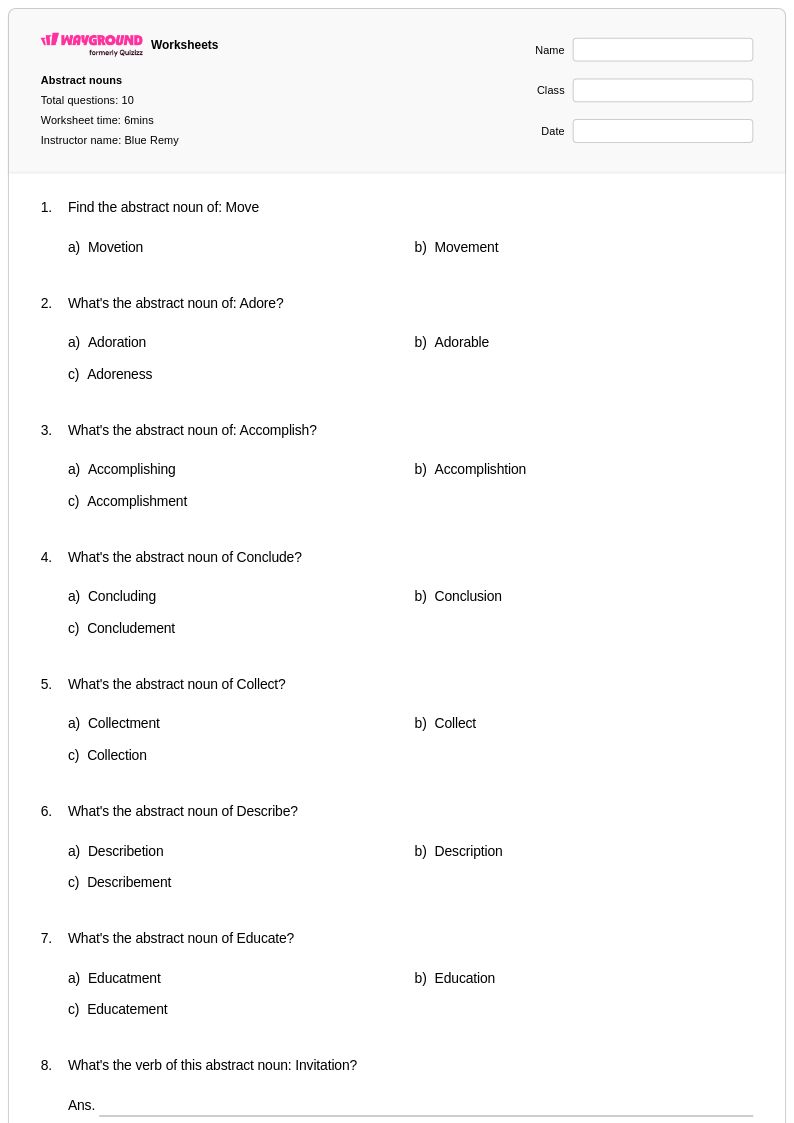
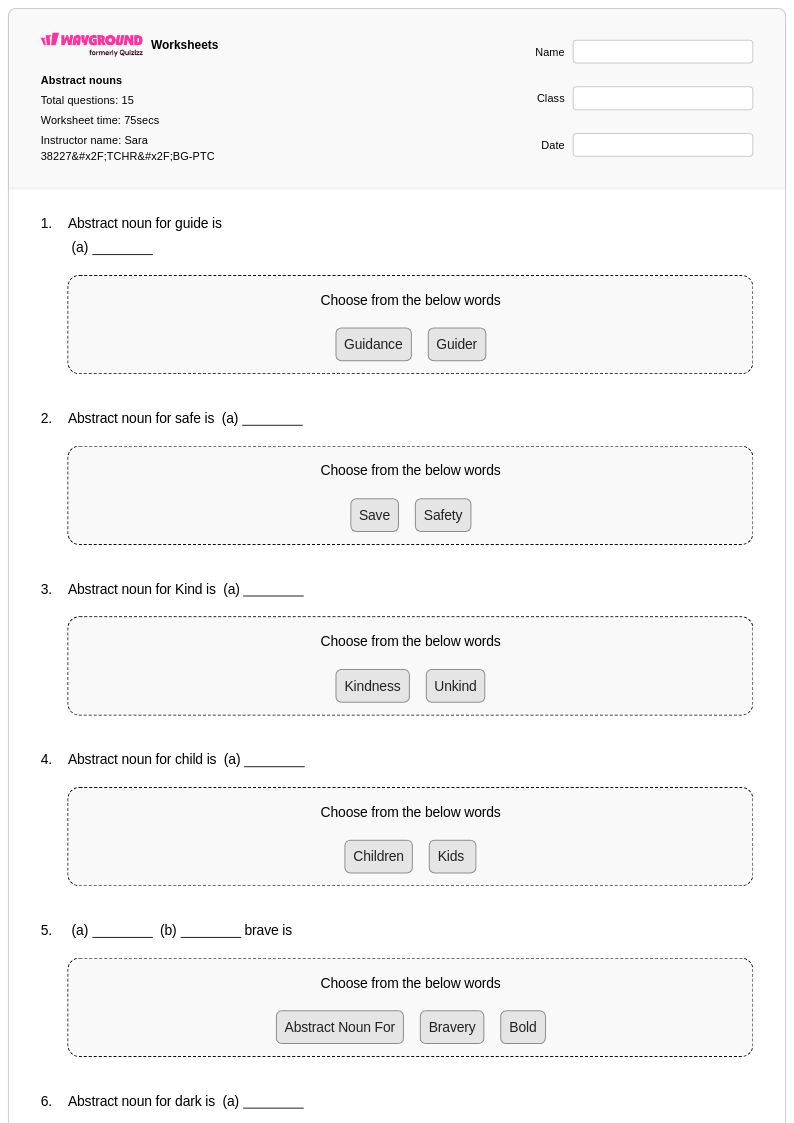
The most common error is confusing abstract nouns with adjectives — students often write 'happy' instead of 'happiness' or 'brave' instead of 'bravery' when asked to supply an abstract noun. Another frequent mistake is assuming all emotion words are automatically nouns regardless of their grammatical role in a sentence. Targeted practice that asks students to identify the part of speech before labeling a word as an abstract noun helps correct both errors.
How can I differentiate abstract noun instruction for learners at different levels?
For struggling learners, reduce the cognitive load by providing word banks or focusing only on familiar emotion words before introducing more complex concepts like justice or integrity. Advanced learners benefit from analysis tasks that ask them to explain how an abstract noun shifts meaning depending on sentence context. Wayground's differentiation tools allow teachers to adjust complexity levels and question types for individual students, so the same worksheet session can serve different learners simultaneously.
How do I use Wayground's abstract noun worksheets in my classroom?
Wayground's abstract noun worksheets are available as free printable PDFs for traditional classroom use and in digital formats for technology-integrated environments, including the option to host them as a quiz directly on Wayground. Each worksheet includes a complete answer key, making them efficient for independent practice, small group instruction, or homework assignments. Teachers can search and filter resources to match specific learning objectives or standards, streamlining lesson planning.
How do abstract noun worksheets support vocabulary development?
Abstract noun worksheets build vocabulary by exposing students to a wide range of words related to feelings, beliefs, and intangible qualities they may not encounter in everyday reading. Exercises that ask students to complete sentences with precise abstract terms push them beyond simple recognition toward active word use. Over time, this targeted exposure strengthens students' ability to express nuanced ideas in both writing and discussion.