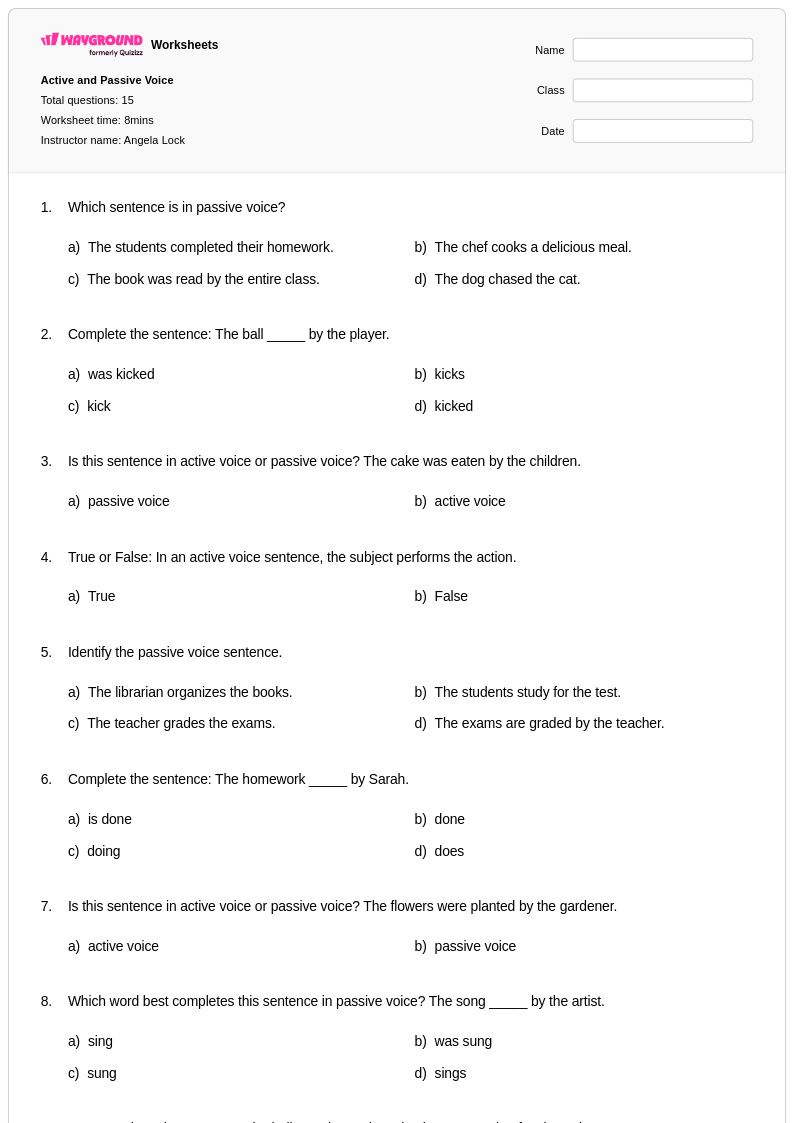
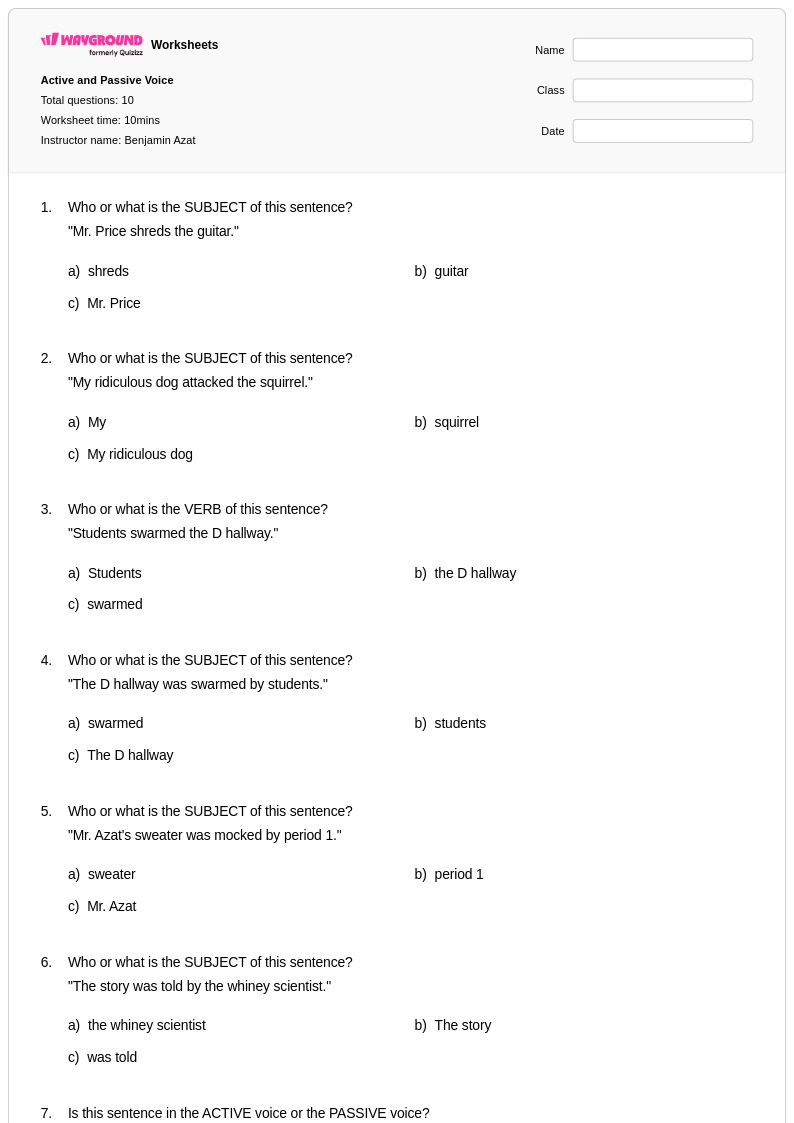
Free Printable Active and Passive Voice Worksheets for Class 10
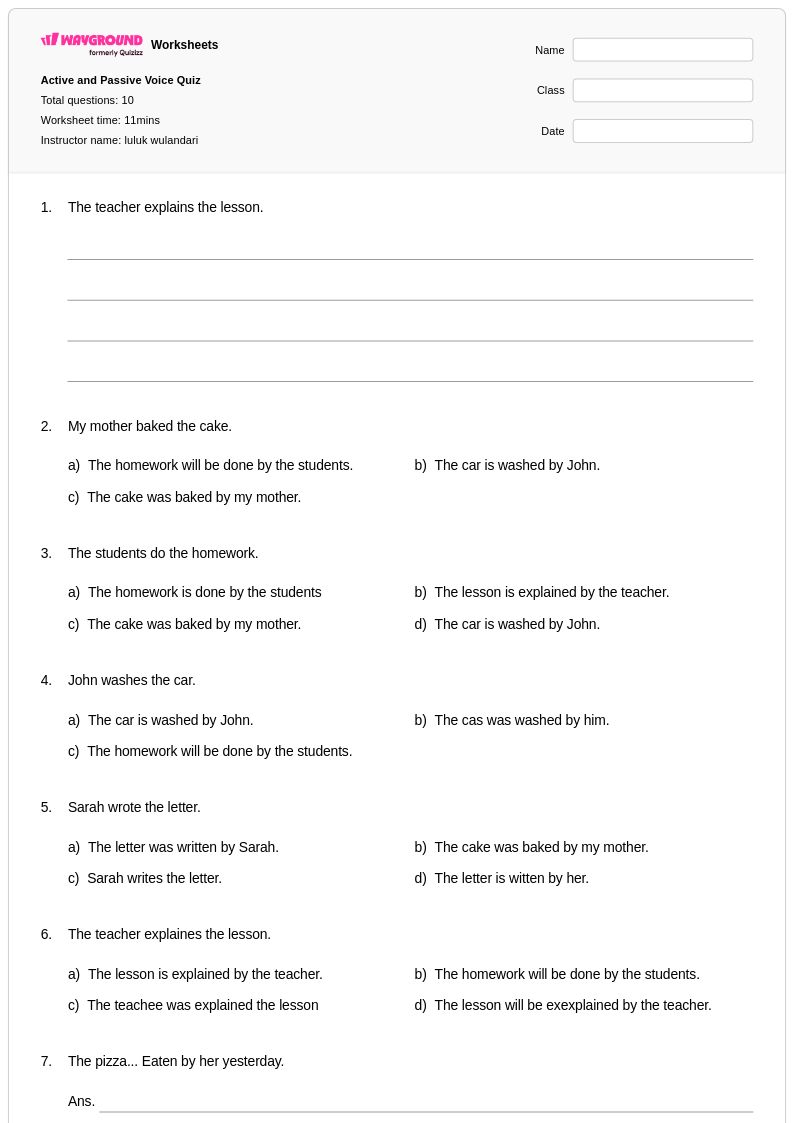
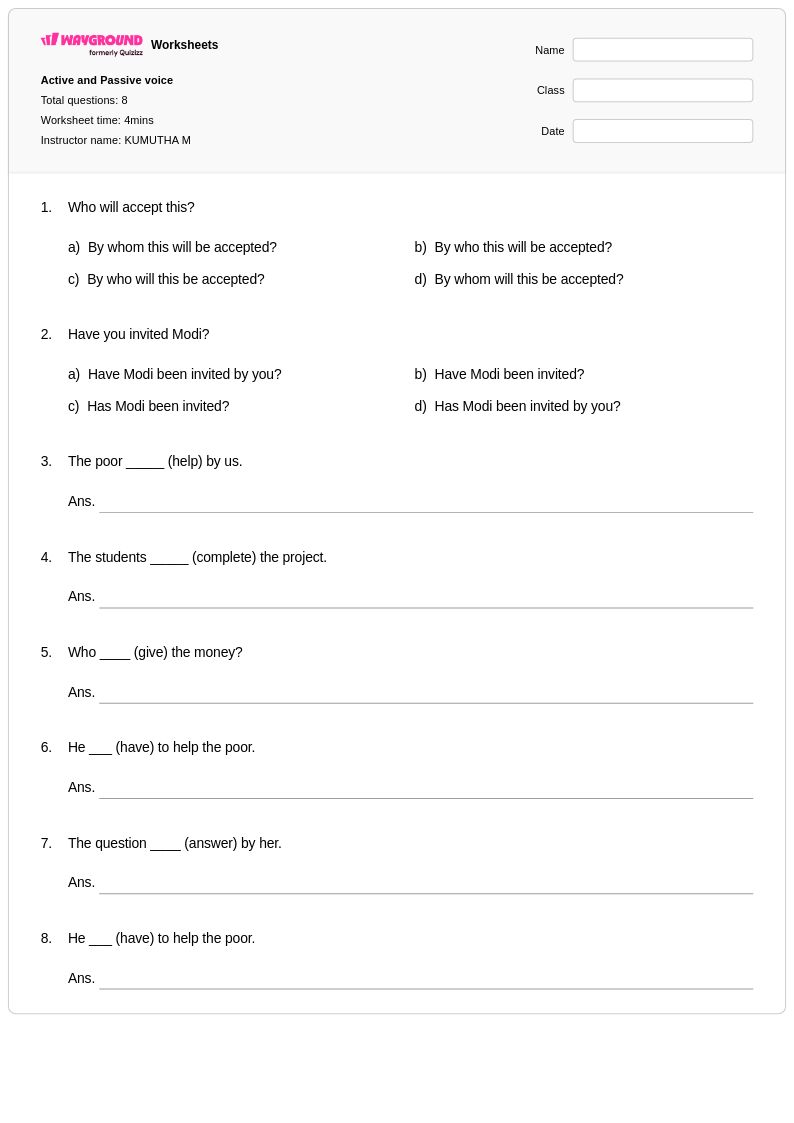
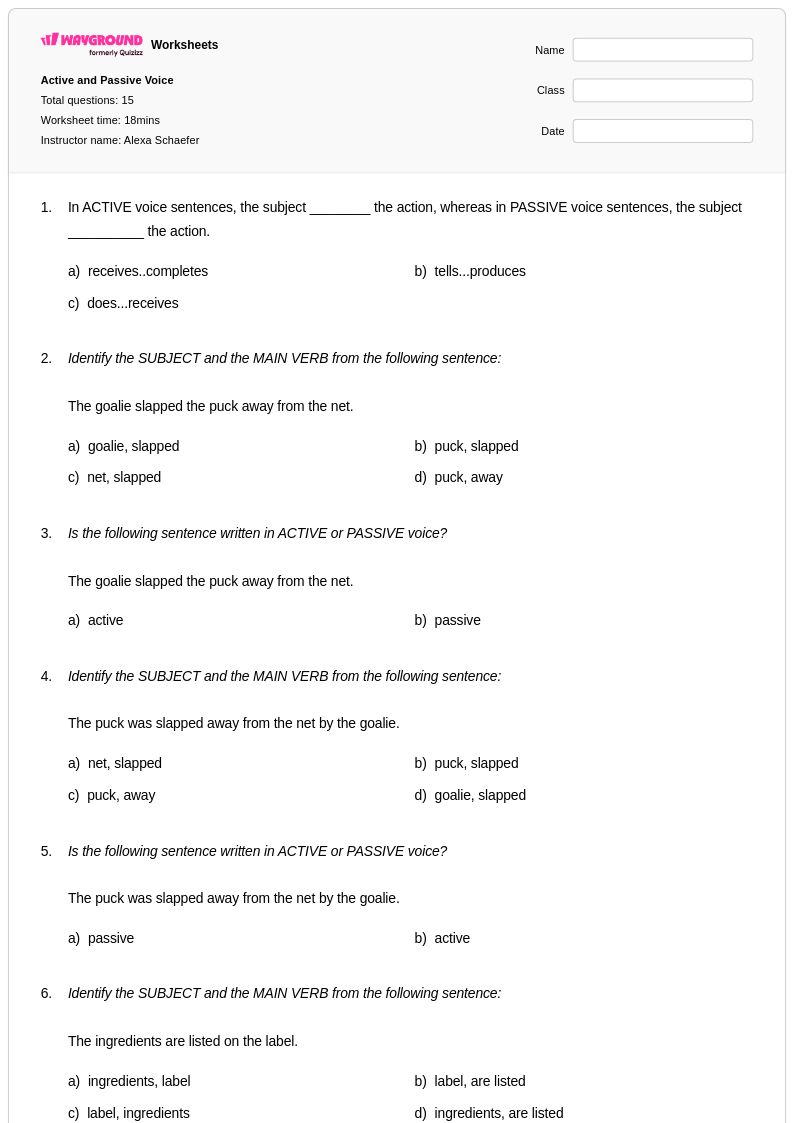
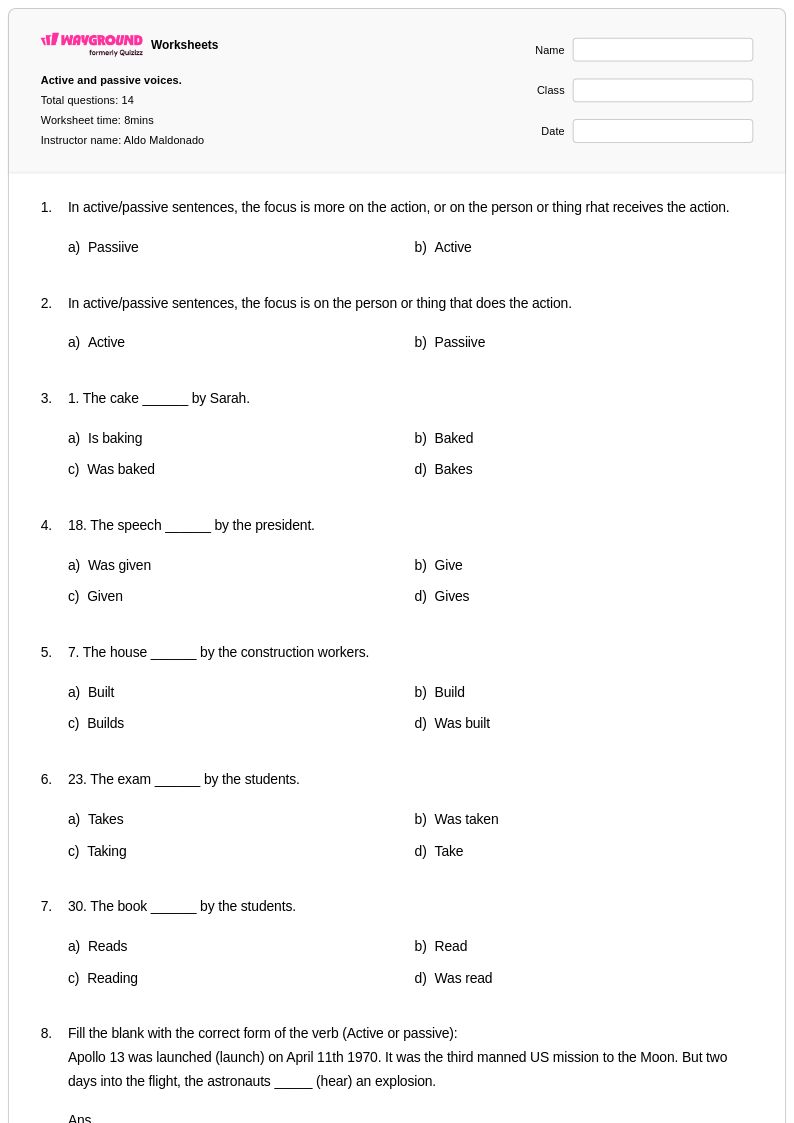
Class 10 active and passive voice worksheets from Wayground help students master sentence transformation through engaging printables, practice problems, and comprehensive answer keys for effective English learning.
Explore printable Active and Passive Voice worksheets for Class 10
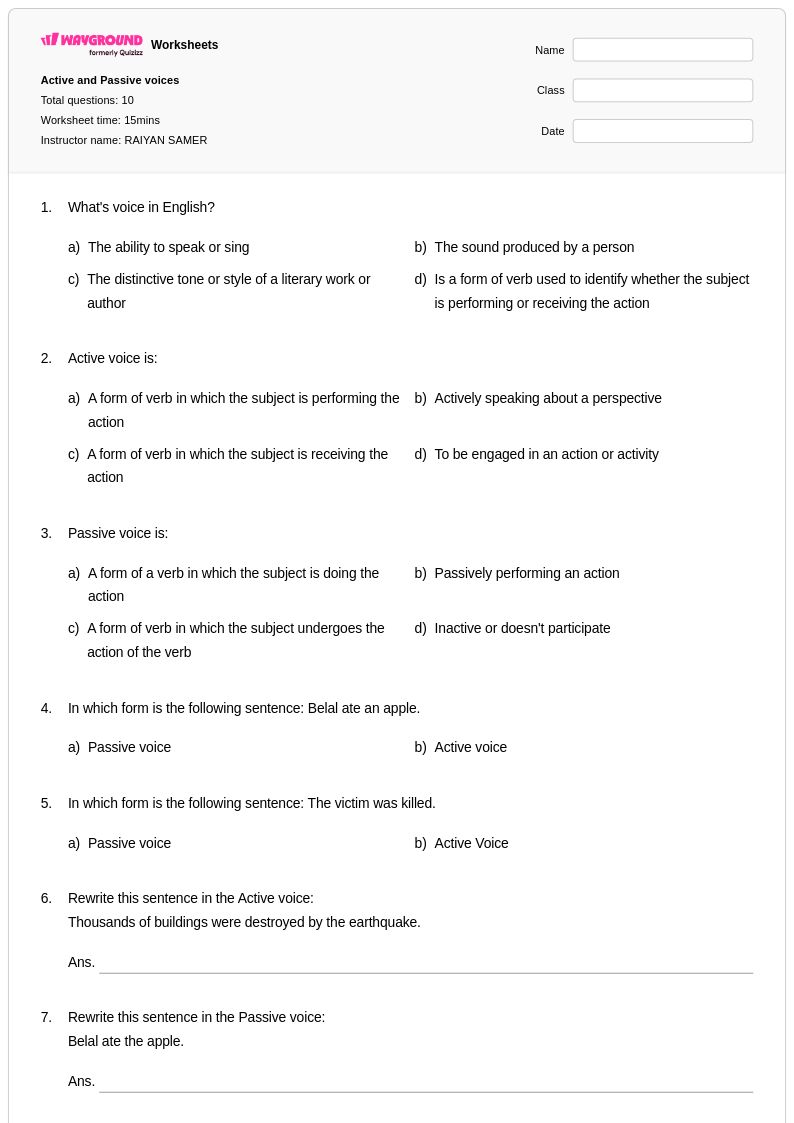
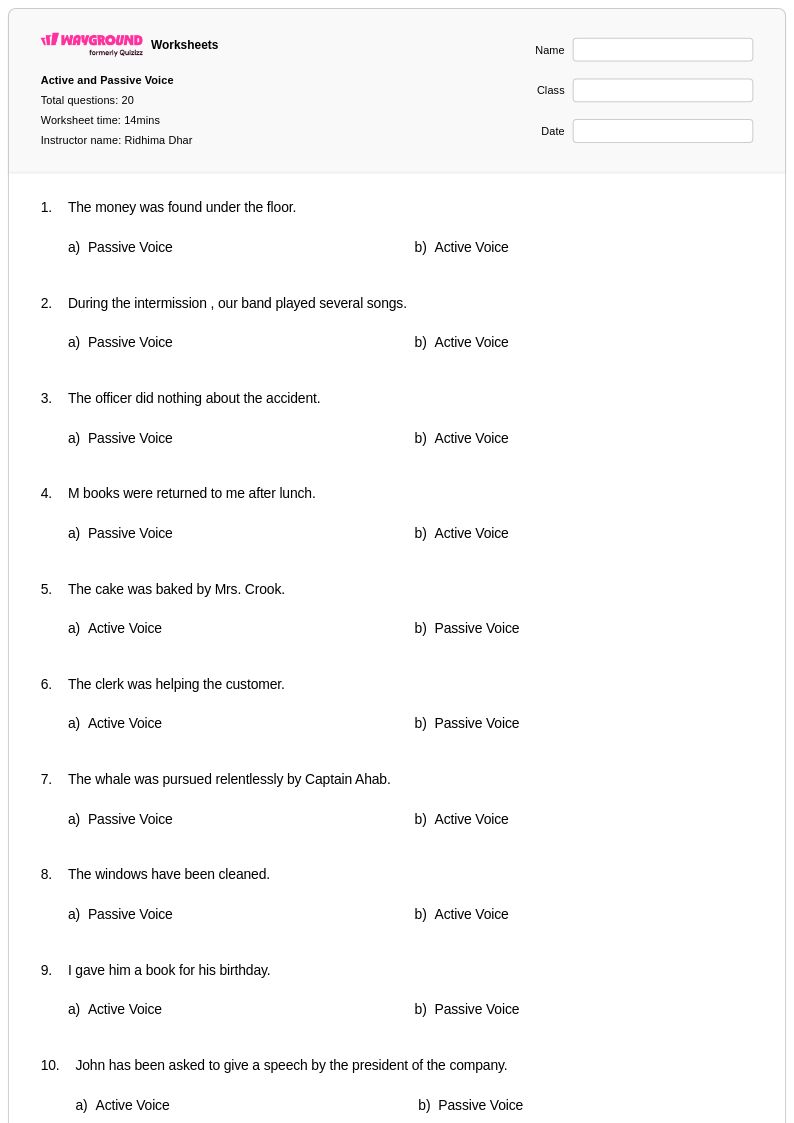
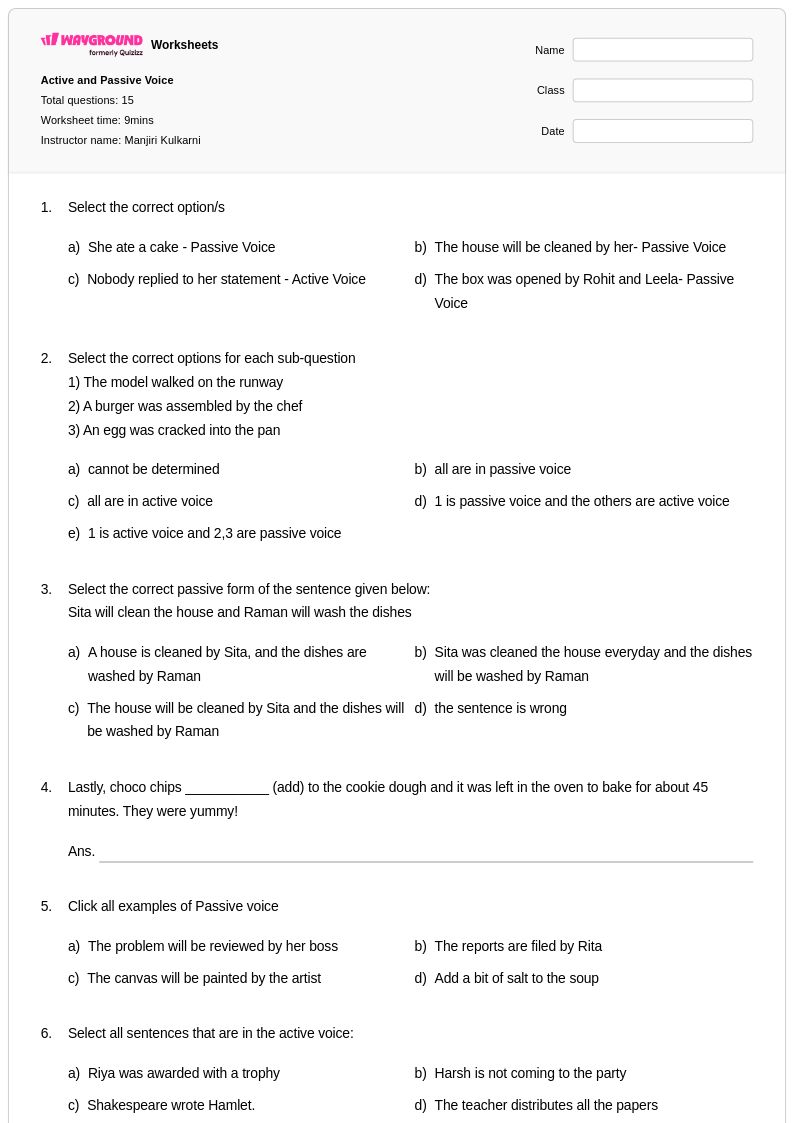
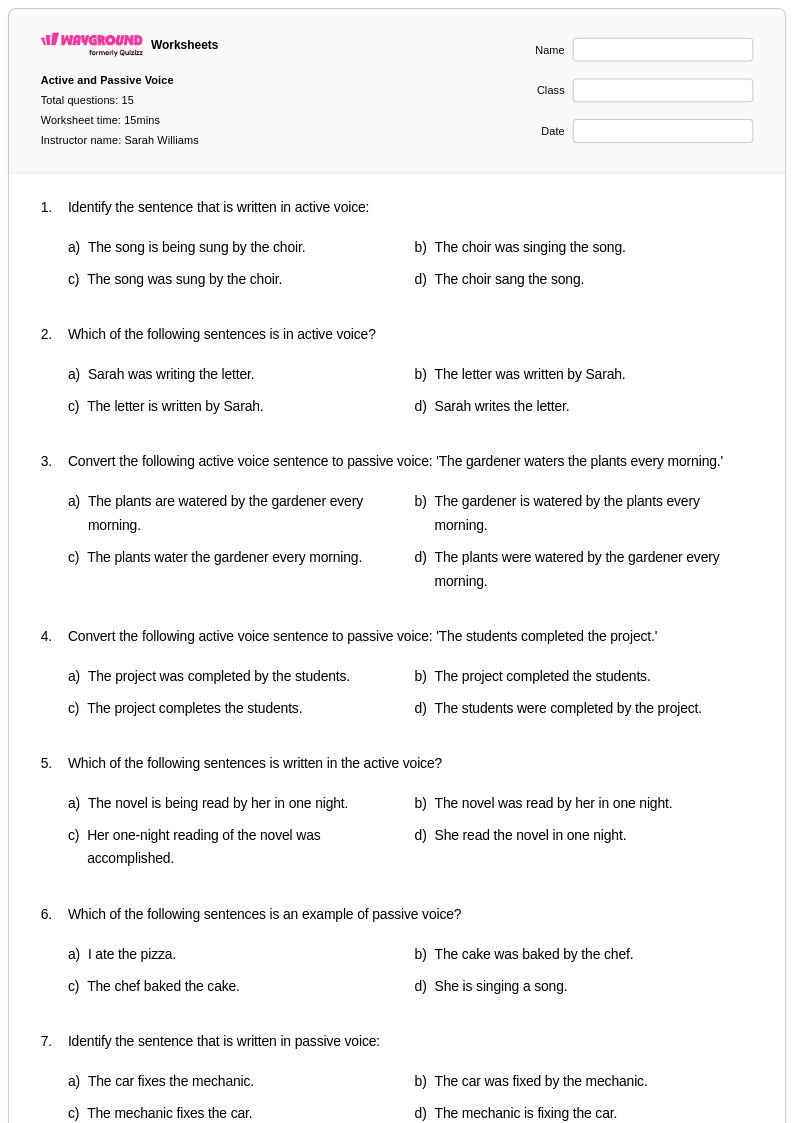
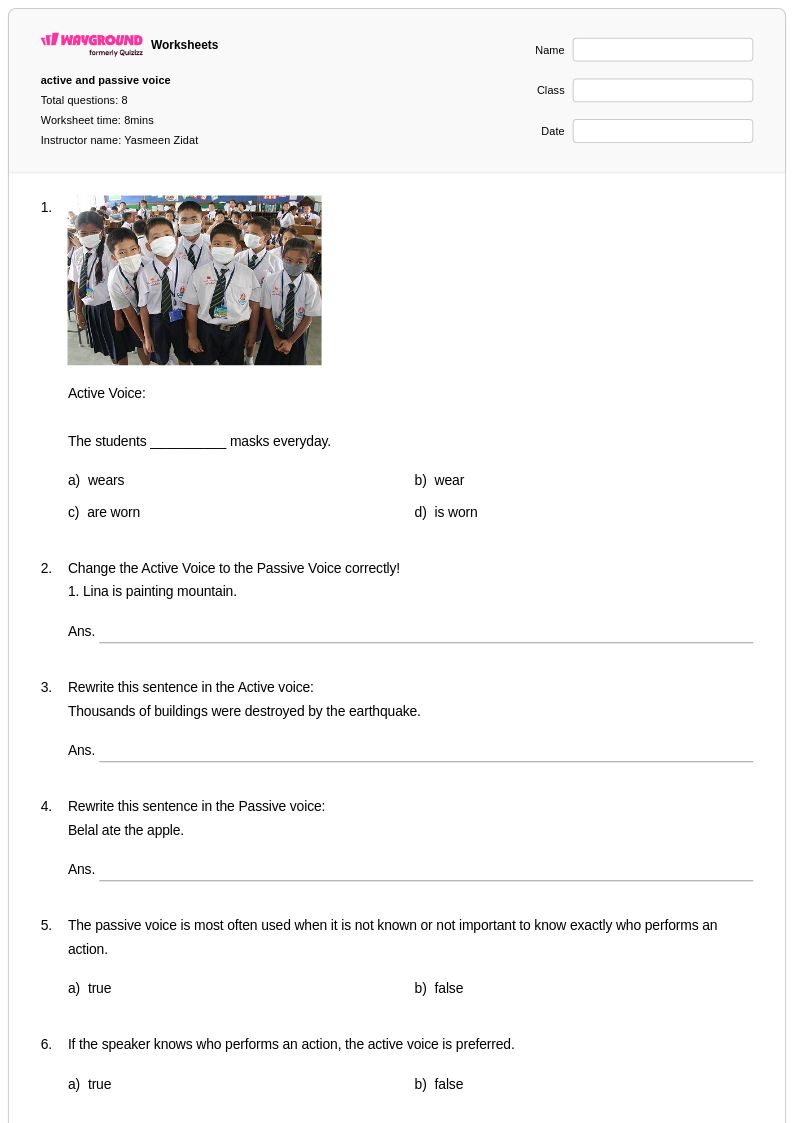
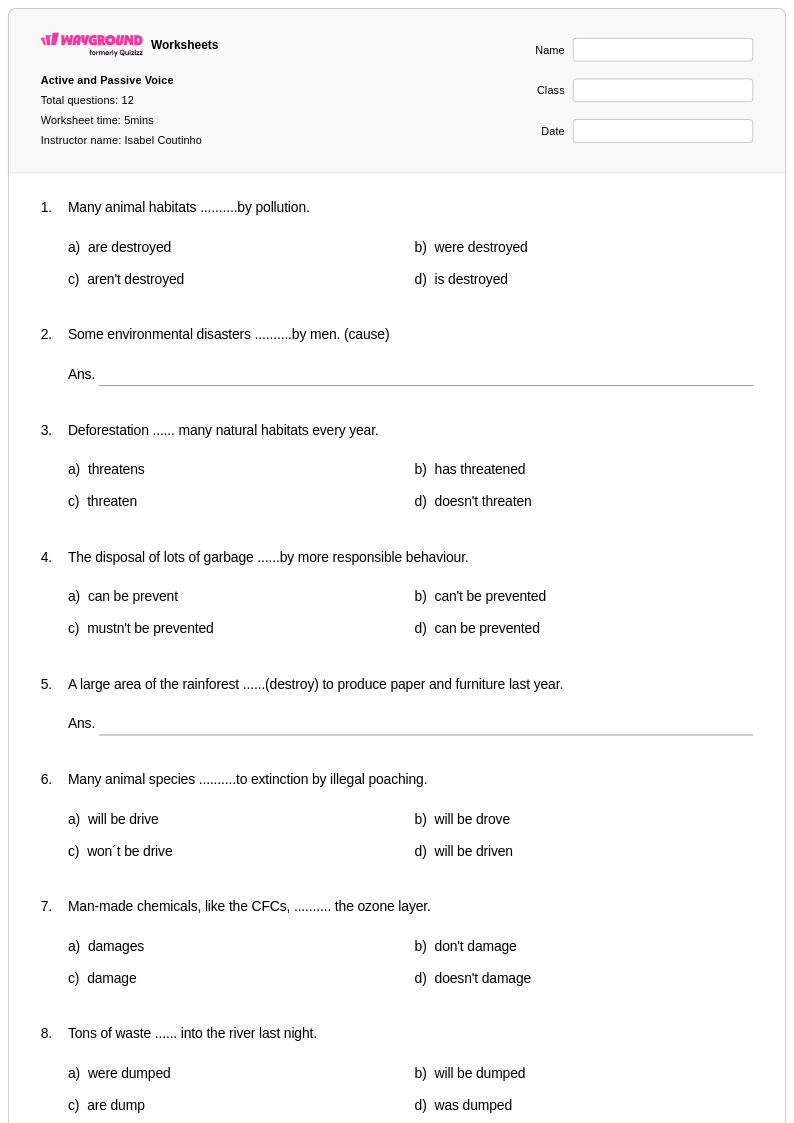
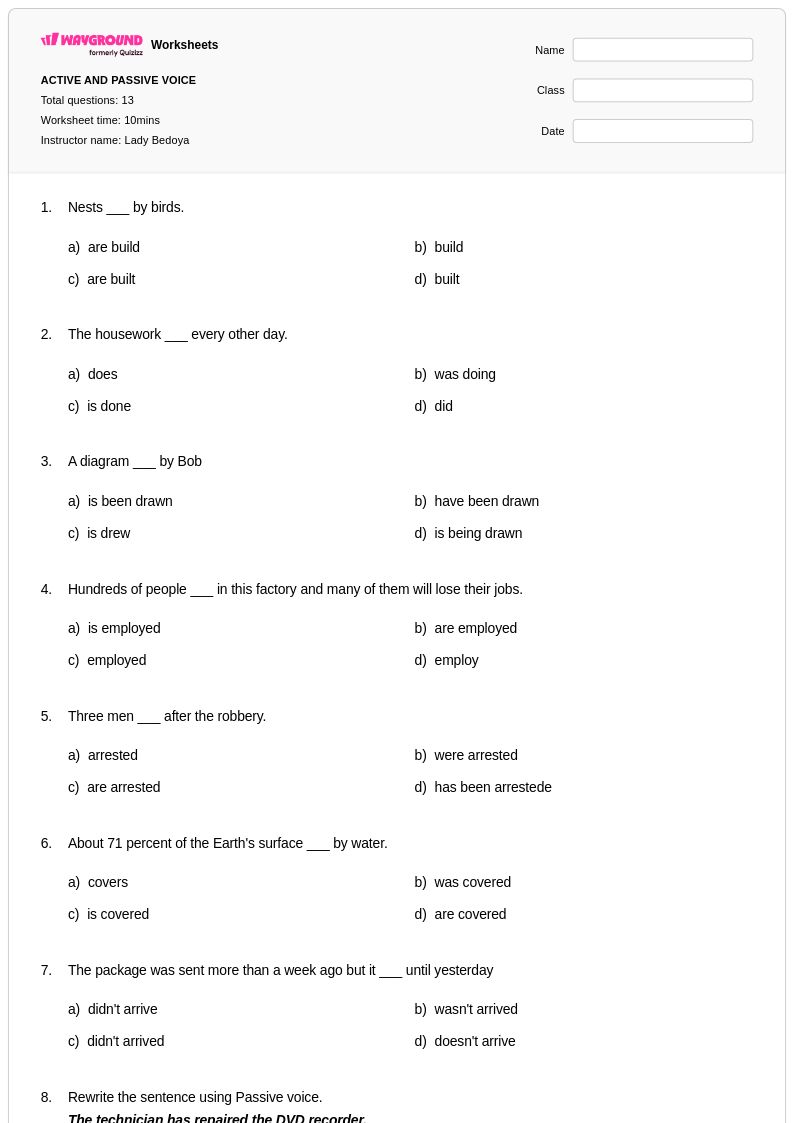
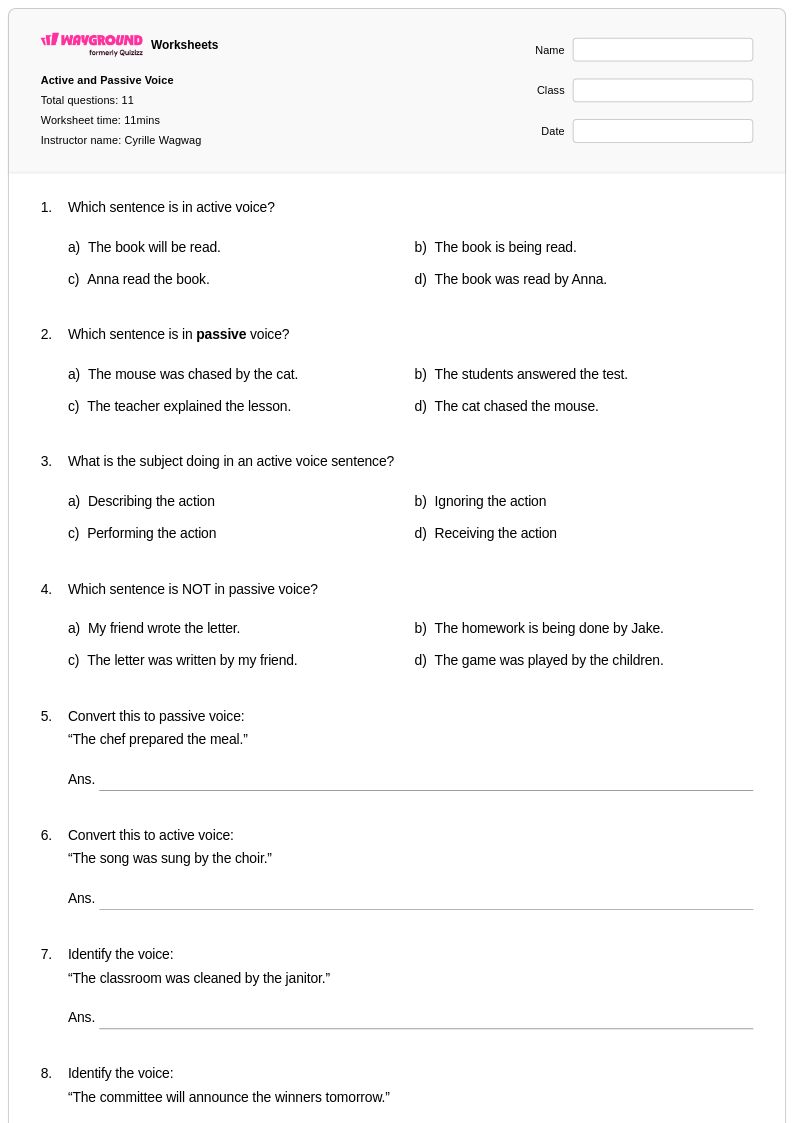
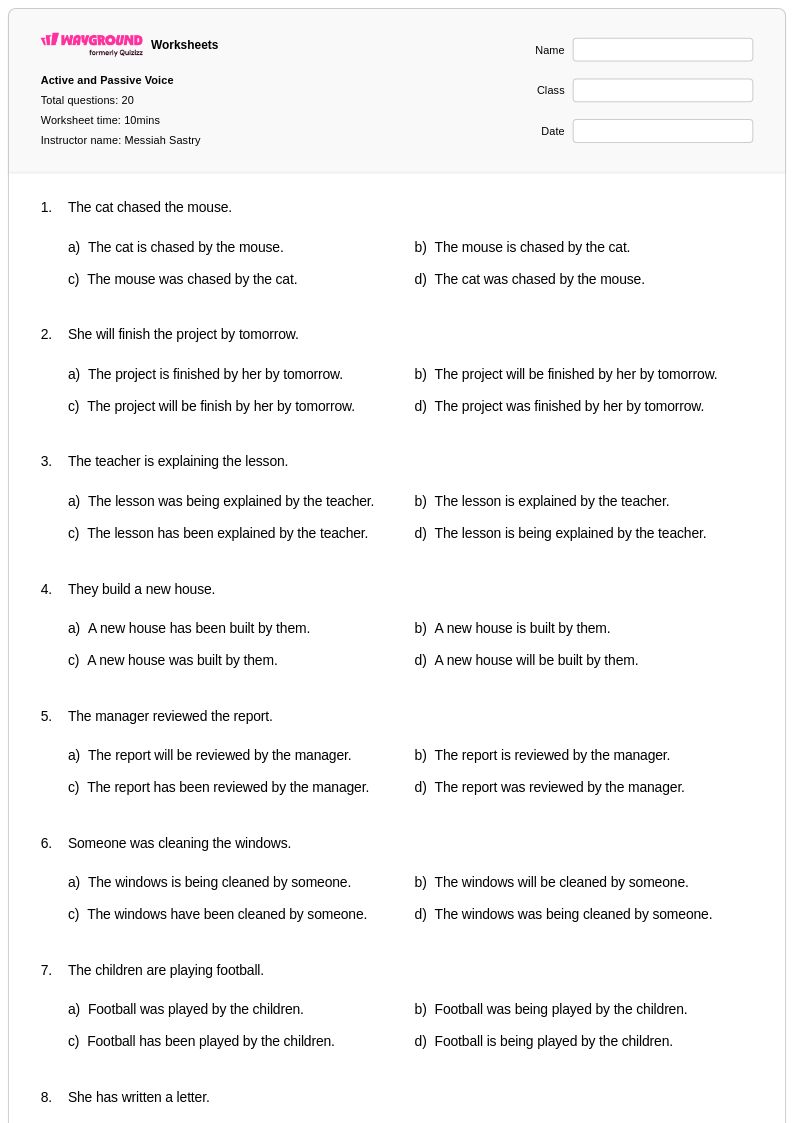
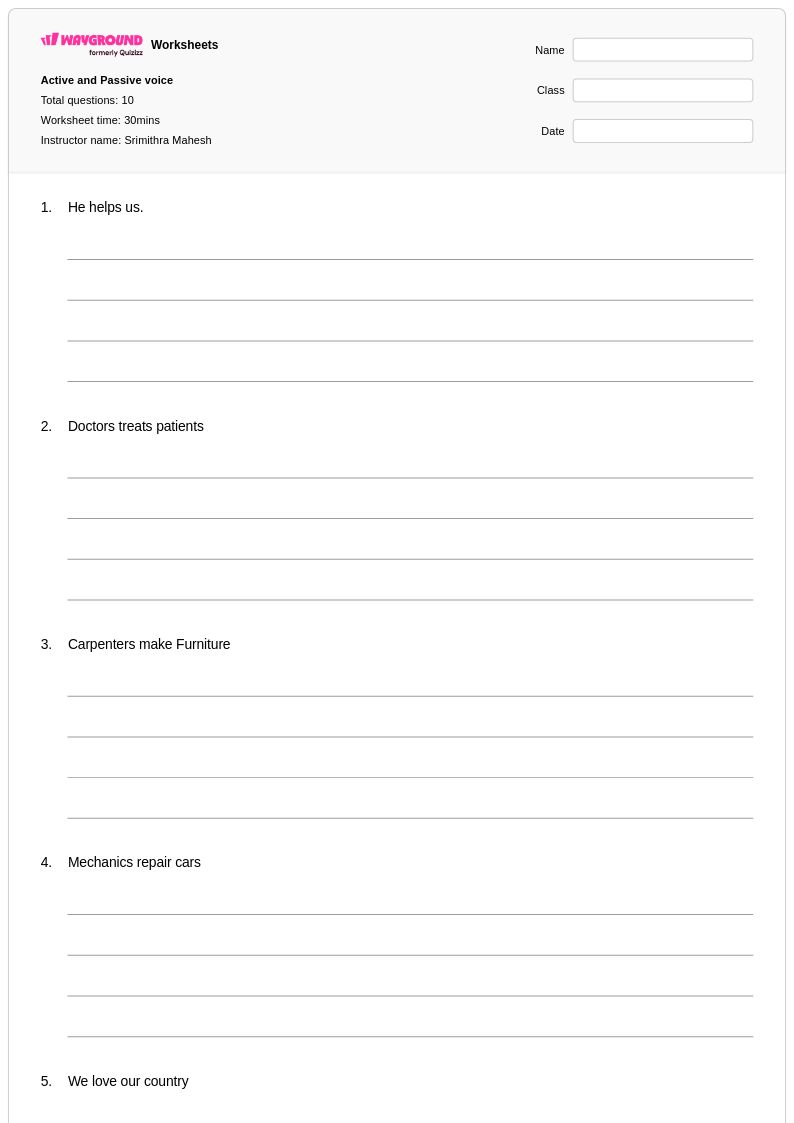
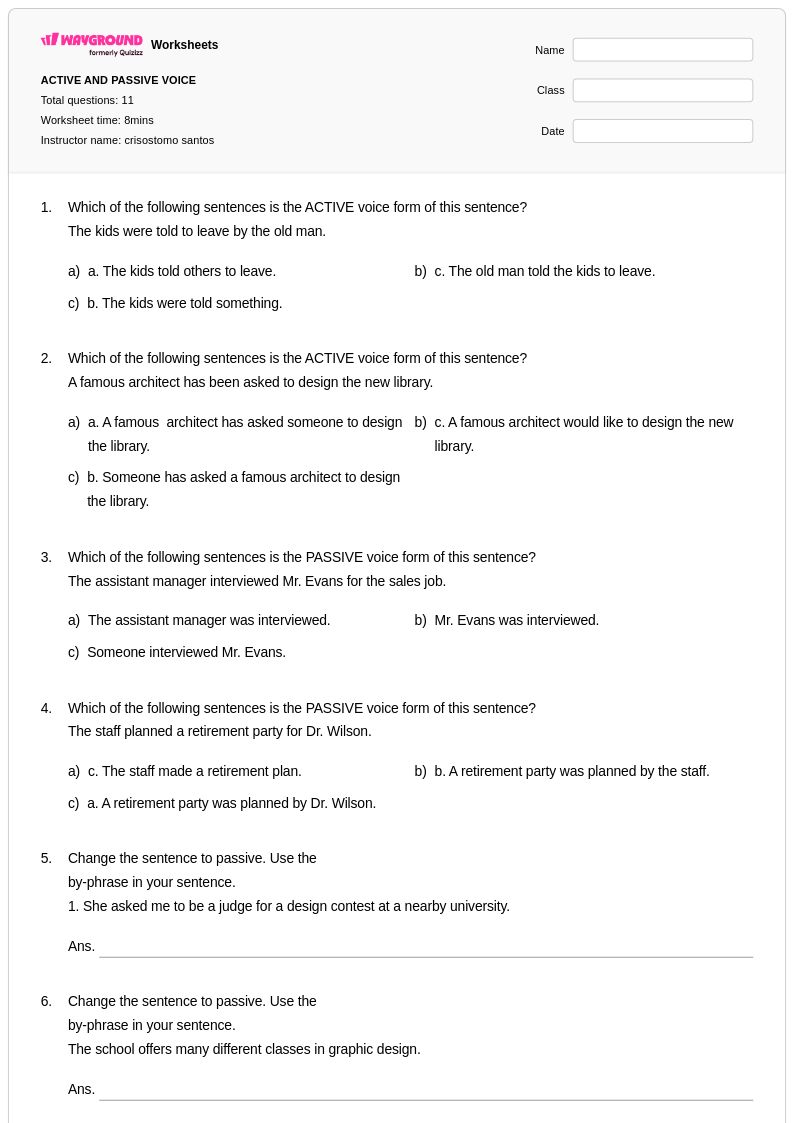
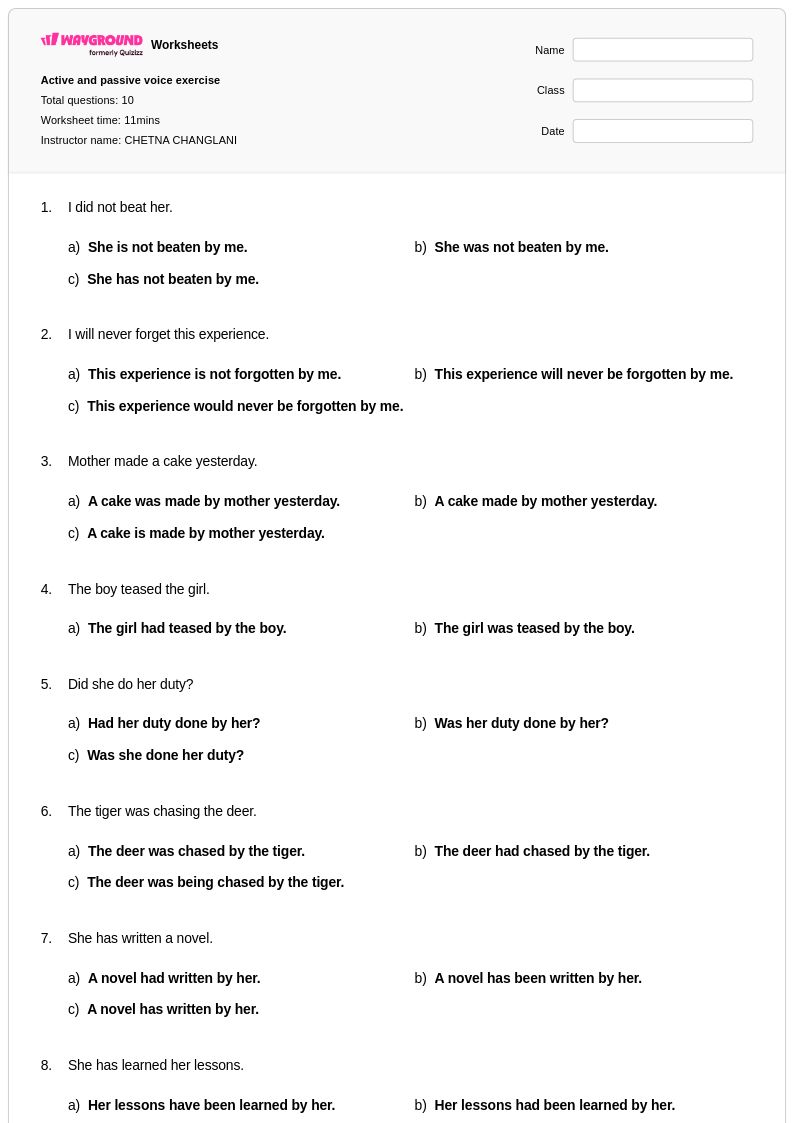
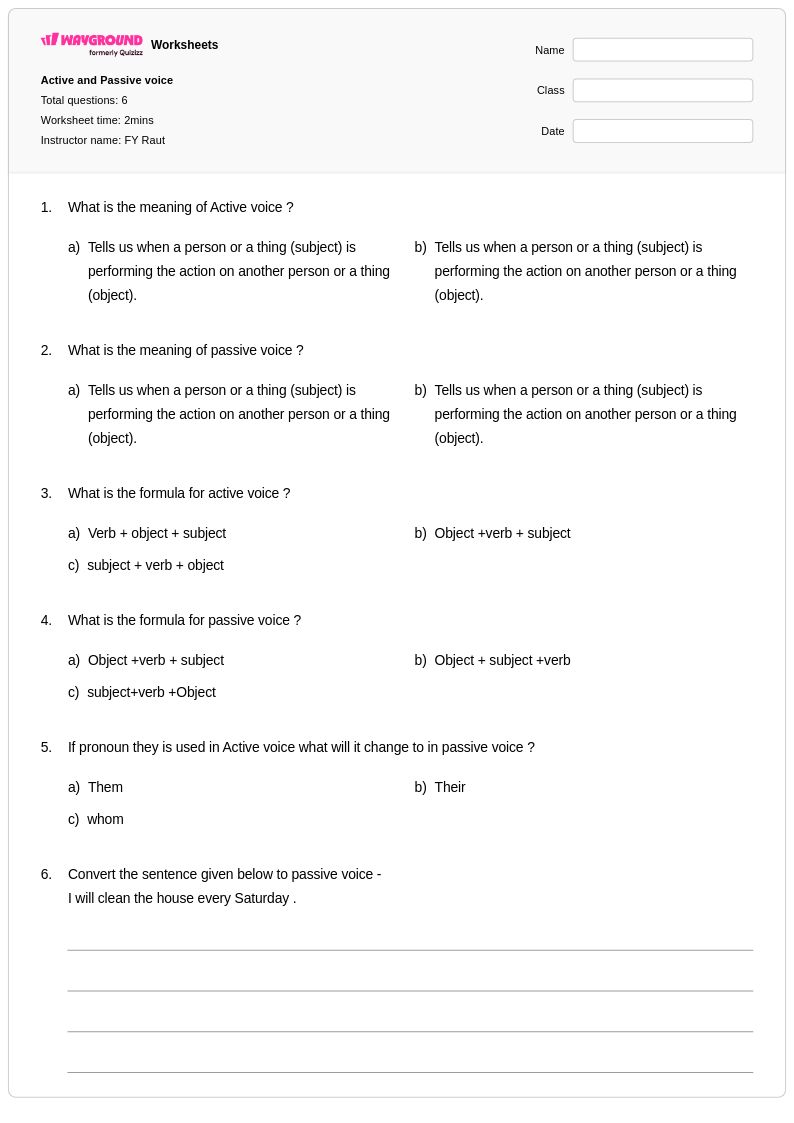
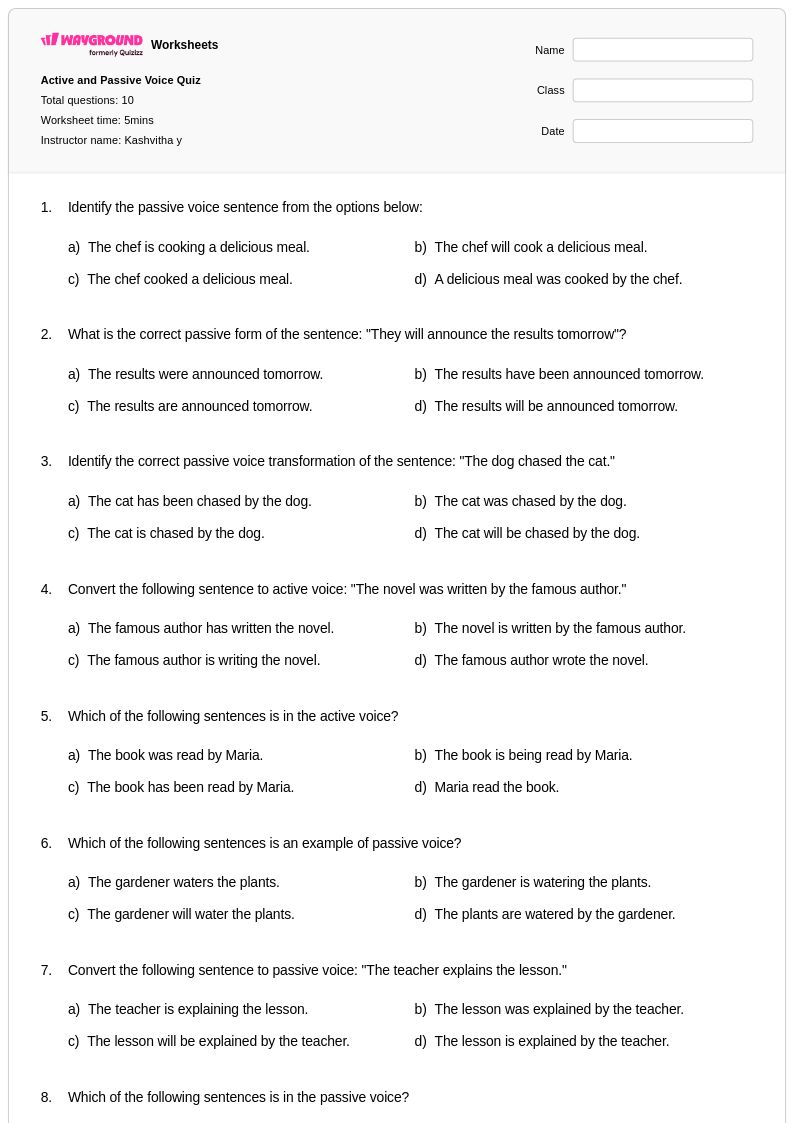
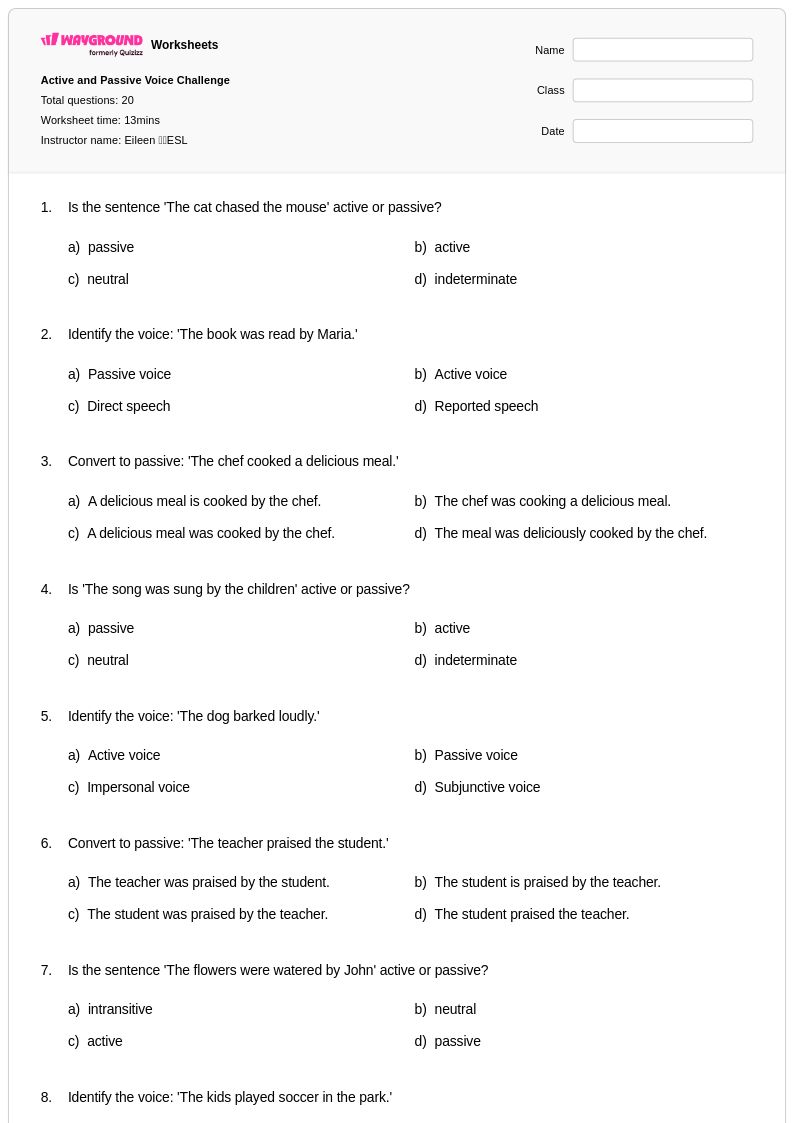
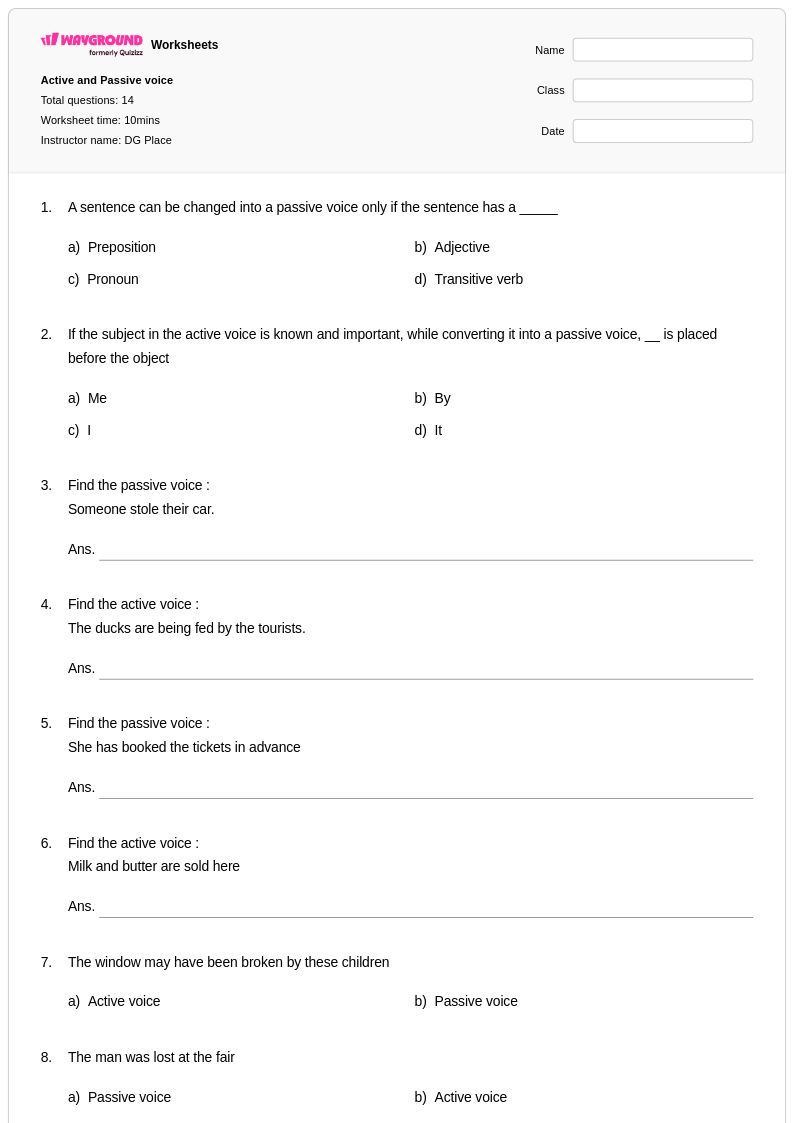
Active and passive voice worksheets for Class 10 students available through Wayground (formerly Quizizz) provide comprehensive practice in understanding and manipulating these fundamental sentence structures that are essential for advanced writing proficiency. These carefully designed resources strengthen students' ability to identify when subjects perform actions versus when they receive actions, helping them recognize how voice affects tone, emphasis, and clarity in academic and creative writing. The practice problems guide students through transforming active sentences into passive constructions and vice versa, while developing their understanding of when each voice is most appropriate for different writing contexts. Teachers can access complete answer keys and printable pdf versions that make it easy to incorporate these free resources into classroom instruction, homework assignments, or independent study sessions.
Wayground's extensive collection of teacher-created active and passive voice materials supports educators with millions of ready-to-use resources that can be easily located through powerful search and filtering tools aligned with language arts standards. The platform's differentiation capabilities allow teachers to customize worksheets based on individual student needs, whether providing additional scaffolding for struggling learners or enrichment activities for advanced writers who need more complex sentence manipulation challenges. These versatile materials are available in both digital and printable formats, giving educators the flexibility to seamlessly integrate voice instruction into lesson planning while supporting targeted remediation and skill practice. The comprehensive nature of these resources ensures that Class 10 students receive systematic exposure to active and passive voice concepts across various text types and complexity levels.
FAQs
How do I teach active and passive voice to students?
Start by establishing a clear contrast: in active voice, the subject performs the action (e.g., 'The dog chased the cat'), while in passive voice, the subject receives it (e.g., 'The cat was chased by the dog'). Anchor instruction around subject-verb relationships and help students see how shifting the focus changes sentence emphasis and meaning. Once students can identify each construction reliably, introduce transformation exercises so they practice converting between the two forms deliberately and accurately.
What exercises help students practice active and passive voice?
The most effective practice combines identification, transformation, and contextual usage exercises. Identification tasks ask students to label sentences as active or passive and explain why, building analytical awareness. Transformation exercises then ask students to rewrite sentences from one voice to the other, reinforcing how the subject-verb relationship shifts. Contextual usage tasks, such as editing a paragraph or choosing the appropriate voice for a given writing purpose, deepen understanding beyond mechanical conversion.
What mistakes do students commonly make with active and passive voice?
The most frequent error is confusing passive voice with past tense, since both often involve forms of 'to be.' Students also struggle to correctly reposition the agent when converting from active to passive, either omitting 'by' or placing the original subject incorrectly. Another common mistake is treating all sentences with linking verbs as passive voice, when the defining feature of passive construction is that the subject receives the action rather than performing it.
When should students use passive voice in their writing?
Passive voice is appropriate when the receiver of the action is more important than the doer, when the doer is unknown, or when the writer wants to create objectivity, as in scientific writing. Teaching students to make intentional voice choices, rather than defaulting to one or the other, is the real instructional goal. A practical classroom strategy is to show students examples from science lab reports, news articles, and persuasive essays to illustrate how professional writers deploy passive voice purposefully.
How do I use Wayground's active and passive voice worksheets in my classroom?
Wayground's active and passive voice worksheets are available as free printable PDFs for traditional classroom use and in interactive digital formats for technology-integrated environments, including the option to host them as a quiz on Wayground. Each worksheet includes a comprehensive answer key, making them practical for independent practice, homework, or in-class skill work without additional prep. Teachers can use Wayground's search and filtering tools to locate materials aligned to specific learning standards and differentiate by choosing worksheets suited for initial instruction, remediation, or enrichment.
How can I support struggling students when teaching active and passive voice?
For students who need additional support, breaking instruction into smaller steps helps: first, ensure students can reliably identify the subject and the verb before asking them to determine voice. Sentence diagrams or color-coding the subject, verb, and object can make the structural shift between active and passive more concrete. On Wayground, teachers can apply accommodations such as read-aloud support or reduced answer choices for individual students, reducing cognitive load without drawing attention to those learners in front of peers.