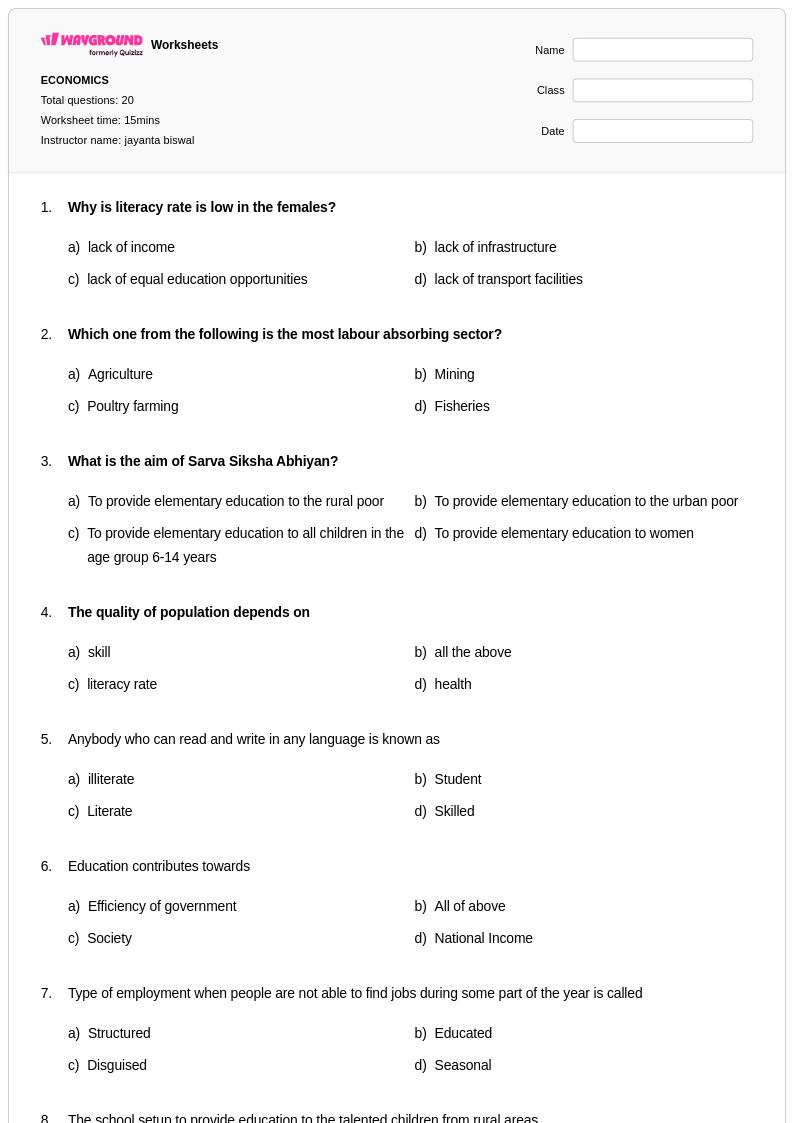
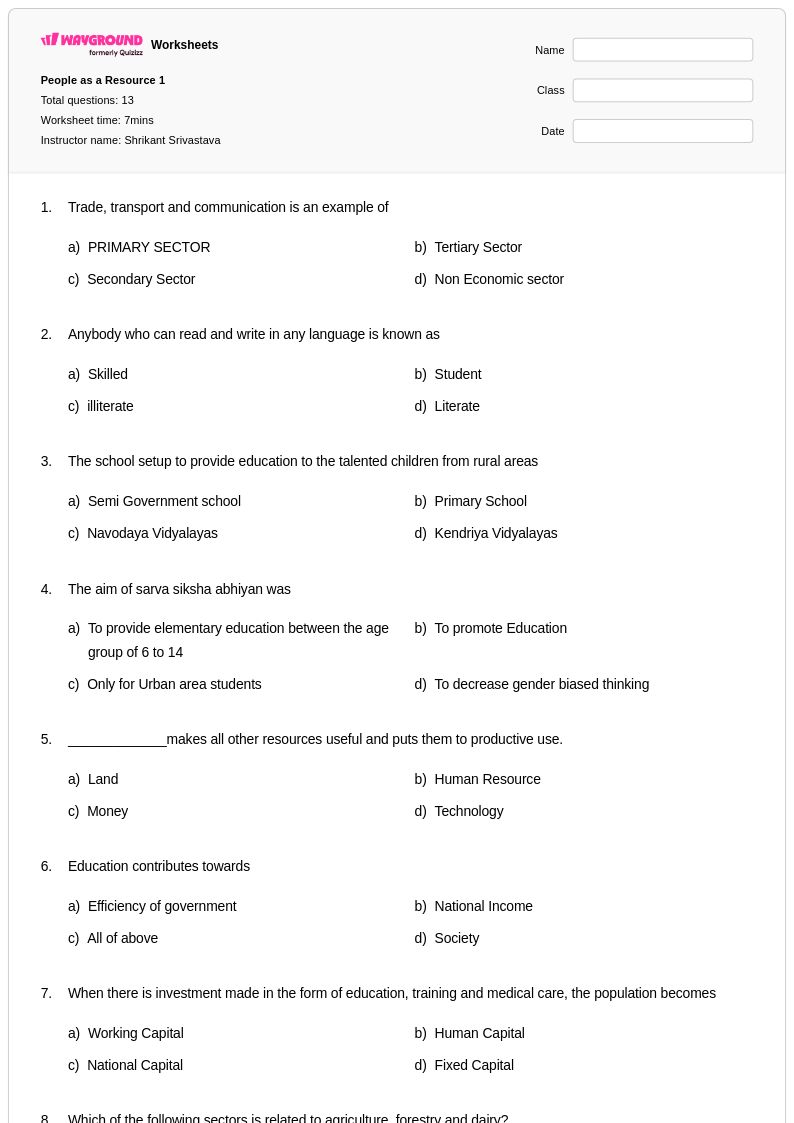
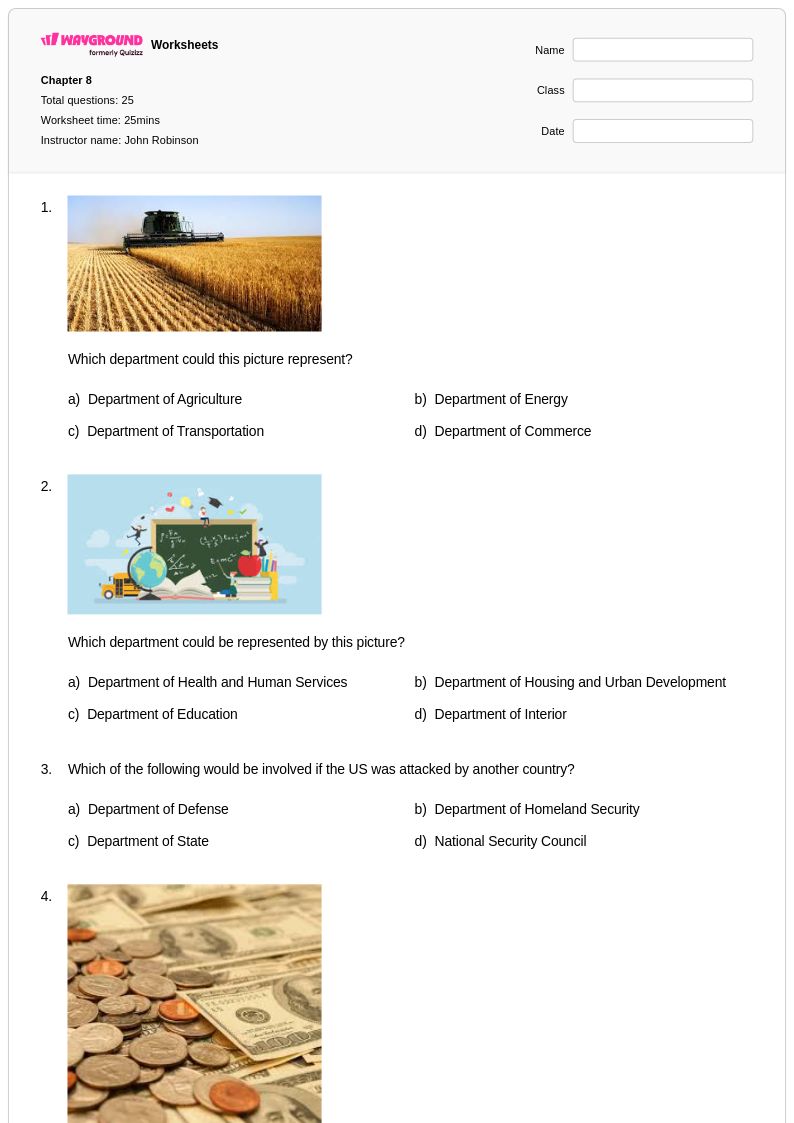
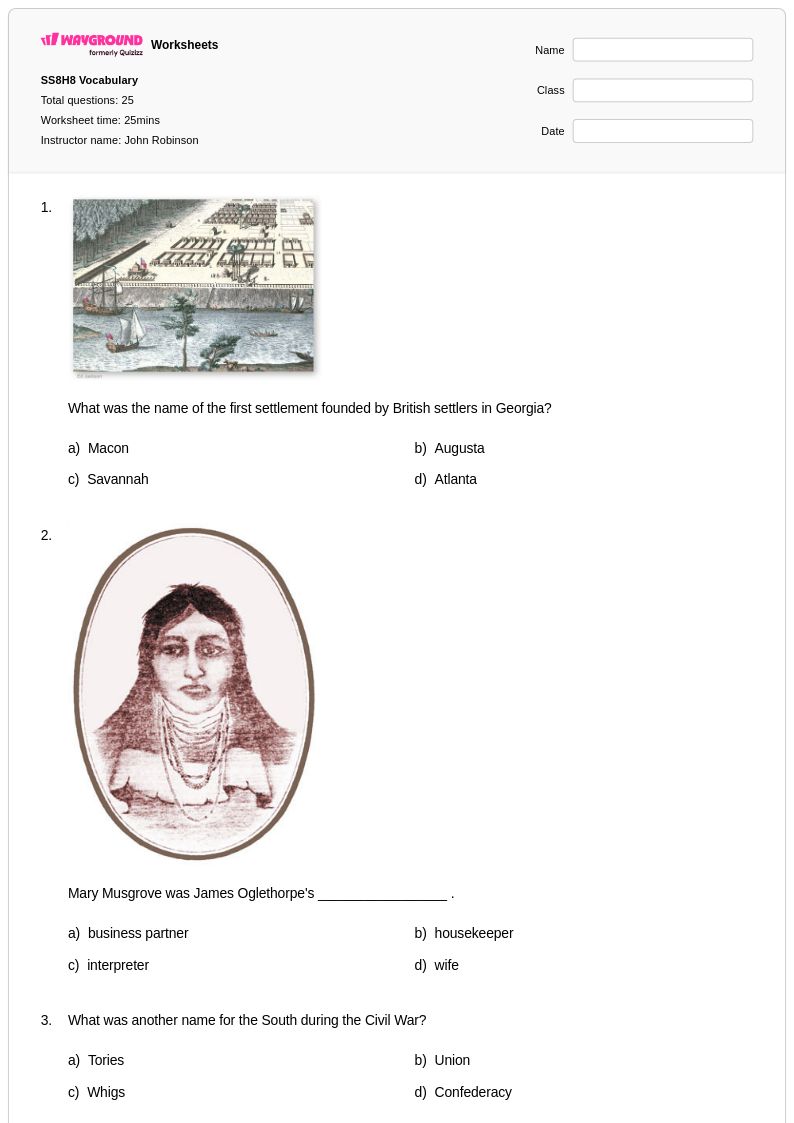
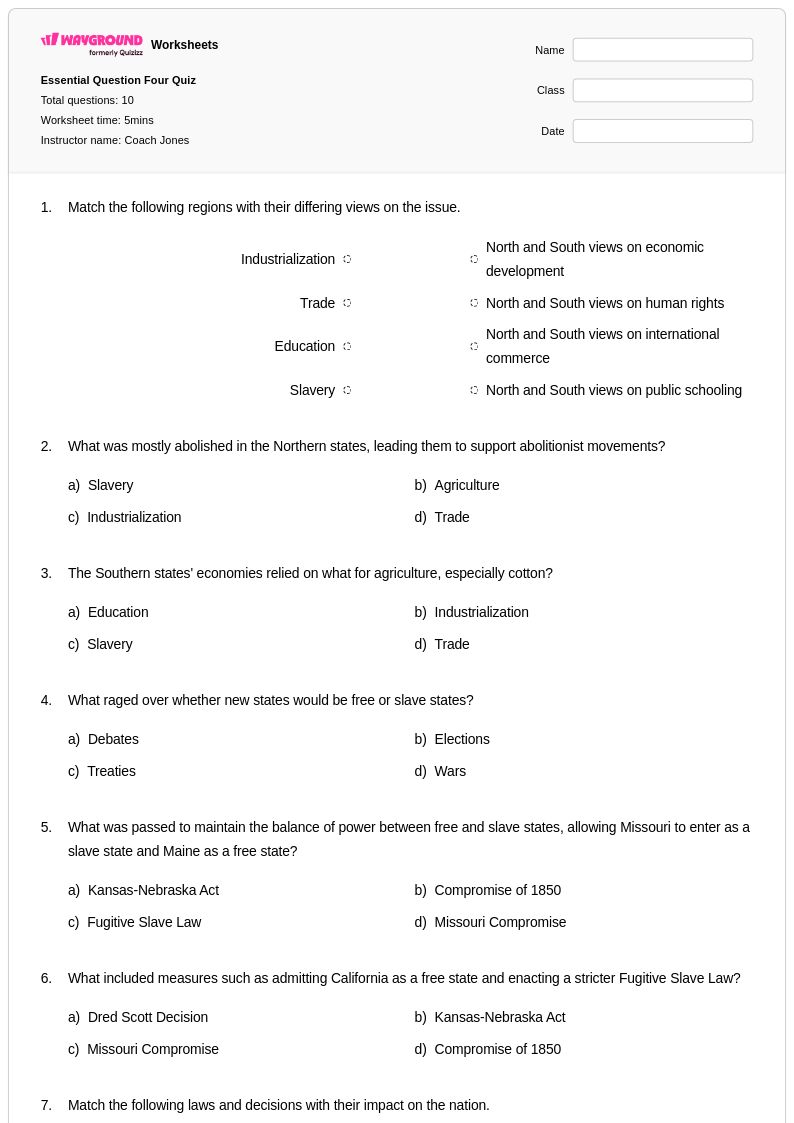
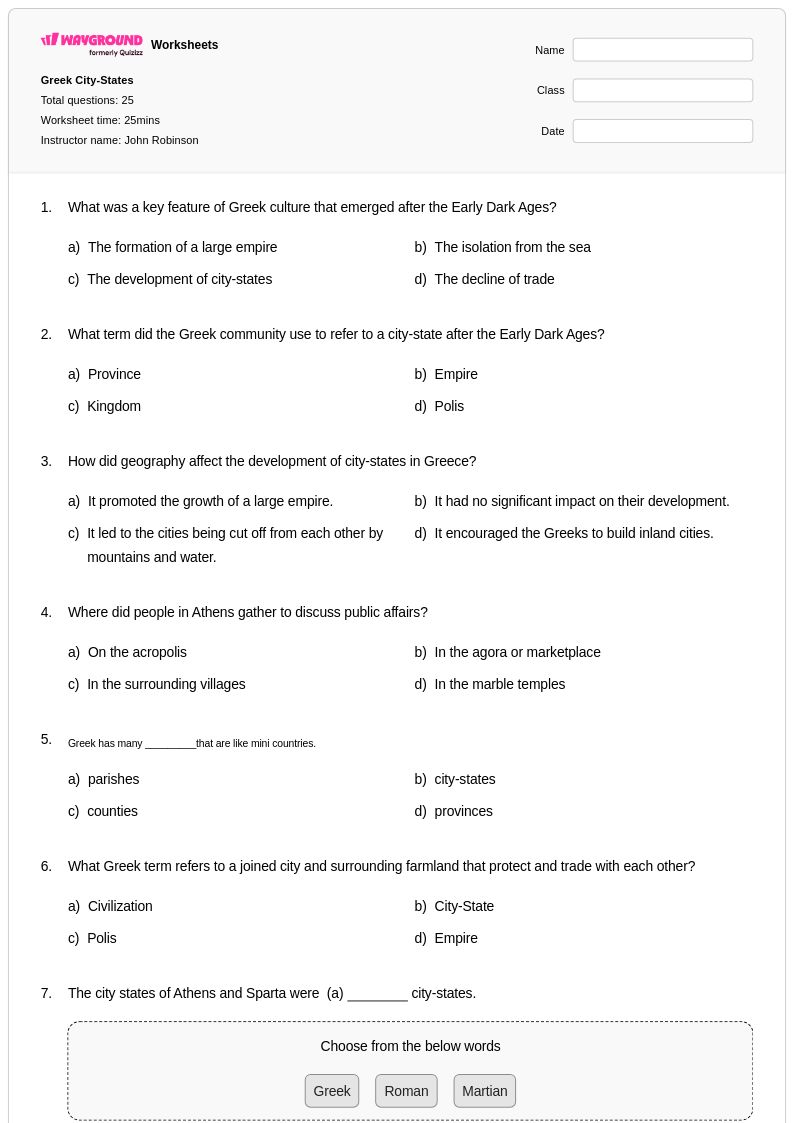
Explore Wayground's comprehensive collection of free agriculture education worksheets and printables that help students learn essential farming concepts, food production systems, and agricultural practices through engaging practice problems with complete answer keys.
Agriculture Education worksheets available through Wayground (formerly Quizizz) provide comprehensive resources that bridge the gap between theoretical social studies concepts and practical agricultural applications. These expertly designed materials help students explore the historical development of farming practices, understand the economic impact of agriculture on societies, and analyze the relationship between agricultural innovation and cultural change. The worksheets strengthen critical thinking skills through engaging practice problems that examine topics such as the Agricultural Revolution, sustainable farming methods, crop rotation systems, and the role of agriculture in global trade. Teachers can access complete answer keys and utilize these free printables in both classroom instruction and independent study, making complex agricultural concepts accessible to learners at various skill levels through structured pdf formats.
Wayground's extensive collection draws from millions of teacher-created resources specifically focused on agriculture education within the social studies curriculum. The platform's robust search and filtering capabilities allow educators to quickly locate materials aligned with curriculum standards, while built-in differentiation tools enable seamless customization for diverse learning needs. Teachers benefit from the flexibility of accessing these resources in both printable and digital formats, including downloadable pdfs that can be easily distributed or projected for whole-class instruction. These comprehensive tools support effective lesson planning by providing ready-to-use materials for skill practice, targeted remediation for struggling learners, and enrichment opportunities for advanced students, ultimately helping educators create engaging learning experiences that connect historical agricultural practices to contemporary social studies themes.
FAQs
How do I teach agriculture education concepts in a social studies classroom?
Effective agriculture education in social studies connects historical farming practices to broader themes like economic development, cultural change, and global trade. Start with foundational events like the Agricultural Revolution and build outward to modern topics such as sustainable farming, crop rotation, and food production systems. Grounding abstract concepts in real-world agricultural applications helps students see why these developments shaped human civilization.
What topics are typically covered in agriculture education worksheets?
Agriculture education worksheets commonly cover the Agricultural Revolution, crop rotation systems, sustainable farming methods, the economics of food production, and the role of agriculture in global trade. Strong materials also address the relationship between agricultural innovation and cultural change, giving students a full picture of how farming practices have shaped and continue to shape societies.
What exercises help students practice agriculture education skills?
Practice exercises that work well for agriculture education include document analysis of historical farming developments, comparison charts of traditional versus modern agricultural methods, and cause-and-effect graphic organizers tracing how farming innovations led to economic and social change. Structured practice problems that ask students to analyze the impact of specific agricultural practices on trade and culture reinforce both content knowledge and critical thinking.
What misconceptions do students commonly have about agriculture and its role in history?
A frequent misconception is that agriculture was a single invention rather than a gradual, regionally diverse process that unfolded across thousands of years. Students also tend to underestimate agriculture's economic and political dimensions, viewing it as purely a subsistence activity rather than a driver of trade networks, social hierarchies, and cultural exchange. Addressing these gaps directly in instruction helps students build a more accurate and nuanced understanding.
How can I differentiate agriculture education worksheets for students at different skill levels?
Differentiation for agriculture education can include scaffolded reading supports for complex texts on farming history, tiered questions that range from recall to analysis, and reduced answer choices for students who need lower cognitive load. On Wayground, teachers can apply individual accommodations such as Read Aloud, extended time, and reduced answer choices to specific students while the rest of the class works with default settings, making it straightforward to support diverse learners without disrupting instruction.
How do I use Wayground's agriculture education worksheets in my classroom?
Wayground's agriculture education worksheets are available as downloadable printable PDFs for traditional classroom use and in digital formats for technology-integrated environments, including the option to host them as a quiz directly on Wayground. Teachers can use the platform's search and filtering tools to locate materials aligned with curriculum standards, then assign them for whole-class instruction, independent practice, or targeted remediation. Complete answer keys are included with every worksheet, reducing prep time and making it easy to provide timely feedback.