
20 Q
6th - Uni
10 Q
9th
10 Q
9th
10 Q
9th
15 Q
8th - 10th
25 Q
9th - 12th
20 Q
8th - 10th
17 Q
9th - 10th
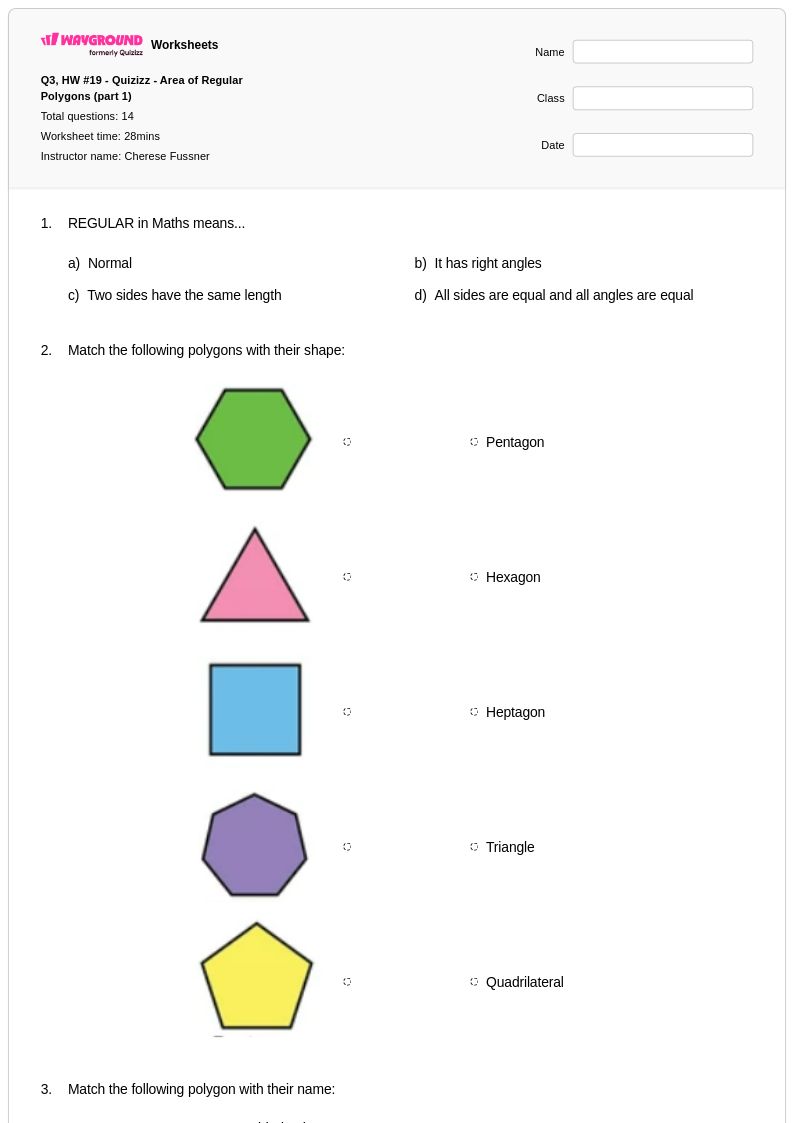
14 Q
9th - 12th
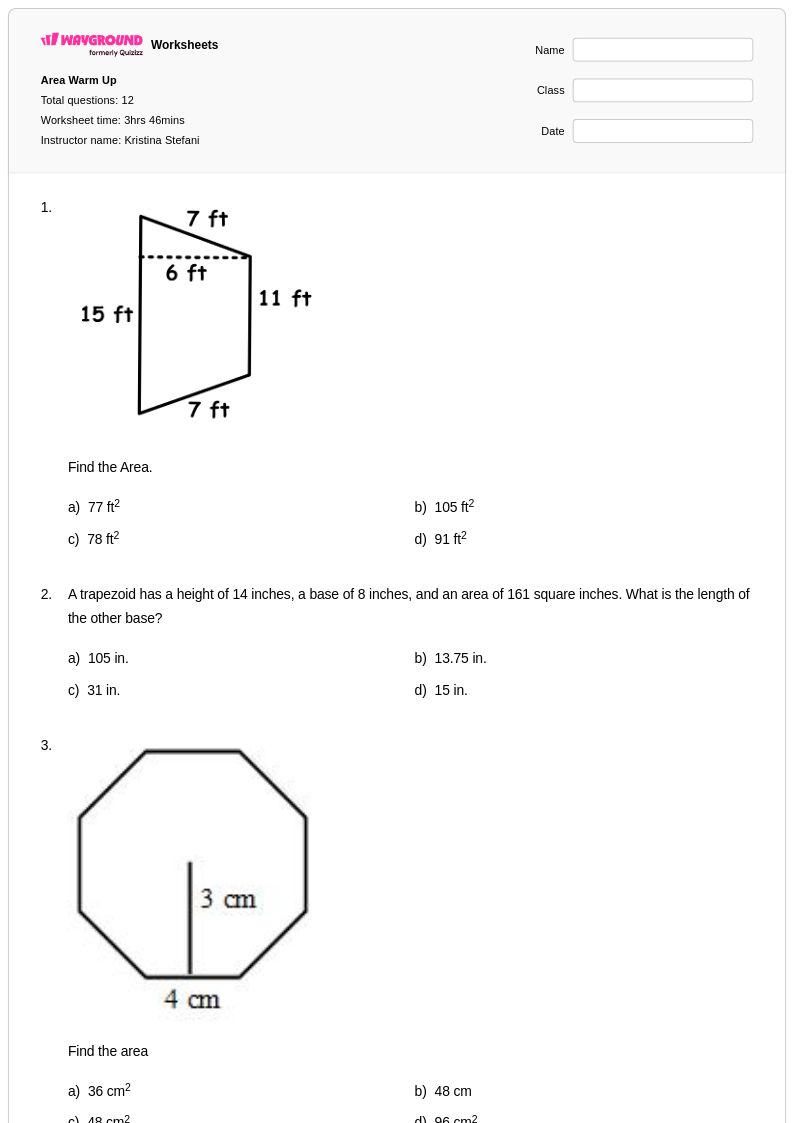
12 Q
9th
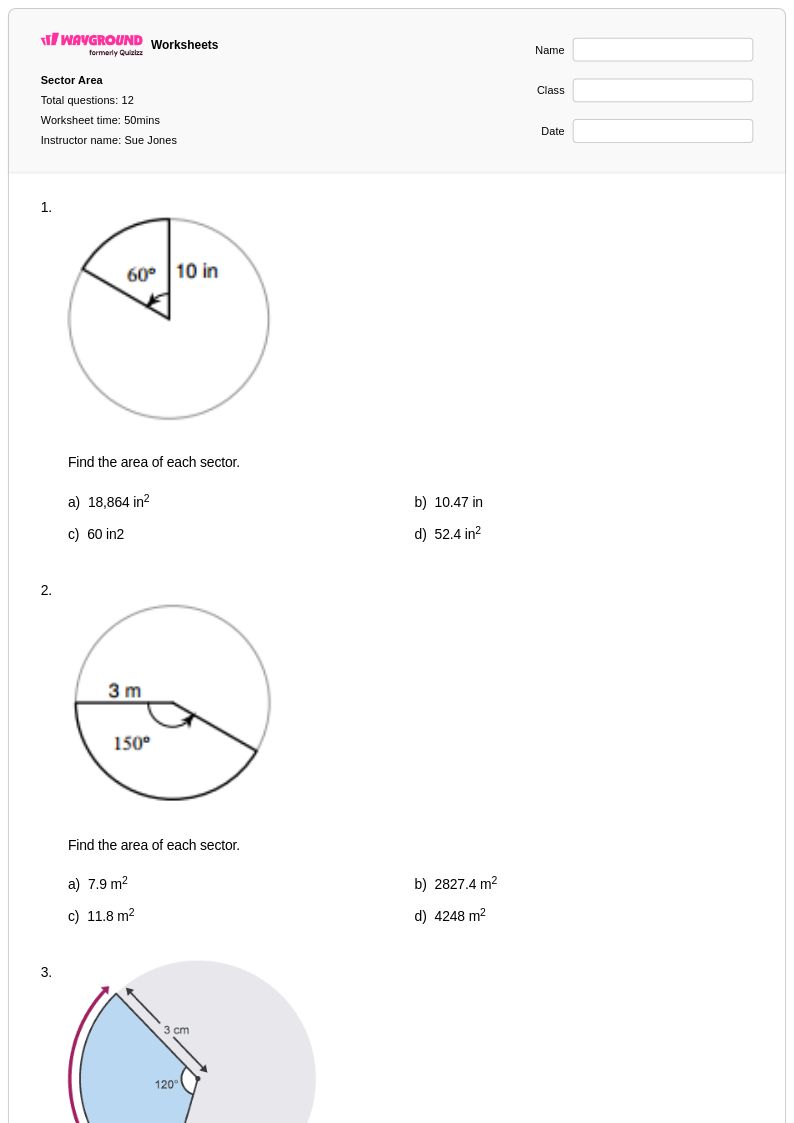
12 Q
9th
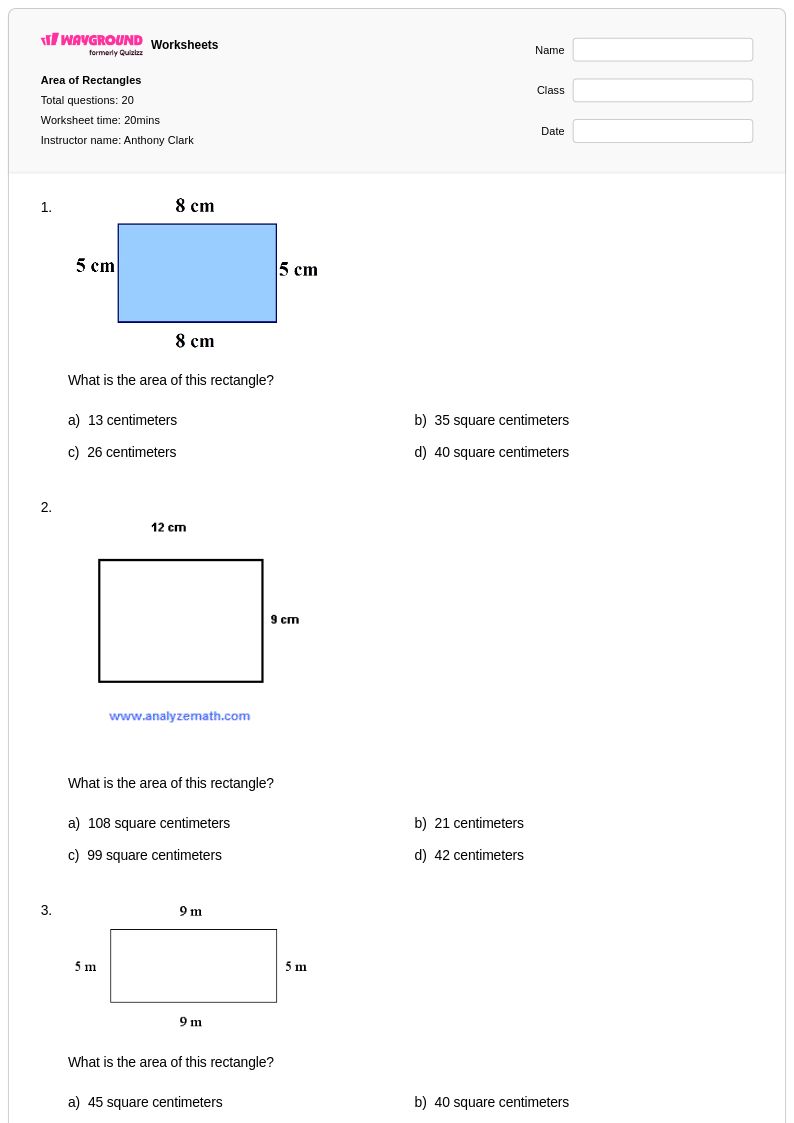
20 Q
3rd - Uni
15 Q
8th - 10th
20 Q
6th - Uni
10 Q
5th - 10th
20 Q
6th - Uni
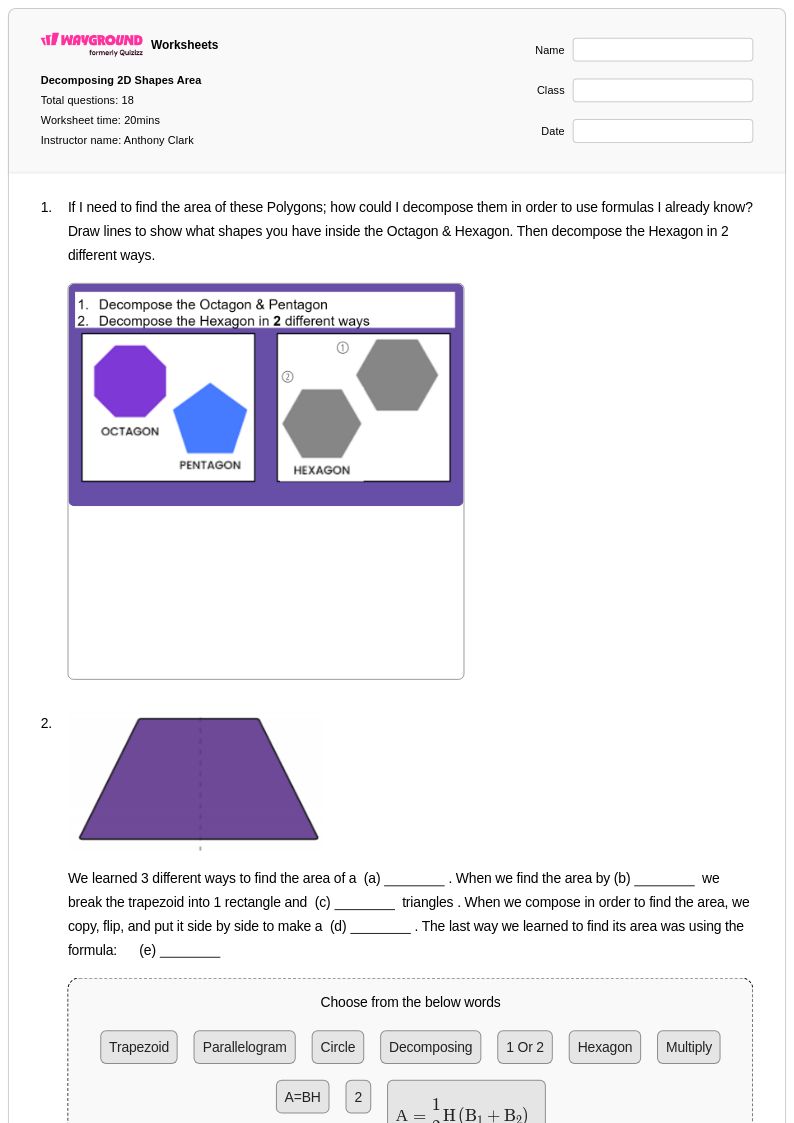
20 Q
6th - Uni
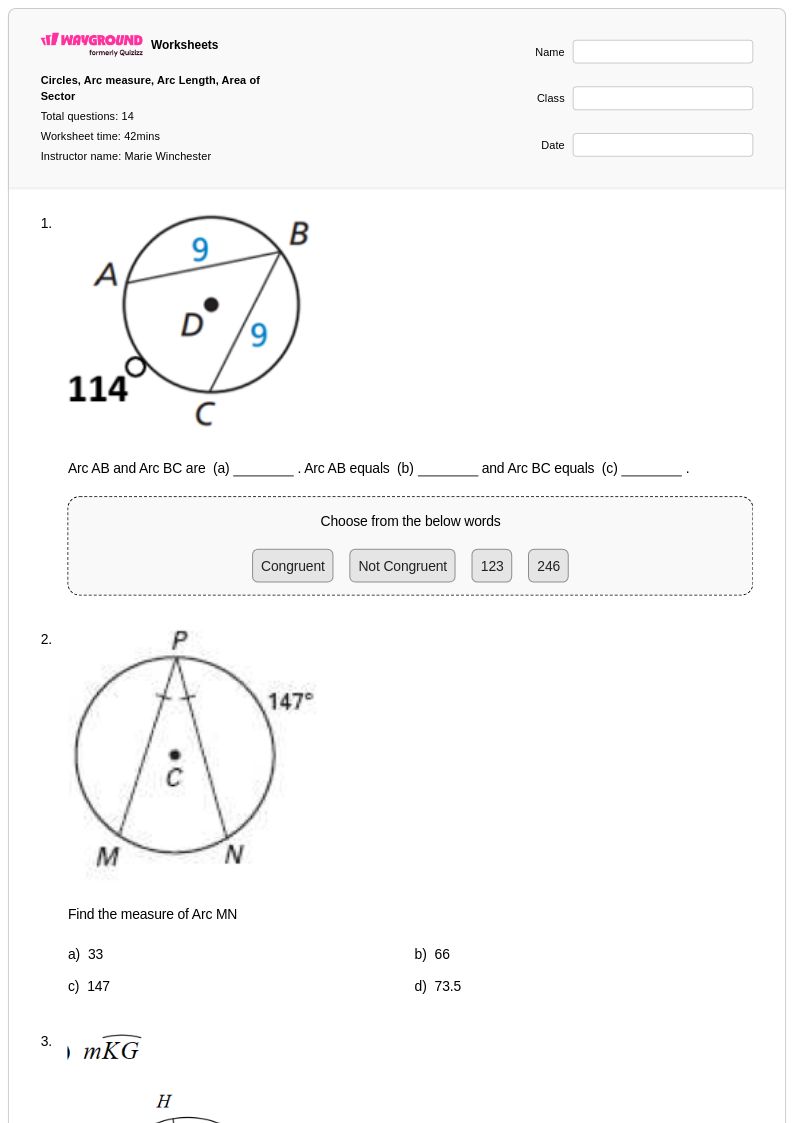
14 Q
9th - 12th
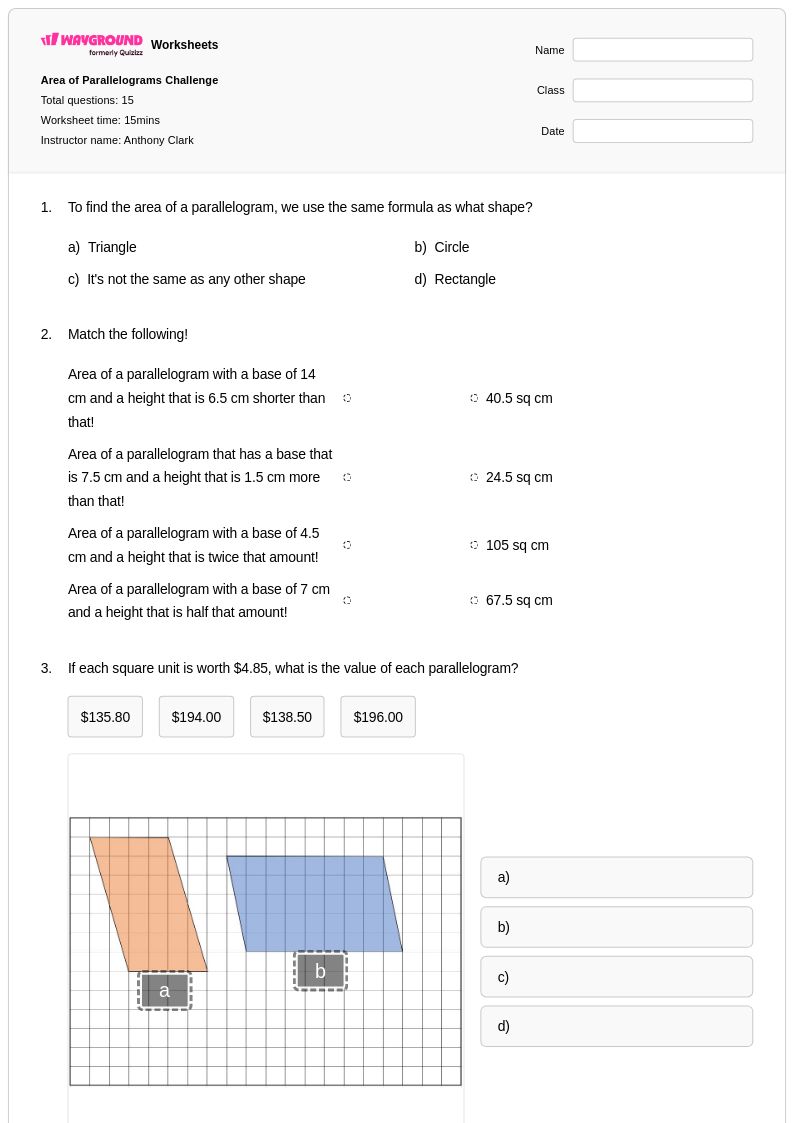
15 Q
6th - Uni
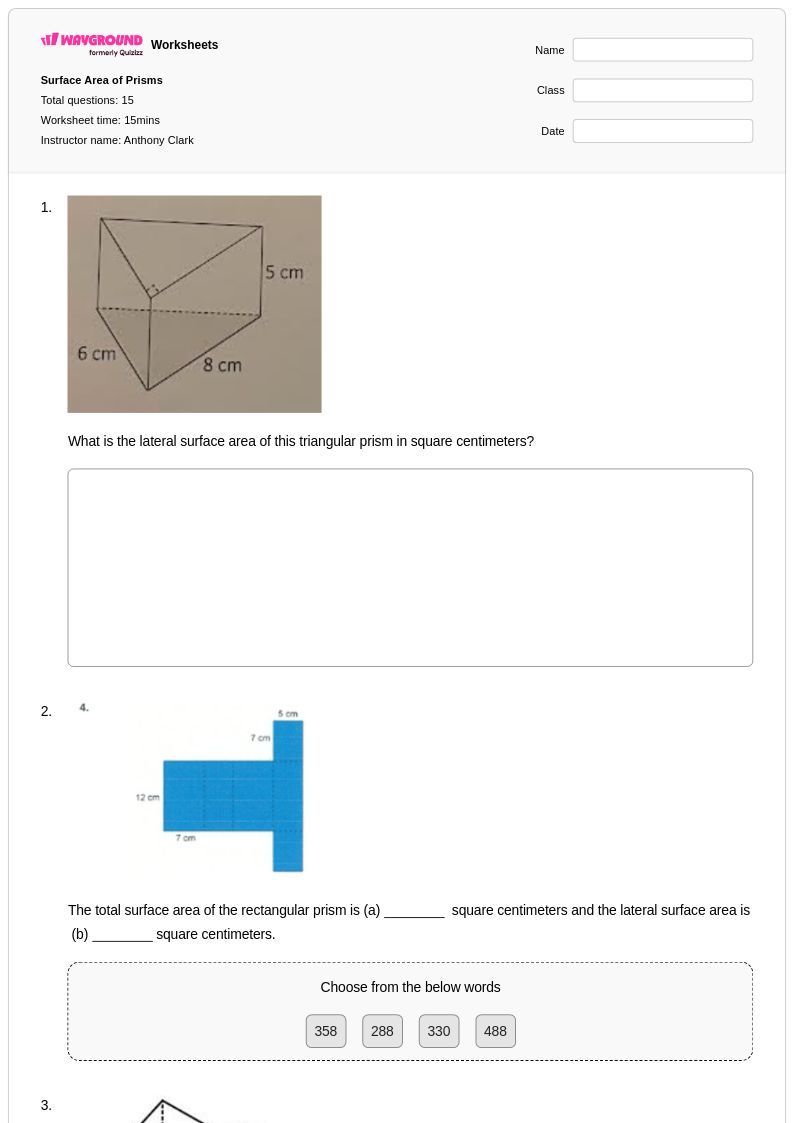
15 Q
7th - Uni
20 Q
6th - Uni
40 Q
9th - Uni
20 Q
3rd - Uni
20 Q
7th - Uni
Explore Other Subject Worksheets for class 9
Explore printable Area of an Annulus worksheets for Class 9
Area of an annulus worksheets for Class 9 students available through Wayground (formerly Quizizz) provide comprehensive practice with this essential geometric concept that bridges basic circle area calculations with more advanced composite figure analysis. These expertly designed worksheets guide students through the process of finding the area between two concentric circles by subtracting the inner circle's area from the outer circle's area, reinforcing their understanding of π, radius relationships, and algebraic manipulation. Each worksheet collection includes varied practice problems that progress from straightforward numerical calculations to complex real-world applications involving rings, washers, and circular paths, with complete answer keys provided to support independent learning and self-assessment. Teachers can access these free printable resources in convenient PDF format, making them ideal for classroom instruction, homework assignments, or targeted remediation work.
Wayground (formerly Quizizz) empowers educators with millions of teacher-created worksheet collections specifically designed to support Class 9 geometry instruction, including extensive resources focused on annulus area calculations. The platform's robust search and filtering capabilities allow teachers to quickly locate materials that align with curriculum standards and match their students' specific learning needs, while built-in differentiation tools enable seamless customization for varying skill levels within the classroom. These comprehensive worksheet collections are available in both printable and digital PDF formats, providing flexibility for traditional paper-based practice or technology-enhanced learning environments. Teachers can efficiently plan lessons, create targeted remediation activities, and develop enrichment opportunities that strengthen students' geometric reasoning skills and prepare them for advanced mathematical concepts involving composite figures and spatial relationships.
FAQs
How do I teach the area of an annulus to Grade 9 students?
What exercises help students practice finding the area of an annulus?
What mistakes do students make when calculating the area of an annulus?
How can I use these Grade 9 area of an annulus worksheets?
How does area of an annulus fit into the Common Core math progression?
How can I differentiate area of an annulus practice in a mixed-ability class?
Is area of an annulus appropriate for Grade 9?