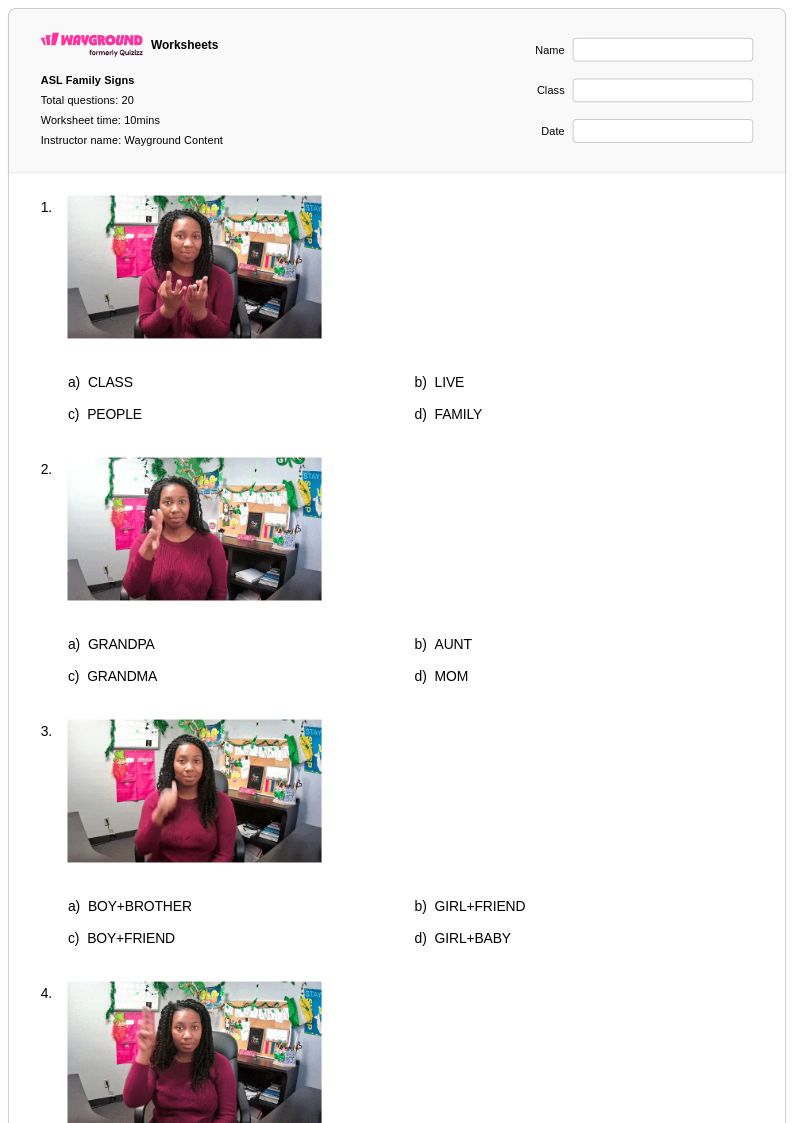
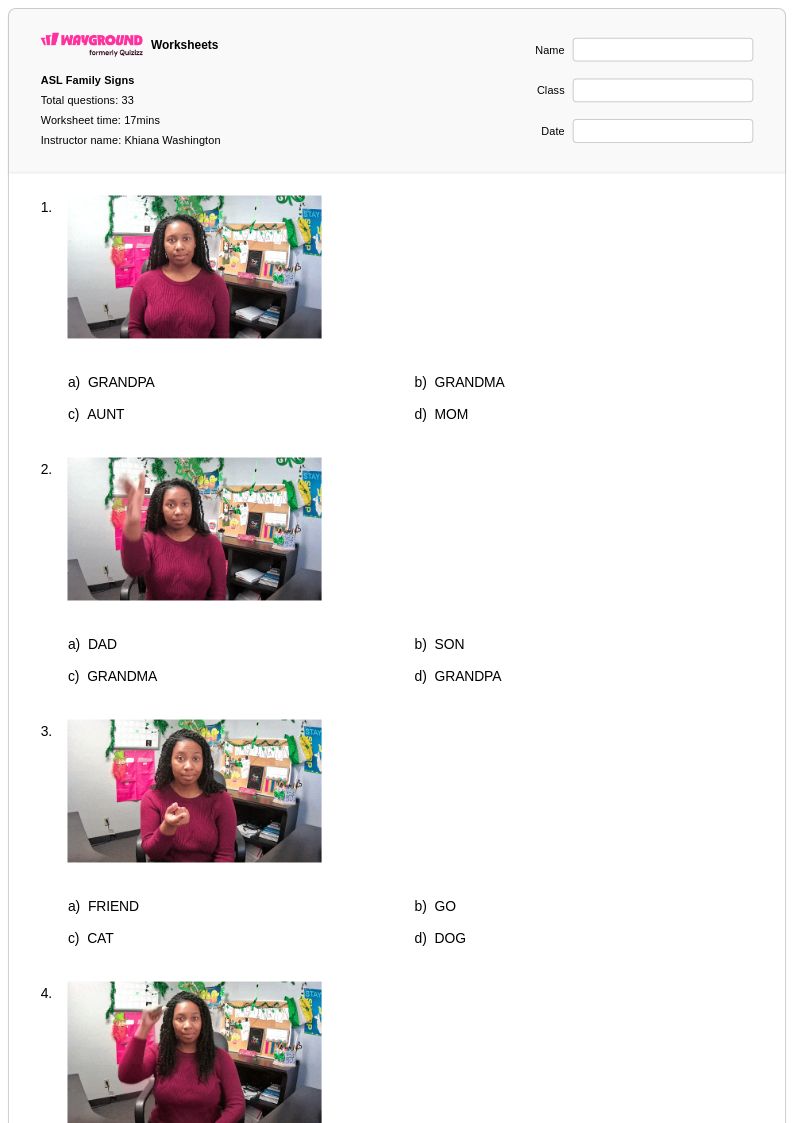
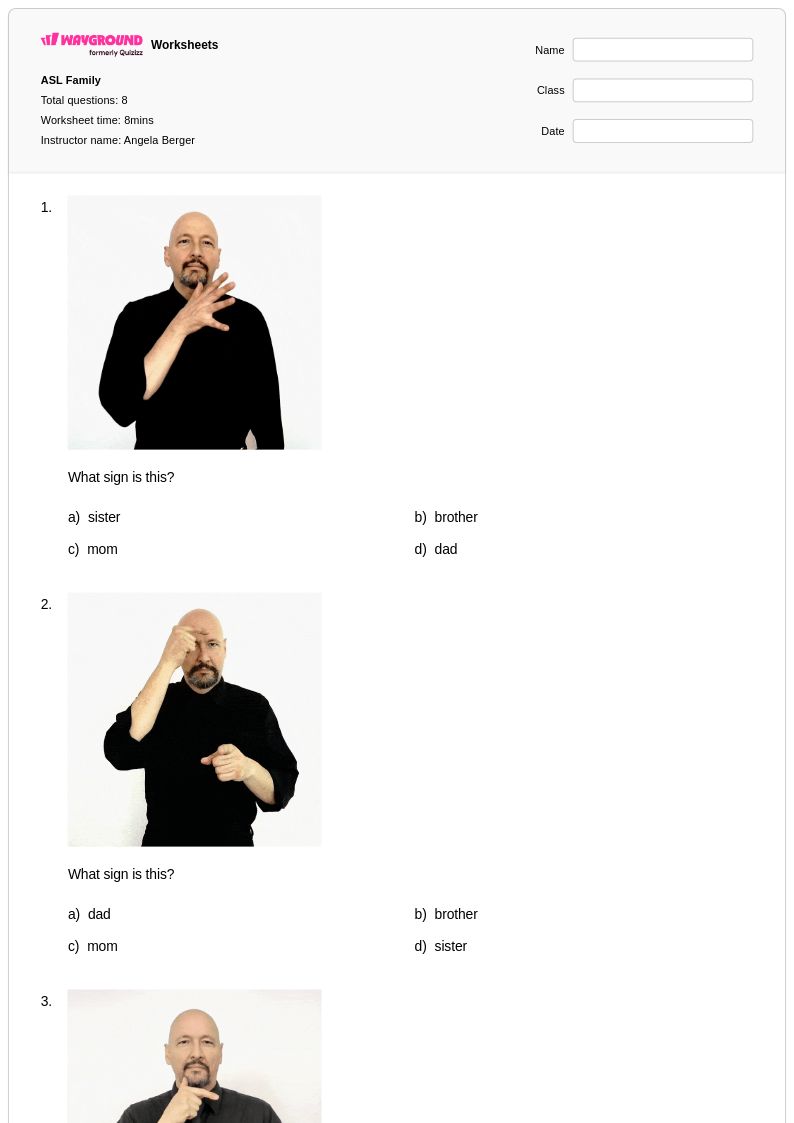
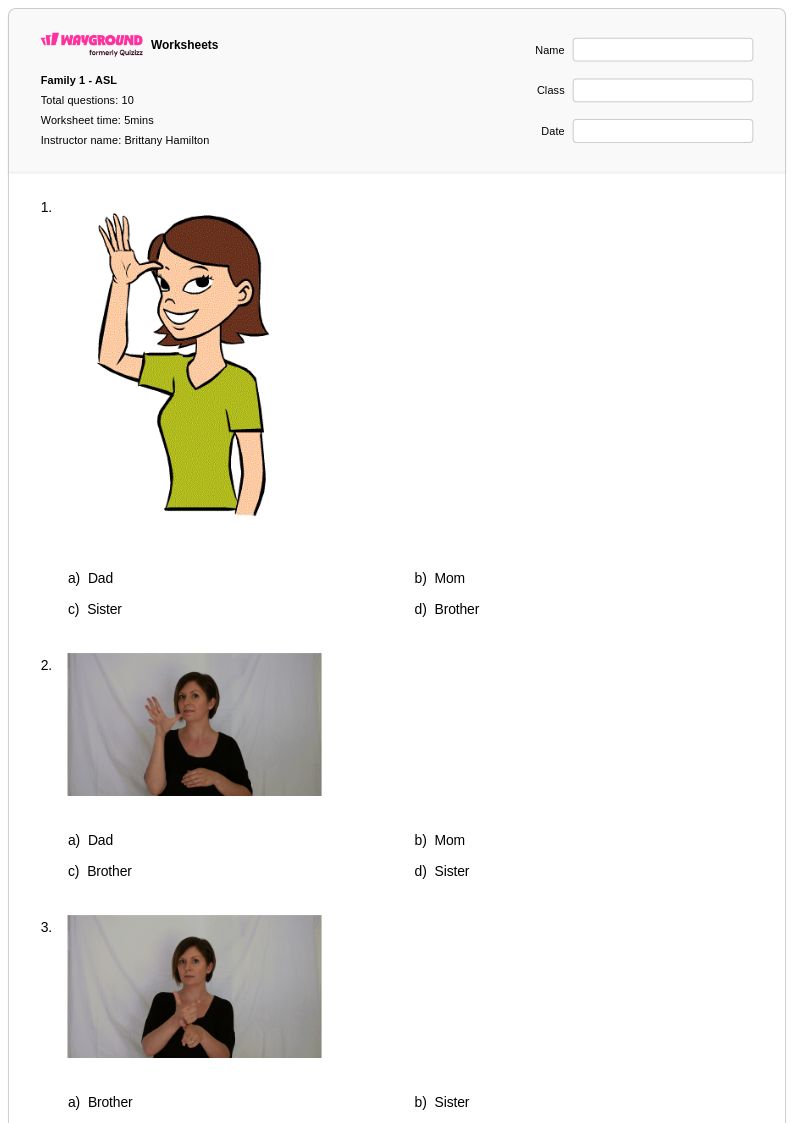
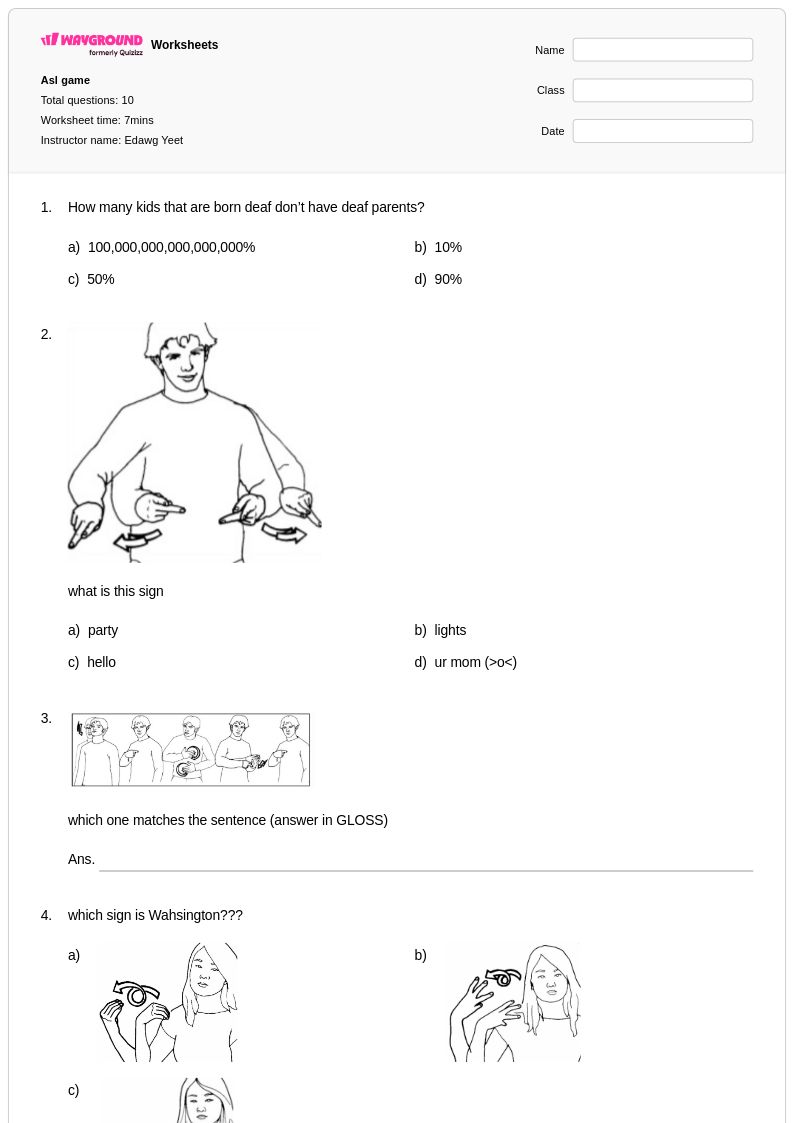
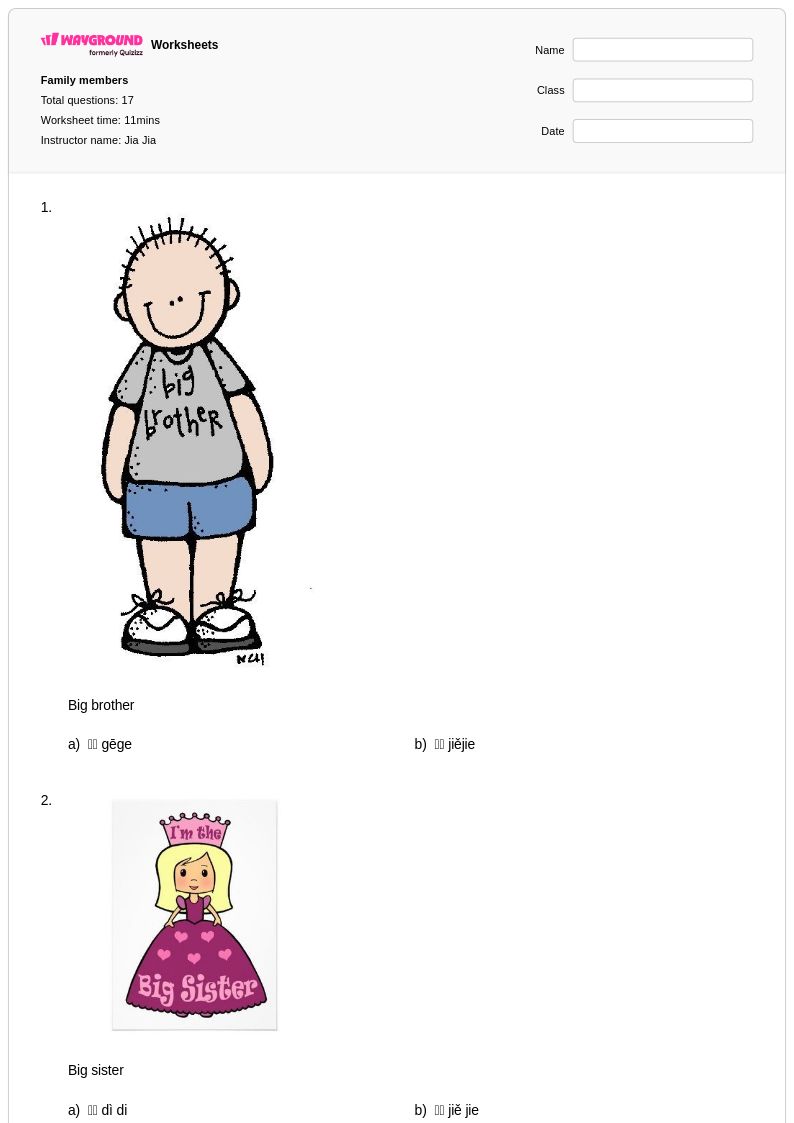
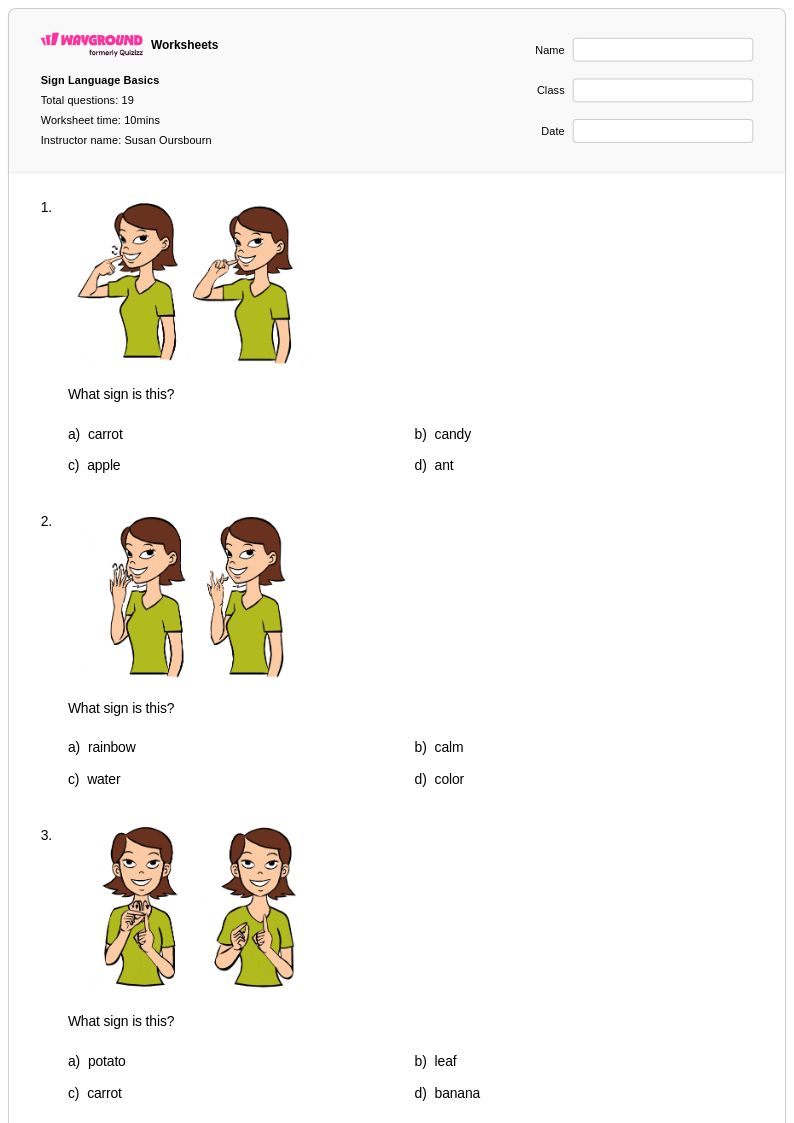
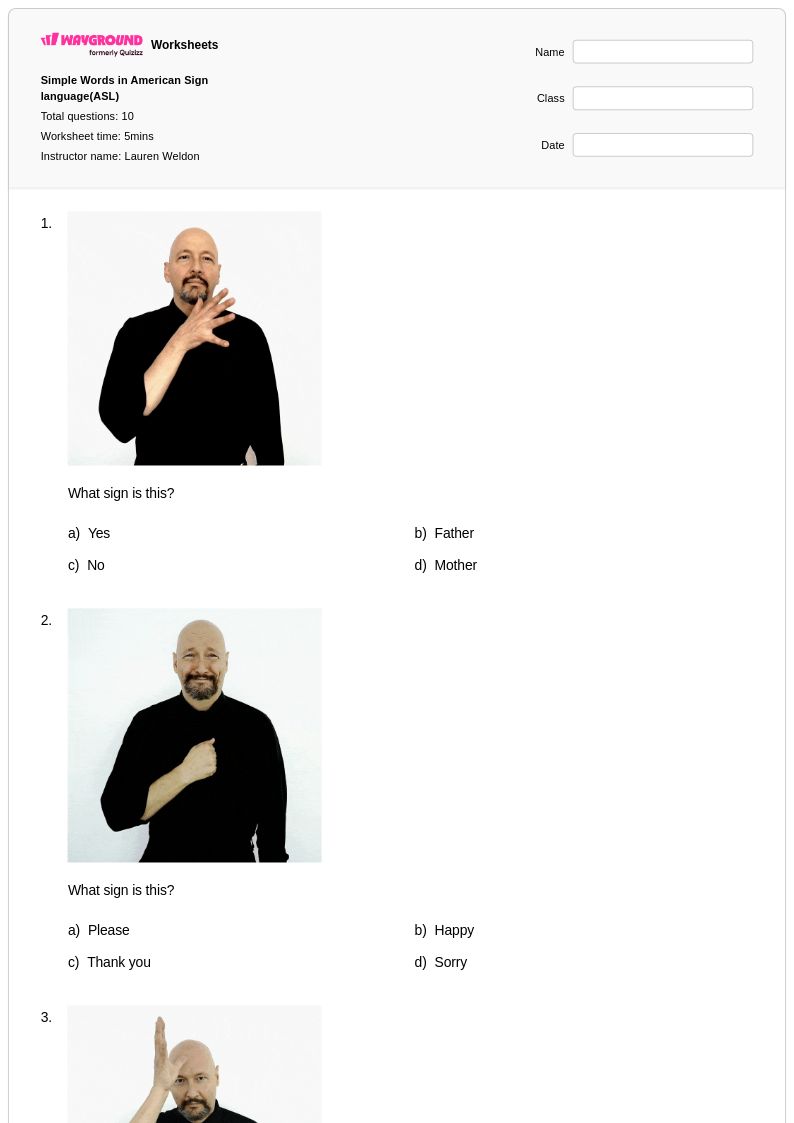
Free Printable ASL Family Signs Worksheets for Class 2
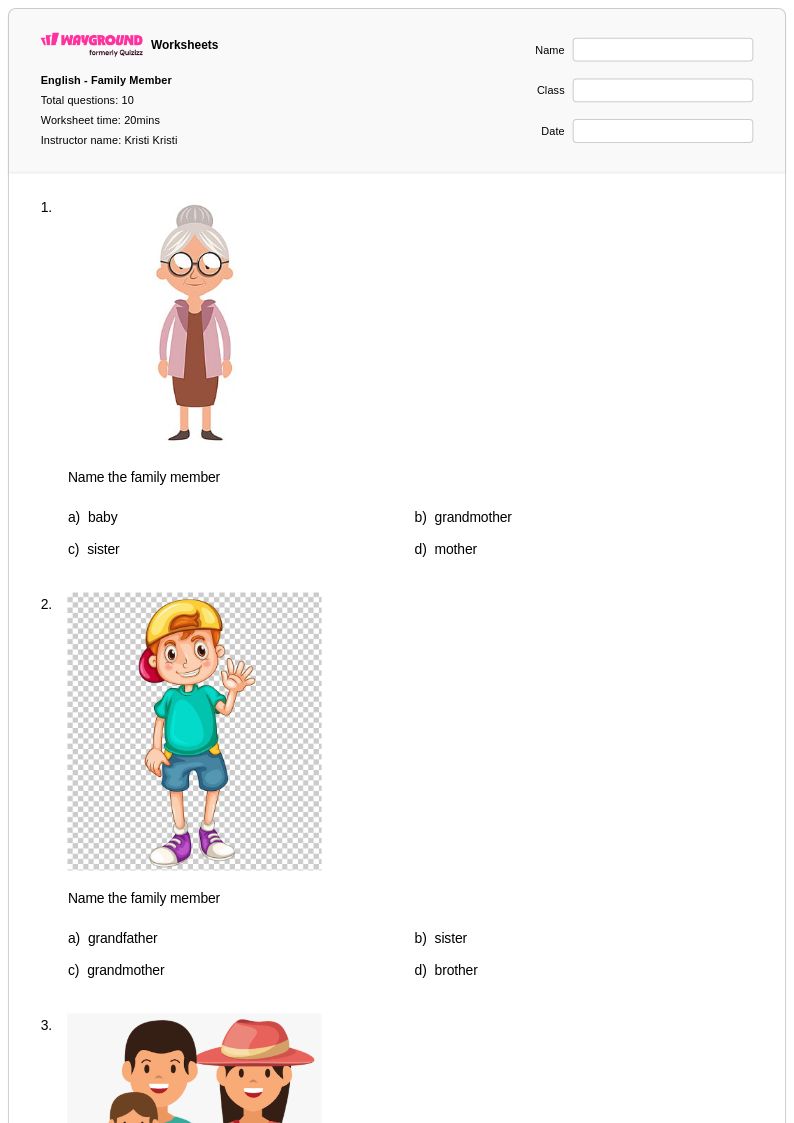
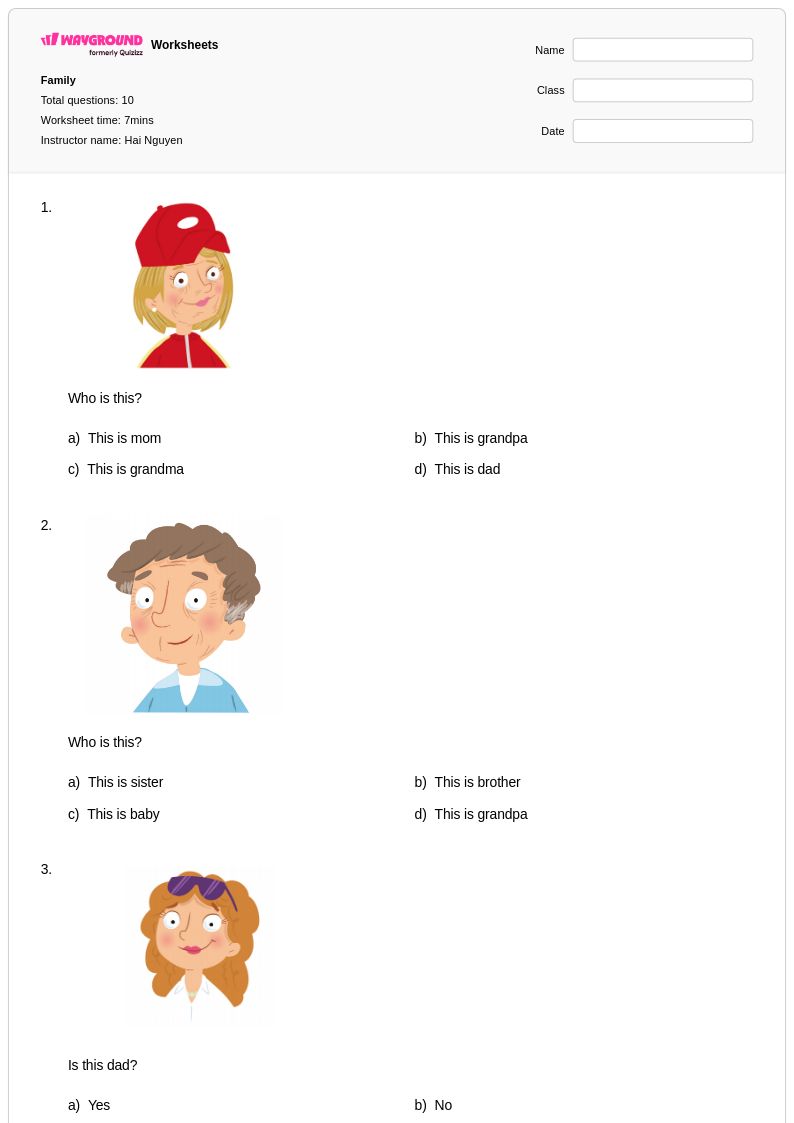
Discover Class 2 ASL Family Signs worksheets and printables that help students practice recognizing and using American Sign Language signs for family members through engaging free worksheets with answer keys available as downloadable PDFs.
Explore printable ASL Family Signs worksheets for Class 2
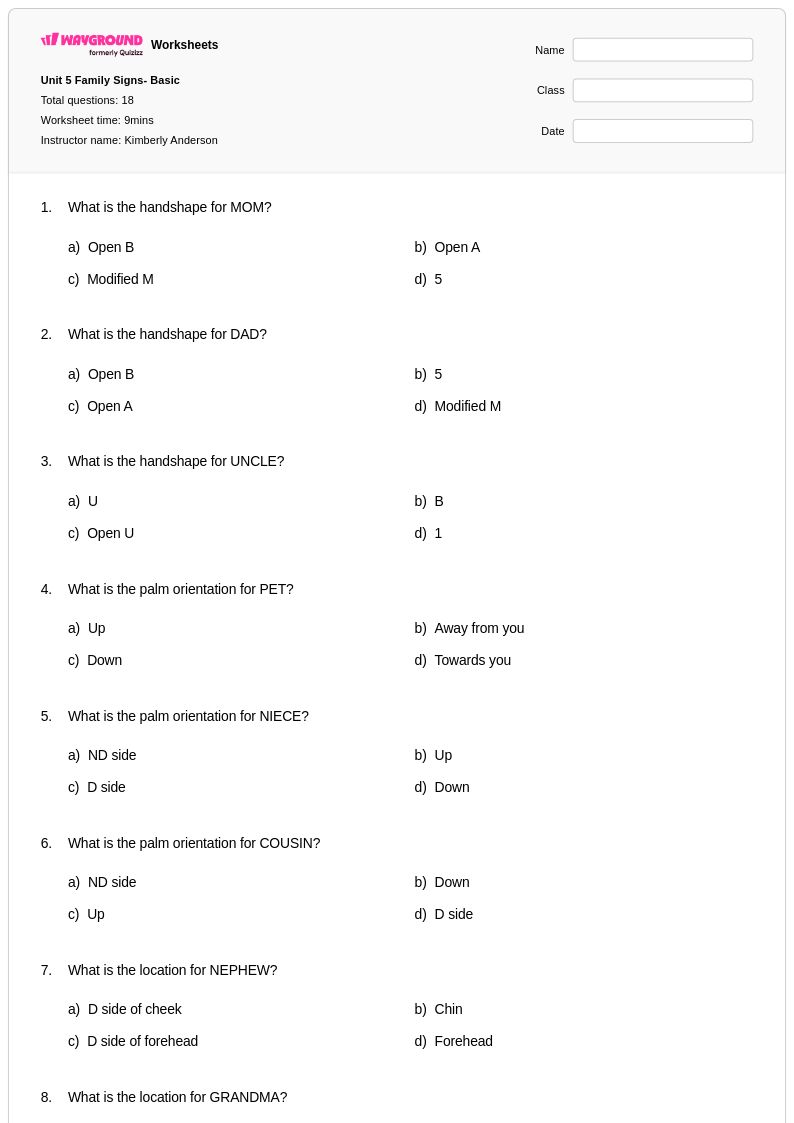
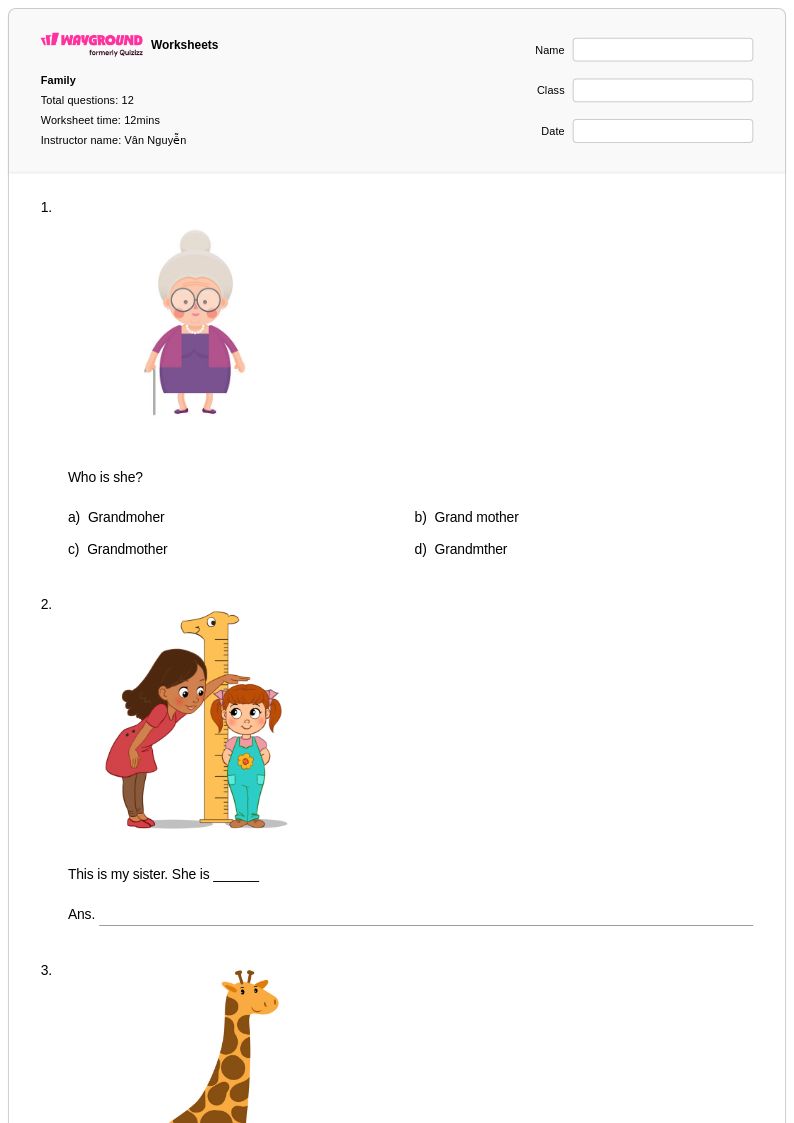
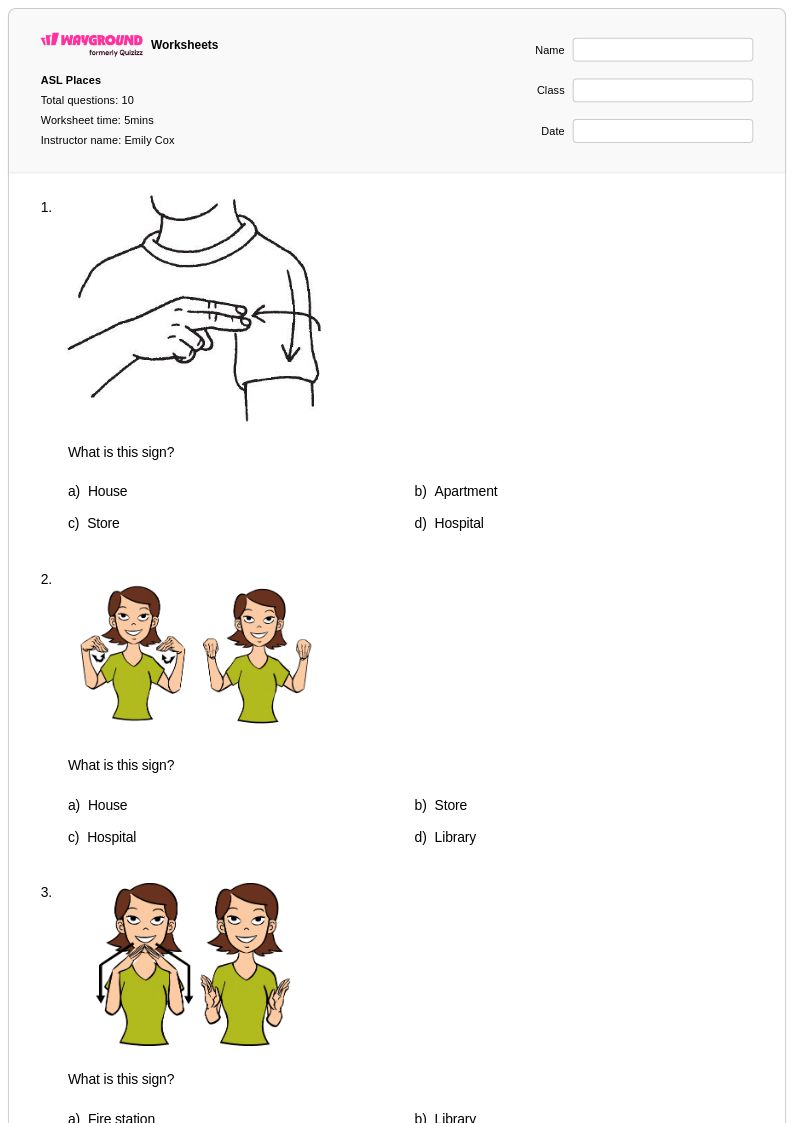
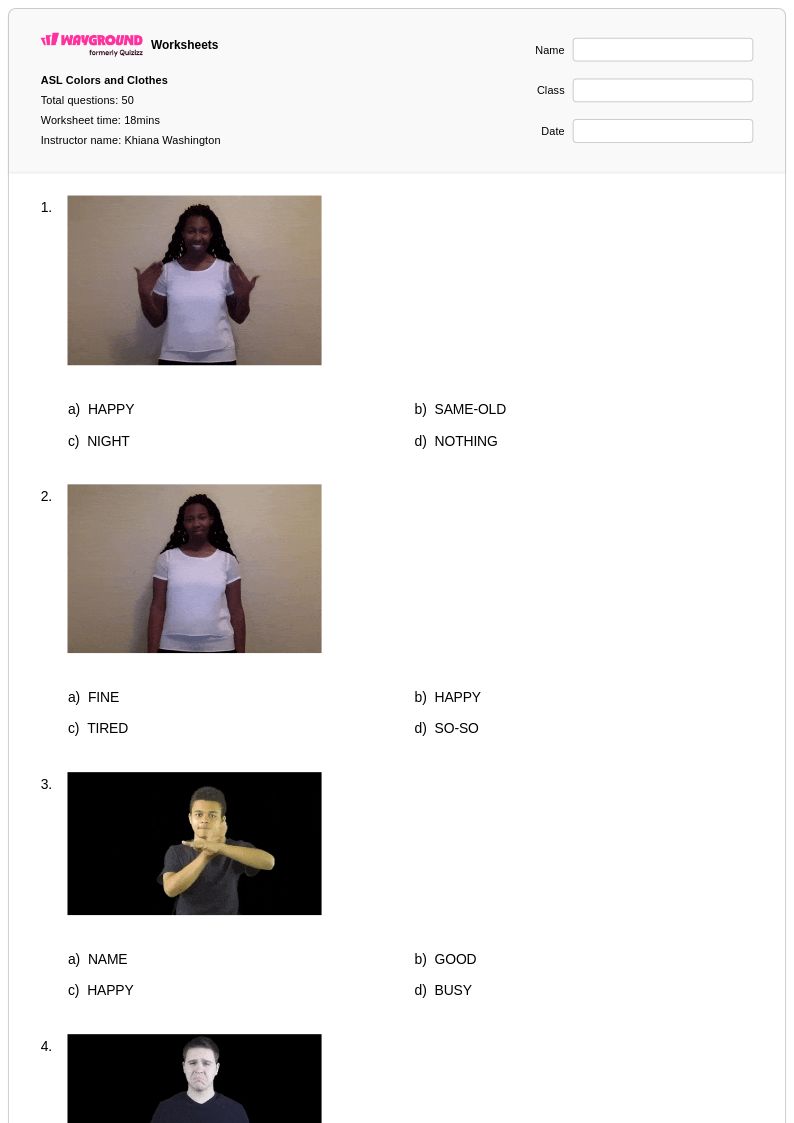
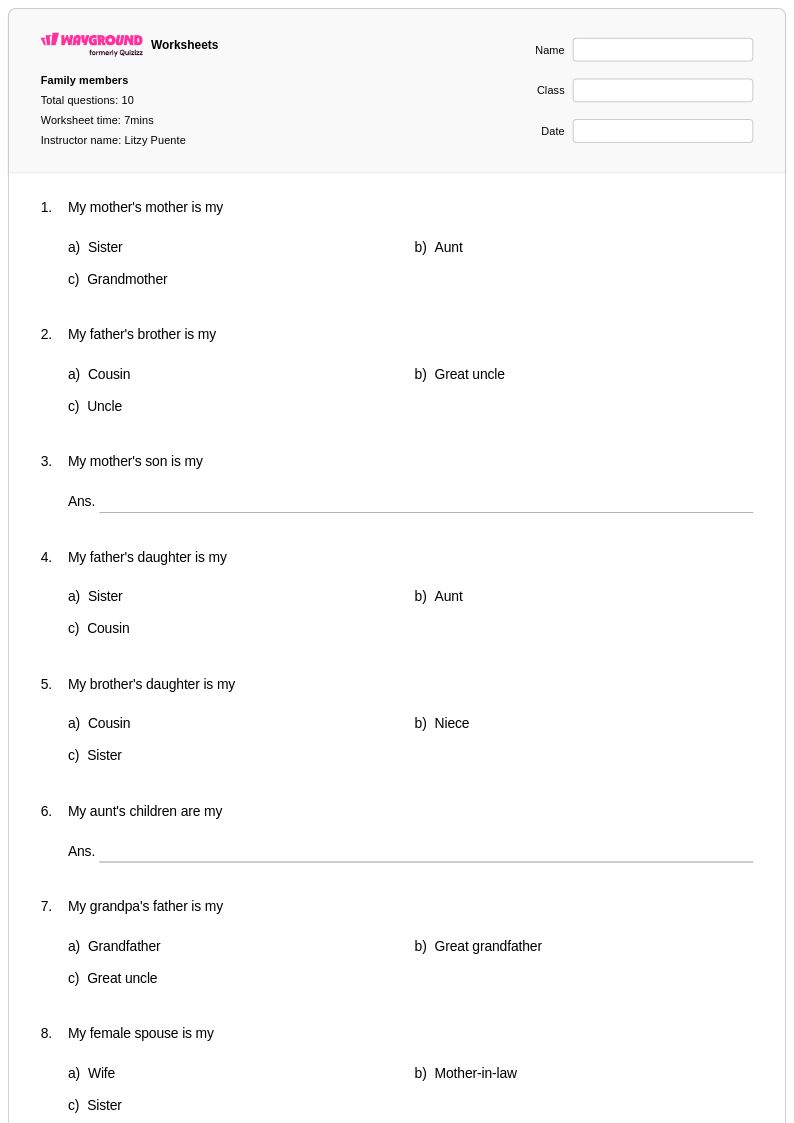
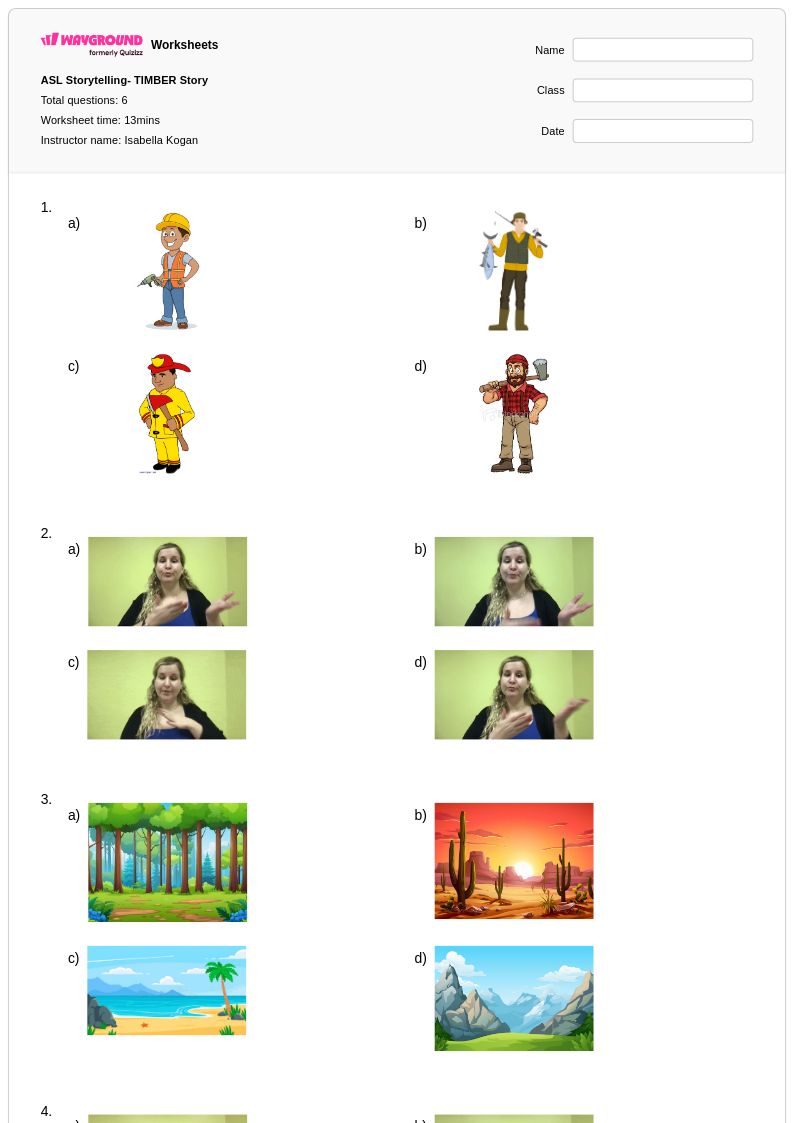
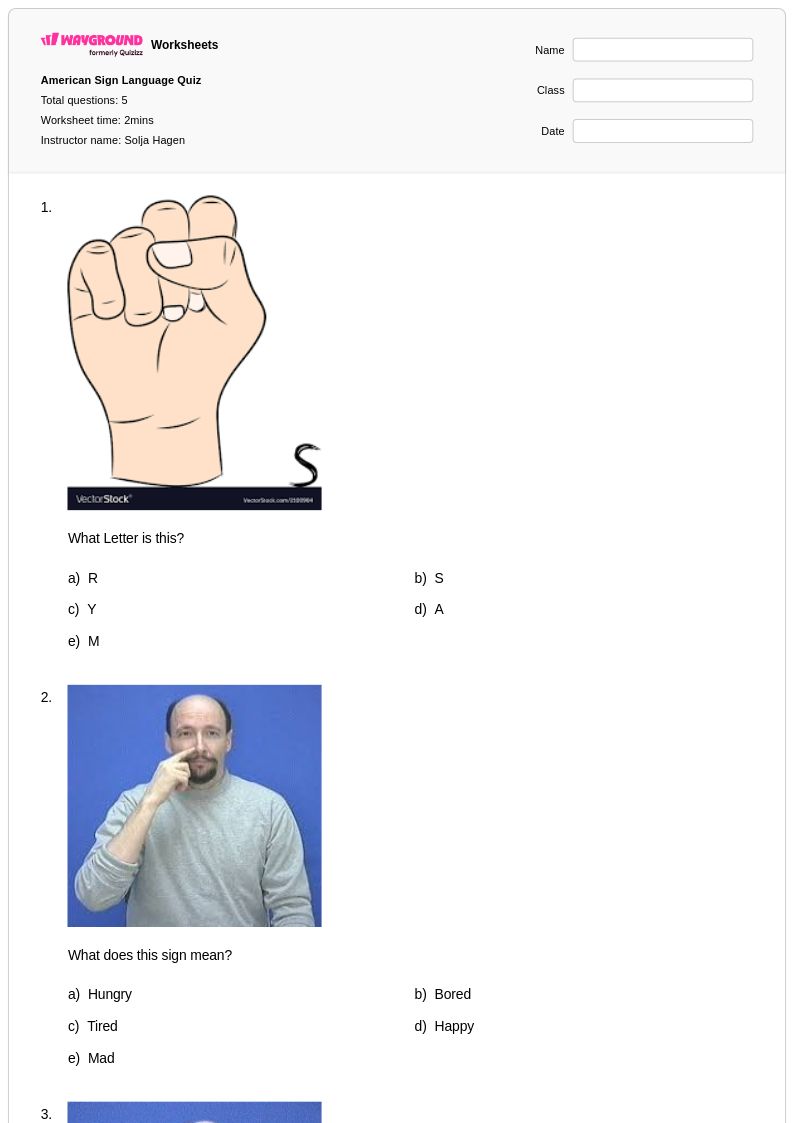
ASL Family Signs worksheets for Class 2 students provide essential foundation-building resources that introduce young learners to the fundamental vocabulary and handshapes used to communicate about family relationships in American Sign Language. These carefully designed materials help second-grade students master the visual-spatial aspects of signing family terms like mother, father, sister, brother, grandmother, and grandfather, while developing proper handshape formation and movement patterns crucial for clear ASL communication. Each worksheet collection includes comprehensive practice problems that reinforce sign recognition, proper finger positioning, and the directional movements that distinguish different family signs, with accompanying answer keys that enable both independent study and guided instruction. The free printables and pdf resources focus on building visual memory skills, hand-eye coordination, and the foundational signing techniques that prepare students for more complex ASL vocabulary development.
Wayground, formerly Quizizz, empowers educators with access to millions of teacher-created ASL Family Signs resources specifically designed to meet the developmental needs of Class 2 learners. The platform's robust search and filtering capabilities allow teachers to quickly locate worksheets that align with their curriculum standards and match their students' specific learning objectives, whether for initial skill introduction, remediation support, or enrichment activities. Teachers can customize these materials to accommodate different learning styles and ability levels, utilizing both printable pdf formats for hands-on practice and digital versions for interactive classroom engagement. This comprehensive collection supports differentiated instruction by offering varied complexity levels and multiple practice approaches, enabling educators to effectively plan lessons that build sequential ASL competency while providing targeted skill practice that strengthens students' visual processing abilities and manual dexterity essential for successful sign language communication.
FAQs
How do I teach ASL family signs to beginners?
Start by introducing immediate family signs (mother, father, sister, brother) before moving to extended family terms like grandmother, grandfather, aunt, uncle, and cousin. Focus on the three core components of each sign: handshape, movement, and facial expression, since all three work together to convey meaning in ASL. Visual repetition is essential, so pair sign recognition practice with matching activities that reinforce handshape memory before asking students to produce signs independently.
What exercises help students practice ASL family vocabulary?
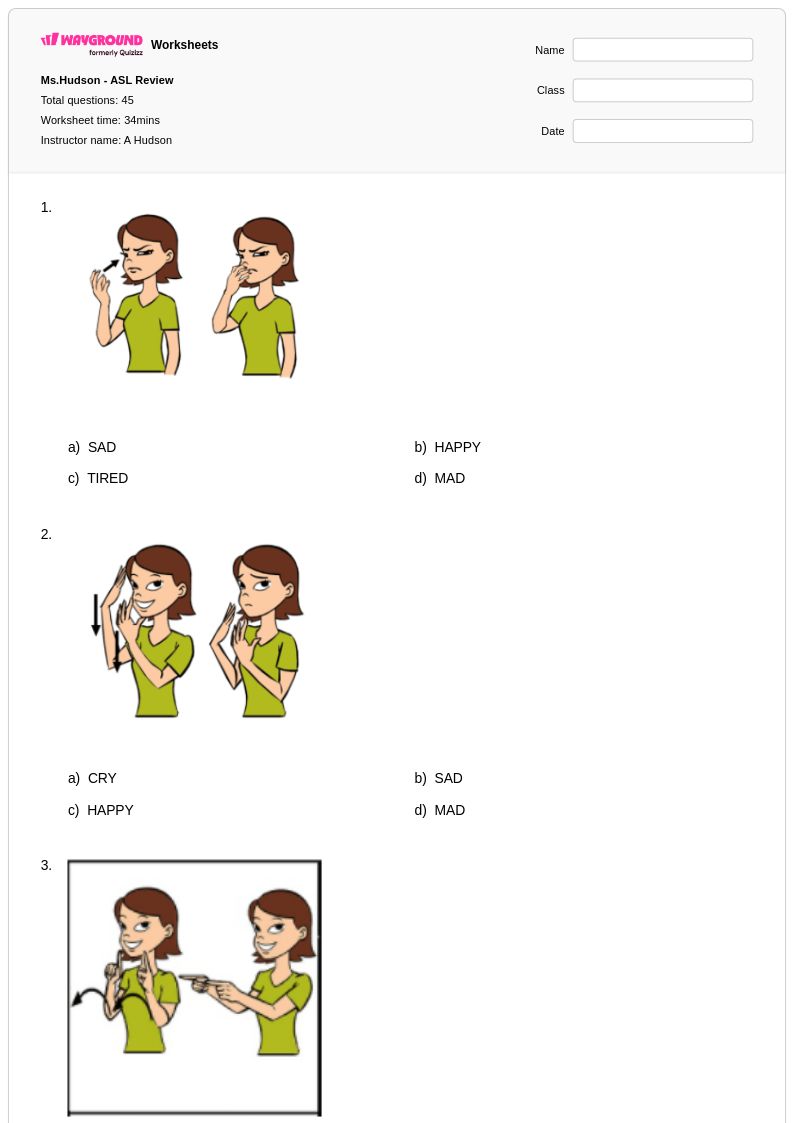
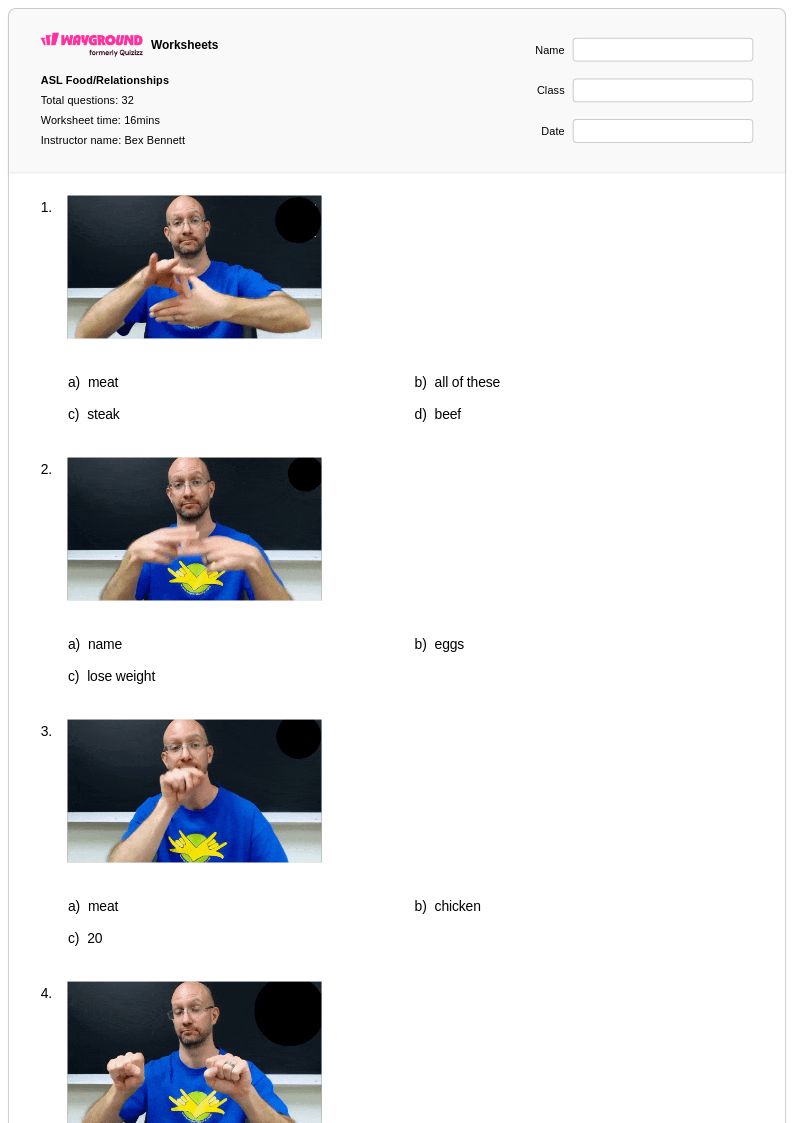
Effective practice for ASL family signs includes sign recognition exercises, vocabulary matching activities that pair images or descriptions with correct signs, and sentence construction tasks using family vocabulary in context. Repeated visual exposure to handshapes and movements builds the visual memory students need to distinguish similar signs. Structured worksheets that progress from recognition to production give students a clear path from initial exposure to confident signing.
What mistakes do students commonly make when learning ASL family signs?
Students frequently neglect non-manual markers, such as facial expressions and mouth movements, focusing only on handshapes and movement paths. Another common error is incorrect use of signing space, particularly when describing family relationships that rely on spatial grammar to show how people relate to one another. Confusing signs for similar family terms, like aunt and uncle or grandmother and grandfather, is also typical when students have not yet built strong visual memory for subtle handshape differences.
How can I differentiate ASL family signs instruction for students at different skill levels?
For students who need remediation, limit practice to immediate family members and focus on handshape accuracy before introducing movement or non-manual markers. More advanced students can work on extended family vocabulary and sentence construction that uses signing space to describe complex family relationships. On Wayground, teachers can apply accommodations such as reduced answer choices or read-aloud support to individual students, allowing the rest of the class to work through default settings without disruption.
How do I use ASL family signs worksheets from Wayground in my classroom?
Wayground's ASL family signs worksheets are available as printable PDFs for traditional classroom use and in digital formats for technology-integrated environments, including the option to host them as a quiz directly on the platform. This flexibility makes them suitable for in-person signing practice, remote learning, or blended instruction. Each worksheet includes a complete answer key, supporting independent student practice and teacher-led review equally well.
How do I assess whether students have mastered ASL family signs?
Assessment should evaluate both receptive and expressive skills: can students correctly identify a sign when they see it, and can they produce the correct sign when given a family term? Sign recognition exercises and vocabulary matching activities measure receptive knowledge, while sentence construction tasks reveal whether students can use family signs accurately in context. Tracking errors in handshape, movement, and non-manual markers separately helps pinpoint which component of a sign needs targeted review.