Free Printable Athens Vs Sparta Worksheets for Class 7
Explore Class 7 Athens Vs Sparta free worksheets and printables from Wayground that help students compare these ancient Greek city-states through engaging practice problems and comprehensive answer keys.
Explore printable Athens Vs Sparta worksheets for Class 7
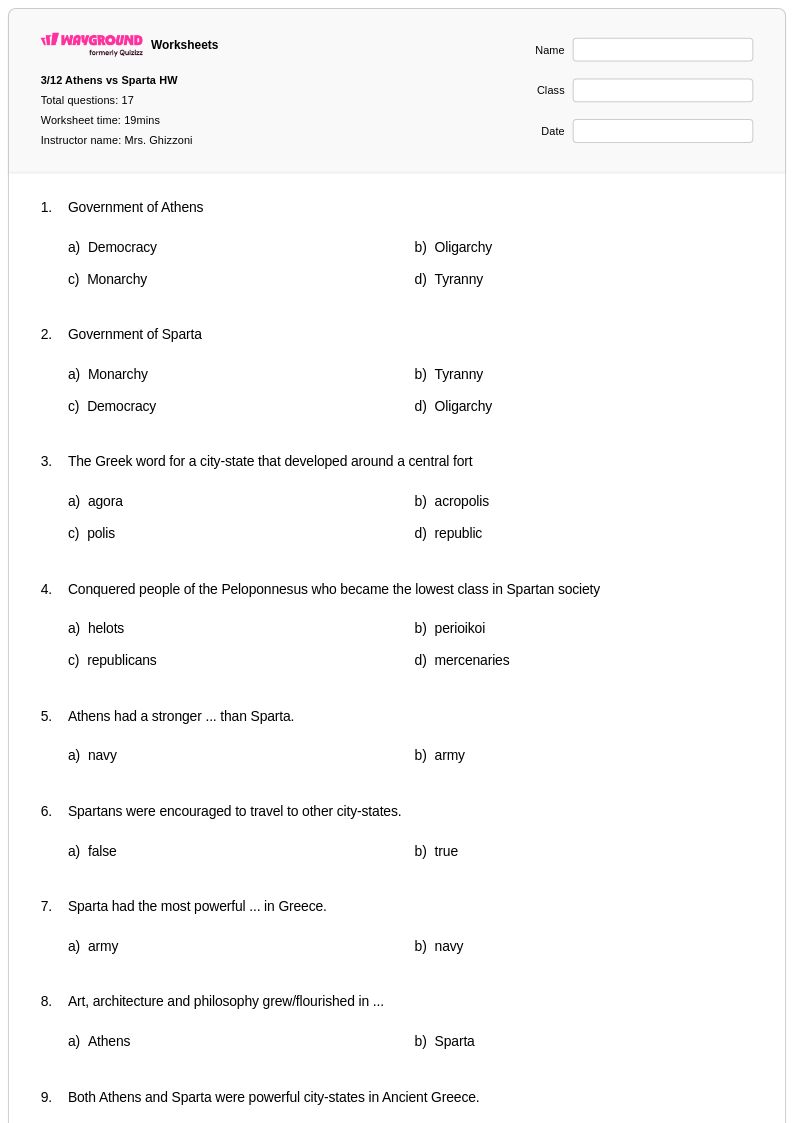
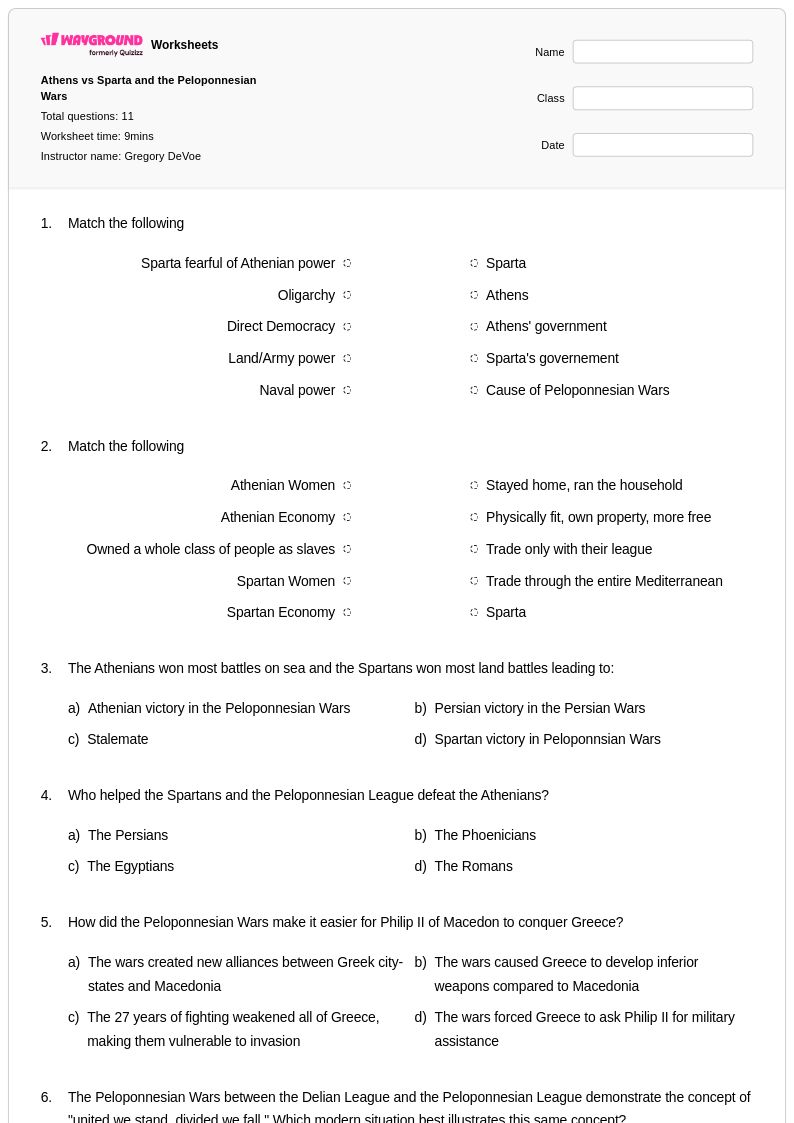
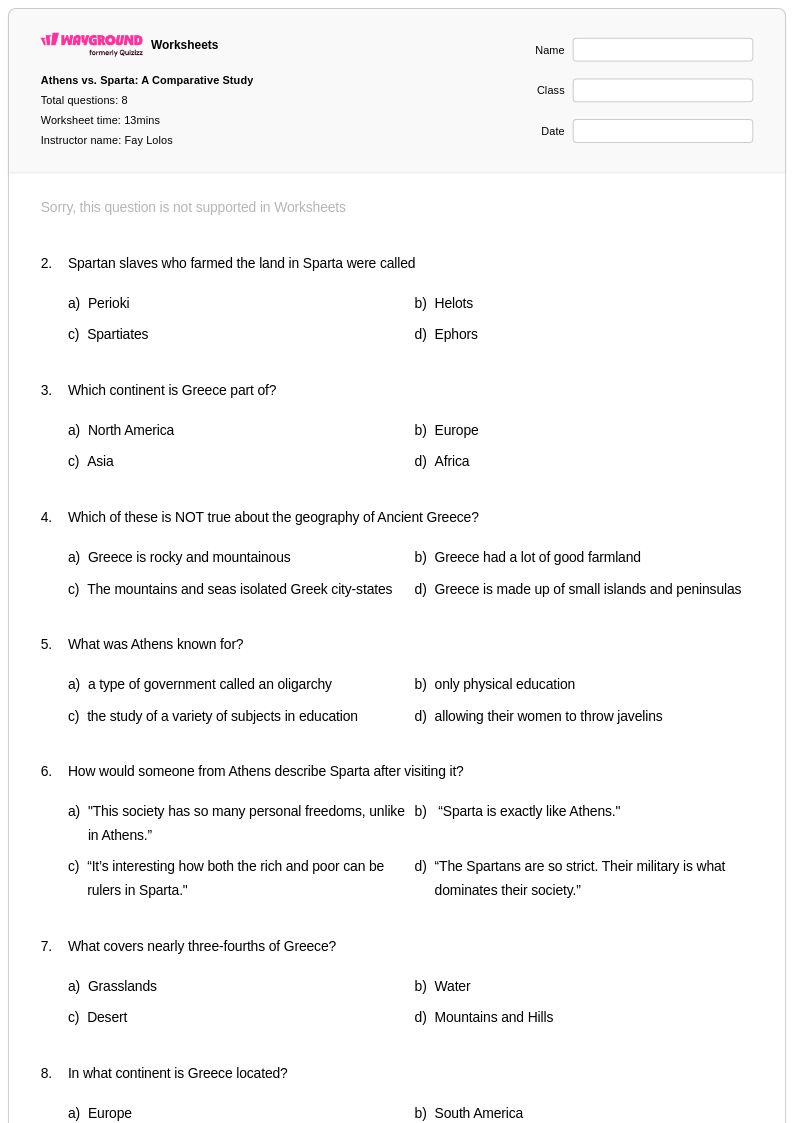
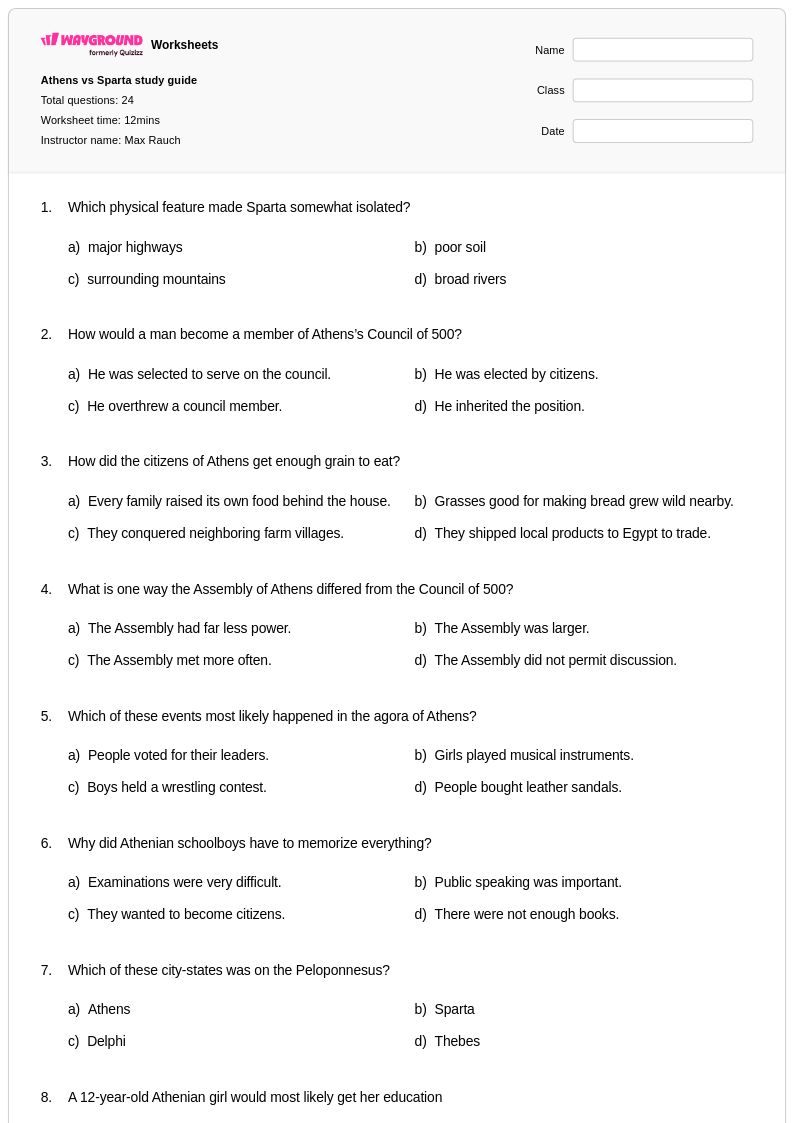
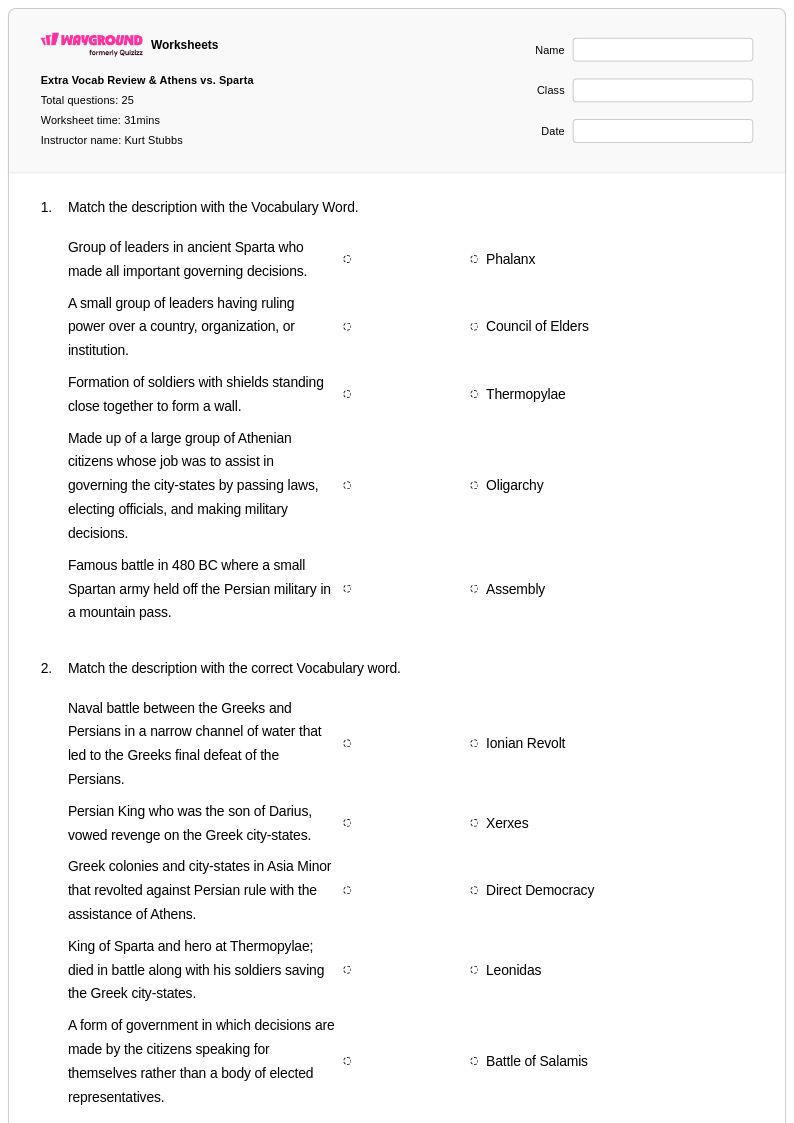
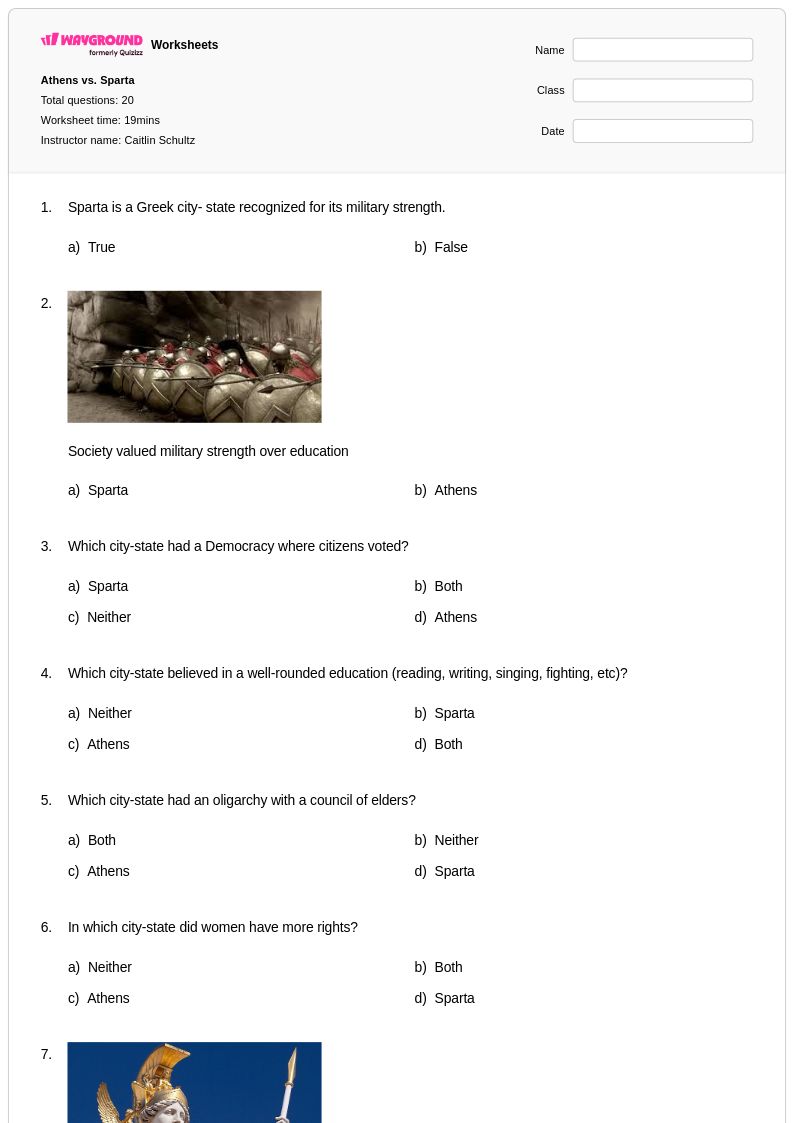
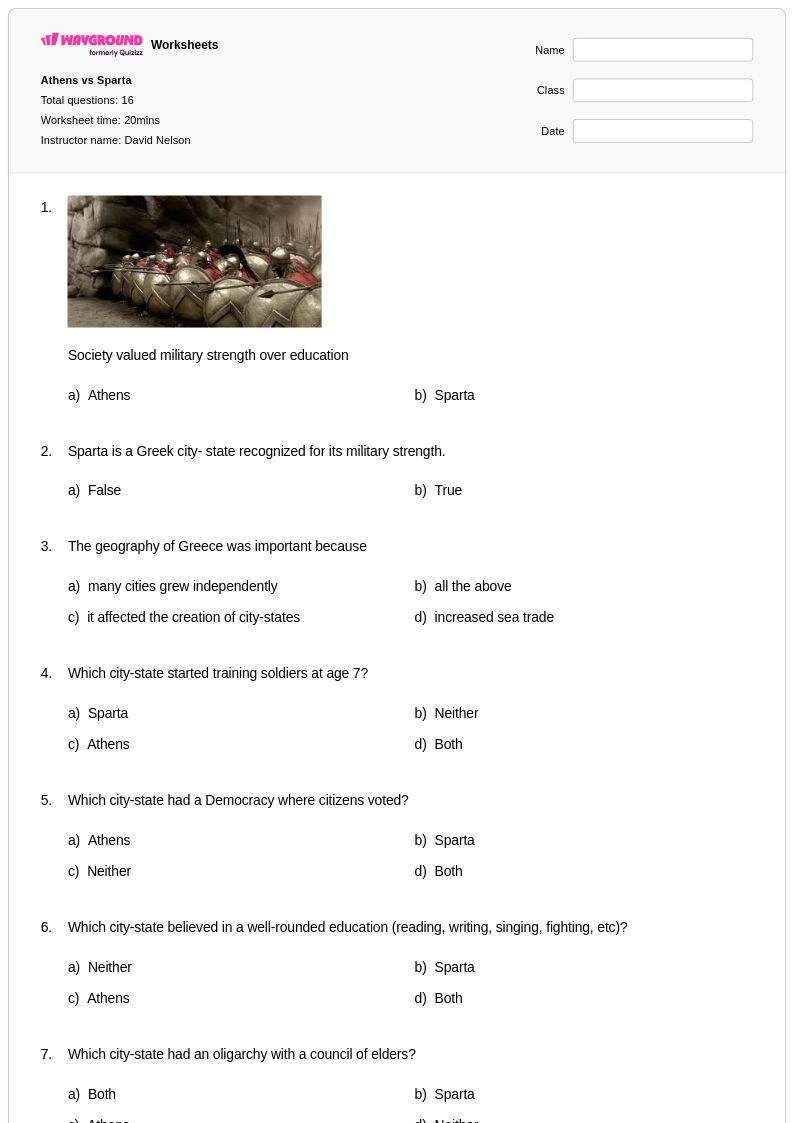
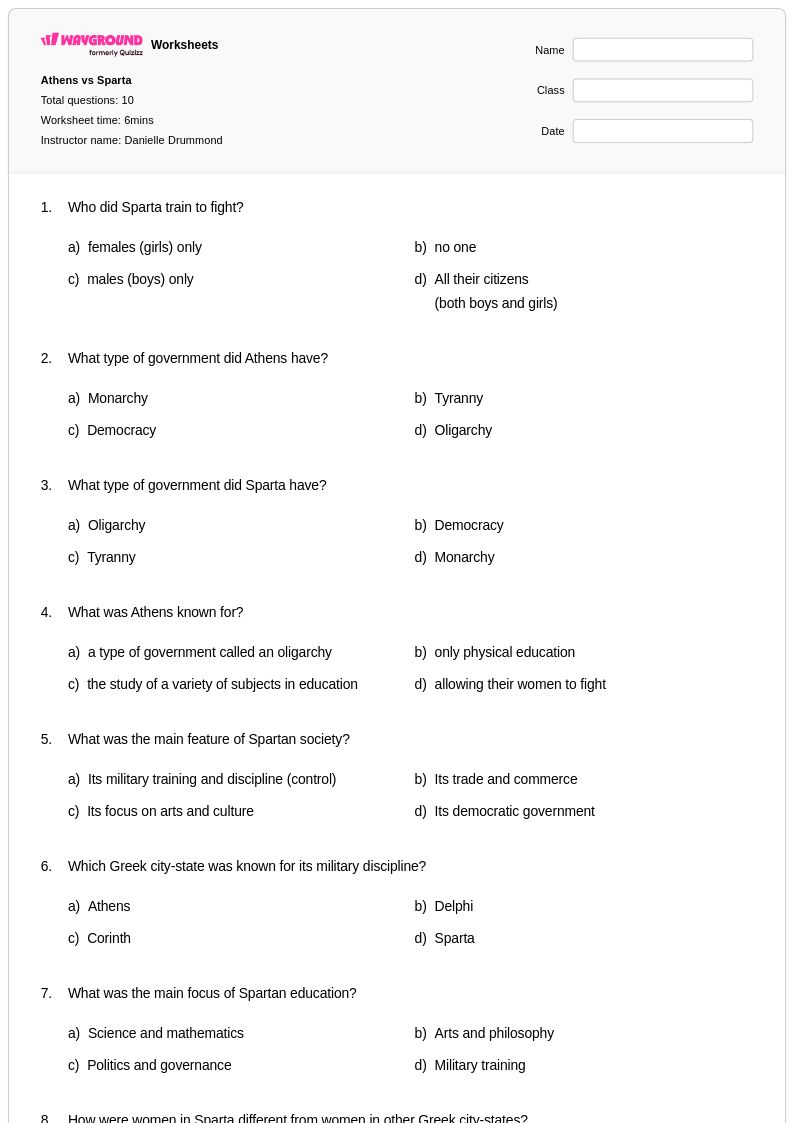
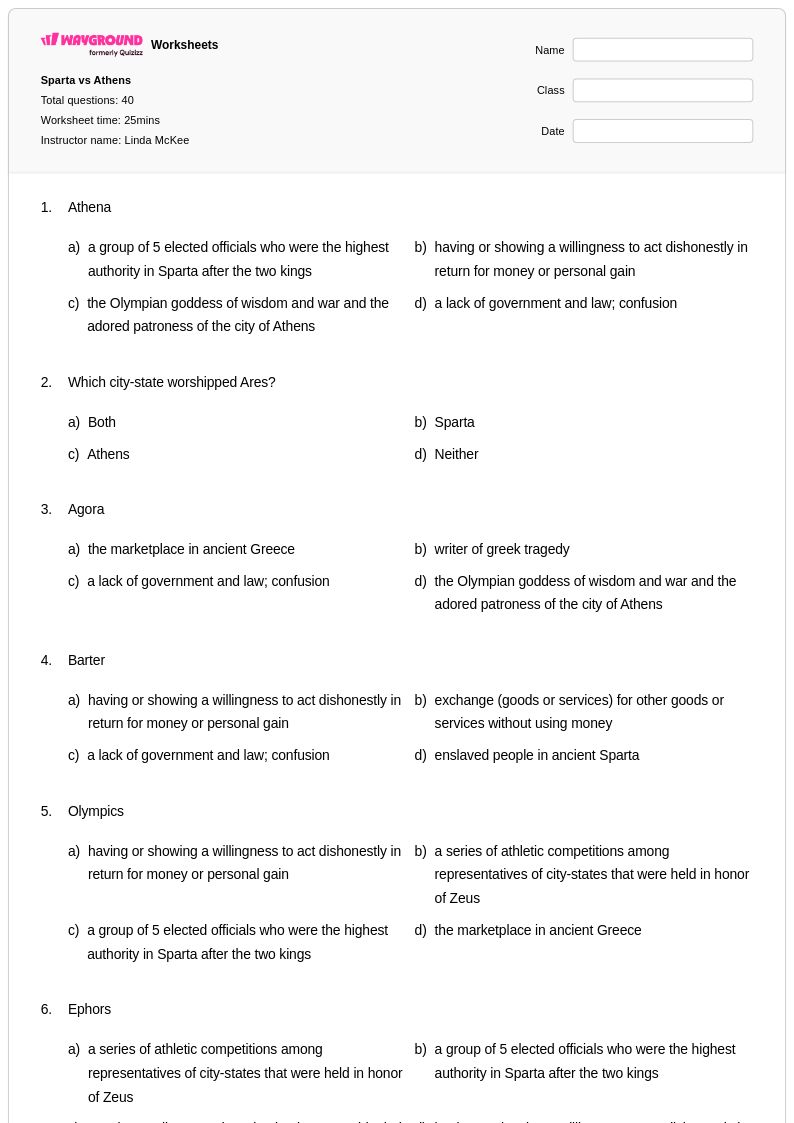
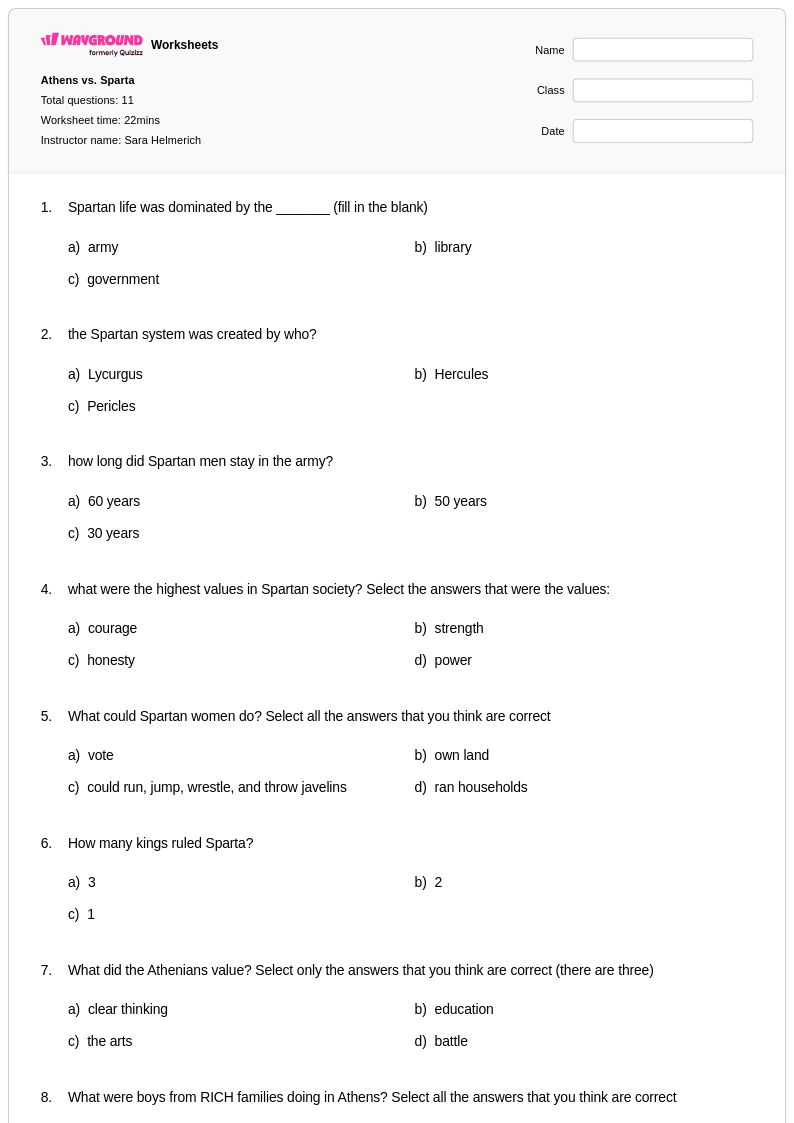
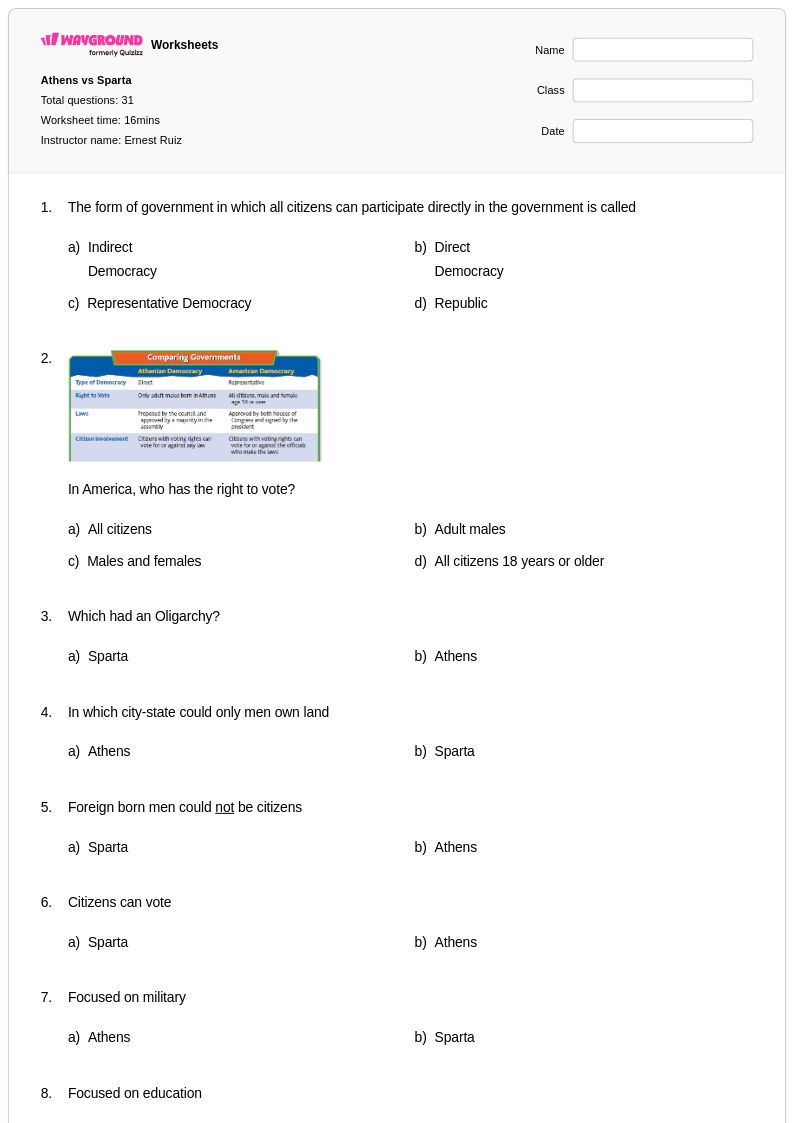
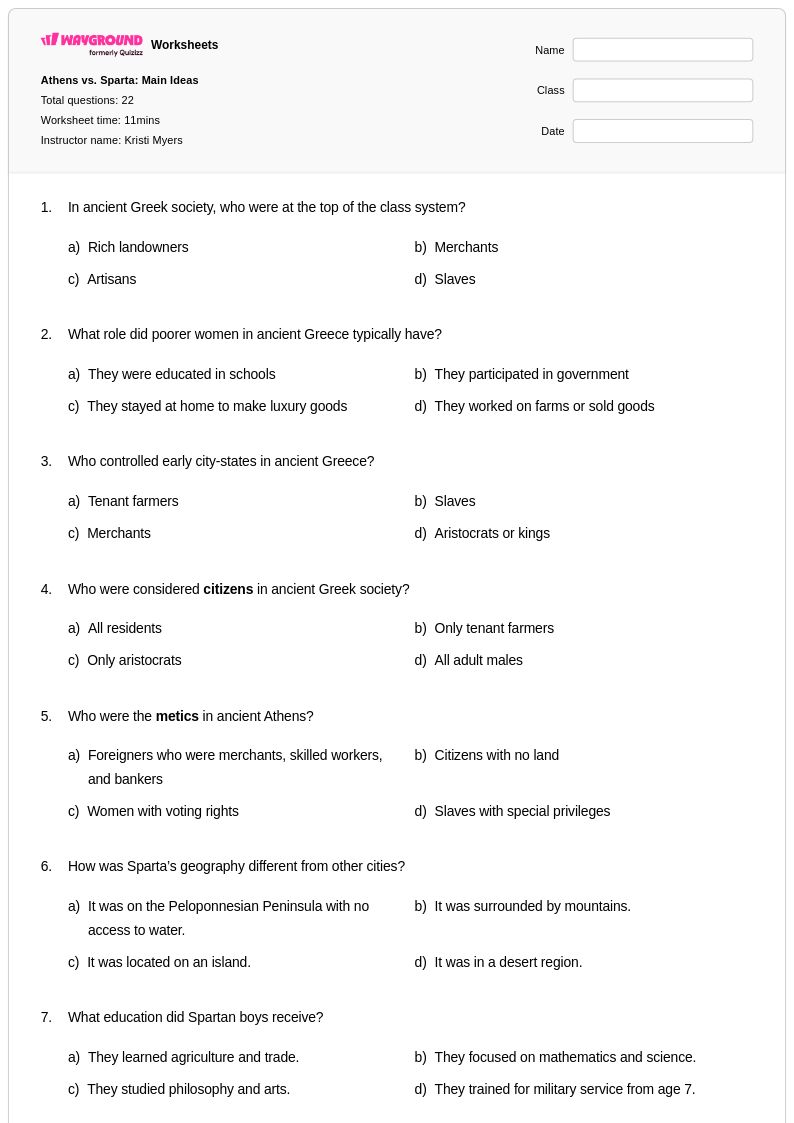
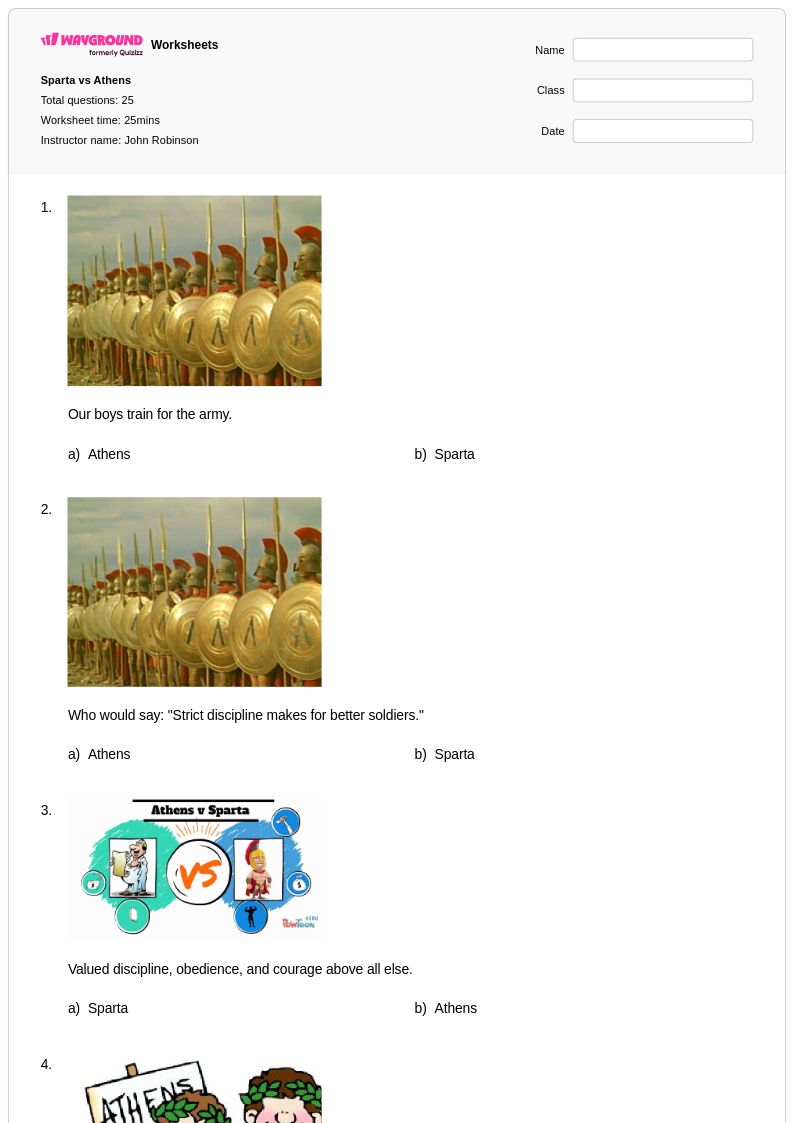
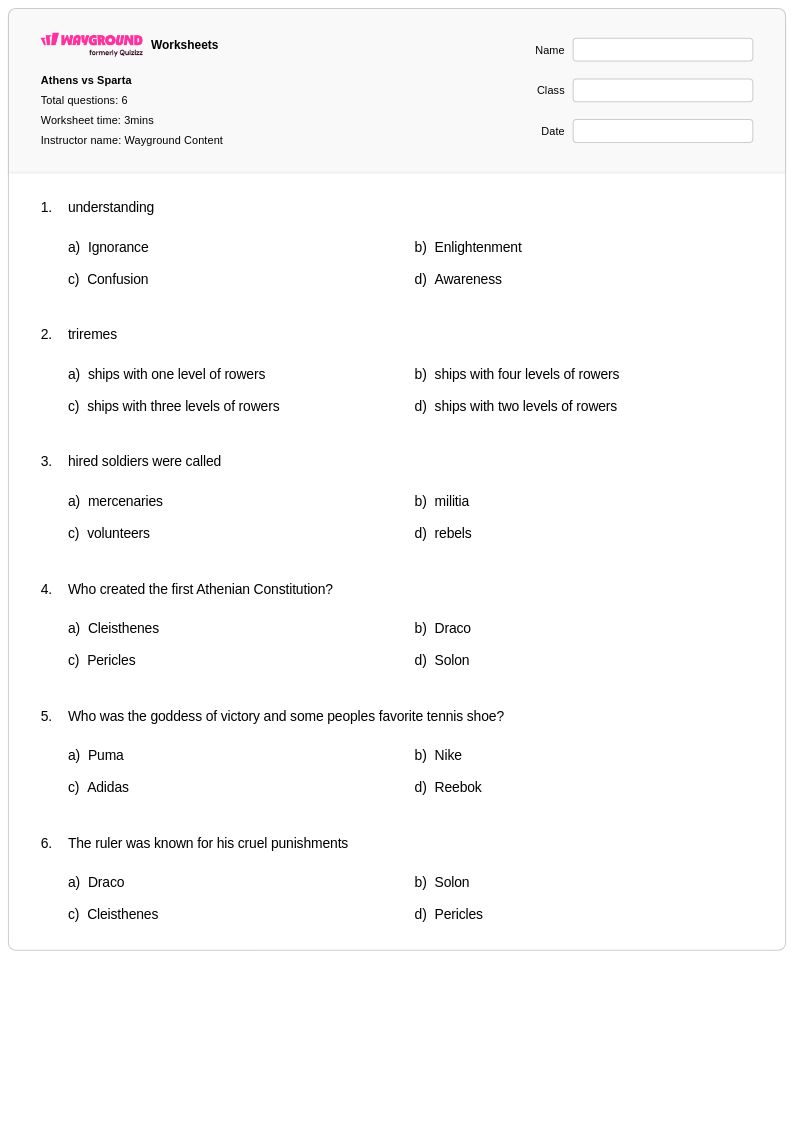
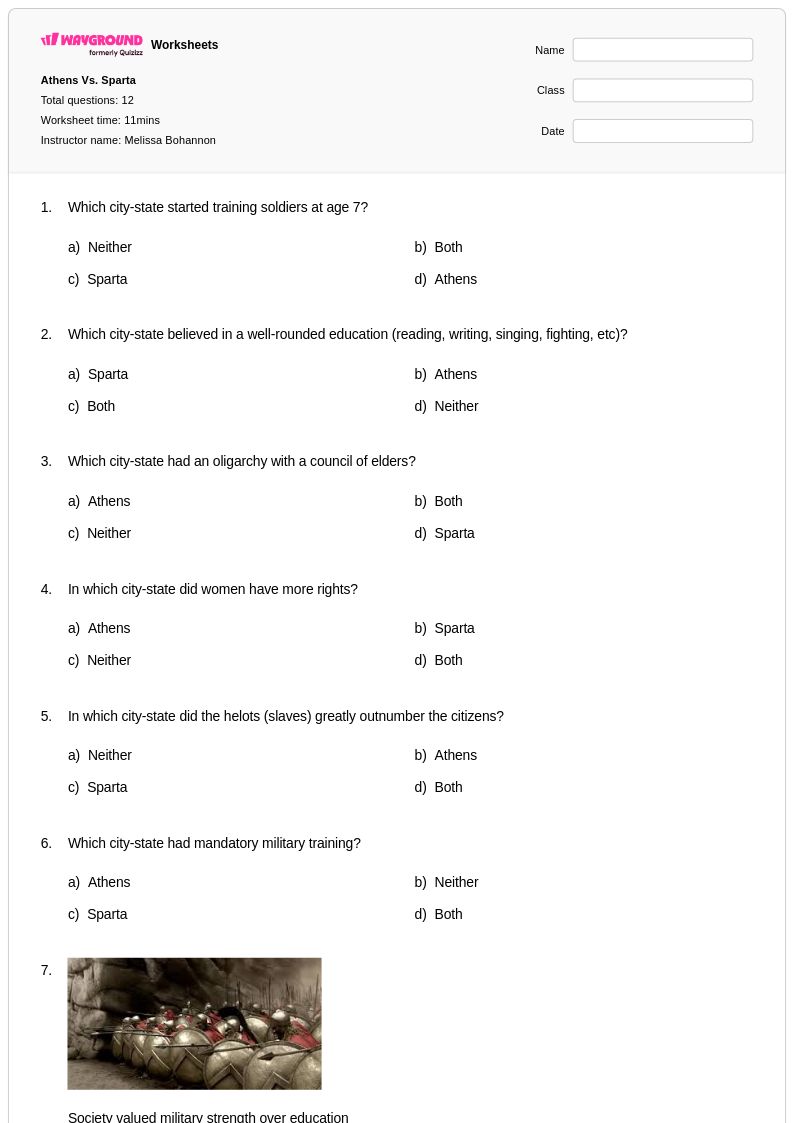
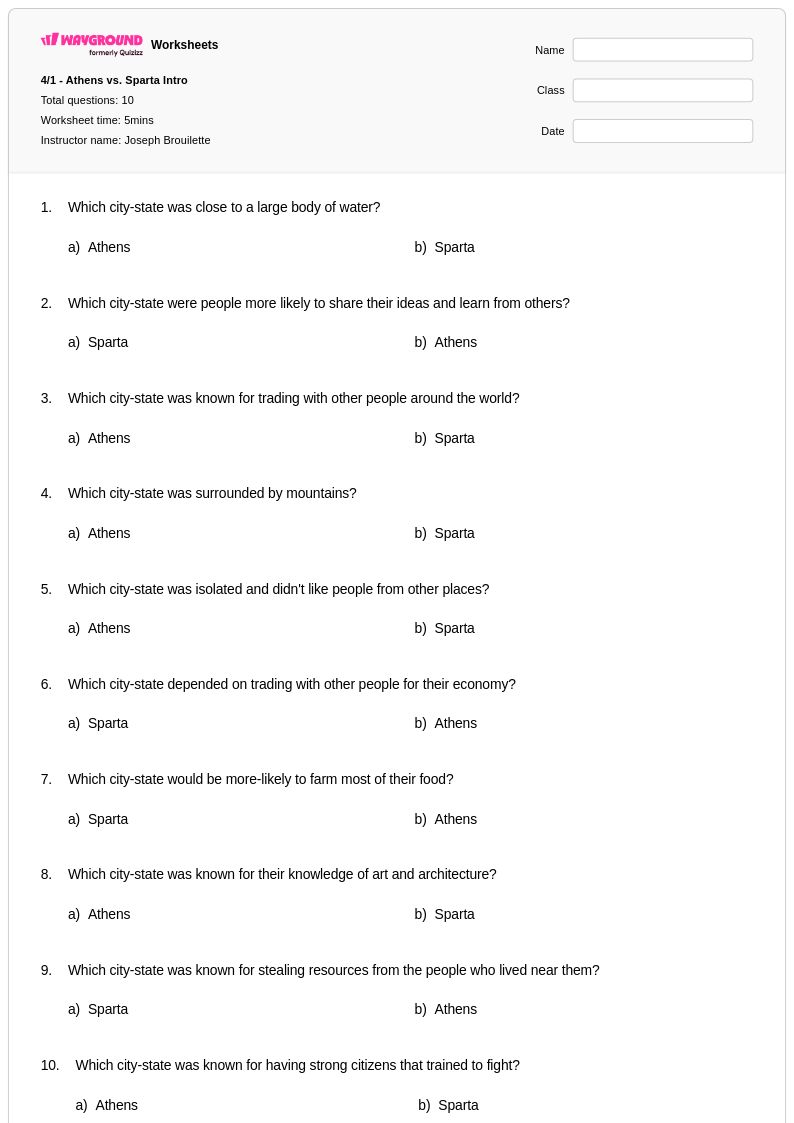
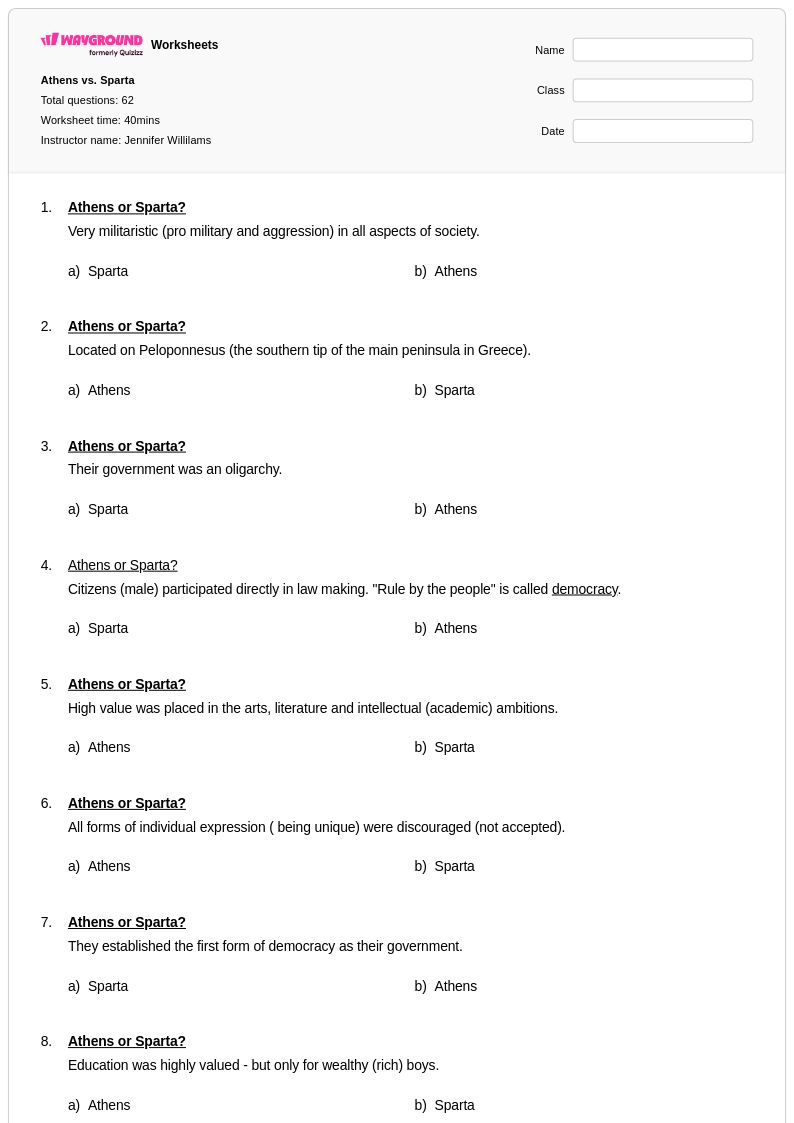
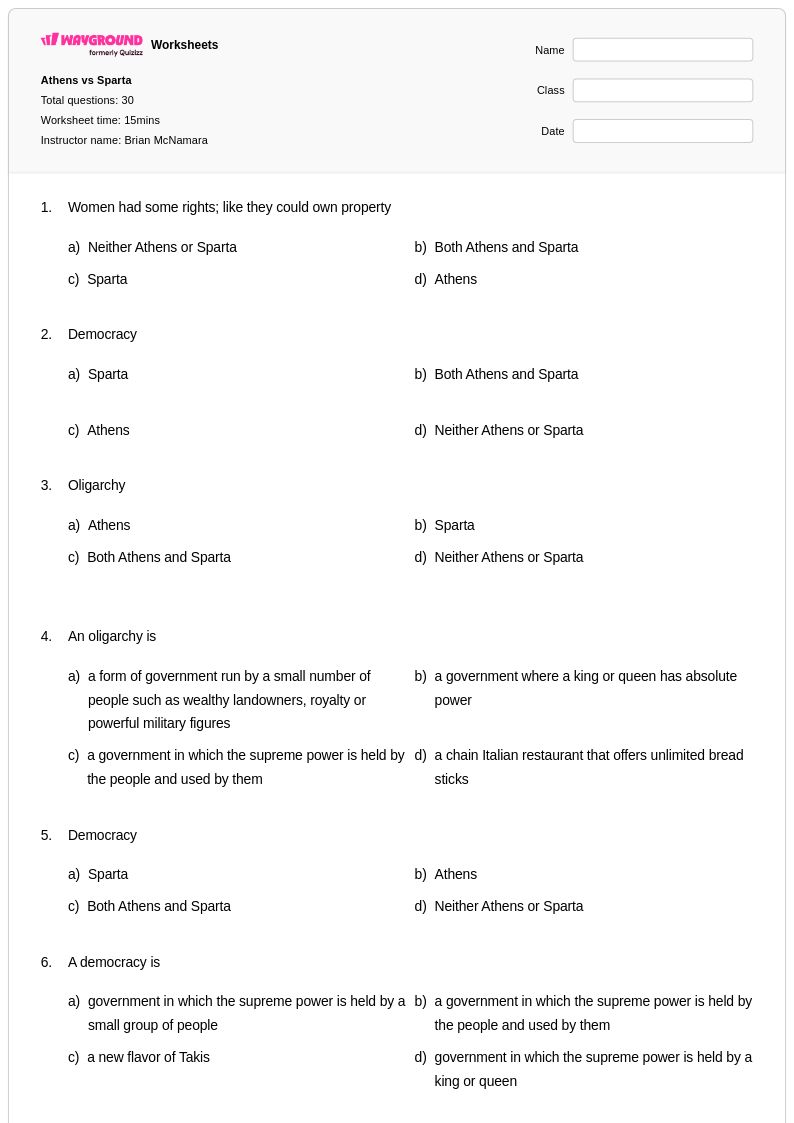
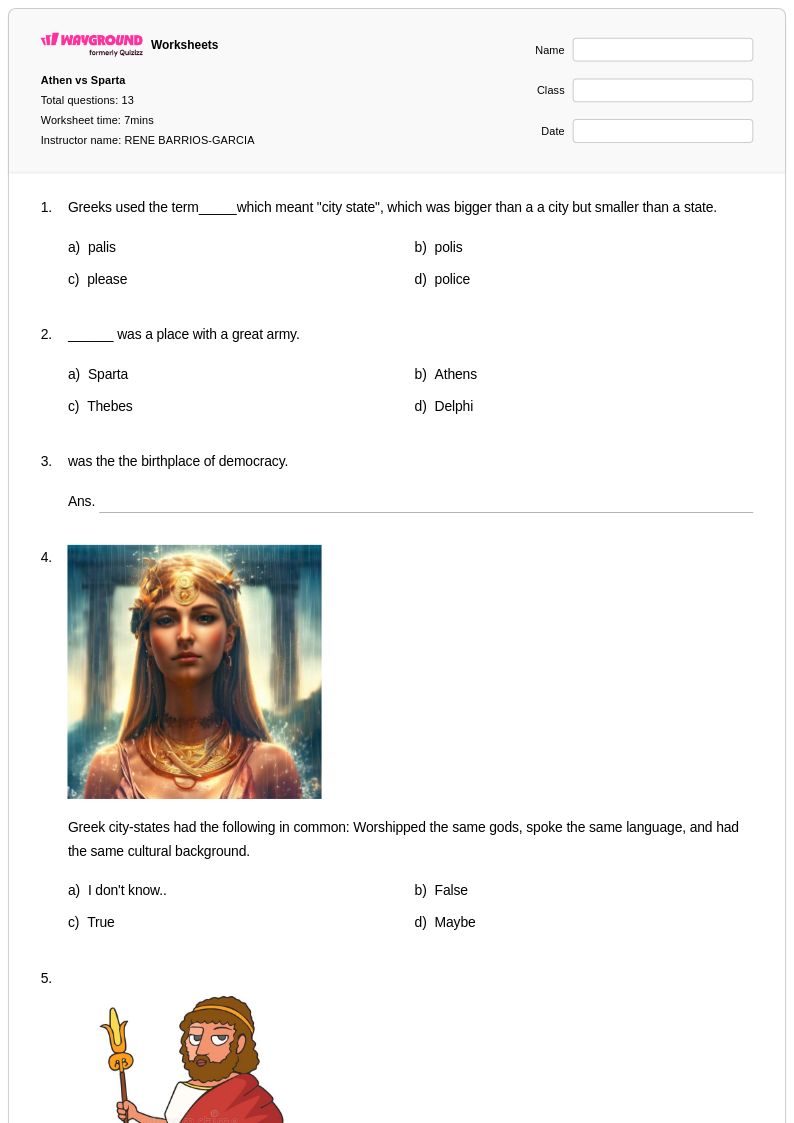
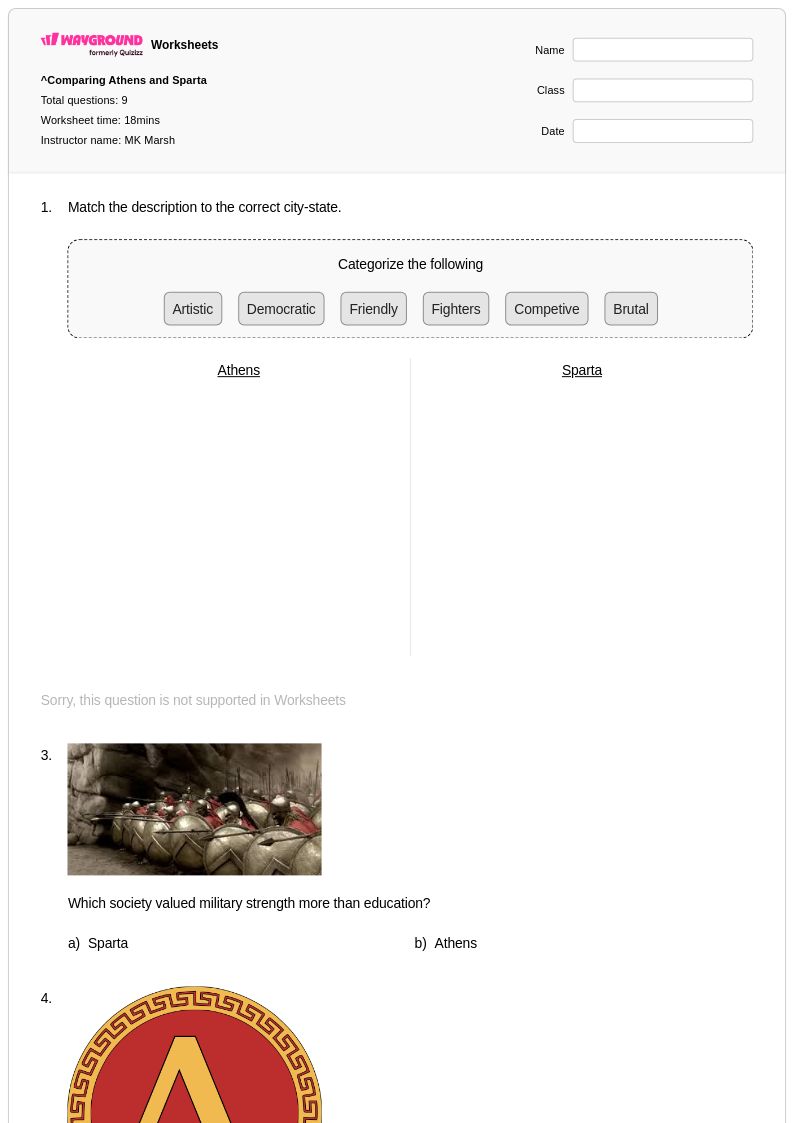
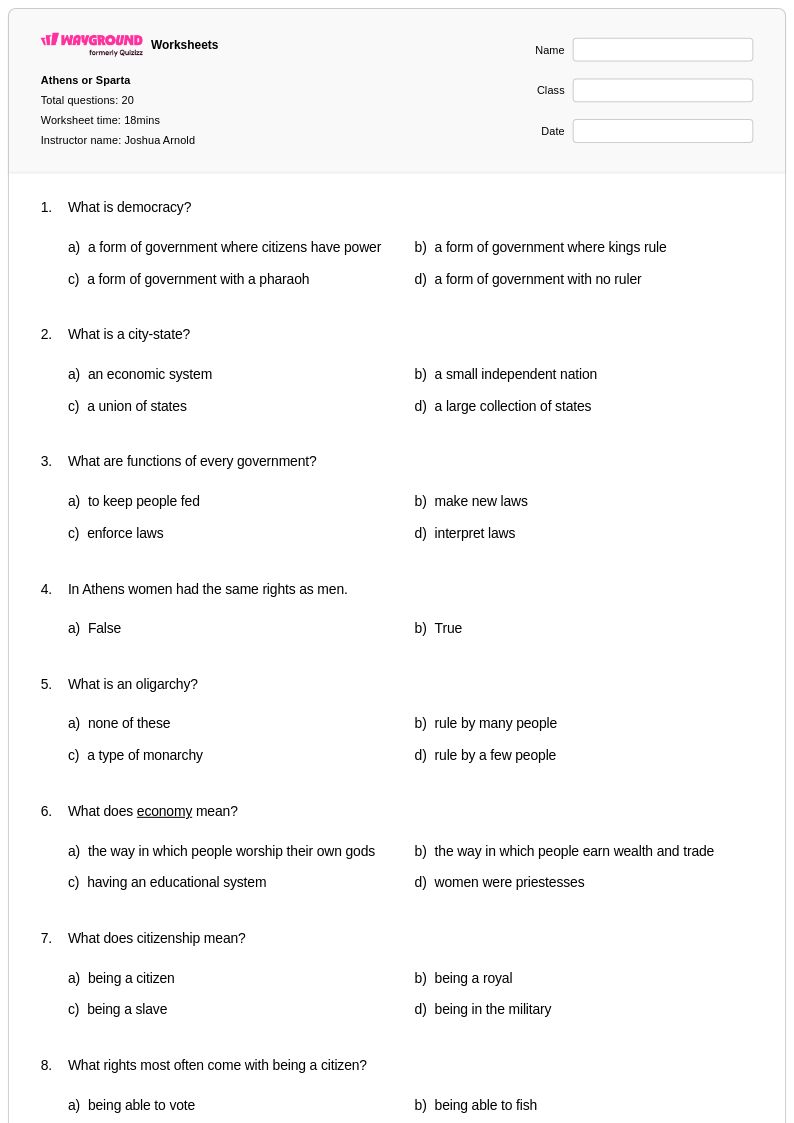
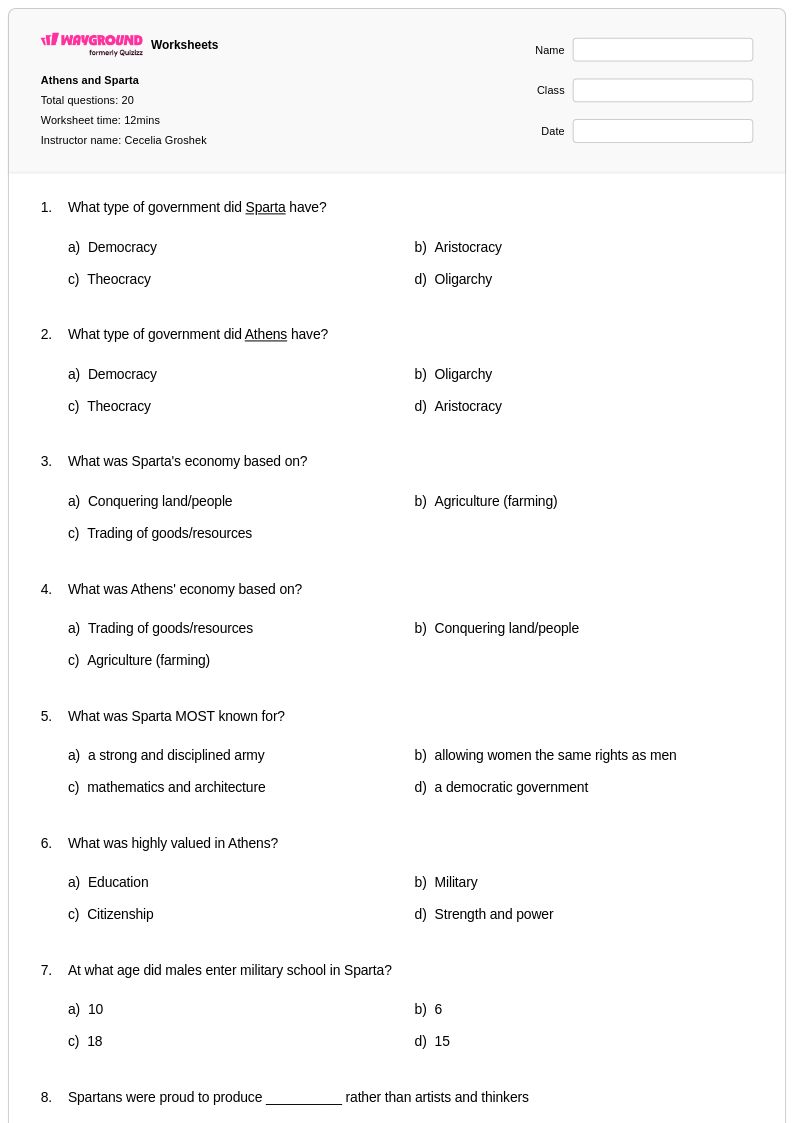
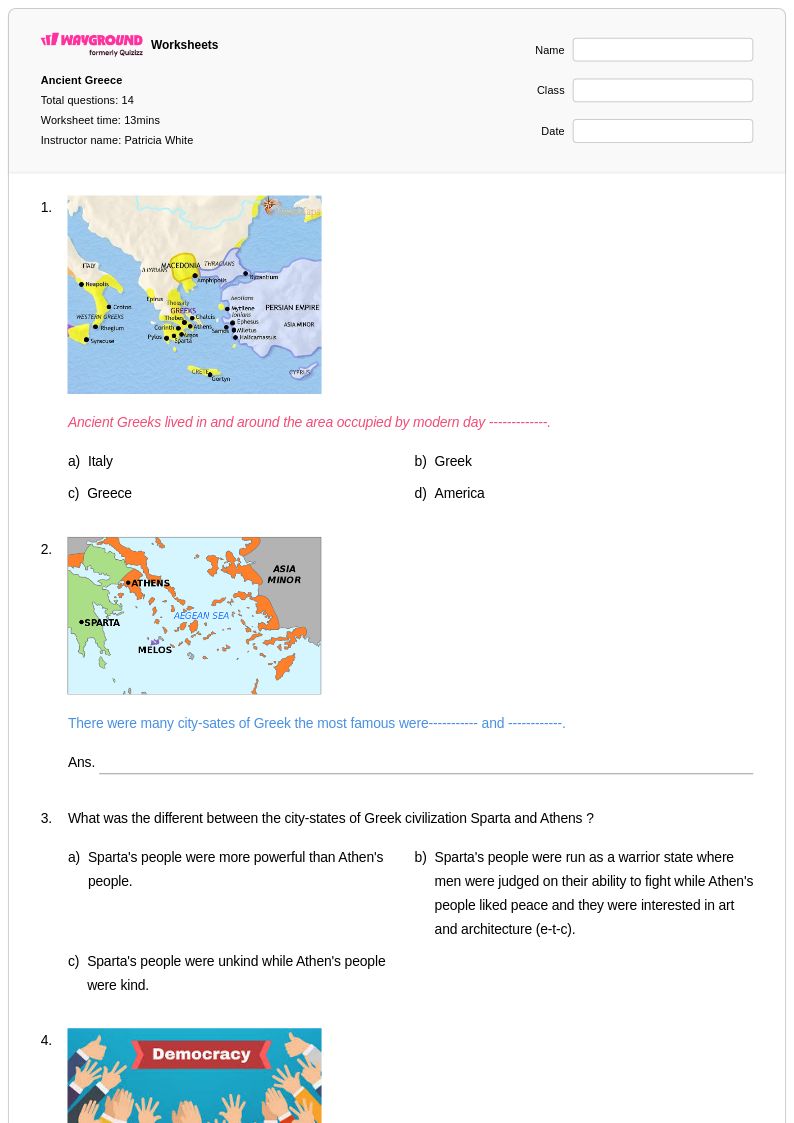
Athens vs Sparta worksheets for Class 7 students provide comprehensive exploration of the fundamental differences between ancient Greece's two most influential city-states. These educational resources challenge students to analyze contrasting governmental systems, social structures, military practices, and cultural values that defined Athenian democracy versus Spartan oligarchy. Through carefully designed practice problems, students examine primary source excerpts, compare daily life experiences of citizens in each polis, and evaluate the lasting impact of these civilizations on modern society. The worksheets strengthen critical thinking skills by requiring students to synthesize information about political participation, education systems, women's roles, and economic foundations while developing historical analysis abilities. Each printable resource includes detailed answer keys to support independent learning, and the free materials are structured to build understanding progressively from basic comparisons to complex evaluations of historical significance.
Wayground, formerly Quizizz, empowers educators with millions of teacher-created worksheet collections specifically designed for ancient civilizations instruction, featuring robust search and filtering capabilities that help locate precisely the right Athens vs Sparta materials for diverse classroom needs. The platform's standards-aligned resources support comprehensive lesson planning while offering extensive differentiation tools that accommodate varying student readiness levels and learning preferences. Teachers can seamlessly customize existing worksheets or create original materials using the flexible editing features, then distribute content in both printable pdf format for traditional classroom use and interactive digital versions for technology-enhanced learning environments. These versatile resources facilitate targeted skill practice, enable effective remediation for struggling learners, provide enrichment opportunities for advanced students, and streamline assessment preparation through varied question formats that mirror standardized testing expectations while maintaining engaging, age-appropriate content delivery.
FAQs
How do I teach the differences between Athens and Sparta in a way students actually understand?
The most effective approach is to anchor the comparison in concrete, contrasting details rather than abstract labels. Start by examining how each city-state educated its children — Athens prioritizing arts, philosophy, and civic debate, Sparta prioritizing physical endurance and military obedience — then work outward to government, gender roles, and cultural values. Graphic organizers and side-by-side comparison charts help students build a structured mental model before moving to written analysis or discussion.
What exercises help students practice comparing Athens and Sparta?
Effective practice exercises include Venn diagrams comparing governmental structures, timeline activities tracking key political developments in each city-state, and primary source analysis tasks that ask students to identify whether a passage reflects Athenian or Spartan values. Essay prompts that ask students to argue which civilization had a more lasting historical legacy push students beyond recall into genuine historical reasoning. These varied formats reinforce the comparison across multiple cognitive levels.
What common mistakes do students make when comparing Athens and Sparta?
Students frequently oversimplify the contrast by framing Athens as entirely progressive and Sparta as entirely brutal, ignoring complexity on both sides — for example, that Athenian democracy excluded women and enslaved people, or that Spartan women held comparatively more property rights than their Athenian counterparts. Another common error is conflating military strength with authoritarianism without distinguishing Sparta's specific oligarchic structure. Asking students to find evidence that complicates their initial assumptions is a reliable way to address these misconceptions.
How can I use Athens vs Sparta worksheets to support different skill levels in my class?
Athens vs Sparta worksheets can be differentiated by task type — foundational learners benefit from structured graphic organizers and vocabulary support, while advanced learners are better challenged by primary source analysis and open-ended essay prompts about civilizational legacy. On Wayground, teachers can apply individual student accommodations such as read aloud, reduced answer choices, and extended time, so every student engages with the same content at an appropriate level of support. These settings are reusable across sessions without disrupting the rest of the class.
How do I use Athens vs Sparta worksheets from Wayground in my classroom?
Athens vs Sparta worksheets on Wayground are available as printable PDFs for traditional classroom use and in digital formats for technology-integrated environments, giving teachers flexibility depending on their setup. Teachers can also host worksheets directly as a quiz on Wayground, making it easy to assign, collect, and review student responses in one place. All materials include complete answer keys, supporting efficient grading and timely feedback.
What topics should an Athens vs Sparta unit cover to align with social studies standards?
A well-aligned unit should cover governmental structures (Athenian direct democracy versus Spartan dual kingship and ephors), military organization, education systems, social hierarchies including the roles of women and enslaved populations, and each city-state's cultural contributions to Western civilization. Including the Persian Wars and the Peloponnesian War helps students understand how the rivalry between the two city-states shaped Greek history. Connecting these themes to modern democratic and military institutions strengthens relevance and meets most world history and social studies standards at the middle and high school level.