Free Printable Black Inventors Worksheets for Class 7
Explore Wayground's collection of free Class 7 Black Inventors worksheets and printables that help students discover groundbreaking contributions through engaging practice problems and comprehensive answer keys.
Explore printable Black Inventors worksheets for Class 7
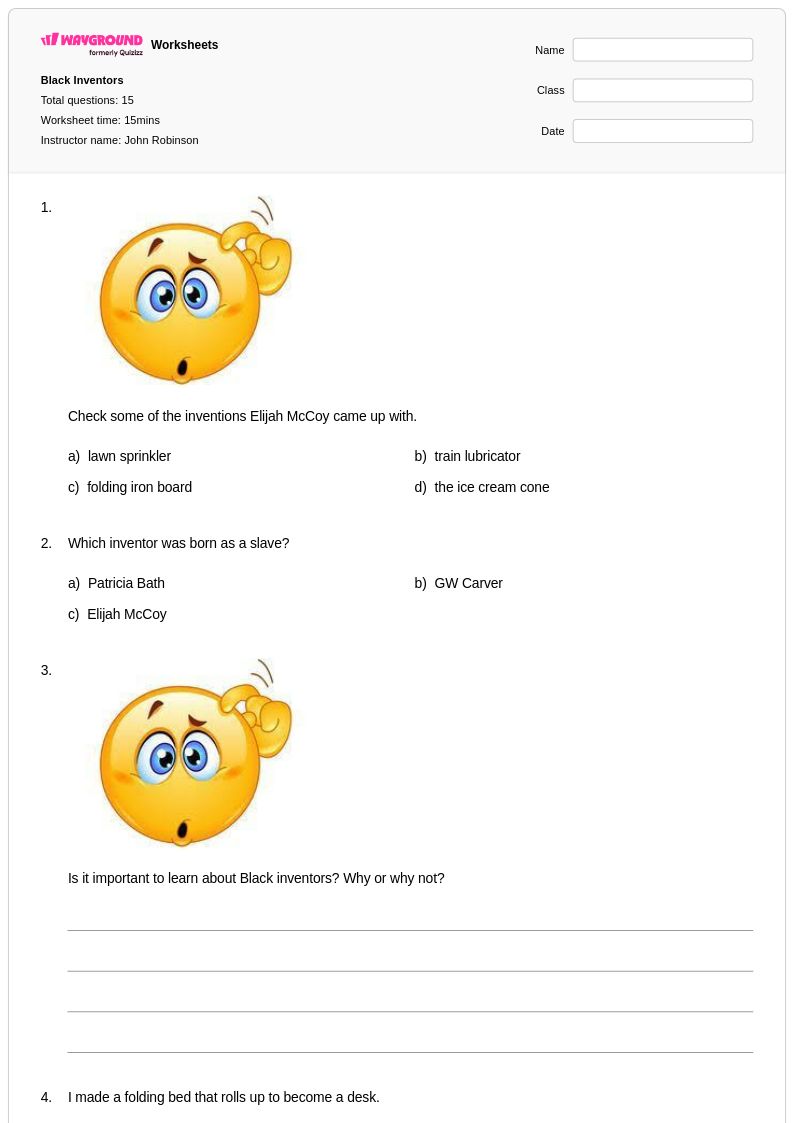
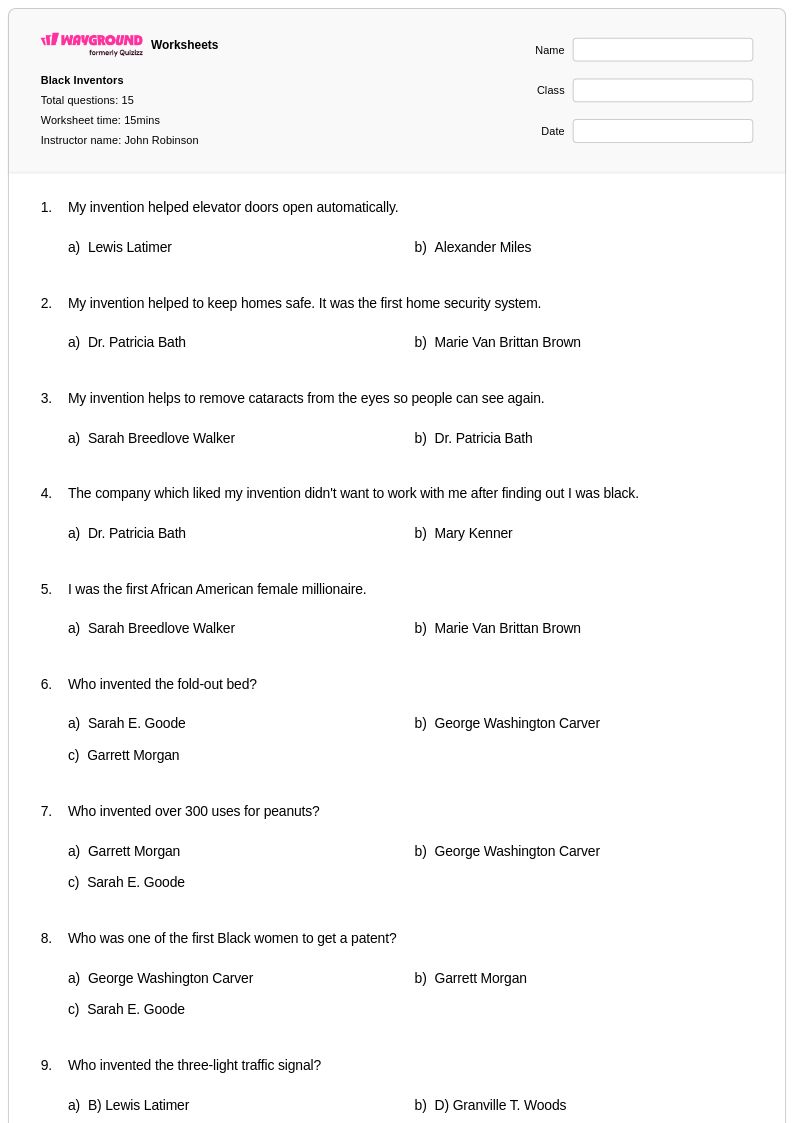
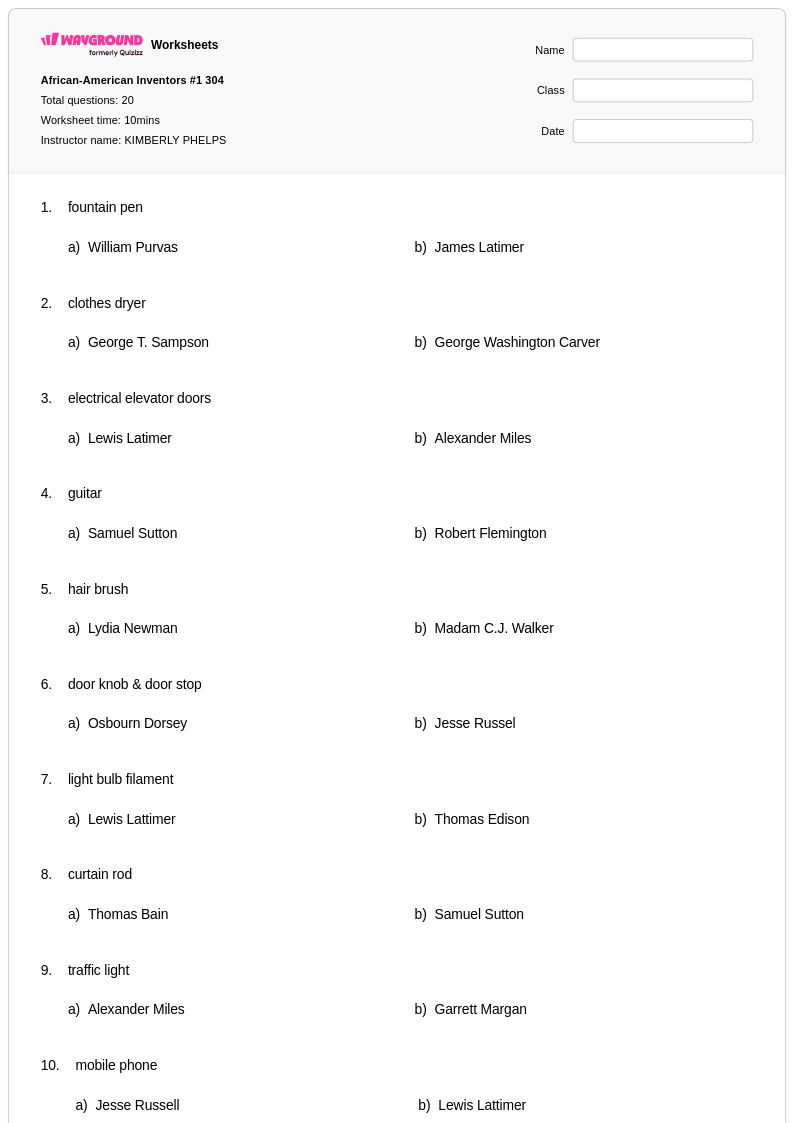
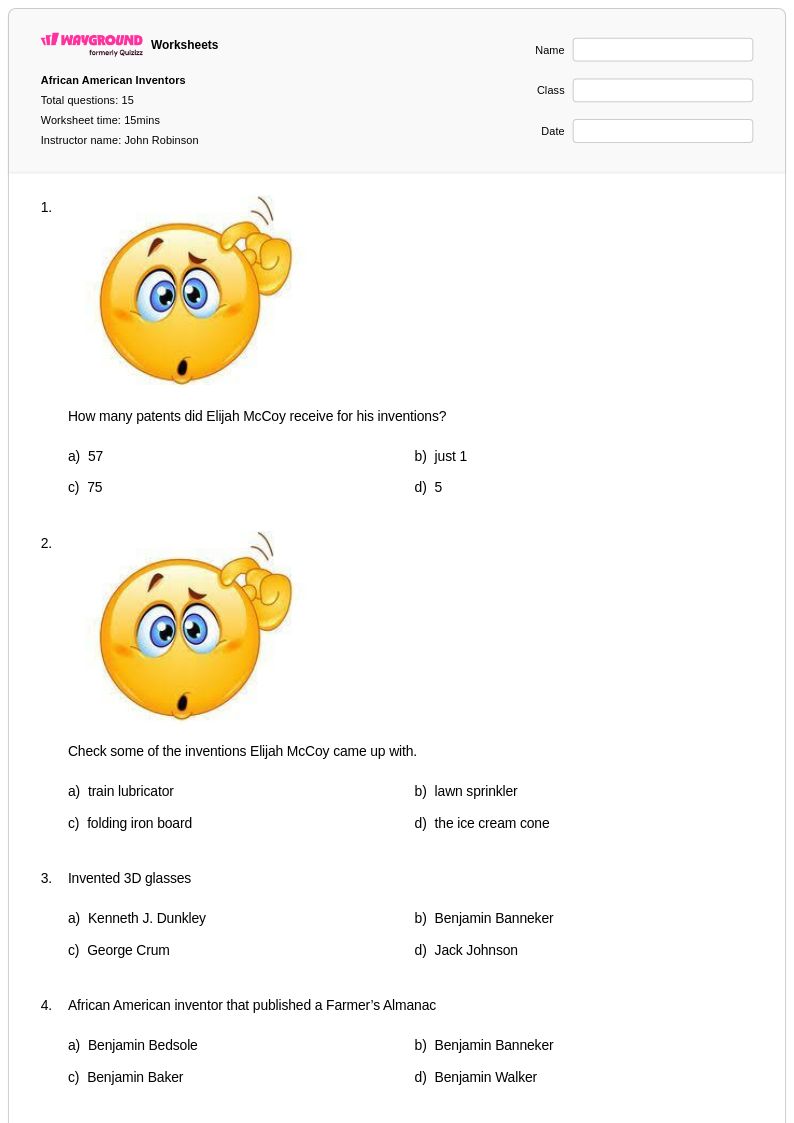
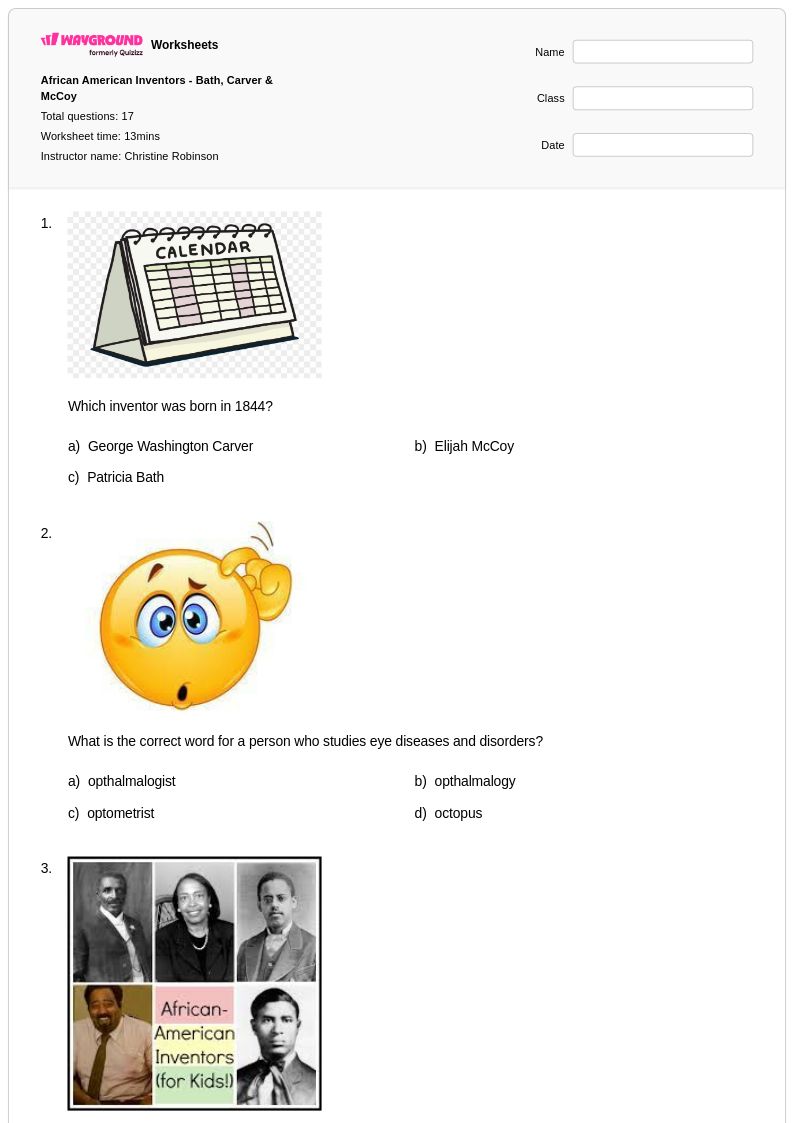
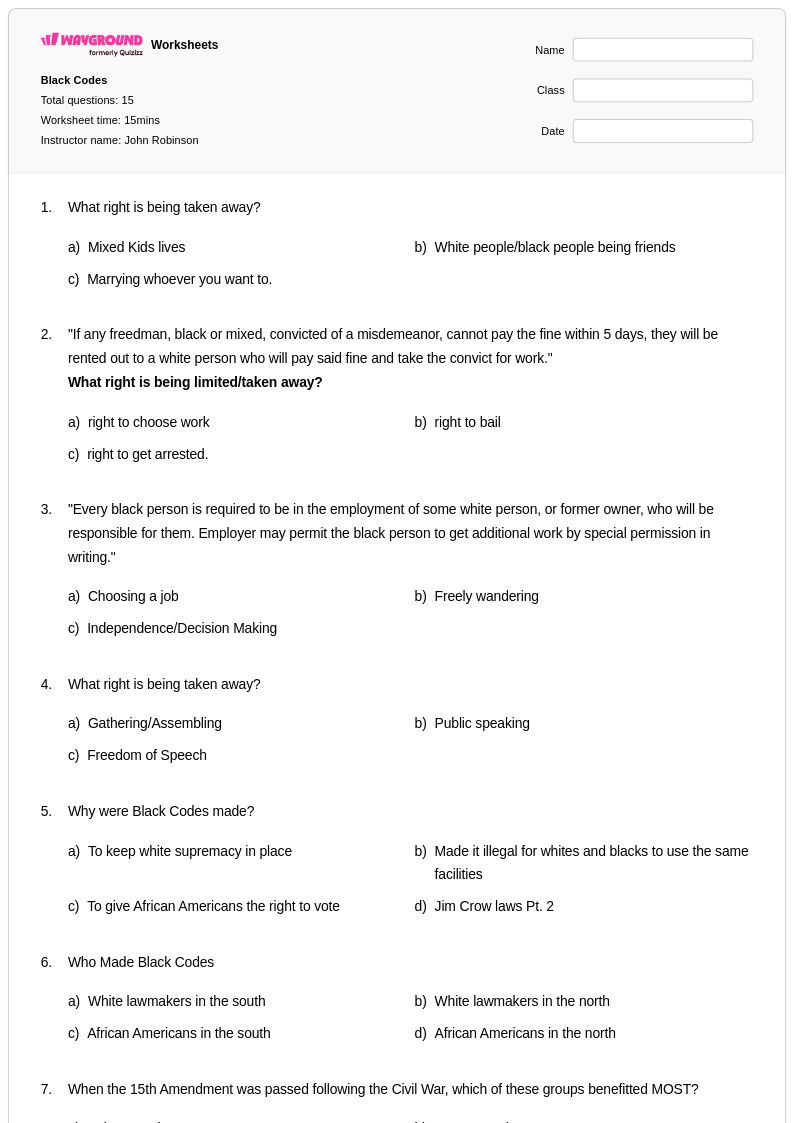
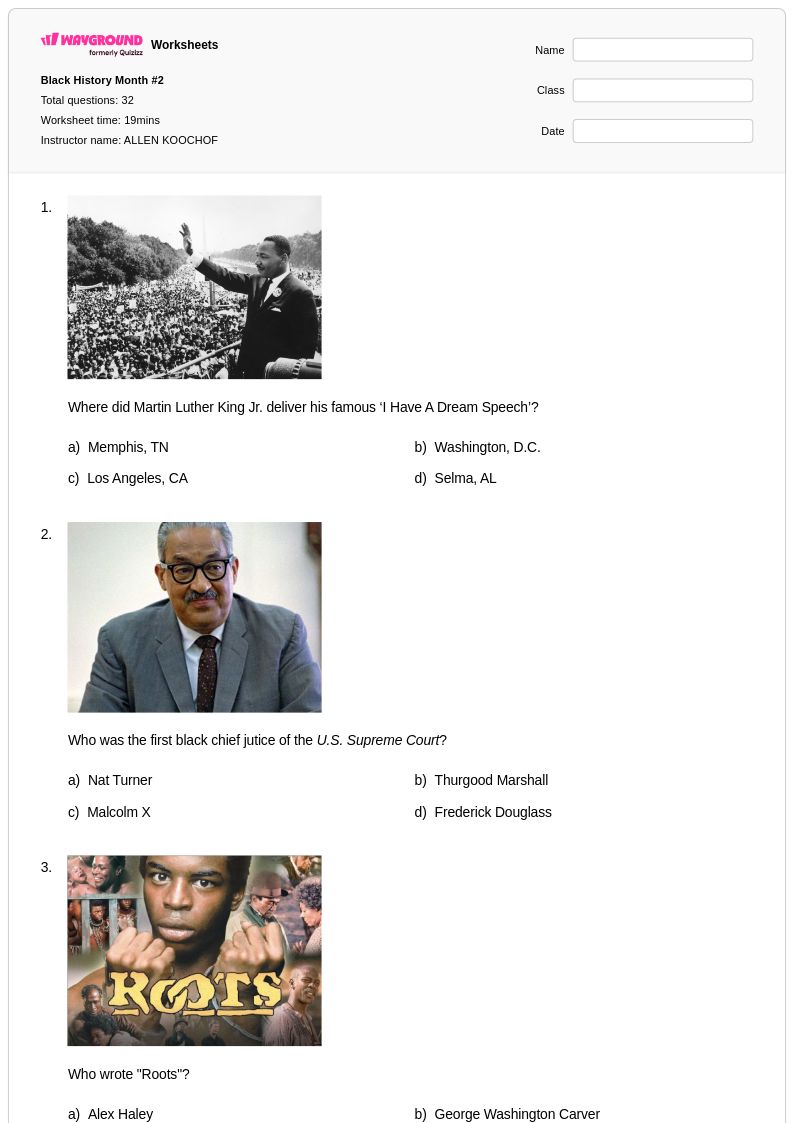
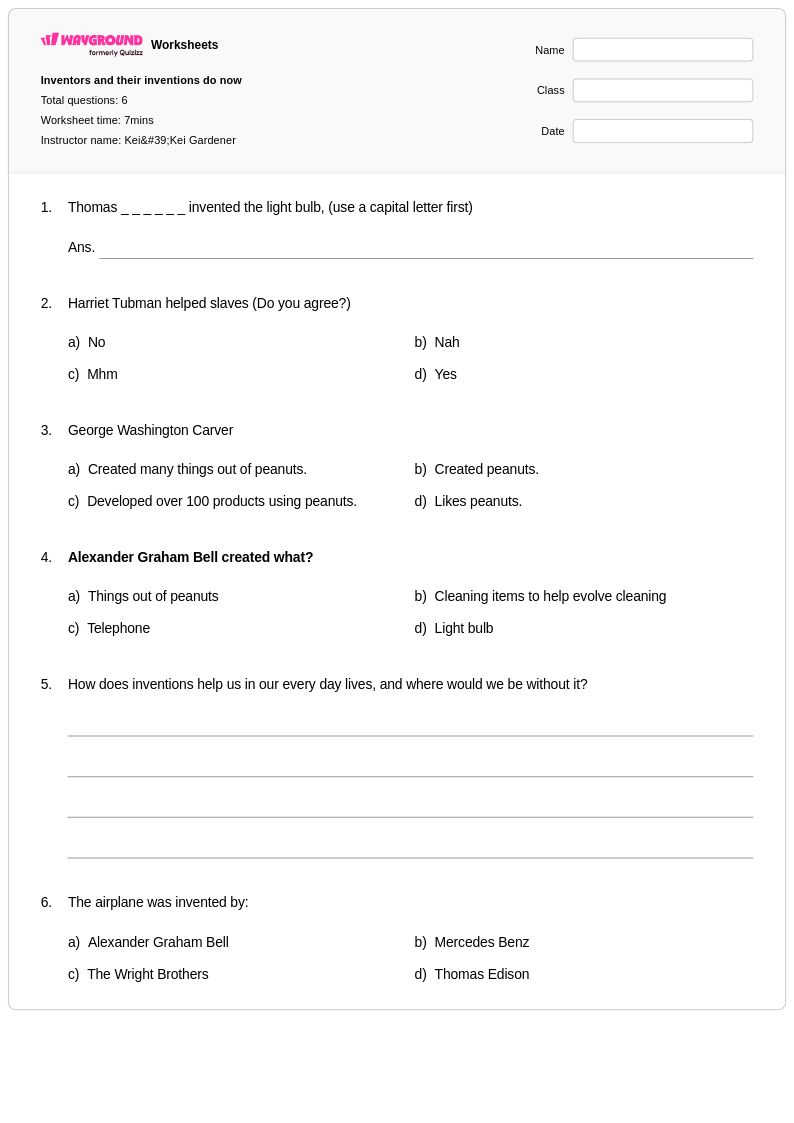
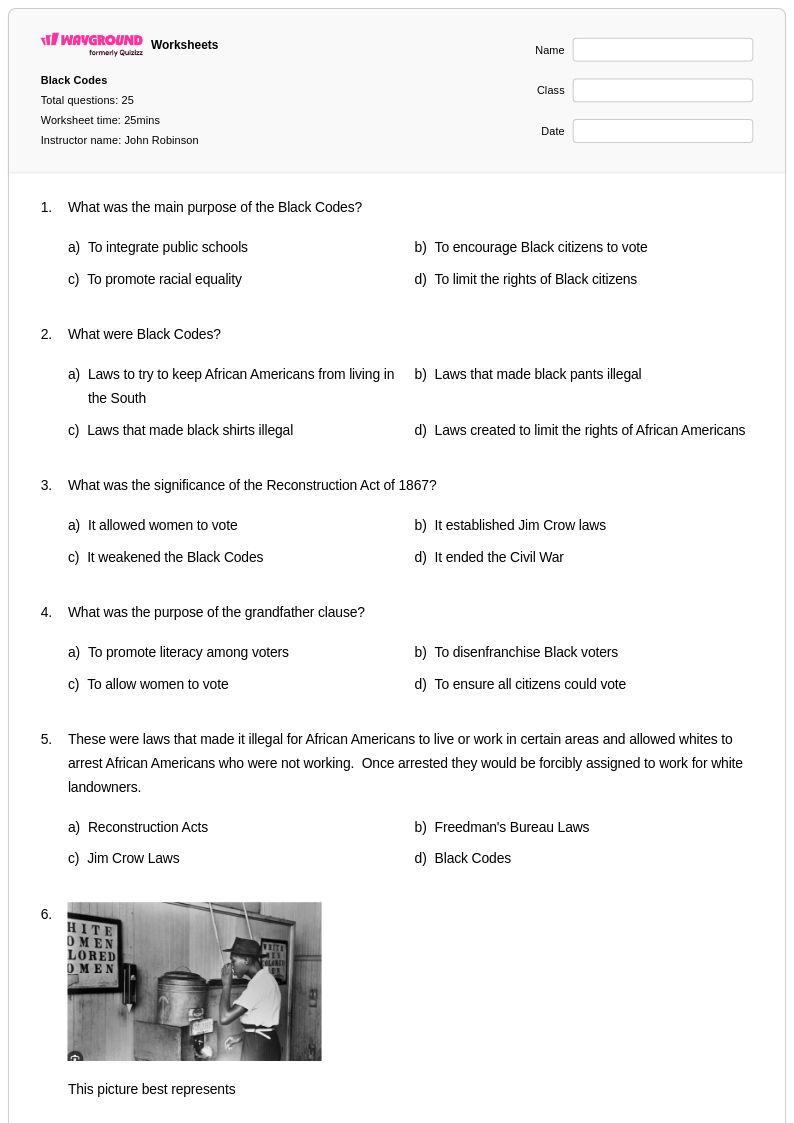
Black inventors worksheets for Class 7 students available through Wayground (formerly Quizizz) provide comprehensive exploration of the remarkable contributions African American innovators made to American society and technological advancement. These educational resources strengthen students' understanding of how inventors like Garrett Morgan, Madam C.J. Walker, Lewis Latimer, and George Washington Carver revolutionized industries from safety equipment to beauty products, electrical systems, and agricultural science. The worksheets include engaging practice problems that challenge students to analyze primary sources, examine patent documents, and evaluate the social and economic impact of these groundbreaking inventions. Each printable resource comes with a detailed answer key, allowing teachers to efficiently assess student comprehension while these free materials support diverse learning styles through varied question formats and historical inquiry activities.
Wayground (formerly Quizizz) empowers educators with millions of teacher-created Black inventors worksheets specifically designed for Class 7 social studies curriculum requirements. The platform's robust search and filtering capabilities enable teachers to quickly locate resources that align with specific learning standards while offering differentiation tools to meet diverse student needs within the classroom. Teachers can seamlessly customize worksheet content, modify difficulty levels, and adapt materials for both remediation and enrichment purposes. These versatile resources are available in both printable pdf format for traditional classroom use and digital formats for technology-integrated learning environments. The extensive collection supports comprehensive lesson planning by providing educators with reliable, curriculum-aligned materials that facilitate meaningful skill practice while helping students develop critical thinking abilities essential for understanding the complex historical narratives surrounding innovation and social progress in American history.
FAQs
How do I teach students about Black inventors in U.S. history?
Teaching Black inventors effectively means going beyond a single lesson and integrating their contributions into the broader narrative of American innovation. Use biographical profiles, invention timelines, and primary source documents to help students connect individual inventors to the historical context in which they worked. Focusing on figures like George Washington Carver, Garrett Morgan, Lewis Latimer, and Madam C.J. Walker gives students concrete examples of innovation that shaped everyday life. Pairing structured reading activities with discussion questions deepens both historical analysis and cultural awareness.
What worksheets or activities help students practice what they've learned about Black inventors?
Effective practice activities for Black inventors include invention timeline tasks, biographical reading comprehension questions, and matching exercises that connect inventors to their discoveries. Structured worksheets that ask students to analyze how a specific invention solved a real-world problem build critical thinking alongside content knowledge. Activities that incorporate primary source documents or inventor profiles encourage students to engage with often-overlooked historical figures in a meaningful way rather than through rote memorization.
What are common misconceptions students have when learning about Black inventors?
A frequent misconception is that Black inventors made only minor or isolated contributions to American history, when in fact their inventions shaped industries, infrastructure, and daily life. Students sometimes conflate inventors with folk legends — for example, attributing inventions to figures without historical evidence — so grounding lessons in verified biographical information is essential. Another common error is treating Black inventors as a separate category rather than as central contributors to the same technological progress studied in broader U.S. history units. Worksheets that integrate inventors into standard history timelines help correct this framing.
How can I use Black inventors worksheets to support students with different learning needs?
Black inventors worksheets on Wayground can be hosted as digital quizzes, which gives teachers access to built-in accommodation tools. Teachers can enable Read Aloud for students who need audio support when reading biographical texts, reduce the number of answer choices to lower cognitive load for students who need scaffolding, and grant extended time per question for students who require it. These accommodations can be applied to individual students while the rest of the class receives default settings, making differentiation practical without requiring separate lesson plans.
How do I use Black inventors worksheets in my classroom?
Black inventors worksheets on Wayground are available as printable PDFs for traditional classroom use and in digital formats for technology-integrated environments, including the option to host them as an interactive quiz directly on the Wayground platform. Printable versions work well for independent reading and note-taking activities, while the digital format supports real-time feedback and accommodations for diverse learners. Both formats include answer keys, making them practical for independent work, small group instruction, or homework assignments.
How do I align Black inventors lessons with social studies curriculum standards?
Most state social studies standards include benchmarks around U.S. history, cultural contributions, and civic identity, all of which Black inventors content directly supports. When selecting worksheets, look for materials that connect specific inventors to broader historical periods — such as Reconstruction, the Industrial Revolution, or the Civil Rights era — to ensure alignment. Wayground's search and filtering tools allow teachers to locate materials aligned with specific curriculum standards and learning objectives, reducing the time spent adapting general resources to fit a particular course.